

Select a subject or page number to open the reading book. People, places, methods and materials share this alphabetical route.
Complete A–Z index: search every subject Source page
 Source page
BOOK REFERENCE 1885
Measurements, maps and the sky
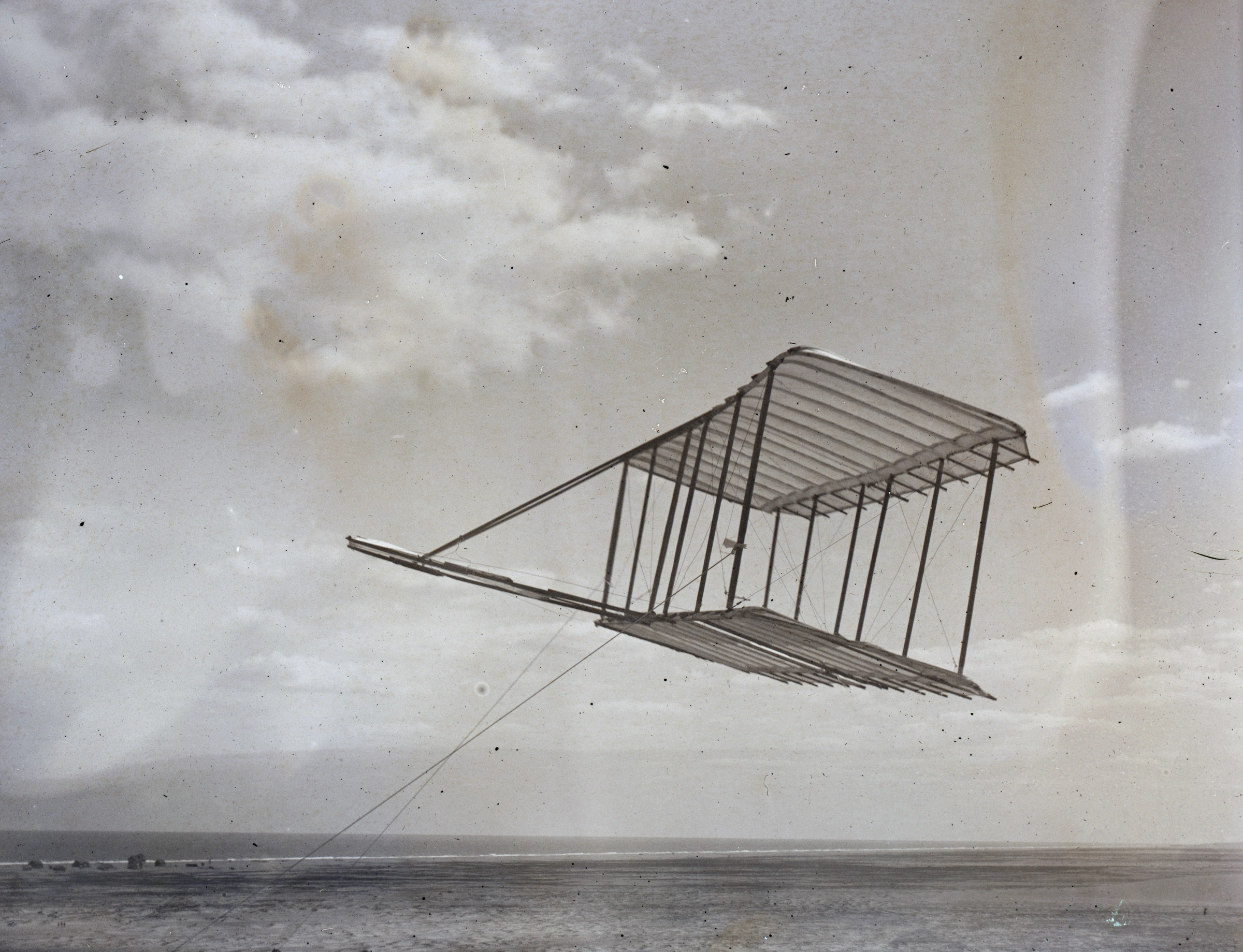
The Wright brothers’ 1900 glider flown as a kite near Kitty Hawk, North Carolina. Attributed to Wilbur and/or Orville Wright; Library of Congress, LC-W85-96, digital image LC-DIG-ppprs-00556. The reproduction omits damaged outer borders. Period photograph, no known…
Read the account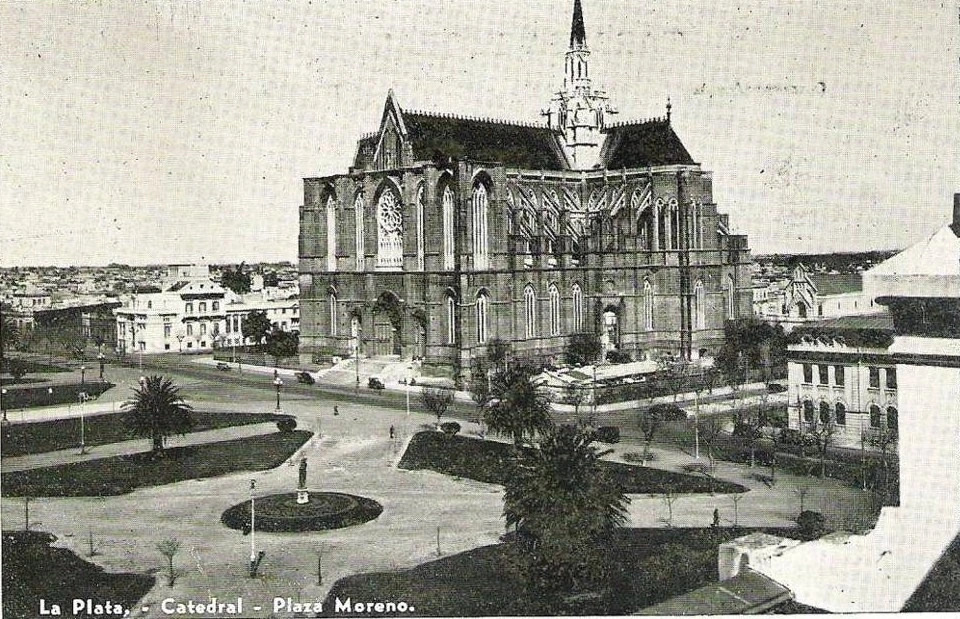
BOOK REFERENCE 587
Measuring a section in La Plata
La Plata Cathedral and Plaza Moreno Photographer unrecorded / c. 1930, postcard mailed in 1939 Public domain
Read the account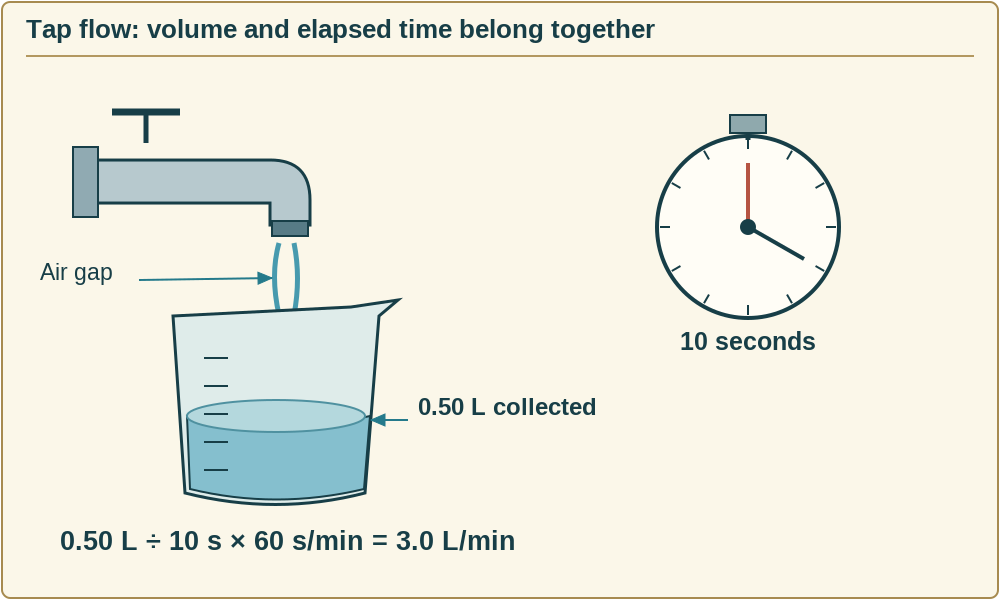
BOOK REFERENCE 606
Measuring tap flow
The vessel must catch the whole flow during the timed interval. Record the tap setting and repeat only as needed for a reliable operational measurement. Flow varies with pressure and fixture setting. Conservation decisions must preserve drinking, hygiene and care needs.
Read the account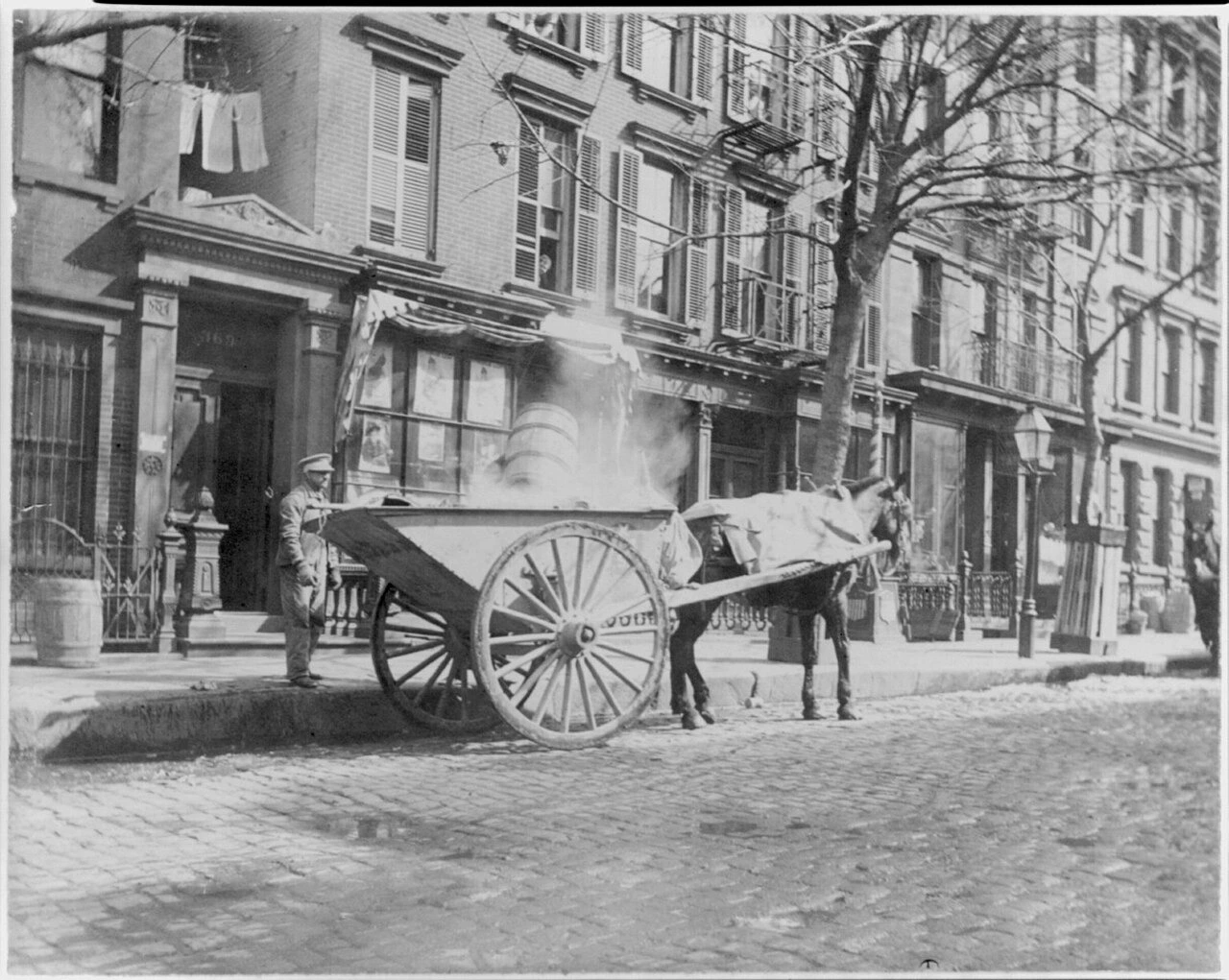
BOOK REFERENCE 566
Measuring the air above the rubbish
Horse-drawn ash cart, New York City Miscellaneous Items in High Demand, PPOC, Library of Congress / 1896 Public domain
Read the account Source page
- Source page
- Source page
- Source page
- Source page
- Source page
- Source page
- Source page
- Source page
- Source page
 Source page
 Source page
 Source page
BOOK REFERENCE 3016
Medical field observations: illustrated continuation
The continuation develops the same personal account with further bodily and symbolic associations. Compare the continuation with the writer’s earlier account before citing a statement. Repetition across versions is a history of the document, not independent medical evidence.…
Read the account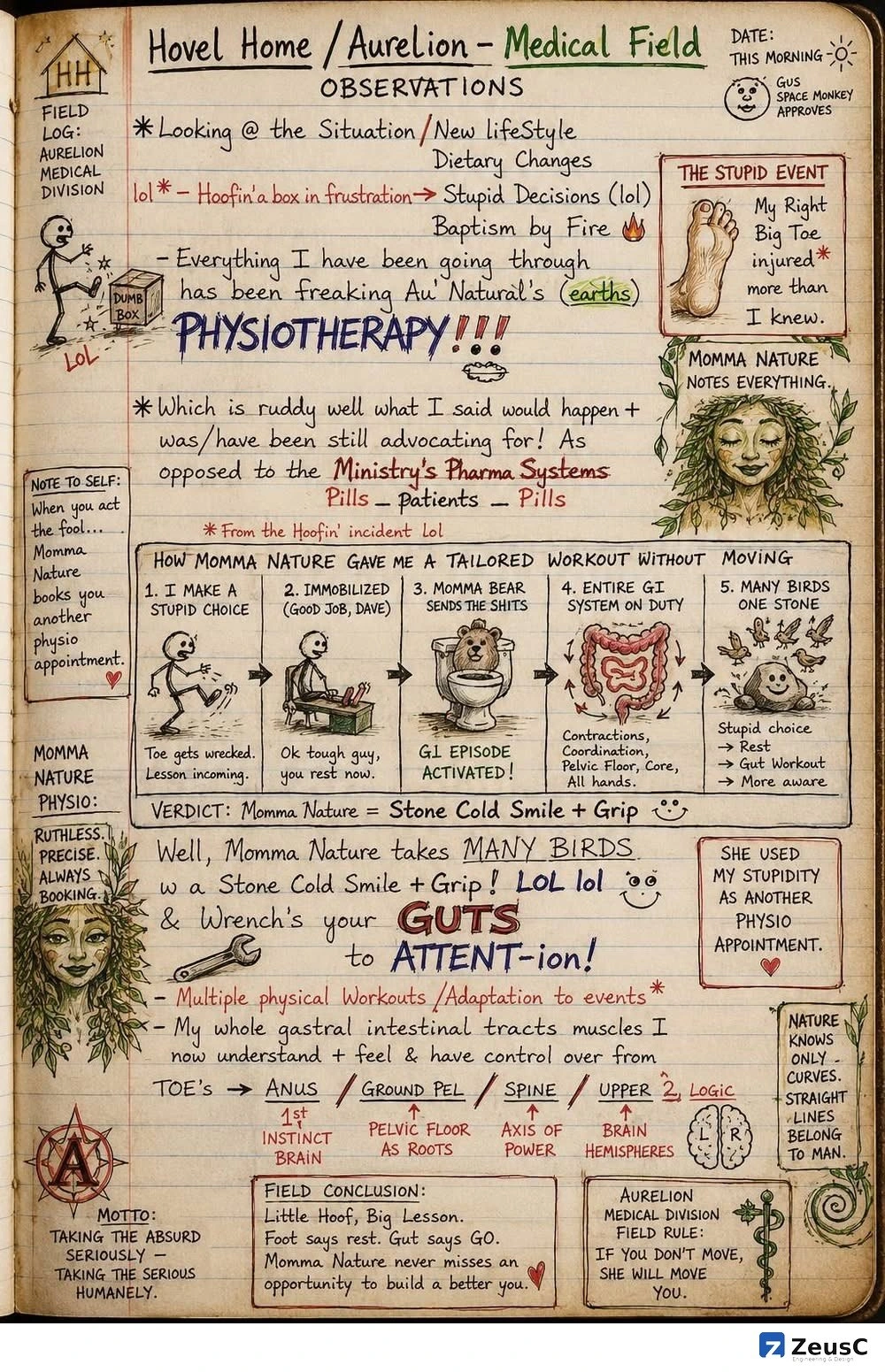
BOOK REFERENCE 3015
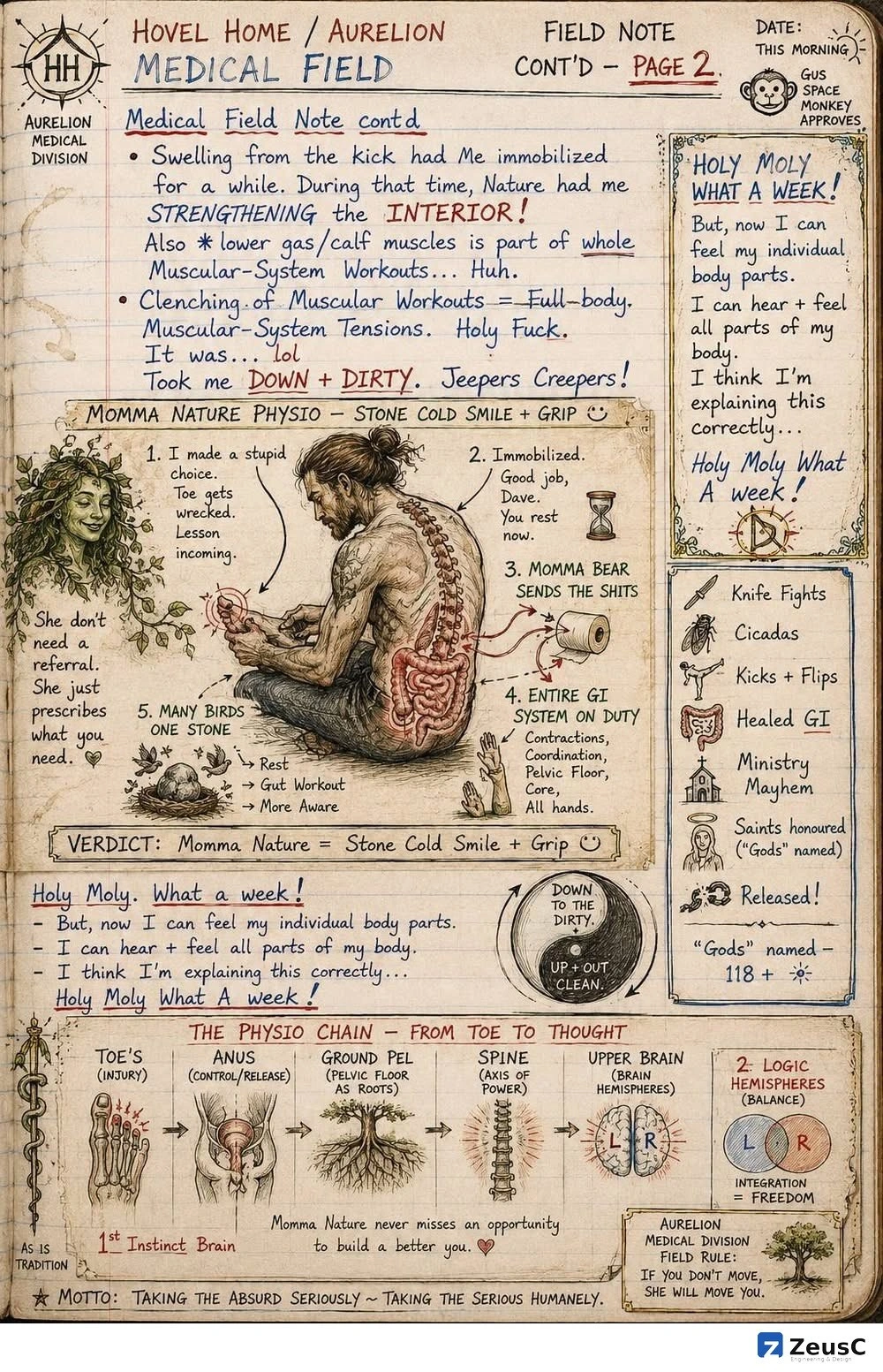
Medical field observations: illustrated page one
The design rearranges the handwritten account of injury and bodily sensations around anatomical and symbolic figures. It records a personal interpretation, the added drawings do not validate a physiological mechanism. Keep symptoms, measured findings and professional advice…
Read the account
BOOK REFERENCE 3009
Medical field observations: the handwritten account
The writer describes bodily sensations, injury and a personal interpretation of adaptation. Such a note may help someone communicate a history, but it does not establish the cause of symptoms or an effective treatment. Preserve timing, observed changes and interventions…
Read the account Source page
 Source page
 Source page
BOOK REFERENCE 2390
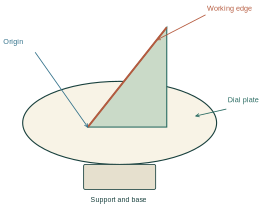
Melbourne: retain the photograph and check its story
Original teaching drawing · Read the figure caption for source and example status
Read the account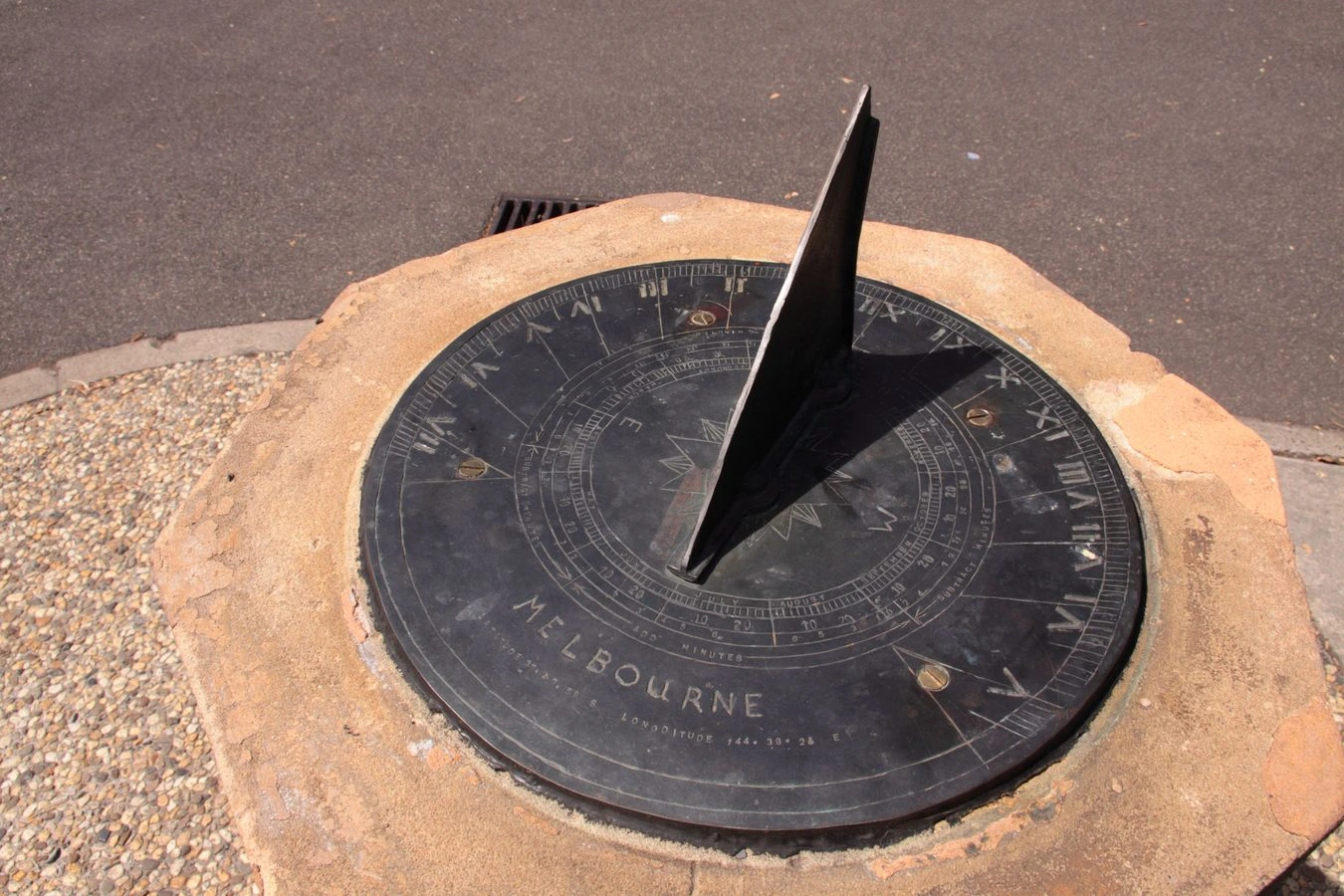
BOOK REFERENCE 2397
Melbourne: the retained horizontal-dial photograph
Photographed 4 January 2014; monument originated in the nineteenth century.
Read the account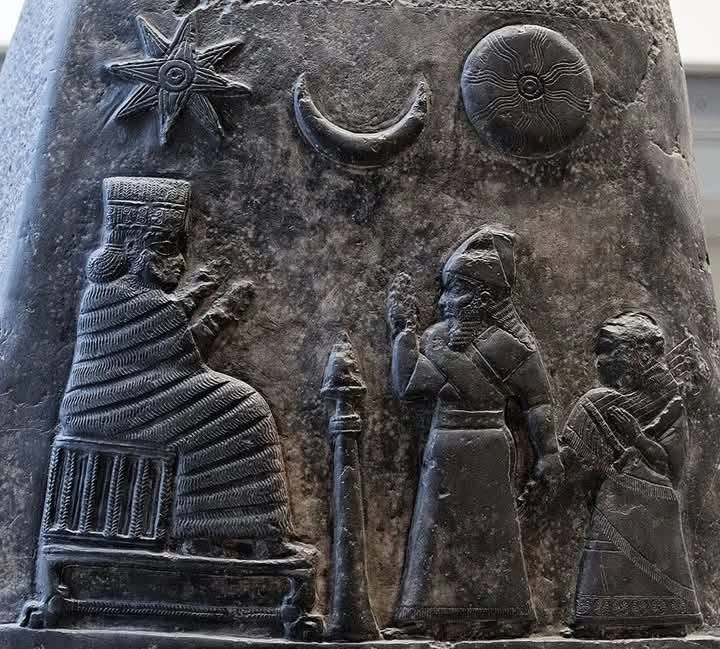
BOOK REFERENCE 2933
Meli-Shipak: land, divine emblems and an inscription
The Louvre identifies the limestone monument as a kudurru of King Meli-Shipak II. In the scene he presents his daughter Hunnubat-Nannaya to the seated goddess Nannaya. Above them are divine emblems: the star of Ishtar, the crescent of Sin and the solar disc of Shamash.…
Read the account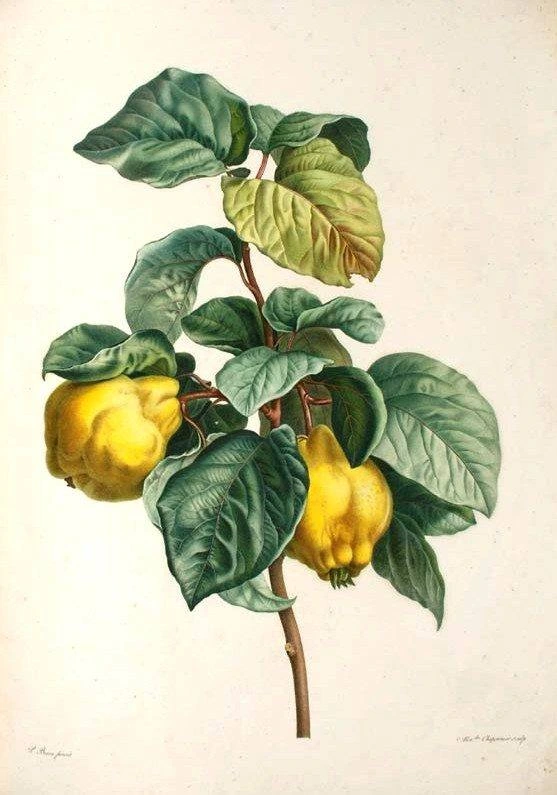
BOOK REFERENCE 1218
membrillo
Quinces attached to a leafy branch A pale yellow quince with its blossom end still visible
Read the account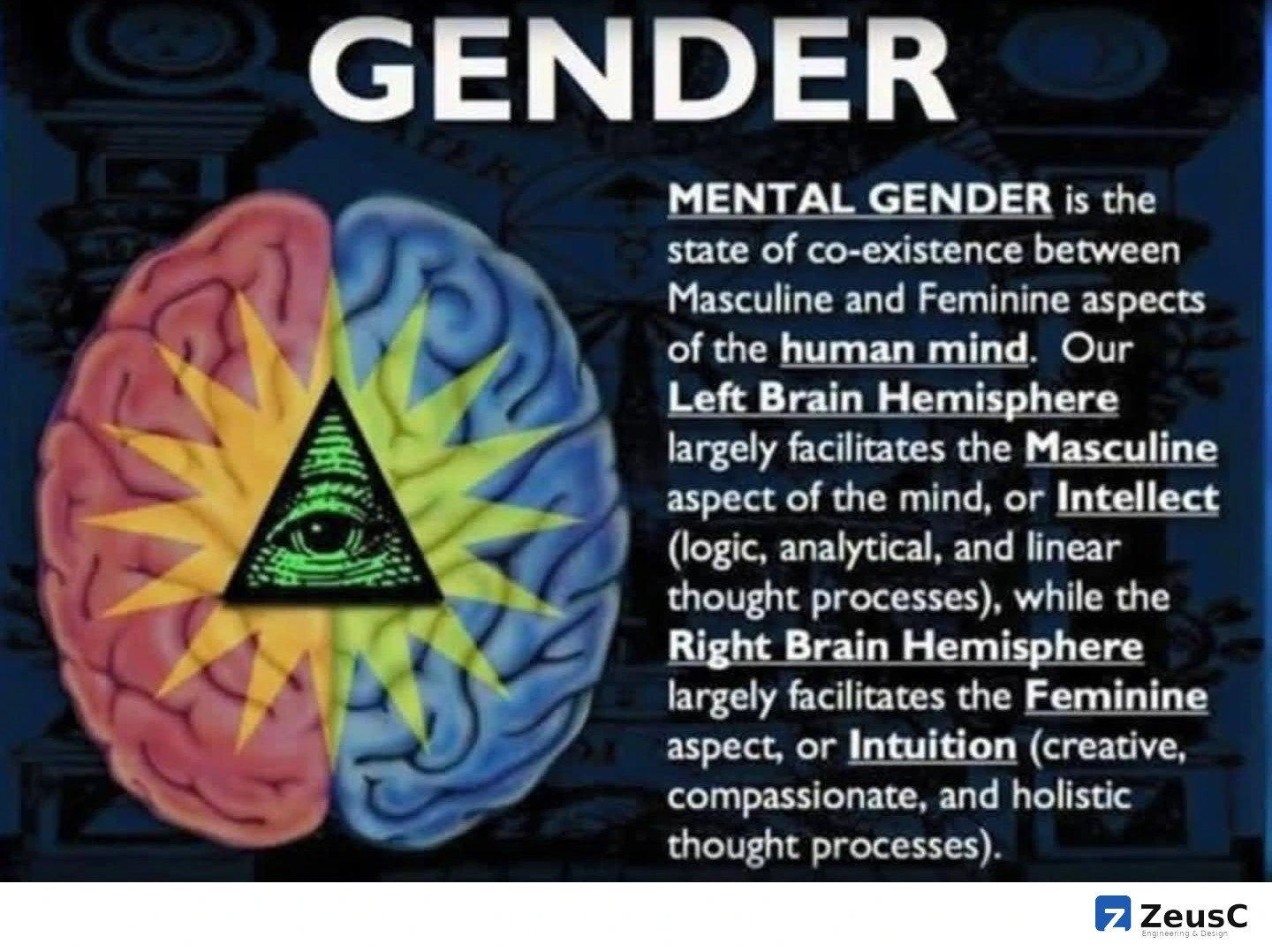
BOOK REFERENCE 3045
Mental gender and the two hemispheres
The poster assigns masculine and feminine qualities to opposite sides of the brain. That symbolic division is not an established neurological classification. Nielsen and colleagues’ 2013 connectivity study did not support a wholebrain leftdominant or rightdominant personality…
Read the account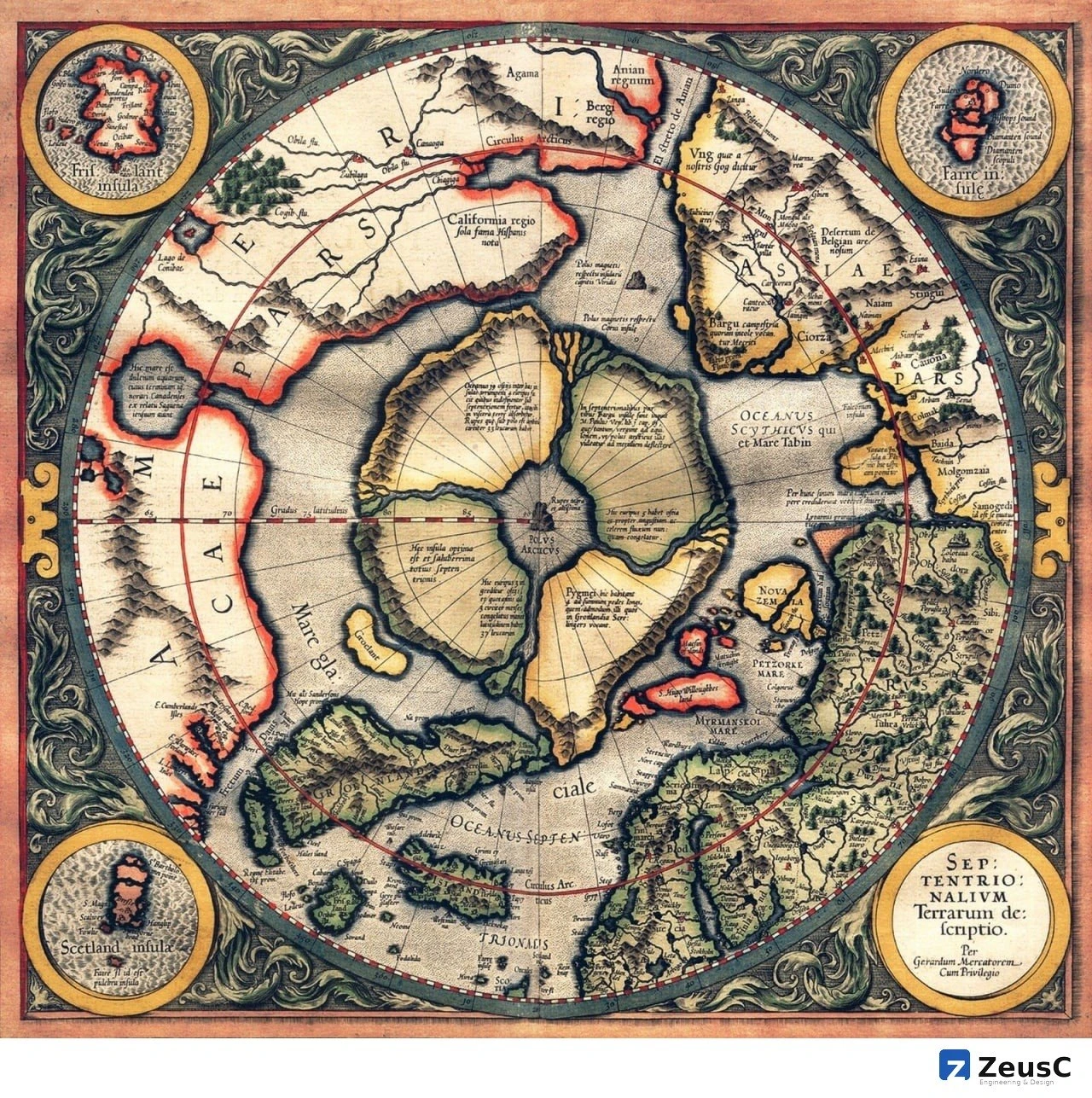
BOOK REFERENCE 2485
Mercator's Arctic: The Geography of a Historical Map
The Arctic map presents Mercator’s historical northern geography, including features later exploration revised. The completed HM1 discussion supplies its cartographic context. Read the map as evidence of a particular period’s sources and conventions. It is not a current…
Read the account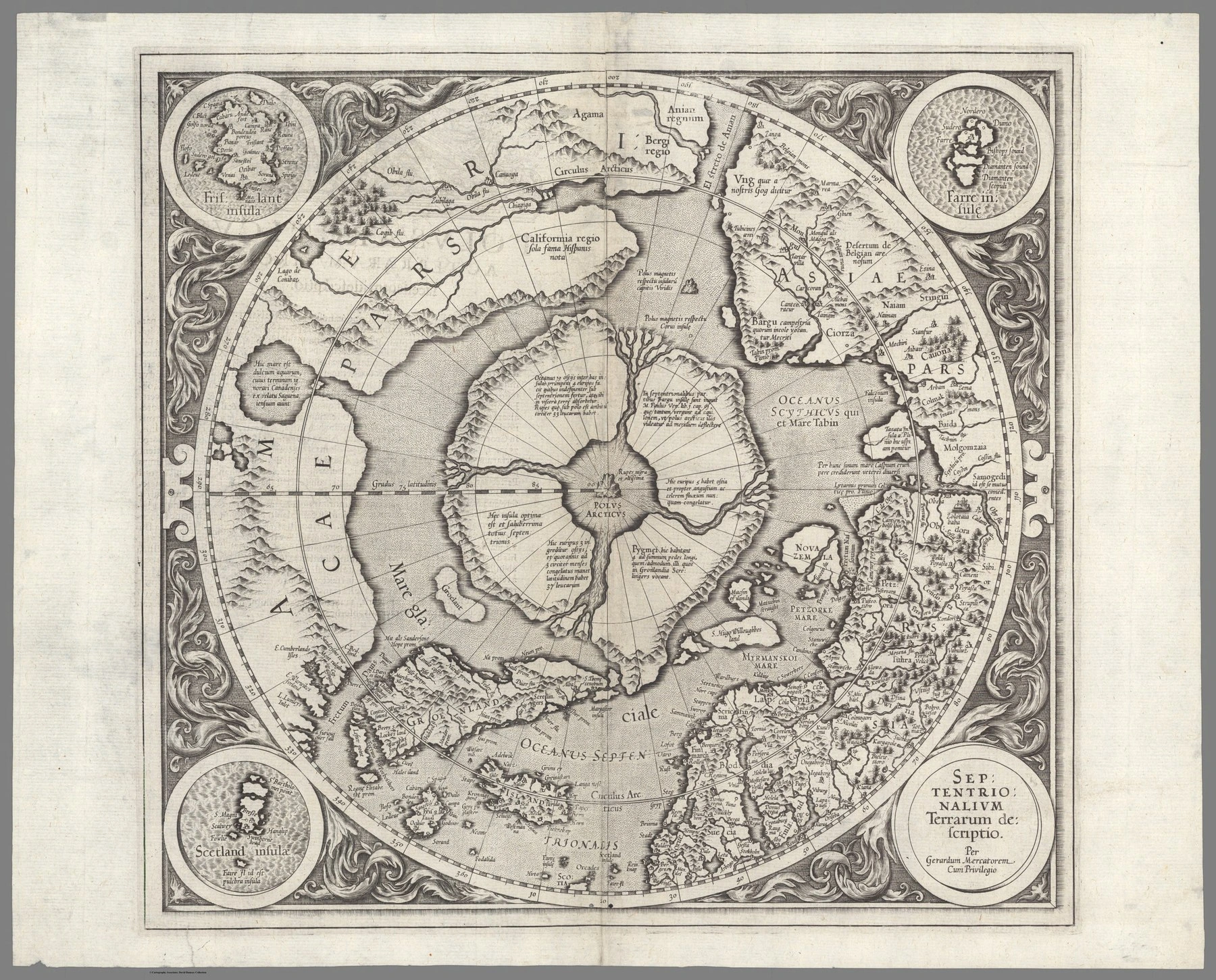
BOOK REFERENCE 2768
Mercator’s arctic: a beautiful error
1595 · first-state polar map · a surviving document of incomplete geographical knowledge
Read the account Source page
BOOK REFERENCE 2502
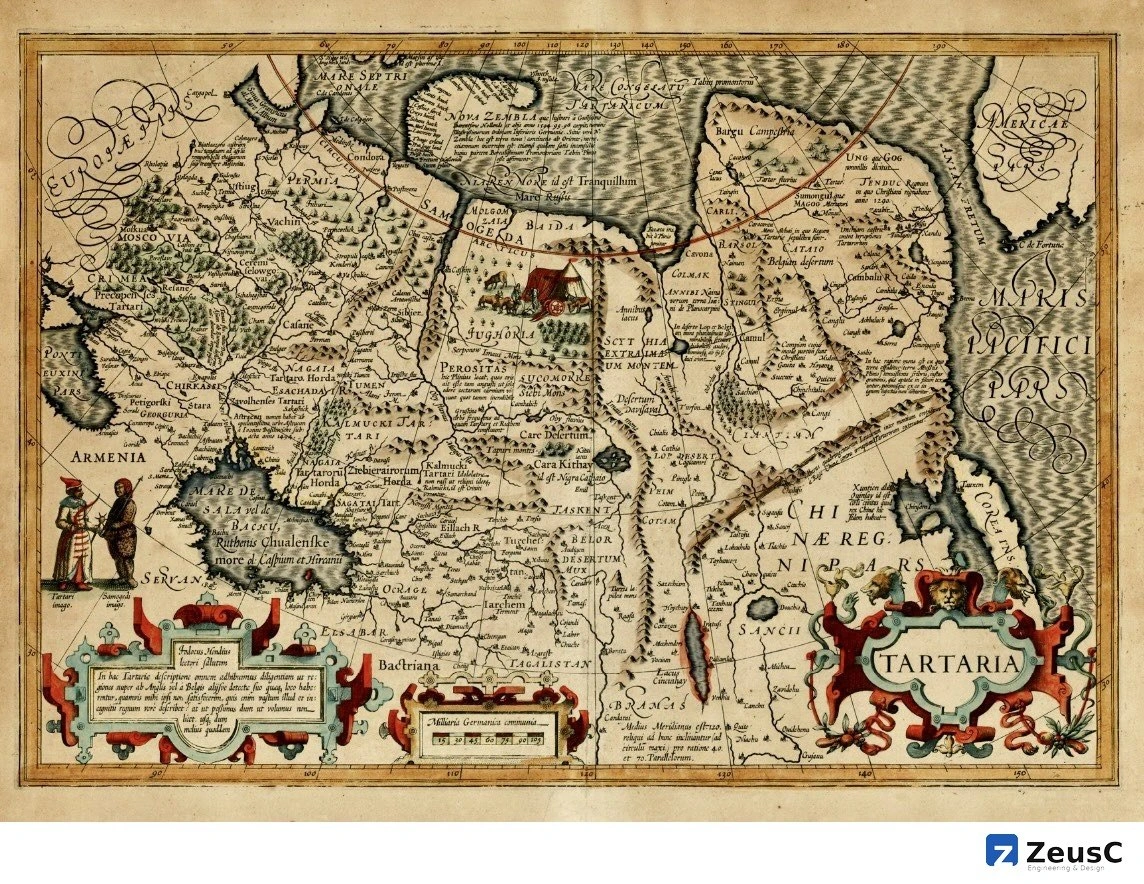
Mercator’s black rock at the pole
Here the main title has moved to the lower right. A signed address to the reader sits at lower left and a scale occupies a separate panel near the bottom centre. Two standing figures and tents to the north distinguish this design from the Ortelius plate. The University of…
Read the account- Source page
BOOK REFERENCE 1486
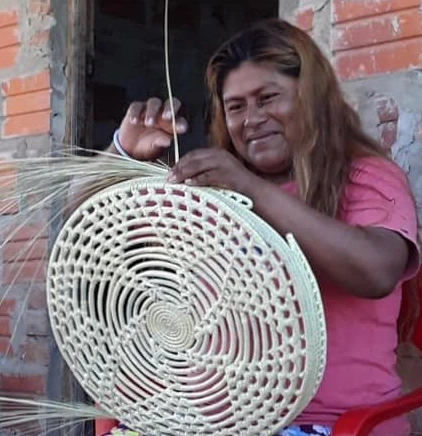
Micaela Sosa and the working leaf
The central leaf is separated into strips. Some strips form a bundle and a narrower working strip secures it.
Read the account Source page
BOOK REFERENCE 252
Mice, rats and the work a cat cannot replace
Cats may catch mice, small rodents, birds, reptiles and invertebrates, but individual hunting behaviour varies. There is no responsible breed table promising that a Maine Coon removes large rats or a Siamese clears a barn. Releasing more cats can harm wildlife without solving…
Read the account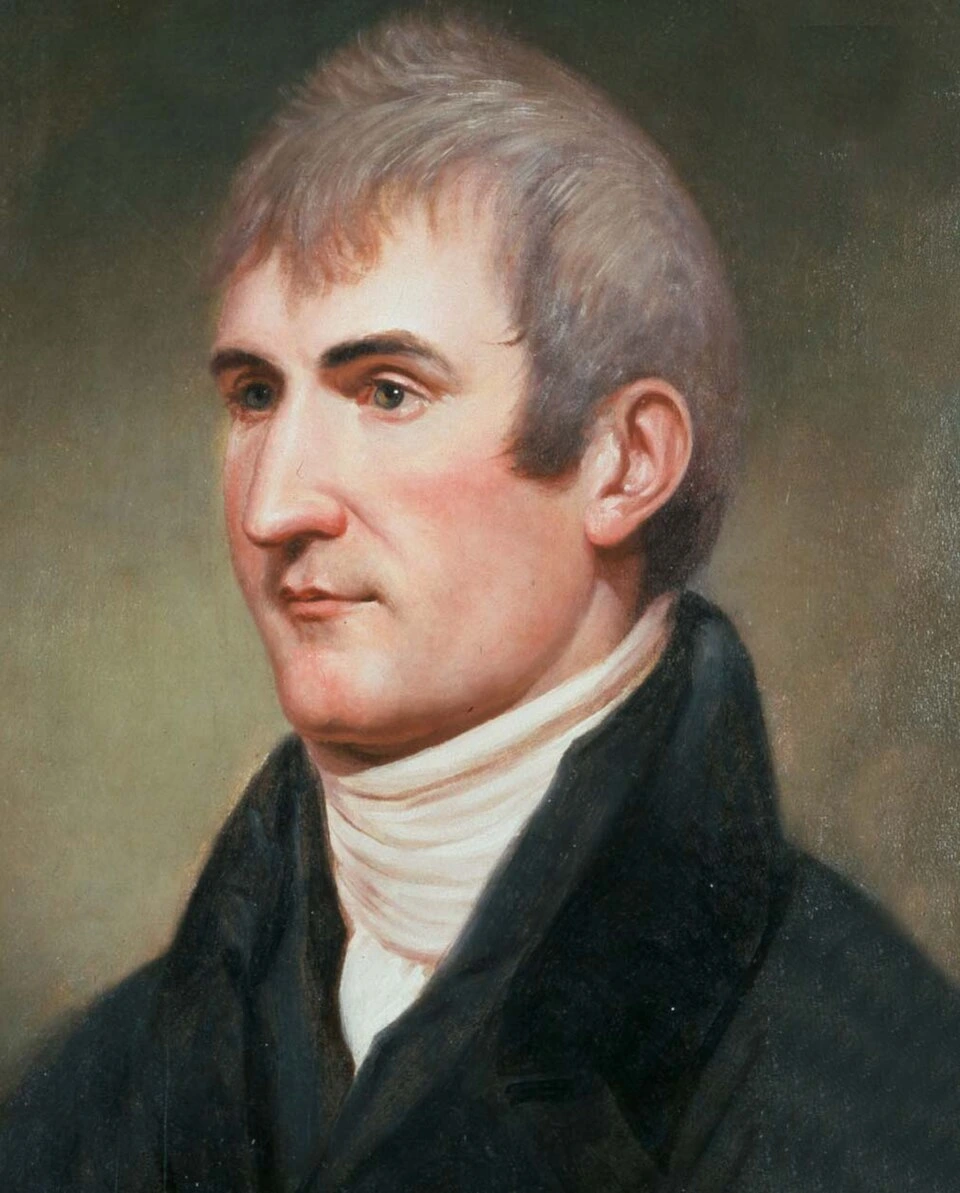
BOOK REFERENCE 983
Michaux’s printed branch: names and a measured batch
Charles Willson Peale’s portrait connects this chapter to the expedition journal.
Read the account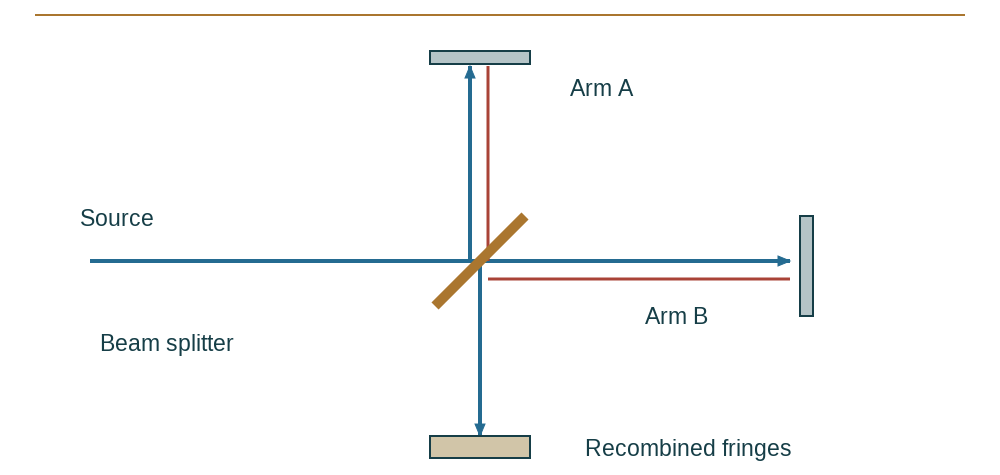
BOOK REFERENCE 2251
Michelson and Morley: the shift that failed to arrive
Albert A. Michelson; Edward W. Morley · Cleveland, Ohio, United States. Contemporary explanatory plate; geometry is schematic unless dimensions are printed.
Read the account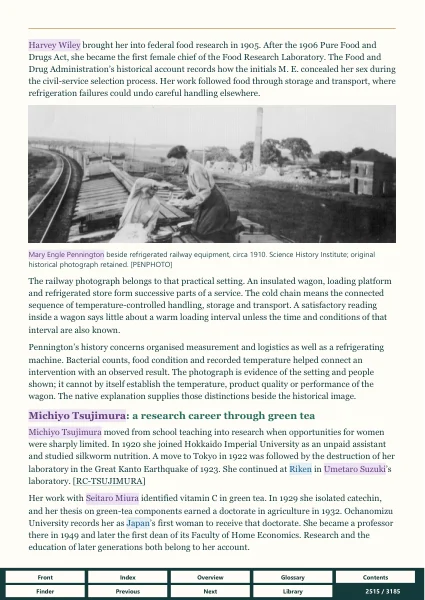 Source page
BOOK REFERENCE 2515
Michiyo Tsujimura: a research career through green tea
Michiyo Tsujimura moved from school teaching into research when opportunities for women were sharply limited. In 1920 she joined Hokkaido Imperial University as an unpaid assistant and studied silkworm nutrition. A move to Tokyo in 1922 was followed by the destruction of her…
Read the account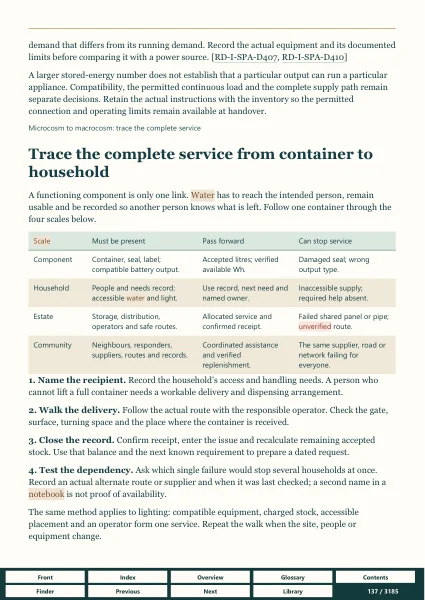 Source page
BOOK REFERENCE 137
Microcosm to macrocosm: trace the complete service
A functioning component is only one link. Water has to reach the intended person, remain usable and be recorded so another person knows what is left. Follow one container through the four scales below.
Read the account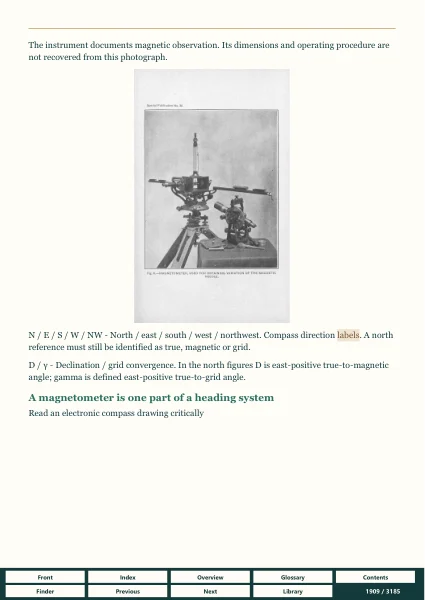 Source page
BOOK REFERENCE 1180
mijo dedo
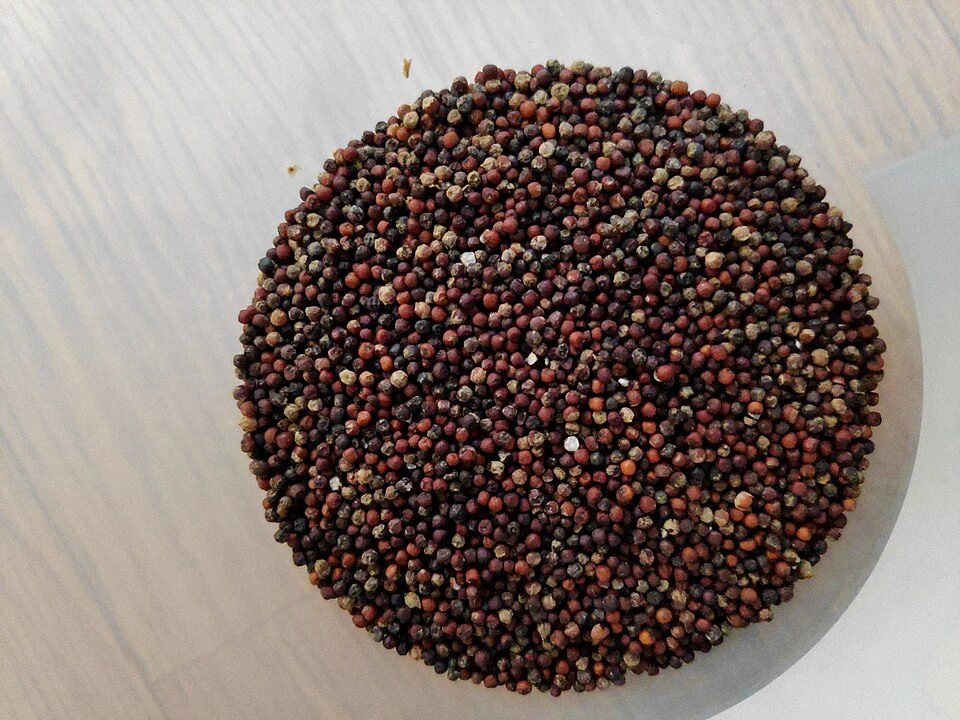
Several narrow spikes radiate from the top of a stem like fingers. The grains are much smaller than the prominent seed head seen in a standing crop.
Read the account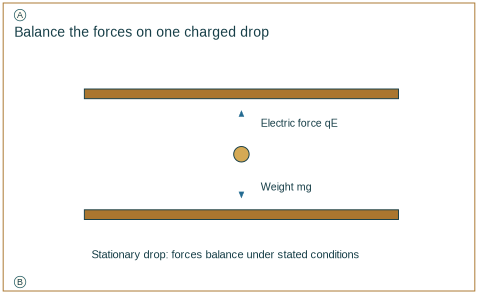
BOOK REFERENCE 2233
Millikan and Fletcher: one drop, several charge states
Robert A. Millikan; Harvey Fletcher · University of Chicago, United States. Contemporary explanatory plate; geometry is schematic unless dimensions are printed.
Read the account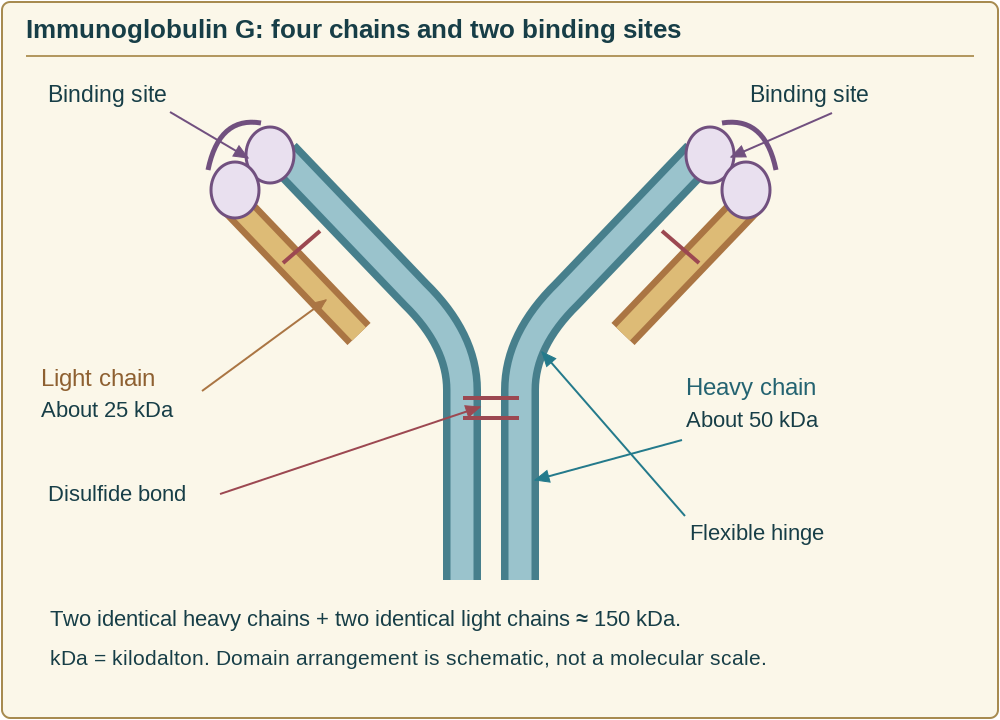
BOOK REFERENCE 2560
Milstein and the difference between a band and an identity
Immunoglobulin G (IgG) has two heavy and two light polypeptide chains. Heavy chains are about 50 kilodaltons (kDa) each and light chains about 25 kDa each; the intact molecule is about 150 kDa. Disulfide bonds link the chains. These are approximate molecular masses, not a…
Read the account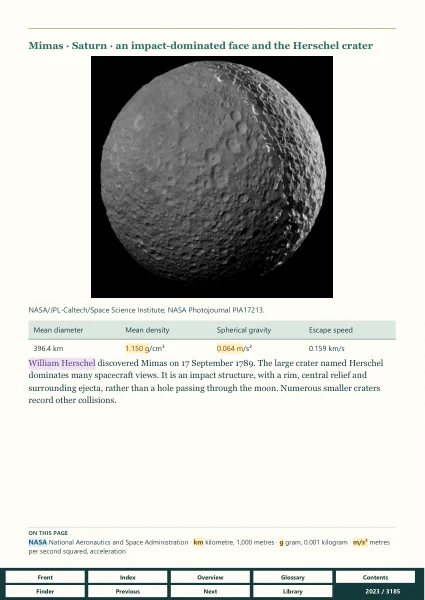 Source page
- Source page
BOOK REFERENCE 2023
Mimas: Saturn · an impact-dominated face and the Herschel crater
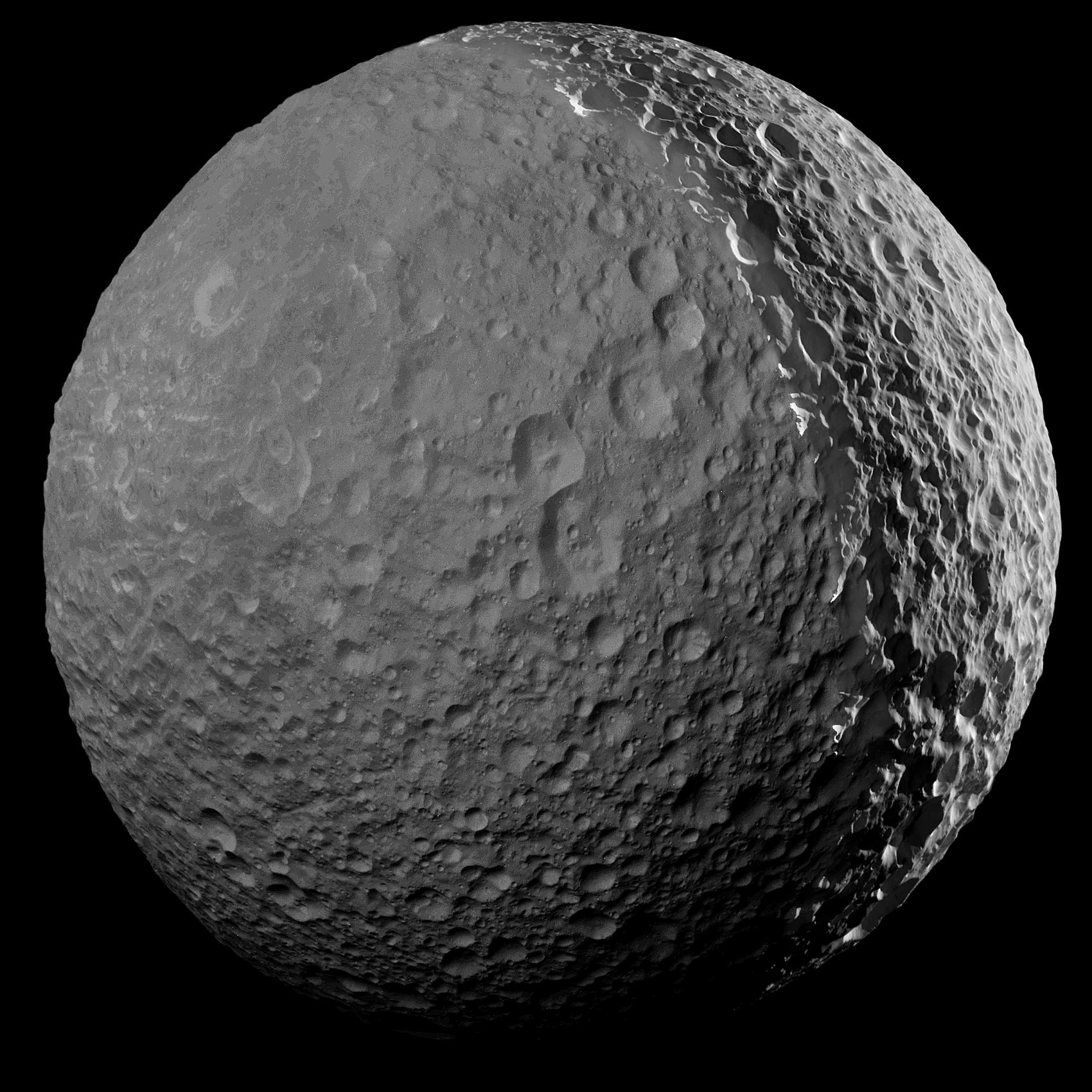
William Herschel discovered Mimas on 17 September 1789. The large crater named Herschel dominates many spacecraft views. It is an impact structure, with a rim, central relief and surrounding ejecta, rather than a hole passing through the moon. Numerous smaller craters record…
Read the account Source page
- Source page
 Source page
 Source page
- Source page
- Source page
 Source page
- Source page
BOOK REFERENCE 2021
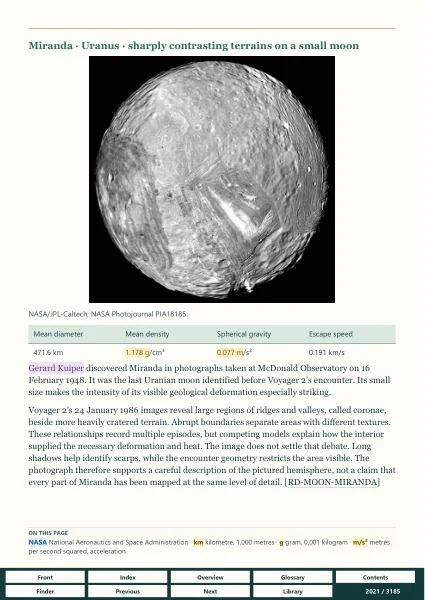
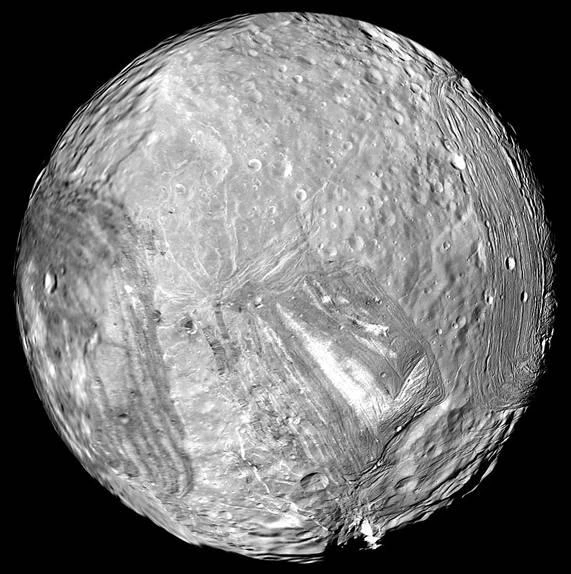
Miranda: Uranus · sharply contrasting terrains on a small moon
Gerard Kuiper discovered Miranda in photographs taken at McDonald Observatory on 16 February 1948. It was the last Uranian moon identified before Voyager 2’s encounter. Its small size makes the intensity of its visible geological deformation especially striking.
Read the account Source page
BOOK REFERENCE 2614
Molecular polarity and solvent behaviour
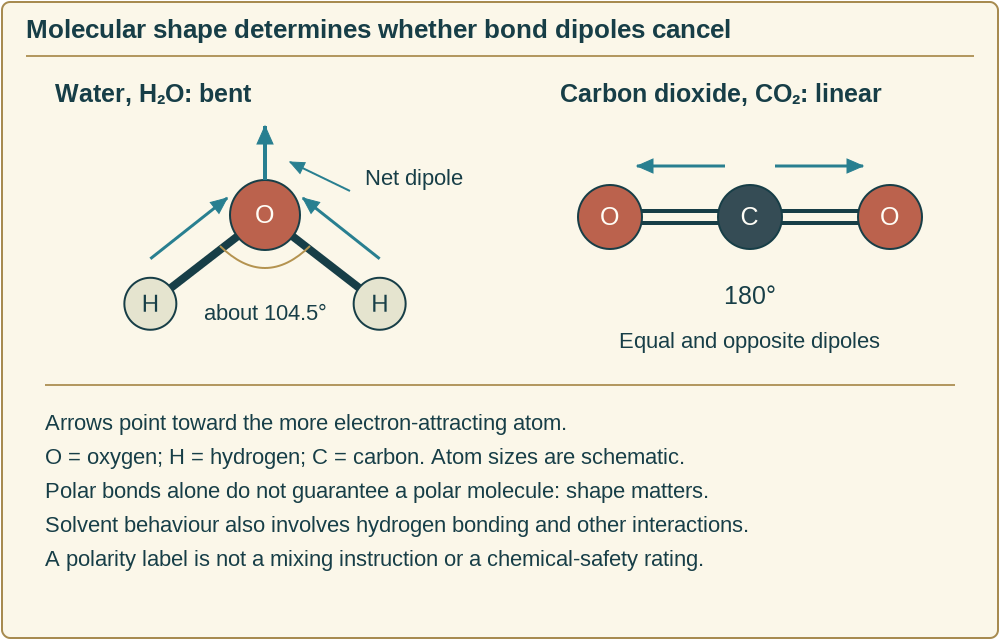
Molecular polarity depends on the arrangement of polar bonds. Water has a bent arrangement and a net molecular dipole. The two carbon-oxygen bond dipoles in linear carbon dioxide cancel by symmetry. The new drawing makes that vector distinction explicit. [RG-POLARITY]
Read the account