

Select a subject or page number to open the reading book. People, places, methods and materials share this alphabetical route.
Complete A–Z index: search every subject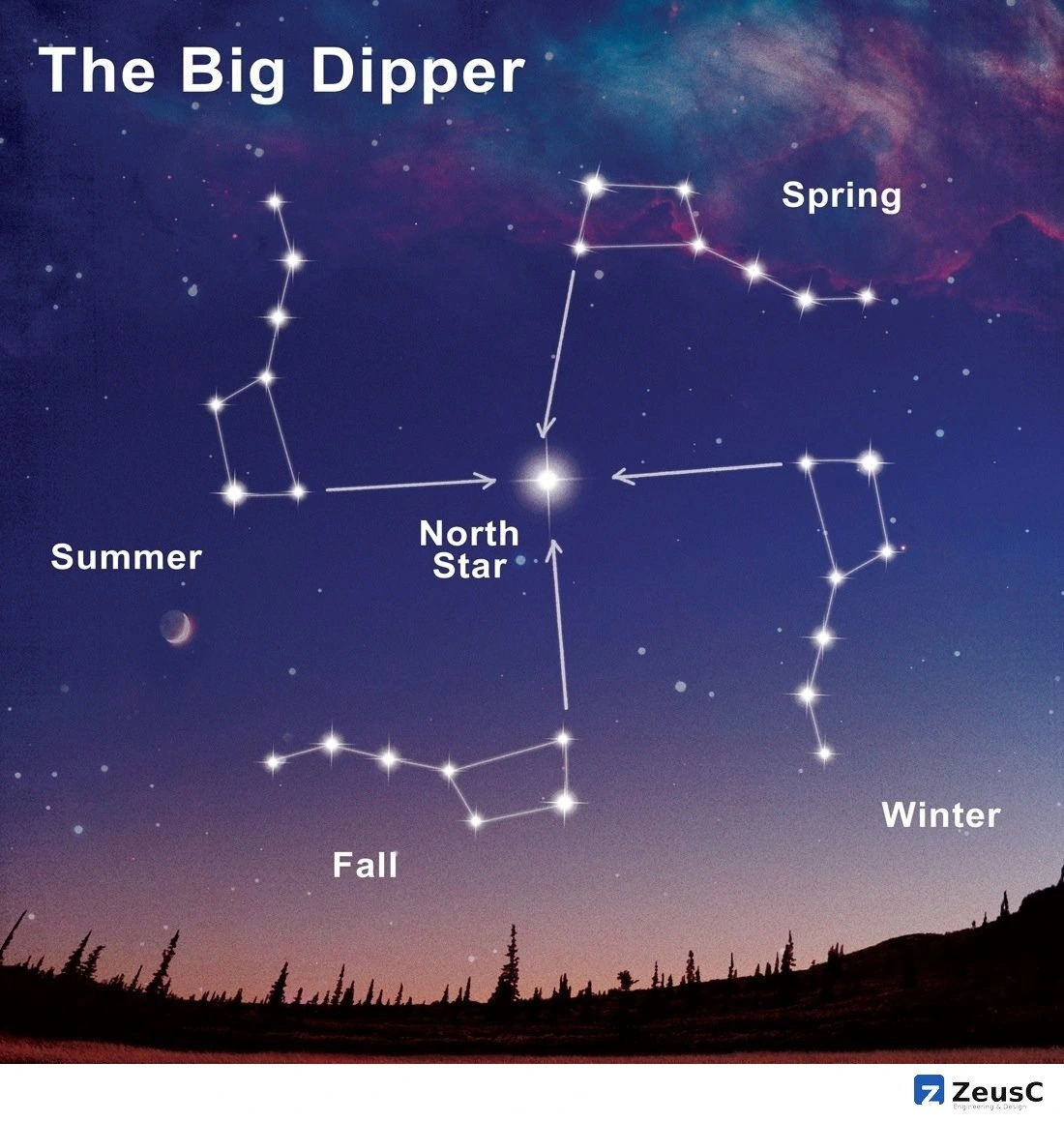
BOOK REFERENCE 2399
the Big Dipper and the northern pole
Season names refer to a northern teaching graphic. It cannot provide an Argentine pole sighting or a universal time reading.
Read the account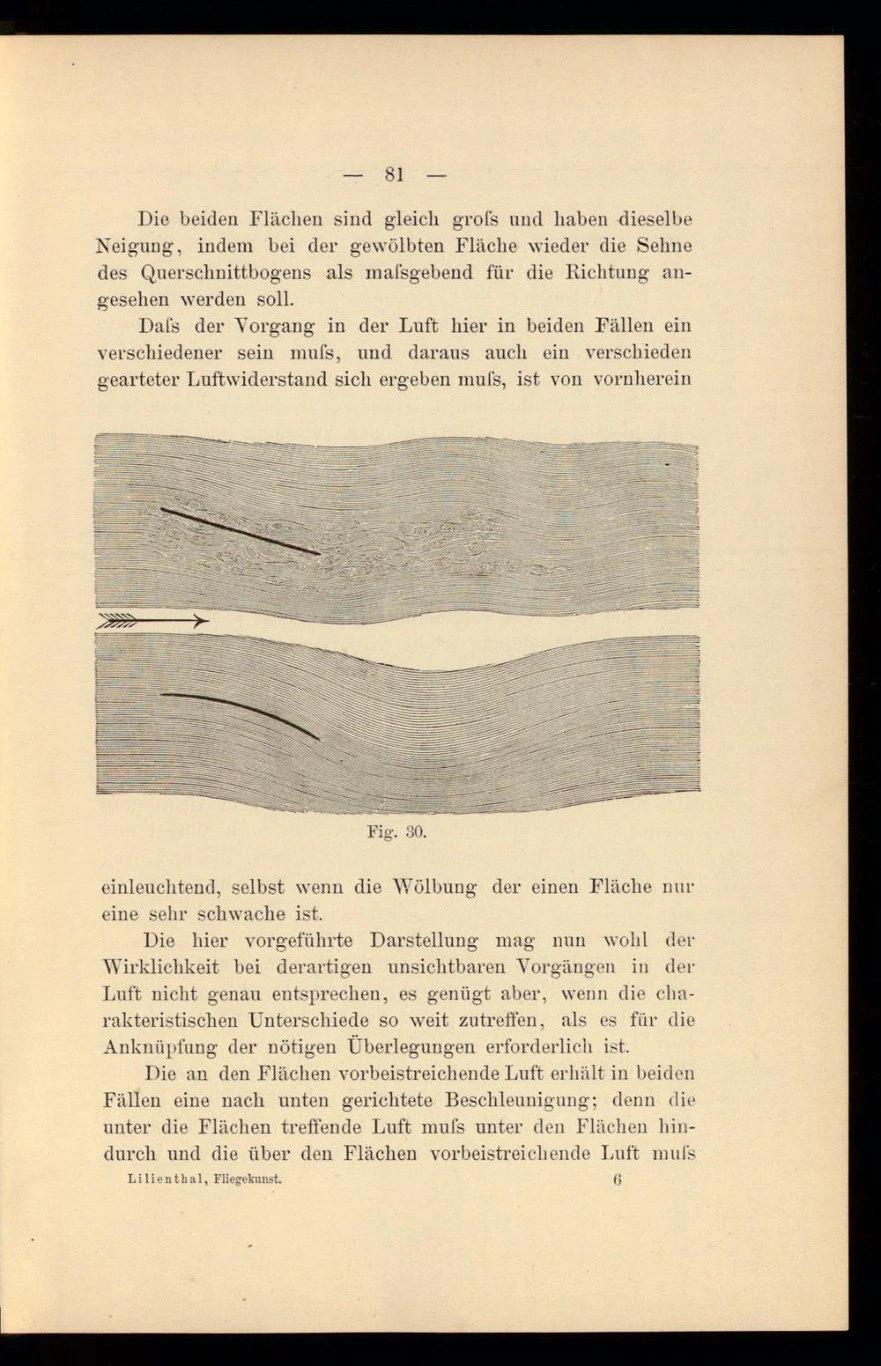
BOOK REFERENCE 2153
The biomedical tool map supplied by ZeusC
Figure 30 on printed page 81 illustrates Lilienthal’s interpretation of airflow. This historical drawing should not be confused with a modern flow simulation.
Read the account Source page
 Source page
BOOK REFERENCE 958
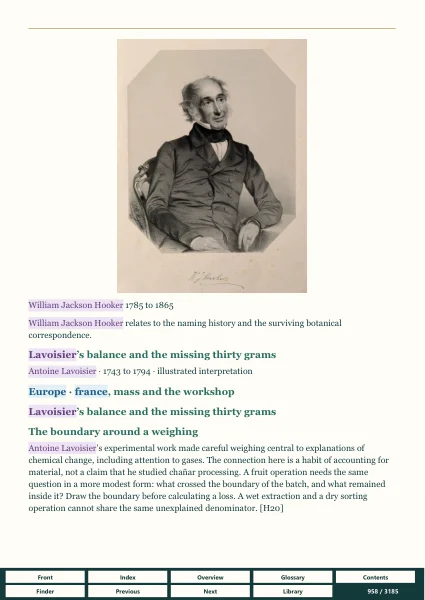
The boundary around a weighing
Antoine Lavoisier’s experimental work made careful weighing central to explanations of chemical change, including attention to gases. The connection here is a habit of accounting for material, not a claim that he studied chañar processing. A fruit operation needs the same…
Read the account
BOOK REFERENCE 979
The branch carries a cluster, not a single clue
Chokecherry is a woody Prunus with simple leaves and elongated flower clusters called racemes. A mature fruit is a drupe: flesh surrounds a hard stone containing a seed. Examine the whole plant, leaf arrangement, leaf margins, flowers or fruit, bark, habitat and a suitable…
Read the account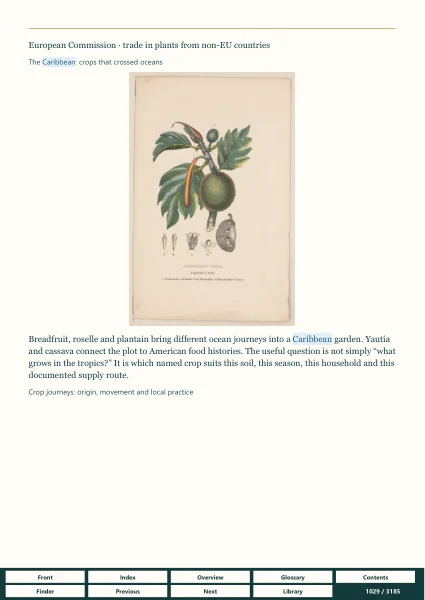 Source page
BOOK REFERENCE 1029
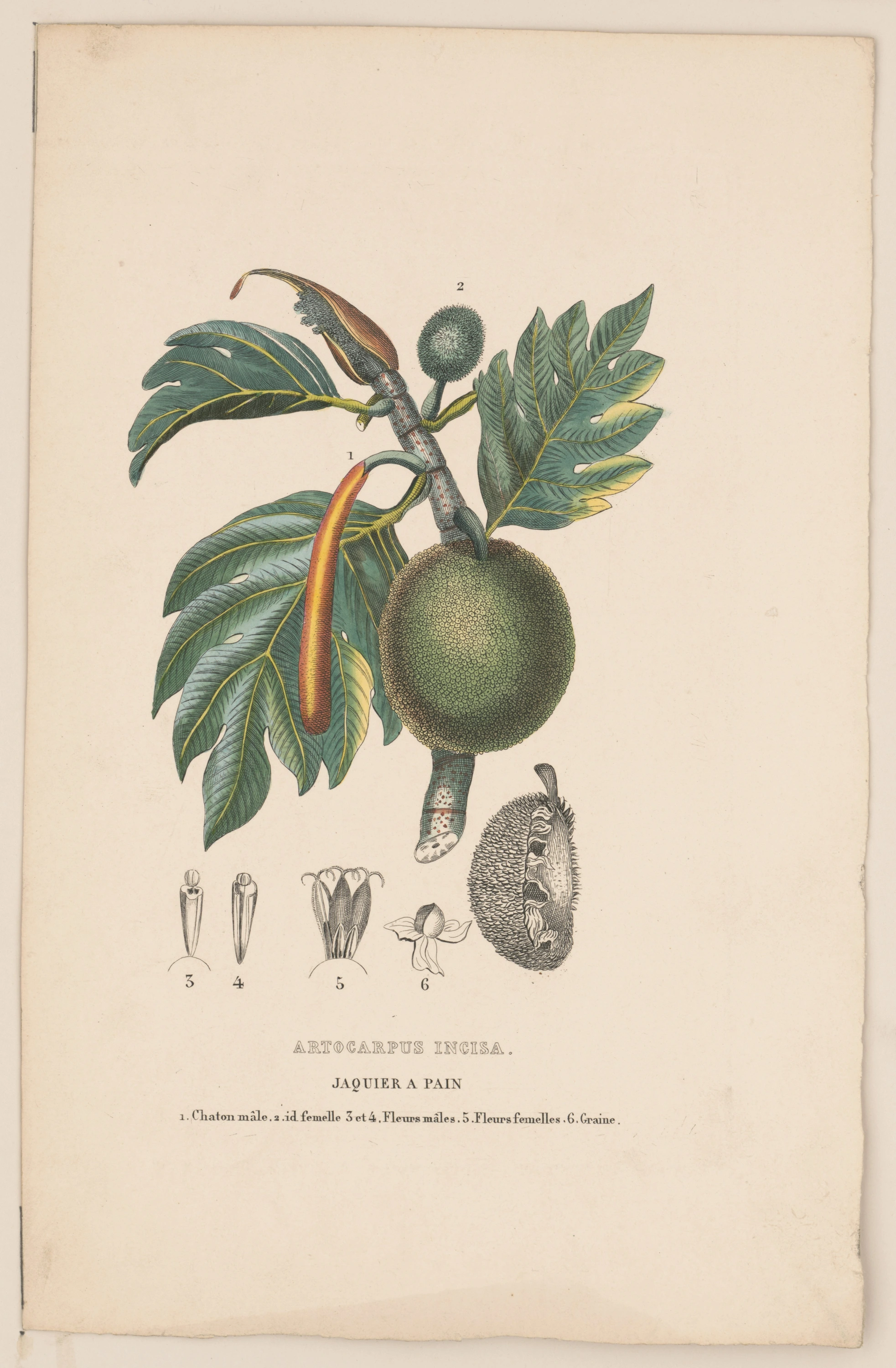
The Caribbean: crops that crossed oceans
Breadfruit, roselle and plantain bring different ocean journeys into a Caribbean garden. Yautía and cassava connect the plot to American food histories. The useful question is not simply “what grows in the tropics?” It is which named crop suits this soil, this season, this…
Read the account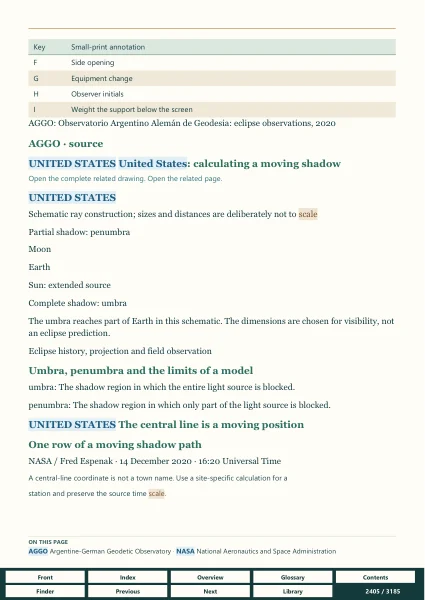 Source page
 Source page
 Source page
BOOK REFERENCE 2304
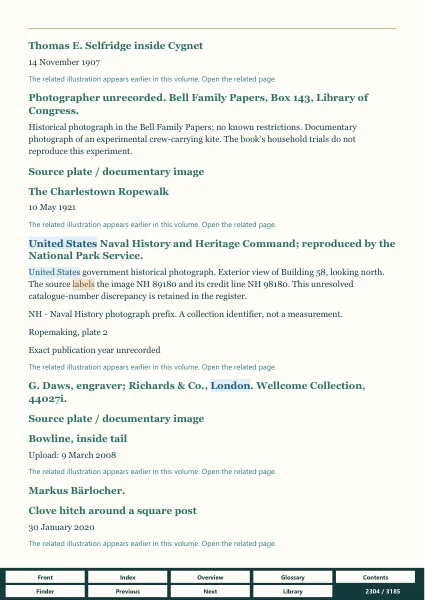
The Charlestown Ropewalk
United States government historical photograph. Exterior view of Building 58, looking north. The source labels the image NH 89180 and its credit line NH 98180. This unresolved catalogue‐number discrepancy is retained in the register.
Read the account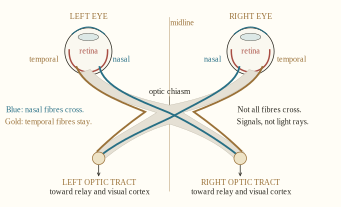
BOOK REFERENCE 2959
The Chiasm Without the Symbolic Overlay
Read the legend before tracing Blue represents selected nasal retinal fibres; gold represents temporal fibres. These colours identify pathways, not the colour of light seen. The pathways shown are a simplified topological explanation, not a surgical map, exact tissue shape or…
Read the account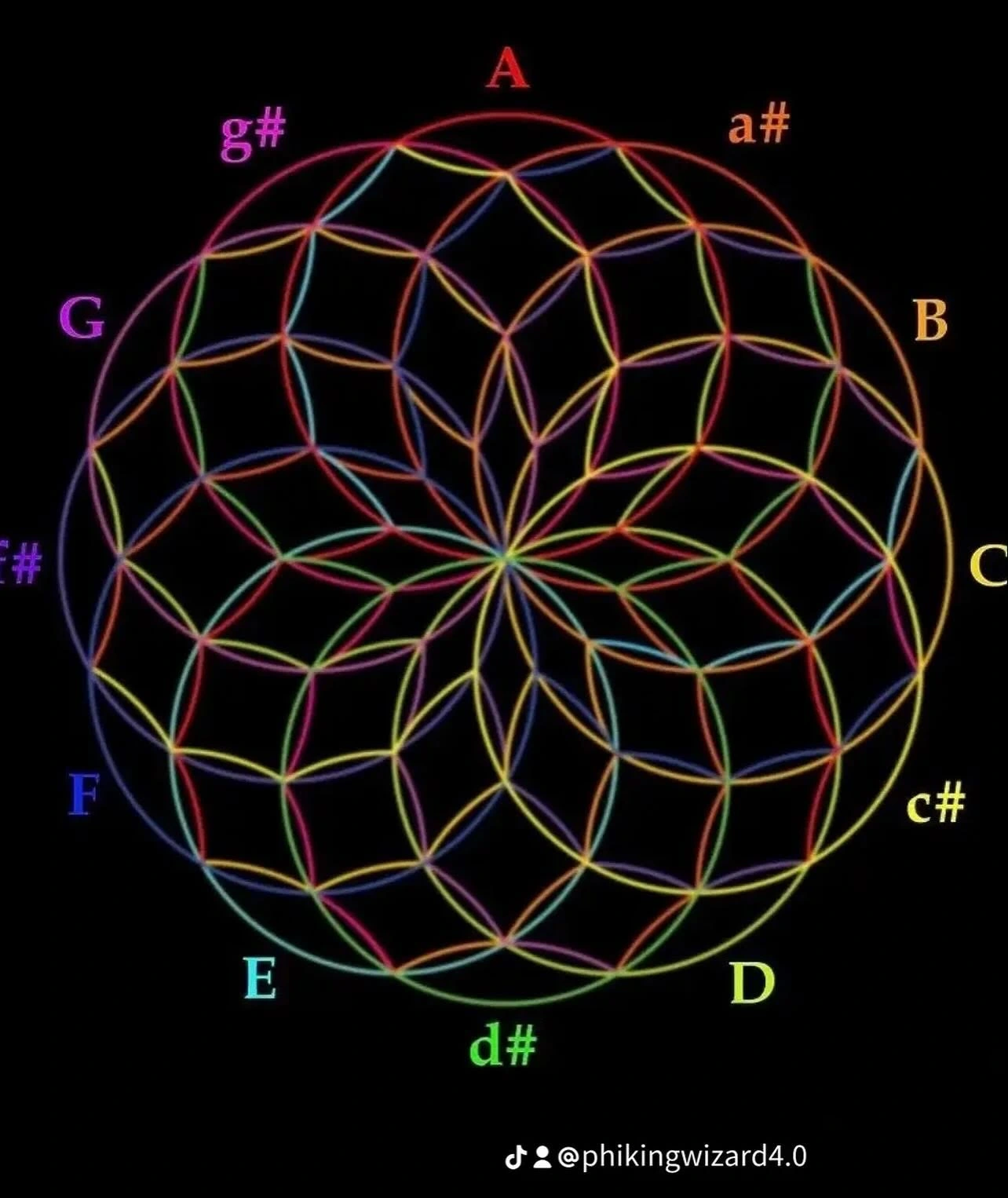
BOOK REFERENCE 2951
The Chromatic Wheel: Notes, Intervals & Colour
Read the notes around the rim Starting with A at the top and moving clockwise, the labels proceed A#, B, C, C#, D, D#, E, F, F#, G and G#. They form the twelve pitch classes of a chromatic octave. The interior is a rosette of intersecting coloured arcs. It is not the circle…
Read the account Source page
BOOK REFERENCE 2193
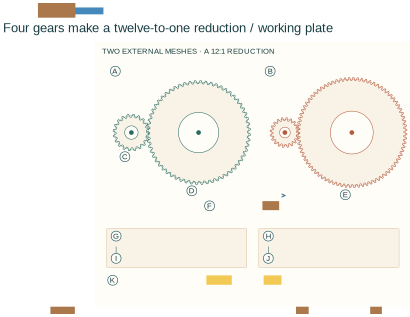
The clockmaker’s bench: counted parts and checks
Key · Small-print annotation. A · PLANE A
Read the account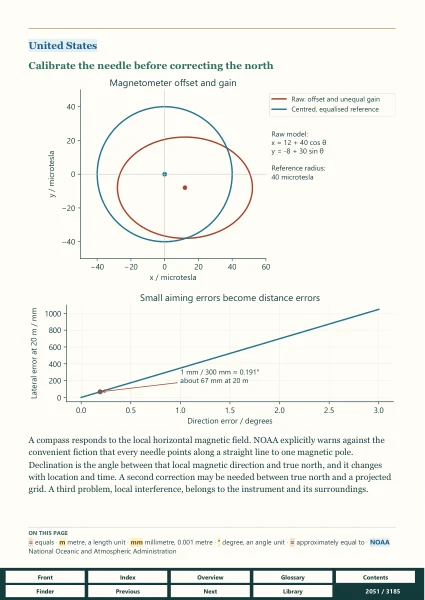 Source page
BOOK REFERENCE 2051
The closing error is a measurement you should keep
A compass responds to the local horizontal magnetic field. NOAA explicitly warns against the convenient fiction that every needle points along a straight line to one magnetic pole. Declination is the angle between that local magnetic direction and true north, and it changes…
Read the account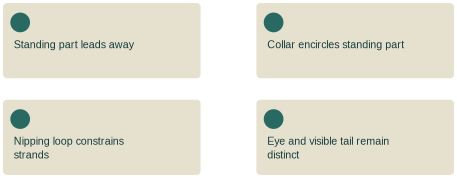
BOOK REFERENCE 2295
The collar and the tail answer different questions
The inspection diagram names the eye, collar, nipping loop and tail. Its arrows identify parts rather than a rated load path.
Read the account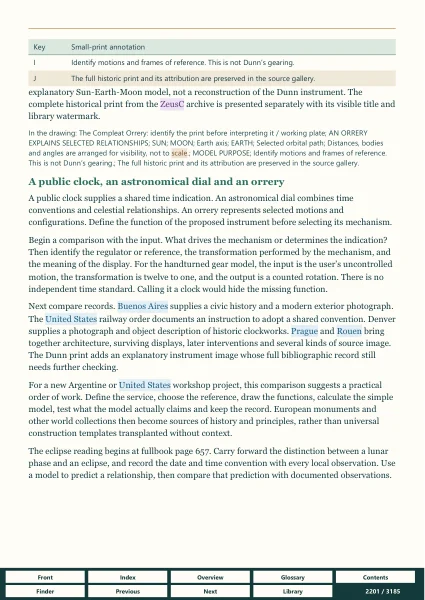 Source page
BOOK REFERENCE 2199
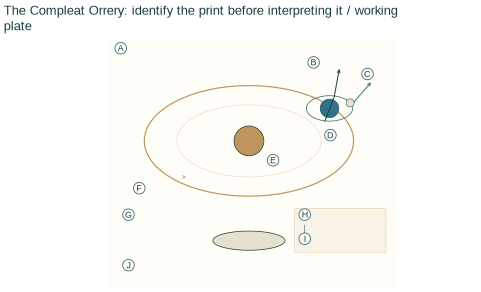
The Compleat Orrery: identify the print before interpreting it
ZeusC sheet 397 bears the title The Compleat Orrery, Described, By S. Dunn and a Library Nacional de España watermark. Jadranka Ryle’s published facsimile identifies Samuel Dunn, publisher Robert Wilkinson, London, 1780. That facsimile supplies the bibliographic…
Read the account Source page
- Source page
- Source page
BOOK REFERENCE 588
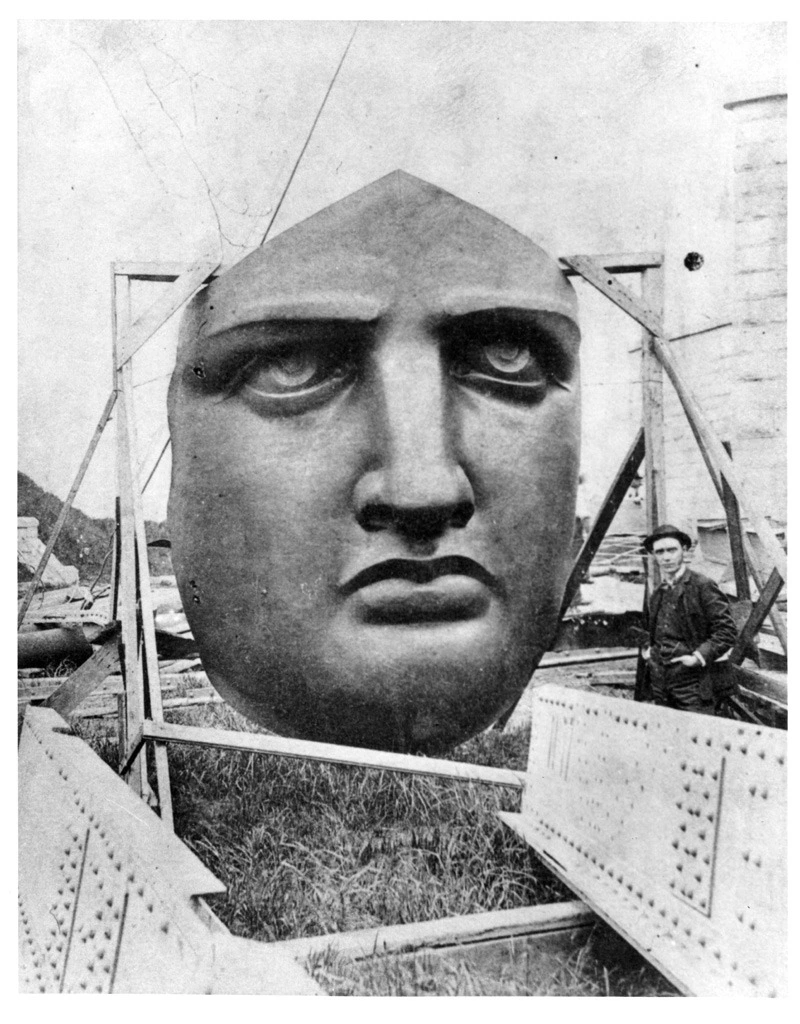
The copper skin behind Liberty’s expression
Face of the Statue of Liberty before installation Photographer unrecorded, National Park Service collection / before final installation in 1886 Public domain, historical image
Read the account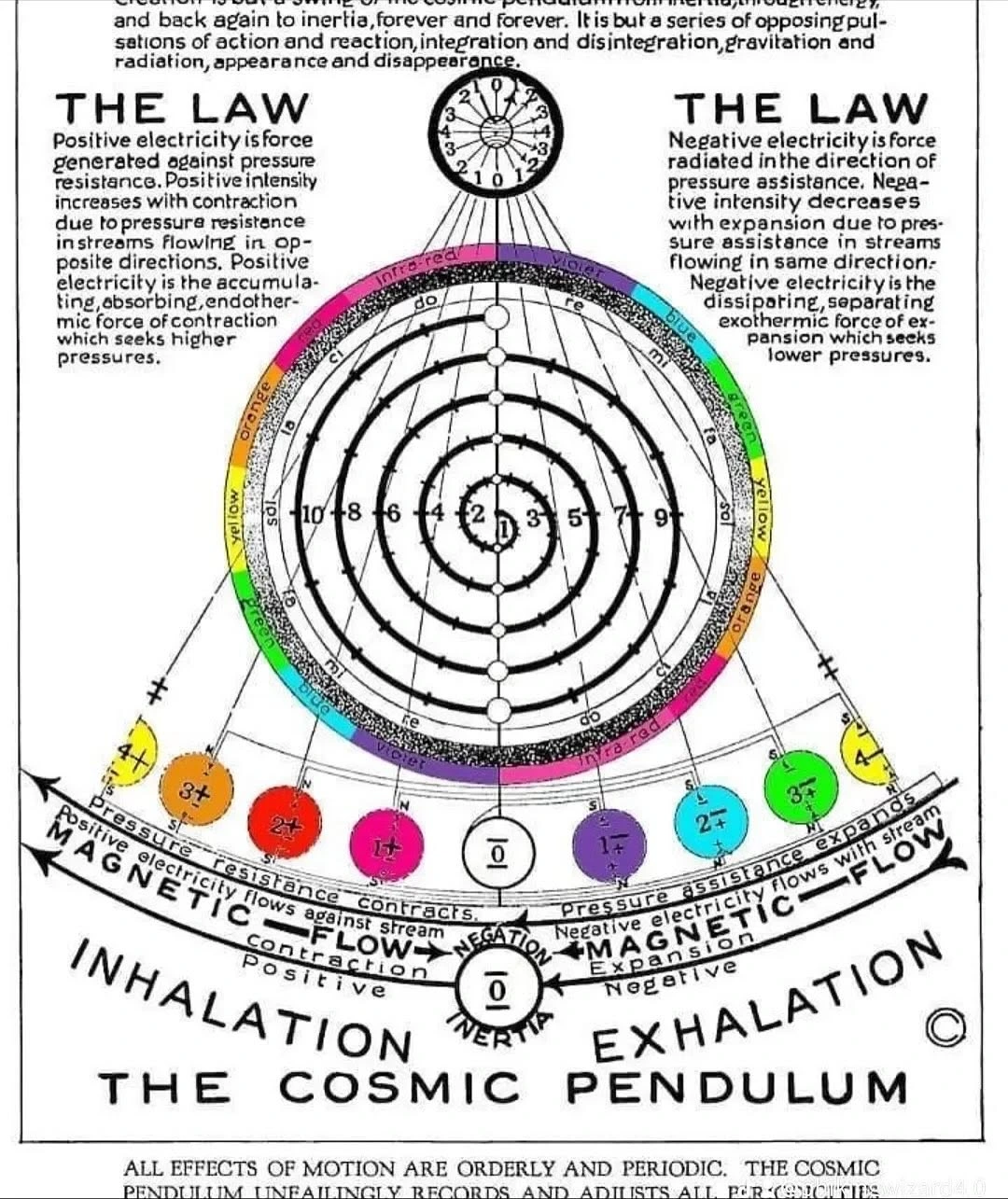
BOOK REFERENCE 2956
The Cosmic Pendulum & a Testable Oscillation
Read the chart from rim to centre Two upper text blocks contrast positive and negative electricity through pressure, contraction and expansion. A central spiral is numbered across its diameter, surrounded by colour words and musical syllables. Lines connect it to a curved row…
Read the account Source page
BOOK REFERENCE 3162
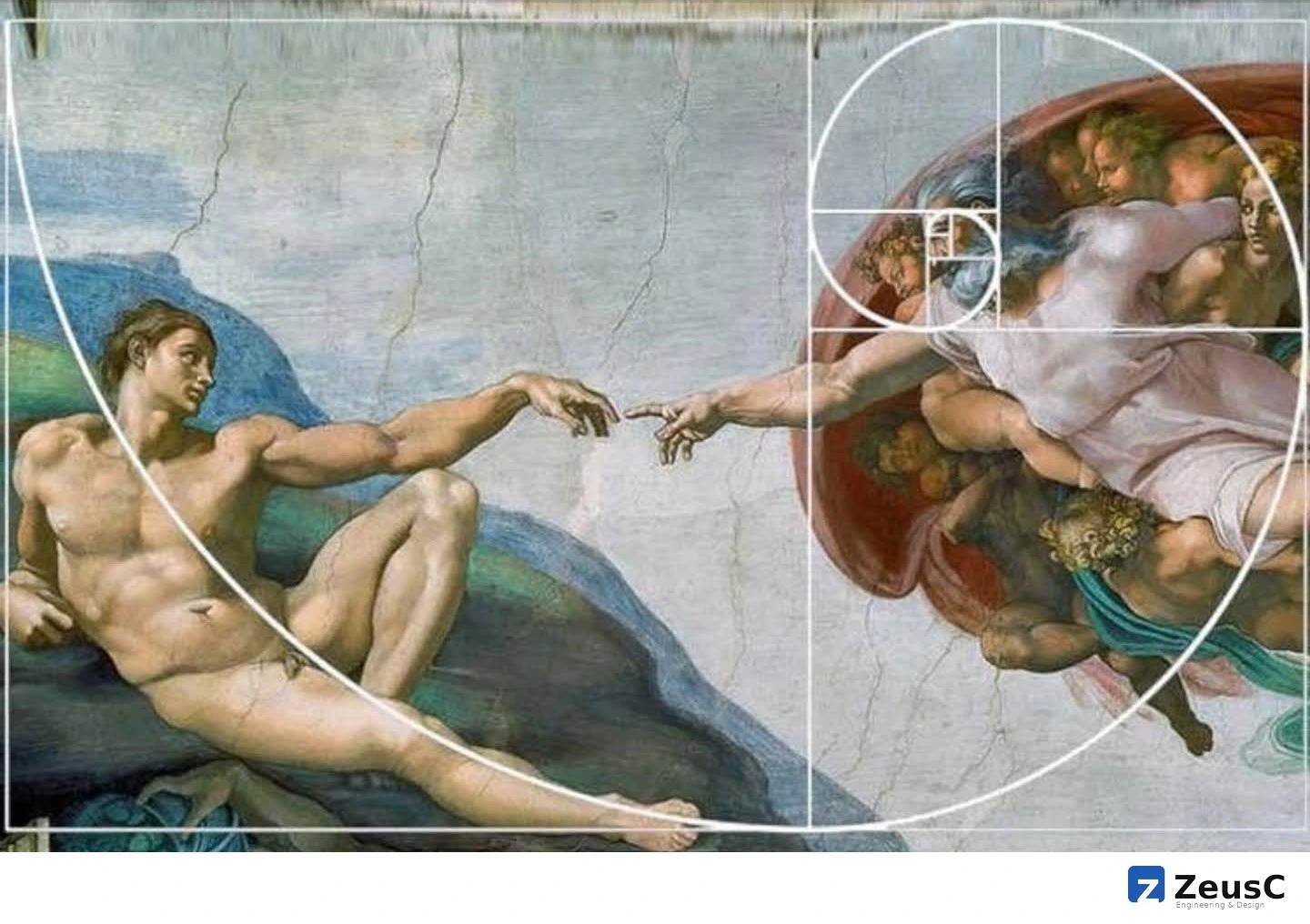
The Creation of Adam with a spiral overlay
The underlying image is Michelangelo’s Creation of Adam in the Sistine Chapel ceiling. The Vatican documents the ceiling’s completion by late October 1512. The spiral is a later analytic overlay, not visible proof of the artist’s intended construction. Establish the chosen…
Read the account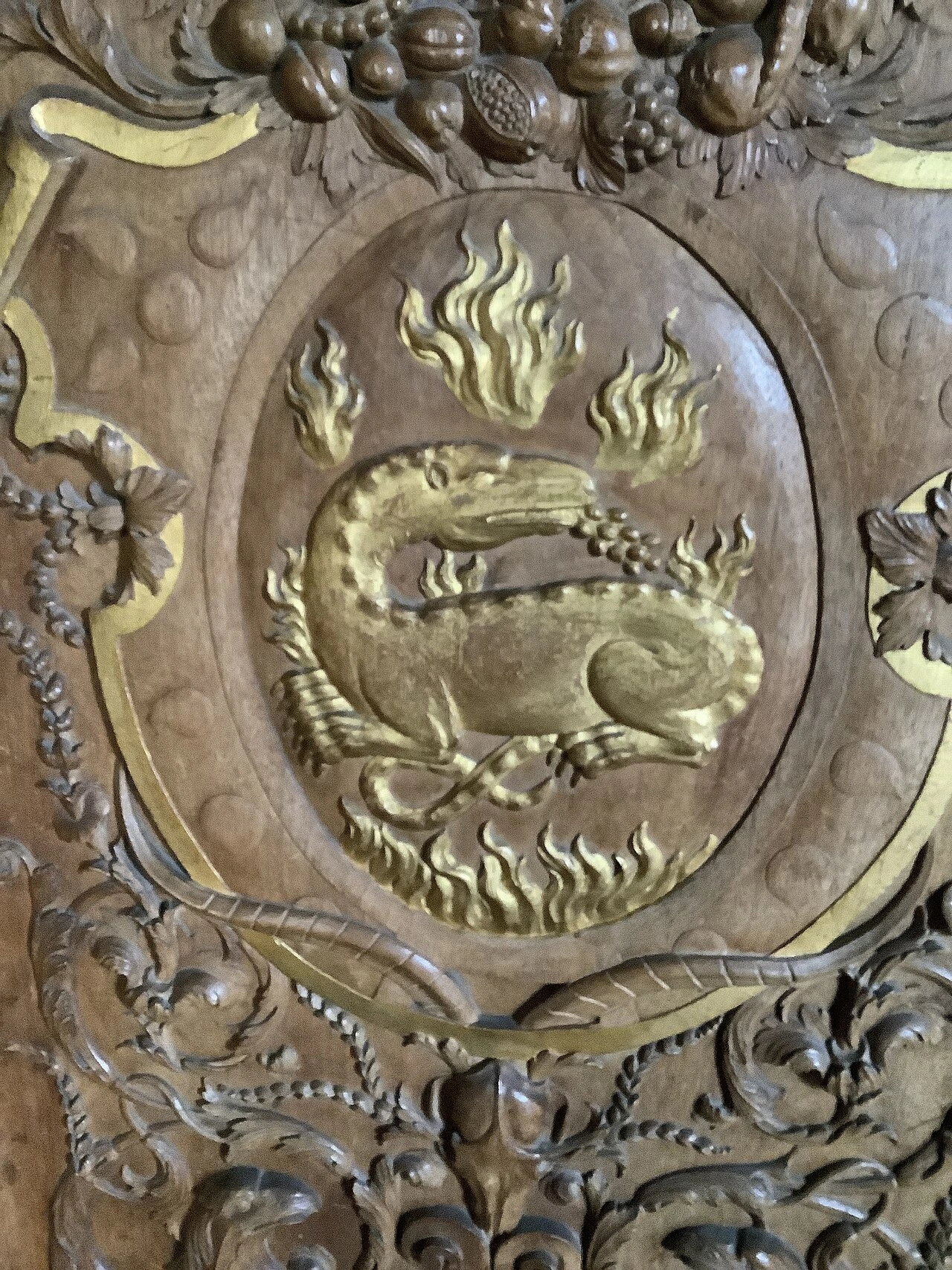
BOOK REFERENCE 579
The crowned salamander of Francis I
The crowned salamander belongs to the royal imagery associated with Francis I. The photograph records a carved architectural detail. It does not show a real animal surviving in fire.
Read the account Source page
 Source page
BOOK REFERENCE 952
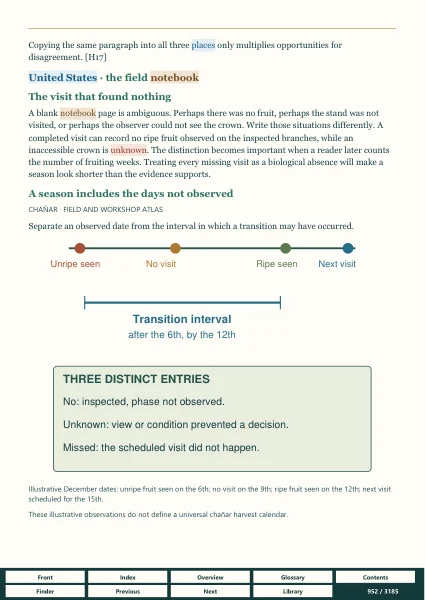
The day between two visits
The Argentine biodiversity record cites a Lihué Calel source for flowering in October and November and fruiting in November and December. That is a regional observation, not a calendar for every chañar stand. The fruit photograph retained here was taken in La Rioja on 13…
Read the account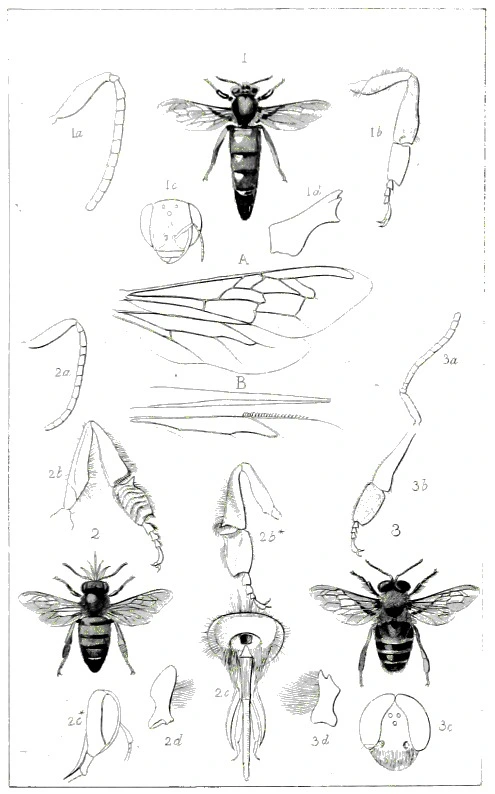
BOOK REFERENCE 889
The days inside a worker cell
An egg rests at the base of the cell. After hatching, a larva receives food from adult workers. The workers then cap the cell. Inside it the larva spins a cocoon and changes into a pupa before the new adult cuts through the capping. A worker commonly takes about 21 days from…
Read the account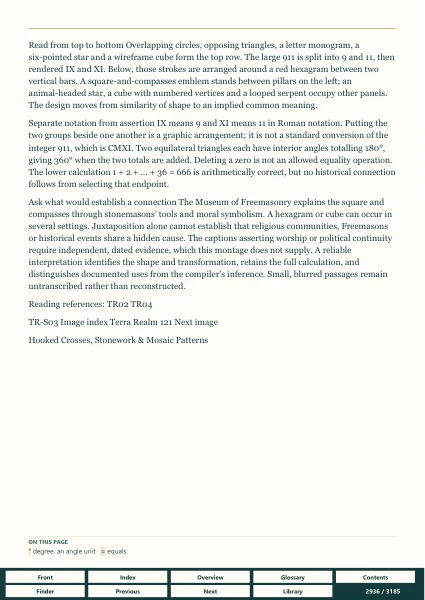 Source page
BOOK REFERENCE 1970
The Dunhuang atlas: precise stars beside cloud divination
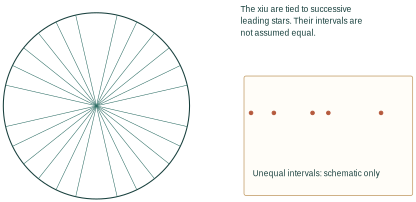
Compare a modern equal-angle wheel with a historically defined leading-star register
Read the account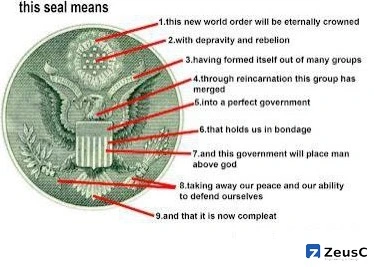
BOOK REFERENCE 3094
The Eagle and a Modern Commentary on the Great Seal
The eagle is surrounded by added claims about government, power and bondage. Separate the original emblem from this later commentary. Documentary records can establish when a design was approved and how its makers described it, the modern arrows cannot replace those records.…
Read the account
BOOK REFERENCE 2671
The earlier soap photograph, with its real provenance
Photograph 13 July 2005; derivative 2020
Read the account
BOOK REFERENCE 2770
The eclipse: from symbol to geometry
A solar eclipse occurs when the Moon passes between Earth and the Sun. During totality, it covers the bright solar disc for an observer in the central shadow, allowing the solar corona to become visible. The Moon’s tilted orbit means that most new moons do not produce a solar…
Read the account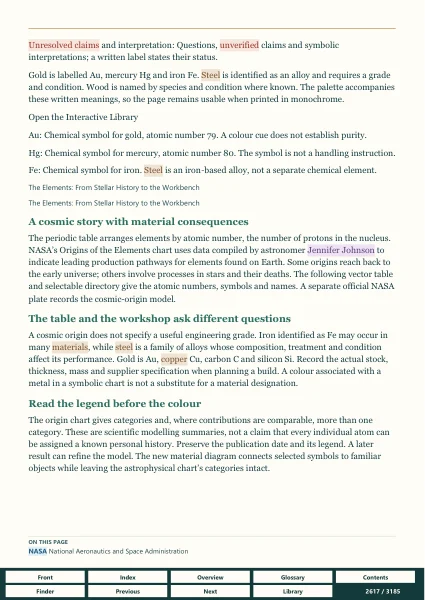 Source page
BOOK REFERENCE 2617
The Elements: From Stellar History to the Workbench
The periodic table arranges elements by atomic number, the number of protons in the nucleus. NASA’s Origins of the Elements chart uses data compiled by astronomer Jennifer Johnson to indicate leading production pathways for elements found on Earth. Some origins reach back to…
Read the account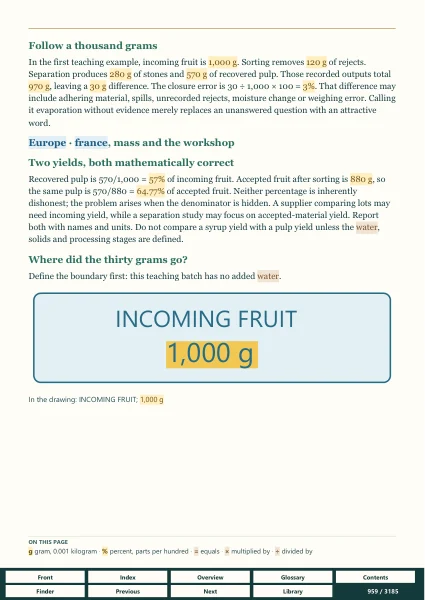 Source page
 Source page
BOOK REFERENCE 927
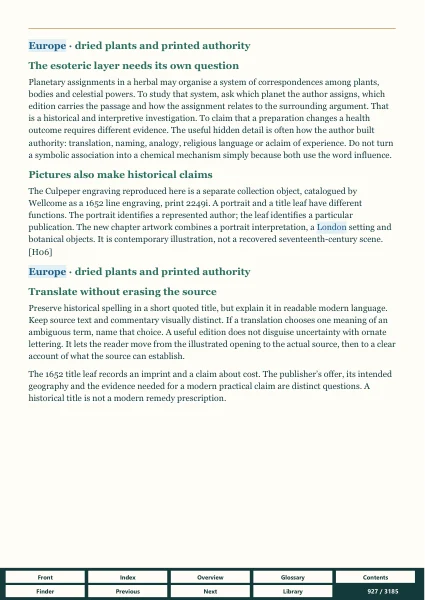
The esoteric layer needs its own question
Planetary assignments in a herbal may organise a system of correspondences among plants, bodies and celestial powers. To study that system, ask which planet the author assigns, which edition carries the passage and how the assignment relates to the surrounding argument. That…
Read the account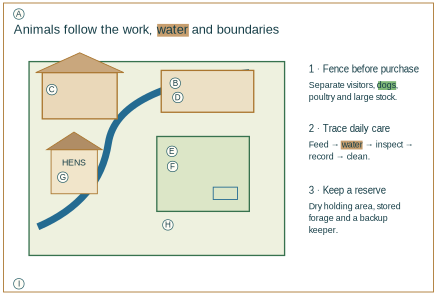
BOOK REFERENCE 184
The estate is a living system: animals, work and a yearly account
A new site-reading plate connects care areas, containment and daily routes. It is not the surveyed plan of any supplied estate.
Read the account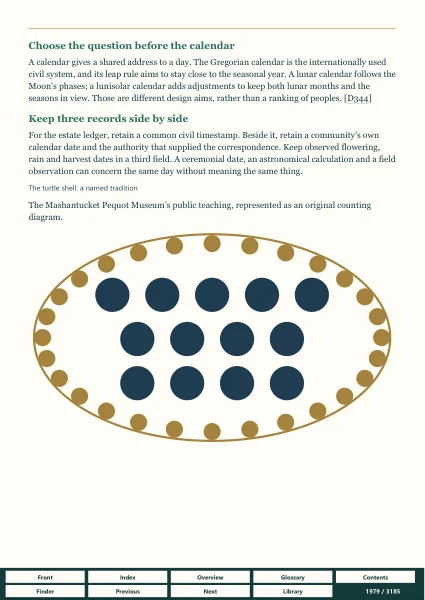 Source page
BOOK REFERENCE 1979
The ethiopian calendar
Twelve thirty-day months, followed by Pagumen; a different chronology is not a different physical present.
Read the account Source page
BOOK REFERENCE 3093
The Eye and Triangle in a Modern Religious Diagram
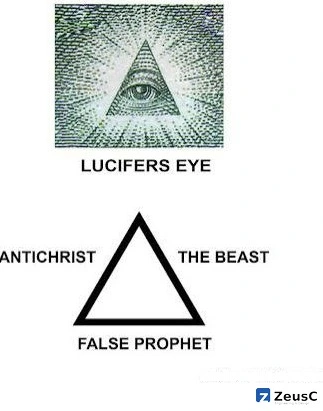
The eyeandtriangle motif is assigned modern theological labels in this poster. Those labels belong to the compiler’s interpretation. A historical account must identify the particular object, institution and period in which the motif appears. The Great Seal’s documentary…
Read the account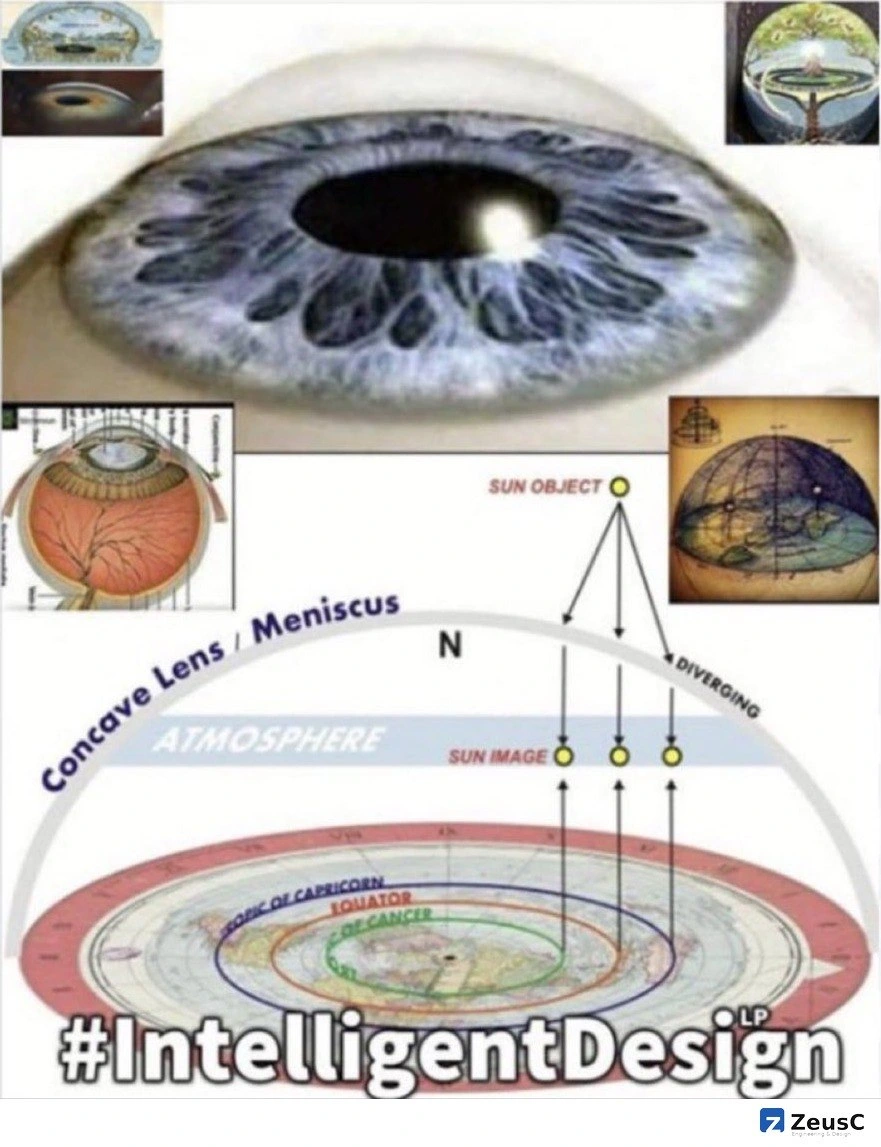
BOOK REFERENCE 3133
The eye, lens and a layered world
The collage compares an eye’s optical structures with a cosmological drawing. A useful optics explanation specifies the refracting surfaces, indices and ray paths. Similar curves in unrelated pictures cannot supply those measurements. Retain the comparison as an example of…
Read the account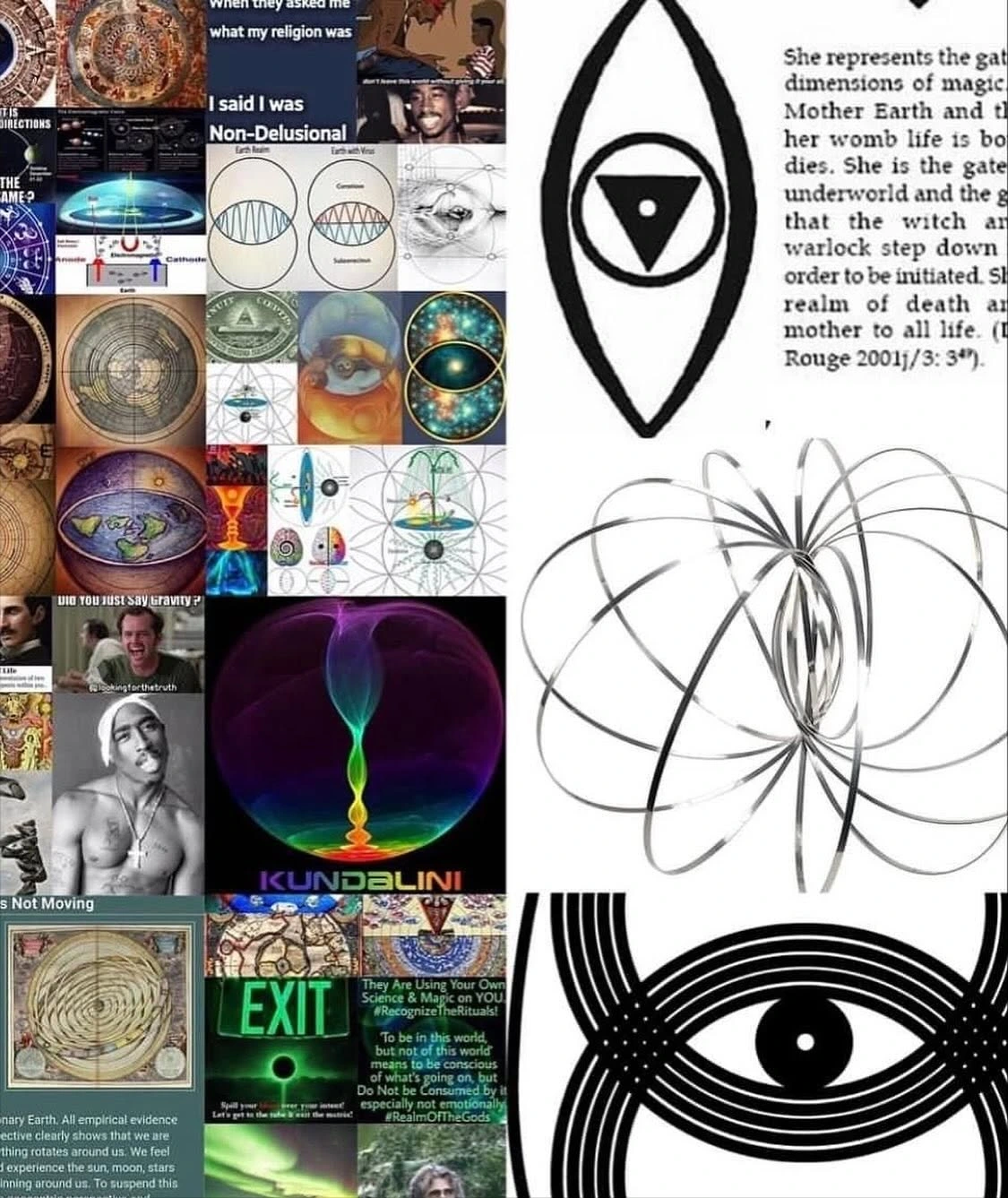
BOOK REFERENCE 2942
The Eye-Shaped Enclosure & the Association Collage
Read the composition in regions The crowded left strip combines world diagrams, rings, an eye, overlapping circles, meme captions, photographs of people and a coloured central-axis image labelled Kundalini. The upper right contains a pointed oval enclosing a circle, a…
Read the account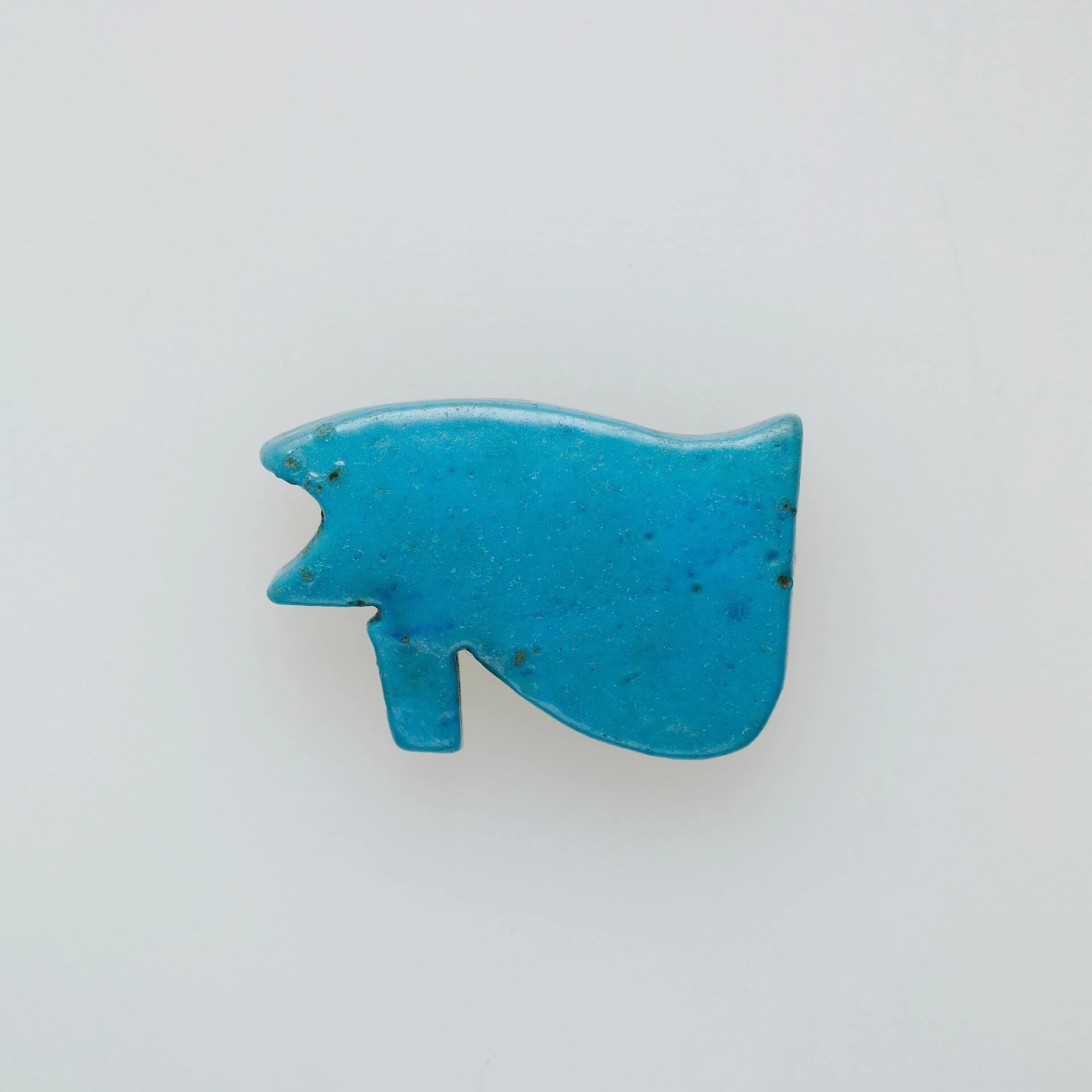
BOOK REFERENCE 3179
The eye: brand design and protective traditions
The “evil eye” is a belief about a harmful or envious gaze. An eye-shaped amulet is often intended to protect against harm. Confusing the feared gaze with a protective object reverses the meaning. The Egyptian wedjat represents the restored eye of Horus and belongs to its own…
Read the account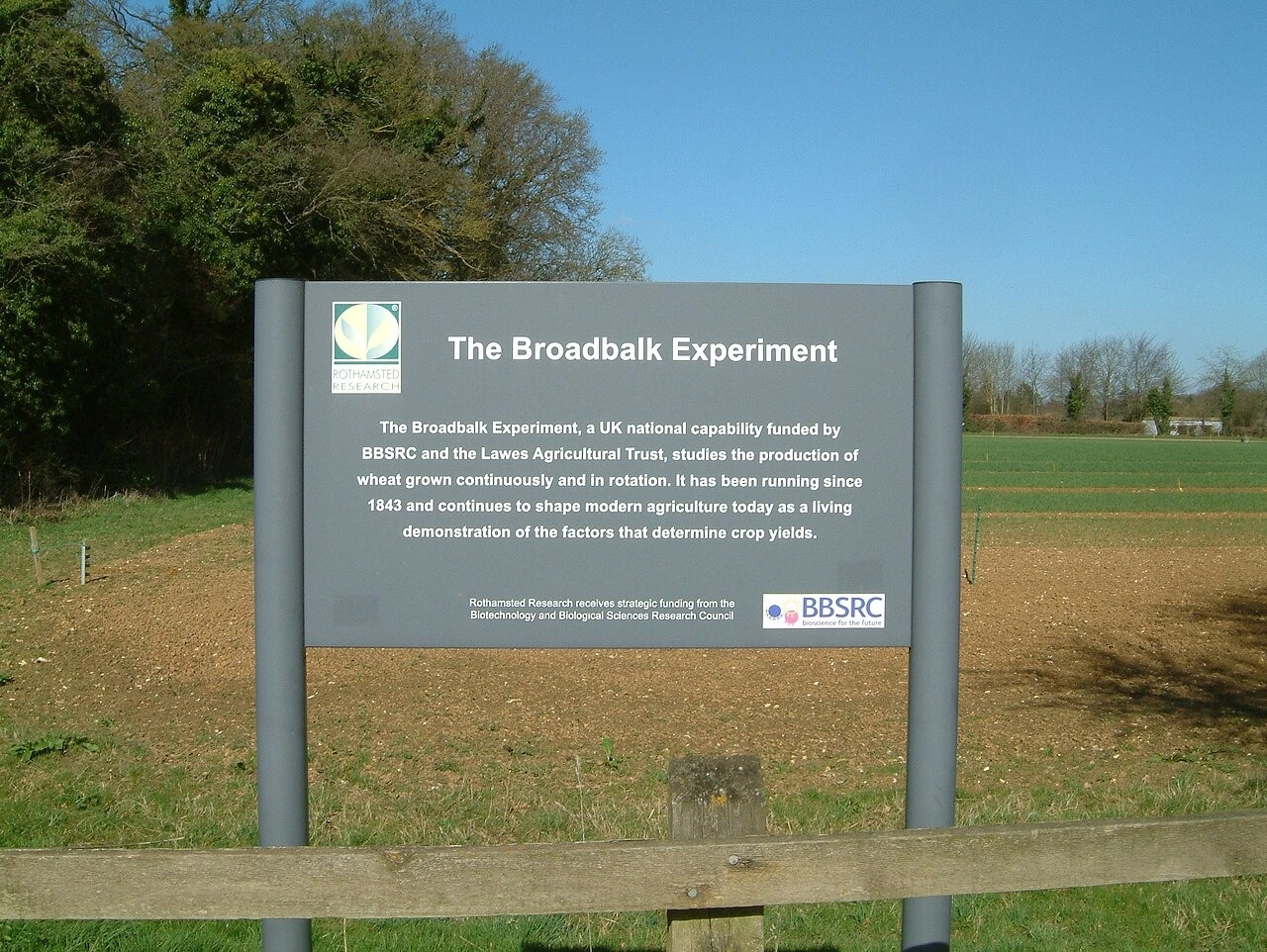
BOOK REFERENCE 571
The field behind the fertility reading
The Broadbalk field experiment, Rothamsted Forscher scs / 2017-03-15 14:18:21 CC BY-SA 4.0
Read the account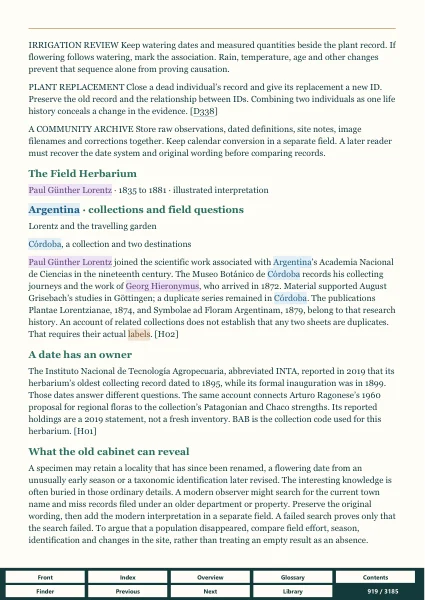 Source page
BOOK REFERENCE 919
The Field Herbarium
Paul Günther Lorentz joined the scientific work associated with Argentina’s Academia Nacional de Ciencias in the nineteenth century. The Museo Botánico de Córdoba records his collecting journeys and the work of Georg Hieronymus, who arrived in 1872. Material supported August…
Read the account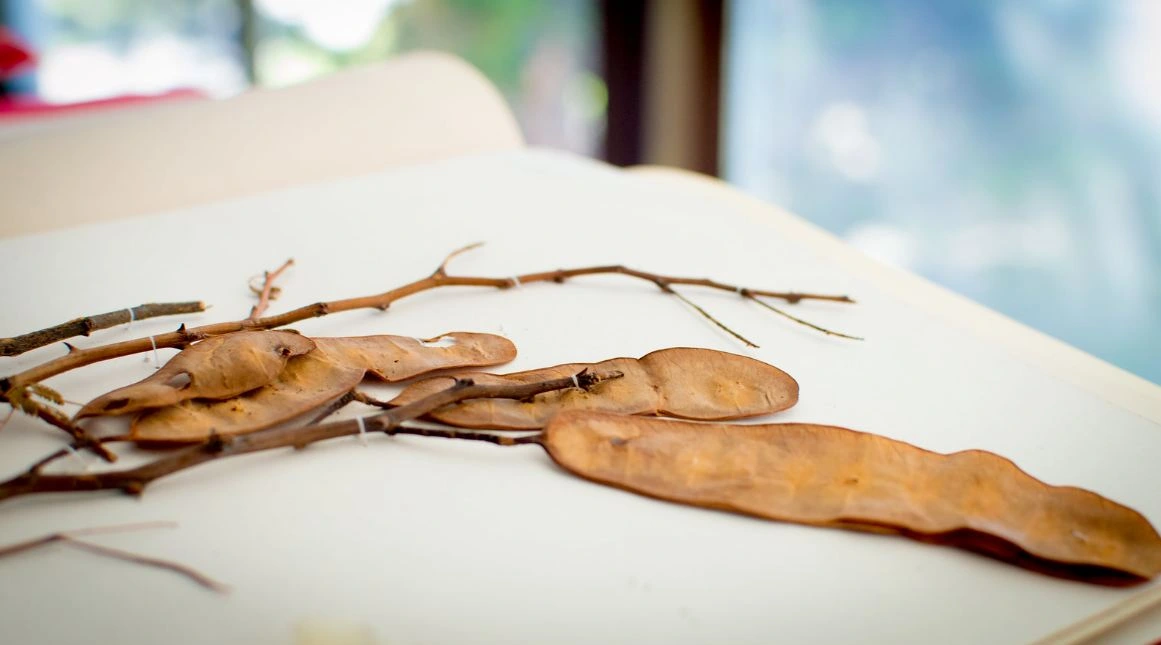
BOOK REFERENCE 939
The Field Herbarium: Original image gallery
INTA collection photograph, retained from the supplied book and linked to the 2019 institutional account. No individual photographer is established in the inherited record. This is an institutional image, not a ZeusC drawing. Commercial republication clearance remains to be…
Read the account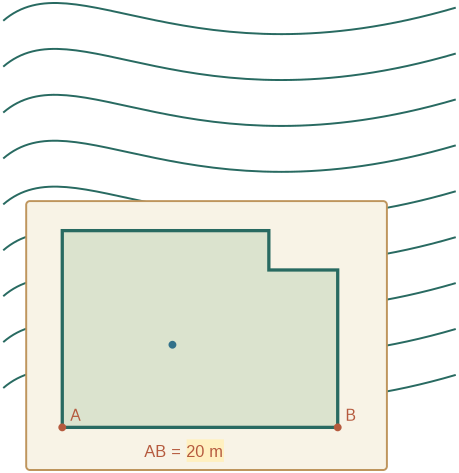
BOOK REFERENCE 2311
The Fieldbook and the Map
Mapmaking · local measurement · contours · north
Read the account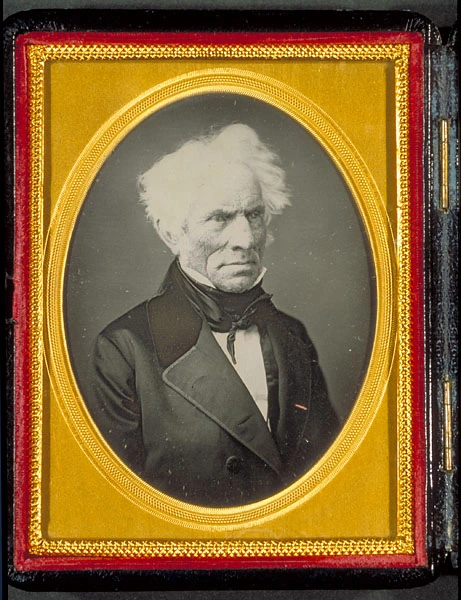
BOOK REFERENCE 987
The final label is a small archive
The portrait belongs to the historical record of the botanist. It is distinct from the contemporary editorial signature used elsewhere in this book.
Read the account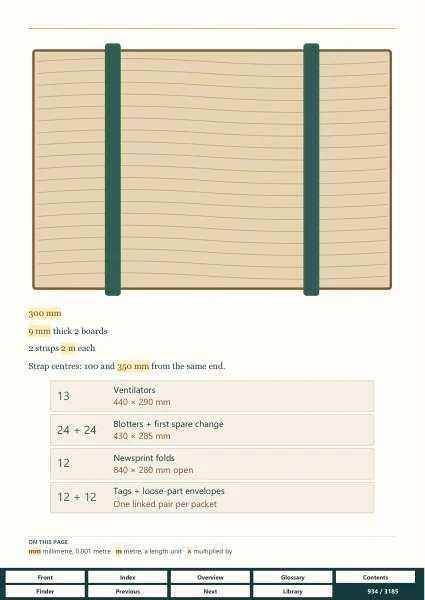 Source page
BOOK REFERENCE 934
The first change is an inspection
The Royal Horticultural Society recommends checking after 24 hours and replacing damp materials. Its guide gives a broad drying range of two days to three weeks, depending on the specimen and conditions. That range is not a completion promise. Open one packet at a time,…
Read the account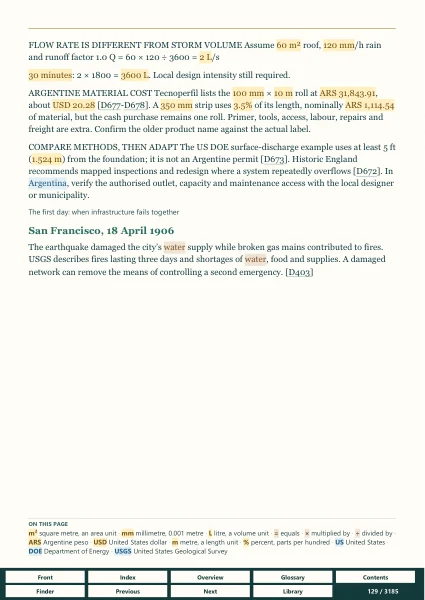 Source page
BOOK REFERENCE 129
The first day: when infrastructure fails together
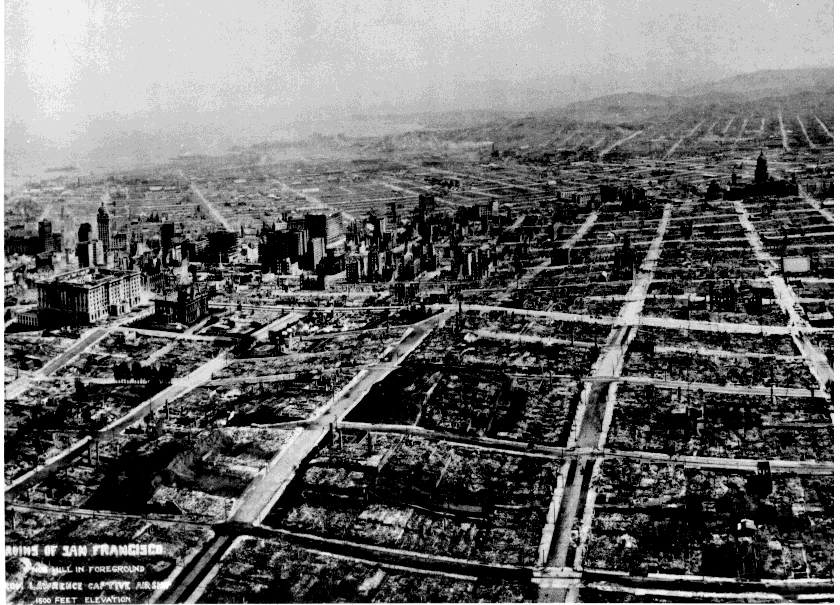
The earthquake damaged the city’s water supply while broken gas mains contributed to fires. USGS describes fires lasting three days and shortages of water, food and supplies. A damaged network can remove the means of controlling a second emergency. [D403]
Read the account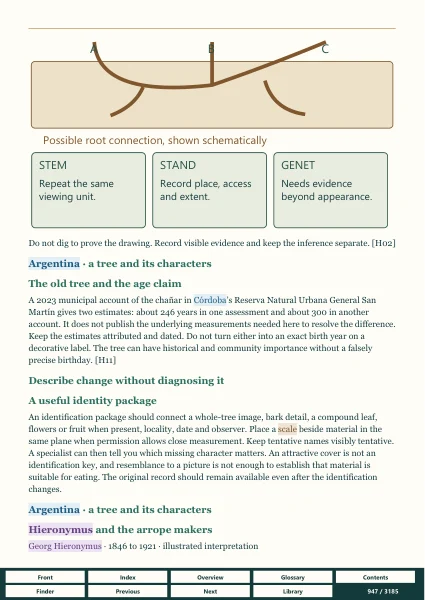 Source page
 Source page
BOOK REFERENCE 2119
The first scanning electron microscope in La Plata’s museum service
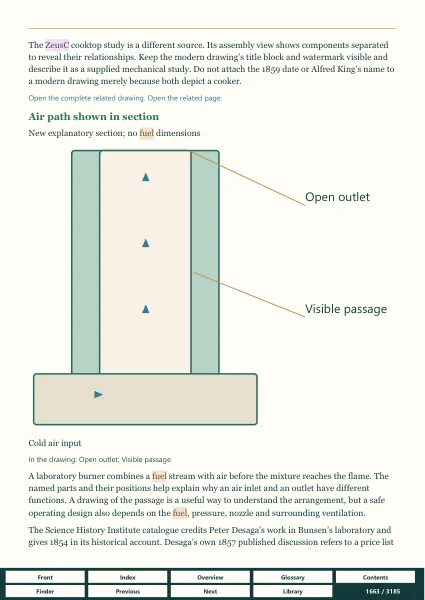
In the drawing: The first scanning electron microscope in La Plata’s museum service
Read the account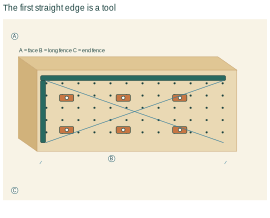
BOOK REFERENCE 1844
The first straight edge is a tool
Before marking metal, choose the face that will touch the assembly board and the edge from which dimensions will be measured. Call the face A, the long edge B and one end C. These are datums: physical references that let different measurements describe the same part. Without…
Read the account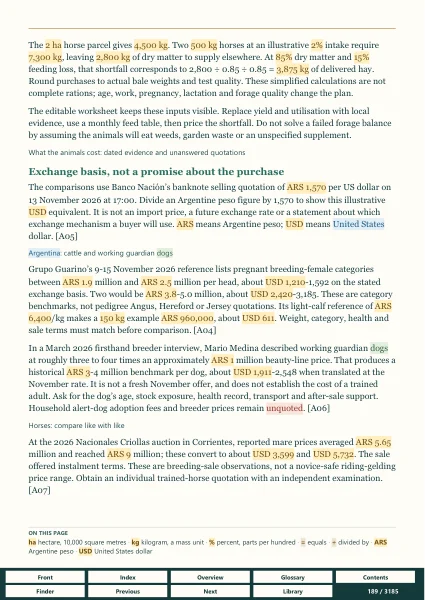 Source page
BOOK REFERENCE 1524
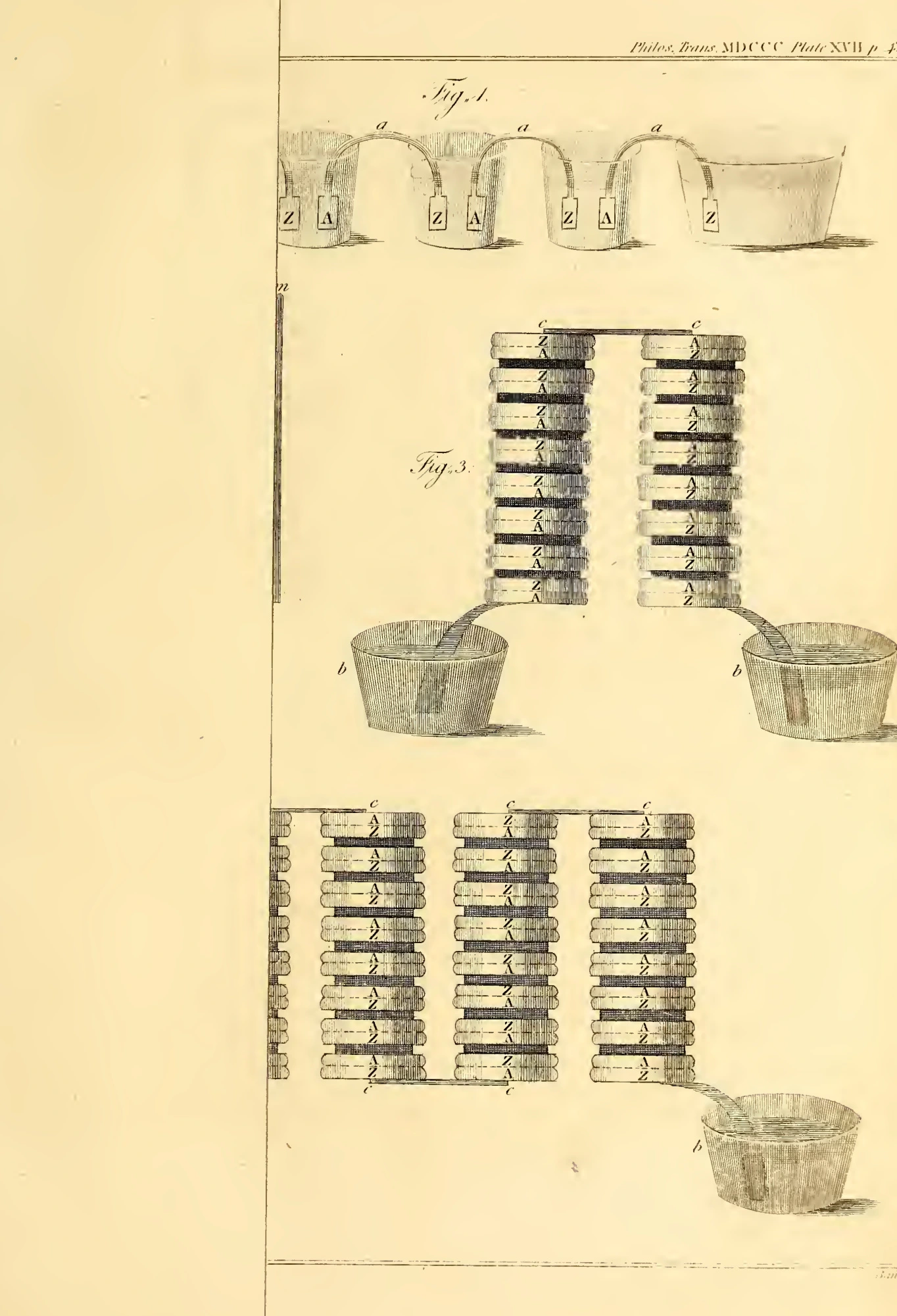
The five-hour evening
Instruments from Volta’s letter, engraved plate · Alessandro Volta, Philosophical Transactions. Digitised by Smithsonian Libraries · 1800 · Public-domain historical publication
Read the account Source page
BOOK REFERENCE 1634
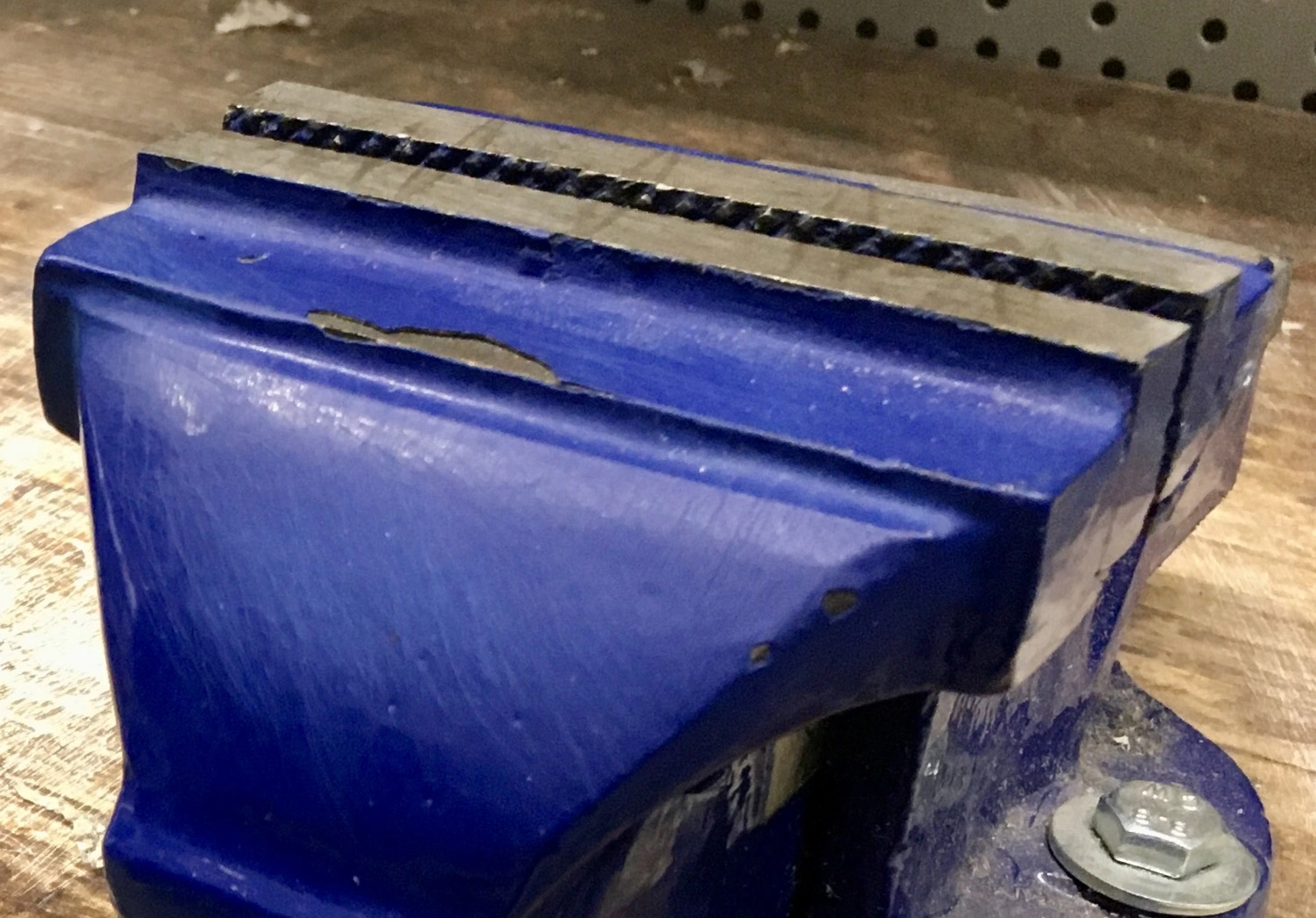
The force path through a vise
Upper portion of a blue bench vise · Pittigrilli, via Wikimedia Commons · CC BY 4.0, https://creativecommons.org/licenses/by/4.0/
Read the account Source page
BOOK REFERENCE 882
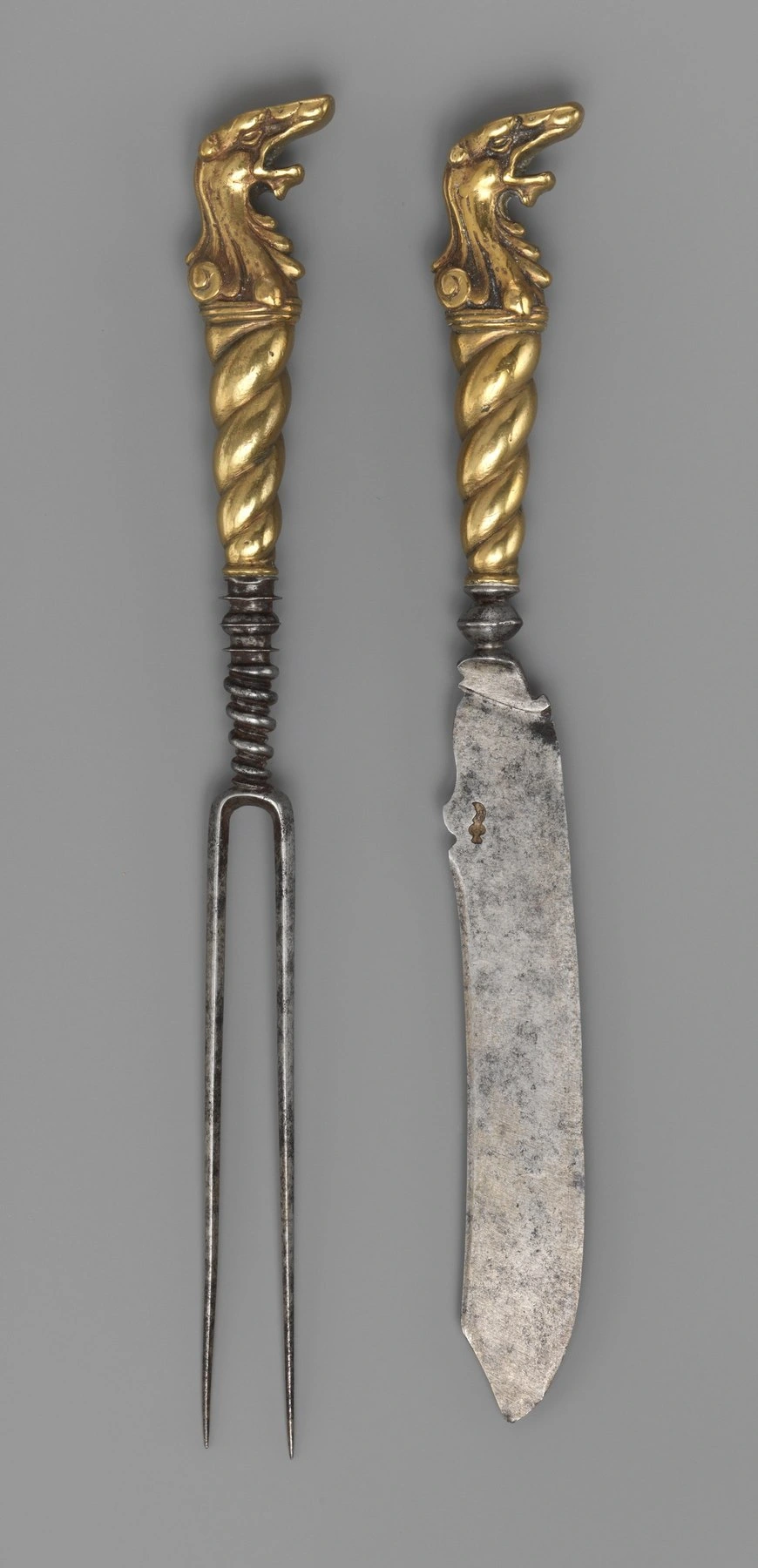
The fork as a working object
The Metropolitan Museum of Art preserves a seventeenth-century table fork in steel and brass. Its small head and long handle provide a dated point of comparison for the thirteen modern names on the supplied plate. A carving fork must steady a large piece while another tool…
Read the account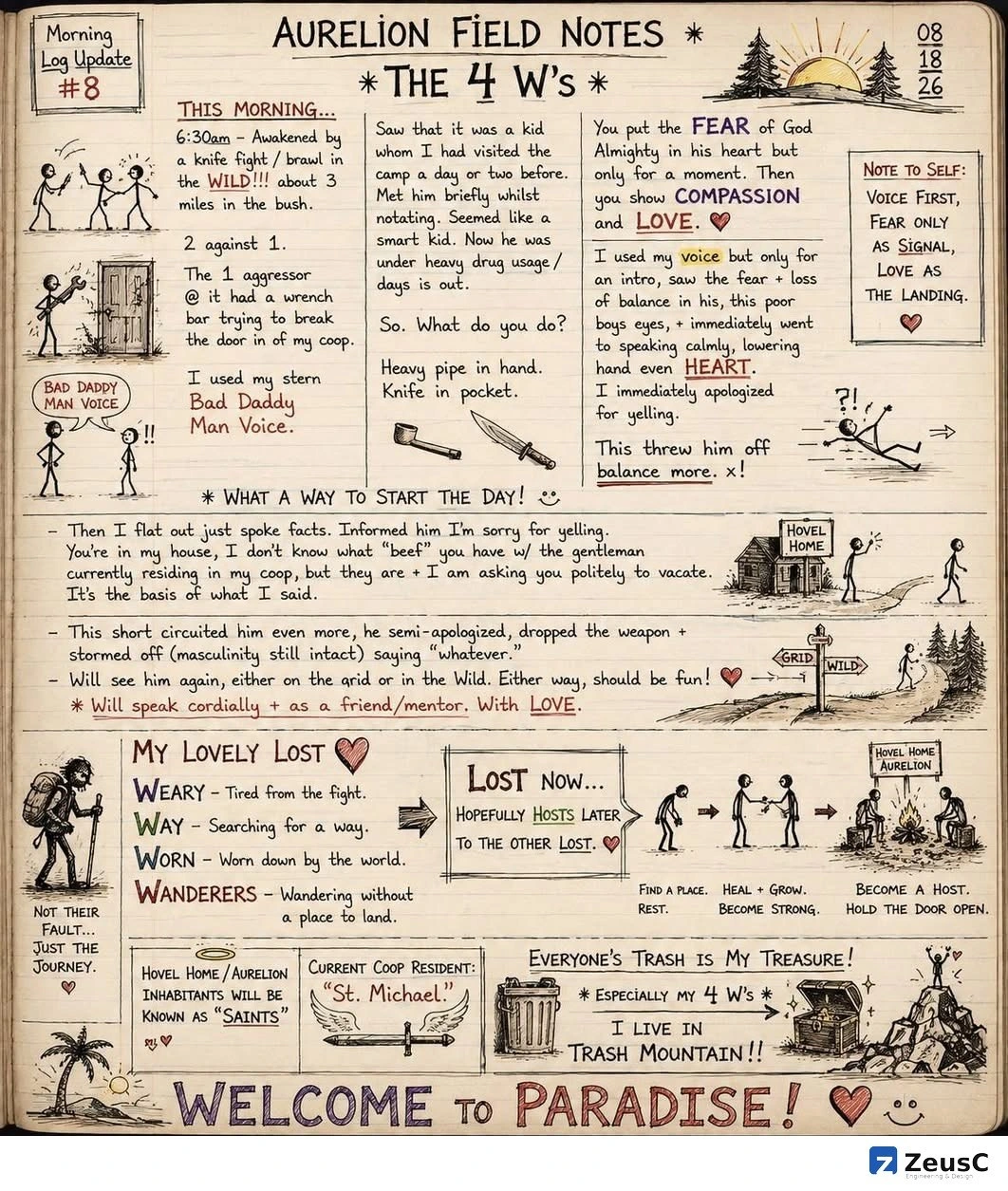
BOOK REFERENCE 3013
The four W words: a designed encounter record
The page combines a personal encounter, a word sequence and illustrated figures. Treat the dates and dialogue as part of the account unless corroborated by an independent record. A useful archival caption identifies the version and its relationship to the manuscript, without…
Read the account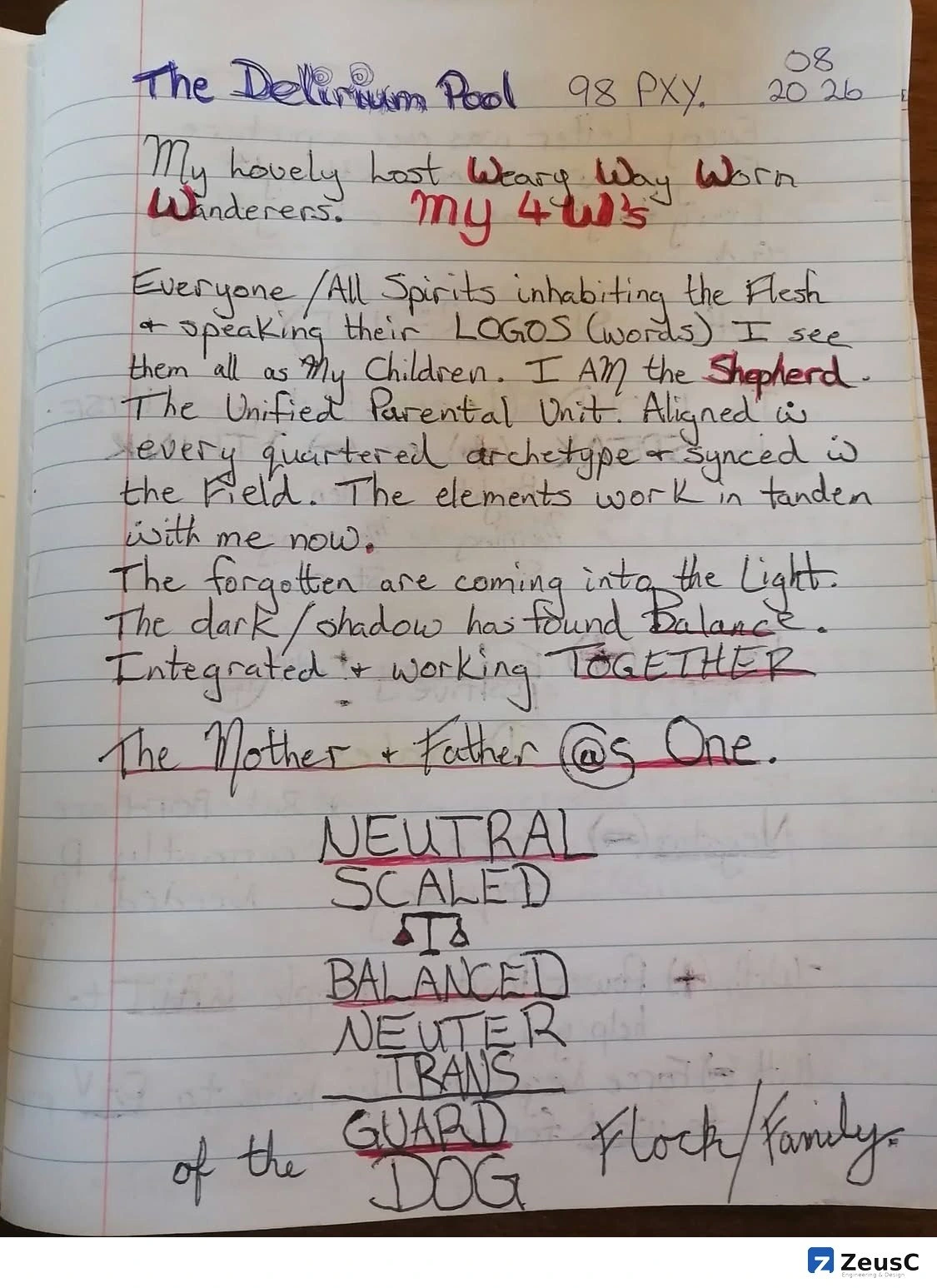
BOOK REFERENCE 3004
The four W words: a personal symbolic sequence
The page develops a sequence of similarsounding words and a balancing motif. Its layout and emphasis belong to the author’s expressive system. Read the terms in their immediate context rather than assuming they form a recognised scientific classification. A community archive…
Read the account Source page