

Select a subject or page number to open the reading book. People, places, methods and materials share this alphabetical route.
Complete A–Z index: search every subject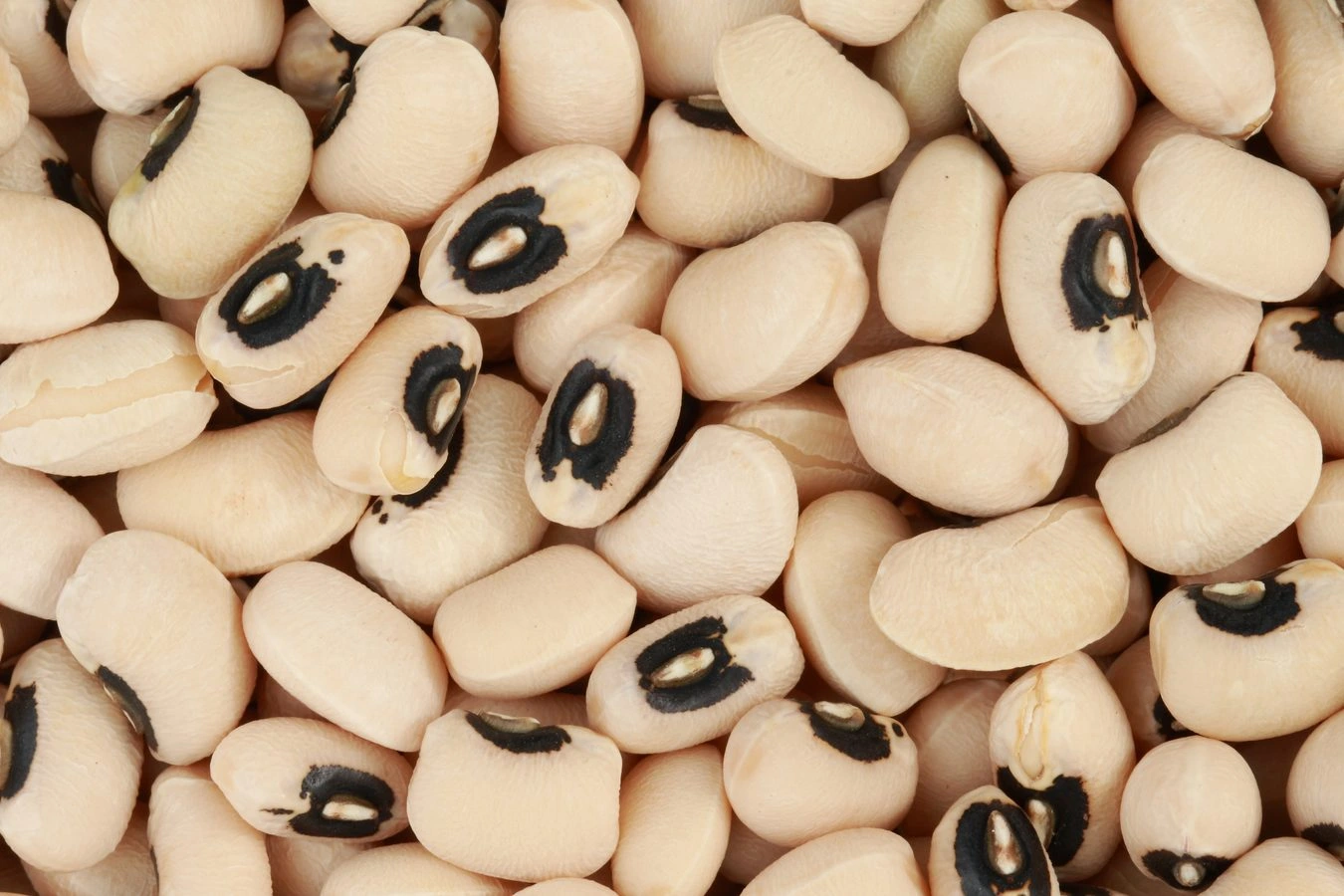
BOOK REFERENCE 1172
Vigna unguiculata
Tender long pods from a cultivated cowpea Black-eyed cowpea seeds. The dark ring marks the seed scar.
Read the account Source page
BOOK REFERENCE 1182
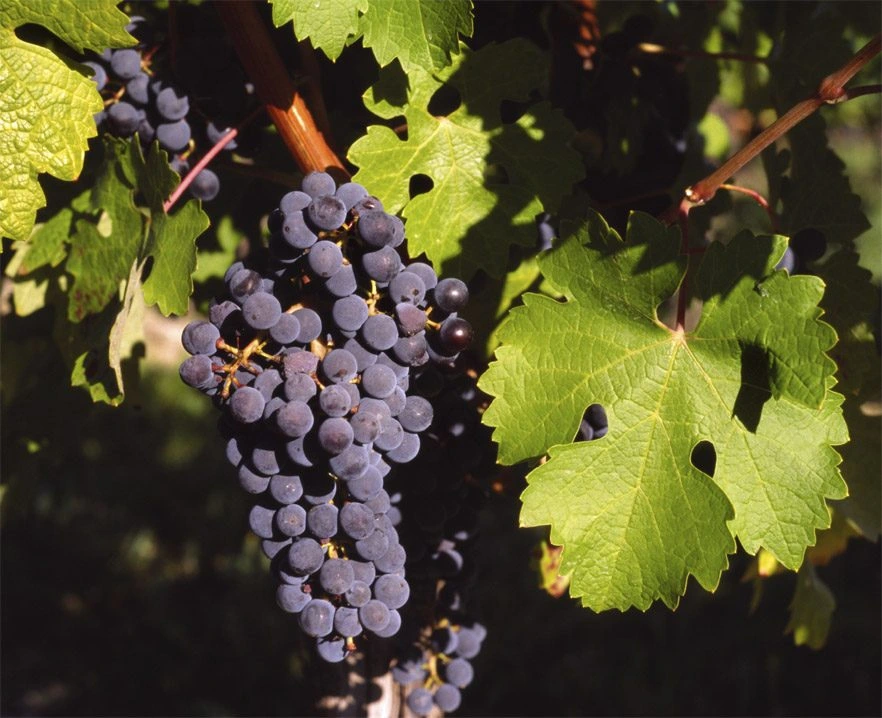
Vitis vinifera
Look for the main cluster stalk and the smaller stalk of each grape. Cultivars can be seeded or seedless. Green and dark skins both surround a soft pulp.
Read the account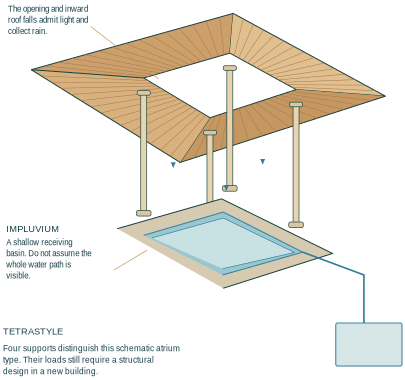
BOOK REFERENCE 78
Vitruvius: read the roof, not an imagined face
Roman terms translated into visible relationships / schematic teaching reconstruction
Read the account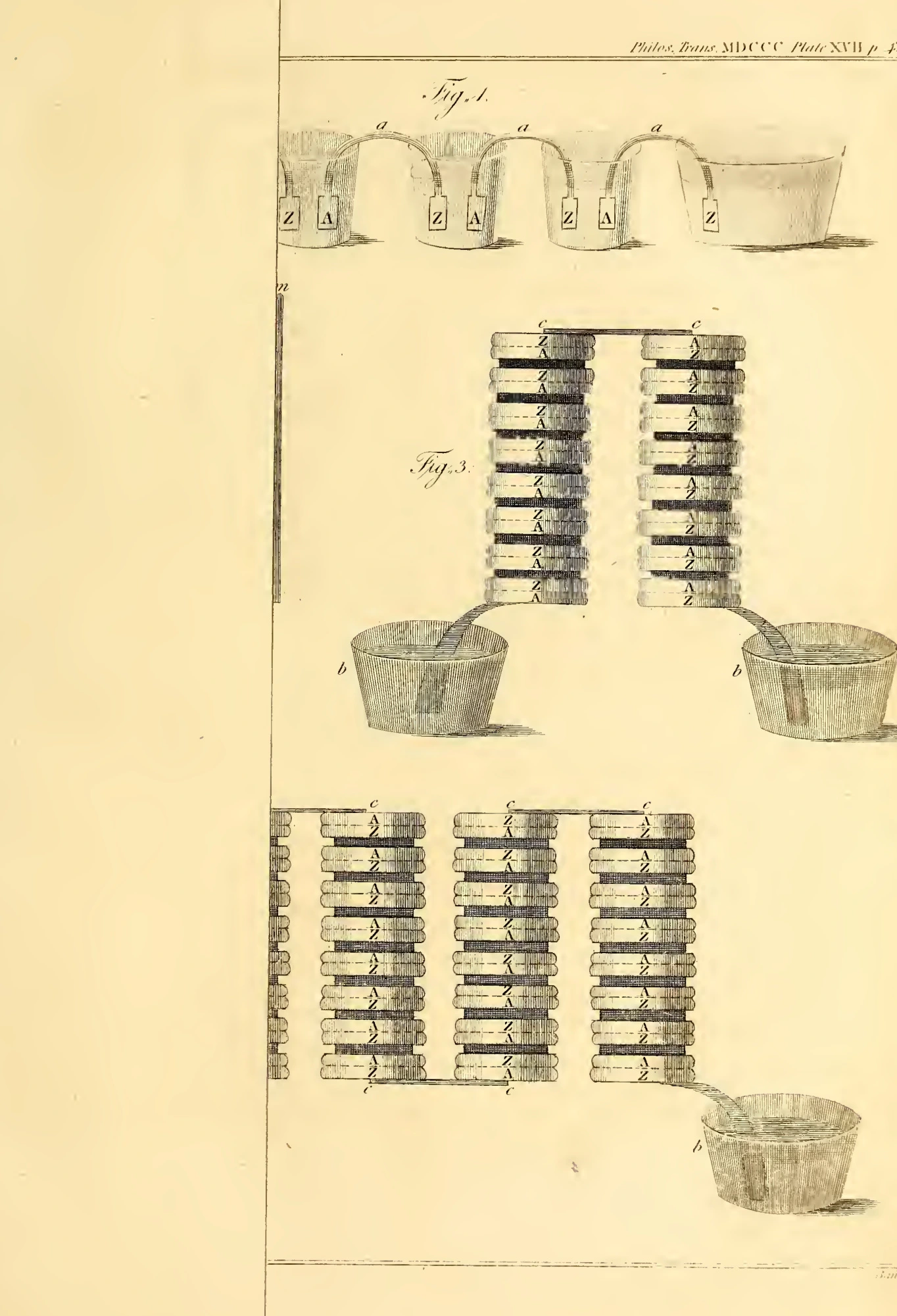
BOOK REFERENCE 1524
Volta’s pile, plate by plate
Instruments from Volta’s letter, engraved plate · Alessandro Volta, Philosophical Transactions. Digitised by Smithsonian Libraries · 1800 · Public-domain historical publication
Read the account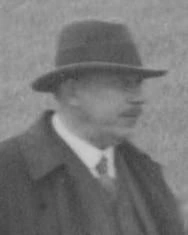
BOOK REFERENCE 141
Walther Bauersfeld and the projected sky
In 1913, Oskar von Miller asked ZEISS for a way to show the apparent movements of celestial bodies at the Deutsches Museum in Munich. World War I interrupted the work. Walther Bauersfeld presented a projection-planetarium design in March 1919, after which he and the ZEISS…
Read the account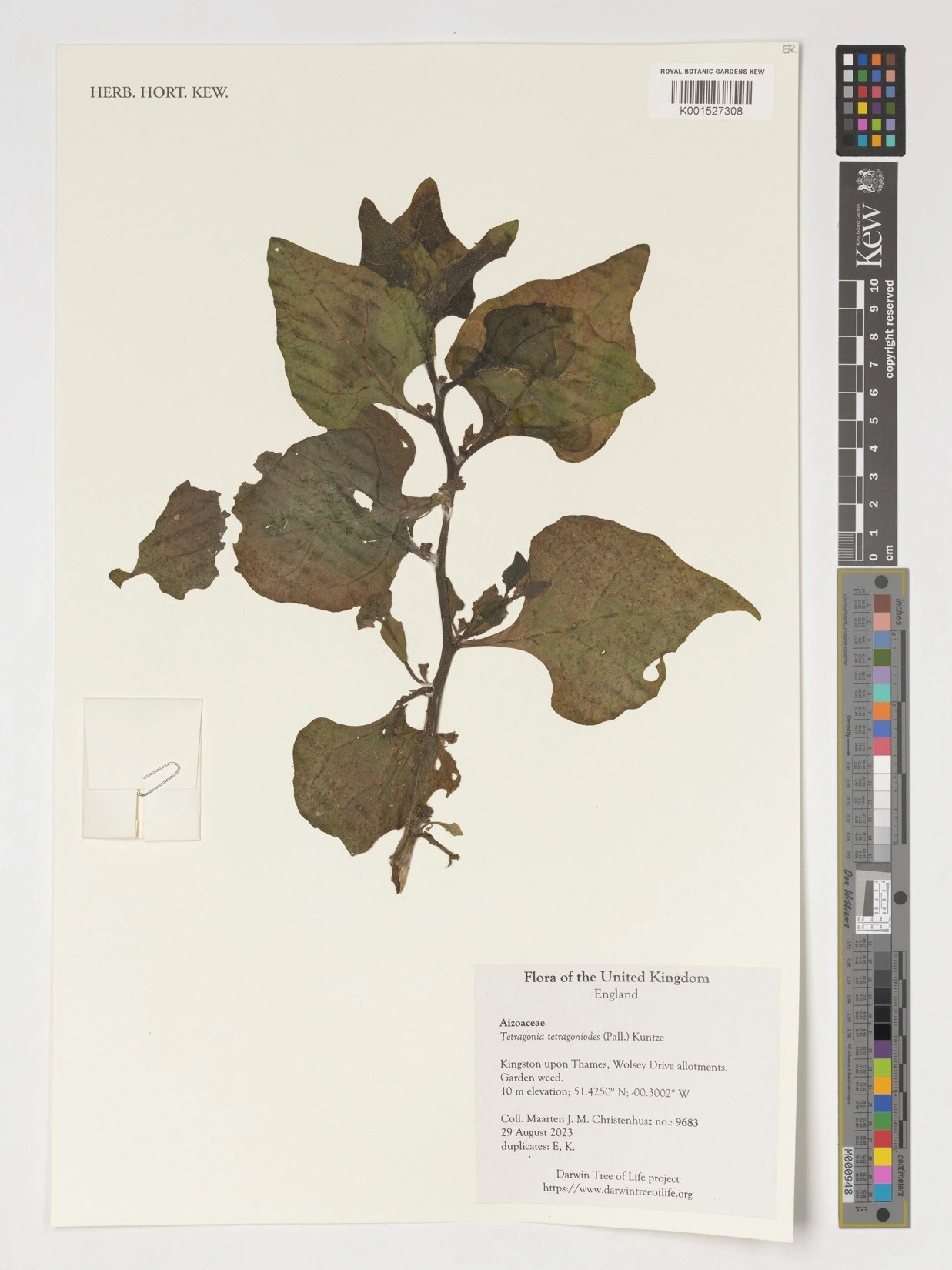
BOOK REFERENCE 1462
Warrigal greens · Tetragonia tetragonoides
Collection specimen photograph. Royal Botanic Gardens, Kew. Catalogue K001527308. Collection date 2023‐08‐29. Royal Botanic Gardens, Kew ‐ Herbarium Specimens. Image use follows http://creativecommons.org/licenses/by/4.0/. The global collection record supplies the…
Read the account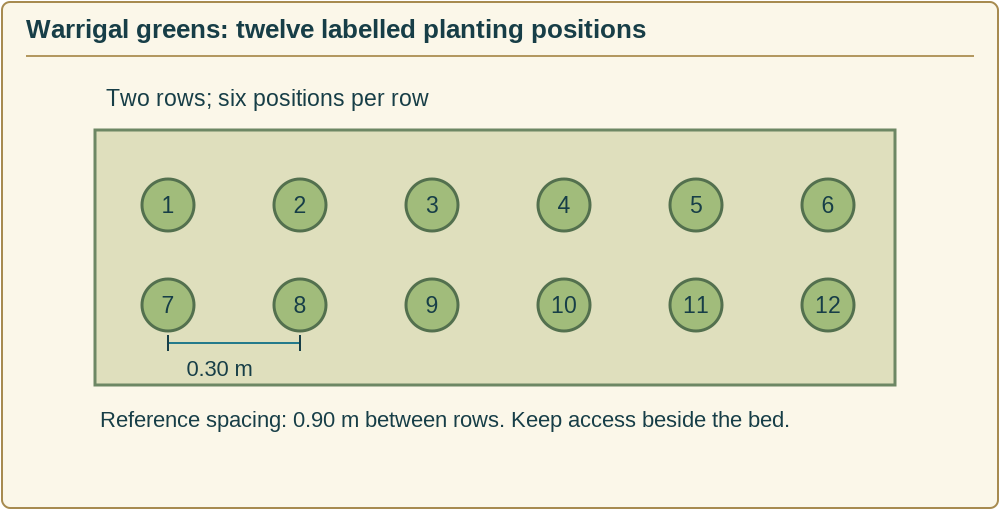
BOOK REFERENCE 1106
Warrigal greens: establish twelve harvest positions
1. Start labelled seed. The Utah State guide recommends soaking the hard seed units for 24 hours. Start a small labelled tray in warmth, or sow at the locally suitable outdoor time. Keep the seed packet with the record so ordinary spinach cannot be substituted unnoticed.
Read the account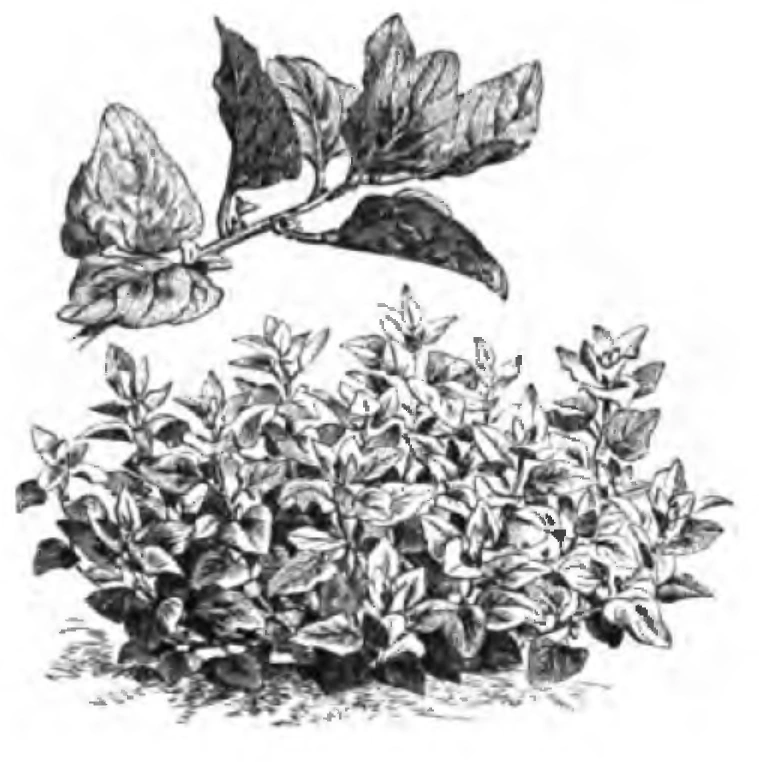
BOOK REFERENCE 1105
Warrigal greens: read the plant behind the common name
Tétragone cornue in Vilmorin-Andrieux’s 1883 horticultural publication. The French name refers to the horned fruit. Kew accepts the spelling Tetragonia tetragonoides; some horticultural guides use tetragonioides. Common names include warrigal greens and New Zealand spinach.
Read the account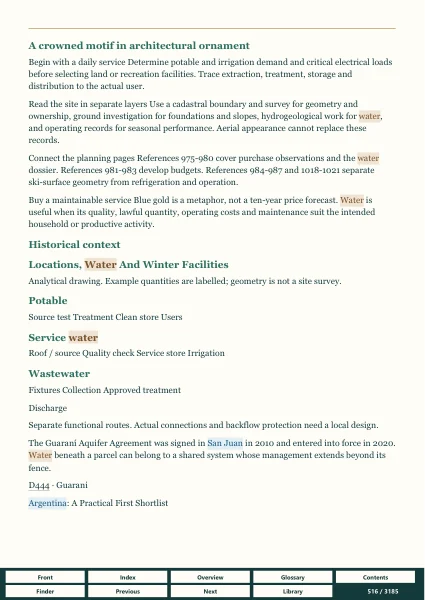 Source page
 Source page
BOOK REFERENCE 2373
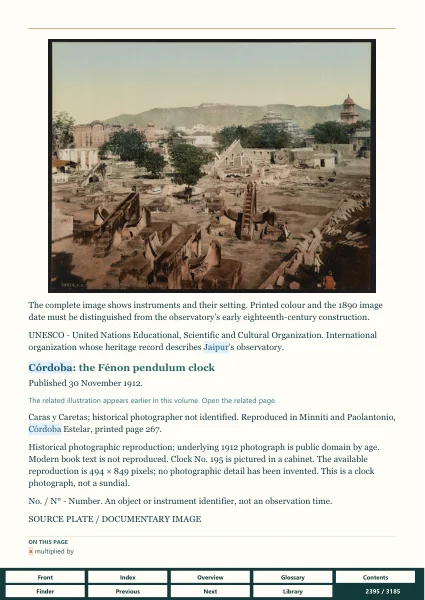
Washington: read the historic image before copying the object
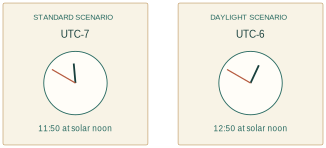
40.0° N, 105.0° W; E = +10 minutes in both examples. The actual civil offset already includes any daylight-time change.
Read the account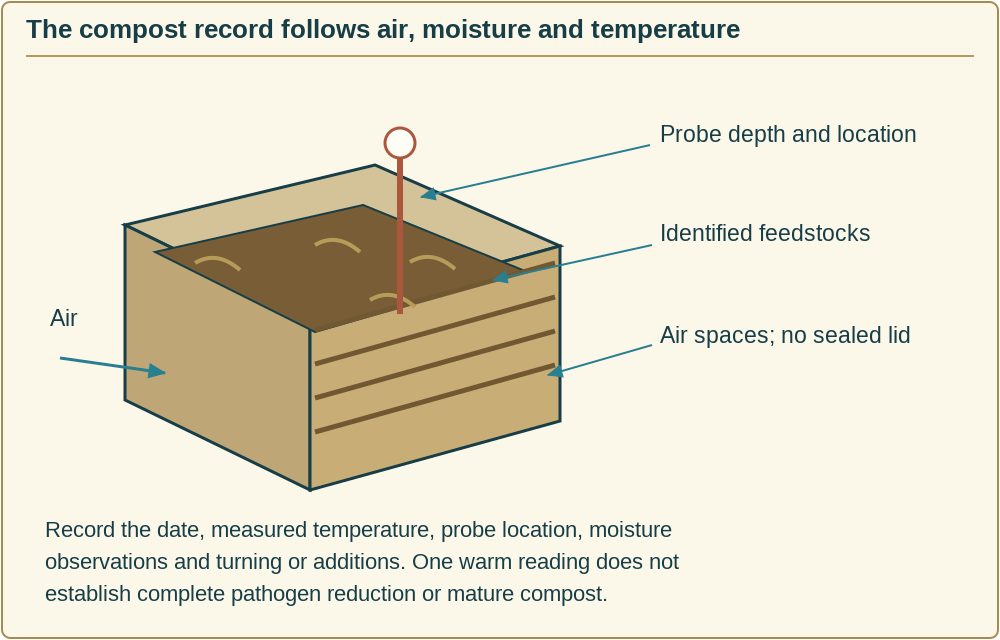
BOOK REFERENCE 478
Waste and energy: follow the actual process
Composting, anaerobic digestion, pyrolysis and incineration are different processes. Aerobic decomposition requires air exchange. A warming compost heap does not demonstrate electrical generation or certify pathogen destruction.
Read the account Source page
- Source page
- Source page
BOOK REFERENCE 455
WASTEWATER, REFUSE AND COMPOST
Waste systems need collection, treatment or removal, and lawful final disposal. Tanks alone are not a complete wastewater design.
Read the account  Source page
 Source page
 Source page
BOOK REFERENCE 475
Water and dissolved-salt balance
The result is a conserved water-and-salt account. The model makes the missing stream visible. It does not demonstrate membrane performance, water quality or a buildable desalination plant.
Read the account- Source page
 Source page
 Source page
 Source page
BOOK REFERENCE 136
Water containers, electrical loads and stored energy
Some inventory entries need information beyond a count. A water container requires evidence that it is suitable for its contents. A lamp or power unit requires its manufacturer’s identity and operating information. Record these details at receipt, when labels and instructions…
Read the account Source page
BOOK REFERENCE 832
Water depth, carrot bed
Set a depth at sowing Break up clods and remove stones from the seed zone. Direct sow into loose, well-drained soil. The Maryland home-garden guide gives ¼–½ in of cover, 6.35–12.70 mm. A chosen 10 mm setting lies inside that range. Check it at both ends of the bed. Cover…
Read the account Source page
BOOK REFERENCE 476
Water flow and hydropower
Water power is density × gravity × flow × head. At 0.050 m³/s and 10 m net head, water power is 4.905 kW. At assumed overall efficiency 0.65, output is 3.19 kW. These are site assumptions, not model output.
Read the account Source page
 Source page
BOOK REFERENCE 959
Water is an input with a destination
Tare is the mass of the empty container or the operation of subtracting it. Assign each bowl an identifier and weigh it dry and empty. Record gross mass with contents, then calculate net mass as gross minus tare. If the bowl is wet when reused, the old tare may no longer…
Read the account Source page
BOOK REFERENCE 2634
Water quality and the limits of a probe
A water monitor describes selected measurements. A soap sample requires its own sampling method and analytical question.
Read the account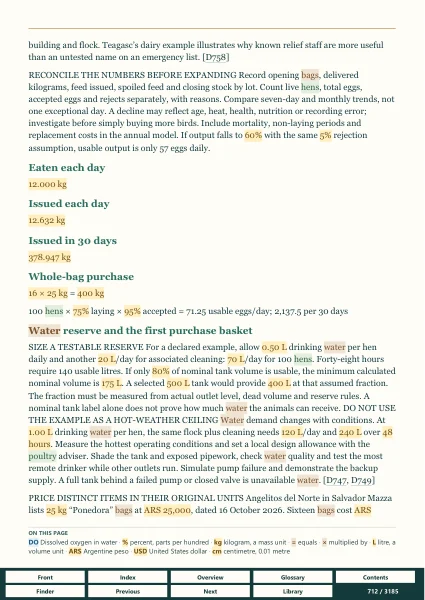 Source page
BOOK REFERENCE 712
Water Reserve And The First Purchase Basket
SIZE A TESTABLE RESERVE For a declared example, allow 0.50 L drinking water per hen daily and another 20 L/day for associated cleaning: 70 L/day for 100 hens. Forty-eight hours require 140 usable litres. If only 80% of nominal tank volume is usable, the minimum calculated…
Read the account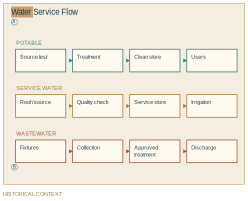
BOOK REFERENCE 490
Water service flow
Two distinct water routes Proposed functional diagram below. The actual treatment train depends on the source and use. Potable storage and distribution must not be connected to untreated service water without appropriate protection.
Read the account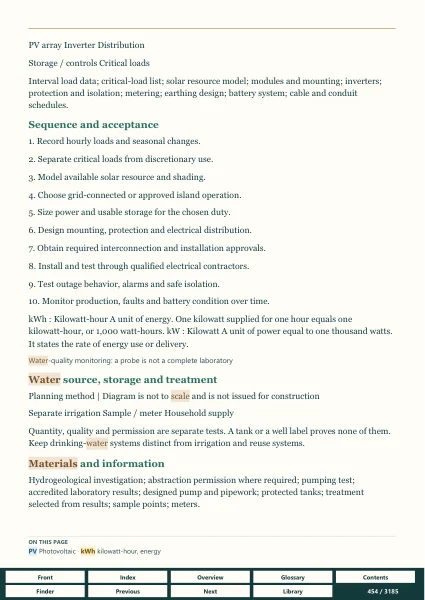 Source page
BOOK REFERENCE 454
WATER SOURCE, STORAGE AND TREATMENT
Quantity, quality and permission are separate tests. A tank or a well label proves none of them. Keep drinking-water systems distinct from irrigation and reuse systems.
Read the account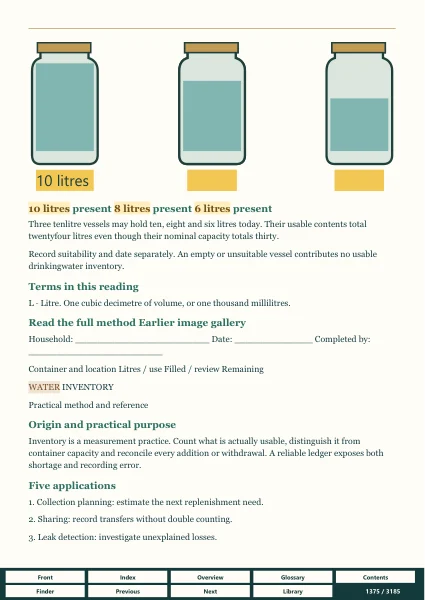 Source page
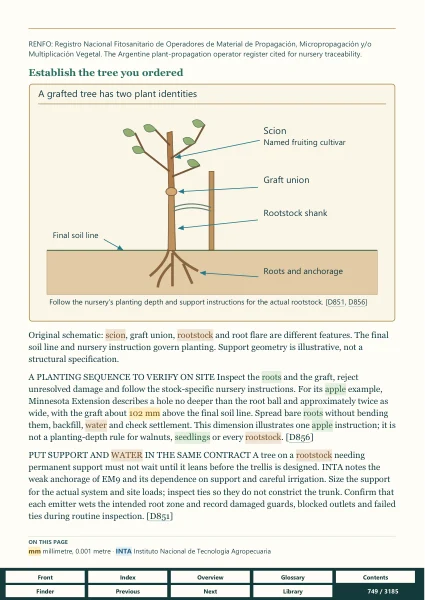 Source page
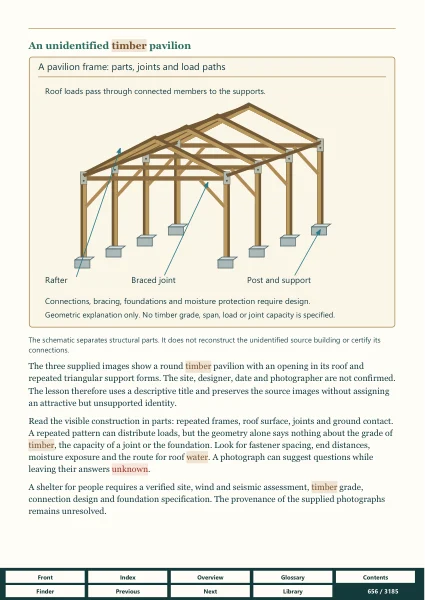 Source page
BOOK REFERENCE 678
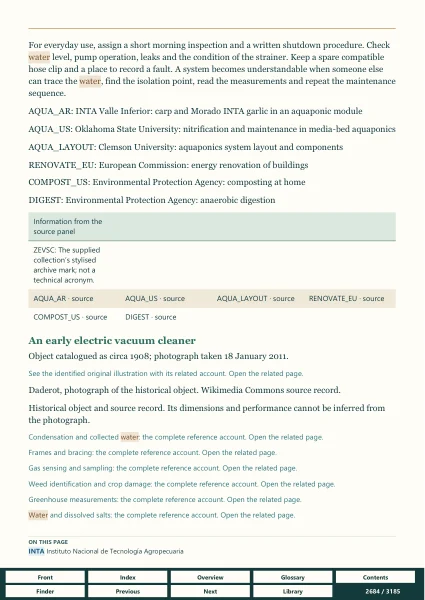
Water, food and farming
The illustration names a colour sensor and sorting categories. Colour alone cannot establish food safety or internal ripeness. A working sorting process also needs a defined crop and grade, reliable handling, rejection rules, cleaning access and measurements against…
Read the account
BOOK REFERENCE 120
Water, heat, light and security
COMMISSION THE WHOLE ROUTE A stored resource helps only when somebody can reach and use it. Test all four routes with each resident, including at night. Record the responsible person, failure trigger and fallback; repeat after a change in equipment or occupants.
Read the account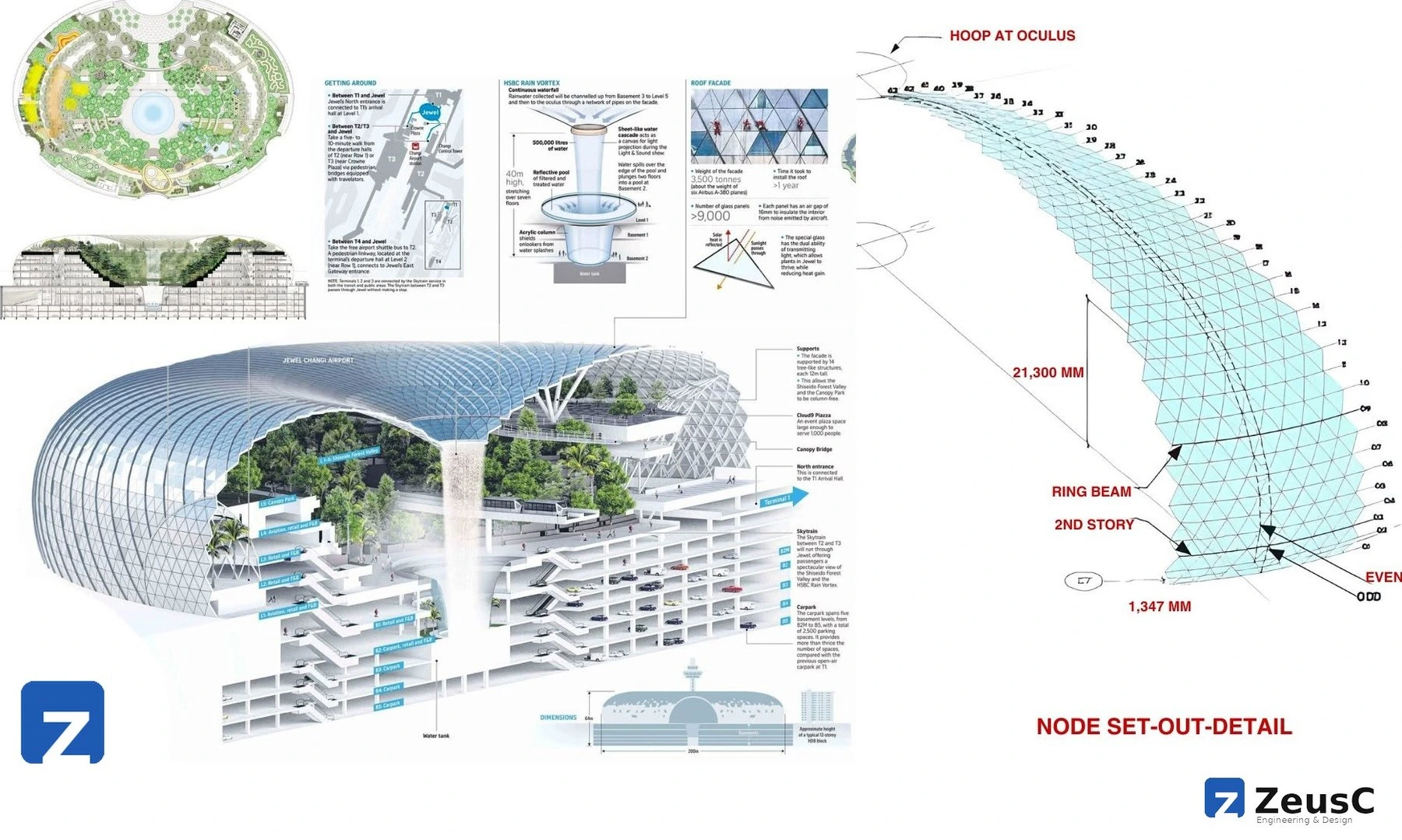
BOOK REFERENCE 663
Water, roof and the central opening
The source relates the central water opening to the surrounding roof members and landscape. Water movement, weather protection and structural support intersect here, but each needs separate design evidence. The exploded details are useful for identifying interfaces; they do…
Read the account- Source page
BOOK REFERENCE 454
Water-quality monitoring: a probe is not a complete laboratory
Quantity, quality and permission are separate tests. A tank or a well label proves none of them. Keep drinking-water systems distinct from irrigation and reuse systems.
Read the account 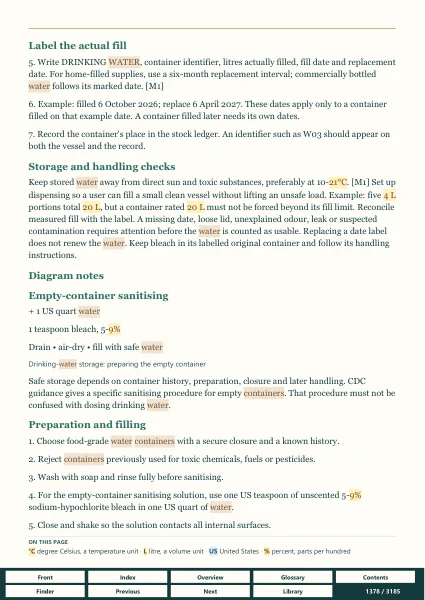 Source page
BOOK REFERENCE 122
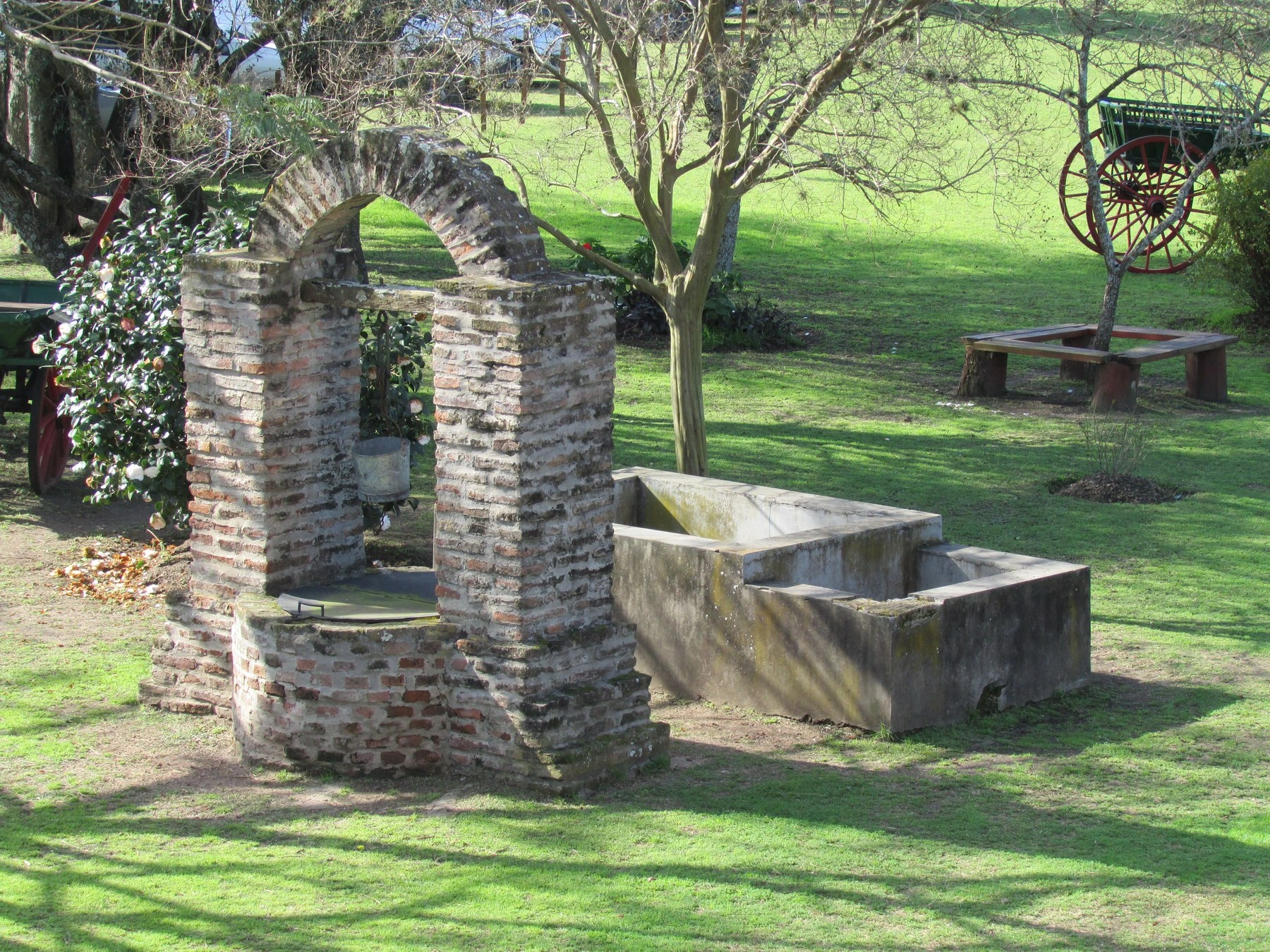
Water: The First Resource
A SMALL EMERGENCY RESERVE Choose 4 people × 4 L/person/day × 3 days = 48 L. The 4 L input rounds up the CDC baseline [D658]. Increase it for heat, illness and individual needs. Ordinary bathing, laundry, flushing and garden water require a separate budget.
Read the account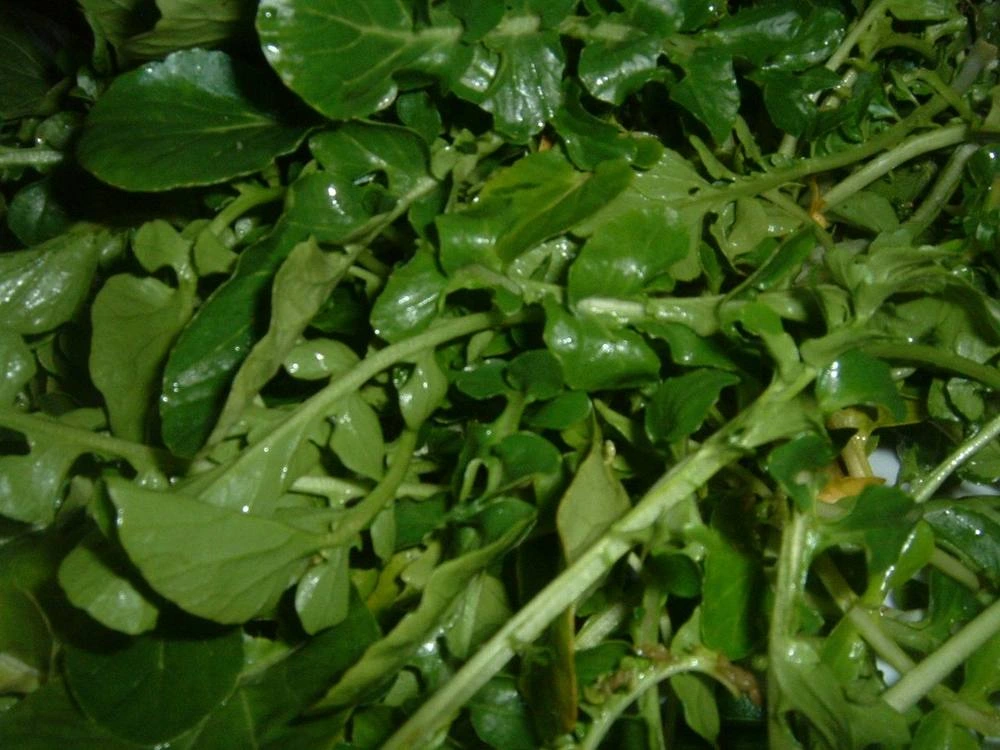
BOOK REFERENCE 1240
Watercress
Watercress shoots with rounded leaflets Several smaller leaflets grow along each leaf’s central axis.
Read the account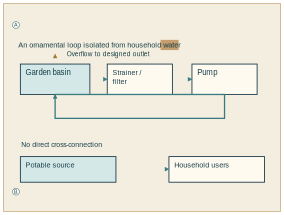
BOOK REFERENCE 334
Waterfront and garden compound
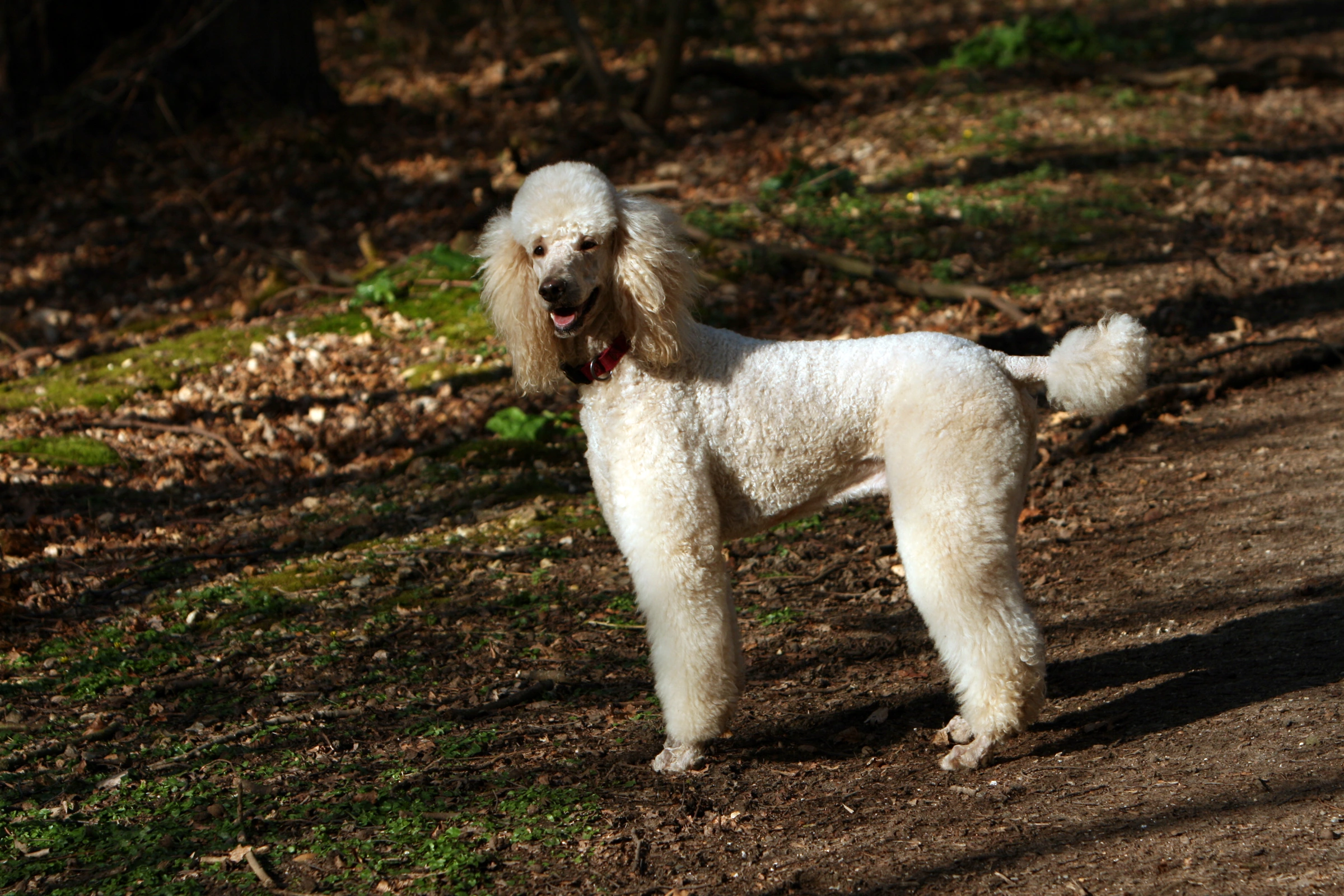
Retained contemporary estate title artwork. The following pages describe this property, its costs and its animal-care plan. This illustration is not a historical photograph or a measured site survey.
Read the account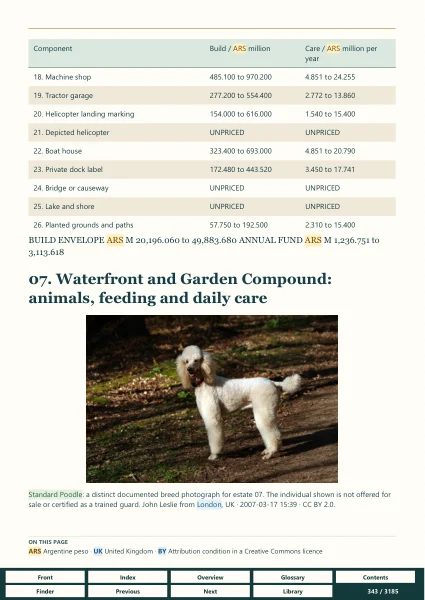 Source page
BOOK REFERENCE 342
Waterfront and garden compound: argentine pesos
BUILD ENVELOPE ARS M 20,196.060 to 49,883.680 ANNUAL FUND ARS M 1,236.751 to 3,113.618
Read the account- Source page
- Source page
BOOK REFERENCE 1240
Watermelon
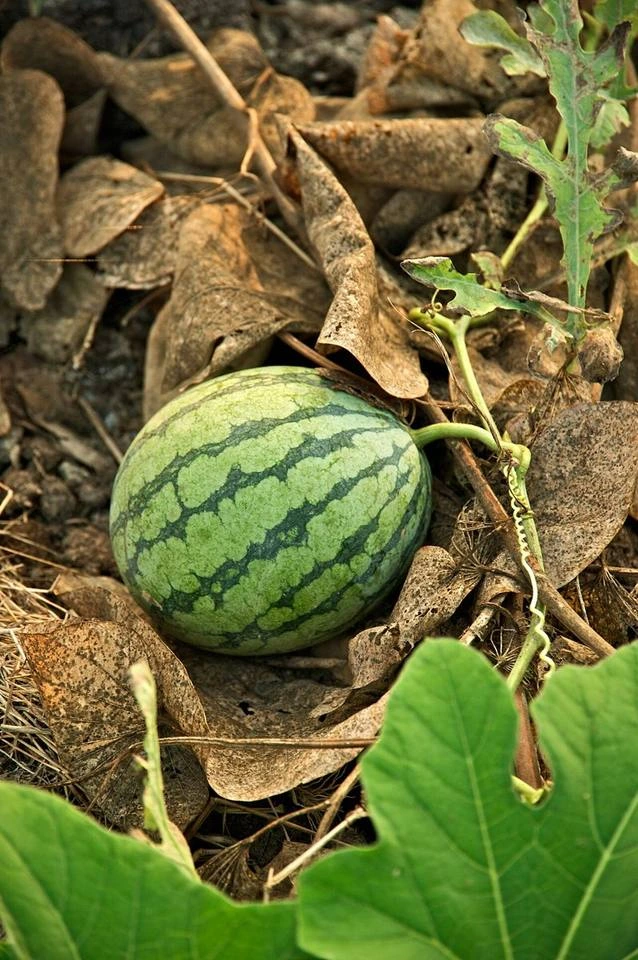
A young watermelon attached to its vine Dark and pale bands curve around the rind.
Read the account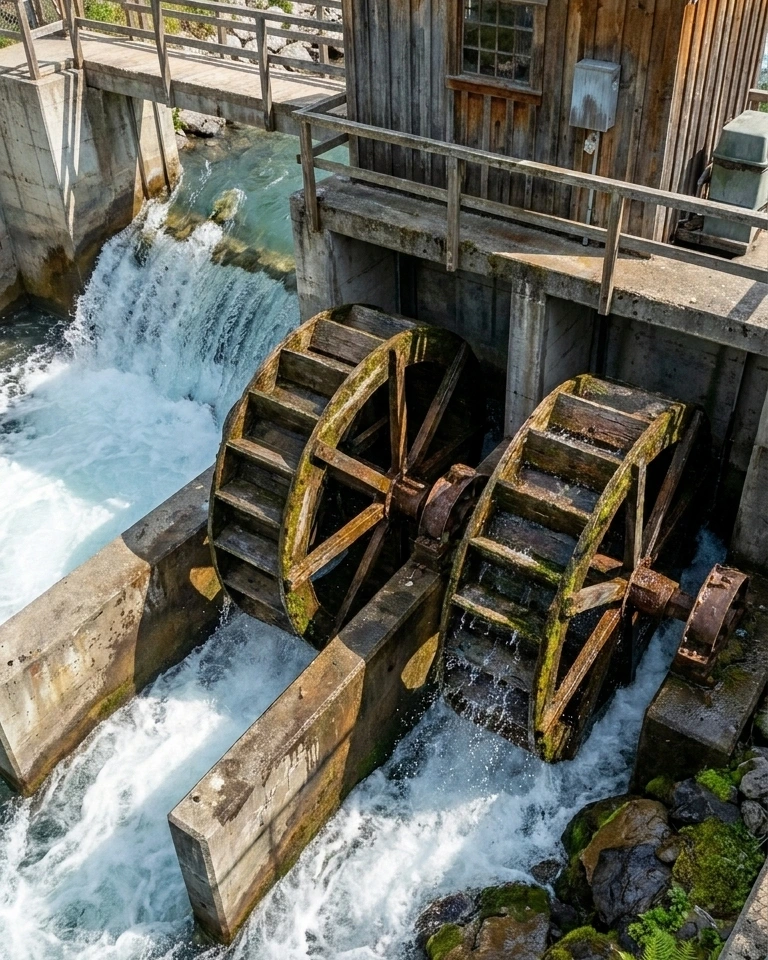
BOOK REFERENCE 175
Waterwheel site: the flow of power at Quarry Bank
Samuel Greg established Quarry Bank cotton mill at Styal beside the River Bollin in 1784. Water power was central to its early operation, but the National Trust’s history also describes the people who worked there, including children, and the cotton trade’s connections with…
Read the account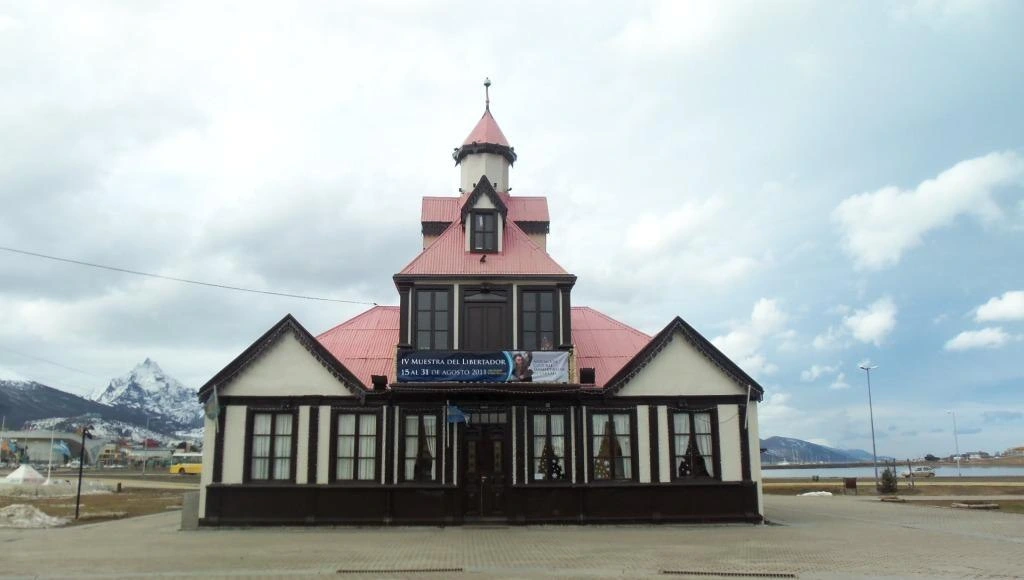
BOOK REFERENCE 127
Weather protection and repair priorities
ARGENTINA: MAP THE ACTUAL WATER ROUTE In CABA or the conurbano, identify the consorcio’s roof, shared drains and authorised outlet. In interior or rural Buenos Aires, trace the outlet across the ground as well as through the pipe. In NOA, NEA, Cuyo and Patagonia, obtain the…
Read the account Source page
BOOK REFERENCE 827
Weed identification and crop damage
Removing unwanted plants needs identification and controlled action. Record crop damage as well as weeds removed and time taken.
Read the account