

Main navigation books and collected sections. The alphabetical index provides the individual people, methods, materials and crops.
 Source page
BOOK REFERENCE 2171
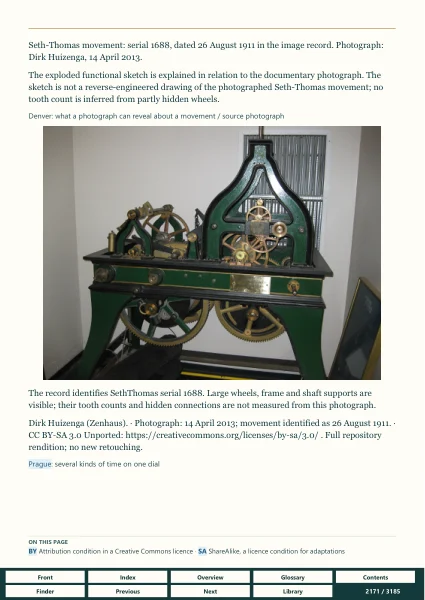
Prague: several kinds of time on one dial
Prague’s astronomical clock brings several histories into one facade. The medieval astronomical mechanism is associated with 1410 and with the work of Mikuláš of Kadaň and the astronomical advice of Jan Šindel. The calendar, decorative figures, repairs and modern appearance…
Read the account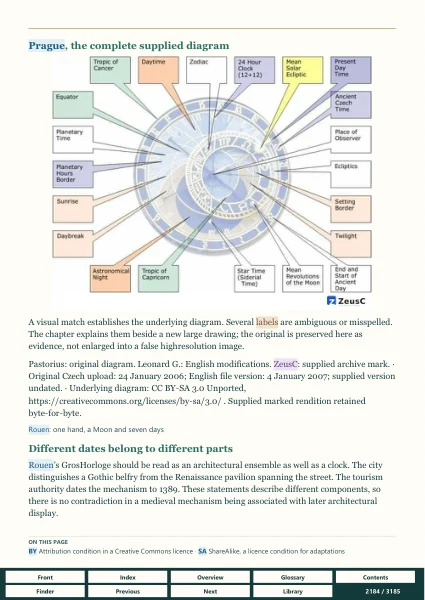 Source page
BOOK REFERENCE 2184
Rouen: one hand, a Moon and seven days
Rouen’s GrosHorloge should be read as an architectural ensemble as well as a clock. The city distinguishes a Gothic belfry from the Renaissance pavilion spanning the street. The tourism authority dates the mechanism to 1389. These statements describe different components, so…
Read the account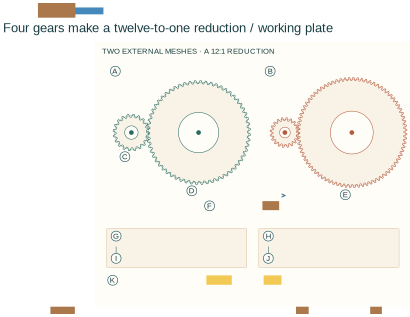
BOOK REFERENCE 2193
The clockmaker’s bench: counted parts and checks
Key · Small-print annotation. A · PLANE A
Read the account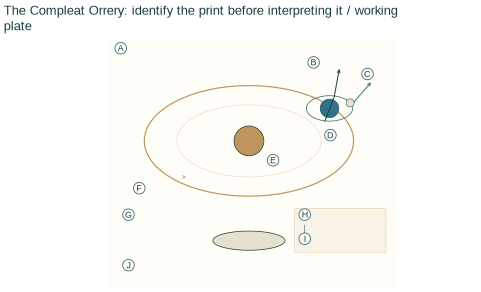
BOOK REFERENCE 2199
A moving model and a wider reading of time
ZeusC sheet 397 bears the title The Compleat Orrery, Described, By S. Dunn and a Library Nacional de España watermark. Jadranka Ryle’s published facsimile identifies Samuel Dunn, publisher Robert Wilkinson, London, 1780. That facsimile supplies the bibliographic…
Read the account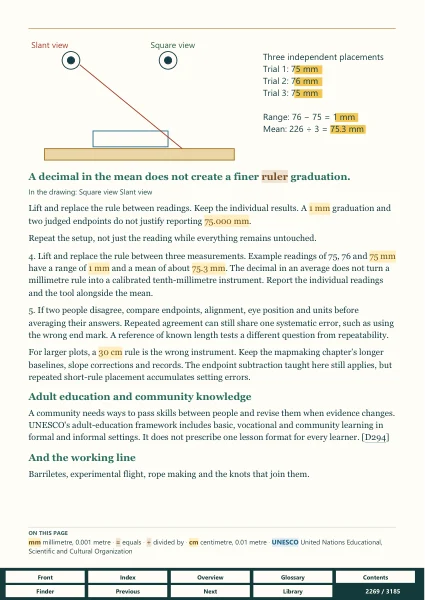 Source page
BOOK REFERENCE 2269
The Kite and the Working Line
Eleven chapters, historical photographs, complete supplied sheets and explicit source notes.
Read the account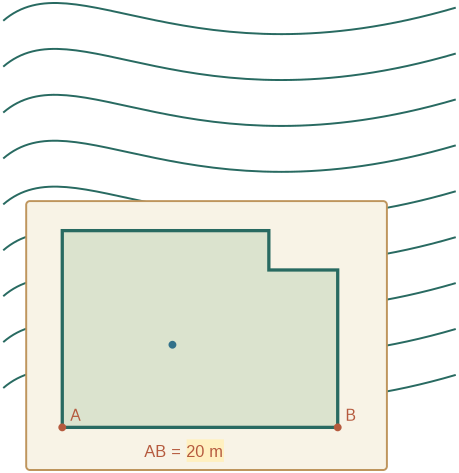
BOOK REFERENCE 2311
The Fieldbook and the Map
Mapmaking · local measurement · contours · north
Read the account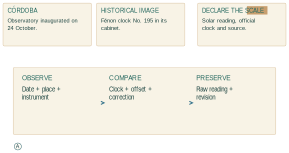
BOOK REFERENCE 2358
Sundials, Shadows and the Measure of a Day
A sundial relates a shadow to apparent solar time. Its layout depends on latitude, orientation and the dial surface. Clock time also involves the chosen time zone and the seasonal difference between apparent and mean solar time. The following chapters keep these quantities…
Read the account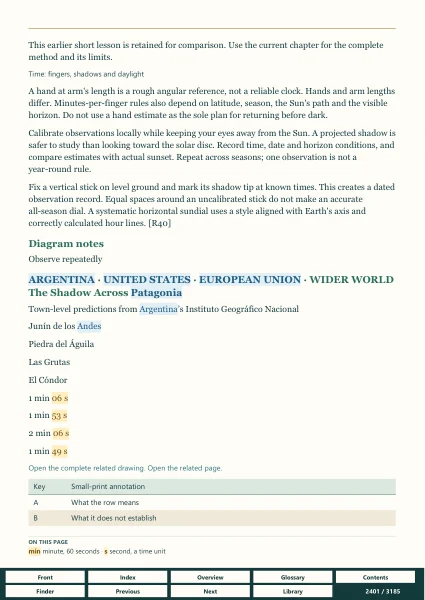 Source page
 Source page
 Source page
 Source page
 Source page
BOOK REFERENCE 2481
An Island that Moved between Maps
Start with Tierra de Patagones on the supplied oldmap crop. Ask what the label covers, which coastlines the printer shows and whether the human figures are geographic information, decoration or inherited convention. A relief map of South America answers another question…
Read the account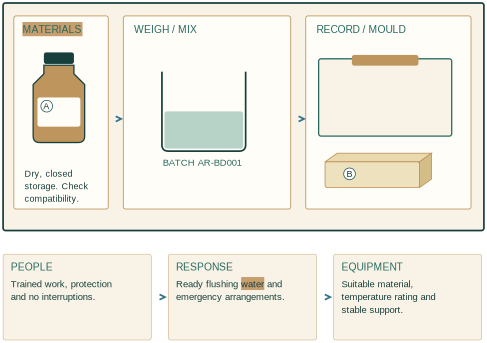
BOOK REFERENCE 2505
Materials, chemistry and care
The work area connects labelled materials, weighing, mixing and a protected record. This conceptual layout is not a building or ventilation design.
Read the account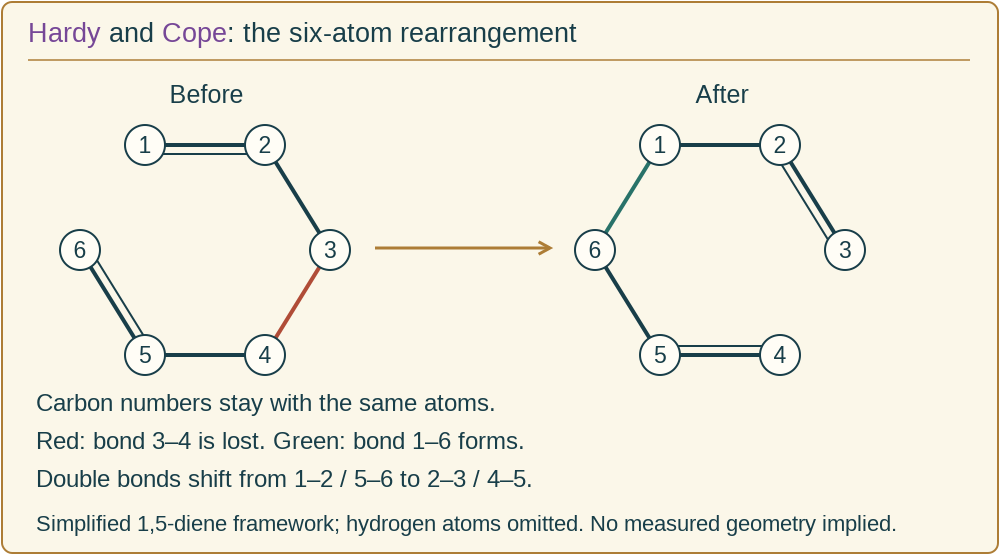
BOOK REFERENCE 2512
Women in chemistry: individual historical accounts
These twelve research histories begin with named people, institutions and publications. They connect chemical discoveries with the circumstances of the work: access to laboratories, collaboration, the making of instruments and the interpretation of measurements. Historical…
Read the account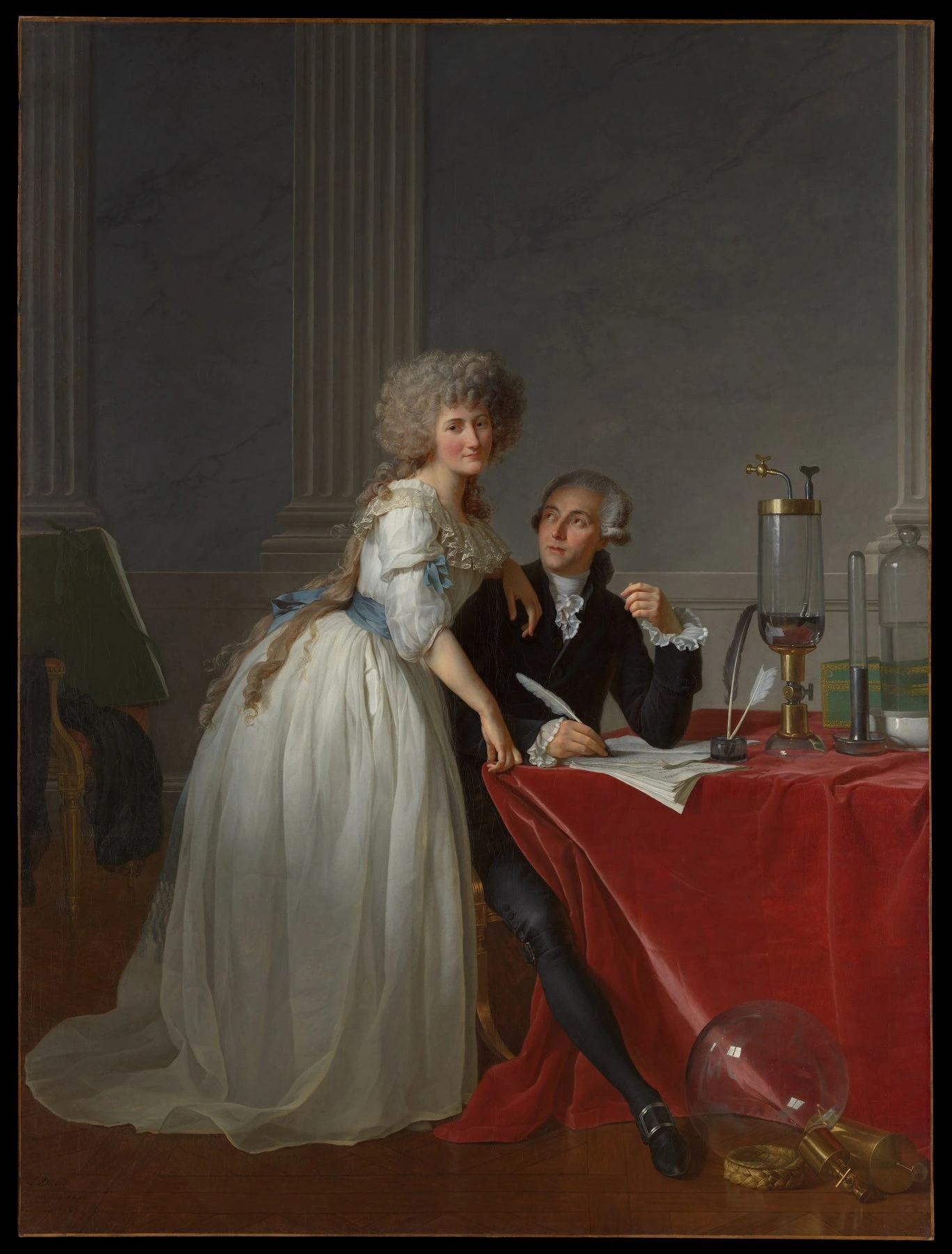
BOOK REFERENCE 2524
The Ledger and the Furnace
Marie Anne Lavoisier kept laboratory records and etched illustrations for her husband’s publications. The portrait brings the couple and their scientific apparatus into one setting, although later technical examination found that an earlier version omitted the instruments.…
Read the account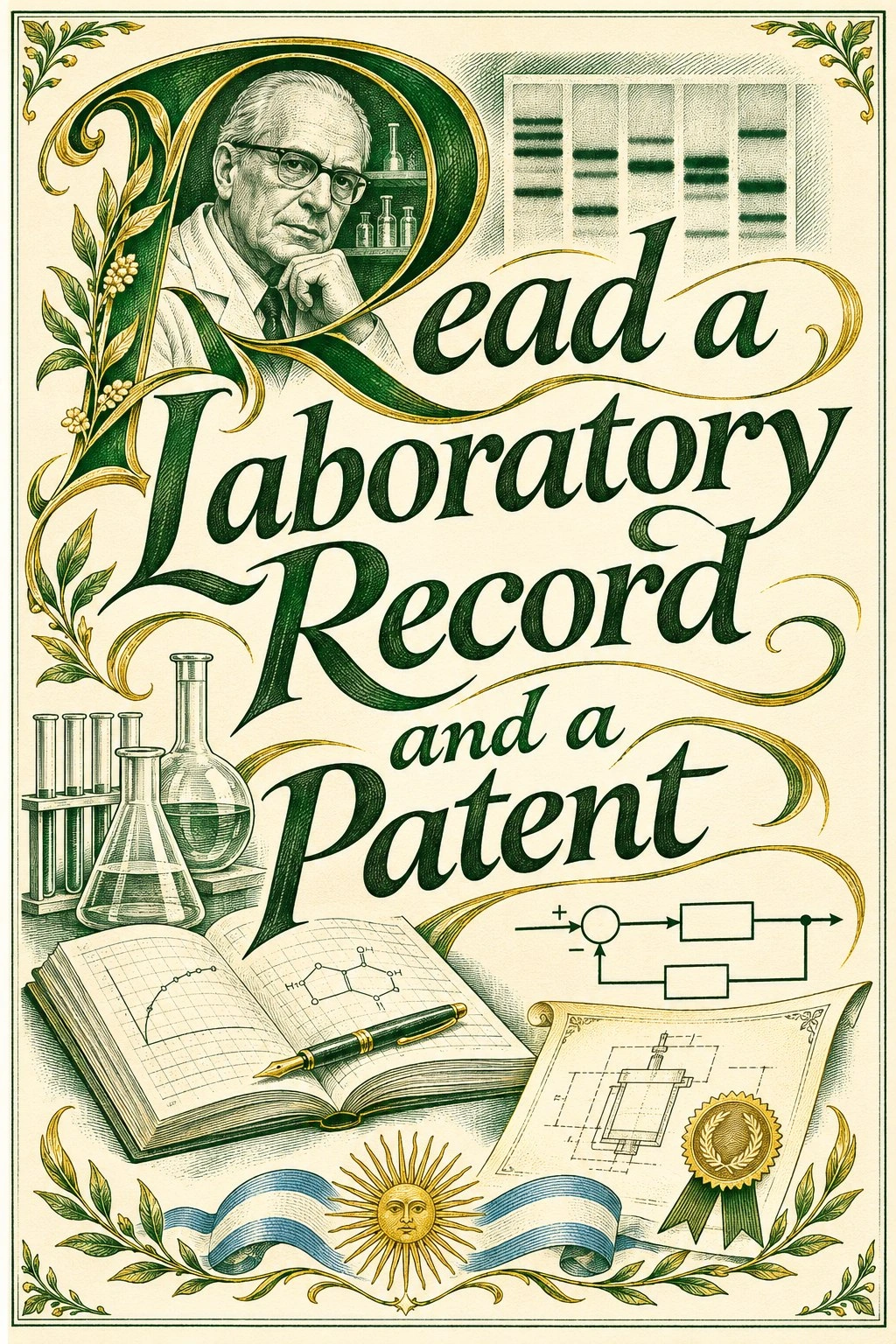
BOOK REFERENCE 2558
Read a Laboratory Record and a Patent
Learn to recover a laboratory record, read a separating method, trace a patent and build dry models whose parts, costs and limits another reader can inspect.
Read the account
BOOK REFERENCE 2588
Identify a Material Before Using It
Follow materials from a Patagonian well and an Argentine mineral locality to a molecule model, a measured observation and a recoverable workshop record.
Read the account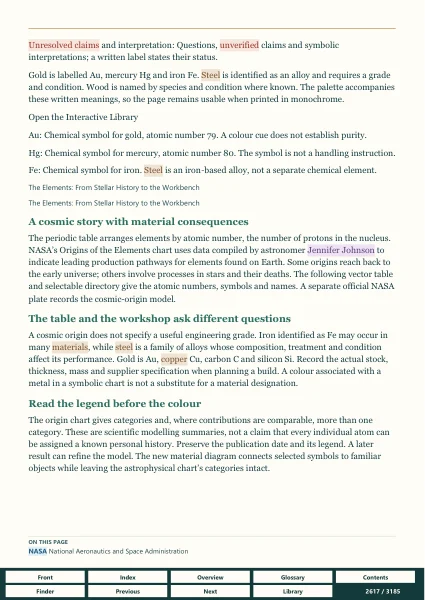 Source page
BOOK REFERENCE 2617
The Elements: From Stellar History to the Workbench
The periodic table arranges elements by atomic number, the number of protons in the nucleus. NASA’s Origins of the Elements chart uses data compiled by astronomer Jennifer Johnson to indicate leading production pathways for elements found on Earth. Some origins reach back to…
Read the account Source page