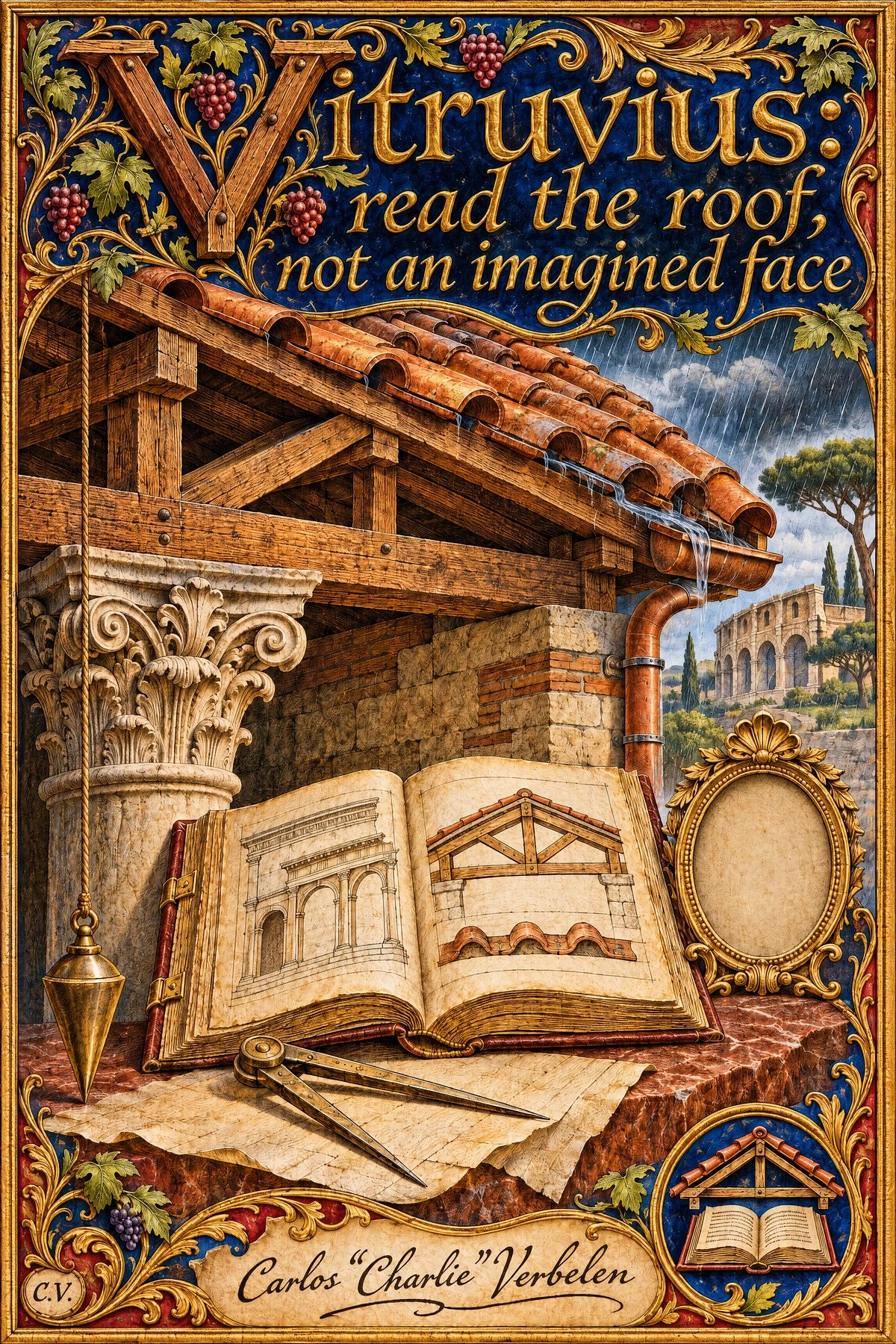
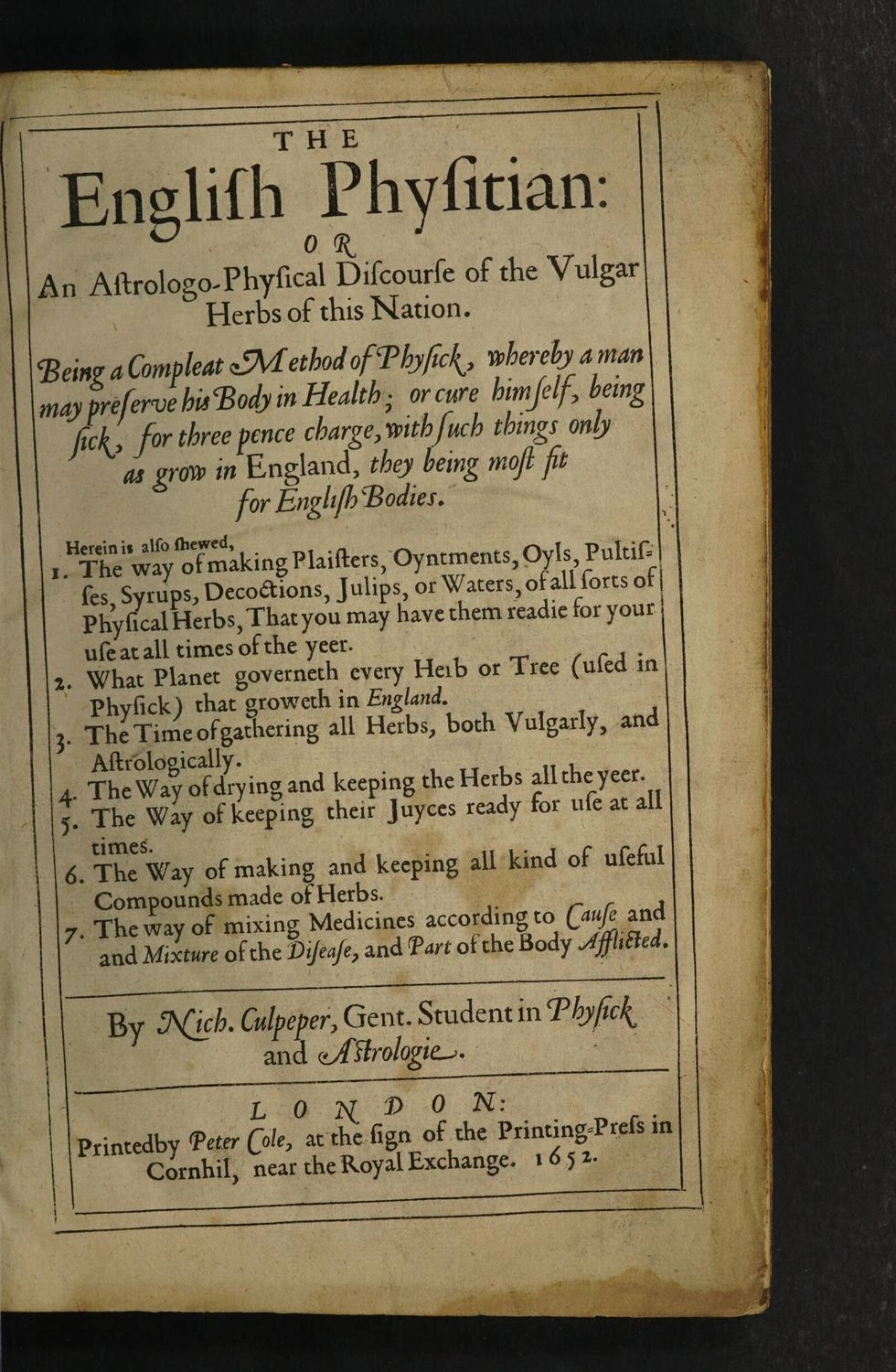
The roof, manuscript, tiles and water route carry the story. The empty portrait frame acknowledges that an authenticated likeness of Vitruvius is unavailable.
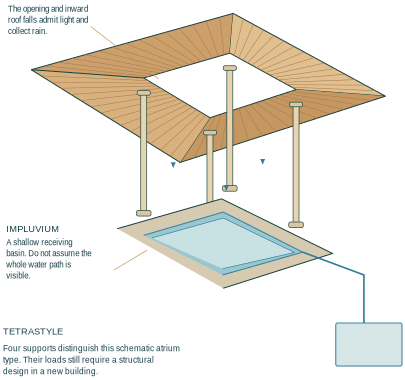
The atrium is a roof, a load path and a water route
Roman terms translated into visible relationships / schematic teaching reconstruction
Compluvium
Read the illustration’s labels
The opening and inward
roof falls admit light and
collect rain.
IMPLUVIUM
A shallow receiving
basin. Do not assume the
whole water path is
visible.
TETRASTYLE
Four supports distinguish this schematic atrium
type. Their loads still require a structural
design in a new building.
In the drawing: The opening and inward roof falls admit light and collect rain.; IMPLUVIUM; A shallow receiving basin. Do not assume the whole water path is visible.; TETRASTYLE; Four supports distinguish this schematic atrium type. Their loads still require a structural design in a new building.
Vitruvius distinguishes five atrium forms in Book VI. This drawing explains one type; it is not a measured reconstruction of an excavated house.
The text has more to teach than a portrait
Cistern route
Marcus Vitruvius Pollio wrote about architecture in the Roman world of the first century before the Common Era. His exact birth and death dates are not securely established. The ten books range across construction materials, houses, water, timekeeping and machinery. The historical evidence in this lesson is his text and the later record of buildings, rather than a supposed likeness of his face.
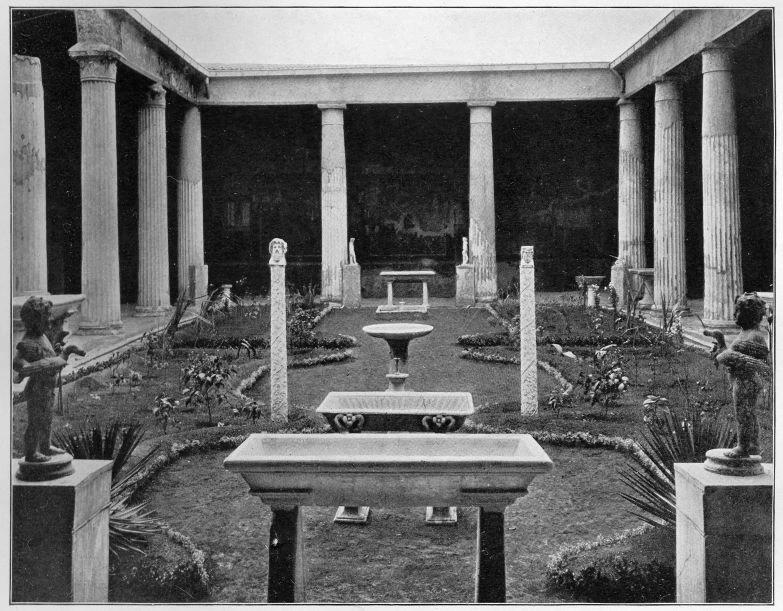
The Peristyle Of The House Of The Vettii At Pompeii
Vitruvius, The Ten Books on Architecture, Morris Hicky Morgan translation, Harvard University Press, 1914; illustrations prepared under Herbert Langford Warren. Photograph credited to Sommer.
1914 source publication; Project Gutenberg lists the edition as public domain in the UnitedStates.
Vitruvius: The Ten Books on Architecture, 1914 translation
Vitruvius, Book VI: the house, climate and atrium forms
Orchard street: a yard behind the facade
A specific nineteenth-century building shows why shared infrastructure belongs in a housing plan
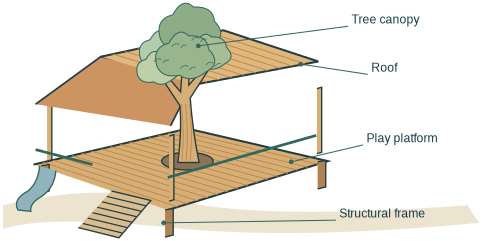
The treehouse sheet shows a timber play pavilion built around the idea of an existing tree. Its central opening, raised platform, stair and sheltered space give a designer a real spatial problem to think about. The supplied sheet does not identify a surveyed site, architect or completion date for the pictured pavilion. Kew Gardens offers a separately documented case in which drawings, site decisions and an opening date can be checked.
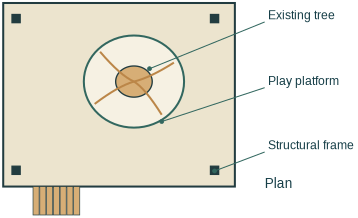
The original concept describes a timber platform, stairs, roof and sheltered play space. The drawing separates the tree from the frame that supports visitors. The companion plan on the next page locates them from above.
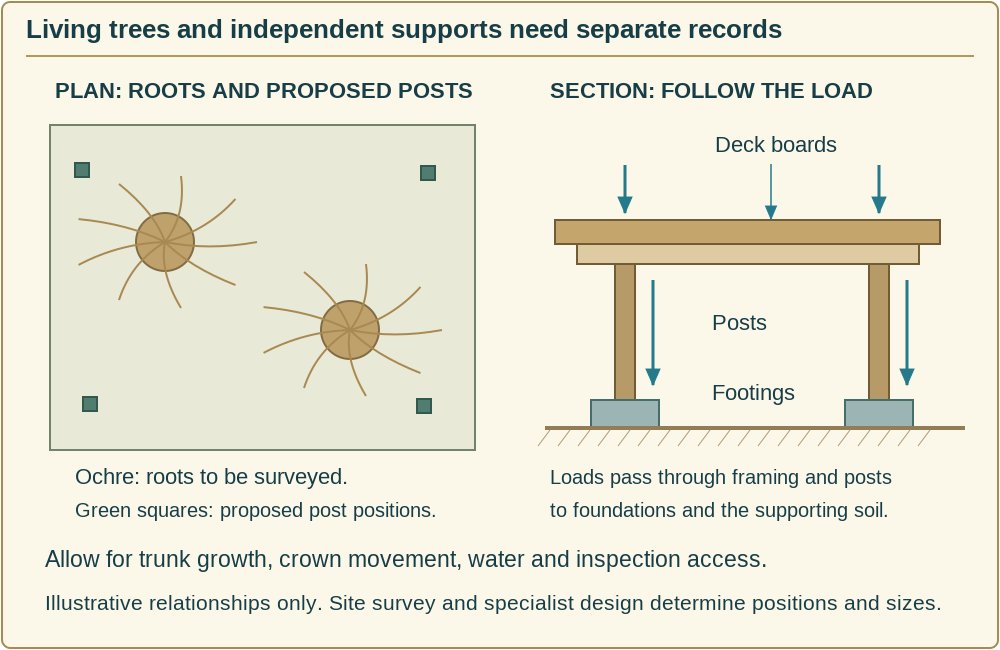
An opening around a trunk can make a platform look as if it rests on the tree. The load path has to be read in section. In the independent-post concept drawn here, a visitor’s weight acts on deck boards. The boards bear on framing, the framing on posts, and the posts on foundations. The soil supports the foundations while also supplying the living tree with water and air.
In the plan, the square posts support the deck around an opening for the trunk. The section in the linked chapter traces the load to the footing. Field measurements determine the clearance and foundation locations on a real site.
Shelter
Read the illustration’s labels
Existing tree
Play platform
Structural frame
Plan
In the drawing: Existing tree; Play platform; Structural frame; Plan
A cat diet begins with a complete food, not a breed recipe
Read the illustration’s labels
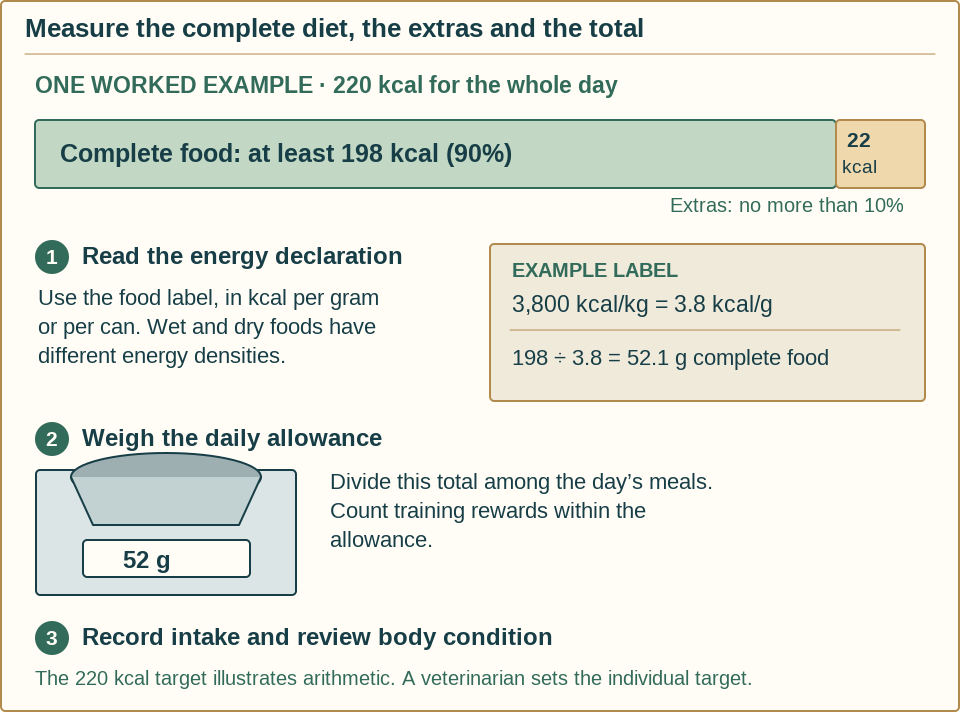
Measure the complete diet, the extras and the total
ONE WORKED EXAMPLE · 220 kcal for the whole day
Complete food: at least 198 kcal (90%)
22
kcal
Extras: no more than 10%
1
Read the energy declaration
Use the food label, in kcal per gram
or per can. Wet and dry foods have
different energy densities.
EXAMPLE LABEL
3,800 kcal/kg = 3.8 kcal/g
198 ÷ 3.8 = 52.1 g complete food
2
Weigh the daily allowance
52 g
Divide this total among the day’s meals.
Count training rewards within the
allowance.
3
Record intake and review body condition
The 220 kcal target illustrates arithmetic. A veterinarian sets the individual target.
Cats are obligate carnivores with specific nutrient needs. A complete food appropriate to the life stage can be wet, dry or a compatible mixture. Muscle meat alone is not nutritionally complete. A home-cooked staple diet requires a qualified veterinary nutrition formulation, including its exact ingredients and supplements; “meat plus vegetables” is not a substitute.
Breed matters indirectly through body size, coat-related grooming, inherited conditions and the individual’s activity. It does not establish a different safe-fruit list for every pedigree. Use the veterinarian’s calorie target, body-condition assessment and the product’s energy density. Kidney disease, urinary disease, diabetes, allergies, pregnancy and growth can require a different diet.
Food
How it can fit
What to avoid
Complete wet cat food
Check the life-stage adequacy label and kcal per pouch/can.
Do not confuse complementary treats with a complete staple.
Complete dry cat food / kibble
Weigh the portion in grams; supply fresh water.
A cup is imprecise; a dog-food label is not a cat-food specification.
Plain cooked chicken or turkey
Small boneless, unseasoned extras within the daily calorie allowance.
Raw poultry, skin/fat-heavy scraps, bones, sauces and onion/garlic seasoning.
Plain cooked lean beef
Small boneless pieces if tolerated.
A whole-meat daily diet or salty cured meats.
Cooked fish
Occasional boneless, unseasoned extra.
Raw fish, bones, or tuna as the sole diet.
Cooked egg
A small fully cooked unseasoned extra if tolerated.
Raw egg and replacing balanced meals with eggs.
Units and terms
% percent, parts per hundred · g gram, 0.001 kilogram · = equals · ÷ divided by
Vegetables and fruit: optional tastes, carefully counted
Optional food
Preparation
Use in the plan
Pumpkin or carrot
Plain cooked pumpkin flesh or soft cooked carrot, chopped or mashed.
Offer a very small taste; no pie filling, sugar or seasoning.
Peas or green beans
Plain cooked, small soft pieces.
Optional, not a required replacement for animal-source nutrition.
Blueberry
Washed; cut or crush as appropriate to the cat.
A tiny taste if interested; count it with other extras.
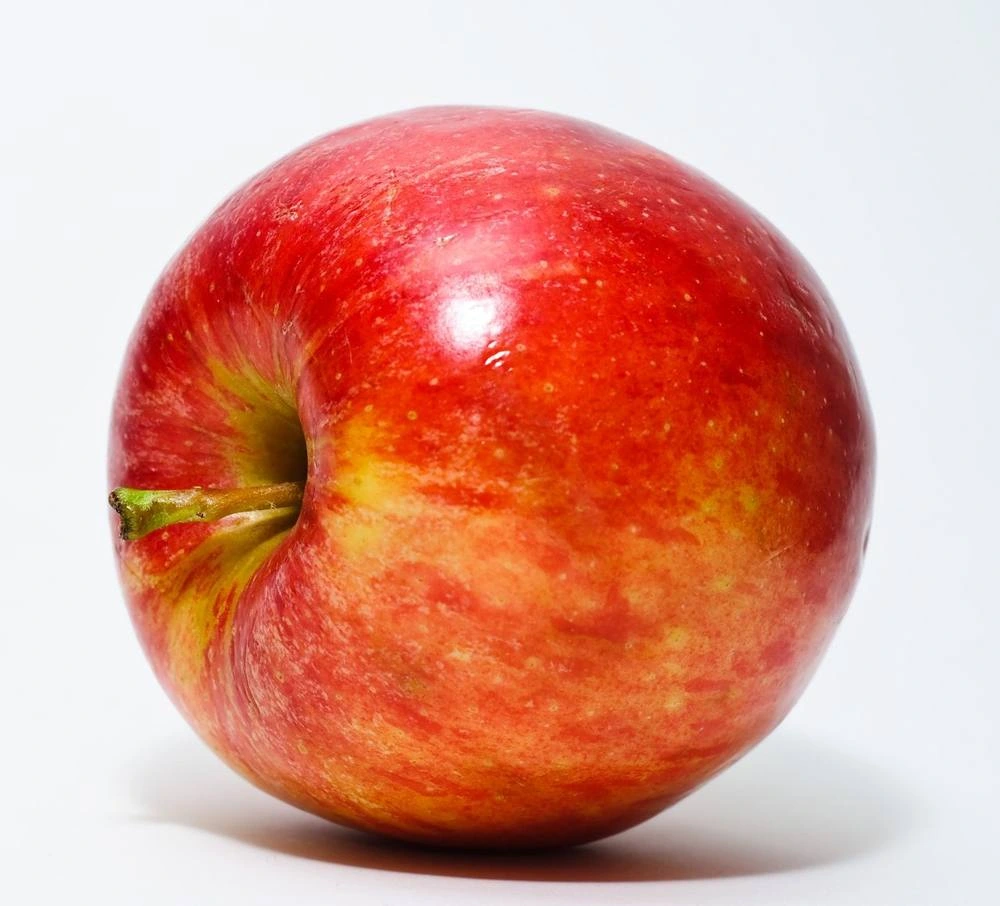
Apple flesh
Wash, peel if needed; remove core and seeds; tiny pieces.
No seeds or sweetened preparations.
Melon flesh
Remove rind and seeds; tiny soft pieces.
Optional treat; not a hydration or nutritional treatment.
Banana
A very small peeled piece.
Energy-dense relative to a tiny cat treat allowance; not a daily necessity.
Start with a small taste of one new food, not a bowl of mixed fruit. Stop if it causes vomiting, diarrhoea or refusal of normal meals. Many cats simply do not want vegetables or fruit; there is no need to persuade them when their complete diet meets their needs. Cats on a therapeutic diet may need to avoid extras entirely.
Keep these out of the bowl
Do not offer onion, garlic or related alliums; chocolate, caffeine or alcohol; grapes or raisins; raw dough; raw meat or bones; or fruit stones and hard cores. Do not treat milk as a requirement. Human sauces and leftovers can contain harmful ingredients even when the main meat is suitable. For a suspected ingestion, contact a veterinarian promptly rather than attempting a home remedy.
All extras together should usually stay within 10% of the daily energy allowance; use a lower allowance or none if advised for the individual. Vegetables and fruit are not “detox”, parasite treatment or a way to balance an otherwise incomplete meat diet. The daily plan on the next page shows how to subtract treats from the staple food.
Units and terms
% percent, parts per hundred · g gram, 0.001 kilogram
06. Terraced Landscape Estate: animals, feeding and daily care
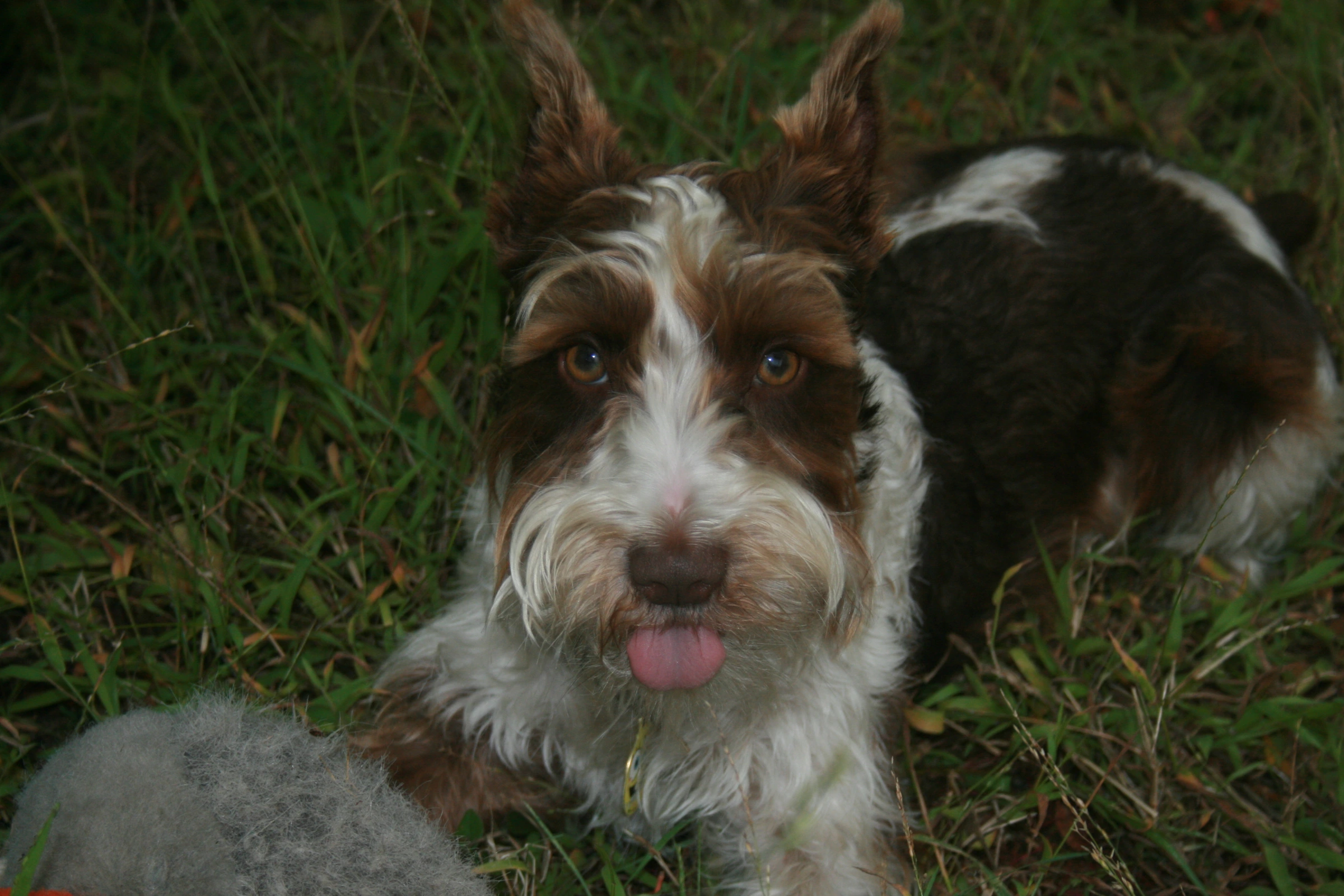
Miniature Schnauzer: a distinct documented breed photograph for estate 06. The individual shown is not offered for sale or certified as a trained guard. Brocken Inaglory · 06/16/07 · CC BY-SA 3.0.
Miniature Schnauzer · household alert
Starting number: 1 household dog; 0 livestock guardians initially. Provide a level domestic refuge and a short controlled route; terraces and retaining edges remain physically protected.
Starting livestock: 4–6 hens in a level secure service area; 0 cattle; 0 horses. Terraces are structures as well as land. Keep heavy animals, manure storage and feed deliveries away from retaining-wall edges until access, drainage and loading have been checked. Use a level yard for poultry care.
Set up before arrival
1. Make the route work.
Walk the route carrying cleaning equipment, then check it again for a small dog’s escape gaps and abrupt drops.
2. Prepare one complete kit.
Use the illustrated one-dog kit: two bowls, fitted harness and lead, fitted transport crate, dry bed, identity and veterinary record. Specify two secure gates for the entrance routine where the site layout permits it. Measure fence length and openings on site; no generic metre quantity is claimed.
3. Test the normal day.
Walk deliveries, household departures and cleaning through the plan. Put the dog in its quiet refuge before a visitor enters. Introduce known people and animals gradually with a competent handler; stop and reassess if the individual dog is distressed or chasing livestock.
Read the illustration’s labels
A level refuge above protected terrace edges
Site-specific teaching drawing • use the numbered explanation in the lesson
HOUSE
Rest
Tools
SECTION • levels and edges must be surveyed
No dimensions or retaining-wall capacity are implied.
Lower access
1
2
3
4
ESTATE 06
READ THE NUMBERS
1 House on upper bench
2 Level enclosed refuge
3 Controlled level
entry
4 Lower maintenance
zone
REHEARSE THE ROUTE
Use the level route
first.
Guard every exposed
edge.
Keep maintenance below
separate.
TAKE ON THE SITE WALK
Small-gap check • level resting mat • maintenance route log
Original care-route schematic • not a survey, measured plan or security guarantee
Read the numbered drawing
This is a section through terraces, not a flat site plan. House 1, refuge 2 and controlled entrance 3 share the upper level. Zone 4 lies below a retaining edge and is reached by a separate maintenance route. The drawing does not specify wall strength, safe loading or railing dimensions.
Livestock and a second phase
A small sheep flock is only an option on a genuinely grazable parcel with safe movement between levels. Goats can browse, but their climbing, bark stripping and fence pressure can damage an ornamental or productive terrace. They are not the default solution. No livestock guardian is included in this starting plan. Adding cattle, horses or decorative grounds does not automatically create a guardian-dog requirement.
A plan showing steps or narrow paths does not show a safe livestock route. Map turning space, evacuation and veterinary access. In steep or wet conditions, a zero-grazing-animal plan can be the most workable estate plan.
A small dog on terraces
Teach the dog to pause at an interior doorway, with a physical barrier protecting the drop beyond. Reward a return to a level mat. Then practise calm harness fitting and a short flat route. Never test the pause by opening an unguarded terrace edge.
Meals and rewards on this site
For a Miniature Schnauzer, discuss the breed’s predisposition to inherited high blood fats with the veterinarian. That is a reason to review health and fatty treats, not to impose an improvised fat-free diet on every dog. [N09]
Care for the other animals
No livestock is allocated to this start. Terraces can restrict safe handling, drainage and access to feed storage. A small companion dog is already a daily care commitment; avoid adding an animal merely because it fits in a picture.
Training purchase and care budget
Training purchase example
Local amount
Currency comparison
Argentina · 4 individual visits
ARS 160,000
USD 101.91 / EUR 90.40
US · 4 private hours
USD 259
ARS 406,630 / EUR 229.73
Madrid · 4 sessions
EUR 230
ARS 407,100 / USD 259.30
Falcons or other unusual animals here
Large grazing exotics do not fit this terraced start. A lawful small-species facility needs stable temperatures and a designated indoor keeper.
The cat belongs to this estate too
1 assessed adult, or 2 already-compatible cats. Choose temperament, health and tolerance of this household rather than buying a pedigree as a pest-control guarantee. Use ramps and low resting levels where falls or age-related mobility are concerns.
Feeding at this property
Use one level feeding station inside the dwelling rather than several bowls scattered among terraces. Record the measured complete-food allowance and any rewards. Food, drinking water and litter should have separate locations, but none should force a cat with limited mobility to negotiate the terrace stairs.
Care from arrival through old age
At arrival, confine access to a protected, furnished room before introducing further levels. Provide stable low steps or a suitable ramp where the individual can use them comfortably. Reassess access to resting shelves with age; reduced jumping should prompt a health review rather than a higher obstacle.
Authored reserves, 15 November 2026, not quotes. Exchange basis: ARS 1,570/USD and ARS 1,770/EUR. Food, veterinary care, enclosure work, animal purchase/adoption and delivery remain separate. The preceding dog table records the site’s dog-coaching scenario; do not silently add cat reserves as quoted services.
Units and terms
k (currency) thousand, 1,000 of the stated currency · m³ cubic metre, a volume unit · BY-SA Creative Commons Attribution-ShareAlike
ARS Argentine peso · USD United States dollar · EUR Euro · US United States
ARS Argentine peso · USD United States dollar · EUR Euro
Retained contemporary estate title artwork. The following pages describe this property, its costs and its animal-care plan. This illustration is not a historical photograph or a measured site survey.
Units and terms
ARS Argentine peso · USD United States dollar · EUR Euro
Supplied concept illustration. Historical precedent is a comparison, not the pictured place.
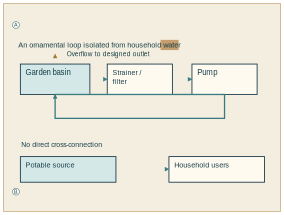
Garden water loops Separate ornamental circulation, drinking water and wastewater. Locate strainers, pumps, make-up connections and overflow before placing rooms below them.
Read the illustration’s labels
An ornamental loop isolated from household water
Garden basin
Strainer /
filter
Pump
Overflow to designed outlet
No direct cross-connection
Potable source
Household users
A
B
Key
Small-print annotation
A
Analytical drawing. Example quantities are labelled; geometry is not a site survey.
B
Make-up connections require backflow protection. Recirculation does not eliminate evaporation or water-quality work.
Visible features Lakeshore, clustered roofs, internal paths, open fields and structured growing plots.
Basin and pump materials Identify lining, pump duty, strainer, valves and accessible pipe joints. Record compatibility with treatment products. Meter make-up water and inspect leaks independently of the household drinking-water system.
Historical context
In the drawing: Analytical drawing. Example quantities are labelled; geometry is not a site survey.; An ornamental loop isolated from household water; Overflow to designed outlet; Garden basin Strainer / filter; Pump; No direct cross-connection; Potable source Household users; Make-up connections require backflow protection. Recirculation does not eliminate evaporation or water-quality work.
Villa d'Este at Tivoli is a sixteenth-century garden whose fountains and basins influenced later landscape design. Its visual richness should prompt questions about water routes and upkeep, not assumptions of cost-free continuous flow.
Complete supplied estate concept. Labels are transcribed in the numbered key that follows. This image does not document a surveyed or built site.
Numbered concept key
No.
Feature
Basis
1
Main gate
Labelled
2
Security center
Labelled
3
Internal drive and paved yard
Visible form
4
Perimeter and shoreline boundary
Visible form
5
Main house
Labelled
6
Parents' house
Labelled
7
Grandparents' house
Labelled
8
Guest house
Labelled
9
Unlabelled residence A
Visible form
10
Unlabelled residence B
Visible form
11
Unlabelled residence C
Visible form
12
Unlabelled residence D
Visible form
13
Gardens
Labelled
14
Greenhouse complex
Labelled
15
Orchard
Labelled
16
Solar farm
Labelled
17
Battery storage
Labelled
18
Machine shop
Labelled
19
Tractor garage
Labelled
20
Helicopter landing marking
Visible form
21
Depicted helicopter
Visible form
22
Boat house
Labelled
23
Private dock label
Labelled
24
Bridge or causeway
Visible form
25
Lake and shore
Visible form
26
Planted grounds and paths
Visible form
Units and terms
k (currency) thousand, 1,000 of the stated currency · USD United States dollar · m² square metre, an area unit · m metre, a length unit · m (currency) million, 1,000,000 of the stated currency
Items 1-9 of 26 | All quantities and prices below are scenario assumptions
Feature, method and purpose
Assumed quantity
Build USD
Care/year USD
1. Main gate Method M1 Provide emergency entry independent of powered access control.
1 set
$20.0k-60.0k
$400-2.4k
2. Security center Method M1 Separate arriving visitors from service vehicles and helipad operations.
60 m²
$90.0k-180.0k
$900-3.6k
3. Internal drive and paved yard Method M2 Vehicle circulation must not enter any future rotor safety area.
4200 m²
$336.0k-672.0k
$3.4k-16.8k
4. Perimeter and shoreline boundary Method M1 Visible shore edges do not prove ownership or a buildable setback.
1200 m
$240.0k-720.0k
$1.2k-10.8k
5. Main house Method M3 Confirm guest capacity and mechanical rooms.
700 m²
$1.75m-3.50m
$17.5k-70.0k
6. Parents' house Method M3 Provide a step-free family connection where required.
300 m²
$750.0k-1.50m
$7.5k-30.0k
7. Grandparents' house Method M3 Keep accommodation access separate from the dock service route.
300 m²
$750.0k-1.50m
$7.5k-30.0k
8. Guest house Method M3 Define water, waste and housekeeping loads.
300 m²
$750.0k-1.50m
$7.5k-30.0k
9. Unlabelled residence A Method M3 Residential appearance only; actual use and area are not established.
300 m²
$750.0k-1.50m
$7.5k-30.0k
Items 10-18 of 26 | All quantities and prices below are scenario assumptions
Feature, method and purpose
Assumed quantity
Build USD
Care/year USD
10. Unlabelled residence B Method M3 Do not invent an occupant or household attribution.
300 m²
$750.0k-1.50m
$7.5k-30.0k
11. Unlabelled residence C Method M3 Treat this as a separate assumed accommodation allowance.
350 m²
$875.0k-1.75m
$8.8k-35.0k
Units and terms
k (currency) thousand, 1,000 of the stated currency · USD United States dollar · m² square metre, an area unit · m metre, a length unit · m (currency) million, 1,000,000 of the stated currency
k (currency) thousand, 1,000 of the stated currency · USD United States dollar · m² square metre, an area unit · m (currency) million, 1,000,000 of the stated currency · ha hectare, 10,000 square metres · kWh kilowatt-hour, energy
20. Helicopter landing marking Method M13 A painted H does not establish a usable or approved heliport.
1 set
$100.0k-400.0k
$1.0k-10.0k
21. Depicted helicopter Method M13 Purchase, crew, maintenance and flight costs require an aircraft-specific quote.
Unresolved
Unpriced
Unpriced
22. Boat house Method M12 Marine works and water-level loads need specialist design.
150 m²
$210.0k-450.0k
$3.1k-13.5k
23. Private dock label Method M12 Dock use rights and craft sizes are not established.
160 m²
$112.0k-288.0k
$2.2k-11.5k
24. Bridge or causeway Method M14 Its span, ownership and structural system are unverified and unpriced.
Unresolved
Unpriced
Unpriced
Units and terms
k (currency) thousand, 1,000 of the stated currency · USD United States dollar · m² square metre, an area unit · m (currency) million, 1,000,000 of the stated currency · ha hectare, 10,000 square metres · kWh kilowatt-hour, energy
Treat the helipad marking and bridge as unresolved specialist interfaces. Maintain a usable pedestrian and service network without relying on either facility being approved.
Day and night responsibilities
Open prices: Depicted helicopter, Bridge or causeway, Lake and shore
Units and terms
k (currency) thousand, 1,000 of the stated currency · USD United States dollar · m² square metre, an area unit · m (currency) million, 1,000,000 of the stated currency · ha hectare, 10,000 square metres · kWh kilowatt-hour, energy
07. Waterfront and Garden Compound: animals, feeding and daily care
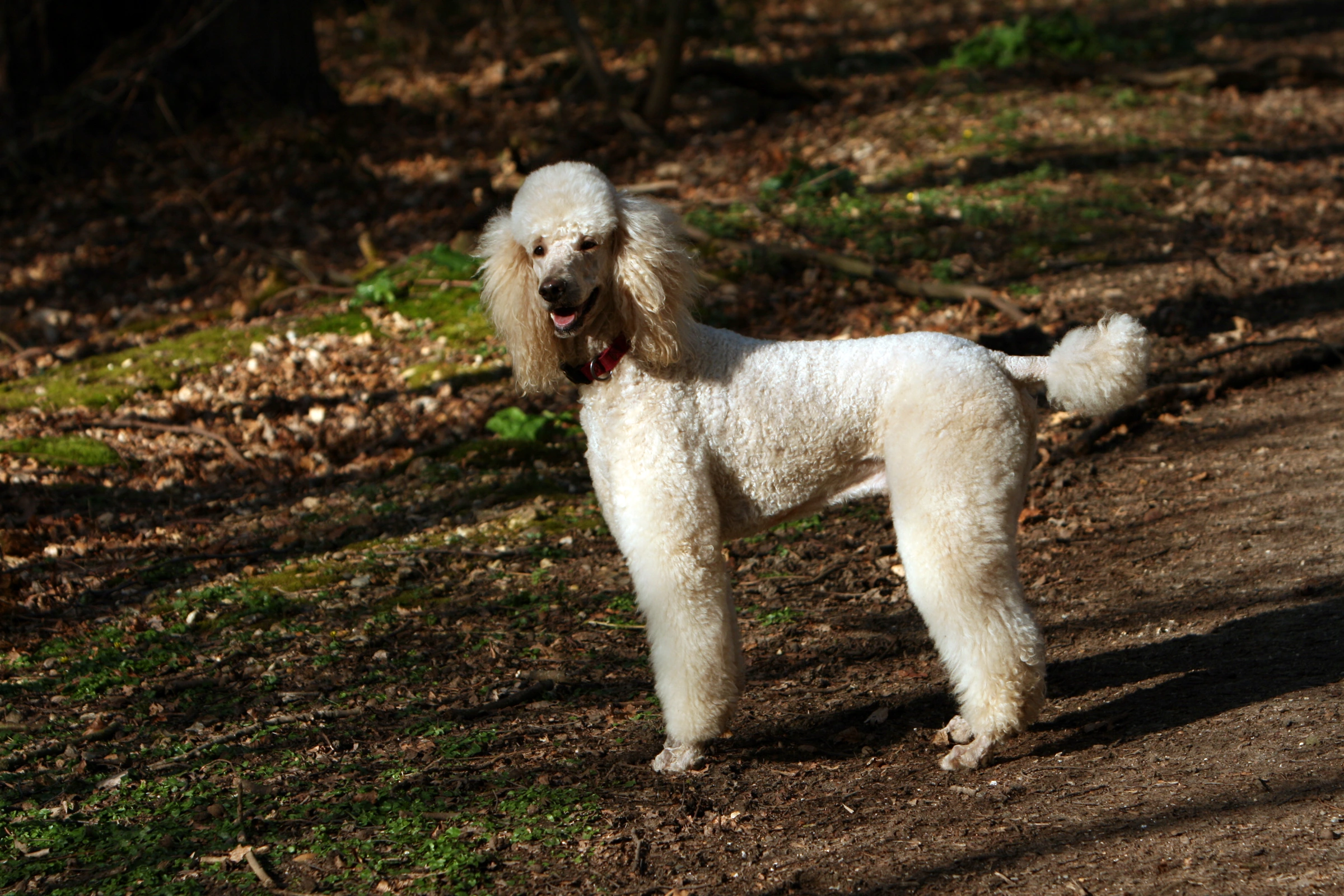
Standard Poodle: a distinct documented breed photograph for estate 07. The individual shown is not offered for sale or certified as a trained guard. John Leslie from London, UK · 2007-03-17 15:39 · CC BY 2.0.
Standard Poodle · household companion
Starting number: 1 household dog; 0 livestock guardians initially. Keep the dog behind a side gate during garden tours and away from shore access.
Starting livestock: 4 hens in a screened service run; 0 cattle; 0 horses. This case prioritises gardens, deliveries and public movement. Place the bird run beyond food preparation and protect garden beds from scratching. Use gates and a daily closing routine rather than a roaming dog as the main boundary.
Set up before arrival
1. Make the route work.
Schedule coat care, drying and cleaning in the service zone so a wet dog does not cross food preparation or guest routes.
2. Prepare one complete kit.
Use the illustrated one-dog kit: two bowls, fitted harness and lead, fitted transport crate, dry bed, identity and veterinary record. Specify two secure gates for the entrance routine where the site layout permits it. Measure fence length and openings on site; no generic metre quantity is claimed.
3. Test the normal day.
Walk deliveries, household departures and cleaning through the plan. Put the dog in its quiet refuge before a visitor enters. Introduce known people and animals gradually with a competent handler; stop and reassess if the individual dog is distressed or chasing livestock.
Read the illustration’s labels
Grooming and garden visits need different paths
Site-specific teaching drawing • use the numbered explanation in the lesson
HOUSE
Shade + rest
Screened hen run
Garden-tour path stays outside the care area.
1
2
3
4
ESTATE 07
READ THE NUMBERS
1 Household pavilion
2 Drying / grooming
refuge
3 Garden-tour entrance
4 Screened hen service
run
REHEARSE THE ROUTE
Guests stay on the
garden path.
Wet coats use the
service door.
Keep feed away from
kitchens.
TAKE ON THE SITE WALK
Grooming kit • drying mat • labelled reward portion
Original care-route schematic • not a survey, measured plan or security guarantee
Read the numbered drawing
The visitor path curves through the garden from entrance 3. The household pavilion is 1. Its service door leads to drying refuge 2, so coat care does not occupy the public path. Screened hen run 4 uses the back service lane, away from meals and garden tours.
Livestock and a second phase
If a separate market-garden enterprise develops, increase bird numbers only after checking manure management, feed, neighbours and applicable rules. Sheep, goats and horses should not be added to make the picture look rural. No livestock guardian is included in this starting plan. Adding cattle, horses or decorative grounds does not automatically create a guardian-dog requirement.
Keep a visitor-free care route from feed store to run to waste collection. On flood-prone ground, plan where animals will be moved before water reaches the compound. Count transport crates and a dry destination in the inventory.
Coat care and garden visitors
Practise standing briefly on a nonslip mat, reward, and release. Introduce the brush without pulling the coat. Build comfortable handling with the groomer; meanwhile rehearse the garden-tour route with the dog behind its side gate.
Meals and rewards on this site
Prevent coat and water-bowl contamination of the kitchen route. Measure the complete food first, then reserve a small reward portion for grooming practice. A cooked-food preference still requires a balanced recipe; meat plus vegetables alone is incomplete.
Care for the other animals
Keep grazing stock at zero. An aviary is a separate project with species-specific diet and social needs. Guests must not feed seed mixes or fruit indiscriminately to an unknown species.
Training purchase and care budget
Training purchase example
Local amount
Currency comparison
Argentina · 4 individual visits
ARS 160,000
USD 101.91 / EUR 90.40
US · 4 private hours
USD 259
ARS 406,630 / EUR 229.73
Madrid · 4 sessions
EUR 230
ARS 407,100 / USD 259.30
Falcons or other unusual animals here
A garden aviary would need species-specific design, noise review and permits; a landscaped enclosure by itself is insufficient.
The cat belongs to this estate too
1 assessed adult, or 2 already-compatible cats. Choose temperament, health and tolerance of this household rather than buying a pedigree as a pest-control guarantee. Separate cats completely from ducklings, chicks and pond wildlife.
Feeding at this property
Prepare cat meals in the household area, separate from the poultry and pond-feed containers. Keep the cat's ration and utensils identifiable to avoid substituting bird or fish feed. Feed behind the household barrier before keepers open the garden gates; do not use ducklings or live prey as enrichment.
Care from arrival through old age
Check each barrier between the cat enclosure, chicks and ducklings before either keeper begins work. A young cat needs supervised introduction to its household, not access to the breeding pens. For an older cat, keep a sheltered ground-level retreat and an easy route to its own litter tray.
Authored reserves, 15 November 2026, not quotes. Exchange basis: ARS 1,570/USD and ARS 1,770/EUR. Food, veterinary care, enclosure work, animal purchase/adoption and delivery remain separate. The preceding dog table records the site’s dog-coaching scenario; do not silently add cat reserves as quoted services.
Units and terms
ARS Argentine peso · UK United Kingdom · BY Attribution condition in a Creative Commons licence
ARS Argentine peso · USD United States dollar · EUR Euro · US United States
ARS Argentine peso · USD United States dollar · EUR Euro
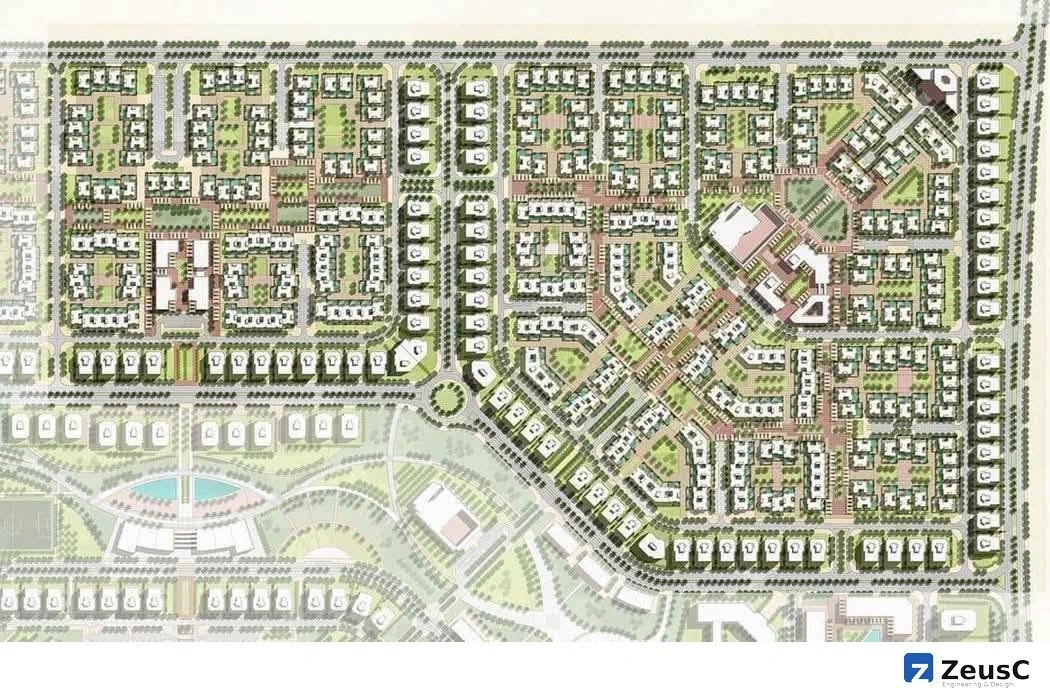
The regular street pattern meets a larger central landscape route. Junctions and repeated building plots are visible at different scales. A master plan can establish intended relationships, but this sheet supplies no verified traffic counts, pedestrian gradients, drainage levels or utility-service capacities.
Visible feature
How it relates to this plate
Street grid
Repeated junctions provide a legible access pattern. The drawing does not identify actual traffic priority at each intersection.
Central green route
The continuous landscape differs from individual plots and may carry several uses. Its drainage role is not specified here.
Building plots
Footprints repeat within the grid; repetition in plan does not establish identical occupancy or utility demand.
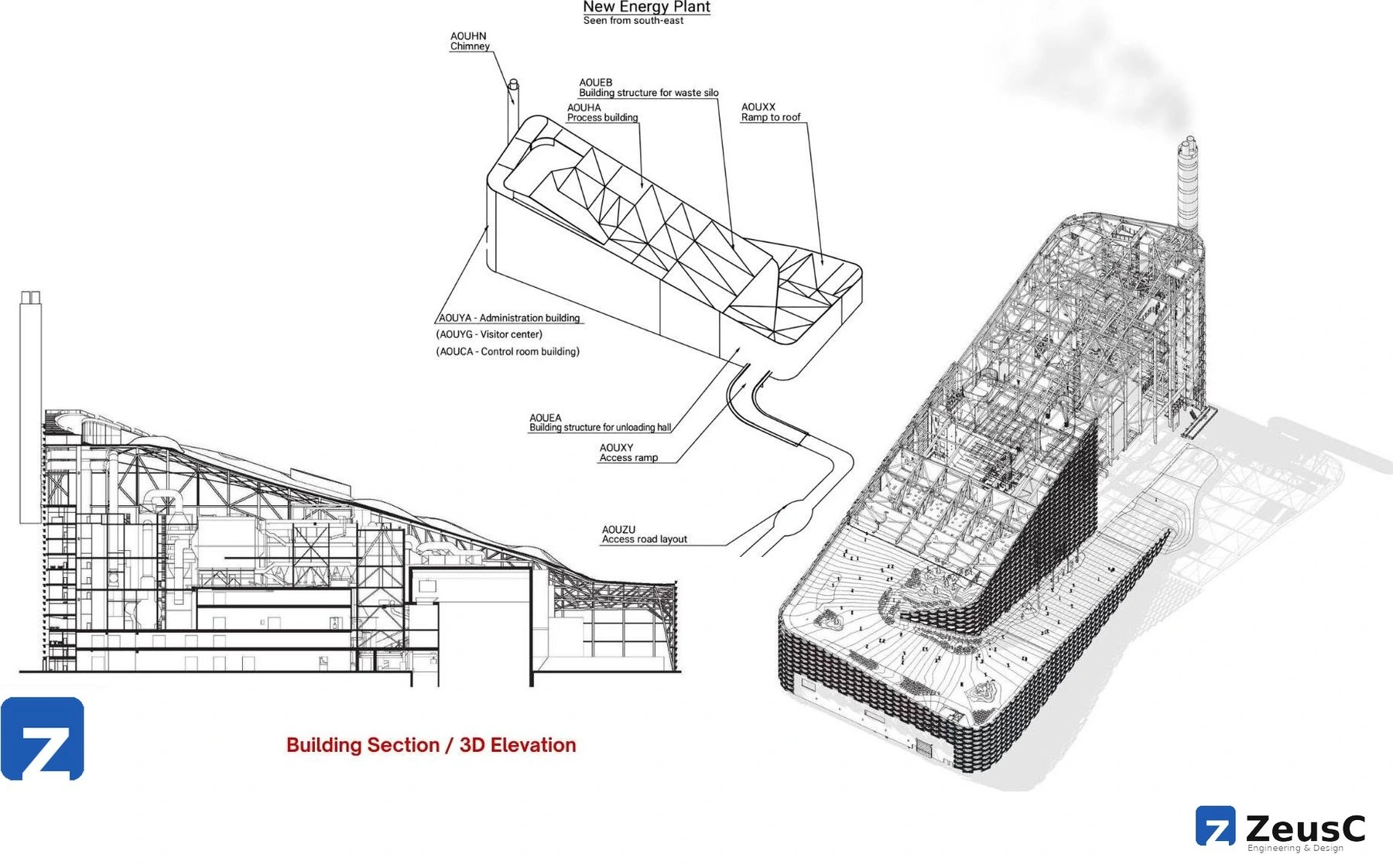
ZeusC supplied additions, sheet 023. Watermark preserved. Building design: BIG (Bjarke Ingels Group).
CopenHill, also called Amager Bakke, is a waste-to-energy building in Copenhagen designed by Bjarke Ingels Group. Its recreational roof opened publicly on 4 October 2019. The process plant, accessible roof and external enclosure are connected parts of the project, with distinct operating and maintenance needs. [QR-COPENHILL]
Visible feature
How it relates to this plate
Recreational roof
The publicly accessible upper surface is an additional use above the industrial programme.
Process plant
The enclosed industrial functions have operating and maintenance routes separate from public roof access.
Outer enclosure
The facade closes the environmental boundary while accommodating the building’s services and structural movement.
Units and terms
BIG Bjarke Ingels Group, the architectural practice
Sources for this account
CopenHill / Amager Bakke
Bjarke Ingels Group identifies CopenHill in Copenhagen as a waste-to-energy building with a recreational roof. The operator records the public opening on 4 October 2019. These records do not authenticate dimensions or calculations on the supplied student-style sheets. Access checked 22 November 2026.
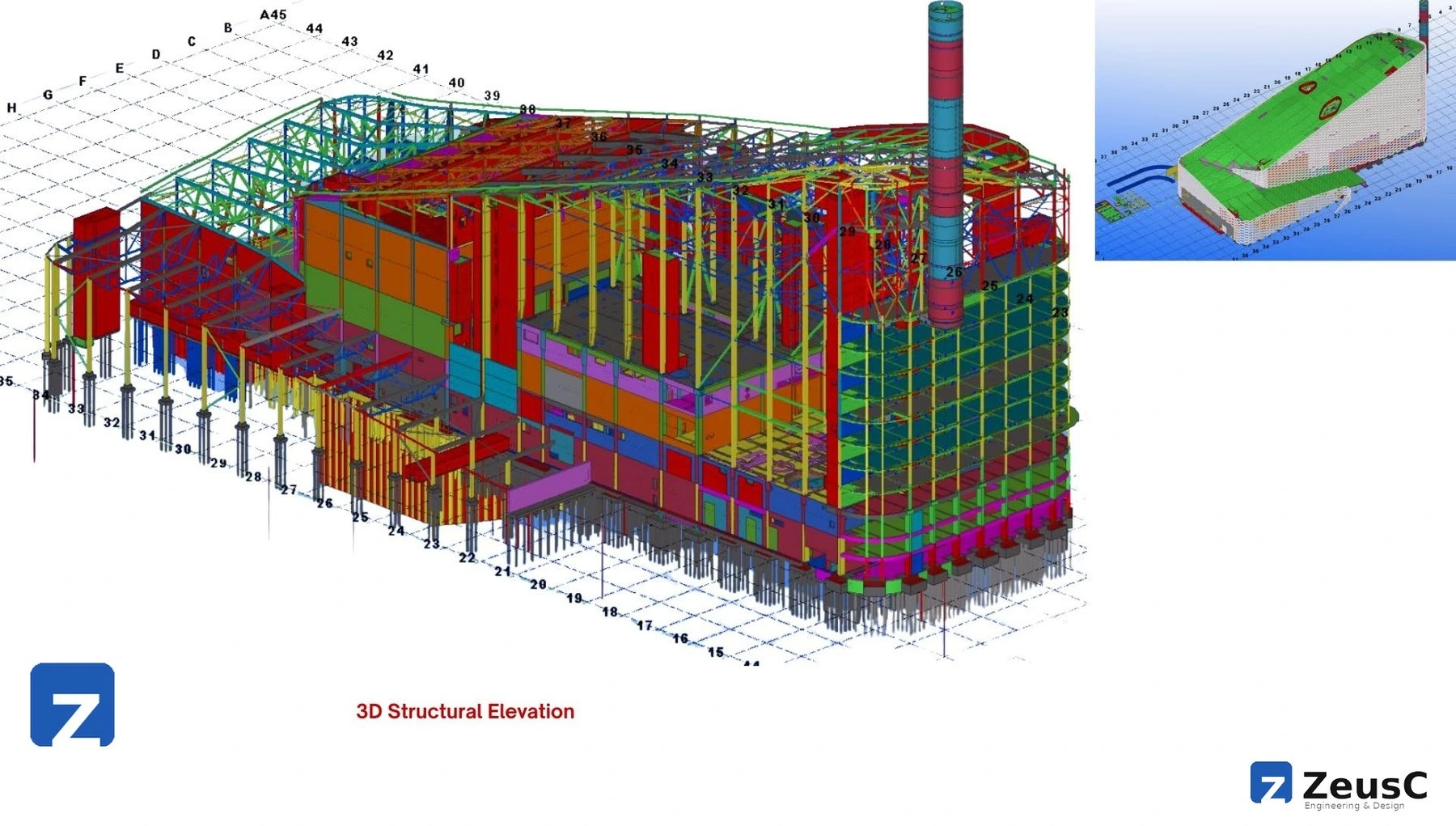
ZeusC supplied additions, sheet 026. Watermark preserved. Building design: BIG (Bjarke Ingels Group).
The colour-coded structural model separates parts of the plant’s frame and internal arrangement. Colour helps the viewer follow related members through a crowded perspective. It does not establish material grade, member capacity, fire resistance or a construction sequence without the associated model properties and design records.
Visible feature
How it relates to this plate
Structural members
The model distinguishes framing elements from the volumes occupied by plant and equipment.
Colour groups
Colours separate model categories here; they do not establish a steel grade or the book’s semantic categories.
Spatial clearances
The perspective reveals crowded interfaces. Maintenance and replacement clearances require measured coordination.
Units and terms
BIG Bjarke Ingels Group, the architectural practice
ZeusC supplied additions, sheet 029. Watermark preserved. Building design: BIG (Bjarke Ingels Group).
The section relates the descending roof surface to the volume of the plant beneath it. The adjacent three-dimensional view shows that this is a spatial arrangement, not a single flat truss. The large internal clearances and sloping enclosure need their own coordinated structural and service drawings.
Visible feature
How it relates to this plate
Roof slope
The upper line describes the descending recreational surface and enclosure.
Plant volume
The section reveals the industrial clearances beneath the roof, which vary along the building.
Spatial frame
The adjoining three-dimensional view shows members outside the section plane; a single section omits them.
Units and terms
BIG Bjarke Ingels Group, the architectural practice
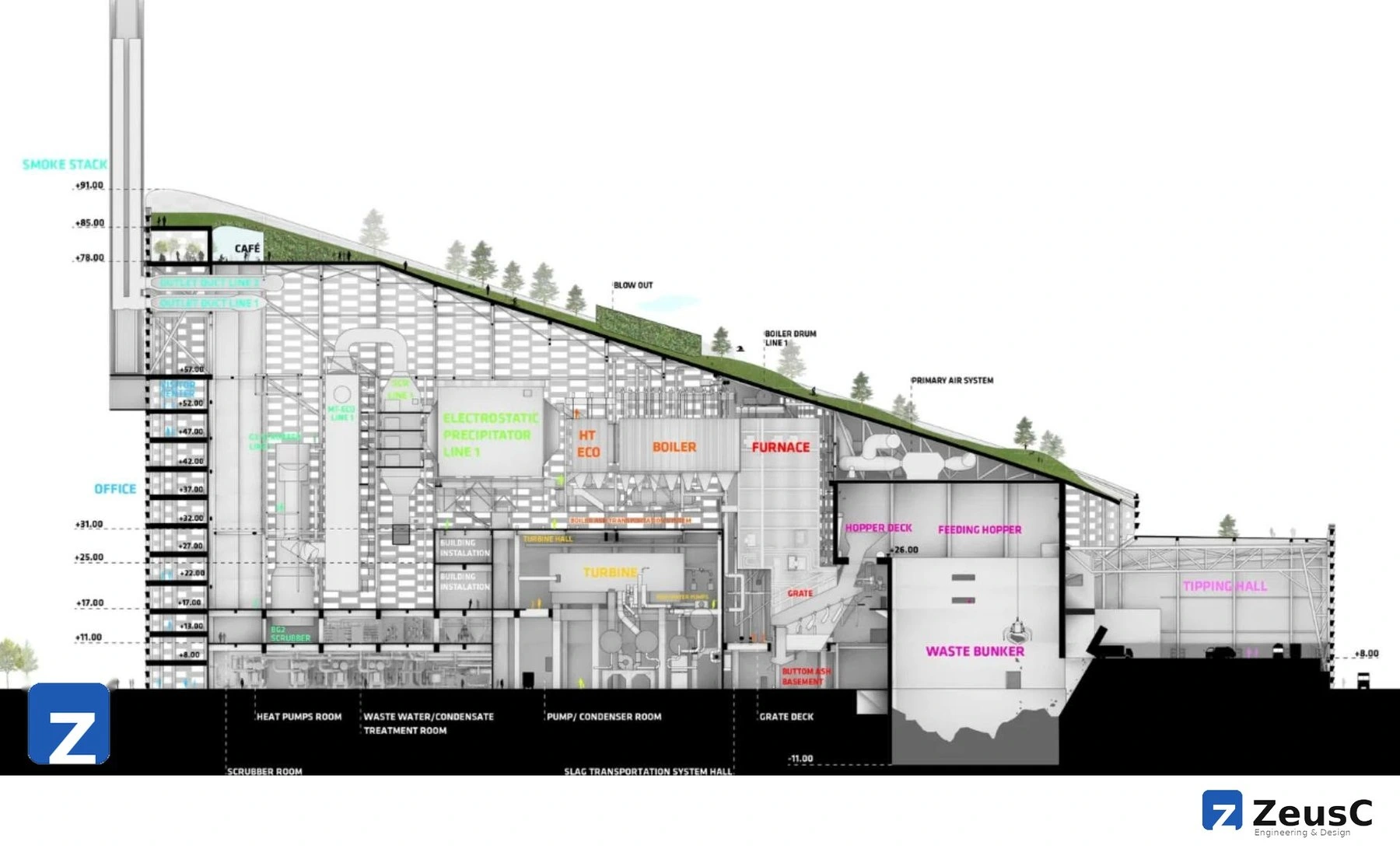
ZeusC supplied additions, sheet 030. Watermark preserved. Building design: BIG (Bjarke Ingels Group).
This cutaway exposes several levels beneath the sloping roof and beside the tall stack. Roof access and the industrial spaces occupy different circulation systems. The small annotations and levels remain within the supplied original; the reproduction is not a basis for a measured industrial layout.
Visible feature
How it relates to this plate
Stack
The tall process element remains distinct from the roof and occupied levels around it.
Internal levels
Platforms and floors divide the industrial volume. Their accessibility is not established by the drawing alone.
Public and industrial routes
The section places several uses together, but does not make their access or evacuation systems interchangeable.
Units and terms
BIG Bjarke Ingels Group, the architectural practice
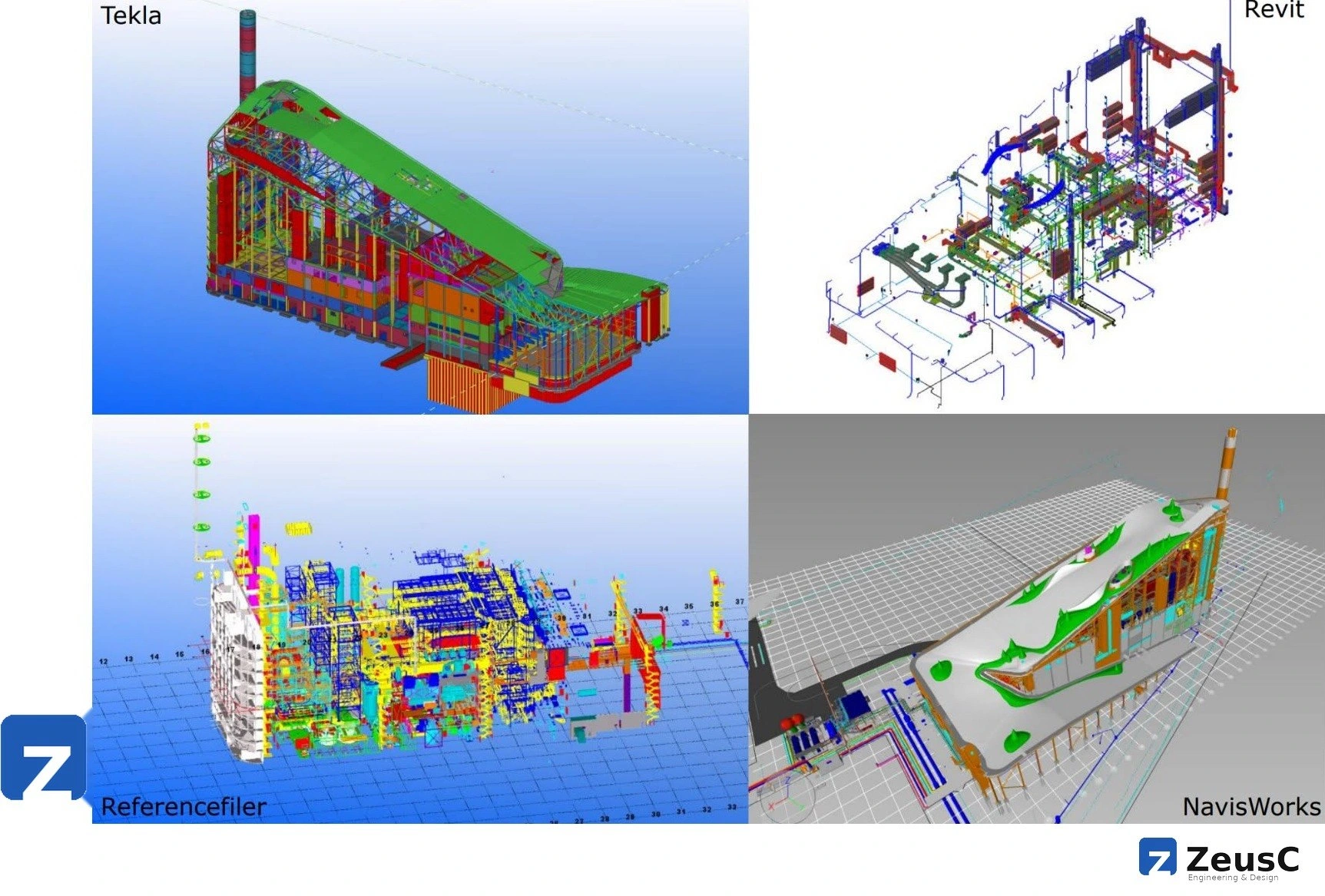
ZeusC supplied additions, sheet 032. Watermark preserved. Building design: BIG (Bjarke Ingels Group).
The supplied model views are labelled Tekla, Revit, Referencefiler and NavisWorks. These are software or document labels, not names of a timber pavilion. The coloured models concern the process-plant structure and services. A coordinated model still needs revision control, shared coordinates and a record of unresolved clashes.
Visible feature
How it relates to this plate
Tekla and Revit
Names printed on two model views. They identify software environments, not structural materials.
Referencefiler
The supplied heading is retained as a document/model label; no unsupported acronym expansion is assigned.
NavisWorks
The coordination view places model systems together. Clash status and revisions remain separate records.
Units and terms
BIG Bjarke Ingels Group, the architectural practice
Diller Scofidio + Renfro describe the Boston Institute of Contemporary Art as a building whose upper gallery extends over the waterfront public space. The elevated gallery and sheltered plaza are related architectural decisions. Credit the building design to that practice; the supplied structural diagrams are separate documents whose individual authors and calculations remain unverified.
The new diagram traces a load through a projecting beam, its backspan, support and foundation. It is an explanatory load path, not the museum’s structural calculation. Downward force on the projection produces a turning effect. A model with a beautifully drawn cantilever can still overturn if its backspan and support are not restrained.
Copenhagen: a roof above a process plant
Read the illustration’s labels
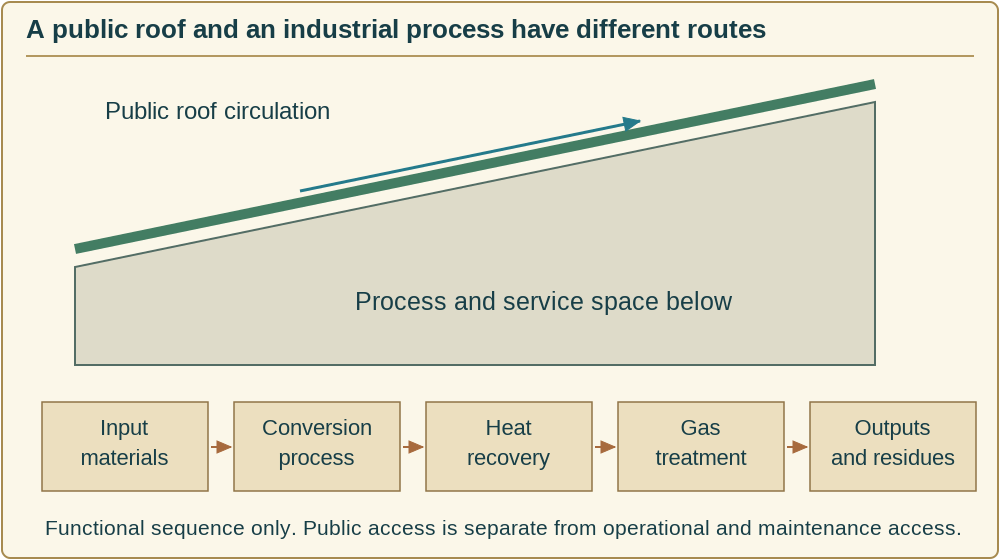
A public roof and an industrial process have different routes
Public roof circulation
Process and service space below
Input
materials
Conversion
process
Heat
recovery
Gas
treatment
Outputs
and residues
Functional sequence only. Public access is separate from operational and maintenance access.
Schematic reading of the public roof and industrial process. It is not a surveyed section or an operating specification.
Units and terms
ICA Institute of Contemporary Art, Boston · = equals · × multiplied by
BIG Bjarke Ingels Group, the architectural practice
CopenHill in Copenhagen combines a public roof landscape with an industrial energy facility. Its operator dates the official opening to 4 October 2019. The supplied photographs and analytical sheets belong beside waste processing and building systems accounts. The architecture is credited to BIG, Bjarke Ingels Group. A supplied diagram’s watermark does not verify its engineering analysis or its image photographer.
Read the building in separate layers: incoming material, controlled conversion, heat recovery, gas treatment, maintenance access and the occupied roof. A route for visitors must not be confused with a route for servicing machinery. A coloured structural view is also different from a processflow diagram: one describes support, the other the movement and transformation of material or energy.
COPEN: CopenHill: opening and visitor information
BIG: BIG: CopenHill project
BIG: Bjarke Ingels Group, the architectural practice.
Units and terms
BIG Bjarke Ingels Group, the architectural practice
Jewel Changi Airport: garden, roof and terminal links
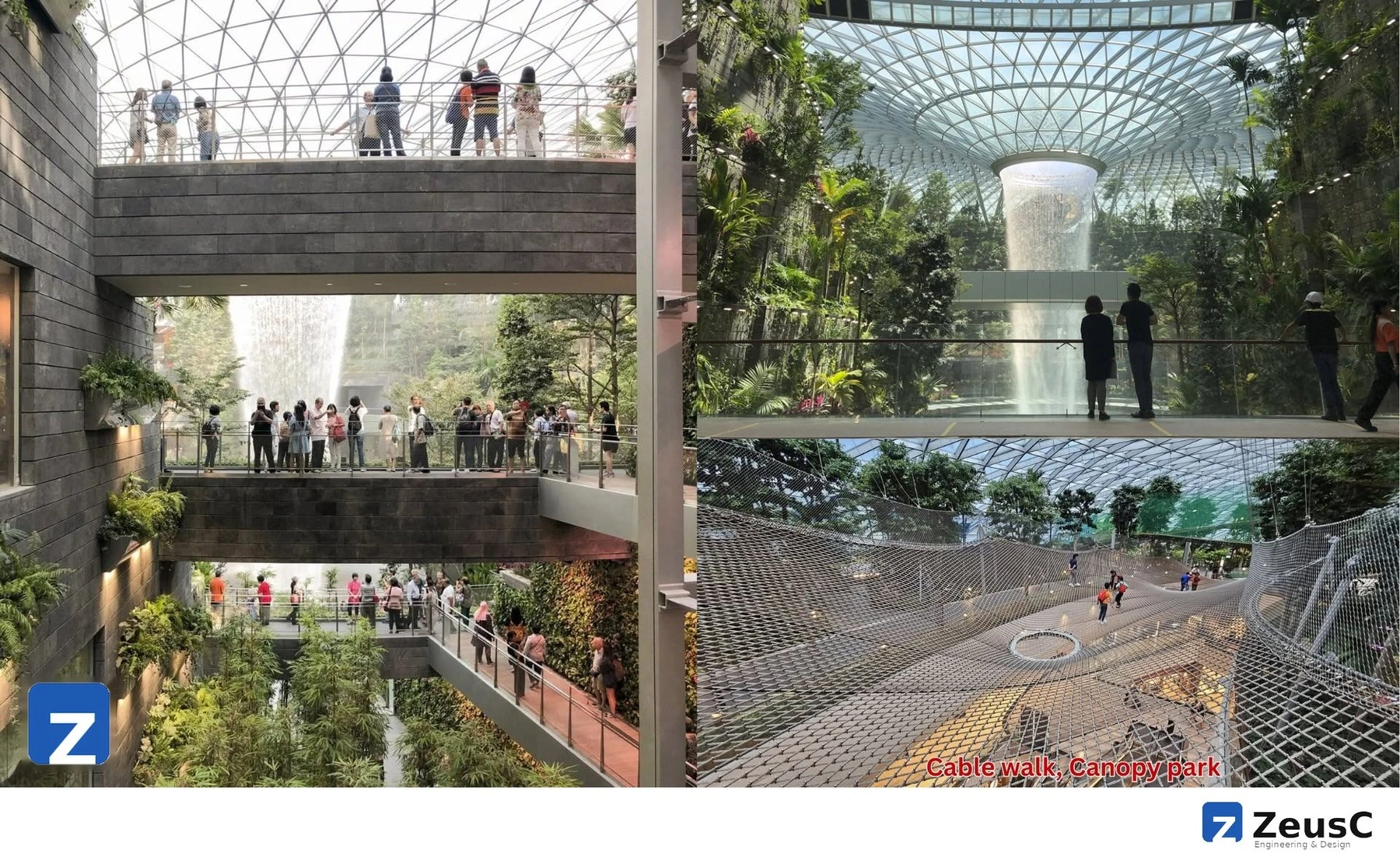
ZeusC supplied additions, sheet 036. Watermark preserved. Building design: Safdie Architects; executive architect and structure: RSP.
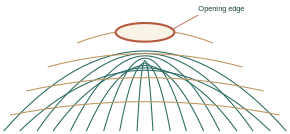
Jewel Changi Airport in Singapore opened to the public on 17 April 2019. The design consortium included Safdie Architects, led by Moshe Safdie, RSP Architects Planners and Engineers and Benoy. The glass-and-steel roof encloses gardens and public routes beside airport and commercial facilities. [QR-JEWEL]
Visible feature
How it relates to this plate
Glass-and-steel roof
The enclosure spans the garden and public interior, with a central opening and varying curvature.
Garden
Planting occupies a designed interior landscape with routes, levels and maintenance requirements.
Terminal links
Connections place the public building within the airport circulation network; the image is not a wayfinding map.
Sources for this account
Jewel Changi Airport
Safdie Architects records the Singapore project as built in 2019. Changi Airport’s 7 March 2019 announcement names the design consortium, Moshe Safdie and the public opening on 17 April 2019. Supplied roof-model images retain their own unconfirmed sheet authorship. Access checked 22 November 2026.
ZeusC supplied additions, sheet 037. Watermark preserved. Building design: Safdie Architects; executive architect and structure: RSP.
The photographs place planting, walkways, stairs and the central water feature within the enclosed public space. Vegetation also needs drainage, light and maintenance access. These visible architectural relationships are distinct from the environmental-control and water-treatment systems, which cannot be reconstructed from the photographs alone.
Visible feature
How it relates to this plate
Walkways and stairs
The photographs show routes at multiple levels around the garden.
Planting
Vegetation is organised beside occupied routes and water features, rather than being an undifferentiated green surface.
Central water feature
Water and structure share an interface at the opening, but treatment and operating equipment are not shown.
A play pavilion looks simple in elevation. Its history begins with decisions that an elevation hides. Kew’s designers used a survey of the roots to choose where the supports could meet the ground. The treehouse concept supplied for this book raises a related question on a smaller site. The two chapters trace the survey first and the load path second.
A canopy building begins below ground
The Kew precedent The treehouse sheet shows a timber play pavilion built around the idea of an existing tree. Its central opening, raised platform, stair and sheltered space give a designer a real spatial problem to think about. The supplied sheet does not identify a surveyed site, architect or completion date for the pictured pavilion. Kew Gardens offers a separately documented case in which drawings, site decisions and an opening date can be checked.
In May 2008 the Treetop Walkway opened at Kew. The structure takes visitors about 18 metres above ground. Marks Barfield Architects describe radar surveys at proposed pylon locations so concrete piles could be positioned between major roots. A lattice-steel pile cap allowed water to reach the ground beneath. The design team also used the bridge balustrades as trusses. What looks like an edge for visitors could therefore contribute to the structural depth of the span.
A plan shows the approach, platform, trunk opening and inspection access that an elevation can hide. Kew supplies a documented design method; its foundations and dimensions belong to its own site.
Read the illustration’s labels
Living trees and independent supports need separate records
PLAN: ROOTS AND PROPOSED POSTS
Ochre: roots to be surveyed.
Green squares: proposed post positions.
SECTION: FOLLOW THE LOAD
Deck boards
Posts
Footings
Loads pass through framing and posts
to foundations and the supporting soil.
Allow for trunk growth, crown movement, water and inspection access.
Illustrative relationships only. Site survey and specialist design determine positions and sizes.
A section through the pavilion An opening around a trunk can make a platform look as if it rests on the tree. The load path has to be read in section. In the independent-post concept drawn here, a visitor’s weight acts on deck boards. The boards bear on framing, the framing on posts, and the posts on foundations. The soil supports the foundations while also supplying the living tree with water and air.
The same plan must account for several kinds of movement. A trunk grows in diameter. A crown responds to wind. Timber changes dimension as its moisture content changes. A rigid collar around living wood can turn a detail that looked generous on opening day into a point of contact later. Nor is all root damage visible at the surface. Construction access, accumulated fill and prolonged soil compaction can matter beyond the immediate outline of a post.
A record for an Argentine site
Record the crown, trunk, soil levels, observed roots and survey date. Add the proposed structure on a separate layer. Identify rainwater routes and inspection access. An arborist or engineer must establish the missing dimensions and structural details for the actual site.
AN ORCHARD IS A LONG COMMITMENT A tree purchase fixes future work in a particular place: irrigation, access, pruning, harvest and replacement. Start with the household or community food ledger, then decide which products the site should supply and in what season. A picturesque collection can still deliver an inconvenient glut or a large maintenance bill. A serious planting brief names the person who will manage the orchard after the designer has left.
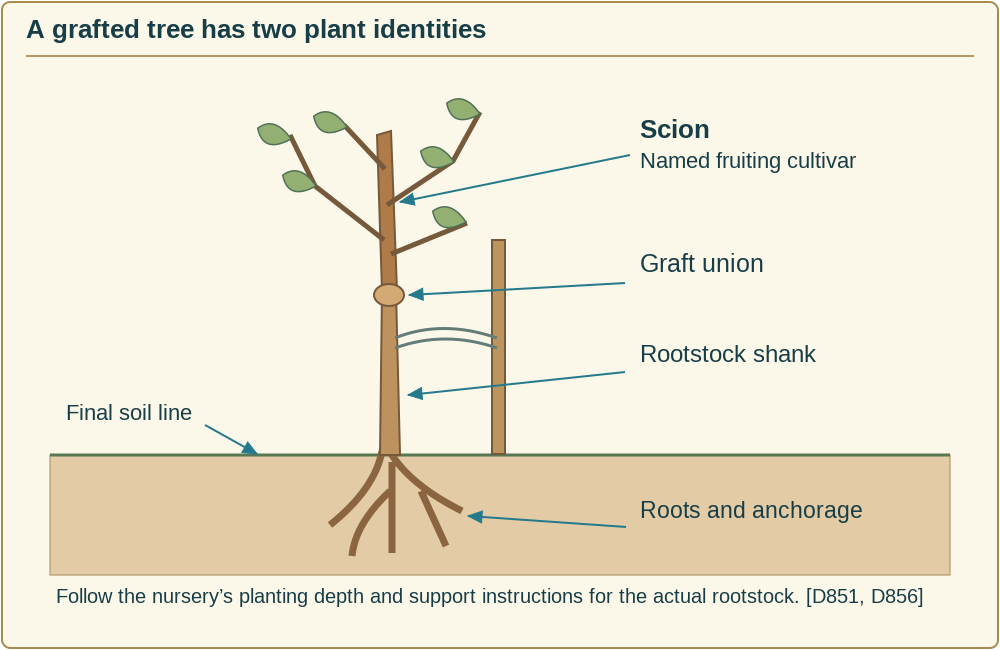
IDENTITY BELOW AND ABOVE THE GRAFT Order by species, fruiting cultivar and rootstock, with the intended training system. INTA’s Alto Valle guidance explains how rootstocks alter vigour, anchorage and bearing behaviour. A label saying only “dwarf apple” leaves too much unresolved for an investment. Obtain the nursery’s written specification, health documentation, replacement terms and the expected support requirement before calculating planting density. Keep a map that links every planted position to its supplied identity. [D851, D855]
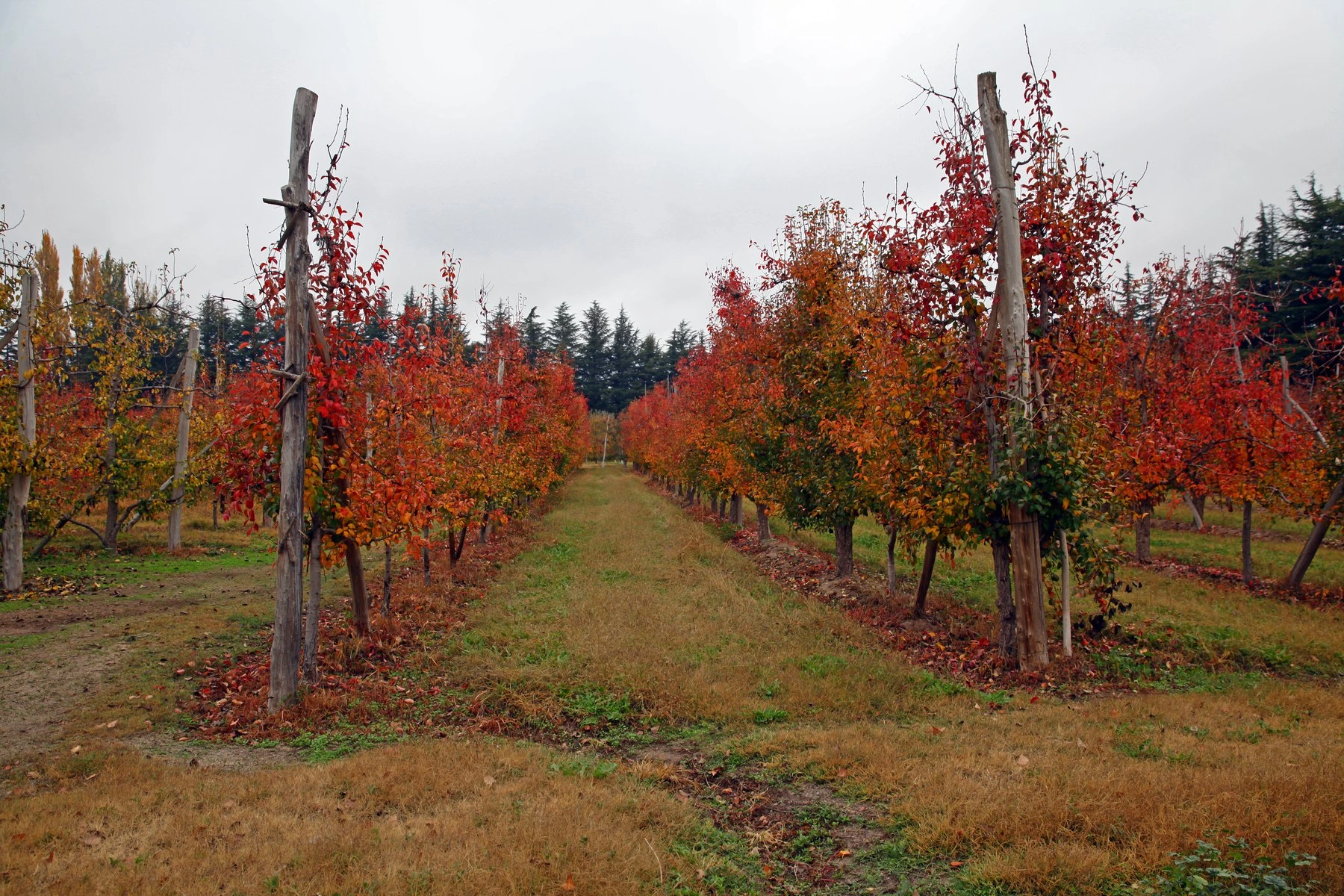
WHAT THIS PHOTOGRAPH CONTRIBUTES The visible posts, trained trees and working alley show that an orchard is an arrangement of plants and infrastructure. The photo cannot establish cultivar, yield, soil depth or water demand. Use it to ask operational questions: how are supports maintained, how does a loaded harvest trolley pass, and where can damaged trees be removed? The answers belong in the estate’s own surveyed plan.
Gervacio Rosales, Espaldera en otoño, 26 April 2014. Argentine orchard; catalogue tag General Roca. CC BY 3.0, full frame unchanged. Exact parcel and tree identities unverified. [D858]
THE FOUR-PART PLANTING FILE Keep site investigation, nursery specification, layout and operating budget together. The following pages develop a 40-tree pilot plot; its dimensions are explicit assumptions, not an orchard design for this photographed property.
Choose the region, then the parcel
Units and terms
INTA Instituto Nacional de Tecnología Agropecuaria
BY Attribution condition in a Creative Commons licence · INTA Instituto Nacional de Tecnología Agropecuaria · US United States · EU European Union · m metre, a length unit · × multiplied by · RENFO Registro Nacional Fitosanitario de Operadores de Material de Propagación, Micropropagación y/o Multiplicación Vegetal · SENASA Servicio Nacional de Sanidad y Calidad Agroalimentaria · DTV-e Documento de Tránsito Vegetal electrónico, Argentine plant-transit documentation
FLOWERING IS PART OF THE DESIGN Apple production normally requires compatible pollen from another cultivar; record flowering overlap and the intended pollen source. Walnut has separate male and female flowers whose timing may differ; INTA discusses wind-borne pollen and suitable cultivar combinations in its regional guide. Do not substitute an apple bee-pollination plan for a walnut plan. The nursery and adviser should identify compatibility, the local bloom evidence and how pollinising plants are distributed in the final layout. [D852, D856] US AND EU COMPARISONS THAT TRANSFER USEFULLY Minnesota Extension is useful for understanding apple establishment, but its calendar and named varieties belong to a different climate and hemisphere. Ireland’s Teagasc example includes tightly spaced trees and substantial support infrastructure. Its 1.25 m × 3.25 m layout is a particular production system, not a universal improvement over wider spacing. Transfer the method of checking assumptions and including infrastructure; do not import old Irish prices or grant conditions into an Argentine budget. [D856, D857]
NOA : Noroeste Argentino Northwestern Argentina. The abbreviation locates the region discussed.
NEA : Noreste Argentino Northeastern Argentina. The abbreviation locates the region discussed.
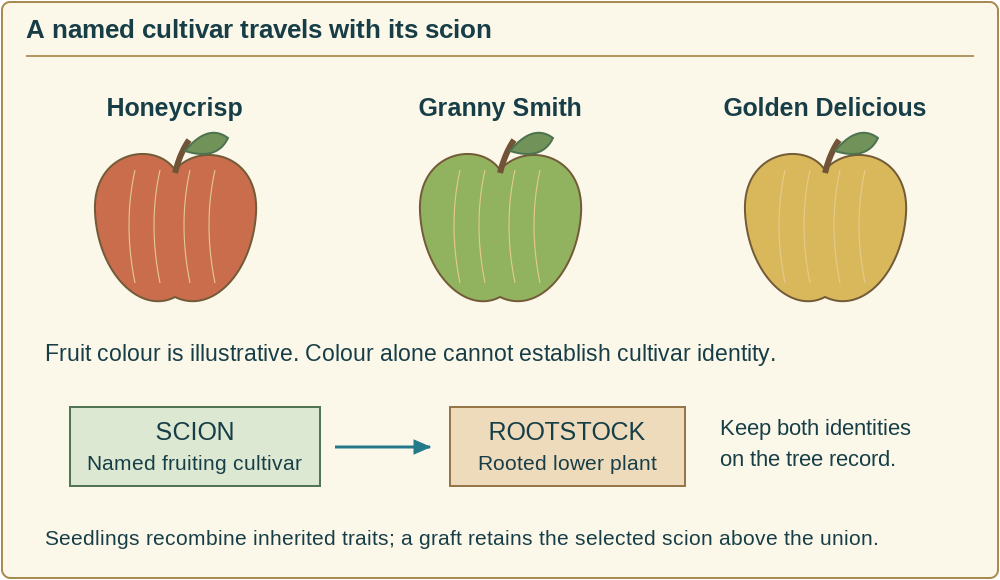
START A NURSERY ONLY AS A SEPARATE CAPABILITY Seed-derived and vegetatively propagated rootstocks have different uniformity and production requirements. An estate that wants to raise its own future stock needs identified source material, propagation skills, health controls and a nursery register. Keep that programme separate from the orchard’s immediate food promise. A seed saved from a good apple does not reproduce the named grafted cultivar on its selected rootstock. [D851]
BEFORE THE DELIVERY TRUCK ARRIVES Mark the agreed positions, install a functioning water supply and prepare the access route. Arrange shade and temporary root protection for the delivery period. Check the nursery’s RENFO identity and the required plant-transit documentation with SENASA; receiving duties can include closing the DTV-e. Record species, cultivar, rootstock, lot and number of plants received. Quarantine uncertain or damaged stock for a competent assessment instead of quietly filling every hole. [D854, D855]
RENFO: Registro Nacional Fitosanitario de Operadores de Material de Propagación, Micropropagación y/o Multiplicación Vegetal. The Argentine plant-propagation operator register cited for nursery traceability.
Establish the tree you ordered
Read the illustration’s labels
A grafted tree has two plant identities
Scion
Named fruiting cultivar
Graft union
Rootstock shank
Final soil line
Roots and anchorage
Follow the nursery’s planting depth and support instructions for the actual rootstock. [D851, D856]
Original schematic: scion, graft union, rootstock and root flare are different features. The final soil line and nursery instruction govern planting. Support geometry is illustrative, not a structural specification.
Units and terms
BY Attribution condition in a Creative Commons licence · INTA Instituto Nacional de Tecnología Agropecuaria · US United States · EU European Union · m metre, a length unit · × multiplied by · RENFO Registro Nacional Fitosanitario de Operadores de Material de Propagación, Micropropagación y/o Multiplicación Vegetal · SENASA Servicio Nacional de Sanidad y Calidad Agroalimentaria · DTV-e Documento de Tránsito Vegetal electrónico, Argentine plant-transit documentation
mm millimetre, 0.001 metre · INTA Instituto Nacional de Tecnología Agropecuaria
A PLANTING SEQUENCE TO VERIFY ON SITE Inspect the roots and the graft, reject unresolved damage and follow the stock-specific nursery instructions. For its apple example, Minnesota Extension describes a hole no deeper than the root ball and approximately twice as wide, with the graft about 102 mm above the final soil line. Spread bare roots without bending them, backfill, water and check settlement. This dimension illustrates one apple instruction; it is not a planting-depth rule for walnuts, seedlings or every rootstock. [D856]
PUT SUPPORT AND WATER IN THE SAME CONTRACT A tree on a rootstock needing permanent support must not wait until it leans before the trellis is designed. INTA notes the weak anchorage of EM9 and its dependence on support and careful irrigation. Size the support for the actual system and site loads; inspect ties so they do not constrict the trunk. Confirm that each emitter wets the intended root zone and record damaged guards, blocked outlets and failed ties during routine inspection. [D851]
DTV-e : Documento de Tránsito Vegetal electrónico Argentina’s electronic document for the movement of regulated plant material. INTA : Instituto Nacional de Tecnología Agropecuaria Argentina’s agricultural research and extension institute. It publishes field trials and advice for growers. D + number : Book evidence record The number identifies a source entry in the book’s evidence section. The linked record gives the title, credit or publication details.
Lay out a 40-tree pilot orchard
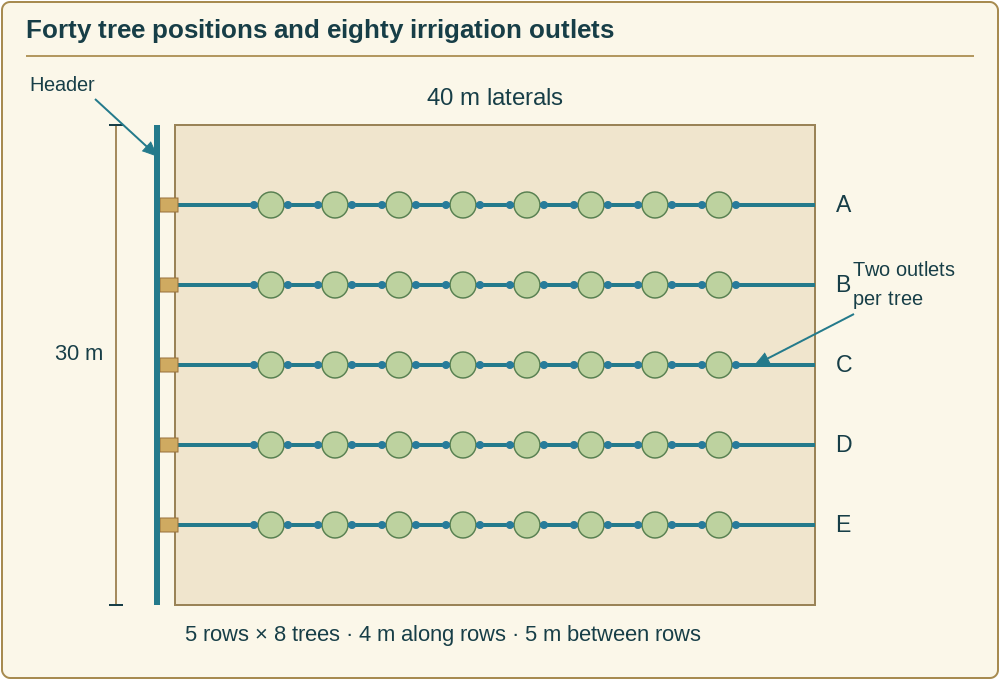
TURN A FIELD INTO NAMED POSITIONS The example rectangle is 40 m by 30 m, or 1,200 m². Five rows contain eight positions each. Tree centres are 4 m apart along a row and 5 m between rows. The first and last centres leave 6 m at each short end and 5 m along the other boundaries. Label rows A-E and positions 01-08. These are chosen pilot dimensions; the final spacing must suit the selected tree, training system and machinery. TEST ACCESS WITH THE REAL EQUIPMENT Walk the edges with the maintenance and harvest team. Try the intended mower, trolley or tractor in a full-size marked headland, including the return turn. Measure the gate and unloading space. A tree spacing that fits on paper may fail once guards, posts, irrigation headers and mature branches occupy the alley. Keep emergency access, drainage paths and utility corridors visible on the plan before ordering trees.
COUNT THE COMPONENTS BEFORE PRICING For the forty-tree example, allow five 40 m lateral runs, a nominal 30 m header, five isolation valves and five flushing ends. Two selected 4 L/h emitters per tree give eighty outlets. Add the appropriate filter, pressure regulation, meter, backflow protection where required and connectors. Pipe diameters, pump duty and filtration depend on elevation, water quality and hydraulic design; they cannot be selected from tree count alone.
CHECK THE ARITHMETIC AGAINST A CATCH TEST Eighty emitters at 4 L/h imply 320 L/h. An invented 90-minute run therefore delivers 480 L before losses or uneven flow. It does not establish the trees’ water requirement. Measure representative outlets near the inlet, middle and far end at the operating pressure. One nominal 4 L/h outlet should collect about 1 L in fifteen minutes. Compare the observed amounts, investigate discrepancies and retain the results as the baseline for later maintenance. SET THE SCHEDULE FROM SITE EVIDENCE Use the actual soil, rooting depth, weather, tree stage and water quality to set and revise irrigation. Observe the wetted profile rather than assuming a wet surface means the whole root zone is supplied. Flush and service components as the design requires; log leaks and blocked outlets by tree position. If flow unexpectedly increases, investigate before simply shortening runtime. A broken lateral and a hot day can produce similar symptoms at the tree but need different remedies.
Units and terms
mm millimetre, 0.001 metre · INTA Instituto Nacional de Tecnología Agropecuaria
DTV-e Documento de Tránsito Vegetal electrónico, Argentine plant-transit documentation · m metre, a length unit · m² square metre, an area unit · L litre, a volume unit
L litre, a volume unit · m metre, a length unit · × multiplied by
ISSUE QUOTES WITH THE SAME BILL OF QUANTITIES Ask each nursery to price forty specified trees, delivery, documents and replacement terms separately. The irrigation quote should match 200 m of lateral, 30 m of header, eighty emitters and the control components on OR3. Ask for a separate support-system design and price; forty stakes are not automatically the correct answer for a trellised orchard. Add soil and water testing, site preparation, fencing, access, planting labour and commissioning. Comparable written scopes make competing bids useful. SEPARATE THE CORE FROM SITE-DEPENDENT COSTS Let P be the delivered tree price, L the lateral price per metre, H the header price per metre and E the emitter price, all in ARS. The counted core is 40P + 200L + 30H + 80E. Add valves, fittings, filter/control assembly, supports, labour and all site work as explicit lines. No current nursery quotation has been established here, so the formula is deliberately unpriced. A numeric total invented from unrelated national prices would conceal the parcel’s real cost. KEEP USD COMPARISONS DATED For a quote total C in ARS, the 5 November 2026 Banco Nación selling reference gives C ÷ 1,570 in USD. Record that date beside the comparison; use the actual transaction terms for payment. Separate land purchase and financing from orchard establishment, and show taxes, delivery and contingency explicitly. A contingency is an owner-selected allowance for defined uncertainty, not evidence that a drainage or water problem has been solved. [D846]
BUDGET THE WORK BETWEEN PLANTING AND FRUIT As an invented inspection allowance, six minutes per tree per week means four hours for forty trees. Over twenty-four inspection weeks that is ninety-six worker-hours, before mowing, irrigation maintenance, pruning, pest monitoring, harvesting and records. Multiply each task’s measured hours by the applicable loaded labour rate. Assign an alternate for absence and keep a reserve for replacement plants. Use trial observations to revise the allowance rather than presenting it as an agronomic standard. RELEASE FURTHER CAPITAL AGAINST OBSERVATIONS At the end of each growing season record survival, replacements, trunk and shoot observations, support repairs, irrigation performance, flowering and usable harvest by cultivar. An invented first-year count of thirty-eight
live trees out of forty is 95% survival; it says nothing by itself about eventual yield. Review why two failed before replacing them. Keep other food supplies funded while the orchard establishes, and require a reasoned expansion decision supported by the site’s own records.
Units and terms
m metre, a length unit · L litre, a volume unit · = equals · × multiplied by · ARS Argentine peso · USD United States dollar · ÷ divided by
% percent, parts per hundred · INTA Instituto Nacional de Tecnología Agropecuaria · CIEFAP Centro de Investigación y Extensión Forestal Andino Patagónico
% percent, parts per hundred · INTA Instituto Nacional de Tecnología Agropecuaria · CIEFAP Centro de Investigación y Extensión Forestal Andino Patagónico
PROTECTION HAS TO ARRIVE WHEN THE CROP NEEDS IT The first question is which wind causes the problem, in which season and at what crop stage. A young tree row does not immediately provide the shelter of a mature belt. Map the affected beds, nearby roads, buildings and access routes, then decide whether a staged planting or reviewed temporary protection is needed. Include the shelter’s own irrigation and maintenance in the orchard budget from the beginning.
ARGENTINA HAS REGIONAL EVIDENCE TO USE INTA describes poplar windbreak trials in the Alto Valle and perpendicular placement to the prevailing west and southwest winds of northern Patagonian valleys. CIEFAP provides a wider Patagonian windbreak resource. These sources are valuable starting points for local advice; they do not establish the damaging wind direction on a Tandil slope or the right species for every province. The estate still needs its own observations and site assessment. [D859, D860]
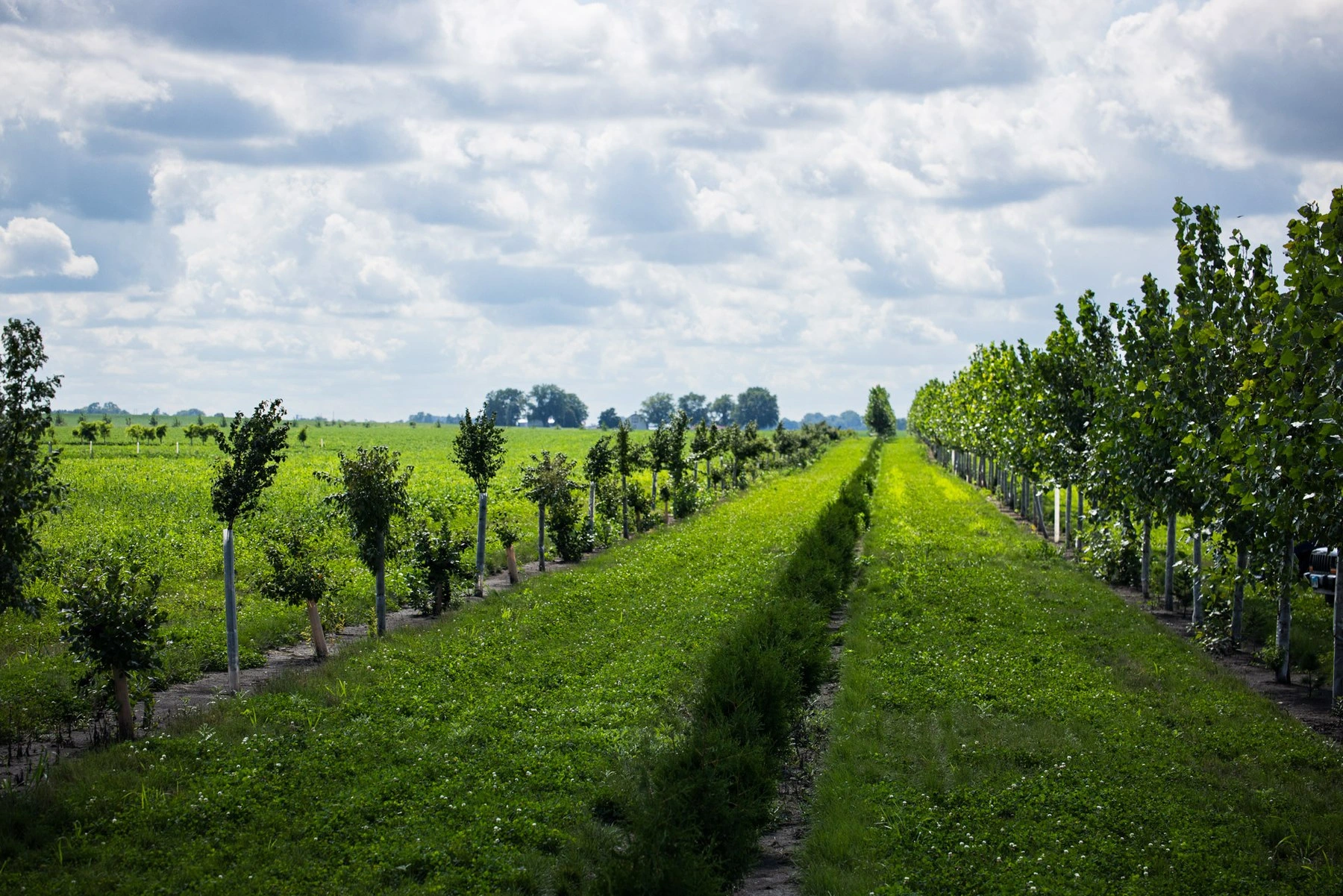
A US PHOTOGRAPH WITH A SPECIFIC PURPOSE The photograph documents several planted rows and a clear working alley. Its creator identifies a young three-row Illinois windbreak with different plant groups. That is useful evidence of an arrangement that must be managed over time. It is not a claim that these species, spacing or watering requirements transfer directly to Argentina. Keep the comparative example’s location attached to the image.
Savannainstitute; EXIF author Wil Crombie. Illinois, 2 August 2024. CC BY-SA 4.0. Full frame unchanged. Creator describes fruit/nut trees inside, evergreens centrally and hybrid poplars outside. [D862]
THE MANAGEMENT QUESTION Who replaces gaps, services the water line and keeps access open when both crop and shelter expand? Put those tasks in the same seasonal work plan as harvesting the berries.
CIEFAP : Centro de Investigación y Extensión Forestal Andino Patagónico The forest research and extension centre for the Andean Patagonian region.
Units and terms
% percent, parts per hundred · INTA Instituto Nacional de Tecnología Agropecuaria · CIEFAP Centro de Investigación y Extensión Forestal Andino Patagónico
US United States · EXIF Exchangeable image file format · BY-SA Creative Commons Attribution-ShareAlike · USDA United States Department of Agriculture · NRCS Natural Resources Conservation Service · EU European Union · INTA Instituto Nacional de Tecnología Agropecuaria
Sources for this account
INTA | New poplar clone for windbreaks, 16 July 2024
US : United States of America Identifies the country or jurisdiction of the source, price or institution. EXIF : Exchangeable image file format The metadata convention that can store camera settings, dates and location in a photograph. CC BY-SA : Creative Commons Attribution-ShareAlike Reuse requires attribution. Shared adaptations carry the specified licence or a compatible one under its terms. D + number : Book evidence record The number identifies a source entry in the book’s evidence section. The linked record gives the title, credit or publication details.
Make the shelter serve a named crop
DEFINE THE DAMAGE BEFORE CHOOSING A TREE Record the direction and timing of damaging winds, visible crop injury, exposed edges and observations from an open comparison position. A belt intended to reduce crop abrasion may need a different arrangement from one intended to manage drifting snow. USDANRCS design guidance distinguishes objectives and relates design to height, density and orientation. Do not select a universal percentage of “protection” and apply it to all seasons. [D861] MAP THE COST OF THE SHELTER ITSELF Show the expected mature crown, root competition zone, maintenance access and any relationship to a drain, canal or utility. Check where shade falls when the crop needs light. A shelter row that obstructs a harvest turn or complicates ditch maintenance creates a permanent operating cost. A site review should consider neighbour and road implications, local planting requirements and the ability to remove or renew trees later. These are items for the brief, not invented mandatory setback distances.
TREAT BERRIES AS DISTINCT PRODUCTION SYSTEMS A strawberry bed, a raspberry cane row and a blueberry planting should not be bought as one interchangeable “berry garden”. Specify the species and cultivar, soil and water requirements, training, propagation source, harvest window and destination. The worked bed on WB3 uses strawberries only. For a different berry, develop its own plan and local evidence before reusing the quantities. Stagger trial plantings if the team cannot yet demonstrate a reliable harvest and cooling routine. ARGENTINE FIELD EVIDENCE AND THE EU COMPARISON The INTAAlto Valle poplar trial evaluated identified clones in an irrigated regional setting; reported growth is a trial result, not a promised estate height. Ireland’s Teagasc strawberry guidance distinguishes fruit production from runner production and addresses crown placement and keeping fruit away from wet surfaces. Use those mechanisms to ask better local questions. Do not copy a greenhouse feeding schedule or assume a named poplar solves a different site’s wind problem. [D859, D863] WRITE DOWN WHAT SUCCESS WOULD LOOK LIKE Before planting, select observations the team can repeat: survival by row, gaps, measured height, blocked irrigation outlets, crop damage, labour-hours and usable harvest. Retain an appropriate comparison area where feasible. A good-looking belt after rain is not evidence of year-round crop protection. Compare seasons with their weather conditions recorded, then revise management and replacement plans. The cost of maintaining the shelter belongs in the cost of the protected crop.
Read wind protection in units of height
USE THE SAME HEIGHT IN EVERY CALCULATION For an invented measured belt height H = 8 m, 2H is 16 m, 5H is 40 m and 10H is 80 m. The NRCS crop-protection criteria use a 10H leeward and 2H windward protected-zone convention. It is a design reference, not a promise of uniform wind reduction throughout that area. Density, gaps, terrain, season and wind angle affect the result. The estate must establish the performance of its actual belt. [D861] MEASURE THE COMPARISON FAIRLY Put matched instruments at the same relevant crop height in the open and at selected sheltered positions; compare concurrent readings for the wind directions of concern. Record instrument identity, height, averaging interval, date and foliage condition. An invented simultaneous open reading of 8 m/s and sheltered reading of 5 m/s represents a 37.5% speed reduction at those positions and that moment. It does not predict a crop-yield increase of 37.5%.
Units and terms
US United States · EXIF Exchangeable image file format · BY-SA Creative Commons Attribution-ShareAlike · USDA United States Department of Agriculture · NRCS Natural Resources Conservation Service · EU European Union · INTA Instituto Nacional de Tecnología Agropecuaria
EU European Union · INTA Instituto Nacional de Tecnología Agropecuaria · NRCS Natural Resources Conservation Service · m metre, a length unit · m/s metres per second, speed · % percent, parts per hundred · = equals
Sources for this account
INTA | New poplar clone for windbreaks, 16 July 2024
COUNT WATER, HARVEST AND REPLACEMENTS Two 6 m drip lines per bed give 36 m of line before headers and supply pipe. The chosen product determines outlet spacing, filtration and flow; plant count alone does not determine water demand. Give beds A-C and positions permanent labels. Record nursery lot, planting date, missing plants, harvest mass and rejected fruit separately. INTA’s Argentine strawberry entry is a local starting point for cultivar behaviour and propagation; a site-specific calendar must follow local advice and observations. [D864]
3 BEDS × 32 PLANTS = 96
In the drawing: 3 BEDS × 32 PLANTS = 96
Keep a seasonal ledger for crops and shelter
Each bed: 6 m × 1.2 m; two rows 0.6 m apart 16 positions per row at 0.35 m centres Bed surface: 21.6 m² Two internal paths: each 6 m × 0.8 m Rectangle including internal paths: 31.2 m² Outside access and headlands are additional
ONE MAP, THREE RELATED RECORDS Keep a planting map, a work log and a harvest ledger. The map identifies orchard trees, shelter positions and strawberry beds. The work log records person, task, hours, materials and the position treated. The harvest ledger records date, cultivar or bed, picked mass, rejected mass and destination. Linking them makes a repair or management change visible in both its cost and subsequent outcome, without pretending that correlation alone proves a cause. RECONCILE A HARVEST BEFORE REPORTING IT In an invented strawberry picking, 18 kg harvested minus 2 kg rejected leaves 16 kg usable. If 10 kg goes directly to the kitchen and 6 kg to the validated freezing route, the ledger balances. Twelve 500 g freezer packs represent that same 6 kg; they are not additional production. Record container tare so that baskets are not counted as food. At the end of the week reconcile physical stock with the ledger and investigate missing or damaged packs. MEASURE THE COST OF PICKING AND PREPARATION If that picking takes four worker-hours and sorting and packing take another two, the direct harvest-and-pack labour is six hours for 16 usable kilograms, or 0.375 worker-hour/kg. This is a declared example, not an expected commercial rate. Add the season’s plant, irrigation, shelter, maintenance and storage costs before comparing crops. A berry that earns a high price per kilogram can still be difficult for a team whose labour is needed simultaneously in the orchard.
Units and terms
ARS Argentine peso · USD United States dollar · INTA Instituto Nacional de Tecnología Agropecuaria · m metre, a length unit · = equals · × multiplied by
= equals · × multiplied by · m metre, a length unit · m² square metre, an area unit · kg kilogram, a mass unit · g gram, 0.001 kilogram
PLAN BY STAGE AS WELL AS BY MONTH Use local dates for establishment, flowering, fruit development, harvest and rest. Keep Argentine observations separate from northern-hemisphere calendars. Before the active season inspect lines, filters, supports, guards and access; during production monitor plant health, water delivery and harvest capacity; afterwards reconcile stocks and repairs. Note unusual weather and the last date a condition was actually checked. “First noticed today” is not necessarily the day a pest, flower or fault first appeared. MAKE THE NEXT INVESTMENT DECISION EXPLICIT At the season review, compare usable food, labour, water, losses, survival and maintenance burden with the original objective. Ask whether the estate should improve an existing process, expand one successful cultivar, change the harvest destination or keep the trial small for another year. Maintain the food reserve independently of optimistic future yield. The owner’s capital is most useful when it purchases reliable capability, trained people and a record that the next community can understand and repeat.
The herb garden as a labelled collection
Units and terms
kg kilogram, a mass unit · g gram, 0.001 kilogram
INTA Instituto Nacional de Tecnología Agropecuaria · UK United Kingdom · US United States
GROW A COLLECTION THAT THE KITCHEN CAN TRUST Begin with a short list of named culinary plants and a person responsible for their identity. A pot marked only “mint” is inadequate when several species or cultivars share a bench. Give every purchased lot, seed packet or mother plant an accession code before distributing its cuttings. Carry that code through the nursery, garden map and harvest container. A lost outdoor label can then be reconstructed from the second record.
A SMALL ARGENTINE START For an estate kitchen, trial sweet basil, parsley, chives, thyme, rosemary and a named culinary mint before allocating a field. This is a learning collection, not a claim that six plants can supply a community. Record the quantities the cook actually uses each week. Keep study plants and ornamentals outside the harvest list. A familiar common name, attractive flower or aromatic smell is not enough to release an unidentified plant for food.
MATCH WATER AND GROWTH HABIT Give spreading mint its own manageable container. Group rosemary and thyme by their preference for drainage, while keeping the watering decision for young basil separate. The aim is independent management, not six identical pots receiving the same daily volume. INTA, UK and US guidance provide useful cultivation comparisons; their calendars and irrigation assumptions must be translated to the Argentine site. [D865-D869]
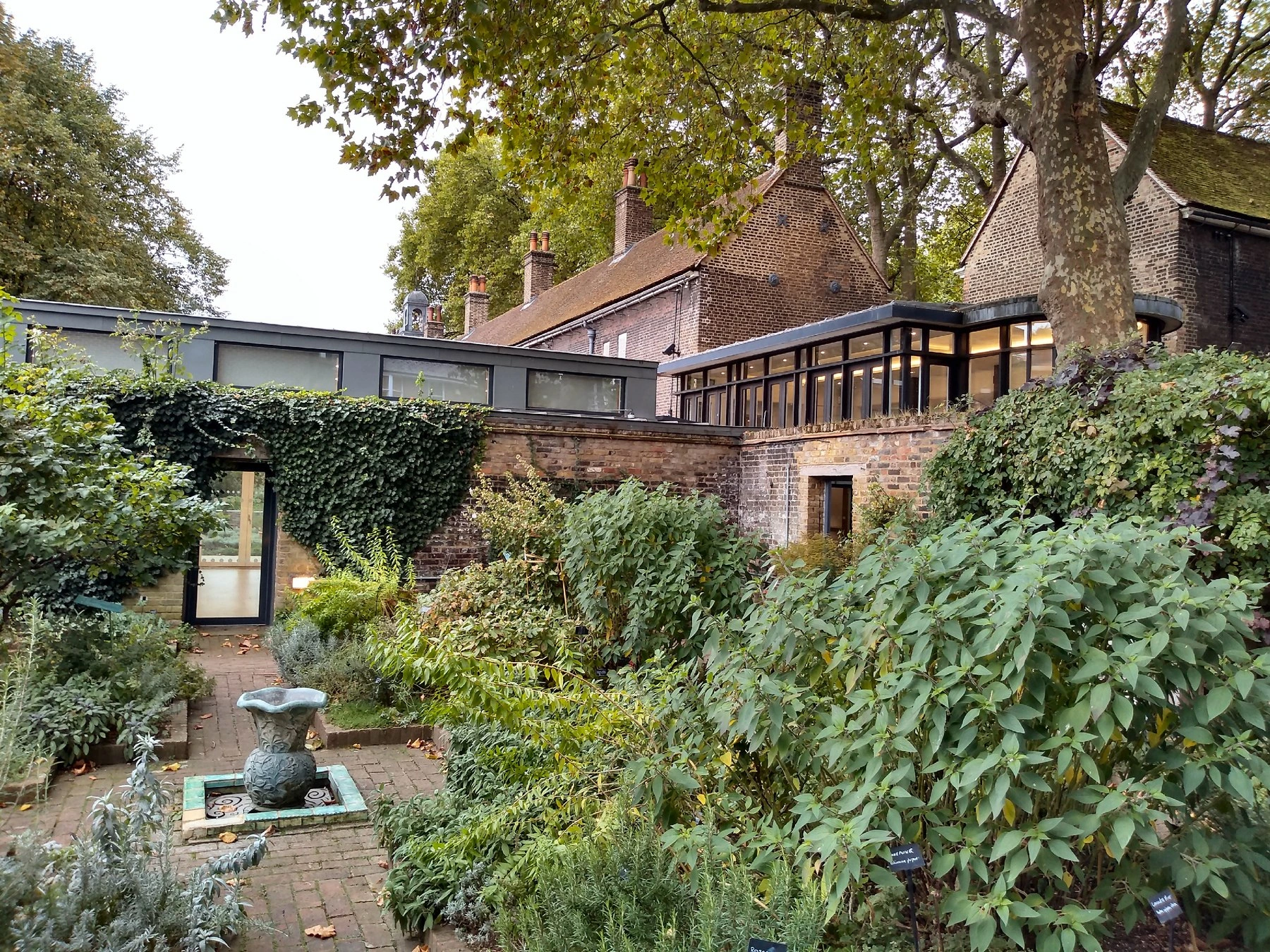
AndyScott, Museum of the Home herb garden, London, 4 October 2022. CC BY-SA 4.0. Full frame, unchanged. [D878]
WHAT THE PHOTOGRAPH CONTRIBUTES The paths, planted compartments and labels show a real collection in a limited space. They do not establish this chapter’s plant list or dimensions. Read the arrangement as a reminder that access and identification occupy space too. The worked nursery and plot on following pages are separate designs.
UK : United Kingdom Identifies the country of the source, guidance or institution.
US : United States of America Identifies the country or jurisdiction of the source, price or institution. CC BY-SA : Creative Commons Attribution-ShareAlike Reuse requires attribution. Shared adaptations carry the specified licence or a compatible one under its terms. D + number : Book evidence record The number identifies a source entry in the book’s evidence section. The linked record gives the title, credit or publication details.
Make a label that survives the season
Units and terms
INTA Instituto Nacional de Tecnología Agropecuaria · UK United Kingdom · US United States
INTA Instituto Nacional de Tecnología Agropecuaria · UK United Kingdom · US United States · BY-SA Creative Commons Attribution-ShareAlike · mm² square millimetre · = equals · × multiplied by
Sources for this account
INTA | Aromáticas en la huerta orgánica, 2nd edition, 2008
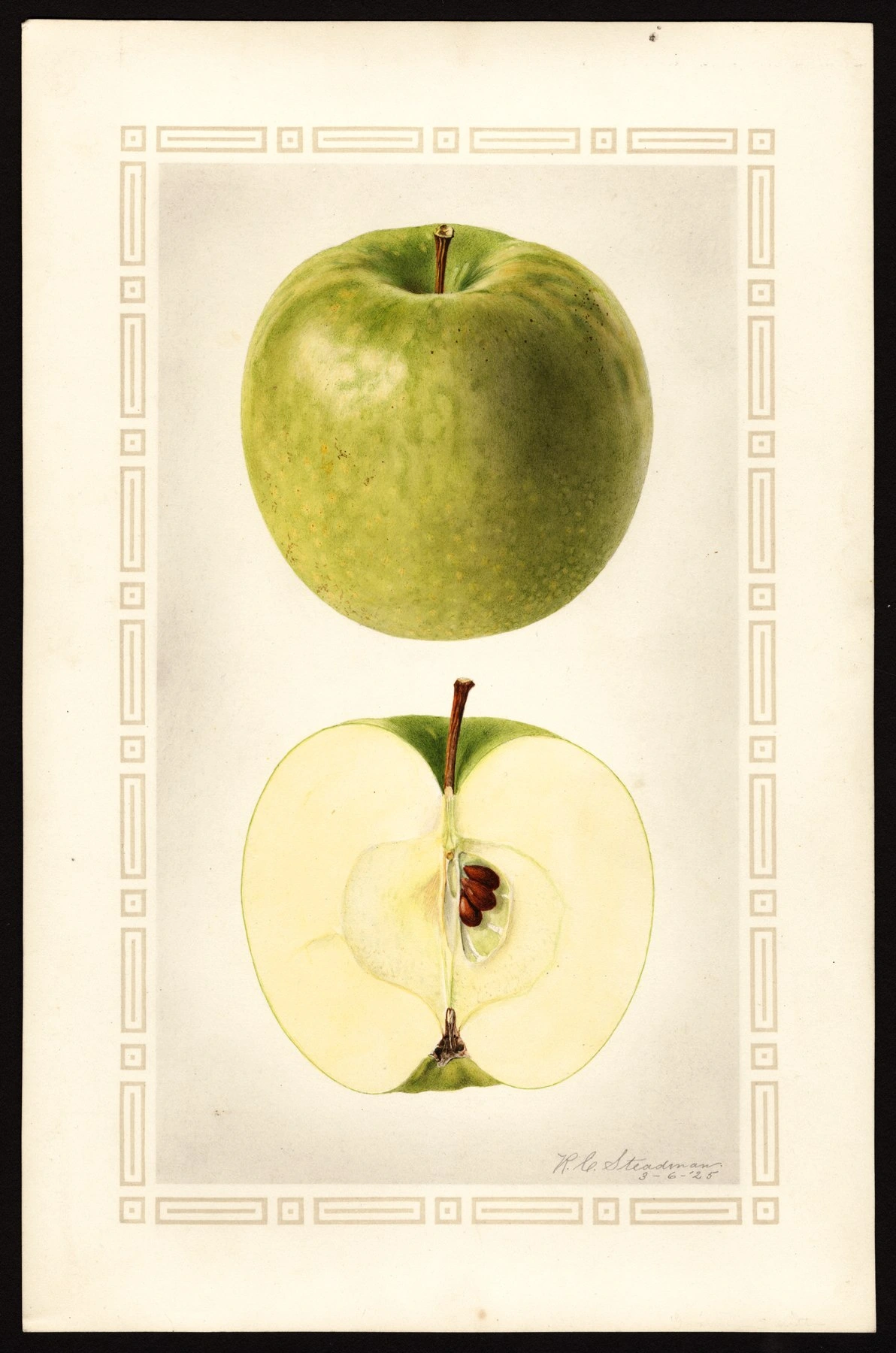
Royal Charles Steadman, Granny Smith, 6 March 1925. USDA/NAL, POM00002046. Public domain in the US; full source plate. [D924]
A SPECIMEN FROM 1925 Royal Charles Steadman painted this Granny Smith apple on 6 March 1925. The catalogue identifies the specimen locality as Rosslyn, Arlington County, Virginia. It belongs to the USDA Pomological Watercolor Collection at the National Agricultural Library. The accession number, date, artist and locality turn an attractive picture into a record that another reader can locate and examine. [D924]
WHY POMOLOGY USED ARTISTS USDA began hiring artists for its Division of Pomology in 1887. Colour illustrations helped publications communicate fruit characteristics and changes caused by pests, disease and storage. The surviving collection includes specimen notes such as grower and locality. The practical inheritance is careful description attached to an identifiable specimen, rather than an assumption that a picture contains every useful fact. [D923]
APPLY THAT DISCIPLINE IN ARGENTINA Keep a side view, stem view, calyx view and cut section beside the tree ID and harvest date. Include a scale and consistent lighting when documenting fruit. Compare these records over seasons, then reconcile them with nursery and planting evidence. A colour chart is a useful vocabulary aid; overlapping colour and shape mean it cannot by itself certify the cultivar or its suitability for an Argentine site. Keep a disputed name provisional. [D921-D922]
Units and terms
US United States · USDA United States Department of Agriculture
USDA United States Department of Agriculture
Sources for this account
Iowa State University: apple cultivation and propagation
NAL : National Agricultural Library The United States agricultural research library.
Cultivar, rootstock and seedling are distinct
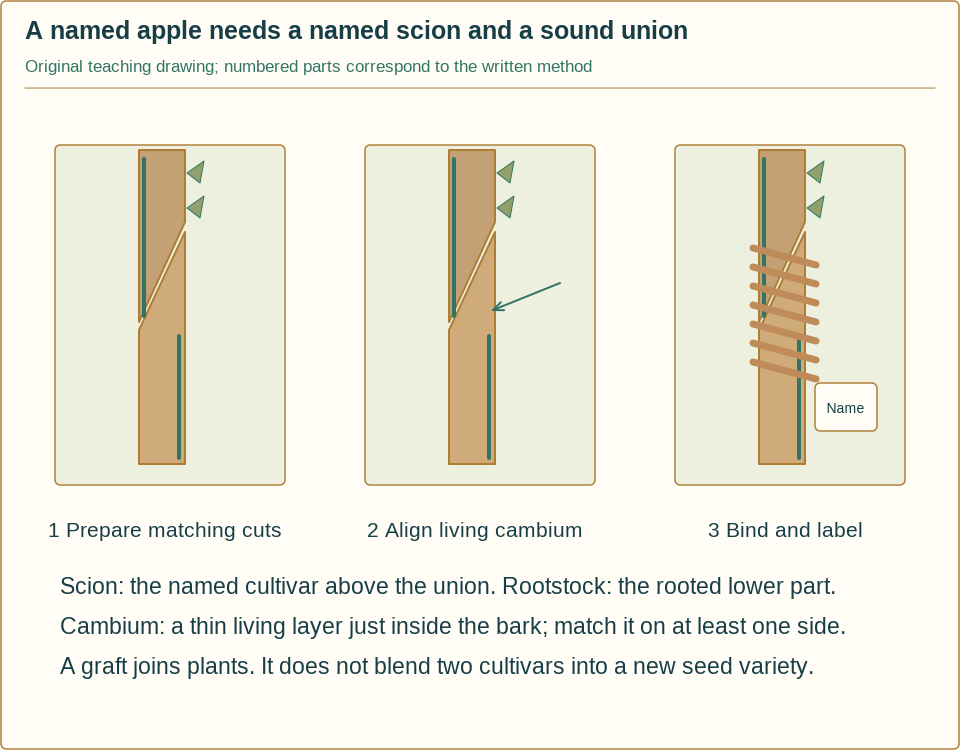
RECORD TWO PLANT IDENTITIES The scion supplies the named fruiting cultivar; the rootstock supplies the root system and influences tree behaviour and size. Record both on the purchase and tree sheets. A cultivar name without its rootstock leaves a major part of the planting specification unknown. Keep the graft union identifiable in the record and follow the nursery’s planting instructions for the actual combination. [D921] UNDERSTAND WHAT A SEED DOES An apple seed is a new offspring, not a guaranteed copy of the fruit’s named cultivar. Iowa State explains why vegetative propagation, including grafting, is used to preserve a selected cultivar. A seedling trial can be valuable, but it needs its own accession number, years of observation and an evaluation purpose. It cannot be booked as an established cultivar orchard simply because the seed came from a labelled supermarket apple. [D922]
TURN THE COMPARISON CHART INTO A PURCHASE RECORD For every candidate, enter the full nursery name, rootstock, supplier lot, local trial evidence, flowering compatibility, expected harvest window and intended use. Ask the nursery to resolve brand names or abbreviated labels before purchase. The USDAArgentina report identifies Red Delicious, Granny Smith and Gala as principal commercial varieties; their prominence does not establish suitability for every province or property. Start local comparisons with documented nursery material. [D919]
Read the illustration’s labels
A grafted tree has two plant identities
Scion
Named fruiting cultivar
Graft union
Rootstock shank
Final soil line
Roots and anchorage
Follow the nursery’s planting depth and support instructions for the actual rootstock. [D851, D856]
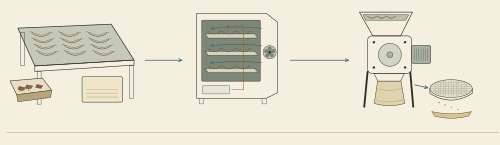
USE A RECORD THAT SHOWS VARIATION Start the run sheet with lot code, tray map, prepared mass, target setting and start time. Add actual readings during the run, the positions checked, any rotations permitted by the appliance instructions and the reason for each intervention. Check several cooled pieces from different positions. Record what was observed, not a copied expected result. [D964]
CHECK A COOLED INTERIOR University of California guidance calls for removing samples, cooling them, then cutting them to examine the interior. No visible or squeezable moisture should remain; pieces should not feel sticky or stick to themselves when folded. A hot slice is a poor comparison with a cooled finished product. [D944]
INVESTIGATE A DRY SHELL AND DAMP CENTRE Excessive temperature can harden the outside while moisture remains inside. Increasing heat to rescue a slow overloaded run can worsen this failure. Check thickness, spacing, load and air paths before changing the operating plan. Keep wet or uncertain pieces out of the finished lot. [D946]
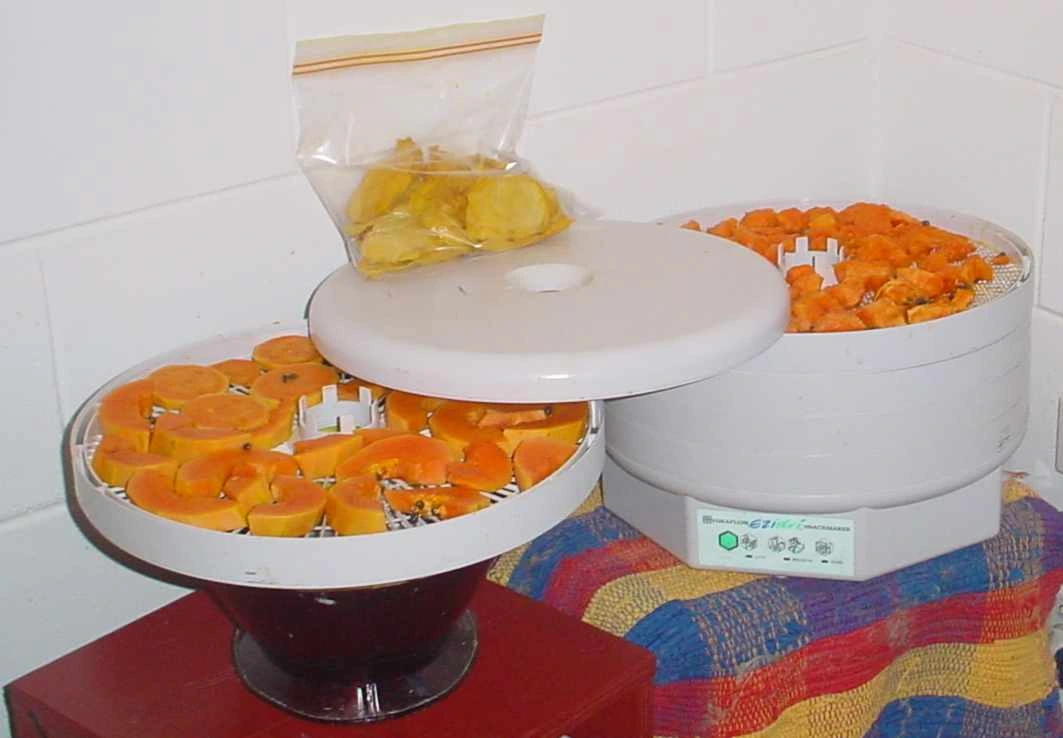
Stackable electric dryer with mango and papaya, not apples or the quoted Catania model. Vassilik, CC BY-SA 3.0. Full frame. [D961]
READ THE EQUIPMENT IMAGE The photograph makes tray stacking and the air-moving base visible. It does not establish a safe temperature, load or drying time. Record those from the chosen appliance and the verified food method. [D961,D964]
Units and terms
BY-SA Creative Commons Attribution-ShareAlike
kg kilogram, a mass unit · % percent, parts per hundred · INTA Instituto Nacional de Tecnología Agropecuaria · = equals · mm millimetre, 0.001 metre · m² square metre, an area unit · × multiplied by · ÷ divided by
Sources for this account
University of California: Apples, drying and dryness checks
A WORKED MASS BALANCE Assume a measured 10.00 kg incoming lot yields 8.00 kg prepared slices and 2.00 kg cores, peel and trim. Suppose the finished dried lot weighs 1.60 kg. The dryer-stage mass reduction is 6.40 kg; this example treats it as water removed and assumes no additional solids loss. Retained mass is 20% of prepared slices, while finished yield is 16% of incoming fruit. These chosen quantities are not a promised crop yield. [D964]
YIELD IS NOT MOISTURE CONTENT The ratio 1.60/8.00 does not mean the dried food contains 20%water. If a separate assay found 1.20 kg dry solids, a 1.60 kg finished lot would contain 0.40 kgwater, or 25% on a wet basis. At a hypothetical 20%water fraction, those same solids would give 1.20/0.80 = 1.50 kg final mass. These are calculations, not a substitute for sampling or a release limit. [D964] WATER ACTIVITY IS A DIFFERENT MEASUREMENT Water activity describes water’s equilibrium vapour pressure relative to pure water at the same temperature. It is not obtained by weighing a tray or reading room humidity. INTA’s pilot-plant capabilities include both moisture and water activity measurements; specify the product and testing purpose before commissioning a commercial shelf-life study. [D951,D950]
Stage
Mass
What the record means
Incoming fruit
10.00 kg
Starting lot.
Prepared slices
8.00 kg
2.00 kg separated as cores, peel and trim.
Dried lot
1.60 kg
6.40 kg dryer-stage reduction under the stated no-solids-loss assumption.
Retained fraction
20% of prepared slices; 16% of incoming fruit
Mass yield, not moisture content or water activity.
Size the dryer from usable tray area
Units and terms
kg kilogram, a mass unit · % percent, parts per hundred · INTA Instituto Nacional de Tecnología Agropecuaria · = equals · mm millimetre, 0.001 metre · m² square metre, an area unit · × multiplied by · ÷ divided by
Sources for this account
INTA Mendoza: pilot plant for dehydrating fruit and vegetables
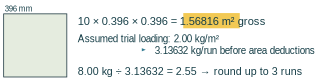
START WITH THE LISTED DIMENSIONS The cited Catania listing specifies ten 39.6 × 39.6 cm trays. Their gross area totals 10 × 0.396 × 0.396 = 1.56816 m2. Borders and obstructions can reduce the usable area, so measure the actual appliance. For illustration only, a trial loading of 2.00 kg prepared slices per square metre gives 3.13632 kg per run before those deductions. [D958,D964] CALCULATE WHOLE RUNS The 8.00 kg prepared lot needs at least ceiling(8/3.13632) = three runs on one unit under that assumption. Two full-area loads total 6.27264 kg, leaving 1.72736 kg for the third. At an assumed ten hours drying plus one hour for unloading, cleaning and reloading, three sequential runs occupy about 33 hours. Food preparation must follow the available slots; the arithmetic grants no safe waiting time. [D964]
In the drawing: 396 mm 10 × 0.396 × 0.396 = 1.56816 m² gross; Assumed trial loading: 2.00 kg/m²; 3.13632 kg/run before area deductions; 8.00 kg ÷ 3.13632 = 2.55 round up to 3 runs
TEST BEFORE MULTIPLYING MACHINES Three units could provide three simultaneous slots only if electrical supply, room ventilation, staffing and the food process support them. Measure a full-load run before purchasing a fleet. Keep separate values for wet kilograms per run, finished kilograms per run and runs per day. Otherwise a drying business can overstate its throughput by a factor equal to the water loss. [D964]
m2 / m² : Square metre The area of a square with sides one metre long.
Condition, package and track dried fruit
LET MOISTURE DISTRIBUTE After drying, cool the fruit. NCHFP directs placing it loosely in clean plastic or glass jars, sealing and holding for seven to ten days, shaking daily and looking for condensation. The process allows moisture to redistribute between pieces. Condensation means additional drying is needed if the food is still unspoiled; mouldy food is discarded. Do not use a dry exterior as the only acceptance check. [D945] WRITE THE DATES AND THE EXCEPTION For a practical record, give every conditioning container the same dryer lot plus a jar suffix. Enter the start date, daily check, observer and disposition. If jar C shows condensation, identify its contents and redrying event separately; do not silently combine it with jars A and B. This preserves the ability to investigate a tray position or sealing problem. The suffix system is an original operating example. [D964]
Units and terms
kg kilogram, a mass unit · % percent, parts per hundred · INTA Instituto Nacional de Tecnología Agropecuaria · = equals · mm millimetre, 0.001 metre · m² square metre, an area unit · × multiplied by · ÷ divided by
cm centimetre, 0.01 metre · kg kilogram, a mass unit · = equals · × multiplied by · mm millimetre, 0.001 metre · m² square metre, an area unit · ÷ divided by · NCHFP National Center for Home Food Preservation · g gram, 0.001 kilogram
Five frames: 13.90 mtimber + kerf and waste allowance
A LOCAL CONSTRUCTION STARTING POINT INTALa Rioja’s August 2025 module specifies 0.73 × 0.74 m trays made from 4 × 2.5 cm wooden strips, with at least five food trays. Its collector and drying chamber use incoming solar-heated air and an upper outlet. Follow the full source for that module. The cutting example here defines a simple butt joint because overall dimensions alone do not determine timber lengths. [D949] CUT AND ASSEMBLE THE EXAMPLE Place 40 mm-wide rails flat. For each 730 × 740 mm outside frame, cut two full-length 740 mm rails and two 650 mm crosspieces between them: 730 − 2 × 40 = 650. Five frames need ten of each, 13.90 m total timber before kerf and waste. Fit, square and fasten the frame; verify both diagonals agree before fitting removable mesh certified for food contact and the intended temperature. Keep joints smooth and inspect for loose fasteners. [D964]
VERIFY THE FOOD SUPPORT AND THE HEAT The clear aperture is 650 × 660 mm, or 0.429 m2 per tray, 2.145 m2 for five. Test fit and stability under the intended load, then check cleaning and airflow. Ordinary insect screen is not automatically food-safe. Commission the complete module with temperature and load records; a charcoal tray or solar exposure cannot be treated as sterilisation. [D949,D964] ADD THE OUTDOOR FRUIT CONTROLS Montana State guidance limits outdoor drying to suitable fruits and hot, breezy weather, at least 85 F (29.4 C), with humidity below 60%. Bring fruit in at night. Its post-drying insect treatment includes sealed freezer bags held at 0 F (about -18 C) or colder for at least 48 hours. This kills insects and eggs; it is not a substitute for hygienic processing or a validated microbial control. [D947]
m2 / m² : Square metre The area of a square with sides one metre long. m : Metre The base unit of length in the International System of Units. D + number : Book evidence record The number identifies a source entry in the book’s evidence section. The linked record gives the title, credit or publication details.
Equipment, energy and the cost of a run
A DATED ARGENTINE EQUIPMENT BENCHMARK On 5 November 2026 the opened ByEG listing in San Miguel showed the Catania VDP-10AI at ARS 1,048,759.92, or ARS 901,933.53 by transfer/cash, with freight separate and a “Sin stock” label. Its specifications list 1000 W and 220 V/50 Hz. Treat this as a benchmark pending stock and written quotation. At BNA’s same-day banknote selling rate of ARS 1,570/USD, the transfer price is about USD 574.48. [D958,D959] SEPARATE INSTALLED COST FROM THE MACHINE Three units at that transfer benchmark total ARS 2,705,800.59, approximately USD 1,723.44. Add preparation surfaces, suitable electrical circuits, ventilation, instruments, washing facilities, packaging, freight and commissioning. Reuse the earlier pantry scale only if its range and performance suit the load. No tariff, electrician’s price or installation total is invented here. Check imported appliances’ voltage and service arrangements before specifying substitutes. [D964]
MEASURE ENERGY INSTEAD OF GUESSING FROM WATTS A 1.00 kW appliance running continuously at rated input for ten hours would use 10.0 kWh. Thermostatic cycling and actual auxiliary loads change consumption, so use a suitable meter. At an explicitly assumed ARS200/kWh, the ten-hour scenario costs ARS 2,000; three runs cost ARS 6,000. Substitute the effective energy price from the property’s bill. This sensitivity example is not an Argentine tariff quotation. [D964] PRICE ACTIVE WORK AND ACCEPTED OUTPUT Assume 40 minutes preparation, 15 loading, 15 unloading and 20 cleaning per run: 90 minutes, or 4.5 active hours for three runs, plus later conditioning checks and packing. Divide total accepted-lot cost by actual packed kilograms, not incoming fruit. Keep depreciation, failed batches, maintenance, ingredients and labour separate so a cheap machine does not hide an expensive process. [D964]
Units and terms
NCHFP National Center for Home Food Preservation · kg kilogram, a mass unit · g gram, 0.001 kilogram · mm millimetre, 0.001 metre · × multiplied by · m² square metre, an area unit · = equals · m metre, a length unit · INTA Instituto Nacional de Tecnología Agropecuaria · cm centimetre, 0.01 metre · % percent, parts per hundred
ARS Argentine peso · BNA Banco de la Nación Argentina · USD United States dollar · W watt, power · V volt, electrical potential difference · Hz hertz, cycles per second · kW kilowatt, 1,000 watts · kWh kilowatt-hour, energy
ARS Argentine peso · BNA Banco de la Nación Argentina · USD United States dollar · W watt, power · V volt, electrical potential difference · Hz hertz, cycles per second · kW kilowatt, 1,000 watts · kWh kilowatt-hour, energy
The rounded structures are visible on the root. Their appearance does not supply a nitrogen quantity for the next crop. USDA photograph, via Wikimedia Commons. Photographer and exposure date unrecorded. [D968; D990]
Match crop demand to rotation area
Capacity is a design constraint | A request for more tomatoes can change the required land
Do not promise yield from a diagram Run a pilot season and weigh marketable harvest, rejected harvest and household use separately. Record labour and irrigation alongside the crop. A future yield estimate should state the number of observed seasons and their conditions. One unusually productive bed is not a dependable estate-wide production rate. [D969]
Calculate the family allocation With four equal groups on 96 m², one main family receives 96 ÷ 4 = 24 m² each year. That is a quarter of the cropped area. The example does not promise a particular harvest mass; yield depends on crop, cultivar, density, weather, losses and management. Keep area capacity separate from a yield forecast.
Test a larger request Suppose the kitchen asks for 40 m² of Solanaceae each year while the same equal-group rotation is retained. Four groups of 40 m² require 160 m² of cropped land. The 96 m² garden is short by 64 m² of cropped area before paths are added. Record the gap before buying seedlings.
Choose a visible resonse Possible responses are to reduce the request, add suitable land, obtain some produce elsewhere or design a different crop plan with professional advice. Increasing tomato area inside every group would change the host history. It cannot be counted as the same four-group example without showing the resulting return interval.
Existing example
Read the illustration’s labels
24 m²
96 m² total
In the drawing: 24 m²
Larger demand
160 m² total
Area capacity, before paths
40 m²
40 × 4 = 160 m² · 64 m² more cropped ground
Units and terms
USDA United States Department of Agriculture · m² square metre, an area unit · = equals · ÷ divided by
m² square metre, an area unit · = equals · × multiplied by · ARS Argentine peso · USD United States dollar · % percent, parts per hundred · ÷ divided by
A small bill of quantities | Assumed prices show the calculation; obtain local quotations before purchase
Mark the ground from fixed points After resolving access and drainage, set out the eight rectangles from a permanent baseline. Check bed width at both ends and compare diagonals. Use 32 corner stakes if each bed has four independent corners, plus eight durable numbered labels. Photograph the finished layout from a repeatable position and draw a map showing north, the baseline and water points. Keep a master and a working copy Prepare two copies of the map: one protected master and one field copy. Give each bed its own record with planting date, crop, family, source of seed or transplants, harvest, problems and actions. A waterproof label points to the record; it does not replace it. Save a dated copy after each seasonal revision.
An explicitly assumed purchase example At assumed prices of ARS 600 per stake, ARS 1,000 per label and ARS 500 per map copy, the calculation is 32 × 600 + 8 × 1,000 + 2 × 500 = ARS28,200. A 10% allowance adds ARS 2,820, giving ARS 31,020. These are arithmetic inputs, not November 2026 supplier quotations. Convert only with a stated rate Using the earlier edition’s dated comparison rate of ARS 1,570 per USD on 5 November 2026, ARS 31,020 ÷ 1,570 = USD19.76. Keep that date with the result and replace it when budgeting. The example excludes soil tests, tools, irrigation, compost, seed, paths, fencing and labour; it is a record-system purchase list, not the cost of the garden. Assign responsibility Name one steward for bed identities and one deputy who can recover the records. The person changing a planting enters it that day; the steward checks the family sequence before the next planting. Keep actual invoices and quantities beside the estimate so future budgets use observed costs. [D969; D959 at reference 1530]
Evidence and worked-example record Book II Continue
Audit a bed before the next planting
A repeatable handover | Record what happened, detect a broken interval and revise the plan
A five-minute weekly inspection For each bed, confirm its label, current crop, volunteer plants, irrigation condition and visible problem. Date the entry and attach a photograph when a change matters. Eight beds at five minutes each take 40 minutes per week. Over 52 weeks that is 2,080minutes, or 34 hours40 minutes. Add the seasonal review Four reviews at 1.5 hours each add six hours. Total record and review time in this assumed schedule is 40 hours40 minutes per year. Sowing, watering, harvesting, travel, diagnosis and repairs are additional work. If the actual inspections take longer, use the observed time in the next staffing plan. Work a failed-history example Bed 1 held tomato in year one. The year-two main crop was pumpkin, but volunteer potatoes remained in the bed. The record now shows another Solanaceae host in year two. Mark the intended break as interrupted for any relevant host-dependent problem, identify the organism involved and obtain advice on the revised interval. Do not silently retain the original year-five promise.
Close the loop before handover The departing steward signs the current map and lists unresolved problems, excluded hosts, pending tests and missing records. The incoming steward walks the beds against that map. Store the dated file in two recoverable places and retain the preceding version. A useful archive lets another person explain a decision without needing the original gardener beside them. Acceptance check Every physical bed has one stable identifier. Every planting and cover crop has a family. Every proposed repeat has a traceable interval. Every diagnosed problem has an action and review date. Every budget states quantities, assumptions and exclusions. If a field is unknown, mark it unknown and resolve it before using the record as evidence. [D965-D969; D989]
Units and terms
m² square metre, an area unit · = equals · × multiplied by · ARS Argentine peso · USD United States dollar · % percent, parts per hundred · ÷ divided by
A seed envelope begins with the parent plant. Record the crop, seed source, pollination conditions and the trait the grower intended to keep. A tomato selected for its fruit may produce seed; seed saved from a hybrid can produce a different mix of traits in the next generation.
Keep seed from each labelled parent separate until the selection decision is recorded. Count the seeds sown and the seedlings that emerge. Twenty seeds with sixteen emerging give 80% for that sample under those conditions. The estimate accompanies the lot.
Units and terms
% percent, parts per hundred · BY-SA Creative Commons Attribution-ShareAlike
Josef Schlaghecken, 2014 · CC BY-SA 4.0. Reduced full frame. The circular detail uses the same licence.
Select before harvest
Start with a known open-pollinated common bean. Ask the supplier or previous grower whether the planting was an F1 hybrid. Its offspring can segregate. Mark several healthy plants that represent the intended population. Select across the stand and include the normal range of plant and pod form for that line. Keeping seed solely from the earliest large plant can shift the population over time.
Units and terms
% percent, parts per hundred · BY-SA Creative Commons Attribution-ShareAlike
% percent, parts per hundred · °C degree Celsius, a temperature unit
Record other common beans flowering nearby, including across a property line. The Organic Seed Alliance gives a 10-20-plant genetic-maintenance guideline for common bean. A household trial of one plant can demonstrate shelling, but it cannot represent that population. Record the number that actually contributed seed.
Harvest into the label
Let chosen pods mature until brown and dry. If wet weather threatens after maturity, move them under cover with good air movement and retain the field tag. Minnesota Extension describes finishing harvested bean pods indoors for at least two weeks before shelling. Write the conditions and check the pods and seed before packing.
Separate clean seed from questions
Shell one lot over a clean tray. Remove broken or visibly infested seed and keep uncertain plants separate. Weigh sound-looking seed and record the rejects. A clear seed coat cannot establish seed health. Keep the parent field record and consult a seed laboratory if a disease or high-value planting decision is involved.
Two counts from one seed lot
Sample
Roots counted
Seeds observed
Observed fraction
First
17
20
85%
Second
15
20
75%
Combined
32
40
80%
These illustrative counts describe emerging roots under the recorded conditions. One seed in a twenty-seed sample changes the fraction by five percentage points. A root count is distinct from a laboratory assessment of normal seedlings.
Root emergence, laboratory normal-seedling counts and field establishment measure different things. Iowa State describes 21-27 °C for a household germination check, with daily observations after the first few days. Record mould, abnormal growth and the final observation date. Valuable or potentially diseased seed needs an appropriate seed-laboratory assessment.
Units and terms
% percent, parts per hundred · °C degree Celsius, a temperature unit
A stock ledger separates seed used for germination checks, planned sowing, reserves and unallocated stock. Reconcile these categories to the physical lot. Record losses and transfers; field establishment is a separate measurement.
Units and terms
% percent, parts per hundred · °C degree Celsius, a temperature unit
Sieving separates material by particle size. It does not diagnose nutrient need or remove dissolved contamination. Record measured mesh opening, material condition and container tare. Input mass is accounted for by the coarse fraction, fine fraction, retained residue and handling losses.
Rothamsted’s long-term soil records illustrate why plot, sample and method matter. Interpret a local soil analysis alongside the crop and INTA guidance.
Units and terms
INTA Instituto Nacional de Tecnología Agropecuaria · BY Attribution condition in a Creative Commons licence · INASE Instituto Nacional de Semillas · UNLP Universidad Nacional de La Plata
Removing unwanted plants needs identification and controlled action. Record crop damage as well as weeds removed and time taken.
Units and terms
INTA Instituto Nacional de Tecnología Agropecuaria · BY Attribution condition in a Creative Commons licence · INASE Instituto Nacional de Semillas · UNLP Universidad Nacional de La Plata
The historical combined drill and wheel-hoe advertisement records interest in multipurpose garden tools. Its claims are advertising, distinct from a measured performance record.
Units and terms
INTA Instituto Nacional de Tecnología Agropecuaria · BY Attribution condition in a Creative Commons licence · INASE Instituto Nacional de Semillas · UNLP Universidad Nacional de La Plata
Keep test seeds, sowing seed, reserve and unallocated stock as distinct counted entries. Establishment measured per seed sown already includes germination losses; multiplying by germination a second time would count that loss twice.
Parent population, Tomate Platense
Units and terms
INTA Instituto Nacional de Tecnología Agropecuaria · BY Attribution condition in a Creative Commons licence · INASE Instituto Nacional de Semillas · UNLP Universidad Nacional de La Plata
Berazategui, September 2023 · Argentine national portal, CC BY 4.0. Photograph from the INASE report.
La Plata’s horticultural belt Families around La Plata continued saving seed from local tomato populations as commercial production changed. UNLP describes an extension germplasm project operating since 2013 that connects family growers, cooperatives, students and university staff. A living collection depends on a new planting, selection and a named person to return the next lot.
Berazategui, September 2023 The government reported recognition of the Tomate Platense in the INASE list of semillas criollas. Its account names growers Azucena Riveiro, Marina Ramírez and Isabel Palomo among contributors to the work. It describes several maintained populations. A fruit of similar shape purchased elsewhere cannot acquire this provenance from appearance alone.
What to write on a return packet Record the grower’s own population name and farm, when the seed was received, which plants contributed to the new generation, and who may receive it. Keep the source designation intact. If two families supply populations with different names, assign two lot IDs and keep separate bags, fermentation vessels and field records.
INASE : Instituto Nacional de Semillas Argentina’s national seed institute, responsible for seed and cultivar records.
IDs : Identifier or identification A label that distinguishes one record, object or sample from another.
Units and terms
INTA Instituto Nacional de Tecnología Agropecuaria · BY Attribution condition in a Creative Commons licence · INASE Instituto Nacional de Semillas · UNLP Universidad Nacional de La Plata
INTA Instituto Nacional de Tecnología Agropecuaria · m metre, a length unit · = equals · US United States
Set the time with the whole-bed flow Suppose a meter shows the entire bed receives 36 L/h. The 72 L application takes two hours. A check at the same flow gives 3 L in five minutes. A single emitter cannot stand in for the whole bed unless its flow represents the whole zone. Check wetting at the head, middle and tail. Split the application if runoff begins.
Keep a Mendoza schedule in its setting INTA’s Mendoza irrigation guide states its weather station, crop density and assumed root depth for its carrot example. A grower in the Buenos Aires green belt can use the same water-balance method with local observations. Retain the station, date, root depth assessed, observed rain and meter readings in the field record.
Gorina, INTA carrot trial
Units and terms
mm millimetre, 0.001 metre · °C degree Celsius, a temperature unit · m² square metre, an area unit · L litre, a volume unit · × multiplied by · ÷ divided by · h hour, 60 minutes · % percent, parts per hundred · = equals · INTA Instituto Nacional de Tecnología Agropecuaria
INTA Instituto Nacional de Tecnología Agropecuaria · AMBA Área Metropolitana de Buenos Aires Buenos Aires and its surrounding metropolitan area · BY Attribution condition in a Creative Commons licence · kg kilogram, a mass unit · cm centimetre, 0.01 metre · m² square metre, an area unit · m metre, a length unit
INTAAMBA, 2024 · Argentine national portal, CC BY 4.0. Harvested roos, reduced full frame.
INTAAMBA, 2024 · Argentine national portal, CC BY 4.0. Harvested roots, reduced full frame.
Gorina, in the Buenos Aires growing belt INTAAMBA and the provincial experimental station at Gorina evaluated open-pollinated carrot materials. The team was addressing heavy soils, access to appropriate seed and premature flowering in some autumn-winter plantings. A trial in the metropolitan belt gives growers a closer comparison than an overseas planting calendar.
Read the result at its own scale In its 31 October 2024 report, INTA identifies Experimental 2 at 35,156 kg/ha of marketable roots. The station describes medium-sized roots around 18 cm and also highlights Coral INTA and Beatriz INTA. Convert the reported yield to 3.5156 kg/m² to understand the unit. It remains one trial result under its named conditions.
Reproduce a comparison on the estate Plant the chosen cultivar and a locally established comparison in measured, labelled strips. Record sowing date, seed lot, thinning and water on both. Set the same market grade before harvest, then weigh saleable and rejected roots separately. An early flower, a forked root and an unsold sound root belong in different notes.
Units and terms
INTA Instituto Nacional de Tecnología Agropecuaria · AMBA Área Metropolitana de Buenos Aires Buenos Aires and its surrounding metropolitan area · BY Attribution condition in a Creative Commons licence · kg kilogram, a mass unit · cm centimetre, 0.01 metre · m² square metre, an area unit · m metre, a length unit
m² : Square metre The area of a square with sides one metre long. D + number : Book evidence record The number identifies a source entry in the book’s evidence section. The linked record gives the title, credit or publication details.
Count the stand before thinning
Watch the row before thinning it Protect the shallow seed zone from drying and from a watering jet that can wash seeds into clusters. Mark a 1 m section of each row and give it a stable label. Check emergence on comparable days. Minnesota notes that carrots may take as long as three weeks to germinate under its growing conditions. Inspect moisture and crust before deciding to resow.
Count in the same place twice For an illustrative audit, four marked metres hold 15, 11, 14 and 12 seedlings, 52 in 4 m or 13 per metre. One week later, revisit exactly those strips. A mean can hide a long blank patch. Record the longest gap in each metre as well as the total count. Keep measurement from the whole bed separate from this sample.
Thin to the stated product size Minnesota describes thinning carrots to roughly 2-4 in, or 50.8-101.6 mm, depending on the intended root size. In this example use 75 mm and select healthy survivors along the row. Clip surplus seedlings where pulling would move a neighbour. Measure between the centres that remain, preferably at several points.
Respond to the limiting factor If bare strips align with a crusted patch, investigate surface preparation and watering. If they align with a blocked irrigation line, measure the line before buying more seed. Recount after any repair. Keep the original failed strip in the record so its cost does not disappear when the next strip succeeds.
Harvest roots, or keep parents for seed
Decide which crop is being harvested A carrot sold as a root leaves the field before seed harvest. A seed crop needs selected parents to flower, form umbels and mature seed. INTA describes annual and biennial behaviour among carrot materials in Argentina. Identify the cultivar and its cold requirement with the supplier or seed-production adviser before planning a second cycle.
Select roots under a repeatable rule For a root-to-seed planting, identify the source population and growers’ selection criteria. Inspect root form, colour and health while keeping individual identity. Record which roots were lifted, selected and replanted. Maintain a reserve of the source lot. A few isolated show roots cannot conserve the diversity of a broad population.
Units and terms
INTA Instituto Nacional de Tecnología Agropecuaria · AMBA Área Metropolitana de Buenos Aires Buenos Aires and its surrounding metropolitan area · BY Attribution condition in a Creative Commons licence · kg kilogram, a mass unit · cm centimetre, 0.01 metre · m² square metre, an area unit · m metre, a length unit
mm millimetre, 0.001 metre · INTA Instituto Nacional de Tecnología Agropecuaria · m metre, a length unit · kg kilogram, a mass unit · m² square metre, an area unit
In the drawing: A single charge; 10 L25 L greens browns; 35 L loose; before settling
Build a plant-scrap batch that can be traced
Units and terms
L litre, a volume unit · INTA Instituto Nacional de Tecnología Agropecuaria · AMBA Área Metropolitana de Buenos Aires Buenos Aires and its surrounding metropolitan area · BY Attribution condition in a Creative Commons licence
Hands holding crumbly material in the Buenos Aires metropolitan compost guide. INTAAMBA, CC BY 4.0. Reduced full frame.
Prepare the receiving station Choose an accessible site with drainage, room to turn material and a way to protect the pile from animals or excessive rain. INTAAMBA describes larger yard enclosures as well as smaller ventilated containers for balconies. The free space around a container matters. Test whether a worker can lift its lid, mix the contents and remove older material without putting the fresh kitchen scraps on the curing pile.
Charge with one known measure Use a calibrated 10 L bucket for both streams. The US EPA starts with at least two to three loose volumes of browns per volume of greens. Ten litres of greens with 20-30 L of dry leaves gives 30-40 L of loose inputs before settling. Spread scraps and cover them with browns. EPA gives 4-8 in of cover, approximately 102-203 mm. Record the input materials and their actual loose volumes.
Look for the cause of a slow pile If dry material stays loose and inactive, add water gradually while mixing, then check several places. If the pile smells foul and feels wet, mix in dry coarse material and reopen air spaces. Turn material from the edge inward. Exclude meat, dairy, pet waste, visibly diseased plants and treated wood from this plant-scrap batch. Write down the adjustment before the next keeper takes over.
Units and terms
L litre, a volume unit · INTA Instituto Nacional de Tecnología Agropecuaria · AMBA Área Metropolitana de Buenos Aires Buenos Aires and its surrounding metropolitan area · BY Attribution condition in a Creative Commons licence
INTA Instituto Nacional de Tecnología Agropecuaria · AMBA Área Metropolitana de Buenos Aires Buenos Aires and its surrounding metropolitan area · US United States · EPA Environmental Protection Agency, United States · L litre, a volume unit · mm millimetre, 0.001 metre · m metre, a length unit · m³ cubic metre, a volume unit · × multiplied by
Use the inside dimensions. Compare both diagonals after confirming all four sides.
In the drawing: Plan and measured diagonal; 3.00 m; 1.20 m wide; Each diagonal ≈ 3.231 m; Use the inside dimensions. Compare both diagonals after confirming all four sides.
Set the internal lines first Use a tape, string, pegs and a square or measured diagonals. Mark a 1.20 × 3.00 m rectangle. Both diagonals should be about 3.231 m when the corner angles are right and the side lengths are correct. A bed accessible from both long sides requires a 0.60 m reach to its centre. Test that reach with the actual gardener and tools before installing an immovable edge.
Buy volume on a stated basis The footprint is 3.60 m². A 50 mm layer is 0.050 m deep and occupies 0.180 m³, or 180 L before settling. A 10 L verified measure takes eighteen fills. This is a selected geometric layer. The suitable material and dose depend on the crop and soil assessment. For four comparable beds the same layer would need 720 L before any measured purchasing allowance.
Confirm what was delivered Check the source, composition, cleanliness and measured volume of bought fill. Distinguish an open-bottom bed over suitable soil from a container on impermeable ground. Investigate past land use where appropriate. After filling, measure the actual layer from fixed marks, recheck drainage and keep the delivery ticket. Neither a new frame nor clean-looking fill identifies what lies underneath.
Units and terms
m metre, a length unit · ≈ approximately equal to · × multiplied by
m² square metre, an area unit · mm millimetre, 0.001 metre · m metre, a length unit · m³ cubic metre, a volume unit · L litre, a volume unit · INTA Instituto Nacional de Tecnología Agropecuaria · EEA Estación Experimental Agropecuaria · BY Attribution condition in a Creative Commons licence · cm centimetre, 0.01 metre
Field workers on formed rows in the El Colorado horticulture report. INTAEEA El Colorado, CC BY 4.0. Reduced full frame.
Follow a storm across the holding Walk a proposed Formosa site from high ground through its middle slope to the lowest receiving area. Mark the route of run-on from upslope, local ponding and the intended discharge point. Describe the soil when wet. Slope, soil texture and a blocked outlet can make two adjacent beds behave differently after the same rain.
Use the regional example carefully INTA El Colorado places sensitive crops such as tomato and pepper on better-drained high ground. Its intermediate-ground examples include leafy crops on ridges. For the heavy-rain scenario it discusses ridges around 30-40 cm high where the system can support them. That figure describes formed field ridges. It supplies neither the depth of a rooftop container nor the location of a safe outlet on an unrelated estate.
Commission the first short section Measure the ridge from the adjacent furrow at a consistent point, then photograph and measure again after rain. Inspect the tail of the row and the receiving area. If the furrow simply pools against a path, fix the discharge issue before extending the design. Keep vehicles off saturated soil. Scale up only after checking erosion, access and the crop root zone under real field conditions.
EEA : Estación Experimental Agropecuaria An agricultural experiment station. The following place name identifies the station in the Argentine institute’s network.
Units and terms
m² square metre, an area unit · mm millimetre, 0.001 metre · m metre, a length unit · m³ cubic metre, a volume unit · L litre, a volume unit · INTA Instituto Nacional de Tecnología Agropecuaria · EEA Estación Experimental Agropecuaria · BY Attribution condition in a Creative Commons licence · cm centimetre, 0.01 metre
Demonstration site includes service and border areas. The example module includes internal paths only.
Read the Córdoba demonstration site INTA Marcos Juárez describes a 1,600 m² demonstration garden with 26 beds each measuring 1 × 15 m. Their cropped area totals 390 m². That is 24.375% of the whole site, approximately 24.4%. Other ground supports paths, borders, woody and flowering plants, compost, nursery and tool storage. An estimate that multiplies a bed yield by all 1,600 m² would count several different uses as vegetables.
Draw a separate four-bed module For comparison, choose four beds each 1.20 × 3.00 m, set parallel with three 0.60 m internal paths. The module is 6.60 m wide and 3.00 m long, or 19.80 m². Planted ground is 14.40 m², internal paths 5.40 m². The cropped share is about 72.7% before adding headlands or perimeter access. The Córdoba figure and the module figure use different site boundaries.
Add what the crew actually uses Mark any headland for turning a trolley, gates, accessible paths, storage and washing space with their own dimensions. Recalculate the gross site denominator and label it on the drawing. If a worker cannot turn with the loaded trolley on the measured ground, amend the layout before quoting a yield per hectare of estate.
Rotate hosts on four permanent beds
Four beds through four years
Year Bed A Bed B Bed C Bed D
1 n b l a
2 a n b l
3 l a n b
4 b l a n
N nightshade · B brassica
L legume · A allium. Read a column from top to bottom to follow a single bed.
Units and terms
m² square metre, an area unit · mm millimetre, 0.001 metre · m metre, a length unit · m³ cubic metre, a volume unit · L litre, a volume unit · INTA Instituto Nacional de Tecnología Agropecuaria · EEA Estación Experimental Agropecuaria · BY Attribution condition in a Creative Commons licence · cm centimetre, 0.01 metre
m² square metre, an area unit · % percent, parts per hundred · INTA Instituto Nacional de Tecnología Agropecuaria · m metre, a length unit · × multiplied by
Read the instrument field The lower photograph comes from the Las Breñas station’s published history. The station began recording temperature and rainfall in 1937. The field photograph documents instruments in their surroundings, while the dated account provides the history. The photographed equipment cannot by itself establish when any particular instrument was installed.
Plan for the crop where it will grow Write down the growing site, cultivar, sowing or transplant date, expected biological stage at harvest and reserve time. A grower in Esquel and one in the Chaco may work in the same hemisphere and still have very different planting opportunities. A northern calendar is useful for its measurement method once the local crop and weather record are supplied.
Las Breñas
Frost-free intervals
5 cm
1.5 m
266 d 320 d
54 days apart
INTA Chaco
Test a crop against an actual time window
From day zero to the deadline
Elapsed days Job or date
0 1 Dec 2026
16 Latest trial start
86 25 Feb 2027
100 11 Mar 2027
16 days of planning slack
Example uses 70 crop days and a 14-day reserve. Dates are chosen for arithmetic rather than local prediction.
State the date convention Use elapsed days, with the starting date at day zero. In a deliberately chosen example, day zero is 1 December 2026 and day 100 is 11 March 2027. A hypothetical 70-day crop and a 14-day reserve occupy 84 days and leave 16 days of slack. This trial window supplies arithmetic, not frost dates for a named Argentine site.
Check the biological starting point A 70-day description might begin at sowing, transplanting or another defined stage. Read the variety and supplier instructions. If the stated period begins at transplanting, nursery days belong on a separate line. Check site access, soil moisture, exposure and whether the crew can prepare the intended bed in time. The calendar can give a free day on which the soil is too wet to work.
Work out the last start and the consequence of delay In the example the latest planned start is day 16, 17 December. Seventy days later is 25 February and fourteen reserve days bring the plan to 11 March. A day-20 start leaves four days less than the chosen reserve requires. Options include a separately supported shorter cultivar, another site with a verified window or a smaller trial. Record which assumption changed.
Units and terms
INTA Instituto Nacional de Tecnología Agropecuaria · cm centimetre, 0.01 metre · m metre, a length unit
INTA Instituto Nacional de Tecnología Agropecuaria · BY Attribution condition in a Creative Commons licence
Cropped rows in the cordilleran garden report published in November 2022. INTA Esquel, CC BY 4.0. Reduced full frame.
Read the foothill garden The 2022 INTA Esquel note describes a summer frost-free interval of roughly two to three months in the Chubut cordillera and also discusses dry summers. The photograph shows cropped rows against a mountainous backdrop. Separate crops that tolerate exposure from those needing protection. Confirm the actual elevation, cold-air drainage and water supply of a proposed garden before choosing a planting week.
Distinguish starts under cover from plants in open ground INTA’s account from Río Grande in Tierra del Fuego describes nursery work beginning late in July to gain time before transplanting. Its companion account from Río Turbio, Santa Cruz, describes strong wind and local exposure to frost. Starting seedlings under protection and setting them outside are two dated operations. A July nursery record is insufficient evidence for a July outdoor transplant at another property.
Check the investment before expanding protection Log air temperature inside and outside, plant stage and whether covers or vents were open. Compare a small protected group with a comparable outdoor group where doing so is suitable for the crop. Record the additional hours and materials needed for protection. Attribute a difference to that trial and describe the exposure before committing to a larger structure.
Units and terms
INTA Instituto Nacional de Tecnología Agropecuaria · BY Attribution condition in a Creative Commons licence
INTA Instituto Nacional de Tecnología Agropecuaria · BY Attribution condition in a Creative Commons licence · cm centimetre, 0.01 metre · m metre, a length unit · NOAA National Oceanic and Atmospheric Administration · US United States · °C degree Celsius, a temperature unit
Liberty Hyde Bailey / 1910 Public domain, historical publication
A hen’s egg supports the development of an animal embryo. A bean seed already contains a plant embryo before it germinates. A mushroom releases spores from a fruiting structure formed by a fungus whose feeding body is usually elsewhere.
The three outlines can be compared at the same scale on a page, although their biological roles differ. Bailey’s whip-graft engraving adds a fourth possibility. An orchardist can propagate a particular shoot by joining it to a stock. A named scion can therefore persist without a seed reproducing its exact combination of characters.
Labels on the sheet
Avian egg · amphibian egg · plant seed · mushroom
The poster places animal development, seed germination and fungal growth in parallel. The comparison is useful only if the organisms and processes remain distinct.
An embryo, a seed embryo with stored reserves and a fungal spore are not interchangeable structures. Preserve the actual species and environmental conditions when designing an observation or cultivation record.
Fruit colour is illustrative. Colour alone cannot establish cultivar identity.
SCION
Named fruiting cultivar
ROOTSTOCK
Rooted lower plant
Keep both identities
on the tree record.
Seedlings recombine inherited traits; a graft retains the selected scion above the union.
Orchard identity across generations When the USDA Division of Pomology commissioned watercolours, artists documented fruit that could bruise, change colour or disappear before a distant reader saw it. The National Agricultural Library now preserves that collection. A named drawing with a record of its specimen can carry historical information about a cultivar. A colour chart alone groups fruit by appearance, which changes with maturity, lighting and growing conditions.
Consider Honeycrisp, released by the University of Minnesota in 1991. A cultivar name belongs to an identified selection. Planting a seed from its fruit allows recombination, so the seedling cannot simply inherit the commercial label. A grower propagates the selected fruiting material vegetatively. In a grafted tree the scion supplies the fruiting variety while the rootstock contributes traits such as vigour and size. Both identities belong on the tree’s record.
Trees carrying the same named scion on different rootstocks can differ in size and yield. Planting date, site and management also matter. Conversely, two red apples may belong to different cultivars. The observed colour and the documented cultivar name are separate parts of the record.
A historical apple watercolour
Complete supplied fruit plate. Preserve the handwritten record on the original; the artist, cultivar and date are not independently established here.
In April 1913, Ellen Isham Schutt painted an Esopus apple for the United States Department of Agriculture. A labelled watercolor could carry information far beyond the season during which the specimen was available. The fruit’s skin, cut flesh and seeds belonged to one recorded sample.
The colour groups in the supplied chart make names easy to find, but a red blush changes with exposure and maturity. An orchard preserves a named cultivar through vegetative propagation. Record the scion, rootstock, nursery lot and planting position so that a future fruit can be compared with a known tree as well as a picture.
Labels on the sheet
Red, green and yellow groups · Cripps Pink cv.
The colour chart groups named apples into red, green and yellow. Colour varies with cultivar, maturity and growing conditions, and a photograph alone cannot authenticate nursery stock.
The AP1 lesson explains cultivar identity and vegetative propagation. For an Argentine orchard purchase, record cultivar, rootstock and supplier documentation rather than ordering from a colour category.
READING THE LABELS Red, Red Delicious, Gala, Honeycrisp, Empire, Cortland, Fuji, Paula Red, Ambrosia, Rockit, Cripps Pink cv., Bailey, McIntosh, Rome, Braeburn, Jonathan, Cameo. Green, Granny Smith, Crispin, Rhode Island Greening, Shizuka. Yellow: Jonagold, Golden Delicious, Ginger Gold, Opal.
A named apple needs a named scion and a sound union
Original teaching drawing; numbered parts correspond to the written method
1 Prepare matching cuts
2 Align living cambium
3 Bind and label
Name
Scion: the named cultivar above the union. Rootstock: the rooted lower part.
Cambium: a thin living layer just inside the bark; match it on at least one side.
A graft joins plants. It does not blend two cultivars into a new seed variety.
A graft combines a rooted lower plant, the rootstock, with a selected shoot, the scion. The thin cambium layers just inside the bark must meet so the union can form. The scion preserves the selected cultivar above the join; it does not blend two varieties into new genetic seed.
1. Prepare three labelled pairs.
Choose compatible apple rootstocks and healthy dormant scion wood from a verified source. Record each cultivar before cutting. Match the method to the relative stem sizes and learn the cut with a competent demonstrator.
2. Make clean matching cuts.
Use a sharp suitable grafting knife and a stable working position, cutting away from the body. Keep prepared surfaces clean and avoid letting them dry while the pair is assembled.
3. Align and bind.
Bring cambium into contact on at least one side when diameters differ. Bind with suitable grafting tape and label the pair. The drawing illustrates a simple functional join; it does not show every graft method.
4. Observe the result.
Record bud growth, callus and failures. Remove unwanted rootstock growth appropriately and inspect the wrap so it does not girdle the stem. Keep the graft union above the intended soil level when planting.
In Argentina, translate dormant-season timing to the local winter and ask an orchard nursery about rootstock, disease-free material and pollination partners. A successful join is not yet a mature productive orchard.
Counted materials and a replaceable budget
Item · quantity × ARS/unit
ARS
USD
EUR
Shared grafting knife · 1 × 28,000
28,000
17.83
15.82
Grafting tape roll · 1 × 6,500
6,500
4.14
3.67
Three durable labels · 3 × 1,500
4,500
2.87
2.54
Shared pruning tool · 1 × 30,000
30,000
19.11
16.95
Priced subtotal
69,000
43.95
38.98
Author’s planning allowances dated 15 November 2026, not retailer quotations. Retained BNA exchange basis, 13 November 2026: ARS 1,570/USD and ARS 1,770/EUR. Three legal rootstocks, three identified scions, training, sanitation supplies and site preparation require local quotations. No fruit income is assumed.
Units and terms
USD United States dollar · EUR Euro · × multiplied by · BNA Banco de la Nación Argentina · ARS Argentine peso
The former chart mixed room, cool and refrigerator storage with unsupported universal week counts. All thirty crop names are retained below. Its original time claims are transcribed in the sources companion as source claims, not adopted as guaranteed safe lives.
Use a thermometer. FDA guidance keeps perishable produce and purchased pre-cut produce refrigerated at 4 °C (40 °F) or below. Separate produce from raw meat and wash it under running water before preparation. Do not use soap on food. Spoiled produce is discarded, not made safe by soaking.
For intact garden crops, quality can require different humidity and temperature. The table is a sorting guide for home holding, not a commercial controlled-atmosphere specification. Inspect daily, use vulnerable lots first, and obtain crop-specific local storage advice for a large harvest.
Crop
Whole-produce condition
Priority / distinction
Apples
Refrigerate for holding
Keep lot and cultivar separate.
Bananas
Room temperature to ripen
Refrigeration darkens peel; inspect flesh.
Berries
Refrigerate promptly
Use early; keep intact fruit dry until preparation.
Citrus
Short room holding or refrigeration
Inspect for decay; temperature changes quality.
Grapes
Refrigerate
Keep damaged fruit out of the lot.
Melons
Ripen whole fruit as appropriate
All cut melon needs refrigeration.
Pears
Ripen whole fruit, then refrigerate
Ripeness changes the holding period.
Stone fruit
Ripen whole fruit, then refrigerate
Peaches and plums are not one cultivar.
Asparagus
Cold, humid; upright if practical
Use early; protect tender tips.
Snap beans
Cold, humid; brief home storage
Chilling can damage intact pods.
Beets
Cold, humid; remove tops
Store roots and edible greens separately.
Broccoli
Cold, humid
Use early; inspect flower buds.
Brussels sprouts
Cold, humid
Keep intact heads in good condition.
Cabbage
Cold, humid
A whole head differs from cut cabbage.
Carrots
Cold, humid; remove tops
Prevent drying; inspect damage.
Cauliflower
Cold, humid
Protect the curd from damage.
Cucumber
Cool, humid; short holding
Prolonged very cold holding can injure it.
Leeks
Cold, humid
Keep soil from other ready-to-eat produce.
Onions, dry
Cured; dry and ventilated
Separate from humid leafy crops.
Parsnips
Cold, humid
Remove tops; protect roots from drying.
Peas
Cold, humid
Use early.
Peppers
Cool; short refrigerated holding
Cultivar and chilling sensitivity matter.
Potatoes
Cool, dark, ventilated
Exclude light; discard green or badly damaged tubers.
Radishes
Cold, humid; remove tops
Roots and greens have different holding needs.
Salad greens
Refrigerate promptly
Use early; follow packaged-food instructions.
Summer squash
Cool; short holding
Thin skins bruise easily.
Sweet corn
Cold; use promptly
Fresh quality declines after harvest.
Tomatoes, whole
Room temperature to ripen
Do not apply this rule to cut tomato.
Turnip roots
Cold, humid; remove tops
Inspect roots separately from greens.
Winter squash
Cured, cool, dry
Store only sound mature fruit.
1. Sort at arrival.
Keep damaged, ripe and sound unripe lots distinct. Label the incoming date and count or weigh them.
2. Assign a condition.
Put each lot in its appropriate clean area, avoiding mixed crates that conceal different needs. Check the temperature where the crop sits.
3. Review and use.
Inspect daily and plan meals around the most perishable sound produce. Record discard mass and cause. A printed maximum does not overrule visible spoilage or a failed cold chain.
Counted materials and a replaceable budget
Item · quantity × ARS/unit
ARS
USD
EUR
Refrigerator thermometer · 1 × 16,000
16,000
10.19
9.04
Ventilated reusable crates · 3 × 12,000
36,000
22.93
20.34
Shared kitchen scale · 1 × 28,000
28,000
17.83
15.82
Labels and record book · 1 × 7,000
7,000
4.46
3.95
Priced subtotal
87,000
55.41
49.15
Author’s planning allowances dated 15 November 2026, not retailer quotations. Retained BNA exchange basis, 13 November 2026: ARS 1,570/USD and ARS 1,770/EUR. Appliances, electricity, food-safe containers, produce and labour are outside this small equipment subtotal.
Units and terms
°C degree Celsius, a temperature unit
FDA Food and Drug Administration, the United States regulatory agency named in the dated source · °C degree Celsius, a temperature unit
USD United States dollar · EUR Euro · × multiplied by
USD United States dollar · EUR Euro · × multiplied by · BNA Banco de la Nación Argentina · ARS Argentine peso
From the tree to a measured store A storage poster may offer a number of days beside a picture of an apple. Those days imply a starting condition and an environment. Fruit harvested at different maturities does not enter storage in the same state. Nor do a domestic cupboard, refrigerated air and a controlled-atmosphere chamber preserve the same conditions.
The University of California, Davis fact sheet for Red Delicious separates maturity and quality indicators, handling conditions and sources of loss. It is useful precisely because it identifies its cultivar and the kinds of commercial handling it describes. A storage recommendation for that case cannot be copied into a record for every fruit on a mixed farm. A fruit can lose water and mass, continue to respire, or develop a disorder whose visible signs appear only after removal.
A useful storage record identifies the lot, intake mass, temperature, elapsed time and each removal. Separate saleable fruit from bruised or decayed fruit. A decline in recorded mass alone cannot distinguish water loss from disposal or sampling. The cultivar, maturity and storage conditions belong with that record.
Units and terms
USD United States dollar · EUR Euro · × multiplied by · BNA Banco de la Nación Argentina · ARS Argentine peso
Functional routing diagram; placement follows the actual room and equipment
RECEIVE
WASH
PREPARE
COOK
CLEAN
Dirty equipment returns separately; clean tools go to protected storage.
Cleaning removes residues. Disinfection uses the product’s specified conditions.
A kitchen is a workshop in which the product is eaten. Arrange the sequence so dirty containers and raw ingredients do not cross clean utensils and ready-to-eat food unnecessarily. Start with the space actually available: water, drainage, light, preparation surface, heat source, storage and a place for waste. A beautiful tool collection cannot compensate for a poor route between them.
Argentina's ANMAT food-handling manual distinguishes cleaning from disinfection. Cleaning removes dirt and residues; disinfection reduces microorganisms through an appropriate process. One does not automatically replace the other. Use products intended for the task and follow their labelled dilution, contact time and rinsing instructions. Mixing cleaning chemicals is not a shortcut.
The supplied utensil montage is useful for naming tools, but it does not identify their materials, food-contact suitability or condition. A utensil with a cracked handle, deep damage or an inaccessible dirt trap may be difficult to clean. Inspect handles, joints and cutting surfaces as carefully as the visible bowl or blade.
Units and terms
USD United States dollar · EUR Euro · × multiplied by · BNA Banco de la Nación Argentina · ARS Argentine peso
ANMAT Administración Nacional de Medicamentos, Alimentos y Tecnología Médica
Locality: entrance to San Antonio Oeste, routes 3 and 251
In the drawing: Missouri Botanical Garden Separate accession
US is a herbarium code here. Argentina is the collecting country. Nine events can yield ten sheets when some events have duplicates. The silhouettes above explain record structure, not species identity.
Records H03 and H04. No second specimen image is fabricated. Modern teaching drawing · measurements apply only where stated.
United States · objects, duplicates and catalogues
A duplicate preserves a relationship
Imagine gathering CV-2026-024 is divided into two packets, A and B. Both retain the same collecting event and field number. Each physical packet needs its own temporary object identifier so that a receipt, photograph or condition report can refer to it unambiguously. If institutions later accession the sheets, preserve those institutional identifiers as additional fields. Do not overwrite the field number. If one packet loses its flowers, record that difference: the sheets are related, but they need not retain identical diagnostic material.
Units and terms
US United States
Sources for this account
Cereza del Valle de Los Antiguos Patagonia: specification and Resolution 49/2025
A later specialist may annotate a sheet with a different determination. The old label is evidence of an earlier opinion, not disposable clutter. Keep the old name, the new name, the determiner, the date and the reference used. In the local register, distinguish the name transcribed from the original label from the current identification. This lets the next reader reconstruct why a nursery stock list changed. The example is about preserving an identification history, not about granting every old name equal current taxonomic status. [H09, H12]
Read the full frame before the detail
Open the Smithsonian sheet in the source gallery. Find the plant, the main label, the barcode, scale and loose-material packet. A magnified flower can answer a morphological question, but a crop may hide the date or institutional identity. Keep the original full-sheet image, then save any working crop as a derivative linked back to it. This reader reproduces the full source sheet once. The comparison diagram uses identifiers and simplified botanical shapes rather than pretending to be a second photograph of the specimen.
United States · objects, duplicates and catalogues
Ten sheets do not mean ten sites
At the end of a teaching day, suppose six gatherings have one sheet each, two have two sheets each and one is photograph-only. There are nine gathering records, eight gatherings with physical material and ten sheets. None of those numbers alone tells you the number of sites: several gatherings may come from the same site. A detached fragment with an uncertain label is a separate condition problem, not an extra collecting event. This arithmetic matters when someone later estimates coverage, species richness or work remaining.
Use the duplicate comparison in the workbench. Compare field number, date, collector and locality. Leave a conflicting field unresolved rather than forcing a match. Then reconcile the nine-event example and identify which counts can and cannot be inferred.
Culpeper, Ghini and two kinds of herbal
Nicholas Culpeper · 1616 to 1654 · illustrated interpretation
A historical herbal describes or pictures plants, often in relation to healing. A herbarium in the collecting sense retains physical specimens. Luca Ghini, associated with Bologna and Pisa, was an important early advocate of teaching with dried plants in the sixteenth century. The surviving evidence does not justify a neat story in which one complete original cabinet of his can still be inspected. A 2022 survey of early herbaria describes losses, dispersal and uncertain attribution. The distinction between a surviving object and an attribution belongs in the history. [H17, H18]
An English reader in Spitalfields
Nicholas Culpeper practised in Spitalfields and brought medical and herbal texts to English-language readers. The London Museum places his work in the political and religious turmoil of seventeenth-century England and describes the role of astrology in his practice. His 1652 English Physitian was part of an argument about who could read and use knowledge. Access to a text was a real change; access did not make every remedy in it effective or safe. [H07]
A historical symbol, a printed claim and a physical specimen ask different questions.
Evidence
Questions and record
1. The printed leaf
Who wrote it? Which edition? Record author, title, imprint and page. A claim in a book is evidence of the claim. It is not an experiment showing that it works.
2. The symbolic system
What did the correspondence mean? Identify the planet, tradition and source passage. Explain the historical meaning in its own setting. Do not turn symbolism into a treatment instruction.
3. The preserved plant
Which organism does this object represent? Read field number, place, date and determiner. Compare the retained diagnostic parts. A revised name leaves the old determination visible.
Culpeper: H05-H07. Early herbaria: H17, H18. Vouchers: H09. Measurements apply only where stated.
Sources for this account
Ireland and Pennington, 1999: A revision of Geoffroea
On return, compare each packet, tag and image set against the field ledger. Separate damp, damaged or uncertain material from the accepted collection. The receiving curator specifies mounting materials, pest management and storage, and assigns institutional identifiers. Record the handover date, the person receiving the material and any deferred determinations. Leave the original gathering data intact when the identification changes. This turns the field trip into a collection that can be corrected and consulted. [H09, H22]
Field desk · locality, cost and custody
A final check before the next season
Choose one record at random and ask someone else to find its full image, field note, temporary packet and current determination without verbal help. If they cannot, fix the link now. Reconcile the nine-event, ten-sheet example again after entering a photo-only event. Export the register, reopen it and verify that accented place names and leading zeros in barcodes survived. A file that exists but cannot be read or matched is not a reliable backup.
Complete one specimen label and one photo-only record in the workbench. Export them, reopen the export and check the event code, locality and barcode. Price only the items you have actually quoted. State the remaining unknowns beside the subtotal.
INTA collection photograph, retained from the supplied book and linked to the 2019 institutional account. No individual photographer is established in the inherited record. This is an institutional image, not a ZeusC drawing. Commercial republication clearance remains to be checked. [H01]
Units and terms
INTA Instituto Nacional de Tecnología Agropecuaria
Sources for this account
Buenos Aires historical calendar: Bonpland arrives in 1817
The English Physitian, London, P. Cole, 1652. Wellcome Collection, work qmg2uf64; title leaf in the image sequence at canvas 11. Public Domain Mark. Preserve the edition and page context when quoting its claims. [H05]
Sources for this account
Ireland and Pennington, 1999: A revision of Geoffroea
Anna Atkins, Dictyota atomaria, ca. 1853, cyanotype. The Metropolitan Museum of Art, accession 2005.100.557(19), object 291516. The museum marks the image public domain. A historical contact image is evidence of the image and its retained outline, not a complete field record. [H20]
Fieldwork in Jamaica, 1899
Field Museum Library, Allison V. Armour expedition, hand-coloured lantern slide, CSB4342c. The catalogue places the scene in Jamaica, 1899, and identifies the person only provisionally as Charles Millspaugh. The collection states no known copyright restrictions. The later digital date is not the date of the expedition. [H21]
Sources for this account
The Metropolitan Museum of Art: Dictyota atomaria, Anna
Dick Culbert, chañar bark, 10 April 2009. Creative Commons Attribution 2.0. No locality is established by the retained image record. The photograph shows bark appearance, not tree age or a health diagnosis. [H14]
Georg Hieronymus, Plantae diaphoricae florae Argentinae, 1882, printed page 82; scan page 88. Public-domain historical text from the Internet Archive scan. The entry uses the older name Gourliea decorticans. Historical uses are reported in their period context, not offered as modern medical directions. [H08]
Argentina: ARS. United States: USD. Europe: EUR. Do not convert currencies silently or total mixed currencies.
Argentina
A regional comparison that travels
Argentina comes first in this reader because a local cost and climate account anchors the discussion. The United States then supplies direct chokecherry observations. Europe supplies botanical publishing and a different set of food and plant rules. The wider world begins with the same questions rather than a copied calendar. Which species is present? Who has authority over collection? Which season and observation method are being described? Which measurement would change the next decision? Carry the questions across regions, while allowing the answers to remain local.
Leave the next season a useful gift
End the Argentine record with three sentences: what was directly observed, what was calculated from it, and what remains unknown. Attach the photographs in their original frames, the source record for the plant name, and the dated material bill. A future reader should be able to reconstruct the eight-centre layout without your presence and recognise that its spacing was illustrative. That distinction is a practical form of honesty. It protects both the historical account and the person who will use the notebook later.
Lewis’s flowering May: journals and living calendars
One dated observation is a starting point
On 29 May 1806, Meriwether Lewis described chokecherry in the expedition’s journal, including flowering he had noticed earlier that month. The entry gives a dated observer and a route context. It is not a universal flowering date for North America. A plant can flower differently with latitude, elevation, weather and year. Read the journal as a located observation with a history of transcription and publication. Keep the original date visible when comparing it with a modern record; do not quietly move it into a present-day seasonal calendar. [H05]
The branch carries a cluster, not a single clue
Chokecherry is a woody Prunus with simple leaves and elongated flower clusters called racemes. A mature fruit is a drupe: flesh surrounds a hard stone containing a seed. Examine the whole plant, leaf arrangement, leaf margins, flowers or fruit, bark, habitat and a suitable regional flora. A photograph of dark fruit alone is inadequate. The USDA fact sheet identifies hazards in leaves, bark, stems and stones. Do not taste an uncertain plant as a method of identification. The illustrated branch in this reader teaches vocabulary; the source photographs and a regional identification process carry the evidence. [H06]
Follow every attachment
Schematic chokecherry branch and fruit section; use the documentary images for comparison.
Units and terms
USDA United States Department of Agriculture
Sources for this account
Ireland and Pennington, 1999: A revision of Geoffroea
Matt Lavin, Bozeman, Montana, 2 June 2003. Creative Commons Attribution-ShareAlike 2.0. Full inherited frame. This is the documentary plant photograph, distinct from the interpretive covers.
Leaves and a dark fruit
United States National Park Service, Wind Cave National Park. Public domain. Full inherited frame; no specimen scale is established by this image.
The chapter connects the La Plata collections, a North American manual, a Renaissance drawing and present-day fluid mechanics. These records have different purposes and evidence: specimen preservation, botanical description, artistic observation and measured airflow. The sources remain distinct.
Albrecht Dürer
1471 to 1528
Dürer connects close observation of turf to the chapter’s history of botanical pictures.
Write an identifier before taking photographs, for example AR-2026-001. Put the same identifier on the notebook page, photograph names and any permitted cultivated sample. Record the date, observer, locality, source of the plant and whether it is growing in the ground, in a pot or already harvested. If the name came from a nursery label, record that fact. A copied name and a checked identification have different evidential strength.
Photograph the whole and the diagnostic part
Take an overall view showing growth habit and a close view showing the leaf attached to the stem. Add the upper and lower leaf surfaces, a flower or fruit when present, and a ruler in the same plane as the feature. Keep the camera close to perpendicular for length comparisons. A ruler lying behind a raised fruit gives a misleading scale. Save an uncropped original before making a teaching enlargement.
A plant record that travels
The picture, place, measurement and identification stay together.
Field
Record
Observation
AR-2026-001; cultivated example.
Date / observer
14 November 2026; record your name.
Place / source
Locality, supplier or labelled garden.
Plant part
Whole plant, attached leaf, flower or fruit.
Scale
Ruler beside the feature, in the same plane.
Proposed identity
Copy the original label, then check it.
Reference / determination
Title, institution, date and checker.
Unresolved detail
What is missing or disagrees?
Use one stable identifier across every photograph, page and later correction.
On the leaf plate, the petiole joins the blade to the stem. The midrib runs through the blade, lateral veins branch from it, and the margin is the edge. The apex is the tip and the base is the end nearest the petiole. These are vocabulary labels on a deliberately general leaf, not a key to a species. Compare the actual plant with a suitable regional flora and record differences rather than forcing a match.
Keep the identification history
Use separate fields for the original label, proposed scientific name, reference consulted, person checking it and date checked. A scientific name can change while the original observation remains the same. Do not overwrite the first label. Add a dated determination. A herbarium code is an institution identifier; it is not a quality score, a country abbreviation or a statement that a plant is edible.
Take a transect from the Alto Valle orchards of Río Negro and Neuquén to the citrus of Tucumán, irrigation districts of Cuyo and yerba mate of Misiones and northeastern Corrientes. In a Buenos Aires market, ask separately where a crop was grown and when it was picked. The market district and the farm may be hundreds of kilometres apart.
Apple · manzana Pear, European · pera
Grape · uva Lemon · limón
Yerba mate · yerba mate Cassava · mandioca
Maize · maíz Peanut · maní
Oca · oca Quinoa · quinua
United States
Maize · botanical illustration
Okra · pods on the plant
Cowpea · pods
A Pacific Northwest orchard, a Great Plains grain farm, a California citrus orchard and a southern cowpea field supply different crops. Imports and storage extend the supermarket season. Choose the local state and season before applying a national production figure to a kitchen garden.
Edible plants · United Kingdom and continental Europe
Cowpea · caupí Okra · quimbombó
Sweet potato · batata Pepper, sweet · morrón
Peanut · maní
[d1124]
United Kingdom and continental Europe
Common edible plants · regional reading routes
Leek Fava bean Rhubarb
Leafy brassicas, leeks, parsnips, broad beans, barley, apples and rhubarb offer a useful British garden sequence. Separate field production, protected cultivation and imported fruit. Mediterranean sites offer a distinct contrast in olives, figs and grapes. British and US terms can differ even on the same seed packet.
Aubergine · berenjena Zucchini · zucchini
Fava bean · haba Beetroot · remolacha
Parsnip · chirivía Leek · puerro
Oat · avena Rhubarb · ruibarbo
Olive · aceituna
[d1125]
Argentina · united states · european union · wider world
Three collection histories and one portable observation method
Teff and Bambara: read seed, flower and harvest separately (continued)
Teff is Eragrostis tef, a cereal associated with Ethiopia and a long history of grain cultivation. Its fine seed and branching panicle distinguish it from a pulse. A supplier’s teff name is only the start: record variety, intended grain or forage use, lot and germination information. A published description of a crop’s climate range is not a local sowing prescription.
Teff and Bambara: read seed, flower and harvest separately (continued)
Before sowing, inspect the actual seed and the method used to deliver it. A count, mass and observed distribution answer different questions. A mixture of seed and carrier needs a recorded ratio and a small delivery check. Do not use a field drill setting for a different seed size simply because both crops are grasses. At harvest, distinguish grain from chaff and record the cleaning method before calculating yield.
Bambara groundnut: follow the pod below ground
Bambara groundnut, Vigna subterranea, is an African legume with underground pods. The leaves and flowers are visible above ground; the developing harvest is not. Recording emergence alone therefore does not establish pod yield. The Crop Trust treats its diversity as a conservation resource, including material adapted to different environments. That diversity is a reason to preserve lot identity, not to assume that every accession tolerates the same stress.
In a supervised local trial, record emergence, flowering date, soil condition near the plant and the final pod count. Use a separate harvest sample where excavation would disturb the remaining plants. Keep filled pods, empty pods, damaged seed and cleaning loss separate. Do not compare fresh pod mass with dry cleaned seed mass as though they were the same yield.
FAO EcoCrop · Eragrostis tef
Ethiopian Ministry of Agriculture · crop variety register
Crop Trust · Bambara groundnut
South African provincial agriculture · Bambara groundnut production
Units and terms
FAO Food and Agriculture Organization of the United Nations · L litre, a volume unit · × multiplied by
Price the trial in the market where it will happen (continued)
10 L medium bag 3 5000 6.00 5.50
Pack of 24 labels 1 3200 4.00 4.00
Drain tray 4 2500 3.00 3.00
Measuring jug 1 4000 5.00 5.00
Notebook 1 3000 3.00 3.00
Subtotal of these purchases 59200 60.00 57.30
Argentina: establish identity and local access
Start with a lawful local supplier and agronomic support for the actual province and season. When importing seed or other planting material, check SENASA requirements for the species, origin, use and pathway. An AFIDI or other authorization, where required, belongs before shipment. A name appearing in this book is not import permission.
AFIDI: Autorización Fitosanitaria de Importación. The Argentine plant-health import authorisation that records the conditions for the specified material and origin.
Price the trial in the market where it will happen (continued)
United States: check the commodity and origin
APHIS explains that many seeds for planting need permits and that additional requirements depend on the seed and its origin. A small packet is not automatically exempt. Verify the applicable pathway before ordering, then keep the permit and inspection conditions with the lot record.
European Union: follow the plant-health entry rules
Use the European Commission plant-health guidance and the destination country’s competent authority to check certificates, prohibitions and other conditions. Requirements for entry into the Union differ from conditions for movement within it. Keep country and commodity details attached to the decision.
From allowance to a usable purchase order
Record pack size as well as the amount consumed. The twelve 2 Lcontainers use 24 L nominally; buying three 10 Lbags leaves 6 L before spillage or compaction. If tools are already owned, record them
without charging their full purchase again. Keep labour in hours and delivery as a separate line. A blank seed-price line makes the budget incomplete even when every pot is priced.
Argentina · SENASA plant-material import procedure
United States · APHIS plants and seeds
European Commission · trade in plants from non-EU countries
Units and terms
L litre, a volume unit · SENASA Servicio Nacional de Sanidad y Calidad Agroalimentaria · AFIDI Autorización Fitosanitaria de Importación · APHIS Animal and Plant Health Inspection Service
Edible plants · The Caribbean and tropical America
Breadfruit, roselle and plantain bring different ocean journeys into a Caribbean garden. Yautía and cassava connect the plot to American food histories. The useful question is not simply “what grows in the tropics?” It is which named crop suits this soil, this season, this household and this documented supply route.
Highland comparison · not a Caribbean introduction arrow
The Caribbean is a region of islands, coasts, languages and food traditions rather than one growing zone. A crop common in a market may have originated elsewhere. Its present name may describe a preparation, a variety or several plants. Put the scientific name and the seller’s label beside the local name before ordering planting material.
Read the journey before choosing the crop (continued)
Four records that belong together
Record What to write
Identity Scientific name, local name, cultivar if supplied, source lot.
Place Actual growing site, altitude if known, exposure and frost history.
Use Which part is used and which preparation belongs to that food tradition.
Movement Where the plant came from, date received and plant-health documents.
Turn the journey into a planting decision
1. Fix the destination. Write the actual town and growing site, not just Argentina, the UnitedStates or Europe. Add elevation if known, the coldest local season, shelter, drainage and the water supply. Leave unknown observations blank until checked. A Caribbean origin or trade history cannot answer these site questions.
2. Compare two named offers. Ask both nurseries for the same species, cultivar where relevant, container size and propagation method. A rooted cutting, grafted tree and packet of seed are different purchases. Keep the seller’s name and original wording so a later reader can reconstruct the comparison.
3. Choose the smallest useful trial. State what the first season must establish: survival, establishment labour, flowering date or harvest preparation. Buy enough material to observe that question without treating the first planting as a production forecast. Record a decision date and the condition that would stop or change the trial.
For example, two growers may both record “roselle” while using different varieties and planting months. Their photographs can look alike, but the records are not interchangeable. Put variety, location and season beside every harvest measurement before comparing results.
Breadfruit: botanical ambition and plantation labour (continued)
The Providence journal transcription records separate Jamaican deliveries in February 1793: 84 breadfruit plants for Port Henderson, 75 for Greenwich and 83 for Savanna-la-Mar. These are particular distribution entries, not a total for the whole voyage and not counts of mature fruiting trees. A receipt documents transfer; it cannot prove later survival or acceptance as food. [C04]
Record
What it can establish
Delivery
A dated receipt or journal entry records a transfer and destination.
Survival
Later nursery or garden records are needed; a delivery count alone is insufficient.
Labour and benefit
Plantation and community histories must be read alongside official voyage records.
William Bligh. Historical portrait retained with the breadfruit-voyage account. The deliveries and their destinations are documented separately in the Providence journal. [C04]
Sources for this account
Bligh, Providence journal: 11–13 February 1793, transcription
New vector study · no reuse of the opening historical print
B
Interpretive botanical schematic; compare a named living specimen with the archive plate.
Identify the leaf, compound fruit and attachment. The separate opening plate remains the historical source; this is a contemporary explanatory drawing.
1. Begin with the visible part. Write “leaf”, “fruit”, “flowering structure” or “section” beside each visible element. Do not call the large compound fruit a seed or interpret every small drawing as the same scale.
2. Keep the evidence apart. Record what the image shows in one column and what the catalogue states in another. The catalogue’s uncertain artist attribution and missing retrieved date remain uncertain. Neither the old Latin name nor a beautiful engraving proves that a nursery plant is the desired cultivar.
3. Make a useful modern photograph. Place a ruler beside a known specimen, photograph the whole organ and then its connection to the plant. Keep the label in a separate sharp photograph. Record date and location; do not collect from a restricted site or import a cutting with the photograph.
4. Use the photograph for a decision. Compare the nursery’s identity and cultivation guidance with local climate records. Decide whether an in-ground trial, protected container or no planting is appropriate. A decorative tropical corner is not evidence that a large food tree will bear a useful crop.
Twelve pots: a nursery that can be counted (continued)
3. Fill and measure consistently. Check actual fill with the jug. Use the same fill level within one comparison and retain the drainage openings. Do not pack a measured litre into a pot whose usable volume is smaller.
4. Keep a repeatable observation. Record condition at the same interval. Note watering, weather, pest observations and any transfer to a bigger pot. Replace a dead plant only after recording it; otherwise the survival record becomes misleading.
A filled record is more useful than a perfect-looking tray
Record entry Worked example: invented observations
Opening count 12 labelled pots; each label matches one notebook row.
First inspection 11 living plants and 1 failed plant. Record the failure against its pot number.
Survival fraction 11 ÷ 12 × 100 = 91.7%, rounded to one decimal place.
Replacement If a replacement is added, give it a new lot or suffix. Keep the original failure in the first group.
Labour Four visits of 12 minutes = 48 minutes = 0.8 hours. Record actual time at your site.
Check labels before moving trays. A plant moved without its identity can turn a comparison into guesswork. Carry the pot label with the plant, update its position in the notebook, then make the move. Keep watering observations separate from a fixed calendar: the record should say what was done and what the medium and plant were like at the time.
At the end of the trial, keep three totals: money spent, time worked and the number of plants still suitable for the intended next step. These answer different questions. Eleven surviving plants do not prove eleven harvestable crops, and a spare bag of medium is inventory rather than a second expense.
Units and terms
L litre, a volume unit · % percent, parts per hundred · = equals · × multiplied by · ÷ divided by
= equals · m metre, a length unit · × multiplied by · m² square metre, an area unit · m³ cubic metre, a volume unit
Original teaching drawing · labels are explained in the adjacent text
4 m
3 m
2 m centres 4 roselle plants
2 rows × 2
1.5 m between
row centres
Study example: 12 m² bed, four numbered positions; not a yield promise. Start only where the growing season suits roselle and the soil drains. Mulch estimate: 12 m² × 0.05 m = 0.60 m³ before stem clearances.
The drawing is an authored space-and-material example for a site already judged suitable for roselle. Its 4 m × 3 m rectangle is 12 m². The four centres are 2 m apart along each row and 1.5 m between rows. Real cultivar size, soil, access and local advice may require a different layout; measure that revision rather than squeezing it into the picture.
1. Mark the rectangle. Use four pegs and a tape. Measure the two 4 m sides and two 3 m sides. In this example both diagonals should measure 5 m, because √(4² + 3²) = 5. Equal diagonals help check the right-angled layout when opposite sides also match.
2. Place the numbered plants. Set the first row 0.75 m from the long edge, with centres 1 m and 3 m from one short edge. Put the second row 1.5 m away. Walk the working route before planting; add a separate path outside the bed if needed.
3. Count the cover. A nominal 50 mm mulch layer over all 12 m² is 0.60 m³. Clear space around stems reduces covered area; irregular depth and settling alter the order quantity. Do not pile mulch against stems or bury a plant to match a drawing.
4. Measure the water actually used. Record the watering can’s filled volume and number of fills. Four 5 L fills equal 20 L delivered, but that arithmetic is not a watering prescription. Weather, drainage, stage and the actual soil condition govern the next watering.
Tools: four pegs, tape, line, hand tools, jug, watering can, four plant labels and notebook. Purchase plants and mulch only after confirming the site and quantity.
Units and terms
= equals · m metre, a length unit · × multiplied by · m² square metre, an area unit · m³ cubic metre, a volume unit
mm millimetre, 0.001 metre · m² square metre, an area unit · m³ cubic metre, a volume unit · L litre, a volume unit
Do not identify a food plant from an outline alone; retain the nursery label.
A
Key
Small-print annotation
A
Original teaching drawing · labels are explained in the adjacent text
Yautía is a local name used for edible Xanthosoma crops. The corm and the smaller cormels are storage stems, not ordinary leaves or seeds. Names such as malanga can vary by market and country, so record the scientific identity supplied with the crop. The diagram is a structural explanation, not permission to eat an unidentified aroid.
A banana or plantain has a pseudostem formed by overlapping leaf sheaths. New shoots arise from the underground stem. The upright “trunk” is therefore not timber like the trunk of a fruit tree. Plantain describes cooking types within the banana crop complex; market use alone does not identify a cultivar. [C07]
Read each drawing from the soil line
For the aroid, follow the leaf stalk down to the main storage body and then out to the smaller cormels. For the banana, follow the layered sheaths down to the underground base, then along the connection to a sucker. A propagation record should name the material received: seed, cormel, sucker or nursery plant. These labels explain why a single generic “seed packet” cost is inadequate.
1. Inspect at purchase. Check the supplier’s plant name and health information. Reject an unnamed wild specimen as a food crop. Keep the receipt and a photograph of the material received.
2. Plan separation and access. Give the mature planting enough working room, drainage and local climate protection. Mark a clear harvest path. Do not infer a planting distance from the size of a printed icon.
Units and terms
mm millimetre, 0.001 metre · m² square metre, an area unit · m³ cubic metre, a volume unit · L litre, a volume unit
Sources for this account
UF/IFAS: Banana growing in the Florida home landscape
Yautía and plantain: two different kinds of stem (continued)
3. Use food guidance for the named crop. Edible aroid storage organs require appropriate preparation. Do not sample raw unidentified material. Kitchen processing belongs to the identified crop and a reliable food source, not to an ornamental plant that happens to resemble the drawing.
Image-to-text key: broad leaf blades meet supporting stalks; overlapping leaf bases form the pseudostem. The fruiting structure is distinct from a new vegetative sucker. The contemporary section drawing supplies the below-ground relationship that a whole-plant plate may not make clear.
Rice field storage 900 m² × 0.10 m = 90 m³ Shallow field water, before plant displacement and unevenness.
Refuge storage 100 m² × 1.0 m = 100 m³ Uses mean depth, not the deepest point.
Combined example 190 m³ = 190,000 L Initial volume, not annual demand.
Daily loss scenario 1,000 m² × 0.006 m = 6 m³/day An assumed 6 mm loss; measure local evaporation and seepage.
14 dry days 6 × 14 = 84 m³ Replenishment allowance before rainfall or other flows.
Do not use these vertical sides as an excavation drawing. Real bank slopes, freeboard, erosion control and spillway capacity change both the footprint and storage. Survey cross-sections and calculate volume from those sections before ordering work. The 190 m³ illustration exists so a reader can audit units; a contractor needs an actual design.
Start with water alone. Fill, mark level and record change under known weather conditions. Inspect leaks and overflow behaviour before introducing animals. A system that cannot hold or safely release water is not ready to be stocked.
Units and terms
m² square metre, an area unit · m metre, a length unit · m³ cubic metre, a volume unit · = equals · × multiplied by · L litre, a volume unit · mm millimetre, 0.001 metre
Choose ducks, fish and plants as a compatible community
Historical plate CARP. Common carp, historical natural-history print dated between 1774 and 1804 in the Amsterdam collection. Image identity and rights: I103-carp.
Component Historical or practical candidate Decision before introduction
Choose ducks, fish and plants as a compatible community (continued)
Component Historical or practical candidate Decision before introduction
Dyke plants Mulberry belongs in the Huzhou silk system. Local non-invasive margin plants may stabilise other sites.
Separate crop plants, habitat plants and weeds; identify each.
Small organisms Plankton, invertebrates and microbes already influence the pond.
Do not import snails, wild fish or aquatic plants to make a “biodiversity pack”.
A useful first phase has rice and a small, professionally specified fish population. Add ducks only after water quality and handling are reliable. Fish numbers are selected from the expected biomass at harvest, oxygen supply, feed plan and permitted species; multiplying surface area by an internet density is insufficient.
The FAO Dong description reports 12-15 ducklings per mu, approximately 667 m², introduced after crop establishment and with fish large enough not to be swallowed. Scaled mechanically to 900 m², this is about 16-20 ducklings. That calculation describes the reference practice; it is not the recommended first stocking of this example. A novice pilot can begin with a separately housed small flock and supervised, adjustable access, agreed with local specialists.
Units and terms
FAO Food and Agriculture Organization of the United Nations · m² square metre, an area unit
Pacific islands / Aotearoa New Zealand / Australia
A crop travels as a living plant, a name and a set of skills. The person carrying it must keep it alive; the gardener must make it useful in a new place. A wet taro field, an Australian nut orchard and a kūmara store in Aotearoa New Zealand solve different problems.
Follow seven plants from the historical page to a counted trial. The drawings identify what is planted, which part is harvested, how much ground the example occupies and what must be recorded. They are contemporary teaching illustrations. The dated botanical plates are the historical evidence.
Read the crop name before choosing planting material. Kalo is Hawaiian taro; kūmara is sweet potato in Māori usage; warrigal greens is also called New Zealandspinach. Local names can cover more than one variety.
Map of the Hawaiian Islands in E. S. Goodhue’s Beneath Hawaiian Palms and Stars, 1900. This is a historical printed map, not a contemporary boundary or crop-suitability map.
Setting Start with this question Small first trial
Humid tropical island Can the site drain, and is storm exposure manageable?
One verified crop and a measured water record.
Cooler Aotearoa NewZealand
Is the frost-free growing season long enough?
A locally adapted kūmara cultivar and monitored storage.
Eastern Australian subtropics
Which species, cultivar and soil suit the place?
Two compatible macadamias only where the future canopy fits.
Argentina What has succeeded in this province and microclimate?
Discuss batata or local banana stock with INTA; do not assume every tropical crop will fruit.
United States / European Union
Is outdoor cultivation realistic at this latitude?
Seasonal sweet potato or warm-season greens may be more practical than heating a tropical tree house.
Write the site’s lowest winter temperature, sun hours, wind direction, available water and drainage observations above the shopping list. A name on an island map cannot supply these measurements. In the Southern Hemisphere, do not reuse a Northern Hemisphere planting month without translating the seasons.
Units and terms
INTA Instituto Nacional de Tecnología Agropecuaria
Taro, dasheen or eddoe. Watercolour by an unidentified Indian artist, early nineteenth century; Richard Cresswell collection, Royal Albert Memorial Museum. It depicts the plant, not a Hawaiian farm.
The broad blade is attached to a long petiole, or leaf stalk. Below it, the corm is a swollen stem that stores food. The historical painter separated these parts so a reader could compare their forms. Neither a heart-shaped leaf nor the picture alone identifies an edible planting.
Hawaiian cultivation distinguishes upland, unflooded production from wetland systems. This lesson uses a small upland bed. Flooding a garden because a photograph shows wetland kalo would change drainage, water demand and disease conditions without reproducing the field system.
Choose healthy, identified food-crop stock from a local grower. A huli is planting material made with a small upper piece of corm and attached petiole bases. This is different from a packet of seed. Keep the cultivar name attached to the bed and to the harvest record.
Units and terms
INTA Instituto Nacional de Tecnología Agropecuaria
Original teaching drawing; numbered parts correspond to the written method
READ THE PLANT
COUNT BEFORE PLANTING
Read the illustration’s labels
1
2
3
1 Broad leaf blade
2 Petiole: the leaf stalk
3 Corm: underground stem
2.4 m
4 rows, 4 positions per row
0.60 m between centres
16 positions; 2.4 x 2.4 m bed
Tape and labels
Spade / hand tool
Measured water
Harvest record
1. Lay out the bed. Mark a 2.4 × 2.4 m square with four corner pegs. Place four rows of four positions, 0.60 m apart. The first and last plant centres sit 0.30 m inside each edge. Number the positions in a notebook so a missing plant can be traced.
2. Prepare the root zone. Break hard clods with a fork or hoe and remove stones that obstruct corm growth. The Hawaiʻi upland guide favours friable, well-drained soil. Have soil fertility interpreted locally; its historic fertiliser schedule is not a prescription for an Argentine soil.
Units and terms
m metre, a length unit · × multiplied by
cm centimetre, 0.01 metre · ARS Argentine peso · USD United States dollar · EUR Euro · × multiplied by · BNA Banco de la Nación Argentina · = equals
Taro: establish and follow sixteen plants (continued)
3. Plant the identified material. Set the sixteen healthy huli or appropriate sprouted cormels at the supplier’s demonstrated depth; the cited upland guide uses about 8-10 cm. Firm gently, water and record the date. Do not bury the growing point under a compacted mound.
4. Inspect the developing canopy. Keep moisture reasonably even and remove weeds while plants are small. Compare each row weekly. If yellowing or lesions spread, record affected positions and obtain a crop diagnosis before applying a product.
5. Harvest by development. The Hawaiʻi reference gives roughly 8-10 months, with cultivar and site differences. Lift an inspection plant carefully; maturity involves a developed corm, not a calendar alone. Record usable mass, rejects and retained planting material separately.
In the diagram, 1 identifies the leaf blade, 2 a petiole and 3 the corm below the soil. The dots at right are sixteen positions, not sixteen promised harvests. Named edible taro is prepared by thorough cooking; do not sample unidentified or raw aroids.
Shared watering can · 1 × 24,000 24,000 15.29 13.56
Priced subtotal 75,000 47.77 42.37
Author’s planning allowances, 15 November 2026, not supplier quotations. Conversions use BNA selling rates of 13 November: USD 1 = ARS 1,570; EUR 1 = ARS 1,770. Sixteen planting units, soil analysis, amendments, water and labour still require local quotations. Reuse shared tools in later trials.
Units and terms
cm centimetre, 0.01 metre · ARS Argentine peso · USD United States dollar · EUR Euro · × multiplied by · BNA Banco de la Nación Argentina · = equals
Breadfruit, published as Artocarpus incisus in the illustrated Flora de Filipinas edition, 1880-1883. The historical name belongs to this plate; the cultivated breadfruit discussed here is Artocarpus altilis.
The lobed leaves frame a rounded fruit and elongated flower structure. These are useful visible characters; they do not establish the flavour, season or mature size of a particular cultivar. A nursery record must add that information.
Pacific voyagers spread breadfruit from the New Guinea and Indo-Malay region long before European botanical catalogues described it. Transporting a root shoot required an understanding of water, protection and establishment. Seedless cultivars continued through vegetative propagation, linking a new garden to a selected parent tree.
The later British transfer from Tahiti to the Caribbean is part of another history, including plantation economies and coerced labour. It must not erase the Pacific growers who developed and maintained the crop. This lesson concentrates on the living material and the space a new tree needs.
Units and terms
cm centimetre, 0.01 metre · ARS Argentine peso · USD United States dollar · EUR Euro · × multiplied by · BNA Banco de la Nación Argentina · = equals
1. Confirm outdoor suitability. Ask a nursery experienced with the species whether the site’s coldest nights, dry season and wind exposure permit fruiting. Record the cultivar and propagation method before paying for the plant.
2. Reserve its future space. The drawing uses a 10 × 10 m planning envelope, 100 m², for discussion. It is not a universal orchard spacing. Draw buildings, paths and services around it; replace the envelope with mature-cultivar dimensions supplied for the site.
Units and terms
m metre, a length unit · m² square metre, an area unit · × multiplied by
Breadfruit: prepare a place for one named tree (continued)
3. Establish the young plant. A vegetatively propagated plant preserves the parent cultivar more reliably than seed. Protect the young plant from harsh exposure while it establishes; established trees need suitable light. Prepare a broad planting area, keep the root collar at the nursery level and water the root zone.
4. Inspect before adding more trees. Check ties, new growth and soil moisture. Keep mulch away from the trunk. Photograph the same marked branch monthly and record watering, storm damage and the first flowers. Do not make a second planting dependent on a first-year yield promise.
5. Plan a reachable harvest. Ask the supplier when that cultivar normally starts bearing under comparable conditions. Seed-grown trees may take 5-10 years; this is not a promised date for every nursery tree. Arrange ground-based harvesting and a cooking or distribution plan before a heavy crop arrives.
At left, 1 shows the lobed foliage, 2 the fruit and 3 the open area around the trunk. The circle at right represents future space. A circle is not a count of fruit, and the worked account includes no assumed income.
Author’s planning allowances, 15 November 2026, not supplier quotations. Conversions use BNA selling rates of 13 November: USD 1 = ARS 1,570; EUR 1 = ARS 1,770. One named plant, soil analysis, planting labour, actual irrigation fittings and transport are unpriced. No seedless breadfruit import or local availability is assumed.
Units and terms
m metre, a length unit · m² square metre, an area unit · × multiplied by
ARS Argentine peso · USD United States dollar · EUR Euro · × multiplied by · BNA Banco de la Nación Argentina · = equals
Coconut palm in the later illustrated Flora de Filipinas, plate 364, 1880-1883. The plant and fruit sections share one historical botanical plate. This is not a photograph of an estate planting.
The drawing connects a tall stem, divided fronds, developing fruits and the parts inside a coconut. A husk protects a hard shell; the familiar white tissue and liquid are inside. A coconut sold for food is not automatically suitable nursery planting material.
Coconut changes the scale of a garden. A seedling can be carried by one person, but the eventual crown and falling fruits affect paths, parking, roofs and public access. The planting decision therefore begins with the mature palm, its cultivar and the way it will be harvested.
The plate’s publication history also matters. The illustrated edition appeared after Francisco Manuel Blanco’s lifetime. A catalogue credit to his Flora does not mean he personally drew this sheet in the 1880s. The companion records the edition and the image repository separately.
Units and terms
ARS Argentine peso · USD United States dollar · EUR Euro · × multiplied by · BNA Banco de la Nación Argentina · = equals
Sweet potato: plant sixteen slips and lift the roots carefully
Sweet potato: storage roots below the vine
Original teaching drawing; numbered parts correspond to the written method
READ THE PLANT
COUNT BEFORE PLANTING
Read the illustration’s labels
1
2
3
1 Leaves carried by the vine
2 Nodes along the stem
3 Thickened storage roots
2.4 m
2 ridges, 8 slips per ridge
0.30 m within each row
16 slips; 2.4 m row length
Tape and labels
Spade / hand tool
Measured water
Harvest record
1. Choose a local crop window. Use disease-free slips of a cultivar suited to the available warm season. In Argentina, batata is the practical local starting point. Ask the grower for planting dates and expected maturity for the province; do not copy Missouri’s calendar months.
2. Mark two ridges. Use two rows 2.4 m long with eight positions per row at 0.30 m spacing, leaving half a spacing at each end. Place row centres 1 m apart for this trial. The illustrated rectangle counts positions; the real plot also needs an accessible edge.
Sweet potato: plant sixteen slips and lift the roots carefully (continued)
3. Set the slips. A node is the point where a leaf joins the stem. Place slips in warm, prepared soil with several nodes below the surface, following the supplier’s depth guidance. Water them in. Label each row with cultivar, date and source.
4. Keep a row record. Check establishment, remove competing weeds and avoid standing water. Note gaps instead of silently replacing plants of unknown age. Record replacement dates separately so harvest comparisons remain useful.
5. Lift and sort. The Missouri examples mature in about 95-120 days, depending on cultivar. Before harvest, inspect rather than pulling blindly on vines. Loosen soil beside the plant with a fork, support the roots and separate cut or bruised roots from sound storage roots.
6. Prepare for storage. Curing and long storage require different conditions. The cited guide uses about 29 °C and high humidity for several days, followed by cooler storage around 13-16 °C. Use a monitored arrangement and local postharvest advice; a sealed warm box can damage the crop.
Author’s planning allowances, 15 November 2026, not supplier quotations. Conversions use BNA selling rates of 13 November: USD 1 = ARS 1,570; EUR 1 = ARS 1,770. Sixteen slips, soil tests, water, any storage equipment and labour need quotations. Crates and fork are reusable; do not charge them as new purchases for every crop.
Units and terms
m metre, a length unit
°C degree Celsius, a temperature unit · ARS Argentine peso · USD United States dollar · EUR Euro · × multiplied by · BNA Banco de la Nación Argentina · = equals
Warrigal greens: read the plant behind the common name
Tétragone cornue in Vilmorin-Andrieux’s 1883 horticultural publication. The French name refers to the horned fruit. Kew accepts the spelling Tetragonia tetragonoides; some horticultural guides use tetragonioides. Common names include warrigal greens and New Zealandspinach.
This branching plant has fleshy, roughly triangular leaves. It is not ordinary spinach, Spinacia oleracea, even though its leaves can fill a similar place in a meal. Confusing common names would conceal different growth habits and warm-season requirements.
Read the illustration from a stem junction toward a leaf tip, then look for the small fruiting structures. The harvested portion is the young leafy growth, not the old woody framework. A nursery label, botanical identity and cultivation record should agree before any plant is treated as food.
The 1883 plate shows that the plant circulated in European horticultural literature. That publication date does not mark the beginning of its use in Australia or the Pacific. It is evidence for this printed description, not a claim of discovery.
Units and terms
°C degree Celsius, a temperature unit · ARS Argentine peso · USD United States dollar · EUR Euro · × multiplied by · BNA Banco de la Nación Argentina · = equals
Macadamia: a historical name needs a modern identification
Macadamia illustration in Frederick Manson Bailey’s Comprehensive Catalogue of Queensland Plants, 1909. Its historical name is not sufficient to identify a modern edible nursery tree.
The leaves, fruits and printed name belong to a particular botanical catalogue. In 1857 Ferdinand von Mueller used the name Macadamia ternifolia; distinctions between the species were clarified later, including Lindsay Smith’s work in 1956. The same historical wording cannot simply be transferred to every tree sold today.
Commercial edible macadamias are chiefly M. integrifolia, M. tetraphylla and their hybrids. Confirm the accepted species and the named cultivar with a competent nursery. Do not use an old picture as permission to eat unidentified nuts.
Australian native plants supplied the biological basis of this crop, while selection and commercial cultivation developed through later networks, including Hawaiʻi. Botanical naming, prior Indigenous knowledge and commercial orchard development are different histories. Calling one cataloguer the inventor of the food would collapse them.
Units and terms
ARS Argentine peso · USD United States dollar · EUR Euro · BNA Banco de la Nación Argentina · = equals
Macadamia: plan two trees as a long-term orchard trial
Tree identity, compatible flowering and a drained root zone govern the planting plan.
Read the illustration’s labels
Macadamia: tree identity, spacing and collection
TREE AND ROOT ZONE
Raceme
Mulch kept clear of the trunk
Roots need an aerated,
well-drained growing zone.
ILLUSTRATIVE PLAN
Cultivar A
Cultivar B
8 m between centres
Spacing shown in the source example.
Nursery advice must match cultivar,
canopy growth, site and machinery.
Record each cultivar and flowering period; retain separate harvest identities.
Schematic only. The 8 m dimension is not a complete orchard prescription.
1. Choose compatible stock. Buy healthy grafted trees of two locally suitable cultivars with overlapping flowering, on nursery advice. Record cultivar, rootstock where known, source and date. The NSW guide stresses cross-pollination and long-term cultivar choice.
2. Mark the mature space. The drawing places two centres 8 m apart as an example for a site discussion. This is not a complete orchard design. Add crown spread, turning space, access and nearby structures before the nursery confirms final spacing.
3. Prepare a drained root zone. Check the ground after substantial rain. Water must move through the soil without leaving the root zone chronically saturated. Prepare the planting area and water supply before delivery; keep the graft and root collar at the appropriate nursery level.
Units and terms
m metre, a length unit
NSW New South Wales, Australia · m metre, a length unit · USD United States dollar · EUR Euro · × multiplied by · BNA Banco de la Nación Argentina · ARS Argentine peso · = equals · cm centimetre, 0.01 metre
Macadamia: plan two trees as a long-term orchard trial (continued)
4. Follow flowers and nuts. Record flowering dates separately for each cultivar. The fine hanging raceme in the drawing is a flower cluster, not a chain of full-size nuts. Compare overlap, fruit set and later nut fall over successive seasons.
5. Organise ground collection. Keep a clean collection surface and identify each tree’s harvest. Mature nuts commonly fall; collection, husk removal, drying and storage must follow a suitable local postharvest method. A hard shell alone does not show that a kernel is ready or sound.
Ask for a realistic local time-to-bearing range in writing. A grafted tree, a seedling and a mature orchard have different timelines. This budget contains no assumed nut revenue and no claim that two trees will supply a household indefinitely.
Counted materials and cost allowance
Item and quantity × ARS/unit
ARS
USD
EUR
Tree labels · 2 × 2,000
4,000
2.55
2.26
Layout pegs · 4 × 1,500
6,000
3.82
3.39
Mulch allowance · 2 × 18,000
36,000
22.93
20.34
Harvest crates · 2 × 18,000
36,000
22.93
20.34
Priced subtotal
82,000
52.23
46.33
Author’s planning allowances, 15 November 2026, not supplier quotations. Conversions use BNA selling rates of 13 November: USD 1 = ARS 1,570; EUR 1 = ARS 1,770. Two grafted trees, irrigation, soil testing, protection, drying equipment and labour require local quotations.
Argentine catalogue check, 15 November 2026: La Huertina Garden displayed a roughly 50 cm macadamia at ARS 65,000, equivalent to USD 41.40 / EUR 36.72. Its transfer/cash price was ARS 61,750. The listing was out of stock and did not identify a cultivar or graft. It cannot price the required compatible pair; keep it outside the subtotal until the nursery confirms suitable stock and delivery.
Units and terms
NSW New South Wales, Australia · m metre, a length unit · USD United States dollar · EUR Euro · × multiplied by · BNA Banco de la Nación Argentina · ARS Argentine peso · = equals · cm centimetre, 0.01 metre
ARS Argentine peso · USD United States dollar · EUR Euro · cm centimetre, 0.01 metre · SENASA Servicio Nacional de Sanidad y Calidad Agroalimentaria
The Hawaiʻi reference is about 8-10 months; local maturity observations control harvest.
Breadfruit
Reserve mature canopy space; use locally evidenced bearing time.
Coconut
Plan for years, mature height and harvest access.
Sweet potato
Reference cultivars are about 95-120 days in suitable warmth; adapt to local conditions.
Warrigal greens
Record regrowth, usable tips and harvest dates.
Macadamia
Compatible grafted cultivars; record flowering and nut fall by tree.
Banana
Identify successive stems and record planting, flowering and harvest.
Keep unlike measurements separate
Use the same balance for every harvest and tare the container first. Record units explicitly: kilograms of harvested roots, kilograms of usable roots, litres of water and minutes of labour are different columns. Add the supplier, invoice date and tax status to each purchase.
For an Argentine estate, start with locally supported species and a small observation plot before committing to tropical trees. For a US or European site, translate the season and check outdoor suitability. Converted ARS figures allow an arithmetic comparison; they do not replace US or EU supplier quotations.
Units and terms
US United States · ARS Argentine peso · EU European Union
Atlantic and Indian Ocean islands · a working crop history
ISLAND GARDENS
Atlantic & Indian Ocean
A plant, a journey, a measured harvest
São Miguel · Réunion · Madagascar · Mauritius
Identify · count · grow · record
Original vector title · historical evidence follows
A pineapple under glass on São Miguel and a vanilla vine on Réunion demand different work. One depends on a protected growing environment; the other makes a short-lived flower and the grower’s hands central to fruit production. This chapter follows six crops through their historical records, visible parts and a small first planting.
Read each historical caption before using the image. A botanical plate can show the structure of a flower; it cannot certify today’s yield, climate suitability or price. The modern drawings name the parts and count the materials. The accounts leave unquoted plants, water and labour visible rather than turning them into a fictitious total.
Units and terms
US United States · ARS Argentine peso · EU European Union
São Miguel, Azores: glasshouse production developed commercially in the nineteenth century.
Choose identified planting shoots and measure the protected environment.
Vanilla / vainilla
Réunion: Albius’s 1841 method; Madagascar is a major later production setting.
Provide vine supports and trained pollination labour.
Lychee / lichi
Mauritius and neighbouring Indian Ocean islands; the crop has an Asian origin.
Choose a named propagated tree and suitable flowering climate.
Coconut / coco
Tropical coastlines around the Indian Ocean.
Allow for mature height, falling fruit and harvest access.
Jackfruit / yaca
A large tropical fruit tree of Asian origin, grown across warm regions.
Plan the mature canopy and support a heavy harvest.
Mango / mango
Cultivar-specific orchards across tropical and subtropical regions.
Record scion, rootstock, season and disease exposure.
Translate the place, not just the name
For Argentina, write the province, lowest winter temperature, frost history, drainage and legal nursery supply beside the crop. A protected specimen in Buenos Aires is not evidence of an economical outdoor orchard. In the United States and Europe, distinguish a heated collection from food production. Price heating and hand labour before promising an island crop outside its climate.
Choose one trial that a named person can maintain through a full season. Record starting stock, work hours, water used, lost plants, first flowers and usable harvest. These fields make two sites comparable without pretending their climates are identical.
Pineapple in Plantae selectae, plate III, published 1750–1773; Georg Dionysius Ehret, Johann Jacob Haid and Christoph Jacob Trew. This botanical print predates commercial pineapple houses on São Miguel.
The older botanical print makes the leafy crown, fruit and basal leaves visible. It is a record of how pineapple was represented in European botanical publishing, not evidence that the fruit originated in Europe.
INOVA’s historical account places a commercial glasshouse trial on São Miguel in 1864. Pineapple subsequently became an alternative as orange production declined. The protected house was part of a production system: planting material, soil preparation, ventilation, crop scheduling and skilled labour belonged together.
The Azores protected-origin record identifies São Miguel production and its particular methods. RTP’s 1976 archive shows growers at work. That film is linked in the companion as historical evidence; this chapter does not turn an unlicensed frame or a generic glasshouse photograph into an illustration of the event.
RTP: Rádio e Televisão de Portugal. The Portuguese broadcaster whose archive holds the cited historical film.
Traditional smoking is a historical flowering practice. It is not included as an indoor do-it-yourself instruction. A home trial can record natural flowering and use locally approved horticultural advice without introducing smoke exposure.
Units and terms
RTP Rádio e Televisão de Portugal
m metre, a length unit · × multiplied by · m² square metre, an area unit
Edmond Albius in Antoine Roussin’s 1863 lithograph. A documented portrait, not a newly generated likeness.
Edmond Albius was born in 1829 and died in 1880 at Sainte-Suzanne on Réunion. Enslaved as a child, he developed a practical hand-pollination method in 1841, when he was about twelve. His achievement belongs to a person working under slavery, not to an anonymous plantation success story.
The crucial obstacle was inside the flower. A small membrane, the rostellum, separates the pollen masses from the receptive stigma. Lifting that barrier and bringing the surfaces together made deliberate pollination possible. Knowing the plant’s structure mattered more than a complicated machine.
The Musée de Villèle and departmental archives reconstruct this history from a limited documentary record. Roussin’s 1863 lithograph gives the reader a genuine period representation of Albius. It does not depict the precise morning of the 1841 discovery.
The method helped make commercial vanilla production possible away from its original pollination setting. Its later importance across Indian Ocean production does not mean Albius received a fair share of the wealth. Keep discovery, commercial adoption and personal reward as separate historical questions.
What the reader can carry forward
Observe the barrier, name it, test a controlled action and keep a dated outcome. A flower worked on Monday and a capsule retained weeks later are separate observations. That discipline connects the historical story to the practical record on the next pages.
Units and terms
BNA Banco de la Nación Argentina · ARS Argentine peso
Vanilla: a vine, a flower and a long curing process
Vanilla planifolia, George de Alwis, from Mon Jardin à Ceylan, catalogued as 1896. A historical botanical painting of a vine, flowers and capsules; it is not a photograph of Albius’s experiment.
The painting separates fleshy leaves, aerial roots, flowers and elongated capsules. Vanilla planifolia is an orchid vine. Its market “bean” is a fruit capsule; a green capsule on a healthy vine is not yet the familiar aromatic cured product.
A support carries the vine and brings flowering growth within reach. The gardener must maintain both the shallow rooting environment and aerial attachment. Choose a legally supplied, healthy named plant, not an unidentified orchid taken from the wild.
The Crop Trust’s conservation strategy describes roughly 8–9 months from hand pollination to fruit harvest, followed by a curing process lasting about 4–6 months. These broad production intervals follow flowering; they do not include the time needed to grow a new cutting into a flowering vine.
Small-scale growers should learn curing from an experienced producer. Harvest maturity, heating, sweating, drying and conditioning affect the result. This lesson does not invent temperatures or promise that leaving green capsules in the sun produces a stable food product.
Enlarged functional diagram; confirm the flower with a trained grower
1 Support keeps the vine accessible
2 Aerial roots attach to the support
3 Mulch protects shallow ground roots
1
Column exposed
2
Lift rostellum
3
Bring into contact
Pollinia: pollen masses near the top of the column.
Rostellum: the barrier between pollen and the receptive stigma.
Stigma: the receptive surface; contact is followed by a dated observation.
1. Start with two labelled vines.
Use two healthy nursery plants, each with its own support and root-zone record. Keep the support reachable from the ground; assign a plant number and supplier record. Set ties loosely and inspect them as stems thicken.
2. Learn the flower before touching it.
Locate the column, pollinia, rostellum and stigma with a trained grower. The drawing is a functional enlargement, not a substitute for identifying an actual open flower. Pollinate suitable flowers in the morning while they are receptive.
3. Make and record the contact.
With a clean small implement, lift the rostellum and gently bring the pollen-bearing part against the stigma as demonstrated. Label the worked flower with date and plant number. Do not count a successful motion as a successful fruit.
4. Follow retention and maturation.
Compare worked flowers with their later condition. Record dropped flowers, retained capsules, disease and the load on each vine. A nursery cutting may require years to flower; quote its age and propagation history when comparing results.
Pollinia are masses of pollen; the stigma is the receptive surface. The small tool does not add fertiliser or energy. It changes where pollen contacts the flower. Keep cultivation, pollination and postharvest curing as three separately recorded operations.
Counted materials and a replaceable budget
Item · quantity × ARS/unit
ARS
USD
EUR
Two reusable supports · 2 × 18,000
36,000
22.93
20.34
Soft ties and labels · 1 × 8,500
8,500
5.41
4.80
Small hand tools · 1 × 6,000
6,000
3.82
3.39
Shared humidity/temperature meter · 1 × 22,000
22,000
14.01
12.43
Priced subtotal
72,500
46.18
40.96
Author’s planning allowances dated 15 November 2026, not retailer quotations. Retained BNA exchange basis, 13 November 2026: ARS 1,570/USD and ARS 1,770/EUR. Two legal nursery vines, shade structure, medium, training, water and curing equipment are unpriced. A household planting is not yet a commercial curing operation.
Units and terms
USD United States dollar · EUR Euro · × multiplied by · BNA Banco de la Nación Argentina · ARS Argentine peso
Pierre Poivre: plant transfers and the colonial garden
Pierre Poivre’s signature reproduced in the 1887 catalogue of Alfred Bovet’s autograph collection. This is a printed facsimile; 1887 is the publication date, not the date when Poivre signed.
Pierre Poivre (1719–1786) became intendant of the French island administration in 1767. The official history of the garden at Pamplemousses describes his work moving useful plants into the Mascarene islands. Spice cultivation was bound to imperial rivalry and colonial trade, as well as to botanical skill.
The garden’s account records clove, nutmeg and cinnamon introductions in June 1770. A signature cannot establish which individual gardener kept each shipment alive, how each plant was cultivated, or the conditions of the labour behind it. Those require their own records.
The facsimile above was printed in an 1887 autograph catalogue. Poivre had already died. The printed date belongs to the reproduction; it must not become a false date attached to a supposedly original letter.
Read an introduction as a chain of work
Stage
What a useful historical record would name
Collection
Plant identity, collector, locality and consent or authority.
Transport
Propagule type, packing, duration, losses and water management.
Establishment
Receiving gardener, soil, protection, surviving count and first growth.
Use
Harvest, consumers, trade, labour and who benefited.
This chain also improves a modern nursery purchase. Keep the legal source and cultivar label, inspect condition at receipt, and record losses. An attractive catalogue picture does not supply that history.
Units and terms
USD United States dollar · EUR Euro · × multiplied by · BNA Banco de la Nación Argentina · ARS Argentine peso
Litchi ponceau, plate 332 of Flore médicale des Antilles, 1827. The publication credit names Descourtilz and Pichard. It documents a historical representation of lychee, not a photograph of a Mauritian orchard.
Litchi chinensis. The 1827 plate opens one fruit to show the translucent aril around the seed. The edible part is the aril; the seed is removed. A colour illustration cannot distinguish every cultivar or tell whether a seedling will reproduce its parent’s qualities.
The tropical-fruit reference gives roughly 3–5 years after transplanting for bearing under suitable conditions. Poor flowering or fruit loss can extend that interval. Start with one tree; expand only after the site has demonstrated a crop.
For an Argentine trial, obtain a province-specific nursery and agronomic assessment. Record frost exposure, soil drainage, water quality and the tree’s future footprint. The historical image is evidence of the plant’s representation; the local planting record will be evidence of this tree’s performance.
Original teaching drawing; numbered parts correspond to the written method
1 Thin rough rind
2 Edible translucent aril
3 Seed: remove before eating
Future canopy and access
One named nursery tree is the starter count. Mature space, water and
harvest access must be checked locally before adding a second tree.
1. Confirm stock.
Choose one named, vegetatively propagated nursery tree; record whether it is air-layered or otherwise propagated. Seedlings may differ from the fruit that supplied their seed.
2. Reserve the future space.
Reserve a sunny, suitable site with enough room for the stated mature canopy. Lychee flowering depends on climate; warmth alone does not prove that a tree will crop reliably.
3. Establish and observe.
Keep the root collar at its nursery level, supply establishment water and keep mulch clear of the trunk. Record actual water rather than using a fixed quantity copied from another soil.
4. Prepare the harvest.
Mark a reachable branch and record vegetative flushes, flowering, fruit set and ripe harvest. Protect fruit through locally appropriate non-entangling methods and inspect access before using any net.
Record
Entry to make for this tree
Identity
Species, cultivar, propagation, supplier and receipt date.
Establishment
Planting date, root-zone condition, measured water and losses.
Development
First flush, flowers, retained fruit and rejected fruit.
Work
Minutes spent, tools used, harvest access and maintenance cost.
Counted materials and a replaceable budget
Item · quantity × ARS/unit
ARS
USD
EUR
Durable plant label · 1 × 2,000
2,000
1.27
1.13
Layout pegs and string · 1 × 9,000
9,000
5.73
5.08
Mulch allowance · 1 × 18,000
18,000
11.46
10.17
Shared hose allowance · 1 × 45,000
45,000
28.66
25.42
Priced subtotal
74,000
47.13
41.81
Author’s planning allowances dated 15 November 2026, not retailer quotations. Retained BNA exchange basis, 13 November 2026: ARS 1,570/USD and ARS 1,770/EUR. The nursery tree, soil advice, actual irrigation fittings, labour, transport and future harvest equipment require quotations. Count reused tools only once.
Units and terms
USD United States dollar · EUR Euro · × multiplied by
BNA Banco de la Nación Argentina · ARS Argentine peso
Coconut inflorescence and fruit details from Köhler’s Medizinal-Pflanzen, a nineteenth-century botanical publication. The repository’s 2014 date describes the digital upload, not the plant or original printing.
Cocos nucifera. This plate shows the branching inflorescence and small fruit details. The new section drawing names skin, husk, shell, white endosperm and liquid. These are different layers; the fibrous husk is not the hard shell around the familiar white flesh.
UF/IFAS describes flowering after about 4–6 years and about a year for an individual fruit to develop. Mature production takes longer. Include harvesting labour throughout the palm’s life; a low seedling price does not represent that cost.
Units and terms
BNA Banco de la Nación Argentina · ARS Argentine peso
UF/IFAS University of Florida / Institute of Food and Agricultural Sciences
Coconut: one tree, a complete establishment record
Read the illustration’s labels
Coconut: separate the fruit layers and the site decision
Original teaching drawing; numbered parts correspond to the written method
Outer skin
Fibrous husk
Hard shell
White endosperm
Liquid inside
Opening a food coconut is different from selecting planting stock.
Keep palms and falling fruit clear of guest paths and parking.
Name the cultivar; price harvest access before the palm becomes tall.
1. Confirm stock.
Choose one locally suitable nursery palm with a recorded cultivar. The coldest winter conditions and legal supply matter before any planting-hole calculation.
2. Reserve the future space.
Map the future crown and falling-fruit area clear of paths, guest seating and vehicles. Plan how a competent worker will harvest and inspect it without improvised climbing.
3. Establish and observe.
Set the palm according to nursery guidance, protecting the trunk and root ball. Arrange water and record new fronds, tie condition and wind damage during establishment.
4. Prepare the harvest.
Keep fallen fruit out of waterways and review local invasive-species restrictions. A coastline photograph is not permission to introduce a palm next to a sensitive habitat.
Record
Entry to make for this tree
Identity
Species, cultivar, propagation, supplier and receipt date.
Establishment
Planting date, root-zone condition, measured water and losses.
Development
First flush, flowers, retained fruit and rejected fruit.
Work
Minutes spent, tools used, harvest access and maintenance cost.
Counted materials and a replaceable budget
Item · quantity × ARS/unit
ARS
USD
EUR
Durable plant label · 1 × 2,000
2,000
1.27
1.13
Layout pegs and string · 1 × 9,000
9,000
5.73
5.08
Mulch allowance · 1 × 18,000
18,000
11.46
10.17
Shared hose allowance · 1 × 45,000
45,000
28.66
25.42
Priced subtotal
74,000
47.13
41.81
Author’s planning allowances dated 15 November 2026, not retailer quotations. Retained BNA exchange basis, 13 November 2026: ARS 1,570/USD and ARS 1,770/EUR. The nursery tree, soil advice, actual irrigation fittings, labour, transport and future harvest equipment require quotations. Count reused tools only once.
Units and terms
UF/IFAS University of Florida / Institute of Food and Agricultural Sciences
USD United States dollar · EUR Euro · × multiplied by
BNA Banco de la Nación Argentina · ARS Argentine peso
Jackfruit: plan for the tree and the weight of its fruit
Jak tree with fruit, Wellcome Collection V0043492, catalogued as a pen drawing of the Society Islands. Artist and creation date are not established in the accessible record. It is retained as a catalogued historical object, not as proof of a dated Indian Ocean introduction.
Artocarpus heterophyllus. The Wellcome object is a catalogued drawing, with an unconfirmed artist and date in the accessible record. Its label links it to the Society Islands; it cannot be relabelled as a photograph of Mauritius. The comparison is botanical: fruit developing on substantial woody parts of a large tree.
The Florida reference reports seedlings beginning to bear in about their third or fourth year under suitable conditions. The account counts no first-year crop and no sale income. Mark harvest date, whole mass and edible usable mass separately.
Units and terms
BNA Banco de la Nación Argentina · ARS Argentine peso
Jackfruit: one tree, a complete establishment record
Read the illustration’s labels
Jackfruit: read a compound fruit
Original teaching drawing; numbered parts correspond to the written method
1 Outer rind and latex
2 Fleshy bulbs around seeds
3 Central core and fibrous tissue
Future canopy and access
One named nursery tree is the starter count. Mature space, water and
harvest access must be checked locally before adding a second tree.
1. Confirm stock.
Start with one identified nursery tree. Record cultivar, propagation method and local growing advice; a seedling and a selected graft are different purchases.
2. Reserve the future space.
Mark mature canopy, roots and harvest access on the site plan. Keep the tree away from narrow guest paths where a heavy fruit could become an unmanaged hazard.
3. Establish and observe.
Maintain drainage, mulch clear of the trunk and a measured establishment-water record. Inspect young growth before treating any leaf damage; identify the problem first.
4. Prepare the harvest.
Arrange controlled ground-based handling with a suitable container and help for heavy fruit. Latex complicates cutting and cleaning; use tools and food-contact surfaces that can be properly cleaned.
Record
Entry to make for this tree
Identity
Species, cultivar, propagation, supplier and receipt date.
Establishment
Planting date, root-zone condition, measured water and losses.
Development
First flush, flowers, retained fruit and rejected fruit.
Work
Minutes spent, tools used, harvest access and maintenance cost.
Counted materials and a replaceable budget
Item · quantity × ARS/unit
ARS
USD
EUR
Durable plant label · 1 × 2,000
2,000
1.27
1.13
Layout pegs and string · 1 × 9,000
9,000
5.73
5.08
Mulch allowance · 1 × 18,000
18,000
11.46
10.17
Shared hose allowance · 1 × 45,000
45,000
28.66
25.42
Priced subtotal
74,000
47.13
41.81
Author’s planning allowances dated 15 November 2026, not retailer quotations. Retained BNA exchange basis, 13 November 2026: ARS 1,570/USD and ARS 1,770/EUR. The nursery tree, soil advice, actual irrigation fittings, labour, transport and future harvest equipment require quotations. Count reused tools only once.
Units and terms
USD United States dollar · EUR Euro · × multiplied by
BNA Banco de la Nación Argentina · ARS Argentine peso
Mangifera indica, drawn by Govindoo, 1873. Flower and leaf details belong to this period botanical plate; its outline does not identify a modern nursery cultivar.
Mangifera indica. Govindoo’s 1873 plate shows leaf venation, the branching flower cluster and enlarged floral details. It is a historical botanical drawing, not a cultivar selection chart. A nursery tag and propagation record must supply what the plate cannot.
UF/IFAS gives roughly 3–5 years after planting for grafted trees to bear, with about 100–150 days from flowering to fruit maturity. Site and cultivar alter that schedule. Rain and disease during flowering can reduce fruit set even when the tree grows vigorously.
Units and terms
BNA Banco de la Nación Argentina · ARS Argentine peso
UF/IFAS University of Florida / Institute of Food and Agricultural Sciences
Original teaching drawing; numbered parts correspond to the written method
1 Skin and edible flesh
2 Fibrous stone around seed
3 Graft union on nursery tree
3 Graft union
Rootstock below; cultivar above
One named nursery tree is the starter count. Mature space, water and
harvest access must be checked locally before adding a second tree.
1. Confirm stock.
Buy one healthy named grafted tree from a legal local nursery. Record the scion cultivar and rootstock if known. Preserve the tag and receipt; seed from a good fruit does not always reproduce the same tree.
2. Reserve the future space.
Choose a full-sun, draining site with future canopy room. Discuss a manageable cultivar and trained pruning plan before planting near a building or power line.
3. Establish and observe.
Establish the root ball at the proper level and water according to the soil and weather. Keep trunk wounds, ties and mulch under observation rather than assuming every yellow leaf needs fertiliser.
4. Prepare the harvest.
Record flowering and fruit development on named branches. Harvest from a safe reachable position and separate damaged fruit from storage lots. Do not copy Florida harvest months directly into Argentina.
Record
Entry to make for this tree
Identity
Species, cultivar, propagation, supplier and receipt date.
Establishment
Planting date, root-zone condition, measured water and losses.
Development
First flush, flowers, retained fruit and rejected fruit.
Work
Minutes spent, tools used, harvest access and maintenance cost.
Counted materials and a replaceable budget
Item · quantity × ARS/unit
ARS
USD
EUR
Durable plant label · 1 × 2,000
2,000
1.27
1.13
Layout pegs and string · 1 × 9,000
9,000
5.73
5.08
Mulch allowance · 1 × 18,000
18,000
11.46
10.17
Shared hose allowance · 1 × 45,000
45,000
28.66
25.42
Priced subtotal
74,000
47.13
41.81
Author’s planning allowances dated 15 November 2026, not retailer quotations. Retained BNA exchange basis, 13 November 2026: ARS 1,570/USD and ARS 1,770/EUR. The nursery tree, soil advice, actual irrigation fittings, labour, transport and future harvest equipment require quotations. Count reused tools only once.
Units and terms
UF/IFAS University of Florida / Institute of Food and Agricultural Sciences
USD United States dollar · EUR Euro · × multiplied by · BNA Banco de la Nación Argentina · ARS Argentine peso · m² square metre, an area unit
DLR’s report of 23 August 2019 gives the 2018 EDEN ISS campaign a clear boundary: 268 kg of fresh food from 12.5 m² over nine and a half months. Its named subtotals include 117 kglettuce, 67 kg cucumbers and 50 kgtomatoes; the remaining harvest included other crops. These are fresh masses over that campaign, not a year-round household food ration.
Paul Zabel holds freshly harvested lettuce inside EDEN ISS. DLR, published 5 April 2018; CC BY 3.0. This early photograph precedes the campaign totals reported in 2019.
Reported quantity
Meaning
0.8 kW/m² average power
Power, not energy per harvest
3–4 operator hours/day
Cultivation and technical operation
An additional 4–5 hours/day
Experimental work reported separately
Using that reported area and power gives 0.8 × 12.5 = 10 kW average, or 240 kWh during a full 24-hour day. That calculation must retain the reported system boundary; it is not a household lamp requirement.
The project’s 2020 resource-accounting abstract reports approximately 18 kg of mineral salts and more than 2,500 litres of reverse-osmosis water supplied during the 2018 experiment phase. It also identifies cleaning materials and waste streams. Because the abstract does not supply a complete water balance here, dividing supply by harvest cannot establish a total environmental footprint or prove complete water recycling.
In the teaching trial, use the same discipline: write the reporting period, crop area and meter boundary beside each result. Separate plant care from repair work. Record discarded leaves and discarded solution. An attractive harvest becomes much more informative when the labour and losses remain in the account.
Units and terms
ISS International Space Station; EDEN ISS is the name of an Antarctic greenhouse research project · DLR German Aerospace Center (Deutsches Zentrum für Luft- und Raumfahrt) · BY Attribution condition in a Creative Commons licence · kg kilogram, a mass unit · m² square metre, an area unit
ISS International Space Station; EDEN ISS is the name of an Antarctic greenhouse research project · DLR German Aerospace Center (Deutsches Zentrum für Luft- und Raumfahrt) · BY Attribution condition in a Creative Commons licence · kW kilowatt, 1,000 watts · m² square metre, an area unit · kWh kilowatt-hour, energy · = equals · × multiplied by · kg kilogram, a mass unit
LED Light-emitting diode · pH A logarithmic measure of hydrogen-ion activity · EC Electrical conductivity, a water-quality measurement · ISS International Space Station; EDEN ISS is the name of an Antarctic greenhouse research project
Read the room diagram as a set of dependencies. A green leaf is the visible outcome; several less visible services support it. Give each service an observation and a response. This is an original planning ledger, not a control specification for an Antarctic building.
Read the illustration’s labels
A greenhouse exchanges more than water
Functional section: trace the crop, liquid circuit and air circuit separately.
INSULATED GROWING SPACE
LED light bars
Root chamber
Spray bar feeds hanging roots
RESERVOIR
Mix nutrients
Check pH / EC
Feed pump +
isolation valve
Gravity return to reservoir
AIR HANDLER
Cooling coil
Moisture removal
Filter + fan
Reheat as needed
Warm, moist return air
Conditioned
supply air
Condensate
collection
Treatment + check
Checked make-up
water enters here
Service access
through airlock
Heat crosses the envelope.
Active cooling may also
be needed.
Air: ochre arrows
Water: blue arrows
Heat: rust arrow
Contemporary teaching drawing informed by EDEN ISS; component positions are illustrative.
Recovery lowers demand; it does not remove the need for power, inputs and maintenance.
Service
Observation in this trial
Response to record
Light
Timer setting and lamp distance
What changed, when and why
Root zone
Water level, aeration and root appearance
Top-up, inspection or equipment repair
Room air
Temperature and visible condensation
Local ventilation or room adjustment
Nutrients
Product, measured dose, pH and EC
Adjustment made under the product protocol
People
Named daily operator and backup
Missed visit or completed handover
Electrical conductivity, or EC, indicates the combined conductivity of dissolved ions. It does not identify how much of each nutrient remains. A pH reading describes acidity, not cleanliness. University of Minnesota Extension stresses appropriate nutrient solutions and root oxygen in small hydroponic systems. Those are different checks; one reassuring number cannot replace the others.
Keep the diagram’s arrows separate in the notebook. Water added is measured in litres, energy in watt-hours or kilowatt-hours, nutrient product in grams or millilitres, and labour in minutes. Record the unit with the number at the moment of measurement. A missing unit cannot always be reconstructed later.
Units and terms
LED Light-emitting diode · pH A logarithmic measure of hydrogen-ion activity · EC Electrical conductivity, a water-quality measurement · ISS International Space Station; EDEN ISS is the name of an Antarctic greenhouse research project
pH A logarithmic measure of hydrogen-ion activity · EC Electrical conductivity, a water-quality measurement
Does this room allow useful leaves before bolting?
Leaf quality, temperature and first flower stalk
Tomato
Can the room support flowering and fruit development?
Plant height, support, flower clusters and fruit set
The older regional route names iceberg lettuce, or lechuga capuchina. Keep that named entry distinct from the compact leaf lettuce selected for this trial. Label the seed by its actual type and cultivar; a photograph or a successful leaf harvest does not establish that the plant is an iceberg cultivar.
Start this tray with a single named lettuce cultivar. Keeping species, age and seed lot together makes the first comparison easier to interpret. Six openings are a count of places; they do not guarantee six full-sized heads. If leaves crowd each other, document the date and harvest size rather than hiding the crowding behind an expected yield.
Illinois Extension describes spinach as a crop whose flowering accelerates with long days and warm conditions. Young leaves can be harvested before quality declines with flowering. For a separate spinach trial, select seed with a documented cultivar name and record when bolting begins. Extending the lamp day indefinitely is not a way to make the crop produce indefinitely.
Tomato flowers are self-fertile, but pollen still has to move. UConn Extension describes mechanical vibration for small greenhouse plantings, applied to the flower stem rather than damaging the flower. Temperature and humidity also affect fruit set. A tomato comparison therefore needs a flowering record as well as a harvest record. Do not introduce pollinating insects into Antarctica on the basis of a greenhouse example.
A fruit-size name such as cherry does not specify the mature dimensions of a plant. Check the supplier’s growth habit, mature height and support requirements. Keep a tomato trial in its own adequately sized system; do not place a large fruiting plant in this six-lettuce tray and assume the same light, spacing or solution volume will suffice.
Units and terms
pH A logarithmic measure of hydrogen-ion activity · EC Electrical conductivity, a water-quality measurement
The drawing defines an original classroom layout: a 600 × 400 mm lid with six positions on a 200 mm grid. From the upper-left corner, the centres are at 100, 300 and 500 mm across, with rows 100 and 300 mm down. The nominal 80 mm cup openings must be checked against the actual cup rims before any cutting. The rim must carry the cup; a loose fit is a failed part.
Read the illustration’s labels
Six lettuce plants: count the seats and fittings
Classroom demonstrator: measure the actual reservoir and cup rims before cutting.
LID PLAN
1
2
3
4
5
6
600 mm
400
mm
200 mm
Centres: x = 100, 300, 500 mm; y = 100, 300 mm.
Six nominal 80 mm seats; size each to its cup rim.
COUNTED MATERIALS
1 opaque food-contact reservoir
+ fitted lid
6 net cups + 6 starter plugs + 6 seedlings
1 air pump + 1 air stone + 1 check valve
1 air tube, measured for the installed route
1 protected lamp + 1 timer
1 measuring jug + labelled nutrient container
1 pH/EC meter + 1 thermometer
15 L measured starting charge
for this example; adjust to the actual root level
SECTION THROUGH TWO CUPS
Air pump
Check valve: flow to stone
Pump stays above water.
Roots reach the solution.
Keep the crown above it.
Measure fill; do not infer depth from 15 L.
Air stone
Section is schematic. The 600 × 400 mm plan is a teaching layout, not a reservoir manufacturing drawing.
Use suitable electrical protection and keep connections dry. This six-plant trial is not a full food supply.
Choose an opaque, cleanable, food-contact reservoir and matching supported lid. The trial uses a measured initial charge of 15 litres. This quantity is not calculated from external box dimensions: wall thickness, corners and internal fittings change the volume. Select the vessel and cup depth so the prepared solution can reach the lower plug or emerging roots while the crown remains above it. Mark the actual fill level after measuring the charge.
Nebraska Extension’s Lunchbox Hydroponics demonstrates how a small classroom system can expose plant growth to observation. Its published noncirculating method differs from this aerated design. The operating water level and air space of one method must not be copied into the other without understanding the root environment.
The tray belongs indoors on a stable, waterproof working surface. Provide access to lift each cup and read the water level. Its plan dimensions define the teaching object, not the dimensions or insulation of a polar greenhouse.
Units and terms
mm millimetre, 0.001 metre · × multiplied by
mm millimetre, 0.001 metre · L litre, a volume unit · = equals · × multiplied by
LED Light-emitting diode · mm millimetre, 0.001 metre · W watt, power · × multiplied by
These are editorial planning allowances authored on 16 November 2026, not retail quotations. They are a worked budget for the classroom object, not an estimate for shipping, constructing or operating an Antarctic facility. The entire initial equipment purchase is shown; reusable instruments should not silently become a recurring cost for every harvest.
Item and quantity
ARS
USD
EUR
Reservoir and supported lid · 1 set, planned 600 × 400 mm lid
31,400
20.00
17.74
Net cups · 6, fitted to actual rim size
14,130
9.00
7.98
Starter plugs · 12; six positions plus sowing reserve
9,420
6.00
5.32
Named lettuce seed · 1 packet; record lot and sowing count
6,280
4.00
3.55
Hydroponic nutrient product · 1 trial allowance; actual dose from label
7,850
5.00
4.44
Air pump · 1, 3 W example rating
23,550
15.00
13.31
Airline, check valve and diffuser · 1 matched set
12,560
8.00
7.10
Suitable LED fixture · 1, 30 W example rating
54,950
35.00
31.05
Timer · 1, compatible with fixture
12,560
8.00
7.10
Graduated measuring jug · 1
7,850
5.00
4.44
pH/EC meters and standards · 1 shared set
70,650
45.00
39.92
Thermometer · 1 shared instrument for room/solution readings
12,560
8.00
7.10
Scale · 1 shared instrument
23,550
15.00
13.31
Labels and cleaning materials · 1 trial allowance
12,560
8.00
7.10
Initial listed total
299,870
191.00
169.42
Comparison basis: Banco Nación’s bill-sale table observed on 16 November 2026 at 10:01 gives ARS 1,570 per USD and ARS 1,770 per EUR. Thus an allowance of USD 20 becomes ARS31,400, and that peso amount becomes EUR 17.74. These are comparison equivalents using the two stated sale rates; they are not a promise that a purchase or conversion will settle at that cross-rate.
Add electricity, water, labour, delivery, applicable taxes and any replacement parts separately. Mark any included tax explicitly. To compare suppliers, keep the specification constant: a cheap uncalibrated meter and a tested instrument with calibration solution are not the same purchase. Retain the supplier, date and unit price beside each replaced allowance.
Units and terms
ARS Argentine peso · USD United States dollar · EUR Euro · LED Light-emitting diode · mm millimetre, 0.001 metre · W watt, power · × multiplied by
1. Check the parts dry. Seat all six cups, support the lid and confirm that the reservoir remains stable when filled. Number the positions one to six. Put a matching number on the crop sheet, where replacements and losses can be traced.
2. Prepare the water account. Measure the initial charge with the jug instead of guessing from a wall mark. Record the source water, date and volume. Keep the nutrient product and its instructions available. Measure each component according to its label; do not mix concentrated products together unless their instructions require it.
3. Test aeration and leaks. Connect the matched pump, tubing and diffuser under the equipment instructions. Observe bubbling and inspect joints, the lid and the surrounding surface. Disconnect equipment safely before repositioning anything wet. A successful empty test is recorded separately from later operation with roots.
4. Set and verify the timer. Record the programmed hours and observe an actual switch-on and switch-off. Note fixture height and the lit footprint. In this trial, 14 hours is a chosen starting schedule for the accounting example, not a claim that any 30 W lamp provides adequate light.
5. Start the seedlings as a named batch. Record seeds sown, emergence and losses. Transfer established plugs with accessible young roots into the cups without crushing roots or burying crowns. Record the transplant date for each position. Keep reserve seedlings labelled instead of mixing ages without a record.
6. Establish a baseline. Before the first unattended period, record water level, pH, EC, room temperature, plant count and a dated photograph. Note the instrument identifiers. Name the person who will inspect the tray next and show them the normal pump sound and water mark.
7. Review daily. A new leak, stopped pump, unusual smell, damaged leaf or root change is an observation to investigate, not a reason to add an unidentified chemical. Record what changed and the action taken. If equipment or water quality is unsafe, stop the trial and resolve the cause before using its produce.
Units and terms
ARS Argentine peso · USD United States dollar · EUR Euro · LED Light-emitting diode · mm millimetre, 0.001 metre · W watt, power · × multiplied by
pH A logarithmic measure of hydrogen-ion activity · EC Electrical conductivity, a water-quality measurement
BfR: Bundesinstitut für Risikobewertung Germany’s Federal Institute for Risk Assessment.
EXAMINE ONE PLANT AT A TIME A useful comparison starts with an intact plant in place, not a handful of leaves. Give it a record code, photograph its habit and follow each leaf down to its attachment. Then record the blade shape, margin, venation, stalk and any reproductive structure. Use a local flora and ask for specialist help where the key cannot be completed.
The three plants on PDF 149 are a specific European confusion example. They are not a complete list of hazards in Argentina or elsewhere. A local identification must also consider the other species that occur there. BfR warns that a garlic smell retained on the fingers can mislead the next examination. Do not make smell the final decision. [D72]
Do not pick an unknown plant merely to force a comparison. Photographs can document missing views while leaving it in place. If a required flower or fruit is absent, write that limitation; do not assume its appearance from the name you hope to assign.
BUILD A COMPARISON RECORD Prepare a page with fields for locality, date, plant code, candidate names, leaf attachment, venation, flower arrangement, fruit and seasonal state. Record each photograph’s filename beside the feature it shows. Put a millimetre rule in close views where size is relevant, without hiding the attachment.
Distinguish three entries: observed, not observed and contradicted. “Not observed” means the evidence is missing; it does not mean the candidate species lacks that structure. A contradictory character is a reason to recheck the candidate or the observation, not a detail to discard.
For example, a detached smooth green leaf may allow observations about its margin and veins. It cannot establish how it attached to its parent, whether its flowers form an umbel or which fruit develops later. Record those fields as missing. This method supports teaching, photograph review and expert consultation while keeping unresolved material out of harvested food.
Sources Return to illustration
BfR: Bundesinstitut für Risikobewertung Germany’s Federal Institute for Risk Assessment.
Dangerous look-alikes
Three named plants, with different structures and seasons
Compare the flowering structures
Allium ursinum, ramsons or wild garlic, is described by RHS with paired elliptic leaves and erect stems bearing an umbel of white, star-shaped flowers. In an umbel the individual flower stalks arise near one shared point. That branching relationship is shown in the left drawing. [D73]
Convallaria majalis, lily-of-the-valley, has paired basal leaves with sheathing bases and a one-sided raceme of hanging white bells. Its flower stalks attach at successive points along the main axis. The bells and their arrangement explain the existing photograph, but may be absent during a leaf-stage encounter. This is a poisonous comparison plant. [D74, D72]
The difference between an umbel and a raceme is a structural observation, not a count of white spots in a distant photograph. Follow the stalks, photograph their junctions and compare them with the relevant key. Do not use the number of leaves alone to distinguish these candidates.
Do not combine different seasons
Colchicum autumnale, autumn crocus, produces a cluster of leaves in spring. Its later autumn flowers emerge without that foliage. The diagram separates the leafy stage from a six-part flower rather than inventing a plant displaying both simultaneously. All parts are poisonous; the name crocus must not be read as permission to use it as a spice. [D75]
These season descriptions come from northern-hemisphere accounts. Record the local date and actual growth stage instead of copying European months into an Argentine collection calendar. A plant’s present lack of flowers is missing evidence, not proof that it cannot be a poisonous species.
The three drawings are comparative botanical schematics with no common specimen scale. Their proportions and selected characters explain what to observe; they are not complete identification keys. Keep the region, whole plant and reproductive evidence together. If two candidates remain plausible, the record ends with an unresolved identification and no food collection.
CLOSE THE IDENTIFICATION BEFORE HARVEST Complete the key, name the reference and record the identifier. Confirm which plant part and preparation the intended food use actually concerns. A botanical name, an acceptable harvest site and a documented food preparation answer different questions; none supplies the other two.
A chosen teaching case: record L-07 contains a leaf photograph and a note saying “garlic smell.” The parent plant, attachment and flowers were not recorded. The justified result is unresolved, because the missing observations cannot be recovered from the scent note. A later visit can add evidence under the same code; it should not overwrite the original gaps.
Keep confirmed lots separate during collection and handling. If a foreign leaf enters a batch and cannot be reliably accounted for, withhold that batch from food while the uncertainty is resolved. Do not try to settle the matter by cooking or tasting. For a household that cannot make the distinction confidently, labelled food herbs from a reliable supplier are a practical alternative. [D72, D76]
IF POISONING IS SUSPECTED Seek poison-centre or medical advice promptly after a suspected plant poisoning. Do not wait for symptoms or a photograph comparison to become conclusive. For collapse, seizures or breathing difficulty, use emergency medical services. Do not induce vomiting or improvise a milk, saltwater or herbal remedy. Follow the clinician’s instructions. [D76]
Prepare the person’s age and weight, the suspected plant and part, the amount and time of ingestion, and observed symptoms. Retain the remaining food or plant material and photographs for identification, kept away from other food and children. An estimate should be labelled as an estimate. [D76]
Write who gave advice, when it was given and what was recommended. Separate that advice from later speculation about identity. The record helps the clinician and prevents another household member from being served the same uncertain batch. It is not a treatment protocol. References for the comparisons and response guidance are on PDF 1249-1250.
Sources Return to illustration
The herb garden begins at the label
Sweet basil · Ocimum basilicum. Each leaf is attached to a joint on the stem.
Photo by David J. Stang CC BY-SA 4.0
A pot of basil sold for the kitchen and a woody rosemary plant require different handling. Retain the supplier’s name and the botanical identity. Check drainage by observing where charged water leaves the pot; a saucer left full changes the root environment.
Weigh the empty container and then the filled, watered container if it will stand on a shelf. Record the first usable cut as a date and weight. Those two measurements tell a household far more about a herb bed than counting how many pots it bought.
START WITH CULINARY PLANTS AND DRAINAGE Choose herbs for the recipes and growing conditions you actually have. Obtain labelled culinary stock and retain its species, cultivar if supplied, seller and purchase date. Match each plant to a container code. The mixed-pot photograph illustrates a garden arrangement; it does not establish every plant’s identity or a medicinal use.
Maryland Extension recommends containers with drainage openings and a lightweight, well-drained growing medium. Its small-herb guidance gives 2-5 US-gallon pots, about 7.6-18.9 L; larger herbs such as rosemary or bay need 5 gallons or more. Match depth, root space and mature plant size as well as nominal capacity. [D77, D71]
Keep drainage outlets open and check where discharged water goes. Adding a layer of stones does not improve pot drainage. Do not use a container that formerly held paint or other unsuitable chemicals. These checks matter before an attractive arrangement is treated as a usable herb garden. [D77]
MEASURE THE INPUT WITHOUT INVENTING A DOSE For its indoor method, Maryland specifies two parts soilless potting mixture to one part perlite. A chosen volumetric batch is 6 L of mix plus 3 L of perlite. Measure both with the same vessel and mix uniformly. The summed inputs are 9 L; the settled volume need not remain exactly 9 L. [D77]
Write container code, nominal capacity, actual fill level, medium and planting date. Observe light at the actual site. Maryland’s compass directions concern its northern-hemisphere setting; they are not a rule for a window in Buenos Aires. Record direct-light hours where the plant stands and reassess as the season changes.
Water according to the species, growing medium and current conditions. Maryland notes that thyme, sage and several other herbs should dry between waterings. There is no supported universal mL-per-pot schedule here. Record each measured addition and the condition that prompted it. Culinary leaves, essential oils and medicinal products have different purposes; this chapter supplies no therapeutic dose.
Sources Return to illustration
Garden and kitchen herbs
A controlled drying method with observable endpoints
Load and monitor the dehydrator
Prepare verified culinary herbs, clean scissors, a colander, clean drying cloth, labelled trays, a thermostatic food dehydrator and suitable airtight storage containers. Keep species and lots separate. Read the appliance instructions before loading; the drawing on PDF 154 explains the airflow and record, not the construction of a particular machine.
NCHFP directs rinsing the herbs, removing excess surface water and spreading them in one layer. Its usual setting is 95-115°F, approximately 35-46°C; high humidity may require up to 125°F, about 52°C. The quoted 1-4 hours is variable guidance. Inspect periodically: leaves should crumble and stems break when bent. [D78]
Keep a tray code tied to the plant lot. Record the selected setting, time loaded and each inspection. Do not change the temperature unit silently. A control-panel setpoint is a command to the machine, not proof of the temperature at every leaf. Use any monitoring method and position specified by the appliance manufacturer.
Check the slowest part of the load
Check more than the easiest-to-reach leaf. Note where samples came from, especially where material is crowded or airflow seems obstructed. If the load differs between trays, record that distribution and follow the appliance’s instructions about rearrangement. A timer reading alone is not a dryness decision.
Basil and mint have relatively high moisture and need prompt drying to avoid mould; this is one reason the method must follow the material rather than a fixed calendar. NCHFP recommends airtight storage in a cool, dry, dark place. [D78]
Use clean, dry containers and an identity label with plant part, lot, drying date and method. Keep the batch under review if dryness is uncertain. Reject visibly mouldy material rather than blending it into an acceptable lot. Retain observations about uneven drying, overloaded trays or a failed control so the next batch can correct the cause. This is a culinary drying workflow, not a sterilisation or medicine-making process.
Units and terms
BY-SA Creative Commons Attribution-ShareAlike
L litre, a volume unit · PDF Portable Document Format · NCHFP National Center for Home Food Preservation · °C degree Celsius, a temperature unit
NCHFP National Center for Home Food Preservation · °C degree Celsius, a temperature unit · g gram, 0.001 kilogram · % percent, parts per hundred
First check whether spreading this plant is appropriate locally and whether cats can reach the planting. Prepare a fork or spade, clean cutting tool, labels, measuring rule and a place to replant. Record the parent clump's identity and source before moving it; separating a clump does not resolve an uncertain name.
University of Minnesota Extension recommends division in early spring or just after flowering. Lift the whole clump and gently separate units with two or three fans and their roots attached. Its method cuts leaves back to 5-6 inches, equivalent to 12.7-15.24 cm, before replanting and thorough watering. The decimal conversion is exact arithmetic, not a demand for hundredth-centimetre precision with secateurs. Its seasonal advice belongs to Minnesota; do not copy calendar months into another hemisphere. [D111]
Keep each division's crown connected to its own roots. Photograph the starting clump and label the resulting divisions so later observations can be traced. Give roots space to spread without forcing them into a narrow hole. After replanting, record crown position, watering and subsequent growth. Count established divisions separately from pieces initially separated; producing more pieces is not evidence of successful establishment.
Check the crown against finished soil
Published instructions differ. The Minnesota guide places the crown 1 inch below the ground line. UF/IFAS guidance for Florida puts it at ground level and says to retain the original growing depth. One inch equals 25.4 mm, but that conversion does not settle which regional method fits a particular plant, soil and climate. Keep the two recommendations attributed rather than averaging them into a new rule. [D111, D112]
Before digging, choose guidance appropriate to the local stock and conditions, with a knowledgeable nursery or horticultural adviser. Record the chosen depth and its source. Identify the crown on the actual plant, then measure from the finished soil surface, not from the bottom of the hole. Recheck after settling: loose fill can change the apparent planting depth.
Track wilting, soft or damaged crown tissue, standing water and failed new growth. These observations prompt investigation, not automatic extra watering or fertiliser. Record the volume actually applied and the area served when comparing trials. Do not combine Florida fertiliser rates, Minnesota watering advice and an unmeasured Argentine bed into a supposed verified specification. A garden method remains tied to its site and growing material.
Sources Return to illustration
UF/IFAS: University of Florida Institute of Food and Agricultural Sciences The university unit responsible for the agricultural guidance.
Orange daylily
Hemerocallis | Separate botanical description, food identity and pet exposure
A food name does not settle identity
A botanical name on a garden label, a photograph and a packaged food ingredient are different kinds of evidence. A supplier's dried-bud product cannot authenticate an ornamental plant beside a road. Record the exact name on the product, plant part, supplier, processing instructions and lot information before discussing a food tradition or practical preparation.
The NC State profile includes an edibility statement, but that short statement does not supply a validated recipe for every ornamental hybrid, growth stage or treatment history. This chapter therefore makes no raw-tasting recommendation and gives no invented boiling time that supposedly makes an unknown plant safe. Neither similarity to a photograph nor the common word lily resolves the identity. [D109]
For a future culinary entry, obtain a traceable food source and a preparation reference tied to the same species and part. Keep the source's limitations beside its method. If identity, processing or treatment history remains uncertain, leave the proposed food method unverified and use a known food ingredient instead. The ornamental division procedure on page 195 remains a gardening procedure; it is not evidence that the resulting leaves, roots or flowers are food.
A suspected cat exposure is urgent
FDA identifies Hemerocallis daylilies and Lilium lilies as dangerous to cats. Plant material, pollen and water from a vase containing these plants can cause severe poisoning and kidney failure. The difference between the two botanical genera does not remove this risk. Keep these plants out of homes with cats and avoid outdoor planting where cats may reach them. [D113]
If exposure is suspected, contact a veterinarian or animal poison service immediately. Do not wait for symptoms. Bring a photograph or plant sample if doing so does not delay care, and report when and how contact may have occurred. Do not substitute a home remedy, extra drinking water or a guessed safe quantity for veterinary assessment. [D113]
For a botanical lesson in a household with cats, use photographs and the diagram. During gardening, account for trimmed leaves, flowers and divisions as well as the standing plant; do not leave them where a cat can investigate them. Record the exposure information requested by the veterinary team. This page gives an urgent action and identification context, not a treatment protocol or a prediction of an individual animal's outcome.
Units and terms
cm centimetre, 0.01 metre · UF/IFAS University of Florida / Institute of Food and Agricultural Sciences · mm millimetre, 0.001 metre
UF/IFAS University of Florida / Institute of Food and Agricultural Sciences · FDA Food and Drug Administration, the United States regulatory agency named in the dated source
FDA Food and Drug Administration, the United States regulatory agency named in the dated source
Match each common name with its botanical name and the collection plate beside it. Names identify entries in the retained plant register; a plate alone does not establish edibility, a medicinal use or suitability for a particular site.
Achocha Cyclanthera pedata · Kew record · D114
Amaranth Amaranthus caudatus · Kew record · D115
American cranberry Vaccinium macrocarpon · Kew record · D116
Baobab Adansonia digitata · Kew record · D117
Bilberry Vaccinium myrtillus · Kew record · D118
Black algarrobo Neltuma nigra · Kew record · D119
Breadfruit Artocarpus altilis · Kew record · D120
Broadleaf cattail Typha latifolia · Kew record · D121
Broadleaf plantain Plantago major · Kew record · D122
Burdock Arctium lappa · Kew record · D123
Butiá palm Butia odorata · Kew record · D124
Calafate Berberis microphylla · Kew record · D125
Canna / achira Canna indica · Kew record · D126
Chañar Geoffroea decorticans · Kew record · D127
Chilean strawberry Fragaria chiloensis · Kew record · D128
Chokecherry Prunus virginiana · Kew record · D129
Coconut Cocos nucifera · Kew record · D130 Family · Arecaceae · Genus · Cocos · Specific epithet · nucifera
Cowpea Vigna unguiculata · Kew record · D131
Dahlia Dahlia pinnata · Kew record · D132
Dandelion Taraxacum officinale · Kew record · D133
Elder Sambucus nigra · Kew record · D134
Feijoa Feijoa sellowiana · Kew record · D135
Fennel Foeniculum vulgare · Kew record · D136
Finger lime Citrus australasica · Kew record · D137
Garlic Allium sativum · Kew record · D138
Ginger Zingiber officinale · Kew record · D139
Groundnut Apios americana · Kew record · D140
Guabiyú Myrcianthes pungens · Kew record · D141
Hazel Corylus avellana · Kew record · D142
Jerusalem artichoke Helianthus tuberosus · Kew record · D143
Jujube Ziziphus jujuba · Kew record · D144
Kakadu plum Terminalia ferdinandiana · Kew record · D145
Units and terms
FDA Food and Drug Administration, the United States regulatory agency named in the dated source
Sweet chestnut Castanea sativa · Kew record · D179 Family · Fagaceae · Genus · Castanea · Specific epithet · sativa
Taro Colocasia esculenta · Kew record · D180
Tiger nut Cyperus esculentus · Kew record · D181
Turmeric Curcuma longa · Kew record · D182
Warrigal greens Tetragonia tetragonoides · Kew record · D183
White algarrobo Neltuma alba · Kew record · D184
White clover Trifolium repens · Kew record · D185
White willow Salix alba · Kew record · D186
Wild garlic Allium ursinum · Kew record · D187
Wild strawberry Fragaria vesca · Kew record · D188
Yacón Smallanthus sonchifolius · Kew record · D189
Yerba mate Ilex paraguariensis · Kew record · D190 Family · Aquifoliaceae · Genus · Ilex · Specific epithet · paraguariensis
The Kew references identify the name records in the sources companion. Collection images and name diagrams are retained together. Identification and use require the evidence given in the associated plant accounts.
Decision limits and evidence | Read before attempting the illustrated method
When this method must stop
GET EMERGENCY HELP Uncontrolled or spurting bleeding, a very deep or large wound, lost feeling, impaired movement or an embedded object requires urgent help. Call the local emergency service. Do not delay for this sequence. Do not remove an embedded object or press directly on it. [D195, D196]
ARRANGE PROMPT ASSESSMENT Bites, persistent dirt, increasing warmth or swelling, pus and worsening pain need medical review. Fever or feeling unwell increases concern. Seek advice sooner if taking blood-thinning medicine. Burns, eye injuries and deep punctures are outside this procedure. [D195, D199]
IF THE DRESSING SOAKS THROUGH NHS and Red Cross advise keeping the original pad in place while maintaining pressure; an additional pad may go above it. Red Cross cautions against stacking pads. Persistent bleeding requires escalation, not routine washing. [D195, D196]
TRAIN BEFORE AN EMERGENCY Take practical first-aid instruction. Keep the verified local emergency number and route to care with the kit. This page does not teach severe-bleeding skills.
What the figure can and cannot prove
READ THE ACTIONS IN ORDER Plate 1258 shows opening, rinsing after bleeding stops, and covering. Arrows show handling or water direction, not force or flow rate. Short tape strips attach to intact skin without crossing the wound or encircling the arm. [D198, D199]
KEEP HISTORY DISTINCT FROM TREATMENT Record exact species, plant part, preparation, route, claimed purpose, original source and reported harm. Evidence for one preparation cannot establish another's effects. NCCIH fact sheets summarise research and cautions; the index does not approve a wound treatment. [D202]
REHEARSAL FAILURE CHECKS Ask an observer to identify the untouched pad face, coverage beyond the injury and every tape end. Repeat if the face was touched or strips would tighten around the limb. Read the instructions for each dressing design.
TRACE THE CLAIM Page 1259 links methods and figures to their sources. The stock count and rehearsal checks are the author's examples, not validated clinical protocols. The drawings have no physical scale.
Rhubarb · the blade meets the edible stalk above the crown.
Dieter Weber ( User:Uellue ) CC BY-SA 3.0
From a rhubarb crown, follow a broad leaf back down its stout stalk. The stalk is the petiole, the structure that joins the leaf blade to the plant. It is the cultivated food portion used in pies and compotes.
Remove and discard the leaf blades. Those blades contain harmful compounds. For a recipe cost, weigh the purchased bunch and the trimmed edible stalks separately; a price per kilogram of bunches is different from a price per kilogram of prepared rhubarb.
Sources and evidence Read the chapter
Units and terms
NCCIH National Center for Complementary and Integrative Health
The large edible storage organ of cultivated taro is a corm, an underground stem. Old leaf attachments leave surface marks and smaller roots grow from it. This structure differs from the enlarged storage root of cassava or sweet potato.
Use labelled food-grade taro and cook it thoroughly according to a trusted regional recipe. Raw or undercooked material can irritate the mouth. In Hawai‘i, cooked kalo corm is pounded for poi, a preparation with its own history in Native Hawaiian food systems.
READ THE PLANT PARTS Taro, Colocasia esculenta, has a swollen underground stem called a corm. Its surface rings are old leaf scars. Fine adventitious roots arise from this stem; the corm is not one enlarged root. A corm and a leaf require different kitchen preparation. [D234, D235]
In the peltate leaf shown on 1272, the stalk joins the underside inside the blade margin. The corresponding point on the upper surface is the piko in Hawaiian botanical terminology. Trace the midrib toward the leaf tip and the main veins into the basal lobes. Leaf shape and colour vary among cultivars. [D233, D234]
Record the whole plant, both leaf surfaces, stalk attachment and the cultivar's supplier. These observations support a botanical record; a matching leaf shape does not authenticate an ornamental plant as a food crop.
The pictured cultivar is unverified. Botanical characters can be compared here, but food use needs a confirmed cultivar and ingredient history. Ask the supplier which plant part the crop was grown to provide.
ASSEMBLE AND PREPARE Use taro sold specifically as food, with the plant part identified. For leaf cookery, obtain young food-taro leaves intended for that use. Keep nursery ornamentals and unidentified wild aroids out of the ingredient lot. Raw taro tissues can irritate the mouth and throat; never taste them to test identity or readiness. [D233, D237]
Set out a clean board, knife, colander, cooking pot, spoon, scale, measuring jug and timer. Keep the supplier label with the preparation record. The detailed leaf recipe is on 226; the corm anatomy is on 1272.
Wash hands with soap and water for at least 20 seconds. Rinse produce under running water before cutting; do not use soap or household detergents on food. Keep raw meat and its utensils away from the vegetables. Discard rotten produce. [D238]
Choose firm corms without cuts, bruises, insect or disease damage. Scrub soil from corms before peeling. Washing addresses surface contamination, not the acridity inside raw taro. Cook the intended part by its own documented method. [D237, D238]
Sources 1274 Anatomy 1272 Leaf workbench 1273
Practical method and reference
Origin and practical purpose
Taro, Colocasia esculenta, has a long cultivation history across parts of Asia and the Pacific. Different food traditions use particular cultivars, plant parts and processing methods. That diversity does not justify a single guessed boiling time for every taro product.
Five applications
1. Corm cookery: use verified food-grade material.
2. Established regional recipes: retain their actual preparation.
3. Cultivation records: document the local cultivar.
Pacific Community's 2017 recipe gives six servings: one bunch of young taro leaves (about 500 g), 500 mLcoconut cream and one onion. Ginger, garlic, lemon juice, fresh red chilli, salt and pepper are listed without fixed amounts. Use food-taro leaves intended for cooking. [D236]
Wash the leaves, remove their stalks and slice the blades into strips.
Heat the coconut cream to boiling. Cook the leaf strips in it for at least 30 minutes and until thoroughly cooked.
Mash the cooked leaves. Add diced onion and the listed seasonings; continue cooking for a few minutes. Serve as a side dish. [D236]
This is the publisher's leaf recipe, not a corm recipe or a laboratory clearance test. It gives neither strip width nor a numerical final internal temperature. Do not invent these values or shorten cooking because the leaves have merely wilted.
The equipment account separates mass from volume. 500 mL equals 0.500 L; it does not establish that the coconut cream weighs 500 g.
Keep a useful process record
Record the supplier, plant part, starting bunch mass, stalks removed, prepared leaf mass, actual cream volume, strip width, pot and heat source. Note when the cream boils, when cooking begins and when it finishes. These are observations to enter during cooking, not invented specifications.
If the ingredient identity, intended use or preparation is uncertain, do not serve it. Scorching, a dry pot or an interrupted heat supply requires a fresh review of the process. Do not use tasting as a safety test. For suspected exposure, seek local poison-service or medical advice with the ingredient identity available.
For leftovers, divide into shallow containers and refrigerate promptly, within two hours or within one hour above 32 °C ambient temperature. Keep the refrigerator at 4 °C or below. These are microbial food-handling controls, not removal tests for plant irritants. [D239]
When reheating leftovers, check 74 °C (165 °F) with a food thermometer. This reheating target does not replace the initial taro preparation. Do not reuse the raw-preparation spoon for serving without cleaning it. [D239, D240]
Taro anatomy and the ingredient record
Read the illustration’s labels
Taro: distinguish the leaf blade, stalk and underground corm
LEAF ATTACHMENT
CORM AND ROOTS
Petiole (leaf stalk)
Attachment inside the blade
Midrib
Corm: a thickened storage stem
Roots
Leaf and corm are different ingredients. Identification does not establish safe preparation.
Schematic anatomy; proportions vary. Follow the cited recipe for the identified plant part.
Colocasia leaf attachment and corm anatomy are schematic. Read the identified plant part with its preparation source. [D233-D236]
Units and terms
g gram, 0.001 kilogram · mL millilitre, 0.001 litre · L litre, a volume unit · °C degree Celsius, a temperature unit
Leaf preparation sequence for the cited rourou recipe; the ingredient mass is distinct from cream volume.
The date a tree was seen to flower
A flowering chañar tree. The observation date belongs to the tree in the field record.
Consultaplantas CC BY-SA 4.0
A grove monitored every morning produces a different flowering record from one visited each fortnight. Mark an individual tree and record visits on which the flowers were definitely absent as well as visits when they were present.
If the last clear check was 10 September and flowers were first seen on 14 September, onset occurred after the first visit and by the second. Report the four-day observation interval. Entering 14 September as an exact biological start would give the record spurious precision.
Phenology records the timing of biological activity. Keep the tree's identity, place and observer attached to each visit. A seasonal record supports orchard planning and botanical study; it cannot establish whether a plant part is safe to eat.
Choose an accessible plant of confirmed species. Retain a cultivated tree's supplier and cultivar label. Assign a unique identifier, such as T01, and map it against stable landmarks. A replacement tree needs a new identifier. [D241, D243]
Bring the species' observation definitions, record sheet, pencil, clipboard, ruler and camera. Binoculars help with high canopies. Obtain access permission. Mark the individual without changing its growing conditions; inspect the marker on later visits. [D242]
For this book's photo record, take an overall view, bark detail and attached twig views. Include leaf arrangement, both leaf surfaces, buds, flowers and fruit when available. Keep originals with dates and the tree ID.
Photograph a ruler in the feature's plane when recording size. An image without a scale cannot establish millimetres.
Observe one defined phase at a time
Read the species-specific definition before scoring a phase, such as open flowers. Inspect the relevant structures across the plant; one convenient branch may not represent the whole crown. Several phases may coexist. A branch photograph documents detail, not a whole-tree sample. [D245]
Record Y when present, N when absent after checking, or ? when inspected but uncertain. Leave the status blank if unchecked. Enter the visit date and any visibility problem. These four outcomes are not interchangeable. [D241]
Plan weekly visits, increasing to every two or three days during rapid change when practical. These suggested monitoring intervals do not predict a species' development. Retain actual observations and missed visits. [D243]
The apple plate on 1275 shows alternate simple leaves, a short flowering shoot and a pome fruit: selected Malus domestica features, not a complete identification key. Flower and fruit panels depict different seasonal moments. [D244]
For a berry shrub, use its own definitions and botanical reference. Colour, a common name or a photograph cannot replace species and food-preparation evidence.
Sources 1277 Field plate 1275 Visit record 1276
Trees, berries and regional knowledge
Practical method and reference
Origin and practical purpose
Tree foods depend on species, part, season and preparation. An edible fruit does not imply edible leaves or seeds. Regional knowledge is especially important where several trees share a common name or where fruiting seasons vary with climate.
Five applications
1. Orchard planning: compare harvest succession.
2. Wild-food records: connect fruit to its parent tree.
3. Conservation: distinguish gathering from destructive harvest.
4. Food processing: separate edible and unsuitable parts.
5. Teaching: observe buds, flowers and fruit through the year.
Ten-step method
1. Identify the tree using a regional reference.
2. Record bark, leaves and growth habit from the same tree.
3. Observe flowers and attached fruit when identification requires them.
4. Map or label the tree so observations refer to the same individual.
5. Check access, contamination and conservation constraints.
6. Record local ripening rather than copying an unrelated calendar.
7. Select the exact food part supported by guidance.
8. Separate damaged material and inedible portions.
9. Use a preparation suited to that species and part.
10. Keep yield, preparation and storage records with the tree's identification.
Worked example and measurements
A seasonal record uses dates of bud break, flowering, fruit set, ripeness and harvest, not a single generic "summer" label. Distinguish fruit falling naturally from fruit fit for food. Photograph the attachment of fruit to the branch before collecting detached examples.
Units and terms
BY-SA Creative Commons Attribution-ShareAlike
= equals
Sources for this account
AVSAB: humane dog training position statement, 2021
The hypothetical record on 1276 gives N on Day 1, ? on Day 2 and Y on Day 4 for open flowers, at the same clock time. Day 4 is the first confirmed presence here, not necessarily the first opening date.
Assuming reliable observations and one continuous onset, it lies after the Day 1 visit and no later than the Day 4 visit. The bracket spans 4 - 1 = 3 days. Day 2 uncertainty cannot narrow it. An earlier missed flowering episode remains possible.
This is an editorial example, not a measured tree, local calendar or statistical confidence interval. Keep raw statuses separate from inferred dates. Review plant identity, phase interpretation and transcription errors. [D246]
Check the tree ID, date, definition version and photo filenames. For a hidden canopy, preserve ? or a blank as appropriate. Recover a lost marker's identity from the map and records before continuing the series.
For harvest accounting, weigh actual material; record units, rejects and prepared output separately. A fruit count is not a measured mass yield. This observation method supplies no food-processing temperature or storage life.
Keep knowledge attached to place
The Australian National Botanic Gardens' resource concerns the NSW Southern Tablelands and ACT. Nursery plants may come from elsewhere. Keep the locality and source with every plant-use account. [D247]
For Aboriginal and Torres Strait Islander research, the AIATSIS Code requires engagement, consent and respect for collective and individual rights. Agree recording, attribution and sharing with knowledge holders. A published mention does not replace this process. [D248]
AIATSIS: Australian Institute of Aboriginal and Torres Strait Islander Studies. The institution cited for its research-ethics code.
For the source register, enter the named people or community, place, author or knowledge holder, date and edition, plant and part, preparation and reuse conditions. Mark unknown fields unresolved.
These Australian sources do not verify Māori, Andean or Argentine practices. Each needs local evidence and appropriate knowledge holders. Nor do they authenticate the overview photograph or justify a medicinal benefit.
Use the illustrations to organise observation and species-specific food evidence for food decisions. Source scopes and links are on 1277.
Sources 1277 Field plate 1275 Visit record 1276
NSW: New South Wales The Australian state in which the cited collection or site is located.
AIATSIS: Australian Institute of Aboriginal and Torres Strait Islander Studies The Australian institution responsible for the cited cultural record.
Whole-tree record and separate close-ups | Malus domestica example | Sources D241, D242, D244, D245
Sorting surface, reject container and labelled retained-lot container. Keep rejects out of milling input. Follow the wash step in the related process method.
2. Control drying
Drying chamber and a temperature log. Record the load, probe position and time history. A drawing is not a validated drying schedule.
3. Mill and separate
Mill, collection containers and sieve. Record the actual sieve openings; weigh each output separately.
Hypothetical mass record: 1,000 g prepared input = 850 g flour + 120 g coarse material + 30 g unaccounted difference. Flour is 85% of this prepared input. Investigate the difference; do not count it as flour. This is a bookkeeping example, not a measured yield or food-safety test.
Units and terms
mm millimetre, 0.001 metre · cm centimetre, 0.01 metre · × multiplied by
g gram, 0.001 kilogram · % percent, parts per hundred · = equals
Closed terraria, plant identity and system boundaries
A sealed terrarium can exchange little matter while receiving light and losing heat. Matter balance and energy balance are different questions. A photograph alone cannot establish the duration or health of a closed planting.
A cultivation record identifies the vessel, plant species, initial water, opening dates and later interventions. Those observations allow later changes to be related to the conditions; a claim of indefinite self-sufficiency requires more evidence.
Identify the species and the edible part
A grower can distinguish a food plant by its growth habit, leaf arrangement, flower and fruit, checked against a reliable regional description. A harvested leaf without its stem or an isolated bulb may lack the features a botanist needs. Keep the whole specimen for identification and keep it apart from food.
Handling, tasting or waiting for irritation cannot establish edibility. Some poisonous plants cause delayed or severe effects in small amounts. If a person has eaten an unidentified plant, contact the local poison service with the specimen or photographs and the time of exposure.
Units and terms
g gram, 0.001 kilogram · % percent, parts per hundred · = equals
Give each inspection item a condition and date. An unknown condition deserves a followup visit. Separate the observation from the proposed correction and assign an owner.
Close the record after someone checks the actual result. Keep the evidence and the next review date together so an old tick cannot stand in for a current inspection.
Walk through the home with a printed sheet. For each item, write working, uncertain or failed, followed by an action and a responsible person. Check two usable exits where possible, locks, alarms, safe lighting, drinking water, food preparation, sanitation, communications, bedding and essential care.
Inside an optical smoke detector. The sensing chamber sits above the circuit board. Photograph credited in the supplied record to Xmastree, public domain.
The dependency record identifies each essential service relying on a pump, lift, powered door, refrigerator or charger, together with an alternative where one is needed. Necessary medical equipment remains in operation.
Finish by naming the condition that makes the home unsuitable. A checklist is incomplete if it lists equipment but never says when to leave. Keep the sheet with the departure plan and review after a move, illness, major repair or change in household membership.
Inspection sequence
1. Define the scope and date of the inspection.
2. List the systems and locations to inspect, using the dwelling map.
3. Give each item a clear observable criterion.
4. Use separate states for checked satisfactory, action required and not checked.
5. Record evidence such as a date, test result or photograph reference.
6. Describe each defect specifically enough that another person can find it.
7. Assign an owner and a realistic completion date.
8. Provide an interim arrangement for essential needs while the defect remains.
9. Recheck the completed work against the original criterion.
10. Archive the old checklist and start the next review from unresolved items.
Uses of the record
Use
Purpose
Baseline inspection
Document the present condition.
Shared responsibility
Name the responsible person and backup.
Supply review
Record expiry and accessibility.
Repair follow-up
Confirm the correction against its original criterion.
Weak entry: "water OK". Useful entry: "Container W03, 8 litres recorded, lid secure, fill date legible, stored away from chemicals; inspected 7 October 2026 by C.V." If the container cannot be reached, write "not checked". Do not copy the last satisfactory result forward. A missed check should prompt access improvement, not a fabricated tick.
Units and terms
g gram, 0.001 kilogram · % percent, parts per hundred · = equals
Medicine reminders: an aid to an existing prescription
The device illustration combines compartments, alerts and a controller. A useful reminder preserves the prescribed medicine, dose, timing and patient identity, while recording a missed or uncertain administration.
An alarm cannot prove that a dose was taken. The mechanism is unvalidated, it should not determine treatment or replace pharmacist-checked packaging and a reliable medication record.
The Complete Bug-In Guide
Two linked containers illustrate how roof water enters, equalises and leaves a small collection system. Trace overflow separately from the outlet used for watering.
For an Argentine property, calculate roof catchment and reserve a stable base, cleaning access and mosquito exclusion. The container illustration does not establish potable-water suitability, support capacity or a complete treatment process.
Rainwater and household plumbing: separate the routes
Blue, yellow and green paths distinguish incoming roof water, supplied fixtures and wastewater. This is a useful first sketch of service separation.
Before an installation, label every pipe by its actual water quality and destination and prevent cross-connections with drinking-water supplies. The pictured household does not specify local backflow protection, treatment performance or Argentine plumbing requirements.
WaterWater quality Rainwater
The Complete Bug-In Guide
The meme lists contaminants as though every tap has the same water. Actual assessment depends on source, treatment, distribution, premises plumbing and sampling.
AySA describes controls through the treatment and supply process. For an Argentine property, obtain the relevant provider information and targeted analyses, neither a reassuring colour nor a frightening poster establishes the condition at a specific tap.
Collection specimen photograph. Royal Botanic Gardens, Kew. Catalogue K003043820. Collection date 2004‐12‐15. Royal Botanic Gardens, Kew ‐ Herbarium Specimens. Image use follows http://creativecommons.org/licenses/by/4.0/. The global collection record supplies the determination and collecting data. The image represents this recorded specimen or associated field photograph.
Open the collection record
Read the specimen record
K (collection code) · Royal Botanic Gardens, Kew herbarium. Identifies the holding collection or programme in this specimen record. CTES · Instituto de Botánica del Nordeste herbarium, Corrientes, Argentina. Institution, programme or location named on the specimen label. det. · Determinavit. Identified by the person named on the determination slip. leg. · Legit. Collected by the person named on the collecting label. herb. · Herbarium. A preserved plant collection. hort. · Hortus. Garden, in a Latin institutional or collection heading. alt. / elev. · Altitude / elevation. Height above the reference level used by the field record. Name initials and label numbers · Personal‐name and specimen identifiers. A collector’s initials identify the recorded person. Barcodes and accession numbers identify a record. The linked collection catalogue supplies the corresponding names and data.
Units and terms
US United States · NMNH National Museum of Natural History, Smithsonian Institution · USNM United States National Museum · DNA Deoxyribonucleic acid, the molecule that carries genetic information; the label appears in the supplied collage
Collection specimen photograph. Ingrid P. Lin. Catalogue US 3777090. Collection date 2023‐11‐15. NMNH Extant Specimen Records (USNM, US). Image use follows http://creativecommons.org/publicdomain/zero/1.0/. The global collection record supplies the determination and collecting data. The image represents this recorded specimen or associated field photograph.
USNM: United States National Museum. The historical institutional designation retained in Smithsonian specimen identifiers.
Open the collection record
Read the specimen record
US (collection code) · United States National Herbarium, Smithsonian Institution. Identifies the holding collection or programme in this specimen record. DNA · Deoxyribonucleic acid. Genetic material sampled or stored with the collection. lat. · Latitude. Angular position north or south of the equator. cm · Centimetre. One hundredth of a metre, used on the specimen scale. Name initials and label numbers · Personal‐name and specimen identifiers. A collector’s initials identify the recorded person. Barcodes and accession numbers identify a record. The linked collection catalogue supplies the corresponding names and data.
Units and terms
US United States · NMNH National Museum of Natural History, Smithsonian Institution · USNM United States National Museum · DNA Deoxyribonucleic acid, the molecule that carries genetic information; the label appears in the supplied collage
Collection specimen photograph. Bell Museum plants. Catalogue 982895. Collection date 2023‐08‐02. Bell Museum plants. Image use follows http://creativecommons.org/publicdomain/zero/1.0/. The global collection record supplies the determination and collecting data. The image represents this recorded specimen or associated field photograph.
Open the collection record
Read the specimen record
MIN (collection code) · University of Minnesota, Bell Museum herbarium. Identifies the holding collection or programme in this specimen record. Name initials and label numbers · Personal‐name and specimen identifiers. A collector’s initials identify the recorded person. Barcodes and accession numbers identify a record. The linked collection catalogue supplies the corresponding names and data.
Units and terms
US United States · NMNH National Museum of Natural History, Smithsonian Institution · USNM United States National Museum · DNA Deoxyribonucleic acid, the molecule that carries genetic information; the label appears in the supplied collage
Collection specimen photograph. Botanic Garden and Botanical Museum Berlin (custodian; photographer unlisted). Catalogue B 10 1149784. Collection date 2024‐09‐01. Herbarium Berolinense, Berlin (B). Image use follows Partial images provided by this server are released under the Creative Commons cc‐by‐sa 3.0 (generic) licence [https://creativecommons.org/licenses/by‐sa/3.0/de/]. Please credit images to BGBM following our citation guidelines [https://ww2.bgbm.org/Herbarium/cite.cfm]. If you would like to use images in a format or resolution which is not provided here, please contact us (d.roepert[at]bgbm.org).. The global collection record supplies the determination and collecting data. The image represents this recorded specimen or associated field photograph.
Open the collection record
Read the specimen record
B (collection code) · Herbarium Berolinense, Berlin. Identifies the holding collection or programme in this specimen record. det. · Determinavit. Identified by the person named on the determination slip. leg. · Legit. Collected by the person named on the collecting label. subsp. / ssp. · Subspecies. A botanical rank below species. Name initials and label numbers · Personal‐name and specimen identifiers. A collector’s initials identify the recorded person. Barcodes and accession numbers identify a record. The linked collection catalogue supplies the corresponding names and data.
Collection specimen photograph. Bell Museum plants. Catalogue 995874. Collection date 2022‐09‐13. Bell Museum plants. Image use follows http://creativecommons.org/publicdomain/zero/1.0/. The global collection record supplies the determination and collecting data. The image represents this recorded specimen or associated field photograph.
Open the collection record
Read the specimen record
MIN (collection code) · University of Minnesota, Bell Museum herbarium. Identifies the holding collection or programme in this specimen record. U.S.A. · United States of America. Institution, programme or location named on the specimen label. cm · Centimetre. One hundredth of a metre, used on the specimen scale. Name initials and label numbers · Personal‐name and specimen identifiers. A collector’s initials identify the recorded person. Barcodes and accession numbers identify a record. The linked collection catalogue supplies the corresponding names and data.
Collection specimen photograph. NEON (National Ecological Observatory Network) Biorepository. Catalogue NEON0C8AX. Collection date 2024‐06‐20. NEON Biorepository Terrestrial Plant Collection (Herbarium Vouchers). Image use follows http://creativecommons.org/licenses/by‐sa/4.0/. The global collection record supplies the determination and collecting data. The image represents this recorded specimen or associated field photograph.
Open the collection record
Read the specimen record
NEON (collection code) · National Ecological Observatory Network. Identifies the holding collection or programme in this specimen record. cm · Centimetre. One hundredth of a metre, used on the specimen scale. Name initials and label numbers · Personal‐name and specimen identifiers. A collector’s initials identify the recorded person. Barcodes and accession numbers identify a record. The linked collection catalogue supplies the corresponding names and data.
Units and terms
US United States · NMNH National Museum of Natural History, Smithsonian Institution · USNM United States National Museum
WELT Museum of New Zealand Te Papa Tongarewa herbarium · US United States · NMNH National Museum of Natural History, Smithsonian Institution · USNM United States National Museum
Collection specimen photograph. Museum of New Zealand Te Papa Tongarewa. Catalogue SP129487. Collection date 2023‐11‐15. WELT Herbarium at Museum of New Zealand Te Papa Tongarewa. Image use follows http://creativecommons.org/licenses/by/4.0/. The global collection record supplies the determination and collecting data. The image represents this recorded specimen or associated field photograph.
Open the collection record
Read the specimen record
Units and terms
WELT Museum of New Zealand Te Papa Tongarewa herbarium · US United States · NMNH National Museum of Natural History, Smithsonian Institution · USNM United States National Museum
Collection specimen photograph. Ingrid P. Lin. Catalogue US 3772287. Collection date 2023‐09‐02. NMNH Extant Specimen Records (USNM, US). Image use follows http://creativecommons.org/publicdomain/zero/1.0/. The global collection record supplies the determination and collecting data. The image represents this recorded specimen or associated field photograph.
Open the collection record
Read the specimen record
US (collection code) · United States National Herbarium, Smithsonian Institution. Identifies the holding collection or programme in this specimen record. U.S.A. · United States of America. Institution, programme or location named on the specimen label. var. · Variety. A botanical rank below species. alt. / elev. · Altitude / elevation. Height above the reference level used by the field record. no. · Number. A record or label number. Name initials and label numbers · Personal‐name and specimen identifiers. A collector’s initials identify the recorded person. Barcodes and accession numbers identify a record. The linked collection catalogue supplies the corresponding names and data.
Units and terms
WELT Museum of New Zealand Te Papa Tongarewa herbarium · US United States · NMNH National Museum of Natural History, Smithsonian Institution · USNM United States National Museum
Argentina and the United States, followed by Europe and other documented traditions.
At Estanislao del Campo in Formosa, Pilagá basket maker Micaela Sosa learned from her mother and began making baskets at twelve. In the account published by the Museo de Arte Popular José Hernández, the making of a piece begins well before the first round. Women go out together for the central leaves of the carandillo palm. They separate the leaf material and dry it in the sun. The availability of suitable leaves depends in part on access to land. A notebook that records only weaving time would miss both the journey and the work needed to turn a leaf into material that can be handled.
Museo de Arte Popular José Hernández. Pilagá maker profiled: Micaela Sosa. Photographer unlisted. Date of exposure unrecorded
From carandillo leaf to sewn coil
Central palm leaves supply the strips. Separating and drying the leaf precede the basket work. The museum account distinguishes open twisted work from sewn bundles joined with a greener strand of the same fibre. The weave and the material preparation are separate stages.
Micaela Sosa’s account is recorded by the Museo de Arte Popular José Hernández. [QR-SOSA]
Sources for this account
Micaela Sosa, Pilagá basket maker
Museo de Arte Popular José Hernández, Buenos Aires Ciudad. The maker’s account identifies Estanislao del Campo, Formosa, learning from her mother and starting basket work at twelve. The material account describes the collection and sun-drying of central carandillo leaves. No photograph licence or exposure date is inferred. Access checked 22 November 2026.
Living willow shoots in the Paraná Delta · Instituto Nacional de Tecnología Agropecuaria, Argentina
In the Paraná Delta, fruit harvesting and transport gave basket makers a reason to seek rods that were long, flexible and reasonably uniform. Argentina’s Instituto Nacional de Tecnología Agropecuaria (INTA) traces the expansion of willow basketry there to the fruitgrowing economy of the first half of the twentieth century. A basket had to move fruit from tree to collection point and onward. Rods that broke at a tight bend cost effort already invested in cutting, sorting and weaving. The properties of the plant therefore mattered to growers and carriers as well as to the hands shaping the container.
The institute’s report also describes work on selecting willow material. Its contemporary photograph shows living shoots, an earlier stage than the weaving visible in the book’s inherited basket illustration. Follow one rod through the drawing from the growing stool to the sorting bench. Length determines whether the maker must join a strand partway through a round. Taper changes the diameter presented to the weave. A split or a scar can influence the decision to bend, trim or set a rod aside. The photograph and diagram support this sequence at different scales. The earlier book illustration can show how uprights and horizontal strands meet without establishing the origin of the depicted plant.
INTA · Instituto Nacional de Tecnología Agropecuaria Argentina’s national agricultural technology institute, which reports the willow and chaguar work.
From a chaguar leaf to a length of thread
Read the illustration’s labels
A
B
C
D
E
F
G
Key
Small-print annotation
A
A photograph of fibre separation puts the work before weaving back into the story.
B
Leaf, fibre and twist
C
Leaf
D
Separated fibres
E
Twisted thread
F
DRAWING
G
Separation exposes fibres. Bundling and twist make a working thread with different possibilities from a willow rod.
In the drawing: A photograph of fibre separation puts the work before weaving back into the story.; Leaf, fibre and twist; Leaf Separated fibres Twisted thread; DRAWING Separation exposes fibres. Bundling and twist make a working thread with different possibilities from a willow rod.
In Nicolás Heredia’s photograph from Paraje Pozo del Toba, Chaco, hands separate material from a fresh chaguar leaf. The accompanying Argentine cultural record describes collective gathering, separation of fibres, beating, drying, dyeing and spinning. The moment photographed comes early in a much longer process. A single image of a completed bag could hide these transformations altogether. Distinguish the green leaf, the isolated fibres and the continuous thread produced by joining and twisting them. Each is a different working material with a different length, flexibility and response to tension.
A separate account locates a specific exchange of expertise at Ingeniero Juárez in Formosa. In March 2025, Wichí artisans representing seventeen communities in Formosa, Salta and Chaco attended training on chaguar cultivation. Bringing these sources together requires keeping their identities straight. The location of Heredia’s photograph does not identify its subject as one of those participants. The later record documents who met, where, and the plant resource under discussion. Read the two alongside the Delta willow study. Willow rods become stakes and weavers with much of their stem structure intact. Chaguar passes through a fibre and thread stage, allowing a maker to build a flexible textile by a different sequence of gestures.
Crossdating compares sequences, not just ring counts
ILLUSTRATIVE SEQUENCES, NOT A DATED SPECIMEN
Sample A
Sample B
Align the sequence of narrow rings
Matching patterns support alignment; an independently dated series supplies calendar years.
Missing bark, missing rings and a core that misses the pith can change the interpretation.
Ochre bands: wood increments. Red outlines: selected narrow intervals for comparison.
Wood anatomy and a dated sequence A ring series asks a narrower historical question. A tree lays down wood as its cambium grows. Ring widths in a suitable species and climate can vary together among neighbouring trees. A dry season may leave a narrow band across many samples, while a local injury can affect just one.
The early Southwestern archaeological work associated with A. E. Douglass connected building timbers to an established tree-ring chronology. In 1929 the linkage between previously separate sequences gave archaeological timbers calendar dates. The analytical move was crossdating. Match a succession of narrow and wide rings across specimens, then anchor it to a sequence of known dates. Simply counting rings inward from broken, weathered timber cannot recover a missing outer date.
In the schematic the highlighted narrow intervals recur in both strips. They are an illustrative pattern showing sequence alignment. They contain no measurements from a Kew tree or an Argentine orchard. For an orchard tree, distinguish planting date, graft date and the age of the wood sampled. A core can miss the pith. Bark and outer rings can be lost. A dated last preserved ring may precede felling or construction. Those gaps are part of the historical result and belong in the account beside the date.
A cut surface and its growth rings
Supplied cross-section photograph, retained in full. Photographer and date are not established by the supplied record. A visible ring count alone is not a calendar date.
Apply the right-triangle relation once on a face, then through the solid
Edge a = 50 mm
Face diagonal: a × √2
50 × √2 = 70.71 mm
Body diagonal: a × √3
50 × √3 = 86.60 mm
Calculated values do not establish the accuracy of a handmade model.
Blue stays on the front face. Red passes from a front lower corner to the opposite rear upper corner. Perspective is schematic.
A square of side a has a diagonal d satisfying d² = a² + a², so d = a√2. A cube adds a third perpendicular direction. Its body diagonal D satisfies D² = d² + a² = 3a², giving D = a√3. The face diagonal lies on a flat face; the body diagonal passes through the interior from one vertex to the opposite vertex. A perspective sketch can make these two lines look similar unless they are labelled.
For a cube with a nominal edge of 50 millimetres, the face diagonal is about 70.71 millimetres and the body diagonal about 86.60 millimetres. A ruler graduated in whole millimetres cannot justify claiming that a handmade card model measures either value to a hundredth of a millimetre. Keep the calculated value and the observed value in separate columns.
In a United States workshop, an inch rule may be the available reference. One inch equals exactly 25.4 millimetres. A twoinch edge is therefore 50.8 millimetres, not 50 millimetres. Its diagonals are approximately 71.84 and 87.99 millimetres. Convert the drawing once, record the result, and avoid repeatedly rounding intermediate dimensions.
A body diagonal can be represented by a loose thread before the model is closed. It helps show the geometry, but thread stretch and attachment thickness make it a poor precision measurement. Use the model to understand the relationship and an appropriate measuring instrument to assess a manufactured part.
Separate a face diagonal from a body diagonal
Units and terms
× multiplied by · mm millimetre, 0.001 metre · SI Système international d’unités, the International System of Units
mm millimetre, 0.001 metre · = equals · × multiplied by
Face altitude and solid height are different measurements
Read the illustration’s labels
Measurement
At a = 60 mm
Face altitude
51.96 mm
Solid height
48.99 mm
Edges
6 equal edges
Faces
4 equal triangles
Fold the outer three
triangles upward. Tabs are
added outside selected free
edges.
In the drawing: Measurement At a = 60 mm; Face altitude 51.96 mm; Solid height 48.99 mm; Edges 6 equal edges; Faces 4 equal triangles; Fold the outer three triangles upward. Tabs are added outside selected free edges.
Each edge: 60 mm
The diagram illustrates the net. Construct the 60 mm edges with a checked ruler and equal-radius arcs; do not assume print scale.
Construct a regular tetrahedron from four triangles
A regular tetrahedron has four equilateral triangular faces and six equal edges.
Construct an equilateral triangle by drawing equalradius arcs from the two ends of a baseline whose length equals that radius. Join the arc intersection to the two endpoints. The altitude within each triangular face is a√3/2. For a 60millimetre side it is about 51.96 millimetres. Mark the fold lines before cutting so that the base face remains identifiable.
The solid's vertical height is not the same as a face altitude. The perpendicular from the apex reaches the centre of the base triangle. The distance from that centre to a base vertex is a/√3. Applying the righttriangle relation to an edge gives h² = a² a²/3, so h = a√(2/3). At a = 60 millimetres, h is about 48.99 millimetres.
A loosely assembled model may lean or have gaps. Check equality of all six edges before blaming the formula. Thick tabs can pull the apex sideways, and unequal creases can prevent closure. This small
construction teaches how a twodimensional pattern creates a threedimensional object; it is not a structural roof or loadbearing joint design.
Begin with the historical sheet as an object. Its title names Buenos Aires and its municipality; its date fixes the landscape that its makers attempted to represent. The credit chain identifies the Departamento Topográfico, Carlos Glade as draughtsman and Julio Vigier as engraver. A government department, a person who draws, a person who engraves and a modern archive do different work. Keeping these roles separate is part of reading the map accurately. The ZeusC name on the supplied reference sheets elsewhere in this reader likewise identifies the supplied archive, while any printed designer receives a separate credit.
The 1867 plan is especially useful because its orientation resists a modern habit. West is toward the top and north toward the right. The historical scale is 1:8,000, and the margin supplies both metric and vara bars. These properties are documented in Spain’s national cartographic catalogue and can be inspected on the sheet. A vara is a historical length unit whose value must be established for the place and source. It should not be silently converted using a value borrowed from a different country.
Make a reading card with six entries: title, date, maker, orientation, scale and intended purpose. Add the archive identifier, ARAGNMAP01II76, so another reader can recover the same object. Now choose one feature visible on the map, such as a street alignment or the drawn shore. Describe only what the sheet actually shows. A presentday road name, a shifted coastline or a changed municipal boundary requires separate evidence. The clean edge of a printed line is not proof that the underlying observation was equally exact.
The plate here preserves the entire map, including its marginal information. Enlarging it on screen helps read small names, but the original numerical scale does not survive arbitrary resizing as a physical ruler
relationship. The drawn scale bar enlarges with the map and can still establish relative distance if the reproduction is uniform. For a measurement, record which bar you used and the resolution at which you could identify the endpoints.
Simplicio Juan Rodríguez de Saá; Museo Histórico Nacional, object 814.
Historical artwork; museum digital reproduction credited. No separate open licence for the catalogue photograph is asserted. Complete portrait image extracted from catalogue page 46, without retouching. Available image is 451 × 654 pixels; its limits are visible when enlarged.
Alfred T. Palmer, Office of War Information; Library of Congress, fsa.8b06088.
United States government photograph; Library of Congress FSA/OWI collection. The tank car connects rendering with soap manufacture in the contemporary caption. It cannot identify the composition of a particular modern oil.
Carol M. Highsmith Archive, Library of Congress, highsm.41888.
Library of Congress: no known restrictions on publication. Complete available photograph. Architecture documents an industrial setting; it does not reveal the formula used in any particular vat.
Matson Photo Service; Library of Congress, matpc.20376.
Library of Congress: no known restrictions on publication. Complete negative scan, converted to a viewing JPEG. Historical clothing and handling are documentary evidence, not recommended practice.
The visible title leaf identifies a Holy Bible associated with John S. Brown in Paris, Ontario. A bookseller’s imprint records this physical edition’s commercial history, not the birthplace of the underlying religious tradition. Keep the title leaf, frontispiece and chronological tables as a set so that later readers can distinguish edition evidence from modern annotations.
Fruit and longevity in a quoted historical compilation
The page is headed Fruit and Longevity and collects statements attributed to ancient authors. It is not a table of planetary correspondences. Locate each cited passage and examine how it was translated and selected. A literary statement about diet and long life does not establish a modern causal relationship or a safe nutritional programme.
The spread pairs a human figure with a serpentandtree emblem and explanatory captions. The page’s author connects these images with an alchemical tradition. Read the inscriptions and original attributions before generalising their meaning. The photographed book is a secondary interpretive layer, not the original manuscript or print itself.
World Trees, Imagined Lands and the Shape of a Cosmos
A world picture can organise meaning
A world tree, a layered heaven or an imagined concentric continent can organise relationships between human life, divine powers and landscape. That is a serious cultural function. It is different from a survey chart intended to predict a distance, bearing or coastline. The supplied Yggdrasil, Agharta, TerraInfinita, Moonmap and ancientcosmology images are therefore placed in separate named categories. Their shared circles or layers do not make them interchangeable accounts of physical geography.
The modern map carries a modern author
A map labelled TerraInfinita is a contemporary imaginedworld composition. Its additional lands should be examined through the creator’s stated system and publication history, not silently added to an atlas of measured Earth. The protected Terra Realm manuscript elsewhere in this book retains the author’s voice. The surrounding commentary must identify what is narrative, symbolic proposal, geometric model or testable physical assertion. That distinction permits detailed criticism without deleting the imaginative work.
A likeness is not a mechanism
An eye can resemble a world diagram; a bird can be fitted with a spiral; a ringed planet can resemble another circular object. The choices of crop, rotation and scale are part of the construction. A Fibonacci rectangle sequence uses successive lengths such as 1, 1, 2, 3, 5 and 8. Drawing quartercircle arcs in those squares creates a useful approximation to a spiral, not proof that a chosen bird’s outline follows an exact law. Record fitting choices and compare a second object before drawing a general conclusion.
World Trees, Imagined Lands and the Shape of a Cosmos / working plate
One notebook can study the literary meaning of a world tree; another can record the accuracy of a map. They need not compete for the same kind of answer. The problem arises when a moving symbolic interpretation is presented as a tested machine or surveyed landscape without the intervening evidence. The chapter covers identify imaginative scenes as such, while the historical plates keep their source names. The diagrams make the claims inspectable so that curiosity has somewhere concrete to go next.
World Trees, Imagined Lands and the Shape of a Cosmos / working plate
One page can contain several kinds of world
A map of an imagined realm needs its own legend and date.
Image type
Purpose
Evidence to retain
Surveyed geography
Represent measured positions
Projection, scale and source
Literary realm
Organise a narrative
Text, characters and publication
Cosmological diagram
Represent an order of existence
Tradition and commentary
Modern outer-lands map
Develop an alternative world
Creator, date and claims
Later overlay
Join separate layers
Identity of each borrowed object
The Terra Realm material remains in the audit queue where its own source checks are unfinished.
This tree illustration combines branches, inhabited levels and a serpentlike lower form. It belongs to the history of worldtree imagery. The precise edition and maker are not established by the crop, so avoid assigning a date from its aged appearance. Compare motifs with the preceding modern rendering while preserving their separate provenance.
Crumpled paper, plant cells, patterned surfaces and maps are grouped by visual resemblance. Similar patterns can arise at different scales through different processes. State the scale and material for each panel before proposing a common mechanism. The collage is useful for teaching comparison, provided resemblance is treated as a question rather than a conclusion.