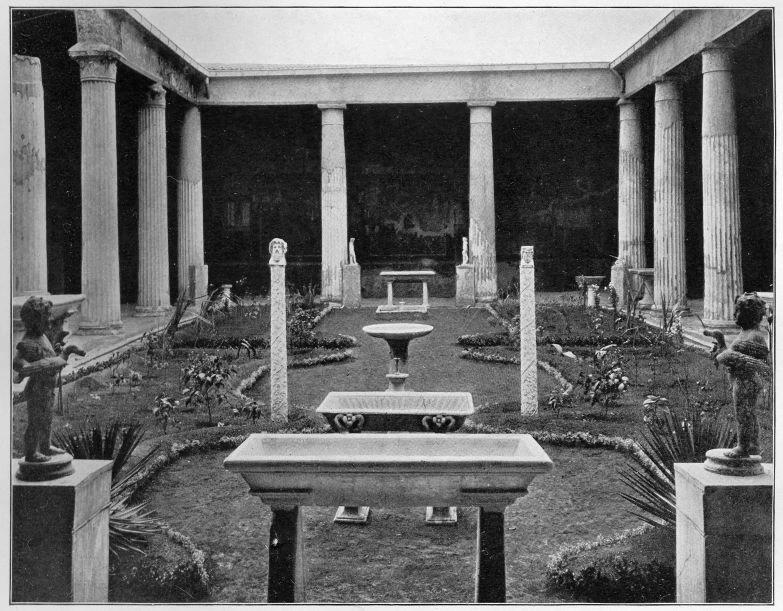
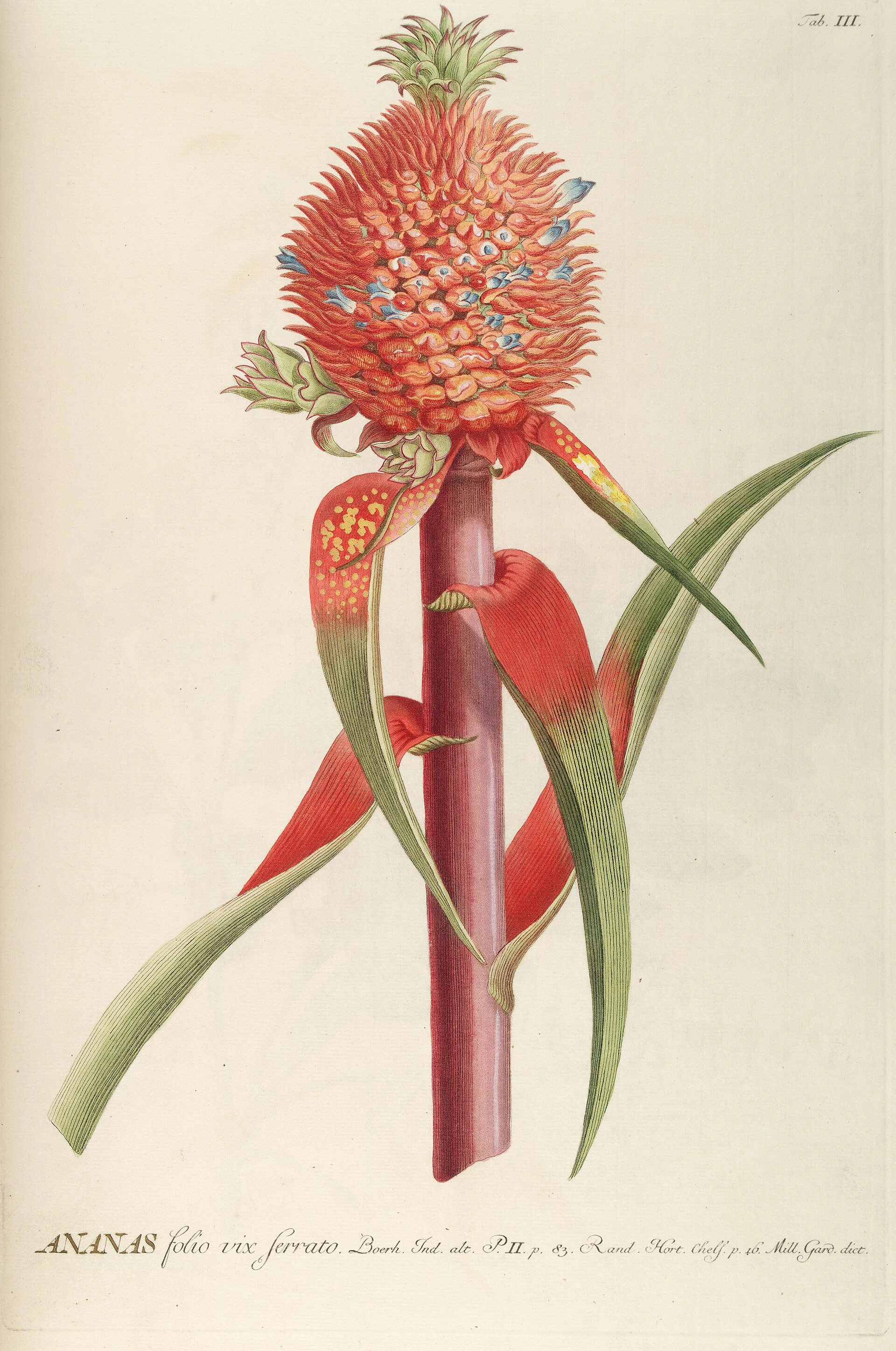
The Peristyle Of The House Of The Vettii At Pompeii
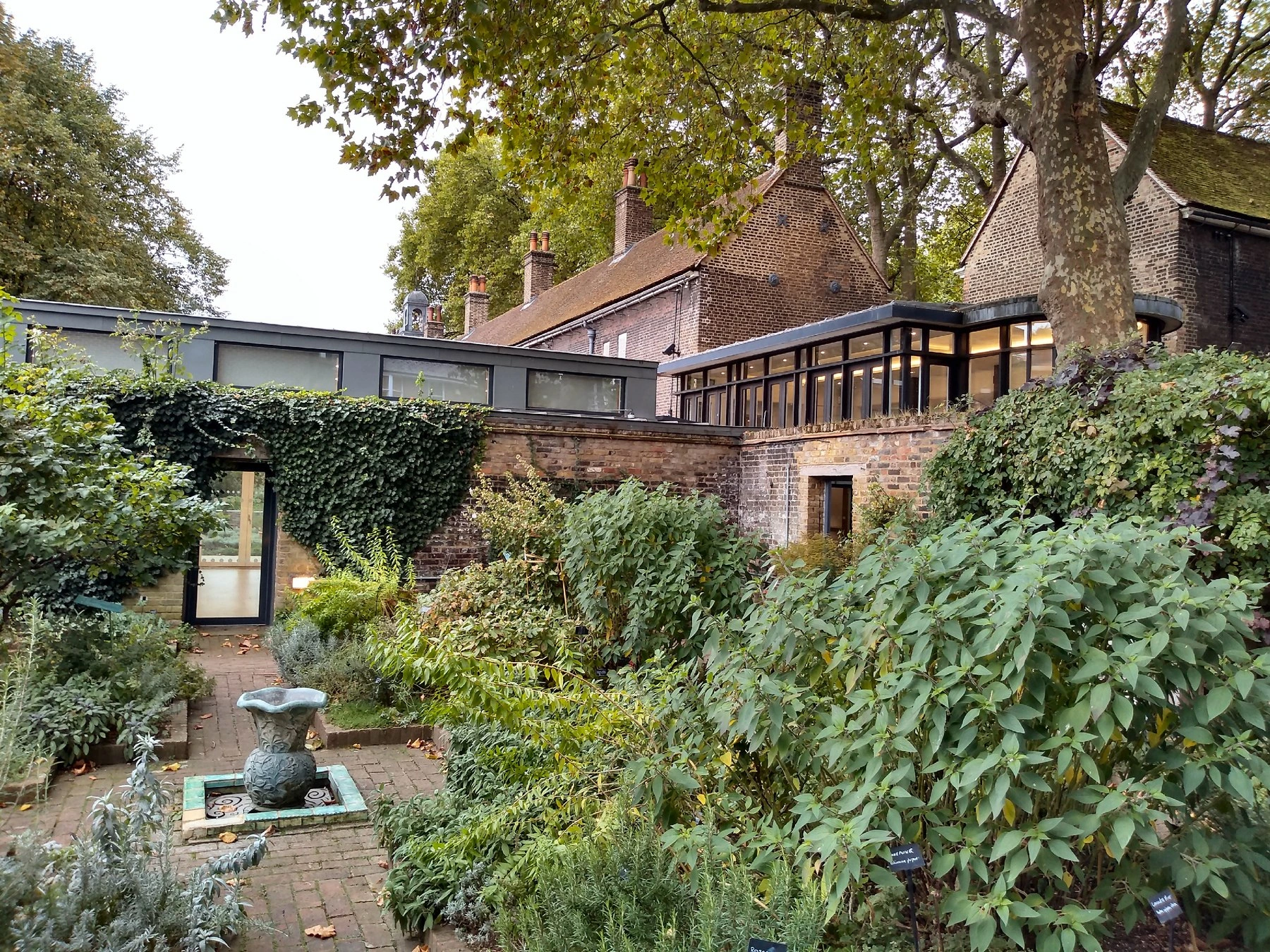
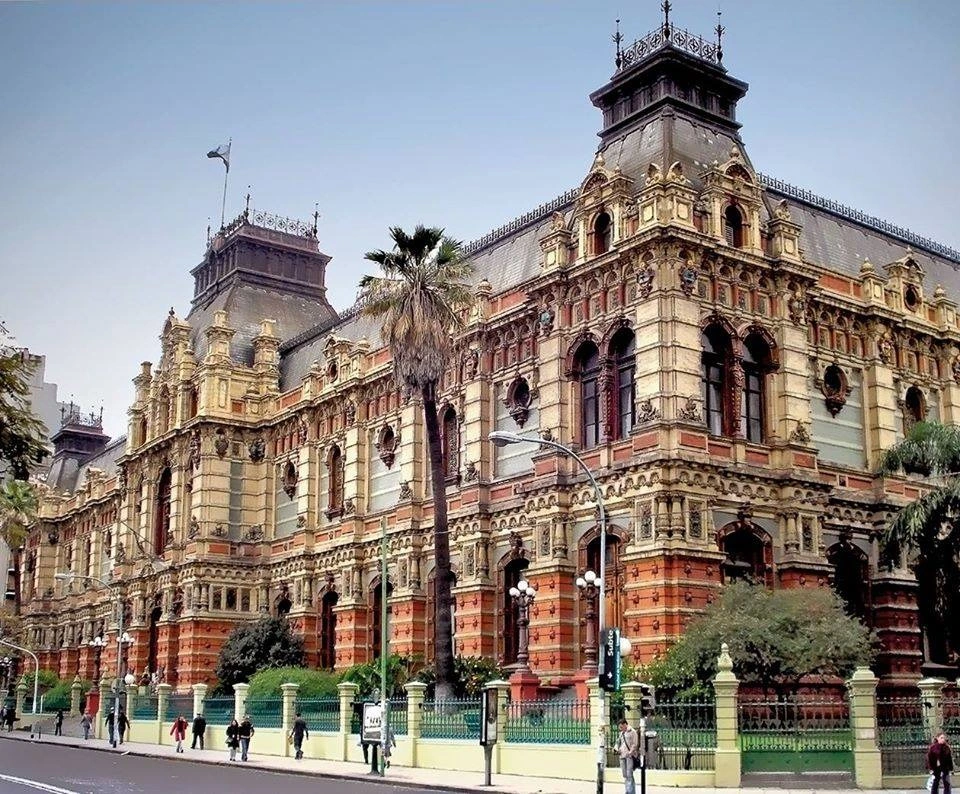
Vitruvius, The Ten Books on Architecture, Morris Hicky Morgan translation, Harvard University Press, 1914; illustrations prepared under Herbert Langford Warren. Photograph credited to Sommer.
1914 source publication; Project Gutenberg lists the edition as public domain in the UnitedStates.
Vitruvius: The Ten Books on Architecture, 1914 translation
Vitruvius, Book VI: the house, climate and atrium forms
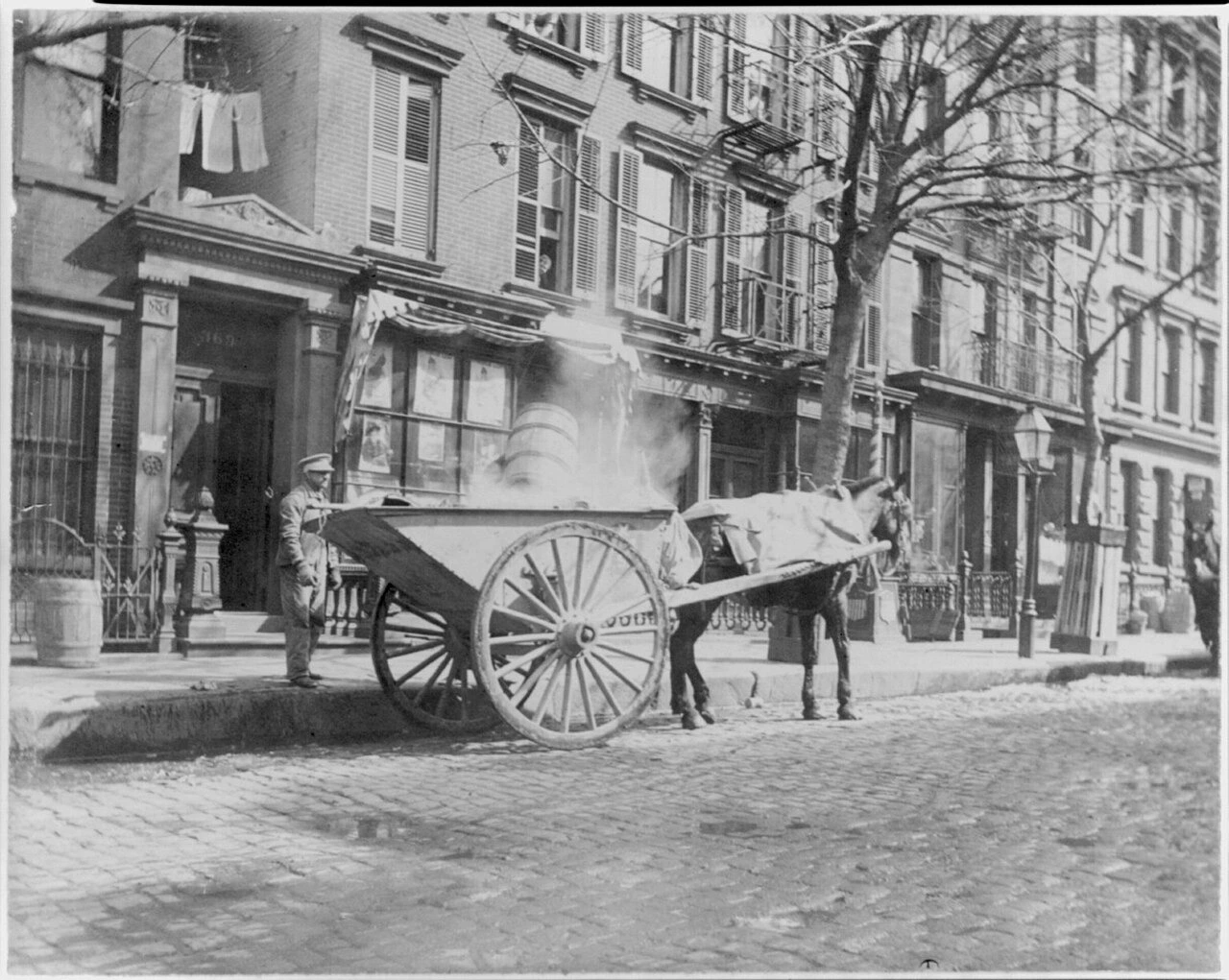
Orchard street: a yard behind the facade
A specific nineteenth-century building shows why shared infrastructure belongs in a housing plan
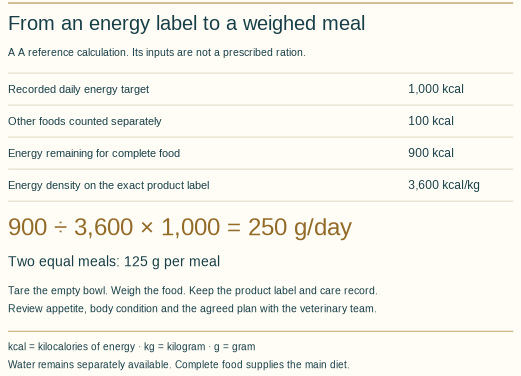
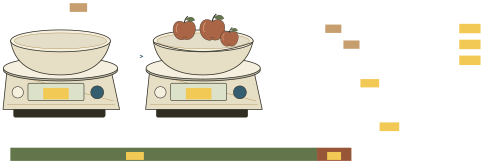
Use the daily energy target agreed with the veterinary team and the calorie density of the exact food. The starting values below reproduce the book’s illustrative calculation; they are not a ration for an individual dog.
(Daily target − other foods) ÷ kcal/kg × 1,000 = grams of complete food per day.
kcal: kilocalories, a unit of energy. kg: kilogram. g: gram. Water remains separately available. The calculator does not establish nutritional adequacy or a medical diet.
Key
Small-print annotation
A
One invented adult-dog example · water remains separately available
All six household breeds in these estate plans can use a complete food appropriate to their life stage and health. Dry kibble and canned complete food are practical formats; the nutritional adequacy and actual intake matter more than the format. A label stating “complementary” or “for intermittent feeding” does not describe a sole diet. Keep the label, energy density, lot and expiry date with the care record. [N03, N06]
Can the dog eat real meat?
A small portion of plain cooked, boneless meat can be an extra for a dog that tolerates it, counted within the agreed treat allowance. A meat-only diet is not balanced. A full home-cooked ration needs a veterinary nutritionist’s recipe including the specified mineral and vitamin provision; changing ingredients by eye can unbalance it. Raw meat adds bacterial exposure to the dog and people handling the food. Cooking a piece of meat does not, by itself, turn a home recipe into a complete diet. [N03, N04]
1. Set the target. Ask the veterinary team to record the individual’s daily energy target and whether it applies to its current growth, weight or medical needs. The illustrated 1,000 kcal is invented solely to teach the arithmetic.
Units and terms
g gram, 0.001 kilogram · = equals · × multiplied by · ÷ divided by
g gram, 0.001 kilogram
Sources for this account
Cornell Riney Canine Health Center: re-evaluating your dog’s diet
These public prices were checked on 15 November 2026. They are location-specific offers, not national averages or guarantees of behavioural results. A “session” varies in length, format and follow-up. Prices do not establish the trainer’s suitability for a particular difficult case.
Provider / place Published service Original price
Filosofía Animal · CABA/Buenos Aires
4 home visits, each 1.5-2 h, team educator
ARS 440,000; ARS 374,000 with stated prepayment discount
PetSmart · US listed store 6-week group class; 4 private hours USD 149 group; USD 259 private package; USD 89 single private hour
HaSidoElPerro · Madrid 4 sessions; first 1.5-2 h, later typically 1-1.5 h
EUR 230 package; EUR 75 first / 65 later single sessions
Filosofía Animal lists travel outside CABA and some parking separately. CustosClub recommends at least six individual classes and continuing practice at home. PetSmart availability is store-dependent. Confirm Madrid tax and travel treatment because the quoted page does not establish every additional charge. Keep those exclusions in the budget. [TP1-TP4]
What a trainer costs, and what the fee buys (continued)
Read the estate training tables
The individual estate tables price an editorial four-, six- or eight-visit purchasing scenario. They do not predict how many lessons a dog will need. Argentina uses CustosClub’s four-visit package plus two singles for six, or its eight-visit package. The US uses four private hours plus single hours; Madrid uses four sessions plus later singles. Thus duration and service differ across countries. Confirm package combinations with the provider before relying on them.
Units and terms
h hour, 60 minutes · ARS Argentine peso · min minute, 60 seconds · US United States · USD United States dollar · EUR Euro · CABA Ciudad Autónoma de Buenos Aires
Sources for this account
Filosofía Animal: home education prices, CABA and Buenos Aires
1. Describe the actual problem. Send a written summary of the site, dog, carers and specific objective. Mention chasing, bites, fear or medical concerns honestly so the provider can assess suitability and referral.
2. Ask how the work is done. Request the methods, session length, owner participation, follow-up, cancellation terms, travel and total taxes. Choose reward-based methods and a written practice plan, rather than a promise of instant protection.
3. Budget the owner’s practice. Paid sessions teach the carers as well as the dog. Record the time spent practising between visits; it remains labour even when no trainer invoice is issued. Reassess after the agreed review point.
Read the illustration’s labels
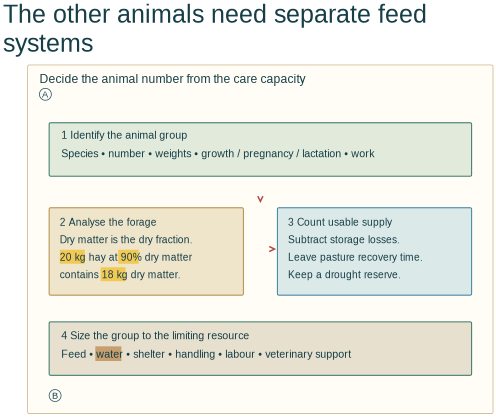
The other animals need separate feed
systems
Decide the animal number from the care capacity
1 Identify the animal group
Species • number • weights • growth / pregnancy / lactation • work
2 Analyse the forage
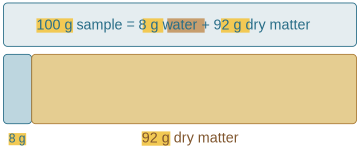
Dry matter is the dry fraction.
20 kg hay at 90% dry matter
contains 18 kg dry matter.
3 Count usable supply
Subtract storage losses.
Leave pasture recovery time.
Keep a drought reserve.
4 Size the group to the limiting resource
Feed • water • shelter • handling • labour • veterinary support
A
B
Key
Small-print annotation
A
Worked planning diagram · a local livestock adviser supplies the ration and forage assumptions
B
An attractive estate picture cannot establish hectares, forage yield or stocking rate.
Units and terms
h hour, 60 minutes · ARS Argentine peso · min minute, 60 seconds · US United States · USD United States dollar · EUR Euro · CABA Ciudad Autónoma de Buenos Aires
kg kilogram, a mass unit · % percent, parts per hundred
The other animals need separate feed systems (continued)
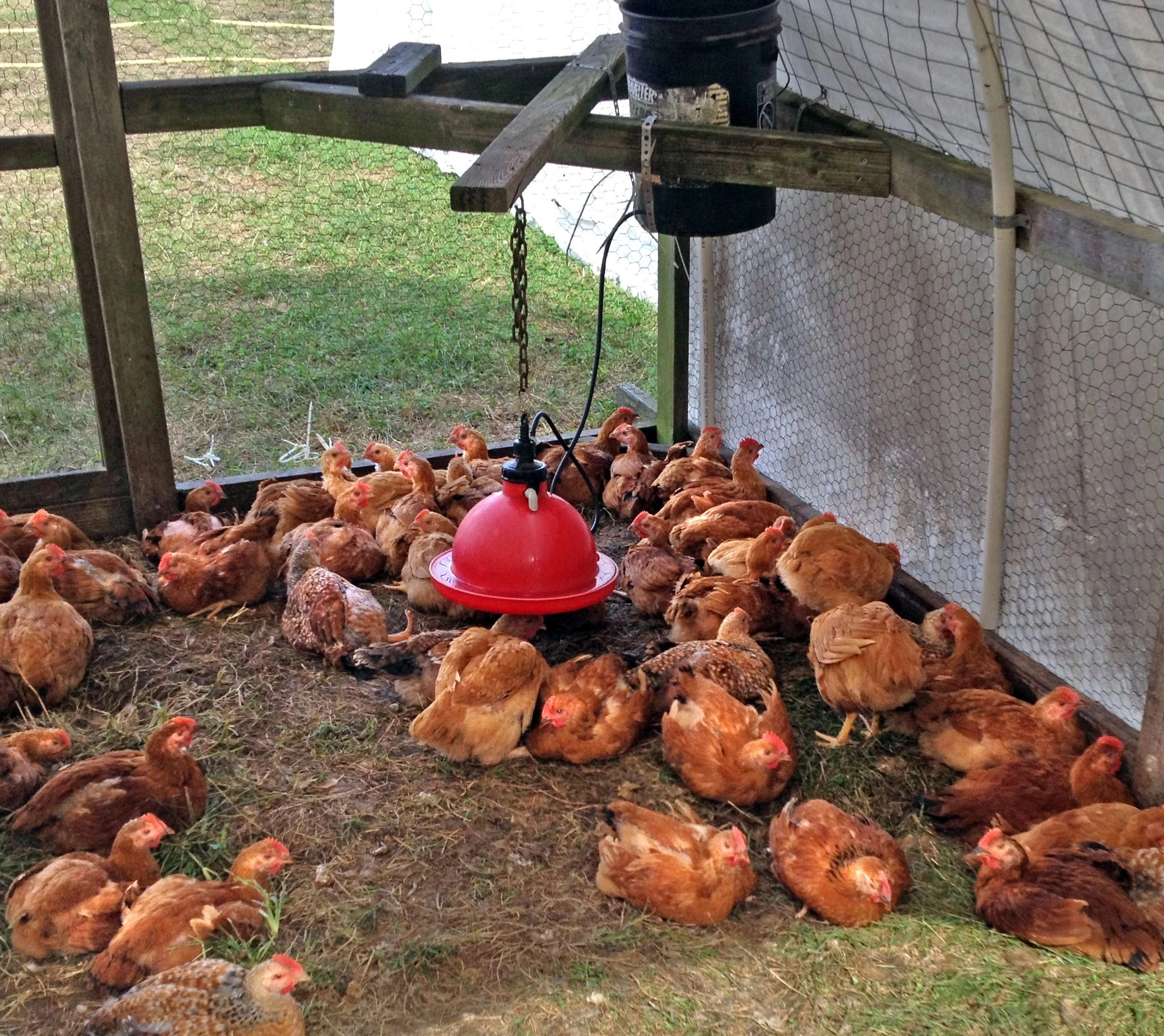
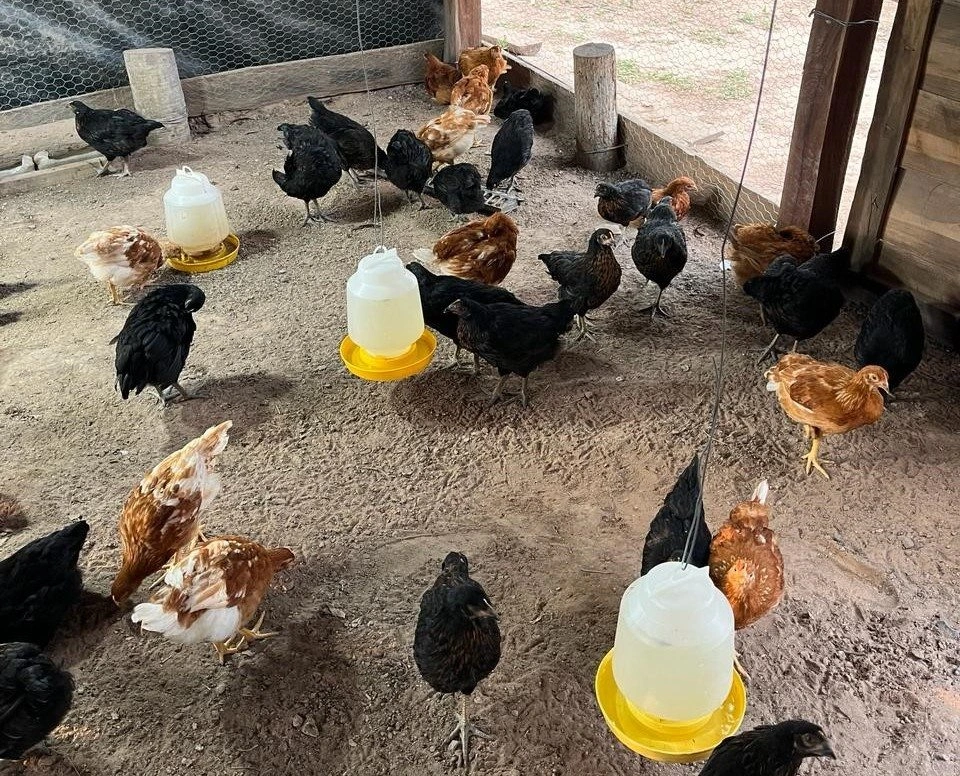
Chicks, growing pullets and laying hens have different feed requirements. Complete poultry feeds are practical for a small flock; provide the formulation appropriate to the stage. A basket of scraps is not the primary ration. Keep clean water and a dry, pest-resistant store, and do not let dogs or wild birds share the feeder. [L02]
Sheep and goats: forage and species-specific minerals
Have forage analysed and balance the ration for the animal’s size and production stage. Do not exchange sheep and goat mineral mixes casually: goat diets generally need more copper, while excess copper can harm sheep. Grain changes and high-grain diets need particular care for rumen health. A goat is not a no-cost lawn mower. [L03]
Horses: forage first, with individual assessment
University of Minnesota guidance puts most mature horses around 1.5-2.5% of body weight daily in forage, with the full ration adjusted for the horse. Fresh water, teeth, body condition and gradual feed changes matter. A 500 kg horse at an assumed 2% gives 10 kg/day for a planning calculation; have the adviser specify dry-matter versus as-fed basis and actual forage quality before buying that amount as a ration. [L01]
The other animals need separate feed systems (continued)
Cattle: production changes the account
A nonlactating cow, growing animal and high-yield dairy cow do not have interchangeable requirements. A balanced ration must account for the moisture in each ingredient and whether animals sort or leave parts of the feed. Weighing “one bucket” without its contents and dry matter does not establish intake. [L05]
Alpacas: a compatible group, not a lone ornament
For adult camelids under basal conditions, Merck describes dry-matter intake around 1.8-2% of body weight. This is a reference range, not an instruction to feed the same amount to every pregnant, lactating, growing or unwell animal. Assess body condition by touch as well as appearance under the fibre, and use species-appropriate forage and minerals. [L04]
Raptors are meat-eating specialist birds, but random supermarket meat is not a complete falconry feeding plan. The competent falconer and avian veterinarian specify food, hygiene and monitoring. Parrots, tortoises and koi have different species and environmental requirements; none belongs on a generic “exotic pet” ration. Their acquisition remains a separate feasibility decision in the following chapters.
Units and terms
kg kilogram, a mass unit · % percent, parts per hundred
% percent, parts per hundred · kg kilogram, a mass unit
Sources for this account
University of Minnesota Extension: feeding the mature horse
Cats may catch mice, small rodents, birds, reptiles and invertebrates, but individual hunting behaviour varies. There is no responsible breed table promising that a Maine Coon removes large rats or a Siamese clears a barn. Releasing more cats can harm wildlife without solving the original food-and-shelter problem.
Parsons and colleagues observed cats and Norway rats at an urban site in 2018. Their study found very limited observed predation and changes in rat space use. It was one field study, not a claim that no cat ever catches a rat. It does show why “there are cats here” is not adequate evidence that an infestation is controlled.
1. Remove access to feed
Store grain and pet food in sound closed containers; clean spills; protect waste; repair leaks. Keep feeding stations away from the secure food store.
2. Inspect the building
Check doors, vents and service entries. CDC notes that mice can pass through gaps around 6 mm wide. Use durable, appropriately installed exclusion materials; preserve necessary ventilation and fire safety.
3. Monitor and control
Use a dated inspection map and suitable protected traps placed by a competent person where cats, dogs and children cannot reach them. Coordinate any rodenticide use with a professional because poisoned rodents can expose other animals.
4. Measure success
Record droppings, gnawing, trap captures and new entry points over time. A cat sitting in the yard is not the measurement.
The cat’s food allowance must never be cut to make it hunt. Hunting does not supply a balanced ration and can expose the animal to parasites, injury and poisons. Keep routine parasite prevention and veterinary advice appropriate to the actual exposure.
Units and terms
mm millimetre, 0.001 metre
% percent, parts per hundred · g gram, 0.001 kilogram · = equals · ÷ divided by
A cat diet begins with a complete food, not a breed recipe
Read the illustration’s labels
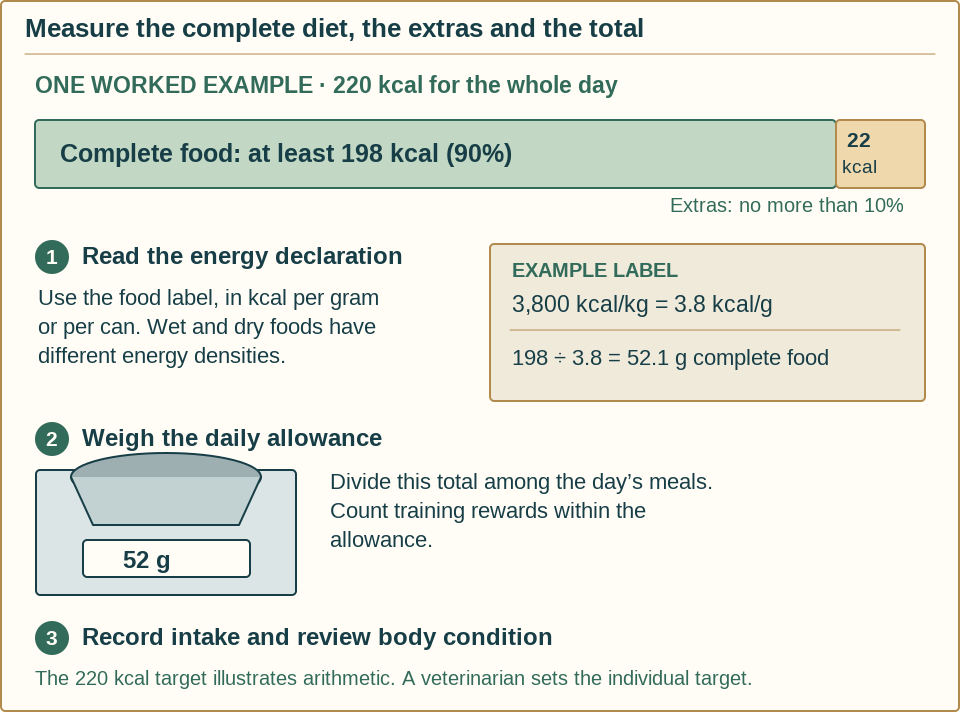
Measure the complete diet, the extras and the total
ONE WORKED EXAMPLE · 220 kcal for the whole day
Complete food: at least 198 kcal (90%)
22
kcal
Extras: no more than 10%
1
Read the energy declaration
Use the food label, in kcal per gram
or per can. Wet and dry foods have
different energy densities.
EXAMPLE LABEL
3,800 kcal/kg = 3.8 kcal/g
198 ÷ 3.8 = 52.1 g complete food
2
Weigh the daily allowance
52 g
Divide this total among the day’s meals.
Count training rewards within the
allowance.
3
Record intake and review body condition
The 220 kcal target illustrates arithmetic. A veterinarian sets the individual target.
Cats are obligate carnivores with specific nutrient needs. A complete food appropriate to the life stage can be wet, dry or a compatible mixture. Muscle meat alone is not nutritionally complete. A home-cooked staple diet requires a qualified veterinary nutrition formulation, including its exact ingredients and supplements; “meat plus vegetables” is not a substitute.
Breed matters indirectly through body size, coat-related grooming, inherited conditions and the individual’s activity. It does not establish a different safe-fruit list for every pedigree. Use the veterinarian’s calorie target, body-condition assessment and the product’s energy density. Kidney disease, urinary disease, diabetes, allergies, pregnancy and growth can require a different diet.
Food
How it can fit
What to avoid
Complete wet cat food
Check the life-stage adequacy label and kcal per pouch/can.
Do not confuse complementary treats with a complete staple.
Complete dry cat food / kibble
Weigh the portion in grams; supply fresh water.
A cup is imprecise; a dog-food label is not a cat-food specification.
Plain cooked chicken or turkey
Small boneless, unseasoned extras within the daily calorie allowance.
Raw poultry, skin/fat-heavy scraps, bones, sauces and onion/garlic seasoning.
Plain cooked lean beef
Small boneless pieces if tolerated.
A whole-meat daily diet or salty cured meats.
Cooked fish
Occasional boneless, unseasoned extra.
Raw fish, bones, or tuna as the sole diet.
Cooked egg
A small fully cooked unseasoned extra if tolerated.
Raw egg and replacing balanced meals with eggs.
Units and terms
% percent, parts per hundred · g gram, 0.001 kilogram · = equals · ÷ divided by
Vegetables and fruit: optional tastes, carefully counted
Optional food
Preparation
Use in the plan
Pumpkin or carrot
Plain cooked pumpkin flesh or soft cooked carrot, chopped or mashed.
Offer a very small taste; no pie filling, sugar or seasoning.
Peas or green beans
Plain cooked, small soft pieces.
Optional, not a required replacement for animal-source nutrition.
Blueberry
Washed; cut or crush as appropriate to the cat.
A tiny taste if interested; count it with other extras.
Apple flesh
Wash, peel if needed; remove core and seeds; tiny pieces.
No seeds or sweetened preparations.
Melon flesh
Remove rind and seeds; tiny soft pieces.
Optional treat; not a hydration or nutritional treatment.
Banana
A very small peeled piece.
Energy-dense relative to a tiny cat treat allowance; not a daily necessity.
Start with a small taste of one new food, not a bowl of mixed fruit. Stop if it causes vomiting, diarrhoea or refusal of normal meals. Many cats simply do not want vegetables or fruit; there is no need to persuade them when their complete diet meets their needs. Cats on a therapeutic diet may need to avoid extras entirely.
Keep these out of the bowl
Do not offer onion, garlic or related alliums; chocolate, caffeine or alcohol; grapes or raisins; raw dough; raw meat or bones; or fruit stones and hard cores. Do not treat milk as a requirement. Human sauces and leftovers can contain harmful ingredients even when the main meat is suitable. For a suspected ingestion, contact a veterinarian promptly rather than attempting a home remedy.
All extras together should usually stay within 10% of the daily energy allowance; use a lower allowance or none if advised for the individual. Vegetables and fruit are not “detox”, parasite treatment or a way to balance an otherwise incomplete meat diet. The daily plan on the next page shows how to subtract treats from the staple food.
Units and terms
% percent, parts per hundred · g gram, 0.001 kilogram
Worked example only: an adult cat has a veterinarian-set target of 220 kcal/day. The chosen complete wet food supplies 0.9 kcal/g and the complete dry food supplies 3.8 kcal/g. These label values are assumptions for arithmetic; replace them with the products actually bought. They are not a universal prescription for a four-kilogram cat or any breed.
Daily allocation
Amount
Energy
Morning complete wet food
75 g
67.5 kcal
Evening complete wet food
75 g
67.5 kcal
Measured complete dry food, split for feeding/play
20 g
76 kcal
Maximum extras in this example
Up to 9 kcal total
9 kcal
Total
150 g wet + 20 g dry + measured extras
220 kcal
This plan leaves 9 kcal for extras, below the 22 kcal ten-percent ceiling. If no extras are offered, add 10 g of the assumed wet food or about 2.4 g of the assumed dry food. If a treat has 3 kcal, three such treats use the whole 9 kcal allowance. Measure the food with a gram scale; the exact conversion is energy divided by kcal per gram.
Day
Optional extra, within 9 kcal
Record
Monday / Thursday
Tiny plain cooked chicken portion
Weighed amount and known energy value.
Tuesday / Friday
No extra, use staple-food replacement above
Appetite and water availability.
Wednesday
Tiny cooked pumpkin or carrot taste if tolerated
No need to repeat if rejected.
Saturday
Small suitable fish or egg taste
Boneless, fully cooked, unseasoned.
Sunday
No new food; review the week
Weight trend, body condition, stool and any vomiting.
The optional rotation is enrichment, not a nutritional requirement. Keep the staple diet consistent and change foods gradually according to veterinary/product guidance. A growing kitten, nursing queen, underweight cat or sick animal needs a separately calculated plan. Do not impose a weight-loss diet on your own or let a cat go without food to force acceptance.
Units and terms
% percent, parts per hundred · g gram, 0.001 kilogram
P1 Source investigation and supply: $30.0k-150.0k P2 Storage allowance, assumed 20 m3: $6.0k-16.0k P3 Treatment allowance: $20.0k-100.0k P4 Wastewater completion allowance: $20.0k-100.0k P5 Estate distribution and communications: $80.0k-240.0k P6 Fire-service water provision: $40.0k-150.0k P7 Site drainage beyond priced roads: $40.0k-150.0k
Forest access before luxury finishes
The long service route links animals, food growing and accommodation. Keep manure, workshop deliveries and visitors on distinct daily routes. The image shows only one obvious entrance; a site review must test emergency access and wildfire evacuation.
Day and night responsibilities
Day: inspect access and water/energy alarms; handle deliveries; separate food, livestock and waste routes; complete scheduled maintenance. Night: check routes and gate release; shield lights; secure service areas; assign emergency contacts. This is not a 24-hour staffed security commitment.
Open prices: No additional labelled feature is unpriced, but the global exclusions still apply.
Forest-Edge Estate: Argentine Pesos
Retained scenario conversion
The original worksheet used ARS 1,540 per USD. ARS means Argentine peso and USD means United States dollar. All amounts in this table are millions of pesos, including annual care. These are dated planning allowances, not a current market quotation.
Component
Build / ARS million
Care / ARS million per year
1. Security gate
30.800 to 92.400
0.616 to 3.696
2. Gate-side cabin
92.400 to 184.800
0.924 to 3.696
3. Perimeter wall
277.200 to 831.600
1.386 to 12.474
4. Internal access road
431.200 to 862.400
4.312 to 21.560
5. Utility workshop
415.800 to 831.600
4.158 to 20.790
6. Service vehicles and yard
123.200 to 385.000
6.160 to 38.500
7. Equestrian barn and pen
323.400 to 808.500
4.851 to 24.255
8. Roof solar panels
92.400 to 161.700
0.924 to 3.234
9. Livestock barn
147.840 to 369.600
2.218 to 11.088
10. Poultry coop and run
30.800 to 86.240
0.616 to 3.450
11. Fruit orchard
11.550 to 30.800
0.462 to 2.464
12. Vegetable gardens
30.800 to 92.400
1.232 to 7.392
13. Greenhouse complex
115.500 to 385.000
2.310 to 15.400
14. Guest houses
2,310.000 to 4,620.000
23.100 to 92.400
15. Main lodge
2,695.000 to 5,390.000
26.950 to 107.800
16. Terraces and connecting paths
43.120 to 107.800
0.431 to 2.695
17. Forest edge and planted grounds
46.200 to 154.000
1.848 to 12.320
BUILD ENVELOPE ARS M 10,385.490 to 26,862.528 ANNUAL FUND ARS M 673.773 to 1,745.005
Totals include service/fee/contingency or staffing/reserve allowances beyond the rows. Unpriced items remain excluded.
Units and terms
k (currency) thousand, 1,000 of the stated currency · m (currency) million, 1,000,000 of the stated currency
ARS Argentine peso
BY-SA Creative Commons Attribution-ShareAlike
Sources for this account
open source P2 · open source Chapter contents Continue reading
01. Forest-Edge Estate: animals, feeding and daily care
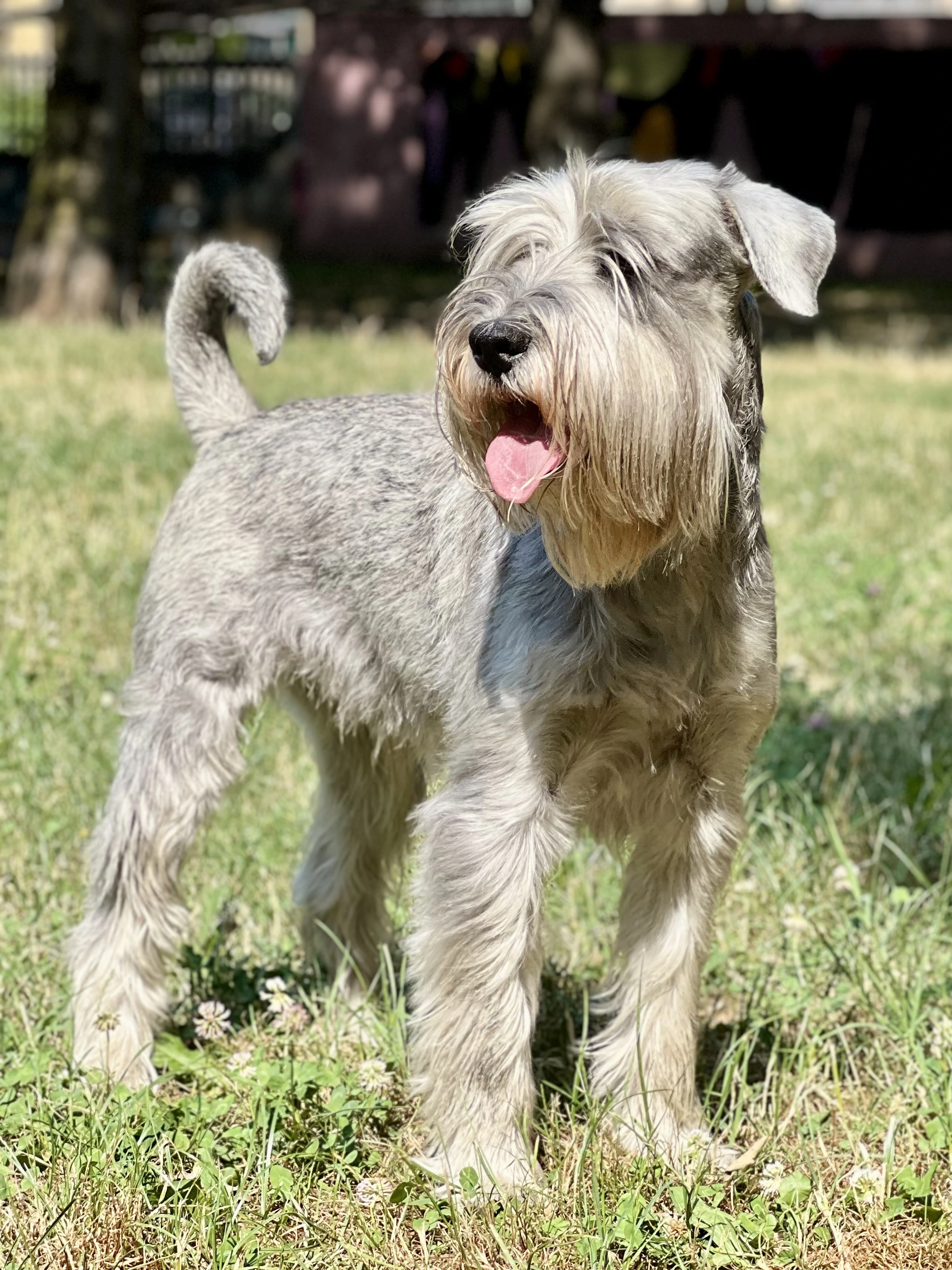
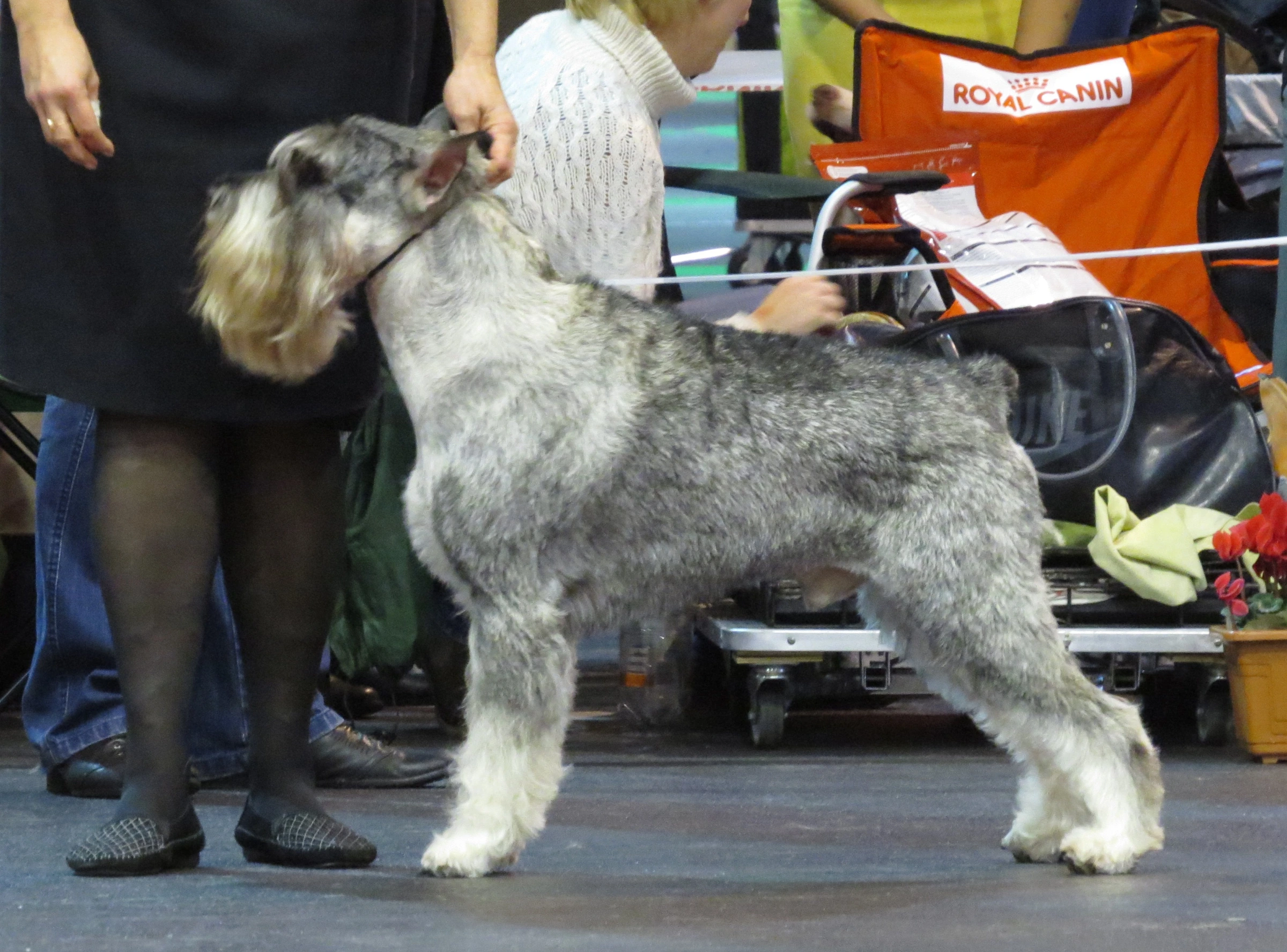
Standard Schnauzer: a distinct documented breed photograph for estate 01. The individual shown is not offered for sale or certified as a trained guard. LoProject09 · 2025-06-29 16:43:00 · CC BY-SA 4.0.
Standard Schnauzer · household alert
Starting number: 1 household dog; 0 livestock guardians initially. Keep the dog inside the home-and-service fence; leave the woodland outside its patrol area.
Starting livestock: 6 laying hens initially; 0 cattle; 0 horses. A forest edge needs a wildlife boundary, not dogs allowed to patrol the woodland. Put a roofed, predator-resistant poultry run near the daily service route. Keep feed in sealed storage and clear spilled grain. A domestic dog belongs behind a separate fence when it has not been trained around birds.
Set up before arrival
1. Make the route work.
Walk the forest fence with the handler and photograph gaps, fallen branches and wildlife access. Repair the boundary before the dog arrives.
2. Prepare one complete kit.
Use the illustrated one-dog kit: two bowls, fitted harness and lead, fitted transport crate, dry bed, identity and veterinary record. Specify two secure gates for the entrance routine where the site layout permits it. Measure fence length and openings on site; no generic metre quantity is claimed.
3. Test the normal day.
Walk deliveries, household departures and cleaning through the plan. Put the dog in its quiet refuge before a visitor enters. Introduce known people and animals gradually with a competent handler; stop and reassess if the individual dog is distressed or chasing livestock.
Read the illustration’s labels
Recall on the home side of the forest fence
Site-specific teaching drawing • use the numbered explanation in the lesson
WOODLAND • outside the home enclosure
HOUSE
Shade + rest
Hens
Arrival
1
2
4
3
ESTATE 01
READ THE NUMBERS
1 Keeper at the house
2 Shaded home refuge
3 Two-stage arrival
4 Separate poultry run
REHEARSE THE ROUTE
Walk inside the fence.
Return toward the
house.
Wildlife stays outside.
TAKE ON THE SITE WALK
Gate checklist • harness and lead • wildlife-gap record
Original care-route schematic • not a survey, measured plan or security guarantee
Read the numbered drawing
The keeper starts at 1, walks the inner fence route and returns to the shaded refuge at 2. Visitors enter through the two closed-in-turn gates at 3. The poultry run at 4 has its own service approach; the woodland beyond the boundary is not the dog’s physical activity ground.
Livestock and a second phase
A small enclosed flock of 4 sheep is a possible second phase only after a forage and parasite plan. A Maremma or Pyrenean guardian can be considered for that flock after a local predator assessment and a supervised introduction. Do not buy a puppy expecting immediate protection. If the stated sheep phase goes ahead, assess one properly reared Maremma-type livestock guardian with the flock adviser. The household dog remains separate. A second guardian needs a demonstrated workload and compatible working team, not a fixed dog-per-hectare rule.
The earlier 80 m²poultry area, 0.5 ha orchard and 1,000 m² vegetable plot are scenario inputs. They do not establish feed supply for cattle or horses. Exclude goats from young trees and fence the orchard before any grazing trial.
A recall away from the woodland
Start in the enclosed garden with no wildlife visible. Reward a turn toward the keeper, then a short return. On later walks keep a long line on the harness and practise before the dog fixes on a scent. The forest fence remains closed even after the cue improves.
Meals and rewards on this site
Weigh the daily allowance before walks and put the training portion in a separate pouch. Every person who rewards the dog draws from that pouch; biscuits from several workers otherwise disappear from the food record.
Care for the other animals
The six-hen start needs a locked night house, complete layer feed and its own water. The possible four-sheep phase needs a forage account before purchase. The guardian, if later justified, eats complete dog food at a station that sheep cannot enter.
Training purchase and care budget
Use 6 visits as this scenario’s initial purchasing allowance, then review progress with the trainer. It is an editorial allowance, not a forecast of treatment duration. The agenda above gives the trainer a specific route to inspect.
Training purchase example
Local amount
Currency comparison
Argentina · 6 individual visits
ARS 250,000
USD 159.24 / EUR 141.24
US · 6 private hours
USD 437
ARS 686,090 / EUR 387.62
Madrid · 6 sessions
EUR 360
ARS 637,200 / USD 405.86
Observed 15 November 2026. Services and session lengths differ; see “What a trainer costs” for package arithmetic, locations and exclusions. Add the actual dog’s food forecast, veterinary care, grooming, gates, refuge, transport and keeper time. Missing quotes stay visible in the offline ledger; the training subtotal is not the annual total.
Falcons or other unusual animals here
No falcon beside the poultry run. A later specialist bird facility needs a separate controlled area and handler; the forest edge is not a release site.
The cat belongs to this estate too
1 assessed adult, or 2 already-compatible cats. Choose temperament, health and tolerance of this household rather than buying a pedigree as a pest-control guarantee. Forest-edge wildlife and ticks: enclosed outside access; no hunting release.
Provide one carrier, two litter trays for one cat, separate food and water points, a scratching surface and a quiet hide. For two compatible cats, provide at least three trays and separated resources. Keep dog introductions controlled; protect chicks, small livestock and fish behind suitable barriers.
Feeding at this property
Use complete cat food for the life stage: wet, dry kibble or a measured combination. Plain cooked boneless chicken, turkey, lean beef, fish or egg can be small extras; muscle meat alone is not a balanced staple. Tiny plain pumpkin, carrot, peas or green beans, or seedless apple/melon flesh, are optional if tolerated. Do not offer alliums, grapes, raisins, chocolate, alcohol, bones or seasoned scraps.
There is no safe-fruit list unique to a breed. Set calories from this individual’s veterinary assessment and the actual food label. The worked adult example in the common feeding guide allocates 75 g wet food morning and evening plus 20 g dry, using assumed 0.9 and 3.8 kcal/g: 211 kcal, leaving 9 kcal within a 220 kcal plan. Replace these assumed values before feeding; kittens, nursing or ill cats need a different plan.
Care from arrival through old age
Before arrival, agree the main carer and backup. For kittens or puppies, follow the veterinarian’s growth and vaccination plan and introduce handling gently. Use brief reward-based sessions for carrier, lead or harness, recall and settling. Adult routines include daily appetite, water, toilet and behaviour checks. In old age, lower difficult routes, review pain or mobility changes and reassess diet with the veterinarian.
Authored reserves, 15 November 2026, not quotes. Exchange basis: ARS 1,570/USD and ARS 1,770/EUR. Food, veterinary care, enclosure work, animal purchase/adoption and delivery remain separate. The preceding dog table records the site’s dog-coaching scenario; do not silently add cat reserves as quoted services.
Keep rodent control based on sealed feed, cleaned spills, excluded entry and monitored traps inaccessible to animals. A cat may hunt small prey but is not a reliable or safe solution for a wild-rat infestation. Any falcon or other regulated wildlife needs a separately lawful, specialist facility; the estate’s food and pet routes do not become a release area.
Units and terms
BY-SA Creative Commons Attribution-ShareAlike
m² square metre, an area unit · ha hectare, 10,000 square metres · ARS Argentine peso · USD United States dollar · EUR Euro · US United States
g gram, 0.001 kilogram · ARS Argentine peso · USD United States dollar · EUR Euro
02. Formal Courtyard Estate: animals, feeding and daily care
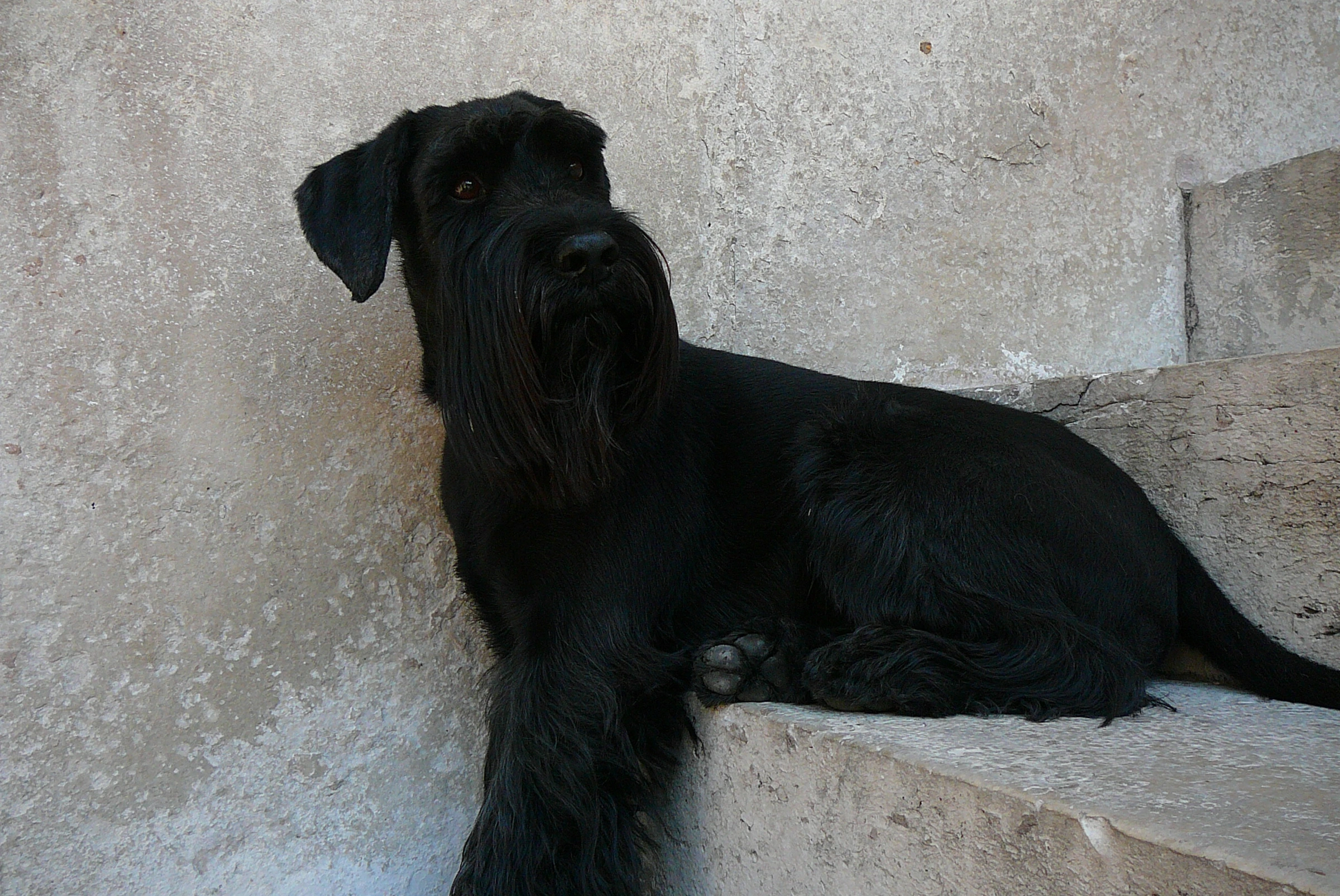
Standard Schnauzer: a distinct documented breed photograph for estate 02. The individual shown is not offered for sale or certified as a trained guard. Arthur Pons · 2012-08-14 · CC BY-SA 3.0.
Standard Schnauzer · household alert
Starting number: 1 household dog; 0 livestock guardians initially. Use a quiet side-room or enclosed garden during deliveries, dining and public courtyard visits.
Starting livestock: 0 grazing livestock; optionally 4 hens in a separate service garden. Use gates, lighting and a named visitor route for the courtyard. A calm adult dog with a known history around visitors may alert the household, but it should have a quiet retreat and a handler. Keep it out of the public entrance during deliveries.
Set up before arrival
1. Make the route work.
Rehearse the arrival routine without the dog: close the inner gate, admit the visitor, then release the dog only under its handler’s control.
2. Prepare one complete kit.
Use the illustrated one-dog kit: two bowls, fitted harness and lead, fitted transport crate, dry bed, identity and veterinary record. Specify two secure gates for the entrance routine where the site layout permits it. Measure fence length and openings on site; no generic metre quantity is claimed.
3. Test the normal day.
Walk deliveries, household departures and cleaning through the plan. Put the dog in its quiet refuge before a visitor enters. Introduce known people and animals gradually with a competent handler; stop and reassess if the individual dog is distressed or chasing livestock.
Read the illustration’s labels
Let guests cross the court while the dog rests
Site-specific teaching drawing • use the numbered explanation in the lesson
HOUSEHOLD
ARCADE
GUEST WING
PUBLIC COURT
Rest
Kitchen
delivery
Dog rests in side-room before guests enter.
1
2
3
4
ESTATE 02
READ THE NUMBERS
1 Household rooms
2 Quiet side-room
3 Entrance vestibule
4 Kitchen service route
REHEARSE THE ROUTE
Settle before arrival.
Guests follow the
arcade.
Keep food service
separate.
TAKE ON THE SITE WALK
Resting mat • reward portion • delivery rehearsal log
Original care-route schematic • not a survey, measured plan or security guarantee
Read the numbered drawing
Read the plan as a courtyard with four wings. The household is 1 and the quiet side-room is 2. The dog rests behind that room’s barrier while a visitor passes through vestibule 3 into the public court. Kitchen deliveries use service route 4 instead of crossing the refuge.
Livestock and a second phase
Hens belong beyond the guest court in a secure run with washable equipment. Add no cattle or horses unless a separately measured farm parcel, daily stock worker and manure route are part of the estate. No livestock guardian is included in this starting plan. Adding cattle, horses or decorative grounds does not automatically create a guardian-dog requirement.
An attractive enclosed court is not a paddock. Repeated hard surfaces, flower beds and kitchens create conflict with roaming birds, manure and dog traffic. Count cleaning and supervision as daily work.
A settled dog during courtyard arrivals
Place the mat in the side room while the court is empty. Reward quiet resting; next have one familiar helper approach the outer gate. Keep the inner barrier shut. Rehearse a delivery with an empty trolley before adding a real guest or meal service.
Meals and rewards on this site
Keep the feeding station behind the household gate and clear all dining scraps. Record treats given by visitors or staff. A Schnauzer does not need a special vegetable mixture: small plain carrot or green-bean pieces are optional within its agreed allowance.
Care for the other animals
Start with no grazing animals. Ornamental planting is not pasture. If hens are later proposed, first find a separate washable service route and resolve noise, pests and local permission; do not put a coop inside the dining court.
Training purchase and care budget
Use 4 visits as this scenario’s initial purchasing allowance, then review progress with the trainer. It is an editorial allowance, not a forecast of treatment duration. The agenda above gives the trainer a specific route to inspect.
Training purchase example
Local amount
Currency comparison
Argentina · 4 individual visits
ARS 160,000
USD 101.91 / EUR 90.40
US · 4 private hours
USD 259
ARS 406,630 / EUR 229.73
Madrid · 4 sessions
EUR 230
ARS 407,100 / USD 259.30
Falcons or other unusual animals here
A public courtyard is a poor place for a privately kept raptor. Begin with a visit to a licensed falconry establishment, not a display bird at dinner.
The cat belongs to this estate too
1 assessed adult, or 2 already-compatible cats. Choose temperament, health and tolerance of this household rather than buying a pedigree as a pest-control guarantee. Use a quiet indoor room off the courtyard; prevent access to roofs and neighbouring properties.
Feeding at this property
Serve the measured ration in the quiet room off the courtyard, with the door protected from dogs and visiting children. Store the food there, rather than at an outdoor ornamental feeding point. A second cat needs a separate place to eat without being watched or blocked by the first.
Care from arrival through old age
Introduce the courtyard view from the secure room before allowing access to a roofed enclosure. Keep the carrier available for calm handling. As mobility changes, move essential resources onto the same level; the route to food or a litter tray should not require a jump over the courtyard threshold.
Authored reserves, 15 November 2026, not quotes. Exchange basis: ARS 1,570/USD and ARS 1,770/EUR. Food, veterinary care, enclosure work, animal purchase/adoption and delivery remain separate. The preceding dog table records the site’s dog-coaching scenario; do not silently add cat reserves as quoted services.
Units and terms
ARS Argentine peso · BY-SA Creative Commons Attribution-ShareAlike
ARS Argentine peso · USD United States dollar · EUR Euro · US United States
ARS Argentine peso · USD United States dollar · EUR Euro
03. Axial Estate and Growing Grid: animals, feeding and daily care
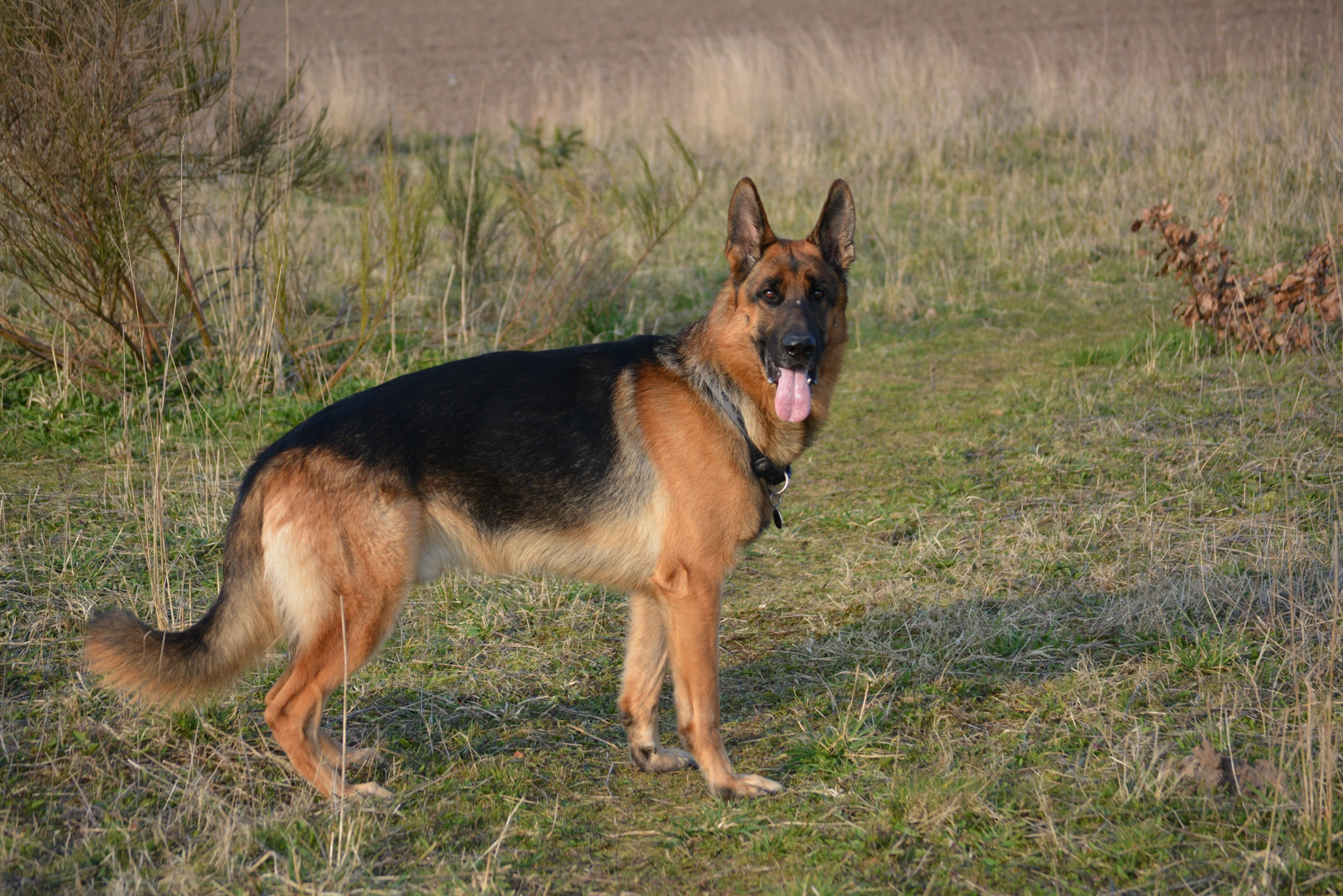
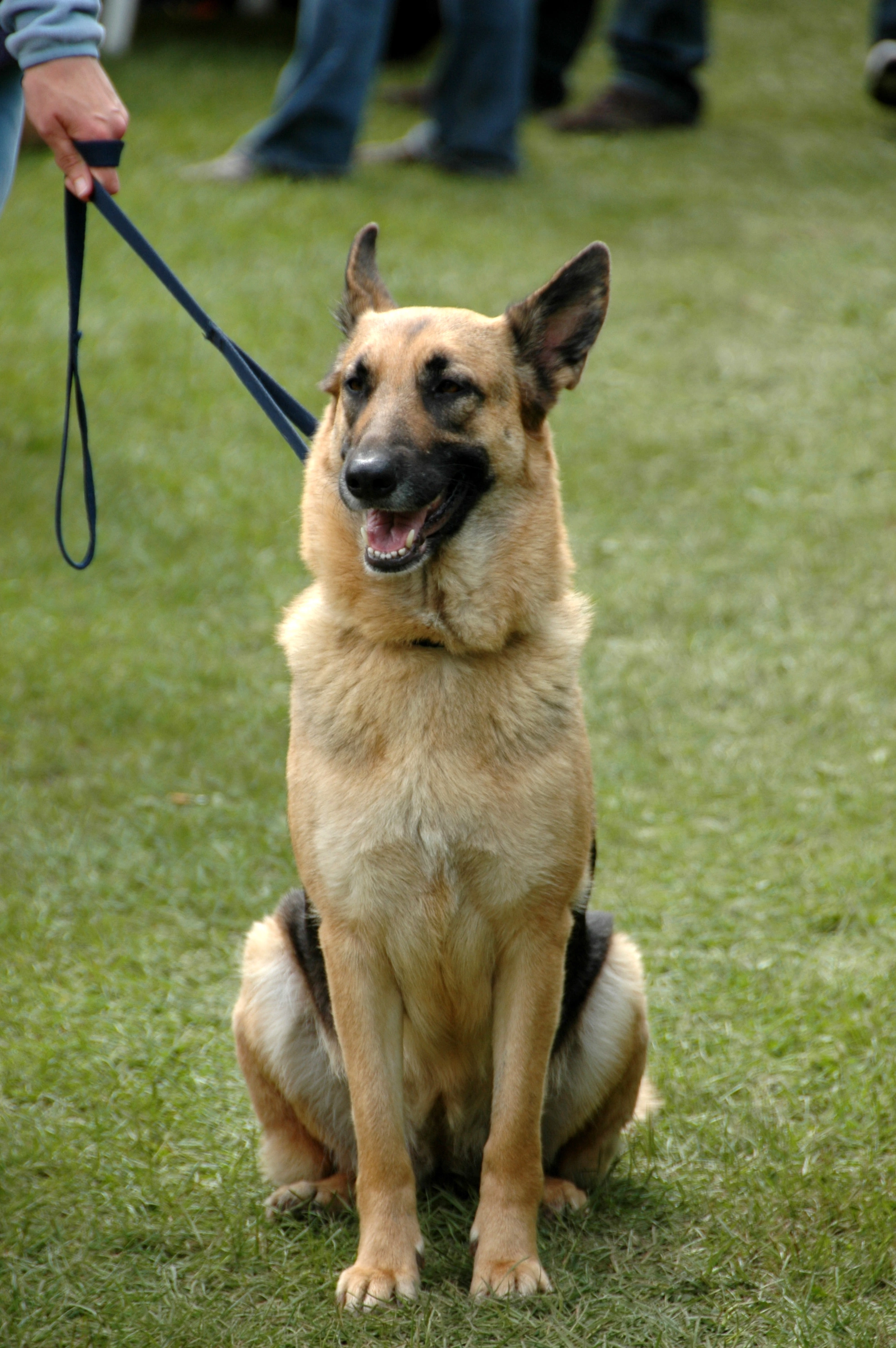
German Shepherd Dog: a distinct documented breed photograph for estate 03. The individual shown is not offered for sale or certified as a trained guard. Hans Kemperman · 2014-03-30 · CC0.
German Shepherd Dog · household alert
Starting number: 1 household dog; 0 livestock guardians initially. Keep the central crop axis open to harvest carts; put the dog’s home zone beside the staffed service building.
Starting livestock: 8 hens; later up to 6 sheep only with suitable separate forage; 0 horses or cattle initially. The axis should remain a route for people, harvests and emergency access. Place poultry housing in a side service bay. Use hens in a fenced rotation after harvest, not among crops being collected for eating.
Set up before arrival
1. Make the route work.
Practise a leash route from the refuge to a physical activity area that does not pass through poultry or ready-to-harvest beds.
2. Prepare one complete kit.
Use the illustrated one-dog kit: two bowls, fitted harness and lead, fitted transport crate, dry bed, identity and veterinary record. Specify two secure gates for the entrance routine where the site layout permits it. Measure fence length and openings on site; no generic metre quantity is claimed.
3. Test the normal day.
Walk deliveries, household departures and cleaning through the plan. Put the dog in its quiet refuge before a visitor enters. Introduce known people and animals gradually with a competent handler; stop and reassess if the individual dog is distressed or chasing livestock.
Read the illustration’s labels
Keep the harvest axis clear
Site-specific teaching drawing • use the numbered explanation in the lesson
Harvest axis
SERVICE HOUSE
Shade + rest
COOP
Hen run
Vegetables and poultry occupy separate blocks.
1
2
3
4
ESTATE 03
READ THE NUMBERS
1 Staffed service house
2 Fenced dog yard
3 Controlled side entry
4 Hen service bay
REHEARSE THE ROUTE
Harvest carts use the
axis.
Walk along the side
lane.
No chasing through
crops.
TAKE ON THE SITE WALK
Lead and harness • crop-route record • hen-run latch check
Original care-route schematic • not a survey, measured plan or security guarantee
Read the numbered drawing
The long central arrow is the harvest-cart route. The keeper works from service house 1; dog yard 2 is reached from the side lane. Entry 3 avoids the crop beds. Hen service bay 4 is separately fenced, so neither the dog nor loose poultry interrupts the harvest route.
Livestock and a second phase
If sheep are added, give them their own paddocks, handling pen and water supply. Assess whether 1 trained guardian is useful; a second dog is an individual risk and working-team decision, not an automatic doubling of protection. If the stated sheep phase goes ahead, assess one properly reared Maremma-type livestock guardian with the flock adviser. The household dog remains separate. A second guardian needs a demonstrated workload and compatible working team, not a fixed dog-per-hectare rule.
Separate the vegetable area from pasture in the land ledger. Crop residues are variable feed, not a complete ration. Record every feed purchase and do not credit the same hectare to crops and livestock simultaneously.
Walking past crops without chasing
Walk parallel to an empty crop row at an easy distance. Reward attention to the handler and a loose lead. Introduce a stationary harvest cart before any moving helper. Stock stay behind a second fence; a dog that chases is removed from the rehearsal and reviewed with the trainer.
Meals and rewards on this site
Keep feed away from fertiliser, seed treatments and produce storage. For a growing German Shepherd, ask for an appropriate large-dog growth diet; do not add calcium to make a puppy grow faster. An adult yard dog still needs measured meals.
Care for the other animals
Eight hens are the opening flock. Keep their feed separate from the household dog. Six sheep are a later alternative only with adequate grazing, handling and winter feed; the crop grid shown in an image establishes none of those capacities.
Training purchase and care budget
Training purchase example
Local amount
Currency comparison
Argentina · 6 individual visits
ARS 250,000
USD 159.24 / EUR 141.24
US · 6 private hours
USD 437
ARS 686,090 / EUR 387.62
Madrid · 6 sessions
EUR 360
ARS 637,200 / USD 405.86
Falcons or other unusual animals here
A falcon facility would need its own route outside the food-production grid; no free-roaming exotic animals among the crops.
The cat belongs to this estate too
1 assessed adult, or 2 already-compatible cats. Choose temperament, health and tolerance of this household rather than buying a pedigree as a pest-control guarantee. Keep cats out of the seedling house and feed store; protect growing beds and machinery routes.
Feeding at this property
The seedling house and agricultural feed store are unsuitable feeding stations. Measure the cat's complete food at the household service point and carry it to a clean indoor station. Keep pet-food utensils apart from crop chemicals, seed treatments and livestock rations; record which worker has already fed the cat.
Care from arrival through old age
A new cat first settles behind the household boundary, away from moving carts and growing beds. Keep veterinary transport on the service route without opening the cat enclosure onto the central axis. Older cats need nearby resting and toileting places, not a daily crossing of the working grid.
Authored reserves, 15 November 2026, not quotes. Exchange basis: ARS 1,570/USD and ARS 1,770/EUR. Food, veterinary care, enclosure work, animal purchase/adoption and delivery remain separate. The preceding dog table records the site’s dog-coaching scenario; do not silently add cat reserves as quoted services.
Units and terms
ARS Argentine peso · CC0 Creative Commons Zero, a public-domain dedication tool
ARS Argentine peso · USD United States dollar · EUR Euro · US United States
ARS Argentine peso · USD United States dollar · EUR Euro
04. Lakeside Mixed-Use Estate: animals, feeding and daily care
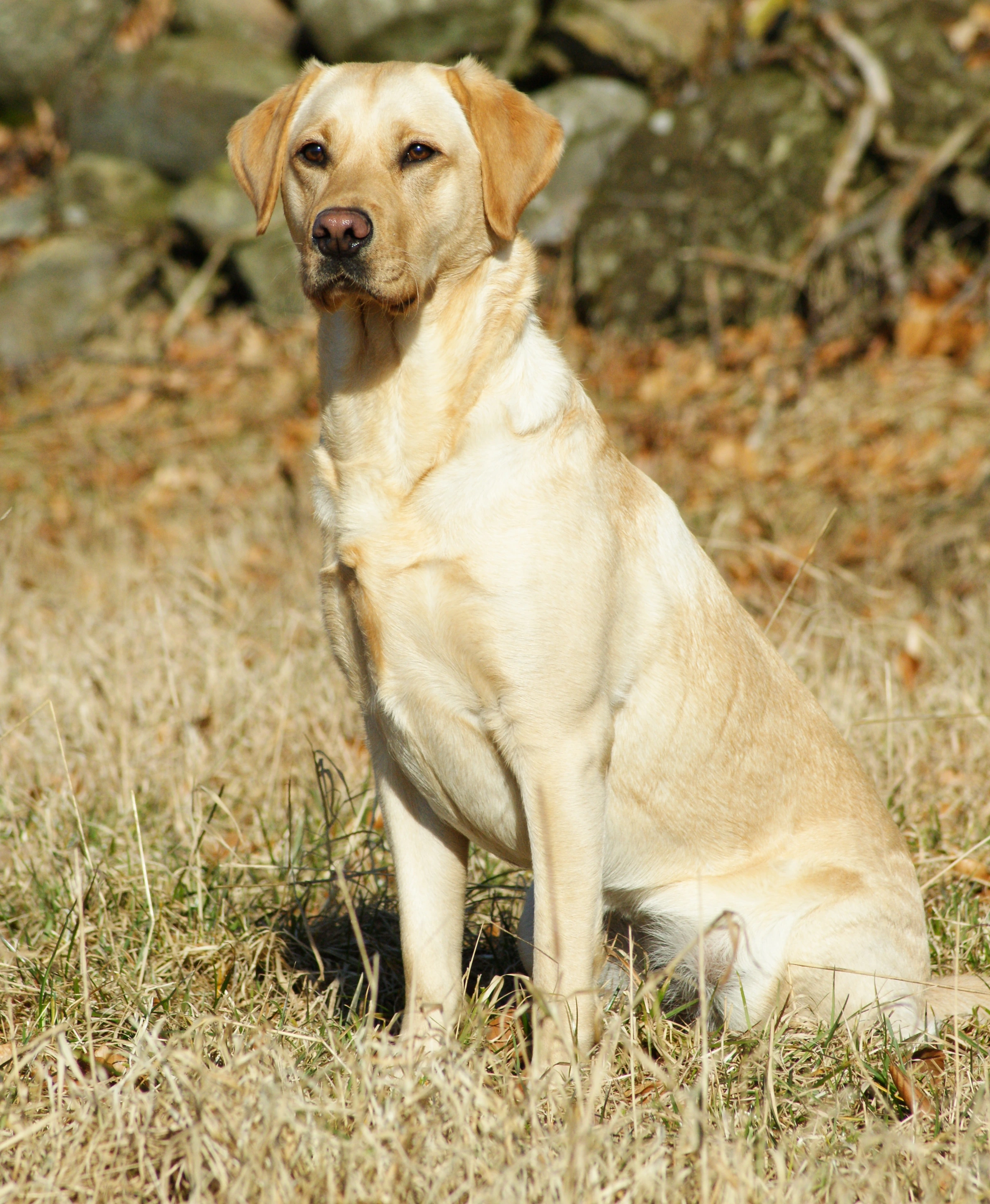
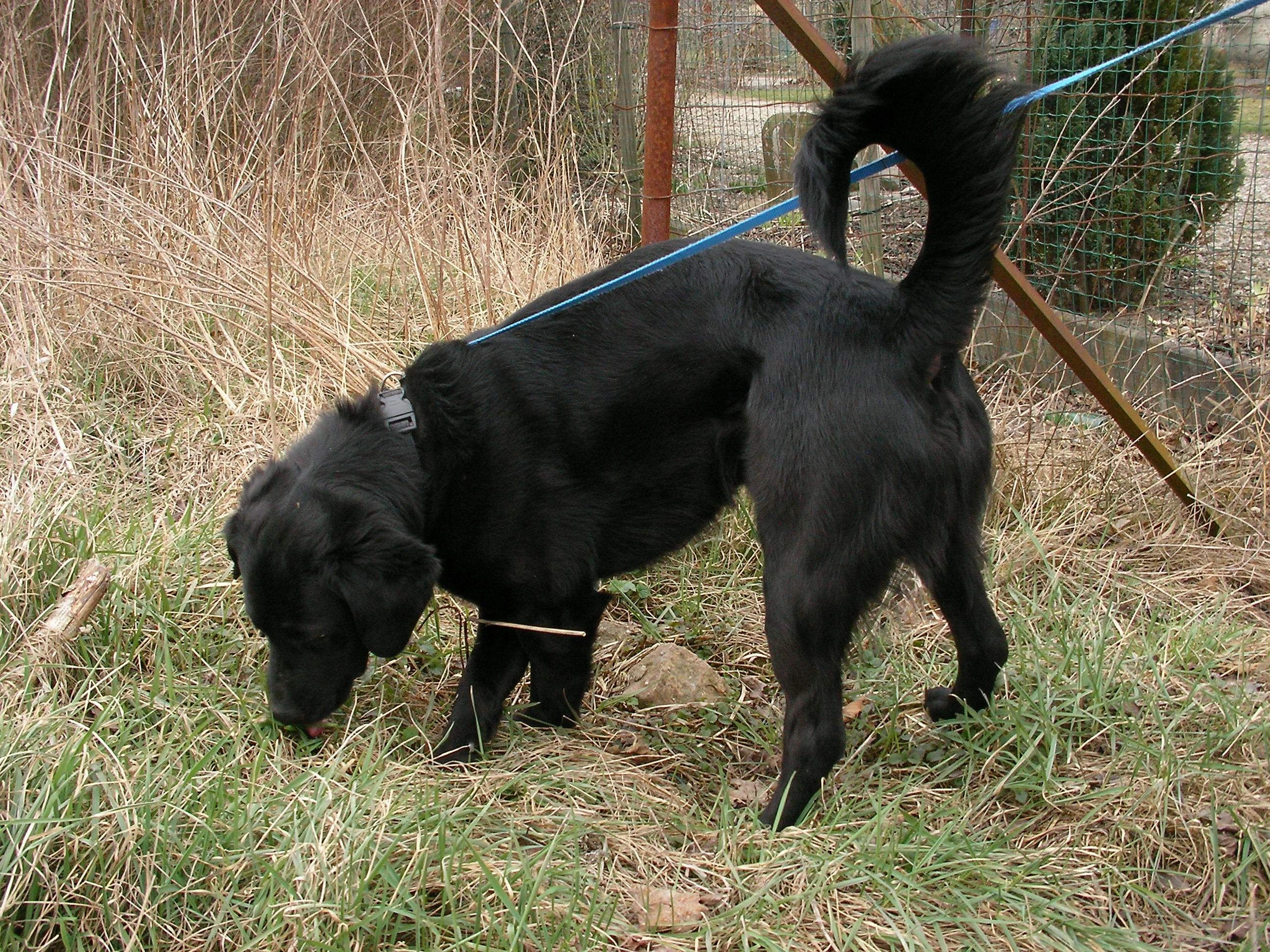
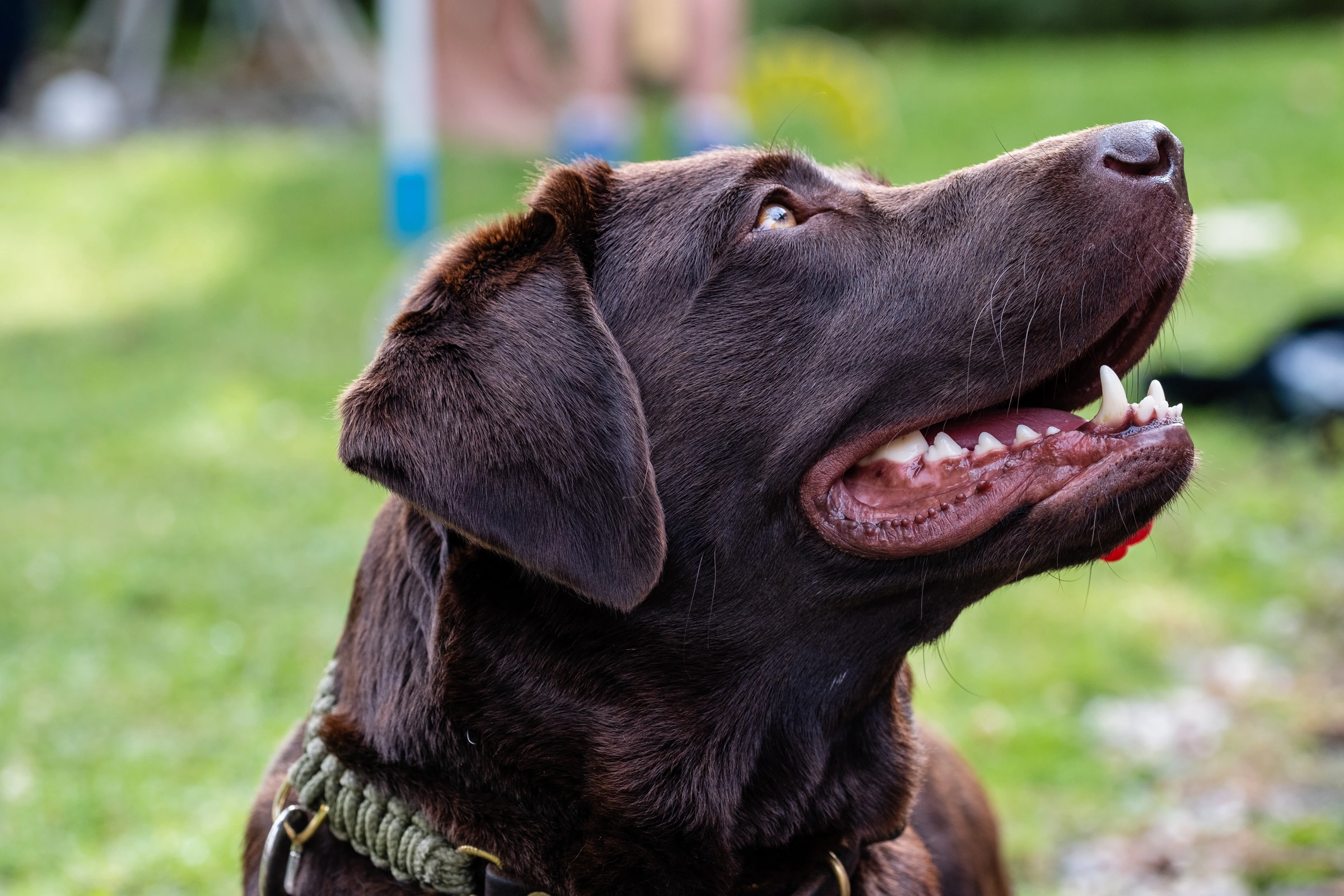
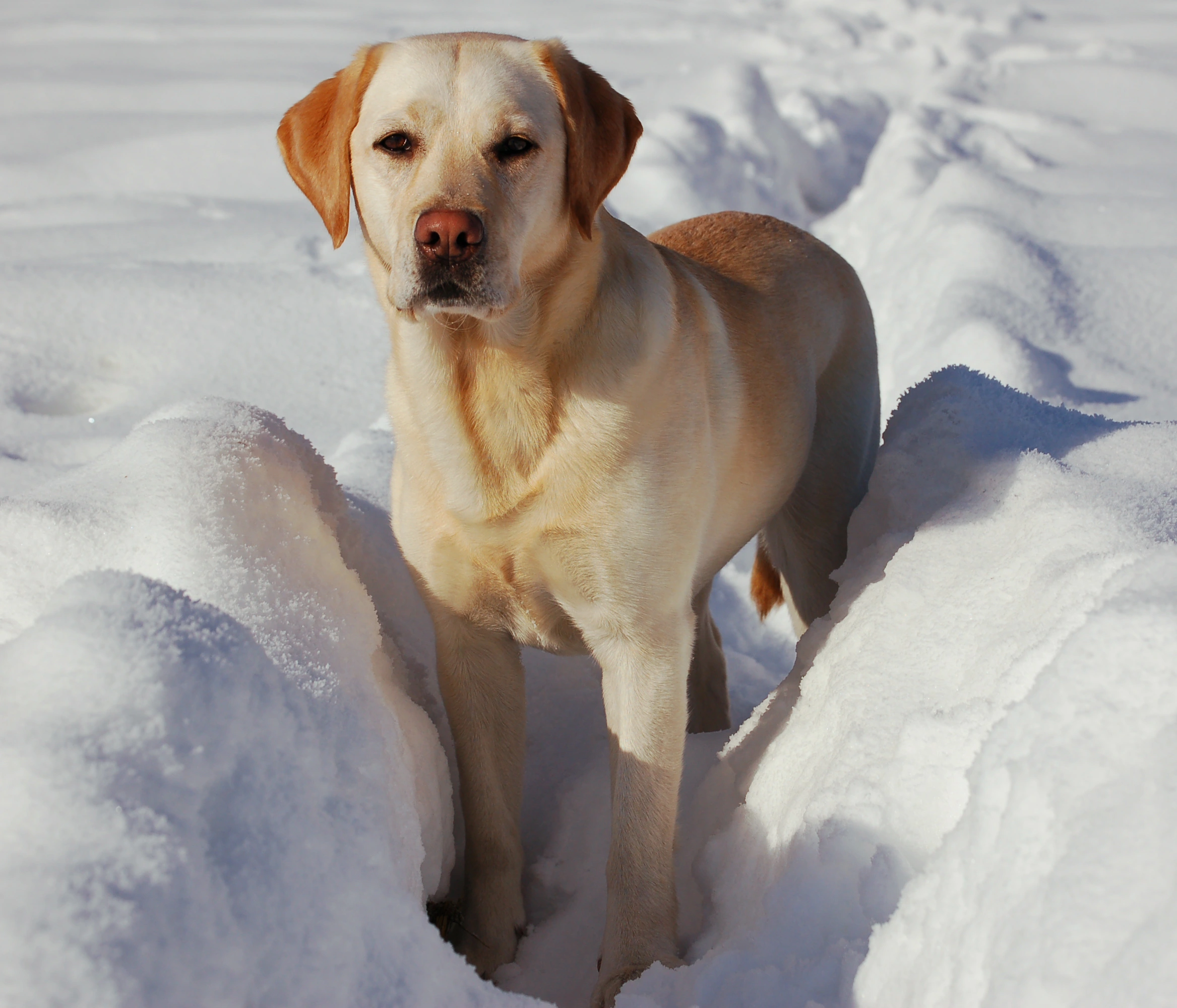
Labrador Retriever: a distinct documented breed photograph for estate 04. The individual shown is not offered for sale or certified as a trained guard. Skansken · 2009-03-17 · CC BY 3.0.
Labrador Retriever · household companion
Starting number: 1 household dog; 0 livestock guardians initially. Fence the household dog away from boats, livestockwater points and the shore buffer.
Starting livestock: 6 hens away from the shore; 0 cattle and horses initially. Protect the lake edge with a fence and a vegetated buffer chosen for the site. Supply drinking water in troughs on firm ground. Do not use unlimited access to the lake as the stock-watering plan.
Set up before arrival
1. Make the route work.
Inspect the water boundary from the dog’s side. Check gates after boat deliveries, and provide clean drinking water in the household zone.
2. Prepare one complete kit.
Use the illustrated one-dog kit: two bowls, fitted harness and lead, fitted transport crate, dry bed, identity and veterinary record. Specify two secure gates for the entrance routine where the site layout permits it. Measure fence length and openings on site; no generic metre quantity is claimed.
3. Test the normal day.
Walk deliveries, household departures and cleaning through the plan. Put the dog in its quiet refuge before a visitor enters. Introduce known people and animals gradually with a competent handler; stop and reassess if the individual dog is distressed or chasing livestock.
Read the illustration’s labels
Separate the house, boat path and shore buffer
Site-specific teaching drawing • use the numbered explanation in the lesson
HOUSE
Shade + rest
Household arrival
LAKE
Planted buffer
1
2
3
4
ESTATE 04
READ THE NUMBERS
1 Household compound
2 Landward refuge
3 Controlled house gate
4 Boat-access gate
REHEARSE THE ROUTE
Drink from a clean
bowl.
Stop at the shore
fence.
Boat work uses its own
gate.
TAKE ON THE SITE WALK
Fresh-water bowl • lead • shore-gate checklist
Original care-route schematic • not a survey, measured plan or security guarantee
Read the numbered drawing
House 1 and refuge 2 lie on the landward side of the care diagram. The household entrance is 3. The blue edge is the lake; the planted band and fence separate it from the dog. Boat-access gate 4 opens only for a supervised task and is not a free-running dog route.
Livestock and a second phase
Two cattle could be considered only on a measured upland parcel with a forage balance, handling facilities and suitable veterinary support. Two companion horses require a separate grazing and physical activity plan; they are not lakefront ornament. No livestock guardian is included in this starting plan. Adding cattle, horses or decorative grounds does not automatically create a guardian-dog requirement.
Guests, boats and animals need separate gates. A guardian roaming a waterfront path can conflict with visitors and wildlife. Water quality, mud and manure runoff are operating constraints before breed selection.
A shore boundary that stays meaningful
Practise recall on dry enclosed ground first. The next stage is a parallel walk inland of the locked shore gate, with the lead attached. Reward returning to the landward mat. Do not throw food or toys into the lake as a training shortcut.
Meals and rewards on this site
Maintain a landward bowl of fresh drinking water. Weigh food before guests arrive and record picnic rewards. The Labrador’s appetite or willingness to swim does not tell the keeper how much energy it needs; watch weight and body condition.
Care for the other animals
Keep the six hens on dry land with runoff contained. No horses or cattle are included at opening. Fish in a separate ornamental system require their own water and feed plan; a lake view is not a fish-stocking assessment.
Training purchase and care budget
Training purchase example
Local amount
Currency comparison
Argentina · 6 individual visits
ARS 250,000
USD 159.24 / EUR 141.24
US · 6 private hours
USD 437
ARS 686,090 / EUR 387.62
Madrid · 6 sessions
EUR 360
ARS 637,200 / USD 405.86
Falcons or other unusual animals here
Koi belong only in a purpose-built contained ornamental pond if lawful; do not release ornamental fish into the lake.
The cat belongs to this estate too
1 assessed adult, or 2 already-compatible cats. Choose temperament, health and tolerance of this household rather than buying a pedigree as a pest-control guarantee. Fence the cat enclosure away from the lake and waterfowl.
Feeding at this property
Place the food station inside the dwelling, away from the lake gate and poultry feed. The cat's measured ration is complete cat food, not fish caught from the lake or scraps left by visitors. Supply a separate clean drinking point so the lake is not part of the feeding routine.
Care from arrival through old age
Introduce indoor rooms before the protected outdoor enclosure. Check the barrier between the cat and the waterfowl whenever a service gate is used. A senior cat's bed, water and tray belong on an accessible dry route; difficulty moving or a change in appetite needs veterinary assessment.
Authored reserves, 15 November 2026, not quotes. Exchange basis: ARS 1,570/USD and ARS 1,770/EUR. Food, veterinary care, enclosure work, animal purchase/adoption and delivery remain separate. The preceding dog table records the site’s dog-coaching scenario; do not silently add cat reserves as quoted services.
Units and terms
ARS Argentine peso · BY Attribution condition in a Creative Commons licence
ARS Argentine peso · USD United States dollar · EUR Euro · US United States
ARS Argentine peso · USD United States dollar · EUR Euro
05. Long Lakeside Service Estate: animals, feeding and daily care
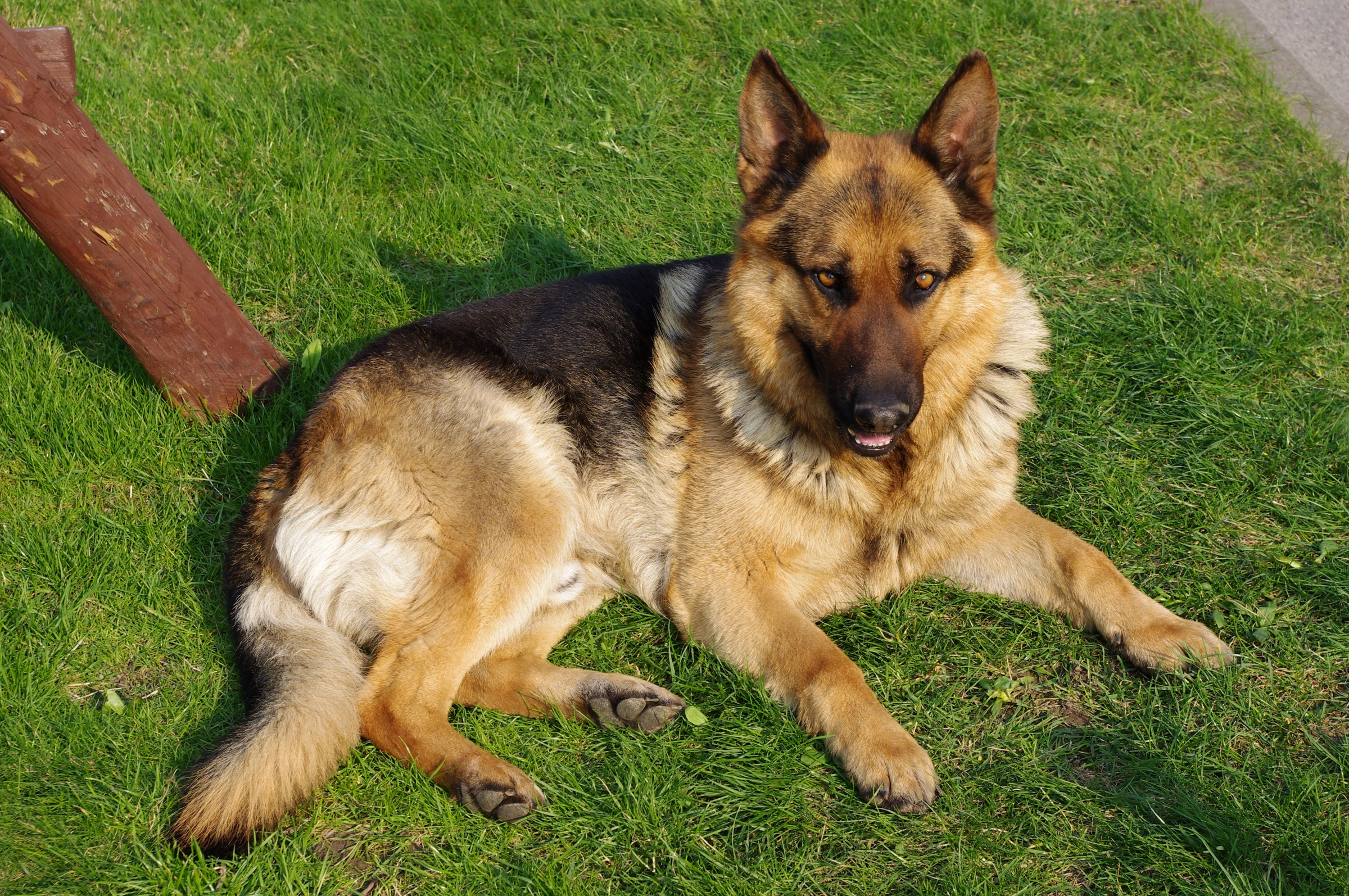
German Shepherd Dog: a distinct documented breed photograph for estate 05. The individual shown is not offered for sale or certified as a trained guard. Jakub Hałun · 2011-04-25 · CC BY-SA 4.0.
German Shepherd Dog · household alert
Starting number: 1 household dog; 0 livestock guardians initially. Place the household dog at the staffed yard, with controlled physical activity away from the long delivery road.
Starting livestock: 8 hens; possible 2 beef cattle on verified grazing; 0 horses at first. Use the long service route to separate feed delivery, manure removal and guest movement. Locate the stock yard on a drained surface with vehicle access, not at the lowest shoreline point.
Set up before arrival
1. Make the route work.
List who controls each service gate on each shift. A driver must not need to handle the dog to complete a delivery.
2. Prepare one complete kit.
Use the illustrated one-dog kit: two bowls, fitted harness and lead, fitted transport crate, dry bed, identity and veterinary record. Specify two secure gates for the entrance routine where the site layout permits it. Measure fence length and openings on site; no generic metre quantity is claimed.
3. Test the normal day.
Walk deliveries, household departures and cleaning through the plan. Put the dog in its quiet refuge before a visitor enters. Introduce known people and animals gradually with a competent handler; stop and reassess if the individual dog is distressed or chasing livestock.
Read the illustration’s labels
Give deliveries a stopping bay, not a dog to move
Site-specific teaching drawing • use the numbered explanation in the lesson
Original care-route schematic • not a survey, measured plan or security guarantee
Read the numbered drawing
Follow the service road from the delivery stopping bay at 3 to the staffed office at 1. The dog remains in refuge 2 while vehicles unload. Feed and stock work use yard 4 farther along the road. The shoreline is a separate boundary, not a shortcut between service areas.
Livestock and a second phase
For a temperate Argentine site, compare suitable Angus and Hereford animals. If heat and tick pressure dominate, discuss Brangus or Braford with local advisers. Buy compatible animals of known health status, rather than choosing by coat colour. No livestock guardian is included in this starting plan. Adding cattle, horses or decorative grounds does not automatically create a guardian-dog requirement.
Two cattle are a manageable comparison unit, not a claim about this estate’s carrying capacity. Price handling equipment and winter feed before the animals. Cattle need a safe handling arrangement that does not depend on a dog pushing them through a guest area.
A delivery road with a calm handover
Mark a refuge inside the staffed yard. One helper stops a vehicle beyond the closed gate while the keeper rewards the dog at the refuge. Begin with the engine off, then practise the same sequence with greater activity only if the dog stays comfortable.
Meals and rewards on this site
Assign one worker to weigh breakfast and another to confirm the evening entry. Use a shared log, not two full bowls from two shifts. Food containers stay inside a dry secure store, away from vehicle chemicals.
Care for the other animals
The eight hens need their own enclosed service corner. Keep cattle and horses at zero until the long site has measured paddocks, water points and handling access. A long driveway is maintenance work, not evidence of spare grazing land.
Training purchase and care budget
Training purchase example
Local amount
Currency comparison
Argentina · 6 individual visits
ARS 250,000
USD 159.24 / EUR 141.24
US · 6 private hours
USD 437
ARS 686,090 / EUR 387.62
Madrid · 6 sessions
EUR 360
ARS 637,200 / USD 405.86
Falcons or other unusual animals here
Specialist animals belong on a separate serviced parcel. Distance along a scenic road does not establish biosecurity or a trained keeper.
The cat belongs to this estate too
1 assessed adult, or 2 already-compatible cats. Choose temperament, health and tolerance of this household rather than buying a pedigree as a pest-control guarantee. Keep service vehicles and loading bays outside the animal route.
Feeding at this property
Keep food preparation and storage at the household end of the service estate. Deliver the measured ration before a loading period, with the cat safely inside. A bowl beside a loading bay encourages the animal onto the vehicle route and leaves food exposed to dirt and spilled materials.
Care from arrival through old age
The arrival room should be reached without passing through the loading area. Keep a carrier and veterinary record at that entrance. Review the household route as the cat ages: open stairs, slippery thresholds and a long walk between resting and toileting places may need adjustment.
Authored reserves, 15 November 2026, not quotes. Exchange basis: ARS 1,570/USD and ARS 1,770/EUR. Food, veterinary care, enclosure work, animal purchase/adoption and delivery remain separate. The preceding dog table records the site’s dog-coaching scenario; do not silently add cat reserves as quoted services.
Units and terms
ARS Argentine peso · BY-SA Creative Commons Attribution-ShareAlike
ARS Argentine peso · USD United States dollar · EUR Euro · US United States
ARS Argentine peso · USD United States dollar · EUR Euro
All table amounts are millions of Argentine pesos; care is per year. Retained scenario: ARS1,540 per USD. These are dated planning allowances, not current supplier quotations.
Component Build · ARS million Care · ARS million/year
Component
Build / ARS million
Care / ARS million per year
1. Estate entrance
30.800 to 92.400
0.616 to 3.696
2. Perimeter enclosure
431.200 to 1,293.600
2.156 to 19.404
3. Circulation road
616.000 to 1,232.000
6.160 to 30.800
4. Garage
346.500 to 693.000
3.465 to 17.325
5. Workshop
346.500 to 693.000
3.465 to 17.325
6. Trash system
15.400 to 53.900
0.616 to 4.312
7. Septic system
30.800 to 154.000
0.616 to 6.160
8. Water recycling
30.800 to 154.000
1.232 to 12.320
9. Solar parking structure
308.000 to 539.000
3.080 to 10.780
10. Carport canopy
485.100 to 970.200
4.851 to 24.255
11. Orchard
18.480 to 49.280
0.739 to 3.942
12. Organic gardens label
46.200 to 138.600
1.848 to 11.088
13. Greenhouse
69.300 to 231.000
1.386 to 9.240
14. Private lake label
UNPRICED
UNPRICED
15. Dock and lakeside pavilion
86.240 to 221.760
1.725 to 8.870
16. Main residence
3,465.000 to 6,930.000
34.650 to 138.600
17. Grandparents' house
1,347.500 to 2,695.000
13.475 to 53.900
18. Parents' house
1,347.500 to 2,695.000
13.475 to 53.900
19. Guest villa
1,155.000 to 2,310.000
11.550 to 46.200
20. Residential pools
369.600 to 924.000
11.088 to 55.440
21. Terraced landscaping and paths
69.300 to 231.000
2.772 to 18.480
Build envelope: ARS 14,956.372 to 37,420.768 million. Annual fund: ARS 996.472 to 2,512.587 million. Totals include service, fee and contingency or staffing and reserve allowances beyond the rows. Unpriced items remain excluded.
Staff: $50k-90k per FTE/year, chosen loaded allowance. Utilities: $5k-15k per FTE/year as a coarse placeholder, not an energy calculation. Replace both with rosters and metered demand. Taxes, insurance, food, feed, aircraft and exceptional works are additional. Proposed services, not verified: P1 Source investigation and supply: $30.0k-150.0k P2 Storage allowance, assumed 20 m³: $6.0k-16.0k P5 Estate distribution and communications: $80.0k-240.0k P6 Fire-service water provision: $40.0k-150.0k P7 Site drainage beyond priced roads: $40.0k-150.0k Keep reuse water separate from drinking water. The illustration places multiple waste and water functions close to gardens and the lake. Resolve source protection, wastewater disposal and reserve areas before landscaping. Day and night responsibilities. Day: inspect access and water/energy alarms; handle deliveries; separate food, livestock and waste routes; complete scheduled maintenance. Night: check routes and gate release; shield lights; secure service areas; assign emergency contacts. This is not a 24-hour staffed security commitment.
Units and terms
k (currency) thousand, 1,000 of the stated currency · m (currency) million, 1,000,000 of the stated currency · USD United States dollar · ARS Argentine peso
ARS Argentine peso
k (currency) thousand, 1,000 of the stated currency · m³ cubic metre, a volume unit · BY-SA Creative Commons Attribution-ShareAlike
Sources for this account
open source P2 · open source Chapter contents Continue reading
06. Terraced Landscape Estate: animals, feeding and daily care
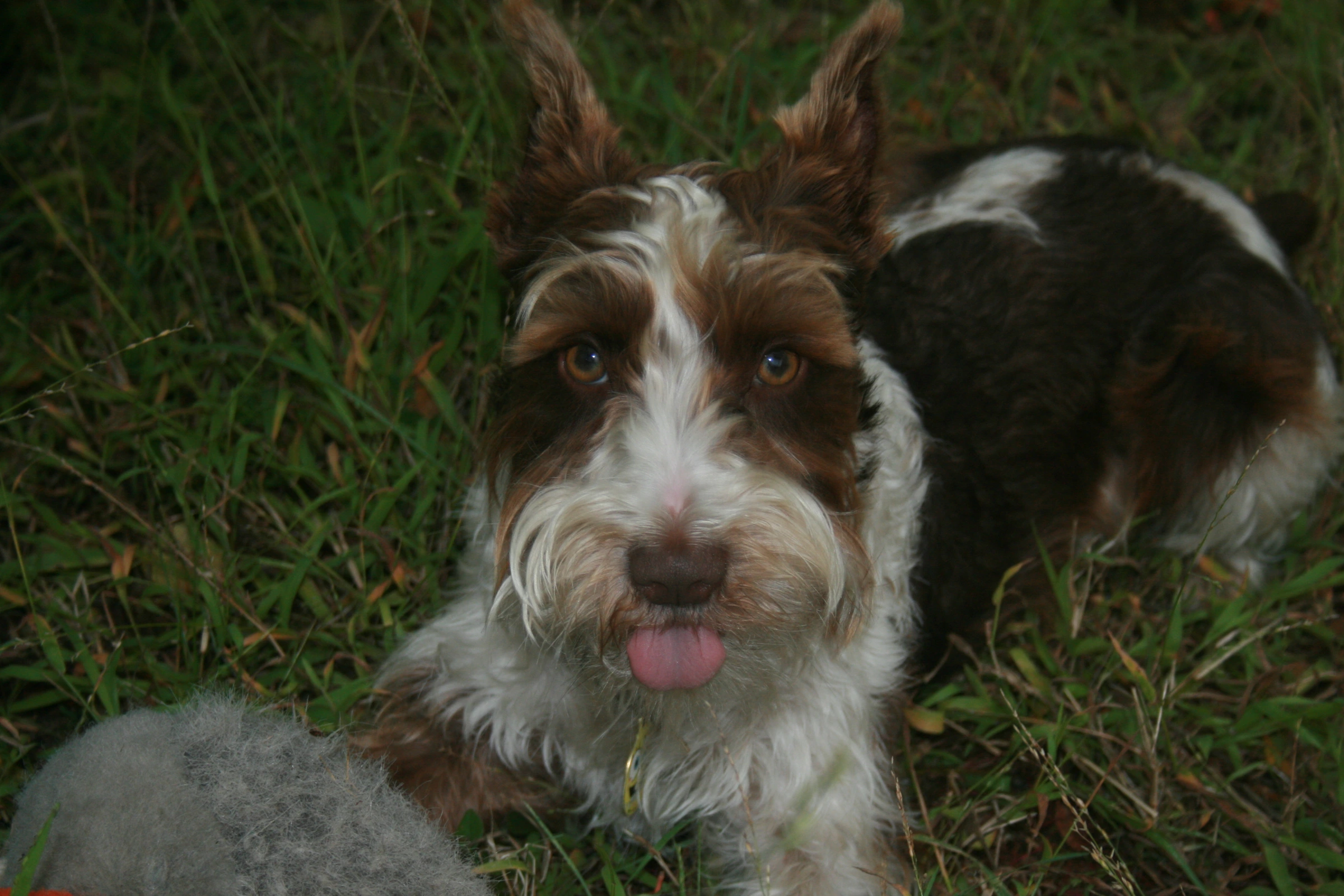
Miniature Schnauzer: a distinct documented breed photograph for estate 06. The individual shown is not offered for sale or certified as a trained guard. Brocken Inaglory · 06/16/07 · CC BY-SA 3.0.
Miniature Schnauzer · household alert
Starting number: 1 household dog; 0 livestock guardians initially. Provide a level domestic refuge and a short controlled route; terraces and retaining edges remain physically protected.
Starting livestock: 4–6 hens in a level secure service area; 0 cattle; 0 horses. Terraces are structures as well as land. Keep heavy animals, manure storage and feed deliveries away from retaining-wall edges until access, drainage and loading have been checked. Use a level yard for poultry care.
Set up before arrival
1. Make the route work.
Walk the route carrying cleaning equipment, then check it again for a small dog’s escape gaps and abrupt drops.
2. Prepare one complete kit.
Use the illustrated one-dog kit: two bowls, fitted harness and lead, fitted transport crate, dry bed, identity and veterinary record. Specify two secure gates for the entrance routine where the site layout permits it. Measure fence length and openings on site; no generic metre quantity is claimed.
3. Test the normal day.
Walk deliveries, household departures and cleaning through the plan. Put the dog in its quiet refuge before a visitor enters. Introduce known people and animals gradually with a competent handler; stop and reassess if the individual dog is distressed or chasing livestock.
Read the illustration’s labels
A level refuge above protected terrace edges
Site-specific teaching drawing • use the numbered explanation in the lesson
HOUSE
Rest
Tools
SECTION • levels and edges must be surveyed
No dimensions or retaining-wall capacity are implied.
Lower access
1
2
3
4
ESTATE 06
READ THE NUMBERS
1 House on upper bench
2 Level enclosed refuge
3 Controlled level
entry
4 Lower maintenance
zone
REHEARSE THE ROUTE
Use the level route
first.
Guard every exposed
edge.
Keep maintenance below
separate.
TAKE ON THE SITE WALK
Small-gap check • level resting mat • maintenance route log
Original care-route schematic • not a survey, measured plan or security guarantee
Read the numbered drawing
This is a section through terraces, not a flat site plan. House 1, refuge 2 and controlled entrance 3 share the upper level. Zone 4 lies below a retaining edge and is reached by a separate maintenance route. The drawing does not specify wall strength, safe loading or railing dimensions.
Livestock and a second phase
A small sheep flock is only an option on a genuinely grazable parcel with safe movement between levels. Goats can browse, but their climbing, bark stripping and fence pressure can damage an ornamental or productive terrace. They are not the default solution. No livestock guardian is included in this starting plan. Adding cattle, horses or decorative grounds does not automatically create a guardian-dog requirement.
A plan showing steps or narrow paths does not show a safe livestock route. Map turning space, evacuation and veterinary access. In steep or wet conditions, a zero-grazing-animal plan can be the most workable estate plan.
A small dog on terraces
Teach the dog to pause at an interior doorway, with a physical barrier protecting the drop beyond. Reward a return to a level mat. Then practise calm harness fitting and a short flat route. Never test the pause by opening an unguarded terrace edge.
Meals and rewards on this site
For a Miniature Schnauzer, discuss the breed’s predisposition to inherited high blood fats with the veterinarian. That is a reason to review health and fatty treats, not to impose an improvised fat-free diet on every dog. [N09]
Care for the other animals
No livestock is allocated to this start. Terraces can restrict safe handling, drainage and access to feed storage. A small companion dog is already a daily care commitment; avoid adding an animal merely because it fits in a picture.
Training purchase and care budget
Training purchase example
Local amount
Currency comparison
Argentina · 4 individual visits
ARS 160,000
USD 101.91 / EUR 90.40
US · 4 private hours
USD 259
ARS 406,630 / EUR 229.73
Madrid · 4 sessions
EUR 230
ARS 407,100 / USD 259.30
Falcons or other unusual animals here
Large grazing exotics do not fit this terraced start. A lawful small-species facility needs stable temperatures and a designated indoor keeper.
The cat belongs to this estate too
1 assessed adult, or 2 already-compatible cats. Choose temperament, health and tolerance of this household rather than buying a pedigree as a pest-control guarantee. Use ramps and low resting levels where falls or age-related mobility are concerns.
Feeding at this property
Use one level feeding station inside the dwelling rather than several bowls scattered among terraces. Record the measured complete-food allowance and any rewards. Food, drinking water and litter should have separate locations, but none should force a cat with limited mobility to negotiate the terrace stairs.
Care from arrival through old age
At arrival, confine access to a protected, furnished room before introducing further levels. Provide stable low steps or a suitable ramp where the individual can use them comfortably. Reassess access to resting shelves with age; reduced jumping should prompt a health review rather than a higher obstacle.
Authored reserves, 15 November 2026, not quotes. Exchange basis: ARS 1,570/USD and ARS 1,770/EUR. Food, veterinary care, enclosure work, animal purchase/adoption and delivery remain separate. The preceding dog table records the site’s dog-coaching scenario; do not silently add cat reserves as quoted services.
Units and terms
k (currency) thousand, 1,000 of the stated currency · m³ cubic metre, a volume unit · BY-SA Creative Commons Attribution-ShareAlike
ARS Argentine peso · USD United States dollar · EUR Euro · US United States
ARS Argentine peso · USD United States dollar · EUR Euro
07. Waterfront and Garden Compound: animals, feeding and daily care
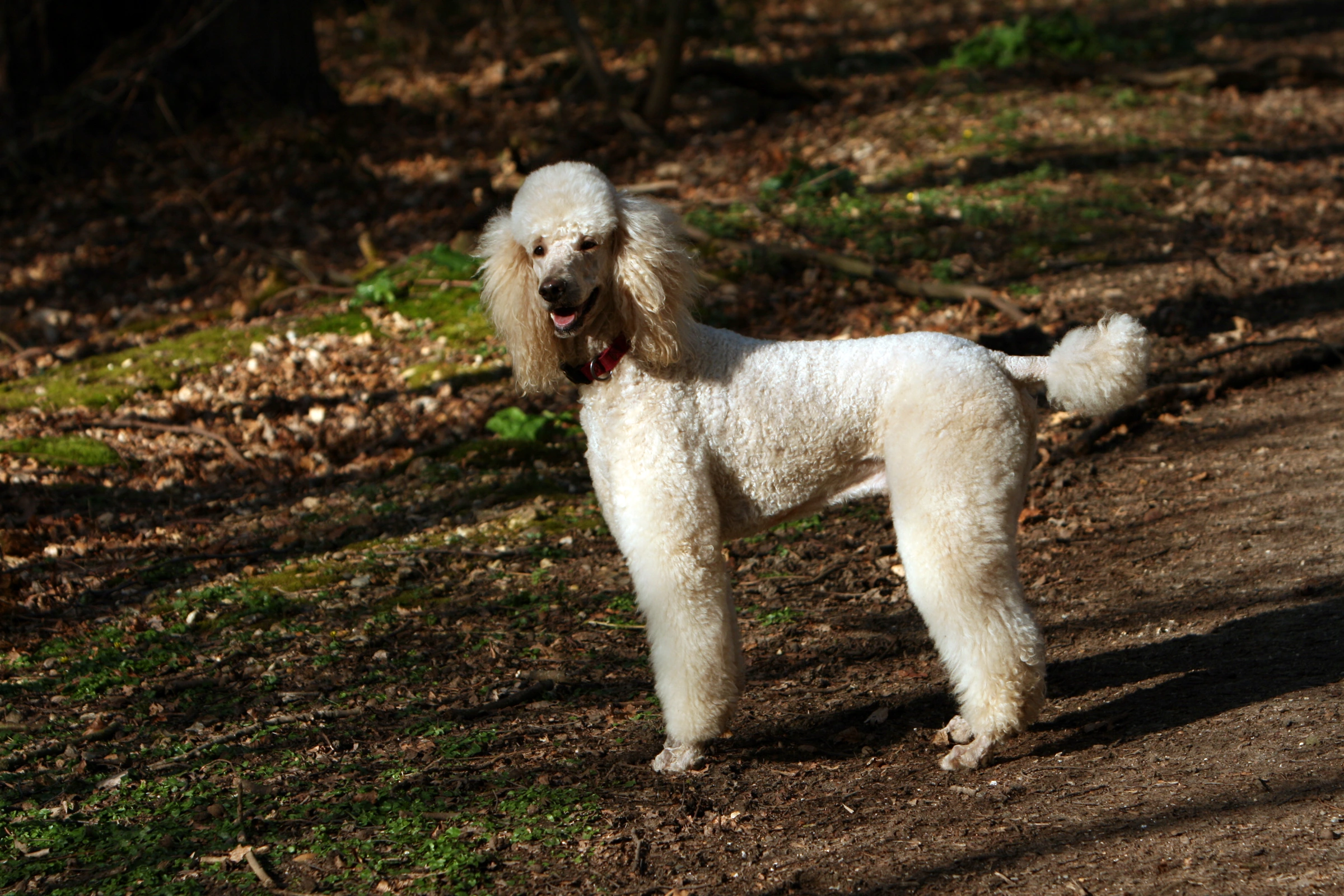
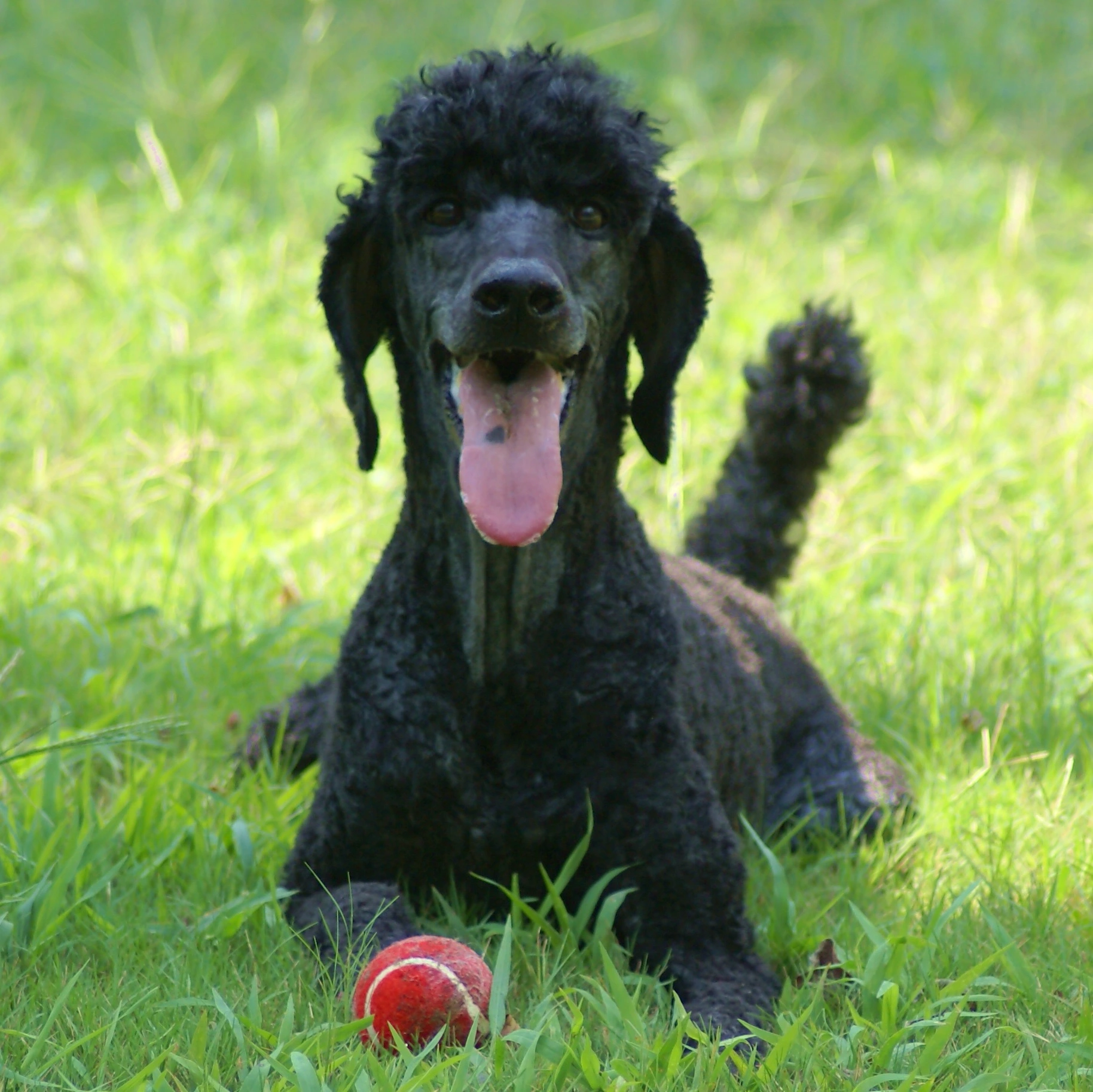
Standard Poodle: a distinct documented breed photograph for estate 07. The individual shown is not offered for sale or certified as a trained guard. John Leslie from London, UK · 2007-03-17 15:39 · CC BY 2.0.
Standard Poodle · household companion
Starting number: 1 household dog; 0 livestock guardians initially. Keep the dog behind a side gate during garden tours and away from shore access.
Starting livestock: 4 hens in a screened service run; 0 cattle; 0 horses. This case prioritises gardens, deliveries and public movement. Place the bird run beyond food preparation and protect garden beds from scratching. Use gates and a daily closing routine rather than a roaming dog as the main boundary.
Set up before arrival
1. Make the route work.
Schedule coat care, drying and cleaning in the service zone so a wet dog does not cross food preparation or guest routes.
2. Prepare one complete kit.
Use the illustrated one-dog kit: two bowls, fitted harness and lead, fitted transport crate, dry bed, identity and veterinary record. Specify two secure gates for the entrance routine where the site layout permits it. Measure fence length and openings on site; no generic metre quantity is claimed.
3. Test the normal day.
Walk deliveries, household departures and cleaning through the plan. Put the dog in its quiet refuge before a visitor enters. Introduce known people and animals gradually with a competent handler; stop and reassess if the individual dog is distressed or chasing livestock.
Read the illustration’s labels
Grooming and garden visits need different paths
Site-specific teaching drawing • use the numbered explanation in the lesson
HOUSE
Shade + rest
Screened hen run
Garden-tour path stays outside the care area.
1
2
3
4
ESTATE 07
READ THE NUMBERS
1 Household pavilion
2 Drying / grooming
refuge
3 Garden-tour entrance
4 Screened hen service
run
REHEARSE THE ROUTE
Guests stay on the
garden path.
Wet coats use the
service door.
Keep feed away from
kitchens.
TAKE ON THE SITE WALK
Grooming kit • drying mat • labelled reward portion
Original care-route schematic • not a survey, measured plan or security guarantee
Read the numbered drawing
The visitor path curves through the garden from entrance 3. The household pavilion is 1. Its service door leads to drying refuge 2, so coat care does not occupy the public path. Screened hen run 4 uses the back service lane, away from meals and garden tours.
Livestock and a second phase
If a separate market-garden enterprise develops, increase bird numbers only after checking manure management, feed, neighbours and applicable rules. Sheep, goats and horses should not be added to make the picture look rural. No livestock guardian is included in this starting plan. Adding cattle, horses or decorative grounds does not automatically create a guardian-dog requirement.
Keep a visitor-free care route from feed store to run to waste collection. On flood-prone ground, plan where animals will be moved before water reaches the compound. Count transport crates and a dry destination in the inventory.
Coat care and garden visitors
Practise standing briefly on a nonslip mat, reward, and release. Introduce the brush without pulling the coat. Build comfortable handling with the groomer; meanwhile rehearse the garden-tour route with the dog behind its side gate.
Meals and rewards on this site
Prevent coat and water-bowl contamination of the kitchen route. Measure the complete food first, then reserve a small reward portion for grooming practice. A cooked-food preference still requires a balanced recipe; meat plus vegetables alone is incomplete.
Care for the other animals
Keep grazing stock at zero. An aviary is a separate project with species-specific diet and social needs. Guests must not feed seed mixes or fruit indiscriminately to an unknown species.
Training purchase and care budget
Training purchase example
Local amount
Currency comparison
Argentina · 4 individual visits
ARS 160,000
USD 101.91 / EUR 90.40
US · 4 private hours
USD 259
ARS 406,630 / EUR 229.73
Madrid · 4 sessions
EUR 230
ARS 407,100 / USD 259.30
Falcons or other unusual animals here
A garden aviary would need species-specific design, noise review and permits; a landscaped enclosure by itself is insufficient.
The cat belongs to this estate too
1 assessed adult, or 2 already-compatible cats. Choose temperament, health and tolerance of this household rather than buying a pedigree as a pest-control guarantee. Separate cats completely from ducklings, chicks and pond wildlife.
Feeding at this property
Prepare cat meals in the household area, separate from the poultry and pond-feed containers. Keep the cat's ration and utensils identifiable to avoid substituting bird or fish feed. Feed behind the household barrier before keepers open the garden gates; do not use ducklings or live prey as enrichment.
Care from arrival through old age
Check each barrier between the cat enclosure, chicks and ducklings before either keeper begins work. A young cat needs supervised introduction to its household, not access to the breeding pens. For an older cat, keep a sheltered ground-level retreat and an easy route to its own litter tray.
Authored reserves, 15 November 2026, not quotes. Exchange basis: ARS 1,570/USD and ARS 1,770/EUR. Food, veterinary care, enclosure work, animal purchase/adoption and delivery remain separate. The preceding dog table records the site’s dog-coaching scenario; do not silently add cat reserves as quoted services.
Units and terms
ARS Argentine peso · UK United Kingdom · BY Attribution condition in a Creative Commons licence
ARS Argentine peso · USD United States dollar · EUR Euro · US United States
ARS Argentine peso · USD United States dollar · EUR Euro
Component Build · ARS million Care · ARS million/year
Component
Build / ARS million
Care / ARS million per year
1. Entrance gate
30.800 to 92.400
0.616 to 3.696
2. Boundary enclosure
338.800 to 1,016.400
1.694 to 15.246
3. Access drive and forecourts
492.800 to 985.600
4.928 to 24.640
4. Garage
415.800 to 831.600
4.158 to 20.790
5. Barn
231.000 to 577.500
3.465 to 17.325
6. Chicken coop and run
38.500 to 107.800
0.770 to 4.312
7. Trash system
15.400 to 53.900
0.616 to 4.312
8. Septic system
30.800 to 154.000
0.616 to 6.160
9. Water treatment
30.800 to 154.000
1.232 to 12.320
10. Battery storage
110.880 to 184.800
1.109 to 4.620
11. Solar array
184.800 to 323.400
1.848 to 6.468
12. Orchard
13.860 to 36.960
0.554 to 2.957
13. Vegetable gardens
30.800 to 92.400
1.232 to 7.392
14. Greenhouse
69.300 to 231.000
1.386 to 9.240
15. Main residence
3,465.000 to 6,930.000
34.650 to 138.600
16. Family villas
2,695.000 to 5,390.000
26.950 to 107.800
17. Guest lodge
1,347.500 to 2,695.000
13.475 to 53.900
18. Swimming pool
92.400 to 231.000
2.772 to 13.860
19. Lakeside pavilion
154.000 to 385.000
1.540 to 11.550
20. Private dock label
107.800 to 277.200
2.156 to 11.088
21. Lake
UNPRICED
UNPRICED
22. Courts, paths and grounds
69.300 to 231.000
2.772 to 18.480
Build envelope: ARS 14,066.037 to 35,309.120 million. Annual fund: ARS 979.548 to 2,434.909 million. Totals include service, fee and contingency or staffing and reserve allowances beyond the rows. Unpriced items remain excluded.
Asset care and minor repairs $74.4k-349.5k Staff: assumed 9 full-time equivalents $450.0k-810.0k Utilities and operating energy $45.0k-135.0k Renewal reserve, set aside $66.7k-286.6k Funded annual subtotal $636.1k-1.58m Staff: $50k-90k per FTE/year, chosen loaded allowance. Utilities: $5k-15k per FTE/year as a coarse placeholder, not an energy calculation. Replace both with rosters and metered demand. Taxes, insurance, food, feed, aircraft and exceptional works are additional. Proposed services, not verified: P1 Source investigation and supply: $30.0k-150.0k P2 Storage allowance, assumed 20 m³: $6.0k-16.0k P5 Estate distribution and communications: $80.0k-240.0k P6 Fire-service water provision: $40.0k-150.0k P7 Site drainage beyond priced roads: $40.0k-150.0k Protect the shore. The lower utility cluster is useful for deliveries, but sewage disposal, battery siting and crop areas need verified separation. The repeated poultry label is one operating zone. Day and night responsibilities. Day: inspect access and water/energy alarms; handle deliveries; separate food, livestock and waste routes; complete scheduled maintenance. Night: check routes and gate release; shield lights; secure service areas; assign emergency contacts. This is not a 24-hour staffed security commitment.
Units and terms
k (currency) thousand, 1,000 of the stated currency · m (currency) million, 1,000,000 of the stated currency · ARS Argentine peso
ARS Argentine peso
k (currency) thousand, 1,000 of the stated currency · m (currency) million, 1,000,000 of the stated currency · m³ cubic metre, a volume unit · BY-SA Creative Commons Attribution-ShareAlike
Sources for this account
open source P2 · open source Chapter contents Continue reading
08. Dock and Pavilion Estate: animals, feeding and daily care
Labrador Retriever: a distinct documented breed photograph for estate 08. The individual shown is not offered for sale or certified as a trained guard. Gzen92 · 2010-03-09 15:16:29 · CC BY-SA 4.0.
Labrador Retriever · household companion
Starting number: 1 household dog; 0 livestock guardians initially. Keep the dog in the shore-side household zone; use a controlled lead route to any boat activity.
Starting livestock: 0 livestock on the dock/pavilion parcel. A dock concentrates slippery edges, ropes, people and moving boats. Use physical barriers and supervised access. A dog can fall, interfere with work or chase birds; it is not a substitute for secure storage or a responsible operator.
Set up before arrival
1. Make the route work.
Inspect gaps under dock gates and keep ropes, hooks and fuel out of the physical activity route. Dog swimming ability is not an emergency plan.
2. Prepare one complete kit.
Use the illustrated one-dog kit: two bowls, fitted harness and lead, fitted transport crate, dry bed, identity and veterinary record. Specify two secure gates for the entrance routine where the site layout permits it. Measure fence length and openings on site; no generic metre quantity is claimed.
3. Test the normal day.
Walk deliveries, household departures and cleaning through the plan. Put the dog in its quiet refuge before a visitor enters. Introduce known people and animals gradually with a competent handler; stop and reassess if the individual dog is distressed or chasing livestock.
Read the illustration’s labels
The dock gate is a deliberate boundary
Site-specific teaching drawing • use the numbered explanation in the lesson
LANDWARD HOUSE
Shade + rest
PAVILION
Feed and fresh water
remain on dry land.
Mooring / rope work
1
2
3
4
ESTATE 08
READ THE NUMBERS
1 Landward household
2 Dry enclosed retreat
3 Locked dock gate
4 Mooring / rope work
zone
REHEARSE THE ROUTE
Lead attached before
transit.
Keep bait and hooks
enclosed.
Return to dry ground to
feed.
TAKE ON THE SITE WALK
Lead • locked hook / bait storage • dock-gate checklist
Original care-route schematic • not a survey, measured plan or security guarantee
Read the numbered drawing
Start on land at house 1 and retreat 2. Gate 3 divides the household route from the dock. Rope, cleat and boat work occupy zone 4 beyond it. The sectioned dock drawing shows this separation; it is not a floating-platform, rescue or railing design.
Livestock and a second phase
Any livestock enterprise belongs on a separate land parcel. If that parcel exists, write a second plan with its own area, forage, water and keeper before selecting animals. Keep poultry and manure handling away from docking and food-service areas. No livestock guardian is included in this starting plan. Adding cattle, horses or decorative grounds does not automatically create a guardian-dog requirement.
This is a deliberate zero-stock starter. It avoids inventing a farm where the illustrated programme is water access and gathering. The cost line is gates, barriers, storage and maintenance rather than animals.
A dock is a controlled workplace
Start a mat routine well inland. A helper carries a coiled rope past at a distance, then rehearses boarding while the dog stays behind the shore gate. Practise entering a dry transport crate on land before considering any supervised boat trip.
Meals and rewards on this site
Serve meals and drinking water in the house zone, never beside hooks, bait or fuel. Record any motion sickness or poor appetite for the veterinarian. A dock Labrador is not automatically a working water-rescue dog.
Care for the other animals
No farm stock belongs on this opening dock parcel. Keep feed that attracts wild birds away from the waterfront. Specialist bird experiences are arranged off site rather than introducing a resident falcon beside boats and visitors.
Training purchase and care budget
Training purchase example
Local amount
Currency comparison
Argentina · 6 individual visits
ARS 250,000
USD 159.24 / EUR 141.24
US · 6 private hours
USD 437
ARS 686,090 / EUR 387.62
Madrid · 6 sessions
EUR 360
ARS 637,200 / USD 405.86
Falcons or other unusual animals here
No resident falcon facility on the dock parcel. Arrange specialist experiences off site; a pavilion is not a mews.
The cat belongs to this estate too
1 assessed adult, or 2 already-compatible cats. Choose temperament, health and tolerance of this household rather than buying a pedigree as a pest-control guarantee. No free access to docks, ropes or watercraft; inspect the enclosure after storms.
Feeding at this property
Feed in the enclosed household space before dock activity begins. Store the measured cat ration in a closed container away from fishing bait and boat supplies. Provide drinking water at the retreat. A food bowl on the dock would draw the cat toward ropes, open water and moving equipment.
Care from arrival through old age
A new cat remains in the household arrival room while keepers establish the gate routine. After storms, inspect the enclosure before reopening outside access. Keep older animals' food, water and resting place near the protected entrance so the route does not depend on wet decking or steep steps.
Authored reserves, 15 November 2026, not quotes. Exchange basis: ARS 1,570/USD and ARS 1,770/EUR. Food, veterinary care, enclosure work, animal purchase/adoption and delivery remain separate. The preceding dog table records the site’s dog-coaching scenario; do not silently add cat reserves as quoted services.
Units and terms
k (currency) thousand, 1,000 of the stated currency · m (currency) million, 1,000,000 of the stated currency · m³ cubic metre, a volume unit · BY-SA Creative Commons Attribution-ShareAlike
ARS Argentine peso · USD United States dollar · EUR Euro · US United States
ARS Argentine peso · USD United States dollar · EUR Euro
Scenario costs carried from the estate’s dated assumptions and preceding currency comparison. These are not current supplier quotations.
Component
Build: ARS million
Care: ARS million/year
1. Main gate
30.800 to 92.400
0.616 to 3.696
2. Perimeter enclosure
554.400 to 1,663.200
2.772 to 24.948
3. Internal roads
800.800 to 1,601.600
8.008 to 40.040
4. Septic system
30.800 to 154.000
0.616 to 6.160
5. Trash system
15.400 to 53.900
0.616 to 4.312
6. Labelled SPASH system
UNPRICED
UNPRICED
7. Furnace and utility zone
38.500 to 154.000
0.770 to 6.160
8. Cattle pasture
49.280 to 123.200
1.971 to 9.856
9. Fish pond and adjacent water
184.800 to 770.000
2.772 to 30.800
10. Orchard
23.100 to 61.600
0.924 to 4.928
11. Greenhouse and garden
115.500 to 385.000
2.310 to 15.400
12. Lower vegetable beds
36.960 to 110.880
1.478 to 8.870
13. Main manor
5,390.000 to 10,780.000
53.900 to 215.600
14. Sister's house
1,540.000 to 3,080.000
15.400 to 61.600
15. Parents' house
1,540.000 to 3,080.000
15.400 to 61.600
16. Unlabelled residence
1,540.000 to 3,080.000
15.400 to 61.600
17. Barn and stables
554.400 to 1,386.000
8.316 to 41.580
18. Horse arena
12.320 to 30.800
0.493 to 2.464
19. Greenhouse village
231.000 to 770.000
4.620 to 30.800
20. Water treatment
30.800 to 154.000
1.232 to 12.320
21. Upper fuel and storage
30.800 to 123.200
0.616 to 4.928
22. Lower fuel and storage
30.800 to 123.200
0.616 to 4.928
23. Service shop and tractor garage
970.200 to 1,940.400
9.702 to 48.510
24. Solar farm
770.000 to 1,347.500
7.700 to 26.950
25. Recreation pools
184.800 to 462.000
5.544 to 27.720
26. Formal fountain and courts
15.400 to 61.600
0.462 to 3.696
27. Trees and grounds
138.600 to 462.000
5.544 to 36.960
Build envelope: ARS 20,770.981 to 53,020.352 million. Annual fund: ARS 1,680.648 to 4,089.870 million. Totals include service, fee and contingency or staffing and reserve allowances beyond the rows. Unpriced items remain excluded.
Units and terms
m (currency) million, 1,000,000 of the stated currency · k (currency) thousand, 1,000 of the stated currency · ARS Argentine peso
ARS Argentine peso
ARS Argentine peso · BY-SA Creative Commons Attribution-ShareAlike
09. Sunset Estate Overview: animals, feeding and daily care
Standard Schnauzer: a distinct documented breed photograph for estate 09. The individual shown is not offered for sale or certified as a trained guard. Томасина · 2013-11-09 20:21:13 · CC BY-SA 3.0.
Standard Schnauzer · household alert
Starting number: 1 household dog; 0 livestock guardians initially. Establish the household fence and retreat before extending the view-driven landscape plan.
Starting livestock: 6 hens if a care yard exists; 0 cattle and horses until the survey. A scenic overview does not disclose boundaries, shade, water reliability or forage. Begin with a measured plan and a week of service-route observations. Locate a small hen run only after the daily keeper and backup keeper are named.
Set up before arrival
1. Make the route work.
Translate the overview into a measured boundary walk. Mark neighbour gates, slopes and delivery access that the aerial image hides.
2. Prepare one complete kit.
Use the illustrated one-dog kit: two bowls, fitted harness and lead, fitted transport crate, dry bed, identity and veterinary record. Specify two secure gates for the entrance routine where the site layout permits it. Measure fence length and openings on site; no generic metre quantity is claimed.
3. Test the normal day.
Walk deliveries, household departures and cleaning through the plan. Put the dog in its quiet refuge before a visitor enters. Introduce known people and animals gradually with a competent handler; stop and reassess if the individual dog is distressed or chasing livestock.
Read the illustration’s labels
Turn a panorama into a recorded boundary walk
Site-specific teaching drawing • use the numbered explanation in the lesson
HOUSE
Shade + rest
Deferred
stock decision
A
B
C
D
E
F
G
H
Lettered stations record observations, not surveyed coordinates.
1
2
3
4
ESTATE 09
READ THE NUMBERS
1 Household base
2 Confirmed home
enclosure
3 Surveyed arrival
point
4 Deferred stock parcel
REHEARSE THE ROUTE
Mark actual gates and
gaps.
Record slope and
neighbours.
Do not infer grazing
hectares.
TAKE ON THE SITE WALK
Site notebook • boundary photographs • survey appointments
Original care-route schematic • not a survey, measured plan or security guarantee
Read the numbered drawing
The irregular outline represents a boundary that must be surveyed. Begin at house 1 and inspect the closed home enclosure at 2. Arrival point 3 and the dashed proposed stock parcel 4 are separate decisions. The lettered pegs are observation stations, not coordinates or distances.
Livestock and a second phase
A later flock of 4–6 sheep may fit a measured farm parcel. A livestock guardian becomes a question only when predator pressure and flock management justify it. Do not assign a breed from a sunset scene. If the stated sheep phase goes ahead, assess one properly reared Maremma-type livestock guardian with the flock adviser. The household dog remains separate. A second guardian needs a demonstrated workload and compatible working team, not a fixed dog-per-hectare rule.
Use this estate as the survey-first example: no large-animal purchase until the year-round feed budget, containment and veterinarian route are documented. A drawing can suggest places to investigate; it cannot certify them.
Turn a panoramic view into a daily route
Choose a measured loop inside the actual household fence. Practise a recall from each corner with a helper recording the result. If a neighbour’s entrance is close, start farther from it. The next step is one calm delivery rehearsal, not a wider unsupervised patrol.
Meals and rewards on this site
Keep the food plan tied to the dog’s actual workload. A large-looking estate does not mean the dog walks all of it. Use the weekly care diary to discuss changing needs; do not automatically increase food because the property is extensive.
Care for the other animals
Keep any four-sheep proposal conditional on a separate forage assessment and compatible flock. A livestock guardian is considered only after the flock and predator problem exist. It is not a second ornamental household dog.
Training purchase and care budget
Training purchase example
Local amount
Currency comparison
Argentina · 4 individual visits
ARS 160,000
USD 101.91 / EUR 90.40
US · 4 private hours
USD 259
ARS 406,630 / EUR 229.73
Madrid · 4 sessions
EUR 230
ARS 407,100 / USD 259.30
Falcons or other unusual animals here
Defer exotic acquisition until the survey and daily staffing are real. An impressive view supplies no animal capacity.
The cat belongs to this estate too
1 assessed adult, or 2 already-compatible cats. Choose temperament, health and tolerance of this household rather than buying a pedigree as a pest-control guarantee. Provide shade and a cool retreat; sunset photographs do not show summer heat exposure.
Feeding at this property
Locate meals in the shaded indoor retreat, not in an exposed west-facing court. Keep fresh drinking water available and follow the food label for storage after opening. Record how much of the measured ration is eaten; a sunset rendering is not evidence that a feeding position stays cool during the day.
Care from arrival through old age
Check the retreat during the hottest occupied part of the day before introducing the cat. Give the animal a choice of protected resting places. With age, retain easy access to the cooler room and review appetite, drinking and mobility with the veterinarian when they change.
Authored reserves, 15 November 2026, not quotes. Exchange basis: ARS 1,570/USD and ARS 1,770/EUR. Food, veterinary care, enclosure work, animal purchase/adoption and delivery remain separate. The preceding dog table records the site’s dog-coaching scenario; do not silently add cat reserves as quoted services.
Units and terms
ARS Argentine peso · BY-SA Creative Commons Attribution-ShareAlike
ARS Argentine peso · USD United States dollar · EUR Euro · US United States
ARS Argentine peso · USD United States dollar · EUR Euro
10. Shared Courtyard Estate: animals, feeding and daily care
Standard Poodle: a distinct documented breed photograph for estate 10. The individual shown is not offered for sale or certified as a trained guard. Belinda Hankins Miller · 2007-09-18 14:29:06 · CC BY 2.0.
Standard Poodle · household companion
Starting number: 0 until the shared-site approval; then at most 1 contained household dog. One resident may keep one suitable dog in that resident’s enclosed unit; there is no unassigned communal roaming dog.
Starting livestock: 0 communal livestock; possible 4–6 hens with a named responsible keeper. Collective ownership does not create collective daily care automatically. Agree who feeds, cleans, pays for veterinary treatment and takes over during absence. Provide a controlled animal area separate from the common court.
Set up before arrival
1. Make the route work.
Write the named owner, backup carer, cleaning duty and visitor route before any animal enters the shared court.
2. Prepare one complete kit.
Use the illustrated one-dog kit: two bowls, fitted harness and lead, fitted transport crate, dry bed, identity and veterinary record. Specify two secure gates for the entrance routine where the site layout permits it. Measure fence length and openings on site; no generic metre quantity is claimed.
3. Test the normal day.
Walk deliveries, household departures and cleaning through the plan. Put the dog in its quiet refuge before a visitor enters. Introduce known people and animals gradually with a competent handler; stop and reassess if the individual dog is distressed or chasing livestock.
Read the illustration’s labels
One resident, one contained household area
Site-specific teaching drawing • use the numbered explanation in the lesson
UNIT A
UNIT B
UNIT C
UNIT D
SERVICE
SHARED COURT
Shade + rest
ARRIVAL
LOBBY
Only UNIT A has the proposed dog arrangement.
1
2
3
4
ESTATE 10
READ THE NUMBERS
1 Named resident’s unit
2 Private enclosed
patio
3 Shared arrival lobby
4 Communal service room
REHEARSE THE ROUTE
Owner and backup are
named.
No communal roaming
dog.
Ask before using shared
space.
TAKE ON THE SITE WALK
Owner and backup agreement • mat • gate keys
Original care-route schematic • not a survey, measured plan or security guarantee
Read the numbered drawing
Only the highlighted resident’s unit at 1 and private patio at 2 belong to this animal arrangement. Other units and the central court remain shared space. Entry lobby 3 and service room 4 require agreed rules. The illustration does not assign anyone else’s patio to the dog.
Livestock and a second phase
A poultry group can be workable where residents accept the noise, hygiene and costs. Do not introduce a territorial livestock guardian into a shared visitor court. Larger livestock needs a separate farm agreement, land and staff. No livestock guardian is included in this starting plan. Adding cattle, horses or decorative grounds does not automatically create a guardian-dog requirement.
Write the contingency before buying: who has access to the feed store, who may authorise treatment, and where animals go if the group dissolves. Budget care labour even when the first keeper volunteers.
One owner in a shared court
All residents agree on one cue and one responsible handler before arrival. Practise the inner-door routine with each authorised carer. If one person cannot maintain the barrier, revise the route before allowing the dog into a shared space.
Meals and rewards on this site
The owner measures meals and labels the reward allowance. Shared bowls and unrecorded treats from several flats are avoided. Include a rule for food allergies or prescribed diets in the resident agreement.
Care for the other animals
Zero communal livestock and zero unassigned dogs. Begin with no dog until consent and accountability are settled; then at most one resident-owned companion in the approved unit. Another household’s future request receives a separate review.
Training purchase and care budget
Training purchase example
Local amount
Currency comparison
Argentina · 4 individual visits
ARS 160,000
USD 101.91 / EUR 90.40
US · 4 private hours
USD 259
ARS 406,630 / EUR 229.73
Madrid · 4 sessions
EUR 230
ARS 407,100 / USD 259.30
Falcons or other unusual animals here
No shared exotic pet without one accountable keeper and lawful facilities. The collective garden is not a substitute for ownership and care records.
The cat belongs to this estate too
1 assessed adult, or 2 already-compatible cats. Choose temperament, health and tolerance of this household rather than buying a pedigree as a pest-control guarantee. Agree responsibility for feeding, trays and veterinary care between households.
Feeding at this property
Assign one household to issue the day's ration and record each meal. Other residents use only the agreed reward allowance, so several well-meaning feeders do not multiply the intake. Separate eating places allow compatible cats to finish without crossing another animal's resting or toileting area.
Care from arrival through old age
Name the main carer and a backup before the cat arrives; agree who closes shared gates and arranges veterinary visits. Keep one quiet arrival room outside the through-route. Later changes in household occupancy or the cat's mobility require a fresh check of access to its retreat and resources.
Authored reserves, 15 November 2026, not quotes. Exchange basis: ARS 1,570/USD and ARS 1,770/EUR. Food, veterinary care, enclosure work, animal purchase/adoption and delivery remain separate. The preceding dog table records the site’s dog-coaching scenario; do not silently add cat reserves as quoted services.
Units and terms
ARS Argentine peso · BY Attribution condition in a Creative Commons licence
ARS Argentine peso · USD United States dollar · EUR Euro · US United States
ARS Argentine peso · USD United States dollar · EUR Euro
PC-12 NGX dimensional reference | The estate image’s aircraft model remains unconfirmed
Argentina guide estate atlas sources 1215
Measure the largest operating envelope
Pilatus publishes 16.28 m span, 14.40 m length and 4.26 m height for the NGX. The 4.53 m front-view dimension is landing-gear spacing. These are aircraft dimensions, not the required hangar dimensions. [AR11]
Size the opening and working space
Choose clearances with the aircraft operator, door supplier and designers. Allow for the moving door, wingtip path, tug, maintenance access and emergency circulation. A 165 m² floor area does not establish that the aircraft fits.
Keep performance separate
The original estate’s 1,000 m² hangar and 9,000 m² apron are assumed pricing quantities. No runway length, pavement thickness or load rating is verified. Site elevation, weather, obstacles, surface and actual aircraft performance must drive an aviation study. [AR10-AR11]
Aircraft envelope and hangar clearance
PC-12 NGX dimensions [AR11] | outline schematic
Read the illustration’s labels
rear wall
W = 16.28 m
cL
cR
In the drawing: W = 16.28 m; rear wall; cL cR
Clear opening ≥ W + cL + cR
L/R face into the hangar. Clearances are project decisions.
Tail height: 4.26 m. Add verified vertical clearance.
Check door travel, wingtip sweep, tug and service access.
14.40 m
Units and terms
m metre, a length unit · m² square metre, an area unit
m metre, a length unit · = equals · ≥ greater than or equal to
m metre, a length unit · CC0 Creative Commons Zero, a public-domain dedication tool
11. Runway-Adjacent Estate: animals, feeding and daily care
Labrador Retriever: a distinct documented breed photograph for estate 11. The individual shown is not offered for sale or certified as a trained guard. Dktue · 2019-07-20 18:17:36 · CC0.
Labrador Retriever · household companion
Starting number: 0 until the shared-site approval; then at most 1 contained household dog. At most one household companion inside an approved contained domestic area; zero free-ranging dogs on the airfield parcel.
Starting livestock: 0 livestock within aircraft operating or protected areas. Aircraft movement makes containment a safety requirement. Keep feed, troughs, ponds and waste that attract wildlife out of sensitive airfield areas according to the actual airport or strip management plan. Do not infer clearance distances from this illustration.
Set up before arrival
1. Make the route work.
Have the airfield operator check the animal zone, gates, feed storage and attraction of wildlife before accepting the household arrangement.
2. Prepare one complete kit.
Use the illustrated one-dog kit: two bowls, fitted harness and lead, fitted transport crate, dry bed, identity and veterinary record. Specify two secure gates for the entrance routine where the site layout permits it. Measure fence length and openings on site; no generic metre quantity is claimed.
3. Test the normal day.
Walk deliveries, household departures and cleaning through the plan. Put the dog in its quiet refuge before a visitor enters. Introduce known people and animals gradually with a competent handler; stop and reassess if the individual dog is distressed or chasing livestock.
Read the illustration’s labels
Keep the household boundary outside airfield movement
Site-specific teaching drawing • use the numbered explanation in the lesson
AIRFIELD
HOUSEHOLD
Shade + rest
CONDITIONAL • operator approval required
No setback or aviation dimension is specified by this sketch.
4
1
2
3
ESTATE 11
READ THE NUMBERS
1 Approved household
zone
2 Contained domestic
refuge
3 Household access gate
4 Restricted airfield
side
REHEARSE THE ROUTE
Operator approval comes
first.
No free-running dog or
falcon.
Store feed to avoid
wildlife.
TAKE ON THE SITE WALK
Operator approval record • enclosed feed bin • gate log
Original care-route schematic • not a survey, measured plan or security guarantee
Read the numbered drawing
Household zone 1 and refuge 2 are conditional on the airfield operator’s approval. They use a landward gate at 3. The red fence marks the separation from restricted airfield area 4. The runway symbol communicates the conflict; it gives no required setback or aviation dimension.
Livestock and a second phase
Animals may be possible on a legally separate, assessed agricultural parcel, but that needs agreement with the aerodrome operator and local authority. A cattle fence that fails once can create a serious runway hazard. No livestock guardian is included in this starting plan. Adding cattle, horses or decorative grounds does not automatically create a guardian-dog requirement.
The starter count remains zero on the airfield parcel. Price secure boundaries and inspections first. A guardian dog’s tendency to follow a flock or investigate intruders is a liability near an active runway.
No dog on the movement area
The airport operator approves the domestic enclosure first. Inside it, teach mat settling and crate entry. Use a quiet home practice before exposing the dog to normal distant aircraft sounds; never take it onto the runway to prove obedience.
Meals and rewards on this site
Store food in pest-resistant containers and clear leftovers promptly. Keep the dog’s feeding point within the approved domestic zone. Avoid outdoor reward scattering that could attract birds near aircraft operations.
Care for the other animals
Keep poultry, roaming livestock and leisure falcon flying out of this plan. Professional wildlife-control operations are a separate authorised activity. If a safe household zone cannot be approved, the initial dog count remains zero.
Training purchase and care budget
Training purchase example
Local amount
Currency comparison
Argentina · 6 individual visits
ARS 250,000
USD 159.24 / EUR 141.24
US · 6 private hours
USD 437
ARS 686,090 / EUR 387.62
Madrid · 6 sessions
EUR 360
ARS 637,200 / USD 405.86
Falcons or other unusual animals here
No leisure falcon flying beside the runway. Professional bird-abatement operations are a separate authorised aviation activity.
The cat belongs to this estate too
1 assessed adult, or 2 already-compatible cats. Choose temperament, health and tolerance of this household rather than buying a pedigree as a pest-control guarantee. Indoor/enclosed household cats only; no roaming on an operational airfield.
Feeding at this property
All cat meals are served inside the household enclosure. Keep pet-food deliveries separate from aircraft servicing and store food away from fuels and other workshop products. The ration is measured complete cat food; no feeding station or reward route should encourage an animal toward an operational airfield.
Care from arrival through old age
Keep arrival and veterinary transport within a controlled household route. The cat first settles in an enclosed quiet room; an airfield is not a place for a recall trial. As hearing or mobility changes, maintain indoor refuges and review the individual's response to noise with its veterinarian.
Authored reserves, 15 November 2026, not quotes. Exchange basis: ARS 1,570/USD and ARS 1,770/EUR. Food, veterinary care, enclosure work, animal purchase/adoption and delivery remain separate. The preceding dog table records the site’s dog-coaching scenario; do not silently add cat reserves as quoted services.
Units and terms
m metre, a length unit · CC0 Creative Commons Zero, a public-domain dedication tool
ARS Argentine peso · USD United States dollar · EUR Euro · US United States
ARS Argentine peso · USD United States dollar · EUR Euro
Component Build · ARS million Care · ARS million/year
Component
Build / ARS million
Care / ARS million per year
1. Entrance gate
30.800 to 92.400
0.616 to 3.696
2. Boundary fencing
400.400 to 1,201.200
2.002 to 18.018
3. Central access road
554.400 to 1,108.800
5.544 to 27.720
4. Home 1
1,540.000 to 3,080.000
15.400 to 61.600
5. Home 2
1,540.000 to 3,080.000
15.400 to 61.600
6. Home 3
1,540.000 to 3,080.000
15.400 to 61.600
7. Home 4
1,540.000 to 3,080.000
15.400 to 61.600
8. Home 5
1,540.000 to 3,080.000
15.400 to 61.600
9. Big garage
554.400 to 1,108.800
5.544 to 27.720
10. Community pond
92.400 to 385.000
1.386 to 15.400
11. Pond pavilion and jetty
86.240 to 221.760
1.725 to 8.870
12. Walking track
92.400 to 231.000
0.924 to 5.775
13. Pasture enclosures
49.280 to 123.200
1.971 to 9.856
14. Helicopter landing marking
154.000 to 616.000
1.540 to 15.400
15. Depicted helicopter
UNPRICED
UNPRICED
16. Landing-area support building
110.880 to 221.760
1.109 to 5.544
17. Residential pools
462.000 to 1,155.000
13.860 to 69.300
18. Small field shelters
92.400 to 231.000
1.386 to 6.930
19. Pond fountain
15.400 to 61.600
0.462 to 3.696
20. Grounds and planting
69.300 to 231.000
2.772 to 18.480
Build envelope: ARS 14,834.004 to 38,054.016 million. Annual fund: ARS 1,080.387 to 2,692.890 million. Totals include service, fee and contingency or staffing and reserve allowances beyond the rows. Unpriced items remain excluded.
Staff: $50k-90k per FTE/year, chosen loaded allowance. Utilities: $5k-15k per FTE/year as a coarse placeholder, not an energy calculation. Replace both with rosters and metered demand. Taxes, insurance, food, feed, aircraft and exceptional works are additional. Proposed services, not verified: P1 Source investigation and supply: $30.0k-150.0k P2 Storage allowance, assumed 20 m³: $6.0k-16.0k P3 Treatment allowance: $20.0k-100.0k P4 Wastewater completion allowance: $20.0k-100.0k P5 Estate distribution and communications: $80.0k-240.0k P6 Fire-service water provision: $40.0k-150.0k P7 Site drainage beyond priced roads: $40.0k-150.0k Plan the shared pond. Five homes share roads, water edges and a garage. Define ownership, maintenance access and the annual contribution formula. The helicopter marking is not evidence that flight operations are feasible. Day and night responsibilities. Day: inspect access and water/energy alarms; handle deliveries; separate food, livestock and waste routes; complete scheduled maintenance. Night: check routes and gate release; shield lights; secure service areas; assign emergency contacts. This is not a 24-hour staffed security commitment.
Units and terms
k (currency) thousand, 1,000 of the stated currency · ARS Argentine peso
ARS Argentine peso
k (currency) thousand, 1,000 of the stated currency · m³ cubic metre, a volume unit · BY-SA Creative Commons Attribution-ShareAlike
Sources for this account
open source P2 · open source Chapter contents Continue reading
12. Pond-Centred Estate: animals, feeding and daily care
Standard Poodle: a distinct documented breed photograph for estate 12. The individual shown is not offered for sale or certified as a trained guard. Met20 · 2010-04-24 · CC BY-SA 3.0.
Standard Poodle · household companion
Starting number: 1 household dog; 0 livestock guardians initially. Keep the dog’s refuge on firm dry ground; separate it from the pond, poultry and any future sheep paddock.
Starting livestock: 6 hens; later 4–6 sheep on dry measured pasture; 0 cattle or horses initially. Keep a fenced pond buffer and provide trough water. Wet margins are easily damaged by repeated hooves and can concentrate parasites and manure. Put the care yard on firm ground with a drainage route that does not empty into the pond.
Set up before arrival
1. Make the route work.
Check wet-season access and manure runoff. A path that works in dry weather may force people through mud at the next inspection.
2. Prepare one complete kit.
Use the illustrated one-dog kit: two bowls, fitted harness and lead, fitted transport crate, dry bed, identity and veterinary record. Specify two secure gates for the entrance routine where the site layout permits it. Measure fence length and openings on site; no generic metre quantity is claimed.
3. Test the normal day.
Walk deliveries, household departures and cleaning through the plan. Put the dog in its quiet refuge before a visitor enters. Introduce known people and animals gradually with a competent handler; stop and reassess if the individual dog is distressed or chasing livestock.
Read the illustration’s labels
A dry loop around the pond, never through it
Site-specific teaching drawing • use the numbered explanation in the lesson
HOUSE / STORE
Shade + rest
Separate poultry corner
POND
Inspect drainage and the actual wet-season walking surface.
1
2
3
4
ESTATE 12
READ THE NUMBERS
1 House and care store
2 Dry elevated refuge
3 Dry entrance
threshold
4 Separate poultry
corner
REHEARSE THE ROUTE
Walk the wet-season
route.
Keep pond water out of
bowls.
Separate feed and
runoff.
TAKE ON THE SITE WALK
Boots for the wet-season walk • dry bed • runoff record
Original care-route schematic • not a survey, measured plan or security guarantee
Read the numbered drawing
The blue shape is the pond; the brown raised route goes around it. House 1 connects to the dry refuge at 2 without passing through the water margin. Threshold 3 is the arrival point. Poultry corner 4 has a separate service approach and must not drain manure into the pond.
Livestock and a second phase
A small sheep flock may use suitable dry ground after a forage and animal-health assessment. Consider a guardian only if there is a real predator problem and enough supervision for introduction. Ducks are not added automatically because water is present. If the stated sheep phase goes ahead, assess one properly reared Maremma-type livestock guardian with the flock adviser. The household dog remains separate. A second guardian needs a demonstrated workload and compatible working team, not a fixed dog-per-hectare rule.
Record water level, muddy areas and feed use through a season. A pond’s visual size does not tell you its safe stock-water yield or quality. Treat irrigation, household water and animal water as competing demands in the dry-season ledger.
Dry routes around a pond
Train the return from a garden path to the dry refuge with the pond gate closed. Practise the same movement after rain using a safe nonslip route. Mark any muddy pinch point that prevents the keeper from closing a gate while holding the lead.
Meals and rewards on this site
Feed in the dry service area, and keep fresh water separate from pond water. Record wet-food leftovers and wash bowls after use. Do not use fish food or kitchen scraps as the dog’s routine training reward.
Care for the other animals
The six hens require dry bedding and their own complete feed. A proposed four-sheep group needs drainage, forage and handling access before adding a guardian. Pond nutrients and manure runoff must be addressed together.
Training purchase and care budget
Training purchase example
Local amount
Currency comparison
Argentina · 4 individual visits
ARS 160,000
USD 101.91 / EUR 90.40
US · 4 private hours
USD 259
ARS 406,630 / EUR 229.73
Madrid · 4 sessions
EUR 230
ARS 407,100 / USD 259.30
Falcons or other unusual animals here
Ornamental fish need a contained engineered pond and a water-care plan; do not stock the existing pond on the strength of a garden photograph.
The cat belongs to this estate too
1 assessed adult, or 2 already-compatible cats. Choose temperament, health and tolerance of this household rather than buying a pedigree as a pest-control guarantee. Put the enclosure away from the pond; protect stocked fish and nesting wildlife.
Feeding at this property
Prepare the cat's complete-food ration away from the fish-feed store. Give it a drinking bowl in the household refuge and remove uneaten food according to the product's storage guidance. Pond fish, nesting wildlife and bird feed remain outside the cat's food supply and outside its accessible enclosure.
Care from arrival through old age
Keep the arrival room and later outdoor enclosure on the house side of the pond barrier. Inspect barriers after maintenance or vegetation cutting. For an older cat, arrange essential resources on a dry, low-level route and keep a protected resting place away from pumps and pond service activity.
Authored reserves, 15 November 2026, not quotes. Exchange basis: ARS 1,570/USD and ARS 1,770/EUR. Food, veterinary care, enclosure work, animal purchase/adoption and delivery remain separate. The preceding dog table records the site’s dog-coaching scenario; do not silently add cat reserves as quoted services.
Units and terms
k (currency) thousand, 1,000 of the stated currency · m³ cubic metre, a volume unit · BY-SA Creative Commons Attribution-ShareAlike
ARS Argentine peso · USD United States dollar · EUR Euro · US United States
ARS Argentine peso · USD United States dollar · EUR Euro
13. Agricultural Service Estate: animals, feeding and daily care
German Shepherd Dog: a distinct documented breed photograph for estate 13. The individual shown is not offered for sale or certified as a trained guard. Tim Dobbelaere from Ieper, Belgium · 2007-05-13 15:30 · CC BY-SA 2.0.
German Shepherd Dog · household alert
Starting number: 1 household dog; 0 livestock guardians initially. Assign one alert companion to the staffed service yard; assess a separate livestock guardian only if the sheep operation proceeds.
Starting livestock: 12 hens; choose either 6 sheep or 2 beef cattle at the first grazing stage; 0 horses initially. This is the strongest farm-service case, but machinery, visitors and stock still need separation. Build the handling yard and feed store before buying. Use one clearly marked animal route that avoids workshop doors and fuel storage.
Set up before arrival
1. Make the route work.
Draw machinery turning areas and stock gates first. Put the dog’s refuge outside those swept paths and rehearse a delivery with both inner gates closed.
2. Prepare one complete kit.
Use the illustrated one-dog kit: two bowls, fitted harness and lead, fitted transport crate, dry bed, identity and veterinary record. Specify two secure gates for the entrance routine where the site layout permits it. Measure fence length and openings on site; no generic metre quantity is claimed.
3. Test the normal day.
Walk deliveries, household departures and cleaning through the plan. Put the dog in its quiet refuge before a visitor enters. Introduce known people and animals gradually with a competent handler; stop and reassess if the individual dog is distressed or chasing livestock.
Read the illustration’s labels
Put the refuge outside the loader’s turning area
Site-specific teaching drawing • use the numbered explanation in the lesson
MACHINE
TURNING AREA
OFFICE
Shade + rest
FEED / STOCK
Household dog and flock guardian are different care plans.
1
2
3
4
ESTATE 13
READ THE NUMBERS
1 Staffed farm office
2 Fenced household-dog
yard
3 Vehicle handover
point
4 Stock handling / feed
zone
REHEARSE THE ROUTE
Driver waits at the
handover.
No dog inside the swept
path.
Guardian work is a
later plan.
TAKE ON THE SITE WALK
Vehicle-route drawing • gate keys • named shift keeper
Original care-route schematic • not a survey, measured plan or security guarantee
Read the numbered drawing
The hatched fan marks an illustrative machinery turning area. Office 1 and refuge 2 sit outside it. Vehicles stop at handover point 3 before stock handling or feed access at 4. A livestock guardian, if later justified, has a separate flock arrangement; this is the household dog’s plan.
Livestock and a second phase
For a temperate Argentine beef enterprise, compare Angus/Hereford suitability; for hot regions consider locally adapted Brangus/Braford. A dairy alternative could use 2 suitable Jersey cows, but only with daily milking cover, clean handling, cooling and a lawful milk-use plan. It is a different business. If the stated sheep phase goes ahead, assess one properly reared Maremma-type livestock guardian with the flock adviser. The household dog remains separate. A second guardian needs a demonstrated workload and compatible working team, not a fixed dog-per-hectare rule.
Do not buy sheep, cattle and horses at once to fill every pictured building. Establish one enterprise, record a season’s feed and labour, then evaluate the next. Two horses can be considered later for a defined task and companionship, with separate training and care costs.
A dog outside the machinery sweep
Draw the loader’s actual turning envelope and fence the refuge beyond it. Practise one silent cart movement first, then a helper at the stock gate. Keep stock and dog separated. The farm manager and trainer review any chasing before a second phase.
Meals and rewards on this site
The household dog and any working guardian need separate feeding records. Do not infer a ration from sheep feed or the dog’s apparent thinness under a heavy coat. Prevent access to livestock minerals, carcasses and medicated feed.
Care for the other animals
Start with twelve hens. Six sheep are a separate forage-tested phase; one suitably reared guardian is assessed for that flock, not bought to patrol machinery. Three compatible alpacas may be studied as an alternative group, replacing part of the stock plan rather than being added without feed capacity.
Training purchase and care budget
Use 8 visits as this scenario’s initial purchasing allowance, then review progress with the trainer. It is an editorial allowance, not a forecast of treatment duration. The agenda above gives the trainer a specific route to inspect.
Training purchase example
Local amount
Currency comparison
Argentina · 8 individual visits
ARS 280,000
USD 178.34 / EUR 158.19
US · 8 private hours
USD 615
ARS 965,550 / EUR 545.51
Madrid · 8 sessions
EUR 490
ARS 867,300 / USD 552.42
Falcons or other unusual animals here
A small domestic alpaca group could be studied on a separate forage parcel, replacing rather than simply adding to the stocking plan.
The cat belongs to this estate too
1 assessed adult, or 2 already-compatible cats. Choose temperament, health and tolerance of this household rather than buying a pedigree as a pest-control guarantee. Protect feed by exclusion and storage; separate machinery and chemicals from the cat route.
Feeding at this property
Store measured cat food in the household service cupboard, apart from livestock feed, rodent-control products and agricultural chemicals. Feed before machinery movements begin. Clean spilled pet food promptly; attracting rodents to the cat's bowl would undermine the estate's feed-storage and exclusion measures.
Care from arrival through old age
The first room and carrier route belong in the household zone, not the machinery shed. Introduce predictable handling and a consistent carer before widening access within the secure enclosure. As the cat ages, shorten the route to food and litter and protect it from loading and spraying operations.
Authored reserves, 15 November 2026, not quotes. Exchange basis: ARS 1,570/USD and ARS 1,770/EUR. Food, veterinary care, enclosure work, animal purchase/adoption and delivery remain separate. The preceding dog table records the site’s dog-coaching scenario; do not silently add cat reserves as quoted services.
Units and terms
ARS Argentine peso · BY-SA Creative Commons Attribution-ShareAlike
BY-SA Creative Commons Attribution-ShareAlike
ARS Argentine peso · USD United States dollar · EUR Euro · US United States
ARS Argentine peso · USD United States dollar · EUR Euro
14. Mountain-Waterfront Estate: animals, feeding and daily care
Rough Collie: a distinct documented breed photograph for estate 14. The individual shown is not offered for sale or certified as a trained guard. Creator not recorded · Date not recorded in the retrieved catalogue · CC0.
Rough Collie · household companion
Starting number: 1 household dog; 0 livestock guardians initially. Use one suitable household companion with a warm dry retreat; steep shore and stock routes remain fenced.
Starting livestock: 4–6 hens in a weather-protected run; 0 cattle; 0 horses initially. Cold, slope and access dominate this case. Secure feed against weather and wildlife, provide frost-resistant water arrangements and identify a winter vehicle route. Reserve a dry confinement area rather than relying on year-round grazing.
Set up before arrival
1. Make the route work.
Inspect the winter route to shelter and water. Record snow clearance, grooming and a backup carer before choosing the individual dog.
2. Prepare one complete kit.
Use the illustrated one-dog kit: two bowls, fitted harness and lead, fitted transport crate, dry bed, identity and veterinary record. Specify two secure gates for the entrance routine where the site layout permits it. Measure fence length and openings on site; no generic metre quantity is claimed.
3. Test the normal day.
Walk deliveries, household departures and cleaning through the plan. Put the dog in its quiet refuge before a visitor enters. Introduce known people and animals gradually with a competent handler; stop and reassess if the individual dog is distressed or chasing livestock.
Read the illustration’s labels
Keep the winter care route above the steep shore
Site-specific teaching drawing • use the numbered explanation in the lesson
HOUSE
Shade + rest
SECTION • winter route above the shore
Clear access; check water; inspect the real slope.
No structural snow load or slope angle is implied.
1
2
3
4
ESTATE 14
READ THE NUMBERS
1 Mountain household
2 Warm dry retreat
3 Cleared arrival route
4 Fenced shore / stock
edge
REHEARSE THE ROUTE
Check access before
snowfall.
Keep drinking water
available.
Groom and feel body
condition.
TAKE ON THE SITE WALK
Winter-access plan • grooming kit • water check log
Original care-route schematic • not a survey, measured plan or security guarantee
Read the numbered drawing
Read this as a terrain section. House 1 and retreat 2 sit above the steep water edge. The gold line from arrival 3 is the route to keep accessible in winter. Fence 4 separates the route from the shore or any later stock area. Snow symbols do not specify a structural snow load.
Livestock and a second phase
Two trained horses might serve a real travel or work need after terrain, feed and experienced handling are confirmed. Criollo in Argentina, suitable stock-horse types in the US and Haflinger in relevant European settings are comparison candidates, not interchangeable guarantees. No livestock guardian is included in this starting plan. Adding cattle, horses or decorative grounds does not automatically create a guardian-dog requirement.
Budget stored forage, hoof care, transport and shelter before purchase. A horse’s ability to travel in mountains does not remove the need for companionship, conditioning, suitable tack and a competent rider. Keep shore and steep-slope vegetation protected.
A winter route and cooperative coat care
Teach the dog to stand on a nonslip surface for a brief paw and coat check, then release. Practise the same quiet route to shelter in daylight. Shorten or move training indoors when footing or weather becomes unsafe.
Meals and rewards on this site
Record body weight and feel condition under the Rough Collie’s coat; appearance alone can hide a change. Cold weather may alter needs, but ration changes should follow the individual’s condition and workload. Keep water available when outside containers freeze.
Care for the other animals
Begin with no livestock. A later forage parcel needs winter feed storage and dependable water before sheep or domestic camelids are considered. A herding-breed household Collie is not a replacement for a livestock guardian.
Training purchase and care budget
Training purchase example
Local amount
Currency comparison
Argentina · 6 individual visits
ARS 250,000
USD 159.24 / EUR 141.24
US · 6 private hours
USD 437
ARS 686,090 / EUR 387.62
Madrid · 6 sessions
EUR 360
ARS 637,200 / USD 405.86
Falcons or other unusual animals here
Domestic camelids would need a complete local forage and veterinary plan. A mountain setting is not automatic proof of suitability.
The cat belongs to this estate too
1 assessed adult, or 2 already-compatible cats. Choose temperament, health and tolerance of this household rather than buying a pedigree as a pest-control guarantee. Provide wind/rain shelter, protected water edges and safe low-level routes.
Feeding at this property
Use the wind- and rain-protected household room for meals. Carry the measured ration there in a closed container and keep the drinking point on the same protected route. Do not leave food on exposed waterfront steps, where weather and animal access make the meal difficult to supervise.
Care from arrival through old age
Settle the cat indoors before introducing the enclosed outside area. Check gate closure and weather protection after storms. Low resting platforms and an accessible litter location are especially useful when mobility declines; keep the water edge physically excluded at every life stage.
Authored reserves, 15 November 2026, not quotes. Exchange basis: ARS 1,570/USD and ARS 1,770/EUR. Food, veterinary care, enclosure work, animal purchase/adoption and delivery remain separate. The preceding dog table records the site’s dog-coaching scenario; do not silently add cat reserves as quoted services.
Units and terms
ARS Argentine peso
CC0 Creative Commons Zero, a public-domain dedication tool
US United States
ARS Argentine peso · USD United States dollar · EUR Euro · US United States
ARS Argentine peso · USD United States dollar · EUR Euro
15. Guest-House and Water Estate: animals, feeding and daily care
Labrador Retriever: a distinct documented breed photograph for estate 15. The individual shown is not offered for sale or certified as a trained guard. Original author Hand, edit by Pharaoh Hound · Date of original photo: 20.1.2006. Date of edit: December 7, 2007 · CC BY 2.5.
Labrador Retriever · household companion
Starting number: 1 household dog; 0 livestock guardians initially. Use one assessed calm adult household companion; separate it from guests during check-in, meals and riding activities.
Starting livestock: 6 hens in a separate service zone; 0 grazing stock initially; conditional 2 horses OR 2 cattle after the feed test. The earlier scenario lists 2 ha of horse ground and 4 ha of cattle ground. Those areas are not a measured feed yield. Separate guest circulation, animal handling, manure removal and emergency access before using the barn/stable allowance.
Set up before arrival
1. Make the route work.
Practise the guest arrival with the dog settled behind a gate. Provide a route where guests can reach their rooms without passing through the dog’s refuge.
2. Prepare one complete kit.
Use the illustrated one-dog kit: two bowls, fitted harness and lead, fitted transport crate, dry bed, identity and veterinary record. Specify two secure gates for the entrance routine where the site layout permits it. Measure fence length and openings on site; no generic metre quantity is claimed.
3. Test the normal day.
Walk deliveries, household departures and cleaning through the plan. Put the dog in its quiet refuge before a visitor enters. Introduce known people and animals gradually with a competent handler; stop and reassess if the individual dog is distressed or chasing livestock.
Read the illustration’s labels
Check-in, meals and riding use separate routes
Site-specific teaching drawing • use the numbered explanation in the lesson
RECEPTION
ROOM A
ROOM B
ROOM C
Shade + rest
CHECK-IN
Later riding / service
Guest route stays outside refuge.
1
2
3
4
ESTATE 15
READ THE NUMBERS
1 Keeper / guest
reception
2 Private household
refuge
3 Guest check-in
entrance
4 Later riding /
service gate
REHEARSE THE ROUTE
Guests reach rooms
directly.
Settle the dog before
check-in.
Keep feeding out of
dining.
TAKE ON THE SITE WALK
Guest route sign • resting mat • no-feeding notice
Original care-route schematic • not a survey, measured plan or security guarantee
Read the numbered drawing
Guests arrive at check-in 3 and use the central path to reception 1 and their rooms. The household refuge at 2 has a separate keeper’s route. Gate 4 serves a possible later riding programme. No visitor needs to walk through the dog’s resting or feeding area to reach a room.
Livestock and a second phase
Use the worked balance in this chapter. At its illustrative yield and utilisation, the 2 ha horse parcel falls short for two 500 kg horses by 2,800 kg of dry matter per year. The 4 ha cattle parcel is also marginal for two 500 kg cattle before calves, drought or extra loss. No livestock guardian is included in this starting plan. Adding cattle, horses or decorative grounds does not automatically create a guardian-dog requirement.
Guests, meals and horses use different routes
Rehearse check-in with one familiar helper while the dog rests behind its gate. Practise a calm departure to the physical activity area after the guest passes. Riding guests use a separate route; never test the dog’s recall with a mounted beginner as the distraction.
Meals and rewards on this site
Guests receive a clear no-feeding instruction. Put any permitted rewards into the keeper’s daily allowance and record them. Give the dog a place to eat undisturbed; children and guests do not approach its bowl.
Care for the other animals
The six-hen opening plan stays separate from guest catering. A future pair of compatible horses needs forage, fencing, handling and an experienced carer before purchase. Count both animals’ care; a single attractive riding-horse photograph is not a complete stable plan.
Training purchase and care budget
Training purchase example
Local amount
Currency comparison
Argentina · 6 individual visits
ARS 250,000
USD 159.24 / EUR 141.24
US · 6 private hours
USD 437
ARS 686,090 / EUR 387.62
Madrid · 6 sessions
EUR 360
ARS 637,200 / USD 405.86
Falcons or other unusual animals here
Offer a visit to a licensed falconer before considering resident birds. Guest handling or display can create extra licensing and welfare obligations.
The cat belongs to this estate too
1 assessed adult, or 2 already-compatible cats. Choose temperament, health and tolerance of this household rather than buying a pedigree as a pest-control guarantee. Keep the cat retreat away from guest arrivals; assign one consistent carer and protect water access.
Feeding at this property
The keeper serves the measured complete-food ration in the quiet cat room, before guest meal service. Guests do not supply scraps or unrecorded treats. Store food and utensils separately from the catering kitchen, and keep the cat's drinking point inside its protected route rather than beside the pond.
Care from arrival through old age
Begin with the quiet room behind reception, where one named carer can monitor eating and toileting. Keep a carrier accessible without taking the cat through check-in traffic. For a senior cat, lower difficult resting routes and keep food, water and litter readily accessible; discuss changing appetite or mobility with the veterinarian.
Authored reserves, 15 November 2026, not quotes. Exchange basis: ARS 1,570/USD and ARS 1,770/EUR. Food, veterinary care, enclosure work, animal purchase/adoption and delivery remain separate. The preceding dog table records the site’s dog-coaching scenario; do not silently add cat reserves as quoted services.
Units and terms
ARS Argentine peso · BY Attribution condition in a Creative Commons licence · ha hectare, 10,000 square metres
ha hectare, 10,000 square metres · kg kilogram, a mass unit · ARS Argentine peso · USD United States dollar · EUR Euro · US United States
ARS Argentine peso · USD United States dollar · EUR Euro
Planning method | Diagram is not to scale and is not issued for construction
Feed and clean store Shelter / stalls Paddock / water
Manure collection
Clean roof water stays separate
Species, climate and management determine housing. The number of illustrated animals and the apparent pasture size cannot establish a sustainable stocking rate.
Materials and information
Species and stocking brief; feed budget; fences and gates; shelter and ventilation design; drinkers; dry feed storage; bedding; cleaning equipment; manure collection and containment.
1. Select species and management responsibilities.
2. Estimate seasonal feed and water demand from qualified local advice.
3. Test forage production and the usable grazing area.
4. Separate animals, visitors and vehicle movements.
5. Lay out shelter, feed, isolation and handling areas.
6. Keep clean roof water separate from dirty working areas.
7. Design floors, ventilation and manure storage for the system.
8. Install fences and drinkers before introducing animals.
9. Inspect welfare, escape risks, water supply and runoff.
10. Record stocking, feed purchases, cleaning and veterinary costs.
Failure checks and limits
Mud, persistent odor, wet feed or contaminated runoff indicate a management or design failure. Keep a livestock evacuation plan. Agricultural maintenance in the cost table excludes feed, veterinary care and animal purchase.
Planning method | Diagram is not to scale and is not issued for construction
Air path and separately controlled irrigation
A growing area must match the local climate, soil, water and labor. A crop label in a concept image does not verify species, yield or organic certification.
Materials and information
Soil and water tests; crop plan; designed greenhouse frame and covering; ventilation and shade equipment; irrigation filter and valves; beds or substrate; paths; trellises; wash and storage space.
Sequence and acceptance
1. Choose crops using climate and market or household demand.
2. Test soil and irrigation water.
3. Map sun, wind, shade and drainage.
4. Plan crop access, wash space and clean storage.
5. Select greenhouse covering and structural design.
6. Calculate ventilation, irrigation and any heating demand.
7. Install drainage and services before growing beds.
8. Commission irrigation zones and environmental controls.
9. Start with a manageable planting and record losses.
10. Update crop rotation, maintenance and seasonal labor plans.
Failure checks and limits
Bed 1 Bed 2 Bed 3 Bed 4
Filter / valves
Do not promise year-round food output from a greenhouse silhouette. Check overheating, condensation, uneven irrigation and pest access. Heated growing systems need a separate energy model.
Planning method | Diagram is not to scale and is not issued for construction
Energy (kWh) and power (kW) are different requirements. A solar array and battery do not automatically provide outage operation or meet winter demand.
Materials and information
Failure checks and limits
The diagram is functional, not a wiring design. Cable sizes, protective devices and clearances require design. Spatial L/R colors never identify electrical conductors. Do not infer usable kWh from cabinet count.
Interval load data; critical-load list; solar resource model; modules and mounting; inverters; protection and isolation; metering; earthing design; battery system; cable and conduit schedules.
Sequence and acceptance
1. Record hourly loads and seasonal changes.
2. Separate critical loads from discretionary use.
3. Model available solar resource and shading.
4. Choose grid-connected or approved island operation.
5. Size power and usable storage for the chosen duty.
6. Design mounting, protection and electrical distribution.
7. Obtain required interconnection and installation approvals.
8. Install and test through qualified electrical contractors.
9. Test outage behavior, alarms and safe isolation.
10. Monitor production, faults and battery condition over time.
kWh : Kilowatt-hour A unit of energy. One kilowatt supplied for one hour equals one kilowatt-hour, or 1,000 watt-hours. kW : Kilowatt A unit of power equal to one thousand watts. It states the rate of energy use or delivery.
Water-quality monitoring: a probe is not a complete laboratory
Water source, storage and treatment
Planning method | Diagram is not to scale and is not issued for construction
Separate irrigation Sample / meter Household supply
Quantity, quality and permission are separate tests. A tank or a well label proves none of them. Keep drinking-water systems distinct from irrigation and reuse systems.
Materials and information
Hydrogeological investigation; abstraction permission where required; pumping test; accredited laboratory results; designed pump and pipework; protected tanks; treatment selected from results; sample points; meters.
Recording drum and case, European kymograph Wellcome Collection / Science Museum, London / c. 1880-1930 CC BY 4.0
Time must be tied to the trace
The kymograph’s rotating drum carries a recording surface. A stylus produces a trace as the surface moves. Without a known time base, the horizontal distance on the trace cannot be converted into duration.
A kymograph recorded change on a moving surface. If the drum speed was known, distance along the trace could be converted into elapsed time. A digital logger performs the conversion with its clock and sampling interval. A current threshold might show that a motor drew power, yet say nothing about the quality or purpose of the run. A missing interval must remain visible. For a worked log, take samples at 10:00, 10:05 and 10:15. The missing 10:10 entry prevents an unqualified claim of continuous operation during those ten minutes.
Read it with a pencil and a record
Use a 300 mmpaper strip and pencil. Mark a known 30 mm advance every second by hand, then vary the advance. The irregular trace reveals why a constant-looking mark cannot establish an accurate clock.
Units and terms
BY Attribution condition in a Creative Commons licence
Greenhouse monitoring: measure the crop environment
In the palm house, Kew Gardens, England Stereograph in the Library of Congress collection / 1896 Public domain, historical publication
Do not let direct sunlight become the temperature reading
The Kew palm-house stereograph records a greenhouse interior in 1896. Glass, plant canopy and ventilation create different local conditions. A sensor against hot glass can differ from shaded air near leaves.
The 1896 stereograph of the Palm House at Kew makes its glazed enclosure and dense planting visible. A thermometer in sun near that glass may warm above the surrounding air. Another sensor low in a damp bed measures a different environment. Record mounting height, shade, ventilation and distance from a door with each channel. Compare the two sensors side by side before installing them at different heights. A later disagreement can then be investigated as a real gradient or an instrument effect. Air temperature above the canopy and moisture around the roots answer separate questions about a crop.
Read it with a pencil and a record
Place two labelled thermometers together first. Then compare two shaded positions while recording both at the same times. Keep ventilation, weather and height in the notes. The photograph supplies historical context, not an operating set point for every crop.
The Broadbalk field experiment, Rothamsted Forscher scs / 2017-03-15 14:18:21 CC BY-SA 4.0
The experiment is the plot history
Broadbalk’s value lies in treatments, controls, dates and repeated measurements. A photograph of a green field cannot disclose its fertiliser history or establish soil fertility.
The Broadbalk wheat experiment at Rothamsted began in 1843. Its long strips preserve histories of manure and mineral treatments that can be compared with crop yields. A contemporary N-P-K display condenses a measurement or an estimate into three channels. To connect it to a treatment record, keep the sampled depth, moisture condition, analytical method and units with every value. A core taken near a fertiliser band may differ sharply from one between rows. The photograph of the experiment makes the spatial subdivision visible. A single unlabeled number cannot recover the history of a plot.
Read it with a pencil and a record
Draw the treatment boundaries from the experimental record. Keep a sample’s plot and depth with its laboratory result. For a home study, compare small labelled plots under a local agronomic plan instead of prescribing a fertiliser rate from leaf colour.
Stevenson’s thermometer screen, fig. 51 Arthur Newsholme / 1902 Public domain, historical publication
A screen shelters the measurement
The historical Stevenson-screen illustration shows slats and a raised enclosure. These admit air while limiting direct radiation. A logger adds time-stamped records but does not correct a poor sensor position.
The louvres in a Stevenson screen allowed air to circulate while shading the thermometers. Newsholme reproduced a screen in a 1902 hygiene textbook. Placement and exposure were part of the meaning of a weather observation long before a remote gateway could forward it. In the supplied electronics diagram, instruments feed the controller locally and a separate link carries a record onward. A sample taken at 14:00 and uploaded at 14:17 still belongs to the 14:00 series. Store both times, the sensor identity and a quality flag. Backlogged packets can then be restored to their observed order.
Read it with a pencil and a record
Record screen location, shade, height, nearby hard surfaces and observation time. Put an instrument change into the series as an event. Keep local time and UTC offset together so later records can be aligned.
Units and terms
UTC Coordinated Universal Time, the international civil time standard; Argentina used UTC minus three hours for this event
Preparedness manuals combine public guidance with household decisions. FEMA was established in 1979; emergency preparation itself long predates the agency. An institutional date is not the invention date of the practices collected in a handbook.
Five applications
1. Before disruption: establish the baseline.
2. During disruption: find the relevant procedure quickly.
3. Training: rehearse a method with normal services available.
4. Handover: give another carer an intelligible record.
5. Review: correct assumptions after experience.
Ten-step method
1. Read the scope and limits of the chapter before following a numbered method.
2. Find the local hazards and services to which the method must be adapted.
3. Check the publication date and the source supporting any critical quantity.
4. Identify required materials and distinguish indispensable items from convenient substitutes.
5. Read the whole sequence before starting an irreversible operation.
6. Write the actual quantities, units and equipment model where relevant.
7. Identify the stop conditions and a way to obtain help.
9. Record what changed and why, keeping the original instruction available.
10. Review the record with another adult and update the household copy.
Practical method and reference · continued
Worked example and measurements
Use three labelled fields: established requirement, local assumption and observed result. For example, an official water notice is evidence about the supply; an estimated three-day repair is an assumption unless confirmed; litres remaining are an observation only if measured or reliably recorded. This distinction prevents an optimistic guess from becoming a household rule.
Limits and failure checks
A general guide cannot certify a building, diagnose illness or guarantee a plant identification. The reader needs the applicable local instruction and the equipment-specific manual.
A visual reading of the existing method and its evidence.
Read the illustration’s labels
4 °C
In the drawing: 4 °C
Thermometer Observation time Cold storage
Read a refrigerator thermometer while keeping the door closed as far as practical during an outage. The lesson’s target of four degrees Celsius or below belongs with a dated observation.
Record the start of the outage and follow current foodsafety guidance for the actual time and temperature history. Appearance and taste cannot establish the safety of perishable food.
Terms in this reading
°C · Degrees Celsius. Temperature scale used for the refrigerator reading.
Read the full method Earlier image gallery
Create menus from foods the household can prepare with available water and fuel. Maintain a normal rotating pantry rather than an untouched collection of unfamiliar rations. List allergies and dietary needs. Keep a manual opener and practise preparing at least one meal under the planned outage conditions, while still using appliances and fuels safely.
Reserve the cleanest water for uses that require it. Reduce unnecessary washing losses with suitable routines, but do not economise by abandoning hand hygiene or using contaminated water on food. Track daily consumption so a leak or unexpectedly high demand becomes visible early.
Hold a short daily check: people, information, water, food, sanitation, temperature, energy and departure triggers. Record the next review time. Shared decisions become easier when everyone can see the same numbers. Make rest and ordinary routines part of the plan; exhausted people make poorer decisions and are less able to care for one another.
Cowpeas can be weighed dry when planning a pantry ration.
The three supplied images show a round timber pavilion with an opening in its roof and repeated triangular support forms. The site, designer, date and photographer are not confirmed. The lesson therefore uses a descriptive title and preserves the source images without assigning an attractive but unsupported identity.
Read the visible construction in parts: repeated frames, roof surface, joints and ground contact. A repeated pattern can distribute loads, but the geometry alone says nothing about the grade of timber, the capacity of a joint or the foundation. Look for fastener spacing, end distances, moisture exposure and the route for roof water. A photograph can suggest questions while leaving their answers unknown.
A shelter for people requires a verified site, wind and seismic assessment, timber grade, connection design and foundation specification. The provenance of the supplied photographs remains unresolved.
The illustration names a colour sensor and sorting categories. Colour alone cannot establish food safety or internal ripeness. A working sorting process also needs a defined crop and grade, reliable handling, rejection rules, cleaning access and measurements against independently checked produce.
A storage house in Kentucky, 1940 Marion Post Wolcott photographed the Allen family’s stored produce near Barbourville in November 1940. The shelves and loose vegetables show the work of carrying a harvest into another season.
After issuing 3 tins and receiving 2: counted example
A
USE FIRST: 2 × 400 g
B
NEXT: 4 × 400 g
C
LATER: 3 × 400 g
D
RECEIVED: 2 × 400 g
Issue
12 opening - 3 issued + 2 received = 11 tins
11 × 400 g = 4,400 g = 4.4 kg labelled net contents
Counts are real only after a physical check. Separate suspect packs.
Rotation cannot establish that a sealed container is safe.
The illustrated balance starts with 12 tins, issues 3 and receives 2, leaving 11 tins. At 400 g per tin, the labelled net contents total 4.4 kg. Confirm the record against a physical count. Keep each lot identifiable and separate suspect packs; rotation cannot establish that a sealed container is safe.
Food: count, rotate and replenish
The reserve must survive its dependencies Choose food the household already eats, including items that need little or no cooking, water or refrigeration. Keep a manual opener with cans that require one. Count drinking water and cooking water separately. An impressive shelf of dried beans is not an immediate meal when the only cooking fuel or clean water is unavailable.
Receive, inspect, identify, then shelve Keep each original product label and lot code. Record the item, package net mass, receipt date, manufacturer date wording, quantity and location. Reject leaking, swollen or seriously damaged containers. Do not taste suspect contents. Keep questionable stock apart from food available for issue; record the decision and who made it.
Use a short, repeatable rotation rule Prioritise suitable stock with the shortest remaining intended use window; use receipt order when those windows are equal. Do not erase a supplier date when adding a local use-first label. A date is not a test of contamination. Review the actual shelf and ledger together after receipts and issues, then check storage conditions on a regular schedule.
Units and terms
g gram, 0.001 kilogram · kg kilogram, a mass unit · = equals · × multiplied by
g gram, 0.001 kilogram · = equals · × multiplied by · ÷ divided by
Same item and 400 g net mass per tin; lot codes are illustrative.
Keep the store usable after opening Choose a dry place protected from heat, pests, chemicals and floodwater. Keep food labels readable and stock reachable without unstable stacking. Once a container is opened, follow its storage directions and refrigeration requirements. An unopened shelf-stable product does not necessarily remain shelf-stable after opening.
Illustrative reorder threshold: at an assumed 2 tins/day, 3 days of resupply time plus a 2-tin buffer gives 2 × 3 + 2 = 8 tins. Eleven tins exceed that trigger. Coverage is 11 ÷ 2 = 5.5 days for this item only, not a complete diet.
Units and terms
g gram, 0.001 kilogram · = equals · × multiplied by · ÷ divided by
Worked plan in metres; test reach and actual turning space
A
B
C
D
8.40 overall
4.80
Each bed: 3.00 × 1.20
Paths: 0.80 wide
North: survey on site
Water access + fence
need extra planning
BEDS 14.40 m² | INNER PATHS 7.36 m²
TOTAL WITH OUTER ACCESS 40.32 m²
Reduce bed width if the centre cannot be reached from either side.
MAKE ACCESS PART OF THE AREA Four 1.20 × 3.00 m beds give 14.4 m² of growing area. With 0.80 m internal paths the inner block is 3.20 × 6.80 = 21.76 m². Adding a chosen 0.80 m access strip all round gives 4.80 × 8.40 = 40.32 m². Test reach and turning space; narrow the beds or widen the routes for the actual users [D679-D680].
In the drawing: FOUR BEDS WITH ACCESS INCLUDED Worked plan in metres; test reach and actual turning space; 8.40 overall; Each bed: 3.00 × 1.20; A B; Paths: 0.80 wide; 4.80; North: survey on site; C D; Water access + fence need extra planning; BEDS 14.40 m² | INNER PATHS 7.36 m²; TOTAL WITH OUTER ACCESS 40.32 m²; Reduce bed width if the centre cannot be reached from either side.
BUENOS AIRES: GROWING IS SHARED WORK LTrus’s 2020 photograph records a Buenos Aires community garden [D685]; its neighbourhood is not identified. INTA separately documents container growing in Balvanera, CABA, and beds in Villa Martelli, Vicente López [D682]. The lesson is to match the form to the available ground, users and water.
TRANSFER THE CHECKS, NOT THE CALENDAR For Río Grande and Río Turbio, INTA describes short seasons, wind and frost constraints [D681]. For Ireland in the EU, Teagasc’s tomato example sows in March/April for May planting after frost risk [D684]. In Argentina, use local sowing advice, soil warmth and observed frost. A six-month date shift alone is insufficient.
US COMPARISON: TEST THE SOIL Minnesota Extension links bed width to reach and warns against unsuitable old treated wood [D683]. In a CABA or conurbano site with demolition fill or an unknown history, investigate soil before food growing. A bed of clean material reduces contact; it does not clean the surrounding land. Check balcony loads and drainage before placing containers.
CABA : Ciudad Autónoma de Buenos Aires The autonomous city of Buenos Aires, a distinct jurisdiction within the wider metropolitan area. EU : European Union The political and economic union responsible for the European reference or rule cited.
Units and terms
m² square metre, an area unit · × multiplied by
m metre, a length unit · m² square metre, an area unit · = equals · × multiplied by · INTA Instituto Nacional de Tecnología Agropecuaria · CABA Ciudad Autónoma de Buenos Aires · EU European Union · US United States
1 SURVEY, THEN MAKE THE LAYOUT KIT Record north, daily sun, water route, wet areas and previous land use. Choose usable, uncontaminated ground; keep drains and services accessible. From clean untreated timber, cut 16 stakes about 600 × 20 × 20 mm, blunt the tops and label four bed corners A-D. Make one 1200 × 30 × 10 mmruler, smooth its edges and mark 100 mm divisions. These marks measure spacing; the crop determines the spacing.
2 SET OUT FOUR REACHABLE BEDS Use a tape, mallet, square, 4 × 10 m packs of line, spade/fork, rake, watering can and notebook. Four separate 1.20 × 3.00 m outlines require 4 × 8.4 = 33.6 m of line; allow 0.5 m tying length per bed, giving 35.6 m. Check each bed’s diagonals are equal, about 3.23 m, before preparing the soil. Remove low strings after marking to prevent trips.
3 PREPARE AND PLANT ONE BED FIRST Remove weeds and debris; do not work soil when wet enough to smear. Loosen compacted soil as needed, break clods and rake a seedbed while keeping feet on paths [D680, D683]. Test soil and select mature, suitable compost before adding it. Use the local crop’s sowing depth, spacing and season. Label crop, variety, seed lot and sowing date. Expand only when watering and maintenance are workable.
DATED ARGENTINE PURCHASE COMPARISON Four line packs at ARS 613 cost ARS 2,452 (USD 1.56) [D686]. Fifteen compost bags at the displayed ARS 3,500 would cost ARS 52,500 (USD 33.44), but this product is out of stock [D687]. Combined: ARS 54,952 (USD 35.00), a partial comparison, not an available garden quote. Timber, tools, tests, seeds, fencing, water, labour and freight are additional.
LIBERTY HYDE BAILEY · USA 15 March 1858 - 25 December 1954. Horticulturist, writer and Cornell agricultural educator [D688]. Raised among Michigan orchards, he joined observation with teaching. “The satisfaction of a garden does not depend on the area” (Manual of Gardening, 1910) [D690]. Portrait published in 1915 [D689].
MAKE A SIMPLE SPACING RULER1200 × 30 × 10 mm untreated batten; sand edges, mark with a ruler
EXAMPLE DEPTHS, NOT CROP RECOMMENDATIONS Water: 14.4 m² × 5 mm = 72 L Compost: 14.4 m² × 20 mm = 288 L
USA : United States of America Identifies the country or jurisdiction of the source, price or institution.
An annual food ledger
Units and terms
mm millimetre, 0.001 metre · × multiplied by · m metre, a length unit · = equals
ARS Argentine peso · USD United States dollar · USA United States of America · mm millimetre, 0.001 metre · × multiplied by · m² square metre, an area unit · L litre, a volume unit · = equals
kg kilogram, a mass unit · = equals · ARS Argentine peso
Sources for this account
Universidad Nacional de Luján: Huerta-Jardín manual
ONE RECORD, THREE DIFFERENT QUESTIONS How much was harvested? How much is usable? How much remains? Keep a dated lot, a defined food form and one unit. Weigh the container separately or tare once. Counting carrots, weighing fresh roots and weighing dried pieces describe different things [D691-D692].
Earlier evidence
Evidence and image records Book II Continue
Gift 1.00
ARGENTINA: TRACE PURCHASES AS WELL AS HARVEST Nave 2 at Mercado Central, Tapiales, photographed by Gervacio Rosales in 2013 [D703]. Record the seller, receipt, actual quantity, pack unit and delivered ARS cost. The market’s dated wholesale reports are comparison evidence, not your household’s final price [D702]. Keep purchased food separate from garden output.
WRITE THE LOT BEFORE COMBINING HARVESTS 2027-03-15-ZAN-B2 | carrots, fresh roots | kg Bed B2 • receiver: initials • storage: shelf / container Receipt page use / process page count dated review
Units and terms
kg kilogram, a mass unit · = equals · ARS Argentine peso
kg kilogram, a mass unit · = equals · mm millimetre, 0.001 metre · × multiplied by
Sources for this account
NC State Extension: instructions for tracking the garden harvest
Carrot example • all values in kilograms • no predicted yield
GROSS
8.75
BOWL / TARE
0.35
NET ROOTS
8.40
−
=
8.40 − 0.60 rejects
= 7.80 usable
Rejects: cause + destination
Keep outside usable stock
MEALS
2.00
PROCESSING
4.80
GIFT
1.00
2.00 + 4.80 + 1.00 = 7.80 kg; fresh balance = 0
In the drawing: WEIGH, SORT, THEN ACCOUNT FOR EVERY USE Carrot example • all values in kilograms • no predicted yield; GROSS 8.75; NET ROOTS 8.40 − =; BOWL / TARE 0.35; = 7.80 usable Rejects: cause + destination Keep outside usable stock; 8.40 − 0.60 rejects; MEALS 2.00; PROCESSING 4.80; GIFT 1.00; 2.00 + 4.80 + 1.00 = 7.80 kg; fresh balance = 0
Make the ledger; set up the scale
1 COUNT AND FOLD For four quarterly booklets, use 16 A4 writing sheets (210 × 297 mm), four clean A4card covers, 4 × 630 mm of strong thread, a needle, awl, ruler, pencil, scissors and a piercing pad. Fold four writing sheets and one cover together across the 297 mm side: about 148.5 × 210 mm closed. Each booklet has 16 writing pages, excluding its cover.
2 PIERCE, SEW AND LABEL Mark the spine at 25, 105 and 185 mm from the top. Pierce on the pad with hands clear. From inside, sew through centre C to outside; enter at top T; cross inside to bottom B and exit; return outside to C. Put the two tails on opposite sides of the long inside thread, tie and trim. Repeat four times [D697].
3 GIVE EVERY PAGE A JOB Number each booklet 1-16 and label year/Q1-Q4. Use pages 1-4 for scope, units, opening stock and quarter review. Give each month four pages: receipts, issues, processing and counts. Add numbered continuation booklets when records fill; do not compress several lots into one unexplained total.
4 SET UP THE WEIGHING POINT Use a clean bowl, stable level bench and scale whose capacity covers the gross load. Zero and check it as its instructions require. Record its model and check result. A repeatable reading is not proof of calibration. Keep the ledger away from wet produce; a household check is not trade-use verification [D698].
Post each movement once
MAKE FOUR QUARTERLY PAMPHLETS Each: four A4 writing sheets + one cover • 16 writing pages
1 C to T: outside
T 25 mm
2 T to B: inside
3 B to C: outside
C 105 mm
4 Tie inside, around the long spine strand
B 185 mm
Thread: 630 mm per booklet
148.5 × 210 mm
DATED ARGENTINE STARTING COST At displayed prices checked 5 November 2026, a 500-sheet A4 ream is ARS 9,500 (USD 6.05); 16 used sheets represent ARS 304 of that purchase [D700-D701]. The Clipse 31 kg listing is ARS 326,713.25 (USD 208.10) [D699]. Paper plus scale: ARS 336,213.25 (USD 214.15). Covers, thread, tools, bowl, labels, verification and freight are extra.
MATCH THE SCALE TO THE LOAD Systel specifies 5 g divisions up to 15 kg for its 31 kg model, then 10 g divisions above that range [D698]. Confirm the offered version. The 8.75 kg example cannot be placed on a 5 kgscale; split it into separately tared loads or use adequate capacity. Display resolution is not guaranteed accuracy.
Units and terms
kg kilogram, a mass unit · = equals · mm millimetre, 0.001 metre · × multiplied by
mm millimetre, 0.001 metre · × multiplied by · ARS Argentine peso · USD United States dollar · kg kilogram, a mass unit · g gram, 0.001 kilogram
1 IDENTIFY BEFORE MIXING Example lot 2027-03-15-ZAN-B2 means date, zanahoria and bed B2. Record crop/variety, food form, place, operator, unit and gross/tare/net values. For purchases, copy the supplier’s original lot and keep the receipt; a local code must not replace it [D693-D694].
2 ACCEPT ONLY THE USABLE QUANTITY Gross 8.75 kg minus bowl0.35 kg gives 8.40 kg net roots. Separate 0.60 kg of rejects, noting cause and destination. The usable intake is 7.80 kg. Record food given away or retained for seed separately; neither is food remaining for household meals.
3 TRANSFER BETWEEN FOOD FORMS Issue 4.80 kg fresh roots to processing lot P01. Suppose the dried food weighs 0.60 kg, excluding packaging: enter only that measured output into dried-food stock, linked to P01. Never add 4.80 + 0.60 as new harvest. The mass difference includes water removal and possible other losses, which need their own explanation.
4 RECONCILE WITH A PHYSICAL COUNT For a separate dried-food lot: 0.600 kg opening - 0.100 kg issued = 0.500 kg expected. If the count is 0.450 kg, record a -0.050 kg variance, check missing issues and reweigh. Correct the balance with a dated explanation; do not erase the original entry. Quarantined stock is not usable stock.
Read the illustration’s labels
FRESH STOCK: POST THE MOVEMENT ONCE
Lot ZAN-B2 • usable intake only • signed change, kg
Movement
Change
Balance
Accepted harvest
+7.80
7.80
Meals
−2.00
5.80
Transfer to P01
−4.80
1.00
Gift, recipient recorded
−1.00
0.00
PROCESSING CHANGES THE STOCK ITEM
Illustrative mass record only; not a drying procedure
FRESH INPUT
4.80 kg
P01
Record losses
DRIED OUTPUT
0.60 kg
In the drawing: FRESH STOCK: POST THE MOVEMENT ONCE Lot ZAN-B2 • usable intake only • signed change, kg; Movement Change Balance; Accepted harvest +7.80 7.80; Meals −2.00 5.80; Transfer to P01 −4.80 1.00; Gift, recipient recorded −1.00 0.00; PROCESSING CHANGES THE STOCK ITEM Illustrative mass record only; not a drying procedure; P01; FRESH INPUT 4.80 kg; DRIED OUTPUT 0.60 kg; Record losses
A WEIGHT IS NOT A PRESERVATION TEST The 0.60 kg output is an accounting example. It does not establish dryness, safety or shelf stability. Record the actual validated process, package, storage conditions and review date separately. Water lost during drying is not automatically spoiled food [D706].
Plan the year; find the short month
Units and terms
mm millimetre, 0.001 metre · × multiplied by · ARS Argentine peso · USD United States dollar · kg kilogram, a mass unit · g gram, 0.001 kilogram
kg kilogram, a mass unit · = equals
kg kilogram, a mass unit · = equals · ± plus or minus; stated tolerance or uncertainty · % percent, parts per hundred · ÷ divided by · × multiplied by
TWELVE MONTHS, ONE CONSISTENT UNIT Dry shelled beans • hypothetical usable kg • opening = 6
Month Crop Buy Meals Close
Jan 0 8 7 7 Feb 0 8 7 8 Mar 24 0 8 24 Apr 12 0 9 27 May 0 0 10 17 Jun 0 10 10 17 Jul 0 10 10 17 Aug 0 10 10 17 Sep 0 10 9 18 Oct 0 0 8 10 Nov 0 0 8 2 Dec 12 0 8 6
Year 48 56 104 6 November: 2 kg left; chosen minimum = 4 kg; gap = 2 kg.
Stock equation: use the same food and unit
Closing = opening + usable receipts − issues ± corrections 6 + 48 + 56 − 104 = 6 kg | a year-end total hides the gap
Reorder, reconcile and review
START WITH THE SAME FOOD FORM The table is an original twelve-month example for dry shelled beans, in usable kilograms. Its crop receipts and purchase dates are chosen assumptions, not an Argentine harvest calendar. Opening stock is 6 kg; planned meals total 104 kg. A chosen 4 kg minimum reserve is a household decision, not a nutrition standard.
AN ANNUAL TOTAL CAN HIDE A GAP Crop receipts 48 kg + purchases 56 kg = 104 kg, so year-end stock returns to 6 kg. Yet November ends at only 2 kg, below the chosen 4 kg floor. Add a confirmed 2 kg purchase before that shortage: November closes at 4 kg, purchases rise to 58 kg and year-end stock becomes 8 kg. Update the cash plan and carry those 8 kg into the next year.
USE LOSS ASSUMPTIONS ONLY ONCE If 104 kg usable food were needed from new gross acquisitions alone and a trial 10% loss applied before acceptance, acquire 104 ÷ 0.90 = 115.56 kg, rounded to feasible packs. That is a separate scenario. The table already records usable receipts; do not subtract the same 10% again. Replace the assumption with measured losses.
MATCH THE YEAR AND THE LOCAL SEASON A constant 2 kg/week gives 104 kg over 364 days, but 104.29 kg over 365 days. Use actual dates and household attendance. La Matanza’s planner is local evidence; elsewhere use local crop advice and relevant INTA/SMN records [D695-D696]. Food mass does not establish energy, protein or a complete diet.
A REORDER RULE YOU CAN REPLACE Illustration: observed use 2 kg/week, procurement lead time 2 weeks, chosen safety reserve 3 kg. Reorder point = 2 × 2 + 3 = 7 kg of usable dry beans. Compare it with stock plus confirmed arrivals before need, less committed issues. A recalled, damaged or quarantined lot contributes zero usable food. A trigger is not the order quantity.
KEEP CASH SEPARATE FROM KILOGRAMS Record actual ARS paid, quantity and freight separately. Hypothetical receipt: ARS 30,000 goods + ARS 3,000 freight for 10 kg, of which 9 kg is accepted. Delivered cost per usable kg = 33,000 ÷ 9 = ARS 3,666.67. This is arithmetic, not a market price. Keep loss costs visible; do not value a home harvest as cash received.
CLOSE THE MONTH; SCALE BY RESPONSIBILITY Check each lot and storage condition, reconcile physical stock, investigate losses and sign the review. At an estate or community kitchen, name the receiving, storage, issuing and reviewing roles. Keep copies of records and receipts in a second location. ANMAT’s traceability principles help structure records; commercial activity needs its applicable local authorisations [D693].
ARGENTINA: LABELS AND LOCAL CONDITIONS Copy the actual lot, date wording, opening date and storage instructions [D694]. In CABA/conurbano, record purchase and delivery gaps. In interior Buenos Aires and rural sites, record transport lead time; across NOA, NEA, Cuyo and Patagonia, log the site’s crop dates, storage temperature, humidity and interruptions [D696]. Measure differences locally; do not assign a province-wide loss percentage.
EU: DATE WORDING HAS A SPECIFIC MEANING EFSA distinguishes a safety use-by date from a quality best-before date. Do not eat food after a use-by date even when appearance and smell seem normal; storage instructions still apply [D704]. This comparison does not authorise extending an Argentine label.
US: KEEP THE METHOD; CHECK THE TERMS FDA discusses varied US date wording and supports Best if Used By for quality [D705]. North Carolina’s garden tools separate harvest measurement from planning [D691-D692]. Minnesota stresses crop-specific storage and treats keeping times as estimates [D706]. Transfer those checks, not a foreign legal label, season or guaranteed storage life.
REORDER BEFORE THE RESERVE IS EXHAUSTED Chosen example for dry beans; replace with observed values
2 kg/week × 2 weeks + 3 kg reserve = 7 kg
Demand during lead time + safety stock = reorder point
Units and terms
kg kilogram, a mass unit · = equals · ± plus or minus; stated tolerance or uncertainty · % percent, parts per hundred · ÷ divided by · × multiplied by
kg kilogram, a mass unit · = equals · × multiplied by · ARS Argentine peso · ÷ divided by · ANMAT Administración Nacional de Medicamentos, Alimentos y Tecnología Médica · NOA Noroeste Argentino Northwestern Argentina · NEA Noreste Argentino Northeastern Argentina · EU European Union · EFSA European Food Safety Authority · US United States · FDA Food and Drug Administration, the United States regulatory agency named in the dated source
Sources for this account
NC State Extension: instructions for tracking the garden harvest
CABA : Ciudad Autónoma de Buenos Aires The autonomous city of Buenos Aires, a distinct jurisdiction within the wider metropolitan area. NOA : Noroeste Argentino Northwestern Argentina. The abbreviation locates the region discussed. NEA : Noreste Argentino Northeastern Argentina. The abbreviation locates the region discussed. EFSA : European Food Safety Authority The European Union body that assesses food-related risks. FDA : Food and Drug Administration The United States agency responsible for the food or medical product guidance cited here. D + number : Book evidence record The number identifies a source entry in the book’s evidence section. The linked record gives the title, credit or publication details.
Building the soil
1 Choose the site and the job Make a soil amendment from clean garden residues. On level, draining ground, place the rings within reach of water and a fork, away from flood paths and drains. Check buried services before staking. Allow turning space and a dry-leaf store. This is a ground-level garden build, not a balcony load plan. [D707, D721]
2 Give each batch its own space A receives and processes one batch; B holds the previous batch while it cures. Date each label. Stop adding to a closed batch. If both rings are occupied, store suitable dry browns separately and arrange another route for new green residues. [D719]
Units and terms
kg kilogram, a mass unit · = equals · × multiplied by · ARS Argentine peso · ÷ divided by · ANMAT Administración Nacional de Medicamentos, Alimentos y Tecnología Médica · NOA Noroeste Argentino Northwestern Argentina · NEA Noreste Argentino Northeastern Argentina · EU European Union · EFSA European Food Safety Authority · US United States · FDA Food and Drug Administration, the United States regulatory agency named in the dated source
FDA Food and Drug Administration, the United States regulatory agency named in the dated source · BY-SA Creative Commons Attribution-ShareAlike
Sources for this account
INTI and INTA Córdoba: domestic compost production
Czech Republic, 2011. Wooden enclosure, not this wire design. Pavel Ševela / Wikimedia Commons, CC BY-SA 3.0. [D718]
Use healthy plant material Browns: dry leaves, chopped dry stalks and clean small twigs. Greens: fresh healthy garden trimmings and modest amounts of grass, mixed so they do not form mats. Cut coarse stems into manageable pieces; retain an airy mixture. [D709, D721]
Keep unsuitable inputs out Exclude manure, pet waste, diseased plants, seeded weeds, chemically treated cuttings or wood, meat, dairy, oils and plastics. Do not feed kitchen scraps to these open rings. For CABA and the conurbano, select a contained, pest-resistant system or a confirmed local collection route. [D708-D711, D722]
Read the illustration’s labels
TWO SEPARATE BATCHES ON DRAINING GROUND
A ACTIVE
Ø 1.20 m nominal
B CURING
1.20
m
1.00 m clear
Fill 1.00 m high: about 1,131 L per ring; leave 200 mm at rim.
Garden residues only; not rodent-proof. Sketch not to scale.
In the drawing: TWO SEPARATE BATCHES ON DRAINING GROUND; Ø 1.20 m nominal; 1.20 m; A ACTIVE; B CURING; 1.00 m clear; Fill 1.00 m high: about 1,131 L per ring; leave 200 mm at rim. Garden residues only; not rodent-proof. Sketch not to scale.
BY-SA : Creative Commons Attribution-ShareAlike Reuse requires attribution. Shared adaptations carry the specified licence or a compatible one under its terms.
CABA : Ciudad Autónoma de Buenos Aires The autonomous city of Buenos Aires, a distinct jurisdiction within the wider metropolitan area.
Cut, assemble and price the pair
CUT LENGTH: ACCOUNT FOR FOLDS AND OVERLAP Each cut: 4,120 mm long × 1,200 mm high • not to scale
Fold both vertical ends back
100 mm100 mm Then overlap folded ends: 150 mm
C = 4,120 − 100 − 100 − 150 = 3,770 mm; Ø = C / π
3 Cut and form both rings Wear gloves and eye protection. With snips and pliers, cut two 4.12 m lengths. Fold back 100 mm at each vertical end, flattening exposed points. Curve each piece; overlap its folded ends by 150 mm and tie the seam at six evenly spaced positions. Fold tie ends away from hands. [D710]
4 Support, cover and check Use four 50 × 50 × 1500 mm untreated stakes per ring, with 300 mm in firm soil and three ties per stake. These are chosen dimensions: use longer stakes or bracing if unstable. Check rims, seams and stability before filling. Fit removable rain covers with fasteners; keep air entering through the sides. Open the seam to fork material out; never lift a loaded ring.
Materials for the pair Two mesh cuts, 4.12 × 1.20 m each; eight stakes; 36 ties, each about 300 mm, requiring 10.8 m of suitable tying wire; two 1.60 × 1.60 m weather covers with secure fasteners; two batch labels. Two 5 m rolls leave 1.76 m of offcuts. Inspect actual mesh strength and anchorage before use.
Tools and items still to price Snips, pliers, tape, hammer, saw, gloves, eye protection, fork, watering can and a marked 12 L bucket. Stakes, ties, covers, tools, freight and labour are excluded below. A longer probe is an extra purchase if centre readings are needed. Confirm stock and a complete local quote. [D713-D717]
Argentina: priced components only
Quantity / component ARSUSD
2 × 5 mmesh rolls 98,000.00 62.42
1 × 400 mm probe 72,578.04 46.23
Partial total 170,578.04 108.65
Prices checked 5 Nov 2026. Mesh availability is unconfirmed; the two-roll total is arithmetic. USD uses BNA selling ARS 1,570/USD, table dated 4 Nov, 17:00. [D713, D715, D717]
Units and terms
FDA Food and Drug Administration, the United States regulatory agency named in the dated source · BY-SA Creative Commons Attribution-ShareAlike
CABA Ciudad Autónoma de Buenos Aires · m metre, a length unit · L litre, a volume unit · mm millimetre, 0.001 metre · × multiplied by · = equals
mm millimetre, 0.001 metre · × multiplied by · m metre, a length unit · L litre, a volume unit · ARS Argentine peso · USD United States dollar · BNA Banco de la Nación Argentina · = equals
Sources for this account
Buenos Aires City: Guía de compostaje domiciliario
BNA : Banco de la Nación Argentina The Argentine bank whose exchange-rate quotation provides a reference for the calculation. ARS : Argentine peso The currency in which the local price, quote or exchange rate is recorded.
Make, monitor and mature the compost
A MEASURED STARTING CHARGE Three loose volumes of browns to one of greens • 12 L bucket
Brown
20 charges: 720 L browns + 240 L greens = 960 L loose input. Mix and moisten; settling changes volume. No finished yield is implied.
5 Mix, moisten and record Use the charge above as a starting mixture, adjusting for the actual materials. Mix instead of compressing layers; moisten gradually until damp like a wrung-out sponge. Record input volumes, water added, dates, odour and turning. The bucket ratio is not a laboratory C:N ratio. Bought starters are unnecessary. [D709, D711-D712]
6 Inspect and correct Check frequently during active change and after heavy rain or drying weather. If wet or foul-smelling, fork apart, mix in dry coarse browns and exclude rain. If dry, add measured water while mixing. A cool pile may be small, dry or finished: inspect before adding greens. Record two repeatable temperature locations, insertion depth and ambient temperature. At the drawn 1.00 m fill, a 400 mm probe cannot reach the centre. [D708, D716]
Use observations to advance the batch
Process cure assess / use
Mix, water, inspect No new feed Measure actual litres
Green + = 48 l
7 Close the batch; let it mature Once it stays cool after mixing and recognisable feed has decomposed, transfer to empty B, date it and cure for at least four further weeks. Keep it damp and aerated; add no fresh feed. Extend curing if material remains unfinished or reheats. Earthy smell, crumbly texture and a hot reading alone do not establish sanitary safety. Screen out coarse pieces for the next active batch. [D709, D711, D719]
8 Measure the finished amendment Measure actual finished litres; the ring volume is not a yield forecast. An illustrative 10 mm layer over four 1.20 × 3.00 m beds needs 14.4 × 0.010 = 0.144 m³, or 144 L: twelve 12 L buckets. Choose an actual application rate from soil, compost quality and crop needs, not this arithmetic example.
Adapt the operation to the place CABA/conurbano: containment and neighbours first. In NOA, NEA, Cuyo, the Pampas and Patagonia, record the site’s rain, irrigation, cold and wind; do not infer one timetable from a province name. Comodoro provides a local covered-container example. US wire construction and Irish rain-management guidance are useful comparisons; their seasons and timings require local adjustment. [D710, D712, D720-D721]
CABA, Ciudad Autónoma de Buenos Aires The autonomous city of Buenos Aires, a distinct jurisdiction within the wider metropolitan area. NOA, Noroeste Argentino
Calorie crops: design the food service
m³: Cubic metre The volume of a cube with edges one metre long. It holds one thousand litres.
Units and terms
mm millimetre, 0.001 metre · × multiplied by · m metre, a length unit · L litre, a volume unit · ARS Argentine peso · USD United States dollar · BNA Banco de la Nación Argentina · = equals
m metre, a length unit · mm millimetre, 0.001 metre · = equals · m³ cubic metre, a volume unit · L litre, a volume unit · × multiplied by · NOA Noroeste Argentino Northwestern Argentina · NEA Noreste Argentino Northeastern Argentina · US United States
Sources for this account
Buenos Aires City: Guía de compostaje domiciliario
Specify the service the land must provide A calorie crop becomes useful when the household can repeatedly turn it into an acceptable meal. For a substantial Argentine estate, the investment brief should name the residents and staff to be fed, the months of service, the kitchen’s preferred dishes and the proportion of supply to be grown on site. A picturesque field is not evidence of food security. The operating system also needs planting material, labour at the right week, irrigation, harvesting, drying or curing, storage, cooking fuel and a replacement supply route.
Choose crops by the complete operation Begin with three contrasting products: fresh mature potatoes, dry food-grade maize and dry common beans. Potatoes provide a bulky fresh staple; maize can supply a dry grain for a suitable mill; beans add a pulse that requires a dependable cooking process. Select varieties with the agronomist and chef together. A high field yield has little value if the kitchen rejects the texture, processing equipment cannot handle the grain, or storage losses consume the apparent saving. Argentina’s food guidance includes several other food groups; these crops supply only part of the menu. [D738]
Finance a trial before financing throughput Give one manager responsibility for a measured pilot and a separate procurement officer responsibility for delivered food. Compare usable kilograms and cost at the kitchen door. Retain a contracted supply while the farm demonstrates its performance. Buying a neighbouring field, a harvester or a larger cold room should follow a documented bottleneck: insufficient suitable area, a missed harvest window or inadequate storage capacity. It should not follow a supplier’s demonstration alone.
Potato harvest near Fulda, Germany, 29 August 2016. Verum / Wikimedia Commons, CC BY-SA 3.0. Full source frame, no new retouching. [D743]
The ownership decision The German photograph shows a mechanised potato harvest, not a machine recommendation for Argentina. For the worked area in this chapter, obtain a local contractor’s mobilisation price, minimum charge, available dates and recovery plan after rain. Compare that service with ownership, which adds an operator, maintenance, spares, sheltered parking and idle capital. A second contractor may improve continuity more than a second machine that no one can repair. The estate can own its critical measuring and handling equipment while contracting specialised field work.
Potatoes: from planting stock to store
Units and terms
BY-SA Creative Commons Attribution-ShareAlike · INASE Instituto Nacional de Semillas · m metre, a length unit · g gram, 0.001 kilogram · kg kilogram, a mass unit · × multiplied by · mm millimetre, 0.001 metre
Sources for this account
Argentina Ministry of Health: Healthy eating graphic and GAPA
Establish the site and planting stock Walk the proposed block after rain, mark wet hollows, inspect access for a loaded vehicle and take representative soil and irrigation-water samples. Record previous crops and suspected contamination before preparing beds. Choose a locally suitable variety and an identifiable lot of certified seed potatoes; retain supplier, variety, category and lot information. INASE describes certification from planting origin through inspection, conditioning and labelling. An apparently healthy supermarket potato does not provide that history. [D731]
Make a repeatable planting unit For the pilot, choose a 4.50 ×12.00 m plot with six rows at 0.75 m centres. Place the first row 0.375 m from the side. Within each row, mark forty stations at 0.30 m centres, beginning 0.15 m from its end: 240 stations per plot. These selected spacings fall within the La Matanza guide’s 0.70-0.75 m rows and 0.20-0.30 m plant spacing. Use one suitable whole seed tuber per station where its grade permits; do not make cutting an automatic shortcut. [D723]
Count inputs before opening the field At a chosen mean seed-tuber mass of 40 g, one plot requires 9.6 kg and three potato plots require 28.8 kg, before any separately budgeted replacement allowance. Weigh the actual seed grade: a different mean mass changes the purchase quantity even when station count stays constant. Set planting depth from soil condition, moisture and local agronomic advice, then record it. Keep treated planting stock clearly separated from food stores. Record labour and water from the first preparation operation, not only from harvest day.
Manage the developing crop Prepare workable soil, establish the rows, plant and cover the tubers, then inspect emergence by counting the same marked row sections. Investigate gaps before assuming more fertiliser will solve them. Hill soil around developing plants to protect forming tubers from exposure, without burying the crop indiscriminately. Teagasc’s Irish guidance links poorly timed cultivation to compaction and clods; the transferable lesson is to assess soil workability before sending heavy equipment onto the block. Its machinery dimensions and chemical recommendations are not specifications for this estate. [D723, D732]
Schedule water and field inspections Have the agronomist translate soil measurements, crop stage, effective rain and irrigation performance into an actual schedule. Record applied litres and the area served. The Córdoba Traslasierra report describes 500-800 mm of demand over a roughly 100-day crop, a local example showing why water infrastructure cannot be sized from plot area alone. Assign a named scout and a reporting route for suspected disease. Any treatment must be selected for the diagnosed problem and applicable Argentine use conditions, with its harvest interval recorded. [D729]
Harvest into an accountable store Arrange crates, shade, transport and the receiving crew before lifting. Assess maturity and skin condition; lift a sample first and adjust tools or machinery if tubers are being cut or bruised. Keep field rejects, accepted fresh weight and material reserved for other purposes in separate records. Move sound potatoes into the specified curing and storage process on CC2. Weigh the storage-entry lot after grading, so the later loss allowance is not charged twice. The La Matanza guide’s 120-150 days is a planning reference for that locality, not permission to ignore the actual crop. [D723]
Maize and beans: produce the defined food
Maize: buy for the food process Specify dry grain maize for the planned meal, flour or other tested kitchen use. Choclo is harvested at the milky stage and belongs to a different yield and storage calculation; INTA’s household manual makes this distinction. Before ordering seed, settle the variety, expected maturity, food quality and whether the chosen mill accepts whole kernels at the required moisture. Purchase by the seed count and germination specification needed for the selected population. Keep the seed invoice and treatment label with the field record. [D724] Plant, count and protect the stand Use three maize plots of the same 54 m² area as the potato plots. A provisional layout of six 12 m rows, 0.75 m apart, with stations every 0.25 m gives 288 positions per plot, or about 53,333 positions per hectare. This is an original trial setting for the agronomist to accept or change, not a universal population. Set sowing depth for the actual soil and seed. After emergence, count established plants; do not report seed positions as living plants. Record thinning, gaps, weed work and any animal damage separately. Distinguish maturity from dryness Monitor the crop through flowering and kernel filling, with water and scouting effort scheduled around its development. Purdue describes black-layer formation at physiological maturity, commonly about 55-65 days after silking in its US context. The crop can still be too wet for storage at that point. Arrange harvest, shelling, cleaning and drying before the field is ready, and retain a sample from each lot for moisture and quality checks. The grain entering the demand ledger is clean, accepted dry grain; cob weight, field debris and water removed in drying do not count as edible stock. [D726]
Units and terms
BY-SA Creative Commons Attribution-ShareAlike · INASE Instituto Nacional de Semillas · m metre, a length unit · g gram, 0.001 kilogram · kg kilogram, a mass unit · × multiplied by · mm millimetre, 0.001 metre
mm millimetre, 0.001 metre · INTA Instituto Nacional de Tecnología Agropecuaria · US United States · m² square metre, an area unit · m metre, a length unit
NOA : Noroeste Argentino Northwestern Argentina. The abbreviation locates the region discussed. m : Metre The base unit of length in the International System of Units. D + number : Book evidence record The number identifies a source entry in the book’s evidence section. The linked record gives the title, credit or publication details.
Store it, release it and cook it
Create two storage environments Potatoes remain living tubers; dry maize and beans are grain lots. Do not put them into one undifferentiated room and call it a year’s reserve. Provide cleanable handling surfaces, labelled food containers, pest exclusion, inspection access and a place to isolate rejected material. Size aisles and doors from the loaded equipment actually used. A sealed grain container is not a dryer, and an underground room is not automatically a controlled potato store. Specify the process and operating conditions before asking a builder for dimensions. Cure and hold the potato lot Minnesota’s home-garden guidance uses fourteen days at 10-15.6°C for potato curing and distinguishes storage for frying from other uses. Treat this as a comparison to develop with the selected cultivar and postharvest adviser. Load sound, mature tubers gently, keep them dark and prevent condensation. Teagasc explains how humid air condenses on colder tubers; opening a door can therefore add moisture instead of removing it. Measure air and tuber temperatures at several positions and inspect representative crates. UC Davis notes the greater perishability of early potatoes; a new-potato harvest cannot inherit the mature crop’s storage assumptions. [D728, D733, D734] Set the release and rejection rules At receiving, record lot, weight, condition, destination and who accepted it. Exclude green or sprouted potatoes from the food lot, consistent with Finnish Food Authority advice; separate rot and damaged material before it contaminates sound stock. Create a daily inspection sheet during curing and a written subsequent inspection schedule based on observed performance. Record removal weights and reasons. If condition deteriorates, isolate the affected lot and arrange replacement supply; reducing the stock number honestly is better than counting unfit food as a reserve. [D737]
Dry grain: specify the measured condition Purdue’s older aerated-storage table gives 14% wet-basis moisture for good-quality maize stored six to twelve months and edible beans stored beyond six months. These figures depend on clean grain, suitable temperatures and aeration. They do not certify bags in a warm Argentine shed. Use the local store design and intended duration to set acceptance limits. Minnesota’s 2024 guidance reinforces the need to manage moisture and temperature for summer storage. Measure representative samples and verify that the meter’s crop scale is valid before releasing a lot. [D735, D742, D745] Separate water loss from food loss For 1,000 kg of maize at an assumed 20% wet-basis moisture, dry matter is 1,000 × 0.80 = 800 kg. At 14%, final mass is 800 ÷ 0.86 = 930.23 kg; 69.77 kg of water leaves. This is drying shrink, not 69.77 kg of spoiled maize. Record both moisture readings and the weighing stage. Apply the later 10% storage-loss assumption only to the accepted storage-entry mass. Do not credit evaporation as an efficiency gain or use a grain meter to clear visibly suspect food. Beans: commission the kitchen process too EFSA’s January 2026 guidance is to soak dry pulses for six to twelve hours, replace the water and boil at 100°C for at least thirty minutes, continuing until soft; variety changes the necessary cooking time. In high NOA locations, visible boiling may occur below 100°C. Colorado State explains this altitude effect, so use a validated process suitable for the local elevation and equipment, or a reliable precooked supply until it is established. Budget potable water, heating energy, trained cover and safe service as part of the crop system. The raw-bean nutrient record at reference 74 is a calculation basis, never a serving instruction. [D736, D746]
Units and terms
mm millimetre, 0.001 metre · INTA Instituto Nacional de Tecnología Agropecuaria · US United States · m² square metre, an area unit · m metre, a length unit
UC University of California · °C degree Celsius, a temperature unit · EFSA European Food Safety Authority · NOA Noroeste Argentino Northwestern Argentina · % percent, parts per hundred · kg kilogram, a mass unit · = equals · × multiplied by · ÷ divided by
EFSA European Food Safety Authority · NOA Noroeste Argentino Northwestern Argentina · % percent, parts per hundred · kg kilogram, a mass unit · °C degree Celsius, a temperature unit · = equals · × multiplied by · ÷ divided by · m metre, a length unit · m² square metre, an area unit
EFSA : European Food Safety Authority The European Union body that assesses food-related risks.
NOA : Noroeste Argentino Northwestern Argentina. The abbreviation locates the region discussed.
Calorie crops and household demand
Planning a measured crop pilot
Units and terms
EFSA European Food Safety Authority · NOA Noroeste Argentino Northwestern Argentina · % percent, parts per hundred · kg kilogram, a mass unit · °C degree Celsius, a temperature unit · = equals · × multiplied by · ÷ divided by · m metre, a length unit · m² square metre, an area unit
Three columns: 3 × 12.0 m + four 1.0 m paths = 40.0 m
Chosen dimensions for hand-managed plots. Plot order is an observational arrangement, not proof that soil, shade or water conditions are equivalent. Set out actual slopes and drainage separately. In a 12 m row at 0.30 m spacing there are forty planting positions. First and last centres lie 0.15 m from the ends; six rows contain 240 positions.
Calorie crops and household demand
Construct a pilot that can be measured Mark nine plots, each 4.50 × 12.00 m, with 1.00 m internal alleys and a 1.00 m perimeter. The rectangle is 17.50 × 40.00 m: 700 m² gross and 486 m² planted, about 69.4% cropped. Place each crop in three positions as drawn, totalling 162 m² per crop. This is an observational pilot, not proof of statistical independence. Check that the chosen paths suit hand tools; a tractor requires its own turning and access design.
Collect evidence that survives expansion For each plot, record accepted kilograms at the defined storage-entry condition, planted square metres, established plants, water, labour and dates. Keep all plots in the result, including failures. Follow labelled sample lots through storage to measure retained fraction. One favourable season does not establish drought performance. Repeat where soil or water conditions differ, and use a conservative yield when converting demand to land. Keep seed production, rotation and other food crops as separate land allocations.
Set out the controls before sowing Use labelled pegs, a checked tape, a platform scale suitable for the expected lot, a rain gauge and a method of measuring irrigation volume. Give each plot a permanent identifier and record its boundaries before cultivation obscures them. Keep border plants inside the declared area or exclude them consistently from both harvest weight and area; do not harvest neighbours and divide by a smaller plot. Log exceptional events, including a broken irrigation line or a delayed crew, because expansion must address the cause rather than erase the poor result.
Use one defined food state Assume 100 people for 365 days and the illustrative daily quantities in the table. Annual usable issue equals people × days × kilograms per person per day. The weights are raw potato flesh and skin, dry yellow maize grain and dry mature black beans before cooking. USDA reference compositions give 774.75 kcal per person per day, about 775. Actual moisture and varietal composition can differ. This is a planning contribution, not the complete energy delivered by a varied cooked menu. [D727]
Reconcile the kitchen with the field Cooking adds water to grain and pulses; it does not create a corresponding quantity of new food energy. If the chef’s recipes use peeled potatoes, milled fractions, discarded cooking liquor or leftovers, measure the conversion and amend both quantities and energy assumptions. The planning balance assumes the stated usable raw foods reach preparation; additional preparation losses are not hidden inside its storage factors. Build the actual plan from a sampled menu cycle, including staff meals, visitors, absences and specific dietary needs. Keep planned and observed issues in adjacent columns so a purchasing error does not become next year’s agronomic target.
Opening reserve and annual flow Choose a thirty-day potato buffer and ninety days of each dry crop as management assumptions. At the stated daily issues these are 600 kg of potatoes, 900 kg of maize and 675 kg of beans. The dry buffer totals 1,575 kg, equivalent to sixty-three 25 kg sacks: thirty-six maize and twenty-seven beans. Those counts do not determine the storage building’s floor loading, stacking height or usable volume. Specify those separately from the actual containers and handling method.
Avoid buying the reserve twice In steady operation, equal opening and closing reserve cancels from annual demand. At startup, with no opening stock, the first supply must cover consumption plus the desired closing reserve. Use: required usable supply = annual issue + closing reserve − opening usable stock. Rejected and committed stock cannot reduce the purchase requirement. Review the balance monthly and reorder from realistic replenishment time, including road disruption and supplier lead time. The buffer duration is a chosen service objective, not evidence that potatoes will remain sound for ninety days or that a local crop is available every month.
People × 365 days: defined raw food states
Crop / raw food state
g/person/day
kg/year
kcal/person/day
Potato, flesh + skin
200
7,300.0
154.00
Maize, dry grain
100
3,650.0
365.00
Black bean, dry mature seed
75
2,737.5
255.75
Units and terms
EFSA European Food Safety Authority · NOA Noroeste Argentino Northwestern Argentina · % percent, parts per hundred · kg kilogram, a mass unit · °C degree Celsius, a temperature unit · = equals · × multiplied by · ÷ divided by · m metre, a length unit · m² square metre, an area unit
m metre, a length unit · m² square metre, an area unit · % percent, parts per hundred · × multiplied by · USDA United States Department of Agriculture · kg kilogram, a mass unit
= equals · × multiplied by · kg kilogram, a mass unit · ha hectare, 10,000 square metres · % percent, parts per hundred · m² square metre, an area unit · ÷ divided by · mm millimetre, 0.001 metre · m metre, a length unit · m³ cubic metre, a volume unit · L litre, a volume unit
Use storage-entry yield, then retained fraction The table uses assumed accepted yields of 2.00, 0.50 and 0.15 kg/m², with retained fractions of 0.80, 0.90 and 0.90. Area = annual usable issue ÷ retained fraction ÷ accepted yield. The result is 3.295 ha planted. At a chosen 70% cropped fraction, field plus paths and headlands requires 4.707 ha. This excludes buildings, reservoirs, additional rotation land and the rest of the diet. A 25% yield reduction raises that field requirement to 6.276 ha. Beans dominate the area because the selected usable yield is low; measure it before committing land.
Test what happens when the assumption fails A lower yield changes land demand; a lower retained fraction changes both required intake and storage work. Test them separately so the remedy is clear. If the potato store retains only 0.65 rather than 0.80, supplying 7,300 usable kilograms requires 11,230.77 kg at storage entry. At the assumed 2.00 kg/m², that crop alone occupies 5,615.38 m². The response may be better storage, a shorter holding period or staggered purchased deliveries. Buying additional land would address only one part of the failure.
Translate a depth of water into infrastructure For an assumed week requiring 25 mm net irrigation over 1 ha, volume is 0.025 m × 10,000 m² = 250 m³. At 80% field application efficiency, supply must be 312.5 m³, or 312,500 L. A measured delivery of 20 m³/hour would require 15.625 operating hours. This does not select a pump: pressure head, filtration, distribution losses and duty cycle still matter. Set the net depth from crop stage, soil water and effective rainfall. Compare it with the actual authorised water supply and its seasonal reliability before scaling the planted area.
Build the reserve without concealing startup demand If the first year begins empty and must finish with the selected buffers, usable supply rises to 7,900 kg potatoes, 4,550 kg maize and 3,412.5 kg beans. Apply the same retention assumptions only if those extra quantities pass through the same storage process. Alternatively, procure a separately identified opening reserve and rotate it through meals while the first crop develops. Do not report a purchased reserve as farm output. A timeline showing harvest months, incoming purchases and expected monthly issues is as important as the annual total: a positive annual balance can still contain a serious shortage before harvest.
*Assumed accepted kg/m² at storage entry. Total: 32,951.4 m².
m² / m2 : Square metre The area of a square with sides one metre long.
m³ : Cubic metre The volume of a cube with edges one metre long. It holds one thousand litres.
Costs, labour and purchase decisions
Compare delivered food with growing it The Mercado Central record for 4 November 2026 lists Spunta potatoes from Villa Dolores, second grade, medium size, in 18 kgbags. Its MO column is ARS 19,000 per bag, with a minimum of 18,000 and maximum of 20,000. The central observation equals ARS 1,055.56/kg. Retain the original grade and origin when requesting estate quotations; a washed premium product is a different purchase. The record is a dated wholesale comparison and does not include this estate’s freight, unloading or acceptance losses. [D740] Make the loss allowance visible As an illustrative calculation, purchasing 9,125 kg at that bag-equivalent price costs ARS 9,631,944.44 before delivery. If only 80% is ultimately usable, it supplies the required 7,300 kg and costs ARS 1,319.44 per usable kilogram before freight. These are continuous-weight calculations; a real order must round to whole bags and use the supplier’s confirmed terms. Keep freight, taxes where applicable, rejected deliveries, storage electricity and kitchen losses in separate lines. Otherwise a cheap-looking field or wholesale price conceals the actual food-service cost. Price the instrument and its suitability The observed Wile 55 listing is ARS 1,080,186.82 including IVA, approximately USD 688.02 at the chapter’s exchange basis. The seller’s update label is 16 June 2026; reconfirm the current quotation. Its listed crop scales do not establish common-bean suitability. Wile asks users to compare representative samples with oven testing and average readings. Before purchase, ask the supplier to demonstrate the exact crop scale and calibration service. Hiring a competent laboratory for pilot samples may be more useful than owning an instrument that cannot measure the chosen bean lot. [D741, D742]
Units and terms
= equals · × multiplied by · kg kilogram, a mass unit · ha hectare, 10,000 square metres · % percent, parts per hundred · m² square metre, an area unit · ÷ divided by · mm millimetre, 0.001 metre · m metre, a length unit · m³ cubic metre, a volume unit · L litre, a volume unit
kg kilogram, a mass unit · m² square metre, an area unit · m³ cubic metre, a volume unit · ARS Argentine peso · IVA Impuesto al valor agregado Argentine value-added tax · USD United States dollar · % percent, parts per hundred
Sources for this account
Mercado Central de Buenos Aires: November 2026 wholesale vegetables
Prepare three distinct budgets Capital covers land works, irrigation, receiving and store construction, electrical supply, instrumentation and owned machinery. Annual operations cover seed, soil tests, crop care, paid work, contract harvest, transport, packaging, energy, maintenance and replacement food. Working capital finances inventory and the delay between paying for inputs and issuing meals. Keep contingency explicit rather than distributing it invisibly across optimistic unit prices. Obtain itemised local bids after the pilot defines capacity; an installed farm budget requires site-specific quantities, design and written contractor quotations. Measure labour at the actual bottleneck If a trial crew grades 50 kg of accepted potatoes per person-hour, the assumed 9,125 kg storage-entry lot requires 182.5 person-hours of grading. Four people providing six productive hours each day supply 24 person-hours/day, giving about 7.60 working days for this operation alone. Harvesting, transport, washing where appropriate, store loading and cleaning remain additional work. The rate is an example to replace with observed performance. Check whether the field and store can tolerate that queue; if not, change crew size, equipment or harvest scheduling before expanding. Write the purchase and expansion gates Require the manager to submit plot records, retained-food yield, peak labour, actual water use and a reconciled kitchen ledger. The procurement officer should provide at least two comparable routes with dates, grades and delivered terms. The owner approves expansion only when the weak point has a funded remedy and a named operator. USD comparisons use BNA’s displayed banknote selling rate of ARS 1,570/USD, dated 4 November 2026 at 17:00 and checked 5 November. The potato purchase example is USD 6,134.996, rounded to USD 6,135.00; it is neither a future exchange forecast nor a contractor’s quotation. [D739]
Argentina: choose the site for the service
CABA, conurbano and the Pampas A CABA property can house a receiving kitchen, food records, a modest teaching plot and a distributed purchasing operation. The land calculation makes clear why supplying a hundred people’s staples is a different undertaking. For conurbano sites, examine soil history, drainage, water quality and truck access before treating vacant ground as agricultural land. A rural Buenos Aires block may serve the main trial while the urban site operates demand measurement and distribution. La Matanza’s potato calendar lists August-September and January-February planting; retain that local label. It is not a universal calendar for the entire Pampas. [D723]
NOA and NEA require separate briefs For a NOA bean enterprise, use regional seed, disease and harvest expertise. EEAOC’s Tucumán guidance provides a more relevant starting point than a European vegetable-garden calendar. In elevated locations, include the kitchen’s cooking conditions in the design review. For a prospective NEA property, compare locally suitable maize, pulses and batata with the proposed menu and storage service. Batata is a different crop, propagated and handled differently from potato; INTA describes its own cultivation method. Do not replace one crop with another in the ledger without changing seed or planting stock, cycle, yield, moisture and food-state assumptions. [D724-D725, D746]
Cuyo, Córdoba and Patagonia For Cuyo and western sites, obtain evidence of water entitlement, seasonal availability, water quality, drainage and salinity before treating irrigation as a purchasable afterthought. The Traslasierra potato report is specifically from Córdoba, not proof for every dry western valley. In Patagonia, investigate frost exposure, wind, workable season, protected propagation and freight continuity at the actual site. Río Negro’s public calendar lists October potato planting; compare that with La Matanza’s windows. Neither source ranks an entire province as the best place to buy. Commission a site-specific agronomic and logistics comparison before acquisition. [D729-D730]
Turn regional interest into a site brief Before approving a property, have the team map the productive block, access route, water intake, receiving area, store and kitchen. Record the journey time between them under loaded conditions and identify which route remains usable after heavy rain. Request soil and water laboratory results tied to sampling locations, a seasonal water assessment, flood and drainage history, a crop-specific agronomic opinion and delivered input quotations. Have qualified local advisers establish the property, water and construction permissions that apply. A favourable photograph or a provincial average does not answer these questions. Score each candidate against the same menu and service objective. Keep the evidence beside the score, including observations that favour contracting production elsewhere. For a wealthy household, a modest on-site farm plus dependable regional suppliers may serve the requirement better than forcing every crop into one estate. If a property fails a critical condition, revise the operating plan before allowing architectural work to make the decision difficult to reverse.
NOA : Noroeste Argentino Northwestern Argentina. The abbreviation locates the region discussed.
NEA : Noreste Argentino Northeastern Argentina. The abbreviation locates the region discussed. EEAOC : Estación Experimental Agroindustrial Obispo Colombres The agroindustrial experiment station in Tucumán, Argentina. INTA : Instituto Nacional de Tecnología Agropecuaria Argentina’s agricultural research and extension institute. It publishes field trials and advice for growers. D + number : Book evidence record The number identifies a source entry in the book’s evidence section. The linked record gives the title, credit or publication details.
Units and terms
USD United States dollar · BNA Banco de la Nación Argentina · ARS Argentine peso · kg kilogram, a mass unit · CABA Ciudad Autónoma de Buenos Aires · NOA Noroeste Argentino Northwestern Argentina · NEA Noreste Argentino Northeastern Argentina · EEAOC Estación Experimental Agroindustrial Obispo Colombres · INTA Instituto Nacional de Tecnología Agropecuaria
NOA Noroeste Argentino Northwestern Argentina · NEA Noreste Argentino Northeastern Argentina · EEAOC Estación Experimental Agroindustrial Obispo Colombres · INTA Instituto Nacional de Tecnología Agropecuaria
What transfers from the United States The useful US comparisons are a distinction between maize maturity and storage dryness, clearly defined grain-storage conditions, postharvest handling and altitude-aware cooking. Their climate assumptions require examination. An Argentine operator cannot assume the winter cooling used in a US grain store, or adopt a Minnesota potato-storage estimate as a guarantee of twelve-month supply. Ask the designer to show how the proposed building holds its conditions during the local hot and humid period and during a power failure. [D726, D734-D735, D745-D746]
What transfers from the European Union Ireland’s Teagasc material is useful for soil workability and condensation, Finland’s manufacturer guidance for instrument verification, and EFSA for bean preparation. The German harvest photograph illustrates a machinery-intensive option. These references help specify performance and questions for suppliers; they do not transfer Irish planting dates, European pesticide authorisations or German operating costs to Argentina. Request local service support, parts availability, compatible electrical supply and trained operators with every imported-equipment proposal. [D732-D733, D736, D742-D743]
resilience or transport availability.
Uncooked black beans, identified from commercial packaging. Bean appreciator, 27 November 2024 / Wikimedia Commons, CC0. Full frame, no new retouching; orientation respected. [D744]
Commission in stages, with named owners First, the chef and food-service lead establish an observed menu and issue ledger. Second, the agronomist and farm manager deliver the measured pilot and a crop calendar. Third, the storage lead demonstrates condition, losses, inspection and traceable release through the intended holding period. Fourth, procurement proves the backup route and finance reconciles costs per usable kilogram. Expand after those records agree. Keep the original assumptions, the date each was replaced and the person responsible for the new figure. A billionaire’s advantage is the ability to fund competent staff, trials and redundancy; the guide should turn that capacity into dependable food, not merely a larger collection of assets.
EFSA : European Food Safety Authority The European Union body that assesses food-related risks.
Chicken breeds: compare the production system
Choosing livestock by the work it creates
Units and terms
EFSA European Food Safety Authority
CC0 Creative Commons Zero, a public-domain dedication tool
START WITH THE PRODUCT AND THE PEOPLE Define the service the estate needs: eggs for a kitchen, milk for an approved dairy operation, seasonal meat, wool, grazing management or trained working animals. Specify quantity, delivery frequency and the acceptable substitute when production fails. A wealthy owner can fund buildings and equipment quickly; a competent stockperson, a healthy replacement flock and a reliable forage supply take longer to establish. Appoint an accountable manager before placing an animal order, and give that manager authority to delay arrivals when essential services are incomplete.
MAKE ONE ENTERPRISE WORK FIRST Use a bounded pilot to measure daily work and identify its weakest link. The example in this chapter is 100 adult laying hens, bought from a documented source. It is a chosen operating scale, not a legal exemption, universal family requirement or recommendation to buy immediately. Its purpose is to connect animal numbers with feed deliveries, water, egg handling, cleaning and staff cover. Keep sheep, goats, pigs and dairy cattle on separate decision sheets because their breeding cycles, nutrition, housing and product handling change the entire service.
FUND THE OBLIGATION THROUGH ITS END The purchase decision must include routine care, replacement animals, illness, drought, a failed buyer and eventual retirement or humane disposal. Reserve cash for food purchased from outside the estate while the pilot underperforms. Name the veterinarian, relief carer, transport provider and approved processing outlet. Record how long each takes to respond. An attractive breed or a low purchase price cannot compensate for an unavailable essential service. The first investment is the ability to keep every animal properly cared for throughout the year.
Rhode Island Red hens at Stone Barns Center, New York. SteveStrummer / Wikimedia Commons, CC0. File description dated 4 September 2013; full source frame, no new retouching. [D777]
Units and terms
CC0 Creative Commons Zero, a public-domain dedication tool
CC0 Creative Commons Zero, a public-domain dedication tool · INTA Instituto Nacional de Tecnología Agropecuaria
READ THE PHOTOGRAPH AS AN OBSERVATION The hens use shade within an existing enclosure. For an Argentine site, inspect shade throughout the day, predator access, water temperature and the condition of bedding at bird level. INTAFormosa’s heat guidance makes these daily operating concerns central to housing decisions. Measure the local conditions before copying a building form. [D747]
Compare the enterprises before buying
LAYERS AND BROILERS: DIFFERENT OUTPUTS Laying hens create frequent egg collection, nest maintenance, grading, storage and replacement planning. Keep adult-layer feed separate from chick and grower products; buying ready-to-lay pullets removes on-site brooding but transfers that cost to the supplier. Broilers create an age-structured batch with an approaching processing date. Reserve the slaughter and chilling capacity before ordering chicks, because birds continue consuming feed when a processor cancels. Compare purchased eggs or meat with the fully serviced estate product, including rejects and paid labour. Minnesota’s guidance distinguishes the rearing and management stages. [D771, D772] SHEEP: LAND CONDITION AND SEASONAL PEAKS Sheep can convert suitable forage into meat and, with wool breeds, fleece, but the work includes fencing, water checks, handling, parasite assessment, breeding, lambing and shearing arrangements. Obtain a measured forage budget before setting flock size. INTA’s Chubut work shows that steppe and wet meadows can have very different capacities; a provincial average cannot establish the number a particular property can support. Map each grazing unit, estimate seasonal usable forage and retain a drought response that can be acted upon before animals lose condition. [D757] GOATS: BROWSING DOES NOT REMOVE MANAGEMENT Goats need secure boundaries, a species-appropriate ration, clean water, handling facilities and a plan for breeding and young stock. For milk, add hygienic milking, identification of every animal, chilling, cleaning and separation of unsuitable milk. INTA’s dairy-goat manual describes these linked obligations. Decide who performs them on weekends and during kidding, and who provides competent cover. A few goats are not a simplified dairy plant merely because they are smaller than cattle. [D755, D756]
DAIRY CATTLE: COMMIT TO THE WHOLE MILKING SYSTEM Before selecting cows, demonstrate the feed route, safe handling, milking equipment, wash system, cooling, veterinary cover and destination for the milk. Include calves, dry animals and replacement stock in the land and labour budget. Teagasc’s Irish evidence emphasises the value of regular relief staff who know the herd and parlour. Use that organisational lesson in Argentina while pricing local labour and the actual milking system. Record work through the peak calving period, not only a quiet week. [D758] PIGS AND OTHER SPECIALIST ANIMALS Pigs require dependable formulated feed, robust containment, heat management, manure handling and a legal processing route. SENASA prohibits specified hazardous feed inputs, including household waste, carcasses and raw viscera; an estate kitchen’s leftovers are not a free-feed assumption. Arrange veterinary advice and applicable meat testing. Rabbits, quail, bees and working horses each warrant their own operating study, trained keeper and emergency arrangements before purchase. Add an enterprise only when its particular work is understood and funded. [D759] RECORD THE DECISION IN COMPARABLE TERMS For each candidate, write the product unit, expected seasonal output, staff skills, fixed daily visits, peak events, purchased inputs, required area, capital equipment and replacement route. Price the outside supply alternative in the same usable unit. Reject an option when its essential service is unavailable; do not hide that failure inside a favourable average score. Revisit the choice when the property, workforce or market changes.
SENASA : Servicio Nacional de Sanidad y Calidad Agroalimentaria Argentina’s authority for animal and plant health and for the safety and quality of agricultural foods.
Prepare the arrival and the health boundary
Units and terms
CC0 Creative Commons Zero, a public-domain dedication tool · INTA Instituto Nacional de Tecnología Agropecuaria
INTA Instituto Nacional de Tecnología Agropecuaria · SENASA Servicio Nacional de Sanidad y Calidad Agroalimentaria
USDA United States Department of Agriculture · US United States · SENASA Servicio Nacional de Sanidad y Calidad Agroalimentaria · DT-e Documento de Tránsito electrónico, Argentine animal-transit documentation · min minute, 60 seconds
SEPARATE INCOMING AND SICK ANIMALS Provide a physically separate arrival area with its own equipment, clothing and route, and a distinct plan for sick animals. Ask the veterinarian to define separation distance, observation period, testing and release criteria for this property and disease risk. A spare pen sharing air, tools and a drain with the main flock may not provide meaningful isolation. Schedule healthy resident stock first and isolated groups last; change or clean equipment as the veterinary plan requires. Passing an arbitrary number of days does not establish that an unwell animal is fit to join the group.
MAKE ENTRY CONTROL PRACTICAL Place handwashing, dedicated boots and clean clothing at the actual point where staff enter the animal area. Provide hooks, storage and a place to remove visibly dirty footwear without stepping back onto the clean side. Train contractors and substitutes, limit unnecessary visitors and record essential entry. Protect feed and drinking points from wild birds, rodents and other animals. USDA’s biosecurity approach is a useful US comparison; SENASA remains the local authority. Avoid placing a ceremonial footbath where nobody can clean boots or maintain the solution correctly. [D753]
WRITE THE STOP AND REPORT RULE If unusual mortality, respiratory, nervous or digestive signs occur, stop routine transfers and contact the veterinarian and SENASA promptly. Restrict access and follow their instructions about sampling, handling and disposal. Do not move suspect birds elsewhere to keep the main building operating. Maintain an outside food supplier so that kitchen demand does not pressure staff to release questionable products or conceal a health event. The September 2026 SENASA campaign reinforces early reporting and sustained biosecurity. [D752]
RENSPA : Registro Nacional Sanitario de Productores Agropecuarios Argentina’s register that identifies agricultural producers and their production sites for sanitary oversight.
DT-e : Documento de Tránsito electrónico Argentina’s electronic documentation for the movement of animals under the applicable sanitary system.
TIME THE COMPLETE VISIT For the first month, record arrival, entry hygiene, observation, feed handling, water checks, egg collection, cleaning, documentation and exit. Use separate columns for minutes worked and clock time elapsed. Include travel between buildings and the time needed to fetch materials. Do not count an automatic feeder as labour eliminated until its inspection, cleaning, filling and fault response have been measured. Observe the substitute doing the same route so that the record reflects a repeatable job rather than one unusually fast operator. TURN MINUTES INTO PAID COVER The illustrated schedule assumes 45 minutes in the morning, 20 at midday and 35 in the evening: 100 minutes daily. Seven days give 11.67hours. Add an assumed three hours of weekly cleaning and maintenance and one hour of records or purchasing: 15.67 hours. A chosen 25% allowance gives 19.58 hours weekly, rounded to 20 for this preliminary budget. These are trial inputs, not an industry productivity standard, legal working week or guarantee that emergencies fit the allowance.
In the drawing: MORNING 45 min; MIDDAY 20 min; EVENING 35 min; Observe · feed · water · eggs; Heat · water · second check; Collect · secure · hand over; 100 min/day × 7 ÷ 60 + 4 h/week = 15.67 h; × 1.25 allowance = 19.58 h/week
Feed, egg output and the stock ledger
NAME A PERSON FOR EVERY REQUIRED VISIT Allocate all seven days, including holidays, to trained staff and identify a second person who can take over without a fresh induction. The same worker need not perform every visit, but the handover must describe unresolved alarms, isolated animals, water level and products awaiting a decision. Arrange paid availability and transport for urgent response. Twenty budgeted hours do not mean one person can be casually summoned at three separate times every day; split shifts and travel have their own employment cost. PLAN THE TASKS THAT DO NOT OCCUR DAILY Add deliveries, pest-control inspections, deep cleaning between groups, repairs, veterinary visits, inventory reconciliation and replacement-flock preparation to the annual calendar. Keep peak tasks separate from average hours. If a group of pullets arrives during a heat event or a staff absence, the workload can rise sharply. Use a trained relief worker regularly enough to preserve familiarity with the building and flock. Teagasc’s dairy example illustrates why known relief staff are more useful than an untested name on an emergency list. [D758]
Units and terms
USDA United States Department of Agriculture · US United States · SENASA Servicio Nacional de Sanidad y Calidad Agroalimentaria · DT-e Documento de Tránsito electrónico, Argentine animal-transit documentation · min minute, 60 seconds
min minute, 60 seconds · h hour, 60 minutes · = equals · × multiplied by · ÷ divided by · % percent, parts per hundred · DO Dissolved oxygen in water
DO Dissolved oxygen in water · % percent, parts per hundred · kg kilogram, a mass unit · = equals · × multiplied by · L litre, a volume unit · ARS Argentine peso · USD United States dollar · cm centimetre, 0.01 metre
RECONCILE THE NUMBERS BEFORE EXPANDING Record opening bags, delivered kilograms, feed issued, spoiled feed and closing stock by lot. Count live hens, total eggs, accepted eggs and rejects separately, with reasons. Compare seven-day and monthly trends, not one exceptional day. A decline may reflect age, heat, health, nutrition or recording error; investigate before simply buying more birds. Include mortality, non-laying periods and replacement costs in the annual model. If output falls to 60% with the same 5% rejection assumption, usable output is only 57 eggs daily.
Eaten each day
12.000 kg
Issued each day
12.632 kg
Issued in 30 days
378.947 kg
Whole-bag purchase
16 × 25 kg = 400 kg
100 hens × 75% laying × 95% accepted = 71.25 usable eggs/day; 2,137.5 per 30 days
Water reserve and the first purchase basket
SIZE A TESTABLE RESERVE For a declared example, allow 0.50 L drinking water per hen daily and another 20 L/day for associated cleaning: 70 L/day for 100 hens. Forty-eight hours require 140 usable litres. If only 80% of nominal tank volume is usable, the minimum calculated nominal volume is 175 L. A selected 500 L tank would provide 400 L at that assumed fraction. The fraction must be measured from actual outlet level, dead volume and reserve rules. A nominal tank label alone does not prove how much water the animals can receive. DO NOT USE THE EXAMPLE AS A HOT-WEATHER CEILING Water demand changes with conditions. At 1.00 L drinking water per hen, the same flock plus cleaning needs 120 L/day and 240 L over 48 hours. Measure the hottest operating conditions and set a local design allowance with the poultry adviser. Shade the tank and exposed pipework, check water quality and test the most remote drinker while other outlets run. Simulate pump failure and demonstrate the backup supply. A full tank behind a failed pump or closed valve is unavailable water. [D747, D749]
PRICE DISTINCT ITEMS IN THEIR ORIGINAL UNITS Angelitos del Norte in Salvador Mazza lists 25 kg “Ponedora” bags at ARS 25,000, dated 16 October 2026. Sixteen bags cost ARS 400,000. Avícola Rosarossa displays a 10 kg hopper with a 38 cm plate at ARS 50,000; four selected units cost ARS 200,000. Sanitarios Bonomi displays a Forteplas tricapa gris 500 L tank at ARS 212,960. These observed items total ARS 812,960, approximately USD 517.81 at ARS1,570/USD. They are a partial purchase basket, with delivery, fittings, installation and final terms still to confirm. [D768-D770, D774] DISTINGUISH CASH PURCHASES FROM FEED CONSUMED At ARS 1,000/kg, the calculated 30-day feed issue costs ARS 378,947.37. Dividing by 2,137.5 usable eggs gives ARS 177.29 per egg, or ARS 2,127.42 per dozen, for feed alone. The initial ARS 400,000 bag purchase leaves inventory; charging the whole purchase to that month without valuing the remainder distorts the comparison. Add birds, labour, bedding, veterinary care, electricity, water, buildings, depreciation and rejected product handling before claiming a cost of production. Confirm the feed’s nutritional specification rather than treating its trade name as proof of suitability.
Keep the health plan and food route connected
Units and terms
DO Dissolved oxygen in water · % percent, parts per hundred · kg kilogram, a mass unit · = equals · × multiplied by · L litre, a volume unit · ARS Argentine peso · USD United States dollar · cm centimetre, 0.01 metre
ARS Argentine peso · USD United States dollar · kg kilogram, a mass unit · cm centimetre, 0.01 metre · L litre, a volume unit · CABA Ciudad Autónoma de Buenos Aires · NOA Noroeste Argentino Northwestern Argentina · NEA Noreste Argentino Northeastern Argentina · INTA Instituto Nacional de Tecnología Agropecuaria
ASSAL : Agencia Santafesina de Seguridad Alimentaria The food-safety agency of Santa Fe Province, Argentina.
Choose the argentine site and the expansion gate
CABA, CONURBANO AND THE PAMPEAN REGION For CABA and dense parts of Greater Buenos Aires, first establish whether the proposed use is permitted, how neighbours will be affected and how feed, waste and veterinary vehicles can reach the property. Small land area does not eliminate odour, pests or drainage obligations. In rural Buenos Aires, Santa Fe, EntreRíos and Córdoba, compare access to feed mills, processing, trained staff and all-weather roads. Walk the route during wet conditions and check flooding or ponding around buildings. A short delivery distance is useful only if the truck can enter when supplies are needed. NOA AND NEA: DESIGN FOR THE ACTUAL HOT SEASON In Salta, Jujuy, Tucumán and neighbouring areas, distinguish elevation, water availability and local feed logistics instead of assigning one climate to the whole NOA. In Formosa, Chaco, Corrientes and Misiones, investigate heat, humidity, rainfall, insects and the ability to keep litter dry. INTAFormosa emphasises shade, ventilation and fresh water. Test how the building behaves during still, hot
weather and after intense rainfall. An open-sided solution must still prevent unwanted animal access and comply with the applicable poultry-health controls. [D747] CUYO AND PATAGONIA: WATER, WIND AND DISTANCE For Mendoza, San Juan and La Rioja, establish a lawful dependable water supply and the delivered cost of feed before selecting livestock numbers. In Río Negro, Neuquén, Chubut, Santa Cruz and Tierra del Fuego, assess the actual property’s frost, wind, snow exposure where relevant, winter access and distance from services. INTA’s Patagonian grazing evidence supports a property-specific forage assessment, not one sheep-per-hectare rule. Hold adequate contingency supplies without creating stale feed or unmanageable stock. Site selection is an operating decision as much as a land purchase. [D757]
USE US AND EU LESSONS WITH THEIR LIMITS The US extension material is useful for small-flock husbandry and equipment access. EU Directive 1999/74/EC provides alternative-system comparisons such as 15 cm perch per hen and one individual nest per seven hens, but its stated scope excludes establishments below 350 hens and breeding hens. It is not Argentine law. The example provides 20 nests and 20 m of perch for 100 hens, subject to local welfare review and actual access. Compare the underlying function, then confirm the rule and design for the destination. [D748, D754] REQUIRE EVIDENCE BEFORE THE NEXT PURCHASE Approve expansion only after the manager presents feed reconciliation, accepted output, measured water demand, paid staff hours, health events, waste handling and delivered costs through representative conditions. Set a review date and a financial limit for correcting defects. A successful month cannot establish annual production, drought resilience or whole-estate self-sufficiency. Keep replacement purchases separate from growth purchases, and require housing and staff capacity to be ready before either arrives. Preserve outside suppliers as a deliberate part of resilience. FUND A THREE-PART BUDGET Capital pays for buildings, boundaries, water, equipment and commissioning. Operating expenditure pays for animals, feed, labour, veterinary services, utilities and maintenance. Working capital funds stock and the time between payments and usable output. Obtain local quotations for each package with dates, taxes, delivery, installation and exclusions visible. Keep contingency as a stated line with an owner, not an invisible optimism factor in the expected egg yield.
NOA : Noroeste Argentino Northwestern Argentina. The abbreviation locates the region discussed.
Units and terms
ARS Argentine peso · USD United States dollar · kg kilogram, a mass unit · cm centimetre, 0.01 metre · L litre, a volume unit · CABA Ciudad Autónoma de Buenos Aires · NOA Noroeste Argentino Northwestern Argentina · NEA Noreste Argentino Northeastern Argentina · INTA Instituto Nacional de Tecnología Agropecuaria
INTA Instituto Nacional de Tecnología Agropecuaria · US United States · EU European Union · cm centimetre, 0.01 metre · m metre, a length unit · EC European Community, in this legal citation
NEA : Noreste Argentino Northeastern Argentina. The abbreviation locates the region discussed.
EC : European Community The suffix identifies the European Community legal instrument in the directive number.
Essential homestead structures
Units and terms
INTA Instituto Nacional de Tecnología Agropecuaria · US United States · EU European Union · cm centimetre, 0.01 metre · m metre, a length unit · EC European Community, in this legal citation
WRITE A ROOM SCHEDULE BEFORE A BUILDING STYLE List every activity the estate must accommodate: receiving feed, keeping animals, collecting eggs, storing tools, handling fresh produce, washing containers and managing waste. For each, specify the users, peak load, equipment, water quality, drainage, cleaning method and environmental conditions. Distinguish clean food handling from animal care and dirty returns. The useful building is the one that allows a tired substitute to follow the correct route without carrying contaminated tools through a food room.
DEVELOP TWO SEPARATE WORKING BRIEFS The following pages develop a 10 × 6 m internal poultry-service layout and an independent 8 × 6 m fresh-produce handling layout. These are original measured planning examples, not drawings of the photographed barn. They show how to count floor area, allocate rooms, test equipment access and prepare a procurement scope. The architect and engineers must add site levels, wall thicknesses, structure, fire and electrical provisions, ventilation, drainage and the locally approved construction details before building.
TEST AN EXISTING BUILDING BEFORE REUSING IT Survey roof condition, foundations, moisture, pests, services, openings and the history of stored chemicals or fuels. Compare the cost of making surfaces cleanable and routes workable with a purpose-built alternative. Identify materials that require specialist assessment before cutting or removing them. Preserve a building because it can perform the intended service economically and safely, rather than because its shell appears inexpensive. A food-handling conversion may require much more than a new sink and paint.
Wash Common Farm, Enborne, England, 24 March 2023. Oscar Taylor / Geograph / Wikimedia Commons, CC BY-SA 2.0. Full source frame, no new retouching. [D778]
KEEP THE DESIGN RESPONSIBILITIES VISIBLE Use Argentina’s applicable CIRSOC and INPRES framework with the locally adopted editions. National Resolution 11/2026 approved updated regulations and invited provincial, municipal and CABA adoption. Ask the designer to state the actual jurisdictional basis, loads and approvals in the project documents. [D766, D767]
INPRES : Instituto Nacional de Prevención Sísmica Argentina’s national earthquake-prevention and seismic-information institute.
Units and terms
m metre, a length unit · × multiplied by
BY-SA Creative Commons Attribution-ShareAlike · CIRSOC Centro de Investigación de los Reglamentos Nacionales de Seguridad para las Obras Civiles · INPRES Instituto Nacional de Prevención Sísmica · CABA Ciudad Autónoma de Buenos Aires · m metre, a length unit · m² square metre, an area unit · × multiplied by · US United States
CABA : Ciudad Autónoma de Buenos Aires The autonomous city of Buenos Aires, a distinct jurisdiction within the wider metropolitan area. m : Metre The base unit of length in the International System of Units. D + number : Book evidence record The number identifies a source entry in the book’s evidence section. The linked record gives the title, credit or publication details.
A measured poultry-service layout
The drawing is a dimensioned operating brief, not a surveyed site or structural permit set. Arrows show intended routes; final openings need detailing. Outdoor runs, isolation, waste storage, setbacks and external vehicle turning are additional areas; local approval and biosecurity determine their position.
COUNT BIRD AREA SEPARATELY FROM SERVICE AREA The selected internal rectangle is 10.00 × 6.00 m, or 60 m². A 10.00 × 4.00 m bird room provides 40 m² gross. Provisionally deduct 6 m² for equipment and inaccessible space, leaving 34 m² usable: 0.34 m² per hen for 100 birds. Confirm that deduction on the final equipment layout. The service band is 10.00 ×2.00 m: a 2 × 2 m hygiene entry, 3 × 2 m feed room and 5 × 2 m egg room. Wall thicknesses are additional to these clear planning dimensions.
PROVIDE ACCESS TO THE FACILITIES Select 20 individual nests and 20 m of usable perch, for example four accessible 5 m runs. Detail perch position, height, supports and manure removal with the poultry adviser. Twenty nests mean one per five birds, consistent with the cited US small-flock guidance. Select four distributed feeders and enough drinking points for simultaneous access, including birds that lose competition at one point. Tank capacity and a seller’s birds-per-feeder claim do not establish that access works. [D748, D769]
KEEP THE SERVICE ROUTES DISTINCT Feed deliveries enter the feed store from outside. Carers cross the hygiene entry before entering the flock. Eggs move through a controlled collection route into their own room and leave through a clean dispatch door. Manure leaves by a separate exterior route. Detail partitions and ventilation so dust and dirty air do not simply pass into egg handling. Locate incoming-animal and sick-animal facilities separately on the property, with the veterinarian defining effective separation.
100-hen service brief
Clear internal room dimensions; equipment is schematic
Read the illustration’s labels
BIRD ROOM · 10 × 4 m = 40 m²
6 m² provisional equipment deduction
34 m² usable ÷ 100 = 0.34 m²/hen
ENTRY
2 × 2 m
FEED
3 × 2 m
EGG ROOM
5 × 2 m
6.00 m
In the drawing: BIRD ROOM · 10 × 4 m = 40 m²; 6 m² provisional equipment deduction 34 m² usable ÷ 100 = 0.34 m²/hen; ENTRY; 3 × 2 m EGG ROOM 5 × 2 m; FEED; 2 × 2 m
Carer Feed in Eggs out
Build the animal rooms in a controlled sequence
10.00 m
Manure route
Units and terms
BY-SA Creative Commons Attribution-ShareAlike · CIRSOC Centro de Investigación de los Reglamentos Nacionales de Seguridad para las Obras Civiles · INPRES Instituto Nacional de Prevención Sísmica · CABA Ciudad Autónoma de Buenos Aires · m metre, a length unit · m² square metre, an area unit · × multiplied by · US United States
m metre, a length unit · m² square metre, an area unit · = equals · × multiplied by · ÷ divided by
SET OUT THE SITE AND THE LOADS Survey the chosen location, utilities, flood or ponding risk, prevailing weather and access for feed delivery and waste collection. Peg the internal working dimensions, then add actual wall thicknesses and external clearances from the design. Confirm the ground investigation and the structural scheme before excavation. The designer must calculate foundations, wind uplift, bracing, roof and wall members, connections and anchorage. The same light-looking shed can have very different requirements in exposed Patagonia, a seismic zone in Cuyo and a humid flood-prone site.
BUILD THE ENVELOPE AND CONTROL RAIN Construct the foundations, floor, frame and roof to the approved drawings, inspecting concealed work before covering it. Provide gutters and an authorised clean-rainwater route that cannot discharge into bedding, manure storage or a food-handling entrance. Detail openings for controllable ventilation and exclusion of wild birds and pests. Select materials that tolerate the chosen cleaning process and local corrosion conditions. Keep sharp edges, exposed fasteners and accessible electrical components away from animals and staff. Record products and connection details so later repairs can reproduce the intended system. [D766, D767]
FIT PARTITIONS, STORAGE AND ENTRY HYGIENE Use durable, cleanable partitions to separate feed and egg rooms from the animal environment. Fit doors so workers can manoeuvre the actual loaded trolley without striking equipment or blocking an exit. Provide dedicated clothing storage, handwashing and clearly separated footwear positions at the entry. Place feed on appropriate dry supports with space for inspection and pest monitoring. Label different rations and lots. Keep medicines, pesticides, fuel and workshop chemicals in their own approved storage, not on a convenient shelf above feed or egg containers.
4. INSTALL NESTS, PERCHES, FEED AND WATER Order or fabricate nests to the agreed breed and cleaning specification, with surfaces and access that permit inspection and removal of soiled material. Set out the four 5 m perch runs and verify usable length rather than measuring hidden ends inside supports. Arrange feeders so staff can fill and clean them without crossing
over drinkers. Fit isolation valves and accessible drains where required; label the normal and emergency water routes. Use suitable pressure regulation and fittings for the selected drinking equipment. Demonstrate operation at the furthest point before animals enter. 5. PROVE THE WORK ROUTE AT FULL LOAD Mock up a normal day with feed bags, empty and full collection trays, bedding, cleaning tools and the waste trolley. Measure the narrowest opening, turn, reach and lifting height. The 10 kg feeder capacity is storage capacity, not an instruction to lift every unit while full. Arrange handling methods that suit the team and the employment requirements. Check whether a blocked doorway or a repair task would prevent another worker reaching animals or an exit. Revise the arrangement before permanent fixing. 6. CLEAN, TEST AND RELEASE THE BUILDING Complete electrical and water tests, check ventilation controls, inspect pest exclusion and verify that all rooms can be cleaned and dried. Follow the veterinarian’s pre-arrival sanitation plan, allowing the required drying and contact periods for approved products. Keep a signed defect list and record who authorises occupation. INTA’s practical housing guidance is useful for accessible feeding and bedding maintenance; the commissioned fixed building still needs its own engineering and operating verification. [D776]
A separate produce-handling building
Chosen internal areas exclude wall thicknesses. Provide the separately sized cold or dry storage required by the crops; the packing zone does not automatically supply it. Water treatment, wastewater discharge, vehicle access and any staff facilities require their own design and approvals.
DEFINE THE PRODUCT AND THE FLOW Use this example for whole fresh produce with a crop-specific handling plan. It is not a room for slaughter, milk processing, egg washing or ready-to-eat food preparation. The 8 × 6 m internal rectangle gives 48 m²: 18 m² for receiving and dry soil removal, 18 m² for the selected washing or cleaning process, and 12 m² for clean packing and dispatch. Confirm which crops should be washed and which require a dry route; a universal soaking operation can damage produce and spread contamination.
KEEP RETURNS AWAY FROM ACCEPTED PRODUCT Bring harvest crates to the receiving end and move accepted produce forward. Put rejects into labelled containers with an outside exit. Return dirty crates through a separate exterior path to their cleaning point. Store clean containers protected from splash and dust. Mark where workers wash hands and change tasks. UVM’s planning approach focuses on efficient movement and dedicated systems; Argentina’s BPA requirements and the operation’s actual classification govern local implementation. [D762, D765]
MEASURE THE BENCH AND THE WORKER Start a physical mock-up with a chosen 1,800 ×750 mm bench top at 900 mm height, then adjust for the operators, task and container height. A selected 600 × 400 mm crate may fit the top but still block the worker’s reach. Specify load rating, food-contact suitability, smooth joints, stable supports and access beneath and behind equipment. Raised container supports can reduce repeated floor lifting; the design must preserve cleanability and safe handling. [D764, D775]
Units and terms
m metre, a length unit · m² square metre, an area unit · = equals · × multiplied by · ÷ divided by
m metre, a length unit · INTA Instituto Nacional de Tecnología Agropecuaria · kg kilogram, a mass unit
m metre, a length unit · m² square metre, an area unit · × multiplied by · UVM University of Vermont · BPA Buenas Prácticas Agrícolas Good agricultural practices · mm millimetre, 0.001 metre · = equals
Sources for this account
University of Vermont: efficient wash/pack planning
In the drawing: RECEIVE; CLEAN; PACK; 3 × 6 m18 m²; 2 × 6 m12 m²; Accepted produce moves forward; Dry soil Method Crates
Dirty-container return outside the clean route
8.00 m
UVM : University of Vermont The United States university credited with the cited extension or research material.
BPA : Buenas Prácticas Agrícolas Good agricultural practices. In the Argentine farming context these are measures for producing and handling crops responsibly.
Size water, drains and materials from the work
MEASURE WATER USE AT THE OPERATING POINT As a commissioning example, suppose the selected spray process uses 6 L/min for 90 active minutes: 540 L. Add an assumed 120 L for equipment cleaning and 40 L for handwashing and other agreed uses, giving 700 L per working day. These inputs must be measured with the actual crop and equipment. At an assumed 80% usable tank fraction, one day needs 875 L nominal storage; a 500 L tank would be insufficient for this example. Keep the produce supply separate from the livestock calculation and protect the potable system against backflow. SEPARATE CLEAN ROOF WATER FROM PROCESS EFFLUENT For an 8 × 6 m roof projection, 25 mm rain corresponds to 1,200 L before losses. At a chosen 80% collection factor, the event yields 960 L. That volume is not proof of potable quality, annual yield or drainage capacity. Keep roof runoff, floor cleaning water and any contaminated effluent on their designed routes. Account for screens, overflow, first-flush arrangements where selected, treatment and the legal discharge point. Never route dirty water through the clean packing area because a convenient drain happens to be there.
COORDINATE LEVELS AND FINISHES A selected 1% fall across 3.00 m gives 30 mm difference in finished level. Treat it as a coordination example, then agree actual falls with the designer, cleaner and equipment supplier. Check trolley stability, slip resistance, floor joints, drain accessibility and the ability to remove sediment. UVM’s floor guidance stresses intentional drainage and avoidance of standing water. Specify floor-wall junctions and penetrations so they can be inspected and cleaned without concealed traps. [D763] TURN AREA INTO A PROCUREMENT SCHEDULE The poultry and produce briefs contain 60 and 48 m² of internal floor area, totalling 108 m². Their internal perimeters are 32 and 28 m. If a hypothetical 2.40 m finish height were selected, the corresponding gross perimeter wall-face areas would be 76.8 and 67.2 m² before openings, partitions or other faces. These are quantity examples only. Roof area, slab volume and frame quantities require the actual roof geometry and structural design. Request itemised prices for quantities, finishes, fittings, labour, testing and exclusions rather than multiplying a generic price by floor area.
Units and terms
m metre, a length unit · m² square metre, an area unit · × multiplied by · UVM University of Vermont · BPA Buenas Prácticas Agrícolas Good agricultural practices · mm millimetre, 0.001 metre · = equals
m metre, a length unit · m² square metre, an area unit · × multiplied by · L litre, a volume unit · % percent, parts per hundred · mm millimetre, 0.001 metre
L litre, a volume unit · % percent, parts per hundred · m metre, a length unit · mm millimetre, 0.001 metre · × multiplied by · UVM University of Vermont · m² square metre, an area unit · min minute, 60 seconds · = equals · ÷ divided by
RUN A FULL WORKING SHIFT Bring the proposed staff, equipment and containers into the completed building and process a controlled representative lot. Time receiving, sorting, the crop-specific cleaning method, packing, storage and cleanup separately. For an original trial, four workers handling an assumed 50 kg per person-hour for four productive hours would move 800 kg. This is a capacity calculation, not a promised throughput. Measure actual rejects, pauses and lifting effort. If the cooling or dispatch step cannot accept that output, the building’s effective capacity is lower. TEST CLEANING AS A PROCESS OF ITS OWN Remove visible material, clean with a suitable product, rinse where required and sanitise only as the approved process and label specify. Record dilution, contact time, surface condition and the person responsible; do not improvise chemical mixtures. Demonstrate access to the undersides, joints, drains and container supports. Confirm that surfaces dry or drain as designed and that the next shift begins without standing water, residues or dirty tools. UVM’s hygienic-design principles support a system that can be inspected and repeated, not merely a room that looks clean. [D764] TEST FAILURE WITHOUT USING FOOD OR ANIMALS Simulate loss of mains electricity, a low water level, a blocked process outlet and the absence of the usual supervisor. Demonstrate safe isolation of equipment and the agreed stop or alternative-supply decision. Verify alarm communication and the response person’s travel time. Keep these tests controlled so that nobody enters electrical hazards, pressure systems or confined tanks. The manager should be able to show which operations can continue safely and which must stop, with the decision recorded before a real emergency.
WRITE MAINTENANCE INTO THE PURCHASE ORDER Require equipment manuals, spare-part identifiers, warranty conditions, as-built service routes and the actual isolation points at handover. Create a schedule for screens, seals, valves, pumps, drinkers, ventilation equipment, cold storage and drainage. Record condition and faults, rather than ticking a box because the calendar says an inspection occurred. Stock essential spares according to lead time and the consequence of failure. Include local training and an attendance commitment where a distant specialist is required. PAY AGAINST DEFINED ACCEPTANCE Separate the contract into design and approvals, civil works, enclosure, utilities, hygienic fit-out, equipment, training and commissioning. Tie each release of money to documented work and the relevant tests, and keep the agreed acceptance criteria with the payment record.
Units and terms
L litre, a volume unit · % percent, parts per hundred · m metre, a length unit · mm millimetre, 0.001 metre · × multiplied by · UVM University of Vermont · m² square metre, an area unit · min minute, 60 seconds · = equals · ÷ divided by
UVM University of Vermont · kg kilogram, a mass unit
BEGIN WITH A PRODUCTION BRIEF A useful farm plan starts with what must arrive, grow, leave and be maintained. Write the number of residents, the food supply target, crop enterprises, livestock categories, seasonal labour and delivery frequency. Separate an estate’s total landholding from its intensive production area. The following 12 ha example is a food-production campus within a larger holding; it does not prove that 12 ha can supply every calorie, animal ration, dwelling, woodlot and environmental reserve for a community. Carry the annual food ledger forward and identify every activity still dependent on outside supply.
MAP THE PROPERTY BEFORE PLACING BUILDINGS Commission a boundary and topographic survey and assemble records of access rights, existing utilities, water sources, drainage, former uses and protected features. Ask for a coordinate system, level datum, date and stated accuracy. INTA Balcarce’s cartographic work illustrates the value of integrating several spatial layers. Keep a dated uncertainty register: an untested well is a candidate source, and a line on an aerial photograph is not proof of a legal access right. [D779, D781]
OBSERVE A WET DAY AS WELL AS A DRY DAY Walk the proposed routes after rain with the manager, surveyor and relevant specialist. Record ponding, soft ground, erosion, culvert restrictions and the highest observed water marks. Photograph fixed points with date and location. A short walk from a barn to a field can become unusable when loaded vehicles sink into the route. Compare observations with catchment and flood information before deciding where the finished floor, electrical equipment and emergency access belong.
Puerto Alvear, Entre Ríos, 10 January 2017. Mario Martin Sbarbaro, CC BY-SA 4.0. Full frame; standing water is visible. [D809]
READ THE LAND WITHOUT INVENTING A SURVEY The photograph shows cattle, windmills, trees and a wet depression. It does not disclose the frequency of inundation, soil bearing capacity or water rights. Use those visible relationships to frame field questions. Do not copy the image into a construction plan or infer that every green area is available for cultivation.
A measured 12-hectare working example
Both axes use the same geometric scale. North is illustrative: a real survey must identify true north and any grid convergence. No contours, groundwater direction, drainage permission, building suitability or livestock carrying capacity is established by this allocaton diagram.
KEEP THE AREA ACCOUNT CLOSED The illustrative boundary is 400 m east-west by 300 m north-south: 120,000 m², or 12 ha. A 250 × 240 m crop block occupies 6 ha. A 100 × 100 m service yard occupies 1 ha, and a 100 × 120 m orchard/nursery trial occupies 1.2 ha. The remaining 3.8 ha must accommodate access, water infrastructure, environmental exclusions and any later allocation. It is not all spare productive land. No setback shown here is a legal minimum.
Units and terms
ha hectare, 10,000 square metres · INTA Instituto Nacional de Tecnología Agropecuaria
BY-SA Creative Commons Attribution-ShareAlike · m metre, a length unit · m² square metre, an area unit · ha hectare, 10,000 square metres · × multiplied by
GIVE EVERY BLOCK A COORDINATE For this teaching plan, take the southwest corner as (0,0), with x east and y north, in metres. The crop block is x 130-380, y 40-280; the yard is x 10-110, y 20-120; the trial orchard is x 10-110, y 150-270. A chosen 6 m service lane at x 112-118 occupies 1,800 m² over 300 m and is already included in the residual area. These dimensions let a reader reproduce the allocation without guessing from an illustration.
Read the illustration’s labels
12 ha CAMPUS · ORIGINAL ALLOCATION
CROP BLOCK
250 × 240 m
6.0 ha
TRIAL
ORCHARD
1.2 ha
SERVICE
YARD
1.0 ha
400 m
Illustrative
Residual:
3.8 ha
Includes lane
and constraints
100 m
(0,0) SW
Blue lane: 6 m × 300 m
300 m
In the drawing: 12 ha CAMPUS · ORIGINAL ALLOCATION; 400 m; TRIAL; Illustrative; ORCHARD 1.2 ha; CROP BLOCK 250 × 240 m6.0 ha; Residual: 3.8 ha; Includes lane and constraints; SERVICE YARD 1.0 ha; 100 m; (0,0) SW Blue lane: 6 m × 300 m
SW: Southwest. On the site grid it marks an orientation or corner, not a measured coordinate system by itself.
Turn a concept into a surveyed site brief
ESTABLISH THE LEGAL AND PHYSICAL ENVELOPE Retain a surveyor and the relevant property advisers to reconcile title, cadastral information, occupation and access on the ground. Identify easements, utility corridors, watercourses, existing rights and constraints before tendering earthworks. Peg survey control where it can survive construction and record who may move or replace it. A contractor needs an agreed datum and revision, not several competing sketches. Record discrepancies as decisions to resolve, with an owner and deadline, before the affected work begins.
USE MAPS AT THEIR PROPER RESOLUTION IGN’s MDE-Ar v2.1 has 30 m resolution and approximately 2 m vertical accuracy. It can inform broad terrain screening but cannot set a 30 mm floor fall, a drain invert or the foundation level of a small shed. Obtain sufficient surveyed points and breaklines for the intended works. Document source resolution and accuracy beside each mapping layer so a future designer cannot mistake a regional model for a construction survey. [D780]
SEPARATE SOIL QUESTIONS Ask an agronomist about soil horizons, fertility, salinity, infiltration and crop limitations. Ask the civil or structural team about bearing conditions, settlement, pavement support and excavation. A fertile topsoil description is not a footing design. SisINTA profiles help identify regional questions; sample the actual management zones and retain coordinates, depth, method and laboratory report. Investigate former chemical storage, workshops and fill before proposing food production on previously used ground. [D782]
Units and terms
BY-SA Creative Commons Attribution-ShareAlike · m metre, a length unit · m² square metre, an area unit · ha hectare, 10,000 square metres · × multiplied by
ha hectare, 10,000 square metres · m metre, a length unit · × multiplied by · IGN Instituto Geográfico Nacional, Argentina's national geographic institute · MDE-Ar Modelo Digital de Elevaciones de la República Argentina · mm millimetre, 0.001 metre
IGN Instituto Geográfico Nacional, Argentina's national geographic institute · MDE-Ar Modelo Digital de Elevaciones de la República Argentina · m metre, a length unit · mm millimetre, 0.001 metre · ADA Autoridad del Agua, Buenos Aires Province · CABA Ciudad Autónoma de Buenos Aires · APRHI Administración Provincial de Recursos Hídricos Córdoba’s provincial water-resources authority · SMN Servicio Meteorológico Nacional
DEFINE THE WATER DECISION Inventory each proposed source, its legal status, measured yield, seasonal reliability and quality for the intended use. In Buenos Aires Province, ADA’s published framework distinguishes prefeasibility, suitability of works and permissions; confirm its current amendments and procedure. CABA has a separate water-management route. Córdoba’s APRHI provides its own extraction procedures. Ask the responsible authority to identify the actual pathway before drilling, damming or committing to a discharge. A single national checklist cannot settle every province’s requirements. [D783-D785]
RECORD CLIMATE AND NEIGHBOUR RELATIONSHIPS Use appropriate SMN station normals to understand seasonal rainfall, temperature and wind, then commission the extremes and site observations needed for design. Mark neighbouring homes, public roads, animal enterprises, schools and water receptors. Test odour, dust, noise, spray drift and vehicle movements against the proposed operation. The Missouri site-selection comparison is useful for organising those questions, while local rules and the actual terrain govern decisions. A wind arrow does not make a pollution source harmless. [D786, D807]
ISSUE A CONTROLLED DRAWING SET Give the designer and bidders the same boundary, levels, constraints, production schedule and service demands. Each drawing needs a title, scale bar, coordinate/datum note, revision and issue date. Separate existing features, proposed works and unresolved items. Require bidders to price exclusions explicitly and return questions through one controlled register. Before mobilisation, walk the latest drawing with the people who will build and operate it; correct contradictions while lines can still be moved cheaply.
MDE-Ar : Modelo Digital de Elevaciones de la República Argentina A gridded elevation model published by Argentina’s national mapping institute.
ADA : Autoridad del Agua The water authority of Buenos Aires Province in this permitting context. CABA : Ciudad Autónoma de Buenos Aires The autonomous city of Buenos Aires, a distinct jurisdiction within the wider metropolitan area.
APRHI : Administración Provincial de Recursos Hídricos Córdoba’s provincial water-resources authority. SMN : Servicio Meteorológico Nacional Argentina’s national weather service. m : Metre The base unit of length in the International System of Units.
Design routes around clean and dirty work
Arrows indicate work relationships and authorised destinations to be designed. The dashed crossing is a conflict to resolve, not an approved shared route. Veterinary isolation, fuel, chemicals, workshops and staff facilities need their own locations and controls; they are not silently included in the food rooms.
MAKE TWO WORK ROUTES LEGIBLE Arrange the produce entrance, clean containers and dispatch on a route that does not depend on passing through the manure collection area. Give dirty crates a defined return and cleaning point. Keep feed deliveries accessible without sending outside vehicles through animal accommodation. The diagram shows relationships within the proposed service yard; it is deliberately not a scaled building plan. Building offsets, turning space, isolation accommodation and environmental separation require the measured site and operating design.
KEEP ROOF WATER OUT OF THE WASTE SYSTEM Trace a drop of rain from every roof and a spill from every washing point to its destination. Maintain gutters and downpipes, and direct clean runoff to its approved route. Collect contaminated water in the designed system. Teagasc’s Irish guidance explains why mixing clean rainwater into dirty storage increases the volume that must later be handled. In Argentina, confirm the discharge, reuse or treatment conditions for this specific activity. A coloured line on the plan is not a permission to drain into a ditch. [D787]
Units and terms
IGN Instituto Geográfico Nacional, Argentina's national geographic institute · MDE-Ar Modelo Digital de Elevaciones de la República Argentina · m metre, a length unit · mm millimetre, 0.001 metre · ADA Autoridad del Agua, Buenos Aires Province · CABA Ciudad Autónoma de Buenos Aires · APRHI Administración Provincial de Recursos Hídricos Córdoba’s provincial water-resources authority · SMN Servicio Meteorológico Nacional
Contaminated water designed collection / treatment
Adapt the plan to argentina’s regions
Resolve crossing
CABA, CONURBANO AND THE PERI-URBAN EDGE In the capital and surrounding municipalities, establish the permitted activity, nuisance controls, delivery access and utility capacity before treating a small parcel as a farm. A peri-urban nursery, distribution base or protected-crop operation may need a different arrangement from a rural livestock enterprise. Keep CABA and provincial permissions separate. For a site beyond the conurbano, test the entire delivery journey, including bridge limits, turning access and roads after rain, rather than measuring only the distance to central Buenos Aires. PAMPAS, ENTRE RÍOS AND THE NORTHEAST For a candidate in Buenos Aires, Santa Fe, Córdoba or Entre Ríos, investigate local drainage, soil variation, crop logistics and the water source instead of assuming that a productive region guarantees a good parcel. In Corrientes, Misiones, Chaco or Formosa, explicitly test heat management, all-weather access, moisture-sensitive storage and the consequences of heavy rainfall for the chosen site. These are investigation priorities, not statements that every part of each province has the same climate or agricultural capacity. Use station and field evidence to revise the brief. NORTHWEST AND CUYO For Salta, Jujuy, Tucumán, Catamarca or La Rioja, distinguish valley, upland and lowland conditions; altitude and local water availability can change the operating season within short distances. In Mendoza and San Juan, establish the actual irrigation entitlement, delivery schedule, water quality and distribution losses before sizing planted area. Request site-specific seismic and geotechnical design where applicable. Protect land acquisition from an assumption that a visible channel, borehole or neighbouring orchard guarantees a transferable water supply.
Units and terms
CABA Ciudad Autónoma de Buenos Aires · US United States · EU European Union · ha hectare, 10,000 square metres
PATAGONIA AND THE FAR SOUTH For Neuquén, Río Negro, Chubut, Santa Cruz or Tierra del Fuego, test wind exposure, winter access, frost, growing season and spare-part travel tie for the actual locality. Site service equipment where it can be maintained under the expected conditions, with a plan for frozen or interrupted supplies. A small irrigated valley operation and an extensive steppe holding need different land and labour accounts. Do not apply the 12 ha diagram as a grazing-capacity claim or assume that shelterbelts solve all exposure problems. USE INTERNATIONAL PRACTICE SELECTIVELY US extension examples help organise livestock access, water delivery and site investigation; Irish farmyard guidance provides a useful EU example of separating clean runoff from contaminated flows. Translate the mechanism, then recheck climate, law, labour, machinery and water conditions locally. A Missouri siting recommendation is not an Argentine setback, and an Irish storage calendar is not a nationwide Argentine spreading rule. Document the reason for adopting each feature, rather than importing a complete foreign plan because its drawing is attractive. [D786, D787] COMPARE PARCELS ON THE SAME OPERATING BRIEF Score candidates against the same food output, staffing, source-water test, access standard, land-use constraints and expansion requirement. Record the evidence and unresolved costs beside each score. Reject a low purchase price that depends on unpriced water development or unavailable access. Ask separate local teams to produce comparable feasibility scopes where properties are in different provinces. The result is a defensible shortlist for investigation, not a claim that one province is always the best place to build.
Measure the routes before buying the works
TURN THE PLAN INTO MEASURABLE ITEMS The example boundary has a perimeter of 2 × (400 + 300) = 1,400 m. That is a boundary length, not a complete fence purchase: gateways, corners, strainers, terrain, existing fencing and species requirements still matter. The chosen service lane is 300 × 6 m = 1,800 m². At an illustrative 0.15 m compacted layer thickness, that layer requires 270 m³ in place. The actual pavement section and subgrade treatment need design; delivered loose volume is a separate quantity. VALUE A SHORTER DAILY ROUTE Suppose a worker makes eight round trips each day between a store and a work point. At 150 m each way, travel totals 2,400 m/day. Moving the store so the one-way route is 50 m reduces it to 800 m. The saving is 1,600 m; at a chosen effective walking speed of 1 m/s, this is 26.7minutes/day, or 133.3 hours over 300 workdays. This isolates travel only. Loading, cleaning, supervision and weather delays remain, so measure a
real loaded trial before claiming a wage saving.
PRICE THE COMPLETE SCOPE Ask for separate quantities and rates for clearing, excavation, unsuitable material, geotextile if designed, aggregate layers, compaction, drainage structures, edge treatment and reinstatement. Record whether quantities are bank, loose or compacted volumes. Obtain haul distance, tax, mobilisation, testing and weather exclusions. A seller’s price per cubic metre cannot be compared fairly with an installed road price unless both cover the same material and work. Maintain a measured contingency register for unresolved ground conditions. SET INSPECTION POINTS BEFORE COVERING WORK Agree who accepts formation, drainage levels, buried services and each compacted layer before the next operation conceals them. Mark utility routes and crossings, protect them to the approved design and retain photographs with surveyed locations. Test the route with the actual delivery vehicle and loaded handling equipment, including turns and passing arrangements. Release the next construction stage only when defects are closed and the operating team can use the completed route as intended.
Units and terms
CABA Ciudad Autónoma de Buenos Aires · US United States · EU European Union · ha hectare, 10,000 square metres
US United States · EU European Union · ha hectare, 10,000 square metres · m metre, a length unit · m² square metre, an area unit · m³ cubic metre, a volume unit · m/s metres per second, speed · = equals · × multiplied by
Sources for this account
University of Missouri: livestock and poultry sites
m³ / m3 : Cubic metre The volume of a cube with edges one metre long. It holds one thousand litres.
Build and commission the farm in stages
STAGE 1: SURVEY, RIGHTS AND A SMALL TRIAL Complete the site investigations, activity classification and required approvals for the first working unit. Mark exclusions and establish a controlled entrance. Run a limited crop or service trial that can answer a specific uncertainty, such as source-water behaviour or a handling route, without assuming permission for the eventual full development. Keep separate budgets for investigation, enabling works and production assets. This lets the owner stop or redesign a weak proposition before committing to a permanent compound. STAGE 2: ACCESS, WATER AND ESSENTIAL SERVICES Construct approved access and drainage, then install the designed water, power and communications routes in a coordinated sequence. Record buried work before backfilling. Fit accessible isolation points and identifiers that match the service drawing. Provide a way to supply essential animal and food operations during the credible interruption identified in the design. INTA’s Y porá approach is useful for coordinating animal demand, storage and distribution variables; its outputs still depend on accurate site inputs and competent review. [D788] STAGE 3: BUILD THE FIRST COMPLETE WORKING UNIT Install the earlier poultry and produce briefs only after their site-specific designs are resolved. Complete cleaning access, feed protection, container handling, waste collection and staff facilities as part of the unit. Do not open a building whose advertised capacity depends on a future water line or waste store that has not been funded. Record the construction materials, equipment models, warranties and approved revisions so the next team can repair what was actually built.
STAGE 4: REHEARSE NORMAL AND FAILED CONDITIONS Run a representative shift with the actual staff and loads. Walk a delivery, harvest transfer, animal-care visit, dirty-container return and waste removal. Measure elapsed time, queueing, lifting, water use and interruptions. In controlled trials, demonstrate a failed pump, a closed access route and the absence of the usual supervisor. Agree the stop-work decision, temporary supply and response person before production depends on
the system. Keep these trials away from live electrical, confined-space or other uncontrolled hazards. STAGE 5: ACCEPT PERFORMANCE, NOT APPEARANCE Require a written defect list, test results, training records, maintenance plan, spare-part list and final drawings. Name the person who accepts each service and the evidence required for payment. Compare actual operating results with the annual food ledger: usable harvest, feed issued, water delivered, labour hours and losses. A clean building photograph does not establish reliable output, and a successful dry-weather demonstration does not settle access or drainage performance throughout the year. STAGE 6: EXPAND FROM RECORDED CAPACITY Add the next block only after the first unit has demonstrated the relevant seasonal and staffing conditions. Keep reserve land visible on the plan, but give every expansion a new input and waste balance. Budget for management, relief staff, maintenance and replacement alongside construction. The owner’s advantage is the ability to fund reliable services and skilled teams early; capital alone cannot remove a land, water or biological constraint. The next chapter makes the daily feed, water, mineral and manure accounts explicit.
Units and terms
US United States · EU European Union · ha hectare, 10,000 square metres · m metre, a length unit · m² square metre, an area unit · m³ cubic metre, a volume unit · m/s metres per second, speed · = equals · × multiplied by
m metre, a length unit · m/s metres per second, speed · min minute, 60 seconds · = equals · m³ cubic metre, a volume unit · INTA Instituto Nacional de Tecnología Agropecuaria
START WITH AN ANIMAL AND SERVICE REGISTER List each species, group, age or production stage, head count, approximate live weight and location. Add the person responsible, approved ration, normal water source, reserve supply and manure destination. The 100-hen case remains a separate enterprise. This chapter introduces ten adult beef cows to demonstrate calculations; it does not add those cows to the 12 ha campus without a forage and land assessment. A head count without production stage can conceal very different needs, especially during growth, pregnancy, lactation or hot weather.
DISTINGUISH WHAT IS BOUGHT FROM WHAT IS USED Record feed received, accepted, stored, issued, refused and lost. Weigh representative loads rather than treating every bale or bucket as identical. Record meter readings and tank levels for water, supplement issue for minerals, and measured collection for manure. Use the same date and group identifiers across the four accounts. When intake or water use changes, the manager can then investigate a specific group and supply, instead of guessing whether the problem began with purchase, storage, delivery or animal condition.
MAKE THE DAILY OBSERVATION USEFUL The carer should inspect access, feed condition, water delivery, animal behaviour and the state of collection areas, then record exceptions and actions. A full tank upstream does not prove that a drinking point refills. An empty mineral feeder does not prove that every animal consumed a suitable amount. Agree which changes require the veterinarian, nutritionist or maintenance technician, and who provides cover when the usual worker is absent. These are recurring duties that must appear in the staffing budget.
Spring Steel Farm, Wagener, South Carolina, 17 November 2020. USDA / Lance Cheung; US federal public-domain work. Original frame. [D810]
INSPECT THE ACTUAL DRINKING POINT The close view shows cattle using a ball-type waterer. It invites checks of access and working parts, but cannot certify refill rate, buried pipework or water quality. Select equipment for the animals and conditions, then test it at the lowest intended supply level. A photograph is an observation aid, not an acceptance certificate.
Calculate feed on a dry-matter basis
Units and terms
ha hectare, 10,000 square metres
USDA United States Department of Agriculture · US United States · kg kilogram, a mass unit · % percent, parts per hundred · = equals · ÷ divided by · DO Dissolved oxygen in water
Sources for this account
USDA / Lance Cheung: cattle water point, South Carolina
CHOOSE AND LABEL THE INPUTS For arithmetic, assume ten 500 kg adult beef cows and dry-matter intake equal to 2.2% of live weight daily. This gives 11 kg dry matter per cow, or 110 kg/day for the group. A nutritionist must set the real requirement from animal condition, stage, forage quality and production objective. Nebraska’s conversion method separates nutrients carried in dry matter from the water contained in a feed. It does not make this single-feed calculation a nutritionally complete diet. [D792] CONVERT DRY MATTER INTO FEED ISSUED If the chosen hay contains 85% dry matter, 110 ÷ 0.85 = 129.412 kg as-fed material must be eaten daily. With an assumed 5% loss from material issued, divide again by 0.95: issue 136.223 kg/day. Over 30 days, that is 4,086.687 kg. If weighed units were exactly 25 kg, purchase 164 units, or 4,100 kg, leaving 13.313 kg expected inventory. Real bale weights and losses must be measured; round purchasing upward only after calculating demand.
DO NOT SUBSTITUTE WET MASS FOR NUTRITION At 35% dry matter, a silage would require 110 ÷ 0.35 = 314.286 kg as-fed to contain the same 110 kg dry matter, before handling losses. That does not establish equal energy, protein, fibre, mineral content or suitability. Obtain representative forage analysis and have the ration reformulated when an ingredient changes. A cheaper price per wet tonne can buy substantially less dry matter and may create different storage and handling costs. [D808] TURN THE CALCULATION INTO AN ORDER For 90 days under the same assumptions, issued hay would total 12,260.062 kg. Determine whether the actual store can hold it with inspection access, safe stacking and segregation of lots. Keep reserve inventory separate from the routine delivery interval and document who can release it. Recalculate when head count, feed analysis, weather or refusals change. An annual purchase contract still needs a delivery and quality plan; owning feed in an inaccessible store does not feed the animals.
Dry matter
10 × 500 kg × 0.022
110 kg/day
As-fed eaten
110 kg ÷ 0.85
129.412 kg/day
Issued
129.412 kg ÷ 0.95
136.223 kg/day
30-day issue
136.223… kg × 30
4,086.687 kg
Make feed supply traceable from field to trough
Units and terms
USDA United States Department of Agriculture · US United States · kg kilogram, a mass unit · % percent, parts per hundred · = equals · ÷ divided by · DO Dissolved oxygen in water
DO Dissolved oxygen in water · % percent, parts per hundred · kg kilogram, a mass unit · = equals · ÷ divided by · × multiplied by · US United States
BUILD A STORE THAT CAN BE OPERATED Keep accepted feed protected from weather, pests and contamination, with inspection and cleaning access. Label locations and use an agreed stock-rotation rule. Keep chemicals, fuel and medicines out of feed storage. Design handling for the actual bags, bales or bulk product and the workers who move them. Include spill cleanup and reject disposal in the routine. A store sized by total tonnes alone can fail when workers cannot reach the next lot without disturbing the entire stack. MIX ONLY TO AN APPROVED FORMULA Making feed from scratch requires analysed ingredients, a professionally balanced formula, suitable weighing and mixing equipment, and a repeatable batch record. Verify scale performance and the mixer’s capacity and uniformity before relying on a batch. Record actual ingredient weights and any authorised substitution. Small inclusions need an appropriate controlled method; do not improvise a scoop of concentrated mineral or additive into a large pile. Reconcile ingredients used with feed produced and investigate unexplained differences before release. KEEP MINERALS SPECIFIC TO THE ANIMALS Account for minerals in forage, water and all supplements together. Sheep are particularly vulnerable to excess copper; cattle or goat mineral products cannot simply be placed where sheep can consume them. Provide controlled, identified access and review intake with the professional responsible for the diet. Oregon State’s mixed-livestock discussion is a useful US comparator. The practical record should identify product, lot, group, amount issued, weather damage and leftover material, without treating disappearance as equal consumption by every animal. [D794]
SENASA : Servicio Nacional de Sanidad y Calidad Agroalimentaria Argentina’s authority for animal and plant health and for the safety and quality of agricultural foods. D + number : Book evidence record The number identifies a source entry in the book’s evidence section. The linked record gives the title, credit or publication details.
SIZE WATER STORAGE AND PROVE DELIVERY
Schematic service arrangement; component sizes and separation are not to scale. Select pipe, fittings, protection against backflow and valves from the hydraulic design. PN10 is a pressure class, not a flow guarantee. The 3,000 L tank example is separate from the seller’s 500 L drinker on FW3.
COUNT ALL USES AND USABLE STORAGE Choose 70 L/cow/day for ten cows and add 100 L/day for cleaning: 800 L/day. Three days require 2,400 usable L. With an assumed 80% usable fraction, nominal storage must be at least 3,000 L. This chosen heat-day case is consistent with the scale of INTA’s summer example, but is not a maximum need. Measure demand for the real group and conditions. Keep household, produce, poultry, fire and other reserves in separately defined accounts. [D789]
TEST AT THE LEAST FAVOURABLE SUPPLY LEVEL Time a measured 10 L discharge at the intended test point. If it takes 45 seconds, flow is 13.33 L/min. If the same test takes 75 seconds with the supply tank at its lowest operating level, flow has
fallen to 8 L/min. Record the level, valve state, other outlets in use and test location. A 3 m static height difference gives approximately 29.4 kPa, or 0.294 bar, before pipe, fitting and valve losses; it is not a guaranteed operating pressure.
CHECK SHORT DEMAND AS WELL AS DAILY VOLUME For a chosen short-bout test, suppose ten animals together require 200 L over ten minutes. A trough starting with 150 usable L plus 8 L/min refill receives 230 L in that interval. The aggregate margin is only 30 L; this alone does not prove access or adequate water depth throughout the event. If refill fails, the same trough is 50 L short. Observe the actual sequence and provide the designed alternative supply. Kansas State distinguishes usable storage, refill and drinking access. [D791]
Units and terms
DO Dissolved oxygen in water · % percent, parts per hundred · kg kilogram, a mass unit · = equals · ÷ divided by · × multiplied by · US United States
US United States · L litre, a volume unit · INTA Instituto Nacional de Tecnología Agropecuaria · % percent, parts per hundred · m metre, a length unit · kPa kilopascal, 1,000 pascals · bar bar, 100,000 pascals
In the drawing: RESERVE TANK; 3,000 L nominal 2,400 L usable; Isolation; Chosen 80% fraction
SOURCE; Approved
150 L usable
TROUGH EXAMPLE Low-level flow: 8 L/min
In the drawing: SOURCE Approved
800 L/day × 3 days = 2,400 usable L; test at low head
kPa : Kilopascal A pressure equal to one thousand pascals.
Assemble, test and price the water service
SPECIFY THE COMPLETE SERVICE The bill of materials should identify the approved source connection, pump where required, storage, support, pipe material and class, isolation valves, connections, protection against backflow, drinkers, drains, meter and control equipment. Include trench and bedding design, crossings, frost or UV exposure, electrical work and authorised overflow destinations. Require a hydraulic calculation and equipment operating range. A 32 mm pipe and a 50 mm pipe can have very different delivery performance; the cheapest roll is not automatically the correct choice. USE DATED COMPONENT PRICES CAREFULLY Construcción Vía Web lists 100 m Entubando PN10 PEAD rolls at ARS332,203.66 for 32 mm and ARS 801,648.62 for 50 mm, including IVA. Don Agro lists a Crossio 3/4-inch valve, float and rod kit at ARS 85,324.36 including IVA. These observations allow a material comparison, not a final supplier offer or installed estimate. Obtain stock, compatibility, freight, tax terms and validity in a written quotation before committing. [D804, D805] KEEP ALTERNATIVES OUT OF THE SAME TOTAL Three 32 mm rolls and two listed Crossio kits total ARS 1,167,259.70, or USD 743.48 at the stated comparison rate. This is a partial illustrative basket with no approved hydraulic selection. Three 50 mm rolls alone cost ARS 2,404,945.86. A separate Vulplast 500 L drinker is listed at ARS 468,994.17 and out of stock; its included valve is 1 inch. Do not add the 3/4-inch kit as an assumed compatible spare or count the included valve twice. [D803-D805]
Units and terms
US United States · L litre, a volume unit · INTA Instituto Nacional de Tecnología Agropecuaria · % percent, parts per hundred · m metre, a length unit · kPa kilopascal, 1,000 pascals · bar bar, 100,000 pascals
L litre, a volume unit · % percent, parts per hundred · = equals · × multiplied by · UV Ultraviolet Electromagnetic radiation with wavelengths shorter than visible violet light · PEAD Polietileno de alta densidad High-density polyethylene, a plastic used for pipe and other durable products · ARS Argentine peso · IVA Impuesto al valor agregado Argentine value-added tax · USD United States dollar · mm millimetre, 0.001 metre · m metre, a length unit
UV Ultraviolet Electromagnetic radiation with wavelengths shorter than visible violet light · PEAD Polietileno de alta densidad High-density polyethylene, a plastic used for pipe and other durable products · ARS Argentine peso · IVA Impuesto al valor agregado Argentine value-added tax · USD United States dollar · mm millimetre, 0.001 metre · m metre, a length unit · L litre, a volume unit · m³ cubic metre, a volume unit · m² square metre, an area unit · kg kilogram, a mass unit · % percent, parts per hundred
PN10 : Nominal pressure designation, PN 10 The pipe or fitting’s nominal pressure class. Actual service limits depend on material and operating conditions. PEAD : Polietileno de alta densidad High-density polyethylene, a plastic used for pipe and other durable products. ARS : Argentine peso The currency in which the local price, quote or exchange rate is recored.
PN: Nominal pressure designation. In PN 10 the number is a classification label; allowable pressure still depends on the component, material, temperature and governing specification.
IVA : Impuesto al valor agregado Argentine value-added tax. A listed price may include it or show it separately. USD : United States dollar The currency used for a price or conversion. One dollar contains one hundred cents. INTA : Instituto Nacional de Tecnología Agropecuaria Argentina’s agricultural research and extension institute. It publishes field trials and advice for growers.
CREA : Consorcios Regionales de Experimentación Agrícola Argentina’s network of regional farm experimentation groups, credited with the livestock planning source.
Account for manure volume and nutrients
MEASURE WHAT THE SYSTEM ACTUALLY COLLECTS Suppose a defined collection area yields a measured 0.18 m³/day of manure and bedding. Sixty days accumulate 10.8 m³. If an exposed 40 m² collection surface receives 50 mm rain and all of that event enters storage, it adds 2.0 m³, making 12.8 m³ before freeboard and other design allowances. These are chosen example inputs, not a manure-output standard or an approved storage capacity. Manure left on pasture is outside this collected-volume account. [D798] READ THE LABORATORY UNITS BEFORE MULTIPLYING For an arithmetic example, assume 10 tonnes of as-received manure with a laboratory report of 5 kg total N, 2 kg elemental P and 4 kg elemental K per tonne. The stock contains 50 kg N, 20 kg P and 40 kg K. If the adviser selects 40% first-year N availability for this case, count 20 kg available N. This factor is illustrative; material, treatment, application and conditions change availability. Do not multiply wet tonnes by results expressed per dry tonne. [D795]
COMPARE EACH NUTRIENT WITH FIELD NEED Spread across a hypothetical 2 ha, the case supplies 10 kg available N/ha, 10 kg elemental P/ha and 20 kg elemental K/ha. The 20 kg total elemental P corresponds to 45.8 kg P2O5 equivalent, using 2.29, or 22.9 kg/ha. A fertiliser plan must compare each nutrient with soil results, crop demand and other inputs. Applying more manure simply to meet nitrogen demand may over-apply phosphorus. The calculation is a ledger demonstration, not an application recommendation. [D800] RECONCILE THE STOCK AND THE DESTINATION Record material and batch, mass or volume with conversion basis, analysis, treatment status, field, area, date, application equipment and operator. Keep transport and third-party acceptance documents where material leaves the holding. INTACórdoba’s spatial N/P work supports looking beyond the collection point to the receiving land. A regional nutrient deficit does not authorise application to a particular field, and an estate boundary does not stop nutrients moving with water. [D797]
Material stock
10 t, as received
Use matching lab units
Total nutrients
50 kg N · 20 kg P · 40 kg K
Elemental P and K
N availability
50 kg N × chosen 40%
= 20 kg first-year N
Operate the four accounts as one system
Units and terms
UV Ultraviolet Electromagnetic radiation with wavelengths shorter than visible violet light · PEAD Polietileno de alta densidad High-density polyethylene, a plastic used for pipe and other durable products · ARS Argentine peso · IVA Impuesto al valor agregado Argentine value-added tax · USD United States dollar · mm millimetre, 0.001 metre · m metre, a length unit · L litre, a volume unit · m³ cubic metre, a volume unit · m² square metre, an area unit · kg kilogram, a mass unit · % percent, parts per hundred
m³ cubic metre, a volume unit · m² square metre, an area unit · mm millimetre, 0.001 metre · kg kilogram, a mass unit · % percent, parts per hundred · INTA Instituto Nacional de Tecnología Agropecuaria · ha hectare, 10,000 square metres · × multiplied by · = equals
CC0 Creative Commons Zero, a public-domain dedication tool · EXIF Exchangeable image file format · SENASA Servicio Nacional de Sanidad y Calidad Agroalimentaria · USDA United States Department of Agriculture
Sources for this account
University of Minnesota: manure sampling and analysis
CC0 Creative Commons Zero, a public-domain dedication tool · EXIF Exchangeable image file format · SENASA Servicio Nacional de Sanidad y Calidad Agroalimentaria · USDA United States Department of Agriculture
Pressure canner and jars, 26 April 2016. Nutrition, Food Safety & Health; CC0 1.0. Full photograph, oriented from EXIF. No model or working condition is inferred. [D850]
WHAT THE ESTATE IS ACTUALLY BUYING A freezer buys time through a continuing service: electricity, temperature control and stock rotation. Canning buys a shelf-stable reserve only when a validated food, container and heat process work together. Funding a handsome pantry does not fund either system automatically. An Argentine estate should first name its products, daily harvest peaks, intended consumers and route from harvest to meal. A community supply operation also needs a responsible food technologist and the appropriate establishment and product authorisations. [D834, D848]
TWO DIFFERENT FAILURE HISTORIES Frozen food can lose its cold chain during a power failure, delivery delay or overloaded freezing cycle. A sealed jar can have received inadequate processing even when its lid looks normal. SENASA warns that botulinum toxin cannot be recognised by sight, smell or taste. That makes a recorded process essential: an attractive jar is not a safety test. Never sample a suspect preserve to decide whether the batch is acceptable. [D833]
BUILD KNOWLEDGE BEFORE VOLUME Begin with a small, supervised production run and measure usable output, labour, water, packaging and electricity. Retain its recipe, equipment identity, temperature record and release decision. A pressure-canner photograph shows real equipment, but does not reveal its condition or certify a process. Historical USDA material discussed pressure canners in 1921; the operating instructions used today must come from current competent guidance and the actual machine. [D847, D850]
EXIF : Exchangeable image file format The metadata convention that can store camera settings, dates and location in a photograph.
Units and terms
CC0 Creative Commons Zero, a public-domain dedication tool · EXIF Exchangeable image file format · SENASA Servicio Nacional de Sanidad y Calidad Agroalimentaria · USDA United States Department of Agriculture
USDA United States Department of Agriculture · ANMAT Administración Nacional de Medicamentos, Alimentos y Tecnología Médica
START WITH THE PRODUCT ROUTE For an operating pilot, receive one named vegetable in traceable harvest lots. Provide a covered receiving point, a dirty trimming position, a clean washing and preparation area, a controlled processing position, and separate finished-stock storage. Draw the movement of people, crates, waste and clean containers before positioning benches. Test the route with loaded crates: a worker should not have to carry soil-covered produce across the clean packing surface. This is an original workflow brief, not a building approval. A QUOTE THAT INCLUDES THE SMALL ITEMS Specify food-contact benches, potable water, drainage accepted for the site, handwashing, washable containers, a calibrated scale, timer, food probe, appliance thermometers, label stock and cleaning equipment. Add racks that hold finished containers without blocking inspection. The freezing route requires suitable packaging and a monitored freezer. The canning route requires the correct canner, its rack, compatible jars and closures, jar lifter, funnel and headspace tool. Have the installer confirm the cooker’s load and heat-source compatibility.
WHAT CAN BE MADE ON THE ESTATE An estate workshop can fabricate non-food-contact storage frames, trolley platforms and sign holders to a reviewed design; a competent fabricator can supply cleanable food-contact work surfaces. Pressure vessels, safety valves and refrigeration circuits require appropriate manufactured equipment and qualified service. A home canning schedule cannot be scaled into an industrial retort simply by multiplying the number of jars. The larger installation needs its own engineered process and validation. ARGENTINA: DEFINE THE AUTHORISATION ROUTE Describe whether the facility feeds one household, staff, paying guests or a wider market. Obtain the applicable municipal and provincial requirements before fitting out a commercial operation. The national RNE/RNPA system distinguishes establishment authorisation from product registration; ANMAT separately describes food-handler credentials. Keep the written scope with the commissioning file, because permission for one activity should not be assumed to cover a different product or distribution channel. [D848, D849] ACCEPT THE ROOM THROUGH A WORKING TRIAL Run a full shift at the intended trial quantity. Count every filled package, rejected item and cleaning task; record elapsed time as well as worker-hours. Check that cold storage accepts the load without compromising existing stock. Demonstrate the alarm response and the route for quarantining an uncertain batch. Pay for operational acceptance after these checks, with a named person trained to repeat them when the principal operator is absent.
RNPA : Registro Nacional de Productos Alimenticios Argentina’s registration for an authorised food product.
Freeze a known product in measured lots
Read the illustration’s labels
A
B
C
D
E
F
G
H
I
J
K
L
M
N
O
P
Key
Small-print annotation
A
FREEZING ROUTE: the blanch is not a canning treatment
B
1 PREPARE
C
2 BLANCH + COOL
D
3 PACK + RECORD
E
4 FREEZE + CHECK
F
Wash
G
≤ −18°C
H
Lot
I
Cool
J
Trim
K
Date
L
store
M
Named food, sound pods
N
Green beans: 3 min blanch
O
24 × 500 g = 12 kg
P
Capacity and temperature
PREPARE THE FOOD FOR THIS ROUTE NCHFP’s green-bean method selects tender pods, washes and trims them, then uses water blanching for three minutes. Start timing when boiling resumes. Cool promptly in cold water, drain and package, allowing 12.7 mm of headspace. For cut beans its specified length is 2–4 inches, about 51–102 mm. Blanching is a quality treatment; it does not make a room-temperature preserve. Use the complete vegetable-specific guidance and do not substitute this timing for the canning process on FZ2. [D838, D839]
MAKE THE PACK A UNIT OF ACCOUNT An illustrative 12 kg of prepared, drained beans becomes twenty-four 500 g packs. Weigh the food rather than assuming a container volume equals its mass. Choose packaging intended for freezer use, close it securely and label product, ingredients, net mass, preparation date, lot code and storage position. Separate raw products from cooked food. Log the time the load enters the freezer and its measured progress; a cold air display alone does not prove the centre of every pack has frozen. [D840, D842] REPEAT ONLY AFTER THE FIRST LOAD IS PROVED Use the appliance’s stated fresh-food capacity and loading instructions, preserving space and airflow as required. Check the freezer thermometer and retain the batch record. Select a safe test pack or instrumented equivalent for the agreed commissioning measurement without contaminating saleable food. Review texture after normal cooking and compare usable yield with the starting harvest weight. The result defines the next trial; it does not justify immediate multiplication to industrial volume.
Units and terms
USDA United States Department of Agriculture · ANMAT Administración Nacional de Medicamentos, Alimentos y Tecnología Médica
°C degree Celsius, a temperature unit · min minute, 60 seconds · g gram, 0.001 kilogram · kg kilogram, a mass unit · = equals · ≤ less than or equal to · × multiplied by · NCHFP National Center for Home Food Preservation · mm millimetre, 0.001 metre
kg kilogram, a mass unit · g gram, 0.001 kilogram · NCHFP National Center for Home Food Preservation · US United States · m metre, a length unit · mL millilitre, 0.001 litre · psi pounds-force per square inch, pressure · kPa kilopascal, 1,000 pascals · mm millimetre, 0.001 metre · USDA United States Department of Agriculture
FIX THE CONDITIONS BEFORE STARTING This example follows the NCHFP green-bean process at an assumed 200 m above sea level, about 656 ft. Use sound, tender pods and purpose-made US pint canning jars, nominally 473 mL, with compatible closures. A locally sold 500 mL jar is not automatically interchangeable. For a dial-gauge pressure canner within 0-2,000 ft, the table specifies 20 minutes at 11 psi gauge, approximately 75.8 kPa gauge. Do not transfer this setting to a weighted gauge, another food, an altered recipe or a different altitude. [D836] PREPARE AND FILL THE JARS Wash and trim beans; leave whole or cut into approximately 25 mm pieces. Cover with boiling water and boil for five minutes. Fill hot jars loosely with beans and hot cooking liquid, retaining 25.4 mm headspace. Salt is optional in this recipe. Remove trapped bubbles, recheck headspace, wipe rims and fit lids according to the closure instructions. Use the complete linked process and the manufacturer’s jar and canner directions at the workstation. [D836]
RUN THE PRESSURE PROCESS Use a suitable pressure canner with an accurate gauge, clear vent and rack; USDA schedules require capacity for at least four upright US quart jars. Add the prescribed water, load, lock and heat. Vent a continuous steam flow for ten minutes before pressurising. Start the 20-minute process only at the required pressure. If pressure falls below the requirement, restore it and restart the complete 20 minutes. Depressurise naturally; do not force cooling. At zero pressure remove the weight or open the petcock, wait ten minutes, then open away from the face. Follow the full equipment instructions. [D835] COOL, CHECK AND RELEASE THE LOT Lift jars upright and leave undisturbed for 12-24 hours; do not tighten hot bands. Check seals after cooling. Record preparation, jar specification, elevation, canner identity, venting, pressure, start/finish times and any deviation. A failed seal is withheld; a missing or inadequate heat-process record is a separate reason to withhold the whole affected lot. Do not improvise a rescue procedure. Consult the preservation authority for safe disposition and use its full disposal guidance for suspect food. [D837] THE ARGENTINE APPLICATION This is an explicitly identified US household process for learning controlled preservation. It is not authorisation to market a product in Argentina. For estate or community production, ask the local food technologist to verify equipment, containers, intended scale and the applicable approval route before adopting it. Preserve the tested source wording in the operator’s controlled reference copy; revise the work instruction only through a documented technical review. [D848]
NCHFP : National Center for Home Food Preservation The University of Georgia centre that publishes the food-preservation method cited here.
kPa : Kilopascal A pressure equal to one thousand pascals. mm : Millimetre A unit of length equal to one thousandth of a metre. USDA : United States Department of Agriculture The federal department responsible for the agricultural, food and research programmes cited here.
A sealed jar still needs a process record
Units and terms
kg kilogram, a mass unit · g gram, 0.001 kilogram · NCHFP National Center for Home Food Preservation · US United States · m metre, a length unit · mL millilitre, 0.001 litre · psi pounds-force per square inch, pressure · kPa kilopascal, 1,000 pascals · mm millimetre, 0.001 metre · USDA United States Department of Agriculture
US United States · mL millilitre, 0.001 litre · mm millimetre, 0.001 metre
Section is schematic, not a pressure-vessel drawing. The 25.4 mm headspace belongs only to the worked green-bean process. A closure check cannot reconstruct missing process conditions. [D836, D837]
In the drawing: JAR SECTION LOT RECORD; 25.4 mm headspace; GB-261105-01 / load A; Recipe + revision; Jar and closure identity; Site elevation; Venting + pressure times; Cooling + seal result; Release / hold decision; Hot-pack green beans US pint: about 473 mL
RECORD AN INTERRUPTION AS IT HAPPENS Keep a clock beside the operator. Record the required pressure and the times at which venting, processing and natural cooling begin and end. When a deviation occurs, write what happened and the action actually taken. Do not fill in an uninterrupted trace after the event. The supervisor reviews the source process and the recorded load together before release; an illegible time or absent page requires investigation.
LEARN FROM THE FAILURE RATE Compare held units with all processed units and separately record the reasons. Two out of twelve is 16.7%, but closure faults, glass breakage and process deviations are different failure categories. Investigate the cause before purchasing another canner. The improvement may be a compatible closure, a clear work instruction or operator practice. A higher output target cannot compensate for batches whose history cannot be reconstructed.
ONE CODE CONNECTS THE WHOLE LOT Assign a code such as GB-261105-01 to the receiving record, preparation sheet and every finished jar. This invented code means green beans, 5 November 2026, first lot; it contains no safety claim. The sheet records supplier or harvest bed, ingredient masses, recipe revision, container, equipment serial number and operator. If two canner loads use the same prepared vegetables, give each load a suffix because their pressure histories may differ.
Units and terms
US United States · mL millilitre, 0.001 litre · mm millimetre, 0.001 metre
% percent, parts per hundred · L litre, a volume unit · kg kilogram, a mass unit · kWh kilowatt-hour, energy · V volt, electrical potential difference · Hz hertz, cycles per second · = equals · ÷ divided by
RECORD AN INTERRUPTION AS IT HAPPENS Keep a clock beside the operator. Record the required pressure and the times at which venting, processing and natural cooling begin and end. When a deviation occurs, write what happened and the action actually taken. Do not fill in an uninterrupted trace after the event. The supervisor reviews the source process and the recorded load together bfore release; an illegible time or absent page requires investigation.
Freezer capacity, capital and electricity
THREE RATINGS THAT MUST STAY SEPARATE Gafa’s FGHF200B-M manual lists 200 L net storage, 15.5 kg of fresh-food freezing capacity per 24 hours and 290 kWh annual energy consumption under its rating conditions. Litres describe space, kilograms per day describe a freezing load, and kWh describe energy. None is a substitute for the others. Its 220-240 V, 50 Hz supply specification also needs a compatible installation. Match the delivered model and manual revision before accepting the appliance. [D844] THE 60 KG-PER-DAY SCREENING CALCULATION For an assumed 60 kg of prepared product arriving daily, 60 ÷ 15.5 = 3.87 units, rounded up to four by nominal capacity. Four provide 62 kg per 24 hours; one out of service leaves only 46.5 kg. Five units would leave four operating after a single failure. This is arithmetic screening, not proof that five domestic freezers form a suitable processing plant. Measure actual loading, pack geometry, pull-down time and storage occupancy; compare a purpose-designed freezing installation before purchasing at scale.
A DATED ARGENTINE PRICE, WITH ITS LIMITS Leogar displayed ARS 578,999 for one FGHF200B-M in a single payment. The page also showed contradictory stock messages, so supply remains unconfirmed. Banco Nación’s 5 November 2026, 09:49 banknote selling rate was ARS 1,570 per USD. That makes one unit USD 368.79, four ARS 2,315,996 / USD 1,475.16, and five ARS 2,894,995 / USD 1,843.95. These are price comparisons, not installed quotations. Delivery, electrical work, monitoring, backup supply and financing are additional. [D845, D846] PAY FOR THE ENERGY THAT IS ACTUALLY USED Four rated units sum to 1,160 kWh/year and five to 1,450 kWh/year. Actual consumption depends on the room, use and loading. For a measured annual total E and electricity price T in ARS/kWh, energy cost is E × T; include fixed and demand charges separately. Do not size backup power from annual average watts. Have the electrical designer measure starting demand, operating load and required autonomy, then test the installation under a representative outage. RESERVE SPACE FOR TOMORROW’S HARVEST Storage can become full even when daily freezing capacity is adequate. At an invented 60 kg/day for six days, 360 kg enters the system before any withdrawals. Record how many actual packs fit under the approved loading arrangement and how much leaves each day. Set a maximum intake when occupancy or processing capacity is reached. Harvest scheduling, same-day use and another validated preservation route belong in the contingency plan.
kWh : Kilowatt-hour A unit of energy. One kilowatt supplied for one hour equals one kilowatt-hour, or 1,000 watt-hours. Hz : Hertz Frequency in cycles per second. ARS : Argentine peso The currency in which the local price, quote or exchange rate is recorded.
Units and terms
% percent, parts per hundred · L litre, a volume unit · kg kilogram, a mass unit · kWh kilowatt-hour, energy · V volt, electrical potential difference · Hz hertz, cycles per second · = equals · ÷ divided by
ARS Argentine peso · USD United States dollar · kWh kilowatt-hour, energy · kg kilogram, a mass unit · × multiplied by · FDA Food and Drug Administration, the United States regulatory agency named in the dated source · US United States · FSAI Food Safety Authority of Ireland · °C degree Celsius, a temperature unit
PREPARE THE RESPONSE BEFORE THE OUTAGE Assign the duty operator and alternate, keep appliance thermometers readable and test alarm messages. Record the time supply fails; keep doors closed and stop adding fresh warm product. The FDA’s household estimate is approximately 48 hours for a full closed freezer and 24 hours for a half-full one. Room temperature, loading and equipment change the result. Use those figures for preparedness, never as a guaranteed release clock. [D841] DISTINGUISH EMERGENCY ASSESSMENT FROM ROUTINE THAWING US emergency guidance allows refreezing or cooking food that still has ice crystals or is at 40°F, about 4.4°C, or colder. It requires assessment of the food, not merely the restored freezer display. For ordinary work in Argentina, thaw in the refrigerator; Ireland’s FSAI also recommends refrigerated thawing and advises against routinely refreezing thawed food. An estate’s approved procedure must state which rule applies. Do not select the most convenient sentence from different jurisdictions. [D841–D843]
CLOSE THE INCIDENT WITH ACCOUNTABLE DISPOSITION For each affected lot record time history, measurements, quantity, location and the competent person’s decision. Unknown exposure is not repaired by freezing again; do not taste food to assess safety. Separate uncertain stock from released food. Reconcile transferred, used and discarded quantities, then repair the failed equipment and prove the alarm path before normal intake resumes. Include the value of discarded food and emergency labour in the incident cost, not only the electrician’s invoice.
Read the illustration’s labels
POWER FAILURE
Record start time
Keep doors closed
In the drawing: POWER FAILURE; Record start time Keep doors closed
Assess each lot
Units and terms
ARS Argentine peso · USD United States dollar · kWh kilowatt-hour, energy · kg kilogram, a mass unit · × multiplied by · FDA Food and Drug Administration, the United States regulatory agency named in the dated source · US United States · FSAI Food Safety Authority of Ireland · °C degree Celsius, a temperature unit
kg kilogram, a mass unit · % percent, parts per hundred · g gram, 0.001 kilogram
Evidence meets the applicable food-specific rule Authorised decision recorded before use or refreezing
Unknown or unacceptable exposure Hold separately; competent disposition; never taste-test
Run the preservation unit as a service
SET A DAILY LIMIT THE TEAM CAN KEEP Write the working day from receiving through final cleaning. One worker cannot simultaneously supervise a pressure cycle, wash incoming produce, answer deliveries and complete accurate records without interruption. Allocate tasks and cover breaks explicitly. In a pilot, time each task and note whether it requires continuous attention or can safely overlap another task. Expansion follows observed capacity of the slowest required operation, including cooling and finished-stock handling. MEASURE YIELD BEFORE CLAIMING FOOD SECURITY An invented receiving lot of 75 kg might yield 60 kg of acceptable prepared food after 15 kg of trims and rejects: 80% preparation yield. If three 500 g packs are later discarded, released output is 58.5 kg. Keep those two losses separate. The first informs crop selection and preparation work; the second may reveal packaging or temperature problems. Reserve planning uses edible released output. Do not count incoming harvest weight twice, once as fresh food and again as preserved stock. USE A COMPLETE COST PER RELEASED KILOGRAM For the example, divide all attributable run costs by 58.5 kg. Include ingredients, packaging, paid worker-hours, water, energy, cleaning materials, test services and waste handling. Add an explicit allocation for equipment depreciation and maintenance if comparing preservation routes. A donated harvest still consumes labour and facilities. Keep cash cost separate from the full resource cost so the owner can see both the immediate funding need and what replication would require.
MAKE THE COMMISSIONING FILE USEFUL Retain the as-built room plan, equipment serials, manuals, electrical acceptance, water results, approved work instructions, training records and successful trial runs. The acceptance sheet names who may release food, who can stop production and where uncertain stock is held. Include service contacts, essential consumables and the time needed to obtain replacement seals, jars or sensors. A signed handover should let a trained replacement operator run the next shift without relying on the founder’s memory. COMPARE ARGENTINA, THE US AND THE EU CAREFULLY The Argentine operating site determines the approvals and local supply constraints. US NCHFP guidance supplies the clearly bounded household canning example; it is not an industrial process certificate. Ireland’s FSAI provides a useful EU comparison for temperature control and records. Preserve each source’s scope. To supply hundreds of households, commission a professional process design, a realistic harvest and distribution model, and a larger trial whose cost and failure record can justify the next capital release. [D835, D843, D848]
FSAI : Food Safety Authority of Ireland Ireland’s national food-safety regulator.
Units and terms
kg kilogram, a mass unit · % percent, parts per hundred · g gram, 0.001 kilogram
kg kilogram, a mass unit · % percent, parts per hundred · g gram, 0.001 kilogram · US United States · EU European Union · NCHFP National Center for Home Food Preservation · FSAI Food Safety Authority of Ireland
AN ORCHARD IS A LONG COMMITMENT A tree purchase fixes future work in a particular place: irrigation, access, pruning, harvest and replacement. Start with the household or community food ledger, then decide which products the site should supply and in what season. A picturesque collection can still deliver an inconvenient glut or a large maintenance bill. A serious planting brief names the person who will manage the orchard after the designer has left.
IDENTITY BELOW AND ABOVE THE GRAFT Order by species, fruiting cultivar and rootstock, with the intended training system. INTA’s Alto Valle guidance explains how rootstocks alter vigour, anchorage and bearing behaviour. A label saying only “dwarf apple” leaves too much unresolved for an investment. Obtain the nursery’s written specification, health documentation, replacement terms and the expected support requirement before calculating planting density. Keep a map that links every planted position to its supplied identity. [D851, D855]
WHAT THIS PHOTOGRAPH CONTRIBUTES The visible posts, trained trees and working alley show that an orchard is an arrangement of plants and infrastructure. The photo cannot establish cultivar, yield, soil depth or water demand. Use it to ask operational questions: how are supports maintained, how does a loaded harvest trolley pass, and where can damaged trees be removed? The answers belong in the estate’s own surveyed plan.
Gervacio Rosales, Espaldera en otoño, 26 April 2014. Argentine orchard; catalogue tag General Roca. CC BY 3.0, full frame unchanged. Exact parcel and tree identities unverified. [D858]
THE FOUR-PART PLANTING FILE Keep site investigation, nursery specification, layout and operating budget together. The following pages develop a 40-tree pilot plot; its dimensions are explicit assumptions, not an orchard design for this photographed property.
Choose the region, then the parcel
Units and terms
INTA Instituto Nacional de Tecnología Agropecuaria
BY Attribution condition in a Creative Commons licence · INTA Instituto Nacional de Tecnología Agropecuaria · US United States · EU European Union · m metre, a length unit · × multiplied by · RENFO Registro Nacional Fitosanitario de Operadores de Material de Propagación, Micropropagación y/o Multiplicación Vegetal · SENASA Servicio Nacional de Sanidad y Calidad Agroalimentaria · DTV-e Documento de Tránsito Vegetal electrónico, Argentine plant-transit documentation
FLOWERING IS PART OF THE DESIGN Apple production normally requires compatible pollen from another cultivar; record flowering overlap and the intended pollen source. Walnut has separate male and female flowers whose timing may differ; INTA discusses wind-borne pollen and suitable cultivar combinations in its regional guide. Do not substitute an apple bee-pollination plan for a walnut plan. The nursery and adviser should identify compatibility, the local bloom evidence and how pollinising plants are distributed in the final layout. [D852, D856] US AND EU COMPARISONS THAT TRANSFER USEFULLY Minnesota Extension is useful for understanding apple establishment, but its calendar and named varieties belong to a different climate and hemisphere. Ireland’s Teagasc example includes tightly spaced trees and substantial support infrastructure. Its 1.25 m × 3.25 m layout is a particular production system, not a universal improvement over wider spacing. Transfer the method of checking assumptions and including infrastructure; do not import old Irish prices or grant conditions into an Argentine budget. [D856, D857]
NOA : Noroeste Argentino Northwestern Argentina. The abbreviation locates the region discussed.
NEA : Noreste Argentino Northeastern Argentina. The abbreviation locates the region discussed.
START A NURSERY ONLY AS A SEPARATE CAPABILITY Seed-derived and vegetatively propagated rootstocks have different uniformity and production requirements. An estate that wants to raise its own future stock needs identified source material, propagation skills, health controls and a nursery register. Keep that programme separate from the orchard’s immediate food promise. A seed saved from a good apple does not reproduce the named grafted cultivar on its selected rootstock. [D851]
BEFORE THE DELIVERY TRUCK ARRIVES Mark the agreed positions, install a functioning water supply and prepare the access route. Arrange shade and temporary root protection for the delivery period. Check the nursery’s RENFO identity and the required plant-transit documentation with SENASA; receiving duties can include closing the DTV-e. Record species, cultivar, rootstock, lot and number of plants received. Quarantine uncertain or damaged stock for a competent assessment instead of quietly filling every hole. [D854, D855]
RENFO: Registro Nacional Fitosanitario de Operadores de Material de Propagación, Micropropagación y/o Multiplicación Vegetal. The Argentine plant-propagation operator register cited for nursery traceability.
Establish the tree you ordered
Read the illustration’s labels
A grafted tree has two plant identities
Scion
Named fruiting cultivar
Graft union
Rootstock shank
Final soil line
Roots and anchorage
Follow the nursery’s planting depth and support instructions for the actual rootstock. [D851, D856]
Original schematic: scion, graft union, rootstock and root flare are different features. The final soil line and nursery instruction govern planting. Support geometry is illustrative, not a structural specification.
Units and terms
BY Attribution condition in a Creative Commons licence · INTA Instituto Nacional de Tecnología Agropecuaria · US United States · EU European Union · m metre, a length unit · × multiplied by · RENFO Registro Nacional Fitosanitario de Operadores de Material de Propagación, Micropropagación y/o Multiplicación Vegetal · SENASA Servicio Nacional de Sanidad y Calidad Agroalimentaria · DTV-e Documento de Tránsito Vegetal electrónico, Argentine plant-transit documentation
mm millimetre, 0.001 metre · INTA Instituto Nacional de Tecnología Agropecuaria
A PLANTING SEQUENCE TO VERIFY ON SITE Inspect the roots and the graft, reject unresolved damage and follow the stock-specific nursery instructions. For its apple example, Minnesota Extension describes a hole no deeper than the root ball and approximately twice as wide, with the graft about 102 mm above the final soil line. Spread bare roots without bending them, backfill, water and check settlement. This dimension illustrates one apple instruction; it is not a planting-depth rule for walnuts, seedlings or every rootstock. [D856]
PUT SUPPORT AND WATER IN THE SAME CONTRACT A tree on a rootstock needing permanent support must not wait until it leans before the trellis is designed. INTA notes the weak anchorage of EM9 and its dependence on support and careful irrigation. Size the support for the actual system and site loads; inspect ties so they do not constrict the trunk. Confirm that each emitter wets the intended root zone and record damaged guards, blocked outlets and failed ties during routine inspection. [D851]
DTV-e : Documento de Tránsito Vegetal electrónico Argentina’s electronic document for the movement of regulated plant material. INTA : Instituto Nacional de Tecnología Agropecuaria Argentina’s agricultural research and extension institute. It publishes field trials and advice for growers. D + number : Book evidence record The number identifies a source entry in the book’s evidence section. The linked record gives the title, credit or publication details.
Lay out a 40-tree pilot orchard
TURN A FIELD INTO NAMED POSITIONS The example rectangle is 40 m by 30 m, or 1,200 m². Five rows contain eight positions each. Tree centres are 4 m apart along a row and 5 m between rows. The first and last centres leave 6 m at each short end and 5 m along the other boundaries. Label rows A-E and positions 01-08. These are chosen pilot dimensions; the final spacing must suit the selected tree, training system and machinery. TEST ACCESS WITH THE REAL EQUIPMENT Walk the edges with the maintenance and harvest team. Try the intended mower, trolley or tractor in a full-size marked headland, including the return turn. Measure the gate and unloading space. A tree spacing that fits on paper may fail once guards, posts, irrigation headers and mature branches occupy the alley. Keep emergency access, drainage paths and utility corridors visible on the plan before ordering trees.
COUNT THE COMPONENTS BEFORE PRICING For the forty-tree example, allow five 40 m lateral runs, a nominal 30 m header, five isolation valves and five flushing ends. Two selected 4 L/h emitters per tree give eighty outlets. Add the appropriate filter, pressure regulation, meter, backflow protection where required and connectors. Pipe diameters, pump duty and filtration depend on elevation, water quality and hydraulic design; they cannot be selected from tree count alone.
CHECK THE ARITHMETIC AGAINST A CATCH TEST Eighty emitters at 4 L/h imply 320 L/h. An invented 90-minute run therefore delivers 480 L before losses or uneven flow. It does not establish the trees’ water requirement. Measure representative outlets near the inlet, middle and far end at the operating pressure. One nominal 4 L/h outlet should collect about 1 L in fifteen minutes. Compare the observed amounts, investigate discrepancies and retain the results as the baseline for later maintenance. SET THE SCHEDULE FROM SITE EVIDENCE Use the actual soil, rooting depth, weather, tree stage and water quality to set and revise irrigation. Observe the wetted profile rather than assuming a wet surface means the whole root zone is supplied. Flush and service components as the design requires; log leaks and blocked outlets by tree position. If flow unexpectedly increases, investigate before simply shortening runtime. A broken lateral and a hot day can produce similar symptoms at the tree but need different remedies.
Units and terms
mm millimetre, 0.001 metre · INTA Instituto Nacional de Tecnología Agropecuaria
DTV-e Documento de Tránsito Vegetal electrónico, Argentine plant-transit documentation · m metre, a length unit · m² square metre, an area unit · L litre, a volume unit
L litre, a volume unit · m metre, a length unit · × multiplied by
ISSUE QUOTES WITH THE SAME BILL OF QUANTITIES Ask each nursery to price forty specified trees, delivery, documents and replacement terms separately. The irrigation quote should match 200 m of lateral, 30 m of header, eighty emitters and the control components on OR3. Ask for a separate support-system design and price; forty stakes are not automatically the correct answer for a trellised orchard. Add soil and water testing, site preparation, fencing, access, planting labour and commissioning. Comparable written scopes make competing bids useful. SEPARATE THE CORE FROM SITE-DEPENDENT COSTS Let P be the delivered tree price, L the lateral price per metre, H the header price per metre and E the emitter price, all in ARS. The counted core is 40P + 200L + 30H + 80E. Add valves, fittings, filter/control assembly, supports, labour and all site work as explicit lines. No current nursery quotation has been established here, so the formula is deliberately unpriced. A numeric total invented from unrelated national prices would conceal the parcel’s real cost. KEEP USD COMPARISONS DATED For a quote total C in ARS, the 5 November 2026 Banco Nación selling reference gives C ÷ 1,570 in USD. Record that date beside the comparison; use the actual transaction terms for payment. Separate land purchase and financing from orchard establishment, and show taxes, delivery and contingency explicitly. A contingency is an owner-selected allowance for defined uncertainty, not evidence that a drainage or water problem has been solved. [D846]
BUDGET THE WORK BETWEEN PLANTING AND FRUIT As an invented inspection allowance, six minutes per tree per week means four hours for forty trees. Over twenty-four inspection weeks that is ninety-six worker-hours, before mowing, irrigation maintenance, pruning, pest monitoring, harvesting and records. Multiply each task’s measured hours by the applicable loaded labour rate. Assign an alternate for absence and keep a reserve for replacement plants. Use trial observations to revise the allowance rather than presenting it as an agronomic standard. RELEASE FURTHER CAPITAL AGAINST OBSERVATIONS At the end of each growing season record survival, replacements, trunk and shoot observations, support repairs, irrigation performance, flowering and usable harvest by cultivar. An invented first-year count of thirty-eight
live trees out of forty is 95% survival; it says nothing by itself about eventual yield. Review why two failed before replacing them. Keep other food supplies funded while the orchard establishes, and require a reasoned expansion decision supported by the site’s own records.
Units and terms
m metre, a length unit · L litre, a volume unit · = equals · × multiplied by · ARS Argentine peso · USD United States dollar · ÷ divided by
% percent, parts per hundred · INTA Instituto Nacional de Tecnología Agropecuaria · CIEFAP Centro de Investigación y Extensión Forestal Andino Patagónico
% percent, parts per hundred · INTA Instituto Nacional de Tecnología Agropecuaria · CIEFAP Centro de Investigación y Extensión Forestal Andino Patagónico
PROTECTION HAS TO ARRIVE WHEN THE CROP NEEDS IT The first question is which wind causes the problem, in which season and at what crop stage. A young tree row does not immediately provide the shelter of a mature belt. Map the affected beds, nearby roads, buildings and access routes, then decide whether a staged planting or reviewed temporary protection is needed. Include the shelter’s own irrigation and maintenance in the orchard budget from the beginning.
ARGENTINA HAS REGIONAL EVIDENCE TO USE INTA describes poplar windbreak trials in the Alto Valle and perpendicular placement to the prevailing west and southwest winds of northern Patagonian valleys. CIEFAP provides a wider Patagonian windbreak resource. These sources are valuable starting points for local advice; they do not establish the damaging wind direction on a Tandil slope or the right species for every province. The estate still needs its own observations and site assessment. [D859, D860]
A US PHOTOGRAPH WITH A SPECIFIC PURPOSE The photograph documents several planted rows and a clear working alley. Its creator identifies a young three-row Illinois windbreak with different plant groups. That is useful evidence of an arrangement that must be managed over time. It is not a claim that these species, spacing or watering requirements transfer directly to Argentina. Keep the comparative example’s location attached to the image.
Savannainstitute; EXIF author Wil Crombie. Illinois, 2 August 2024. CC BY-SA 4.0. Full frame unchanged. Creator describes fruit/nut trees inside, evergreens centrally and hybrid poplars outside. [D862]
THE MANAGEMENT QUESTION Who replaces gaps, services the water line and keeps access open when both crop and shelter expand? Put those tasks in the same seasonal work plan as harvesting the berries.
CIEFAP : Centro de Investigación y Extensión Forestal Andino Patagónico The forest research and extension centre for the Andean Patagonian region.
Units and terms
% percent, parts per hundred · INTA Instituto Nacional de Tecnología Agropecuaria · CIEFAP Centro de Investigación y Extensión Forestal Andino Patagónico
US United States · EXIF Exchangeable image file format · BY-SA Creative Commons Attribution-ShareAlike · USDA United States Department of Agriculture · NRCS Natural Resources Conservation Service · EU European Union · INTA Instituto Nacional de Tecnología Agropecuaria
Sources for this account
INTA | New poplar clone for windbreaks, 16 July 2024
US : United States of America Identifies the country or jurisdiction of the source, price or institution. EXIF : Exchangeable image file format The metadata convention that can store camera settings, dates and location in a photograph. CC BY-SA : Creative Commons Attribution-ShareAlike Reuse requires attribution. Shared adaptations carry the specified licence or a compatible one under its terms. D + number : Book evidence record The number identifies a source entry in the book’s evidence section. The linked record gives the title, credit or publication details.
Make the shelter serve a named crop
DEFINE THE DAMAGE BEFORE CHOOSING A TREE Record the direction and timing of damaging winds, visible crop injury, exposed edges and observations from an open comparison position. A belt intended to reduce crop abrasion may need a different arrangement from one intended to manage drifting snow. USDANRCS design guidance distinguishes objectives and relates design to height, density and orientation. Do not select a universal percentage of “protection” and apply it to all seasons. [D861] MAP THE COST OF THE SHELTER ITSELF Show the expected mature crown, root competition zone, maintenance access and any relationship to a drain, canal or utility. Check where shade falls when the crop needs light. A shelter row that obstructs a harvest turn or complicates ditch maintenance creates a permanent operating cost. A site review should consider neighbour and road implications, local planting requirements and the ability to remove or renew trees later. These are items for the brief, not invented mandatory setback distances.
TREAT BERRIES AS DISTINCT PRODUCTION SYSTEMS A strawberry bed, a raspberry cane row and a blueberry planting should not be bought as one interchangeable “berry garden”. Specify the species and cultivar, soil and water requirements, training, propagation source, harvest window and destination. The worked bed on WB3 uses strawberries only. For a different berry, develop its own plan and local evidence before reusing the quantities. Stagger trial plantings if the team cannot yet demonstrate a reliable harvest and cooling routine. ARGENTINE FIELD EVIDENCE AND THE EU COMPARISON The INTAAlto Valle poplar trial evaluated identified clones in an irrigated regional setting; reported growth is a trial result, not a promised estate height. Ireland’s Teagasc strawberry guidance distinguishes fruit production from runner production and addresses crown placement and keeping fruit away from wet surfaces. Use those mechanisms to ask better local questions. Do not copy a greenhouse feeding schedule or assume a named poplar solves a different site’s wind problem. [D859, D863] WRITE DOWN WHAT SUCCESS WOULD LOOK LIKE Before planting, select observations the team can repeat: survival by row, gaps, measured height, blocked irrigation outlets, crop damage, labour-hours and usable harvest. Retain an appropriate comparison area where feasible. A good-looking belt after rain is not evidence of year-round crop protection. Compare seasons with their weather conditions recorded, then revise management and replacement plans. The cost of maintaining the shelter belongs in the cost of the protected crop.
Read wind protection in units of height
USE THE SAME HEIGHT IN EVERY CALCULATION For an invented measured belt height H = 8 m, 2H is 16 m, 5H is 40 m and 10H is 80 m. The NRCS crop-protection criteria use a 10H leeward and 2H windward protected-zone convention. It is a design reference, not a promise of uniform wind reduction throughout that area. Density, gaps, terrain, season and wind angle affect the result. The estate must establish the performance of its actual belt. [D861] MEASURE THE COMPARISON FAIRLY Put matched instruments at the same relevant crop height in the open and at selected sheltered positions; compare concurrent readings for the wind directions of concern. Record instrument identity, height, averaging interval, date and foliage condition. An invented simultaneous open reading of 8 m/s and sheltered reading of 5 m/s represents a 37.5% speed reduction at those positions and that moment. It does not predict a crop-yield increase of 37.5%.
Units and terms
US United States · EXIF Exchangeable image file format · BY-SA Creative Commons Attribution-ShareAlike · USDA United States Department of Agriculture · NRCS Natural Resources Conservation Service · EU European Union · INTA Instituto Nacional de Tecnología Agropecuaria
EU European Union · INTA Instituto Nacional de Tecnología Agropecuaria · NRCS Natural Resources Conservation Service · m metre, a length unit · m/s metres per second, speed · % percent, parts per hundred · = equals
Sources for this account
INTA | New poplar clone for windbreaks, 16 July 2024
Wind shelter: distances use the same measured height
Wind direction
Height H = 8 m
2H = 16 m
5H = 40 m
10H = 80 m
Windward
Leeward crop
Distances are examples. Section is not to scale; actual wind reduction must be measured. [D861]
Establish and maintain a shelter planting
A COUNTED EXAMPLE FOR REQUESTING QUOTES Consider two offset rows, each with thirty plants at 2 m centres. The first-to-last centre distance is 58 m. On a 60 m run, one row can occupy centres from 0.5 to 58.5 m and the other from 1.5 to 59.5 m. Choose 3 m between rows for this inventory example. These dimensions count materials; they are not a recommended spacing for every species. Have the local forester or agronomist confirm the species, arrangement and mature clearance before construction. WHAT TO INCLUDE IN THE ORDER Price sixty identified plants, transport and plant-health documents. An owner-selected 10% reserve would be six additional plants, recorded separately from the sixty installed positions. Count two 60 m irrigation laterals, connections, isolation and flushing fittings, and the required protection against livestock or browsing. Add water-supply works, soil preparation, planting, weed management and access. Do not assume that buying sixty guards provides an adequate fence or that the orchard pump has spare capacity.
PLANT INTO A PREPARED OPERATING SYSTEM Confirm boundaries and buried services before ground work. Mark rows, test irrigation and arrange the nursery delivery to suit the planting window agreed locally. Check stock identity and condition at receipt. Keep roots protected during handling, plant to the requirements of the supplied stock and record the work by position. Demonstrate that the whole line receives the intended water. Maintain plant-transit traceability when material is moved; the document and the actual plants must describe the same consignment. [D854, D855] BUDGET THE FIRST THREE SEASONS SEPARATELY The establishment budget covers preparation and planting; the operating budget covers inspection, watering, weed control, line repairs, guards and replacements. Record each failed position, likely cause and replacement identity. A replacement planted into the same unresolved drainage or irrigation defect can fail again. Inspect after strong winds and at the start and end of the irrigation season, with additional checks set by observed risk. Log actual hours to refine next year’s labour budget. CONNECT EXPENDITURE TO A MAINTAINABLE ASSET Use a line-item ARS quote, then a dated USD conversion if needed. Pay for accepted stock and completed installation milestones, with an agreed follow-up inspection and clear responsibility for defects. Ask who supplies replacement plants and what conditions void a nursery guarantee. Keep the long-term renewal plan: shelter trees age, obstruct access or fail, and a staged replacement can preserve protection while an old row is removed. The cheapest planting day is not necessarily the lowest lifetime cost.
Build a strawberry trial that can be counted
Units and terms
m metre, a length unit · = equals · % percent, parts per hundred
ARS Argentine peso · USD United States dollar · INTA Instituto Nacional de Tecnología Agropecuaria · m metre, a length unit · = equals · × multiplied by
COUNT WATER, HARVEST AND REPLACEMENTS Two 6 m drip lines per bed give 36 m of line before headers and supply pipe. The chosen product determines outlet spacing, filtration and flow; plant count alone does not determine water demand. Give beds A-C and positions permanent labels. Record nursery lot, planting date, missing plants, harvest mass and rejected fruit separately. INTA’s Argentine strawberry entry is a local starting point for cultivar behaviour and propagation; a site-specific calendar must follow local advice and observations. [D864]
3 BEDS × 32 PLANTS = 96
In the drawing: 3 BEDS × 32 PLANTS = 96
Keep a seasonal ledger for crops and shelter
Each bed: 6 m × 1.2 m; two rows 0.6 m apart 16 positions per row at 0.35 m centres Bed surface: 21.6 m² Two internal paths: each 6 m × 0.8 m Rectangle including internal paths: 31.2 m² Outside access and headlands are additional
ONE MAP, THREE RELATED RECORDS Keep a planting map, a work log and a harvest ledger. The map identifies orchard trees, shelter positions and strawberry beds. The work log records person, task, hours, materials and the position treated. The harvest ledger records date, cultivar or bed, picked mass, rejected mass and destination. Linking them makes a repair or management change visible in both its cost and subsequent outcome, without pretending that correlation alone proves a cause. RECONCILE A HARVEST BEFORE REPORTING IT In an invented strawberry picking, 18 kg harvested minus 2 kg rejected leaves 16 kg usable. If 10 kg goes directly to the kitchen and 6 kg to the validated freezing route, the ledger balances. Twelve 500 g freezer packs represent that same 6 kg; they are not additional production. Record container tare so that baskets are not counted as food. At the end of the week reconcile physical stock with the ledger and investigate missing or damaged packs. MEASURE THE COST OF PICKING AND PREPARATION If that picking takes four worker-hours and sorting and packing take another two, the direct harvest-and-pack labour is six hours for 16 usable kilograms, or 0.375 worker-hour/kg. This is a declared example, not an expected commercial rate. Add the season’s plant, irrigation, shelter, maintenance and storage costs before comparing crops. A berry that earns a high price per kilogram can still be difficult for a team whose labour is needed simultaneously in the orchard.
Units and terms
ARS Argentine peso · USD United States dollar · INTA Instituto Nacional de Tecnología Agropecuaria · m metre, a length unit · = equals · × multiplied by
= equals · × multiplied by · m metre, a length unit · m² square metre, an area unit · kg kilogram, a mass unit · g gram, 0.001 kilogram
PLAN BY STAGE AS WELL AS BY MONTH Use local dates for establishment, flowering, fruit development, harvest and rest. Keep Argentine observations separate from northern-hemisphere calendars. Before the active season inspect lines, filters, supports, guards and access; during production monitor plant health, water delivery and harvest capacity; afterwards reconcile stocks and repairs. Note unusual weather and the last date a condition was actually checked. “First noticed today” is not necessarily the day a pest, flower or fault first appeared. MAKE THE NEXT INVESTMENT DECISION EXPLICIT At the season review, compare usable food, labour, water, losses, survival and maintenance burden with the original objective. Ask whether the estate should improve an existing process, expand one successful cultivar, change the harvest destination or keep the trial small for another year. Maintain the food reserve independently of optimistic future yield. The owner’s capital is most useful when it purchases reliable capability, trained people and a record that the next community can understand and repeat.
The herb garden as a labelled collection
Units and terms
kg kilogram, a mass unit · g gram, 0.001 kilogram
INTA Instituto Nacional de Tecnología Agropecuaria · UK United Kingdom · US United States
GROW A COLLECTION THAT THE KITCHEN CAN TRUST Begin with a short list of named culinary plants and a person responsible for their identity. A pot marked only “mint” is inadequate when several species or cultivars share a bench. Give every purchased lot, seed packet or mother plant an accession code before distributing its cuttings. Carry that code through the nursery, garden map and harvest container. A lost outdoor label can then be reconstructed from the second record.
A SMALL ARGENTINE START For an estate kitchen, trial sweet basil, parsley, chives, thyme, rosemary and a named culinary mint before allocating a field. This is a learning collection, not a claim that six plants can supply a community. Record the quantities the cook actually uses each week. Keep study plants and ornamentals outside the harvest list. A familiar common name, attractive flower or aromatic smell is not enough to release an unidentified plant for food.
MATCH WATER AND GROWTH HABIT Give spreading mint its own manageable container. Group rosemary and thyme by their preference for drainage, while keeping the watering decision for young basil separate. The aim is independent management, not six identical pots receiving the same daily volume. INTA, UK and US guidance provide useful cultivation comparisons; their calendars and irrigation assumptions must be translated to the Argentine site. [D865-D869]
AndyScott, Museum of the Home herb garden, London, 4 October 2022. CC BY-SA 4.0. Full frame, unchanged. [D878]
WHAT THE PHOTOGRAPH CONTRIBUTES The paths, planted compartments and labels show a real collection in a limited space. They do not establish this chapter’s plant list or dimensions. Read the arrangement as a reminder that access and identification occupy space too. The worked nursery and plot on following pages are separate designs.
UK : United Kingdom Identifies the country of the source, guidance or institution.
US : United States of America Identifies the country or jurisdiction of the source, price or institution. CC BY-SA : Creative Commons Attribution-ShareAlike Reuse requires attribution. Shared adaptations carry the specified licence or a compatible one under its terms. D + number : Book evidence record The number identifies a source entry in the book’s evidence section. The linked record gives the title, credit or publication details.
Make a label that survives the season
Units and terms
INTA Instituto Nacional de Tecnología Agropecuaria · UK United Kingdom · US United States
INTA Instituto Nacional de Tecnología Agropecuaria · UK United Kingdom · US United States · BY-SA Creative Commons Attribution-ShareAlike · mm² square millimetre · = equals · × multiplied by
Sources for this account
INTA | Aromáticas en la huerta orgánica, 2nd edition, 2008
Twelve example tags use 12 × 100 × 60 = 72,000 mm² of face material, before cutting waste. The drawing shows one tag and its linked record.
A CODE IS NOT A BOTANICAL IDENTIFICATION HG-001 is a teaching example. Botanical determination still requires appropriate features and a competent reference. The record makes that determination traceable; it cannot manufacture it.
Tag and ledger
Read the illustration’s labels
A plant tag links a source lot to its full record
DURABLE TAG
RECORD WITH THE SAME CODE
HG-001
Accepted name
Cultivar / source lot
Code on both faces
100 mm
60
mm
Identity and source
Name / cultivar
Accepted name and original label
Supplier / lot
Packet or invoice reference
Received / checked
Date and named checker
Bed / daughter lot
Location and propagation link
Harvest / correction
Dated changes retained
One code, two linked records
Twelve example faces: 12 × 100 × 60 = 72,000 mm² before cutting waste.
Example dimensions only. A code preserves identity records; it does not identify a plant.
Example tag face: 100 × 60 mm. The width and height dimensions belong to the tag; the ledger carries the full record.
1. ASSIGN THE CODE BEFORE PROPAGATION Use a code such as HG-001 for one verified source lot, then suffix daughter batches HG-001-A and HG-001-B. Write the accepted scientific name, cultivar if supplied, supplier, packet or invoice number, receipt date and the person who checked identity. For rosemary, retain Rosmarinus officinalis as a searchable synonym of Salvia rosmarinus. A new accepted name must not break the link to an old invoice. [D870]
2. MAKE AND DUPLICATE THE TAG For this example, cut twelve 100 × 60 mm tags from a clean, durable sheet approved for outdoor labels; smooth the edges and make a fixing hole clear of the writing. Use a weather-resistant marking system. Put the short code on both faces and test one sample outdoors before producing hundreds. Keep the full record in a paper ledger and a backed-up digital copy. These dimensions are an example, not a plant-labelling standard.
3. CHECK THE CHAIN AT HARVEST Walk the bed map with a second person before first harvest. Match plant, tag, ledger and packet. Photograph a readable tag beside the plant, with date and position. If a tag is lost, isolate that harvest until identity is restored. Never replace uncertainty with a convenient name. Preserve the original determination and the later correction as separate dated entries.
Choose six herbs for six different jobs
BASIL: A WARM-SEASON LEAF CROP Use identified Ocimum basilicum seed or young plants. Raise a small batch under suitable warm, bright conditions, then gradually acclimatise it before outdoor planting after frost risk has passed. Pinch usable leafy tips while retaining enough foliage for regrowth. Compare harvest weight and flavour with the kitchen’s demand. Do not import the UK’s March or April sowing dates into Buenos Aires. RHS guidance supports the method, not an Argentine planting date. [D868] PARSLEY AND CHIVES: SEPARATE SUCCESSION FROM DIVISION Keep Petroselinum crispum seed lots separate and record sowing and emergence dates. Start a replacement batch before the older stand loses useful leaf production. For Allium schoenoprasum, an identified healthy clump can be divided into rooted portions; each division retains its mother-lot code. Keep the leaves clean during cutting and record whether regrowth is sufficient before scheduling another harvest. [D866-D867]
Units and terms
INTA Instituto Nacional de Tecnología Agropecuaria · UK United Kingdom · US United States · BY-SA Creative Commons Attribution-ShareAlike · mm² square millimetre · = equals · × multiplied by
mm millimetre, 0.001 metre · mm² square millimetre · = equals · × multiplied by
UK United Kingdom · RHS Royal Horticultural Society · mL millilitre, 0.001 litre · L litre, a volume unit · % percent, parts per hundred · = equals · × multiplied by
Sources for this account
University of Minnesota Extension | Growing herbs in home gardens
81.25% emergence · 70.83% usable · figures are not promised yields
BUILD A SMALL NURSERY BATCH Prepare two clean 24-cell trays, labels, a measured seed-starting medium, a watering rose, a sheltered bench and a log sheet. In this example each cell takes 100 mL: 48 × 100 mL = 4.8 L. Measure the real tray before buying material. Sow verified basil seed according to its supplier’s depth and temperature instructions; count seeds placed rather than assuming that a tray guarantees 48 plants. RECORD LOSSES AS WELL AS SUCCESSES Suppose 48 seeds produce 39 seedlings and 34 usable transplants. Emergence is 39/48 = 81.25%; usable plants are 34/48 = 70.83%. These invented results illustrate the ledger. They are not a germination promise. Record the dates, uneven watering, temperature problems and rejected plants so that a second batch can test a specific improvement.
Harvest a named lot and measure the yield
CUTTINGS AND DIVISIONS NEED THEIR OWN ROWS For rosemary, take suitable shoots from an identified healthy mother plant, prepare cuttings with a clean tool, remove foliage that would be buried and insert them in a suitable moist, draining propagation medium. Record cuttings started, rooted and accepted separately. For mint or chives, retain roots on each division. Never combine seedling, cutting and division counts as if they had identical cost or survival. [D867, D871-D872]
PREPARE THE WORK BEFORE CUTTING Agree which species, plant part and quantity the kitchen needs. Use clean cutting tools and clean containers; keep harvested material away from soil, animals and chemical storage. Carry one labelled container per accession or batch. Record date, operator, fresh mass and destination. If rain, disease or uncertain identity makes a lot unsuitable, record the rejection instead of quietly mixing it into a larger batch. FOLLOW THE MASS THROUGH THE OPERATION An illustrative harvest contains 1.20 kg of leafy stems. Removing 0.18 kg of unwanted stems or damaged material leaves 1.02 kg accepted fresh product. If a separate drying trial later yields 0.17 kg, its measured ratio is 1.02/0.17 = 6:1. Do not apply that ratio to another herb or harvest. Keep the rejected mass, fresh issue and dried output in separate columns, with the scale’s resolution and container tare.
Units and terms
UK United Kingdom · RHS Royal Horticultural Society · mL millilitre, 0.001 litre · L litre, a volume unit · % percent, parts per hundred · = equals · × multiplied by
mL millilitre, 0.001 litre · L litre, a volume unit · % percent, parts per hundred · = equals · × multiplied by · kg kilogram, a mass unit · NCHFP National Center for Home Food Preservation · °C degree Celsius, a temperature unit
DRYING IS A CONTROLLED JOB For suitable culinary herbs, NCHFP describes dehydrator drying at 35-46°C (95-115°F), with higher settings sometimes needed in humid conditions. Rinse sound leaves under cool running water, shake off moisture and arrange a single layer. Check frequently; leaves should crumble and stems break when bent. Its typical 1-4 hour drying time is not a guarantee; follow the equipment instructions. Cool before airtight packaging, keep the lot identity and store cool, dry and dark. Discard mouldy material. This household method establishes neither a medicinal dose nor commercial shelf life. [D873] MAKE THE WORKLOAD VISIBLE Budget for inspection, watering, harvesting, cleaning, weighing and record entry. A planning allowance of 15 minutes daily plus 45 minutes for a weekly harvest equals 150 minutes, or 2.5 labour-hours per week. This is an assumption to replace with measured times. If two people work together for one hour, record two labour-hours. Include weekend cover before expanding the planted area. RETAIN ONE CHECKABLE OUTPUT At the end of the trial, keep the plant list, source lots, nursery results, weekly demand, accepted harvest masses, water use and labour together. Expansion should follow those records. A productive photograph cannot tell the manager whether the system supplied the kitchen consistently or merely produced a large surplus on one day.
NCHFP : National Center for Home Food Preservation The University of Georgia centre that publishes the food-preservation method cited here. D + number : Book evidence record The number identifies a source entry in the book’s evidence section. The linked record gives the title, credit or publication details.
Adapt the herb collection to Argentina
CABA AND THE CONURBANO Begin with permission to use the space, safe access and a confirmed source of suitable water. Observe sun and shade where the containers will actually stand; surrounding buildings can make an apparently open patio shaded for much of the day. Check the history of urban soil before food production. A terrace or balcony needs a load and drainage assessment before large filled containers are added. The pilot described here is at ground level. [D874-D875] BUENOS AIRES INTERIOR AND THE CENTRAL REGION At Tandil or another inland site, record the last damaging frost observed locally, drainage after rain and wind exposure. Use a small protected nursery and plant out when the actual conditions suit the crop. Keep an exposed trial and a sheltered trial separately labelled if testing wind protection. Record differences in usable harvest and maintenance, rather than ranking a whole province as good or bad for herbs.
NOA, NEA, CUYO AND PATAGONIA In the north, distinguish humid lowlands from high-altitude valleys. In the northeast, inspect drainage and disease pressure; in dry western valleys, measure water availability and quality; in the south, investigate wind, frost and the length of the growing season. These are commissioning questions, not crop prescriptions for every locality. Ask the regional INTA team to review species, cultivar, planting window and propagation conditions. [D865, D871-D872] US AND EUROPEAN COMPARISONS Minnesota guidance offers a cold-climate comparison, and the RHS describes UK home gardening. Both are useful for nursery hygiene, harvest records and species-dependent care. Neither supplies a local Argentine calendar. For an EU operation, use the host country’s regional advice and market requirements; do not label UK advice as EU regulation. The transferable lesson is to pair every instruction with the climate and scale for which it was written. COMMISSION THE COLLECTION Before first kitchen use, verify the accession list, tag readability, drainage, harvest containers, staff cover and record backups. Inspect weekly for failed labels, escaping mint, blocked drainage and overcrowded trays. Keep a replacement plan for annuals and an annual review of woody plants. Record the decision and responsible person whenever the collection changes.
NOA : Noroeste Argentino Northwestern Argentina. The abbreviation locates the region discussed.
NEA : Noreste Argentino Northeastern Argentina. The abbreviation locates the region discussed.
UK : United Kingdom Identifies the country of the source, guidance or institution.
Units and terms
mL millilitre, 0.001 litre · L litre, a volume unit · % percent, parts per hundred · = equals · × multiplied by · kg kilogram, a mass unit · NCHFP National Center for Home Food Preservation · °C degree Celsius, a temperature unit
NCHFP National Center for Home Food Preservation · °C degree Celsius, a temperature unit · CABA Ciudad Autónoma de Buenos Aires · NOA Noroeste Argentino Northwestern Argentina · NEA Noreste Argentino Northeastern Argentina · INTA Instituto Nacional de Tecnología Agropecuaria · US United States · RHS Royal Horticultural Society · UK United Kingdom · EU European Union
m metre, a length unit · m² square metre, an area unit · = equals · × multiplied by · INTA Instituto Nacional de Tecnología Agropecuaria · US United States
Sources for this account
INTA | Aromáticas en la huerta orgánica, 2nd edition, 2008
FOUR BEDS WITH ACCESS INCLUDED The example contains four internal growing areas, each 3.00 × 1.20 m, arranged in two rows and two columns. Clear paths are chosen as 0.90 m on the perimeter and between beds. With no border thickness included, the outside rectangle is (3 + 0.90 + 3 + 1.80) × (1.20 + 0.90 + 1.20 + 1.80) = 8.70 × 5.10 m. Its area is 44.37 m², of which 14.40 m² is growing surface.
Units and terms
m metre, a length unit · m² square metre, an area unit · = equals · × multiplied by · INTA Instituto Nacional de Tecnología Agropecuaria · US United States
TEST ACCESS BEFORE FIXING THE DIMENSIONS The remaining 29.97 m² provides paths and separation in this example. Walk them with the actual barrow, hose and users. Increase widths and turning space where needed; 0.90 m is a trial dimension, not an accessibility standard. A bed reached from only one side needs a width the gardener can actually reach. Structural borders increase the outside dimensions and must be added explicitly. PUT THE PLAN ON THE RIGHT GROUND Select ground with suitable light, water, drainage and soil history. Record the true-north direction separately from the drawing orientation and map the slope before choosing bed alignment. Do not use this level rectangular plan to justify earthworks on a steep or unstable site. INTA and US extension advice support accessible beds and planned paths; the dimensions here are declared design choices. [D874-D876]
Read the illustration’s labels
BED 1
BED 2
BED 3
BED 4
8.70 m outside
5.10 m outside
Clear path: 0.90 m
Beds: 3.00 × 1.20 m
Borders excluded
In the drawing: 8.70 m outside; 5.10 m outside; BED 1 BED 2; Clear path: 0.90 m; BED 3 BED 4; Beds: 3.00 × 1.20 m; Borders excluded
Set out and check all four corners
44.37 m² total rectangle
14.40 m² growing area
29.97 m² paths and separation
Original level-site example; orientation is not north. Check slope, reach and turning space on the actual ground.
One bed: 3.60 m². A separately selected 0.30 m rectangular fill depth would require 1.08 m³ = 1,080 L before settling.
RECHECK AT THE MOMENT OF CONSTRUCTION Tightened strings, shifted pegs and a barrow wheel can change the layout. Repeat the critical measurements before installing borders or bringing in soil. The sketch gives internal growing dimensions; it is not a timber cutting list or a structural connection detail.
ESTABLISH A REPEATABLE BASELINE Gather a tape, four stakes per bed, string, a straightedge, a notebook and a safe marking tool. Check for buried services before driving stakes. Mark A and B 3.00 m apart between defined reference points, keeping the tape straight and at a consistent height. Mark provisional D and C at the 1.20 m side distances.
MEASURE SIDES BEFORE DIAGONALS Check AB and DC = 3.00 m, and AD and BC = 1.20 m. Then measure AC and BD; each is √(3.00² + 1.20²) = 3.2311 m, rounded to 3.231 m. Move the provisional corners until both side and diagonal checks agree. Equal diagonals alone do not prove the required rectangle. Record actual readings, the tape resolution and any agreed tolerance.
WORK OUTWARD FROM THE FIRST BED Once the first rectangle is accepted, offset the paths and establish the next beds from the same baseline. Do not chain an unverified corner error across the plot. Keep separate stakes for bed edges and water routes. Photograph the finished strings with a scale and north reference; save the sketch before removing temporary marks.
Units and terms
m metre, a length unit · m² square metre, an area unit · = equals · × multiplied by · INTA Instituto Nacional de Tecnología Agropecuaria · US United States
m² square metre, an area unit · m metre, a length unit · m³ cubic metre, a volume unit · L litre, a volume unit · = equals · DC Direct current · AC Alternating current
Sources for this account
University of Maryland Extension | Growing vegetables in raised beds
In the drawing: A B; 1.20 m AC = BD = 3.231 m; C D
Check both side pairs AND both diagonals.
m³ : Cubic metre The volume of a cube with edges one metre long. It holds one thousand litres.
AD : Line segment AD The letters name the two endpoints on the rectangular layout. A diagonal joins opposite corners.
BD : Line segment BD The letters name the two endpoints on the rectangular layout. A diagonal joins opposite corners.
Read the soil before ordering the fill
ESTABLISH WHAT THE SITE ALREADY PROVIDES Record past land use, drainage, compaction, visible debris and the depth of usable soil. Arrange appropriate soil testing where contamination, nutrient balance or salinity is uncertain. Do not assume that importing a thin layer makes contaminated ground suitable for food. Raised-bed guidance from US extension is a useful design reference; the investigation and remedy must address the Argentine site. [D875-D876] DISTINGUISH AN AMENDMENT FROM A WHOLE ROOT ZONE For the four-bed example, a chosen 50 mm surface layer has volume 14.40 × 0.05 = 0.72 m³, or 720 L. A full 300 mm rectangular fill would instead be 4.32 m³, or 4,320 L. These are different purchase decisions. Neither depth is a universal recommendation. Determine the soil profile and amendment requirement before selecting a recipe or ordering material. MAKE USE OF CLEAN LOCAL MATERIALS Where the existing soil is suitable, prepare it in place and incorporate only the amendment justified by the crop and soil assessment. Mature garden compost can be produced using the separate compost chapter; immature material, unknown demolition fill and untreated waste do not belong in the root zone. For nursery containers, use an appropriate propagation medium, not an untested heavy field-soil mixture.
KEEP THE DELIVERY CHECKABLE Order by defined volume or mass and state what the supplier must deliver: product, batch, bag size or bulk-load volume and destination. Count sealed bags or verify the agreed bulk measure. Keep an example label and delivery record. A nominal 50 L bag is a procurement unit; it does not prove a final compacted volume or drainage performance after installation. CHECK AFTER WETTING AND SETTLEMENT Observe whether water infiltrates, ponds or exits into a path. Record any settlement before topping up. Keep crowns and stems at the depth appropriate to the crop. If a border is used, inspect it for movement and exposed fasteners. A bed that looks full on delivery day has not yet demonstrated that roots can obtain air and water through the season.
Build the working plot in a useful order
Units and terms
m² square metre, an area unit · m metre, a length unit · m³ cubic metre, a volume unit · L litre, a volume unit · = equals · DC Direct current · AC Alternating current
AC Alternating current · m metre, a length unit · = equals · m³ cubic metre, a volume unit · US United States · mm millimetre, 0.001 metre · L litre, a volume unit · × multiplied by
L litre, a volume unit
Sources for this account
University of Maryland Extension | Growing vegetables in raised beds
FIT WATER BEFORE THE PLANTS OBSTRUCT IT Route the supply where it can be isolated and inspected. Flush the pipework before connecting outlets, then check actual delivery at the far end. Use compatible rated components and the supplier’s requirements for filtration, pressure and backflow protection. The flow example on PL2 sizes a small trial; it is not a complete hydraulic design for an estate.
PLANT BY THE LABELLED POSITION LIST Mark positions to suit the chosen species and cultivar, not a universal spacing grid. Keep the source code with each planted row or container. Water new transplants appropriately, check for damage and record replacements separately. Avoid stepping back into the growing area to reach an unplanned valve or harvest point.
HAND OVER A PLOT THAT CAN BE MAINTAINED Give the carer the plan, plant register, water-isolation location, inspection schedule and material records. Record who checks after heavy rain, who covers absences and where faults are logged. A seven-day planning trial can reveal missed watering or blocked access before the plot expands. This sequence is an original commissioning example informed by the cited cultivation guidance.
Read the illustration’s labels
Evidence and image records Book opening Continue
MEASURE THE WATER AT THE OUTLET
REFERENCE PL2
8 laterals · 10 outlets per lateral
80 outlets × 2 L/h = 160 L/h
30 min 80 L 5.56 mm over 14.4 m²
15-minute catch test: 0.50 L per 2 L/h outlet
A
Key
Small-print annotation
A
Nominal flow requires the specified operating pressure. Original trial arithmetic; root-zone demand remains a site decision.
A CLEARLY DECLARED IRRIGATION EXAMPLE Assume two 3 m laterals per bed: eight laterals total, requiring 24 m before the header and supply pipe. Suppose each lateral has ten outlets rated at 2 L/h, at its specified operating pressure. Eighty outlets give a nominal 160 L/h. A 30-minute run supplies 80 L, equivalent to 80/14.4 = 5.56 mm over the growing area if uniformly distributed. These assumptions do not prescribe crop demand.
In the drawing: 8 laterals · 10 outlets per lateral 80 outlets × 2 L/h = 160 L/h; 30 min80 L5.56 mm over 14.4 m²; 15-minute catch test: 0.50 L per 2 L/h outlet; Nominal flow requires the specified operating pressure. Original trial arithmetic; root-zone demand remains a site decision.
Price the quantities, then price the work
TEST THE ASSEMBLY BEFORE SETTING A TIMER Collect water from representative near, middle and far outlets for the same 15-minute interval. A true 2 L/h outlet would deliver 0.50 L. Record individual volumes and pressures, inspect for clogging or leaks, and correct faults before extending runtime. More time cannot repair a blocked outlet without overwatering others. Confirm filtration and pressure requirements with the selected manufacturer. [D877] LET SOIL AND PLANTS INFORM THE NEXT RUN Inspect moisture at relevant root depth and observe the plants, weather and recent rain. Keep the measured run volume with the bed record. Irrigate zones independently where species or medium differ. A 200 L usable reserve would cover two complete 80 L runs and leave 40 L arithmetically, but usable volume, water quality, replenishment and other demands must be verified before calling it a reserve.
A DATED ARGENTINE MATERIAL COMPARISON On 5 November 2026, Easy’s opened listing for Landiner Huerta 50 L, reference 1360339, displayed ARS 17,416.50, with a regular price of ARS 20,490. Delivery location and stock were not confirmed. The search snippet showed an older amount, so the opened product page supplies this example. This is one retail benchmark, not an endorsement or an installed quotation. [D879] COMPARE TWO DIFFERENT SOIL DECISIONS The chosen 720 L surface addition needs fifteen nominal 50 Lbags, providing 750 L. At the displayed price, the material subtotal is ARS 261,247.50. Filling four rectangular beds to 300 mm would need eighty-seven bags, providing 4,350 L, for ARS1,515,235.50. This cost difference is a reason to assess the existing soil first. It is not evidence that either product volume or fill depth is appropriate for the crop. SHOW THE USD REFERENCE WITHOUT HIDING THE PESOS Banco Nación’s banknote selling reference was ARS 1,570/USD, dated 5 November 2026 and updated at 15:01. Dividing the two subtotals by 1,570 gives about USD 166.40 and USD 965.12. The supplier is quoting pesos; this conversion is for comparison and excludes transaction charges. Reprice before purchasing. [D880]
Units and terms
L litre, a volume unit
L litre, a volume unit · min minute, 60 seconds · mm millimetre, 0.001 metre · m² square metre, an area unit · = equals · × multiplied by · m metre, a length unit
L litre, a volume unit · ARS Argentine peso · USD United States dollar · mm millimetre, 0.001 metre · m metre, a length unit
Sources for this account
Easy Argentina | Landiner Huerta, 50 L, reference 1360339
ADD THE ITEMS THAT A SOIL PRICE OMITTED Quote soil testing, site preparation, seed or nursery stock, labels, containers, irrigation, tools, delivery, labour and maintenance separately. For the nursery example, record 48 cells, 4.8 L of medium and twelve initial tags, then the actual seed quantity and spare labels. For the plot, record sixteen corner stakes and 24 m of laterals, plus the measured header and supply route. Do not call the soil subtotal the cost of a finished garden. TURN A TRIAL INTO AN OPERATING BUDGET An assumed two-person, six-hour establishment shift equals twelve labour-hours. Enter the local hourly quote, tools and delivery as separate amounts. During operation, the 2.5-hour weekly herb allowance from HG3 becomes a measured line item. Record dates and quote validity; avoid projecting today’s Argentine price unchanged across several seasons. Expand only after the trial demonstrates access, identity, harvest and care.
Livestock decisions before livestock purchases
Units and terms
L litre, a volume unit · ARS Argentine peso · USD United States dollar · mm millimetre, 0.001 metre · m metre, a length unit
RENSPA Registro Nacional Sanitario de Productores Agropecuarios · DT-e Documento de Tránsito electrónico, Argentine animal-transit documentation · SENASA Servicio Nacional de Sanidad y Calidad Agroalimentaria · BY Attribution condition in a Creative Commons licence
START WITH THE PRODUCT AND THE DAILY WORK Write a one-year requirement before choosing an animal: eggs for a kitchen, milk for a licensed dairy operation, meat through an authorised processing route, wool, or vegetation management. These are different enterprises. A milk animal commits the estate to regular milking, hygienic handling and a dependable cold chain. A breeding flock adds reproductive management and care of young animals. Purchasing animals does not create those capabilities.
PUT THE SITE THROUGH A READINESS REVIEW Walk the intended holding with the person who will care for the animals and a local livestock adviser. Mark reliable water, feed storage, boundaries, handling space, shelter appropriate to the site and a separate arrival area. Test the water supply at the trough, including a simulated pump outage. Arrange relief labour before the first delivery. Record unresolved defects against an owner and a completion date.
REGISTER BEFORE ARRANGING MOVEMENT In Argentina, RENSPA identifies the producer, activity and production site; registration is free. It is not itself an establishment operating approval. Confirm municipal and provincial permissions, the applicable animal-health requirements and the DT-e movement documentation with SENASA before transport. Product processing and sale require their own applicable checks. [D893-D894]
Carlos Antonio Writte (writtecarlosantonio), sheep in Patagonia, Argentina; file dated 5 September 2013. CC BY 2.0. Full frame. [D898]
READ THE PHOTO AT ITS ACTUAL SCALE The flock establishes an Argentine pastoral setting. Its breed, stocking density, season and precise holding are not established by the catalogue. None of the feed figures on the following pages are measurements from this photograph.
CC : Creative Commons The organisation that provides standard public licences and public-domain tools for creative works.
Units and terms
RENSPA Registro Nacional Sanitario de Productores Agropecuarios · DT-e Documento de Tránsito electrónico, Argentine animal-transit documentation · SENASA Servicio Nacional de Sanidad y Calidad Agroalimentaria · BY Attribution condition in a Creative Commons licence
% percent, parts per hundred · GATE Graduate Aptitude Test in Engineering, India
Sources for this account
SENASA: Registro Nacional Sanitario de Productores Agropecuarios
COMPARE OUTPUTS BEFORE COMPARING PURCHASE PRICES Make one row per candidate enterprise. Record the saleable output, frequency of work, purchased inputs, seasonal bottleneck, available veterinary support and lawful processing route. Price a year of operation beside the purchase price. For eggs, investigate feed supply and daily collection; for dairy, milking and cooling; for sheep, forage, handling, shearing where applicable and the destination of animals or products. Obtain local figures for each row rather than substituting another province’s average. PLAN A REVERSIBLE FIRST SEASON A first estate flock should teach the team what the ground and labour can support. Define a purchase ceiling only after the feed budget is complete. Specify a review date and an agreed reduction or sale route if forage, water or staffing deteriorates. Keep breeding out of the first plan unless its extra facilities, skills and feed demand are explicitly budgeted. Preventing an unplanned increase is part of capacity management.
SEPARATE LIVE WEIGHT, FEED WEIGHT AND NUTRIENTS A kilogram of fresh grass contains much more water than a kilogram of hay. Compare feed quantities as dry matter, then examine energy, protein, minerals and suitability for the animal class. University of Maryland guidance uses roughly 2-3% of body weight as a broad dry-matter intake estimate, with important differences by species and production stage. The 2.5% used here is a screening assumption for dry adults, not a balanced ration. [D895] REQUIRE THREE SIGNED ANSWERS Who checks the animals every day? Where will the worst-season feed come from? Who can respond when an animal is ill or the water system stops? Keep the named people and contact details on a printed board as well as in the estate records. A financier can authorise equipment, but an absent stockperson cannot be replaced by a larger capital budget.
Five gates before the first delivery
EVIDENCE AT EACH GATE For legal readiness, keep the site registration and advice on applicable permissions. For feed, attach the seasonal dry-matter budget and supplier quotations. For water, retain a measured delivery test and usable storage calculation. For facilities, walk every boundary and test gates, troughs and the arrival pen. For people, put daily coverage, relief and veterinary access in writing. Each sign-off needs a date and a named responsible person. RUN THE HOLDING WITHOUT ANIMALS FIRST Carry out a dry run: fetch feed, fill and clean the trough, move an empty wheelbarrow through gates, open the access route for a delivery vehicle and record the time. Turn off the primary water source and demonstrate the reserve route. The rehearsal reveals narrow passages, distant taps and jobs that were omitted from the budget. Correct those defects while the holding is empty.
USE A HOLD POINT, NOT AN AVERAGE SCORE Four completed gates do not compensate for a failed fifth gate. Delay the delivery when a critical item remains unresolved. File the supplier’s animal identification, origin and health information with the movement record. Ask the attending veterinarian to define the separation, observation and testing needed for the actual species, origin and destination. This chapter does not impose a universal quarantine duration.
DELIVERY HOLD: every gate mus t pas s . Rehears e the s ys tem before animals arrive.
Information from the source panel
1 LEGAL
2 FEED
3 WATER
4 FACILITIES
5 PEOPLE
Registration / route
Worst-season budget
Delivery / reserve
Boundaries / handling
Daily / relief cover
Named person + dated evidence
Units and terms
% percent, parts per hundred · GATE Graduate Aptitude Test in Engineering, India
GATE Graduate Aptitude Test in Engineering, India · kg kilogram, a mass unit · % percent, parts per hundred · ha hectare, 10,000 square metres · = equals · × multiplied by
Sources for this account
University of Maryland Extension: pasture stocking rate
CALCULATE DEMAND AND USABLE FORAGE Illustrative holding: 20 dry adult sheep averaging 50 kg. At an assumed 2.5% live weight daily intake, demand is 20 × 50 × 0.025 = 25 kg dry matter per day, or 2,250 kg over 90 days. Suppose a measured forage assessment supports a planning yield of 3,000 kg dry matter per hectare on 0.60 ha, with only 40% allocated to use. The resulting 720 kg covers 28.8 days at this demand. These inputs are assumptions to replace with site evidence. [D895, D916]
Units and terms
GATE Graduate Aptitude Test in Engineering, India · kg kilogram, a mass unit · % percent, parts per hundred · ha hectare, 10,000 square metres · = equals · × multiplied by
Sources for this account
University of Maryland Extension: pasture stocking rate
USABLE FORAGE 0.60 ha × 3,000 kg DM/ha × 40% 720 kg dry matter
20 × 50 kg × 2.5% × 90 days 2,250 kg dry matter
2,250 − 720 = 1,530 kg DM Hay: 1,530 ÷ 0.765 = 2,000 kg
Declared example. Hay conversion: 85% dry matter × 90% consumed = 0.765. Quality must also be checked.
Arrival, health records and regional limits
Shortfall
RECEIVE ANIMALS AGAINST THE RECORD Before unloading, match the delivery, identifiers and paperwork to the agreed animals. Direct arrivals to the prepared area and make water accessible immediately. Record count, visible condition and any transport injury; obtain prompt veterinary attention when needed. Keep the supplier, transporter, origin, date and movement document together. Do not mix unfamiliar groups simply because the main paddock is convenient. [D893-D894] LET THE VETERINARY PLAN SET THE INTERVALS Specify who observes arrivals, which findings trigger a call and what conditions permit release into the established group. Use the current requirements for the relevant species and jurisdiction. Record treatments, animal identity, date, product, person responsible and any applicable withdrawal period prescribed for food production. Avoid routine dosing copied from a photograph or another estate. Purchase and use veterinary products through the appropriate professional route.
ASK DIFFERENT QUESTIONS IN DIFFERENT PLACES For a peri-urban Buenos Aires holding, investigate land-use permission, neighbours, manure removal and delivery access first. In humid areas of the Pampas or northeast, discuss drainage, seasonal heat and local disease pressures. In Cuyo, establish the dependable water allocation and forage supply. In Patagonia, inspect winter access, wind shelter and the feed reserve. These are site-review questions, not claims that every property in a region has the same conditions. USE INTERNATIONAL COMPARISONS CAREFULLY US extension material helps structure feed and water calculations. EU Directive 98/58/EC provides a useful comparison on competent staffing, inspection, records and access to suitable feed and water; it does not replace Argentine requirements. Translate good husbandry principles into named local responsibilities. Keep a daily exception log: reduced appetite, unusual behaviour, injured animals, empty troughs, failed fences and the action taken. [D896-D897]
Budget water, labour and the complete holding
SIZE A RESERVE FROM MEASURED DEMAND For arithmetic only, assume 20 animals at 8 L each per day plus 40 L for cleaning: 200 L/day. A nominal 1,000 L tank with 80% usable storage supplies 800 L, or four days at that demand. The assumed animal allowance is not a welfare minimum or a hot-weather design value. Measure actual demand, peak refill rate and usable volume; diet, temperature and production stage affect consumption. Put drinking water ahead of discretionary washing during an interruption. [D896, D916] ACCOUNT FOR EVERY DAY OF THE YEAR An assumed 45 minutes daily equals 273.75 labour-hours per year. Two further hours each week add 104 hours, giving 377.75 hours before emergencies, shearing, veterinary visits, transport and management. Record actual task times during the first season. Relief coverage is a separate staffing obligation even when it replaces, rather than adds to, the same daily work.
Units and terms
ha hectare, 10,000 square metres · kg kilogram, a mass unit · % percent, parts per hundred · = equals · × multiplied by · ÷ divided by · US United States · EU European Union
L litre, a volume unit · % percent, parts per hundred
Sources for this account
SENASA: Registro Nacional Sanitario de Productores Agropecuarios
DISTINGUISH A LIVING CROP FROM A SURFACE LAYER A cover crop grows between, or alongside, production crops to perform a chosen service. Mulch is material already lying on the soil surface. A living cover consumes water while it grows; retained residue can protect the surface after termination. The same rye stand can therefore pass through two different management stages. State which stage the plan describes before estimating seed, water or labour.
CHOOSE ONE MEASURABLE FIRST OBJECTIVE An Argentine trial might aim to protect exposed soil from wind, suppress weeds before a summer crop, or keep a garden bed covered. Write the objective, area, observation method and decision date. INTA’s long-term Pergamino platform examines different cover species and mixtures within crop rotations. Its existence is evidence for systematic local comparison, not proof that one mixture fits every Argentine estate. [D899]
PLAN HOW THE LIVING COVER WILL END Arrange the termination method before sowing. A roller-crimper needs appropriate crop maturity and suitable equipment; mowing can leave regrowth. In water-limited conditions, waiting for the stage needed by one machine may conflict with the following crop’s water budget. Decide the priority with local agronomic advice and inspect the field after treatment. [D902-D903]
Units and terms
L litre, a volume unit · % percent, parts per hundred
INTA Instituto Nacional de Tecnología Agropecuaria · BY-SA Creative Commons Attribution-ShareAlike · US United States · m² square metre, an area unit · m metre, a length unit · m³ cubic metre, a volume unit · = equals · × multiplied by · mm millimetre, 0.001 metre · L litre, a volume unit · ÷ divided by · RHS Royal Horticultural Society · UK United Kingdom · cm centimetre, 0.01 metre
Mr.1032, roller-crimping rye and hairy vetch in the United States, 26 April 2017 according to file metadata. CC BY-SA 4.0. Full frame. [D906]
WHAT THIS US EXAMPLE SHOWS The standing cover and flattened residue illustrate the transition from living crop to mulch. The photograph does not provide an Argentine sowing date, seed rate or guarantee that the plants were fully terminated. Confirm those separately.
Calculate the mulch before ordering it
100 m² selected surface
Soil profile schematic
100 m² × 0.050 m = 5.00 m³
50 mm
5,000 L ÷ 120 L = 41.67 42 bags
42 × 120 L = 5,040 L nominal
Volume before settling and losses. A bag’s nominal litres do not establish its mass or final spread depth.
TURN AREA AND DEPTH INTO VOLUME For an original 100 m² garden example, a 50 mm layer requires 100 × 0.050 = 5.00 m³, or 5,000 L, before settling and handling losses. At a nominal 120 L per bag, round 5,000 ÷ 120 upward to 42 bags. They contain a nominal 5,040 L. A cubic metre is a volume, not a fixed number of kilograms: the mass depends on the material, moisture and packing. [D916]
PREPARE THE SURFACE AND CHECK THE MATERIAL Remove established weeds, examine moisture and make irrigation accessible before spreading. Use clean material appropriate to the crop and source; reject unknown contaminated waste. RHS guidance uses at least 5 cm for many organic mulches and advises keeping material away from stems. The selected 50 mm example is not a universal specification for every material, seedling or climate. Do not transplant the UK seasonal calendar directly to Argentina. [D905] MEASURE THE RESULT, NOT JUST THE DELIVERY Place depth checks at several representative points and record the date, material and supplier. Measure again after settling. Keep a clear area around stems and crowns, and inspect for weeds, pests and blocked irrigation outlets. If the surface layer has become thin or displaced, calculate the additional volume from the actual deficient area and depth. Avoid automatically buying another full 5 m³.
Units and terms
INTA Instituto Nacional de Tecnología Agropecuaria · BY-SA Creative Commons Attribution-ShareAlike · US United States · m² square metre, an area unit · m metre, a length unit · m³ cubic metre, a volume unit · = equals · × multiplied by · mm millimetre, 0.001 metre · L litre, a volume unit · ÷ divided by · RHS Royal Horticultural Society · UK United Kingdom · cm centimetre, 0.01 metre
RHS Royal Horticultural Society · UK United Kingdom · cm centimetre, 0.01 metre · mm millimetre, 0.001 metre · m³ cubic metre, a volume unit · INTA Instituto Nacional de Tecnología Agropecuaria · kg kilogram, a mass unit · m² square metre, an area unit · ha hectare, 10,000 square metres · % percent, parts per hundred · = equals · × multiplied by · ÷ divided by · g gram, 0.001 kilogram
SELECT SPECIES AGAINST THE JOB For wind protection, early ground cover matters; for a lasting residue, biomass and decomposition rate matter; for a following crop, water and planting date matter. Consult the nearest INTA team on species, cultivar, establishment method and termination. In southern Córdoba’s sandy soils after peanut production, INTA reports rye trials designed specifically around wind erosion. Their seed rates and timing belong to that system, not automatically to a vegetable bed or Patagonian pasture. [D900] SEPARATE PURE LIVE SEED FROM BULK WEIGHT Suppose a locally chosen trial target is 60 kg pure live seed per hectare over 100 m². The area is 0.010 ha, so the target is 0.600 kg pure live seed. With 95% purity and 85% germination, bulk seed needed is 0.600 ÷ (0.95 × 0.85) = 0.743 kg, rounded for practical weighing. This is arithmetic using assumed specifications, not a recommended rate for any named species. Retain the actual seed-test certificate. [D916]
Units and terms
RHS Royal Horticultural Society · UK United Kingdom · cm centimetre, 0.01 metre · mm millimetre, 0.001 metre · m³ cubic metre, a volume unit · INTA Instituto Nacional de Tecnología Agropecuaria · kg kilogram, a mass unit · m² square metre, an area unit · ha hectare, 10,000 square metres · % percent, parts per hundred · = equals · × multiplied by · ÷ divided by · g gram, 0.001 kilogram
CALIBRATE DISTRIBUTION ON THE ACTUAL AREA Mark ten equal 10 m² strips. For the example, allocate approximately 74.3 g bulk seed per strip and weigh the total before sowing. Practise the spread pattern on a recoverable surface, then sow using the locally specified depth and seedbed method. Record actual mass delivered, area covered, date, soil condition and rainfall or irrigation. Do not compensate for poor establishment by concealing extra seed in the record. COUNT ESTABLISHMENT AND RETAIN A COMPARISON Use fixed, marked sample areas to count emerged plants and gaps at recorded intervals. Keep an untreated comparison strip where feasible and appropriate. Photograph both from the same position with a scale and label. Seed remaining in the bag, emerged plants, soil coverage and final biomass answer different questions. Keeping those measures separate makes a failed trial useful for the next season.
Measure cover and biomass separately
COUNT CONTACTS AT FIXED POINTS Stretch a marked line along a representative transect. At each selected mark, look vertically down and record whether protective plant material covers the soil at that point. Use a consistent definition for living cover and dead residue, preferably recording them separately. Repeat across the field rather than selecting the best-looking patch. Point counts estimate cover; they do not establish a universal erosion threshold. [D904]
KEEP THE RAW COUNTS Four illustrative 100-point transects return 74, 69, 72 and 68 covered points. Total cover is 283 ÷ 400 × 100 = 70.75%. Retain the four individual results because their spread describes variation that the average hides. Repeat after termination and after a major disturbance. Use the same protocol, identify the operator and record sampling positions. Do not claim that this example was observed on the photographed US farm. [D916] WEIGH BIOMASS ON A DRY BASIS For a separate teaching example, five 0.25 m² quadrats yield laboratory dry masses of 0.09, 0.11, 0.10, 0.14 and 0.16 kg. Their mean is 0.12 kg per quadrat: 0.48 kg/m², equivalent to 4,800 kg/ha. A fresh weight cannot be substituted without its dry-matter fraction. Use an agronomic sampling and laboratory protocol; these five invented observations demonstrate conversion, not an adequate survey of every field.
Read the illustration’s labels
T1
74 / 100
T2
69 / 100
T3
72 / 100
T4
68 / 100
Four invented transects, equal point counts. Retain individual results and repeat representative sampling.
In the drawing: T1 74 / 100; T2 69 / 100; T3 72 / 100; T4 68 / 100; Four invented transects, equal point counts. Retain individual results and repeat representative sampling.
RHS Royal Horticultural Society · UK United Kingdom · cm centimetre, 0.01 metre · mm millimetre, 0.001 metre · m³ cubic metre, a volume unit · INTA Instituto Nacional de Tecnología Agropecuaria · kg kilogram, a mass unit · m² square metre, an area unit · ha hectare, 10,000 square metres · % percent, parts per hundred · = equals · × multiplied by · ÷ divided by · g gram, 0.001 kilogram
US United States · % percent, parts per hundred · m² square metre, an area unit · kg kilogram, a mass unit · = equals · × multiplied by · ÷ divided by · INTA Instituto Nacional de Tecnología Agropecuaria · NRCS Natural Resources Conservation Service
TREAT A FIELD RESULT AS LOCAL EVIDENCE INTA’s Marcos Juárez work reports weed-management benefits and substantial biomass in cover-crop rotations, while also examining water differences and subsequent recharge. Use this to design a measured comparison, not to promise identical yields or water recovery elsewhere. Record cultivar, sowing date, biomass, termination date, method and subsequent weather before comparing the outcome with a neighbouring field. [D901] CHECK THE RESULT AFTER THE MACHINE LEAVES Walk marked transects after treatment and again when regrowth would be visible. Record surviving cover plants, weeds, residue distribution and the following crop’s establishment. Keep a contingency for incomplete termination. NRCS guidance distinguishes methods and their effects on residue; the choice remains specific to crop stage, equipment and local rules. This lesson does not supply pesticide rates or substitute for an approved product label. [D903]
FAUBA : Facultad de Agronomía de la Universidad de Buenos Aires The University of Buenos Aires faculty responsible for the cited agronomic information.
Build a local soil-cover work order
CHOOSE A SMALL FIRST INSTALLATION For a garden near Buenos Aires, the 100 m² mulch trial is a manageable unit for comparing delivery volume, labour and irrigation access. In an established grain rotation, design the trial with the farm’s agronomist and machinery operator. In drier Cuyo or Patagonia, resolve the water budget before adding a living cover. In the northeast, inspect drainage and rapid vegetation growth. These questions must be answered for the property, not inferred from the provincial name. PRICE MATERIAL AND HANDLING TOGETHER For the mulch example, request either 5 m³ delivered loose or 42 nominal 120 Lbags, with packing and freight stated. Compare total delivered cost per usable cubic metre. Add weed removal, spreading, travel distance, equipment and disposal of packaging. If two workers each spend three hours spreading, the job uses six labour-hours; two calendar hours with three workers also uses six. Record actual time to improve the next quotation.
KEEP A SEPARATE COVER-CROP BUDGET List seed by tested specification, any required preparation, sowing, monitoring, termination and the cost of delays to the next crop. In the 100 m² arithmetic example, the seed requirement is 0.743 kg, but a commercial minimum pack can cost more than that fraction of a large bag. Price the package actually available and record unused seed. Include equipment hire, transport and operator time, not just the seed invoice. HAND OVER A REPEATABLE INSPECTION Name the person who checks the trial weekly and after heavy weather. The record should contain cover percentage, dept where relevant, weed escapes, visible erosion, irrigation access, labour and the next decision. Keep dated photographs with a scale. Compare the final result with the initial objective and control area before expanding. A surface that looks tidy is not, by itself, evidence of better water use, soil condition or profit.
m³ : Cubic metre The volume of a cube with edges one metre long. It holds one thousand litres.
Units and terms
US United States · % percent, parts per hundred · m² square metre, an area unit · kg kilogram, a mass unit · = equals · × multiplied by · ÷ divided by · INTA Instituto Nacional de Tecnología Agropecuaria · NRCS Natural Resources Conservation Service
INTA Instituto Nacional de Tecnología Agropecuaria · NRCS Natural Resources Conservation Service · m² square metre, an area unit · m³ cubic metre, a volume unit · L litre, a volume unit · kg kilogram, a mass unit
INTA Instituto Nacional de Tecnología Agropecuaria · NRCS Natural Resources Conservation Service · m² square metre, an area unit · m³ cubic metre, a volume unit · L litre, a volume unit · kg kilogram, a mass unit
GIVE EVERY TREE A PERMANENT ADDRESS Begin with a measured plan, a durable tag and a register that can survive a change of staff. In a selected 40-tree example, use four rows of ten: R01-T01 through R04-T10. Mark a fixed row origin and an arrow showing the counting direction. Record empty positions as empty; do not renumber the remaining trees after a death or removal. A replacement receives a new planting event at the same position, preserving the previous history.
KEEP IDENTITY SEPARATE FROM OBSERVATION The master record holds planting date, nursery, invoice, cultivar, rootstock, planting position and supporting photographs. A seasonal sheet records bud development, bloom, irrigation interruptions, interventions, harvest passes and losses. If a cultivar label is missing, write “identity unconfirmed” and retain its local tree number. A confident guess from a red or green apple would make the harvest comparisons unreliable.
RECORD A DESTINATION BEFORE PICKING For each block, specify fruit for immediate use, a named processing operation or suitable cold storage. INTAAlto Valle evaluates maturity according to the cultivar and intended destination. Its approach combines several measurements; a calendar date or skin colour alone cannot determine every lot’s readiness. The team therefore needs both a field record and a receiving plan. [D917]
Gervacio Rosales, Espaldera en otoño, 26 April 2014; catalogue tagged General Roca, Argentina. CC BY 3.0. Full-frame repository derivative. [D925]
WHAT THE ARGENTINE PHOTO SHOWS Rows and supporting posts make the planting addressable. They do not identify the cultivar, prove a yield or establish the spacing for a different property. Measure the actual site before using the row system described here.
From tree address to harvest lot
Units and terms
INTA Instituto Nacional de Tecnología Agropecuaria · NRCS Natural Resources Conservation Service · m² square metre, an area unit · m³ cubic metre, a volume unit · L litre, a volume unit · kg kilogram, a mass unit
INTA Instituto Nacional de Tecnología Agropecuaria · BY Attribution condition in a Creative Commons licence · EU European Union
MAKE THE RECORD RETRIEVABLE Keep the signed receiving sheet, scale readings and dispatch record together, with a dated digital copy. Test retrieval by selecting one shelf batch and finding its source, then selecting one source lot and finding every destination. The EU’s immediate-supplier and business-recipient traceability principle is a useful comparison; it is not a substitute for the Argentine requirements applying to the enterprise. [D929]
TREE REGISTER R02-T01 … R02-T10
FIELD LOT
CHILD LOTS
AV-R02-20270308-A
FRESH / PROCESS / HOLD
Cultivar + rootstock + history
Date + pass + containers
Parent code retained
One source can have several destinations. A blended process batch must retain every contributing source.
Bloom dates need an observation window
DEFINE THE EVENT BEFORE RECORDING IT Write what the observer is looking for: first open flower on a tagged tree, a defined proportion of open blossoms on selected branches, or the end of bloom. These are different events. Mark the same observation trees and use the same definition each year. Keep the number examined, time, observer and any inaccessible branches. A field team cannot compare “flowering” dates if each person means a different stage. KEEP UNCERTAINTY VISIBLE Suppose the last clear check on 10 September found no open flowers and the next check on 14 September found an open flower. First flowering occurred after the first observation and no later than the second: a four-day observation window. Record both dates rather than inventing 12 September as the true onset. An assumed midpoint can be used in a model only if explicitly marked as an estimate. [D936]
BUILD AN ARGENTINE SEASON FROM LOCAL EVIDENCE The USDAArgentina sector report places broad apple dormancy in June-August, bloom in September-October and harvest in February-April. These are orientation windows, not a schedule for every cultivar or province. An Alto Valle block needs its own records; an AMBA trial needs local evidence before expansion. In Cuyo, the northwest, northeast or a southern site, obtain station and nursery advice for that location instead of shifting a foreign calendar by six months. [D919] COMPARE THE SAME TREES THROUGH THE SEASON Add separate columns for fruit set, thinning, first harvest, final harvest and discarded fruit. Note frost or irrigation events with dates and actual observations. A low yield after a frost does not by itself prove frost caused every loss. Keep the observation, proposed explanation and corrective trial in separate fields so next year’s team can test the explanation.
Measure maturity with a repeatable method
Units and terms
INTA Instituto Nacional de Tecnología Agropecuaria · BY Attribution condition in a Creative Commons licence · EU European Union
USDA United States Department of Agriculture · AMBA Área Metropolitana de Buenos Aires Buenos Aires and its surrounding metropolitan area · INTA Instituto Nacional de Tecnología Agropecuaria · SENASA Servicio Nacional de Sanidad y Calidad Agroalimentaria
USE LOCAL ACCEPTANCE LIMITS INTA describes colour, firmness, soluble solids, acidity and starch degradation as complementary indices. Appropriate values vary by cultivar and destination. Ask the local postharvest adviser or receiving operator to specify the method and acceptance window before harvesting. Do not convert a single Brix reading into a declaration that fruit will store for a particular number of months. The intended storage system must actually exist and be ready. [D917] RECORD THE RELEASE DECISION Put the lot, date, measurements, decision-maker and next check on one sheet. SENASA’s 3 March 2021 Granny Smith decision advanced an Alto Valle tentative date after local evaluation; it illustrates why dates can change. That historical authorisation cannot be reused for 2027. Fruit cut or treated for a laboratory test stays outside the food supply, with its mass recorded as a sample. [D918]
Close the mass balance on every lot
WEIGH CONTAINERS BEFORE COUNTING FOOD The example lot arrives in 12 crates, each with a measured tare of 1.50 kg. Combined gross mass is 258.00 kg. Subtract 18.00 kg of crates to obtain 240.00 kg of fruit. Weigh different container types separately; rainwater, liners or repaired crates can change tare. Record kilograms to a precision the instrument and method can support. [D936] ACCOUNT FOR EVERY DESTINATION After grading, allocate 180 kg to fresh dispatch, 36 kg of suitable sound fruit to processing, 4 kg to destructive sampling and 20 kg to rejected material. These outputs sum to 240 kg. The food allocation is 216 kg, or 90% of the incoming net mass. Processing is not a way to rescue mouldy or otherwise unsafe fruit; its intake must meet the selected process specification.
INVESTIGATE THE DIFFERENCE If the physical totals add to only 237 kg, the unexplained variance is 3 kg, or 1.25% of the 240 kg input. Check omitted containers, double-counted tare, scale zero, spilled fruit and unrecorded transfers. Record any measured moisture loss separately. Do not automatically call the difference theft or hide it inside an assumed waste percentage. The person correcting the ledger signs the reason and keeps the original entries.
In the drawing: INCOMING NET FRUIT; FOOD ALLOCATION; 258 kg gross − 18 kg tare = 240 kg; 180 kg fresh + 36 kg processing; Balance: 180 + 36 + 4 + 20 = 240 kg. Food allocation: 216 / 240 = 90%. Declared example.
Other destinations
4 kg samples + 20 kg rejected
Plan for the busiest harvest day
COMPARE DAILY ARRIVALS WITH DAILY CAPACITY Selected five-day arrivals are 80, 120, 160, 120 and 80 kg, totalling 560 kg. A fresh-use route can receive 40 kg each day and a commissioned processing route 80 kg each day. Weekly capacity appears ample at 600 kg. Yet day three brings 40 kg more than the combined daily limit. Spare capacity on day one cannot be stored and used retrospectively. [D936]
Units and terms
USDA United States Department of Agriculture · AMBA Área Metropolitana de Buenos Aires Buenos Aires and its surrounding metropolitan area · INTA Instituto Nacional de Tecnología Agropecuaria · SENASA Servicio Nacional de Sanidad y Calidad Agroalimentaria
kg kilogram, a mass unit · % percent, parts per hundred · = equals
TRACK THE QUEUE THROUGH THE WEEK With up to 120 kg leaving each day, closing backlog is 0, 0, 40, 40 and 0 kg. This arithmetic assumes suitable, available holding conditions; it does not establish a safe holding time. On days four and five, move the oldest acceptable lot first while preserving lot identity. If the holding conditions are unavailable, arrange another destination or alter picking within the cultivar’s legitimate maturity window. TEST LABOUR AND PROCESS BOTTLENECKS Suppose a timed trial measures 20 kg of incoming fruit prepared per worker-hour. An 80 kg processing day requires four preparation worker-hours before cooking, filling, cooling and cleaning. Check all later stages separately. A canner’s jar capacity and a freezer’s kilograms frozen per day are different limits. Reserve relief staff and transport against the peak day, then replace every example rate with a commissioning trial.
DAILY FLOW (kg) DAY 1 DAY 2 DAY 3 DAY 4 DAY 5 Arrivals 80 120 160 120 80
Dispatch + processing 80 120 120 120 120
Closing backlog 0 0 40 40 0
Daily ceiling: 40 kg fresh + 80 kg process = 120 kg. Safe holding conditions must be established separately.
The orchard record kit and its cost
ASSEMBLE THE KIT BEFORE THE FIRST PICK For the 40-tree register, procure 40 durable tags, four row signs, a site plan, waterproof field sheets, two clipboards, pencils and a protected duplicate register. At receiving, provide a stable weighing station, containers with known tare, numbered lot labels and a reject area. Maturity testing adds the specific instruments and reference materials selected with the adviser. Label equipment with its own ID so a doubtful measurement can be traced to the instrument used. USE A DATED ARGENTINE SCALE BENCHMARK On 5 November 2026, STEC displayed a Systel Croma at ARS 459,547.96 including taxes, with freight extra. A separate transfer price was ARS 363,043. The title says 31 kg while the technical description says 30 kg; confirm the exact supplied model and nameplate before ordering. For this plan use 30 kg as the ceiling. Display increments of 5 or 10 g do not establish measurement accuracy. [D933]
SEPARATE CAPITAL FROM ANNUAL WORK At the BNA banknote selling quotation of ARS1,570 per USD, the displayed standard scale price is about USD 292.71. This is a comparison, not an import cost. Obtain separate quotes for tags, crates, maturity instruments, verification, freight and setup. For a declared labour example, 40 weekly observations at two minutes each require 80 minutes; add 20 minutes for entry and review. Over 20 weeks this is 33 hours20 minutes, before harvesting or laboratory work. [D934, D936] MAINTAIN THE EVIDENCE CHAIN Before use, check the station is stable, clean and zeroed; verify it according to the instrument supplier’s instructions with suitable reference masses. Record failed checks and stop using suspect results until resolved. After the season, replace unreadable tags, reconcile the tree count, archive signed sheets and test restoration of the digital copy. Budget staff time at the actual employer cost, including relief and travel.
STEC : STEC retailer The trading name of the seller whose dated equipment price is cited.
Units and terms
kg kilogram, a mass unit · % percent, parts per hundred · = equals
kg kilogram, a mass unit · = equals · ARS Argentine peso · g gram, 0.001 kilogram · BNA Banco de la Nación Argentina · USD United States dollar
Royal Charles Steadman, Granny Smith, 6 March 1925. USDA/NAL, POM00002046. Public domain in the US; full source plate. [D924]
A SPECIMEN FROM 1925 Royal Charles Steadman painted this Granny Smith apple on 6 March 1925. The catalogue identifies the specimen locality as Rosslyn, Arlington County, Virginia. It belongs to the USDA Pomological Watercolor Collection at the National Agricultural Library. The accession number, date, artist and locality turn an attractive picture into a record that another reader can locate and examine. [D924]
WHY POMOLOGY USED ARTISTS USDA began hiring artists for its Division of Pomology in 1887. Colour illustrations helped publications communicate fruit characteristics and changes caused by pests, disease and storage. The surviving collection includes specimen notes such as grower and locality. The practical inheritance is careful description attached to an identifiable specimen, rather than an assumption that a picture contains every useful fact. [D923]
APPLY THAT DISCIPLINE IN ARGENTINA Keep a side view, stem view, calyx view and cut section beside the tree ID and harvest date. Include a scale and consistent lighting when documenting fruit. Compare these records over seasons, then reconcile them with nursery and planting evidence. A colour chart is a useful vocabulary aid; overlapping colour and shape mean it cannot by itself certify the cultivar or its suitability for an Argentine site. Keep a disputed name provisional. [D921-D922]
Units and terms
US United States · USDA United States Department of Agriculture
USDA United States Department of Agriculture
Sources for this account
Iowa State University: apple cultivation and propagation
NAL : National Agricultural Library The United States agricultural research library.
Cultivar, rootstock and seedling are distinct
RECORD TWO PLANT IDENTITIES The scion supplies the named fruiting cultivar; the rootstock supplies the root system and influences tree behaviour and size. Record both on the purchase and tree sheets. A cultivar name without its rootstock leaves a major part of the planting specification unknown. Keep the graft union identifiable in the record and follow the nursery’s planting instructions for the actual combination. [D921] UNDERSTAND WHAT A SEED DOES An apple seed is a new offspring, not a guaranteed copy of the fruit’s named cultivar. Iowa State explains why vegetative propagation, including grafting, is used to preserve a selected cultivar. A seedling trial can be valuable, but it needs its own accession number, years of observation and an evaluation purpose. It cannot be booked as an established cultivar orchard simply because the seed came from a labelled supermarket apple. [D922]
TURN THE COMPARISON CHART INTO A PURCHASE RECORD For every candidate, enter the full nursery name, rootstock, supplier lot, local trial evidence, flowering compatibility, expected harvest window and intended use. Ask the nursery to resolve brand names or abbreviated labels before purchase. The USDAArgentina report identifies Red Delicious, Granny Smith and Gala as principal commercial varieties; their prominence does not establish suitability for every province or property. Start local comparisons with documented nursery material. [D919]
Read the illustration’s labels
A grafted tree has two plant identities
Scion
Named fruiting cultivar
Graft union
Rootstock shank
Final soil line
Roots and anchorage
Follow the nursery’s planting depth and support instructions for the actual rootstock. [D851, D856]
BEGIN WITH ITEMS, UNITS AND LOCATIONS A pantry becomes accountable when each entry has an unambiguous product, unit, lot and location. Keep kilograms of dry rice separate from kilograms of cooked rice, and jars separate from their nominal millilitres. Give shelves addresses such as A-02: rack A, shelf two counted from the bottom. Write a unit convention at the top of the register and use it for receiving, issuing and stocktaking.
LEARN FROM THE HISTORICAL RECORD Irving Rusinow photographed this home pantry in Haskell County, Kansas, in April 1941 for the USDA Bureau of Agricultural Economics. The NARA record identifies the scene and date, but it cannot establish how the jars were processed. A 1945 USDA Homemakers’ Chat also advocated a posted inventory and orderly stock rotation. The useful historical lesson is visible household accounting; present-day processing and storage rules come from current guidance. [D930-D931]
COUNT ONLY STOCK THAT CAN BE USED Keep accepted, reserved and held goods as separate quantities. A damaged or unidentified container remains physically present but cannot be treated as available food. Record the reason for the hold, responsible person and disposition. Signed movement records protect the estate from purchasing twice, forgetting a
dwindling staple or consuming goods whose origin cannot be established.
Irving Rusinow, Haskell County, Kansas, April 1941. NARA 522158 / 83-G-41969. Public-domain federal photograph; full frame. [D930]
Units and terms
USDA United States Department of Agriculture · NARA National Archives and Records Administration
NARA National Archives and Records Administration · CABA Ciudad Autónoma de Buenos Aires · kg kilogram, a mass unit · % percent, parts per hundred · = equals · m metre, a length unit · mm millimetre, 0.001 metre · × multiplied by
ADAPT THE ROOM TO THE SITE In CABA or the conurbano, survey usable indoor space before buying bulk stock. At a rural estate, measure delivery intervals and the actual room conditions. A larger pantry must be justified by consumption, dependable replenishment and suitable storage, not shelf area alone.
NARA : National Archives and Records Administration The United States agency preserving the archival record or photograph.
CABA : Ciudad Autónoma de Buenos Aires The autonomous city of Buenos Aires, a distinct jurisdiction within the wider metropolitan area. D + number : Book evidence record The number identifies a source entry in the book’s evidence section. The linked record gives the title, credit or publication details.
Build the stock card before filling the shelf
OPENING 40 kg
RECEIVED + 25 kg
ISSUED − 18 kg
SPILL − 1 kg
EXPECTED 46 kg
Counted 45.5 kg: shortage = 0.5 kg / 46 kg = 1.09%. Keep the correction and its evidence.
WRITE THE OPENING BALANCE IN ONE UNIT An illustrative ricecard opens with 40 kg. A received lot adds 25 kg; kitchen issues remove 18 kg; a documented spill removes 1 kg. The expected closing balance is 46 kg. Keep the receipt, issue and adjustment on separate rows, each with date, lot, quantity and operator. A signed correction never erases the previous entry. [D936] RECONCILE THE PHYSICAL COUNT If the actual count finds 45.5 kg, record a 0.5 kg shortage against the 46 kg expectation, about 1.09%. Reweigh opened packages using their own container tare, then inspect transfer sheets and the count boundary. Separate deliberate disposals from unexplained differences. Review recurring variances by product and location; a pattern may reveal inconsistent weighing or unrecorded kitchen use.
Lay out a small dry store from measurements
3.00 m
2.40 m
Plan: four 900 × 420 mm rack footprints
DRAW THE ROOM BEFORE BUYING RACKS Selected example: a clear internal room 3.00 m long and 2.40 m wide. Four racks each 0.90 m long and 0.42 m deep form two opposing pairs along the long walls. Leave 0.15 m behind each rack. The central clear strip is 2.40 − 2 × (0.42 + 0.15) = 1.26 m. This geometric fit is not an accessibility or fire-code approval. Check the actual door swing, handling trolley and local requirements. [D932, D936] ALLOW CLEANING AND INSPECTION Keep the doorway and the end zone free for receiving and turning; do not convert the calculated aisle into overflow storage. ANMAT calls for dry, clean, ventilated storage, separated from surrounding surfaces, with goods on shelves or pallets. Set the lowest food level at least 150 mm above the floor and maintain the required clearances at walls and ceiling. Put cleaning chemicals in a separate suitable store. [D926]
LINK THE CARD TO THE LABEL Retain supplier name, product description, batch, receipt date, manufacturer’s date marking and storage instructions. When a larger container is divided internally, preserve the parent batch and allergen information on every child container. ANMAT explains the distinction between ingredients declared as CONTIENE and potential accidental presence declared as PUEDE CONTENER. A pantry’s internal label is an additional record, not a replacement for required commercial labelling. [D935]
CENTRAL CLEAR WIDTH 2.40 − 2 × (0.42 + 0.15) = 1.26 m
Each rear wall gap: 150 mm
Door / receiving end
Lowest food level: at least 150 mm above floor
Geometry example; verify access, door, loads and anchorage.
ASSEMBLE TO THE SUPPLIED SPECIFICATION The cited rack package lists five shelves, four uprights and eight brackets. Four packages therefore provide 20 shelves, 16 uprights and 32 brackets. Its hardware line says “56 TUERCAS Y TORNILLOS”; confirm whether the quantity means pairs or individual pieces before ordering spares. Obtain the correct assembly and anchorage instructions, confirm the substrate and rated loading, and inspect level and stability before stocking. The advertised “80 kg” wording alone does not establish the permitted load per shelf. [D932]
Units and terms
NARA National Archives and Records Administration · CABA Ciudad Autónoma de Buenos Aires · kg kilogram, a mass unit · % percent, parts per hundred · = equals · m metre, a length unit · mm millimetre, 0.001 metre · × multiplied by
ANMAT Administración Nacional de Medicamentos, Alimentos y Tecnología Médica · m metre, a length unit · mm millimetre, 0.001 metre · = equals · × multiplied by · kg kilogram, a mass unit · DO Dissolved oxygen in water · mL millilitre, 0.001 litre
WEIGH AN OPEN PACKAGE CORRECTLY An opened container weighs 12.40 kg including its lid; its clean empty tare with the same lid is 0.90 kg. Net food is 11.50 kg. Add this to sealed packages only after converting them to the same unit. For three 5 kg packages plus that container, the inventory is 26.50 kg. Keep nominal label mass and an actual reweighing distinguishable when investigating discrepancies. [D936] DO NOT TURN MILLILITRES INTO KILOGRAMS BY ASSUMPTION A 500 mL jar describes a container capacity, not necessarily 0.500 kg of food. A filled jar includes food, liquid, glass and lid; each matters for different calculations. Inventory can count jars and record declared net content, while a shelving check uses measured gross mass. If 24 filled jars average 0.82 kg gross, the contents placed on that shelf weigh 19.68 kg before trays or other items. [D936]
KEEP THE LOAD WITHIN THE ACTUAL RATING Write the supplier-confirmed shelf and total-rack limits, required load distribution and anchorage conditions on the commissioning sheet. Include containers and trays. A rack that fits the room can still be unsuitable for concentrated sacks or jars. Keep heavy containers where handling is manageable, never climb the rack, and provide appropriate access equipment. A shelf-count calculation is not a structural design. MAKE STOCKTAKING A CONTROLLED EVENT Fix a count time and pause movements, or record every movement during counting on a separate sheet. One person counts by location; another checks the unit, lot and arithmetic. Record sealed units, opened net mass and held material separately. Return goods to their original labelled position. Investigate differences before adjusting the balance, then keep a signed count sheet and a dated copy of the corrected register.
Reorder from demand and delivery time
REORDER POINT 2 kg/day × 7 days + 10 kg24 kg
INVENTORY POSITION 30 kg + 5 kg − 12 kg23 kg: trigger reached
ORDER QUANTITY 60 kg target − 23 kg = 37 kg8 × 5 kg packs = 40 kg
After ordering: 23 + 40 = 63 kg position. Check dates, usable space and confirmed delivery before approval.
DEFINE THE TRIGGER IN KILOGRAMS For an illustrative staple used at 2 kg per day, a seven-day replenishment lead time consumes 14 kg. Add a selected 10 kg safety stock and the reorder point becomes 24 kg. This is a planning choice, not an assurance against every disruption. Use observed demand and actual supplier performance, then review the buffer when the household or delivery route changes. [D936] INCLUDE ORDERS AND RESERVATIONS Inventory position is usable on-hand stock plus confirmed inbound stock minus committed quantities. With 30 kg usable, 5 kg confirmed inbound and 12 kg reserved, the position is 23 kg, below the 24 kg trigger. If the selected order-up-to target is 60 kg, the calculation calls for 37 kg; in 5 kg packs, order eight packs or 40 kg. The resulting position is 63 kg. Check shelf capacity, expiry and cash before approving the rounded order.
Check the store as well as the stock
ROTATE BY THE RELEVANT DATE Arrange usable stock by earliest expiry first, retaining each lot’s date and instructions. Arrival order alone can put a short-dated new delivery behind an older long-dated one. Argentina’s storage guidance explicitly places items nearing expiry at the front. For a rural route, test a longer lead time: at 14 days the same model needs 38 kg to trigger an order. Do not count delayed, unconfirmed deliveries as dependable inbound stock. [D927]
Units and terms
ANMAT Administración Nacional de Medicamentos, Alimentos y Tecnología Médica · m metre, a length unit · mm millimetre, 0.001 metre · = equals · × multiplied by · kg kilogram, a mass unit · DO Dissolved oxygen in water · mL millilitre, 0.001 litre
DO Dissolved oxygen in water · kg kilogram, a mass unit · mL millilitre, 0.001 litre · × multiplied by · = equals
kg kilogram, a mass unit · NCHFP National Center for Home Food Preservation · °C degree Celsius, a temperature unit · ANMAT Administración Nacional de Medicamentos, Alimentos y Tecnología Médica
MEASURE THE CONDITIONS AT THE FOOD Place a suitable thermometer and humidity instrument where they reflect storage conditions, away from a direct sunbeam or a temporary open doorway. Record location, reading, time and instrument ID. Compare observations with the product’s actual storage instructions. Investigate roof leaks, condensation, damp packaging and heat from neighbouring equipment. A single comfortable reading during a visit does not describe a room through an Argentine summer. KEEP HOME-CANNED FOOD WITH ITS PROCESS RECORD For properly processed home-canned foods, the NCHFP recommends clean, cool, dark, dry storage and gives 10-21.1°C as a best-quality range. It recommends labelled dates and quantities used within a year for best quality unless specific guidance differs. These are not promises that an unvalidated product becomes safe on a cool shelf. Preserve the tested recipe and processing record; never taste a suspect jar to decide whether it is safe. [D928]
PREVENT MIX-UPS AT EVERY TRANSFER Keep food containers closed and clearly labelled. Use containers suitable for their intended food contact; never reuse chemical containers for food. Keep cleaning products out of the food store and retain their original labels. Isolate damaged packages and pest evidence, record affected lots and correct the entry route or sanitation defect. ANMAT’s manual treats the separation of food and cleaning chemicals as a basic storage requirement. [D926] PROTECT INGREDIENT INFORMATION Keep supplier labels available after decanting and recheck each new purchase. ANMAT notes that ingredients or manufacturing processes may change even for a familiar product. Use dedicated, labelled utensils or controlled cleaning procedures where cross-contact matters. A scoop borrowed between containers can defeat an otherwise careful stock register. Record the affected products and corrective action when a mix-up occurs; a new handwritten label cannot undo contamination. [D935]
NCHFP : National Center for Home Food Preservation The University of Georgia centre that publishes the food-preservation method cited here. ANMAT : Administración Nacional de Medicamentos, Alimentos y Tecnología Médica Argentina’s agency for medicines, food and medical technology.
Budget, commission and rehearse the pantry
PRICE THE KNOWN EQUIPMENT On 5 November 2026, four Todo Estantes racks at ARS163,900 each total ARS 655,600, including IVA as listed. Add one scale at the standard displayed STEC price of ARS 459,547.96: the equipment subtotal is ARS 1,115,147.96, or about USD 710.29 at ARS 1,570 per USD. Count the scale only once if orchard receiving and pantry operations share it. [D932-D934] COMPLETE THE SCOPE BEFORE APPROVAL That subtotal excludes freight, anchors selected for the actual wall, room repairs, pest exclusion, containers, labels, monitoring instruments, labour and food. Obtain itemised local quotes and show which tasks the estate team will perform. CABA/GBA delivery and an interior-province freight route can differ materially. Confirm loading documentation and the exact scale model before accepting the order; neither catalogue price is a complete installed pantry cost.
MEASURE THE WORKLOAD For a teaching labour allowance, budget ten minutes of checks on 365 days, 45 minutes of weekly cycle counts and one hour of monthly deep review. This totals 60 hours50 minutes + 39 hours + 12 hours = 111 hours50 minutes per year. Receiving, issuing, cleaning incidents and supplier travel are additional. Multiply hours by the actual fully loaded labour rate, then assign relief coverage. [D936] RUN A RETRIEVAL DRILL Before stocking fully, receive a small test delivery, label its locations, issue an agreed quantity and reconcile the remainder. Then select one lot, find every matching package and mark it held in the register without discarding usable stock. Time the search and identify missing records. Correct the system and repeat only the failed step. Sign off the room, equipment, records and named responsibilities before increasing the stored volume.
IVA : Impuesto al valor agregado Argentine value-added tax. A listed price may include it or show it separately.
STEC : STEC retailer The trading name of the seller whose dated equipment price is cited.
Units and terms
kg kilogram, a mass unit · NCHFP National Center for Home Food Preservation · °C degree Celsius, a temperature unit · ANMAT Administración Nacional de Medicamentos, Alimentos y Tecnología Médica
ARS Argentine peso · IVA Impuesto al valor agregado Argentine value-added tax · USD United States dollar · = equals · SENASA Servicio Nacional de Sanidad y Calidad Agroalimentaria
START WITH THE FINISHED PRODUCT Write what the household actually needs: fresh apples next week, dried slices for winter, refrigerated fermented cabbage or shelf-stable jars. Each outcome needs a different control and a different storage space. Count those spaces before allocating the harvest. A single cool room cannot serve as a freezer, a warm fermenting room and a dry packaging room. [D937,D941,D945]
MATCH THE METHOD BEFORE BUYING EQUIPMENT For canning, select a tested process for the exact food, preparation, jar and elevation. For drying, establish a repeatable load and an observed endpoint. For fermentation, retain the specified ingredients and conditions. A lid, vacuum or pleasant smell cannot substitute for the missing process. Keep the decision and its evidence with the lot record. [D937,D938] MAKE A SEPARATE HOME AND ENTERPRISE PLAN The worked apple lot here is a small controlled trial. Scaling to a community business adds product testing, traceability, authorised premises and local oversight. SENASA identifies establishment and product registrations among the information to check on commercial preserves. Budget that work before describing an experimental product as ready for sale. [D938]
Units and terms
ARS Argentine peso · IVA Impuesto al valor agregado Argentine value-added tax · USD United States dollar · = equals · SENASA Servicio Nacional de Sanidad y Calidad Agroalimentaria
SENASA Servicio Nacional de Sanidad y Calidad Agroalimentaria · FDA Food and Drug Administration, the United States regulatory agency named in the dated source · kg kilogram, a mass unit
In the drawing: DRY; FERMENT; Water removal; Recipe + submersion; Condition + protect; Temperature + time; CAN; COLD STORE; Tested heat process; Measured conditions; Jar + food + elevation; Crop + lot + airflow No universal shelf life
Turn a harvest into a process plan
DEFINE THE LOT AND THE CONSTRAINT Example: receive 10.00 kg of sound apples under one harvest code. Reserve the handling area, water, three dryer runs and covered conditioning space before cutting fruit. Write the receiving date, orchard/tree group, variety when known, and intended product. Assign one person to receive and weigh, one to prepare and load, and one to review the finished record; one trained person may hold more than one role. These are planning choices. [D964]
DRAW THE PHYSICAL ROUTE Use separate positions for incoming crates, washing, cutting, drained slices, loaded trays, cooling, conditioning and finished packages. Return dirty utensils through a cleaning route that does not cross exposed dry fruit. Raw meat for the smoker stays out of the fruit preparation area. Wash hands and food-contact equipment; rinse produce under running safe water. The FDA guidance supports cleaning and separation; the station arrangement is an original example. [D963,D964]
CHECK THE BOTTLENECK BEFORE COMMITTING A ten-tray dryer is not a ten-kilogram dryer. Tray area, slice spacing and the slowest acceptable run determine its usable throughput. If all prepared fruit cannot enter the validated process, prepare smaller portions or use an established refrigerated holding procedure. Do not leave cut fruit waiting through two ten-hour runs because a spreadsheet assumes instant loading. The capacity calculation on AD2 makes this scheduling problem visible. [D964]
DEFINE WHO CAN RELEASE THE LOT Use a paper sheet that travels with the food. The operator records actual mass, times, readings and exceptions; the reviewer checks the evidence before moving it to normal stock. Hold uncertain lots separately with a clear status and responsible person. Record disposal and samples as well as edible output so a missing kilogram cannot vanish from the balance. [D964]
WHO: World Health Organization. The institution cited for its food-hygiene framework.
A tested recipe is a complete specification
Units and terms
SENASA Servicio Nacional de Sanidad y Calidad Agroalimentaria · FDA Food and Drug Administration, the United States regulatory agency named in the dated source · kg kilogram, a mass unit
FDA Food and Drug Administration, the United States regulatory agency named in the dated source · kg kilogram, a mass unit · WHO World Health Organization · pH A logarithmic measure of hydrogen-ion activity · SENASA Servicio Nacional de Sanidad y Calidad Agroalimentaria · US United States · NCHFP National Center for Home Food Preservation · mm millimetre, 0.001 metre · mL millilitre, 0.001 litre
KEEP MEASUREMENT AND VALIDATION DISTINCT A pH reading describes the tested sample. It does not prove that every particle has equilibrated or that heat reached the required locations for the required time. Likewise, a sealed lid records closure, not the full heat history. SENASA warns that botulinum toxin cannot be reliably detected by sight, smell or taste. Never use tasting to release a suspect preserve. [D938] DESIGN THE COMMUNITY SYSTEM Before commercial production in Argentina, agree the product specification, process review, registration route, labelling and verification programme with the relevant food authority and a qualified food technologist. Keep supplier lots and customer destinations linked to each batch. European traceability requirements offer a useful comparison already documented in D929; they do not replace Argentine requirements. A usable blueprint includes responsibility and records alongside equipment. [D938,D929,D964]
Fermented cabbage: ingredients and submersion
PREPARE ONE SPECIFIED PORTION The USDA/NCHFP method works in portions of 5 lb cabbage, equivalent to 2.268 kg, with 3 US tablespoons of canning or pickling salt. Remove outer leaves, rinse and drain, quarter and core, then shred finely. Mix with the measured salt using clean hands and pack firmly until juices are drawn out. This is a recipe ratio: do not replace it with a guessed spoonful or an assumed gram conversion for a different salt. [D939,D940]
SIZE THE VESSEL AND BRINE CORRECTLY Use a sound food-grade vessel and a fitted plate with suitable weights. Keep cabbage 1-2 in (25.4-50.8 mm) beneath brine. The NCHFP recipe leaves 4-5 in of space above the cabbage; this is vessel clearance, not the submersion depth. If needed, its supplemental brine is 1.5 US tablespoons salt per US quart of water, boiled and cooled. Cover as directed. [D939,D941] USE REAL MEASURES One US quart is 946.35 mL; three US tablespoons occupy about 44.36 mL. Neither conversion determines salt mass because crystal packing varies. Keep the original recipe measures or use a separately validated mass-based recipe. Mark the vessel with its batch code and record cabbage quantity, salt measure, start time and location. [D964]
Read the illustration’s labels
Fermentation: submersion and vessel clearance differ
Clean cover
Sealed weights
Brine surface
Fitted plate
Cabbage below brine
25.4–50.8 mm (1–2 in)
Keep the rim 4–5 inches above the cabbage. This is separate from brine depth.
Section is schematic. Use the complete source method and suitable equipment. [D939–D941]
One recipe portion: 5 lb cabbage (2.268 kg) and 3 US tablespoons canning or pickling salt. Preserve the source measures; the drawing is not a vessel-scale plan.
Fermentation: observe, record and refrigerate
Units and terms
FDA Food and Drug Administration, the United States regulatory agency named in the dated source · kg kilogram, a mass unit · WHO World Health Organization · pH A logarithmic measure of hydrogen-ion activity · SENASA Servicio Nacional de Sanidad y Calidad Agroalimentaria · US United States · NCHFP National Center for Home Food Preservation · mm millimetre, 0.001 metre · mL millilitre, 0.001 litre
NCHFP National Center for Home Food Preservation · US United States · mm millimetre, 0.001 metre · mL millilitre, 0.001 litre · kg kilogram, a mass unit
Sources for this account
European Commission: general food-law requirements
CONTROL THE LOCATION NCHFP recommends 70-75 F, approximately 21.1-23.9 C, for this sauerkraut method; fermentation commonly takes three to four weeks there. At 60-65 F, about 15.6-18.3 C, it may take five to six weeks. Below 60 F it may not ferment; excessive warmth damages quality. Place the vessel where actual temperature can be checked, away from sunlight and uncontrolled heat. [D939] KEEP THE FOOD SUBMERGED Follow the selected source’s cover and weight arrangement. With jar weights, inspect two or three times weekly as directed and remove surface scum. Inspect for displaced weights, falling brine level, insects and damage to the cover. A check sheet should show the actual temperature, submersion, condition and action, rather than a tick that merely says “fine.” Avoid transferring utensils from raw-food work. [D939,D940,D964]
KNOW WHEN TO STOP THE EXPERIMENT Penn State warns against tasting a ferment with mould, sliminess or an objectionable odour. Isolate and discard a spoiled lot; do not blend it into another batch. Normal progress does not justify improvising a reduced-salt version. This lesson ends with fully fermented cabbage held covered in the refrigerator. Ambient shelf storage would require the complete separate canning process. [D940] PLAN THE SPACE AND LABOUR An original scheduling example assigns three vessels to starts one week apart. If each occupies a space for four weeks, a fourth space is needed before the first vessel is free; a six-week fermentation needs six spaces for weekly starts. Record active minutes separately from weeks of waiting. Six checks at eight minutes consume 48 minutes, before preparation, cleaning or packing. These estimates size a trial; actual completion depends on the method and observations. [D964]
San Jose, 1888: Preservation At Landscape Scale
Units and terms
NCHFP National Center for Home Food Preservation · US United States · mm millimetre, 0.001 metre · mL millilitre, 0.001 litre · kg kilogram, a mass unit
NCHFP National Center for Home Food Preservation · US United States
W. W. Cozzens fruit drying, San Jose, 1888. Historical engraving; artist unknown. US public domain. [D960]
READ THE HISTORICAL RECORD This engraving depicts W. W. Cozzens fruit drying in San Jose, California. It appeared in Henry S. Foote’s 1888 Pen Pictures from the Garden of the World, a volume about Santa Clara County. The image maker is not identified in the repository record. The organised drying grounds show the spatial scale of a historical enterprise, not measured drying temperatures or a verified modern operating method. [D960]
CONNECT IT TO ARGENTINAINTA’s March 2025 programme in La Rioja trained producers and households in solar drying and good manufacturing practices in Chamical, General Belgrano and General Ocampo. That is a documented local route for learning, rather than a reason to copy a nineteenth-century open yard. The relevant transfer is to plan receiving, preparation, drying, protection and handling as one operation. [D948]
DISTINGUISH AREA FROM OUTPUT A large drying ground may hold many trays, but kilograms per day also depend on loading, weather, drying duration and rejected product. For a new Argentine site, record those variables during a pilot season before multiplying the footprint. An original layout drawing should show people and crate routes, cleaning access and protected packaging, as well as the trays. [D964]
Units and terms
NCHFP National Center for Home Food Preservation · US United States
INTA Instituto Nacional de Tecnología Agropecuaria · °C degree Celsius, a temperature unit · mm millimetre, 0.001 metre · SDSU South Dakota State University
Sources for this account
INTA La Rioja: solar drying training, 20 March 2025
CONTROLLED HEAT AND MOVING AIR The electric method developed here uses 60°C (140°F). A fan moves warmed air across separated slices and the exhaust carries water vapour away. Blocked vents, piled fruit and overloaded trays interrupt that route. Keep the appliance clearances and tray arrangement specified by its manufacturer; the table records the process, not a wiring or heater construction plan. [D942,D944]
Units and terms
INTA Instituto Nacional de Tecnología Agropecuaria · °C degree Celsius, a temperature unit · mm millimetre, 0.001 metre · SDSU South Dakota State University
Sources for this account
University of California: Apples, drying and dryness checks
RECEIVE, WASH AND CUT Select sound tree-picked apples and exclude mouldy or decayed fruit. Wash under running water, remove cores, and peel if desired. Use clean knives, boards and hands. Cut uniform 6.35 mm slices and weigh the prepared portion after trimming. Keep whole-fruit receiving mass separate from prepared mass, so peeling and coring losses are not mistaken for water evaporated by the dryer. [D942,D964] MEASURE THE PRETREATMENT For the chosen lemon treatment, combine equal volumes of bottled lemon juice and water. Soak freshly cut pieces for ten minutes, then drain. The treatment reduces browning; it does not replace clean preparation or the drying process. The apple method described by SDSU says not to rinse after this soak. Keep its treatment consistent through the trial instead of switching between different recipes’ dip strengths and times. [D943,D942]
CALCULATE A USABLE DIP VOLUME Original example: 750 mL bottled lemon juice plus 750 mLwater gives 1,500 mL of dip. A two-litre jug therefore has 500 mL empty volume before fruit displaces liquid, so it is not automatically a suitable soaking vessel. Select a larger food-safe bowl and verify coverage with a small test portion. Record liquid added and discarded. No number of kilograms treated per litre is assumed here; contact and dilution must remain controlled. [D964] LOAD ONLY WHAT CAN BE PROCESSED Drain slices and place them separately on clean trays without touching or overlapping. Label tray positions on the batch sheet and weigh each loaded tray after subtracting its tare. Prepare the next portion only when it can enter the process or an established holding step. Keep cutting tools, raw fruit crates and waste away from the cooling and packaging area. [D944,D964]
SDSU : South Dakota State University The university extension programme credited with the cited preservation guidance.
Observe the run, not only the timer
Units and terms
INTA Instituto Nacional de Tecnología Agropecuaria · °C degree Celsius, a temperature unit · mm millimetre, 0.001 metre · SDSU South Dakota State University
SDSU South Dakota State University · mm millimetre, 0.001 metre · mL millilitre, 0.001 litre
BY-SA Creative Commons Attribution-ShareAlike
Sources for this account
UConn Extension: Dehydrate Some Local Apples, 8 December 2016
USE A RECORD THAT SHOWS VARIATION Start the run sheet with lot code, tray map, prepared mass, target setting and start time. Add actual readings during the run, the positions checked, any rotations permitted by the appliance instructions and the reason for each intervention. Check several cooled pieces from different positions. Record what was observed, not a copied expected result. [D964]
CHECK A COOLED INTERIOR University of California guidance calls for removing samples, cooling them, then cutting them to examine the interior. No visible or squeezable moisture should remain; pieces should not feel sticky or stick to themselves when folded. A hot slice is a poor comparison with a cooled finished product. [D944]
INVESTIGATE A DRY SHELL AND DAMP CENTRE Excessive temperature can harden the outside while moisture remains inside. Increasing heat to rescue a slow overloaded run can worsen this failure. Check thickness, spacing, load and air paths before changing the operating plan. Keep wet or uncertain pieces out of the finished lot. [D946]
Stackable electric dryer with mango and papaya, not apples or the quoted Catania model. Vassilik, CC BY-SA 3.0. Full frame. [D961]
READ THE EQUIPMENT IMAGE The photograph makes tray stacking and the air-moving base visible. It does not establish a safe temperature, load or drying time. Record those from the chosen appliance and the verified food method. [D961,D964]
Units and terms
BY-SA Creative Commons Attribution-ShareAlike
kg kilogram, a mass unit · % percent, parts per hundred · INTA Instituto Nacional de Tecnología Agropecuaria · = equals · mm millimetre, 0.001 metre · m² square metre, an area unit · × multiplied by · ÷ divided by
Sources for this account
University of California: Apples, drying and dryness checks
A WORKED MASS BALANCE Assume a measured 10.00 kg incoming lot yields 8.00 kg prepared slices and 2.00 kg cores, peel and trim. Suppose the finished dried lot weighs 1.60 kg. The dryer-stage mass reduction is 6.40 kg; this example treats it as water removed and assumes no additional solids loss. Retained mass is 20% of prepared slices, while finished yield is 16% of incoming fruit. These chosen quantities are not a promised crop yield. [D964]
YIELD IS NOT MOISTURE CONTENT The ratio 1.60/8.00 does not mean the dried food contains 20%water. If a separate assay found 1.20 kg dry solids, a 1.60 kg finished lot would contain 0.40 kgwater, or 25% on a wet basis. At a hypothetical 20%water fraction, those same solids would give 1.20/0.80 = 1.50 kg final mass. These are calculations, not a substitute for sampling or a release limit. [D964] WATER ACTIVITY IS A DIFFERENT MEASUREMENT Water activity describes water’s equilibrium vapour pressure relative to pure water at the same temperature. It is not obtained by weighing a tray or reading room humidity. INTA’s pilot-plant capabilities include both moisture and water activity measurements; specify the product and testing purpose before commissioning a commercial shelf-life study. [D951,D950]
Stage
Mass
What the record means
Incoming fruit
10.00 kg
Starting lot.
Prepared slices
8.00 kg
2.00 kg separated as cores, peel and trim.
Dried lot
1.60 kg
6.40 kg dryer-stage reduction under the stated no-solids-loss assumption.
Retained fraction
20% of prepared slices; 16% of incoming fruit
Mass yield, not moisture content or water activity.
Size the dryer from usable tray area
Units and terms
kg kilogram, a mass unit · % percent, parts per hundred · INTA Instituto Nacional de Tecnología Agropecuaria · = equals · mm millimetre, 0.001 metre · m² square metre, an area unit · × multiplied by · ÷ divided by
Sources for this account
INTA Mendoza: pilot plant for dehydrating fruit and vegetables
START WITH THE LISTED DIMENSIONS The cited Catania listing specifies ten 39.6 × 39.6 cm trays. Their gross area totals 10 × 0.396 × 0.396 = 1.56816 m2. Borders and obstructions can reduce the usable area, so measure the actual appliance. For illustration only, a trial loading of 2.00 kg prepared slices per square metre gives 3.13632 kg per run before those deductions. [D958,D964] CALCULATE WHOLE RUNS The 8.00 kg prepared lot needs at least ceiling(8/3.13632) = three runs on one unit under that assumption. Two full-area loads total 6.27264 kg, leaving 1.72736 kg for the third. At an assumed ten hours drying plus one hour for unloading, cleaning and reloading, three sequential runs occupy about 33 hours. Food preparation must follow the available slots; the arithmetic grants no safe waiting time. [D964]
In the drawing: 396 mm 10 × 0.396 × 0.396 = 1.56816 m² gross; Assumed trial loading: 2.00 kg/m²; 3.13632 kg/run before area deductions; 8.00 kg ÷ 3.13632 = 2.55 round up to 3 runs
TEST BEFORE MULTIPLYING MACHINES Three units could provide three simultaneous slots only if electrical supply, room ventilation, staffing and the food process support them. Measure a full-load run before purchasing a fleet. Keep separate values for wet kilograms per run, finished kilograms per run and runs per day. Otherwise a drying business can overstate its throughput by a factor equal to the water loss. [D964]
m2 / m² : Square metre The area of a square with sides one metre long.
Condition, package and track dried fruit
LET MOISTURE DISTRIBUTE After drying, cool the fruit. NCHFP directs placing it loosely in clean plastic or glass jars, sealing and holding for seven to ten days, shaking daily and looking for condensation. The process allows moisture to redistribute between pieces. Condensation means additional drying is needed if the food is still unspoiled; mouldy food is discarded. Do not use a dry exterior as the only acceptance check. [D945] WRITE THE DATES AND THE EXCEPTION For a practical record, give every conditioning container the same dryer lot plus a jar suffix. Enter the start date, daily check, observer and disposition. If jar C shows condensation, identify its contents and redrying event separately; do not silently combine it with jars A and B. This preserves the ability to investigate a tray position or sealing problem. The suffix system is an original operating example. [D964]
Units and terms
kg kilogram, a mass unit · % percent, parts per hundred · INTA Instituto Nacional de Tecnología Agropecuaria · = equals · mm millimetre, 0.001 metre · m² square metre, an area unit · × multiplied by · ÷ divided by
cm centimetre, 0.01 metre · kg kilogram, a mass unit · = equals · × multiplied by · mm millimetre, 0.001 metre · m² square metre, an area unit · ÷ divided by · NCHFP National Center for Home Food Preservation · g gram, 0.001 kilogram
PACK FOR THE STORAGE CONDITIONS After conditioning, package in clean, dry containers that resist moisture entry, using small quantities to limit repeated opening. Keep them cool, dark and dry and recheck them. NCHFP gives roughly one year at 60 F and six months at 80 F for many dried fruits, illustrating the effect of temperature; these are guidance ranges, not a warranty for this trial or a commercial expiry date. [D945] ACCOUNT FOR PACKS AND SAMPLES If the measured lot is 1.60 kg, reserving 100 g for records and examination leaves 1.50 kg: fifteen 100 g packs. Count net food separately from container mass. For twenty such lots, plan 300 sale or household-use packs plus twenty sample containers, subject to actual finished yield. A sample reserve improves investigation but does not itself validate shelf life. [D964]
Build A Measured Tray Before A Solar Module
Units and terms
cm centimetre, 0.01 metre · kg kilogram, a mass unit · = equals · × multiplied by · mm millimetre, 0.001 metre · m² square metre, an area unit · ÷ divided by · NCHFP National Center for Home Food Preservation · g gram, 0.001 kilogram
NCHFP National Center for Home Food Preservation · kg kilogram, a mass unit · g gram, 0.001 kilogram · mm millimetre, 0.001 metre · × multiplied by · m² square metre, an area unit · = equals · m metre, a length unit · INTA Instituto Nacional de Tecnología Agropecuaria · cm centimetre, 0.01 metre · % percent, parts per hundred
Five frames: 13.90 mtimber + kerf and waste allowance
A LOCAL CONSTRUCTION STARTING POINT INTALa Rioja’s August 2025 module specifies 0.73 × 0.74 m trays made from 4 × 2.5 cm wooden strips, with at least five food trays. Its collector and drying chamber use incoming solar-heated air and an upper outlet. Follow the full source for that module. The cutting example here defines a simple butt joint because overall dimensions alone do not determine timber lengths. [D949] CUT AND ASSEMBLE THE EXAMPLE Place 40 mm-wide rails flat. For each 730 × 740 mm outside frame, cut two full-length 740 mm rails and two 650 mm crosspieces between them: 730 − 2 × 40 = 650. Five frames need ten of each, 13.90 m total timber before kerf and waste. Fit, square and fasten the frame; verify both diagonals agree before fitting removable mesh certified for food contact and the intended temperature. Keep joints smooth and inspect for loose fasteners. [D964]
VERIFY THE FOOD SUPPORT AND THE HEAT The clear aperture is 650 × 660 mm, or 0.429 m2 per tray, 2.145 m2 for five. Test fit and stability under the intended load, then check cleaning and airflow. Ordinary insect screen is not automatically food-safe. Commission the complete module with temperature and load records; a charcoal tray or solar exposure cannot be treated as sterilisation. [D949,D964] ADD THE OUTDOOR FRUIT CONTROLS Montana State guidance limits outdoor drying to suitable fruits and hot, breezy weather, at least 85 F (29.4 C), with humidity below 60%. Bring fruit in at night. Its post-drying insect treatment includes sealed freezer bags held at 0 F (about -18 C) or colder for at least 48 hours. This kills insects and eggs; it is not a substitute for hygienic processing or a validated microbial control. [D947]
m2 / m² : Square metre The area of a square with sides one metre long. m : Metre The base unit of length in the International System of Units. D + number : Book evidence record The number identifies a source entry in the book’s evidence section. The linked record gives the title, credit or publication details.
Equipment, energy and the cost of a run
A DATED ARGENTINE EQUIPMENT BENCHMARK On 5 November 2026 the opened ByEG listing in San Miguel showed the Catania VDP-10AI at ARS 1,048,759.92, or ARS 901,933.53 by transfer/cash, with freight separate and a “Sin stock” label. Its specifications list 1000 W and 220 V/50 Hz. Treat this as a benchmark pending stock and written quotation. At BNA’s same-day banknote selling rate of ARS 1,570/USD, the transfer price is about USD 574.48. [D958,D959] SEPARATE INSTALLED COST FROM THE MACHINE Three units at that transfer benchmark total ARS 2,705,800.59, approximately USD 1,723.44. Add preparation surfaces, suitable electrical circuits, ventilation, instruments, washing facilities, packaging, freight and commissioning. Reuse the earlier pantry scale only if its range and performance suit the load. No tariff, electrician’s price or installation total is invented here. Check imported appliances’ voltage and service arrangements before specifying substitutes. [D964]
MEASURE ENERGY INSTEAD OF GUESSING FROM WATTS A 1.00 kW appliance running continuously at rated input for ten hours would use 10.0 kWh. Thermostatic cycling and actual auxiliary loads change consumption, so use a suitable meter. At an explicitly assumed ARS200/kWh, the ten-hour scenario costs ARS 2,000; three runs cost ARS 6,000. Substitute the effective energy price from the property’s bill. This sensitivity example is not an Argentine tariff quotation. [D964] PRICE ACTIVE WORK AND ACCEPTED OUTPUT Assume 40 minutes preparation, 15 loading, 15 unloading and 20 cleaning per run: 90 minutes, or 4.5 active hours for three runs, plus later conditioning checks and packing. Divide total accepted-lot cost by actual packed kilograms, not incoming fruit. Keep depreciation, failed batches, maintenance, ingredients and labour separate so a cheap machine does not hide an expensive process. [D964]
Units and terms
NCHFP National Center for Home Food Preservation · kg kilogram, a mass unit · g gram, 0.001 kilogram · mm millimetre, 0.001 metre · × multiplied by · m² square metre, an area unit · = equals · m metre, a length unit · INTA Instituto Nacional de Tecnología Agropecuaria · cm centimetre, 0.01 metre · % percent, parts per hundred
ARS Argentine peso · BNA Banco de la Nación Argentina · USD United States dollar · W watt, power · V volt, electrical potential difference · Hz hertz, cycles per second · kW kilowatt, 1,000 watts · kWh kilowatt-hour, energy
ARS Argentine peso · BNA Banco de la Nación Argentina · USD United States dollar · W watt, power · V volt, electrical potential difference · Hz hertz, cycles per second · kW kilowatt, 1,000 watts · kWh kilowatt-hour, energy
Root cellar with ventilation shaft, circa 1937. NARA 285778; Sisseton Agency records. US federal public-domain photograph. [D962]
A DOCUMENTED HISTORICAL STRUCTURE The National Archives catalogues this photograph as Root cellar with ventilation shaft, circa 1937, in Bureau of Indian Affairs, Sisseton Agency records. The photographer is not identified. The visible earth-covered structure and shaft document a historical storage arrangement. They do not establish its internal temperature, humidity, crop mix or structural capacity. [D962]
START WITH THE SITE IN ARGENTINA Before selecting a buried store, investigate soil, groundwater, flood exposure, drainage, access and local building requirements. A cool shaded room and a buried chamber face different construction problems. In an AMBA or river-margin property, confirm the water and ground conditions before excavation. At an Andean or Patagonian site, include freezing exposure in the assessment. These are site questions, not assumed conditions for every property in a region. [D964]
WRITE THE PERFORMANCE BRIEF FIRST List the crops, maximum stock, desired conditions and access frequency before asking for a structural design. Include cleaning access, pest exclusion, drainage, monitoring, lighting and a way to move rejected produce out. A building can resemble the historical photograph and still fail its storage purpose. Commission measured performance at the produce positions before relying on it for a full harvest. [D964]
Units and terms
NARA National Archives and Records Administration · US United States · AMBA Área Metropolitana de Buenos Aires Buenos Aires and its surrounding metropolitan area
SEPARATE INCOMPATIBLE LOTS Golden Delicious apples and topped carrots both need cold conditions for extended storage, but carrots are sensitive to ethylene from apples. Cured dry onions need a much drier environment than carrots. Many mature winter squashes require a warmer store and can suffer chilling injury. A partition without separate environmental control and suitable air separation does not solve every incompatibility. [D952-D955]
USE THE PLAN AS A MONITORING MAP The original plan marks receiving, crop zones, access and rejected-lot isolation. Assign a sensor ID to each representative produce location and another outside the store. Record minimum and maximum readings as well as the time of manual observations. Check both warm and cold positions; a display near the doorway may miss conditions inside a tightly packed rack. [D964] FRESH STORAGE, DRYING AND SMOKING ARE DISTINCT A cellar slows change in living produce. A dryer removes water under a food-specific method. A hot smoker cooks food while adding smoke flavour. These functions need different controls and cleaning routines. Place them in the operating plan as separate processes with their own measurements and finished-product storage, even when one estate owns all three. [D944,D956,D964]
Read the illustration’s labels
Dry bulbs
Lower RH
Cold crops
Air separation
Winter squash
Warmer zone
Clear handling route
Hold / reject
In the drawing: Dry bulbs Lower RH Cold crops Air separation Winter squash Warmer zone; Clear handling route Hold / reject
RH: Relative humidity. Water-vapour pressure expressed as a percentage of the saturation vapour pressure at the same temperature. A storage reading therefore belongs with its temperature.
Four crops, four storage specifications
Zones need real control
Separate crop requirements and airflow.
Sensors at the produce, not only the door.
Original operating map; no structural design.
USE THE CROP AND ITS CONDITION These UC Davis targets describe selected crops under controlled postharvest conditions. They are not universal household shelf lives. Golden Delicious is a named apple cultivar; the onion row concerns cured dry bulbs; topped carrots differ from bunches or cut products. Winter-squash requirements vary with cultivar, so confirm the variety and local advice before assigning a room. [D952-D955]
UC University of California · °C degree Celsius, a temperature unit · % percent, parts per hundred · ± plus or minus; stated tolerance or uncertainty · INTA Instituto Nacional de Tecnología Agropecuaria
Sources for this account
University of California: Apples, drying and dryness checks
HIGH HUMIDITY DOES NOT MEAN WET SURFACES Carrots need high relative humidity to reduce water loss, yet persistent liquid water or condensation promotes decay. Onion storage requires substantially lower humidity. Record both readings and visible wetness. If a container or liner changes the local environment, inspect inside it rather than assuming the room sensor represents the food. [D953,D954]
Why the received chart was replaced
The received chart uses broad labels such as “cool” without defining the conditions consistently. The sourced replacement below gives temperature and relative humidity for four crop cases; it does not authenticate every duration in the received chart. [D952-D955,D964]
Crop storage conditions
Crop / condition
Temperature
Relative humidity
Golden Delicious apple
0°C ± 1°C
90–95%
Whole topped carrots
0°C
98–100%
Cured dry onions
0°C
65–70%
Mature winter squash
12.5–15°C
50–70%
Commission storage for the Argentine site
COMPARE REGIONS THROUGH MEASUREMENTS In Buenos Aires and the conurbano, test the actual room during the harvest season, including warm weather and frequent door openings. In Cuyo and the northwest, investigate solar drying with local technical support; INTA’s La Rioja work offers a documented starting point. In the Alto Valle and Patagonia, check both daytime warming and overnight freezing exposure. These are trial priorities, not substitute weather data for a specific property. [D948,D964] TEST THE STORE EMPTY AND UNDER LOAD An original commissioning plan uses five internal positions plus one outdoor reference. Record time, temperature, relative humidity, door activity and equipment status at each. Begin with an empty room, then repeat with a representative load and the normal handling schedule. Four manual rounds per day across six positions for fourteen days produce 336 paired temperature/humidity observations. A logger can capture fluctuations between rounds. [D964]
Units and terms
UC University of California · °C degree Celsius, a temperature unit · % percent, parts per hundred · ± plus or minus; stated tolerance or uncertainty · INTA Instituto Nacional de Tecnología Agropecuaria
Sources for this account
INTA La Rioja: solar drying training, 20 March 2025
Maintenance and a release record that can be audited
COOK THE PARTICULAR FOOD For ordinary whole beef, pork, lamb or veal steaks, chops and roasts, US guidance gives at least 145 F (about 63 C) with a three-minute rest. Ground meat needs 160 F (about 71 C); poultry needs 165 F (about 74 C). These are minimum internal temperatures for the specified foods, not temperatures for the smoker air. Follow a complete method appropriate to the cut and equipment. [D963] CHILL THE COOKED PRODUCT Refrigerate promptly in shallow portions: within two hours, or one hour if ambient temperature exceeds 90 F (about 32 C). FSIS advises using refrigerated smoked meat within four days or freezing it. Hot smoking in this lesson does not make a shelf-stable product. Plan refrigerator capacity before lighting the smoker. [D957,D963]
Read the illustration’s labels
Smoking: measure chamber air and the centre of the food
FOOD PROBE
Tip in the thickest part
AIR PROBE
Chamber: 107–149°C
Separate from food reading
Whole cuts: at least 63°C, then 3 minutes rest. Ground meat: at least 71°C.
Poultry: at least 74°C. These are internal food temperatures. [D963]
Schematic arrangement; follow the smoker’s instructions and the cited food guidance.
FSIS : Food Safety and Inspection Service The United States Department of Agriculture service responsible for the food-safety guidance cited here.
Maintenance and a release record that can be audited
GIVE EVERY CHECK AN OWNER For each run, the operator checks clean trays, secure supports, unobstructed vents, instrument condition and package identity. After use, follow the equipment’s cleaning instructions and dry components before storage. A second named person reviews exceptions and stock status where staffing allows. For a sole operator, make the review a distinct step with a time and signature. This ownership pattern is an original management design. [D964] CHECK SMALL LOSSES BEFORE THEY BECOME INVISIBLE Choose ten labelled storage crates as a monitoring sample. If each contains 12.00 kg net initially, the sample starts at 120.00 kg. Suppose the later total is 116.40 kg with no withdrawals: the reduction is 3.60 kg, or 3.0%. Investigate water loss, decay, handling and weighing errors. Mass change alone cannot identify the cause. Record disposals separately rather than silently updating the starting mass. [D964]
PLAN STAFF TIME AND INSTRUMENT CARE A planning allowance of twelve minutes daily for store checks and forty-five minutes weekly for cleaning and review is 4,380 + 2,340 = 6,720minutes annually, or 112 hours, excluding repairs.
Units and terms
US United States · FSIS Food Safety and Inspection Service · °C degree Celsius, a temperature unit
kg kilogram, a mass unit · % percent, parts per hundred · = equals · m² square metre, an area unit · m metre, a length unit · × multiplied by
Start with the family Changing tomato to pepper changes the crop name but leaves the bed in the Solanaceae. A useful rotation follows botanical families and the organisms that use them as hosts. A tomato, potato, aubergine and pepper therefore belong in one planning group. Cabbage, broccoli and radish belong in Brassicaceae. Beans and peas are Fabaceae; pumpkin, cucumber and squash are Cucurbitaceae. What a rotation can change A gap between suitable hosts can reduce opportunities for some pests and diseases. Different crops also place different demands on the soil and the work calendar. Rotation does not repair compaction, drainage failure, contaminated irrigation or a nutrient deficit by itself. Diagnose a repeated failure before deciding which part of the system needs to change. [D965-D968; D989]
Units and terms
kg kilogram, a mass unit · % percent, parts per hundred · = equals · m² square metre, an area unit · m metre, a length unit · × multiplied by
An original dimensioned example | 96 m² of cropped ground inside a 189.6 m² working footprint
Adapt the access before digging The 0.6 m internal paths are an example, not an accessibility standard. Measure the real wheelbarrow, turning space and needs of the people who will work here. Widen paths where necessary and recalculate the footprint. Mark drainage, water lines, gates, shade and existing roots on the actual site plan. Do not place the rectangle across an unresolved drainage route. [D969]
Measure the complete footprint Each bed is 1.2 m wide and 10 m long: 12 m². Eight beds provide 96 m² of cropped ground. Seven internal paths at 0.6 m and two outside paths at 1.0 m make the width 15.8 m. Adding 1.0 m at each end makes the length 12 m. The complete rectangle is therefore 15.8 × 12 = 189.6 m². These are assumed planning dimensions.
Pair the beds without changing their names Beds 1-2 form A; 3-4 form B; 5-6 form C; 7-8 form D. Each group has 24 m². Physical bed numbers stay fixed for the life of the garden. Crop names move across the map each season. A permanent identifier lets a future steward reconstruct what happened even when every current crop has changed.
Read the illustration’s labels
15.8 m overall
Bed: 1.2 × 10 m
Path: 0.6 m
Outer path: 1 m
12 m
In the drawing: 15.8 m overall; Bed: 1.2 × 10 m; Path: 0.6 m; Outer path: 1 m
Follow the family through four years
Site plan · dimensions in metres
8 beds × 12 m² = 96 m² cropped
The main-crop matrix | Every winter crop and volunteer must also enter the bed record
Leave a truthful space for the off-season The matrix describes four main crop groups, not an instruction to leave soil bare between them. Choose off-season protection and crops with the local adviser, then add those families to the history. A repeated grass cover is still a repeated family. If an off-season host invalidates the intended break for a particular disease, revise the plan rather than concealing the overlap. [D965-D969; D989]
Read down one column In group A, the sequence is Solanaceae, Cucurbitaceae, Fabaceae, Brassicaceae, then Solanaceae again. Follow the same group through time rather than reading only across a single year. The four groups have equal area, so each main family receives 24 m² in every year of this example.
Units and terms
kg kilogram, a mass unit · % percent, parts per hundred · = equals · m² square metre, an area unit · m metre, a length unit · × multiplied by
m metre, a length unit · m² square metre, an area unit · = equals · × multiplied by
m² square metre, an area unit · AMBA Área Metropolitana de Buenos Aires Buenos Aires and its surrounding metropolitan area
Read across one year Year one assigns A to Solanaceae, B to Brassicaceae, C to Fabaceae and D to Cucurbitaceae. Year two moves each family to a different group. Do not substitute a crop from the same family into the vacated bed and count it as a break. Record both the ordinary name and the botanical family before accepting a substitution.
Read the illustration’s labels
A · 1–2
B · 3–4
C · 5–6
D · 7–8
Year 1
Solanaceae
Brassicaceae
Fabaceae
Cucurbitaceae
Year 2
Year 3
Year 4
Main-crop family by permanent bed group
Scroll left or right to read every column.
Year
A · beds 1–2
B · beds 3–4
C · beds 5–6
D · beds 7–8
1
Solanaceae
Brassicaceae
Fabaceae
Cucurbitaceae
2
Cucurbitaceae
Solanaceae
Brassicaceae
Fabaceae
3
Fabaceae
Cucurbitaceae
Solanaceae
Brassicaceae
4
Brassicaceae
Fabaceae
Cucurbitaceae
Solanaceae
Year 5 repeats year 1. This records the example's main-crop sequence; it does not guarantee control of a particular disease.
In the drawing: A · 1–2 B · 3–4 C · 5–6 D · 7–8; Year 1 Solanaceae Brassicaceae Fabaceae Cucurbitaceae; Year 2 Cucurbitaceae Solanaceae Brassicaceae Fabaceae; Year 3 Fabaceae Cucurbitaceae Solanaceae Brassicaceae; Year 4 Brassicaceae Fabaceae Cucurbitaceae Solanaceae
Fit the plan to an argentine site
Main-crop family by bed group
Year 5 returns to the year 1 arrangement.
Three complete intervening years for each main family.
One record structure, different constraints | AMBA, Cuyo, the northeast, northwest and Patagonia
Buenos Aires and the conurbano For an AMBA garden, begin with available light, access to safe water and the behaviour of the ground after rain. In a small urban plot, distinguish an in-ground bed from a container whose substrate is moved or replaced. Assign a permanent number to each container as well as each bed. Nearby beds are not independent if soil and infected residues are carried freely between them. Cuyo and the northwest At an irrigated site, put the actual irrigation allocation, distribution system and water quality beside the crop plan. For a high-altitude or frost-prone site, record local temperatures and the protected-growing area separately. A provincial label does not identify one climate: elevation, slope, exposure and water access can change the decision within a short distance.
Units and terms
m² square metre, an area unit · AMBA Área Metropolitana de Buenos Aires Buenos Aires and its surrounding metropolitan area
AMBA Área Metropolitana de Buenos Aires Buenos Aires and its surrounding metropolitan area
Separate biological fixation, harvested product and material returned to the soil
The partnership is biological Legume roots can form nodules with compatible nitrogen-fixing bacteria. The plant supplies energy; the bacteria make atmospheric nitrogen available within the partnership. Performance depends on the crop, bacteria and growing conditions. The presence of a bean crop is not a measurement of nitrogen supplied to the next crop. [D968] Harvest changes the balance A grain harvest removes nitrogen in the product. The nitrogen left in roots and residues is different from the total nitrogen once present in the plant. A green-manure crop returned to the soil has a different accounting boundary from beans taken away for food. Do not enter an automatic fertiliser credit merely because the previous crop belonged to Fabaceae. [D968]
Units and terms
AMBA Área Metropolitana de Buenos Aires Buenos Aires and its surrounding metropolitan area
The rounded structures are visible on the root. Their appearance does not supply a nitrogen quantity for the next crop. USDA photograph, via Wikimedia Commons. Photographer and exposure date unrecorded. [D968; D990]
Match crop demand to rotation area
Capacity is a design constraint | A request for more tomatoes can change the required land
Do not promise yield from a diagram Run a pilot season and weigh marketable harvest, rejected harvest and household use separately. Record labour and irrigation alongside the crop. A future yield estimate should state the number of observed seasons and their conditions. One unusually productive bed is not a dependable estate-wide production rate. [D969]
Calculate the family allocation With four equal groups on 96 m², one main family receives 96 ÷ 4 = 24 m² each year. That is a quarter of the cropped area. The example does not promise a particular harvest mass; yield depends on crop, cultivar, density, weather, losses and management. Keep area capacity separate from a yield forecast.
Test a larger request Suppose the kitchen asks for 40 m² of Solanaceae each year while the same equal-group rotation is retained. Four groups of 40 m² require 160 m² of cropped land. The 96 m² garden is short by 64 m² of cropped area before paths are added. Record the gap before buying seedlings.
Choose a visible resonse Possible responses are to reduce the request, add suitable land, obtain some produce elsewhere or design a different crop plan with professional advice. Increasing tomato area inside every group would change the host history. It cannot be counted as the same four-group example without showing the resulting return interval.
Existing example
Read the illustration’s labels
24 m²
96 m² total
In the drawing: 24 m²
Larger demand
160 m² total
Area capacity, before paths
40 m²
40 × 4 = 160 m² · 64 m² more cropped ground
Units and terms
USDA United States Department of Agriculture · m² square metre, an area unit · = equals · ÷ divided by
m² square metre, an area unit · = equals · × multiplied by · ARS Argentine peso · USD United States dollar · % percent, parts per hundred · ÷ divided by
A small bill of quantities | Assumed prices show the calculation; obtain local quotations before purchase
Mark the ground from fixed points After resolving access and drainage, set out the eight rectangles from a permanent baseline. Check bed width at both ends and compare diagonals. Use 32 corner stakes if each bed has four independent corners, plus eight durable numbered labels. Photograph the finished layout from a repeatable position and draw a map showing north, the baseline and water points. Keep a master and a working copy Prepare two copies of the map: one protected master and one field copy. Give each bed its own record with planting date, crop, family, source of seed or transplants, harvest, problems and actions. A waterproof label points to the record; it does not replace it. Save a dated copy after each seasonal revision.
An explicitly assumed purchase example At assumed prices of ARS 600 per stake, ARS 1,000 per label and ARS 500 per map copy, the calculation is 32 × 600 + 8 × 1,000 + 2 × 500 = ARS28,200. A 10% allowance adds ARS 2,820, giving ARS 31,020. These are arithmetic inputs, not November 2026 supplier quotations. Convert only with a stated rate Using the earlier edition’s dated comparison rate of ARS 1,570 per USD on 5 November 2026, ARS 31,020 ÷ 1,570 = USD19.76. Keep that date with the result and replace it when budgeting. The example excludes soil tests, tools, irrigation, compost, seed, paths, fencing and labour; it is a record-system purchase list, not the cost of the garden. Assign responsibility Name one steward for bed identities and one deputy who can recover the records. The person changing a planting enters it that day; the steward checks the family sequence before the next planting. Keep actual invoices and quantities beside the estimate so future budgets use observed costs. [D969; D959 at reference 1530]
Evidence and worked-example record Book II Continue
Audit a bed before the next planting
A repeatable handover | Record what happened, detect a broken interval and revise the plan
A five-minute weekly inspection For each bed, confirm its label, current crop, volunteer plants, irrigation condition and visible problem. Date the entry and attach a photograph when a change matters. Eight beds at five minutes each take 40 minutes per week. Over 52 weeks that is 2,080minutes, or 34 hours40 minutes. Add the seasonal review Four reviews at 1.5 hours each add six hours. Total record and review time in this assumed schedule is 40 hours40 minutes per year. Sowing, watering, harvesting, travel, diagnosis and repairs are additional work. If the actual inspections take longer, use the observed time in the next staffing plan. Work a failed-history example Bed 1 held tomato in year one. The year-two main crop was pumpkin, but volunteer potatoes remained in the bed. The record now shows another Solanaceae host in year two. Mark the intended break as interrupted for any relevant host-dependent problem, identify the organism involved and obtain advice on the revised interval. Do not silently retain the original year-five promise.
Close the loop before handover The departing steward signs the current map and lists unresolved problems, excluded hosts, pending tests and missing records. The incoming steward walks the beds against that map. Store the dated file in two recoverable places and retain the preceding version. A useful archive lets another person explain a decision without needing the original gardener beside them. Acceptance check Every physical bed has one stable identifier. Every planting and cover crop has a family. Every proposed repeat has a traceable interval. Every diagnosed problem has an action and review date. Every budget states quantities, assumptions and exclusions. If a field is unknown, mark it unknown and resolve it before using the record as evidence. [D965-D969; D989]
Units and terms
m² square metre, an area unit · = equals · × multiplied by · ARS Argentine peso · USD United States dollar · % percent, parts per hundred · ÷ divided by
Aeroparque and Ezeiza, contrasting frost histories
A weather station records the conditions behind a planting calendar.
Read the object record
A cultivated plot in the Argentine field study.
A nursery order can arrive in time for a printed calendar and still reach the plot before its last damaging frost. Begin with the actual destination: an exposed bed, a frost pocket or a protected site. Log the minimum temperature at plant height as well as the date.
Suppose delivery, inspection and planting need 28 calendar days. For a 15 November planting date, work back to 18 October. The subtraction gives an ordering deadline. A change in the local weather or the supplier’s stock can still change the planting decision.
Sources and evidence Read the chapter
A calendar for one field and one crew
Start with the place that will actually be planted Draw each block with its area, water point, low spots and exposed edges. Give the sheltered nursery and open field different labels. Write down the nearest useful weather station, its elevation if known and its distance from each block. A runway, an urban roof and a hollow beside a stream can cool differently on the same night.
Use a window with a release condition For each crop and variety, record stage, target task and the evidence the grower needs to release it. Before a transplant, inspect soil workability, the actual seedlings, the
current local forecast and the grower’s agreed temperature limits for that crop. Retain a protected space and record the date of the next decision if release is delayed.
A practical handover At the weekly meeting the grower signs the planting window, the irrigation lead demonstrates water delivery and the storekeeper reports shortages. If the pump test slips, reserve the nursery space or move the day’s crew to a field already supplied. Record the change before dispatching people or plants.
Six stations, six different frost histories
Station Series Mean last Latest last Days/yr
Aeroparque 1956-2012 15 Jul 2 Sep 1
Ezeiza 1956-2012 8 Sep 15 Nov 16
Pergamino 1950-2011 13 Sep 23 Oct 22
Corrientes 1962-2012 15 Jul 26 Aug 1
La Consulta 1970-2011 1 Oct 14 Nov 65
Bariloche 1956-2012 19 Dec 31 Dec 117
FAUBA, historic station series at 0 °C. Days/yr is mean annual frost-day frequency. Last-frost dates use the years in the source table for that statistic.
1956-2012
Same period at Aeroparque and Ezeiza, different exposure and frost frequency.
The same metropolitan area can require different plans Aeroparque and Ezeiza cover the same historical period. Their mean annual counts are one and sixteen frost days. A city nursery planning a delivery to the conurbano needs the receiving plot’s conditions. Pergamino, farther inland, supplies another distinct record.
Read each column on its own terms These stations use minimum air temperature at or below 0 °C in a standard screen. The separate 3 °C agricultural indicator is a proxy for conditions near vegetation. The atlas calculates statistics from available observations and lists frost-free years separately. A historical extreme describes one series. It cannot promise a safe planting day.
From station to decision At La Consulta, use the spring record when reserving protection and staff for a vulnerable crop stage. At Bariloche, keep a protected production option available for longer. For Corrientes, plan around local rain and access as well as occasional cold. Check the current forecast and the actual bed before dispatch.
How much water reaches a 100 m² bed?
Agree the net refill A chosen 100 m² bed needs the equivalent of 10 mm of water at the root zone. The grower credits 4 mm of effective rain after inspecting wetting depth. Rainfall in a gauge can exceed the amount stored where roots can reach it. On sloping or crusted soil, inspect more than one position.
Convert depth to water and time One millimetre spread over one square metre equals one litre. A 6 mm deficit over 100 m² is 600 L net. At an assumed application efficiency of 75%, the system must deliver 600 ÷ 0.75 = 800 L gross. At a measured zone flow of 400 L/h, schedule two hours, subject to infiltration and available water.
Units and terms
FAUBA Facultad de Agronomía de la Universidad de Buenos Aires · °C degree Celsius, a temperature unit
m² square metre, an area unit · mm millimetre, 0.001 metre · L litre, a volume unit · % percent, parts per hundred · = equals · ÷ divided by
Check the delivery under operating conditions Measure the entire zone flow at a meter or controlled collection point. Ten litres in 90 seconds is 400 L/h only if this point carries all zone flow. Compare catches at several outlets, including the end of the line. If ponding starts, stop and divide the run into shorter applications.
Close the water record Write field, date, target, rain credited, meter readings before and after, run time and a root-zone check. If the meter advances 640 L in two hours, actual average delivery was 320 L/h. Inspect for a restricted intake, pressure loss or a counting error before increasing the next run.
Count the seals before ordering
Count usable inventory Twenty manifold connections each need one seal. Choose four additional seals as site reserve. Inspect existing stock against the maker’s drawing and count four serviceable pieces. Required supply is 20 + 4 = 24. Net order is 24 − 4 = 20. A bag on a storeroom shelf enters the count only after someone verifies its identity and condition.
Make a purchase description a mechanic can use Record equipment make, model, serial range, fitting, exact seal part number and drawing revision. Copy dimensions, profile, material and fluid or temperature rating from the applicable maker’s specification. If a distributor proposes a substitute, obtain documented compatibility for this service before accepting it. Keep a photograph alongside the drawing.
Receive, segregate and test Match supplier, order, batch and quantity. Count in a clean tray. Check packaging and visible condition, isolate suspect pieces and record the reason. Let the competent mechanic fit and test to the equipment service procedure. Mark accepted stock with the receiving date and part ID. Retain the old part and paperwork until the repair has passed.
A short delivery can still be hidden by the count If two of twenty delivered pieces are wrong, quarantine two and accept eighteen. With the four already held, the crew can fit twenty and has two left. The reserve is now two below target. Raise a replacement for those two and keep the shortfall visible until accepted replacements arrive.
Section opening Continue reading
Work backwards from 15 November
Units and terms
m² square metre, an area unit · mm millimetre, 0.001 metre · L litre, a volume unit · % percent, parts per hundred · = equals · ÷ divided by
Account for closed offices and route changes All four milestones in this example fall on Sundays. The purchasing lead must obtain an earlier working-day commitment or document a staffed weekend handoff. Confirm the supplier’s dispatch point, delivery address, who pays carriage and the day the receiving store opens. If customs handling applies, ask the supplier or broker for a written lead time and landed quotation.
Choose an alternative while time remains If the first written lead time is 21 delivery days, the original plan requires 35 days from order to need. The order moves to 11 October on the same calendar assumptions. If that date has passed, compare a locally stocked maker-approved part, safe rescheduling and the cost of delay. Give the grower the revised service date.
Make the first operating test visible An invoice can be issued before a part reaches the farm. Track ordered, dispatched, received, inspected, accepted and commissioned as distinct states. File the test result under the equipment ID. The storekeeper releases stock and the irrigation lead signs the commissioned installation.
What the order costs and who has time
Ask for a comparable landed quotation Put currency, unit, freight, destination, payment terms and quote expiry in the bid sheet. Record applicable duty, taxes, brokerage and final delivery separately when quoted. The figures above are planning assumptions. The buyer must replace them with dated actuals and agree what the supplier’s price includes before authorising payment.
Find the busy week before booking another task Two people with six productive hours each on five days provide 60 person-hours. Harvest uses 24, irrigation 10, transplanting 20 and receiving and test work 8. Demand totals 62, two over capacity. If documents and counting trays can take four hours the week before, the busy week falls to 58, leaving two hours of headroom.
Keep money and time distinct Moving four hours changes the time of work. It does not erase wages. The eight hours in the budget cover the same eight receiving and test hours in the crew plan. Record who moves the preparation, who stays available for the live test and whether either crew member has the required competence.
A date can have a four-day uncertainty Suppose a tree had no open flower at the 10 September inspection. The first open flower was seen on 14 September. Enter both checks and the four-day interval. A second worker can distinguish the date someone first saw flowering from the unknown instant when the first flower actually opened. Keep the same stage definition and tree label next year.
Keep what transfers between countries Minnesota Extension relates planting to crop tolerance and local soil and weather. Germany’s weather service records development stages from sowing to harvest. An Argentine estate can borrow those recording practices. Give every date its own block, crop, stage and Southern Hemisphere season before comparing years.
Leave a record the next crew can use Keep the original dates alongside revised targets. File accepted and rejected quantities, water metered, actual person-hours and the first successful test. Name who will check the next forecast and count the spare bin. For seed saved from the plot, carry the stable block and variety identifiers into the seed-lot record.
From seed to harvest
How a grower keeps the identity of a bean, measures a carrot bed and compares the grain from two fields.
Seed saving
The measured carrot bed
Wheat plots and seed keeping Wheat harvest, Buenos Aires Province. Harry Grant Olds, early twentieth century. Public domain.
A seed envelope begins with the parent plant. Record the crop, seed source, pollination conditions and the trait the grower intended to keep. A tomato selected for its fruit may produce seed; seed saved from a hybrid can produce a different mix of traits in the next generation.
Keep seed from each labelled parent separate until the selection decision is recorded. Count the seeds sown and the seedlings that emerge. Twenty seeds with sixteen emerging give 80% for that sample under those conditions. The estimate accompanies the lot.
Units and terms
% percent, parts per hundred · BY-SA Creative Commons Attribution-ShareAlike
Josef Schlaghecken, 2014 · CC BY-SA 4.0. Reduced full frame. The circular detail uses the same licence.
Select before harvest
Start with a known open-pollinated common bean. Ask the supplier or previous grower whether the planting was an F1 hybrid. Its offspring can segregate. Mark several healthy plants that represent the intended population. Select across the stand and include the normal range of plant and pod form for that line. Keeping seed solely from the earliest large plant can shift the population over time.
Units and terms
% percent, parts per hundred · BY-SA Creative Commons Attribution-ShareAlike
% percent, parts per hundred · °C degree Celsius, a temperature unit
Record other common beans flowering nearby, including across a property line. The Organic Seed Alliance gives a 10-20-plant genetic-maintenance guideline for common bean. A household trial of one plant can demonstrate shelling, but it cannot represent that population. Record the number that actually contributed seed.
Harvest into the label
Let chosen pods mature until brown and dry. If wet weather threatens after maturity, move them under cover with good air movement and retain the field tag. Minnesota Extension describes finishing harvested bean pods indoors for at least two weeks before shelling. Write the conditions and check the pods and seed before packing.
Separate clean seed from questions
Shell one lot over a clean tray. Remove broken or visibly infested seed and keep uncertain plants separate. Weigh sound-looking seed and record the rejects. A clear seed coat cannot establish seed health. Keep the parent field record and consult a seed laboratory if a disease or high-value planting decision is involved.
Two counts from one seed lot
Sample
Roots counted
Seeds observed
Observed fraction
First
17
20
85%
Second
15
20
75%
Combined
32
40
80%
These illustrative counts describe emerging roots under the recorded conditions. One seed in a twenty-seed sample changes the fraction by five percentage points. A root count is distinct from a laboratory assessment of normal seedlings.
Root emergence, laboratory normal-seedling counts and field establishment measure different things. Iowa State describes 21-27 °C for a household germination check, with daily observations after the first few days. Record mould, abnormal growth and the final observation date. Valuable or potentially diseased seed needs an appropriate seed-laboratory assessment.
Units and terms
% percent, parts per hundred · °C degree Celsius, a temperature unit
A stock ledger separates seed used for germination checks, planned sowing, reserves and unallocated stock. Reconcile these categories to the physical lot. Record losses and transfers; field establishment is a separate measurement.
Units and terms
% percent, parts per hundred · °C degree Celsius, a temperature unit
Germination percentage is the number meeting the stated seedling criterion divided by the number tested, multiplied by 100. Sampling method, species, lot, temperature and the counting rule belong in the same record. Report separate replicates before pooling them. A small informal check is not seed certification.
Spacing depends on travel, wheel slip, drive ratio and metering events. A full hopper does not guarantee one seed per pocket. Record seed dimensions, metering geometry, empty events, single deliveries, multiples and jams separately.
Jethro Tull: seed-drill plate. Identified in the source caption as the fourth edition, 1762. Jethro Tull, Horse-hoeing husbandry, plate IV. Source caption identifies the 1762 edition; its separate date field says 1731. The edition citation is retained and that metadata discrepancy is recorded here. Public domain;
Sieving separates material by particle size. It does not diagnose nutrient need or remove dissolved contamination. Record measured mesh opening, material condition and container tare. Input mass is accounted for by the coarse fraction, fine fraction, retained residue and handling losses.
Rothamsted’s long-term soil records illustrate why plot, sample and method matter. Interpret a local soil analysis alongside the crop and INTA guidance.
Units and terms
INTA Instituto Nacional de Tecnología Agropecuaria · BY Attribution condition in a Creative Commons licence · INASE Instituto Nacional de Semillas · UNLP Universidad Nacional de La Plata
Removing unwanted plants needs identification and controlled action. Record crop damage as well as weeds removed and time taken.
Units and terms
INTA Instituto Nacional de Tecnología Agropecuaria · BY Attribution condition in a Creative Commons licence · INASE Instituto Nacional de Semillas · UNLP Universidad Nacional de La Plata
The historical combined drill and wheel-hoe advertisement records interest in multipurpose garden tools. Its claims are advertising, distinct from a measured performance record.
Units and terms
INTA Instituto Nacional de Tecnología Agropecuaria · BY Attribution condition in a Creative Commons licence · INASE Instituto Nacional de Semillas · UNLP Universidad Nacional de La Plata
Keep test seeds, sowing seed, reserve and unallocated stock as distinct counted entries. Establishment measured per seed sown already includes germination losses; multiplying by germination a second time would count that loss twice.
Parent population, Tomate Platense
Units and terms
INTA Instituto Nacional de Tecnología Agropecuaria · BY Attribution condition in a Creative Commons licence · INASE Instituto Nacional de Semillas · UNLP Universidad Nacional de La Plata
Berazategui, September 2023 · Argentine national portal, CC BY 4.0. Photograph from the INASE report.
La Plata’s horticultural belt Families around La Plata continued saving seed from local tomato populations as commercial production changed. UNLP describes an extension germplasm project operating since 2013 that connects family growers, cooperatives, students and university staff. A living collection depends on a new planting, selection and a named person to return the next lot.
Berazategui, September 2023 The government reported recognition of the Tomate Platense in the INASE list of semillas criollas. Its account names growers Azucena Riveiro, Marina Ramírez and Isabel Palomo among contributors to the work. It describes several maintained populations. A fruit of similar shape purchased elsewhere cannot acquire this provenance from appearance alone.
What to write on a return packet Record the grower’s own population name and farm, when the seed was received, which plants contributed to the new generation, and who may receive it. Keep the source designation intact. If two families supply populations with different names, assign two lot IDs and keep separate bags, fermentation vessels and field records.
INASE : Instituto Nacional de Semillas Argentina’s national seed institute, responsible for seed and cultivar records.
IDs : Identifier or identification A label that distinguishes one record, object or sample from another.
Units and terms
INTA Instituto Nacional de Tecnología Agropecuaria · BY Attribution condition in a Creative Commons licence · INASE Instituto Nacional de Semillas · UNLP Universidad Nacional de La Plata
INTA Instituto Nacional de Tecnología Agropecuaria · m metre, a length unit · = equals · US United States
INTA, printed pp. 13 and 27. Photograph or map the two nearest flowering edges.
First decide what must stay distinct Identify the species, named population, neighbours and overlapping flowering dates. Wind, insects and flower structure affect pollen movement. INTA notes that some cross-pollination occurs even in crops commonly described as self-pollinating. Map the distance between the nearest flowering edges. A distance measured between the two plot centres overstates the separation.
Read the numbers in their original context INTA’s general discussion gives 16 m for tomato. Its crop-specific table gives 50 m between tomato varieties. The US Organic Seed Alliance guide separates modern tomato from heirloom or potato-leaf types and distinguishes household from commercial objectives. Ten feet equals 3.048 m and forty feet equals 12.192 m. Those household figures address different tomato groups.
Make the field choice explicit For a worked preservation block using the INTAtomato table, choose a 50 m target. Two flowering blocks have 42 m between their closest edges, so the plan is 8 m short. Move the second boundary at least 8 m, or grow the second line at a site with confirmed separation. Record unknown neighbouring plants as uncertainty. A measured buffer reduces mixing risk and cannot establish purity by itself.
Extract tomato seed while the gel is loosening
Keep each vessel tied to its parent block Pick healthy ripe fruit from the marked plants of one line. Put a waterproof lot ID on a clean vessel before cutting the first fruit. Halve the tomatoes, collect the seeds and surrounding gel, and keep the pulp of other lines away from the bench. Add only enough water to stir if the mixture is exceptionally thick.
Judge the gel as well as the clock INTA describes two to five days under summer conditions. The Organic Seed Alliance describes roughly 48-72 hours at 70-85 °F, about 21-29 °C. Use one procedure and record the actual temperature, start time and observations. Stir regularly. Rinse a few seeds to see whether the slippery gel releases. Stop when it does. Roots emerging in the vessel indicate that the soak has run too long.
Decant without losing the seed Add water, stir and let dense seed settle. Pour the floating material into a second container so accidentally carried seed can be recovered. Repeat until clean. Finish on a fine screen whose openings retain the seed and spread it in a thin layer with air movement. Keep the ID with the screen.
Units and terms
INTA Instituto Nacional de Tecnología Agropecuaria · m metre, a length unit · = equals · US United States
INTA Instituto Nacional de Tecnología Agropecuaria · °C degree Celsius, a temperature unit · FAO Food and Agriculture Organization of the United Nations · ARS Argentine peso
Release only the batch you inspected Record fruit count, dry seed mass, handling dates, unusual odour, sprouting or incomplete drying. Isolate a questionable batch from accepted seed. Fermentation removes gel and does not establish freedom from seed-borne pathogens. Retain the parent record and arrange specific testing if plant health is in doubt.
Dry, divide and store a named seed lot
Dry before sealing Keep each lot separate in a thin layer on a clean, labelled screen. Move air around the seed and avoid excessive heat. A seed that feels dry on the outside may retain moisture. If the decision carries financial or conservation value, have the moisture condition assessed by a suitable method. Record when drying ended and who released the lot for packing.
Give storage conditions a history Place thoroughly dried bean or tomato seed in labelled packets inside a moisture-resistant, closed container. Choose a cool, dark location that can be monitored. Minnesota Extension describes approximately 0-5 °C for cool home storage of properly dried vegetable seed. Let a cold closed container warm before opening so humid room air does not condense on the seed.
A duplicate must survive a different accident Put part of a valuable lot with an agreed second custodian or in a separate secure location. Keep the identity, dates and source record with both portions. Two packets beside the same leaking roof share the same hazard. Agree in advance who checks them and when the material should be grown out again.
What an institutional collection adds Spain’s national plant genetic resources centre tracks its accessions through conditioning, viability tests and regeneration. FAO standards describe safety duplication and documentation for orthodox seeds. A grower can adopt that chain of records with two small jars while retaining crop-specific limits. These bean and tomato instructions apply to seeds that tolerate drying.
Build and cost a small seed bench
Seed-bench budget
First-run item ARS
Two screens 36,000
Forty packets 6,000
Three person-hours 24,000
Subtotal 66,000
ARS 16,500 per lot
Illustrative amounts and exchange rate. Confirm local prices when purchasing.
Equip a bench for one open lot Provide a washable top, two catching trays, a fine screen, a sieve matched to the crop, paper packets, pencils, durable labels, a clean jar, damp-paper test supplies and a balance of suitable resolution. Work from unclean incoming material toward the clean packet. Clear and inspect each tray, sieve and work surface before the next variety arrives.
Units and terms
INTA Instituto Nacional de Tecnología Agropecuaria · °C degree Celsius, a temperature unit · FAO Food and Agriculture Organization of the United Nations · ARS Argentine peso
What the per-lot figure includes If four comparable lots genuinely share that work, the first-run subtotal averages ARS 16,500 per lot. A later run reusing the screens would allocate the packets and labour separately. Add current supplier prices, shipping, tests, any growing labour and buffer stock before funding an actual programme. Track screens as reused equipment.
Close the lot with a named custodian The grower signs the parent identity. The bench operator signs the cleaned mass and count. The storekeeper records the shelf and duplicate location. The next test and sowing appear against the same lot ID. If the ledger and packet disagree, hold both apart until a source record resolves the discrepancy.
A simple layout, measured on the ground
Units and terms
ARS Argentine peso
INTA Instituto Nacional de Tecnología Agropecuaria · AMBA Área Metropolitana de Buenos Aires Buenos Aires and its surrounding metropolitan area · mm millimetre, 0.001 metre · m metre, a length unit
A seed depth and a plant spacing Carrot seed needs a shallow soil cover. Once the stand has emerged, the roots need horizontal room. Put the ruler in two different directions. The upper drawing uses 10 mm of cover and 75 mm between two retained plants as example dimensions. Its two views are enlarged independently.
Recognise the product The lower photograph accompanies INTAAMBA’s report on the Gorina carrot trials. It shows harvested roots. It does not show the chosen 3 m garden bed on the following page. Record cultivar, market size and soil condition before deciding what spacing to use on the estate.
Prepare a measured patch Set aside a bed reachable from the paths. Supply line, pegs, a rule, a fine watering rose, labelled cultivated carrot seed and a clean harvest container. Give one person responsibility for establishing the baseline and one for recording the actual outcome. The finished drawing should match the rows the crew can find on the ground.
At sowing
10 mm
soil cover
After thinning
75 mm
Units and terms
INTA Instituto Nacional de Tecnología Agropecuaria · AMBA Área Metropolitana de Buenos Aires Buenos Aires and its surrounding metropolitan area · mm millimetre, 0.001 metre · m metre, a length unit
mm millimetre, 0.001 metre · m² square metre, an area unit · m metre, a length unit · × multiplied by
Plan view. Dots indicate row direction. The 160 planned positions are calculated at right.
In the drawing: Four row centres; 3.00 m; 1.20 m across the rows; 300 mm between centres; Plan view. Dots indicate row direction. The 160 planned positions are calculated at right.
Measure the bed edge to edge A worked rectangular bed measures 1.20 × 3.00 m, giving 3.60 m² of cropped ground. Stretch a baseline along the long side. Mark four parallel row centres 150, 450, 750 and 1,050 mm from the same edge. The centre-to-centre distance is 300 mm, with a 150 mm margin at each side. Keep walkways outside this bed area.
Units and terms
mm millimetre, 0.001 metre · m² square metre, an area unit · m metre, a length unit · × multiplied by
Set a depth at sowing Break up clods and remove stones from the seed zone. Direct sow into loose, well-drained soil. The Maryland home-garden guide gives ¼–½ in of cover, 6.35–12.70 mm. A chosen 10 mm setting lies inside that range. Check it at both ends of the bed. Cover with fine soil and apply water gently so seeds stay at their intended depth.
A counted target for thinning For a demonstrator row 3,000 mm long, set the first target centre 37.5 mm from the end, then one every 75 mm. The last centre is at 2,962.5 mm. That gives 40 possible positions per row, or 160 in four rows. This arithmetic describes the planned retained stand. Direct-sown seed and actual emergence must be counted separately.
Start when the soil can support the crop Maryland uses a minimum soil temperature of 45 °F, approximately 7.2 °C, for its planting guidance. Compare the actual seed zone, local forecast and cultivar directions. In a heavy conurbano plot, test surface crust and drainage. Avoid working a wet bed into clods while trying to meet a calendar date.
Translate a water depth into litres
Refill one measured bed
Calculation Result
15 mm × 3.60 m²54 L net
54 L ÷ 0.75 72 L gross
72 L ÷ 36 L/h 2 h
3 L per five minutes
Effective rain, application efficiency and flow are worked assumptions. Verify each on site.
Keep the original water calculation A depth of 1 mm across 1 m² is 1 L. Across this 3.60 m² bed, an illustrative 25 mm is 90 L net. One inch is exactly 25.4 mm and would correspond to 91.44 L. Choose a refill against a measured soil deficit. The rounded depth is a calculation example, not a weekly instruction.
Credit only rain that helped the root zone If 10 mm of effective rain is established, the remaining example deficit is 15 mm. Multiply 15 × 3.60 to get 54 L net. At an assumed application efficiency of 75%, gross delivery is 54 ÷ 0.75 = 72 L. The extra 18 L reflects the assumed loss. Do not subtract the same rain twice.
Units and terms
mm millimetre, 0.001 metre · m² square metre, an area unit · m metre, a length unit · × multiplied by
mm millimetre, 0.001 metre · °C degree Celsius, a temperature unit · m² square metre, an area unit · L litre, a volume unit · × multiplied by · ÷ divided by · h hour, 60 minutes · % percent, parts per hundred · = equals · INTA Instituto Nacional de Tecnología Agropecuaria
Set the time with the whole-bed flow Suppose a meter shows the entire bed receives 36 L/h. The 72 L application takes two hours. A check at the same flow gives 3 L in five minutes. A single emitter cannot stand in for the whole bed unless its flow represents the whole zone. Check wetting at the head, middle and tail. Split the application if runoff begins.
Keep a Mendoza schedule in its setting INTA’s Mendoza irrigation guide states its weather station, crop density and assumed root depth for its carrot example. A grower in the Buenos Aires green belt can use the same water-balance method with local observations. Retain the station, date, root depth assessed, observed rain and meter readings in the field record.
Gorina, INTA carrot trial
Units and terms
mm millimetre, 0.001 metre · °C degree Celsius, a temperature unit · m² square metre, an area unit · L litre, a volume unit · × multiplied by · ÷ divided by · h hour, 60 minutes · % percent, parts per hundred · = equals · INTA Instituto Nacional de Tecnología Agropecuaria
INTA Instituto Nacional de Tecnología Agropecuaria · AMBA Área Metropolitana de Buenos Aires Buenos Aires and its surrounding metropolitan area · BY Attribution condition in a Creative Commons licence · kg kilogram, a mass unit · cm centimetre, 0.01 metre · m² square metre, an area unit · m metre, a length unit
INTAAMBA, 2024 · Argentine national portal, CC BY 4.0. Harvested roos, reduced full frame.
INTAAMBA, 2024 · Argentine national portal, CC BY 4.0. Harvested roots, reduced full frame.
Gorina, in the Buenos Aires growing belt INTAAMBA and the provincial experimental station at Gorina evaluated open-pollinated carrot materials. The team was addressing heavy soils, access to appropriate seed and premature flowering in some autumn-winter plantings. A trial in the metropolitan belt gives growers a closer comparison than an overseas planting calendar.
Read the result at its own scale In its 31 October 2024 report, INTA identifies Experimental 2 at 35,156 kg/ha of marketable roots. The station describes medium-sized roots around 18 cm and also highlights Coral INTA and Beatriz INTA. Convert the reported yield to 3.5156 kg/m² to understand the unit. It remains one trial result under its named conditions.
Reproduce a comparison on the estate Plant the chosen cultivar and a locally established comparison in measured, labelled strips. Record sowing date, seed lot, thinning and water on both. Set the same market grade before harvest, then weigh saleable and rejected roots separately. An early flower, a forked root and an unsold sound root belong in different notes.
Units and terms
INTA Instituto Nacional de Tecnología Agropecuaria · AMBA Área Metropolitana de Buenos Aires Buenos Aires and its surrounding metropolitan area · BY Attribution condition in a Creative Commons licence · kg kilogram, a mass unit · cm centimetre, 0.01 metre · m² square metre, an area unit · m metre, a length unit
m² : Square metre The area of a square with sides one metre long. D + number : Book evidence record The number identifies a source entry in the book’s evidence section. The linked record gives the title, credit or publication details.
Count the stand before thinning
Watch the row before thinning it Protect the shallow seed zone from drying and from a watering jet that can wash seeds into clusters. Mark a 1 m section of each row and give it a stable label. Check emergence on comparable days. Minnesota notes that carrots may take as long as three weeks to germinate under its growing conditions. Inspect moisture and crust before deciding to resow.
Count in the same place twice For an illustrative audit, four marked metres hold 15, 11, 14 and 12 seedlings, 52 in 4 m or 13 per metre. One week later, revisit exactly those strips. A mean can hide a long blank patch. Record the longest gap in each metre as well as the total count. Keep measurement from the whole bed separate from this sample.
Thin to the stated product size Minnesota describes thinning carrots to roughly 2-4 in, or 50.8-101.6 mm, depending on the intended root size. In this example use 75 mm and select healthy survivors along the row. Clip surplus seedlings where pulling would move a neighbour. Measure between the centres that remain, preferably at several points.
Respond to the limiting factor If bare strips align with a crusted patch, investigate surface preparation and watering. If they align with a blocked irrigation line, measure the line before buying more seed. Recount after any repair. Keep the original failed strip in the record so its cost does not disappear when the next strip succeeds.
Harvest roots, or keep parents for seed
Decide which crop is being harvested A carrot sold as a root leaves the field before seed harvest. A seed crop needs selected parents to flower, form umbels and mature seed. INTA describes annual and biennial behaviour among carrot materials in Argentina. Identify the cultivar and its cold requirement with the supplier or seed-production adviser before planning a second cycle.
Select roots under a repeatable rule For a root-to-seed planting, identify the source population and growers’ selection criteria. Inspect root form, colour and health while keeping individual identity. Record which roots were lifted, selected and replanted. Maintain a reserve of the source lot. A few isolated show roots cannot conserve the diversity of a broad population.
Units and terms
INTA Instituto Nacional de Tecnología Agropecuaria · AMBA Área Metropolitana de Buenos Aires Buenos Aires and its surrounding metropolitan area · BY Attribution condition in a Creative Commons licence · kg kilogram, a mass unit · cm centimetre, 0.01 metre · m² square metre, an area unit · m metre, a length unit
mm millimetre, 0.001 metre · INTA Instituto Nacional de Tecnología Agropecuaria · m metre, a length unit · kg kilogram, a mass unit · m² square metre, an area unit
Consider where the pollen can travel Cultivated carrot is insect-pollinated and crosses with compatible carrots, including flowering wild carrot. A 1.2 m bed margin provides access, not pollen isolation. Survey nearby flowering stands, choose an isolation strategy for the required purity and record uncertainty. A kitchen root bed and a commercial seed field merit different plans.
Mendoza offers a distinct comparison At La Consulta, INTA compared two ways to establish a seed crop in San Carlos, transplanting small roots or plug-grown seedlings of Beatriz INTA over two seasons. Its outcome is seed yield and quality. Gorina’s comparison concerns marketable roots. List the product, harvested area and unit alongside either result before comparing calculations or using a figure in a budget.
Weigh the crop the customer can use
Grade 9.0 kg of roots
Grading measure Result
Marketable mass 7.2 kg
Rejected mass 1.8 kg
Marketable yield 2.0 kg/m²
Packout by mass 80%
Gross yield 2.5 kg/m²
Harvest area 3.60 m². Both weights refer to the same trimmed harvest.
Take a representative lift Check more than the largest root at the row end. Lift sample roots from the marked strips and record root length, shoulder diameter, damage and the product the buyer accepts. Loosen soil alongside the root before lifting. Keep an early test harvest separate from the final weighed harvest and record which area each represents.
Separate saleable product and rejects A worked final harvest from the full 3.60 m² bed weighs 9.0 kg of trimmed roots, including 7.2 kg meeting the agreed grade and 1.8 kg rejected. Marketable yield is 7.2 ÷ 3.60 = 2.0 kg/m². Packout is 7.2 ÷ 9.0 × 100 = 80%. Gross root yield is 2.5 kg/m². All three figures describe the same bed.
Account for the losses while still on site Sort rejects by the agreed categories, such as splits, forks or undersized sound roots. Keep culls out of the marketable total even when they find another use. Record lifting and washing time, the amount supplied to the kitchen or buyer, and the area harvested. The photographed INTAroots carry none of these invented measurements.
Units and terms
mm millimetre, 0.001 metre · INTA Instituto Nacional de Tecnología Agropecuaria · m metre, a length unit · kg kilogram, a mass unit · m² square metre, an area unit
% percent, parts per hundred · kg kilogram, a mass unit · m² square metre, an area unit · = equals · × multiplied by · ÷ divided by · INTA Instituto Nacional de Tecnología Agropecuaria
% percent, parts per hundred · kg kilogram, a mass unit · m² square metre, an area unit · = equals · × multiplied by · ÷ divided by · INTA Instituto Nacional de Tecnología Agropecuaria
Harry Grant Olds · Argentina Earlier crop source notes
Where a small trial can go wrong A plot bag contains heads, not a measured yield of grain. Cut material from a marked harvest area, keep its identity through threshing and cleaning, then subtract the container. The upper drawing follows those operations. Its 5.10 kg gross and 0.30 kg tare give 4.80 kg of cleaned grain.
What the camera preserved The lower photograph by Harry Grant Olds shows a wheat harvest in Buenos Aires Province in the early twentieth century. It gives evidence of how much labour and equipment stood between a field and a bag. It cannot supply the seed variety, grain moisture or yield of that photographed field.
Keep a seed lot distinct from food grain Label bags for plot, variety, date and intended use before cutting. Keep treated planting seed separate from food or feed. For retained planting material, carry forward the health, identity and germination records from Seed Saving. The crew should be able to match the bag on a scale to a specific marked area on the ground.
From heads to clean grain
Thresh Screen Weigh
Units and terms
kg kilogram, a mass unit · m metre, a length unit · m² square metre, an area unit · = equals · × multiplied by
Mark the harvested rectangle In the example, the gross plot is 2.00 m wide and 12.00 m long. Exclude 1.00 m at each end. The harvested rectangle is 2.00 × 10.00 = 20.00 m². The gross area is 24.00 m². Stake the inner limits before harvest, write them on the bag, and keep border cuttings out of the weighed sample.
Cut, thresh and check both streams Harvest one plot into a clean labelled bag. On a catching sheet, free the kernels from the heads, then screen and winnow to separate chaff and foreign material. A sieve separates principally by size. Moving air carries lighter material away. Work with small portions and inspect the reject stream for good kernels before discarding it.
Prevent a carryover between varieties Empty and inspect the receiving tray, sieve, sheet folds and collection vessels between plots. Record spills, grain still in heads, or grain caught in the reject tray. If two unlabelled lots mix, quarantine the mixture and keep that incident with the trial record. Visual sorting cannot reliably restore the variety identity.
Weigh with a consistent tare Record the empty container on the same balance used for the filled container. Here 5.10 − 0.30 = 4.80 kg net. Divide by the actual 20.00 m² for 0.240 kg/m², equivalent to 2.40 t/ha at the sample’s moisture condition. Write the moisture measurement or explicitly leave its field unmeasured.
Find the grain lost during cleaning
Reconcile a threshing run
Stream Net mass
Incoming heads 6.40 kg
Clean grain 4.80 kg
Straw and chaff 1.25 kg
Screen rejects 0.20 kg
Unaccounted 0.15 kg
Compare all material on the same weighing and moisture basis.
Close the mass balance An illustrative incoming batch of heads weighs 6.40 kg net. Threshing and cleaning produce 4.80 kg of clean grain, 1.25 kg of straw and chaff and 0.20 kg of separately weighed screen rejects. These account for 6.25 kg. The unaccounted mass is 0.15 kg, or about 2.34% of the incoming mass. All masses must use the same time and moisture basis for this comparison.
Search before naming the loss Look for kernels caught in the cloth, material still in the heads, spilled screenings, a missing tare or a scale reading copied from another plot. A portion of the difference can also reflect moisture loss between weighings. Record what you actually recovered. An unexplained 0.15 kg cannot be assigned automatically to chaff, theft or machine loss.
Keep the two calculations separate Net grain mass is 4.80 kg after subtracting the 0.30 kg bag. Grain plus the two reject fractions is a different balance. Count the container once. When the run is finished, keep cleaned grain, retained sample and rejects labelled until the field lead has signed the reconciliation.
Units and terms
kg kilogram, a mass unit · m metre, a length unit · m² square metre, an area unit · = equals · × multiplied by
kg kilogram, a mass unit · m² square metre, an area unit · = equals · % percent, parts per hundred
Both plots cover 20.00 m². The chosen reporting basis does not prescribe a storage moisture.
Preserve the dry matter The earlier 4.80 kg figure had no supplied moisture reading. For a separate worked calculation, suppose a representative sample of 4.80 kg reads 16.0% moisture on a wet basis. Water is a fraction of the wet mass. Dry material is 4.80 × (1 − 0.16) = 4.032 kg. Record the meter, crop setting, sampling method and time.
Choose one reporting basis for both lots At a chosen 14.0% reference moisture, grain would contain 86% dry matter. Divide 4.032 by 0.86 to get 4.688 kg adjusted. From 20.00 m² that is approximately 2.344 t/ha. Dry-matter conservation is the point of the conversion. The 14% here is a reporting assumption, not a storage instruction or a commercial contract.
A wet ranking can reverse A second 20.00 m² plot gives 4.75 kg at 13.0% moisture. Its dry matter is 4.1325 kg. At the same 14.0% basis it becomes 4.805 kg, about 2.403 t/ha. Its raw bag weighed less than the first,
yet it contained more dry material. Keep raw mass, observed moisture, adjusted mass and chosen reference in separate columns.
Give each variety a fair comparison
Three paired harvests
Block A B B − A
1 2.30 2.45 +0.15
2 2.50 2.45 −0.05
3 2.40 2.60 +0.20
Mean 2.40 2.50 +0.10
Mean difference 0.10 t/ha
Illustrative t/ha at the same reference moisture. Preserve the individual block differences.
Borrow the comparison design INTA’s 2025/26 bread-wheat work at Marcos Juárez in Córdoba used randomised complete blocks with three replicates and 5 m² harvested per unit. The institute evaluated cultivars under that season’s field conditions. Its trial design is a useful precedent. Its plot area, input programme and yields belong to that experiment.
Place both varieties inside each block In an illustrative three-block comparison, put A and B once in every block and randomise their order within that block before sowing. Map slope and wet patches. Use equal harvest areas and the same adjustment basis. Three neighbouring bags split from one plot are laboratory subsamples, not three independent field replicates.
Units and terms
kg kilogram, a mass unit · m² square metre, an area unit · = equals · % percent, parts per hundred
kg kilogram, a mass unit · m² square metre, an area unit · % percent, parts per hundred · = equals · × multiplied by · INTA Instituto Nacional de Tecnología Agropecuaria
RET-INASE Red de Ensayos Comparativos de Cultivares de Trigo Pan, published through the Instituto Nacional de Semillas
Retain individual results Suppose the three paired yields, in t/ha at the same moisture, are A 2.30, 2.50, 2.40 and B 2.45, 2.45, 2.60. The differences B minus A are +0.15, −0.05 and +0.20. Their mean is +0.10 t/ha. One block favoured A. Keep the variation and compare further sites or seasons before replacing a local variety.
Use the national trial records The RET-INASE results viewer compares registered wheat cultivars across trial sites and campaigns. Choose a site and sowing environment relevant to the estate. Save the season and trial conditions with any figure. A single historical winner is an insufficient basis for forecasting the next field’s harvest.
RET-INASE: Red de Ensayos Comparativos de Cultivares de Trigo Pan, published through the Instituto Nacional de Semillas. The trial network compares wheat cultivars under recorded site and season conditions.
Units and terms
RET-INASE Red de Ensayos Comparativos de Cultivares de Trigo Pan, published through the Instituto Nacional de Semillas
Harry Grant Olds · Buenos Aires Province, early twentieth century. Public domain. Antorchas collection reproduction.
Read the photograph from the foreground back The image shows workers and wheeled equipment in a harvested field. Olds photographed rural work in Argentina. The digital file credits a scan from the Antorchas publication on his photographs. Its current description dates this view to about 1900, while earlier file notes say about 1910. The province and activity are firmer identifications than the year.
What this record can teach a field crew Look for the places where material changes hands. Follow the standing crop to cut heads, heads to machine, machine to sack and sack to transport. At each transfer ask who keeps the parcel ID, where a mix could occur and what a count of sacks leaves unknown. The image provides no calibrated bag mass, moisture result, engine details or yield figures.
Units and terms
RET-INASE Red de Ensayos Comparativos de Cultivares de Trigo Pan, published through the Instituto Nacional de Semillas
INTA Instituto Nacional de Tecnología Agropecuaria · BY Attribution condition in a Creative Commons licence
INTA Las Lomitas · 2024 Earlier subject source notes
Choose the animal before drawing its house Start with an adult laying flock. Twelve hens form the planning example in this section. A rabbit needs places to rest and move suited to a rabbit, while ducks, quail and goats have their own water, shelter and handling requirements. A shed floor area alone tells the buyer little about how animals will reach food, rest together or escape a dominant neighbour.
Units and terms
INTA Instituto Nacional de Tecnología Agropecuaria
Read the two illustrations The upper plan shows the route from the entry to the feed and water and from the bedding to a separate exit. The lower photograph accompanies INTA’s work with a laying flock at Las Lomitas, Formosa. It lets a reader inspect drinkers and the space around them. Measurements in this reference come from named sources and the stated schedule. They cannot be recovered from a photograph without a scale.
Confirm the service route before occupation. A full feed container must pass through the gate; every drinker and nest must be reachable, and dirty bedding needs a separate removal route. Look for places where an open door admits a predator or a dirty boot crosses the clean supply route. Assign a keeper and a trained relief person before bringing birds onto the property.
Read the illustration’s labels
Layer house: separate clean supplies and used litter
Three nests
Perches
Feed
Water
Litter floor
Clean supplies enter
Used litter leaves
Plan arrangement only. Size, ventilation and stocking need local assessment.
Named equipment: three nests, two perches, feed container, water drinker, litter floor and separate service routes.
Units and terms
INTA Instituto Nacional de Tecnología Agropecuaria
INTA Instituto Nacional de Tecnología Agropecuaria · AER Agencia de Extensión Rural · BY Attribution condition in a Creative Commons licence · SENASA Servicio Nacional de Sanidad y Calidad Agroalimentaria
A laying flock photographed for the Las Lomitas field report in Formosa. INTAAER Las Lomitas, CC BY 4.0. Reduced full frame.
Name the site and the production purpose
For a trial household flock on an estate outside Buenos Aires, mark the access gate, dry feed store, clean water source, hen house and manure destination. Determine whether the site rules allow birds. If the plan includes sale, use the official SENASA registration process and check the municipal and food-handling requirements for that activity. An address in Capital Federal, a conurbano municipality and a rural holding can involve different authorities.
Set the building up for inspection
Walk the perimeter in daylight. Protect openings against predators and contact with wild birds, maintain ventilation and give the birds a dry resting area. Position feeders and drinkers where they can be removed, washed and refilled. Test doors, latches and water delivery. Verify that a keeper can reach a distressed bird without climbing over feed or blocking the only exit.
Check the rooms with the birds in mind
Units and terms
INTA Instituto Nacional de Tecnología Agropecuaria · AER Agencia de Extensión Rural · BY Attribution condition in a Creative Commons licence · SENASA Servicio Nacional de Sanidad y Calidad Agroalimentaria
Draw the usable resting, feeding and nesting areas at their installed dimensions. Separate clear length of a perch from its purchased length. Ask the local poultry adviser how many birds of the intended line, age and size the finished system can accommodate. A feed-storage aisle or a square metre occupied by equipment cannot be counted twice.
Commission and hand over
Run the water system before the birds arrive and inspect the litter beneath it the next morning. Put spare clean water equipment, a feed measure, handwashing supplies and the local veterinary contact where the relief keeper can find them.
Write down how to close the house and whom to call if drinking water fails during a hot afternoon.
AER : Agencia de Extensión Rural A local rural extension office in the Argentine agricultural institute’s network.
Size the perches and nests for twelve hens
Twelve adult layers
Item Calculation Result
Perches 12 × 0.30 m3.60 m
Nests 12 ÷ 4 3 nests
Rails 3 × 1.20 m3.60 m
Measure installed clear length
INTA Río Gallegos values. The rails in this example are measured between obstructions.
Start with a regional husbandry reference Carla Larrosa’s INTA Río Gallegos guide gives 30 cm of perch per hen and one nest for four hens. For twelve adult hens its figures give 360 cm, or 3.60 m, of usable perch and three individual nests. Count the length where a bird can actually perch. Brackets, tight corners and blocked ends can consume part of a purchased rail.
Check the material schedule on site If each of three rails is 1.20 m clear between obstructions, the three provide the calculated 3.60 m. A supplier offering pieces 1.20 m long has quoted a different measurement if the fittings reduce that clear span. Measure after assembly, confirm access and clearances with the adviser, and check at dusk whether birds can settle without repeated displacement.
Keep the European comparison in scope EU Directive 1999/74/EC excludes establishments with fewer than 350 laying hens. In covered alternative systems Article 4 specifies at least 15 cm of perch per hen and one individual nest per seven hens, with a separate provision for group nests. Those figures illustrate how a regulated system defines its quantities. The 12-hen plan here uses the separately identified Río Gallegos guide.
Order feed against the delivery interval
A cold-zone winter order
Measure Result
Daily use, 12 birds 1.680 kg
14 days + 3 reserve 28.560 kg
Usable stock 9.000 kg
Units and terms
m metre, a length unit · × multiplied by · ÷ divided by · INTA Instituto Nacional de Tecnología Agropecuaria · cm centimetre, 0.01 metre · EU European Union
EU European Union · cm centimetre, 0.01 metre · kg kilogram, a mass unit · g gram, 0.001 kilogram
Example package. Check its label, delivery schedule, available stock and the feed actually consumed.
Convert bird-days into a feed order For the laying stage the Santa Cruz leaflet lists 128 g of layer feed per bird-day and 140 g in cold-zone winter. Twelve birds at the first rate require 1.536 kg per day or 21.504 kg in fourteen days. At the winter figure the corresponding quantities are 1.680 kg and 23.520 kg. Record bird numbers and actual feed use before using either planning rate for another flock.
Distinguish a reserve from the order Choose three reserve days for a worked winter delivery plan. Seventeen days at 1.680 kg per day need 28.560 kg. If 9.00 kg of usable feed is already weighed in the store, the net need is 19.560 kg. One illustrative 20 kg bag raises available stock to 29.00 kg. That leaves 0.440 kg beyond the planned seventeen days. Separate wet or spoiled feed from the usable stock count.
Make heat and water observable Las Lomitas staff recorded changes in a flock during hot weather and emphasised shade and cool water. Check water flow at the point the birds reach, and keep a second supply available while a drinker is cleaned. Compare daily feed issued with leftovers and visible waste. Record a sudden change in drinking or feeding for same-day attention. A feed allowance cannot supply the missing water.
Read the flock before moving people or equipment
Observe from outside the gate At each round compare movement, breathing, feed use, drinking and mortality with the usual pattern for this flock. Protect feed and water from wild birds. Keep visitors and shared tools out of the bird area unless there is a reason for entry and a clean procedure. Work with the flock’s own footwear and clothing, and wash hands before entering a household food area.
Respond to a suspicious event With sudden unexplained deaths or unusual respiratory, digestive or nervous signs, keep people and animals away, avoid handling birds or carcasses and notify SENASA immediately. Use the nearest SENASA office or the agency’s official notification route linked below. Record locality, time, species, numbers and observations from a safe position. Leave sampling, movement and disposal instructions to the responding authority.
A documented Buenos Aires case On 16 September 2026 SENASA reported laboratory confirmation in backyard ducks and chickens at Carlos Spegazzini. A keeper’s mortality notification brought official personnel to the premises for sampling. Authorities established a 3 km prevention area for that event. For a new suspicion the useful precedent is the sequence of observation, reporting and official response. SENASA determines the measures for the new site.
Units and terms
EU European Union · cm centimetre, 0.01 metre · kg kilogram, a mass unit · g gram, 0.001 kilogram
SENASA Servicio Nacional de Sanidad y Calidad Agroalimentaria · km kilometre, 1,000 metres · INTA Instituto Nacional de Tecnología Agropecuaria · BY Attribution condition in a Creative Commons licence
Hatchery photograph accompanying the 2026 Negra INTA parent-stock report. INTA El Colorado, CC BY 4.0. Reduced full frame.
Two places in the history of Argentine poultry The experimental farm at Pergamino dates to 1912. Early work included the use of maize in feeding pigs and poultry. The station joined the new INTA organisation in 1956. Farther north, the Nilo Alberto Schaller multiplication centre at El Colorado developed a local parent-stock programme for Negra INTA layers. These are distinct institutions and milestones.
Read the hatchery record for what was counted On 26 January 2026 INTA reported that more than 1,500 breeding chicks had hatched at El Colorado in establishing its own parent stock. The figure counts chicks in that programme. It cannot be entered into a plan as 1,500 eggs per week, 1,500 adult layers already available to buy, or a promised output from a receiving farm. The supplier should identify age, line, origin and availability for the actual order.
Compare a flock in the field At Las Lomitas an educational flock received birds from El Colorado. Staff weighed a sample during rearing and changed several conditions before a later weighing. With ventilation, feeding and other conditions changing together, the response cannot isolate one cause. An estate comparing two management choices would need comparable flocks, dated weights and a record of everything else that changed.
Units and terms
SENASA Servicio Nacional de Sanidad y Calidad Agroalimentaria · km kilometre, 1,000 metres · INTA Instituto Nacional de Tecnología Agropecuaria · BY Attribution condition in a Creative Commons licence
INTA Instituto Nacional de Tecnología Agropecuaria · % percent, parts per hundred · = equals · ÷ divided by · × multiplied by
Cost the first fortnight and name the relief keeper
A week in the egg room
Measure Count
Hen-days 83
Eggs collected 60
Rejected after collection 5
Usable additions 55
60 ÷ 83 = 72.3%
Production uses collected eggs. Stock movements use accepted eggs plus the opening balance.
Count hens present each day For six days with twelve hens and one day with eleven, the observation covers 83 hen-days. In a worked week the keeper collects 60 eggs. The observed hen-day laying percentage is 60 ÷ 83 × 100, or 72.3%. A fixed denominator of twelve birds for all seven days would miss the day with eleven. Record the reason for each change in flock count.
Separate fresh production from stock movement Suppose five of the sixty collected eggs are rejected under the flock’s handling rules. Fifty-five enter usable stock. With eight acceptable eggs already on hand, 42 issued to the kitchen and six allocated elsewhere, closing stock is 15 eggs. Count those fifteen and document any discrepancy. An egg issued from stock this week may have been collected in the previous week.
Give a missed round an owner The Río Gallegos leaflet advises collecting eggs at least twice daily. Log the condition of the nests, time of collection and cracked or soiled eggs separately, then follow the local handling rules for their disposition. Assign the early and late rounds by name. Record who covered a missed visit and how long the work took, including washing and end-of-day closure.
Cost the first fortnight and name the relief keeper
First fortnight, selected costs
Purchase or labour ARS
Feed, one 20 kg bag 18,000
Two spare drinkers 36,000
Nine hours of work 72,000
ARS 126,000
Illustrative inputs and an assumed conversion rate. Obtain current local quotations before ordering.
Price the quoted quantities. Obtain local written prices for dry feed, nests, usable perch material, predator barriers, bedding and drinkers. Show delivery separately.
Units and terms
INTA Instituto Nacional de Tecnología Agropecuaria · % percent, parts per hundred · = equals · ÷ divided by · × multiplied by
ARS Argentine peso · kg kilogram, a mass unit · SENASA Servicio Nacional de Sanidad y Calidad Agroalimentaria
Protect the next shift Name a primary keeper and a trained relief keeper for every day. They should both be able to locate safe water, count usable feed, close the access points and contact SENASA or the veterinarian through the written route. If no one can cover the night or a delayed delivery, reduce the proposed obligation before purchasing birds. Capacity includes the people who will be there on a holiday.
Soil, compost and fertility flow
Units and terms
ARS Argentine peso · kg kilogram, a mass unit · SENASA Servicio Nacional de Sanidad y Calidad Agroalimentaria
INTA Instituto Nacional de Tecnología Agropecuaria · AMBA Área Metropolitana de Buenos Aires Buenos Aires and its surrounding metropolitan area
Follow one stream all the way to a bed Begin with separated vegetable and fruit trimmings, dry leaves and other suitable plant material. Give the receiving batch a code, keep a dry supply of browns under cover and maintain a place for curing. The route in the drawing carries fresh material through mixing and curing to a recorded use on the estate. Returning unfinished material to the active batch starts another entry in the record.
Read the photograph as a field observation The INTAAMBA photograph shows the texture of a handful of dark material. Colour and texture are observations. Maturity, nutrient concentration and suitability for a particular vegetable bed require more evidence. A photograph has no record of what entered the pile, which parts heated or how long the material cured.
Keep the hen house and food beds on distinct routes The domestic system described here accepts selected plant scraps. Set aside a separate, managed destination for poultry litter and manure. Keep its collection tools and containers identifiable. A hot reading at the centre of a home pile cannot establish the treatment of manure throughout a batch.
Units and terms
INTA Instituto Nacional de Tecnología Agropecuaria · AMBA Área Metropolitana de Buenos Aires Buenos Aires and its surrounding metropolitan area
In the drawing: A single charge; 10 L25 L greens browns; 35 L loose; before settling
Build a plant-scrap batch that can be traced
Units and terms
L litre, a volume unit · INTA Instituto Nacional de Tecnología Agropecuaria · AMBA Área Metropolitana de Buenos Aires Buenos Aires and its surrounding metropolitan area · BY Attribution condition in a Creative Commons licence
Hands holding crumbly material in the Buenos Aires metropolitan compost guide. INTAAMBA, CC BY 4.0. Reduced full frame.
Prepare the receiving station Choose an accessible site with drainage, room to turn material and a way to protect the pile from animals or excessive rain. INTAAMBA describes larger yard enclosures as well as smaller ventilated containers for balconies. The free space around a container matters. Test whether a worker can lift its lid, mix the contents and remove older material without putting the fresh kitchen scraps on the curing pile.
Charge with one known measure Use a calibrated 10 L bucket for both streams. The US EPA starts with at least two to three loose volumes of browns per volume of greens. Ten litres of greens with 20-30 L of dry leaves gives 30-40 L of loose inputs before settling. Spread scraps and cover them with browns. EPA gives 4-8 in of cover, approximately 102-203 mm. Record the input materials and their actual loose volumes.
Look for the cause of a slow pile If dry material stays loose and inactive, add water gradually while mixing, then check several places. If the pile smells foul and feels wet, mix in dry coarse material and reopen air spaces. Turn material from the edge inward. Exclude meat, dairy, pet waste, visibly diseased plants and treated wood from this plant-scrap batch. Write down the adjustment before the next keeper takes over.
Units and terms
L litre, a volume unit · INTA Instituto Nacional de Tecnología Agropecuaria · AMBA Área Metropolitana de Buenos Aires Buenos Aires and its surrounding metropolitan area · BY Attribution condition in a Creative Commons licence
INTA Instituto Nacional de Tecnología Agropecuaria · AMBA Área Metropolitana de Buenos Aires Buenos Aires and its surrounding metropolitan area · US United States · EPA Environmental Protection Agency, United States · L litre, a volume unit · mm millimetre, 0.001 metre · m metre, a length unit · m³ cubic metre, a volume unit · × multiplied by
The example fill limit leaves working room. Use separate capacity for lots that are curing.
Work backward from the kitchen Weigh or measure several ordinary days, including a service day when more people eat on site. Suppose the kitchen supplies 10 L of greens daily. At a chosen 2.5 loose volumes of browns to one of greens, daily browns are 25 L. A seven-day lot receives 70 L of greens and 175 L of browns, or 245 L total before settling. This estimate locates receiving capacity and demand for dry material.
Allocate usable space A rectangular bay measuring 0.80 × 0.80 × 0.60 m internally has 0.384 m³, or 384 L, of geometric volume. For this planning example leave the upper quarter free for mixing. Usable volume is then 288 L. A 245 L week leaves 43 L of nominal room on that basis. Rain, compaction and a bulky load can change what fits. Give incoming and curing material separate places and mark the fill line.
Count what will actually be available Two such bays can hold an active lot and a resting lot only if the occupied times fit the arrival rate. A new lot every week and four complete weeks of curing require places for four curing lots at steady throughput, in addition to any active lots. Actual curing volume contracts and must be measured. Reserve space using measured batch volumes before calling the system adequate.
Read moisture, temperature and time together
Make the measurements repeatable Use a dedicated compost thermometer and mark two or more repeatable probe positions and depths. Write the batch, time, location, ambient conditions and whether readings were taken before or after turning. Clean and store the probe between batches. One warm centre and a cool perimeter describe uneven conditions. Neither reading describes every particle in the pile.
Quantify a moisture result when it matters A laboratory-style illustration uses 100 g of wet material, net of the container. If the dry solids in the same sample weigh 44 g, 56 g was water and the wet-basis moisture was 56%. Dividing the water mass by the dry mass would answer a different question. If a release decision depends on the number, obtain a representative sample and use the laboratory’s preparation and drying method.
Units and terms
INTA Instituto Nacional de Tecnología Agropecuaria · AMBA Área Metropolitana de Buenos Aires Buenos Aires and its surrounding metropolitan area · US United States · EPA Environmental Protection Agency, United States · L litre, a volume unit · mm millimetre, 0.001 metre · m metre, a length unit · m³ cubic metre, a volume unit · × multiplied by
g gram, 0.001 kilogram · % percent, parts per hundred · EPA Environmental Protection Agency, United States
Decide when to start the cure When mixing no longer brings a renewed temperature rise and visible food scraps have decomposed, EPA advises allowing at least four weeks for curing. Mark the date fresh additions stopped and the earliest date for review. Renewed heating, recognisable scraps or persistent odour calls for another inspection. Record maturity observations separately from any pathogen, salinity or nutrient test.
Take a soil sample that answers the question
One label for each soil sample
Keep together Keep separate
Similar bed history Former manure heap
Same depth Different depths
Same question Suspected hotspot
Record the depth and method
The amount and number of subsamples depend on the receiving laboratory, crop and question.
Decide what belongs in one sample Mark the ordinary growing bed, the path, an old manure heap and a visibly different wet corner. They represent different management histories. Ask the receiving laboratory which locations to combine, which depth to use, what mass to submit and how to pack it. A mixed bag from unrelated areas can hide the wet corner and misrepresent the bed.
Use the Argentine guide in its setting The INTA Santa Cruz field leaflet illustrates twenty subsamples, a 0-30 cm layer and a separate deeper layer for fruit trees where required. It describes combining
subsamples from a comparable area in a clean container. The estate’s shallow food bed may need a different depth and a different number of sampling points. Write the actual depth, number and sampled area on its submission sheet.
Interpret the units and the extraction method Record pH, soil organic matter, the nutrient tests requested and electrical conductivity with the method and units the laboratory used. Conductivity can reflect soluble salts. INTA San Pedro describes problems with salty well water during dry summers. If salinity is suspected, test the irrigation water as well and keep the two reports labelled. A routine fertility result cannot settle a separate question about an urban site’s contamination history.
Units and terms
g gram, 0.001 kilogram · % percent, parts per hundred · EPA Environmental Protection Agency, United States
INTA Instituto Nacional de Tecnología Agropecuaria · cm centimetre, 0.01 metre · pH A logarithmic measure of hydrogen-ion activity · kg kilogram, a mass unit · L litre, a volume unit · % percent, parts per hundred
The mass conversion belongs to this batch at its measured moisture and packing.
Measure a particular batch Use a marked 10 L container. Suppose it weighs 1.20 kg empty and 6.40 kg filled level with screened material from one cured batch. Net mass is 5.20 kg, or 0.52 kg/L at that packing and moisture. Repeat with several representative fills before budgeting. Equal bucket volumes of loose leaves, finished compost and dry soil need different mass conversions.
Carry the units to the field In an illustrative application, 18 level buckets equal 180 L. At the measured example density that is 93.6 kg as received. If a separate lab result for that same batch gives 40% moisture on a wet basis, dry solids account for 60%, or 56.16 kg. Neither the wet nor the dry mass alone supplies a nitrogen or phosphorus dose. For a dose, match the lab’s concentration basis and a crop-specific recommendation.
Follow the product if it leaves the estate In January 2019 SENASA described the adoption of a national framework for compost made from source-separated organic residues, following work begun in 2016. Its account links feedstock identification, product registration and controls on use. Keep the historical record with its date. Before marketing compost, establish the current processing, sampling and registration requirements for the intended product and jurisdiction.
SENASA : Servicio Nacional de Sanidad y Calidad Agroalimentaria Argentina’s authority for animal and plant health and for the safety and quality of agricultural foods. L : Litre One cubic decimetre of volume, or one thousand millilitres. D + number : Book evidence record The number identifies a source entry in the book’s evidence section. The linked record gives the title, credit or publication details.
Units and terms
INTA Instituto Nacional de Tecnología Agropecuaria · cm centimetre, 0.01 metre · pH A logarithmic measure of hydrogen-ion activity · kg kilogram, a mass unit · L litre, a volume unit · % percent, parts per hundred
SENASA Servicio Nacional de Sanidad y Calidad Agroalimentaria
Sign off a batch before sending it to the kitchen garden
Read the illustration’s labels
REFERENCE CP5
From bucket to released lot
01 Receive
Label the lot and identify its plant material.
02 Mix and inspect
Measure the charge, record moisture and turn.
03 Cure separately
Stop fresh inputs and mark the review date.
04 Release to a bed
Sign the batch and record its measured use.
In the drawing: REFERENCE CP5; From bucket to released lot; 01 Receive; Label the lot and identify its plant material.; 02 Mix and inspect; Measure the charge, record moisture and turn.; 03 Cure separately; Stop fresh inputs and mark the review date.; 04 Release to a bed; Sign the batch and record its measured use.
Separate three dates The operator records the first charge, the last addition and the release inspection. Label the active and curing bays so a relief worker can tell which accepts today’s scraps. If a new bucket is mixed into the curing lot, record the event and reassess the lot before release. The four-week review point belongs to a particular history and condition.
Close the materials record Suppose a finished lot is screened into 118 L of fine material and 21 L of oversize, both measured loose. Record both outputs and the receiving beds or next batch. If the original inputs were 245 L, subtracting the two outputs gives a 106 L difference in loose volume. This includes settling and changes in structure. It cannot be entered as 106 kg lost, or 106 L of water evaporated.
Units and terms
SENASA Servicio Nacional de Sanidad y Calidad Agroalimentaria
L litre, a volume unit · kg kilogram, a mass unit · m metre, a length unit · m² square metre, an area unit · mm millimetre, 0.001 metre
Give the decision to two named people The compost keeper signs the input list, process notes and output. The grower records the soil recommendation, batch ID, quantity and actual bed. Hold material whose origin is uncertain while the discrepancy is investigated. Store the release sheet where a later poor crop can be traced back to the bed, the irrigation water and the amendment actually applied.
Vegetables, raised beds and crop rotation
Units and terms
L litre, a volume unit · kg kilogram, a mass unit · m metre, a length unit · m² square metre, an area unit · mm millimetre, 0.001 metre
In the drawing: Bed and layer; 3.00 m; 3.60 m²; 1.20 m wide; Section through bed; 50 mm layer; 180 L loose
INTA El Colorado · 2026 Earlier subject source notes
Measure the ground that will grow roots The original bed is 1.20 m wide by 3.00 m long inside the frame. The top drawing separates the growing footprint from the depth of a proposed layer. Explain both measurements to the supplier. A quotation for square metres of garden ground does not specify how many cubic metres of material will arrive.
Read the field photograph INTA El Colorado used the lower photograph in its account of horticulture under heavy-rain risk in Formosa. The workers and long formed rows show how the soil surface can be shaped in a field. A reader can recognise ridges and furrows. Their precise heights, soil chemistry and drainage performance require measurements at the site.
Choose the form to suit the ground A timber-framed garden bed, a shaped field ridge and a free-draining container on paving are three different installations. Give each an accessible route for the keeper, an identified source of water and a way for excess water to leave. Check the ground or base beneath it before pricing a frame or ordering fill.
Units and terms
L litre, a volume unit · kg kilogram, a mass unit · m metre, a length unit · m² square metre, an area unit · mm millimetre, 0.001 metre
m metre, a length unit · m² square metre, an area unit · mm millimetre, 0.001 metre · L litre, a volume unit · INTA Instituto Nacional de Tecnología Agropecuaria
Use the inside dimensions. Compare both diagonals after confirming all four sides.
In the drawing: Plan and measured diagonal; 3.00 m; 1.20 m wide; Each diagonal ≈ 3.231 m; Use the inside dimensions. Compare both diagonals after confirming all four sides.
Set the internal lines first Use a tape, string, pegs and a square or measured diagonals. Mark a 1.20 × 3.00 m rectangle. Both diagonals should be about 3.231 m when the corner angles are right and the side lengths are correct. A bed accessible from both long sides requires a 0.60 m reach to its centre. Test that reach with the actual gardener and tools before installing an immovable edge.
Buy volume on a stated basis The footprint is 3.60 m². A 50 mm layer is 0.050 m deep and occupies 0.180 m³, or 180 L before settling. A 10 L verified measure takes eighteen fills. This is a selected geometric layer. The suitable material and dose depend on the crop and soil assessment. For four comparable beds the same layer would need 720 L before any measured purchasing allowance.
Confirm what was delivered Check the source, composition, cleanliness and measured volume of bought fill. Distinguish an open-bottom bed over suitable soil from a container on impermeable ground. Investigate past land use where appropriate. After filling, measure the actual layer from fixed marks, recheck drainage and keep the delivery ticket. Neither a new frame nor clean-looking fill identifies what lies underneath.
Units and terms
m metre, a length unit · ≈ approximately equal to · × multiplied by
m² square metre, an area unit · mm millimetre, 0.001 metre · m metre, a length unit · m³ cubic metre, a volume unit · L litre, a volume unit · INTA Instituto Nacional de Tecnología Agropecuaria · EEA Estación Experimental Agropecuaria · BY Attribution condition in a Creative Commons licence · cm centimetre, 0.01 metre
Field workers on formed rows in the El Colorado horticulture report. INTAEEA El Colorado, CC BY 4.0. Reduced full frame.
Follow a storm across the holding Walk a proposed Formosa site from high ground through its middle slope to the lowest receiving area. Mark the route of run-on from upslope, local ponding and the intended discharge point. Describe the soil when wet. Slope, soil texture and a blocked outlet can make two adjacent beds behave differently after the same rain.
Use the regional example carefully INTA El Colorado places sensitive crops such as tomato and pepper on better-drained high ground. Its intermediate-ground examples include leafy crops on ridges. For the heavy-rain scenario it discusses ridges around 30-40 cm high where the system can support them. That figure describes formed field ridges. It supplies neither the depth of a rooftop container nor the location of a safe outlet on an unrelated estate.
Commission the first short section Measure the ridge from the adjacent furrow at a consistent point, then photograph and measure again after rain. Inspect the tail of the row and the receiving area. If the furrow simply pools against a path, fix the discharge issue before extending the design. Keep vehicles off saturated soil. Scale up only after checking erosion, access and the crop root zone under real field conditions.
EEA : Estación Experimental Agropecuaria An agricultural experiment station. The following place name identifies the station in the Argentine institute’s network.
Units and terms
m² square metre, an area unit · mm millimetre, 0.001 metre · m metre, a length unit · m³ cubic metre, a volume unit · L litre, a volume unit · INTA Instituto Nacional de Tecnología Agropecuaria · EEA Estación Experimental Agropecuaria · BY Attribution condition in a Creative Commons licence · cm centimetre, 0.01 metre
Demonstration site includes service and border areas. The example module includes internal paths only.
Read the Córdoba demonstration site INTA Marcos Juárez describes a 1,600 m² demonstration garden with 26 beds each measuring 1 × 15 m. Their cropped area totals 390 m². That is 24.375% of the whole site, approximately 24.4%. Other ground supports paths, borders, woody and flowering plants, compost, nursery and tool storage. An estimate that multiplies a bed yield by all 1,600 m² would count several different uses as vegetables.
Draw a separate four-bed module For comparison, choose four beds each 1.20 × 3.00 m, set parallel with three 0.60 m internal paths. The module is 6.60 m wide and 3.00 m long, or 19.80 m². Planted ground is 14.40 m², internal paths 5.40 m². The cropped share is about 72.7% before adding headlands or perimeter access. The Córdoba figure and the module figure use different site boundaries.
Add what the crew actually uses Mark any headland for turning a trolley, gates, accessible paths, storage and washing space with their own dimensions. Recalculate the gross site denominator and label it on the drawing. If a worker cannot turn with the loaded trolley on the measured ground, amend the layout before quoting a yield per hectare of estate.
Rotate hosts on four permanent beds
Four beds through four years
Year Bed A Bed B Bed C Bed D
1 n b l a
2 a n b l
3 l a n b
4 b l a n
N nightshade · B brassica
L legume · A allium. Read a column from top to bottom to follow a single bed.
Units and terms
m² square metre, an area unit · mm millimetre, 0.001 metre · m metre, a length unit · m³ cubic metre, a volume unit · L litre, a volume unit · INTA Instituto Nacional de Tecnología Agropecuaria · EEA Estación Experimental Agropecuaria · BY Attribution condition in a Creative Commons licence · cm centimetre, 0.01 metre
m² square metre, an area unit · % percent, parts per hundred · INTA Instituto Nacional de Tecnología Agropecuaria · m metre, a length unit · × multiplied by
Read the four-year grid by column For bed A the sequence is nightshade, allium, legume and brassica; bed B follows brassica, nightshade, allium and legume. Shift each group one bed each year. The same family returns to the starting bed in year five if the sequence continues. A succession within a season also occupies that bed. Enter the actual host crop and dates even if it was an unplanned replacement after a failure.
Use an interruption where the evidence calls for one Different pests persist for different lengths of time and can use alternative hosts. A four-year drawing illustrates a sequence. Base a disease-specific interval on diagnosis and local advice. In a French case reported in 2019, Prosper Cochet described about twenty vegetables on one cropped hectare within a three-hectare rotation holding. The land held in reserve changes what rotations he can afford.
Buy for four beds and check after the first rain
A delivery for four beds
Measure Volume
As-placed target 720 L
Four 200 L units 800 L
Initial surplus 80 L
42 mm settled layer 604.8 L
Recheck the level marks
Settlement is a change in occupied volume. The example does not assign the change to a loss of mass.
Write a schedule the supplier can price Four beds need 720 L for the chosen 50 mm layer. Suppose four 200 L deliveries are the minimum purchasable units. At 800 L delivered, the arithmetic surplus is 80 L before losses or settling. At a teaching price of ARS 18,000 per 200 L unit, material costs ARS 72,000. Delivery at an assumed ARS 15,000 brings this order to ARS87,000. The example includes neither framing nor labour.
Measure settling separately If the layer later averages 42 mm across the full 14.40 m², its geometric volume is about 604.8 L. Against a 720 L as-placed layer, the visible volume change is 115.2 L. That does not establish a comparable loss of soil mass or an automatic instruction to add further compost. Check the original level marks, any mixing at the interface, the crop requirement and soil condition first.
Look for the first operating fault After a downpour inspect drainage outlets. After a hot dry spell compare moisture at the head and tail of the bed and check water quality if salt accumulation is suspected. Record the bed ID and plant family when photographing a failed patch. In the next purchase compare the total delivered price, returned surplus, observed settling and hours of work against the original quantities.
Units and terms
L litre, a volume unit · mm millimetre, 0.001 metre · ARS Argentine peso · m² square metre, an area unit
INTA Instituto Nacional de Tecnología Agropecuaria · cm centimetre, 0.01 metre · m metre, a length unit
INTA Las Breñas · 2026 Earlier subject source notes
Compare measurements made at the same height In Las Breñas, Chaco, INTA reports a 266-day average frost-free interval from measurements 5 cm above ground and 320 days from readings in a shelter at 1.5 m. The upper circle places the two heights alongside their intervals. A seedling close to the surface can face a different exposure from a thermometer in a standard shelter. Keep height, site and definition with each value.
Units and terms
INTA Instituto Nacional de Tecnología Agropecuaria · cm centimetre, 0.01 metre · m metre, a length unit
Read the instrument field The lower photograph comes from the Las Breñas station’s published history. The station began recording temperature and rainfall in 1937. The field photograph documents instruments in their surroundings, while the dated account provides the history. The photographed equipment cannot by itself establish when any particular instrument was installed.
Plan for the crop where it will grow Write down the growing site, cultivar, sowing or transplant date, expected biological stage at harvest and reserve time. A grower in Esquel and one in the Chaco may work in the same hemisphere and still have very different planting opportunities. A northern calendar is useful for its measurement method once the local crop and weather record are supplied.
Las Breñas
Frost-free intervals
5 cm
1.5 m
266 d 320 d
54 days apart
INTA Chaco
Test a crop against an actual time window
From day zero to the deadline
Elapsed days Job or date
0 1 Dec 2026
16 Latest trial start
86 25 Feb 2027
100 11 Mar 2027
16 days of planning slack
Example uses 70 crop days and a 14-day reserve. Dates are chosen for arithmetic rather than local prediction.
State the date convention Use elapsed days, with the starting date at day zero. In a deliberately chosen example, day zero is 1 December 2026 and day 100 is 11 March 2027. A hypothetical 70-day crop and a 14-day reserve occupy 84 days and leave 16 days of slack. This trial window supplies arithmetic, not frost dates for a named Argentine site.
Check the biological starting point A 70-day description might begin at sowing, transplanting or another defined stage. Read the variety and supplier instructions. If the stated period begins at transplanting, nursery days belong on a separate line. Check site access, soil moisture, exposure and whether the crew can prepare the intended bed in time. The calendar can give a free day on which the soil is too wet to work.
Work out the last start and the consequence of delay In the example the latest planned start is day 16, 17 December. Seventy days later is 25 February and fourteen reserve days bring the plan to 11 March. A day-20 start leaves four days less than the chosen reserve requires. Options include a separately supported shorter cultivar, another site with a verified window or a smaller trial. Record which assumption changed.
Units and terms
INTA Instituto Nacional de Tecnología Agropecuaria · cm centimetre, 0.01 metre · m metre, a length unit
INTA Instituto Nacional de Tecnología Agropecuaria · BY Attribution condition in a Creative Commons licence
Cropped rows in the cordilleran garden report published in November 2022. INTA Esquel, CC BY 4.0. Reduced full frame.
Read the foothill garden The 2022 INTA Esquel note describes a summer frost-free interval of roughly two to three months in the Chubut cordillera and also discusses dry summers. The photograph shows cropped rows against a mountainous backdrop. Separate crops that tolerate exposure from those needing protection. Confirm the actual elevation, cold-air drainage and water supply of a proposed garden before choosing a planting week.
Distinguish starts under cover from plants in open ground INTA’s account from Río Grande in Tierra del Fuego describes nursery work beginning late in July to gain time before transplanting. Its companion account from Río Turbio, Santa Cruz, describes strong wind and local exposure to frost. Starting seedlings under protection and setting them outside are two dated operations. A July nursery record is insufficient evidence for a July outdoor transplant at another property.
Check the investment before expanding protection Log air temperature inside and outside, plant stage and whether covers or vents were open. Compare a small protected group with a comparable outdoor group where doing so is suitable for the crop. Record the additional hours and materials needed for protection. Attribute a difference to that trial and describe the exposure before committing to a larger structure.
Units and terms
INTA Instituto Nacional de Tecnología Agropecuaria · BY Attribution condition in a Creative Commons licence
INTA Instituto Nacional de Tecnología Agropecuaria · BY Attribution condition in a Creative Commons licence · cm centimetre, 0.01 metre · m metre, a length unit · NOAA National Oceanic and Atmospheric Administration · US United States · °C degree Celsius, a temperature unit
Outdoor instrument field pictured in the 2026 Las Breñas station history. INTA Las Breñas, CC BY 4.0. Reduced full frame.
From a written sheet to an automatic station At Las Breñas, temperature and rain observations began in 1937. INTA records that Delfino Juan Palaoro was in charge of the station from 1952 to 1983. A later automatic station was added in 2007. These dates explain how instruments and custody changed within the longer record. Keep station identity, observation height, changes in exposure and missing periods when comparing records across decades.
Interpret the difference in days At 5 cm, the station account gives average first and last frosts on 31 May and 6 September. At 1.5 m in shelter, its corresponding averages are 18 June and 1 August. The station reports 266 and 320 frost-free days respectively, a difference of 54 days. The two official intervals are comparisons tied to the stated observing systems. Neither promises an uninterrupted growing window on a particular farm this year.
Units and terms
INTA Instituto Nacional de Tecnología Agropecuaria · BY Attribution condition in a Creative Commons licence · cm centimetre, 0.01 metre · m metre, a length unit · NOAA National Oceanic and Atmospheric Administration · US United States · °C degree Celsius, a temperature unit
Apply the method in the other hemisphere NOAA’s US last-spring-freeze map uses the 1991-2020 normals and a threshold of 32 °F, or 0 °C. A historic station normal is one input to planning. Pair it with the crop’s tolerance, an up-to-date local forecast and the farm’s own exposure. Record the exact definition used before comparing a US normal with the INTA near-ground series.
Keep an observation separate from a missing visit
A four-day observation interval
Visit Status
10 September No open flower
11-13 September No visit recorded
14 September Open flower seen
Later than 10 Sep, by 14 Sep
Checks occur at the same hour. The recorded interval preserves what can be known about the first opening.
Install a repeatable field round Choose identifiable sites, for example an exposed vegetable bed, a sheltered bed and a permanent rain gauge. Record instrument, height or probe depth, time and units. Inspect whether the shelter or foliage has changed. Read and empty the gauge according to its own instructions. A missing visit can leave a multi-day total; mark the period before comparing it with a single-day reading.
Date the observation, then bound the event Suppose a marked plant had no open flower at the same observation time on 10 September and the first open flower was seen on 14 September. Opening occurred after the first clear check and no later than the second. The interval is four elapsed days. Write the two dated observations and the interval. Assigning 12 September as the actual flowering date would invent a visit.
Keep a matched record across sites If a sheltered row shows flowers on the 12th while an exposed row was last checked on the 10th and next checked on the 14th, the observations cannot prove which row flowered first. Resume matched visits at a consistent hour, and note cultivar, planting date, irrigation and protection. Record observations even when nothing changes so the next event has a meaningful lower bound.
Units and terms
INTA Instituto Nacional de Tecnología Agropecuaria · BY Attribution condition in a Creative Commons licence · cm centimetre, 0.01 metre · m metre, a length unit · NOAA National Oceanic and Atmospheric Administration · US United States · °C degree Celsius, a temperature unit
Choose the next sowing from the season just recorded
Make the short list regional In the Buenos Aires growing belt, investigate heat and irrigation-water quality where leaf symptoms develop during a dry spell. In El Colorado, Formosa, divide sites by drainage when intense rain is the concern. In the southern cordillera distinguish protected starts from exposed beds. Budget for the constraint you can observe and measure on that holding, then revisit it after the season.
Review an operating decision If a farm trial originally allowed 100 days and records now support only 86 usable days under the same definition, a 70-day crop plus its 14-day reserve leaves two days. At an 80-day window the same plan is four days short. Write the observed window, the crop-stage basis, reserve and resulting slack separately. Retain the unsuccessful season alongside the successful one.
Carry the result to the next keeper File the supplier’s variety description, marked bed plan, instrument positions, sowing and harvest dates, labour and losses under one season code. Name the keeper who will start the next record. A later reader can reconstruct whether a change came from the crop, the measurement, a delayed start or the weather that the plants actually experienced.
Soil fractions: three coordinates, one composition
20
40
60
80
Clay 100%
Sand 100%
Silt 100%
40% sand
40% silt
20% clay
Each grid line holds one fraction constant; all three mass fractions sum to 100%.
This is a coordinate diagram. Texture names depend on the classification used.
Soil composition: three fractions, 100%
Each grid interval is 10 percentage points. Enter the measured mass percentages; the three values must total 100. This chart plots composition, without texture-class boundaries.
The point represents 40% sand, 40% silt and 20%clay by mass. The three axes share the same total. Particle-size methods and the selected classification determine the texture name.
Read the heap from outside to centre
The compost section contains a surface exposed to weather, an interior where temperature may differ and spaces through which air can move. Give the probe a recorded position and depth. Keep a dated table of additions, turning, measured temperature and moisture observations. A heap photograph cannot establish the temperature history of all its material. If using compost in a production system, follow a suitable local process specification rather than inferring maturity from colour.
George Washington Carver · c. 1864–1865 to 1943. His Tuskegee soil studies joined chemical analysis to field trials. This connection belongs beside the soil record: a laboratory result alone does not predict a crop. Historical source.
Cross-section of a teaching heap, with pore air, wet material and a measured core.
Probe location
Log core temperature, moisture, additions and turning.
Colour identifies ingredients in the illustration. A hot centre alone does not establish complete pathogen reduction or mature compost.
Conduction across the contact with the heated vessel.
Simmering or boiling
Moving hot liquid transfers heat to the surface; heat then travels inward.
Steaming
Steam transfers heat, including when it condenses at the food surface.
Oven roasting
Hot air and radiation act together; the tray can add contact heating.
Braising
A combination of vessel contact, liquid and the covered space.
Read the illustration’s labels
Sear
Add liquid
Cover
The three views distinguish pan contact, surrounding liquid and a covered vessel. Their silhouettes specify no universal cooking time.
Check the food, not the oven setting
Measure internal temperature with a food thermometer. This food-specific United States guidance includes any required rest; it specifies no oven time. Follow the complete guide for other foods. [RF-FOOD]
Food category
Minimum internal temperature / rest
Beef, bison, veal, goat, lamb or pork steaks, chops and roasts
63 °C; rest 3 minutes.
Ground meat and sausage, excluding poultry
71 °C.
Poultry; casseroles; reheated leftovers
74 °C.
Fish
63 °C.
Units and terms
°C degree Celsius, a temperature unit
Sources for this account
Food-specific minimum internal temperatures
FoodSafety.gov, Cook to a Safe Minimum Internal Temperature, reviewed 21 November 2024. Consumer guidance; the native extract retains food categories and the three-minute rest where required. Checked 23 November 2026.
Dinner Table, from a 1923 edition of Mrs. Beeton’s Book of Household Management. Historical illustration, digitally enhanced by rawpixel; the edition date is later than Isabella Beeton’s lifetime.
A laid table is a plan for a meal. The objects tell a guest where to sit, what will arrive and how each course will be served. The 1923 illustration shows a particular Western domestic ideal, not a universal rule for every culture or household.
The Metropolitan Museum describes a shift from service à la française, with several dishes arranged on the table, toward nineteenth-century service à la russe, with courses served in sequence. The V&A’s account of silver fish-serving tools shows how specialised food service also changed the shape of implements.
The supplied chart contained nine informal labels and twenty-three formal labels. All are transcribed in the next native-text inventories. Use the pieces needed for the actual menu; an absent wine course does not require three unused wine glasses.
For an Argentine family meal, begin with the plate, waterglass, napkin and utensils that the food requires. Add a soup spoon or dessert implement when the course exists. The count belongs to the menu and the number of people, not to an image of luxury.
Numbers match the formal setting · shapes vary by maker; examples are not to scale
1
Salad fork
Smaller fork for the salad
course.
2
Fish fork
Broad head for separating
cooked fish.
3
Dinner fork
Main-course fork; usually the
largest.
8
Dessert fork
Small fork for cake or firm
dessert.
18
Seafood fork
Small narrow fork for shellfish
meat.
5
Butter knife
Blunt spreader for a portion of
butter.
13
Salad knife
Smaller knife when salad needs
cutting.
14
Meat knife
Main-course knife; dinner-knife
role.
15
Fish knife
Broad blade to separate flesh
from bones.
7
Dessert spoon
For soft desserts or a paired
16
Soup spoon
Rounded bowl for soup or broth.
17
Dinner spoon
Oval bowl; use when the dish
needs it.
Twelve named cutlery forms
Scroll left or right to read every column.
Formal-setting reference
Piece
Use
1
Salad fork
Salad course
2
Fish fork
Separating cooked fish
3
Dinner fork
Main course
8
Dessert fork
Cake or firm dessert
18
Seafood fork
Shellfish meat
5
Butter knife
Spreading butter
13
Salad knife
Cutting salad when needed
14
Meat knife
Main-course cutting
15
Fish knife
Separating flesh from bones
7
Dessert spoon
Soft desserts
16
Soup spoon
Soup or broth
17
Dinner spoon
Dishes requiring an oval spoon
Reference numbers match the original formal-setting inventory. Shapes and proportions can vary by maker. The word silverware does not establish that an object is solid silver.
Match the number to the formal setting. A maker may use different proportions or tine counts; function and the planned course settle the choice. “Silverware” is a customary name for cutlery, not proof that an object is solid silver. Everyday stainless-steel tools can serve the same meal.
Additional tools for drinks, service and shared dishes
These eight tools are additions to the twenty-three-item chart, not missing chart numbers
Teaspoon
Stir a drink quietly; rest on its saucer.
Steak knife
A suitable cutting edge for meat.
Serving spoon
Transfer food from a shared dish.
Serving fork
Steady food with a serving spoon.
Soup ladle
Portion soup into a waiting bowl.
Serving tongs
Lift food without touching it.
Cake server
Support a cut portion from below.
Chopsticks
Paired utensils; use a serving pair to
share.
Eight serving tools and their functions
Scroll left or right to read every column.
Utensil
Function
Teaspoon
Stir a drink; rest on its saucer
Steak knife
Provide the appropriate cutting edge for meat
Serving spoon
Transfer food from a shared dish
Serving fork
Steady food together with a serving spoon
Ladle
Portion soup into a bowl
Tongs
Grip food without direct hand contact
Cake server
Support a cut portion from below
Chopsticks
Use as a pair; a separate serving pair belongs with a shared dish
These supplement the twenty-three-piece chart; they are not missing numbered pieces. Keep shared implements with their assigned dish.
The tools above supplement the original chart. Place one clean serving implement with each shared dish, and return it to that dish after serving. Personal forks and spoons stay with the diner. A soup ladle portions food; a soup spoon takes it from the individual bowl. Neither tool replaces the other.
Decorum is considerate behaviour suited to the occasion. These lessons teach a conventional Western table, with choices for an Argentine home or estate. Observe the host and ask when unsure. A different culture, disability, handedness or need for adapted equipment is a reason to adjust the arrangement, never to embarrass a guest.
Before sitting down
Reply to the invitation and arrive at the agreed time. Tell the host about dietary restrictions early and privately. Find the assigned seat if there is a place card. Put bags out of the serving route and silence the phone. Wash your hands before handling bread or shared food.
Napkin, posture and the first bite
Unfold the napkin onto your lap. Dab your lips before drinking; do not rub your face or polish the cutlery with it. Sit close enough to reach your own setting without leaning across another diner. Let the host or service establish when the meal begins. Bring manageable bites toward your mouth and finish chewing before speaking.
During conversation
Set utensils down while gesturing. Listen without interrupting, invite a quieter neighbour into the conversation and keep the phone away. If an urgent call is necessary, excuse yourself and step away. Do not make another person’s portion size, food choices or utensil technique a topic for the table.
A short absence and the end of the meal
For a brief absence, excuse yourself quietly; in the convention illustrated here, leave the napkin loosely on the chair. At the end, leave it loosely beside the plate rather than folding it as unused. Thank the host and the people serving. If uncertain about a local napkin custom, follow the host or ask.
Recovering from a mistake
If a fork falls, request a clean replacement. If a drink spills, apologise briefly and alert the host or server; let them organise the cleanup. Do not reach into broken glass. If you take the wrong glass, quietly request another and allow the host to reset the places. A calm correction protects the meal better than a long public explanation.
For this right-handed demonstration, hold the fork in the left hand with tines down and the knife in the right. Rest the index finger along the back of the handle, away from the cutting edge; keep the other fingers relaxed around it. Anchor a small portion with the fork and cut beside it with short controlled strokes. Adapt the grip or tools to the diner rather than forcing an uncomfortable position.
Stage
Continental style
American style
Cut
Fork left, knife right; secure one small bite.
Fork left, knife right; secure one small bite.
Eat
Keep the fork in the left hand, normally tines down.
Rest the knife on the plate; transfer the fork to the right hand, normally tines up.
Continue
Keep the tools in their respective hands.
Return the fork to the left when more cutting is needed.
Both methods are established conventions. Choose a controlled method and use it comfortably; neither identifies a person’s worth or education. Food should not be loaded into a large heap, and the knife is not taken to the mouth.
Cut, pause and finish without leaving used utensils on the cloth
Top views of the plate · one conventional Continental sequence
Read the illustration’s labels
Cut a small piece
Pause
Finished
Keep the fork and knife on the plate when they have touched food.
For this Continental-style pause, leave the utensils apart.
For a finished course, place them together, with the cutting edge inward.
Position conventions vary. Tell the server plainly if you are still eating.
A crossed fork and knife is not a universal secret code for every message.
The diagram shows a Continental example. For an American pause, rest the knife across the upper plate and the fork separately on the plate. When finished, place fork and knife together. Keep the knife edge toward the fork or plate centre. Ask before removing a guest’s plate; utensil positions are not a substitute for clear consent.
Use the soup spoon, taking a modest amount away from you and sipping quietly from its side. Let hot soup cool. Keep the bowl on the table and place the used spoon on its underplate when one is supplied.
Bread and butter
Take a portion onto your bread plate. Break off one mouthful and butter that piece; do not butter the entire roll while holding it above the shared basket.
Meat and cooked vegetables
Steady the food and cut one or two manageable pieces. Use a suitable knife for resistant meat. Avoid scraping the plate, sawing with excessive force or pointing a loaded fork at someone.
Fish and shellfish
Separate cooked fish gently and watch for bones. Use a seafood fork to lift shellfish meat when appropriate. Ask for a demonstration or suitable tool rather than forcing a shell open at the table.
Pasta, rice and small pieces
Twirl a modest amount of long pasta on the fork; do not gather a large hanging bundle. For loose grains, use a suitable fork or spoon for that dish and custom.
Dessert and drinks
Use the spoon for a soft dessert and a fork for a firmer one. Stir a drink gently, remove the teaspoon and rest it on the saucer. Drink without keeping a spoon in the cup.
A food can be handled differently at another table
A casual empanada, a seated plated main course and a formal fish course do not demand the same equipment. Ask how a dish is intended to be eaten. Chopsticks, hands, spoons and fork-and-knife traditions have their own settings. Learn the host’s practice without assuming the Western diagram is universal.
Small difficulties
If a bone, pit or tough fragment needs removal, do it discreetly onto the utensil or an appropriate side of the plate. Do not swallow a hazard to appear polite. Move away from the table for tooth-cleaning or other grooming. A diner who needs assistance should be asked how they prefer to receive it.
Pass, serve and converse without crowding a neighbour
In the convention used here, circulate shared dishes to the right. Ask for an item instead of stretching across someone’s plate. Pass the salt and pepper together. Keep a heavy or hot dish supported; set it down within reach rather than requiring a neighbour to hold an awkward weight.
1. Name the request.
“Could you please pass the bread?” gives the other person one clear action. Wait while they put down their own utensils. Thank them when the basket arrives.
2. Take a share and pass the dish.
Use the serving tool. Leave a reasonable share for those still waiting. Keep that implement with its dish; do not use it to taste the food. Return the dish to a stable place where it can be reached safely.
3. Keep personal choices private.
Offer a dish once and accept a refusal. Do not press someone to drink alcohol or explain a dietary restriction publicly. Ask a simple practical question, such as whether they would like water or an alternative course.
Hosting six people in an Argentine household
Write the actual menu first. In the worked example, six adults share a main dish and water, followed by a separately served dessert. Seat everyone where they can see the conversation and reach their own food. Keep the table centre low enough for faces to remain visible. Confirm that a mobility aid can reach the seat and leave again.
The host names one person to refill water and one to help clear between courses. Keep clean utensils, drinks and serving dishes on a stable side surface, with a separate place for used items. Do not balance a full platter over a seated child. Bring additional cutlery with a later course when laying everything at once would crowd the place.
Ending and clearing
Ask whether someone has finished before removing their plate. Allow conversation to continue without stacking used dishes in front of a guest. In a restaurant, let the staff organise clearing; discuss the payer or bill arrangement before it becomes an awkward public negotiation. At home, guests may offer help and accept the host’s answer.
A successful meal is observable: every guest can reach their setting, everyone receives the intended food, a refusal is respected, conversation includes the table and the equipment is cleared without collision. These are useful teaching outcomes, even with simple plates and ordinary cutlery.
Units and terms
USD United States dollar · EUR Euro · × multiplied by
For six diners using one main-course plate, fork, knife, waterglass and napkin, count six of each: thirty individual pieces. Add six soup spoons only if soup is served.
2. Set the working space.
Centre the plate at each seat. Place forks to the left and the knife to the right with the cutting edge inward. Put required course utensils in order of use, from outside inward.
3. Check before service.
Confirm clean intact items, adequate elbow room and a clear shared serving route. A child or a diner with limited grip may need adapted cutlery and a different arrangement.
Counted materials and a replaceable budget
Item · quantity × ARS/unit
ARS
USD
EUR
Reusable main plates · 6 × 8,500
51,000
32.48
28.81
Dinner forks · 6 × 2,500
15,000
9.55
8.47
Dinner knives · 6 × 3,000
18,000
11.46
10.17
Water glasses · 6 × 3,500
21,000
13.38
11.86
Cloth napkins · 6 × 3,000
18,000
11.46
10.17
Priced subtotal
123,000
78.34
69.49
Author’s planning allowances dated 15 November 2026, not retailer quotations. Retained BNA exchange basis, 13 November 2026: ARS 1,570/USD and ARS 1,770/EUR. Thirty-piece example only. Actual tableware, tax, delivery, serving dishes and washing costs require local prices.
Add service equipment to its own account
The thirty personal pieces above exclude serving spoons, platters, trays, a water jug, table linen and cleaning materials. Count those separately from the actual dishes. Reuse sound existing equipment and record replacement needs after the meal. Precious metal, decorative matching and extra wine glasses are not requirements for a considerate table.
Units and terms
USD United States dollar · EUR Euro · × multiplied by
USD United States dollar · EUR Euro · × multiplied by · BNA Banco de la Nación Argentina · ARS Argentine peso
A fork is chosen for the food and the way it is served. The thirteen names in the supplied chart are listed below as a usable inventory. Several names describe a service custom rather than a universally standard shape.
Fork
What it does
Table
Carries a prepared bite from the plate.
Carving
Holds a joint or large piece while a separate knife cuts.
Fish
Separates and lifts cooked fish; watch for bones.
Salad
Handles the salad course when a separate fork is laid.
Dessert
Takes solid dessert or supports food cut with a spoon.
Pastry
May have a broader outer tine to divide soft pastry.
Fruit
Handles prepared fruit served on a plate.
Oyster
Loosens or lifts the oyster in the service used.
Crab
Reaches prepared crab meat; it is not a shell cracker.
Snail
Lifts prepared snail meat while the shell is held with its proper tool.
Cocktail
Picks up small prepared appetisers.
Cheese
Handles served pieces of cheese.
Spaghetti
Twists a small portion against the plate in the custom used.
The complete formal place setting, personal cutlery, serving tools and table-manners sequence precede this account. Match the utensil to the menu. Ask the host when a specialised tool is unfamiliar; a considerate table allows questions.
Units and terms
USD United States dollar · EUR Euro · × multiplied by · BNA Banco de la Nación Argentina · ARS Argentine peso
CC0 Creative Commons Zero, a public-domain dedication tool
Maker unrecorded / 17th century CC0 / The Met Open Access
The Metropolitan Museum of Art preserves a seventeenth-century table fork in steel and brass. Its small head and long handle provide a dated point of comparison for the thirteen modern names on the supplied plate. A carving fork must steady a large piece while another tool cuts. A table fork brings a prepared portion to the mouth.
A pastry fork may give one outer tine extra width. Name, period, metal and function are four different observations. The presence of an object in a museum establishes one surviving example. A household’s whole set requires an inventory or an image of the table.
The fork chart shows specialised forms for different foods and service traditions. Shape can suggest a task, but it does not prove an object’s age or provenance.
For practical dining, select robust utensils that suit the menu and cleaning system. Keep historical table-service conventions separate from a bill of quantities for a working kitchen.
READING THE LABELS The thirteen printed names, in reading order, are Oyster, Fruit, Cheese, Pastry, Spaghetti, Crab, Carving, Table, Fish, Salad, Dessert, Cocktail and Snail.
Units and terms
CC0 Creative Commons Zero, a public-domain dedication tool
After Arthur Oscar Schilling, Province of Ontario Picture Bureau / probably 1920s Public domain
The Barred Plymouth Rocks in the historical illustration can be compared with the barred plumage on the modern chart. Colour pattern helps recognise the variety. It cannot reveal how many eggs the birds laid in a year.
The chart places several named birds alongside ratings for traits that vary with feed, daylight, age and management. A keeper comparing two flocks needs the same period at risk. For example, 84 eggs from 12 hens over 10 days equals 70 eggs per 100 hen-days if all twelve hens were present throughout. Record absences separately before interpreting the result.
Labels on the sheet
Barred Plymouth Rock · Light Sussex · Rhode Island Red
The chart compares breeds and hybrids through icons for eggs, meat, temperature tolerance and temperament. Those categories are not guaranteed output.
In Argentina, source healthy stock suited to the intended system and record feed, housing, mortality and actual production. The poster’s ratings do not replace local husbandry advice or the supplier’s strain-specific information.
In the drawing: DOCUMENTARY IMAGE Anatomy of the honeybee, Plate II
E. W. Robinson, draughtsman and engraver / 1865 plate; 1878 edition Public domain, historical illustration
A nineteenth-century anatomical plate lets the reader inspect organs one at a time. Karl vonFrisch used a different kind of evidence when he trained bees to visit feeding stations and observed returning foragers. The angle of the waggle run on a vertical comb gives a direction relative to the sun under the usual outdoor reference.
The duration carries distance information. Rotating a diagram of a bee beside a drawing of a crystal does not supply a behavioural experiment. Keep the two kinds of evidence distinct when reading the magnetic and quartz comparisons on the supplied sheet.
The illustration combines a recognisable bee and comb with crystals, magnetic labels and numerical symbolism.
Bee structure and behaviour should be studied through entomological observation, the decorative crystal associations are not demonstrated mechanisms in this image. Compare the artwork with the anatomical plate, then record what can actually be observed in a locally managed hive.
Liberty Hyde Bailey / 1910 Public domain, historical publication
A hen’s egg supports the development of an animal embryo. A bean seed already contains a plant embryo before it germinates. A mushroom releases spores from a fruiting structure formed by a fungus whose feeding body is usually elsewhere.
The three outlines can be compared at the same scale on a page, although their biological roles differ. Bailey’s whip-graft engraving adds a fourth possibility. An orchardist can propagate a particular shoot by joining it to a stock. A named scion can therefore persist without a seed reproducing its exact combination of characters.
Labels on the sheet
Avian egg · amphibian egg · plant seed · mushroom
The poster places animal development, seed germination and fungal growth in parallel. The comparison is useful only if the organisms and processes remain distinct.
An embryo, a seed embryo with stored reserves and a fungal spore are not interchangeable structures. Preserve the actual species and environmental conditions when designing an observation or cultivation record.
An egg rests at the base of the cell. After hatching, a larva receives food from adult workers. The workers then cap the cell. Inside it the larva spins a cocoon and changes into a pupa before the new adult cuts through the capping. A worker commonly takes about 21 days from egg to adult under normal brood conditions.
Queens and drones follow different schedules. The plate engraved by E. W. Robinson and reproduced in the 1878 Apiary distinguishes the adult castes.
Labels on the sheet
Egg · larva · capped cell · pupa · emerging adult
This design combines a honeybee life cycle, colony roles and body structures. Separate what a colony does collectively from the anatomy of an individual bee.
A local observation record should identify hive, date, conditions and the behaviour actually seen. This is a useful visual companion to orchard pollination, with the original illustrator credit retained.
WATER AND FOOD / HISTORICAL RECORD BOOK LESSON 264 Leaving the branch collar intact
Pruned young tree, fig. 144
Liberty Hyde Bailey / 1910 Public domain, historical publication
Bailey showed the branch framework of a young pruned tree in 1910. A modern Forest Service drawing answers a different question about the living tissue at a branch union. On a large limb, an initial undercut and an outboard cut relieve the hanging weight before the final cut is made just outside the collar.
The sequence prevents a falling limb from peeling a strip down the trunk. The slanted cut drawn near a bud on a small shoot belongs to another operation. Locate the collar and the bark ridge on the actual union before interpreting the angle of a line on paper.
Labels on the sheet
Branch bark ridge · collar · undercut · final cut
The diagram distinguishes cuts near a bud from removal of a larger branch at its collar. Identify the species, branch condition and pruning objective before copying a cut.
The three-cut sequence addresses bark tearing in a larger limb, it does not authorise work near utilities or unstable limbs. Use the orchard lesson and appropriate local arboricultural guidance.
Laurie Triefeldt’s newspaper feature moves from the form of a whole tree to the tissue beneath its bark. Read the cut surface from the outside inward. The cambium makes secondary xylem toward the interior and phloem toward the exterior.
Where growing seasons produce distinguishable boundaries, annual increments can preserve long sequences. A narrow band in one specimen has several possible causes. Dendrochronologists compare the sequence of wider and narrower increments across several samples to assign calendar years. For an orchard tree, the graft union, planting record and date of the cut provide independent checks on what the disc can tell us.
The tree poster combines roots, trunk, crown and growth-ring imagery. Each view answers a different question about structure or growth.
Rings are not automatically a reliable age count in every species and condition. For an Argentine orchard record, identify species and cultivar, planting date, rootstock and observed growth rather than inferring the whole history from a generic cross-section.
In the drawing: Outer bark; Cambium; Secondary xylem; Pith
Bark cambium successive xylem increments
Water and Food · anatomy before a tool is lifted
Shigo’s junction and the record in a tree section
Locate the structures named in the lesson
A branch bark ridge is the raised bark pattern at the upper junction of branch and parent stem. The branch collar is the swelling or transition around the base. On the new drawing the red line stays outside that junction. The US Forest Service pruning guidance explains locating the ridge and collar for the final cut and retaining the collar. The adjacent drawing is an anatomical lesson, not a prescription for a branch under load. [E7]
Alex L. Shigo is relevant because this lesson concerns tree structure and response to injury. A portrait of an unrelated inventor would add decoration without explaining the page. The historical portrait source remains in the archive; the corrected reading material uses the anatomical diagram to do the teaching. This section does not present a stylised portrait as evidence of a pruning procedure.
A section records growth and injury
Concentric bands are a teaching simplification. Real rings can be eccentric,
missing or locally interrupted.
Read the illustration’s labels
Read from pith
toward bark.
Pith · earlywood · latewood · cambial region · bark
A ring count alone is not a secure age for every species or position. Record
species, section height, sample orientation and method.
Alex Shigo looking at decay in a downed tree, 1975. USDA Forest Service, Region 6, State and Private Forestry, Forest Health Protection slide collection, Portland. Photographer unknown. Public domain as marked by the collection. [H2]
What this photograph contributes
The photograph records a researcher examining an actual fallen stem. Compare that act of inspection with the labelled branch-collar and growth-ring plates. A photograph of the observer establishes neither the dimensions of your tree nor the location of decay within it. Keep the field observation, diagram and interpretation as separate parts of the record.
Black McIntosh apple, Royal Charles Steadman, 30 January 1931. USDA Pomological Watercolor Collection; specimen from Wenatchee, Washington. The named specimen is not every apple sold simply as McIntosh.
The historical watercolour is explicitly labelled Black McIntosh. USDA’s pomological collection preserved named fruit specimens, allowing shape, colour and internal structure to be compared. A painted specimen is still not a guarantee that a nursery tree is correctly labelled.
Burke County’s September 2024 newsletter lists the following twenty-four applelabels. They are retained as searchable text. Its colour groups describe appearance, not a botanical classification.
Chart group
All labels
Red group · 16
Red Delicious; Gala; Honeycrisp; Empire; Cortland; Fuji; Paula Red; Ambrosia; Rockit; Cripps Pink cv.; Bailey; McIntosh; Rome; Braeburn; Jonathan; Cameo.
Green group · 4
Granny Smith; Crispin; Rhode Island Greening; Shizuka.
Yellow group · 4
Jonagold; Golden Delicious; Ginger Gold; Opal.
Some commercial names in the chart may be brands or selections rather than a complete legal cultivar identity. A useful nursery record gives the cultivar and rootstock, supplier, propagation and purchase date. For production, add pollination compatibility, local chilling requirement and expected mature size; colour alone supplies none of these.
Fruit colour is illustrative. Colour alone cannot establish cultivar identity.
SCION
Named fruiting cultivar
ROOTSTOCK
Rooted lower plant
Keep both identities
on the tree record.
Seedlings recombine inherited traits; a graft retains the selected scion above the union.
Orchard identity across generations When the USDA Division of Pomology commissioned watercolours, artists documented fruit that could bruise, change colour or disappear before a distant reader saw it. The National Agricultural Library now preserves that collection. A named drawing with a record of its specimen can carry historical information about a cultivar. A colour chart alone groups fruit by appearance, which changes with maturity, lighting and growing conditions.
Consider Honeycrisp, released by the University of Minnesota in 1991. A cultivar name belongs to an identified selection. Planting a seed from its fruit allows recombination, so the seedling cannot simply inherit the commercial label. A grower propagates the selected fruiting material vegetatively. In a grafted tree the scion supplies the fruiting variety while the rootstock contributes traits such as vigour and size. Both identities belong on the tree’s record.
Trees carrying the same named scion on different rootstocks can differ in size and yield. Planting date, site and management also matter. Conversely, two red apples may belong to different cultivars. The observed colour and the documented cultivar name are separate parts of the record.
A historical apple watercolour
Complete supplied fruit plate. Preserve the handwritten record on the original; the artist, cultivar and date are not independently established here.
In April 1913, Ellen Isham Schutt painted an Esopus apple for the United States Department of Agriculture. A labelled watercolor could carry information far beyond the season during which the specimen was available. The fruit’s skin, cut flesh and seeds belonged to one recorded sample.
The colour groups in the supplied chart make names easy to find, but a red blush changes with exposure and maturity. An orchard preserves a named cultivar through vegetative propagation. Record the scion, rootstock, nursery lot and planting position so that a future fruit can be compared with a known tree as well as a picture.
Labels on the sheet
Red, green and yellow groups · Cripps Pink cv.
The colour chart groups named apples into red, green and yellow. Colour varies with cultivar, maturity and growing conditions, and a photograph alone cannot authenticate nursery stock.
The AP1 lesson explains cultivar identity and vegetative propagation. For an Argentine orchard purchase, record cultivar, rootstock and supplier documentation rather than ordering from a colour category.
READING THE LABELS Red, Red Delicious, Gala, Honeycrisp, Empire, Cortland, Fuji, Paula Red, Ambrosia, Rockit, Cripps Pink cv., Bailey, McIntosh, Rome, Braeburn, Jonathan, Cameo. Green, Granny Smith, Crispin, Rhode Island Greening, Shizuka. Yellow: Jonagold, Golden Delicious, Ginger Gold, Opal.
A named apple needs a named scion and a sound union
Original teaching drawing; numbered parts correspond to the written method
1 Prepare matching cuts
2 Align living cambium
3 Bind and label
Name
Scion: the named cultivar above the union. Rootstock: the rooted lower part.
Cambium: a thin living layer just inside the bark; match it on at least one side.
A graft joins plants. It does not blend two cultivars into a new seed variety.
A graft combines a rooted lower plant, the rootstock, with a selected shoot, the scion. The thin cambium layers just inside the bark must meet so the union can form. The scion preserves the selected cultivar above the join; it does not blend two varieties into new genetic seed.
1. Prepare three labelled pairs.
Choose compatible apple rootstocks and healthy dormant scion wood from a verified source. Record each cultivar before cutting. Match the method to the relative stem sizes and learn the cut with a competent demonstrator.
2. Make clean matching cuts.
Use a sharp suitable grafting knife and a stable working position, cutting away from the body. Keep prepared surfaces clean and avoid letting them dry while the pair is assembled.
3. Align and bind.
Bring cambium into contact on at least one side when diameters differ. Bind with suitable grafting tape and label the pair. The drawing illustrates a simple functional join; it does not show every graft method.
4. Observe the result.
Record bud growth, callus and failures. Remove unwanted rootstock growth appropriately and inspect the wrap so it does not girdle the stem. Keep the graft union above the intended soil level when planting.
In Argentina, translate dormant-season timing to the local winter and ask an orchard nursery about rootstock, disease-free material and pollination partners. A successful join is not yet a mature productive orchard.
Counted materials and a replaceable budget
Item · quantity × ARS/unit
ARS
USD
EUR
Shared grafting knife · 1 × 28,000
28,000
17.83
15.82
Grafting tape roll · 1 × 6,500
6,500
4.14
3.67
Three durable labels · 3 × 1,500
4,500
2.87
2.54
Shared pruning tool · 1 × 30,000
30,000
19.11
16.95
Priced subtotal
69,000
43.95
38.98
Author’s planning allowances dated 15 November 2026, not retailer quotations. Retained BNA exchange basis, 13 November 2026: ARS 1,570/USD and ARS 1,770/EUR. Three legal rootstocks, three identified scions, training, sanitation supplies and site preparation require local quotations. No fruit income is assumed.
Units and terms
USD United States dollar · EUR Euro · × multiplied by · BNA Banco de la Nación Argentina · ARS Argentine peso
Packing apples in the Oregon Agricultural College packing house, 1910. Oregon State University Special Collections and Archives, P090:010. This is an actual period photograph of packing work.
The 1910 Oregon Agricultural College photograph shows workers, crates and packing benches. Its identified institution and date make it evidence of a particular packing setting. It does not establish the storage temperature, cultivar or shelf life of fruit on a present-day Argentine estate.
Assign a lot before mixing crops from different places or dates. Record species, cultivar where known, orchard or supplier, harvest date, packing date, crate identity, tare mass, gross mass and damage. Net fruit mass equals gross mass minus the actual empty-container tare.
Worked crate record
Quantity
Gross mass of filled crate
13.8 kg
Measured empty-crate tare
1.8 kg
Net incoming fruit
12.0 kg
Rejected after inspection
1.5 kg
Usable before kitchen trimming
10.5 kg
For the Alto Valle comparison, preserve the earlier INTA evidence record: maturity is assessed with several indices, including firmness, acidity, starch change, colour and sugar-related measurements. A red photograph cannot replace those measurements. The original INTA record remains in the sources companion.
Keep date, mass and reason for every removal. A crate that loses water and a crate from which spoiled fruit was discarded need different explanations. The next record should account for both rather than silently reducing the expected balance.
Units and terms
USD United States dollar · EUR Euro · × multiplied by · BNA Banco de la Nación Argentina · ARS Argentine peso
kg kilogram, a mass unit · INTA Instituto Nacional de Tecnología Agropecuaria
Arthur Rothstein, Farm Security Administration / October 1938 U.S. government photograph; LOC lists no known restrictions
LOC: Library of Congress. The United States institution holding the cited historical photograph or document.
Arthur Rothstein photographed apple packing in Camden County, New Jersey, in October 1938. Fruit on the packing bench was already moving through a chain of selection, containers and transport. A quoted keeping period depends on what happened before the crate reached the store.
Cultivar, maturity, bruising, temperature, humidity and adjacent produce all matter. The USDA commercial storage handbook treats commodities separately. Mark the time and location of each temperature reading. A cold room can have warm fruit near its door, and a single air reading on the wall can hide that difference.
Labels on the sheet
Produce · storage location · duration · notes
The chart gives broad storage locations and durations. Temperature, humidity, cultivar, maturity and handling can change the outcome.
The completed ST1–ST2 lessons replace vague categories with four sourced crop cases and a commissioning record. Keep this original beside that comparison, without treating every duration printed here as a validated shelf life.
LOC: Library of Congress The United States national library, which holds the cited photograph or manuscript.
Units and terms
LOC Library of Congress · USDA United States Department of Agriculture
The former chart mixed room, cool and refrigerator storage with unsupported universal week counts. All thirty crop names are retained below. Its original time claims are transcribed in the sources companion as source claims, not adopted as guaranteed safe lives.
Use a thermometer. FDA guidance keeps perishable produce and purchased pre-cut produce refrigerated at 4 °C (40 °F) or below. Separate produce from raw meat and wash it under running water before preparation. Do not use soap on food. Spoiled produce is discarded, not made safe by soaking.
For intact garden crops, quality can require different humidity and temperature. The table is a sorting guide for home holding, not a commercial controlled-atmosphere specification. Inspect daily, use vulnerable lots first, and obtain crop-specific local storage advice for a large harvest.
Crop
Whole-produce condition
Priority / distinction
Apples
Refrigerate for holding
Keep lot and cultivar separate.
Bananas
Room temperature to ripen
Refrigeration darkens peel; inspect flesh.
Berries
Refrigerate promptly
Use early; keep intact fruit dry until preparation.
Citrus
Short room holding or refrigeration
Inspect for decay; temperature changes quality.
Grapes
Refrigerate
Keep damaged fruit out of the lot.
Melons
Ripen whole fruit as appropriate
All cut melon needs refrigeration.
Pears
Ripen whole fruit, then refrigerate
Ripeness changes the holding period.
Stone fruit
Ripen whole fruit, then refrigerate
Peaches and plums are not one cultivar.
Asparagus
Cold, humid; upright if practical
Use early; protect tender tips.
Snap beans
Cold, humid; brief home storage
Chilling can damage intact pods.
Beets
Cold, humid; remove tops
Store roots and edible greens separately.
Broccoli
Cold, humid
Use early; inspect flower buds.
Brussels sprouts
Cold, humid
Keep intact heads in good condition.
Cabbage
Cold, humid
A whole head differs from cut cabbage.
Carrots
Cold, humid; remove tops
Prevent drying; inspect damage.
Cauliflower
Cold, humid
Protect the curd from damage.
Cucumber
Cool, humid; short holding
Prolonged very cold holding can injure it.
Leeks
Cold, humid
Keep soil from other ready-to-eat produce.
Onions, dry
Cured; dry and ventilated
Separate from humid leafy crops.
Parsnips
Cold, humid
Remove tops; protect roots from drying.
Peas
Cold, humid
Use early.
Peppers
Cool; short refrigerated holding
Cultivar and chilling sensitivity matter.
Potatoes
Cool, dark, ventilated
Exclude light; discard green or badly damaged tubers.
Radishes
Cold, humid; remove tops
Roots and greens have different holding needs.
Salad greens
Refrigerate promptly
Use early; follow packaged-food instructions.
Summer squash
Cool; short holding
Thin skins bruise easily.
Sweet corn
Cold; use promptly
Fresh quality declines after harvest.
Tomatoes, whole
Room temperature to ripen
Do not apply this rule to cut tomato.
Turnip roots
Cold, humid; remove tops
Inspect roots separately from greens.
Winter squash
Cured, cool, dry
Store only sound mature fruit.
1. Sort at arrival.
Keep damaged, ripe and sound unripe lots distinct. Label the incoming date and count or weigh them.
2. Assign a condition.
Put each lot in its appropriate clean area, avoiding mixed crates that conceal different needs. Check the temperature where the crop sits.
3. Review and use.
Inspect daily and plan meals around the most perishable sound produce. Record discard mass and cause. A printed maximum does not overrule visible spoilage or a failed cold chain.
Counted materials and a replaceable budget
Item · quantity × ARS/unit
ARS
USD
EUR
Refrigerator thermometer · 1 × 16,000
16,000
10.19
9.04
Ventilated reusable crates · 3 × 12,000
36,000
22.93
20.34
Shared kitchen scale · 1 × 28,000
28,000
17.83
15.82
Labels and record book · 1 × 7,000
7,000
4.46
3.95
Priced subtotal
87,000
55.41
49.15
Author’s planning allowances dated 15 November 2026, not retailer quotations. Retained BNA exchange basis, 13 November 2026: ARS 1,570/USD and ARS 1,770/EUR. Appliances, electricity, food-safe containers, produce and labour are outside this small equipment subtotal.
Units and terms
°C degree Celsius, a temperature unit
FDA Food and Drug Administration, the United States regulatory agency named in the dated source · °C degree Celsius, a temperature unit
USD United States dollar · EUR Euro · × multiplied by
USD United States dollar · EUR Euro · × multiplied by · BNA Banco de la Nación Argentina · ARS Argentine peso
From the tree to a measured store A storage poster may offer a number of days beside a picture of an apple. Those days imply a starting condition and an environment. Fruit harvested at different maturities does not enter storage in the same state. Nor do a domestic cupboard, refrigerated air and a controlled-atmosphere chamber preserve the same conditions.
The University of California, Davis fact sheet for Red Delicious separates maturity and quality indicators, handling conditions and sources of loss. It is useful precisely because it identifies its cultivar and the kinds of commercial handling it describes. A storage recommendation for that case cannot be copied into a record for every fruit on a mixed farm. A fruit can lose water and mass, continue to respire, or develop a disorder whose visible signs appear only after removal.
A useful storage record identifies the lot, intake mass, temperature, elapsed time and each removal. Separate saleable fruit from bruised or decayed fruit. A decline in recorded mass alone cannot distinguish water loss from disposal or sampling. The cultivar, maturity and storage conditions belong with that record.
Units and terms
USD United States dollar · EUR Euro · × multiplied by · BNA Banco de la Nación Argentina · ARS Argentine peso
Functional routing diagram; placement follows the actual room and equipment
RECEIVE
WASH
PREPARE
COOK
CLEAN
Dirty equipment returns separately; clean tools go to protected storage.
Cleaning removes residues. Disinfection uses the product’s specified conditions.
A kitchen is a workshop in which the product is eaten. Arrange the sequence so dirty containers and raw ingredients do not cross clean utensils and ready-to-eat food unnecessarily. Start with the space actually available: water, drainage, light, preparation surface, heat source, storage and a place for waste. A beautiful tool collection cannot compensate for a poor route between them.
Argentina's ANMAT food-handling manual distinguishes cleaning from disinfection. Cleaning removes dirt and residues; disinfection reduces microorganisms through an appropriate process. One does not automatically replace the other. Use products intended for the task and follow their labelled dilution, contact time and rinsing instructions. Mixing cleaning chemicals is not a shortcut.
The supplied utensil montage is useful for naming tools, but it does not identify their materials, food-contact suitability or condition. A utensil with a cracked handle, deep damage or an inaccessible dirt trap may be difficult to clean. Inspect handles, joints and cutting surfaces as carefully as the visible bowl or blade.
Units and terms
USD United States dollar · EUR Euro · × multiplied by · BNA Banco de la Nación Argentina · ARS Argentine peso
ANMAT Administración Nacional de Medicamentos, Alimentos y Tecnología Médica
In the drawing: Cooking method Table setting Table service
Heat, place settings and the forks at the table A kitchen is a record of repeated movements. The Smithsonian acquired Julia Child’s home kitchen and exhibits the arrangement in which she worked. A pan on a wall can document the reach of a cook’s arm, the size of the stove or the need to keep a heavy object close to a particular task. A detached picture of the same pan preserves much less of that evidence.
The cooking sheet orders methods by how heat reaches the ingredient. In a pot of moving water, heat reaches the food through the fluid and then travels into the food. A dry pan also has a contact surface whose temperature and area matter. A covered pot changes evaporation and the temperature history at the surface. A drawing of the vessel is most useful when it identifies the boundary where heat enters and the observation by which the cook judges the result.
The table after the stove
A place setting preserves another sequence, the order of service. A specialised fork can suggest how a food was held, lifted or separated, yet its silhouette rarely dates it by itself. An object history would also record material, dimensions, maker’s marks, wear, and the setting or collection in which it was documented. If comparing an Argentine family table with a museum kitchen, record who arranged each one and for which meal. That makes an account of practice out of what could otherwise become a catalogue of shapes.
Units and terms
ANMAT Administración Nacional de Medicamentos, Alimentos y Tecnología Médica
User‐supplied ZeusC archive, sheet 160. Original mark preserved.
Make a Kitchen Work Like a Workshop
Choose a blade by its work and maintain its edge
Blade profile, secure handle and maintained edge work together.
A knife's profile affects how it meets the food and board. A broad chef-style blade can support chopping and slicing; a narrow flexible blade can follow contours; a serrated edge can work through a hard crust with a softer interior. The poster supplies a vocabulary of shapes, not proof that every named form is necessary in every kitchen.
Begin with a small set suited to the actual tasks, a stable cutting board and a secure storage position. Keep the noncutting hand out of the blade path and avoid a board that slides. A damp cloth beneath a suitable board can help stabilise it during work, but the board and cloth still need cleaning and drying afterward.
Sharpening removes metal to restore an edge. Honing or steeling may realign or maintain an edge depending on the tool and blade. Follow the knife and abrasive maker's angle and method rather than imposing one universal angle on all knives. Secure a sharpening stone and move deliberately. A damaged blade or loose handle needs repair or replacement before sharpening is useful.
Wash, dry and inspect the tool after maintenance so abrasive residue and metal particles do not enter food. Store the edge where a hand cannot encounter it unexpectedly. The rack project in this reader is for blunt utensils; it deliberately avoids an improvised exposed-knife holder. A knife storage design needs secure retention and protected edges.
User‐supplied ZeusC archive, sheet 163. Original mark preserved.
Make a Kitchen Work Like a Workshop
A spoon shape is not a volume standard
Only measured or marked utensils establish capacity.
Read the illustration’s labels
5 mL
15 mL
unknown
In the drawing: 5 mL15 mLunknown
The spoon poster includes many forms whose names describe use, social setting or shape. Their capacities are not established by silhouette. A long narrow spoon, a soup spoon and a serving spoon can all have different bowl volumes even if their handles are similar. Use a marked measuring utensil when a recipe depends on volume.
NIST's Metric Kitchen uses convenient recipe equivalents of 5 mL for a teaspoon and 15 mL for a tablespoon. NIST's customary-unit conversion table gives approximately 4.93 mL and 14.79 mL for the corresponding customary measures. State which convention a recipe uses. A rounded culinary conversion should not be presented as an exact identity between all historical spoons.
Dry ingredients behave differently. A packed spoonful of flour, a level spoonful and a heaped spoonful do not contain the same mass. For repeatable baking or batch records, weigh ingredients and record the method. Keep the water experiment clearly separate from any claim that a spoonful of every ingredient weighs the same.
Units and terms
mL millilitre, 0.001 litre
NIST National Institute of Standards and Technology · mL millilitre, 0.001 litre
Robert Marsham’s printed record of seasonal observations, published in 1789.
Read the object record
Robert Marsham’s table of the signs of spring was presented to the Royal Society in 1789. Repeated observations through many years made the timing of leafing and other seasonal events comparable at a particular place. Its power came from repetition and precise description.
Adapt the method to a named tree in Argentina. Record a clear absence on 10 September and first open flowers on 14 September. The true onset falls inside that interval. Preserve both entries and acknowledge changes in observer, tree or visiting schedule.
What marsham actually recorded
A historical table is a source to read, not a planting schedule to copy
ROBERT MARSHAM, c.1708–1797
The Royal Society catalogue records Marsham’s spring table as read on 2 April 1789. The printed page reproduced here is page 156 of Philosophical Transactions, volume 79. It covers observations from 1771 to 1788. The catalogue’s manuscript entry and this printed object are different records. [D332–D333]
Follow the cell, not just the row
The snowdrop column gives 27 January in the 1771 row and 8 February in the 1784 row. A more easily missed detail occurs in the 1776 row: its snowdrop cell explicitly says 1775, December 30. Copying only the row year would turn an early winter event into a different date. [D332]
Detail: headings and the 1771–1772 rows.
Detail: 1776 row; snowdrop date explicitly 1775.
Hawthorn leaf and hawthorn flower occupy separate columns. Some cells qualify their location: the 1771 elm-leaf entry says Middlesex; the 1774 hawthorn-leaf entry says Herts.; the 1775 horse-chestnut-leaf entry says Suffolk. Keep those distinctions when transcribing. An empty cell does not itself record a checked absence. [D332]
Use the full plate at 1336. This British record does not supply Argentine sowing dates.
Zoom the original image for small type. The complete table is retained without repainting its entries.
1789 · Philosophical Transactions 79 · table p.156 · reproduction via Public Domain Image Archive [D332]
Four states, two protocol versions
Preserve what an older symbol meant before combining records
A coded record is only as clear as its instructions. The 2010 field handbook grouped uncertainty and an event not checked under “?”. The documentation updated 11 March 2025 separates an uncertain answer from an unmarked, unchecked event. These documents do not establish the exact date of that change. [D334–D335]
Meaning at a visit
2010 handbook
2025 documentation
Criterion clearly present
Yes
y
Checked; criterion absent
No
n
Checked; answer uncertain
?
?
Event not checked
?
Leave unmarked
The flower criterion also matters
Keep originals and translations
The April 2021 general definition counts fresh open flowers with reproductive parts visible. Its historical lilac protocol instead requires at least half the flower clusters to have an open fresh flower. A rule that works for one method cannot silently replace another. [D336, pp.10,16]
Store the raw symbol, protocol name, version and any later interpretation in separate fields. An old “?” cannot be split into “uncertain” and “not checked” unless another record supports the distinction. Dated definitions belong beside the data.
Four days, five visits, one interval
Fictional teaching record P01 · 10–14 September 2026 · 09:00 UTC-03
P01 is a fictional tagged plant. Here, “present” means at least one fresh open flower meeting a written criterion; this is not a species identification or a universal protocol. Each visit concerns the same individual and criterion.
Sources for this account
Banco Nación: banknote selling rates, 13 November 2026
The left end is excluded: the flower criterion was absent then. The right end is included: it was present then. The elapsed time is 96 hours. Choosing 12 September as a midpoint creates an estimate, not a new observation. [D337]
What this interval cannot prove
An onset bound assumes reliable checks and a continuously detectable transition. A brief earlier flowering episode, or flowers opening and closing, can defeat that assumption. Call 14 September the first confirmed detection, not the first bloom of the season without further evidence. [D336–D337]
Compare intervals before telling a trend
Separate fictional comparison series B02 · all endpoints at 09:00 UTC-03
The bars show observation intervals, not measured onset dates. This separate example assumes consistent plant identity and criterion across years. Its dates are invented to show the effect of visit timing; they are not Marsham’s observations or estate measurements.
Read the illustration’s labels
10 Sep
11
12
13
14
15
16
2024: (10,14]
2025: (11,13]
2026: (12,16]
In the drawing: 10 Sep 11 12 13 14 15 16
The shared range is (12,13]
Every bar includes times after 12 September and up to 13 September. The observations allow the same onset time in all three years. Their midpoints therefore do not establish an ordered change toward earlier or later flowering.
Make the comparison stronger
Keep individual identity, event definition and visit effort visible. Record replacement and management changes. More frequent checks can narrow a bound; they cannot retrospectively fill a missed visit or establish a climate cause. [D337–D338]
A record another observer can continue
A continuous field record retains these ten pieces of information.
Record component
Method
01 · Identify the individual
Give each plant a unique ID and map its position. Keep any uncertain species identification explicit.
02 · Fix the criterion
Attach the species-specific event definition, provider, version and date. Keep a copy with the register.
03 · Set the visits
Choose a feasible route and cadence. Write the clock zone and planned visit window before collecting data.
04 · Record actual time
Enter actual time, observer and plant ID. A planned appointment is not a completed visit.
05 · Inspect the defined event
Check the part named by the criterion. A leaf observation cannot substitute for a flower observation.
06 · Preserve four states
Enter present, absent, uncertain or not checked. Explain uncertainty or a missed visit when the reason is known.
07 · Tie evidence to the visit
If taking a photograph, include plant ID in the record and store its filename. Check the ID before filing.
08 · Bound the event
Find last clear absence and first clear presence. Record assumptions about detectability and earlier episodes.
09 · Correct with a trail
Keep original entry, corrected value, date, editor and reason. Never fill a blank with a remembered guess.
10 · Hand over and back up
Have a second observer find the plant and apply the definition. Keep a second copy away from the field notebook.
These are scheduling assumptions, not a universal sampling requirement. Method basis: D334–D338.
From observation to estate decisions
Five applications · retain the evidence that would justify changing a decision
ORCHARD STAFFING Use a locally observed flowering window to reserve inspection time. Keep cultivar, plant ID and uncertainty beside the request. A first flower does not establish fruit set or a harvest date.
SEED COLLECTION Define seed maturity as its own event. Schedule a check when earlier local records suggest it may occur; confirm the required maturity before collection. A flower date alone cannot certify mature seed.
IRRIGATION REVIEW Keep watering dates and measured quantities beside the plant record. If flowering follows watering, mark the association. Rain, temperature, age and other changes prevent that sequence alone from proving causation.
PLANT REPLACEMENT Close a dead individual’s record and give its replacement a new ID. Preserve the old record and the relationship between IDs. Combining two individuals as one life history conceals a change in the evidence. [D338]
A COMMUNITY ARCHIVE Store raw observations, dated definitions, site notes, image filenames and corrections together. Keep calendar conversion in a separate field. A later reader must recover the date system and original wording before comparing records.
Paul Günther Lorentz joined the scientific work associated with Argentina’s Academia Nacional de Ciencias in the nineteenth century. The Museo Botánico de Córdoba records his collecting journeys and the work of Georg Hieronymus, who arrived in 1872. Material supported August Grisebach’s studies in Göttingen; a duplicate series remained in Córdoba. The publications Plantae Lorentzianae, 1874, and Symbolae ad Floram Argentinam, 1879, belong to that research history. An account of related collections does not establish that any two sheets are duplicates. That requires their actual labels. [H02]
A date has an owner
The Instituto Nacional de Tecnología Agropecuaria, abbreviated INTA, reported in 2019 that its herbarium’s oldest collecting record dated to 1895, while its formal inauguration was in 1899. Those dates answer different questions. The same account connects Arturo Ragonese’s 1960 proposal for regional floras to the collection’s Patagonian and Chaco strengths. Its reported holdings are a 2019 statement, not a fresh inventory. BAB is the collection code used for this herbarium. [H01]
What the old cabinet can reveal
A specimen may retain a locality that has since been renamed, a flowering date from an unusually early season or a taxonomic identification later revised. The interesting knowledge is often buried in those ordinary details. A modern observer might search for the current town name and miss records filed under an older department or property. Preserve the original wording, then add the modern interpretation in a separate field. A failed search proves only that the search failed. To argue that a population disappeared, compare field effort, season, identification and changes in the site, rather than treating an empty result as an absence.
Lorentz and the travelling garden
Sources for this account
Buenos Aires historical calendar: Bonpland arrives in 1817
Argentina first: the collection, the journey and the receiving cabinet
Before the visit
Question: which plants flower along the nursery path? Permission + receiving collection + drying place + field codes Choose photographs when removal is not authorised.
Field record
Date / collector / place
Cv-2026-024
Packet
Cv-2026-024-a
Full image
Cv-2026-024-a-01
Lorentz’s collections: related material in Córdoba and Göttingen. A historical connection is a lead; labels establish a duplicate.
Hieronymus arrives
Plantae Lorentzianae
Symbolae publication
Keep original wording. Add later interpretations beside it. Never replace the collecting identity with a new identification.
History: H01, H02. Field procedure: H08, H09. Example codes are invented. Modern teaching drawing · measurements apply only where stated.
Argentina · collections and field questions
Design a small Argentine survey
Sources for this account
Buenos Aires historical calendar: Bonpland arrives in 1817
A private landholder’s permission and permission to collect or move biological material are different matters. Before removing anything, identify the land manager, applicable jurisdiction and receiving institution. Argentina’s Administración de Parques Nacionales, or APN, uses Gestión de Permisos de Investigación, GEPIN, for research in its jurisdiction. The permit conditions govern the actual authorised activity. This does not establish permission for a provincial reserve, another country or a different project. A photograph-only visit is a useful starting option when collection has not been authorised. [H08]
GEPIN: Gestión de Permisos de Investigación. The research-permission system named by Argentina’s National Parks Administration.
APN: Administración de Parques Nacionales. Argentina’s National Parks Administration; its research permissions concern the areas and activities within its jurisdiction.
Argentina · collections and field questions
Ask the curator a useful question
Send a concise description of your purpose, the likely plants, proposed dates and the number of packets. Ask which material will show the necessary characters, which sheet size the collection accepts, how duplicates should be handled and whether a deposit is wanted. A pressed leaf without flowers may not answer the identification question. Avoid promising a donation before the curator has agreed to receive it. Make room in the plan for the identification to return to the nursery, where it may correct a planting label or a seed-stock entry.
Use three columns: observed, reported and interpreted. “Flowers yellow in fresh light” belongs under observed. A local name supplied by a resident belongs under reported, with the speaker’s consent and the context of the name. “Possibly the same species as last month” is an interpretation pending comparison. Keep the language originally used rather than silently translating it into a scientific identity. This separation respects local knowledge while keeping the route from observation to conclusion visible.
Draw the three nursery zones on one sheet. Choose two repeatable photo stations per zone. Write one question, the permitted activity, a revisit date and the person responsible for checking the records. Explain what a photograph can answer before deciding whether to collect.
Paul Günther Lorentz · 1835 to 1881 Documentary portrait + original author lettering
The portrait relates to this chapter. The author’s lettering is an editorial mark, not the person’s autograph.
Harvard records that Asa Gray arrived in 1842 when the university had no herbarium. His library and specimens expanded into his house. In 1864 he offered the collections to Harvard on condition that a suitable building be provided; a small brick building received them that year. The practical lesson is not simply to admire the collector. Paper, space, staff and continuity had become necessary infrastructure for the specimens to remain useful. [H16]
A Río Negro gathering in two catalogues
The Smithsonian record for Geoffroea decorticans identifies a collection made on 12 December 1994 by R. H. Fortunato, M. Elechosa and V. Mavrek, gathering 4743, near the junction of national routes 3 and 251 at the entrance to San Antonio Oeste, Río Negro. The sheet is catalogued as US 3336871 and has barcode 02444396. The Missouri Botanical Garden record MO 102098452 gives matching collecting details. These are two holdings associated with one gathering, not proof of two independent visits. [H03, H04]
United States · objects, duplicates and catalogues
The small code that changes the meaning
In this specimen citation, US is the herbarium code of the United States National Herbarium at the Smithsonian. It is not a country field. MO identifies the Missouri Botanical Garden herbarium. The country of collection remains Argentina. A catalogue number, a barcode and a field number may all appear on one sheet without being interchangeable. Searching for 4743 alone can retrieve unrelated collectors who happened to use the same number. Combine the collector, date and locality before treating a match as evidence. [H03, H04]
Gray’s cabinet and the life of a label
One gathering, two institutional holdings
Fortunato 4743 · Río Negro, Argentina · 12 December 1994
Units and terms
US United States
Sources for this account
Cereza del Valle de Los Antiguos Patagonia: specification and Resolution 49/2025
Locality: entrance to San Antonio Oeste, routes 3 and 251
In the drawing: Missouri Botanical Garden Separate accession
US is a herbarium code here. Argentina is the collecting country. Nine events can yield ten sheets when some events have duplicates. The silhouettes above explain record structure, not species identity.
Records H03 and H04. No second specimen image is fabricated. Modern teaching drawing · measurements apply only where stated.
United States · objects, duplicates and catalogues
A duplicate preserves a relationship
Imagine gathering CV-2026-024 is divided into two packets, A and B. Both retain the same collecting event and field number. Each physical packet needs its own temporary object identifier so that a receipt, photograph or condition report can refer to it unambiguously. If institutions later accession the sheets, preserve those institutional identifiers as additional fields. Do not overwrite the field number. If one packet loses its flowers, record that difference: the sheets are related, but they need not retain identical diagnostic material.
Units and terms
US United States
Sources for this account
Cereza del Valle de Los Antiguos Patagonia: specification and Resolution 49/2025
A later specialist may annotate a sheet with a different determination. The old label is evidence of an earlier opinion, not disposable clutter. Keep the old name, the new name, the determiner, the date and the reference used. In the local register, distinguish the name transcribed from the original label from the current identification. This lets the next reader reconstruct why a nursery stock list changed. The example is about preserving an identification history, not about granting every old name equal current taxonomic status. [H09, H12]
Read the full frame before the detail
Open the Smithsonian sheet in the source gallery. Find the plant, the main label, the barcode, scale and loose-material packet. A magnified flower can answer a morphological question, but a crop may hide the date or institutional identity. Keep the original full-sheet image, then save any working crop as a derivative linked back to it. This reader reproduces the full source sheet once. The comparison diagram uses identifiers and simplified botanical shapes rather than pretending to be a second photograph of the specimen.
United States · objects, duplicates and catalogues
Ten sheets do not mean ten sites
At the end of a teaching day, suppose six gatherings have one sheet each, two have two sheets each and one is photograph-only. There are nine gathering records, eight gatherings with physical material and ten sheets. None of those numbers alone tells you the number of sites: several gatherings may come from the same site. A detached fragment with an uncertain label is a separate condition problem, not an extra collecting event. This arithmetic matters when someone later estimates coverage, species richness or work remaining.
Use the duplicate comparison in the workbench. Compare field number, date, collector and locality. Leave a conflicting field unresolved rather than forcing a match. Then reconcile the nine-event example and identify which counts can and cannot be inferred.
Culpeper, Ghini and two kinds of herbal
Nicholas Culpeper · 1616 to 1654 · illustrated interpretation
A historical herbal describes or pictures plants, often in relation to healing. A herbarium in the collecting sense retains physical specimens. Luca Ghini, associated with Bologna and Pisa, was an important early advocate of teaching with dried plants in the sixteenth century. The surviving evidence does not justify a neat story in which one complete original cabinet of his can still be inspected. A 2022 survey of early herbaria describes losses, dispersal and uncertain attribution. The distinction between a surviving object and an attribution belongs in the history. [H17, H18]
An English reader in Spitalfields
Nicholas Culpeper practised in Spitalfields and brought medical and herbal texts to English-language readers. The London Museum places his work in the political and religious turmoil of seventeenth-century England and describes the role of astrology in his practice. His 1652 English Physitian was part of an argument about who could read and use knowledge. Access to a text was a real change; access did not make every remedy in it effective or safe. [H07]
A historical symbol, a printed claim and a physical specimen ask different questions.
Evidence
Questions and record
1. The printed leaf
Who wrote it? Which edition? Record author, title, imprint and page. A claim in a book is evidence of the claim. It is not an experiment showing that it works.
2. The symbolic system
What did the correspondence mean? Identify the planet, tradition and source passage. Explain the historical meaning in its own setting. Do not turn symbolism into a treatment instruction.
3. The preserved plant
Which organism does this object represent? Read field number, place, date and determiner. Compare the retained diagnostic parts. A revised name leaves the old determination visible.
Culpeper: H05-H07. Early herbaria: H17, H18. Vouchers: H09. Measurements apply only where stated.
Sources for this account
Ireland and Pennington, 1999: A revision of Geoffroea
Planetary assignments in a herbal may organise a system of correspondences among plants, bodies and celestial powers. To study that system, ask which planet the author assigns, which edition carries the passage and how the assignment relates to the surrounding argument. That is a historical and interpretive investigation. To claim that a preparation changes a health outcome requires different evidence. The useful hidden detail is often how the author built authority: translation, naming, analogy, religious language or aclaim of experience. Do not turn a symbolic association into a chemical mechanism simply because both use the word influence.
Pictures also make historical claims
The Culpeper engraving reproduced here is a separate collection object, catalogued by Wellcome as a 1652 line engraving, print 2249i. A portrait and a title leaf have different functions. The portrait identifies a represented author; the leaf identifies a particular publication. The new chapter artwork combines a portrait interpretation, a London setting and botanical objects. It is contemporary illustration, not a recovered seventeenth-century scene. [H06]
Sources for this account
Argentina: protagonists of forest science, Burkart biography
Preserve historical spelling in a short quoted title, but explain it in readable modern language. Keep source text and commentary visually distinct. If a translation chooses one meaning of an ambiguous term, name that choice. A useful edition does not disguise uncertainty with ornate lettering. It lets the reader move from the illustrated opening to the actual source, then to a clear account of what the source can establish.
The 1652 title leaf records an imprint and a claim about cost. The publisher’s offer, its intended geography and the evidence needed for a modern practical claim are distinct questions. A historical title is not a modern remedy prescription.
Jamaica, 1899, and the limits of a field photograph
A specimen placed directly against light-sensitive paper
Anna Atkins used cyanotypes to illustrate British algae. The Natural History Museum describes her 1843 publication and the later volumes, with images and handwritten names reproduced through the photographic process. These were contact impressions, not ordinary camera views. Her botanical collection was donated to the British Museum in 1865. She joined collecting, imaging and publishing, making the physical arrangement of a specimen part of how knowledge travelled. [H19]
Read an actual blue page
The Metropolitan Museum of Art dates the reproduced Dictyota atomaria plate to about 1853 and identifies it as a cyanotype by Atkins. Its white branching forms against blue carry information about outline and arrangement. The catalogue title is retained as the historical object’s title; it is not a new taxonomic determination of a living alga. A beautiful contact image still needs collecting information if it is to answer where and when that organism occurred. Look at the actual caption rather than supplying a locality from the artist’s biography. [H20]
Europe and wider world · images as records
Jamaica, 1899, and the limits of a field photograph
The Field Museum Library’s hand-coloured lantern slide CSB4342c shows botanical field work during the Armour expedition in Jamaica in 1899. Its colouring is part of the image’s history. It can help us examine posture, equipment and the setting of field work, but it cannot verify the modern colour of the specimens or the current collection protocol. The preserved full frame is more informative than a decorative cutout. [H21]
Keep colour, shape and identity in separate records
A scale farther from the camera appears smaller. Under a simple pinhole model, a specimen 400 mm from the camera and a ruler450 mm away produce a scale error of 450 / 400 = 1.125. A 40 mm object would appear to measure 45 mm against that misplaced ruler. This is a geometric teaching example, not a calibration of a phone lens. Put the scale beside the measured feature at the same distance, keep the camera approximately perpendicular to that plane and record the endpoints. Photograph a ruler check before relying on a batch of measurements.
Keep colour, shape and identity in separate records
A pressed leaf may change colour or shape. A photograph may change colour through lighting and processing. Preserve the original camera file and record any white-balance or contrast adjustment made to a derivative. The Australian National Botanic Gardens’ collection guidance emphasises recording characters that may be lost and linking a numbered tag to the field notes. A smartphone image can supplement that record, but an automatically suggested species name remains a hypothesis until its diagnostic features have been checked. [H22]
Units and terms
mm millimetre, 0.001 metre · = equals
Sources for this account
Australian National Botanic Gardens: Plant collection procedures
Create a short manifest with the event code, frame name, subject, date, photographer, rights statement and the location of the original file. Retain a second copy on another storage device and open sample files after copying. Do not rename the only master while a spreadsheet still refers to its old name. If the subject is sensitive, keep precise locality in a restricted record and publish a generalised location with a note explaining the change. The original observation and the public display may have different access rules.
For twelve packets, prepare 2 boards, 2 adjustable 2 m webbing straps, 13 corrugated-card ventilators, 24 blotters in use and 24 dry replacement blotters. Make 12 specimen folds from 840 × 280 mm newsprint folded to 420 × 280 mm. Provide 12 specimen tags and 12 small loose-part envelopes, all carrying the same gathering identity as their packet. A spare set of 13 ventilators is desirable where the first set remains damp. Reused newspaper is acceptable only if clean and suitable for the agreed collecting method; glossy coated stock is a poor substitute for absorbent paper.
Cut, smooth and dry-fit
Mark the board rectangles with a square and ruler. Have them cut by a supplier or clamp the sheet securely on a supported workbench before using a suitable saw. Wear eye protection for cutting and sanding. Smooth edges and corners so they cannot cut the straps or specimen folds, then remove dust. Check that the two boards lie flat together. Cut the paper components to the listed sizes, keeping the corrugation channels open at their edges. Load the empty stack first. This catches mismatched sizes, bowed boards and straps that cannot be adjusted before any plant material is involved.
A press is a stack with air paths
Units and terms
m metre, a length unit · mm millimetre, 0.001 metre · × multiplied by
In the drawing: 13 Ventilators 440 × 290 mm; 24 + 24 Blotters + first spare change 430 × 285 mm; 12 Newsprint folds 840 × 280 mm open; 12 + 12 Tags + loose-part envelopes One linked pair per packet
Do not scale this page to cut boards. Use written dimensions; prepare 24 dry spare blotters. Modern teaching drawing · measurements apply only where stated.
The first change is an inspection
The Royal Horticultural Society recommends checking after 24 hours and replacing damp materials. Its guide gives a broad drying range of two days to three weeks, depending on the specimen and conditions. That range is not a completion promise. Open one packet at a time, compare its tag with the log and replace damp blotters without exchanging specimens. Record date, condition and action. Continue checks according to moisture and the receiving collection’s protocol. Suspect mould or pests require isolation and advice, not admission to the clean collection. [H11]
Allow time for the work that repeats
Plan 60 to 90 minutes to cut, smooth and assemble a first press if tools and precut paper are ready. Allow 60 to 120 minutes to arrange and log twelve simple packets and 20 to 40 minutes for one complete paper change. These are work-planning estimates to measure during your trial, not observed production rates. Drying elapsed time is separate from active labour. Twelve spaces in a press do not mean twelve finished specimens each day. A drying delay consumes capacity and may require a second press or fewer new collections.
Units and terms
mm millimetre, 0.001 metre · m metre, a length unit · × multiplied by
mm millimetre, 0.001 metre · × multiplied by · RHS Royal Horticultural Society
Sources for this account
NIST Handbook 44, Appendix C: units of measurement
Use the calendar to prompt a check, not to declare a specimen dry. Record field code, packet and observer before starting.
Check
Work and observation
Packing
Spread diagnostic parts. Attach field code. Separate folds; keep air channels open.
After 24 hours
Open and inspect every packet. Change damp blotters; restore labels and order.
Later checks
Record time, moisture, condition and action. Replace wet layers; shorten the interval if needed.
Before storage
Check material through its thickest parts. The receiving collection specifies treatment and storage.
RHS guidance gives a broad range: two days to three weeks. Plant thickness, humidity and air movement change the result. A damp specimen fails the check even when the timetable has ended.
Method sources: H09-H11, H22. No heater or chemical-treatment procedure is prescribed. Measurements apply only where stated.
Units and terms
mm millimetre, 0.001 metre · × multiplied by · RHS Royal Horticultural Society
TDWG Biodiversity Information Standards, historically the Taxonomic Databases Working Group · m metre, a length unit
The Fortunato gathering describes a road junction at the entrance to San Antonio Oeste. A point clicked at the centre of the town would replace that evidence with a different claim. Keep the verbatim locality and record any later geographic interpretation separately. Check whether the relevant roads moved or were renumbered. A present-day map can help locate a historical route, but its precision does not automatically belong to the old label. [H03, H04]
Do not confuse blank with zero
A missing coordinate uncertainty is unknown; zero would claim no spatial uncertainty. A missing purchase price is unquoted; zero would imply a free item. The workbench keeps these states distinct. In a digital record, the collecting number, catalogue number, occurrence identifier and identification date also occupy separate fields. Darwin Core, maintained by Biodiversity Information Standards, commonly known as TDWG, provides the terms used to exchange these data. The local worksheet borrows selected field names without claiming to be a complete Darwin Core archive. [H12]
TDWG: Biodiversity Information Standards, historically the Taxonomic Databases Working Group. The organisation maintains standards including Darwin Core for biodiversity records.
A location is an area before it is a point
Teaching rectangle: 600 m long and 200 m wide; no real specimen coordinate is asserted
Units and terms
TDWG Biodiversity Information Standards, historically the Taxonomic Databases Working Group · m metre, a length unit
Sources for this account
Cereza del Valle de Los Antiguos Patagonia: specification and Resolution 49/2025
Teaching rectangle: 600 m long and 200 m wide; no real specimen coordinate is asserted
600 m
200 m
Centre
Corner
Half-length = 300 m
Half-width = 100 m
Corner distance
= √(300² + 100²)
= 316.23 m
Round outward to 317 m
Circle: rectangle’s envelope
THIS IS ONLY THE RECTANGLE’S ENVELOPE
It does not include uncertain map boundaries, datum errors, an uncertain place-name match or an observer’s location error.
Retain verbatim locality and the method used to interpret it.
Record fields: H12, H22. Geometric example calculated from its stated rectangle only.
Modern teaching drawing · measurements apply only where stated.
Argentina: preserve the estimate and its status
The inherited teaching budget allowed ARS 24,000 for two boards, ARS 18,000 for two straps, ARS 16,800 for 48 blotters and ARS 6,500 for 13 ventilators. The total is ARS 65,300 in selected materials. Three hours at an assumed ARS 8,000 per hour make ARS 89,300 before omissions. These remain planning allowances, not verified supplier quotations. No exchange-rate conversion is carried forward as a current fact. Add actual quotes, taxes, delivery, tags, envelopes and subsequent paper changes before using the total for a purchase.
Units and terms
m metre, a length unit · = equals · ARS Argentine peso · g gram, 0.001 kilogram
On 13 November 2026, Librería Teorema’s public resma listing showed Ledesma Autor A380 gpaper at ARS 17,300. That is a reference for ordinary record-printing paper. It is not a quotation for archival mounting paper or purpose-made blotters, and it is not included in the press subtotal. The distinction matters more than having a price beside every blank. A cheap paper can still be unsuitable for the job assigned to it. [H23]
United States: inspect what the kit actually includes
Herbarium Supply’s plant press kit 171 was listed at USD 106.25 when checked. The contents shown were one press, a pair of straps, 30 blotters, 15 ventilators and 100 newsprint sheets. Against this chapter’s twelve-packet design, 30 blotters cover 24 in use plus only 6 spare; the planned first full change needs 24 spare. The shortfall is 18 blotters. The kit price is therefore not a fully replenished twelve-packet budget. Shipping, local tax and the extra paper remain separate. [H24]
Field desk · locality, cost and custody
Europe and other markets: compare a specification
No complete European supplier basket was verified for this release. The EUR worksheet is deliberately blank until a local quotation is entered. Send the same dimensions, quantities and intended material role to suppliers in each region. Do not compare a small decorative flower press with a field press simply because both are sold under the same name. Outside the three lead regions, retain the local currency, delivery route and collection requirements. The arithmetic travels; the price and supply chain do not.
Units and terms
m metre, a length unit · = equals · ARS Argentine peso · g gram, 0.001 kilogram
ARS Argentine peso · g gram, 0.001 kilogram · USD United States dollar
Sources for this account
Zonaprop, Colón 10 ha, two wells www.zonaprop.com.ar
On return, compare each packet, tag and image set against the field ledger. Separate damp, damaged or uncertain material from the accepted collection. The receiving curator specifies mounting materials, pest management and storage, and assigns institutional identifiers. Record the handover date, the person receiving the material and any deferred determinations. Leave the original gathering data intact when the identification changes. This turns the field trip into a collection that can be corrected and consulted. [H09, H22]
Field desk · locality, cost and custody
A final check before the next season
Choose one record at random and ask someone else to find its full image, field note, temporary packet and current determination without verbal help. If they cannot, fix the link now. Reconcile the nine-event, ten-sheet example again after entering a photo-only event. Export the register, reopen it and verify that accented place names and leading zeros in barcodes survived. A file that exists but cannot be read or matched is not a reliable backup.
Complete one specimen label and one photo-only record in the workbench. Export them, reopen the export and check the event code, locality and barcode. Price only the items you have actually quoted. State the remaining unknowns beside the subtotal.
INTA collection photograph, retained from the supplied book and linked to the 2019 institutional account. No individual photographer is established in the inherited record. This is an institutional image, not a ZeusC drawing. Commercial republication clearance remains to be checked. [H01]
Units and terms
INTA Instituto Nacional de Tecnología Agropecuaria
Sources for this account
Buenos Aires historical calendar: Bonpland arrives in 1817
Geoffroea decorticans, Fortunato 4743, Río Negro, 12 December 1994. United States National Herbarium, US 3336871, barcode 02444396. Smithsonian publisher record and image carry a Creative Commons Zero dedication. The frame, label and marks are retained. [H03]
Sources for this account
Cereza del Valle de Los Antiguos Patagonia: specification and Resolution 49/2025
Nicholas Culpeper. Line engraving, 1652. Wellcome Collection, reference 2249i, work n8m3czuc. The catalogue gives a Public Domain Mark. This engraving is the portrait reference; it is not the title leaf of the herbal. [H06]
Sources for this account
Argentina: protagonists of forest science, Burkart biography
The English Physitian, London, P. Cole, 1652. Wellcome Collection, work qmg2uf64; title leaf in the image sequence at canvas 11. Public Domain Mark. Preserve the edition and page context when quoting its claims. [H05]
Sources for this account
Ireland and Pennington, 1999: A revision of Geoffroea
Anna Atkins, Dictyota atomaria, ca. 1853, cyanotype. The Metropolitan Museum of Art, accession 2005.100.557(19), object 291516. The museum marks the image public domain. A historical contact image is evidence of the image and its retained outline, not a complete field record. [H20]
Fieldwork in Jamaica, 1899
Field Museum Library, Allison V. Armour expedition, hand-coloured lantern slide, CSB4342c. The catalogue places the scene in Jamaica, 1899, and identifies the person only provisionally as Charles Millspaugh. The collection states no known copyright restrictions. The later digital date is not the date of the expedition. [H21]
Sources for this account
The Metropolitan Museum of Art: Dictyota atomaria, Anna
Arturo Burkart was born in Buenos Aires in 1906, graduated as an agronomist in 1928 and became director of the Instituto Darwinion in 1936. Legumes were a central part of his research. His work also included botanical illustration. The accepted combination Geoffroea decorticans carries his name because he placed the species in Geoffroea in 1949. That is a nomenclatural act, not a claim that he discovered the tree or its food uses. The Darwinion history and the earlier publications preserve different parts of this account. [H03, H06, H07]
Read the whole plant
Flora Argentina describes a shrub or tree with peeling bark, thorny branches, compound leaves and fleshy drupes. Its stated ranges include 3 to 13 leaflets per leaf and fruit about 15 to 35 mm long by 15 to 24 mm wide. These are descriptive ranges, not pass-or-fail purchase tolerances. A specimen outside one range deserves examination of the whole character set. A loose fruit beside an unidentified tree is weaker evidence than a photographed branch with attached leaves and fruit. [H01]
In the drawing: Read the whole plant
Argentina · a tree and its characters
One leaf is several leaflets
On a pinnate compound leaf, the leaflets sit along a shared axis. Counting every leaflet as a separate leaf changes the description of the plant. Trace the shared axis back to its attachment on the twig before counting. In the plate, seven leaflets form one teaching example; seven is not the only permitted count. A photograph from above shows the arrangement, while an oblique photograph can reveal the attachment. Keep both image names in the same observation record. Do not pluck a branch simply to obtain a neater photograph when an attached view answers the question.
A leaf, a fruit and the parts within
Units and terms
mm millimetre, 0.001 metre
Sources for this account
Buenos Aires historical calendar: Bonpland arrives in 1817
Seven leaflets are shown here. The flora describes 3 to 13.
Trace one whole leaf back to the twig before counting.
The stone is hardened fruit wall. The seed is inside it.
Identification uses several characters together. A decorative cover is not an
identification key.
Argentina · a tree and its characters
A stone is not a seed
A drupe has an outer skin, a fleshy part and a hard inner fruit wall around the seed. The hard stone and the enclosed seed are different objects. This distinction matters when an old account says that stones were removed, a processor reports a seed fraction, or a laboratory analyses milled whole fruit. Ask which physical parts actually entered the sample. A drawing can separate them clearly, but a crushed mixed bag cannot recover the original proportions without additional measurements. The cross-section in this reader is a schematic anatomy guide, not a scaled section of a particular collected fruit.
Units and terms
mm millimetre, 0.001 metre
Sources for this account
Buenos Aires historical calendar: Bonpland arrives in 1817
The bark photograph in the source gallery shows a visible surface at one moment. It does not by itself give the tree’s age, health or growth rate. Record whether the image shows a trunk or branch, which side is photographed, and whether a scale is present. Lighting can make a green surface appear pale grey. A close view without a wider tree photograph can also conceal that the observer selected an unusual patch. The supplied photograph by Dick Culbert is dated 10 April 2009; its retained record does not establish a locality. [H14]
Argentina · a tree and its characters
A grove may not be a set of strangers
Chañar can produce shoots from roots. A group of stems can therefore represent a different biological arrangement from the same number of independently established seedlings. The diagram marks stems A, B and C as visible sampling units. It does not declare them separate genetic individuals. Record distance and visible connections without excavating a living stand. If a study needs genetic independence, that becomes a separate design question. For a household phenology notebook, returning to the same marked stems is already valuable, provided the record says exactly what was followed. [H02]
Three stems are three observation units
Visible stems can be connected through roots. Genetic independence is not assumed.
Sources for this account
Argentina, 9 April 2025: cherry origin designation is official
Do not dig to prove the drawing. Record visible evidence and keep the inference separate. [H02]
Argentina · a tree and its characters
The old tree and the age claim
A 2023 municipal account of the chañar in Córdoba’s Reserva Natural Urbana General San Martín gives two estimates: about 246 years in one assessment and about 300 in another account. It does not publish the underlying measurements needed here to resolve the difference. Keep the estimates attributed and dated. Do not turn either into an exact birth year on a decorative label. The tree can have historical and community importance without a falsely precise birthday. [H11]
Describe change without diagnosing it
Sources for this account
Argentina, 9 April 2025: cherry origin designation is official
An identification package should connect a whole-tree image, bark detail, a compound leaf, flowers or fruit when present, locality, date and observer. Place a scale beside material in the same plane when permission allows close measurement. Keep tentative names visibly tentative. A specialist can then tell you which missing character matters. An attractive cover is not an identification key, and resemblance to a picture is not enough to establish that material is suitable for eating. The original record should remain available even after the identification changes.
In Plantae diaphoricae florae Argentinae, published in 1882, Georg Hieronymus discussed chañar under Gourliea decorticans. His entry includes edible fruit, fermented and distilled drinks, and uses of the wood for handles, rural construction, fencing and fuel. It also repeats medicinal claims. The entry records what an author wrote in a particular historical setting. It supplies neither a modern clinical trial nor a controlled food process. Arrope should not be inserted into his list merely because it appears in later literature. [H08]
What an old account leaves out
A statement that people ate a fruit may omit the variety of preparation, ripeness, quantity, season and people involved. The absence of those details is not a blank cheque to supply them from imagination. Compare editions and later studies, then mark which question each source answers. A historian may be interested in the vocabulary of use; a food producer needs an identified ingredient and a controlled operation. Keeping the questions separate makes the old source more useful because it prevents a short passage from being made to carry evidence it never contained.
Argentina · food history and work
The names behind a later study
Germán Figueroa and Mariana Dantas reported fieldwork carried out in 2005 and 2006. Their chañar observations involved two families in Los Varela, Ambato, Catamarca, and name Carmen Castillo and Apolinar Saavedra. The study describes a 25 kg fruit intake yielding about 3 to 4 kg of arrope, with travel, gathering, grinding, wet processing, heating and fuel collection contributing to the work. Those figures belong to that reported setting. They are not a universal yield or a promise for a different household. [H09]
A process map for questioning an account. No validated food-making schedule is implied.
Read the illustration’s labels
01
Access and travel
People, route, permission
02
Gather and sort
Intake mass, rejects, time
03
Separate and extract
Water in, streams out
04
Concentrate
Attendance, fuel, endpoint
05
Package and assess
Product definition and tests
RECORD
labour + elapsed time Hours/kg and kg/hour answer different questions.
In the drawing: 01 Access and travel; People, route, permission; 02 Gather and sort; Intake mass, rejects, time; 03 Separate and extract; Water in, streams out; 04 Concentrate; Attendance, fuel, endpoint; 05 Package and assess; Product definition and tests; RECORD
History: Hieronymus 1882 and Figueroa & Dantas 2006. The operations still need local specification.
Argentina · food history and work
Labour disappears when only the pot is counted
A kitchen record that starts when a filled pot reaches the stove can miss the walk, sorting, water handling, fuel collection, equipment cleaning and transport. This is one reason a small bottle can embody much more work than its volume suggests. Write a task list with start and finish times, people present and waiting periods. Record shared tasks once, then state how their cost is allocated. If two people walk together for an hour, elapsed time is one hour but labour is two person-hours. Those quantities cannot be exchanged without changing the meaning of the calculation.
Units and terms
kg kilogram, a mass unit
kg kilogram, a mass unit · = equals · ÷ divided by
The ethnographic paper’s labour table and discussion use inconsistent rate notation. This reader therefore does not present its headline figure as a verified production rate. The underlying issue is worth learning: kilograms per hour measure output rate, while hours per kilogram measure labour intensity. One is the reciprocal of the other only when numerator, denominator and boundaries match. A unit written beside a number is part of the evidence. A typesetting error can reverse the practical meaning of an otherwise careful account. [H09]
Argentina · food history and work
A fresh calculation with stated assumptions
Use a separate teaching scenario: travel 2.5 hours, gathering 1 hour, grinding 1 hour, wet processing 2.5 hours, heating attendance 9 hours and fuel work 2.5 hours. Adding those blocks gives 18.5 task-hours. If one person performs all of them and the finished mass is 3.5 kg, labour intensity is 18.5 ÷ 3.5 = 5.29 hours/kg. This is an original arithmetic example, not a correction of the researchers’ field result. If heating requires only intermittent attendance, record attended time separately. If work overlaps, the sum of task-hours is not the clock time from beginning to end.
In the drawing: A fresh calculation with stated assumptions
Know-how that a recipe cannot compress
An experienced maker may judge fruit by sound, resistance under pressure, colour, aroma or the way material passes through a sieve. Recording such judgment requires asking what the maker notices, what action follows and what would count as an exception. Do not replace a local term with a laboratory term unless they describe the same observation. A small glossary can preserve both. The recorder should identify the speaker, language, date and agreed use of the account. Credit the contribution in the chapter rather than leaving the person invisible in a general reference to tradition.
Units and terms
kg kilogram, a mass unit · = equals · ÷ divided by
Historical vessels and mortars belong in the evidence record. Selecting equipment for current food production is a different decision. Ask for material identity, suitability for the intended food and temperature, cleanability and the condition of seams and surfaces. A decorative antique vessel cannot establish these properties. Keep the historical photograph intact, then draw the proposed modern process separately. In this reader the illustrated pot and sieve introduce the operations. They do not specify the vessel size, heat input, cleaning method or process endpoint needed for a validated production run.
What the food rule actually adds
Argentina’s Resolución Conjunta 11/2025 introduced specific chañar flour provisions and an arrope category into the Código Alimentario Argentino, abbreviated CAA. It distinguishes whole-fruit flour from pulp flour after separation, and roasted from unroasted products. The chañar flour limits include maximum water contents of 10% or 5%, depending on treatment, and 4% ash on a dry basis. The stated analytical temperatures are test conditions, not cooking instructions. The rule also includes microbiological requirements. [H10]
Argentina · food history and work
Units and terms
CAA Código Alimentario Argentino, the Argentine Food Code · % percent, parts per hundred
Joseph Grinnell directed the Museum of Vertebrate Zoology at the University of California, Berkeley from its founding in 1908 until 1939. Its account of his work emphasizes systematic field records and the long-term usefulness of collections. His relevance here is the discipline of connecting observation, place and date. This chapter does not claim that he investigated Argentine chañar or created its harvesting traditions. A method can travel between subjects when the adaptation is made explicit. [H15]
In the drawing: Grinnell’s returning season; A notebook designed for someone absent
Three records with different jobs
The Grinnell approach is commonly taught through a daily journal, a catalogue and species accounts. The journal preserves the sequence and circumstances of a visit; the catalogue ties material or events to identifiers; the species account brings observations about a taxon together. For this project, the same three jobs can be performed on paper. Write a visit narrative, maintain a table of tree and image codes, and keep a chañar account that cites those visits. Copying the same paragraph into all three places only multiplies opportunities for disagreement. [H17]
United States · the field notebook
The visit that found nothing
A blank notebook page is ambiguous. Perhaps there was no fruit, perhaps the stand was not visited, or perhaps the observer could not see the crown. Write those situations differently. A completed visit can record no ripe fruit observed on the inspected branches, while an inaccessible crown is unknown. The distinction becomes important when a reader later counts the number of fruiting weeks. Treating every missing visit as a biological absence will make a season look shorter than the evidence supports.
A season includes the days not observed
Units and terms
CAA Código Alimentario Argentino, the Argentine Food Code · % percent, parts per hundred
Separate an observed date from the interval in which a transition may have occurred.
Read the illustration’s labels
Unripe seen
No visit
Ripe seen
Next visit
Transition interval
after the 6th, by the 12th
THREE DISTINCT ENTRIES
No: inspected, phase not observed.
Unknown: view or condition prevented a decision.
Missed: the scheduled visit did not happen.
Illustrative December dates: unripe fruit seen on the 6th; no visit on the 9th; ripe fruit seen on the 12th; next visit scheduled for the 15th.
These illustrative observations do not define a universal chañar harvest calendar.
United States · the field notebook
Borrow the question, test the fit
The USA National Phenology Network, abbreviated USA-NPN, provides structured phase questions. Its guidance makes ripe fruit a subset of fruit: an affirmative ripe-fruit observation also implies fruit is present. Empty husks alone do not satisfy that condition. This reader adapts that logic to a small chañar notebook; it does not claim an official USA-NPN protocol for this species. A phase definition belongs beside the record so two observers can compare what they counted. [H16]
The Argentine biodiversity record cites a Lihué Calel source for flowering in October and November and fruiting in November and December. That is a regional observation, not a calendar for every chañar stand. The fruit photograph retained here was taken in La Rioja on 13 April 2009. These records should prompt questions about place, season, material and observation date rather than be forced into one universal schedule. A photograph’s date does not automatically identify the beginning or peak of a crop. [H02, H13]
United States · the field notebook
Keep the viewing window comparable
Choose a repeatable route and identify the part of each crown inspected. Record the start time, duration, weather that affects visibility and any change of observer. A long careful visit and a quick walk past a fence are not equal search efforts. If a branch has been removed, preserve its old record and establish a new viewing unit. Do not silently transfer the label to a different branch. A short field sketch with a fixed landmark can be more reliable than a description such as the tree on the left.
A count needs a denominator
Units and terms
USA United States of America
Sources for this account
Argentina, 9 April 2025: cherry origin designation is official
A photograph can help compare form if the camera position, scale and image identity are retained. Place a ruler in the same plane as the measured object, avoid a strongly oblique view and preserve the uncropped original. A scale closer to the camera produces a misleading conversion. The workbench therefore accepts direct caliper readings rather than pretending to recover precise dimensions from an uncalibrated picture. Photographs document the selection and orientation; they do not remove the need to explain how the dimensions were obtained.
A spelling difference is not automatically a species
Hooker, Gillies and the travelling name
A letter from Mendoza
The Royal Botanic Garden Edinburgh archive preserves a letter from John Gillies to William Jackson Hooker dated 18 September 1825 and sent from Mendoza. The later botanical history records Gourliea decorticans in Hooker and Arnott’s 1833 work, drawing on Gillies’s Argentine material. A letter, a publication and a specimen are different historical objects. Their connection needs to be demonstrated through names, dates and records, rather than by putting a portrait beside an attractive landscape. [H18, H04, H05]
Read the author string
The accepted name Geoffroea decorticans (Gillies ex Hook. & Arn.) Burkart retains a history in abbreviated form. Parentheses preserve the authorship associated with the earlier name; Burkart follows them as the author of the new combination. Hook. stands for William Jackson Hooker and Arn. for George Arnott Walker Arnott. The abbreviation ex records an authorship relationship in valid publication, not a geographic route. A scientific name is therefore both an identification label and a pointer into a literature history. [H03, H04]
Europe · britain and the botanical record
A spelling difference is not automatically a species
The retained fruit and bark images use Geoffraea in their filenames, while the accepted name used here is Geoffroea. Preserve the original file identity and explain the accepted spelling in the caption. Renaming every old file without a cross-reference can break links and obscure its origin. A search should include historical spellings and synonyms, then distinguish a genuine record match from a merely similar word. The 1999 revision of Geoffroea provides a useful account of the genus and its earlier treatment. [H05]
Names have their own history
Sources for this account
Cereza del Valle de Los Antiguos Patagonia: specification and Resolution 49/2025
A timeline of publications is different from the history of local knowledge. [H03–H05, H23, H25]
Geoffroea spinosa Jacq.
A different species already bears this name.
1782
Lucuma spinosa Molina
An older name associated with chañar.
Gourliea decorticans
Gillies’s material, published by Hooker and Arnott.
Geoffroea decorticans
Burkart’s new combination.
Revision of Geoffroea
Ireland and Pennington compare the genus.
A repeated epithet does not make two plants identical. Retain author, date and modern interpretation.
Europe · britain and the botanical record
A sheet that can be found again
The Kew sheet reproduced in the gallery is Ferrucci 824, collected on 13 October 1992 at ParqueFrancisco Tau, Bell Ville, Córdoba. Its barcode is K003030935. The GBIF occurrence record links the gathering information and image under a Creative Commons Attribution 4.0 licence. GBIF means Global Biodiversity Information Facility. Preserve the collector number and the barcode separately: one identifies a gathering in a collector’s sequence, the other identifies an institutional object. [H12]
Sources for this account
Cereza del Valle de Los Antiguos Patagonia: specification and Resolution 49/2025
One dated sheet establishes a particular documented collection, subject to its identification and locality record. It does not prove that every tree in the district is the same species, that the species is abundant there today or that all populations flower on that date. A series of records can improve the picture, but the collecting pattern may favour roads, towns or accessible sites. Before mapping abundance, ask whether the data are occurrence records, counts or a designed survey. Those are different kinds of information.
Europe · britain and the botanical record
A useful comparison with the preceding reader
The preceding Field Herbarium reader retained Fortunato 4743 from San Antonio Oeste, RíoNegro, dated 12 December 1994, in the United States National Herbarium. This reader’s Ferrucci sheet is a different gathering, place, date and object. Comparing them can reveal what each label preserves. It cannot turn them into duplicate sheets of one gathering. Keep the source reader and collection link available in the library. Reusing a source record is useful when the new question is explicit; reproducing the same photograph without a new purpose only consumes space.
Measure the pair, keep the pairing
Invented fruit values teach the method. They are not measurements of a historical specimen.
Measure paired dimensions, not two unrelated lists
Read the illustration’s labels
MEASUREMENT CHECK
Clean jaws. Check zero. State the axis. Touch gently.
Reposition and repeat. Record the reference check with
the readings.
In the drawing: MEASUREMENT CHECK; Clean jaws. Check zero. State the axis. Touch gently. Reposition and repeat. Record the reference check with the readings.
Display resolution is not the same as measurement accuracy. Keep lengths and widths on the same row.
Europe · britain and the botanical record
Measure paired dimensions, not two unrelated lists
For a fruit series, assign each fruit a code and record length and width on the same row. A table with lengths in one column and widths rearranged from smallest to largest destroys the pairing. The example values are five invented fruits: lengths 20, 22, 24, 27 and 30 mm; corresponding widths 16, 17, 18, 20 and 21 mm. Their means are 24.6 mm and 18.4 mm. The values teach calculation and recording. They are not observations from Ferrucci’s specimen or from the photographed fruit.
Orientation and pressure change the reading
Define length along the fruit’s longest axis and width across the chosen transverse direction. Photograph that orientation for the first example. Close the caliper gently enough to avoid deforming the fruit. If the shape is irregular, record the orientation and perhaps a second transverse width rather than squeezing until the instrument displays a preferred number. Repeat a reading after removing and repositioning the instrument. Agreement at the displayed decimal is not guaranteed merely because the caliper has a digital display.
A display increment tells you the smallest step the instrument shows. It does not establish the error of a measurement. Dirt on the jaws, a zero offset, pressure, orientation and the reference used for checking can matter more than the last digit. Start by cleaning and closing the jaws, recording the zero check and measuring a suitable known reference. A household ruler can reveal a gross mistake but is not a certified calibration system. Keep the check result with the measurements, and avoid reporting more precision than the process supports.
A name can change while the object stays
An identification update should add a determination record with the new name, determiner, date and reason or source. It should not erase the earlier label from the image. Historical identifications can explain how a specimen was used in a publication, and the same material may be revisited under a revised classification. For the home field notebook, preserve the first tentative identification and attach the later response. The value lies in the traceable change, not in making the record appear as though uncertainty never existed.
William Jackson Hooker 1785 to 1865
William Jackson Hooker relates to the naming history and the surviving botanical correspondence.
Antoine Lavoisier’s experimental work made careful weighing central to explanations of chemical change, including attention to gases. The connection here is a habit of accounting for material, not a claim that he studied chañar processing. A fruit operation needs the same question in a more modest form: what crossed the boundary of the batch, and what remained inside it? Draw the boundary before calculating a loss. A wet extraction and a dry sorting operation cannot share the same unexplained denominator. [H20]
Follow a thousand grams
In the first teaching example, incoming fruit is 1,000 g. Sorting removes 120 g of rejects. Separation produces 280 g of stones and 570 g of recovered pulp. Those recorded outputs total 970 g, leaving a 30 g difference. The closure error is 30 ÷ 1,000 × 100 = 3%. That difference may include adhering material, spills, unrecorded rejects, moisture change or weighing error. Calling it evaporation without evidence merely replaces an unanswered question with an attractive word.
Europe · france, mass and the workshop
Two yields, both mathematically correct
Recovered pulp is 570/1,000 = 57% of incoming fruit. Accepted fruit after sorting is 880 g, so the same pulp is 570/880 = 64.77% of accepted fruit. Neither percentage is inherently dishonest; the problem arises when the denominator is hidden. A supplier comparing lots may need incoming yield, while a separation study may focus on accepted-material yield. Report both with names and units. Do not compare a syrup yield with a pulp yield unless the water, solids and processing stages are defined.
Where did the thirty grams go?
Units and terms
g gram, 0.001 kilogram · % percent, parts per hundred · = equals · × multiplied by · ÷ divided by
Sources for this account
The Metropolitan Museum of Art: Dictyota atomaria, Anna
Tare is the mass of the empty container or the operation of subtracting it. Assign each bowl an identifier and weigh it dry and empty. Record gross mass with contents, then calculate net mass as gross minus tare. If the bowl is wet when reused, the old tare may no longer describe it. A spoon left inside one bowl but not another also changes the comparison. The worksheet retains the raw values so a later reader can audit the subtraction instead of seeing only a final yield percentage.
Dry basis changes the denominator
A 100 g teaching sample containing 8 g of water contains 92 g of dry matter. If the ash residue is 3.4 g, ash on a dry basis is 3.4/92 × 100 = 3.70%, rounded. Dividing by the original 100 g would give 3.4% on an as-received basis, a different expression. The distinction matters whenever a specification states the basis. This arithmetic is a learning example, not a laboratory result from a real product. It does not demonstrate microbiological quality, identity or conformity with every applicable requirement.
Dry basis changes the denominator
SOURCE QUANTITIES
Keep the mass basis explicit
Scroll horizontally to read every column.
Fraction
Mass
Share of received sample
Water
8 g
8%
Dry matter
92 g
92%
Received sample
100 g
100%
Follow the calculation
100 g = 8 g water + 92 g dry matter
Illustrative arithmetic retained from the book. This is not a laboratory result or evidence of product safety.
Calculate dry matter and ash basis
Change a value to update the result immediately. The original reference table above stays unchanged.
The calculation does not replace a laboratory method or establish product safety.
Units and terms
g gram, 0.001 kilogram · % percent, parts per hundred · = equals · × multiplied by
The denominator changes the reported percentage. Neither figure, by itself, establishes identity, microbiological quality or regulatory conformity.
Compare the two mass bases
Change a value to update the result immediately. The original reference table above stays unchanged.
Use masses measured for the same sample. Percentages have different denominators.
A calculated comparison does not release a food product. Method, category and other requirements remain.
Europe · france, mass and the workshop
Why a moisture result is not a release certificate
Under the cited Argentine chañar provisions, an 8% water result would be below the listed 10% ceiling for the unroasted category and above the listed 5% ceiling for the roasted category. That comparison answers only the stated water-content question. The analytical method, sample, treatment category and the other requirements still matter. A home oven setting cannot substitute for a controlled laboratory moisture or ash determination. The reader’s calculator performs the arithmetic only and never labels a product safe or approved. [H10]
Count the purchases before pricing the harvest
The field kit needs one caliper, one scale, one measuring board, two clips, one ruler, fifteen labelled sample bags and six containers for separate fractions. Some items may already be owned. Record quantity needed and quantity to buy separately. A reused board can reduce a purchase without making its preparation time disappear. The counted board described later is an observation surface, not a food-processing surface. Materials in contact with a production food require their own suitability check.
Argentina: a current price anchor
A CTN Soluciones listing checked on 13 November 2026 displayed ARS 40,374 for a 0 to 150 mm stainless digital caliper. This reader uses that displayed retail figure rather than the separate transfer-payment figure. It is a dated price anchor for one item, not a complete kit quotation or a calibration certificate. The local ledger leaves scale, board, containers, transport and other unquoted items visible. ARS means Argentine peso. Recheck price, stock, tax and delivery before purchasing. [H26]
Units and terms
g gram, 0.001 kilogram · % percent, parts per hundred · = equals · × multiplied by
% percent, parts per hundred · mm millimetre, 0.001 metre
Sources for this account
Anna Atkins portrait, albumen print, 1861, unidentified maker
Use the inherited hypothetical planning case: 10 kg of fruit at ARS 3,000/kg, 4 labour-hours at ARS 8,000/hour and ARS 12,000 of other costs. The subtotal is ARS 74,000. At 5.7 kg of finished output, cost is ARS 12,982.46/kg; at 4.6 kg, it rises to ARS 16,086.96/kg. These are scenario values, not current market quotations or measured yields. They demonstrate how a lower saleable output raises unit cost even when the purchases are unchanged. Packaging, testing, rejected finished product and delivery must be added if they lie outside the stated subtotal.
In the drawing: A processing cost with a visible yield
Europe · france, mass and the workshop
Break-even is a question about saleable material
Units and terms
ARS Argentine peso · kg kilogram, a mass unit · × multiplied by · h hour, 60 minutes
Argentina’s food category does not itself establish permission to market the same product in the European Union. The European Commission describes its Novel Food Status Catalogue as nonbinding, and the relevant history of consumption and applicable process must be considered. No chañar-specific European authorization is asserted here. A commercial plan should identify the exact product, treatment, origin, intended market and competent authority before attaching a sales forecast. This is a scope check for the project, not a substitute for jurisdiction-specific advice. [H30]
Antoine Lavoisier 1743 to 1794
Antoine Lavoisier relates to the chapter’s account of weighing and material balance.
Juan Ignacio Molina published Lucuma spinosa in 1782 for the plant associated with chañar. A modern nomenclatural study connects that name with Geoffroea decorticans. Yet Geoffroea spinosa already belonged to a different species named by Jacquin in 1760. Moving an epithet between genera can therefore create a name collision. The older word cannot simply be pasted into a new combination without following nomenclatural rules. This is a concrete example of why searching one familiar name may miss the historical trail. [H23, H25]
Two species and a misleading shared word
The word spinosa occurs in this history without making every plant carrying it the same taxon. A museum image, seed plate or old caption may use a name in a particular author’s sense. Read the author, date and modern interpretation before transferring the identification. The revision of Geoffroea recognizes the distinction between G. decorticans and G. spinosa. A teaching plate borrowed for its attractive seed drawing must be checked panel by panel. The genus heading alone does not establish the species of every illustrated part. [H05]
Wider world · chile and a living resource
A portrait with a date and a maker
The Biblioteca Nacional de Chile catalogues the Molina portrait used as the cover’s likeness reference as an 1805 portrait by Giambattista Trulli. Its record identifies the object as common cultural heritage available for reproduction. The image is a historical portrait source. The woodland, worktable and botanical objects surrounding Molina in the new cover are modern illustration. Keeping those roles distinct allows the cover to tell the chapter’s story without pretending that the scene is a recovered photograph of Molina at work. [H24]
What remains after the harvest?
Sources for this account
Ireland and Pennington, 1999: A revision of Geoffroea
A planning sketch for a managed stand. It assigns no universal harvest percentage.
Read the illustration’s labels
Observed area
Unharvested reference
RECORD BEFORE CHANGING THE STAND
Access, visible stems, fruit condition, regeneration,
wildlife observations, fuel and water dependencies.
A full sack does not establish sustainability. Local authority, knowledge and repeated observations matter.
Wider world · chile and a living resource
Atacama is not a universal growing manual
Chile’s Instituto Forestal, abbreviated INFOR, published a 2017 manual on silvicultural and sanitary management of chañar. It reports work in Atacama and discusses fruit production, stand management and damage associated with the seed beetle Amblycerus dispar. The manual’s context matters: a management response observed at one site and over particular seasons does not establish the best treatment for every Argentine stand. Its photographs and trial descriptions should lead the reader to the site conditions and measured outcomes, rather than to a copied prescription. [H22]
INFOR: Instituto Forestal. Chile’s forestry research institute, cited for its chañar management manual.
Sources for this account
Australian National Botanic Gardens: Plant collection procedures
A hole in a stone, discoloured tissue or an insect in a sample should receive a separate observation code and photograph. Do not infer the species of an insect from one generic image. Preserve the association with the tree, date and sample according to the receiving specialist’s instructions. A count of damaged fruits needs a denominator and a selection rule. If only visibly damaged material was brought to the bench, its percentage cannot estimate damage in the whole crop. Record how the sample was selected before discussing causes.
Wider world · chile and a living resource
A harvest budget begins outside the kitchen
A stand supplies more than a product for sale. It also carries regeneration, shelter, soil relationships and resources used by other organisms and people. The proposed planning diagram therefore keeps a reserve and an unharvested reference area visible. It deliberately assigns no universal harvest percentage. A responsible limit needs loca knowledge, permission, a description of the stand and observations across time. Recording what remains is as important as weighing what leaves. A full sack is not evidence that the harvest was sustainable.
Compare treated and untreated places honestly
Suppose a land manager proposes a change in access or vegetation management. Record the starting condition and retain a comparable untreated reference when a proper local study supports that design. Repeat the same observations in both areas. If the treated area was already larger or wetter, a later difference cannot be credited entirely to the treatment. The workbook offers a simple observation log, not a forestry experiment with enough replication to establish causality. Strong claims require a design able to separate the proposed effect from weather, site and year.
A cheap fuel source may become expensive when travel, habitat change and collection labour are included. A processing plan that depends on continual removal of local wood should name that dependency. Alternatives need their own measured energy demand, supply reliability and costs. The earlier ethnographic account helps reveal the task; it does not license unlimited removal from a present woodland. A material bill should show where fuel and water come from, who controls access and what happens if either supply changes.
A record can return value to the community
The people who contribute knowledge should receive something usable: a clear transcript, photographs with their agreed captions, a cost worksheet in the units they use or a comparison of results that they can correct. Ask how names and practices should be represented. An outsider’s summary may flatten several distinct preparations into one label. Keep local distinctions where they matter. This is also a practical check on accuracy: a maker may identify a missing step or an implausible time allowance that the recorder failed to notice.
Juan Ignacio Molina relates to the Chilean historical name discussed in this chapter.
Fruit attached to its branch
Dick Culbert, chañar fruit in La Rioja, Argentina, 13 April 2009. Creative Commons Attribution 2.0. The complete supplied image is retained. This photograph supplies the visible context; the cover paintings do not replace it. [H13]
Sources for this account
Dick Culbert: chañar fruit, La Rioja, 13 April 2009
S. G. Ferrucci 824, 13 October 1992, Parque Francisco Tau, Bell Ville, Córdoba. Royal Botanic Gardens, Kew, K003030935. The Kew record distributed through the Global Biodiversity Information Facility carries Creative Commons Attribution 4.0. Retain the label, barcode and full frame. [H12]
Dick Culbert, chañar bark, 10 April 2009. Creative Commons Attribution 2.0. No locality is established by the retained image record. The photograph shows bark appearance, not tree age or a health diagnosis. [H14]
Georg Hieronymus, Plantae diaphoricae florae Argentinae, 1882, printed page 82; scan page 88. Public-domain historical text from the Internet Archive scan. The entry uses the older name Gourliea decorticans. Historical uses are reported in their period context, not offered as modern medical directions. [H08]
Georg Hieronymus is the man on the left, with Eva Hieronymus, 1918. Botanischer Garten und Botanisches Museum Berlin, P 00635. Creative Commons Attribution-ShareAlike 4.0. Full frame retained; the separately illustrated likeness in the cover draws on this reference. [H31]
Sources for this account
Botanischer Garten und Botanisches Museum Berlin: Georg and
William Jackson Hooker, lithograph by T. H. Maguire, 1851. Wellcome Collection, V0002868, work n2wbdq7q. Public Domain Mark. This is William Jackson Hooker, not his son Joseph Dalton Hooker. [H19]
Antoine-Laurent Lavoisier, print dated 1825 to 1848 in the Rijksmuseum catalogue, RP-P-1911-838. The museum supplies a Creative Commons Zero dedication. This later print is a portrait source; the illustrated weighing scene is a new interpretation. [H21]
Sources for this account
Field Museum Library: botanical field work, Armour expedition,
Juan Ignacio Molina, portrait by Giambattista Trulli, 1805. Biblioteca Nacional de Chile, Memoria Chilena, MC0002862. The collection identifies it as common cultural heritage available for reproduction. It is retained with its institutional identity and credit. [H24]
Los Antiguos supplies a useful Argentine comparison precisely because its commercial sweet cherries are not the North American chokecherry. The orchard crop belongs to Prunus avium; this reader’s wild species is Prunus virginiana. A common name connects them in ordinary speech while concealing different botanical identities, markets and handling traditions. Start a record with the scientific name, the source of that identification, the cultivar when known, and the locality. Write “identity unresolved” when those fields cannot be supported. Do not use the decorative cover as an identification plate.
Why Bonpland belongs here
Aimé Bonpland arrived in Buenos Aires in 1817 after his earlier American travels with Alexander von Humboldt. His place in this chapter is the work of botanical collection and naming, not a claim that he planted the modern cherry orchards of Los Antiguos. A preserved branch and an attached locality record allow later readers to ask questions that a picturesque travel story cannot answer. The cover brings that historical method beside a present-day Argentine landscape. It is a new interpretation, not an image of a documented visit by Bonpland to this orchard. [H01]
Eight trees do not make eight gaps
A measured tabletop row; spacing is illustrative, not an orchard recommendation.
Read the illustration’s labels
ONE BOARD · 400 × 200 mm
16 m site line = 320 mm on the model
2 m 40 mm
In the drawing: ONE BOARD · 400 × 200 mm; 16 m site line = 320 mm on the model; 2 m40 mm
Units and terms
mm millimetre, 0.001 metre · m metre, a length unit · = equals · × multiplied by
Sources for this account
Buenos Aires historical calendar: Bonpland arrives in 1817
In the drawing: Count intervals first; 8 centres give 7 gaps. 7 × 2 m = 14 m. Add two 1 m end allowances: 16 m overall.; Build at 1:50; Centres along the drawn line: 20, 60, 100, 140, 180, 220, 260 and 300 mm. Leave 20 mm at either end.
Use 8 tree tokens, 2 end markers and 1 board. Measure the centres, not the edges of the tokens.
Argentina
A valley gains a named origin
The designation Cereza del Valle de Los AntiguosPatagonia was formally recognised in 2025. The distinction matters because an earlier account of producers working toward recognition is not evidence that recognition already existed at that earlier date. Keep the date and the type of record together: a proposal, a resolution and an implementation report answer different questions. The designation concerns a defined product and production setting. It does not establish that every cherry sold in Argentina belongs to that origin, and it does not turn chokecherry into the protected sweet-cherry product. [H02, H03]
Frost is visible in the account
An INTA report compared roughly 1,200 tonnes exported in 2021-22 with 490 tonnes in 2022-23, a season affected by frost. Subtract first: 1,200 minus 490 is 710 tonnes. Divide by the earlier figure: 710 ÷ 1,200 × 100 is about 59.2%. The rounded source figures justify “about 59%”, not a claim precise to several decimal places. This is a comparison of reported exports, not a measurement of the yield of one tree. Do not infer a future harvest from these two seasons or attribute every change to a single cause. [H04]
Keep four clocks on the same page
Units and terms
m metre, a length unit · mm millimetre, 0.001 metre · = equals · × multiplied by · INTA Instituto Nacional de Tecnología Agropecuaria · % percent, parts per hundred · ÷ divided by
°C degree Celsius, a temperature unit · mm millimetre, 0.001 metre · m metre, a length unit · × multiplied by
Sources for this account
Argentina, 9 April 2025: cherry origin designation is official
Use one 400 × 200 mmboard, eight removable tree tokens, two end markers, one 300 mmruler and a pencil. At 1:50 scale, 16 m becomes 320 mm, 2 m becomes 40 mm and a 1 m end allowance becomes 20 mm. Put the first centre 20 mm from the start of the drawn line, then advance by 40 mm seven times. The last centre sits at 300 mm, with another 20 mm to the end. The board leaves a surrounding margin for the scale and a drainage arrow. This model tests arithmetic and access; it does not test soil, root growth or machinery clearance.
In the drawing: The paper row comes before the purchase
Argentina
What a plant purchase must resolve
Before buying living plants, obtain a written identification and cultivar/rootstock combination where applicable, the nursery’s phytosanitary documentation required for the movement, the intended planting site, water availability and a management plan. For chokecherry outside its established growing region, ask the relevant plant-health authority about import and movement rules. The model’s low material cost does not include the cost of establishing an orchard. Separate land preparation, fencing, water, plants, replacements and recurring labour. An attractive unit price per plant is not a complete establishment budget.
Price the missing pieces
Worked arithmetic only. Replace each allowance with a dated local quotation.
Read the illustration’s labels
What the model consumes
1 board; 8 tree tokens; 2
end markers; labels and
pencil. Record recovered
materials separately from
purchases.
What the orchard needs
Land preparation, planting
stock, water, fencing,
replacements and recurring
labour are additional
accounts.
In the drawing: What the model consumes; 1 board; 8 tree tokens; 2 end markers; labels and pencil. Record recovered materials separately from purchases.; What the orchard needs; Land preparation, planting stock, water, fencing, replacements and recurring labour are additional accounts.
Units and terms
°C degree Celsius, a temperature unit · mm millimetre, 0.001 metre · m metre, a length unit · × multiplied by
Argentina: ARS. United States: USD. Europe: EUR. Do not convert currencies silently or total mixed currencies.
Argentina
A regional comparison that travels
Argentina comes first in this reader because a local cost and climate account anchors the discussion. The United States then supplies direct chokecherry observations. Europe supplies botanical publishing and a different set of food and plant rules. The wider world begins with the same questions rather than a copied calendar. Which species is present? Who has authority over collection? Which season and observation method are being described? Which measurement would change the next decision? Carry the questions across regions, while allowing the answers to remain local.
Leave the next season a useful gift
End the Argentine record with three sentences: what was directly observed, what was calculated from it, and what remains unknown. Attach the photographs in their original frames, the source record for the plant name, and the dated material bill. A future reader should be able to reconstruct the eight-centre layout without your presence and recognise that its spacing was illustrative. That distinction is a practical form of honesty. It protects both the historical account and the person who will use the notebook later.
Lewis’s flowering May: journals and living calendars
One dated observation is a starting point
On 29 May 1806, Meriwether Lewis described chokecherry in the expedition’s journal, including flowering he had noticed earlier that month. The entry gives a dated observer and a route context. It is not a universal flowering date for North America. A plant can flower differently with latitude, elevation, weather and year. Read the journal as a located observation with a history of transcription and publication. Keep the original date visible when comparing it with a modern record; do not quietly move it into a present-day seasonal calendar. [H05]
The branch carries a cluster, not a single clue
Chokecherry is a woody Prunus with simple leaves and elongated flower clusters called racemes. A mature fruit is a drupe: flesh surrounds a hard stone containing a seed. Examine the whole plant, leaf arrangement, leaf margins, flowers or fruit, bark, habitat and a suitable regional flora. A photograph of dark fruit alone is inadequate. The USDA fact sheet identifies hazards in leaves, bark, stems and stones. Do not taste an uncertain plant as a method of identification. The illustrated branch in this reader teaches vocabulary; the source photographs and a regional identification process carry the evidence. [H06]
Follow every attachment
Schematic chokecherry branch and fruit section; use the documentary images for comparison.
Units and terms
USDA United States Department of Agriculture
Sources for this account
Ireland and Pennington, 1999: A revision of Geoffroea
In the drawing: Flowers attach along one central raceme axis.; One stone inside a drupe
Not an identification key or a food-safety test. Do not crush the stones, and do not use leaves or twigs in this kitchen task.
United States
A name does not own the knowledge
The expedition journal is one surviving written record, not the beginning of knowledge of the plant. A 2022 study made ecological calendars with seven Standing Rock communities. Chokecherry appeared in all seven, while timing and associated activities varied. Bullhead, Cannon Ball, Fort Yates, Kenel, Little Eagle, Porcupine and Wakpala should be named rather than blended into an anonymous “ancient tradition”. The study links community knowledge with food sovereignty and adaptation. It does not authorise a reader to claim ownership of that knowledge or to publish a sacred or restricted practice. [H07]
Suppose no open flowers were seen on 6 May and open flowers were seen on 10 May. You have bounded a first detected event between those visits; you have not proved it began on the 10th. Write an interval rather than a falsely exact date. A missed visit should remain missing. It is not a zero, and it should not be filled with a value copied from a nearby plant. Photograph the same marked branch from the same general position with a scale beside, not over, the distinguishing feature.
A journal date is an observation
Lewis’s record and living ecological calendars ask different historical questions.
20 May
29 May 1806
Later visits
In the drawing: 29 May 1806
In the drawing: Later visits
Flowers observed
Journal description
Fruit and leaf records
A calendar belongs to a place and a method
The Standing Rock study worked with seven communities. Plant events and community knowledge are not interchangeable dates. Retain the community attribution, season and observation procedure.
Compare what was recorded, by whom and where. Do not turn a reported historical remedy into a modern instruction.
Prepare the field kit without turning it into a laboratory
A fruit count needs a boundary. Select one branch segment between two recorded nodes, photograph it and count the visible fruits, noting hidden ones rather than guessing them. Record fallen fruit separately. If the branch breaks, keep its earlier records and mark the change of unit. A new branch should receive a new code. When comparing photographs, do not crop away the label or the scale to make the image prettier. Preserve the full original in the gallery; use an additional annotated copy for the lesson.
United States
Prepare the field kit without turning it into a laboratory
Use one notebook, one pencil plus a spare, three loose stem labels, a ruler, a hand lens, a phone or camera, and a dry bag. Avoid wire loops that can tighten around living tissue. A removable tag belongs on a support or a loose attachment checked at every visit. Budget 20-40 minutes for a short three-stem visit, with travel separately. This is a planning allowance, not a promised completion time. Photograph the kit and tick it out and back in so that a missing label is discovered before the next visit.
Give the branch a repeatable address
Stable codes let the next visit refer to the same object.
This is a coding scheme for three stems with five observation points each. It contains no measured result. The label, date and image must identify the same point. A missed observation remains missing.
United States
History gives the observation its limits
The older journal, the community calendars and your notebook are three different kinds of record. Their value grows when the reader can see who observed, where, when and for what purpose. A dramatic narrative should not erase those differences. Lewis’s date can introduce a question; it cannot replace a modern local survey. A community calendar can teach relationships among activities; it should not be reduced to a decorative list of months. Your own record may be small, but it can become a reliable comparison if its limits remain attached.
A record another observer can locate
A repeatable field record identifies the same stems, expands unfamiliar abbreviations and distinguishes “not seen” from “not checked”. A photograph of the branch junction and a written definition of the observed stage prevent a familiar route from becoming an undocumented assumption. Corrections remain alongside the dated original.
François André Michaux’s North American Sylva carried tree descriptions across the Atlantic through text, engraved plates and successive editions. The inherited cherry plate is credited to Pierre-Joseph Redouté’s contemporary botanical illustrator Pancrace Bessa and the engraver Gabriel in its retained record. The old name Cerasus virginiana must be read with its author, date and accompanying description. An attractive plate headed “wild cherry” does not by itself resolve which present-day taxon the author meant. The full plate remains in the gallery so the printed caption can be checked. [H08, H09]
The hidden work is in the label
A name can move between genera while the specimen remains the same object. Conversely, the same common phrase can be used for different species. Record the original spelling, the currently accepted name, the authority used for reconciliation and the date you checked it. Do not erase the old name from the source image. A reader should be able to follow the change, not merely trust the final label. This is an example of knowledge that looks obscure until it prevents a very practical mistake at the workbench.
A cup is a volume unit only when its convention is stated. The United States customary cup is about 236.588 mL; this chapter compares it with a 250 mL metric measuring cup. [RB-CUP]
Read the illustration’s labels
A named volume is more useful than “one cup”
US customary cup
236.6 mL
Metric measuring cup
250 mL
Drawings compare named capacities; they are not calibration templates.
Measure
US customary
250 mL metric cup
One cup
236.588 mL
250 mL
Four cups
946.353 mL
1,000 mL
Difference for four cups
53.647 mL
About 5.7% of the US volume
mL means millilitre. Do not silently substitute cup conventions in a tested preservation formula. Whole-fruit volume is not fruit mass.
Prepare the tools and clean space
Lay out one saucepan, a measuring cup with its standard identified, a spoon, one colander, a jelly bag or several layers of clean cheesecloth, one receiving bowl, freezer-suitable containers, labels and a pencil or permanent marker. Use the manufacturer’s cleaning and freezer instructions for the containers. Place the receiving bowl on a stable surface; the loaded strainer must fit without being balanced on a narrow edge. Keep raw fruit handling and filled containers in distinct spaces. A towel under an unstable bowl is not a substitute for a properly supported strainer.
Units and terms
mL millilitre, 0.001 litre · US United States
US United States · mL millilitre, 0.001 litre · % percent, parts per hundred
Sources for this account
United States customary volume conversion
National Bureau of Standards, Letter Circular 1098, conversion-factor table: one cup equals approximately 236.5882 mL. The 250 mL comparator is explicitly the metric measuring cup used in the chapter. The figures are capacity definitions, not calibrated vessel dimensions. Access checked 22 November 2026.
The extension method uses four cups of cleaned chokecherries with one cup of water. A UnitedStates customary cup is about 236.6 mL; four such cups occupy about 946.35 mL. Four metric 250 mL cups occupy 1,000 mL, about 5.7% more. Volume of whole fruit is not fruit mass, because packing and fruit size change the voids. Use the source’s cup convention when following the recipe and record the actual fruit mass separately for costing. Do not infer grams from millilitres by assuming that a cup of whole cherries has the density of water. [H10, H11]
Europe and wider world
Extract without breaking the stones
Warm the fruit and water over low heat until the fruit becomes very tender, stirring occasionally without crushing the stones. Strain through the jelly bag or layered cheesecloth and allow the juice to drip into the bowl. For clear juice, do not twist or press the bag. The extension publication gives an approximate two-cup yield for its starting batch. Record your measured output rather than forcing the result to match that figure. Fruit, drainage and losses vary. Keep the stones and other residues out of the finished liquid. [H10]
From identified fruit to a labelled freezer jar
Use the University of Alaska method and keep stones intact. This is not a canning process.
Read the illustration’s labels
Soften the fruit
Units and terms
US United States · mL millilitre, 0.001 litre · % percent, parts per hundred
mm millimetre, 0.001 metre · mL millilitre, 0.001 litre
Sources for this account
NIST Handbook 44, Appendix C: units of measurement
The source describes gentle cooking and gravity straining. Freeze in suitable containers with headspace, identity and date.
Europe and wider world
Freezing is a separate operation
For the freezing route, the extension instruction is to use sanitised containers, leave ½ inch headspace, seal, label, date and freeze. Half an inch is 12.7 mm. The space belongs between the liquid surface and the closure region, not somewhere else in the container. Follow the container maker’s suitability guidance. This reader does not reproduce the page’s canning schedules: altitude, jar preparation, product identity and the complete validated method would need to be followed together. A freezer label should name the fruit, batch, extraction date and container number. [H10]
Account for liquid and mass separately
A teaching example collects 460 mL: two containers receive 220 mL each and a 20 mL sample is reserved. The account closes at 460 mL. That is a volume balance, not a mass balance. For mass, weigh the input fruit, added water, rejected fruit, stones and pulp, filled liquid and retained samples in grams, subtracting each container tare. Evaporation and handling losses may remain as a difference. Do not report that difference as water evaporation unless it was established. Keep the sign of the difference; a negative loss often exposes an inconsistent tare or unit.
A jar count is also a material balance
An illustrative batch, with the sample recorded separately.
Units and terms
mm millimetre, 0.001 metre · mL millilitre, 0.001 litre
mL millilitre, 0.001 litre · ARS Argentine peso · L litre, a volume unit · = equals · ÷ divided by
460 mL measured output = 220 mL jar A + 220 mL jar B + 20 mL sample. If the batch allowance is ARS 18,000, the 0.44 L packed output costs ARS 40,909 per litre before omitted costs.
Do not assign 460 mL of saleable output when only 440 mL was packed. A hypothetical cost is not a supplier quote.
Europe and wider world
A price belongs to the usable output
Suppose a paper budget assigns ARS 9,600 to fruit, ARS 2,400 to containers and consumables, and ARS 6,000 to labour. These are explicit teaching assumptions, not current retailer quotations. Total cost is ARS 18,000. If 440 mL is the usable packed output, the example cost is 18,000 ÷ 0.440 = ARS 40,909 per litre, rounded to the nearest peso. Pricing the 460 mL collected liquid would hide the sample that was not packed. Keep electricity, transport, tax, spoilage and equipment depreciation as separate lines when they matter.
Price the same job in each region
The final label is a small archive
Units and terms
mL millilitre, 0.001 litre · ARS Argentine peso · L litre, a volume unit · = equals · ÷ divided by
Chokecherry: the branch, the calendar and the jar: Original image gallery
François André Michaux (1770–1855), daguerreotype catalogued as 1851. Harvard University Library, Weissman Preservation Center; public-domain reproduction record. Photographer not established here. [RB-MICHAUX]
The portrait belongs to the historical record of the botanist. It is distinct from the contemporary editorial signature used elsewhere in this book.
Michaux’s North American Sylva supplies historical plant names and illustrations discussed in this chapter. The printed species label must still be distinguished from a modern field identification.
Chokecherry in flower
Sources for this account
François André Michaux daguerreotype
Repository record identifies an 1851 daguerreotype, courtesy of Harvard University Library, Weissman Preservation Center. The file is marked public domain. The record’s subject-as-author field does not establish the photographer; no photographer is assigned in the reading caption. Access checked 22 November 2026.
Matt Lavin, Bozeman, Montana, 2 June 2003. Creative Commons Attribution-ShareAlike 2.0. Full inherited frame. This is the documentary plant photograph, distinct from the interpretive covers.
Leaves and a dark fruit
United States National Park Service, Wind Cave National Park. Public domain. Full inherited frame; no specimen scale is established by this image.
Pancrace Bessa, illustrator; Gabriel, engraver. The North American Sylva, 1819, plate 88. Public domain. The historical printed name is retained; its modern taxonomic identity is not inferred from the title alone.
Spegazzini’s living archive: a dandelion and its record
A house becomes an archive
Carlos Spegazzini arrived in Argentina in 1879 and became closely involved in the scientific life of La Plata. His collections, instruments, books and house were part of the legacy that became an institution. A collection is more than a cabinet of dried plants: it preserves objects that later workers can compare with names and descriptions. Spegazzini belongs here through that collecting tradition. This chapter does not claim that the invented specimen on its illustrated cover is one he collected. The cover’s sheet is an illustration; the documentary gallery identifies real retained sources. [H01]
Begin with the local status
The Argentine National Parks biodiversity system records Taraxacum officinale and identifies it as an exotic invasive species in the controlled-use category of the cited national list. That record changes the practical task. An observation project should not become an excuse to spread seed into a reserve. Study plants already present where access and observation are permitted. Record the date and source used for status, because a legal list, a distribution point and a botanical identification are different records. A point on a map does not authorise collection. [H02]
Start where the leaves attach
Teaching arrangement of the dandelion form; confirm identity with a regional flora.
Sources for this account
Buenos Aires historical calendar: Bonpland arrives in 1817
In the drawing: One head contains many small flowers.; Leafless flower stalk; Leaves meet at the basal rosette.
Do not use a decorative cover as a plant key. Keep the whole plant, attachments and scale in the documentary record.
Argentina
The rosette is a map of attachments
A basal rosette places leaves around a short central region near ground level. Follow each leaf back to that region before drawing it. Then follow a flowering stalk from the same plant to its head. The familiar dandelion form has a leafless, hollow stalk carrying one head; the yellow head contains many small flowers. These are useful characters, not a sufficient one-picture identification test. Other yellow composites can resemble it from above. Photograph the whole arrangement and use a current regional flora when identity matters. [H03]
Give every image a recoverable position
Use a stable code such as D01 for an observed rosette, and name images D01-overview, D01-leaf and D01-head with the date retained in the record. Place a ruler beside the organ in the same plane. A ruler near the camera and a leaf farther away do not share a scale. Keep the full original frame before making an annotated lesson image. The unedited frame may later reveal a neighbouring plant, an attachment or a label that a beautiful crop removed.
A 500 × 500 mm field square has area 0.25 m². The picture uses a reduced drawing.
Read the illustration’s labels
1
2
3
4
5
6
7
8
500 mm in the field
Include only
centres
inside.
6 ÷ 0.25 =
24 per m²
This placement contains six centres. It does not estimate the entire site unless the
sampling design supports that inference.
Argentina
Make a square whose area is known
Four 500 mm sides form a square observation frame with an area of 0.25 m². Mark its corners before counting. Use a consistent boundary rule, such as including a rosette only when its centre lies inside the square, and write that rule down. If 6 rosettes are counted, dividing 6 by 0.25 gives 24 rosettes per square metre for that placement. It does not prove the whole garden has that density. Choosing only the most crowded patch would bias the result. Record how the frame position was selected.
A plant record has six linked parts
Units and terms
mm millimetre, 0.001 metre · m² square metre, an area unit · × multiplied by · = equals · ÷ divided by
An unknown is useful when its reason is preserved. A confident number with an unclear definition cannot be reproduced.
Argentina
Preserve absence and uncertainty
A closed head is not necessarily a missing head, and a missed visit is not a negative observation. Keep separate fields for open yellow head, closed head, mature fruiting head and observation not made. If the plant has been cut, record the disturbance rather than joining its earlier and later states as if nothing happened. Measurements need a unit and a definition: maximum rosette diameter and the length of one selected leaf answer different questions. A precise number with an ambiguous definition remains weak evidence.
The next person must be able to return
Units and terms
mm millimetre, 0.001 metre · m² square metre, an area unit · × multiplied by · = equals · ÷ divided by
Asa Gray · 1810 to 1888 · illustrated interpretation
United States
Gray’s small flower: read the whole plant
A manual is a tool for comparison
Asa Gray completed the first edition of his Manual of Botany in 1848. A manual compresses many observations into characters that a reader can compare. Its usefulness depends on the territory and plants it covers, and on the edition. It is not a promise that every modern name or introduced species will appear in an old book. Read the old description for its historical vocabulary, then compare with a current regional source. The chapter’s connection to Gray is this disciplined use of descriptions. [H04]
The head is a crowded neighbourhood
The dandelion’s yellow display is an inflorescence, a group of small flowers packed into a head. A strap-shaped ray belongs to one floret. At maturity, the familiar white globe is built from many individual dispersal units. The small dry fruit is more precisely called a cypsela in this family, although many field accounts use achene or simply seed. The embryo is inside the fruit; the bristled pappus is outside. That vocabulary explains why a diagram of one unit is more informative than a fuzzy white circle. [H03, H08]
Many flowers inside one yellow head
Schematic magnification; the floret and fruit are shown at different stages.
Sources for this account
Cereza del Valle de Los Antiguos Patagonia: specification and Resolution 49/2025
Cypsela is the dry one-seeded fruit of this group. The pappus belongs to the dispersal structure, not to a second seed.
United States
A simple preparation record
Wash hands before food preparation, use clean equipment, remove damaged portions and rinse suitable produce under plain running water. The Food and Drug Administration advises against washing produce with soap or detergent. Do not assume washing will remove every chemical exposure or correct a mistaken identification. After washing, drain for a stated period before weighing so that clinging water does not silently change the comparison. If cooking follows, use a complete recipe suited to the ingredient and record the cooked yield separately. [H06]
The rejected portion still cost money
Units and terms
USD United States dollar · g gram, 0.001 kilogram · % percent, parts per hundred · kg kilogram, a mass unit · = equals · ÷ divided by
Sources for this account
Argentina: protagonists of forest science, Burkart biography
Illustrative quantities. Water additions and container tares are recorded separately.
Read the illustration’s labels
Incoming
Trim rejects
Prepared
250 g
35 g
215 g
Yield and cost use the prepared mass
215 ÷ 250 = 86%. If the incoming lot cost USD 4, its
ingredient cost is USD 4 ÷ 0.215 kg = USD 18.60/kg
prepared.
This is a mass account, not a food-preservation formula. Labour, fuel, water and overheads are additional costs.
United States
Count the loss before pricing the meal
A teaching lot begins with 250 g of purchased greens. Sorting removes 35 g, leaving 215 g before washing. The accepted fraction is 215 ÷ 250 × 100 = 86%. If the greens cost USD 4.00, the ingredient cost per kilogram of accepted material is 4.00 ÷ 0.215 = USD 18.60. The USD 4.00 is an invented teaching price, not a current shop quotation. Do not divide by the original 0.250 kg when pricing what remains usable. Add other ingredients, work time, energy and delivery separately.
A named remedy is not an established result
Dandelion has a long history of traditional use, but the United States National Center for Complementary and Integrative Health reports that convincing clinical evidence does not establish it as a treatment for a health condition. Laboratory work on extracts does not tell a reader what a homemade tea will accomplish. Retain traditional claims in the historical column, identify the preparation and source, and keep treatment claims in a separate evidence column. This gives older knowledge context without turning a cultural record into a prescription.
Units and terms
USD United States dollar · g gram, 0.001 kilogram · % percent, parts per hundred · kg kilogram, a mass unit · = equals · ÷ divided by
USD United States dollar · g gram, 0.001 kilogram · % percent, parts per hundred · kg kilogram, a mass unit · = equals · × multiplied by · ÷ divided by
One kitchen scale, one colander, two bowls, a knife if the selected recipe needs it, a timer, labels and a notebook support a small yield account. The instrument’s smallest displayed step is not a guarantee of its accuracy. Check the scale’s zero, use the same container tare, and state whether readings are to the nearest 1 g or another step. A handful estimated by eye cannot be inserted later as if it were a weighed quantity. Record unknown values honestly.
Keep the ingredient’s history attached
A kitchen workflow begins with source, identity and the condition of the greens.
Raw / unwashed clean preparation
Identity comes before washing
Use a known food ingredient from a suitable source. Wash hands, keep clean utensils separate and rinse produce under running water. Washing does not remove every chemical hazard or correct a mistaken identification.
No soap or detergent on produce. This plate does not supply a storage-life or canning claim. Follow the cited food-handling source.
United States
A small American example that travels
Units and terms
USD United States dollar · g gram, 0.001 kilogram · % percent, parts per hundred · kg kilogram, a mass unit · = equals · × multiplied by · ÷ divided by
Albrecht Dürer · 1471 to 1528 · illustrated interpretation
Europe and wider world
Dürer’s small world: turf, symbols and a flying fruit
A patch of turf becomes the subject
Albrecht Dürer’s Great Piece of Turf, dated 1503, places ordinary plants at the centre of close attention. The Albertina collection identifies the work and describes its spring vegetation, including faded dandelions. Its importance here is the sustained observation of an apparently unimportant patch. A painted sheet can arrange a view and preserve an artist’s choices; it is not a modern quadrat survey with a recorded sampling rule. Read it as an artwork and a historical act of looking. [H07]
Symbolism has a different kind of evidence
A flower can stand for renewal in a poem, and a dispersing fruit can suggest departure. Such meanings are interpretations that require a named text, image or tradition when presented as historical claims. Do not label a modern association “ancient secret knowledge” merely because it feels resonant. The less obvious knowledge in this chapter is visible and testable: a seed-like fruit carries a porous structure whose interaction with air is more subtle than a solid umbrella. Cultural interpretation and physical explanation can share a page when their evidence is clearly distinguished.
Conceptual interpretation of the 2018 flight research, not a measured velocity
Read the illustration’s labels
field.
Porous pappus: many
hairs with gaps.
A detached ring of
circulating air was
measured above the
pappus.
Europe and wider world
The parachute has holes for a reason
A 2018 experimental paper described a separated vortex ring above the dandelion pappus. Air moves through the fine bristles as well as around the structure. In the experiments, the porous arrangement helped stabilise a detached region of circulating flow. A solid paper disc is therefore not a faithful substitute for the natural pappus. The teaching diagram shows the relationship between fruit, stalk, bristles and flow; it does not prescribe a universal bristle count or claim that its arrows are measured velocities. [H08]
Draw one dispersal unit large enough to show the fruit, beak and pappus. Mark it “schematic, not to scale” unless the dimensions come from a measured specimen or cited source. A beautiful 10 cm printed fruit should not imply a 10 cm real object. If a photograph is used for measurement, retain its scale and establish that the structures lie in the same plane. The illustration can then teach anatomy while the measurement record carries the numerical claim.
The chapter connects the La Plata collections, a North American manual, a Renaissance drawing and present-day fluid mechanics. These records have different purposes and evidence: specimen preservation, botanical description, artistic observation and measured airflow. The sources remain distinct.
Albrecht Dürer
1471 to 1528
Dürer connects close observation of turf to the chapter’s history of botanical pictures.
Walther Otto Müller, historical botanical illustration. Public domain. Full inherited frame. Different developmental stages are assembled in the illustration; they are not one simultaneous field observation.
Units and terms
CC0 Creative Commons Zero, a public-domain dedication tool
Peel back a husk, open a fruit or follow a leaf to its stalk. These 91 entries show the foods people gather and grow, with their scientific names and regional names alongside the pictures.
Start in Argentina, the United States or the United Kingdom, then follow a crop across regions.
Guava · fruit
Cassava · storage root
Bambara groundnut · freshly collected seeds
Bok choy · leaves and stalks
Argentina first · the plant atlas
From a plant picture to a record another reader can check
Begin with an identity, not a promise
The atlas contains 91 named food-plant entries. A picture helps the reader recognise a feature, but it does not by itself establish a species, a safe edible part or a preparation method. Begin with a specimen identity, the plant part in front of you and the place where it was grown. Keep identification separate from decisions about eating or treatment. The following work uses cultivated, already identified material or photographs supplied with a reliable identity.
Argentina: a collection is a working memory
The Instituto de Botánica Darwinion in San Isidro specialises in the Argentine flora. The 2023 account of the Academia Nacional de Ciencias Exactas, Físicas y Naturales describes a herbarium with substantial nineteenth-century material and a research library. Its value is the connection between a physical specimen, a name and a written record. A later researcher can revisit an identification rather than relying on an attractive illustration alone. [A1]
Units and terms
CC0 Creative Commons Zero, a public-domain dedication tool
Write an identifier before taking photographs, for example AR-2026-001. Put the same identifier on the notebook page, photograph names and any permitted cultivated sample. Record the date, observer, locality, source of the plant and whether it is growing in the ground, in a pot or already harvested. If the name came from a nursery label, record that fact. A copied name and a checked identification have different evidential strength.
Photograph the whole and the diagnostic part
Take an overall view showing growth habit and a close view showing the leaf attached to the stem. Add the upper and lower leaf surfaces, a flower or fruit when present, and a ruler in the same plane as the feature. Keep the camera close to perpendicular for length comparisons. A ruler lying behind a raised fruit gives a misleading scale. Save an uncropped original before making a teaching enlargement.
A plant record that travels
The picture, place, measurement and identification stay together.
Field
Record
Observation
AR-2026-001; cultivated example.
Date / observer
14 November 2026; record your name.
Place / source
Locality, supplier or labelled garden.
Plant part
Whole plant, attached leaf, flower or fruit.
Scale
Ruler beside the feature, in the same plane.
Proposed identity
Copy the original label, then check it.
Reference / determination
Title, institution, date and checker.
Unresolved detail
What is missing or disagrees?
Use one stable identifier across every photograph, page and later correction.
On the leaf plate, the petiole joins the blade to the stem. The midrib runs through the blade, lateral veins branch from it, and the margin is the edge. The apex is the tip and the base is the end nearest the petiole. These are vocabulary labels on a deliberately general leaf, not a key to a species. Compare the actual plant with a suitable regional flora and record differences rather than forcing a match.
Keep the identification history
Use separate fields for the original label, proposed scientific name, reference consulted, person checking it and date checked. A scientific name can change while the original observation remains the same. Do not overwrite the first label. Add a dated determination. A herbarium code is an institution identifier; it is not a quality score, a country abbreviation or a statement that a plant is edible.
Take a transect from the Alto Valle orchards of Río Negro and Neuquén to the citrus of Tucumán, irrigation districts of Cuyo and yerba mate of Misiones and northeastern Corrientes. In a Buenos Aires market, ask separately where a crop was grown and when it was picked. The market district and the farm may be hundreds of kilometres apart.
Apple · manzana Pear, European · pera
Grape · uva Lemon · limón
Yerba mate · yerba mate Cassava · mandioca
Maize · maíz Peanut · maní
Oca · oca Quinoa · quinua
United States
Maize · botanical illustration
Okra · pods on the plant
Cowpea · pods
A Pacific Northwest orchard, a Great Plains grain farm, a California citrus orchard and a southern cowpea field supply different crops. Imports and storage extend the supermarket season. Choose the local state and season before applying a national production figure to a kitchen garden.
Edible plants · United Kingdom and continental Europe
Cowpea · caupí Okra · quimbombó
Sweet potato · batata Pepper, sweet · morrón
Peanut · maní
[d1124]
United Kingdom and continental Europe
Common edible plants · regional reading routes
Leek Fava bean Rhubarb
Leafy brassicas, leeks, parsnips, broad beans, barley, apples and rhubarb offer a useful British garden sequence. Separate field production, protected cultivation and imported fruit. Mediterranean sites offer a distinct contrast in olives, figs and grapes. British and US terms can differ even on the same seed packet.
Aubergine · berenjena Zucchini · zucchini
Fava bean · haba Beetroot · remolacha
Parsnip · chirivía Leek · puerro
Oat · avena Rhubarb · ruibarbo
Olive · aceituna
[d1125]
Argentina · united states · european union · wider world
Three collection histories and one portable observation method
European Union: a historical order can itself be evidence
Start the atlas route with the Argentine locality and season already recorded. Compare the crop grown nearby with the crop sold nearby; these are not necessarily the same place. Retain the farm or supplier record when available. The Argentine research collection is useful for names and specimens, while a local cultivation record answers different questions about planting, irrigation, harvest and storage.
United States: the expedition becomes a reference
The Smithsonian dates the United States National Herbarium to 1848, when collections from the United States Exploring Expedition were accessioned. Its history describes early collections being entrusted to Asa Gray and John Torrey. These names connect the atlas to the work of ordering, comparing and maintaining specimens. The collection is not simply a gallery of plants encountered by a traveller. It is a continuing reference that can be questioned and revised. [A2, A3]
Argentina · united states · european union · wider world
European Union: a historical order can itself be evidence
The Muséum national d’Histoire naturelle in Paris keeps historical herbaria separately. Important collections retain arrangements related to their makers’ systems and publications. Its account names Humboldt and Bonpland among the associated authors. That older arrangement can reveal how a botanist organised knowledge, even when a modern database uses another accepted name. Preserve both the historical label and the current interpretation. [A4]
Argentina, the United States, the European Union and wider comparisons.
Sources for this account
Götz, Colonia Lanusse listing 5762329 gotzinmobiliaria.com.ar
Argentina, the United States, the European Union and wider comparisons.
Linked record
Required content
1. Photograph
Identifier, scale and original file.
2. Field record
Place, date, plant part and measurements.
3. Reference
Institution, title and record or specimen ID.
4. Determination
Proposed name, checker and dated reasoning.
5. Revision
Keep the original; append the corrected account.
Each arrow is a retrievable link. A later reader must be able to follow the same
route.
Argentina · united states · european union · wider world
The United Kingdom and the wider world
The United Kingdom is a separate jurisdiction from the European Union. Keep it identified separately when following the inherited regional route. The atlas continues to Africa, the Caribbean and tropical America, Asia, and the Pacific. Use the same observation fields across those routes, but keep local language, plant part, climate and preparation tradition explicit. One English market name can conceal several different botanical identities.
Africa: crops, communities and a measured first trial
A regional crop guide starts with a place, a growing season and the people who maintain a crop. Date palms in North African oases, cowpea and white Guinea yam in West Africa, enset and teff in the Ethiopian highlands, and finger millet and Bambara groundnut across other farming regions belong to different production systems. Their presence on one continent is not evidence that they share one planting calendar.
This chapter follows three contrasting crops: an Ethiopian starch crop with a large pseudostem, a grain with very small seed, and a legume whose pods develop below ground. Identify the harvested organ before choosing tools, arranging a plot or comparing yields. Keep the local name alongside the botanical name and record the source community where known.
Vavilov: collect the plant and preserve its origin
Crop
Botanical identity
Record distinction
Enset
Ensete ventricosum
Corm and leaf-sheath processing; planting material and landrace
Bambara groundnut
Vigna subterranea
Seed lot, flowering, underground pods and harvest
Teff
Eragrostis tef
Tiny seed, stand establishment, grain harvest and processing
Vavilov: collect the plant and preserve its origin
Nikolai Ivanovich Vavilov (1887-1943), photographed in 1933 by a World Telegram staff photographer. Library of Congress, cph.3c18109. No known copyright restrictions in the collection record.
Vavilov made crop diversity a question of evidence gathered across many places. His Ethiopian expedition of 1926-1927 belongs to a longer history of collecting cultivated plants and their relatives. The surviving institute account records routes, dates and collections. It does not mean that a visiting scientist invented the crops or the knowledge of farmers who maintained them.
A useful collection record joins a sample to its origin: locality, date, collector, local crop name, cultivation setting and the people supplying it. Without that connection, a bag of seed can lose much of its research value. The same principle applies on a small estate. “Bean” is a weak label; an identified species, variety, lot, supplier and sowing date make later observations interpretable.
A label that can travel with the material
Give every lot one stable ID. Copy that ID onto the packet, container, photograph and notebook entry. If material is divided, retain the parent ID and add a suffix. Record consent, access conditions and the agreed attribution when receiving community-maintained material. A decorative portrait cannot replace those records.
Library of Congress portrait record
Vavilov and his institute · institutional historical account
VIR biographical encyclopedia
VIR: The N. I. Vavilov All-Russian Institute of Plant Genetic Resources. VIR is the institution’s established abbreviated name in the biographical source.
Enset: look inside the apparent trunk
Identify the useful organ. Enset resembles a banana but is managed for starch associated with the pseudostem and underground corm. The apparent trunk is made from overlapping leaf sheaths. It is not a timber trunk. In Ethiopian cultivation, named landraces and vegetative planting material are part of a farming system maintained over generations. A plant photograph alone cannot identify the landrace or show whether the planting material is healthy.
Read the research image. The published drawing pairs a whole plant with a cut pseudostem. The section exposes the layered structure hidden from the outside. In Berhanu and colleagues’ 2018 study, the crop’s fibre bundles and stalk material were examined as distinct resources. The picture therefore explains which material was studied; it is not a diagram of an industrial process or a tested recipe for food production.
Ensete ventricosum plant and pseudostem cross-section. Berhanu et al., 2018, PLOS ONE 13(7): e0199422, figure 1. CC BY. Published research drawing, figure 1; not an expedition photograph.
PLOS: Public Library of Science. The publisher of the research journal PLOS ONE cited for the enset illustration.
Enset: look inside the apparent trunk
Translate the structure into work. A field record should distinguish the planting stage, harvestable organ, discarded material and any fibre by-product. Photograph the intact plant and label leaf blade, sheath, pseudostem and ground line separately. The amount of material removed, its moisture condition and its intended use belong in the record. Do not substitute a raw fresh mass for a dry fibre yield.
Kocho, bulla and cooked corm preparations belong to distinct Ethiopian processing practices. Their handling and fermentation should be learned from qualified local practitioners and food-safety guidance for the exact process. This chapter supplies plant identification and observation, not an improvised fermentation recipe. Importing a living corm also carries plant-health questions that a clean-looking photograph cannot settle.
Label on the drawing What the observer records
Units and terms
PLOS Public Library of Science · BY Attribution condition in a Creative Commons licence
Teff and Bambara: read seed, flower and harvest separately (continued)
Teff is Eragrostis tef, a cereal associated with Ethiopia and a long history of grain cultivation. Its fine seed and branching panicle distinguish it from a pulse. A supplier’s teff name is only the start: record variety, intended grain or forage use, lot and germination information. A published description of a crop’s climate range is not a local sowing prescription.
Teff and Bambara: read seed, flower and harvest separately (continued)
Before sowing, inspect the actual seed and the method used to deliver it. A count, mass and observed distribution answer different questions. A mixture of seed and carrier needs a recorded ratio and a small delivery check. Do not use a field drill setting for a different seed size simply because both crops are grasses. At harvest, distinguish grain from chaff and record the cleaning method before calculating yield.
Bambara groundnut: follow the pod below ground
Bambara groundnut, Vigna subterranea, is an African legume with underground pods. The leaves and flowers are visible above ground; the developing harvest is not. Recording emergence alone therefore does not establish pod yield. The Crop Trust treats its diversity as a conservation resource, including material adapted to different environments. That diversity is a reason to preserve lot identity, not to assume that every accession tolerates the same stress.
In a supervised local trial, record emergence, flowering date, soil condition near the plant and the final pod count. Use a separate harvest sample where excavation would disturb the remaining plants. Keep filled pods, empty pods, damaged seed and cleaning loss separate. Do not compare fresh pod mass with dry cleaned seed mass as though they were the same yield.
FAO EcoCrop · Eragrostis tef
Ethiopian Ministry of Agriculture · crop variety register
Crop Trust · Bambara groundnut
South African provincial agriculture · Bambara groundnut production
Units and terms
FAO Food and Agriculture Organization of the United Nations · L litre, a volume unit · × multiplied by
One seed lot, four blocks and a record for each container
Read the illustration’s labels
1A
1B
1C
2A
2B
2C
3A
3B
3C
4A
4B
4C
12 containers
2 L each
24 L filled
30 L purchased
6 L spare
Same lot
Same conditions
An observation layout, not a recommended field spacing or a crop yield trial.
Use a legally obtained, locally suitable seed lot selected with local agronomic advice. The following twelve-container layout teaches identification, counting and repeatable records. It is not an experiment that establishes a commercial yield or a recommended planting density. A 2 L container is an observation unit; a plant may need transfer before maturity.
A first trial: lay out twelve labelled containers (continued)
Item Quantity Why it is counted
Draining observation containers12 × 2 L24 L nominal filled capacity
Suitable growing medium 30 L purchase allowance 24 L plus 6 L spare; actual fill measured
Durable labels 24 One at the container and one duplicate record
Units and terms
FAO Food and Agriculture Organization of the United Nations · L litre, a volume unit · × multiplied by
L litre, a volume unit · % percent, parts per hundred · = equals · × multiplied by · ÷ divided by
Price the trial in the market where it will happen
Drain trays 4 Three containers per tray; avoid standing water
Measuring jug, ruler and notebook 1 each Volume, dimensions and dated observations
Selected seed lot Record the actual number used
Keep surplus and failed seeds in the account
1. Record the lot. Copy supplier, species, variety, lot code, date and any treatment onto the notebook. Keep the packet. Do not separate an unidentified seed from its label to create a cleaner photograph.
2. Check the containers. Number the four groups 1-4 and the three containers in each group A-C. Verify drainage, measure the actual usable capacity and note any difference from the nominal 2 L size. Fill each consistently without concealing a blocked drain.
3. Use an agreed planting method. Take sowing depth, seed number, temperature and watering method from advice for the identified crop and lot. Write the instructions before sowing. Change one planned factor at a time if the purpose is comparison; otherwise keep conditions alike.
4. Observe before interpreting. Record the date, number sown, number emerged, water added and any damage. Keep a photograph from the same side with the ID visible. A missed observation is a gap in the record; do not fill it with an invented date.
5. Calculate with the correct denominator. If 9 of 12 sown seeds emerge, emergence is 9 ÷ 12 × 100 = 75%. That is one small observation, not proof that the whole seed lot has 75% germination. Account for missing, disturbed and dead seedlings separately.
6. Close the trial. Record survival, transfer, harvest or disposal, and explain why the trial ended. Keep the final photograph with the original lot ID. Local plant-health guidance determines disposal of suspect material; do not distribute it to other gardens.
Price the trial in the market where it will happen
The table is an explicit arithmetic example, dated 15 November 2026, using editorial planning inputs. These are not checked shop quotations. The three columns represent independent regional budgets, not currency conversions. Enter a current local quote in the offline worksheet before buying. Seed, permits, specialist advice, delivery, tax and labour are unquoted and excluded from the subtotal.
Purchase Qty ARS/unit USD/unit EUR/unit
2 L container 12 2000 1.50 1.40
Units and terms
L litre, a volume unit · % percent, parts per hundred · = equals · × multiplied by · ÷ divided by
Price the trial in the market where it will happen (continued)
10 L medium bag 3 5000 6.00 5.50
Pack of 24 labels 1 3200 4.00 4.00
Drain tray 4 2500 3.00 3.00
Measuring jug 1 4000 5.00 5.00
Notebook 1 3000 3.00 3.00
Subtotal of these purchases 59200 60.00 57.30
Argentina: establish identity and local access
Start with a lawful local supplier and agronomic support for the actual province and season. When importing seed or other planting material, check SENASA requirements for the species, origin, use and pathway. An AFIDI or other authorization, where required, belongs before shipment. A name appearing in this book is not import permission.
AFIDI: Autorización Fitosanitaria de Importación. The Argentine plant-health import authorisation that records the conditions for the specified material and origin.
Price the trial in the market where it will happen (continued)
United States: check the commodity and origin
APHIS explains that many seeds for planting need permits and that additional requirements depend on the seed and its origin. A small packet is not automatically exempt. Verify the applicable pathway before ordering, then keep the permit and inspection conditions with the lot record.
European Union: follow the plant-health entry rules
Use the European Commission plant-health guidance and the destination country’s competent authority to check certificates, prohibitions and other conditions. Requirements for entry into the Union differ from conditions for movement within it. Keep country and commodity details attached to the decision.
From allowance to a usable purchase order
Record pack size as well as the amount consumed. The twelve 2 Lcontainers use 24 L nominally; buying three 10 Lbags leaves 6 L before spillage or compaction. If tools are already owned, record them
without charging their full purchase again. Keep labour in hours and delivery as a separate line. A blank seed-price line makes the budget incomplete even when every pot is priced.
Argentina · SENASA plant-material import procedure
United States · APHIS plants and seeds
European Commission · trade in plants from non-EU countries
Units and terms
L litre, a volume unit · SENASA Servicio Nacional de Sanidad y Calidad Agroalimentaria · AFIDI Autorización Fitosanitaria de Importación · APHIS Animal and Plant Health Inspection Service
Edible plants · The Caribbean and tropical America
Breadfruit, roselle and plantain bring different ocean journeys into a Caribbean garden. Yautía and cassava connect the plot to American food histories. The useful question is not simply “what grows in the tropics?” It is which named crop suits this soil, this season, this household and this documented supply route.
Highland comparison · not a Caribbean introduction arrow
The Caribbean is a region of islands, coasts, languages and food traditions rather than one growing zone. A crop common in a market may have originated elsewhere. Its present name may describe a preparation, a variety or several plants. Put the scientific name and the seller’s label beside the local name before ordering planting material.
Read the journey before choosing the crop (continued)
Four records that belong together
Record What to write
Identity Scientific name, local name, cultivar if supplied, source lot.
Place Actual growing site, altitude if known, exposure and frost history.
Use Which part is used and which preparation belongs to that food tradition.
Movement Where the plant came from, date received and plant-health documents.
Turn the journey into a planting decision
1. Fix the destination. Write the actual town and growing site, not just Argentina, the UnitedStates or Europe. Add elevation if known, the coldest local season, shelter, drainage and the water supply. Leave unknown observations blank until checked. A Caribbean origin or trade history cannot answer these site questions.
2. Compare two named offers. Ask both nurseries for the same species, cultivar where relevant, container size and propagation method. A rooted cutting, grafted tree and packet of seed are different purchases. Keep the seller’s name and original wording so a later reader can reconstruct the comparison.
3. Choose the smallest useful trial. State what the first season must establish: survival, establishment labour, flowering date or harvest preparation. Buy enough material to observe that question without treating the first planting as a production forecast. Record a decision date and the condition that would stop or change the trial.
For example, two growers may both record “roselle” while using different varieties and planting months. Their photographs can look alike, but the records are not interchangeable. Put variety, location and season beside every harvest measurement before comparing results.
Breadfruit: botanical ambition and plantation labour (continued)
The Providence journal transcription records separate Jamaican deliveries in February 1793: 84 breadfruit plants for Port Henderson, 75 for Greenwich and 83 for Savanna-la-Mar. These are particular distribution entries, not a total for the whole voyage and not counts of mature fruiting trees. A receipt documents transfer; it cannot prove later survival or acceptance as food. [C04]
Record
What it can establish
Delivery
A dated receipt or journal entry records a transfer and destination.
Survival
Later nursery or garden records are needed; a delivery count alone is insufficient.
Labour and benefit
Plantation and community histories must be read alongside official voyage records.
William Bligh. Historical portrait retained with the breadfruit-voyage account. The deliveries and their destinations are documented separately in the Providence journal. [C04]
Sources for this account
Bligh, Providence journal: 11–13 February 1793, transcription
New vector study · no reuse of the opening historical print
B
Interpretive botanical schematic; compare a named living specimen with the archive plate.
Identify the leaf, compound fruit and attachment. The separate opening plate remains the historical source; this is a contemporary explanatory drawing.
1. Begin with the visible part. Write “leaf”, “fruit”, “flowering structure” or “section” beside each visible element. Do not call the large compound fruit a seed or interpret every small drawing as the same scale.
2. Keep the evidence apart. Record what the image shows in one column and what the catalogue states in another. The catalogue’s uncertain artist attribution and missing retrieved date remain uncertain. Neither the old Latin name nor a beautiful engraving proves that a nursery plant is the desired cultivar.
3. Make a useful modern photograph. Place a ruler beside a known specimen, photograph the whole organ and then its connection to the plant. Keep the label in a separate sharp photograph. Record date and location; do not collect from a restricted site or import a cutting with the photograph.
4. Use the photograph for a decision. Compare the nursery’s identity and cultivation guidance with local climate records. Decide whether an in-ground trial, protected container or no planting is appropriate. A decorative tropical corner is not evidence that a large food tree will bear a useful crop.
Sorrel, flor de Jamaica and the red calyx (continued)
Read the plate from the branch outward. The pointed red structures surround the centre; the opened example shows the interior. The small supporting leaves and stems explain attachment. The painting is an identification aid with a specimen record, not a universal harvest calendar or a claim that the drink treats disease.
Sorrel, flor de Jamaica and the red calyx (continued)
Start with a local season
In Argentina, compare the local warm season and frost risk before translating a Florida example. In the United States, a southern garden and a cold northern garden need different timing. In the European Union, sheltered Mediterranean sites and heated northern growing spaces are different projects. Record seed source, sowing date, first flowering, first harvest and frost; these observations are more useful than a single “tropical” label.
Translate the picture into a named specimen
Visible detail Write this beside your photograph
Red outer structure Calyx: the persistent sepals around the developing fruit.
Central enclosed body Seed capsule: distinguish it from the calyx used in preparation.
Narrow outer structures Epicalyx bracts: retain this name when comparing the next diagram.
Branch and attachment Include the connection to the stem in one photograph; a loose red piece loses context.
Use a plain background and indirect daylight for your own specimen record. Place the scale in the same plane as the part being measured, rather than behind it. Make one whole-plant photograph and one close view. Record the dimensions in text as well as in the picture so the measurement survives a small printed reproduction. The following page shows where each label belongs.
Calyx ≠ flower petals ≠ capsule. Keep each name with the part.
A
Key
Small-print annotation
A
Original teaching drawing · labels are explained in the adjacent text
1. Check the identity. Use a labelled food-crop plant of Hibiscus sabdariffa and compare it with the complete botanical account. The diagram names structures; its colour and outline alone are not a safe identification test.
2. Record a small sample. Place several harvested calyces from the same known crop on a clean tray. Give the tray a date and lot label. Count samples and record fresh mass before comparing two harvests.
3. Distinguish calyx and capsule. Open one sample to locate the central capsule. Keep the removed capsule beside the calyx long enough to photograph and label both. Use clean food-contact utensils and discard spoiled material. Follow a tested food preparation for consumption rather than inventing storage or medicinal instructions from this drawing.
4. Keep the measurement meaningful. Weigh the prepared calyces separately from capsules. If 500 g of whole harvested structures produces 320 g of prepared calyces, the prepared fraction is 320 ÷ 500 = 64%. This is a worked arithmetic example, not a typical yield claim.
Units and terms
g gram, 0.001 kilogram · % percent, parts per hundred · = equals · ÷ divided by
Pots and trays 12 pots of 1 L nominal capacity; 2 trays holding 6 pots each.
Growing medium At 0.8 L actual fill per pot: 9.6 L. Allow 12 L for this example, including 2.4 L spare.
Labels and record 12 weatherproof labels plus 2 tray labels; 1 pencil and 1 dated notebook.
Water and measurement 1 watering can, 1 graduated jug, 1 tape measure, 4 corner pegs.
Handling 1 hand trowel and 1 pair of reusable gloves appropriate to the task.
This is an observation nursery for legally obtained, correctly named planting material. Twelve identical containers make losses, growth and labour visible. They are not twelve interchangeable species: a tree sapling, a banana sucker and a packet of roselle seed have different space and propagation needs. Run separate labelled groups and follow species-specific nursery guidance.
1. Prepare the record first. Number P01-P12 on durable labels. Enter species, source, purchase date, lot and planned destination. Photograph the original seller’s label before it fades.
2. Prepare the space. Choose a stable bench, appropriate light and drainage. Keep incoming plants separate from established crops until they have been inspected for pests. Place runoff where it will not carry potting material into a pond or food-preparation area.
Units and terms
g gram, 0.001 kilogram · % percent, parts per hundred · = equals · ÷ divided by
L litre, a volume unit · % percent, parts per hundred · = equals · × multiplied by · ÷ divided by
Sources for this account
Banco Nación: banknote selling rates, 13 November 2026
Twelve pots: a nursery that can be counted (continued)
3. Fill and measure consistently. Check actual fill with the jug. Use the same fill level within one comparison and retain the drainage openings. Do not pack a measured litre into a pot whose usable volume is smaller.
4. Keep a repeatable observation. Record condition at the same interval. Note watering, weather, pest observations and any transfer to a bigger pot. Replace a dead plant only after recording it; otherwise the survival record becomes misleading.
A filled record is more useful than a perfect-looking tray
Record entry Worked example: invented observations
Opening count 12 labelled pots; each label matches one notebook row.
First inspection 11 living plants and 1 failed plant. Record the failure against its pot number.
Survival fraction 11 ÷ 12 × 100 = 91.7%, rounded to one decimal place.
Replacement If a replacement is added, give it a new lot or suffix. Keep the original failure in the first group.
Labour Four visits of 12 minutes = 48 minutes = 0.8 hours. Record actual time at your site.
Check labels before moving trays. A plant moved without its identity can turn a comparison into guesswork. Carry the pot label with the plant, update its position in the notebook, then make the move. Keep watering observations separate from a fixed calendar: the record should say what was done and what the medium and plant were like at the time.
At the end of the trial, keep three totals: money spent, time worked and the number of plants still suitable for the intended next step. These answer different questions. Eleven surviving plants do not prove eleven harvestable crops, and a spare bag of medium is inventory rather than a second expense.
Units and terms
L litre, a volume unit · % percent, parts per hundred · = equals · × multiplied by · ÷ divided by
= equals · m metre, a length unit · × multiplied by · m² square metre, an area unit · m³ cubic metre, a volume unit
Original teaching drawing · labels are explained in the adjacent text
4 m
3 m
2 m centres 4 roselle plants
2 rows × 2
1.5 m between
row centres
Study example: 12 m² bed, four numbered positions; not a yield promise. Start only where the growing season suits roselle and the soil drains. Mulch estimate: 12 m² × 0.05 m = 0.60 m³ before stem clearances.
The drawing is an authored space-and-material example for a site already judged suitable for roselle. Its 4 m × 3 m rectangle is 12 m². The four centres are 2 m apart along each row and 1.5 m between rows. Real cultivar size, soil, access and local advice may require a different layout; measure that revision rather than squeezing it into the picture.
1. Mark the rectangle. Use four pegs and a tape. Measure the two 4 m sides and two 3 m sides. In this example both diagonals should measure 5 m, because √(4² + 3²) = 5. Equal diagonals help check the right-angled layout when opposite sides also match.
2. Place the numbered plants. Set the first row 0.75 m from the long edge, with centres 1 m and 3 m from one short edge. Put the second row 1.5 m away. Walk the working route before planting; add a separate path outside the bed if needed.
3. Count the cover. A nominal 50 mm mulch layer over all 12 m² is 0.60 m³. Clear space around stems reduces covered area; irregular depth and settling alter the order quantity. Do not pile mulch against stems or bury a plant to match a drawing.
4. Measure the water actually used. Record the watering can’s filled volume and number of fills. Four 5 L fills equal 20 L delivered, but that arithmetic is not a watering prescription. Weather, drainage, stage and the actual soil condition govern the next watering.
Tools: four pegs, tape, line, hand tools, jug, watering can, four plant labels and notebook. Purchase plants and mulch only after confirming the site and quantity.
Units and terms
= equals · m metre, a length unit · × multiplied by · m² square metre, an area unit · m³ cubic metre, a volume unit
mm millimetre, 0.001 metre · m² square metre, an area unit · m³ cubic metre, a volume unit · L litre, a volume unit
Do not identify a food plant from an outline alone; retain the nursery label.
A
Key
Small-print annotation
A
Original teaching drawing · labels are explained in the adjacent text
Yautía is a local name used for edible Xanthosoma crops. The corm and the smaller cormels are storage stems, not ordinary leaves or seeds. Names such as malanga can vary by market and country, so record the scientific identity supplied with the crop. The diagram is a structural explanation, not permission to eat an unidentified aroid.
A banana or plantain has a pseudostem formed by overlapping leaf sheaths. New shoots arise from the underground stem. The upright “trunk” is therefore not timber like the trunk of a fruit tree. Plantain describes cooking types within the banana crop complex; market use alone does not identify a cultivar. [C07]
Read each drawing from the soil line
For the aroid, follow the leaf stalk down to the main storage body and then out to the smaller cormels. For the banana, follow the layered sheaths down to the underground base, then along the connection to a sucker. A propagation record should name the material received: seed, cormel, sucker or nursery plant. These labels explain why a single generic “seed packet” cost is inadequate.
1. Inspect at purchase. Check the supplier’s plant name and health information. Reject an unnamed wild specimen as a food crop. Keep the receipt and a photograph of the material received.
2. Plan separation and access. Give the mature planting enough working room, drainage and local climate protection. Mark a clear harvest path. Do not infer a planting distance from the size of a printed icon.
Units and terms
mm millimetre, 0.001 metre · m² square metre, an area unit · m³ cubic metre, a volume unit · L litre, a volume unit
Sources for this account
UF/IFAS: Banana growing in the Florida home landscape
Yautía and plantain: two different kinds of stem (continued)
3. Use food guidance for the named crop. Edible aroid storage organs require appropriate preparation. Do not sample raw unidentified material. Kitchen processing belongs to the identified crop and a reliable food source, not to an ornamental plant that happens to resemble the drawing.
Image-to-text key: broad leaf blades meet supporting stalks; overlapping leaf bases form the pseudostem. The fruiting structure is distinct from a new vegetative sucker. The contemporary section drawing supplies the below-ground relationship that a whole-plant plate may not make clear.
Papaya, guava and mamey: plan the mature plant (continued)
Crop Question before purchase
Papaya · Carica papaya Does the cultivar, plant sex and local pollination situation fit the intended crop? Can the site avoid damaging cold and waterlogging?
Guava · Psidium guajava Is this species acceptable under local invasive-plant rules? How will fruit flies, fallen fruit and seed dispersal be managed?
Mamey · Pouteria sapota Is a named grafted plant available from a documented nursery? Does the property have long-term space and a sufficiently warm climate?
1. Draw the available area. Show buildings, pipes, shade, water source, access and legal boundaries on a measured sketch. Keep future canopy separate from today’s nursery-pot outline.
2. Ask the nursery for a complete specification. Write species, cultivar, propagation method, plant size, health documents, delivery cost and local establishment guidance. A cheaper unnamed seedling is not directly comparable with a named grafted tree.
3. Budget the years before harvest. Count support, irrigation maintenance, mulch, inspection and replacement risk. Do not put an expected income into the first-year balance without an agronomic yield basis and a real market.
Oca and ulluco belong to the highland comparison
Name Identity Keep distinct
Oca Oxalis tuberosa A tuber crop; not a form of cassava or a banana.
Ulluco Ullucus tuberosus A different tuber crop, maintained in Andean farming systems.
Caribbean lowland crops
Multiple unrelated species Warm lowland adaptation cannot be transferred to every Andean crop.
The International Potato Center conserves oca and ulluco among Andean root and tuber crops. Their agricultural histories belong to Andean communities and environments. The earlier regional list placed them near Caribbean crops; this chapter preserves the comparison while making the geographic and biological difference explicit. [C09]
A trial starts with provenance
If studying either crop in northwestern Argentina, obtain named material through a lawful local source and ask for local planting and harvest practice. A grower in Florida or northern Europe should not assume that a colourful supermarket tuber is approved planting material, disease-free, or suited to the season. Import permissions and plant health apply to living material even when it is intended for a small garden.
Units and terms
UNESCO United Nations Educational, Scientific and Cultural Organization
1. Make separate labels. Use one record for each species and lot. Preserve the supplier’s local name alongside the scientific name instead of replacing one with the other.
2. Document the season. Write the actual planting date, frost events, day length or seasonal cue discussed by the local adviser, and harvest date. Keep those observations beside the crop response.
3. Compare like with like. Separate planted mass, harvested mass and edible prepared mass. If one lot is diseased or harvested early, explain it in the comparison. A tuber photograph alone cannot support a yield or nutritional ranking.
Cassava bread: a process carried by communities
UNESCO’s 2024 inscription recognises knowledge and practices of making cassava bread in Cuba, the Dominican Republic, Haiti, Honduras and Venezuela. It describes a living food heritage shaped by Indigenous and African traditions. The circular bread is a finished result of skilled preparation, not evidence that every raw cassava root can be grated and eaten. [C10]
Explain the process without hiding its critical stage
What a reader sees What the guide must explain
Roots entering a work area Identity, source and variety matter; roots are not interchangeable with an unknown wild plant.
Prepared grated material Preparation changes particle size and moisture; a photograph cannot verify detoxification.
Pressing and further processing
The method must be validated for the particular cassava and food process. A decorative press drawing does not establish a safe result.
Thin rounds heated on a surface
Cooking is a controlled stage in an established process, not proof that earlier hazards have been removed.
Finished bread Keep batch identity, handling and storage conditions with the product.
For a beginner lesson, buy commercially prepared cassava bread from a traceable food seller. Read the ingredient and storage label, compare texture and shape, and document the named tradition without presenting a home detoxification recipe. Raw cassava can contain cyanogenic compounds; processing needs more than an attractive sequence of pictures.
A respectful documentary visit
Ask a producer which stages may be photographed and which names they use. Caption hands, tools and the named operation rather than calling the whole scene “traditional food”. Record who taught the method and where the account applies. Obtain permission for personal portraits. A photograph of today’s producer is a contemporary record of a living practice; it is not a historical photograph of its origin.
Units and terms
UNESCO United Nations Educational, Scientific and Cultural Organization
ARS Argentine peso · USD United States dollar · EUR Euro · US United States · EU European Union · L litre, a volume unit · × multiplied by
This planning basket is an authored allowance for comparing the same small nursery. It is not a checked retailer quotation. Local nursery stock, planting permissions and transport are separate. The examples use ARS 1,570 per USD and ARS 1,770 per EUR, Banco Nación banknote selling observations dated 13 November 2026. Conversion does not turn an Argentine allowance into a US or EU local price. [P01]
Item Count ARS allowance USD equivalent EUR equivalent
Reusable 1 L pots 12 × 800 9,600 6.11 5.42
Growing medium 12 L × 600 7,200 4.59 4.07
Labels 14 × 200 2,800 1.78 1.58
Trays 2 × 3,000 6,000 3.82 3.39
Hand trowel 1 × 6,000 6,000 3.82 3.39
Gloves 1 pair × 4,000 4,000 2.55 2.26
Jug 1 × 3,000 3,000 1.91 1.69
Watering can 1 × 8,000 8,000 5.10 4.52
Notebook and pencil 1 set × 2,000 2,000 1.27 1.13
Subtotal Equipment example
48,600 30.96 27.46
With 20% allowance Not a complete crop price
58,320 37.15 32.95
The tape and four pegs are assumed existing shared tools. If they must be bought, add them. The four-plant trial also needs quoted plants and any purchased mulch. Record the chosen cultivar, container size and delivery before multiplying a price by four. Paid labour, water, tax not included in a quote and replacements require their own lines.
Argentina, United States and European Union
Obtain local quotations in ARS, USD or EUR for the destination country. Retain quantity × unit price, date, product size and inclusion of tax or delivery. A USD 20 item in one country may not exist at the converted ARS value in another. The offline worksheet accepts separate country quotations and labels unpriced lines as incomplete.
Units and terms
ARS Argentine peso · USD United States dollar · EUR Euro · US United States · EU European Union · L litre, a volume unit · × multiplied by
× multiplied by · % percent, parts per hundred · ARS Argentine peso · USD United States dollar · EUR Euro · L litre, a volume unit
Sources for this account
Banco Nación: banknote selling rates, 13 November 2026
Price a nursery, then price the local crop (continued)
Replace an allowance with a written quotation
1. Keep the units the same. Suppose a seller offers a 20 L bag of medium at ARS 11,000. A 12 L requirement means buying 1 whole bag, not paying for 0.6 of a sealed bag. The purchase is ARS 11,000 and the nominal unused inventory is 8 L. This is an authored example, not a retailer offer.
2. Replace one line, then recalculate. Replacing the ARS 7,200 medium allowance with that ARS 11,000 bag changes the basket by ARS 3,800. The revised subtotal is ARS 52,400. A separate 20% planning reserve is ARS 10,480, giving ARS 62,880 before the still-unpriced plants, mulch and other exclusions.
3. Record the reason for the change. Attach the dated offer and write its bag size, tax and delivery treatment. If a second seller offers a different medium, compare its suitability before comparing cost per litre. A lower unit price does not resolve a different specification.
At purchase, record actual packages received and actual payment. At use, record material consumed. Keeping those two records apart prevents leftover stock from disappearing in the account or being purchased twice.
Joseph BanksCarlos “Charlie” Verbelen
Botanical collections and crop transfer
Units and terms
× multiplied by · % percent, parts per hundred · ARS Argentine peso · USD United States dollar · EUR Euro · L litre, a volume unit
Asia and the Middle East: crops carried by water and work
Historical plate NORIA. Hama, double water-wheel on the Orontes, Matson Collection photograph, Library of Congress; catalogue date 1900; the paired views form a historical stereoscopic image, not a repeated layout asset. Image identity and rights: I103-noria.
A double water-wheel at Hama makes a specific historical starting point. The surviving photograph records a machine and a place on the Orontes; it does not establish its discharge, efficiency or an ancient date for every visible component. Read its rim, lifted water and receiving structure before moving to a modern water budget.
This chapter follows nine plants already named at B831: rice, mung bean, Indian mustard, bok choy, edamame, ube, lychee, mango and date. It asks what part is eaten, what must be grown, what has to be measured and what can actually be transferred to Argentina, the United States or Europe.
Three kinds of evidence sit together: historical plates show what an illustrator or photographer recorded; original SVG drawings explain named parts; worked trials state their own dimensions and assumptions. None is silently substituted for a farm survey or a current supplier quotation.
Farmers, collectors and growers
Crop names travel; growing conditions do not
Units and terms
SVG Scalable Vector Graphics
Sources for this account
rice · Oryza sativa Blanco1.102.png
Rice in the illustrated Flora de Filipinas, late nineteenth century; grain-bearing panicle and plant parts
Oryza sativa · monsoon fields and managed irrigation. The usable part in this lesson is the grain.
A rice field is a hydraulic work as well as a crop. In southern China, the farmer’s decisions about bund height, intake screens and drainage determine whether fish can share it. The same plant can also be grown in systems without continuous flooding. A picture of a flooded terrace therefore identifies one management system, not the only possible way of cultivating rice.
Historical plate RICE. Rice in the illustrated Flora de Filipinas, late nineteenth century; grain-bearing panicle and plant parts. Image identity and rights: I103-rice.
Set out the first trial
Begin with a locally adapted, named rice variety and advice from a rice grower. For an observation plot, mark a 2 × 2 m square with four stakes. Record soil, water source and the planting method. Twenty-five centimetre centres would give eight positions along each side and 64 marked positions; that is a study layout, not a universal seeding prescription.
Units and terms
m metre, a length unit · × multiplied by
Sources for this account
rice · Oryza sativa Blanco1.102.png
Rice in the illustrated Flora de Filipinas, late nineteenth century; grain-bearing panicle and plant parts
Asian rice: identify, grow, harvest and account (continued)
Read the illustration’s labels
Asian rice: read the plant before using it
Asian rice
Oryza sativa
1
Panicle: branches carry grains
2
Culm and leaves above water
3
Root zone in the soil
4
Harvest mature grains; dry safely.
Keep identity, date and plant part
with the specimen and the harvest.
A
Key
Small-print annotation
A
Schematic botanical teaching plate · shape and colour are not an identification test
1. Prepare the boundary Level the small trial and identify a controllable inlet and outlet. A leaking or overflowing boundary makes water-depth records meaningless. Keep a protected path around the plot so observation does not compact the planted area.
2. Establish the crop Follow the variety’s direct-sowing or transplanting instructions. Count established positions after emergence. Record failures and replanting separately; do not rewrite the initial count as though every plant survived.
3. Follow the growth stages Record establishment, tillering, panicle emergence and grain filling with dated observations. Measure water depth from a marked staff, not from how shiny the field looks.
4. Harvest and dry Cut when the locally appropriate maturity indicators are reached, thresh separately by plot and weigh the grain. Record moisture or drying method and storage condition. A wet harvest weight cannot be compared directly with a dry market grain weight.
Time, climate and the three regional checks
Allow roughly one crop season, often 100-160 days depending on cultivar and establishment. This is a planning window; purchase the seed with a local maturity description.
Asian rice: identify, grow, harvest and account (continued)
Argentina: rice districts in the northeast have a different seasonal calendar from China; use local variety and irrigation guidance. United States: distinguish the Gulf Coast and California systems. European Union: northern Italian rice and the Ebro Delta have different water constraints. Obtain water-use and drainage advice before extending a plot.
Tools and records
Keep a tape measure, labelled notebook, hand tools suitable for the crop, clean harvest container and access to a scale. Record the initial count, the surviving count, working time, water added and usable harvest. Borrowed tools are listed separately from consumed materials.
Materials account: editable planning allowances
Item / quantity ARSUSD equivalent EUR equivalent
Named seed and labels 5,500 3.50 3.11
4 pegs and marked water staff 9,000 5.73 5.08
2 reusable harvest bags 4,500 2.87 2.54
Record materials 2,000 1.27 1.13
Subtotal 21,000 13.38 11.86
Planning figures authored 15 November 2026, not supplier offers. USD = ARS ÷ 1,570; EUR = ARS ÷ 1,770. BNA selling rates dated 13 November 2026. Conversions do not represent US/EU retail prices. Tax, delivery and unpriced labour must be entered separately. A103-FX.
The mistake this trial should prevent
A field that receives fish cannot be treated as an ordinary pesticide demonstration. Identify every crop-protection product and its aquatic restrictions before use. Keep the grain and fish records connected to the same plot.
Units and terms
ARS Argentine peso · USD United States dollar · EUR Euro · BNA Banco de la Nación Argentina · = equals · ÷ divided by
Sources for this account
Banco Nación: retail banknote selling rates, 13 November 2026
Vigna radiata · South and East Asian pulses. The usable part in this lesson is cooked beans.
Mung is a separate species from soybean. Its small green seed appears in many Asian kitchens as a dry pulse, paste or sprout. Historical plant names can use older combinations such as Phaseolus; compare the actual specimen and current name rather than translating every “green bean” as mung.
Historical plate MUNG. A Japanese botanical sheet containing BOTH Lablab purpureus and Vigna radiata; do not treat every pictured pod as mung bean. Image identity and rights: I103-mung.
Set out the first trial
For a warm-season trial, use four 2 m rows with 0.45 m between rows. At a provisional 0.10 m within-row interval there are 20 positions per row, 80 in all. Leave an access path outside the measured crop rectangle. Change spacing to the seed supplier’s local recommendation before sowing.
Units and terms
ARS Argentine peso · USD United States dollar · EUR Euro · BNA Banco de la Nación Argentina · = equals · ÷ divided by
m metre, a length unit
Sources for this account
rice · Oryza sativa Blanco1.102.png
Rice in the illustrated Flora de Filipinas, late nineteenth century; grain-bearing panicle and plant parts
Mung bean: identify, grow, harvest and account (continued)
Read the illustration’s labels
Mung bean: read the plant before using it
Mung bean
Vigna radiata
1
Leaf supplies carbohydrates
2
Pod surrounds the seeds
3
Roots: inspect soil, not folklore
4
Cook beans; raw sprouts carry risk.
Keep identity, date and plant part
with the specimen and the harvest.
1. Check the seed Obtain named food-crop seed. Record lot, viability information
and treatment. Treated planting seed is never a food ingredient.
A
Key
Small-print annotation
A
Schematic botanical teaching plate · shape and colour are not an identification test
2. Sow in warm soil Mark rows before making shallow planting holes. Sow according to the variety instructions, water gently, and count emergence. A seedling count is more useful than an unmeasured handful of seed.
3. Watch pods, not just leaves Observe flowering and pod development. Inspect leaves for insects and roots for waterlogging. Do not interpret greener growth alone as greater dry-bean yield.
4. Collect dry pods Harvest mature dry pods in passes if ripening is uneven. Dry and shell onto a clean surface. Keep damaged or mouldy seed out of storage. Cook dried beans through before eating.
Mung bean: identify, grow, harvest and account (continued)
Time, climate and the three regional checks
A short-season cultivar may mature in about 60-90 days; variety, weather and harvest purpose change that interval.
Argentina, the US and EU: treat this as a warm-season annual; the suitable sowing date moves with frost and soil temperature. A short local trial should precede any field-scale purchase. For kitchen use, buy food-grade beans separately from trial seed.
Tools and records
Materials account: editable planning allowances
Item / quantity ARSUSD equivalent EUR equivalent
Food-crop seed, trial lot 6,000 3.82 3.39
4 row labels and cord 3,500 2.23 1.98
Harvest tray and 4 paperbags 6,000 3.82 3.39
Subtotal 15,500 9.87 8.76
The mistake this trial should prevent
Sprouting is a separate food-safety process: warm, wet conditions can amplify pathogens. This chapter teaches field production and cooked beans, not a promise that rinsed raw sprouts are safe.
Units and terms
US United States · EU European Union · ARS Argentine peso · USD United States dollar · EUR Euro
Indian mustard: identify, grow, harvest and account
Brassica juncea · leaf, seed and oil traditions. The usable part in this lesson is leaves or mature seed.
The botanical plate shows one species whose uses diverge. A leafy mustard cultivar is selected for edible foliage; a seed or oil cultivar is managed toward reproductive maturity. Harvesting every leaf and expecting an undiminished seed crop confuses two production goals.
Historical plate MUSTARD. Brassica juncea in Köhler’s botanical atlas, printed 1887. Image identity and rights: I103-mustard.
Set out the first trial
Use a 1.2 × 2 m bed. Four rows at 0.30 m centres and eight positions per row at 0.25 m give 32 provisional leaf-crop positions. Label the cultivar and whether the account is for young leaves or seed. The plan is an explicit small trial, not an agronomic optimum.
Units and terms
US United States · EU European Union · ARS Argentine peso · USD United States dollar · EUR Euro
m metre, a length unit · × multiplied by
Sources for this account
rice · Oryza sativa Blanco1.102.png
Rice in the illustrated Flora de Filipinas, late nineteenth century; grain-bearing panicle and plant parts
Indian mustard: identify, grow, harvest and account (continued)
Read the illustration’s labels
Indian mustard: read the plant before using it
Indian mustard
Brassica juncea
1
Leaf blade: inspect both sides
2
Petiole: the leaf stalk
3
Crown remains above soil
4
Harvest clean; separate raw manure.
Keep identity, date and plant part
with the specimen and the harvest.
A
Key
Small-print annotation
A
Schematic botanical teaching plate · shape and colour are not an identification test
1. Prepare a fine bed Remove perennial weeds and break large clods. Check drainage after watering. Add amendments only from soil-test and crop guidance.
2. Sow and thin Place a label at each row, sow to packet depth and keep surface moisture steady during emergence. Thin to the chosen local spacing; count removed and surviving seedlings.
3. Protect the edible leaves Inspect the underside of leaves and growing points. A correctly fitted insect barrier can reduce access, but it must leave room for growth and must not trap damaging heat.
4. Choose the harvest path For leaves, cut usable outer leaves while maintaining the growing point if the cultivar is harvested repeatedly. For seed, retain selected plants through flowering and pod drying, then thresh and clean separately.
Indian mustard: identify, grow, harvest and account (continued)
Time, climate and the three regional checks
Young leaves can be ready within several weeks; mature seed takes a longer crop cycle. Use the cultivar’s days-to-harvest as a starting forecast, then record the observed date.
In much of temperate Argentina, the US and Europe, leafy brassicas fit cooler shoulder seasons. Heat and lengthening days can change bolting behaviour. Imported seed names do not establish local pest resistance.
In the drawing: Materials account: editable planning allowances
Item / quantity ARSUSD equivalent EUR equivalent
Named mustard seed 3,800 2.42 2.15
Insect mesh, 4 m² allowance 14,000 8.92 7.91
4 labels and harvest basket share 5,000 3.18 2.82
Subtotal 22,800 14.52 12.88
The mistake this trial should prevent
Do not sell a medicinal benefit from a mustard illustration. Its food use, pungency and cultivar identity belong in the account; treatments and allergies are separate questions.
Units and terms
US United States · ARS Argentine peso · USD United States dollar · EUR Euro · m² square metre, an area unit
Bok choy / pak choi: identify, grow, harvest and account
Brassica rapa, Chinensis Group · Chinese leafy-vegetable cultivation. The usable part in this lesson is leaf blades and petioles.
Bok choy is a non-heading Chinese cabbage: the broad stalks gather at a crown instead of closing into a dense European-style cabbage head. An old engraved plant can explain that form, but cannot establish which modern cultivar will resist bolting in a particular garden.
Historical plate PAKCHOI. Pak choi engraving in Vilmorin-Andrieux, Les plantes potagères, 1904; the upload date is modern. Image identity and rights: I103-pakchoi.
Set out the first trial
In a 1.2 × 2 m trial, mark three rows with six positions each: 18 plants. Leave the crown at the appropriate soil level when transplanting. Minnesota Extension describes fertile, moisture-retentive but well-drained soil; its climate calendar should not be copied directly to Argentina.
Units and terms
US United States · ARS Argentine peso · USD United States dollar · EUR Euro · m² square metre, an area unit
m metre, a length unit · × multiplied by
Sources for this account
rice · Oryza sativa Blanco1.102.png
Rice in the illustrated Flora de Filipinas, late nineteenth century; grain-bearing panicle and plant parts
Bok choy / pak choi: identify, grow, harvest and account (continued)
Read the illustration’s labels
Bok choy: read the plant before using it
Bok choy
Brassica rapa Chinensis Group
1
Leaf blade: inspect both sides
2
Petiole: the leaf stalk
3
Crown remains above soil
4
Harvest clean; separate raw manure.
Keep identity, date and plant part
with the specimen and the harvest.
A
Key
Small-print annotation
A
Schematic botanical teaching plate · shape and colour are not an identification test
1. Choose the harvest size Decide on baby plants or full-size heads before setting spacing. Record the packet’s intended spacing and maturity interval.
2. Establish evenly Sow or transplant at the locally suitable cool-season date. Water the root zone steadily; avoid alternating drought and saturation.
3. Inspect the crown Count plants weekly, look for insect feeding and the start of a flowering stem. Note heat events rather than merely describing a plant as “unhappy”.
4. Cut and cool Cut with a clean knife, remove soil-contaminated outer material and cool the produce promptly. Keep harvest crates off animal-manure surfaces.
Bok choy / pak choi: identify, grow, harvest and account (continued)
Time, climate and the three regional checks
Often a short crop of approximately 30-60 days, depending on cultivar and baby/full-head harvest. Establishment and usable harvest should have separate dates.
Argentina: use local autumn/spring timing and distinguish a frost-prone interior from a mild coastal site. US and EU: choose a locally tested bolt-resistant cultivar where available. In all regions, a kitchen garden using raw leaves needs a clean water and harvest route.
Tools and records
Materials account: editable planning allowances
Item / quantity ARSUSD equivalent EUR equivalent
18-plant seed or plug allowance 10,000 6.37 5.65
3 row labels 1,800 1.15 1.02
Clean harvest crate 11,000 7.01 6.21
Subtotal 22,800 14.52 12.88
The mistake this trial should prevent
A soft, waterlogged crown is not repaired by adding more water. Stop and inspect drainage. A bird or duck manure stream must not become the rinse water for harvested greens.
Units and terms
US United States · EU European Union · ARS Argentine peso · USD United States dollar · EUR Euro · UF/IFAS University of Florida / Institute of Food and Agricultural Sciences
Glycine max · vegetable soybean at the green-pod stage. The usable part in this lesson is cooked immature seeds.
Edamame is a harvest use of soybean, not a separate species. UF/IFAS explains the Japanese name as beans on branches. A dry-grain cultivar and a vegetable cultivar need not have the same eating quality, seed size or harvest window. The decision starts with the seed name.
UF: University of Florida. UF/IFAS identifies the university and its Institute of Food and Agricultural Sciences.
Historical plate SOY. Glycine max botanical illustration, 1891. Image identity and rights: I103-soy.
Set out the first trial
For four 2 m rows at 0.5 m centres, provisionally mark 20 positions per row. Use a vegetable-soybean cultivar, not an unidentified handful from feed grain. Set aside a few labelled plants to observe the difference between full green pods and dry maturity.
Units and terms
US United States · EU European Union · ARS Argentine peso · USD United States dollar · EUR Euro · UF/IFAS University of Florida / Institute of Food and Agricultural Sciences
m metre, a length unit
Sources for this account
rice · Oryza sativa Blanco1.102.png
Rice in the illustrated Flora de Filipinas, late nineteenth century; grain-bearing panicle and plant parts
Edamame: identify, grow, harvest and account (continued)
Read the illustration’s labels
Edamame: read the plant before using it
Edamame
Glycine max
1
Leaf supplies carbohydrates
2
Pod surrounds the seeds
3
Roots: inspect soil, not folklore
4
Cook beans; raw sprouts carry risk.
Keep identity, date and plant part
with the specimen and the harvest.
A
Key
Small-print annotation
A
Schematic botanical teaching plate · shape and colour are not an identification test
1. Select seed for the kitchen Record the cultivar and intended use. Check whether compatible inoculant is advised locally; do not assume any garden soil supplies the appropriate bacteria.
2. Establish the stand Sow into suitably warm soil and count emergence. Record plant gaps and any crusting after rain.
3. Check pod fill Open a sample pod from a marked plant to observe seed size. For the edible green harvest, the seeds should have filled while the pod remains green; leaving the crop until dry changes the product.
4. Cook and shell Prepare promptly using a tested cooking method. The usual edible part is the cooked seed, removed from the pod. Record whether weights include pods so the account is not overstated.
Edamame: identify, grow, harvest and account (continued)
Time, climate and the three regional checks
Plan approximately 70-100 days for many vegetable cultivars, with a short useful green-pod harvest window. The seed record takes priority over this broad allowance.
Argentina’s large soybean sector does not automatically supply a suitable vegetable cultivar. In US/EU gardens, check maturity group and latitude response with a local supplier. Match day length, growing season and harvest labour.
In the drawing: Materials account: editable planning allowances
Item / quantity ARSUSD equivalent EUR equivalent
Vegetable-soybean seed 6,500 4.14 3.67
Labels and row cord 3,500 2.23 1.98
Harvest containers 6,000 3.82 3.39
Subtotal 16,000 10.19 9.04
The mistake this trial should prevent
The 80-position layout gives a plant count, not a promise of kilograms. Weigh total pods, then edible cooked seeds separately. Soy is a food allergen and is not a universal substitute for every animal protein.
Units and terms
ARS Argentine peso · USD United States dollar · EUR Euro · PROSEA Plant Resources of South-East Asia
Ube / greater yam: identify, grow, harvest and account
Dioscorea alata · Southeast Asian tuber cultivation. The usable part in this lesson is properly cooked storage tuber.
Ube is a yam, not purple sweet potato. PROSEAplaces Dioscorea alata’s origin and early cultivation in Southeast Asia and describes a long growth cycle. Purple flesh alone is insufficient identification: both species and cultivar matter, and not every wild yam is food.
PROSEA: Plant Resources of South-East Asia. The botanical reference programme cited for the yam account.
Historical plate UBE. Dioscorea alata from Naturgeschichte des Pflanzenreichs, 1887. Image identity and rights: I103-ube.
Set out the first trial
Begin with two verified edible planting pieces or plants from a competent local supplier. Mark two positions 1 m apart in a well-drained trial bed and prepare a support before the vines need it. The support must be stable for the site; the drawing shows plant form rather than a load-rated trellis.
Units and terms
ARS Argentine peso · USD United States dollar · EUR Euro · PROSEA Plant Resources of South-East Asia
m metre, a length unit
Sources for this account
rice · Oryza sativa Blanco1.102.png
Rice in the illustrated Flora de Filipinas, late nineteenth century; grain-bearing panicle and plant parts
Ube / greater yam: identify, grow, harvest and account (continued)
Read the illustration’s labels
Ube / greater yam: read the plant before using it
Ube / greater yam
Dioscorea alata
1
Vine climbs a support
2
Soil surface and crown
3
Underground storage tuber
4
Named edible planting stock only.
Keep identity, date and plant part
with the specimen and the harvest.
A
Key
Small-print annotation
A
Schematic botanical teaching plate · shape and colour are not an identification test
1. Verify the planting material Keep the supplier’s species and cultivar information with the plants. Discard rotted pieces. Do not use unidentified wild tubers.
2. Build access around the support Leave room to inspect and harvest without pulling down the vine structure. Label each plant and photograph the crown before foliage covers it.
3. Allow a full warm season Follow vine growth, flowering if present and leaf senescence. PROSEA describes about 8-10 months for the complete growing period; a short frost-free summer may be insufficient.
4. Lift without stabbing the tuber After appropriate maturity, loosen soil well away from the crown and expose the tuber progressively. Brush off soil, record damage and usable mass, and cook the identified edible crop before consumption.
Ube / greater yam: identify, grow, harvest and account (continued)
Time, climate and the three regional checks
Expect a long seasonal commitment, commonly 8-10 months in suitable conditions, followed by a dormant period. A failed cold-climate trial is evidence about the site, not about every yam.
Northern Argentina offers different possibilities from Patagonia. US and EU readers should check growing-season length and invasive-plant rules before bringing in planting material. A container trial can teach plant form without implying outdoor field suitability.
Litchi chinensis · a subtropical orchard tree. The usable part in this lesson is the ripe aril.
The red skin encloses a translucent aril around a seed. That distinction matters in both a botanical plate and a kitchen. The Chinese association of the fruit does not mean that any warm indoor room reproduces the winter and flowering conditions of a productive orchard.
Historical plate LYCHEE_HISTORICAL. Pierre Sonnerat, lychee plate from Voyage aux Indes Orientales et à la Chine, 1782; small original reproduction. Image identity and rights: I103-lychee_historical.
Set out the first trial
Start with one named, appropriately propagated nursery tree and a written assessment of local climate. Sketch its expected mature canopy, access and irrigation before purchase. A small pot on a patio is not equivalent to a mature orchard.
Units and terms
US United States · EU European Union · ARS Argentine peso · USD United States dollar · EUR Euro
Sources for this account
rice · Oryza sativa Blanco1.102.png
Rice in the illustrated Flora de Filipinas, late nineteenth century; grain-bearing panicle and plant parts
Lychee: identify, grow, harvest and account (continued)
Read the illustration’s labels
Lychee: read the plant before using it
Lychee
Litchi chinensis
1
Canopy: allow its mature spread
2
Fruit stage determines harvest
3
Root flare stays above burial
4
Cultivar and climate govern the crop.
Keep identity, date and plant part
with the specimen and the harvest.
A
Key
Small-print annotation
A
Schematic botanical teaching plate · shape and colour are not an identification test
1. Assess the site Record frost exposure, soil drainage, wind and distance from structures. UF/IFAS emphasises the limitations imposed by cold and waterlogging in Florida; translate those factors, not its calendar, to your region.
2. Plant at the correct level Inspect the root system and avoid burying the trunk flare. Water the planted root zone and establish a mulch-free space immediately around the trunk.
3. Record flowering and fruit set Note the season’s weather, flowering dates and fruit retention. A year with vigorous leaves but little fruit can have a different cause from a drought-damaged tree.
4. Harvest ripe clusters Take fruit when cultivar-appropriate colour and flavour indicate ripeness. Remove the rind and seed for eating. Record fresh harvest and rejected fruit separately; cool and use promptly.
Units and terms
UF/IFAS University of Florida / Institute of Food and Agricultural Sciences
Lychee: identify, grow, harvest and account (continued)
Time, climate and the three regional checks
A vegetatively propagated tree generally needs years, not weeks, to establish a useful harvest. Ask the nursery for the propagation method and an honest local bearing history.
Argentina: seek experience from suitable subtropical districts rather than a national guarantee. US: compare with southern Florida guidance. EU: evaluate the particular frost-free microclimate; most temperate locations cannot support an ordinary outdoor lychee orchard.
Tools and records
Materials account: editable planning allowances
Item / quantity ARSUSD equivalent EUR equivalent
1 named nursery tree, allowance 95,000 60.51 53.67
Mulch and temporary irrigation fittings 22,000 14.01 12.43
Measuring/harvest record kit 8,000 5.10 4.52
Subtotal 125,000 79.62 70.62
The mistake this trial should prevent
A seedling does not reliably reproduce the purchased fruit cultivar. A plant purchase should include provenance and condition, not merely a photograph of attractive fruit.
Units and terms
UF/IFAS University of Florida / Institute of Food and Agricultural Sciences
US United States · EU European Union · ARS Argentine peso · USD United States dollar · EUR Euro
Mangifera indica · South Asian origins and tropical orchard routes. The usable part in this lesson is ripe fruit flesh.
The mango moved through cultivation and exchange across the tropical world. Its practical history is the history of selected varieties and grafted plants as much as that of the species. A seedling’s growth does not guarantee the fruit quality or manageable size expected from a named nursery tree.
Historical plate MANGO. Mangifera rostrata in Flora de Filipinas; Kew treats that historical name as a synonym of Mangifera indica. Image identity and rights: I103-mango.
The historical plate retains the name Mangifera rostrata. Kew’s current taxonomic record places it in synonymy with Mangifera indica. The name change is explained rather than silently altering the printed plate. [A103-MANGONAME]
Set out the first trial
For a first orchard decision, compare two locally available grafted cultivars on paper and plant only after checking canopy space, frost and drainage. Record cultivar, rootstock information if supplied, graft condition and nursery date.
Units and terms
US United States · EU European Union · ARS Argentine peso · USD United States dollar · EUR Euro
Sources for this account
Kew Plants of the World Online: Mangifera rostrata synonymy
Mango: identify, grow, harvest and account (continued)
Read the illustration’s labels
Mango: read the plant before using it
Mango
Mangifera indica
1
Canopy: allow its mature spread
2
Fruit stage determines harvest
3
Root flare stays above burial
4
Cultivar and climate govern the crop.
Keep identity, date and plant part
with the specimen and the harvest.
A
Key
Small-print annotation
A
Schematic botanical teaching plate · shape and colour are not an identification test
1. Choose the actual fruiting tree Ask whether the plant is grafted and obtain the cultivar name. Inspect the graft union and root condition; reject a pot-bound or damaged specimen rather than planning to repair it later.
2. Plan a reachable canopy Leave mature-tree space and select an appropriate pruning strategy with local advice. A tall unmaintained tree can create a harvest-access problem long before its yield is useful.
3. Establish and inspect Water appropriately for the root zone and season. Observe new flushes, flowering and fruit development, and distinguish disease damage from sunburn or mechanical injury.
4. Harvest and handle Harvest according to cultivar maturity rather than demanding that every fruit be red. Handle sap and fruit carefully, keep damaged fruit separate, and record edible flesh yield after peel and stone are removed.
Time, climate and the three regional checks
A named grafted tree may begin bearing after several years under suitable conditions. A nursery’s local records matter more than an internet promise of a fixed first-harvest year.
Mango: identify, grow, harvest and account (continued)
Argentina: evaluate frost-free northern or protected sites. US: use UF/IFAS guidance as a Florida comparison. EU: southern coastal growing areas are site-specific exceptions, not evidence for continent-wide suitability.
Harvest pole allowance, shared tool 25,000 15.92 14.12
Subtotal 128,000 81.53 72.32
The mistake this trial should prevent
The trial account must not include an imagined full-size mature yield in the first year. Keep establishment cost, recurring care and actual harvested kilograms in separate columns.
Units and terms
US United States · UF/IFAS University of Florida / Institute of Food and Agricultural Sciences · EU European Union · ARS Argentine peso · USD United States dollar · EUR Euro · FAO Food and Agriculture Organization of the United Nations
Phoenix dactylifera · West Asian and North African oasis agriculture. The usable part in this lesson is mature fruit.
Date production combines water management with a plant whose male and female flowers occur on different individuals. A row of seedlings is therefore not a known row of fruiting females. FAO’s propagation account explains why selected offshoots and tissue-cultured plants are used to preserve cultivar identity.
Historical plate DATE. Date-palm plate from the Nouveau Duhamel collection, catalogue date 1801. Image identity and rights: I103-date.
Set out the first trial
Begin with an orchard feasibility study, not a bag of supermarket stones. Establish heat, irrigation quantity and quality, drainage, legal water access, pollination arrangements and harvesting access. A seed-germination model is a different, much smaller project.
Units and terms
US United States · UF/IFAS University of Florida / Institute of Food and Agricultural Sciences · EU European Union · ARS Argentine peso · USD United States dollar · EUR Euro · FAO Food and Agriculture Organization of the United Nations
Sources for this account
rice · Oryza sativa Blanco1.102.png
Rice in the illustrated Flora de Filipinas, late nineteenth century; grain-bearing panicle and plant parts
Date palm: identify, grow, harvest and account (continued)
Read the illustration’s labels
Date palm: read the plant before using it
Date palm
Phoenix dactylifera
1
Pinnate fronds, not broad leaves
2
Dates hang in fruit bunches
3
Fibrous roots below the trunk
4
Female cultivar needs pollination.
Keep identity, date and plant part
with the specimen and the harvest.
A
Key
Small-print annotation
A
Schematic botanical teaching plate · shape and colour are not an identification test
1. Specify the planting stock Obtain cultivar and propagation records from a nursery. Record sex where it is known. Do not budget every seedling as a productive female.
2. Design the water account Measure the source and seasonal demand with an agronomist. Salinity tolerance does not remove the need for water-quality and drainage management.
3. Plan pollination work Identify the pollen source, compatible timing and skilled labour. A historic image of a palm says nothing about how that year’s female flowers were pollinated.
4. Plan harvesting before height becomes a problem Use appropriate trained access and equipment for the real palms. For the reader’s model, show fruit clusters and a ground-level receiving tray without implying that an improvised ladder is a safe harvest system.
Date palm: identify, grow, harvest and account (continued)
Time, climate and the three regional checks
A productive planting develops over years. The seasonal work includes pollination, fruit development, protection, harvest and storage; the source and cultivar define the local calendar.
Argentina: arid climate alone does not establish a commercial date site; winter cold, water rights and fruit-ripening heat must be checked. US: desert production is a useful comparison. EU: ornamental palms and historic palm landscapes do not all produce commercial dessert dates.
Tags and first-year observation kit 8,000 5.10 4.52
Subtotal 193,000 122.93 109.04
The mistake this trial should prevent
A palm seed model cannot supply a date-fruit income forecast. Keep nursery costs and mature-orchard engineering outside any claim about a tabletop demonstration.
Units and terms
US United States · EU European Union · ARS Argentine peso · USD United States dollar · EUR Euro
Three Chinese histories behind the circulating-water idea
Historical plate SILK. The daily feeding of silkworms with fresh leaves; printed for Carington Bowles in London. Wellcome catalogues the represented scene as China; exact print date notestablished. Image identity and rights: I103-silk.
The historical silk-making plate is evidence of a represented task: people tending silkworms and their food. It is not a photograph of a rice-duck field. Separating these identities prevents a popular collage from becoming an invented single invention.
Sources for this account
rice · Oryza sativa Blanco1.102.png
Rice in the illustrated Flora de Filipinas, late nineteenth century; grain-bearing panicle and plant parts
Three Chinese histories behind the circulating-water idea (continued)
Read a landscape as connected workplaces
A dyke is raised land between water bodies; it can carry plants and a working path. A paddy is a deliberately managed crop field, not simply a pond with rice scattered into it. A refuge is a deeper part where fish can remain as shallow field water is lowered. Those three words describe different jobs. Mark each on a plan before discussing where the animals go.
GIAHS: Globally Important Agricultural Heritage Systems. The Food and Agriculture Organization programme that recognises living agricultural heritage systems and their associated knowledge and biodiversity.
In the silk example, the land crop feeds an animal kept for fibre. In the rice example, the grain remains a crop even when fish share its water. The farmer must still deliver feed or plant material to the right place, collect the product and manage waste. An arrow connecting two boxes is a proposed movement of a real material; the account must name that material and its quantity.
System Where / historical record What circulates
Dong rice-fish-duck Congjiang, Guizhou. FAO traces the tradition to the Eastern Han era; GIAHS designation 2011.
Rice, fish and locally raised ducks share managed paddies.
Qingtian rice-fish Zhejiang. A distinct long-lived rice-fish tradition; GIAHS pilot since 2005.
Rice habitat and fish activity interact within the paddy.
Huzhou mulberry-dyke / fish-pond Zhejiang. FAO describes origins more than 2,500 years ago; GIAHS designation 2017.
Mulberry leaves feed silkworms; pond and dyke resources are reused.
These are living landscapes maintained by communities, not a device patented by a single inventor. “Two thousand years” is a broad historical description, not proof that every present-day stocking rate, duck breed or pipe arrangement has existed unchanged for that interval.
Dong farming communities
Living rice, fish and duck knowledge
Units and terms
FAO Food and Agriculture Organization of the United Nations · GIAHS Globally Important Agricultural Heritage Systems
Why the system produces several foods, but never infinite food
Productive cycles are open systems
Read the illustration’s labels
SUN + WATER
Photosynthesis
Reliable supply
PLANTS
Rice / mulberry
Harvest removes nutrients
ANIMALS
Fish / ducks / silkworms
Need food and oxygen
SOIL + MICROBES
Mineralise organic matter
Respiration uses oxygen
Harvest, seepage and gases leave the system.
Recycling reduces losses; it cannot replace every input.
The useful idea is to recover a resource before it leaves the farm: water can serve more than one compatible purpose, and nutrients in manure or sediment can return to crops. Fish and ducks still respire, eat and produce waste. Harvested grain, fish and eggs export nutrients. Sunlight supplies energy; it does not create nitrogen, phosphorus or mineral salts from nothing.
1. Draw every input List water, seed, juvenile fish, ducks, feed, fertiliser where used, electricity, fuel and labour. Include purchased animal feed even when the animals also forage.
2. Count every output Weigh food leaving the farm, animals sold, waste removed and sediment moved. Record water discharged or lost. A photograph of a green pond cannot close the balance.
3. Follow the limiting factor Growth can be constrained by oxygen, temperature, disease, nutrients, water supply or working time. Increasing ducks increases manure loading; it can make the fish system worse rather than better.
An authored mass-balance example: 10 kg of feed containing 4% nitrogen imports 0.40 kg nitrogen. If measured harvest and removals account for 0.25 kg, the remaining 0.15 kg is not “free fertiliser” until storage and losses are understood. Some can remain in sediment or biomass; some can leave as gases or drainage. This arithmetic is not a nutrient recipe.
Units and terms
FAO Food and Agriculture Organization of the United Nations · GIAHS Globally Important Agricultural Heritage Systems
kg kilogram, a mass unit · % percent, parts per hundred · m² square metre, an area unit · m metre, a length unit · × multiplied by
A measured pilot: field, refuge, ducks and irrigation
Follow the water through a 1,000 m² pilot
Original labelled teaching drawing · use the numbered explanation alongside it
1 Refuge
10 × 10 m
100 m²
1 m mean
50 m (10 m intervals)
2 Rice area: 900 m²
20 m
3 Duck night shelter
On dry land, outside field
4 Managed
settling /
holding zone
5 Approved
irrigation
reuse
Screened inlet
Gated fish access
Plan footprint drawn at consistent scale. Bund width, bank slopes and the outlet must be added to a site-specific design.
Total study area 1,000 m² · 10% refuge · 90%rice
Use a 20 × 50 m rectangle only as a planning example: total area 1,000 m², of which 100 m² is a fish refuge and 900 m² a rice plot. FAO’s primer describes a refuge commonly around 10% of a rice field. The example adopts that proportion; it does not assert that a 10 × 10 m pond is suitable for every soil, slope or rainfall.
Units and terms
kg kilogram, a mass unit · % percent, parts per hundred · m² square metre, an area unit · m metre, a length unit · × multiplied by
m² square metre, an area unit · % percent, parts per hundred · FAO Food and Agriculture Organization of the United Nations · m metre, a length unit · × multiplied by
A measured pilot: field, refuge, ducks and irrigation (continued)
1. Survey before excavation Walk the proposed boundaries after rain. Locate utilities, flood routes, existing wetlands, neighbouring water use and access for maintenance. Take soil and water samples. Get local advice on the soil’s ability to retain water and on bank stability.
2. Separate inlet and outlet Provide a clean, controllable inlet and a screened outlet. Make screens removable for cleaning. Put a marked water-level staff where it can be read from the path. Overflow must have a safe, permitted destination.
3. Keep the duck shelter on land Provide a dry, predator-resistant night shelter, feed storage, clean drinking provision and a route for removing bedding. A structure over water is not required for the principle to work.
4. Keep irrigation under control A holding or planted treatment area may settle solids and take up nutrients, but is not automatically a pathogen-removal process. Reuse water only for an approved use following its quality assessment. Keep raw-eaten crops and their washing water out of the manure loop.
Turn the plan into a materials request
Number the inlet, outlet, connecting gate, water-level staff and night shelter on the site plan. The example begins with two removable screens and four boundary pegs. Pipe length, diameter, valve rating and spillway materials remain blank until the surveyed route and hydraulic design define them. Measure each route on site; do not order pipe by measuring this printed diagram.
Prepare two clean sampling containers and waterproof labels before commissioning. Label samples by source and time, so an inlet result cannot be mistaken for a fish-refuge result. Keep a separate container for feed; a bucket that has held chemicals or dirty water does not become a clean food tool merely because it looks empty.
Units and terms
m² square metre, an area unit · % percent, parts per hundred · FAO Food and Agriculture Organization of the United Nations · m metre, a length unit · × multiplied by
m² square metre, an area unit · m metre, a length unit · m³ cubic metre, a volume unit · = equals · × multiplied by · L litre, a volume unit · mm millimetre, 0.001 metre
Example storage: 900 m² × 0.10 m + 100 m² × 1.0 m = 190 m³.
Depths are calculation assumptions; effective volume depends on slope and sediment.
A plan tells you where things are. A section tells you what happens when the water level falls. The refuge remains connected while the crop field is wet and retains water when the field is drained. Gates and screens must permit management without releasing stocked fish into natural waterways.
Units and terms
m² square metre, an area unit · m metre, a length unit · m³ cubic metre, a volume unit · = equals · × multiplied by · L litre, a volume unit · mm millimetre, 0.001 metre
Rice field storage 900 m² × 0.10 m = 90 m³ Shallow field water, before plant displacement and unevenness.
Refuge storage 100 m² × 1.0 m = 100 m³ Uses mean depth, not the deepest point.
Combined example 190 m³ = 190,000 L Initial volume, not annual demand.
Daily loss scenario 1,000 m² × 0.006 m = 6 m³/day An assumed 6 mm loss; measure local evaporation and seepage.
14 dry days 6 × 14 = 84 m³ Replenishment allowance before rainfall or other flows.
Do not use these vertical sides as an excavation drawing. Real bank slopes, freeboard, erosion control and spillway capacity change both the footprint and storage. Survey cross-sections and calculate volume from those sections before ordering work. The 190 m³ illustration exists so a reader can audit units; a contractor needs an actual design.
Start with water alone. Fill, mark level and record change under known weather conditions. Inspect leaks and overflow behaviour before introducing animals. A system that cannot hold or safely release water is not ready to be stocked.
Units and terms
m² square metre, an area unit · m metre, a length unit · m³ cubic metre, a volume unit · = equals · × multiplied by · L litre, a volume unit · mm millimetre, 0.001 metre
Choose ducks, fish and plants as a compatible community
Historical plate CARP. Common carp, historical natural-history print dated between 1774 and 1804 in the Amsterdam collection. Image identity and rights: I103-carp.
Component Historical or practical candidate Decision before introduction
Choose ducks, fish and plants as a compatible community (continued)
Component Historical or practical candidate Decision before introduction
Dyke plants Mulberry belongs in the Huzhou silk system. Local non-invasive margin plants may stabilise other sites.
Separate crop plants, habitat plants and weeds; identify each.
Small organisms Plankton, invertebrates and microbes already influence the pond.
Do not import snails, wild fish or aquatic plants to make a “biodiversity pack”.
A useful first phase has rice and a small, professionally specified fish population. Add ducks only after water quality and handling are reliable. Fish numbers are selected from the expected biomass at harvest, oxygen supply, feed plan and permitted species; multiplying surface area by an internet density is insufficient.
The FAO Dong description reports 12-15 ducklings per mu, approximately 667 m², introduced after crop establishment and with fish large enough not to be swallowed. Scaled mechanically to 900 m², this is about 16-20 ducklings. That calculation describes the reference practice; it is not the recommended first stocking of this example. A novice pilot can begin with a separately housed small flock and supervised, adjustable access, agreed with local specialists.
Units and terms
FAO Food and Agriculture Organization of the United Nations · m² square metre, an area unit
Build in stages and allow a complete growing season (continued)
Stage Typical planning window Completion evidence
Water-only commissioning
At least several observations across weather changes
Level, seepage, intake, outlet and instrument records. No unexplained losses.
Plant establishment Cultivar and weather dependent Established crop before access by ducks.
Fish and duck introduction
Only after readiness checks Healthy stock, acclimation and daily observation plan.
Crop season Often several months Counted harvests and measured inputs; not a promised yield.
Between seasons Drain/clean when appropriate Sediment, disease, bank and screen review before restocking.
Buy measuring instruments before animals. The minimum equipment account includes a tape, stakes, thermometer, a suitable dissolved-oxygen instrument, pH equipment, sampling containers, a feed scale, screens and a written log. Calibrate or check instruments according to their manuals. Cheap uncalibrated readings can create false confidence.
Arrange holiday and emergency cover. Morning checks, feed and health observations, screen cleaning, night sheltering and records are recurring work. A farm does not become low-labour simply because a nutrient arrow closes on a diagram.
Units and terms
pH A logarithmic measure of hydrogen-ion activity
pH A logarithmic measure of hydrogen-ion activity · mg milligram, 0.001 gram
Read oxygen, behaviour and the next action together
The risky hour can be before sunrise
Original labelled teaching drawing · use the numbered explanation alongside it
Do
mg/L
5 mg/L reference target
Midnight Dawn Noon Dusk Night
Illustrative curve, not measured farm data. Measure near dawn and late afternoon. Low oxygen: stop feed/manure inputs, aerate, check fish and call the farm adviser. A bright green pond can still lose oxygen overnight.
Dissolved oxygen often falls overnight because animals, plants and microbes continue to respire while photosynthesis stops. A late-afternoon reading can look reassuring while the dawn reading is poor. The curve is an original teaching illustration, not measurements from the Chinese heritage sites.
Units and terms
pH A logarithmic measure of hydrogen-ion activity · mg milligram, 0.001 gram
Read oxygen, behaviour and the next action together (continued)
Observe Record Action
Fish at surface or inlet, rapid gill movement Time, oxygen, temperature, recent feeding and manure additions
Treat as urgent: stop loading, use prepared aeration and seek aquaculture advice.
Water level falling Staff reading, rainfall, inflow, known withdrawal
Check leakage and supply before adding more animals.
Unusual duck behaviour Feed/water intake, movement, droppings and deaths
Separate affected birds and contact a veterinarian; do not move them to another flock.
Screen blockage Debris, flow and upstream water level Clean safely from designed access; check for escape damage.
Algal bloom / foul odour Colour, oxygen, pH and change from previous days
Investigate nutrient loading. Clear-looking water is not a safety certificate.
Many pond references use around 5 mg/L dissolved oxygen as a favourable reference for growth, but species and temperature govern the farm’s action limits. Define those limits and the emergency response with the adviser before stocking. Test the aerator and backup supply under supervision while the pond is still unstocked.
Units and terms
pH A logarithmic measure of hydrogen-ion activity · mg milligram, 0.001 gram
pH A logarithmic measure of hydrogen-ion activity · mg milligram, 0.001 gram · ARS Argentine peso · USD United States dollar · EUR Euro · % percent, parts per hundred
Price the pilot without disguising the missing work
These allowances let the reader organise a quotation. They are not a priced pond-construction offer. Soil investigation, earthworks, water rights, engineering, bank materials, permitted drainage, electricity and stock can dominate the total and must be quoted for the actual site.
Pilot equipment allowance; civil works excluded
Item / quantity ARSUSD equivalent EUR equivalent
Tape, 4 pegs and level staff 35,000 22.29 19.77
Dissolved-oxygen meter allowance 550,000 350.32 310.73
Thermometer and pH kit 75,000 47.77 42.37
2 removable screens and fittings 125,000 79.62 70.62
Sample containers and feed scale 65,000 41.40 36.72
The listed subtotal is ARS 1,300,000. An optional 20% reserve adds ARS 260,000, giving ARS1,560,000 for these listed items only. The blank earthworks and stock lines are not zero: they are unresolved costs. The interactive ledger marks unpriced items rather than silently omitting them.
Cost to quote Unit to request Information needed
Excavation and spoil handling m³ and haul distance Surveyed sections, soil, machinery access and disposal.
Water supply / power connection + recurring use Flow, permitted source, pumping head and energy tariff.
Fish stock number, size and species Health status, legal origin and delivery conditions.
Ducks and housing birds + enclosure Age, sex, strain, health and feed schedule.
Labour hours × local rate Routine cover, harvest, cleaning and emergency availability.
Units and terms
pH A logarithmic measure of hydrogen-ion activity · mg milligram, 0.001 gram · ARS Argentine peso · USD United States dollar · EUR Euro · % percent, parts per hundred
m³ cubic metre, a volume unit · × multiplied by · m² square metre, an area unit · kg kilogram, a mass unit · % percent, parts per hundred · = equals · US United States
Count a harvest, then ask how many meals it supports
The correct question is not “How do I obtain infinite food?” but “What usable food did this site produce, with which inputs, during which season?” Keep rice, fish, eggs and vegetables as separate products. Converting them all into one optimistic kilogram total hides nutrition, moisture and processing losses.
Authored scenario Calculation What it does not promise
Rice crop 900 m² × assumed 0.45 kg/m² = 405 kg paddy
No local yield guarantee. Paddy is not milled edible rice.
Milling scenario 405 kg × assumed 65% recovery = 263.25 kg rice
Recovery depends on variety, moisture and mill.
Fish harvest 40 survivors × assumed 0.5 kg = 20 kg whole fish
Not a recommended stocking count; mortality and edible yield remain separate.
Age, strain, season, feed, health and losses change production.
Human food account Weigh cooked/edible portions and record storage losses
This mixture is not a complete nutritional plan for a household.
Keep the first season as an experiment in management, not a promised family food supply. Feed bought for ducks and fish belongs on the input side. A low rice harvest, mortalities or a failed dry season must stay in the record. Only a series of measured seasons can justify scaling.
A useful threshold for expansion is operational: water quality remained within the agreed limits, disease was managed, animal care was covered, drainage was lawful, and the real cost per usable unit is acceptable. More surface area does not repair a failed operating routine.
Units and terms
m³ cubic metre, a volume unit · × multiplied by · m² square metre, an area unit · kg kilogram, a mass unit · % percent, parts per hundred · = equals · US United States
Bring the principle home: Argentina, the US and Europe
Historical plate MULBERRY. Morus alba in the illustrated Flora de Filipinas, late nineteenth century. Image identity and rights: I103-mulberry.
Units and terms
m³ cubic metre, a volume unit · × multiplied by · m² square metre, an area unit · kg kilogram, a mass unit · % percent, parts per hundred · = equals · US United States
US United States · INTI Instituto Nacional de Tecnología Industrial · EU European Union
Sources for this account
rice · Oryza sativa Blanco1.102.png
Rice in the illustrated Flora de Filipinas, late nineteenth century; grain-bearing panicle and plant parts
Bring the principle home: Argentina, the US and Europe (continued)
Argentina has an especially relevant contemporary comparison: the INTI account of Puerto Las Palmas describes rice-pacú rotation in Chaco. Rotation means the site changes use over time. It must not be relabelled as simultaneous Chinese rice-fish-duck culture. Pacú is associated with warm northeastern production; it is not a universal replacement fish for a cold pond.
In Argentina, ask the provincial water/environment authority and the aquaculture authority about registration, water abstraction, effluent and live-stock movement. In the United States, work with the state extension/aquaculture service and the relevant fish and water authorities. In the EU, identify the member-state rules for aquaculture, invasive species, water discharge and food production. A species allowed in one jurisdiction is not automatically allowed in another.
1. Map the local climate Put the actual frost-free season, summer water temperature and dry-season water budget beside the proposed crop and fish.
2. Choose the simpler first stage A measured crop trial and managed irrigation may be the correct first investment. Do not add an animal simply to complete the appearance of a historical diagram.
3. Protect clean and dirty routes Separate animal feed and manure handling from harvested-food washing, drinking water and visitor access. Use a written plan for sick animals, water-quality failure and flooding.
The mulberry plate belongs to the Huzhou comparison, where leaves, silkworms and pond management have a specific relationship. It is included once, beside that explanation. It does not instruct the reader to import mulberry or silkworms to every proposed pond.
Units and terms
US United States · INTI Instituto Nacional de Tecnología Industrial · EU European Union
INTA Instituto Nacional de Tecnología Agropecuaria · INTEA Innovaciones Tecnológicas Agropecuarias S.A
Choose Oryza sativa adapted to the actual site and the intended food. Long-grain rice for a local market, sticky glutinous rice for a particular cuisine and a demonstration plant are different objectives. “Asian rice” is a species route, not a seed-order specification.
INTEA: Innovaciones Tecnológicas Agropecuarias S.A. The Argentine company associated with INTA and the cited crop catalogue.
Location / purpose Examples to discuss locally What to verify
Northeastern Argentina
Camba INTA PROARROZ, Gurí INTA CL and Puitá INTA CL appear in the INTEA catalogue.
Certified seed availability, season length, local disease and weed plan.
Dong heritage comparison
Local Xianghe glutinous rice types.
Historical context does not establish import permission or performance abroad.
United States A locally recommended cultivar from the state rice extension programme.
Latitude, disease resistance, maturity and water system.
European Union A locally registered cultivar selected with the regional rice service.
Market type, water limits and season; Italy and Spain are not one climate.
The letters CL in a cultivar name must not be treated as permission to apply a herbicide in a fish-and-duck field. Crop-protection products, water discharge and aquatic animals have separate constraints. Obtain an integrated management plan before purchasing seed for the whole field.
1. Write a seed specification Species, cultivar, certified lot, intended grain type, local sowing window, maturity description and supplier.
2. Check an actual season Compare the variety’s development with local frost dates and the period during which water can be supplied. Do not use a Northern Hemisphere month list unchanged in Argentina.
3. Trial before expanding Use the small measured crop plot first. Keep the resulting germination, maturity, water and harvest records with the later pond design.
Units and terms
INTA Instituto Nacional de Tecnología Agropecuaria · INTEA Innovaciones Tecnológicas Agropecuarias S.A
A yellow bill is not a breed: choose the duck by its job
Historical plate DUCK. Magnus von Wright, Ducks, 1853; a historical painting, not a modern breed identification. Image identity and rights: I103-duck.
The 1853 duck painting is historical animal art, not a breed certificate for today’s flock. Bill colour varies by species, breed, sex and individual. A wild duck called a yellow-billed duck is not simply a yellow-billed version of a domestic layer; do not capture wild birds for this project.
Domestic type Useful comparison Important trade-off
Khaki Campbell Egg-oriented domestic breed; a candidate where healthy local stock and an experienced keeper are available.
Egg production still requires a complete diet and health care.
Sources for this account
rice · Oryza sativa Blanco1.102.png
Rice in the illustrated Flora de Filipinas, late nineteenth century; grain-bearing panicle and plant parts
A yellow bill is not a breed: choose the duck by its job (continued)
Domestic type Useful comparison Important trade-off
Indian Runner Active, upright domestic type, commonly kept for eggs.
Activity does not prove a safe stocking rate or freedom from predation.
Pekin / White Pekin Common meat-oriented domestic type. Heavier birds and their feed/manure load may not suit a delicate rice trial.
Muscovy A different domestic species lineage from mallard-derived ducks.
Perching/flying and local regulations require a different containment plan.
Local domestic strain Often the most practical first comparison. Obtain age, sex, health and production records; do not rely on appearance alone.
For the illustrated beginner account, plan a small flock of four to six compatible domestic females, with an egg-oriented local strain as the starting comparison. This is a care-planning scenario, not a biological carrying-capacity estimate. No drake is required for eating eggs. Begin in the secure land enclosure; introduce adjustable supervised field access only when the plants, fish and biosecurity plan permit it.
Feed a complete age-appropriate waterfowl ration, supply clean water deep enough for normal bill and nostril cleaning, and provide dry bedding and a secure night house. Foraging is supplementary. Young ducklings have different heat, feed and handling needs; obtain a local brooding plan rather than placing newly hatched birds straight into the pond.
Discuss with a regional hatchery/adviser; not a plug-in cold-water or simultaneous duck-field recipe.
Tilapia Used in some warm-water integrated aquaculture systems.
Temperature and legal restrictions can rule it out. Do not import based on this book.
Chinese mitten crab, Eriocheir sinensis
There is real Chinese rice-crab aquaculture.
Excluded from the base pilot: escape, burrowing, invasive-species and regulatory risks require a separate authorised design.
Local freshwater crab or crayfish
A local-looking animal is not automatically suitable for farming.
Identify the species and law first. Do not collect wild stock or substitute it for the studied crab.
Rice-crab farming is not an invented internet idea: FAO documents it and research has studied stocked rice fields with refuge trenches. It is nevertheless a different production system. Crabs need shelter during moulting and can escape or burrow; interactions with fish and ducks may include predation and competition. A crab that survives in a pond is not proof of a productive, contained rice-field population.
For this first design, choose either an approved rice-fish pilot or a separately assessed rice-crab system. Do not add crabs to “complete the biodiversity”. The species register must name the animal scientifically, its source, legal status, disease checks and escape controls. Duck access is a separate compatibility question.
Before stocking fish, calculate the intended final biomass: number × expected survivor fraction × mean harvest mass. Then have the adviser test that biomass against oxygen, feed, water exchange and emergency capacity. The book’s 40-fish harvest arithmetic is an example of accounting, not the answer to that design check.
Units and terms
FAO Food and Agriculture Organization of the United Nations · × multiplied by · m metre, a length unit
An island is a daytime refuge; the secure night house is ashore
A resting island and a separate secure shelter
Original labelled teaching drawing · use the numbered explanation alongside it
3 Secure night house
Dry bedding + ventilation
Predator-resistant closure
Return before night
3 m dry platform
1 Optional dry island: 3 × 2 m in this study. Actual banks need a site design. 2 Gentle duck access; no unverified human bridge or floating load rating. 3 Island ≠ predator-proof shelter. Count birds back into the shore house.
The optional sketch adds a 3 × 2 m dry island inside a conceptual pond. It gives the ducks a resting place and a visible return point. It does not make them predator-proof: swimming mammals, climbing animals and aerial predators can still reach birds. Night protection comes from a properly built, ventilated, locked shelter and its protected enclosure.
1. Include the island in the earthworks design Have the designer specify stable soil, slopes, freeboard above the operating water level, drainage and erosion protection. A mound placed without checking settlement can become a submerged muddy patch.
Units and terms
FAO Food and Agriculture Organization of the United Nations · × multiplied by · m metre, a length unit
m metre, a length unit · × multiplied by · m² square metre, an area unit · m³ cubic metre, a volume unit · ARS Argentine peso · USD United States dollar · EUR Euro
An island is a daytime refuge; the secure night house is ashore (continued)
2. Provide duck access and human maintenance access Use gently accessible banks or a suitable non-slip animal ramp. Plan a safe way to inspect and maintain the island. Do not imply that an improvised plank is a rated human bridge.
3. Teach a return routine Feed and close the flock in the shore house at a consistent time. Practise the routine before unrestricted access. Count birds in and out; a missing bird needs investigation, not an assumed return later.
4. Retain overhead and perimeter protection where required Design the secure run for local predators and bird-health rules. Netting must not entangle wildlife. Protect feed from rodents and exclude wild waterfowl contact as the local biosecurity plan requires.
Area correction: if a 6 m² island replaces water within the original 100 m² refuge, open water becomes 94 m². At the same assumed 1 m mean depth, the example storage falls from 190 to184 m³. Alternatively enlarge the refuge footprint to retain 100 m² of open water, then redesign the field boundary. Never leave the old volume in the budget after changing the drawing.
Island-related equipment allowance; excavation and shelter excluded
Secure shelter locks and mesh allowance 160,000 101.91 90.40
Water-level and island survey markers 15,000 9.55 8.47
Subtotal 265,000 168.79 149.72
Units and terms
m metre, a length unit · × multiplied by · m² square metre, an area unit · m³ cubic metre, a volume unit · ARS Argentine peso · USD United States dollar · EUR Euro
Pacific islands / Aotearoa New Zealand / Australia
A crop travels as a living plant, a name and a set of skills. The person carrying it must keep it alive; the gardener must make it useful in a new place. A wet taro field, an Australian nut orchard and a kūmara store in Aotearoa New Zealand solve different problems.
Follow seven plants from the historical page to a counted trial. The drawings identify what is planted, which part is harvested, how much ground the example occupies and what must be recorded. They are contemporary teaching illustrations. The dated botanical plates are the historical evidence.
Read the crop name before choosing planting material. Kalo is Hawaiian taro; kūmara is sweet potato in Māori usage; warrigal greens is also called New Zealandspinach. Local names can cover more than one variety.
Map of the Hawaiian Islands in E. S. Goodhue’s Beneath Hawaiian Palms and Stars, 1900. This is a historical printed map, not a contemporary boundary or crop-suitability map.
Setting Start with this question Small first trial
Humid tropical island Can the site drain, and is storm exposure manageable?
One verified crop and a measured water record.
Cooler Aotearoa NewZealand
Is the frost-free growing season long enough?
A locally adapted kūmara cultivar and monitored storage.
Eastern Australian subtropics
Which species, cultivar and soil suit the place?
Two compatible macadamias only where the future canopy fits.
Argentina What has succeeded in this province and microclimate?
Discuss batata or local banana stock with INTA; do not assume every tropical crop will fruit.
United States / European Union
Is outdoor cultivation realistic at this latitude?
Seasonal sweet potato or warm-season greens may be more practical than heating a tropical tree house.
Write the site’s lowest winter temperature, sun hours, wind direction, available water and drainage observations above the shopping list. A name on an island map cannot supply these measurements. In the Southern Hemisphere, do not reuse a Northern Hemisphere planting month without translating the seasons.
Units and terms
INTA Instituto Nacional de Tecnología Agropecuaria
Taro, dasheen or eddoe. Watercolour by an unidentified Indian artist, early nineteenth century; Richard Cresswell collection, Royal Albert Memorial Museum. It depicts the plant, not a Hawaiian farm.
The broad blade is attached to a long petiole, or leaf stalk. Below it, the corm is a swollen stem that stores food. The historical painter separated these parts so a reader could compare their forms. Neither a heart-shaped leaf nor the picture alone identifies an edible planting.
Hawaiian cultivation distinguishes upland, unflooded production from wetland systems. This lesson uses a small upland bed. Flooding a garden because a photograph shows wetland kalo would change drainage, water demand and disease conditions without reproducing the field system.
Choose healthy, identified food-crop stock from a local grower. A huli is planting material made with a small upper piece of corm and attached petiole bases. This is different from a packet of seed. Keep the cultivar name attached to the bed and to the harvest record.
Units and terms
INTA Instituto Nacional de Tecnología Agropecuaria
Original teaching drawing; numbered parts correspond to the written method
READ THE PLANT
COUNT BEFORE PLANTING
Read the illustration’s labels
1
2
3
1 Broad leaf blade
2 Petiole: the leaf stalk
3 Corm: underground stem
2.4 m
4 rows, 4 positions per row
0.60 m between centres
16 positions; 2.4 x 2.4 m bed
Tape and labels
Spade / hand tool
Measured water
Harvest record
1. Lay out the bed. Mark a 2.4 × 2.4 m square with four corner pegs. Place four rows of four positions, 0.60 m apart. The first and last plant centres sit 0.30 m inside each edge. Number the positions in a notebook so a missing plant can be traced.
2. Prepare the root zone. Break hard clods with a fork or hoe and remove stones that obstruct corm growth. The Hawaiʻi upland guide favours friable, well-drained soil. Have soil fertility interpreted locally; its historic fertiliser schedule is not a prescription for an Argentine soil.
Units and terms
m metre, a length unit · × multiplied by
cm centimetre, 0.01 metre · ARS Argentine peso · USD United States dollar · EUR Euro · × multiplied by · BNA Banco de la Nación Argentina · = equals
Taro: establish and follow sixteen plants (continued)
3. Plant the identified material. Set the sixteen healthy huli or appropriate sprouted cormels at the supplier’s demonstrated depth; the cited upland guide uses about 8-10 cm. Firm gently, water and record the date. Do not bury the growing point under a compacted mound.
4. Inspect the developing canopy. Keep moisture reasonably even and remove weeds while plants are small. Compare each row weekly. If yellowing or lesions spread, record affected positions and obtain a crop diagnosis before applying a product.
5. Harvest by development. The Hawaiʻi reference gives roughly 8-10 months, with cultivar and site differences. Lift an inspection plant carefully; maturity involves a developed corm, not a calendar alone. Record usable mass, rejects and retained planting material separately.
In the diagram, 1 identifies the leaf blade, 2 a petiole and 3 the corm below the soil. The dots at right are sixteen positions, not sixteen promised harvests. Named edible taro is prepared by thorough cooking; do not sample unidentified or raw aroids.
Shared watering can · 1 × 24,000 24,000 15.29 13.56
Priced subtotal 75,000 47.77 42.37
Author’s planning allowances, 15 November 2026, not supplier quotations. Conversions use BNA selling rates of 13 November: USD 1 = ARS 1,570; EUR 1 = ARS 1,770. Sixteen planting units, soil analysis, amendments, water and labour still require local quotations. Reuse shared tools in later trials.
Units and terms
cm centimetre, 0.01 metre · ARS Argentine peso · USD United States dollar · EUR Euro · × multiplied by · BNA Banco de la Nación Argentina · = equals
Breadfruit, published as Artocarpus incisus in the illustrated Flora de Filipinas edition, 1880-1883. The historical name belongs to this plate; the cultivated breadfruit discussed here is Artocarpus altilis.
The lobed leaves frame a rounded fruit and elongated flower structure. These are useful visible characters; they do not establish the flavour, season or mature size of a particular cultivar. A nursery record must add that information.
Pacific voyagers spread breadfruit from the New Guinea and Indo-Malay region long before European botanical catalogues described it. Transporting a root shoot required an understanding of water, protection and establishment. Seedless cultivars continued through vegetative propagation, linking a new garden to a selected parent tree.
The later British transfer from Tahiti to the Caribbean is part of another history, including plantation economies and coerced labour. It must not erase the Pacific growers who developed and maintained the crop. This lesson concentrates on the living material and the space a new tree needs.
Units and terms
cm centimetre, 0.01 metre · ARS Argentine peso · USD United States dollar · EUR Euro · × multiplied by · BNA Banco de la Nación Argentina · = equals
1. Confirm outdoor suitability. Ask a nursery experienced with the species whether the site’s coldest nights, dry season and wind exposure permit fruiting. Record the cultivar and propagation method before paying for the plant.
2. Reserve its future space. The drawing uses a 10 × 10 m planning envelope, 100 m², for discussion. It is not a universal orchard spacing. Draw buildings, paths and services around it; replace the envelope with mature-cultivar dimensions supplied for the site.
Units and terms
m metre, a length unit · m² square metre, an area unit · × multiplied by
Breadfruit: prepare a place for one named tree (continued)
3. Establish the young plant. A vegetatively propagated plant preserves the parent cultivar more reliably than seed. Protect the young plant from harsh exposure while it establishes; established trees need suitable light. Prepare a broad planting area, keep the root collar at the nursery level and water the root zone.
4. Inspect before adding more trees. Check ties, new growth and soil moisture. Keep mulch away from the trunk. Photograph the same marked branch monthly and record watering, storm damage and the first flowers. Do not make a second planting dependent on a first-year yield promise.
5. Plan a reachable harvest. Ask the supplier when that cultivar normally starts bearing under comparable conditions. Seed-grown trees may take 5-10 years; this is not a promised date for every nursery tree. Arrange ground-based harvesting and a cooking or distribution plan before a heavy crop arrives.
At left, 1 shows the lobed foliage, 2 the fruit and 3 the open area around the trunk. The circle at right represents future space. A circle is not a count of fruit, and the worked account includes no assumed income.
Author’s planning allowances, 15 November 2026, not supplier quotations. Conversions use BNA selling rates of 13 November: USD 1 = ARS 1,570; EUR 1 = ARS 1,770. One named plant, soil analysis, planting labour, actual irrigation fittings and transport are unpriced. No seedless breadfruit import or local availability is assumed.
Units and terms
m metre, a length unit · m² square metre, an area unit · × multiplied by
ARS Argentine peso · USD United States dollar · EUR Euro · × multiplied by · BNA Banco de la Nación Argentina · = equals
Coconut palm in the later illustrated Flora de Filipinas, plate 364, 1880-1883. The plant and fruit sections share one historical botanical plate. This is not a photograph of an estate planting.
The drawing connects a tall stem, divided fronds, developing fruits and the parts inside a coconut. A husk protects a hard shell; the familiar white tissue and liquid are inside. A coconut sold for food is not automatically suitable nursery planting material.
Coconut changes the scale of a garden. A seedling can be carried by one person, but the eventual crown and falling fruits affect paths, parking, roofs and public access. The planting decision therefore begins with the mature palm, its cultivar and the way it will be harvested.
The plate’s publication history also matters. The illustrated edition appeared after Francisco Manuel Blanco’s lifetime. A catalogue credit to his Flora does not mean he personally drew this sheet in the 1880s. The companion records the edition and the image repository separately.
Units and terms
ARS Argentine peso · USD United States dollar · EUR Euro · × multiplied by · BNA Banco de la Nación Argentina · = equals
Original teaching drawing; numbered parts correspond to the written method
1. Select the site and stock together. Choose a locally suitable, healthy nursery palm with its cultivar named. Check cold exposure and legal supply before reserving ground. A heated room is not equivalent to a tropical outdoor production site.
2. Draw the access limits. The 8 × 8 m square is a 64 m² planning example. Mark paths and play areas outside the future fruit-fall and maintenance zone. Actual offsets depend on the palm, site and management; use the nursery’s mature dimensions.
Units and terms
m metre, a length unit · m² square metre, an area unit · × multiplied by
Coconut: allow for height, water and access (continued)
3. Plant without damaging the trunk. Prepare the receiving ground and water access first. Handle the palm with appropriate nursery guidance; do not lift it by a chain around the stem. Match its recommended planting depth and support without cutting into the trunk.
4. Record establishment. Label the plant and record new fronds, soil moisture and storm exposure. Keep the planting basin from collecting persistent unwanted water. Ask the local adviser to distinguish nutrition, pests and cold damage before treating yellow foliage.
5. Budget for the mature palm. Florida extension describes about a year for fruit development and a much longer period to full production. Obtain a cultivar-specific estimate for first bearing. Price professional access and harvest separately; do not climb an unassessed palm as part of this beginner trial.
The numbered drawing links 1 to the crown, 2 to fruit below it and 3 to roots. It shows why a short seedling photograph cannot represent the finished site. The cost below covers layout and early supplies, not a complete mature-palm maintenance contract.
Author’s planning allowances, 15 November 2026, not supplier quotations. Conversions use BNA selling rates of 13 November: USD 1 = ARS 1,570; EUR 1 = ARS 1,770. Palm, delivery, lifting or planting work, annual maintenance and harvest access require separate local prices. Shared water equipment may already be owned.
Units and terms
m metre, a length unit · m² square metre, an area unit · × multiplied by
ARS Argentine peso · USD United States dollar · EUR Euro · × multiplied by · BNA Banco de la Nación Argentina · = equals
Kūmara: growing a warm-season crop through a cool winter
Wilfred W. Robbins, The Botany of Crop Plants, 1917, figure 229, modified after Corbett. The five drawn forms are named below; this plate documents historical crop illustrations, not five verified Māori cultivars.
Letter on the plate Printed cultivar name
A Black Spanish
B Shanghai
C Big Stem Jersey
D Red Bermuda
E Southern Queen
These swollen parts are storage roots. Their shapes vary; the leaf and vine above ground do not show the entire crop. The five old names are transcribed so the reader can interpret the plate, not offered as current Argentine nursery recommendations.
Māori gardeners adapted kūmara cultivation and winter storage to Aotearoa New Zealand. Te Ara describes the kō digging stick, kāheru cultivation tool, ketu for loosening soil near roots and timo grubber. Different rua kūmara storage forms answered local conditions. A copied pit without its climate and drainage context would omit the very problem those gardeners solved.
Sweet potato: plant sixteen slips and lift the roots carefully
Sweet potato: storage roots below the vine
Original teaching drawing; numbered parts correspond to the written method
READ THE PLANT
COUNT BEFORE PLANTING
Read the illustration’s labels
1
2
3
1 Leaves carried by the vine
2 Nodes along the stem
3 Thickened storage roots
2.4 m
2 ridges, 8 slips per ridge
0.30 m within each row
16 slips; 2.4 m row length
Tape and labels
Spade / hand tool
Measured water
Harvest record
1. Choose a local crop window. Use disease-free slips of a cultivar suited to the available warm season. In Argentina, batata is the practical local starting point. Ask the grower for planting dates and expected maturity for the province; do not copy Missouri’s calendar months.
2. Mark two ridges. Use two rows 2.4 m long with eight positions per row at 0.30 m spacing, leaving half a spacing at each end. Place row centres 1 m apart for this trial. The illustrated rectangle counts positions; the real plot also needs an accessible edge.
Sweet potato: plant sixteen slips and lift the roots carefully (continued)
3. Set the slips. A node is the point where a leaf joins the stem. Place slips in warm, prepared soil with several nodes below the surface, following the supplier’s depth guidance. Water them in. Label each row with cultivar, date and source.
4. Keep a row record. Check establishment, remove competing weeds and avoid standing water. Note gaps instead of silently replacing plants of unknown age. Record replacement dates separately so harvest comparisons remain useful.
5. Lift and sort. The Missouri examples mature in about 95-120 days, depending on cultivar. Before harvest, inspect rather than pulling blindly on vines. Loosen soil beside the plant with a fork, support the roots and separate cut or bruised roots from sound storage roots.
6. Prepare for storage. Curing and long storage require different conditions. The cited guide uses about 29 °C and high humidity for several days, followed by cooler storage around 13-16 °C. Use a monitored arrangement and local postharvest advice; a sealed warm box can damage the crop.
Author’s planning allowances, 15 November 2026, not supplier quotations. Conversions use BNA selling rates of 13 November: USD 1 = ARS 1,570; EUR 1 = ARS 1,770. Sixteen slips, soil tests, water, any storage equipment and labour need quotations. Crates and fork are reusable; do not charge them as new purchases for every crop.
Units and terms
m metre, a length unit
°C degree Celsius, a temperature unit · ARS Argentine peso · USD United States dollar · EUR Euro · × multiplied by · BNA Banco de la Nación Argentina · = equals
Warrigal greens: read the plant behind the common name
Tétragone cornue in Vilmorin-Andrieux’s 1883 horticultural publication. The French name refers to the horned fruit. Kew accepts the spelling Tetragonia tetragonoides; some horticultural guides use tetragonioides. Common names include warrigal greens and New Zealandspinach.
This branching plant has fleshy, roughly triangular leaves. It is not ordinary spinach, Spinacia oleracea, even though its leaves can fill a similar place in a meal. Confusing common names would conceal different growth habits and warm-season requirements.
Read the illustration from a stem junction toward a leaf tip, then look for the small fruiting structures. The harvested portion is the young leafy growth, not the old woody framework. A nursery label, botanical identity and cultivation record should agree before any plant is treated as food.
The 1883 plate shows that the plant circulated in European horticultural literature. That publication date does not mark the beginning of its use in Australia or the Pacific. It is evidence for this printed description, not a claim of discovery.
Units and terms
°C degree Celsius, a temperature unit · ARS Argentine peso · USD United States dollar · EUR Euro · × multiplied by · BNA Banco de la Nación Argentina · = equals
Reference spacing: 0.90 m between rows. Keep access beside the bed.
1. Start labelled seed. The Utah State guide recommends soaking the hard seed units for 24 hours. Start a small labelled tray in warmth, or sow at the locally suitable outdoor time. Keep the seed packet with the record so ordinary spinach cannot be substituted unnoticed.
2. Wait for suitable conditions. Transplant after frost danger has passed. The reference uses about 0.30 m between plants and 0.90 m between rows. For this trial, mark two 1.8 m rows with six positions each and leave access beside them.
Units and terms
m metre, a length unit · NSW New South Wales, Australia
3. Record establishment. Twelve planned positions do not guarantee twelve living plants. Count emerged seedlings and surviving transplants separately. Water the root zone, observe the soil and replace failed plants only with the date recorded.
4. Harvest young growth. Take tender tips regularly once plants are established and branching. Keep enough leaf area for continued growth. Use clean scissors, a food-use bowl and a label showing the harvest date; keep soil and garden chemicals away from harvested leaves.
5. Prepare and measure the food. Weigh the harvest and cleaned usable portion separately. NSW Health’s classroom guide calls for blanching leaves in hot water for one minute and rinsing them in cold water before further preparation. Discard the blanching water. This treatment addresses oxalates in an identified crop; it cannot make an unknown plant edible.
Number 1 identifies a fleshy leaf, 2 a growing tip and 3 a horned fruit. The twelve dots are a count of planting positions. At 0.30 m spacing, five gaps span 1.50 m between the first and last centres; adding the two half-spacings gives the 1.80 m row envelope.
Counted materials and cost allowance
Item · quantity
ARS total
USD
EUR
Seed tray · 1
9,000
5.73
5.08
Labels and string · 1
7,000
4.46
3.95
Shared scissors · 1
14,000
8.92
7.91
Harvest bowl · 1
10,000
6.37
5.65
Priced subtotal
40,000
25.48
22.60
Author’s planning allowances, 15 November 2026, not supplier quotations. Conversions use BNA selling rates of 13 November: USD 1 = ARS 1,570; EUR 1 = ARS 1,770. Seed, growing medium, soil preparation, water and labour are not priced. Reuse clean food-appropriate harvest equipment already owned.
Units and terms
m metre, a length unit · NSW New South Wales, Australia
ARS Argentine peso · USD United States dollar · EUR Euro · BNA Banco de la Nación Argentina · = equals
Macadamia: a historical name needs a modern identification
Macadamia illustration in Frederick Manson Bailey’s Comprehensive Catalogue of Queensland Plants, 1909. Its historical name is not sufficient to identify a modern edible nursery tree.
The leaves, fruits and printed name belong to a particular botanical catalogue. In 1857 Ferdinand von Mueller used the name Macadamia ternifolia; distinctions between the species were clarified later, including Lindsay Smith’s work in 1956. The same historical wording cannot simply be transferred to every tree sold today.
Commercial edible macadamias are chiefly M. integrifolia, M. tetraphylla and their hybrids. Confirm the accepted species and the named cultivar with a competent nursery. Do not use an old picture as permission to eat unidentified nuts.
Australian native plants supplied the biological basis of this crop, while selection and commercial cultivation developed through later networks, including Hawaiʻi. Botanical naming, prior Indigenous knowledge and commercial orchard development are different histories. Calling one cataloguer the inventor of the food would collapse them.
Units and terms
ARS Argentine peso · USD United States dollar · EUR Euro · BNA Banco de la Nación Argentina · = equals
Macadamia: plan two trees as a long-term orchard trial
Tree identity, compatible flowering and a drained root zone govern the planting plan.
Read the illustration’s labels
Macadamia: tree identity, spacing and collection
TREE AND ROOT ZONE
Raceme
Mulch kept clear of the trunk
Roots need an aerated,
well-drained growing zone.
ILLUSTRATIVE PLAN
Cultivar A
Cultivar B
8 m between centres
Spacing shown in the source example.
Nursery advice must match cultivar,
canopy growth, site and machinery.
Record each cultivar and flowering period; retain separate harvest identities.
Schematic only. The 8 m dimension is not a complete orchard prescription.
1. Choose compatible stock. Buy healthy grafted trees of two locally suitable cultivars with overlapping flowering, on nursery advice. Record cultivar, rootstock where known, source and date. The NSW guide stresses cross-pollination and long-term cultivar choice.
2. Mark the mature space. The drawing places two centres 8 m apart as an example for a site discussion. This is not a complete orchard design. Add crown spread, turning space, access and nearby structures before the nursery confirms final spacing.
3. Prepare a drained root zone. Check the ground after substantial rain. Water must move through the soil without leaving the root zone chronically saturated. Prepare the planting area and water supply before delivery; keep the graft and root collar at the appropriate nursery level.
Units and terms
m metre, a length unit
NSW New South Wales, Australia · m metre, a length unit · USD United States dollar · EUR Euro · × multiplied by · BNA Banco de la Nación Argentina · ARS Argentine peso · = equals · cm centimetre, 0.01 metre
Macadamia: plan two trees as a long-term orchard trial (continued)
4. Follow flowers and nuts. Record flowering dates separately for each cultivar. The fine hanging raceme in the drawing is a flower cluster, not a chain of full-size nuts. Compare overlap, fruit set and later nut fall over successive seasons.
5. Organise ground collection. Keep a clean collection surface and identify each tree’s harvest. Mature nuts commonly fall; collection, husk removal, drying and storage must follow a suitable local postharvest method. A hard shell alone does not show that a kernel is ready or sound.
Ask for a realistic local time-to-bearing range in writing. A grafted tree, a seedling and a mature orchard have different timelines. This budget contains no assumed nut revenue and no claim that two trees will supply a household indefinitely.
Counted materials and cost allowance
Item and quantity × ARS/unit
ARS
USD
EUR
Tree labels · 2 × 2,000
4,000
2.55
2.26
Layout pegs · 4 × 1,500
6,000
3.82
3.39
Mulch allowance · 2 × 18,000
36,000
22.93
20.34
Harvest crates · 2 × 18,000
36,000
22.93
20.34
Priced subtotal
82,000
52.23
46.33
Author’s planning allowances, 15 November 2026, not supplier quotations. Conversions use BNA selling rates of 13 November: USD 1 = ARS 1,570; EUR 1 = ARS 1,770. Two grafted trees, irrigation, soil testing, protection, drying equipment and labour require local quotations.
Argentine catalogue check, 15 November 2026: La Huertina Garden displayed a roughly 50 cm macadamia at ARS 65,000, equivalent to USD 41.40 / EUR 36.72. Its transfer/cash price was ARS 61,750. The listing was out of stock and did not identify a cultivar or graft. It cannot price the required compatible pair; keep it outside the subtotal until the nursery confirms suitable stock and delivery.
Units and terms
NSW New South Wales, Australia · m metre, a length unit · USD United States dollar · EUR Euro · × multiplied by · BNA Banco de la Nación Argentina · ARS Argentine peso · = equals · cm centimetre, 0.01 metre
ARS Argentine peso · USD United States dollar · EUR Euro · cm centimetre, 0.01 metre · SENASA Servicio Nacional de Sanidad y Calidad Agroalimentaria
Musa simiarium, plate 61 in volume 5 of Georg Eberhard Rumphius’s Herbarium Amboinense, 1747. It is a historical botanical illustration from the Ambon work, not proof of a named modern Cavendish cultivar.
The apparent trunk is a pseudostem made from overlapping leaf sheaths. It supports a bunch, then is replaced by growth from the underground system. A living mat therefore contains stems at different stages rather than one permanent woody trunk.
The plate separates the whole plant from fruit details. Read both: a bunch is divided into hands, and the individual fruits are often called fingers. Those terms make a harvest record more precise than simply writing “one banana”.
In Argentina, use the production knowledge and clean planting material available through the local banana sector. SENASA’s surveillance work in Misiones connects farms, nurseries and laboratories because plant movements can also move pests and disease. A souvenir sucker brought across a border is not a sound way to start an estate crop.
Units and terms
ARS Argentine peso · USD United States dollar · EUR Euro · cm centimetre, 0.01 metre · SENASA Servicio Nacional de Sanidad y Calidad Agroalimentaria
1. Obtain identified clean material. Select a cultivar suited to the climate and desired use, with documented nursery health. A dessert banana and a cooking type are not interchangeable in the kitchen or in expected plant height.
2. Reserve a workable space. The 3 × 3 m envelope is a small-cultivar planning example, not a universal plantation spacing. Include wind exposure, access and the future leaves. Large cultivars and exposed sites may need a different arrangement.
3. Plant and establish. Prepare drained ground and an appropriate water supply. Follow the nursery’s depth instructions, protect the root system during planting and record the starting plant size. Record prolonged waterlogging or drought as events, not unexplained poor growth.
Units and terms
ARS Argentine peso · USD United States dollar · EUR Euro · cm centimetre, 0.01 metre · SENASA Servicio Nacional de Sanidad y Calidad Agroalimentaria
Banana: manage a small mat through succession (continued)
4. Select the next generation. Florida guidance describes a fruiting stem, a half-grown replacement and a small sword sucker in a managed mat. Identify their ages before removing excess growth. If the mat is young, do not cut away its only viable successor to make it resemble the drawing.
5. Support and harvest deliberately. Inspect leaning stems and obtain local support advice before a heavy bunch develops. First harvest can take many months; the cited guide gives ranges extending roughly from nine months to two years according to conditions. Record flowering and harvest dates for the actual cultivar.
6. Close the record. After harvest, manage the spent pseudostem according to local crop-health practice and follow the replacement. Weigh the usable fruit, record damaged fruit and keep the replacement plant’s date. One harvested stem is not the end of the mat.
Author’s planning allowances, 15 November 2026, not supplier quotations. Conversions use BNA selling rates of 13 November: USD 1 = ARS 1,570; EUR 1 = ARS 1,770. Clean nursery plant, soil tests, irrigation, support design, labour and delivery need quotations. No yield is assumed.
Argentine catalogue check, 15 November 2026: Vivero Mario displayed its 7 L banana at ARS38,000, equivalent to USD 24.20 / EUR 21.47. The page names Musa acuminata and Dwarf Cavendish, but the selected product was out of stock. Confirm the delivered cultivar, health record, container size and freight before adding a plant price to this account. A catalogue observation is not a reservation or a yield forecast.
Units and terms
m metre, a length unit · × multiplied by
ARS Argentine peso · USD United States dollar · EUR Euro · × multiplied by · BNA Banco de la Nación Argentina · = equals · L litre, a volume unit · mm millimetre, 0.001 metre
A 10 mm example is not a daily irrigation prescription
THE OBSERVATION PLOT
MEASURE THE WATER
Read the illustration’s labels
2.4 m
20 L
Two full cans = 40 L
Add 17.6 L from the third can.
Area = 5.76 m²
10 mm example = 57.6 L
Choose the real irrigation amount
from soil and crop conditions.
A millimetre of water spread over one square metre has a volume of one litre. The 2.4 × 2.4 m taro plot is 5.76 m². An illustrative 10 mm application therefore contains 57.6 L. Two full 20 L cans provide 40 L; the third should provide 17.6 L to reach that example amount.
1. Measure the container. Check the can’s useful marked capacity with a known measuring vessel. A brim-full container is hard to carry consistently. Mark the working level and use it for the record.
2. Read the plot. Record rainfall, soil condition and crop stage before choosing the amount. The 10 mm calculation is an arithmetic example, not a daily irrigation recommendation. Runoff, uneven distribution and root-zone depth change what the crop receives.
3. Separate volume from labour. Record refill, carrying and application time. At twelve minutes per watering event, forty events would take eight hours. This is an example count, not a prediction that the crop needs forty applications.
Worked record Quantity Meaning
Plot 5.76 m² Measured area
Example depth 10 mm Chosen only to demonstrate units
Calculated volume 57.6 L Area × depth
If labour is ARS 8,000/hour 8 hours = ARS 64,000 Authored planning example: USD 40.76 / EUR 36.16
Actual season Enter measured events and prices
Do not fill gaps with an assumed yield
Units and terms
ARS Argentine peso · USD United States dollar · EUR Euro · × multiplied by · BNA Banco de la Nación Argentina · = equals · L litre, a volume unit · mm millimetre, 0.001 metre
m metre, a length unit · L litre, a volume unit · = equals · m² square metre, an area unit · mm millimetre, 0.001 metre · × multiplied by · ARS Argentine peso · USD United States dollar · EUR Euro
Protect the harvested crop through the next season
1 Clean crates above the ground
Separate sound and damaged roots.
2 Suitable air movement
Measure temperature and humidity.
3 Protection from rain
Keep external water out of the store.
Modern functional section, not a replica rua kūmara or a sealed chamber.
A
Key
Small-print annotation
A
Original functional section; no construction dimensions are implied
A store has three jobs in this drawing: separate produce from wet ground, allow appropriate air movement and exclude rain. Historical rua kūmara took several forms. This functional section is a modern explanation, not an archaeological reconstruction or a measured building plan.
1. Sort before storage. Keep cut, bruised and decaying roots out of the sound storage lot. Label cultivar and harvest date. A mixed crate hides whether one planting or one handling event caused losses.
2. Measure the conditions. Place a thermometer and humidity instrument where the crop is stored. Read them consistently. Do not assume a thermostat elsewhere represents the temperature inside a crowded crate.
3. Inspect without mixing lots. Check for condensation, soft spots and odours. Record removals by mass and reason. Adjust the storage arrangement using a crop-specific postharvest method; taro, sweet potato, nuts and bananas do not share one ideal storage temperature.
4. Count usable food. If a lot enters at 12 kg and 1.5 kg is discarded, the remaining stored mass is 10.5 kg before kitchen trimming. The loss is 12.5% of the incoming lot. Repeat the measurement rather than describing the entire harvest as edible yield.
Store performance belongs in the next planting decision. A larger planting that produces more spoiled food may add work without improving the household’s supply. Compare usable food, water, labour and purchased inputs over a complete season.
Units and terms
kg kilogram, a mass unit · % percent, parts per hundred
Joseph Banks, Tupaia and the knowledge carried home
Joseph Banks’s signature as a printed facsimile in the National Portrait Gallery, volume I, 1830. The publication is posthumous; the original signing date is not established by this image.
Joseph Banks was born on 13 February 1743 and died on 19 June 1820. He travelled on the Endeavour voyage of 1768-1771. His collections and correspondence helped move Pacific plants and knowledge into European institutions, but those institutions did not originate the cultivation they recorded.
Tupaia, the Raʻiātean navigator and priest who joined the voyage, contributed linguistic, navigational and cultural knowledge. Daniel Solander and other members of the expedition also worked on collecting and describing plants. A story written around one signature should not turn those relationships into a solitary discovery.
The National Museum of Australia’s account of the Māori collection describes the later lives of collected objects and plants. The route from a local encounter to a museum drawer matters: a catalogue may preserve a name, an attribution or a collecting date while leaving the grower’s knowledge incompletely recorded.
What the signature can establish
This reproduced mark identifies a printed representation of Banks’s signature. It does not certify the crop instructions, prove a personal encounter with every plant in this chapter or endorse a modern estate. Use it beside the history it belongs to, then return to the named plant, measured plot and source record.
The field record has an author
The historical signature reproduced with Banks belongs to its own source record.
The Hawaiʻi reference is about 8-10 months; local maturity observations control harvest.
Breadfruit
Reserve mature canopy space; use locally evidenced bearing time.
Coconut
Plan for years, mature height and harvest access.
Sweet potato
Reference cultivars are about 95-120 days in suitable warmth; adapt to local conditions.
Warrigal greens
Record regrowth, usable tips and harvest dates.
Macadamia
Compatible grafted cultivars; record flowering and nut fall by tree.
Banana
Identify successive stems and record planting, flowering and harvest.
Keep unlike measurements separate
Use the same balance for every harvest and tare the container first. Record units explicitly: kilograms of harvested roots, kilograms of usable roots, litres of water and minutes of labour are different columns. Add the supplier, invoice date and tax status to each purchase.
For an Argentine estate, start with locally supported species and a small observation plot before committing to tropical trees. For a US or European site, translate the season and check outdoor suitability. Converted ARS figures allow an arithmetic comparison; they do not replace US or EU supplier quotations.
Units and terms
US United States · ARS Argentine peso · EU European Union
Atlantic and Indian Ocean islands · a working crop history
ISLAND GARDENS
Atlantic & Indian Ocean
A plant, a journey, a measured harvest
São Miguel · Réunion · Madagascar · Mauritius
Identify · count · grow · record
Original vector title · historical evidence follows
A pineapple under glass on São Miguel and a vanilla vine on Réunion demand different work. One depends on a protected growing environment; the other makes a short-lived flower and the grower’s hands central to fruit production. This chapter follows six crops through their historical records, visible parts and a small first planting.
Read each historical caption before using the image. A botanical plate can show the structure of a flower; it cannot certify today’s yield, climate suitability or price. The modern drawings name the parts and count the materials. The accounts leave unquoted plants, water and labour visible rather than turning them into a fictitious total.
Units and terms
US United States · ARS Argentine peso · EU European Union
São Miguel, Azores: glasshouse production developed commercially in the nineteenth century.
Choose identified planting shoots and measure the protected environment.
Vanilla / vainilla
Réunion: Albius’s 1841 method; Madagascar is a major later production setting.
Provide vine supports and trained pollination labour.
Lychee / lichi
Mauritius and neighbouring Indian Ocean islands; the crop has an Asian origin.
Choose a named propagated tree and suitable flowering climate.
Coconut / coco
Tropical coastlines around the Indian Ocean.
Allow for mature height, falling fruit and harvest access.
Jackfruit / yaca
A large tropical fruit tree of Asian origin, grown across warm regions.
Plan the mature canopy and support a heavy harvest.
Mango / mango
Cultivar-specific orchards across tropical and subtropical regions.
Record scion, rootstock, season and disease exposure.
Translate the place, not just the name
For Argentina, write the province, lowest winter temperature, frost history, drainage and legal nursery supply beside the crop. A protected specimen in Buenos Aires is not evidence of an economical outdoor orchard. In the United States and Europe, distinguish a heated collection from food production. Price heating and hand labour before promising an island crop outside its climate.
Choose one trial that a named person can maintain through a full season. Record starting stock, work hours, water used, lost plants, first flowers and usable harvest. These fields make two sites comparable without pretending their climates are identical.
Pineapple in Plantae selectae, plate III, published 1750–1773; Georg Dionysius Ehret, Johann Jacob Haid and Christoph Jacob Trew. This botanical print predates commercial pineapple houses on São Miguel.
The older botanical print makes the leafy crown, fruit and basal leaves visible. It is a record of how pineapple was represented in European botanical publishing, not evidence that the fruit originated in Europe.
INOVA’s historical account places a commercial glasshouse trial on São Miguel in 1864. Pineapple subsequently became an alternative as orange production declined. The protected house was part of a production system: planting material, soil preparation, ventilation, crop scheduling and skilled labour belonged together.
The Azores protected-origin record identifies São Miguel production and its particular methods. RTP’s 1976 archive shows growers at work. That film is linked in the companion as historical evidence; this chapter does not turn an unlicensed frame or a generic glasshouse photograph into an illustration of the event.
RTP: Rádio e Televisão de Portugal. The Portuguese broadcaster whose archive holds the cited historical film.
Traditional smoking is a historical flowering practice. It is not included as an indoor do-it-yourself instruction. A home trial can record natural flowering and use locally approved horticultural advice without introducing smoke exposure.
Units and terms
RTP Rádio e Televisão de Portugal
m metre, a length unit · × multiplied by · m² square metre, an area unit
Pineapple: count six shoots and follow their growth
Read the illustration’s labels
Pineapple: from a named shoot to six planting positions
Original teaching drawing; numbered parts correspond to the written method
1
2
3
1 Crown: a leafy shoot
2 Multiple fruit on the stalk
3 Sucker beside the parent plant
4
5
6
3 positions × 0.60 m spacing
Six separate planting units; each receives its own label.
Example bed: 1.8 × 1.2 m, with centres 0.30 m inside the edges.
Keep the growing point exposed. Record roots, new leaves and flowering.
1. Choose six comparable planting units.
Use healthy, identified crowns, slips or suckers from a legal local supplier. Record which type was used; mixing large suckers with small crowns makes a timing comparison misleading. Remove rotten stock rather than burying it.
2. Lay out the example bed.
Mark a 1.8 × 1.2 m bed. Six centres, in two rows of three, sit 0.60 m apart with 0.30 m edge margins. This is a 2.16 m² teaching layout; check access and the cultivar’s leaf spread before adopting it as a production spacing.
3. Plant and label.
Prepare a draining root zone. Set the base firmly without covering the growing point, water appropriately and label all six positions. Keep the same numbers in the weekly record so a replacement cannot silently become an original plant.
4. Wait for development.
The Florida home-landscape guide gives an 18–36 month planting-to-harvest range in subtropical conditions. Treat it as a comparison, not an Argentine harvest date. Record new leaves, flowering and fruit development; do not book future income from six untested plants.
Crown means the leafy shoot above the fruit. A sucker arises from the parent plant. The numbered circles represent planting positions, not six guaranteed fruits. Water must be recorded as a measured volume: for arithmetic, a 10 mm application over 2.16 m² is 21.6 L, but the crop’s actual irrigation need has to be assessed.
Counted materials and a replaceable budget
Item · quantity × ARS/unit
ARS
USD
EUR
Pegs · 4 × 1,500
6,000
3.82
3.39
Six labels and string · 1 × 6,000
6,000
3.82
3.39
Shared watering can · 1 × 24,000
24,000
15.29
13.56
Shared soil thermometer · 1 × 18,000
18,000
11.46
10.17
Priced subtotal
54,000
34.39
30.51
Author’s planning allowances dated 15 November 2026, not retailer quotations. Retained BNA exchange basis, 13 November 2026: ARS 1,570/USD and ARS 1,770/EUR. Six planting units, growing medium, shelter, water, heating and labour require local quotes. Shared tools are bought once, not charged again to every crop.
Units and terms
m metre, a length unit · × multiplied by · m² square metre, an area unit
mm millimetre, 0.001 metre · m² square metre, an area unit · L litre, a volume unit · USD United States dollar · EUR Euro · × multiplied by
BNA Banco de la Nación Argentina · ARS Argentine peso
Edmond Albius in Antoine Roussin’s 1863 lithograph. A documented portrait, not a newly generated likeness.
Edmond Albius was born in 1829 and died in 1880 at Sainte-Suzanne on Réunion. Enslaved as a child, he developed a practical hand-pollination method in 1841, when he was about twelve. His achievement belongs to a person working under slavery, not to an anonymous plantation success story.
The crucial obstacle was inside the flower. A small membrane, the rostellum, separates the pollen masses from the receptive stigma. Lifting that barrier and bringing the surfaces together made deliberate pollination possible. Knowing the plant’s structure mattered more than a complicated machine.
The Musée de Villèle and departmental archives reconstruct this history from a limited documentary record. Roussin’s 1863 lithograph gives the reader a genuine period representation of Albius. It does not depict the precise morning of the 1841 discovery.
The method helped make commercial vanilla production possible away from its original pollination setting. Its later importance across Indian Ocean production does not mean Albius received a fair share of the wealth. Keep discovery, commercial adoption and personal reward as separate historical questions.
What the reader can carry forward
Observe the barrier, name it, test a controlled action and keep a dated outcome. A flower worked on Monday and a capsule retained weeks later are separate observations. That discipline connects the historical story to the practical record on the next pages.
Units and terms
BNA Banco de la Nación Argentina · ARS Argentine peso
Vanilla: a vine, a flower and a long curing process
Vanilla planifolia, George de Alwis, from Mon Jardin à Ceylan, catalogued as 1896. A historical botanical painting of a vine, flowers and capsules; it is not a photograph of Albius’s experiment.
The painting separates fleshy leaves, aerial roots, flowers and elongated capsules. Vanilla planifolia is an orchid vine. Its market “bean” is a fruit capsule; a green capsule on a healthy vine is not yet the familiar aromatic cured product.
A support carries the vine and brings flowering growth within reach. The gardener must maintain both the shallow rooting environment and aerial attachment. Choose a legally supplied, healthy named plant, not an unidentified orchid taken from the wild.
The Crop Trust’s conservation strategy describes roughly 8–9 months from hand pollination to fruit harvest, followed by a curing process lasting about 4–6 months. These broad production intervals follow flowering; they do not include the time needed to grow a new cutting into a flowering vine.
Small-scale growers should learn curing from an experienced producer. Harvest maturity, heating, sweating, drying and conditioning affect the result. This lesson does not invent temperatures or promise that leaving green capsules in the sun produces a stable food product.
Enlarged functional diagram; confirm the flower with a trained grower
1 Support keeps the vine accessible
2 Aerial roots attach to the support
3 Mulch protects shallow ground roots
1
Column exposed
2
Lift rostellum
3
Bring into contact
Pollinia: pollen masses near the top of the column.
Rostellum: the barrier between pollen and the receptive stigma.
Stigma: the receptive surface; contact is followed by a dated observation.
1. Start with two labelled vines.
Use two healthy nursery plants, each with its own support and root-zone record. Keep the support reachable from the ground; assign a plant number and supplier record. Set ties loosely and inspect them as stems thicken.
2. Learn the flower before touching it.
Locate the column, pollinia, rostellum and stigma with a trained grower. The drawing is a functional enlargement, not a substitute for identifying an actual open flower. Pollinate suitable flowers in the morning while they are receptive.
3. Make and record the contact.
With a clean small implement, lift the rostellum and gently bring the pollen-bearing part against the stigma as demonstrated. Label the worked flower with date and plant number. Do not count a successful motion as a successful fruit.
4. Follow retention and maturation.
Compare worked flowers with their later condition. Record dropped flowers, retained capsules, disease and the load on each vine. A nursery cutting may require years to flower; quote its age and propagation history when comparing results.
Pollinia are masses of pollen; the stigma is the receptive surface. The small tool does not add fertiliser or energy. It changes where pollen contacts the flower. Keep cultivation, pollination and postharvest curing as three separately recorded operations.
Counted materials and a replaceable budget
Item · quantity × ARS/unit
ARS
USD
EUR
Two reusable supports · 2 × 18,000
36,000
22.93
20.34
Soft ties and labels · 1 × 8,500
8,500
5.41
4.80
Small hand tools · 1 × 6,000
6,000
3.82
3.39
Shared humidity/temperature meter · 1 × 22,000
22,000
14.01
12.43
Priced subtotal
72,500
46.18
40.96
Author’s planning allowances dated 15 November 2026, not retailer quotations. Retained BNA exchange basis, 13 November 2026: ARS 1,570/USD and ARS 1,770/EUR. Two legal nursery vines, shade structure, medium, training, water and curing equipment are unpriced. A household planting is not yet a commercial curing operation.
Units and terms
USD United States dollar · EUR Euro · × multiplied by · BNA Banco de la Nación Argentina · ARS Argentine peso
Pierre Poivre: plant transfers and the colonial garden
Pierre Poivre’s signature reproduced in the 1887 catalogue of Alfred Bovet’s autograph collection. This is a printed facsimile; 1887 is the publication date, not the date when Poivre signed.
Pierre Poivre (1719–1786) became intendant of the French island administration in 1767. The official history of the garden at Pamplemousses describes his work moving useful plants into the Mascarene islands. Spice cultivation was bound to imperial rivalry and colonial trade, as well as to botanical skill.
The garden’s account records clove, nutmeg and cinnamon introductions in June 1770. A signature cannot establish which individual gardener kept each shipment alive, how each plant was cultivated, or the conditions of the labour behind it. Those require their own records.
The facsimile above was printed in an 1887 autograph catalogue. Poivre had already died. The printed date belongs to the reproduction; it must not become a false date attached to a supposedly original letter.
Read an introduction as a chain of work
Stage
What a useful historical record would name
Collection
Plant identity, collector, locality and consent or authority.
Transport
Propagule type, packing, duration, losses and water management.
Establishment
Receiving gardener, soil, protection, surviving count and first growth.
Use
Harvest, consumers, trade, labour and who benefited.
This chain also improves a modern nursery purchase. Keep the legal source and cultivar label, inspect condition at receipt, and record losses. An attractive catalogue picture does not supply that history.
Units and terms
USD United States dollar · EUR Euro · × multiplied by · BNA Banco de la Nación Argentina · ARS Argentine peso
Litchi ponceau, plate 332 of Flore médicale des Antilles, 1827. The publication credit names Descourtilz and Pichard. It documents a historical representation of lychee, not a photograph of a Mauritian orchard.
Litchi chinensis. The 1827 plate opens one fruit to show the translucent aril around the seed. The edible part is the aril; the seed is removed. A colour illustration cannot distinguish every cultivar or tell whether a seedling will reproduce its parent’s qualities.
The tropical-fruit reference gives roughly 3–5 years after transplanting for bearing under suitable conditions. Poor flowering or fruit loss can extend that interval. Start with one tree; expand only after the site has demonstrated a crop.
For an Argentine trial, obtain a province-specific nursery and agronomic assessment. Record frost exposure, soil drainage, water quality and the tree’s future footprint. The historical image is evidence of the plant’s representation; the local planting record will be evidence of this tree’s performance.
Original teaching drawing; numbered parts correspond to the written method
1 Thin rough rind
2 Edible translucent aril
3 Seed: remove before eating
Future canopy and access
One named nursery tree is the starter count. Mature space, water and
harvest access must be checked locally before adding a second tree.
1. Confirm stock.
Choose one named, vegetatively propagated nursery tree; record whether it is air-layered or otherwise propagated. Seedlings may differ from the fruit that supplied their seed.
2. Reserve the future space.
Reserve a sunny, suitable site with enough room for the stated mature canopy. Lychee flowering depends on climate; warmth alone does not prove that a tree will crop reliably.
3. Establish and observe.
Keep the root collar at its nursery level, supply establishment water and keep mulch clear of the trunk. Record actual water rather than using a fixed quantity copied from another soil.
4. Prepare the harvest.
Mark a reachable branch and record vegetative flushes, flowering, fruit set and ripe harvest. Protect fruit through locally appropriate non-entangling methods and inspect access before using any net.
Record
Entry to make for this tree
Identity
Species, cultivar, propagation, supplier and receipt date.
Establishment
Planting date, root-zone condition, measured water and losses.
Development
First flush, flowers, retained fruit and rejected fruit.
Work
Minutes spent, tools used, harvest access and maintenance cost.
Counted materials and a replaceable budget
Item · quantity × ARS/unit
ARS
USD
EUR
Durable plant label · 1 × 2,000
2,000
1.27
1.13
Layout pegs and string · 1 × 9,000
9,000
5.73
5.08
Mulch allowance · 1 × 18,000
18,000
11.46
10.17
Shared hose allowance · 1 × 45,000
45,000
28.66
25.42
Priced subtotal
74,000
47.13
41.81
Author’s planning allowances dated 15 November 2026, not retailer quotations. Retained BNA exchange basis, 13 November 2026: ARS 1,570/USD and ARS 1,770/EUR. The nursery tree, soil advice, actual irrigation fittings, labour, transport and future harvest equipment require quotations. Count reused tools only once.
Units and terms
USD United States dollar · EUR Euro · × multiplied by
BNA Banco de la Nación Argentina · ARS Argentine peso
Coconut inflorescence and fruit details from Köhler’s Medizinal-Pflanzen, a nineteenth-century botanical publication. The repository’s 2014 date describes the digital upload, not the plant or original printing.
Cocos nucifera. This plate shows the branching inflorescence and small fruit details. The new section drawing names skin, husk, shell, white endosperm and liquid. These are different layers; the fibrous husk is not the hard shell around the familiar white flesh.
UF/IFAS describes flowering after about 4–6 years and about a year for an individual fruit to develop. Mature production takes longer. Include harvesting labour throughout the palm’s life; a low seedling price does not represent that cost.
Units and terms
BNA Banco de la Nación Argentina · ARS Argentine peso
UF/IFAS University of Florida / Institute of Food and Agricultural Sciences
Coconut: one tree, a complete establishment record
Read the illustration’s labels
Coconut: separate the fruit layers and the site decision
Original teaching drawing; numbered parts correspond to the written method
Outer skin
Fibrous husk
Hard shell
White endosperm
Liquid inside
Opening a food coconut is different from selecting planting stock.
Keep palms and falling fruit clear of guest paths and parking.
Name the cultivar; price harvest access before the palm becomes tall.
1. Confirm stock.
Choose one locally suitable nursery palm with a recorded cultivar. The coldest winter conditions and legal supply matter before any planting-hole calculation.
2. Reserve the future space.
Map the future crown and falling-fruit area clear of paths, guest seating and vehicles. Plan how a competent worker will harvest and inspect it without improvised climbing.
3. Establish and observe.
Set the palm according to nursery guidance, protecting the trunk and root ball. Arrange water and record new fronds, tie condition and wind damage during establishment.
4. Prepare the harvest.
Keep fallen fruit out of waterways and review local invasive-species restrictions. A coastline photograph is not permission to introduce a palm next to a sensitive habitat.
Record
Entry to make for this tree
Identity
Species, cultivar, propagation, supplier and receipt date.
Establishment
Planting date, root-zone condition, measured water and losses.
Development
First flush, flowers, retained fruit and rejected fruit.
Work
Minutes spent, tools used, harvest access and maintenance cost.
Counted materials and a replaceable budget
Item · quantity × ARS/unit
ARS
USD
EUR
Durable plant label · 1 × 2,000
2,000
1.27
1.13
Layout pegs and string · 1 × 9,000
9,000
5.73
5.08
Mulch allowance · 1 × 18,000
18,000
11.46
10.17
Shared hose allowance · 1 × 45,000
45,000
28.66
25.42
Priced subtotal
74,000
47.13
41.81
Author’s planning allowances dated 15 November 2026, not retailer quotations. Retained BNA exchange basis, 13 November 2026: ARS 1,570/USD and ARS 1,770/EUR. The nursery tree, soil advice, actual irrigation fittings, labour, transport and future harvest equipment require quotations. Count reused tools only once.
Units and terms
UF/IFAS University of Florida / Institute of Food and Agricultural Sciences
USD United States dollar · EUR Euro · × multiplied by
BNA Banco de la Nación Argentina · ARS Argentine peso
Jackfruit: plan for the tree and the weight of its fruit
Jak tree with fruit, Wellcome Collection V0043492, catalogued as a pen drawing of the Society Islands. Artist and creation date are not established in the accessible record. It is retained as a catalogued historical object, not as proof of a dated Indian Ocean introduction.
Artocarpus heterophyllus. The Wellcome object is a catalogued drawing, with an unconfirmed artist and date in the accessible record. Its label links it to the Society Islands; it cannot be relabelled as a photograph of Mauritius. The comparison is botanical: fruit developing on substantial woody parts of a large tree.
The Florida reference reports seedlings beginning to bear in about their third or fourth year under suitable conditions. The account counts no first-year crop and no sale income. Mark harvest date, whole mass and edible usable mass separately.
Units and terms
BNA Banco de la Nación Argentina · ARS Argentine peso
Jackfruit: one tree, a complete establishment record
Read the illustration’s labels
Jackfruit: read a compound fruit
Original teaching drawing; numbered parts correspond to the written method
1 Outer rind and latex
2 Fleshy bulbs around seeds
3 Central core and fibrous tissue
Future canopy and access
One named nursery tree is the starter count. Mature space, water and
harvest access must be checked locally before adding a second tree.
1. Confirm stock.
Start with one identified nursery tree. Record cultivar, propagation method and local growing advice; a seedling and a selected graft are different purchases.
2. Reserve the future space.
Mark mature canopy, roots and harvest access on the site plan. Keep the tree away from narrow guest paths where a heavy fruit could become an unmanaged hazard.
3. Establish and observe.
Maintain drainage, mulch clear of the trunk and a measured establishment-water record. Inspect young growth before treating any leaf damage; identify the problem first.
4. Prepare the harvest.
Arrange controlled ground-based handling with a suitable container and help for heavy fruit. Latex complicates cutting and cleaning; use tools and food-contact surfaces that can be properly cleaned.
Record
Entry to make for this tree
Identity
Species, cultivar, propagation, supplier and receipt date.
Establishment
Planting date, root-zone condition, measured water and losses.
Development
First flush, flowers, retained fruit and rejected fruit.
Work
Minutes spent, tools used, harvest access and maintenance cost.
Counted materials and a replaceable budget
Item · quantity × ARS/unit
ARS
USD
EUR
Durable plant label · 1 × 2,000
2,000
1.27
1.13
Layout pegs and string · 1 × 9,000
9,000
5.73
5.08
Mulch allowance · 1 × 18,000
18,000
11.46
10.17
Shared hose allowance · 1 × 45,000
45,000
28.66
25.42
Priced subtotal
74,000
47.13
41.81
Author’s planning allowances dated 15 November 2026, not retailer quotations. Retained BNA exchange basis, 13 November 2026: ARS 1,570/USD and ARS 1,770/EUR. The nursery tree, soil advice, actual irrigation fittings, labour, transport and future harvest equipment require quotations. Count reused tools only once.
Units and terms
USD United States dollar · EUR Euro · × multiplied by
BNA Banco de la Nación Argentina · ARS Argentine peso
Mangifera indica, drawn by Govindoo, 1873. Flower and leaf details belong to this period botanical plate; its outline does not identify a modern nursery cultivar.
Mangifera indica. Govindoo’s 1873 plate shows leaf venation, the branching flower cluster and enlarged floral details. It is a historical botanical drawing, not a cultivar selection chart. A nursery tag and propagation record must supply what the plate cannot.
UF/IFAS gives roughly 3–5 years after planting for grafted trees to bear, with about 100–150 days from flowering to fruit maturity. Site and cultivar alter that schedule. Rain and disease during flowering can reduce fruit set even when the tree grows vigorously.
Units and terms
BNA Banco de la Nación Argentina · ARS Argentine peso
UF/IFAS University of Florida / Institute of Food and Agricultural Sciences
Original teaching drawing; numbered parts correspond to the written method
1 Skin and edible flesh
2 Fibrous stone around seed
3 Graft union on nursery tree
3 Graft union
Rootstock below; cultivar above
One named nursery tree is the starter count. Mature space, water and
harvest access must be checked locally before adding a second tree.
1. Confirm stock.
Buy one healthy named grafted tree from a legal local nursery. Record the scion cultivar and rootstock if known. Preserve the tag and receipt; seed from a good fruit does not always reproduce the same tree.
2. Reserve the future space.
Choose a full-sun, draining site with future canopy room. Discuss a manageable cultivar and trained pruning plan before planting near a building or power line.
3. Establish and observe.
Establish the root ball at the proper level and water according to the soil and weather. Keep trunk wounds, ties and mulch under observation rather than assuming every yellow leaf needs fertiliser.
4. Prepare the harvest.
Record flowering and fruit development on named branches. Harvest from a safe reachable position and separate damaged fruit from storage lots. Do not copy Florida harvest months directly into Argentina.
Record
Entry to make for this tree
Identity
Species, cultivar, propagation, supplier and receipt date.
Establishment
Planting date, root-zone condition, measured water and losses.
Development
First flush, flowers, retained fruit and rejected fruit.
Work
Minutes spent, tools used, harvest access and maintenance cost.
Counted materials and a replaceable budget
Item · quantity × ARS/unit
ARS
USD
EUR
Durable plant label · 1 × 2,000
2,000
1.27
1.13
Layout pegs and string · 1 × 9,000
9,000
5.73
5.08
Mulch allowance · 1 × 18,000
18,000
11.46
10.17
Shared hose allowance · 1 × 45,000
45,000
28.66
25.42
Priced subtotal
74,000
47.13
41.81
Author’s planning allowances dated 15 November 2026, not retailer quotations. Retained BNA exchange basis, 13 November 2026: ARS 1,570/USD and ARS 1,770/EUR. The nursery tree, soil advice, actual irrigation fittings, labour, transport and future harvest equipment require quotations. Count reused tools only once.
Units and terms
UF/IFAS University of Florida / Institute of Food and Agricultural Sciences
USD United States dollar · EUR Euro · × multiplied by · BNA Banco de la Nación Argentina · ARS Argentine peso · m² square metre, an area unit
A harvest begins with water, labour and a recorded loss
Separate money spent on a reusable tool from money consumed by a crop. A shared hose can serve several trees, while a plant label belongs to a particular tree. A greenhouse or shade house is a separate capital project with its own design, running cost and useful life.
Worked first trial
Counted quantity
What remains unknown
Pineapple bed
6 positions; 2.16 m²
Survival, fruiting date and crop mass.
Vanilla supports
2 plants; 2 supports
Age to flowering, pollination success and curing loss.
Four tree crops
1 lychee, 1 coconut, 1 jackfruit, 1 mango
Local suitability; these are alternatives, not an instruction to plant all four.
Shared equipment
1 watering can, 1 hose, 1 record book
Actual water tariff, repairs and labour rate.
One transparent water calculation
For a measured application, litres equal square metres multiplied by millimetres. A 2.16 m² bed receiving an assumed 10 mm uses 21.6 L. Four such applications would total 86.4 L. This arithmetic is not a schedule: effective rain, drainage and root-zone moisture determine whether an application is needed.
Work can dominate the price
If a record shows 15 minutes of work on 20 days, that is 300 minutes or 5 hours. Multiply by the actual local hourly rate and enter travel separately. Pollinating, inspecting, harvesting and curing are distinct jobs; unpaid household time still belongs in the labour record.
Count food after losses
An incoming lot of 12 kg with 1.5 kg rejected leaves 10.5 kg before kitchen trimming. The rejected fraction is 12.5%. If later preparation removes another 2 kg, food reaching the kitchen is 8.5 kg. Keep each stage’s mass separate instead of describing all harvested weight as food.
Units and terms
USD United States dollar · EUR Euro · × multiplied by · BNA Banco de la Nación Argentina · ARS Argentine peso · m² square metre, an area unit
m² square metre, an area unit · mm millimetre, 0.001 metre · L litre, a volume unit · kg kilogram, a mass unit · % percent, parts per hundred
Antarctica: growing the conditions as well as the crop
A vegetable grown through an Antarctic winter carries the work of a whole room: light above the leaf, oxygen around the root, a water supply, mineral nutrients, controlled temperature and people who keep each service working. Fresh leaves can improve a remote station’s meals. A harvest photograph, however, does not show the electricity, replacement parts or time that made the harvest possible.
In 1945, hydroponic experiments at Port Lockroy struggled with inadequate heat and light. The British Antarctic Survey preserves Gordon Lockley’s account in archive record AD6/1A/1945/A. Mustard and cress grown in shallow boxes of earth were more successful during winter. A separate photograph, AD6/19/1/A143, records an experimental garden with plants brought from the Falklands. These are dated historical practices, not instructions to transport soil or plants to Antarctica today.
The University of Arizona records a volunteer-operated growing chamber at the South Pole from 1992. Its later South Pole Food Growth Chamber was delivered in February 2004 and assembled by the station contractor. Fresh salads supplemented shipped food; the bright, humid growing room also offered people a place to spend time among living plants. The food and human benefits belonged to the same installation.
Agulhas II unloads the EDEN ISS greenhouse containers at Atka Bay. DLR photograph published 11 January 2018; CC BY 3.0. This is the 2018 installation, distinct from the earlier Port Lockroy experiments described above.
This chapter follows that history into a small indoor teaching trial. The trial measures what six plants actually produce and consume. It does not reproduce a polar greenhouse, establish Antarctic operating permission or promise a complete household diet. Its useful result is a crop record another person can inspect and repeat.
Units and terms
m² square metre, an area unit · mm millimetre, 0.001 metre · L litre, a volume unit · kg kilogram, a mass unit · % percent, parts per hundred
ISS International Space Station; EDEN ISS is the name of an Antarctic greenhouse research project · DLR German Aerospace Center (Deutsches Zentrum für Luft- und Raumfahrt) · BY Attribution condition in a Creative Commons licence · INTA Instituto Nacional de Tecnología Agropecuaria
A government account dated 5 March 2025 describes hydroponic food-production modules at Marambio, Esperanza and Belgrano 2. The collaboration joins INTA, the Universidad Nacional de la Patagonia Austral, the Dirección Nacional del Antártico and the Comando Conjunto Antártico. The report identifies spinach, arugula, parsley, radish and chard, with several lettuces and basil added to the range. Cherry tomatoes, peppers and strawberries were being considered; the article does not establish that these three crops were already being harvested.
At Belgrano 2, the article describes six seed trays with 240 positions each. That is 1,440 sowing positions, not 1,440 surviving plants or kilograms of food. Its approximate germination and transfer periods belong to the described operation. They are observations of that project, not a universal calendar for every species or room.
What the record names
What a new trial must record
Base and reporting date
Room, trial dates and operator
Crops reported as grown
Species, cultivar, seed lot and count
Sowing capacity
Seeds sown, germinated, transplanted and lost
A described production method
Measured light, solution, temperatures and interventions
For an Argentine home or school, begin with the actual room and water supply. A heated apartment, an unheated shed and a remote base have different costs and failure modes. Keep a local crop sheet beside the historical account so that the reader can distinguish documented achievement from the conditions still to be tested.
Units and terms
ISS International Space Station; EDEN ISS is the name of an Antarctic greenhouse research project · DLR German Aerospace Center (Deutsches Zentrum für Luft- und Raumfahrt) · BY Attribution condition in a Creative Commons licence · INTA Instituto Nacional de Tecnología Agropecuaria
INTA Instituto Nacional de Tecnología Agropecuaria · ISS International Space Station; EDEN ISS is the name of an Antarctic greenhouse research project · DLR German Aerospace Center (Deutsches Zentrum für Luft- und Raumfahrt) · km kilometre, 1,000 metres
The greenhouse arrives as equipment, supplies and work
The EDEN ISScontainers travelled by ship and were towed from the landing area to Neumayer Station III before assembly on a raised platform. DLR’s 11 January 2018 account records a roughly 20 km haul from the ship and the installation of racks, nutrient pumps and lighting. The photograph fixes the equipment in a real place and operation; the raised platform and crane belong to that documented installation.
EDEN ISScontainers being installed near Neumayer Station III. DLR photograph published 11 January 2018; CC BY 3.0. Proportional reproduction; the original image remains in the source package.
Before comparing this installation with a small indoor tray, list the services already supplied by its host station: transport, access, shelter, electricity, technical support and waste handling. The tray’s materials table below excludes that infrastructure. A six-plant lesson can test measurement and handover; its purchase total cannot price a remote Antarctic food-production facility.
Make the handover concrete. Identify the equipment, its normal operating indication, the replacement part, the person responsible and the action to take if the indication changes. A spare pump has little value if nobody knows which fittings it needs or how to isolate the faulty one. Keep component instructions with the inventory and record any change to the installed arrangement.
Units and terms
INTA Instituto Nacional de Tecnología Agropecuaria · ISS International Space Station; EDEN ISS is the name of an Antarctic greenhouse research project · DLR German Aerospace Center (Deutsches Zentrum für Luft- und Raumfahrt) · km kilometre, 1,000 metres
ISS International Space Station; EDEN ISS is the name of an Antarctic greenhouse research project · DLR German Aerospace Center (Deutsches Zentrum für Luft- und Raumfahrt) · BY Attribution condition in a Creative Commons licence · kg kilogram, a mass unit · m² square metre, an area unit
DLR’s report of 23 August 2019 gives the 2018 EDEN ISS campaign a clear boundary: 268 kg of fresh food from 12.5 m² over nine and a half months. Its named subtotals include 117 kglettuce, 67 kg cucumbers and 50 kgtomatoes; the remaining harvest included other crops. These are fresh masses over that campaign, not a year-round household food ration.
Paul Zabel holds freshly harvested lettuce inside EDEN ISS. DLR, published 5 April 2018; CC BY 3.0. This early photograph precedes the campaign totals reported in 2019.
Reported quantity
Meaning
0.8 kW/m² average power
Power, not energy per harvest
3–4 operator hours/day
Cultivation and technical operation
An additional 4–5 hours/day
Experimental work reported separately
Using that reported area and power gives 0.8 × 12.5 = 10 kW average, or 240 kWh during a full 24-hour day. That calculation must retain the reported system boundary; it is not a household lamp requirement.
The project’s 2020 resource-accounting abstract reports approximately 18 kg of mineral salts and more than 2,500 litres of reverse-osmosis water supplied during the 2018 experiment phase. It also identifies cleaning materials and waste streams. Because the abstract does not supply a complete water balance here, dividing supply by harvest cannot establish a total environmental footprint or prove complete water recycling.
In the teaching trial, use the same discipline: write the reporting period, crop area and meter boundary beside each result. Separate plant care from repair work. Record discarded leaves and discarded solution. An attractive harvest becomes much more informative when the labour and losses remain in the account.
Units and terms
ISS International Space Station; EDEN ISS is the name of an Antarctic greenhouse research project · DLR German Aerospace Center (Deutsches Zentrum für Luft- und Raumfahrt) · BY Attribution condition in a Creative Commons licence · kg kilogram, a mass unit · m² square metre, an area unit
ISS International Space Station; EDEN ISS is the name of an Antarctic greenhouse research project · DLR German Aerospace Center (Deutsches Zentrum für Luft- und Raumfahrt) · BY Attribution condition in a Creative Commons licence · kW kilowatt, 1,000 watts · m² square metre, an area unit · kWh kilowatt-hour, energy · = equals · × multiplied by · kg kilogram, a mass unit
LED Light-emitting diode · pH A logarithmic measure of hydrogen-ion activity · EC Electrical conductivity, a water-quality measurement · ISS International Space Station; EDEN ISS is the name of an Antarctic greenhouse research project
Read the room diagram as a set of dependencies. A green leaf is the visible outcome; several less visible services support it. Give each service an observation and a response. This is an original planning ledger, not a control specification for an Antarctic building.
Read the illustration’s labels
A greenhouse exchanges more than water
Functional section: trace the crop, liquid circuit and air circuit separately.
INSULATED GROWING SPACE
LED light bars
Root chamber
Spray bar feeds hanging roots
RESERVOIR
Mix nutrients
Check pH / EC
Feed pump +
isolation valve
Gravity return to reservoir
AIR HANDLER
Cooling coil
Moisture removal
Filter + fan
Reheat as needed
Warm, moist return air
Conditioned
supply air
Condensate
collection
Treatment + check
Checked make-up
water enters here
Service access
through airlock
Heat crosses the envelope.
Active cooling may also
be needed.
Air: ochre arrows
Water: blue arrows
Heat: rust arrow
Contemporary teaching drawing informed by EDEN ISS; component positions are illustrative.
Recovery lowers demand; it does not remove the need for power, inputs and maintenance.
Service
Observation in this trial
Response to record
Light
Timer setting and lamp distance
What changed, when and why
Root zone
Water level, aeration and root appearance
Top-up, inspection or equipment repair
Room air
Temperature and visible condensation
Local ventilation or room adjustment
Nutrients
Product, measured dose, pH and EC
Adjustment made under the product protocol
People
Named daily operator and backup
Missed visit or completed handover
Electrical conductivity, or EC, indicates the combined conductivity of dissolved ions. It does not identify how much of each nutrient remains. A pH reading describes acidity, not cleanliness. University of Minnesota Extension stresses appropriate nutrient solutions and root oxygen in small hydroponic systems. Those are different checks; one reassuring number cannot replace the others.
Keep the diagram’s arrows separate in the notebook. Water added is measured in litres, energy in watt-hours or kilowatt-hours, nutrient product in grams or millilitres, and labour in minutes. Record the unit with the number at the moment of measurement. A missing unit cannot always be reconstructed later.
Units and terms
LED Light-emitting diode · pH A logarithmic measure of hydrogen-ion activity · EC Electrical conductivity, a water-quality measurement · ISS International Space Station; EDEN ISS is the name of an Antarctic greenhouse research project
pH A logarithmic measure of hydrogen-ion activity · EC Electrical conductivity, a water-quality measurement
Does this room allow useful leaves before bolting?
Leaf quality, temperature and first flower stalk
Tomato
Can the room support flowering and fruit development?
Plant height, support, flower clusters and fruit set
The older regional route names iceberg lettuce, or lechuga capuchina. Keep that named entry distinct from the compact leaf lettuce selected for this trial. Label the seed by its actual type and cultivar; a photograph or a successful leaf harvest does not establish that the plant is an iceberg cultivar.
Start this tray with a single named lettuce cultivar. Keeping species, age and seed lot together makes the first comparison easier to interpret. Six openings are a count of places; they do not guarantee six full-sized heads. If leaves crowd each other, document the date and harvest size rather than hiding the crowding behind an expected yield.
Illinois Extension describes spinach as a crop whose flowering accelerates with long days and warm conditions. Young leaves can be harvested before quality declines with flowering. For a separate spinach trial, select seed with a documented cultivar name and record when bolting begins. Extending the lamp day indefinitely is not a way to make the crop produce indefinitely.
Tomato flowers are self-fertile, but pollen still has to move. UConn Extension describes mechanical vibration for small greenhouse plantings, applied to the flower stem rather than damaging the flower. Temperature and humidity also affect fruit set. A tomato comparison therefore needs a flowering record as well as a harvest record. Do not introduce pollinating insects into Antarctica on the basis of a greenhouse example.
A fruit-size name such as cherry does not specify the mature dimensions of a plant. Check the supplier’s growth habit, mature height and support requirements. Keep a tomato trial in its own adequately sized system; do not place a large fruiting plant in this six-lettuce tray and assume the same light, spacing or solution volume will suffice.
Units and terms
pH A logarithmic measure of hydrogen-ion activity · EC Electrical conductivity, a water-quality measurement
The drawing defines an original classroom layout: a 600 × 400 mm lid with six positions on a 200 mm grid. From the upper-left corner, the centres are at 100, 300 and 500 mm across, with rows 100 and 300 mm down. The nominal 80 mm cup openings must be checked against the actual cup rims before any cutting. The rim must carry the cup; a loose fit is a failed part.
Read the illustration’s labels
Six lettuce plants: count the seats and fittings
Classroom demonstrator: measure the actual reservoir and cup rims before cutting.
LID PLAN
1
2
3
4
5
6
600 mm
400
mm
200 mm
Centres: x = 100, 300, 500 mm; y = 100, 300 mm.
Six nominal 80 mm seats; size each to its cup rim.
COUNTED MATERIALS
1 opaque food-contact reservoir
+ fitted lid
6 net cups + 6 starter plugs + 6 seedlings
1 air pump + 1 air stone + 1 check valve
1 air tube, measured for the installed route
1 protected lamp + 1 timer
1 measuring jug + labelled nutrient container
1 pH/EC meter + 1 thermometer
15 L measured starting charge
for this example; adjust to the actual root level
SECTION THROUGH TWO CUPS
Air pump
Check valve: flow to stone
Pump stays above water.
Roots reach the solution.
Keep the crown above it.
Measure fill; do not infer depth from 15 L.
Air stone
Section is schematic. The 600 × 400 mm plan is a teaching layout, not a reservoir manufacturing drawing.
Use suitable electrical protection and keep connections dry. This six-plant trial is not a full food supply.
Choose an opaque, cleanable, food-contact reservoir and matching supported lid. The trial uses a measured initial charge of 15 litres. This quantity is not calculated from external box dimensions: wall thickness, corners and internal fittings change the volume. Select the vessel and cup depth so the prepared solution can reach the lower plug or emerging roots while the crown remains above it. Mark the actual fill level after measuring the charge.
Nebraska Extension’s Lunchbox Hydroponics demonstrates how a small classroom system can expose plant growth to observation. Its published noncirculating method differs from this aerated design. The operating water level and air space of one method must not be copied into the other without understanding the root environment.
The tray belongs indoors on a stable, waterproof working surface. Provide access to lift each cup and read the water level. Its plan dimensions define the teaching object, not the dimensions or insulation of a polar greenhouse.
Units and terms
mm millimetre, 0.001 metre · × multiplied by
mm millimetre, 0.001 metre · L litre, a volume unit · = equals · × multiplied by
LED Light-emitting diode · mm millimetre, 0.001 metre · W watt, power · × multiplied by
Use this bill of materials to specify a small demonstration, then replace the allowances with local quotations. Dimensions, food-contact suitability, electrical compatibility and replacement availability matter more than a product photograph. The lamp and pump ratings below are accounting assumptions; they do not certify adequate crop lighting or aeration.
Item
Quantity or specification
Reservoir and supported lid
1 set, planned 600 × 400 mm lid
Net cups
6, fitted to actual rim size
Starter plugs
12; six positions plus sowing reserve
Named lettuce seed
1 packet; record lot and sowing count
Hydroponic nutrient product
1 trial allowance; actual dose from label
Air pump
1, 3 W example rating
Airline, check valve and diffuser
1 matched set
Suitable LED fixture
1, 30 W example rating
Timer
1, compatible with fixture
Graduated measuring jug
1
pH/EC meters and standards
1 shared set
Thermometer
1 shared instrument for room/solution readings
Scale
1 shared instrument
Labels and cleaning materials
1 trial allowance
Shared workshop tools are a ruler, marker, suitable hole-cutting tool, eye protection and a way to finish sharp edges. Have a competent adult prepare the lid. Keep cutting debris away from the growing system. Borrow measuring equipment where practical, but record whose instrument was used and how its reading was checked.
Position electrical equipment away from splashes and use intact equipment intended for the location, with appropriate residual-current protection. Place the air pump above the liquid level or use the manufacturer’s specified backflow protection. A drawing of a check valve is not proof that an installed valve faces the correct direction. Confirm operation before plants are introduced.
Keep six cups assigned to the growing positions and use the extra plugs only as a recorded sowing reserve. Replacing a failed seedling can be useful, but it changes the age of that position. Label the replacement and retain the original failure in the record.
Units and terms
LED Light-emitting diode · mm millimetre, 0.001 metre · W watt, power · × multiplied by
ARS Argentine peso · USD United States dollar · EUR Euro · LED Light-emitting diode · mm millimetre, 0.001 metre · W watt, power · × multiplied by
These are editorial planning allowances authored on 16 November 2026, not retail quotations. They are a worked budget for the classroom object, not an estimate for shipping, constructing or operating an Antarctic facility. The entire initial equipment purchase is shown; reusable instruments should not silently become a recurring cost for every harvest.
Item and quantity
ARS
USD
EUR
Reservoir and supported lid · 1 set, planned 600 × 400 mm lid
31,400
20.00
17.74
Net cups · 6, fitted to actual rim size
14,130
9.00
7.98
Starter plugs · 12; six positions plus sowing reserve
9,420
6.00
5.32
Named lettuce seed · 1 packet; record lot and sowing count
6,280
4.00
3.55
Hydroponic nutrient product · 1 trial allowance; actual dose from label
7,850
5.00
4.44
Air pump · 1, 3 W example rating
23,550
15.00
13.31
Airline, check valve and diffuser · 1 matched set
12,560
8.00
7.10
Suitable LED fixture · 1, 30 W example rating
54,950
35.00
31.05
Timer · 1, compatible with fixture
12,560
8.00
7.10
Graduated measuring jug · 1
7,850
5.00
4.44
pH/EC meters and standards · 1 shared set
70,650
45.00
39.92
Thermometer · 1 shared instrument for room/solution readings
12,560
8.00
7.10
Scale · 1 shared instrument
23,550
15.00
13.31
Labels and cleaning materials · 1 trial allowance
12,560
8.00
7.10
Initial listed total
299,870
191.00
169.42
Comparison basis: Banco Nación’s bill-sale table observed on 16 November 2026 at 10:01 gives ARS 1,570 per USD and ARS 1,770 per EUR. Thus an allowance of USD 20 becomes ARS31,400, and that peso amount becomes EUR 17.74. These are comparison equivalents using the two stated sale rates; they are not a promise that a purchase or conversion will settle at that cross-rate.
Add electricity, water, labour, delivery, applicable taxes and any replacement parts separately. Mark any included tax explicitly. To compare suppliers, keep the specification constant: a cheap uncalibrated meter and a tested instrument with calibration solution are not the same purchase. Retain the supplier, date and unit price beside each replaced allowance.
Units and terms
ARS Argentine peso · USD United States dollar · EUR Euro · LED Light-emitting diode · mm millimetre, 0.001 metre · W watt, power · × multiplied by
1. Check the parts dry. Seat all six cups, support the lid and confirm that the reservoir remains stable when filled. Number the positions one to six. Put a matching number on the crop sheet, where replacements and losses can be traced.
2. Prepare the water account. Measure the initial charge with the jug instead of guessing from a wall mark. Record the source water, date and volume. Keep the nutrient product and its instructions available. Measure each component according to its label; do not mix concentrated products together unless their instructions require it.
3. Test aeration and leaks. Connect the matched pump, tubing and diffuser under the equipment instructions. Observe bubbling and inspect joints, the lid and the surrounding surface. Disconnect equipment safely before repositioning anything wet. A successful empty test is recorded separately from later operation with roots.
4. Set and verify the timer. Record the programmed hours and observe an actual switch-on and switch-off. Note fixture height and the lit footprint. In this trial, 14 hours is a chosen starting schedule for the accounting example, not a claim that any 30 W lamp provides adequate light.
5. Start the seedlings as a named batch. Record seeds sown, emergence and losses. Transfer established plugs with accessible young roots into the cups without crushing roots or burying crowns. Record the transplant date for each position. Keep reserve seedlings labelled instead of mixing ages without a record.
6. Establish a baseline. Before the first unattended period, record water level, pH, EC, room temperature, plant count and a dated photograph. Note the instrument identifiers. Name the person who will inspect the tray next and show them the normal pump sound and water mark.
7. Review daily. A new leak, stopped pump, unusual smell, damaged leaf or root change is an observation to investigate, not a reason to add an unidentified chemical. Record what changed and the action taken. If equipment or water quality is unsafe, stop the trial and resolve the cause before using its produce.
Units and terms
ARS Argentine peso · USD United States dollar · EUR Euro · LED Light-emitting diode · mm millimetre, 0.001 metre · W watt, power · × multiplied by
pH A logarithmic measure of hydrogen-ion activity · EC Electrical conductivity, a water-quality measurement
Use the nutrient product’s crop instructions and a local hydroponic protocol to establish the actual pH and EC targets. They depend on crop, growth stage and source water. Check meters with their specified standards; rinse probes and follow storage instructions. A reading taken with an unverified instrument should remain marked as uncertain. This trial does not substitute a universal spoonful recipe for a formulated nutrient solution.
Daily entry
Write the observation
People and time
Date, operator and minutes worked
Water
Level; measured additions and removals
Solution
pH, EC, temperature and instrument check
Plants
Count, position numbers, leaf/root observations
Equipment
Light schedule, aeration, leaks or faults
Intervention
Product, quantity, reason and follow-up result
Food safety is a separate record. Virginia Cooperative Extension warns that hydroponic produce is not inherently free from contamination. Use suitable water, cleanable surfaces and dedicated harvest containers. Clean and sanitise between cycles with products labelled for the intended food-contact use, following their concentration and contact-time instructions. Keep chemical containers identified. Investigate contamination before harvest; washing later does not erase every production failure.
Units and terms
pH A logarithmic measure of hydrogen-ion activity · EC Electrical conductivity, a water-quality measurement
Give each sowing batch its own line through the stage diagram. Germination, transplant establishment, leaf growth, flowering and harvest are different observations. Lettuce and spinach may be harvested for leaves; a tomato trial must continue through fruit set and ripening. A single calendar printed across all three crops would conceal these differences.
Read the illustration’s labels
Three crops, three harvest decisions
Observe stages rather than assigning every crop the same harvest day.
LETTUCE
Germinate
in a plug
Transplant
rooted seedlings
Grow leaves
space the rosette
Harvest
outer leaves / head
Record the cultivar, transplant date and edible mass removed.
SPINACH
establish seedlings
Thin / space
avoid crowding
watch for bolting
Harvest leaves
before quality falls
A rising flower stalk changes the harvest decision.
Do not confuse leaf harvest with a seed-production cycle.
DWARF
TOMATO
Grow + support
Flower / pollinate
Set + ripen fruit
Fruit needs flowers,
successful pollination
and a ripening period.
Harvest ripe fruit
Contemporary teaching drawing from extension guidance; arrows show order, not equal durations.
Cultivar, light and temperature change timing. Record observed dates for germination, flowering and harvest.
Nebraska Extension illustrates bibb lettuce ready to harvest six weeks after direct seeding in its classroom example. That demonstrates a result under that method, not a guaranteed six-week performance for this tray. Begin the notebook with the actual sowing date and close it with actual usable harvest, even if the trial takes longer or ends early.
Stage
Evidence that belongs in the record
Sown
Date, lot, count and positions
Emerged
Count and first/last emergence dates
Established
New growth after transfer; losses retained
Harvestable leaves
Size or mass criterion chosen before cutting
Flowering or bolting
Date and affected plant; crop-specific consequence
Cycle closed
Usable harvest, discarded material and cleaning completed
For a repeated trial, keep the harvest criterion constant. “Cut when convenient” can make a faster crop look heavier simply because it grew longer. If a lesson compares two conditions, make the difference explicit, keep the other recorded conditions as similar as practical, and retain unsuccessful positions. Six plants provide a small demonstration, not a reliable estimate for an entire variety or climate.
Continuous supply requires overlapping batches and spare capacity. Count the seedling space, cleaning interval and replacement stock as part of that plan. More frequent sowing does not remove the need for light, nutrients, water, labour or a suitable room.
The diagram provides a short daily account and a 30-day electricity total. The worked text below extends the same electrical loads to a separate 42-day trial and closes a different water ledger. These are distinct examples; retain their dates and boundaries rather than combining their balances.
Read the illustration’s labels
Count purchased electricity and actual water additions
Worked classroom arithmetic: these are selected example inputs, not measured Antarctic performance.
ELECTRICITY: POWER × RUNNING TIME
Lamp: 30 W × 14 h = 420 Wh/day
Pump
72 Wh
Air pump: 3 W × 24 h = 72 Wh/day
Daily total: 420 + 72 = 492 Wh = 0.492 kWh
Thirty days: 0.492 × 30 = 14.76 kWh
Cost = 14.76 × local tariff
Use tariff per kWh.
Keep fixed fees separate.
Heating, cooling, dehumidification and fans are excluded from this two-device example.
A real enclosed greenhouse needs its complete meter record.
WATER: KEEP THE RESERVOIR ACCOUNT SEPARATE
15.0 L
starting charge
+ 3.0 L
measured refill
− 14.5 L
ending reservoir
= 3.5 L
net disappearance
Record drained samples, spills and harvested water-bearing material.
Only after these are accounted for can the balance help estimate other losses.
A recirculating pump flow is not the same as new water consumed.
Contemporary teaching drawing. Read the meter and jug; replace example inputs with measured values.
Recovered condensate belongs inside the chosen system boundary and must not be counted twice.
The worked electrical account uses a 30 W light for 14 hours: 420 Wh/day. A 3 W air pump operating for 24 hours adds 72 Wh/day. Together they use 492 Wh/day, or 0.492 kWh/day. Over a chosen 42-day accounting period, that is 20.664 kWh. The period is an arithmetic example, not a harvest promise.
At a hypothetical tariff of USD 0.15/kWh, that energy costs USD 3.10 after rounding, equivalent to about ARS 4,866 or EUR 2.75 on the stated comparison basis. Replace the tariff with the actual bill and include its billing conditions. Room heating, cooling, dehumidification, standby losses and other equipment are outside this two-device example. A plug-in meter can test the example against actual consumption.
An original water example starts with 15 L and records 9 L added: 24 L entered. Suppose 4 L was deliberately removed and 6 L remained at closure. The 14 L difference includes water lost through evaporation and plant transpiration, water retained in plants and any unmeasured loss. It is not automatically “14 L drunk by the plants”. A balance becomes more useful when leaks, samples and discarded solution have their own entries.
For labour, a hypothetical 20 minutes each day for 42 days gives 14 hours. Add two hours of preparation and one hour of closing and cleaning: 17 hours. These are example inputs, not an assurance that every beginner will finish in that time. Multiply recorded hours by the local hourly rate when paid labour is relevant.
Keep consumables consumed, equipment purchased and shared-tool use distinct. If a scale lasts many trials, allocate it using a stated method or leave it in the initial capital account. Do not divide the whole purchase bill by one small harvest and present the result as a mature farm’s production cost.
Units and terms
W watt, power · h hour, 60 minutes · Wh watt-hour, energy · kWh kilowatt-hour, energy · L litre, a volume unit · = equals · × multiplied by · USD United States dollar · ARS Argentine peso · EUR Euro
L litre, a volume unit · kg kilogram, a mass unit · % percent, parts per hundred · = equals · × multiplied by · ÷ divided by
Close the crop record before starting the next batch
Choose the harvest container, tare the scale and write the unit before cutting. Record gross harvested mass, rejected material and usable food separately. For a worked example, 1.20 kg collected minus 0.15 kg rejected leaves 1.05 kg usable. The rejected fraction is 12.5% of gross harvest. These numbers demonstrate the account; they are not a predicted yield from six lettuce plants.
Also record survival. If five of six transplanted plants reached harvest, survival was 5 ÷ 6 × 100 = 83.3%. Report the failed position and its observed history. Do not replace the denominator with five simply because the failed plant disappeared. If that position was replanted, report two cohorts rather than making the replacement look the same age.
Store the completed sheet with the seed label, nutrient instructions, equipment settings and photographs. A photograph needs a date, plant position and scale reference when size matters. Reusing the most attractive photograph from another batch would destroy the record’s value.
At handover, show the next operator the water mark, timer, pump, meter standards and shut-off procedure. List unresolved faults and the next planned observation. Close the cleaning and waste record before the next sowing uses the same equipment. A complete handover is a practical test of whether the method has been explained clearly.
Salad prepared for the Antarctic overwintering crew from the EDEN ISS harvest. DLR photograph published 5 April 2018; CC BY 3.0. This documented meal is separate from the hypothetical six-plant harvest account above.
Expansion should follow a question the trial answered. More trays may increase output, but they also multiply daily work and the consequences of a shared failure. Preserve an independent food supply while learning. Antarctic growing projects demonstrate skilled provision under controlled conditions; their achievement is more useful when the supporting services remain visible.
Units and terms
L litre, a volume unit · kg kilogram, a mass unit · % percent, parts per hundred · = equals · × multiplied by · ÷ divided by
ISS International Space Station; EDEN ISS is the name of an Antarctic greenhouse research project · DLR German Aerospace Center (Deutsches Zentrum für Luft- und Raumfahrt) · BY Attribution condition in a Creative Commons licence
In the linked apple illustration, the ripe fruit has its skin intact and the stalk sits in a hollow at one end. The photograph here shows an artichoke bud on the plant; each overlapping green scale is a bract.
Apple: a pome, or fleshy fruit
Slice across the middle to see the star-shaped core. The flesh around it develops largely from tissue surrounding the flower’s ovary. A red skin alone tells little about variety or ripeness.
Eat the washed flesh and peel, or cook sliced apples until tender. A firm, tart apple holds its shape in a pie; one that collapses readily suits a compote. Argentina’s Alto Valle links irrigated orchards to packing sheds and cider makers. Compare its autumn crop with the later calendar-year harvests of Washington State and Britain.
Artichoke: an immature flower head
The overlapping green scales are bracts. Cut a head lengthwise and follow them down to the fleshy base. The fuzzy centre of a mature head consists of developing florets.
Steam or simmer a food-grade head until a bract pulls away easily. Scrape the tender base of each bract with the teeth and remove the fuzzy choke before eating the heart. An Argentine produce seller may call it alcaucil. A British recipe for globe artichoke means this thistle relative; Jerusalem artichoke has its own entry in the alphabetical index.
Units and terms
ISS International Space Station; EDEN ISS is the name of an Antarctic greenhouse research project · DLR German Aerospace Center (Deutsches Zentrum für Luft- und Raumfahrt) · BY Attribution condition in a Creative Commons licence
Solanum melongena · berenjena / eggplant (US). Aubergines hang from a branching plant; the green cap stays attached to the top of the fruit.
Read the fruit
A persistent calyx clasps the stalk end. The skin can be purple, striped, green or white. A cross-section reveals soft flesh with many small seeds.
In the kitchen
Roasting turns the flesh soft enough to scoop. Cubes or slices hold more structure if their size is kept even. Use cultivated fruit and discard the attached stalk and calyx.
Place and name
Aubergine in Britain, eggplant in the US and berenjena in Argentina refer to the same crop. Small Asian cultivars can look quite different from large oval market fruit.
A flowering plant and the pods that form below ground
Legume · underground seeds
After flowering, the fruit develops below ground. Rounded seeds inside a small pod can resemble peanuts, an independently cultivated underground legume.
Shell fresh pods for cooking, or soak and thoroughly cook dried seeds until tender. Flour and porridges use the seed, while the shell is separated.
A West African crop with continued cultivation across parts of eastern and southern Africa. Its growth below ground explains the shared English name groundnut.
Bananas from several cultivated varieties Red-skinned bananas beside smaller yellow ones
Berry · dessert fruit
A bunch is divided into hands. The edible portion of a dessert banana lies inside a peel that separates easily when ripe. Cultivars differ in shape, tip and skin colour.
In the kitchen
Peel ripe dessert fruit for immediate use. A soft, sweet banana suits purée or baking; the cooking bananas eaten as starch staples have a separate entry under P.
Place and history
Bananas connect subtropical northern Argentina with tropical fruit markets. Caribbean and Pacific cooks also distinguish varieties by their use at several ripening stages.
Picture credits [D1206]
Barley
Hordeum vulgare · cebada
Grains and hulls
Barley grains before and after removal of their outer covering
Ripening heads
Barley growing in bristled ears
Grass grain · caryopsis
Barley heads often carry conspicuous long awns. The grain sold in a kitchen may have lost its hull or been polished further. Pearled barley and whole hulled barley differ.
Simmer the product according to its degree of milling. Pearled barley adds body to soups; malting involves controlled germination and serves a different purpose.
Cebada is important in Argentine farming. Britain grows barley for feed and malting, while barley in US or UK soup recipes usually means a grain processed for cooking.
Picture credits [D1289]
UK: United Kingdom Identifies the country of the source, guidance or institution.
Beetroots lifted with their leaf stalks Each swollen root narrows into a thin tail.
Swollen root and lower shoot
A beet can be red, gold or ringed. The coloured flesh forms below the leaf crown. Leaf beet belongs to the same species but was selected for a different edible organ.
In the kitchen
Scrub before roasting or boiling. Wash fresh greens separately and cook them as leaves. Cut red beets on a board that can be washed promptly.
Place and history
Remolacha in Argentina, beet in the US and beetroot in the UK describe the root crop. Compare the chard entry to see the effect of selection within one species.
Picture credits [D1207]
UK: United Kingdom Identifies the country of the source, guidance or institution.
Bok choy
Brassica rapa · pak choi / repollo chino de pencas
Bok choy with its leaves and pale stalks The stalks broaden at the base and meet in a compact head.
Leaves and petioles
Individual spoon-shaped leaves stand on fleshy pale or green petioles. Bok choy forms an open cluster rather than the dense cylindrical head of napa cabbage.
Separate the leaves and wash soil from the bases. Add thick sliced petioles before the blades in a stir-fry. A small whole plant needs washing between its leaves.
Pak choi is common in British shops and bok choy in US shops. Both connect the vegetable to Chinese horticultural and culinary traditions.
Breadfruit carried against a leafy branch Small adjoining units mark the surface.
Multiple fruit · starchy flesh
A breadfruit’s green surface is divided into many small units. The fruit forms from a whole cluster of flowers. Its firm mature flesh cooks differently from very soft ripe flesh.
In the kitchen
Use cultivated breadfruit from a food source. Roast, boil or steam mature firm fruit for a starchy course. The stem releases sticky latex when cut.
Place and history
Pacific communities developed many cultivars. In 1793 Bligh brought plants to the Caribbean on the Providence, as part of a British colonial project to feed enslaved workers.
Picture credits [D1208] [D1127]
Broccoli
Brassica oleracea · brócoli
A broccoli head among its broad leaves The green dome consists of tightly packed flower buds.
Immature flower buds and stem
A broccoli head is a branching mass of tightly packed buds. Look underneath the crown to see how the smaller stems join the main stalk.
Divide the crown into even florets. Peel the tough outer layer from a thick stalk, slice its tender centre and start those pieces first so both parts finish together.
Common in Argentine home gardens, US markets and British allotments. Cabbage and kale illustrate other organs selected from the same crop species.
Whole and halved butternut squashes Seeds sit in the bulbous end below a solid neck of flesh.
Mature winter squash fruit
A tan rind encloses orange flesh; in a typical butternut the seed cavity is concentrated in the bulbous end. The long neck therefore gives relatively uniform slices.
In the kitchen
Cut on a stable board, remove seeds and roast or simmer the flesh. Discard any unusually bitter squash, whether homegrown or purchased.
Place and history
Zapallo anco or anquito are familiar Argentine names. Butternut squash in US and British cookbooks is a winter squash harvested mature, unlike zucchini.
Picture credits [D1290] [D1143]
Cabbage
Brassica oleracea · repollo / col
Cabbage heads ready for the kitchen Overlapping leaves wrap the centre into a firm ball.
Leafy head
The head consists of overlapping leaves on a short stem. Round, pointed and savoy forms all show the layered structure when cut through the core.
Strip damaged outer leaves and rinse. Cut a wedge through the stem to hold its leaves together for braising, or remove the core and shred for a salad.
Repollo is a useful Argentine label. British spring greens and tightly headed storage cabbages show how differently a leafy brassica can reach the table.
Whole carrots in several colours A tapered root begins just below each leafy top.
Storage taproot
A carrot has a broad shoulder that narrows into a taproot. Cultivars include purple, yellow and white as well as orange. Shape and colour alone are unsafe for identifying wild relatives.
In the kitchen
Wash a cultivated root well and trim the crown. Cut larger and smaller roots to equal thickness before cooking. The interior core and surrounding flesh are both used.
Place and history
Zanahoria is the usual Argentine market name. Long roots from loose beds and short cultivars for shallow soils can look like different vegetables in a market photograph.
Harvested cassava roots A cut root shows pale flesh under thick brown skin.
Storage root · processed staple
The root has brown outer bark and pale flesh. Tapioca is extracted starch. The intact root, a bag of starch and a ready-to-eat cassava product represent different processing stages.
Raw cassava contains cyanogenic compounds. Use a properly processed food product and follow its instructions. Bitter varieties require specialist processing. A picture, taste or quick boil cannot establish safety.
Mandioca is associated with northeastern Argentina and Paraguay. In the Caribbean, West and Central Africa and tropical Asia, regional processing traditions turn the same crop into quite different foods.
Chard with large crinkled blades and coloured stalks The thick stalk continues into the leaf as its central rib.
Leaf blade and petiole
A broad leaf blade meets a thick, often brightly coloured stalk. The stalk is a petiole. A generous bundle can shrink markedly once its leaves wilt.
In the kitchen
Separate thick ribs from the blades. Cook the sliced ribs first, then add the greens. This gives the two tissues time to soften without overcooking the leaf.
Place and history
Acelga is familiar in Argentine tarts and fillings. Swiss chard in the US and chard or leaf beet in the UK describe the same leafy beet crop.
Picture credits [D1213]
UK: United Kingdom Identifies the country of the source, guidance or institution.
Chickpea
Cicer arietinum · garbanzo
Dark chickpeas with their dry pods Loose seeds and the papery pods that held them
Pulse · mature seed
A cooked chickpea keeps a small projecting beak. In the crop, one or a few seeds sit in a short inflated pod. Seed colour and size vary between market classes.
Soak and fully cook dried chickpeas, or drain cooked canned chickpeas. For a smooth purée, judge tenderness by whether a seed crushes readily between spoon and bowl.
Garbanzo in Argentina, chickpea in Britain and the US, and chana in South Asia lead to the same pulse. Whole cooked seed and milled flour have distinct uses.
A coconut palm, its fruit and a cut section A white ring of coconut meat lines the shell.
Drupe · seed water and kernel
A fibrous husk surrounds a hard shell. Inside the seed, the liquid is coconutwater and the white kernel is solid endosperm. A brown retail nut has usually lost most of its husk.
In the kitchen
Open a food-grade nut safely on a stable surface or buy prepared kernel. Coconut milk is made from grated kernel and water; the clear liquid inside a young nut is a different ingredient.
Place and history
An important food in many Pacific islands, Sri Lanka, the Indian Ocean islands and the Caribbean. Copra is dried kernel used for oil.
Tender long pods from a cultivated cowpea Black-eyed cowpea seeds. The dark ring marks the seed scar.
Legume · seed and tender pods
A dark ring around the seed scar gives some cultivars their black-eyed name. Other cowpeas lack the dark eye. Long pods and bean size vary substantially.
Cook mature dried seed fully. Immature food varieties supply tender pods or fresh beans. A recipe for cooked dry peas needs a different starting weight from one using fresh pods.
Caupí in parts of South America, black-eyed pea in the southern US and cowpea in West Africa connect several regional food traditions.
Dandelion from taproot to flower head Toothed leaves spread from a common base.
Leaf rosette · cultivated greens
Leaves radiate from a basal crown. Each hollow, leafless stalk carries a head of many small florets. The familiar parachutes are attached to individual one-seeded fruits.
In the kitchen
Use greens from a known food source. Wash and drain them before cooking. The preceding dandelion lesson gives a measured blanch-and-finish method and an observation sheet.
Place and history
Diente de león, dandelion and the many local look-alike rosette plants make a good lesson in the limits of names. Confirm the food source before bringing any leaf to a kitchen.
Picture credits [D1217] [D68]
Date
Phoenix dactylifera · dátil
Date bunches under the crown of a palm Individual dates hang from finer branches in a bunch.
Stone-bearing palm fruit
Date palms bear large hanging bunches. Split a fruit along its length to find a single elongated stone. Fresh and semi-dried fruit can look strikingly different.
Remove the stone before chopping or blending. For a sweet paste, choose soft pitted fruit and add only enough water for the intended texture.
Dates are a longstanding orchard staple around North African and West Asian oases. California’s desert date industry offers a US comparison.
Green soybeans sold in their pods as edamame Each bulge in the pod marks a developing bean.
Immature soybean seeds
Green, slightly hairy soybean pods are picked while the seed is still tender. The familiar bowl of edamame often arrives with its inedible pod still around the beans.
In the kitchen
Cook according to the product instructions, then press the beans out of the pod. Products sold already shelled can go into rice and salads after cooking.
Place and history
The Japanese market name identifies a harvest stage. Argentina and the US grow large soybean crops, but soybeans sold dry for processing differ from edamame harvested green.
Picture credits [D1219]
Enset
Ensete ventricosum · enset / Ethiopian banana
Food processing
An enset grower in Ethiopia extracts material for food.
Growing plant
An enset plant with overlapping leaf bases
Pseudostem and corm
Enset resembles a banana plant. Its broad leaf sheaths overlap to form a pseudostem. A bulky corm sits at the base. These tissues supply much of the food.
Kocho is prepared from processed pseudostem and corm material; producers scrape, grate and ferment it. Bulla is a starch-rich product. These foods require skilled local processing.
A staple in parts of southern and southwestern Ethiopia, enset is a lesson in how a banana relative can be cultivated chiefly for its underground and stem tissues.
A fava plant in flower, with a broad bean pod The thick pod opens to reveal the seeds.
Legume · broad seeds
Thick pods enclose large flattened seeds. The individual seed has its own skin inside the pod. Dried brownish beans and new green beans are different stages.
In the kitchen
Shell fresh beans and cook them; mature seed may also be peeled. Fava beans can trigger haemolysis in people with G6PD deficiency. Those affected should avoid them.
Place and history
Habas in Argentina and broad beans in Britain are also important around the Mediterranean and in Egypt, where cooked mature beans are used for ful.
Picture credits [D1221] [D1141]
Feijoa
Acca sellowiana · feijoa / guayabo del país
Whole and cut feijoas The cross-section exposes soft seed chambers.
Berry · aromatic flesh
Feijoa has a green skin and a fragrant centre with jelly-like seed cavities. Cut the fruit across its width to see the translucent central pulp and firmer outer flesh.
Scoop ripe fruit with a spoon or use the pulp in a compote. Skin colour changes little as the fruit softens, so inspect condition as well as colour.
Native to a region of southern South America including northeastern Argentina and Uruguay, feijoa also became a familiar garden and orchard fruit in New Zealand.
A fig branch with fruit and cut sections The small structures inside the fig are enclosed together.
Enclosed flower cluster · fig
Place and history
The fig’s fleshy, hollow structure bears many small flowers on its inner surface. What feels like a multitude of seeds in ripe flesh includes the tiny fruits those flowers produce.
In the kitchen
Wash ripe figs gently and use promptly. Drying concentrates their sugars and changes the texture. Inspect dried fruit before adding it to a dish.
Mediterranean fig culture has parallels in western Argentina and California. The horticultural fruit and its botanical structure usefully answer different questions.
In the drawing: Place and history
Picture credits [D1223]
Finger millet
Eleusine coracana · mijo dedo / ragi
Harvested grain
A bowl of tiny, reddish finger millet grains
Seed head
Finger millet heads, each with several spreading spikes
Grass grain
Several narrow spikes radiate from the top of a stem like fingers. The grains are much smaller than the prominent seed head seen in a standing crop.
The grain is commonly milled for porridges or flour-based foods. Keep a labelled sample of the whole grain beside the flour to demonstrate what milling removes from view.
Finger millet is cultivated in eastern Africa and South Asia. Ragi is a familiar Indian name, particularly in southern India.
Garlic in an eighteenth-century botanical plate A bulb forms at the base of the leaf sheaths.
Bulb · cloves
A garlic bulb contains distinct cloves enclosed by papery outer layers. Cut a clove and inspect its fleshy storage leaves around a small central shoot.
In the kitchen
Separate the cloves and remove papery skin before chopping. Crushing releases a more immediate aroma than cooking whole cloves. Use food-grade bulbs for a kitchen comparison.
Place and history
Ajo is an important Argentine crop, including in Cuyo. A British or US recipe that calls for one clove means a single segment of the bulb.
Picture credits [D1225]
Grape
Vitis vinifera · uva
Fruit cluster
A bunch of Cabernet Sauvignon grapes growing in Gaillac, France
Vine and leaves
Leaves and branching stems of a grapevine
Berry · bunch
Look for the main cluster stalk and the smaller stalk of each grape. Cultivars can be seeded or seedless. Green and dark skins both surround a soft pulp.
Wash table grapes and remove their stalks. A wine-grape cultivar may have smaller berries and a different balance of skin, seed and juice from a table grape.
Mendoza and San Juan put grapes at the centre of western Argentine agricultural history. Britain and the US offer contrasting cool and warm growing districts.
A cut common guava showing pink flesh and numerous seeds
Flower and visitor
A bee visits a guava flower.
Berry · seeded flesh
A guava often retains a small calyx at the blossom end. Its pulp may be white or pink, and the numerous hard seeds cluster toward the centre.
In the kitchen
Use ripe cultivated fruit fresh or strain cooked pulp through a sieve for a smooth preparation. Compare the seed distribution with feijoa’s distinct jelly-like cavities.
Place and history
Guava is familiar across tropical America and the Caribbean and grows widely in South and Southeast Asia. Guayaba and guayabo del país can refer to different fruit in the Río de la Plata.
Picture credits [D1227]
Hazelnut
Corylus avellana · avellana
Hazelnuts in the shell, beside the kernels The smooth kernel beneath the hard shell
Tree nut · seed kernel
The nut sits in a leafy involucre on the shrub. A smooth, hard shell encloses the kernel. The shell and the dry brown skin on the kernel are distinct layers.
Shell mature nuts, discard mouldy kernels and chop or roast the edible seed. A baking recipe that calls for shelled nuts gives the weight after shell removal.
Hazel is familiar in Britain and Europe. Turkey and the US Pacific Northwest provide orchard comparisons. An Argentine shopper may see avellanas sold already shelled.
Hibiscus sabdariffa · flor de Jamaica / sorrel (Caribbean)
Roselle with red, fleshy calyces The red cup around the developing capsule is harvested for drinks.
Fleshy calyx
After the flower falls, red sepals enlarge around the seed capsule. The fleshy edible part of roselle is this calyx. It is often sold dried.
In the kitchen
Remove the capsule when preparing fresh food-grade calyces. Steep calyces for a tart drink or cook them for a sauce. Dried calyces expand when rehydrated.
Place and history
Caribbean sorrel drinks, including Jamaican Christmas preparations, and West African bissap use roselle. A British recipe for common sorrel may mean an unrelated leafy herb.
Iceberg lettuce growing in a bed The centre folds inward while outer leaves remain open.
Crisphead leaves
Iceberg is a heading form of lettuce. Cut through the short stem to expose tightly folded pale inner leaves beneath the greener outer ones.
Remove damaged leaves, rinse and drain. Slice just before serving to retain its crisp texture. A head count gives a poor measure of usable leaves when sizes differ.
Lechuga capuchina in Argentina and iceberg lettuce in Britain and the US identify a market group within a species that also includes many loose-leaf types.
Indian mustard with leaves, flowers, pods and seeds Long pods carry the seeds. The leaves are another harvest.
Leafy mustard and seed
The crop includes broad, wrinkled leafy forms and seed-producing selections. A mustard seed jar and a bunch of mustard greens represent different harvests.
In the kitchen
Wash food-grade greens and cook their larger ribs before the blades. Ground mustard seed is a concentrated seasoning, so weigh it separately from fresh leaves.
Place and history
Mustard greens are important in South and East Asia and in the southern US. In Indian markets, sarson can point to a mustard crop or its greens according to context.
Picture credits [D1231]
Jackfruit; Artocarpus heterophyllus · yaca / jaca
A jackfruit growing from woody tissue The closely spaced surface points cover one large fruiting structure.
Multiple fruit · fleshy bulbs
A large jackfruit bears many blunt surface projections. Inside, yellow fleshy bulbs surround individual seeds and are separated by fibrous tissue. Immature fruit has a different texture.
Use prepared young jackfruit for savoury dishes or separate ripe bulbs for a sweet course. Buy a food product labelled for the desired stage; canned fruit in syrup tastes very different from young fruit in brine.
A South and Southeast Asian tree crop also cultivated in tropical islands. Its scale and interior bulbs distinguish it from breadfruit in a market lesson.
Freshly dug Jerusalem artichoke tubers Knobs and buds show where new shoots can arise.
Stem tuber
This sunflower relative carries knobbly tubers on underground stems. Cut across a tuber and compare the pale interior with the layered flower head of globe artichoke.
In the kitchen
Scrub around uneven lobes before slicing. Thin pieces roast evenly. The tuber contains inulin and can cause digestive discomfort in larger portions.
Place and history
A plant of North American origin also grown in Argentina and British gardens. Sunchoke, topinambur and Jerusalem artichoke belong together in a produce index.
Picture credits [D1233]
Jícama
Pachyrhizus erosus · jícama / yam bean
A jícama plant and its swollen root The rounded storage root is the part sold as food.
Storage root
The round to elongated tan-skinned root has crisp white flesh. Above ground, the plant is a climbing legume that forms pods. Knowing the family does not establish which organ is edible.
Use only the peeled fleshy root from a food supplier. The seeds and other above-ground parts contain toxic compounds. A general instruction to eat bean pods would be dangerous here.
Jícama is associated particularly with Mexico. The term yam bean helps English readers find it, although it is botanically distinct from the yams under Y.
Kale with open, deeply curled leaves The edible blade curls along its margins.
Leaf blade
Kale forms leaves on a stem and usually lacks the tight head of cabbage. Both curly and long, narrow forms are sold. Texture varies with cultivar and leaf age.
In the kitchen
Remove coarse mature ribs or slice them finely and cook them first. Young leaves can be more tender; select and rinse individual leaves before use.
Place and history
Col rizada, kale and several British garden kales can all refer to leafy selections of Brassica oleracea. Compare broccoli, cabbage and kale in a single planting.
Picture credits [D1235]
Kiwicha
Amaranthus caudatus · kiwicha / amaranto andino
Pseudocereal seed
Harvested seeds
Tiny Andean amaranth seeds in the palm of a hand
Seed head
A kiwicha seed head hanging from its stalk
Long, often drooping inflorescences carry numerous tiny amaranth seeds. Red colour is common in some forms but varies. It is a broad-leaved crop, unlike cereal grasses.
Use food-grade seed, cooked or popped according to its size and product instructions. Comparing a handful before and after cooking makes its tiny grain size clear.
Kiwicha names a cultivated Andean grain amaranth, especially in Peru. Record the species when comparing it to commercial grain amaranths elsewhere in the Americas.
Brown-skinned kiwifruit on the vine Fine hairs cover the surface of this fruit.
Berry · green-fleshed market type
Green kiwifruit commonly has brown, hairy skin and a cross-section with radiating rows of small dark seeds around a pale core. Other commercial kiwifruit can have yellow flesh.
In the kitchen
Cut a ripe fruit across the middle and scoop out the interior, or peel and slice it. A firm fruit softens after harvest; avoid fruit showing wet, damaged areas.
Place and history
A crop of Chinese origin developed extensively in New Zealand. Argentine orchards supply another Southern Hemisphere example; the name kiwi alone can also mean a bird.
A whole leek with its leafy fan Overlapping leaf bases form the pale shank.
Overlapping leaf sheaths
Cut across a leek’s pale shaft and the overlapping leaf sheaths become visible. Tightly packed layers can trap soil where the white portion turns green.
Split along the shaft, fan out the layers and wash thoroughly. Slice the tender parts for soups or braises. Tougher dark leaves can flavour stock.
Puerro in Argentina and leek in Britain and the US describe the same vegetable. Wales gives the leek a further cultural association beyond its use in cooking.
Picture credits [D1238]
Units and terms
US United States · × botanical hybrid sign in the Citrus name
A lemon tree with flower and fruit A yellow fruit and the pale flower of the same tree
Citrus fruit · juice and outer rind
The fruit’s segments contain juice sacs. A coloured flavedo lies over a pale spongy albedo. These rind layers behave differently when grated or cooked.
In the kitchen
Wash the fruit before zesting. Remove a thin layer of coloured peel for aroma, then press the halves for juice. Measure juice volume because fruit size and yield vary.
Place and history
Tucumán is a major Argentine lemon-growing province. Its packing and processing industries provide a useful contrast with individual fruit in a UK or US kitchen.
Picture credits [D1239]
Lentil
Lens culinaris · lenteja
Lentils in several colours and market forms The split red lentils have their outer coats removed.
Pulse · lens-shaped seed
Small flattened seeds form inside short pods. Whole brown or green lentils keep their outer coat. Split red lentils have lost the coat and break down readily.
Check and rinse dried lentils, then cook until tender. Use whole types for distinct grains and split types when a thicker purée is wanted; cooking time differs.
Lentejas are familiar in Argentine stews. South Asian dal includes several pulses, so a recipe name by itself does not always specify lentils.
In the drawing: Pulse · lens-shaped seed
Picture credits [D1240]
Units and terms
US United States · × botanical hybrid sign in the Citrus name
Lychees ripening in clusters Each red, bumpy rind encloses the pale edible aril.
Fleshy aril
A brittle textured rind encloses translucent flesh around a glossy brown seed. The edible aril and the seed are distinct structures. A brown rind after harvest need not describe the flesh colour.
In the kitchen
Peel ripe food-grade fruit and remove the seed. Use the aril fresh or chilled. Canned lychees often come in syrup, changing the sweetness of a recipe.
Place and history
An orchard fruit with a long history in southern China, also cultivated on Indian Ocean islands including Mauritius. Litchi and lychee are alternative English spellings.
Picture credits [D1286]
Macadamia
Macadamia integrifolia · nuez de macadamia
Macadamia from green husk to pale kernel A hard brown shell separates the husk from the edible kernel.
Nut-like seed kernel
A thick husk encloses a very hard shell around the pale kernel. Commercial macadamias principally derive from two species and their hybrids; the pictured species is one source.
Choose food-grade shelled kernels, since their hard shell needs specialised cracking. Whole, chopped and roasted nuts give different textures in baking.
Macadamia species are native to eastern Australia. Indigenous Australian use predates the commercial orchard industry later established in places including Hawai‘i and South Africa.
A maize plant beside an ear and its kernels Rows of kernels sit on the central cob.
Grass grain · kernels on a cob
Kernels grow in rows on a cob beneath protective husks. Fresh sweet corn has plump tender kernels; dry field maize has passed into a different storage and processing stage.
In the kitchen
Cook fresh sweet corn as a vegetable. Dry food maize can be milled or processed into specific foods; the variety and method affect the texture of flour or meal.
Place and history
Early starch and phytolith evidence from Mexico’s Central Balsas documents maize about 8,700 years ago. Argentine choclo, US sweet corn and maize for polenta reflect different uses.
Picture credits [D1241] [D1134]
Mango; Mangifera indica · mango
A
B
C
Key
Small-print annotation
A
Whole and halved mango
B
The cut cheek exposes the orange flesh.
C
Stone fruit A single flattened stone occupies much of the fruit. Flesh around it ranges from fibrous to smooth. Skin can remain green in a ripe cultivar.
Cut the two cheeks alongside the broad stone on a stable board. Remove the peel and slice the flesh. A ripe mango for dessert and a firm green fruit for cooking serve different purposes.
A longstanding South Asian orchard crop and a widely grown tropical fruit in the Caribbean, Africa and northern Australia. Colour alone cannot establish its variety or origin.
Dried mung beans before cooking A small pale scar interrupts the green seed coat.
Pulse · small seed
Often green on the outside and pale yellow when split, mung beans form in slender pods. Inspect a labelled whole seed beside a package of dehulled split mung.
In the kitchen
Fully cook the dry beans or dal. Raw sprouts have separate microbial risks; cooking sprouts thoroughly is especially important for people at higher risk of foodborne illness.
Place and history
Moong in South Asia and mung bean in English refer to this species. East and Southeast Asian dishes also use mung starch for translucent noodles.
Picture credits [D1243]
Naranjilla
Solanum quitoense · lulo / naranjilla
Whole and cut naranjillas The orange rind surrounds several seed-filled compartments.
Berry · tart pulp
Naranjilla has a yellow-orange skin when ripe and greenish, juicy pulp divided into seed chambers. Its Spanish name evokes an orange, but the interior follows the fruit pattern of a nightshade.
Use ripe food-grade fruit. Rub off any surface hairs, wash, then scoop the pulp and strain for a drink or sauce. Discard the calyx.
Lulo is widely used in Colombia, naranjilla in Ecuador. The two names bring readers to one Andean fruit rather than an orange cultivar.
Tetragonia tetragonioides · espinaca de Nueva Zelanda / kōkihi
New Zealandspinach growing on the ground Fleshy triangular leaves join the spreading shoot.
Fleshy leaves and shoot tips
This low, spreading plant carries thick, triangular leaves. Its growth habit differs from that of garden spinach. Distinct botanical names matter when ordering seed.
In the kitchen
Use commercially grown food leaves and cook them according to a regional food guide. Like several leafy greens, the plant contains oxalates.
Place and history
Kōkihi in New Zealand and warrigal greens in Australia are regional names. The English name New Zealandspinach describes a culinary comparison across botanical families.
Nopal growing as a succession of flat green pads Each pad is a stem with small spine-bearing points.
Flattened stem and fruit
The flat green pad is a modified stem called a cladode. The fruit is borne on the pad. Both pads and fruit can bear very fine detachable glochids as well as larger spines.
Buy cleaned food-grade pads or properly prepared fruit. Handle uncleaned material with protection. Slice prepared tender pads for cooking and peel prepared fruit for its flesh.
Nopales are central to several Mexican dishes. Tuna can name the fruit in Argentina and other Spanish-speaking regions. Xoconostle has a separate entry for acidic cactus fruits.
Cooked oat groats, the kernels after the tough hull is removed
Oat panicle
The branching seed heads of oats
Grass grain · groat
Oats carry their grains in a branching panicle. After removal of the inedible hull the kernel is a groat. Cutting, steaming and rolling produce different kitchen forms.
In the kitchen
Simmer steel-cut oats longer than rolled oats of comparable weight. Read the package because thickness and prior processing control the cooking time.
Place and history
Oat porridge is associated with Scotland and is familiar in the US and Argentina. Avena names the crop; avena arrollada specifically points to rolled oats.
Pink and yellow oca tubers Bands and shallow folds cross the skin.
Stem tuber
Oca has small, often brightly coloured tubers with distinct eyes and folds. Shape ranges from short and plump to elongated. Its three-part leaves belong to an oxalis.
Wash the folds and cook food-grade tubers by boiling or roasting. An oca sold as a New Zealand yam belongs to a different family from a true yam.
An Andean domesticate maintained in many local varieties and also grown in New Zealand. Compare it physically with ulluco, potato and yacón before attaching a label.
An okra pod growing upright Ridges run from the pod’s base toward its narrow tip.
Immature seed capsule
An okra pod tapers toward a pointed end. A cross-section often shows a star-like outline with pale seeds in several chambers. Mature pods become tough.
In the kitchen
Trim only the stalk end for whole cooked pods, or slice across the chambers for a stew. The mucilage thickens liquid as the pod cooks.
Place and history
Okra, bhindi and quimbombó connect food traditions in Africa, South Asia and the Caribbean. In the southern US, okra appears in several regional gumbos.
Picture credits [D1249]
Olive
Olea europaea · aceituna / oliva
Several olive fruits on a twig Each small fruit encloses a hard stone.
Stone fruit · flesh and oil
An olive has a thin skin, oily flesh and a single hard stone. Cultivar and processing affect the colour and texture of the final table olive.
Buy properly cured table olives or follow a validated curing process. Fresh untreated fruit is intensely bitter. Oil is obtained from fruit flesh and other fruit tissues in a mill.
Mediterranean olive culture has counterparts in Argentina’s Cuyo and northwestern provinces and in California. A dark table olive does not alone reveal when the fruit was harvested.
Whole bulbs and cross-sections of onions The rings are layers of fleshy leaf bases.
Bulb · fleshy leaf bases
Cut a bulb from top to base to see layers joined at a short basal plate. The outer dry scales protect the fleshy inner layers.
In the kitchen
Remove damaged outer scales and trim the root end. Slice across the layers for rings, or cut from top to base for pieces that hold their length during cooking.
Place and history
Cebolla is a frequent Argentine field and kitchen crop. US and British recipes may distinguish storage onions from fresh bunching onions by their behaviour in a pan.
Papaya tree, flowers and halved fruit The dark seeds collect in a central hollow.
Berry · ripe flesh
A papaya has a central cavity filled with dark seeds. The ripe flesh is commonly yellow to orange. An unripe green fruit can resemble a different vegetable in the market.
Use sound ripe flesh for a sweet dish. If a regional recipe calls for green papaya, buy that food ingredient specifically and follow the recipe; the stages differ in texture.
Mamón is a familiar name in northeastern Argentina, where fruit is also cooked for sweets. Caribbean and Southeast Asian cooks use several distinct harvest stages.
Parsnips dug with their leaves attached The pale roots narrow from a broad shoulder.
Storage taproot
A cultivated parsnip has a pale tapered root. Compare the crown and cut interior with carrot. Root colour alone cannot identify a wild member of the carrot family.
In the kitchen
Scrub food-grade cultivated roots and cut thick centres to match the size of thinner ends for roasting. Avoid handling wild or unidentified tops; sap and sunlight can injure skin.
Place and history
Parsnip is a familiar British winter vegetable. Chirivía or pastinaca may appear on Argentine labels; the scientific name distinguishes it from parsley root.
Picture credits [D1253] [D1125]
Peanut
Arachis hypogaea · maní / cacahuete
Peanut plant with its below-ground pods
A netted shell protects the kernels.
Legume · underground seed
After fertilisation a peg grows down into the soil, where the pod develops. A netted shell contains seeds wrapped in a thin skin. It develops quite differently from a tree nut.
Use food-grade kernels or peanut butter and keep peanut allergens clearly identified in shared kitchens. Discard mouldy or damaged material. The weight of in-shell pods includes waste.
Argentina’s Córdoba province is associated with peanut production. Maní, groundnut and peanut are useful search terms in South American, African and US sources.
In the drawing: Peanut plant with its below-ground pods A netted shell protects the kernels.; Legume · underground seed
European pears hanging on a tree The fruit narrows toward its stalk above a broader base.
Pome · fleshy fruit
A European pear contains a central core around the seeds and often a subtly gritty flesh from stone cells. Shape varies from round to strongly necked across cultivars.
In the kitchen
Use a ripe pear fresh, or select firmer fruit when slices must hold their outline in cooking. Check the neck for softening and inspect the flesh for bruising.
Place and history
The Alto Valle of Río Negro and Neuquén gives Argentina a strong pear-growing tradition. Compare its calendar with orchards in Britain and the US Pacific Northwest.
Picture credits [D1291] [D1138]
Pepper, sweet
Capsicum annuum · morrón / pimiento dulce / bell pepper
Sweet peppers with green, red and yellow skins The curved lobes give a bell pepper its familiar outline.
Berry · hollow fruit
Sweet peppers have fleshy walls around a hollow chamber. Pale internal tissue bears the seeds. Green fruit often ripens to another colour, depending on cultivar.
Cut around the stem, lift out the seed-bearing tissue and slice the walls. Bell types are selected for sweetness, although the same species includes hot cultivars.
Morrón in Argentina, bell pepper in the US and sweet pepper in the UK can name the same market type. Pimiento on its own needs culinary context.
Picture credits [D1255]
UK: United Kingdom Identifies the country of the source, guidance or institution.
A cut pineapple shows how the flesh surrounds the central core.
Multiple fruit
The eyes on a pineapple mark units from separate flowers that fused as the fruit developed. Above them sits a crown of leaves. A cut section reveals a firmer central axis.
In the kitchen
Rinse the exterior before cutting. Remove the leafy crown, peel and remaining eyes, then trim or retain the core according to tenderness and the intended dish.
Place and history
Ananá in Argentina and piña in many Caribbean communities refer to pineapple. São Miguel in the Azores also has a documented tradition of growing it under glass.
Picture credits [D1285] [D1135]
Plantain, cooking banana
Musa cooking cultivars · plátano de cocinar
A ripe yellow cooking plantain The curved fruit keeps its thick skin as it ripens.
Starchy cooking fruit
Plantains are cooking bananas. The peel often clings tightly when fruit is green; as it ripens the flesh softens and tastes sweeter. Size alone cannot separate every cooking and dessert type.
Use green plantain when a recipe needs a firm starch, or ripe fruit for sweeter fried or baked slices. Follow the recipe’s stated ripeness before choosing by colour.
A staple in many parts of the Caribbean, West and Central Africa and tropical America. Tostones and ripe maduros demonstrate two uses of different stages.
Several potato skin colours and shapes The small eyes on a tuber are buds.
Stem tuber
The eyes are buds on a stem tuber. A cross-section of a sound potato reveals continuous flesh. Tubers can be round or elongated, with many skin and flesh colours.
In the kitchen
Store away from light. Discard notably green, bitter, heavily sprouted or damaged potatoes; cooking does not reliably remove glycoalkaloids. Use sound tubers for the kitchen comparison.
Place and history
Andean farmers have maintained a wide range of potato types. Argentina, Britain and the US all produce potatoes, but culinary classes differ by variety and local market.
Picture credits [D1256] [D1131]
Quince
Cydonia oblonga · membrillo
Quinces attached to a leafy branch A pale yellow quince with its blossom end still visible
Pome · firm aromatic fruit
A ripe quince resembles a firm yellow pear or apple and often retains a little fuzz. The seed chambers sit inside a core. Its flesh softens profoundly when heated.
Peel or scrub according to the recipe, remove the core and cook the flesh. Argentine dulce de membrillo uses cooked quince pulp and sugar; a preserving recipe needs its own tested method.
Quince joins Mediterranean and British fruit traditions with Argentine membrillo, often served alongside cheese. A raw fruit and a block of paste represent the same crop at different stages.
Quinoa seeds form on dense clusters of a broad-leaved plant. A tiny curved embryo is often conspicuous after cooking. The crop belongs outside the grass family.
In the kitchen
Follow the package directions for rinsing. Commercial washing or abrasion can remove bitter surface saponins. Simmer the food-grade grain to soften it.
An Andean crop with major traditions in Bolivia and Peru and cultivation in northwestern Argentina. Keep quinoa separate from kiwicha, an amaranth with a different inflorescence.
Seed and scale
One quinoa seed beside a millimetre scale
Seed head
A quinoa plant carrying a branching seed head
In the drawing: Place and history
Picture credits [D1258]
Radish
Raphanus sativus · rabanito / rábano
Radishes lifted with leaves and fine roots The swollen part narrows into a slender root.
Swollen root and lower shoot
Radishes include small red globes, white elongated daikon and many intermediate forms. A thin outer skin reveals the crisp interior when sliced.
Wash cultivated roots, trim and slice for a salad, or cook thick wedges. Fresh greens from a known food crop can be washed separately and cooked.
Rabanito often suggests a little salad radish in Argentina. Daikon in East Asia and mooli in South Asian markets generally point toward elongated types.
A rhubarb plant with red stalks and broad blades The red stalk is the part used in the kitchen.
Leaf stalk · petiole
Broad leaf blades stand at the end of thick edible stalks. A stalk may be green, pink or red; the shade alone does not determine edibility or ripeness.
In the kitchen
Use food-grade stalks only. Remove and discard all leaf blades, which contain harmful compounds. Cook sliced stalks for a compote or pie filling.
Place and history
A familiar British allotment crop, including the tradition of forcing stalks in darkness. In the US it also appears in pies with strawberries, although its edible organ is quite different.
Picture credits [D1260] [D1131]
Rice, Asian
Oryza sativa · arroz
Harvested grains
Different colours and shapes of harvested rice grains
Ripening crop
Rice grains ripening on bending branches
Grass grain · caryopsis
A rice panicle bears many grains. Paddy rice retains its hull. Brown rice has been dehulled; polished white rice has lost much of the bran layer as well.
Choose a cooking method for the actual rice type. Long, short and glutinous rice give different results. Cool cooked leftovers promptly using local food-safety guidance.
Argentina grows rice in warm, well-watered districts including Corrientes and Entre Ríos. South, Southeast and East Asia contribute distinct rice systems and cuisines.
Sorghum bears its grains in a panicle above the upper leaves. Heads range from open to tightly grouped. Grain sorghum and sweet-stem sorghum are selected for different uses.
In the kitchen
Use food-grade sorghum grain or flour. Whole kernels can be simmered; flour is used in porridges and flatbreads. Standing forage is a separate agricultural product.
Place and history
A cereal of African domestication with strong traditions in the Sahel and East Africa. It is also grown in Argentina, India and the US Great Plains.
Grain comparison
The larger round grains are sorghum. The fine grains between them are teff.
Seed head
The seed head carries many small grains.
Picture credits [D1262]
Spinach
Spinacia oleracea · espinaca
Spinach leaves on a flowering plant The broad green blade is the part normally harvested young.
Leaf blade
Garden spinach forms tender leaves on short stalks. Smooth and crinkled cultivars can look quite different. A label separates garden spinach from New Zealandspinach and chard.
Wash batches of leaves to remove grit, drain and wilt them briefly. Record both purchased weight and cooked weight when planning a communal meal.
Espinaca is familiar in Argentine fillings. Spinach in a UK or US ingredient list usually means this species unless the recipe specifies another regional leafy crop.
Picture credits [D1263]
Units and terms
US United States
UK United Kingdom · US United States · × multiplied by
A strawberry with its leafy cap Each small speck on the red surface is a separate tiny fruit.
Enlarged receptacle and achenes
The red flesh is enlarged receptacle tissue. The many specks on its outer surface are small dry fruits, each enclosing a seed. A lengthwise cut reveals the fleshy centre.
In the kitchen
Rinse gently, drain and remove the leafy cap. Inspect the whole punnet and use sound fruit promptly. Ripeness and bruising influence the usable yield more than fruit count.
Place and history
Frutilla in Argentina and fresa in many other Spanish-speaking places refer to strawberry. British and US market fruit includes many cultivars of the garden hybrid.
Picture credits [D1264]
Sweet potato
Ipomoea batatas · batata / boniato / kūmara
Sweet potato storage roots The smooth root tapers near its ends.
Storage root
Sweet potatoes store food in enlarged roots. A potato’s stem eyes are absent. Flesh colour may be orange, cream or purple; colour cannot distinguish every sweet potato from a true yam.
Cook sound roots by steaming, roasting or boiling. A US can labelled yams may contain sweet potato. Check the ingredient before using it for a true-yam comparison.
Batata and boniato are familiar in the Americas. Māori ancestors carried kūmara to Aotearoa New Zealand and developed local growing and storage practices for a cooler climate.
Picture credits [D1265] [D1132]
Taro
Colocasia esculenta · taro / kalo (Hawaiian)
Units and terms
UK United Kingdom · US United States · × multiplied by
A whole taro corm and a section through its centre. [D1266]
Taro leaf canopy
Broad taro foliage above ground. [D1140]
Corm · underground stem
Taro’s main starchy organ is a corm, a thickened stem. Leaves commonly have a petiole attached inside the blade rather than directly at the open notch.
In the kitchen
Choose food-grade taro and cook thoroughly using a reliable recipe for the particular product. Raw or undercooked tissue can cause painful irritation from calcium oxalate crystals. Ornamental elephant ears are unsuitable substitutes.
Place and history
Kalo has a central place in Native Hawaiian food systems, including poi made from cooked corm. Taro is also important in other Pacific islands, Asia, Africa and the Caribbean.
Teff carries very small grain on branching heads. The kernels may be pale or brown. A bowl of flour conceals the small grain size seen at harvest.
Use food-grade whole grain or flour. Injera is a fermented batter bread; a flour purchase alone does not supply the fermentation process or the cooking technique.
A longstanding highland cereal of Ethiopia and Eritrea. Teff illustrates the difference between an origin in one region and its later cultivation and sale elsewhere.
Tomatoes with their green calyces Sepals form a little green star where the stalk meets the fruit.
Berry · culinary vegetable
Cut across a tomato to see seed-containing chambers filled with gel. Cultivars vary in chamber count, shape and colour, so a red round fruit is only one familiar example.
In the kitchen
Use sound cultivated fruit for salads or sauces. For shelf-stable canning use a tested tomato process with its specified acidification and jar size; a fresh sauce recipe is insufficient.
Place and history
Tomate links Andean and Mesoamerican histories with gardens in Argentina, the US and Britain. Reported retail availability gives little information about the field harvest month.
In the drawing: Berry · culinary vegetable
Picture credits [D1268]
Turnip
Brassica rapa · nabo
White turnips with purple shoulders The leafy crown sits above the swollen storage organ.
Swollen root and lower shoot
The storage organ can be round or elongated, with a pale base and sometimes a purple or green shoulder. Young leaves emerge in a rosette above it.
Wash and trim the root for dicing or roasting. Food-grade greens can be washed and cooked separately. Swede or rutabaga is a related but distinct crop.
Nabo in Argentina and turnip in Britain or the US usually refer to this crop. Scots usage of turnip or neep can also refer to swede, so check the ingredient.
An ube yam with purple flesh A cross-section shows coloured tissue beneath rough skin.
True yam · underground tuber
Ube is a cultivated yam whose tuber can have purple flesh. Some cultivars are paler. Purple sweet potatoes and purple taro products can resemble it after processing.
In the kitchen
Use food-grade cultivated yam, peel as the recipe directs and cook thoroughly. Prepared ube paste may already contain sugar or flavouring, which changes its use in a dessert.
Place and history
Ube is particularly associated with Philippine sweets such as ube halaya. Its botanical name connects the local market name to other cultivated greater yams.
Picture credits [D1270] [D1146]
Ulluco
Ullucus tuberosus · ulluco / papa lisa
Harvested ulluco
Harvested ulluco tuber. [D1271]
Ulluco botanical plate
Historical botanical depiction of the plant and tubers. [D1126]
Stem tuber
Small smooth tubers may be yellow, red or spotted and generally look less folded than oca. The flesh has a moist texture. Colour alone cannot separate the two crops.
Wash food-grade tubers and slice evenly for a stew. Their texture persists differently from a floury potato. Buy by the labelled crop when comparing Andean tubers.
Ulluco, melloco in Ecuador and papa lisa in parts of the Andes refer to this crop. The International Potato Center conserves collections of it alongside other Andean roots and tubers.
A Valencia orange in its rind The dimpled outer rind protects the juicy segments.
Wash fruit before cutting or pressing. Fruit count does not fix juice volume; the actual yield depends on the fruit and processing.
Valencia is a sweet-orange cultivar group. Segments and juice sacs fill the interior beneath an aromatic rind. Some ripe fruit can retain or regain green on the skin.
Valencia oranges appear in Argentine citrus districts and in US juice production. The cultivar name denotes a horticultural type and by itself cannot identify the country of origin.
Picture credits [D1272]
Vanilla: the orchid and its cured capsule
Cured vanilla pods
Long cured vanilla pods used to flavour food
Orchid and developing fruit
The vanilla orchid, including its developing fruit
A vanilla vine bears elongated seed capsules after pollination. The familiar dark, pliable pod is a cured capsule; the green harvested pod looks and smells different.
Split a cured food-grade pod lengthwise to scrape out the tiny seeds. The pod itself can infuse a liquid. A named extract or essence is a processed product.
In 1841 Edmond Albius, an enslaved youth on Réunion, devised a practical hand-pollination method. It became important to Indian Oceanvanilla production, including in Madagascar.
Picture credits [D1273] [D1133]
Units and terms
× botanical hybrid sign in the Citrus name · US United States
Watercress shoots with rounded leaflets Several smaller leaflets grow along each leaf’s central axis.
Leaf and tender stem
Watercress bears compound leaves with rounded leaflets on succulent stems. Its aquatic growth habit also creates a route for contamination in wild waterways.
In the kitchen
Choose cultivated produce from a controlled food supply and wash as directed. Wild watercress from streams can carry liver-fluke stages; a clean-looking stream offers no assurance of safety.
Place and history
Berro in Argentina and watercress in the UK and US commonly name this aquatic brassica. British watercress beds demonstrate deliberate control of water supply in food production.
Picture credits [D1274] [D1142]
Watermelon
Citrullus lanatus · sandía
A young watermelon attached to its vine Dark and pale bands curve around the rind.
Pepo · fleshy fruit
Sandía is familiar in Argentine summer markets. The crop’s African history and cultivation across Asia, the Mediterranean and the Americas make market location a poor guide to its origin.
A
B
Key
Small-print annotation
A
A watermelon develops a thick rind around watery flesh. The flesh can be red or yellow. Commercial seedless types may retain small soft seed coats.
B
Wash the rind before cutting so the knife does not carry surface dirt into the flesh. Refrigerate cut melon promptly and keep it cold until served.
Bread wheat in the field A mature ear Inside a single grain
Upright ears in the crop Spikelets along the central stem
Outer layers, starchy centre and embryo Grain anatomy · Oregon State University
Bread wheat has a spike composed of spikelets. The kernel includes bran, germ and a starchy endosperm. White and wholemeal flour come from different milling choices.
Use milled food wheat for dough and bake thoroughly; raw flour can carry harmful microbes. Bread flour and wholemeal flour can absorb different amounts of water.
Wheat connects Argentina’s Pampas with the US Great Plains and Britain’s arable farms. Bread wheat and durum used for pasta belong to different cultivated wheats.
Picture credits [D1276] [D1144]
Xanthosoma
Xanthosoma sagittifolium · yautía / tannia
Harvested corm
The dark corms in this market sample are labelled malanga. Market names can vary.
Living leaves
The large leaves are shown here as a second view of the crop.
Cormels · underground stems
Tannia crops produce lateral cormels around a larger underground stem. Its arrow-shaped leaf commonly meets the petiole at the basal notch, a useful comparison with cultivated taro.
Buy properly identified food-grade yautía from a supplier and cook thoroughly. Raw aroid tissues can irritate the mouth. The names malanga and cocoyam may refer to more than one crop.
Yautía is familiar in the Spanish-speaking Caribbean. Tannia and new cocoyam occur elsewhere, including West Africa, so record the supplier’s crop name and edible part.
Xoconostle fruit on a prickly pear in Mexico The fruit grows from the edge of a flat pad.
Acidic cactus fruit
Xoconostle is a market name for sour fruits of several prickly pears. In many types the thick edible wall surrounds a more compact seed-filled centre. The illustrated species is one example.
In the kitchen
Buy a correctly labelled, de-spined food fruit. Prepare the acidic wall as a recipe directs for a salsa or stew. Minute glochids need proper removal before handling or eating.
Place and history
An ingredient in parts of central Mexico. Its sour culinary use separates it from many sweet prickly pears sold as tunas; a shared genus does not fix the flavour.
Picture credits [D1278]
Yacón
Smallanthus sonchifolius · yacón
Whole and cut roots
Whole and cut storage roots, with a ruler for scale
Leaves and stems
Yacón foliage above ground
Storage root
A yacón plant bears fleshy storage roots and a separate crown with buds used for propagation. The crisp root can resemble sweet potato from the outside.
Wash and peel a food-grade root before slicing for a fresh dish or cooking. A crown set aside for replanting serves a different purpose from the roots sold by weight.
An Andean crop occurring in northwestern Argentina and farther north. Compare its storage root with the stem tubers of oca, ulluco and potato.
A harvested white Guinea yam The starchy tuber has a rough outer surface.
True yam · starchy tuber
White Guinea yam can form long, rough-skinned tubers. Cut flesh is usually pale. The crop is a climbing vine and belongs to a different family from sweet potato.
In the kitchen
Use food-grade cultivated yam, peel and cook thoroughly. West African preparations may boil and pound cooked yam. Wild yams and unidentified tubers need separate expertise.
Place and history
Important in the West African yam belt, including Nigeria and Ghana. A market term such as ñame or yam is insufficient to identify a species across continents.
A yerba mate branch with its leaves and fruit The leaves, together with fine stems, supply the familiar infusion.
Processed leaves and fine stems
Yerba mate is an evergreen holly. A packet often contains fragmented leaf and small stems. The brewed infusion, a branch specimen and a milled packet show three different stages.
Use commercial food-grade yerba. Steep at a comfortable drinking temperature. The leaf fragments stay in the vessel or strainer while the liquid is consumed.
Guaraní traditions and cultivation in Misiones and northeastern Corrientes anchor the Argentine entry. Paraguay and southern Brazil provide related traditions, including tereré and chimarrão.
Mamey sapote fruit attached to the branch. [D1282]
Fruit flesh around a large seed
Mamey sapote has a rough brown skin, often salmon-coloured ripe flesh and one or more large polished seeds. Other fruits also carry the common name sapote.
In the kitchen
Open a ripe food-grade fruit and scoop the flesh, keeping the large seed out of the preparation. Firm unripe fruit has a different texture and flavour.
Place and history
Mamey sapote is important in parts of Mexico, Central America and the Caribbean. In Cuba and southern Florida it is familiar in milk-based fruit drinks.
Picture credits [D1282]
Zucchini
Cucurbita pepo · zucchini / courgette (UK)
One striped zucchini Pale stripes follow the length of this young squash.
Immature squash fruit
A zucchini is harvested young while the rind and seeds remain tender. Green cylinders are common, although round and yellow cultivars also exist. Larger fruit can develop coarser flesh.
Zucchini in the US and Argentina and courgette in Britain generally name the same crop group. Many Argentine zapallitos are sold under separate local variety names.
Wash, trim and slice or grate the young fruit. Discard an unusually bitter squash; cooking does not reliably destroy the responsible cucurbitacins.
Spring leaves sometimes emerge together before flowers make the plants easier to distinguish. In Europe, wild garlic has been confused with lily-of-the-valley and autumn crocus. A handful can contain a second species even when the first leaf examined was correctly named.
A garlic smell on one leaf or on the picker’s fingers cannot clear the rest of the bunch. Use known food stock for the kitchen. Document unfamiliar plants in place, including the attachment of leaves and, when present, flowers. Submit uncertain specimens to a qualified local botanist.
Sources and evidence Read the chapter
Identification requires several independent features
Why mixed collections fail
Wild garlic, Allium ursinum, can grow among plants with superficially similar leaves. Germany’s Federal Institute for Risk Assessment documents confusion with lily-of-the-valley, Convallaria majalis, and autumn crocus, Colchicum autumnale. Some incidents have been severe or fatal. A garlic odour is not a reliable final test: scent left on the fingers from one leaf can contaminate the next examination. Cooking is not a general remedy for misidentification. [P7]
Before anything enters the basket
Learn the local poisonous comparison species with a competent field botanist or regional key.
Examine one rooted plant in place, including how leaves arise and attach.
Photograph the complete habit, both leaf surfaces, stems and any flowers or fruits. Include a ruler for dimensions.
Follow the key to a named species and record the key and date.
Leave the plant if a required feature is absent or ambiguous. Collecting a large mixed handful and sorting it later loses the connection between leaves and their parent plants.
Keep comparisons explicit
Use a comparison sheet with separate rows for leaf attachment, venation, stem, flower arrangement, fruit and seasonal state. Write “not observed” where appropriate rather than filling gaps from memory. The photograph here depicts lily-of-the-valley, a poisonous plant, not an edible substitute. Its familiar white bell-shaped flowers may be absent when young leaves are collected. Leaf colour and apparent size change with shade, age, camera exposure and cropping. A photograph or drawing supports observation; it does not prove that a plant in the field is the same species. [P7] [P17]
Keep leaf attachment and missing evidence visible
Units and terms
BY-SA Creative Commons Attribution-ShareAlike · BY Attribution condition in a Creative Commons licence
BfR: Bundesinstitut für Risikobewertung Germany’s Federal Institute for Risk Assessment.
EXAMINE ONE PLANT AT A TIME A useful comparison starts with an intact plant in place, not a handful of leaves. Give it a record code, photograph its habit and follow each leaf down to its attachment. Then record the blade shape, margin, venation, stalk and any reproductive structure. Use a local flora and ask for specialist help where the key cannot be completed.
The three plants on PDF 149 are a specific European confusion example. They are not a complete list of hazards in Argentina or elsewhere. A local identification must also consider the other species that occur there. BfR warns that a garlic smell retained on the fingers can mislead the next examination. Do not make smell the final decision. [D72]
Do not pick an unknown plant merely to force a comparison. Photographs can document missing views while leaving it in place. If a required flower or fruit is absent, write that limitation; do not assume its appearance from the name you hope to assign.
BUILD A COMPARISON RECORD Prepare a page with fields for locality, date, plant code, candidate names, leaf attachment, venation, flower arrangement, fruit and seasonal state. Record each photograph’s filename beside the feature it shows. Put a millimetre rule in close views where size is relevant, without hiding the attachment.
Distinguish three entries: observed, not observed and contradicted. “Not observed” means the evidence is missing; it does not mean the candidate species lacks that structure. A contradictory character is a reason to recheck the candidate or the observation, not a detail to discard.
For example, a detached smooth green leaf may allow observations about its margin and veins. It cannot establish how it attached to its parent, whether its flowers form an umbel or which fruit develops later. Record those fields as missing. This method supports teaching, photograph review and expert consultation while keeping unresolved material out of harvested food.
Sources Return to illustration
BfR: Bundesinstitut für Risikobewertung Germany’s Federal Institute for Risk Assessment.
Dangerous look-alikes
Three named plants, with different structures and seasons
Compare the flowering structures
Allium ursinum, ramsons or wild garlic, is described by RHS with paired elliptic leaves and erect stems bearing an umbel of white, star-shaped flowers. In an umbel the individual flower stalks arise near one shared point. That branching relationship is shown in the left drawing. [D73]
Convallaria majalis, lily-of-the-valley, has paired basal leaves with sheathing bases and a one-sided raceme of hanging white bells. Its flower stalks attach at successive points along the main axis. The bells and their arrangement explain the existing photograph, but may be absent during a leaf-stage encounter. This is a poisonous comparison plant. [D74, D72]
The difference between an umbel and a raceme is a structural observation, not a count of white spots in a distant photograph. Follow the stalks, photograph their junctions and compare them with the relevant key. Do not use the number of leaves alone to distinguish these candidates.
Do not combine different seasons
Colchicum autumnale, autumn crocus, produces a cluster of leaves in spring. Its later autumn flowers emerge without that foliage. The diagram separates the leafy stage from a six-part flower rather than inventing a plant displaying both simultaneously. All parts are poisonous; the name crocus must not be read as permission to use it as a spice. [D75]
These season descriptions come from northern-hemisphere accounts. Record the local date and actual growth stage instead of copying European months into an Argentine collection calendar. A plant’s present lack of flowers is missing evidence, not proof that it cannot be a poisonous species.
The three drawings are comparative botanical schematics with no common specimen scale. Their proportions and selected characters explain what to observe; they are not complete identification keys. Keep the region, whole plant and reproductive evidence together. If two candidates remain plausible, the record ends with an unresolved identification and no food collection.
CLOSE THE IDENTIFICATION BEFORE HARVEST Complete the key, name the reference and record the identifier. Confirm which plant part and preparation the intended food use actually concerns. A botanical name, an acceptable harvest site and a documented food preparation answer different questions; none supplies the other two.
A chosen teaching case: record L-07 contains a leaf photograph and a note saying “garlic smell.” The parent plant, attachment and flowers were not recorded. The justified result is unresolved, because the missing observations cannot be recovered from the scent note. A later visit can add evidence under the same code; it should not overwrite the original gaps.
Keep confirmed lots separate during collection and handling. If a foreign leaf enters a batch and cannot be reliably accounted for, withhold that batch from food while the uncertainty is resolved. Do not try to settle the matter by cooking or tasting. For a household that cannot make the distinction confidently, labelled food herbs from a reliable supplier are a practical alternative. [D72, D76]
IF POISONING IS SUSPECTED Seek poison-centre or medical advice promptly after a suspected plant poisoning. Do not wait for symptoms or a photograph comparison to become conclusive. For collapse, seizures or breathing difficulty, use emergency medical services. Do not induce vomiting or improvise a milk, saltwater or herbal remedy. Follow the clinician’s instructions. [D76]
Prepare the person’s age and weight, the suspected plant and part, the amount and time of ingestion, and observed symptoms. Retain the remaining food or plant material and photographs for identification, kept away from other food and children. An estimate should be labelled as an estimate. [D76]
Write who gave advice, when it was given and what was recommended. Separate that advice from later speculation about identity. The record helps the clinician and prevents another household member from being served the same uncertain batch. It is not a treatment protocol. References for the comparisons and response guidance are on PDF 1249-1250.
Sources Return to illustration
The herb garden begins at the label
Sweet basil · Ocimum basilicum. Each leaf is attached to a joint on the stem.
Photo by David J. Stang CC BY-SA 4.0
A pot of basil sold for the kitchen and a woody rosemary plant require different handling. Retain the supplier’s name and the botanical identity. Check drainage by observing where charged water leaves the pot; a saucer left full changes the root environment.
Weigh the empty container and then the filled, watered container if it will stand on a shelf. Record the first usable cut as a date and weight. Those two measurements tell a household far more about a herb bed than counting how many pots it bought.
START WITH CULINARY PLANTS AND DRAINAGE Choose herbs for the recipes and growing conditions you actually have. Obtain labelled culinary stock and retain its species, cultivar if supplied, seller and purchase date. Match each plant to a container code. The mixed-pot photograph illustrates a garden arrangement; it does not establish every plant’s identity or a medicinal use.
Maryland Extension recommends containers with drainage openings and a lightweight, well-drained growing medium. Its small-herb guidance gives 2-5 US-gallon pots, about 7.6-18.9 L; larger herbs such as rosemary or bay need 5 gallons or more. Match depth, root space and mature plant size as well as nominal capacity. [D77, D71]
Keep drainage outlets open and check where discharged water goes. Adding a layer of stones does not improve pot drainage. Do not use a container that formerly held paint or other unsuitable chemicals. These checks matter before an attractive arrangement is treated as a usable herb garden. [D77]
MEASURE THE INPUT WITHOUT INVENTING A DOSE For its indoor method, Maryland specifies two parts soilless potting mixture to one part perlite. A chosen volumetric batch is 6 L of mix plus 3 L of perlite. Measure both with the same vessel and mix uniformly. The summed inputs are 9 L; the settled volume need not remain exactly 9 L. [D77]
Write container code, nominal capacity, actual fill level, medium and planting date. Observe light at the actual site. Maryland’s compass directions concern its northern-hemisphere setting; they are not a rule for a window in Buenos Aires. Record direct-light hours where the plant stands and reassess as the season changes.
Water according to the species, growing medium and current conditions. Maryland notes that thyme, sage and several other herbs should dry between waterings. There is no supported universal mL-per-pot schedule here. Record each measured addition and the condition that prompted it. Culinary leaves, essential oils and medicinal products have different purposes; this chapter supplies no therapeutic dose.
Sources Return to illustration
Garden and kitchen herbs
A controlled drying method with observable endpoints
Load and monitor the dehydrator
Prepare verified culinary herbs, clean scissors, a colander, clean drying cloth, labelled trays, a thermostatic food dehydrator and suitable airtight storage containers. Keep species and lots separate. Read the appliance instructions before loading; the drawing on PDF 154 explains the airflow and record, not the construction of a particular machine.
NCHFP directs rinsing the herbs, removing excess surface water and spreading them in one layer. Its usual setting is 95-115°F, approximately 35-46°C; high humidity may require up to 125°F, about 52°C. The quoted 1-4 hours is variable guidance. Inspect periodically: leaves should crumble and stems break when bent. [D78]
Keep a tray code tied to the plant lot. Record the selected setting, time loaded and each inspection. Do not change the temperature unit silently. A control-panel setpoint is a command to the machine, not proof of the temperature at every leaf. Use any monitoring method and position specified by the appliance manufacturer.
Check the slowest part of the load
Check more than the easiest-to-reach leaf. Note where samples came from, especially where material is crowded or airflow seems obstructed. If the load differs between trays, record that distribution and follow the appliance’s instructions about rearrangement. A timer reading alone is not a dryness decision.
Basil and mint have relatively high moisture and need prompt drying to avoid mould; this is one reason the method must follow the material rather than a fixed calendar. NCHFP recommends airtight storage in a cool, dry, dark place. [D78]
Use clean, dry containers and an identity label with plant part, lot, drying date and method. Keep the batch under review if dryness is uncertain. Reject visibly mouldy material rather than blending it into an acceptable lot. Retain observations about uneven drying, overloaded trays or a failed control so the next batch can correct the cause. This is a culinary drying workflow, not a sterilisation or medicine-making process.
Units and terms
BY-SA Creative Commons Attribution-ShareAlike
L litre, a volume unit · PDF Portable Document Format · NCHFP National Center for Home Food Preservation · °C degree Celsius, a temperature unit
NCHFP National Center for Home Food Preservation · °C degree Celsius, a temperature unit · g gram, 0.001 kilogram · % percent, parts per hundred
NCHFP, National Center for Home Food Preservation The University of Georgia centre that publishes the food-preservation method cited here. D + number, Book evidence record The number identifies a source entry in the book’s evidence section. The linked record gives the title, credit or publication details.
Garden and kitchen herbs
Batch accounting, storage labels and practical limits
KEEP THE TWO MASS BASES DISTINCT A drying record starts after washing and removal of surface water. Tare the same type of container for incoming and dried material, and state exactly what was weighed: leaves only or leaves with stems. If stems are removed at the end, record their mass separately so that the two measurements are not silently compared as identical material.
Chosen example, not a yield specification: 120 g of prepared herbs becomes 24 g of dried material. The mass reduction is 96 g; the recovered mass is 20% of the starting mass. That does not prove 80%water content or a safe final moisture level. Material may have been lost, stems removed, or water retained.
Reconcile dried material with containers: two packages of 10 g and one of 4 g account for 24 g. This check helps detect transfer or weighing errors. Neither a correct sum nor a closed lid establishes dryness, freedom from contamination or a guaranteed storage life.
USE A LABEL THAT SURVIVES THE GARDEN Write the verified scientific name, plant part, lot code, actual drying date and net mass. A package from the chosen accounting example would carry H-03 and 10 g; those fields do not identify its species. Transfer the name from the verified lot record instead of trying to name dried fragments. Keep the tray record and supplier details with the lot.
Before using the herbs, check that the container is correctly labelled, dry and free of visible mould or moisture. Retain enough of the leaf form to make mix-ups easier to notice. A spice jar is not a place to combine uncertain remnants from several unidentified containers.
For recipe development, record whether the herb was fresh or dried and whether the amount was weighed or measured by volume. Do not treat equal masses as equivalent flavour or derive a medicinal dose from a seasoning quantity. This chapter does not provide a room-temperature herb-in-oil process. Follow a separately validated method for any different preserved product. Sources for containers and drying are on PDF 1250.
Sources Return to illustration
Two growing seasons in the life of burdock
Great burdock · Arctium lappa. Broad leaves surround a taller flowering shoot.
Christian Fischer CC BY-SA 3.0
Great burdock, Arctium lappa, commonly starts with a basal rosette and a substantial taproot. In its second season a tall branching shoot carries flower heads and later hooked burs. The change explains why a familiar bur on an animal’s coat can look unrelated to a cultivated root sold as gobō.
Japanese cooks use commercially grown burdock root in dishes such as kinpira. A cultivated food root has a traceable identity and harvest stage. An autumn bur collected from a hedge documents dispersal, while supplying no evidence that a neighbouring root belongs in a kitchen.
Sources and evidence Read the chapter
Units and terms
NCHFP National Center for Home Food Preservation · °C degree Celsius, a temperature unit · g gram, 0.001 kilogram · % percent, parts per hundred
g gram, 0.001 kilogram · PDF Portable Document Format
Great burdock is a biennial in the daisy family. Its first year produces a large-leaved rosette and taproot; flowering and hooked burs follow in the second. Lower leaves are broadly heart-shaped with woolly undersides. Lower leaf stalks are solid with a groove above, an important distinction in regional keys. Do not identify a root after severing it from its plant. Burdock is cultivated as gobō in Japan. The name kimpira is associated with an Edo-period theatrical hero and a method of stir-frying and simmering vegetables. [P8, P9]
Growing and harvesting
Use deep, loose soil with organic matter, adequate moisture and drainage. The root can descend approximately 0.9 m, so a shallow, stony bed is unsuitable for straight roots. Harvest food roots in the first autumn before the flowering stage makes them coarse. Remove competing weeds without damaging the taproot. Record cultivar, sowing date, root length and usable mass at harvest. Keep mature burs away from eyes and clothing; their fine bristles can irritate. Identification measurements describe the plant, not a guaranteed crop yield. [P8]
Two-serving kimpira ingredients
Use 70 g prepared burdock root and 30 g carrot, cut into strips about 5 cm long; half a deseeded red chilli; 50 mLwater; 1½ teaspoons soy sauce; 2 teaspoons sugar; 1 teaspoon sake; 1 tablespoon sesame oil; and toasted sesame seeds as desired. A teaspoon here is 5 mL and a tablespoon 15 mL. Scrub the root, then cut and briefly hold the strips in water while preparing the other ingredients. This small dish accompanies a meal. [P9]
Method and finished condition
Mix water, soy sauce, sugar and sake separately.
Heat sesame oil with the chilli; stir-fry the drained burdock, then add carrot.
Add the seasoning mixture and continue cooking until the roots are cooked through and most liquid has reduced to a glaze.
Remove from heat and finish with sesame seeds. The desired texture retains some firmness. This is immediate meal preparation, not a shelf-stable preserve. Soy and sesame allergens remain relevant. Root use as food does not establish a medicinal dose or justify replacing treatment with an extract. [P9]
Two growth stages and the structure behind the bur
Rosette and flowering stages
Great burdock begins with a low rosette. A later flowering stage raises a branched stem with alternate leaves and clusters of purple heads. NC State describes a biennial cycle, woolly lower leaf surfaces and solid lower petioles with an upper groove. These characters belong in a regional identification key, not a one-feature edibility test. [D79, D90]
The purple head contains numerous tubular florets. Around it, narrow bracts end in hooks; the mature bur can catch fur or clothing and carry the enclosed fruits. The photograph on PDF 158 shows this hook-bearing structure. The enlarged drawing separates one hook from the whole head so the attachment mechanism is visible. [D79, D90]
Do not draw the first-year food root and the later flowering shoot as one harvest stage. The two drawings deliberately use different scales. A depicted root length or plant height is not a measurement of the photograph, a crop-yield promise or a required digging depth.
Keep the root connected to its identity
Use labelled culinary planting stock or a verified food supplier. For a growing plant, assign a lot or bed code before harvesting. Photograph the whole rosette, a lower leaf above and below, its attachment, and the growth stage. Use a millimetre rule beside the structure without covering the feature being compared.
Write the identification reference, person who checked it, date and missing observations. If flowers are absent, record that absence of evidence rather than supplying a flower description from another plant nearby. Keep harvested roots with their lot code; a detached root cannot reconstruct the parent plant’s identity.
Record actual root length after lifting and cleaning, including whether the tip broke. Measure the recovered piece as a piece, not as a complete root. Drawings, garden observations and purchased food records serve different purposes. If the root’s identity or collection history is unresolved, keep it out of the meal.
Sources Return to illustration
Units and terms
BY-SA Creative Commons Attribution-ShareAlike
m metre, a length unit · g gram, 0.001 kilogram · cm centimetre, 0.01 metre · mL millilitre, 0.001 litre
PDF Portable Document Format · g gram, 0.001 kilogram
A measured root batch and the retained kimpira recipe
PREPARE THE TOOLS AND DEFINE THE MASS Set out a vegetable brush, clean board and knife, bowl, colander, balance, marked liquid measures and a cooking vessel suited to the batch. Keep soil-covered roots away from the clean cutting area. Start with verified culinary burdock and the full recipe on PDF 159, not an unidentified wild root.
Separate the incoming lot, cleaning losses and prepared root. Tare each weighing vessel. Chosen accounting example: 900 g incoming minus 240 g removed gives 660 g prepared material. The removed fraction may include adhering soil, damaged tissue and trimming; do not label all of it edible waste or water.
At 70 g burdock per published recipe batch, 660 g provides nine full allocations, using 630 g, with 30 g remaining. This is portion arithmetic, not a measured crop yield or permission to multiply the cooking vessel’s capacity. Other ingredients and pan loading must be considered separately. [D80]
FOLLOW THE COOKING SEQUENCE MAFF’s two-serving recipe combines 70 g burdock with 30 g carrot, cut into 5 cm lengths, equivalent to 50 mm. Follow PDF 159 for every seasoning quantity. Its defined 5 mL teaspoon makes 1½ teaspoons of soy sauce 7.5 mL; its tablespoon is 15 mL. The sugar’s spoon volume does not establish a mass in grams. [D80]
Prepare the seasoning mixture before heating. Drain the cut burdock, heat the sesame oil with chilli, stir-fry the burdock and then add the carrot. Add the mixed seasoning and cook until the roots are cooked and most liquid has reduced to a glaze. MAFF gives a finished condition rather than a universal cooking time. [D80]
Keep strips reasonably consistent so one piece does not remain hard while another overcooks. Record actual cut length, pan load, elapsed time and the finished texture for the equipment used. This is immediate meal preparation. It does not establish a canning process, a medicinal dose or the safety of another root species.
Sources Return to illustration
MAFF: Ministry of Agriculture, Forestry and Fisheries
A cultivation and harvest record that exposes failures
Units and terms
PDF Portable Document Format · g gram, 0.001 kilogram
MAFF Ministry of Agriculture, Forestry and Fisheries Japan’s government ministry credited for the agricultural or food-culture source · PDF Portable Document Format · g gram, 0.001 kilogram · cm centimetre, 0.01 metre · mm millimetre, 0.001 metre · mL millilitre, 0.001 litre · m metre, a length unit
PLAN THE BED AND MEASURE THE CROP NC State describes a deep taproot, moist well-drained soil and first-year autumn root harvest before excessive fibre develops. Its depth description of 3 ft converts to 0.9144 m, commonly rounded to about 0.9 m. This describes potential plant growth. It does not require a 0.9 m trench or certify the soil at a proposed site. [D79]
Use guidance for the actual cultivar and locality when choosing sowing time, spacing and bed preparation. Record the source of that guidance. A northern-hemisphere planting month cannot simply become an Argentine calendar instruction. Note soil obstruction, drainage, cultivar, sowing date, emergence and the observed growth stage.
Before lifting, check that the bed can be worked without damaging hidden services or neighbouring plants. Loosen the soil carefully with suitable garden tools and support the root while lifting. Log broken roots separately. If the bed is too shallow or compacted, that is a site or crop-quality finding, not a reason to invent a stronger harvesting method.
CHECK QUALITY AND PREVENT UNWANTED SPREAD Compare the harvested lot with its intended culinary use: identity retained, damage removed, roots clean, and growth stage recorded. If roots are already flowering-stage, coarse or badly damaged, do not promise the same eating quality as the first-year crop. Keep actual usable mass separate from soil-covered harvest mass.
Burdock can spread aggressively. Inspect the growing area for flowering stems and escaping seedlings, and check local guidance before planting or disposing of mature material. NC State warns that burs and their fine bristles can irritate eyes, skin and airways. Examine a mature bur by photograph or magnification without breaking it open or rubbing it near the face. [D79]
Keep three records together: the bed and seed source, the harvested lot, and the kitchen batch. A problem then has a traceable cause, such as an unsuitable growth stage, a broken root, a mixed lot or an overloaded pan. The hook drawing explains dispersal; it does not establish a fastening strength, a patented invention’s history or a medical benefit.
An accessioned plant specimen links a name to an individual gathering.
Read the object record
A statement that a leaf was used in a particular community belongs to a place, period and preparation. Record who described the practice, which plant name they used and how the preparation was made. A translated common name may cover several species.
A clinical question then needs different evidence: a defined preparation, a group of people, an outcome and an observation period. Keeping the two records side by side preserves the traditional account without silently converting it into a treatment recommendation.
Sources and evidence Read the chapter
History, evidence and a reproducible record
What the phrase actually means
Identify the material before the claim
Units and terms
MAFF Ministry of Agriculture, Forestry and Fisheries Japan’s government ministry credited for the agricultural or food-culture source · PDF Portable Document Format · g gram, 0.001 kilogram · cm centimetre, 0.01 metre · mm millimetre, 0.001 metre · mL millilitre, 0.001 litre · m metre, a length unit
“Traditional use” reports a practice within a particular community, place and period. It does not by itself establish a treatment’s effectiveness, dose or safety. Nor does it mean that clinical research is necessarily absent. A plant can have a long history of use and also have modern studies; those studies must be examined separately. Record whose account is being described, its date, the original language and whether it comes from direct observation or a later retelling. Avoid collapsing distinct cultures into one universal tradition. [P10]
Write the scientific name, family, plant part and identity of the supplier or collector. Keep the common name as a regional name, not the only identifier. Record whether material was fresh, dried, powdered or extracted, and whether a voucher specimen was examined. Root, leaf, seed and bark may contain different constituents. A result obtained with a standardised extract cannot automatically be applied to a cup of household tea. Units must be explicit: grams of dry material, millilitres of liquid, concentration, frequency and duration are different measurements. [P10, P11]
Read the study in sequence
State the question and outcome actually investigated.
Identify the study type: laboratory, animal, observational human study or controlled clinical trial.
Record participant number, comparison group, dose and duration.
Separate a measurable clinical benefit from a laboratory marker.
Record adverse effects, withdrawals, uncertainty and conflicts of interest.
Compare with other studies and an up-to-date evidence review. Laboratory activity is a reason to investigate, not proof that eating the plant treats the disease. [P10]
A traceable historical account and a matched preparation
Preserve who said what
Start with the actual account. Record author or speaker, community where stated, place, date, language, edition and page or recording location. Keep a quotation separate from your paraphrase and from a later author’s interpretation. A repeated statement in ten websites may still trace to one unexamined source.
Describe whether the account records an observed practice, a person’s recollection, a prescription in a text or a modern commercial claim. These are different kinds of evidence. If a translation changes a plant name, quantity or preparation, retain the original wording beside the translation and identify the translator.
Do not supply a missing historical amount, identify an unnamed healer or turn a legend into a dated event. Record any conditions attached to sharing community knowledge and seek permission where needed for the intended use. A useful archive preserves uncertainty and attribution so another reader can return to the same evidence.
Match the material before comparing claims
Kew’s Medicinal Plant Names Services links scientific synonyms, common and pharmaceutical names, and the plant parts and trade forms described in its references. Use it to resolve what a source’s name refers to. That lookup does not identify the plant in your hand or validate a medical claim. [D84]
Make a comparison record with scientific name, plant part, fresh or dry state, preparation, route, reported amount and source. Add extraction solvent or standardisation only when the source supplies it. Preserve the wording of a common name and the currently matched scientific name in separate fields.
The cup and extract vessel on PDF 163 show why preparation matters. A household infusion and a studied extract cannot be treated as interchangeable merely because they share a plant name. If composition or preparation cannot be matched, stop the comparison at that gap. Do not calculate a household dose from the age of a tradition or from an unspecified handful of leaves.
Sources Return to illustration
How to read "traditional use"
Read the denominator, comparison and uncertainty
Units and terms
PDF Portable Document Format
PDF Portable Document Format · NCCIH National Center for Complementary and Integrative Health · % percent, parts per hundred · = equals
EXTRACT THE STUDY BEFORE THE CONCLUSION Find the full methods and results. Record the research type, participants, eligibility rules, intervention, comparator, duration and outcome actually measured. Distinguish laboratory or animal work from research with people. For a human study, record how participants were assigned and how measurements were made. [D81]
Write the numbers assigned, assessed and analysed for each group. Look for withdrawals and missing measurements. A table based only on people who finished is not automatically the same population as everyone enrolled. Keep the authors’ analysis definition with the counts instead of silently changing the denominator.
Then read the effect estimate, reported uncertainty, adverse events and limitations. Compare the result with other suitable studies and reviews. NCCIH highlights the distinction between a detectable statistical difference and a difference that matters to patients. A favourable headline or one statistically significant result is not a household treatment instruction. [D82]
CHECK WHAT A PERCENTAGE ACTUALLY SAYS Chosen arithmetic example only: an outcome is recorded for 28 of 100 people in group A and 20 of 100 in group B. The proportions are 28% and 20%. Their absolute difference is 8 percentage points. Relative to B, the difference is 8/20 = 0.40, or 40%. No herb, patient group or actual trial produced these invented teaching counts.
The diagram uses two equal 100-cell grids so the common denominator stays visible. The unfilled cells represent the remainder in this arithmetic illustration, not people lost to follow-up. If the outcome were a harm, the higher proportion would not be a benefit. Define the outcome before choosing favourable language.
These sums do not establish a causal effect, statistical significance or clinical importance. Those questions need the design, uncertainty and context of a real study. Recalculate percentages from the reported counts and retain the original table reference. If counts, percentages and stated analysis population conflict, document the discrepancy before quoting a result.
Sources Return to illustration
How to read "traditional use"
Licorice as an evidence example, with practical reading limits
Read the evidence and the risk together
NCCIH’s licorice summary records a long history of use while finding insufficient high-quality evidence to clearly support use for any health condition. It also describes preliminary findings for particular preparations and settings. That combination does not mean either that no research exists or that every licorice preparation is an established treatment. [D83]
The same source identifies serious risks from glycyrrhizin, including irregular heartbeat and cardiac arrest, and reports interactions with corticosteroids. The product, amount, duration and the person’s health matter. This book does not turn the history or preliminary findings into a medicinal dose. Discuss herbal products with a health professional when medicines or health conditions are involved. [D83]
Keep the source’s update date separate from your consultation date. This NCCIH page states April 2025 and was consulted on 20 October 2026. A fresh web visit does not make the underlying studies new. For plant structures and further context, see the licorice topic beginning on PDF 173.
Make the record usable for the next reader
Store the original source reference, exact preparation, study population, outcome, uncertainty, harms and unresolved questions together. Keep the figure or table number from which a quantity was taken. Add funding and declared conflicts as contextual information, not as automatic proof that a result is true or false. [D82]
Check every unit before comparing products. A mass of 500 mg is 0.500 g. A volume of 1 mL is not automatically a mass of 1 g for an extract, oil or powder. Do not merge a daily amount with an amount per administration, or a concentration with a total dose. Unit conversion alone cannot make two preparations chemically equivalent.
Use the file to identify what must be checked next: an ambiguous name, missing full article, unmatched preparation, unclear denominator or unresolved interaction. Date each correction and retain the earlier entry. A source-backed account can remain incomplete; completing empty fields with plausible numbers would make it less reliable.
Units and terms
PDF Portable Document Format · NCCIH National Center for Complementary and Integrative Health · % percent, parts per hundred · = equals
NCCIH National Center for Complementary and Integrative Health · PDF Portable Document Format · mg milligram, 0.001 gram · g gram, 0.001 kilogram · mL millilitre, 0.001 litre
Yerba mate · Ilex paraguariensis, harvested for its leaves.
Franz Eugen Köhler, Köhler's Medizinal-Pflanzen Public domain
Murta in the temperate forests of southern Chile and Argentina and yerba mate in the northeast of Argentina belong to different climates, families and food traditions. A point marked merely “South America” obscures the very information a grower needs.
Write the province and locality in the field notebook before the broad region. Photograph the whole plant and then a fruit, leaf or flower with scale. A specimen documented in Misiones is evidence for that observation; a nursery tag in Buenos Aires records a cultivated plant at another place.
Sources and evidence Read the chapter
Context and origin
Latin America includes distinct climates and knowledge traditions. Argentina, Chile and Uruguay are not a single uniform foraging zone.
Principles and background
Prioritise the environments readers can actually visit: the Río de la Plata, Pampas, central drylands, Andean valleys and Patagonia are separate research areas. Use Argentina's national-park species records and INTA publications, Chilean INIA resources and the corresponding local botanical institutions when checking a plant. Record both older and current scientific names so useful older publications remain searchable.
INTA describes Argentine algarrobos under Neltuma, formerly included in Prosopis, and documents their multiple uses including pods for people and livestock. That does not make every pod-bearing tree interchangeable. The national-park record for chañar, Geoffroea decorticans, describes its fruit and regional occurrence. Chilean agricultural research provides specific resources on murta. [R10, R11, R12]
For each locally verified species, add a named locality, observed season and conservation restrictions. Distinguish traditional use from clinical evidence. Indigenous knowledge should be credited to its community and source, not presented as anonymous folklore or a guaranteed cure. A commercial antioxidant claim is not proof that a berry treats an illness.
Units and terms
NCCIH National Center for Complementary and Integrative Health · PDF Portable Document Format · mg milligram, 0.001 gram · g gram, 0.001 kilogram · mL millilitre, 0.001 litre
BY-SA Creative Commons Attribution-ShareAlike
INTA Instituto Nacional de Tecnología Agropecuaria · INIA Instituto de Investigaciones Agropecuarias Chile’s agricultural research institute in the cited crop reference · GBIF Global Biodiversity Information Facility
Sources for this account
OpenStax University Physics, volume 2: Coulomb’s law
INIA: Instituto de Investigaciones Agropecuarias Chile’s agricultural research institute in the cited crop reference.
A location needs a reference system and an uncertainty
RECORD THE OBSERVATION WHERE IT HAPPENS Take a notebook, camera, rule and a position-recording device suitable for the field task. Give the observation a code before taking photographs. Write locality, date, observer, habitat, growth stage and whether the plant is cultivated or apparently spontaneous. Link the whole-plant and detail photographs with that code.
Record latitude, longitude and the geodetic datum shown by the method used. Keep a textual locality description as well. GBIF treats coordinate precision and location uncertainty as different things: many decimal places do not by themselves establish a precise position. Record the uncertainty in metres and the method used to obtain it. [D85]
Elevation is a separate observation. Record its unit, source and uncertainty where known; a horizontal uncertainty radius is not a vertical error estimate. A garden label, a fruit bowl or a country name cannot supply the collecting location that the field record lacks.
READ THE CIRCLE AS UNCERTAINTY The point-radius representation combines a centre, its reference system and a radius large enough to encompass the locality and relevant uncertainty. It can include unsuitable habitat inside the circle. It does not state that the plant occurs at every enclosed point. [D85]
Chosen geometry example: a radius of 50 m gives a diameter of 100 m and an area of pi × 50², approximately 7,854 m² or 0.785 ha. The map sketch on PDF 168 is fictional and not georeferenced. The 50 m value is an assumed final uncertainty for explaining the geometry, not a GPS guarantee or a default to enter for every record.
Retain the original locality, maps or device record, method, assumptions, georeferencer and date. If uncertainty cannot be estimated, GBIF says to leave its field empty rather than use zero. In a reader-facing note, state that it is unknown. Do not fill an unknown coordinate with a nearby town’s centre and present it as the observed plant. [D85]
Sources Return to illustration
Latin america: start close to home
Resolve names and follow regional records back to their sources
Units and terms
INTA Instituto Nacional de Tecnología Agropecuaria · INIA Instituto de Investigaciones Agropecuarias Chile’s agricultural research institute in the cited crop reference · GBIF Global Biodiversity Information Facility
PDF Portable Document Format · GPS Global Positioning System · m metre, a length unit · m² square metre, an area unit · ha hectare, 10,000 square metres · × multiplied by · GBIF Global Biodiversity Information Facility · INTA Instituto Nacional de Tecnología Agropecuaria · SIB Sistema de Información de Biodiversidad
BUILD A NAME CROSSWALK Keep three separate entries: the name exactly as written in the source, the name currently matched by a taxonomic reference, and the name used locally by the observer. Include the reference and date of the match. Kew’s names service helps resolve synonyms and alternative names; it does not replace a botanical identification. [D84]
INTA’s algarrobo overview describes several Neltuma species, previously included in Prosopis, across different Argentine environments. Search both names when following older literature, then check which species and place each document concerns. Do not move a preparation or planting specification between trees merely because both are called algarrobo. [D88]
For each candidate, record the diagnostic evidence actually seen and the local flora used. A historical synonym can help find a paper; it cannot supply a missing flower, leaf attachment or specimen determination. Keep unresolved candidates visible until the field evidence supports a decision.
READ THE SOURCE BEHIND THE DISTRIBUTION SIB connects species, protected areas and information sources. Its chañar page provides a useful real example: the descriptive account is attributed to Prina and colleagues’ 2015 guide to Parque Nacional Lihué Calel. A species page, a cited observation and a newly visited plant are distinct records. [D86]
Follow the source link and record author, date, locality and what was actually observed. Note whether a record has been validated where the system supplies that distinction. A park-level occurrence does not locate a plant on a particular trail, establish present abundance or grant access to collect it.
For a particular published record, SIB asks users to cite its author; for a general database query, credit APN/SIB and the consultation date. Keep the URL and the search or selection used so the result can be revisited. An empty interactive panel or a failed download is missing accessible information, not proof that the species is absent. [D87]
URL: Uniform Resource Locator. The web address for a particular resource; preserve the address and access date with the source record.
Sources Return to illustration
Latin america: start close to home
A regional file that can support real fieldwork
Observation, cultivation and food use
Build the locality file from dated visits. Photograph the same plant or plot where possible, noting leaf, flower and fruit stages. Record what was observed rather than copying a flowering month from another hemisphere or altitude. A regional flora provides context; it does not promise that every plant follows one calendar.
For a cultivated plot, add the labelled stock, soil and drainage observations, light exposure and measured irrigation additions. Keep weather-station rainfall separate from water delivered to the container or bed. Use mm for rainfall depth, L for a measured water volume and m for elevation; these quantities are not interchangeable.
If food use is intended, open a separate record for the verified species, plant part, collection conditions and validated preparation. The mixed-fruit photograph on PDF 168 illustrates a garden context but does not establish the identity, origin or safety of every fruit. A documented regional occurrence is not a recipe.
Access, attribution and evidence
Check the land manager’s current access and collection conditions before fieldwork. Photograph without removing material where collection has not been authorised. Preserve the source and any sharing conditions attached to local or community knowledge. Credit an actual named account instead of inventing a universal tradition.
SIB explains that some precise locations are withheld where disclosure could harm populations. A public record may therefore be less detailed than the underlying information. Keep that limit visible when planning a visit or publishing a locality file; do not invent finer coordinates from a coarse map. [D86]
Review the file before using it: name matched, locality described, date and observer present, relevant features photographed, source recorded, and uncertainty explicit. INTA’s algarrobo overview and INIA’s murta repository record are research entry points, not complete site-specific planting plans. If the underlying method is unreadable, record the access limit and leave its quantities unverified. [D88, D89]
Units and terms
PDF Portable Document Format · GPS Global Positioning System · m metre, a length unit · m² square metre, an area unit · ha hectare, 10,000 square metres · × multiplied by · GBIF Global Biodiversity Information Facility · INTA Instituto Nacional de Tecnología Agropecuaria · SIB Sistema de Información de Biodiversidad
SIB Sistema de Información de Biodiversidad · URL Uniform Resource Locator · PDF Portable Document Format
INTA Instituto Nacional de Tecnología Agropecuaria · INIA Instituto de Investigaciones Agropecuarias Chile’s agricultural research institute in the cited crop reference · BY-SA Creative Commons Attribution-ShareAlike
Licorice · cut pieces reveal yellow tissue beneath the brown outer layers.
Salil Kumar Mukherjee CC BY-SA 4.0
Licorice, Glycyrrhiza glabra, is a perennial legume with compound leaves and a network of underground parts. The sweet material in traded roots belongs to a particular botanical and commercial product. A sweet sold with the name licorice may use another flavouring.
For a historical record, distinguish the plant, the harvested organ and the formula in which it was used. Concentrated licorice products can have important adverse effects and interactions. A plant drawing can establish morphology; food and medical decisions also require the product’s composition.
Sources and evidence Read the chapter
Glycyrrhiza glabra · Root, identity and limitations
Botany and origin
Licorice is a perennial legume native to parts of Eurasia and northern Africa. Its compound leaves carry several pairs of leaflets and a terminal leaflet. Pea-like flowers are pale purple or bluish, followed by pods. Follow the leaf arrangement, flowers and pods through a regional key. A detached brown root or sweet taste cannot establish species. Anise-flavoured confectionery is not proof that it contains Glycyrrhiza glabra; some products use other flavourings. [P12, P11]
Growing and documenting a plant
Choose fertile, well-drained soil that retains moisture without waterlogging; deep sandy loam suits the long root system better than compact clay. Provide sun or partial shade. NC State lists USDA zones 6-11, a climate classification rather than a germination temperature or a guarantee for every site. Keep a labelled nursery provenance record. During a trial, log rainfall, irrigation, frost damage and shoot growth. If comparing beds, use the same observation dates and measuring method. Do not assign a universal litres-per-week watering rule without soil, weather and plant-size information. [P12]
Food flavour is not a medical prescription
The characteristic sweet root has been used in foods and in several medical traditions. Glycyrrhizin-containing licorice can cause serious adverse effects, including abnormal heart rhythms and cardiac arrest. Risk can be greater in people with high blood pressure, heart or kidney disease, or high salt intake; susceptible people have had serious effects after comparatively small amounts. Reported interactions include corticosteroids. Pregnancy requires particular caution, and breastfeeding safety is not adequately known. NCCIH does not find sufficient high-quality evidence to clearly support licorice for any health condition. [P11]
Units and terms
INTA Instituto Nacional de Tecnología Agropecuaria · INIA Instituto de Investigaciones Agropecuarias Chile’s agricultural research institute in the cited crop reference · BY-SA Creative Commons Attribution-ShareAlike
USDA United States Department of Agriculture · NCCIH National Center for Complementary and Integrative Health
Read the whole leaf and distinguish roots from underground stems
A COMPOUND LEAF IS ONE ORGAN Licorice has alternate compound leaves. Follow a leaf from its attachment to the stem, along the central axis and out to its leaflets. Kew describes paired leaflets with a single terminal leaflet, commonly 9-17 in total. The enlarged drawing shows eleven: five pairs plus the terminal one. Count the whole leaf, not a cluster of separate leaves. [D91, D92]
The upper shoot and enlarged leaf use different scales. The pod inset shows the outer fruit wall and a separate opened view; seeds belong inside the pod. These views explain structure without assigning the photograph a measured pod length, plant height or harvest date.
Below the soil line, the horizontal rhizome is an underground stem. Its buds can produce shoots; the finer descending structures are roots. Kew explicitly distinguishes these underground stems from roots. A disconnected brown piece loses much of this identifying context. [D92]
MAKE A USEFUL BOTANICAL RECORD Use a labelled nursery plant or a specimen identified with an appropriate flora. Prepare a notebook, camera, millimetre rule and a plant code before taking details. Photograph the whole shoot, a complete attached leaf, its attachment, both leaflet surfaces and any flowers or pods present. Record missing features as missing.
For a leaf measurement, state the endpoints. A value from the leaf base to its tip differs from the length of one leaflet. Keep the rule in the plane of the organ and avoid a steep camera angle. Record millimetres directly; do not infer length from a resized photograph or from the enlarged drawing.
Keep the source label, observation date and identification reference with the images. A leaflet count is one character, not a complete key. Do not taste an uncertain root or use sweetness to identify a species, assess glycyrrhizin or set an amount to consume.
Sources Return to illustration
LICORICE
A propagation trial with traceable stock and measured observations
ESTABLISH AND LABEL A SMALL TRIAL
Kew describes propagation by rhizome division in early spring, retaining a bud on each piece. Follow that seasonal stage locally rather than copying a northern-hemisphere month. Use known stock and clean cutting tools; keep each division linked to its parent label. Do not substitute a dried commercial root for living propagation material. [D92]
NC State describes fertile, moisture-retentive but well-drained soil and notes poor performance in clay. Check drainage and the intended bed before planting. Keep a sketch of positions and access, then record the actual planting date, stock source and method. No universal cutting length, burial depth or fertiliser dose is supplied by this account. [D91]
At each visit, inspect establishment and new shoots. Record the interval since the previous visit, visible damage and any intervention. A failed division with no viable bud is a propagation finding; it is not evidence that every plant of the species will fail at that site.
Measure growth without inventing a yield
Choose one repeatable height measure, such as soil level to the highest living shoot tip, and use it consistently. Record centimetres and the date. If a shoot is cut or damaged, note that event rather than interpreting the shorter height as ordinary growth.
Measure irrigation as actual delivered volume and keep rainfall separately in millimetres. Chosen ledger example: two additions of 1.5 L total 3.0 L. This checks the record; it is not a recommended watering schedule. Soil moisture, weather, drainage and plant size still determine what must be assessed.
NC State warns that established licorice can become difficult to remove. Inspect beyond the marked bed for new shoots and record spread before expanding the trial. Keep a garden performance record separate from a food or medicinal product record. Successful growth does not establish the composition, safe use or therapeutic value of the harvested material. [D91]
In the drawing: LICORICE; A propagation trial with traceable stock and measured observations; ESTABLISH AND LABEL A SMALL TRIAL
Units and terms
USDA United States Department of Agriculture · NCCIH National Center for Complementary and Integrative Health
L litre, a volume unit
L litre, a volume unit · NCCIH National Center for Complementary and Integrative Health
Compare the actual product and carry its limitations with the record
NIH: National Institutes of Health. The United States biomedical research agency cited for the medicine-and-supplement record.
KEEP THE PLANT AND PRODUCT DISTINCT Photograph every side of the original container before transcribing its label. Record manufacturer, product name, species if stated, plant part, preparation, ingredient list, lot and date. Separate a whole-root product from an extract, an anise-flavoured confection and a product described as deglycyrrhizinated.
NCCIH notes that some licorice-flavoured products contain anise rather than licorice. It also distinguishes glycyrrhizin-containing products from preparations in which it has been removed. A similar flavour or a familiar common name does not make two products equivalent. [D93]
Keep amounts attached to their units and referent. Milligrams of extract, grams of starting root and millilitres of liquid describe different things. A missing concentration cannot be reconstructed from colour, sweetness, root mass or a photograph. Leave that field unresolved and request the manufacturer's specification if a comparison depends on it.
READ BENEFIT AND HARM TOGETHER NCCIH finds insufficient high-quality evidence to clearly support licorice for a health condition, while describing preliminary results for particular preparations and settings. Do not turn a mouth-rinse or topical study into an instruction to swallow a household preparation. [D93]
Glycyrrhizin can cause serious adverse effects, including irregular heartbeat and cardiac arrest. Susceptibility matters, especially with hypertension, heart or kidney conditions or high salt intake. Interactions with corticosteroids have been reported. The source also flags pregnancy risks and inadequate breastfeeding safety information. No household medicinal dose is established here. [D93]
Sources Return to illustration
NIH: National Institutes of Health The United States biomedical research agency and its associated institutes.
Garlic · the bulb is the starting material for several different preparations.
Woodville’s Medical Botany Public domain
A kitchen clove, a dried powder and a concentrated supplement cannot be interchanged in a description of garlic research. The starting material and the process determine what reaches a serving. The same principle applies when reading about flowering herbs sold under one trade name.
Copy the study’s preparation, comparison and measured outcome onto separate lines of the notebook. If a paper examined a particular extract, keep that boundary when reporting its result. The following chapter uses named examples to show how the conclusion changes with the question.
Sources and evidence Read the chapter
Units and terms
L litre, a volume unit · NCCIH National Center for Complementary and Integrative Health
NCCIH National Center for Complementary and Integrative Health
Three real examples show why the preparation and outcome matter
GARLIC AND ECHINACEA: SPECIFIC CLAIMS For garlic, write the form beside the claim. NCCIH reports small possible reductions in some cardiovascular measures with supplements, but limited evidence for broad immune claims. It warns that supplements may increase bleeding risk, particularly around surgery or with medicines affecting bleeding. Fresh raw garlic on skin can cause severe irritation and burns. A food ingredient and a topical remedy are different uses. [D96]
For echinacea, distinguish catching a cold from shortening an established cold. NCCIH says it may slightly reduce the chance of catching one; whether it shortens duration remains unclear. These are separate outcomes, not a general claim to treat infections. [D97]
Record the exact species, plant part and product studied. Keep allergic reactions and medicine interactions beside the result. Echinacea can cause severe allergic reactions; evidence about some interactions is conflicting. An uncertainty should remain visible in the entry instead of becoming a reassuring blank. [D97]
GINGER: FORM AND SETTING CHANGE THE QUESTION NCCIH reports that most ginger studies tested supplements rather than foods. Evidence suggests possible usefulness for pregnancy-associated nausea and vomiting; most motion-sickness studies have not shown benefit. Results for nausea after surgery or with chemotherapy remain uncertain. Do not merge these settings into one promise about nausea. [D98]
For a research entry, make separate lines for the preparation, population, measured outcome and limitation. Note adverse effects such as heartburn, abdominal discomfort or diarrhoea where reported. Pregnancy and concurrent medicines require discussion with the person's health professional; this entry does not select a supplement or dose. [D98]
Apply the same discipline to a traditional account: record who reported the use and what was prepared. Then keep that history beside, but distinct from, human research and safety findings. A familiar name or long history cannot supply the missing composition of the material in a new study.
Understand a dry-extract ratio before comparing packages
Identify what each mass refers to
EMA's quality guideline distinguishes the mass of starting herbal material, the genuine or native extract, and the whole extract including excipients. An excipient is an added formulation ingredient. The ratio changes when that added mass is included. The solvent and physical state also matter when describing an extract. [D94]
In the chosen diagram example, 30 g of dried starting material gives 10 g of native dry extract. Its native drug-extract ratio is 30:10, or 3:1. Adding 10 g of a carrier gives 20 g total mixture, so the total ratio becomes 30:20, or 1.5:1. Native extract is 10/20 = 50% of that mixture by mass.
These are invented accounting quantities for an unnamed material. No extraction temperature, solvent concentration, yield guarantee, medicinal plant recipe or dose is implied. The arrow represents documented processing; it does not mean that mixing water with 30 g of any herb produces the illustrated result.
A ratio does not measure potency
Check which ratio a label or paper uses before calculating. Keep dried starting mass, native dry-extract mass and added carrier in separate fields. A liquid ratio involving volume is not automatically the same as a dry mass-to-mass ratio. If the physical state or basis is missing, stop the calculation at that gap.
A 3:1 ratio does not mean three times the clinical effect. Different materials and processes can extract different constituents. NIH explains that preparations differ in composition and that a standardisation claim does not by itself prove product quality or benefit. Record an actual assay only when a source supplies it. [D95]
For a product comparison, retain the full label and study description side by side. Mark every matched and unmatched field. A defensible conclusion can be that equivalence has not been established. Do not calculate an amount to take by substituting tea, powdered root or an unspecified extract for the studied preparation.
Units and terms
NCCIH National Center for Complementary and Integrative Health
EMA European Medicines Agency · g gram, 0.001 kilogram · % percent, parts per hundred · = equals · NIH National Institutes of Health
Build a usable review file and a clear clinical conversation
ASSEMBLE THE EVIDENCE IN ORDER Start a file with the exact claim, the dated source and the product or preparation it concerns. Add the botanical identity evidence separately. Then record the study population, comparison, duration, outcome and reported harms. Keep the study's own units and analysis population before adding any arithmetic.
Attach enough of the reference to find it again: author, year, title and stable link or identifier. Record whether you read the full paper, only an abstract or an evidence summary. If a result comes from a summary, name that summary instead of claiming to have inspected the underlying trial.
NIH distinguishes laboratory, animal and human investigations. For a practical decision about people, a cell result cannot supply the missing clinical evidence. Quality testing of a product and evidence of a health benefit also answer different questions. Treat both as necessary checks when applicable, not interchangeable endorsements. [D95]
BRING AN ACCURATE USE RECORD NIH's supplement-and-medicine record asks what is being used, its active ingredients, amount, manner and timing of use, start or stop dates, reason and the advising professional. Include prescription medicines and over-the-counter products, not just herbs. Bring the completed record to a pharmacist or clinician. [D95]
Write what actually happened. Distinguish a labelled serving from the amount already taken, and distinguish a suspected reaction from a confirmed cause. Keep photographs of labels and lot numbers so similarly named preparations are not confused. Do not invent a patient history to fill an example table.
Before releasing a reference entry, check that every benefit statement has a preparation and outcome, every quantity has a unit and source, and important harms remain adjacent. Record the review date and unresolved questions. An unresolved claim can stay unpublished; it does not need a generic immunity, detoxification or cure statement to fill space.
Sources Return to illustration
Moringa is a tree with several harvests
The long green fruits of Moringa oleifera.
Krish Dulal CC BY-SA 3.0
Moringa fruits hang from branches above the ground.
Prof.Chen Hualin CC BY-SA 4.0
Moringa oleifera carries finely divided leaves and long, slender fruits. A whole leaf can appear to be a small spray of separate leaves. Following the stalk back to its attachment shows how the smaller leaflets belong to the same organ.
Food traditions use particular cultivated parts, including leaves and immature fruits. A bunch of greens and a packet of concentrated powder differ in water content and serving size. Give the organ and preparation whenever recording a meal, yield or historical claim.
Sources and evidence Read the chapter
Units and terms
EMA European Medicines Agency · g gram, 0.001 kilogram · % percent, parts per hundred · = equals · NIH National Institutes of Health
Moringa belongs to Moringaceae, not the pea family despite its divided leaves and long pods. A leaf is divided into secondary axes bearing paired, rounded to elliptical leaflets, often under 2.5 cm long. Flowers have five unequal white petals. The distinctive elongated, angled pods can reach 90 cm, though size varies greatly. Examine the whole leaf attachment and pod structure; a handful of small green leaflets is insufficient for identification. The photograph shows pods on a tree, not a measured harvest sample. [P13]
Climate and growing purpose
A food planting must distinguish leaf production from a widely spaced tree grown for pods. World Agroforestry describes well-drained sites and reduced foliage yield under continuous drought stress. Freezing can kill shoots back. Its broad climatic distribution is not an optimum seed-starting temperature. Decide which product is wanted before choosing spacing, pruning and harvest schedules. Record source of seed, local temperatures and drainage. Avoid treating a high-density commercial leaf system as the default arrangement for a household tree. [P13]
Edible material and preparation boundaries
Leaves and young pods are established food parts. Separate leaflets from coarse stalks, remove damaged or contaminated material and wash with potable water before cooking. A kitchen batch should be weighed after sorting so the amount refers to edible material. Young pods and dry mature seed pods are not interchangeable vegetables. Root, bark and medicinal preparations require separate assessment; do not extrapolate from leaf consumption. Seed-assisted water clarification is also not evidence that water has been reliably disinfected. Keep food preparation and water treatment as separate procedures. [P13]
Trace the divided leaf and recognise different reproductive stages
Follow the branching of one leaf
A moringa leaf branches repeatedly. Follow the main leaf axis into its lateral divisions, then into the smaller axes carrying paired leaflets and a terminal leaflet. The small green blades are leaflets, not a row of independent leaves attached to a woody branch. World Agroforestry describes this branching and variable rounded to elliptical leaflet shapes. [D99]
The drawing separates a whole divided leaf, a flower and a mature pod. Five unequal white petals give the flower its asymmetric outline. The dry pod has angled faces and releases seeds with three papery wings. A mature dry pod is a different stage from a tender green pod used as a vegetable. [D99]
Observe attachment on a known tree before collecting detached material. Photograph a complete leaf with a scale, then photograph a leaflet at closer range. Record each scale separately. The retained pod photograph is not a measured sample, and the diagram supplies no specimen height or guaranteed pod length.
Record harvest without mixing materials
Prepare clean labelled containers, a balance and a record for the plant or plot. Separate accepted leaflets, coarse stalks and rejected material before weighing. Tare the container each time and record whether the material is wet from washing, drained, fresh or dried. These descriptions affect the comparison.
Chosen sorting example: 300 g gathered material minus 60 g removed leaves 240 g accepted, or 80% recovery. This repeats the earlier ledger example with the denominator visible. The removed fraction may contain stalks, damaged tissue or debris; do not call all of it edible loss.
For a later harvest, keep the same inclusion rules and record the time since cutting. Log missing plants and damaged shoots separately from low leaf mass. Fresh leaf mass, dried powder mass and cooked serving mass are three different measurements. None alone establishes nutrient content or a treatment effect.
Sources Return to illustration
Units and terms
BY-SA Creative Commons Attribution-ShareAlike
cm centimetre, 0.01 metre
g gram, 0.001 kilogram · % percent, parts per hundred · PKM Periyakulam cultivar series · cm centimetre, 0.01 metre · m metre, a length unit · × multiplied by · m² square metre, an area unit
Use a named annual-moringa system as a regional cultivation reference
SOURCE THE PLANTING DIMENSIONS Tamil Nadu Agricultural University's annual-moringa guide names PKM 1 and PKM 2. Its general method sows two seeds per pit at 2.5-3.0 cm depth and gives 2.0-2.5 m spacing in both directions. Its soil-preparation example uses 45 × 45 × 45 cm pits. These are published dimensions for that regional production system, not measurements taken from this book's photograph. [D100]
Before using them, identify the cultivar, purpose and local agronomic reference. Choose leaf production or pod production, check soil drainage and allow working access. Do not combine the guide's general layout with its separate high-density and fertigation systems as though they were one recipe.
Mark centres with a tape and stakes and check row spacing in both directions. Record centimetres for sowing depth and metres for plant spacing. Confirm the final depth from the soil surface after settling, rather than treating the hole's full depth as the seed's burial depth.
CHECK GEOMETRY AND ACTUAL ESTABLISHMENT For a chosen 2.5 m square spacing, each nominal planting position occupies 6.25 m². A hectare is 10,000 m², so the ideal arithmetic gives 1,600 positions before paths, boundaries and losses. Two seeds sown per position does not mean two established trees. Record germination and the eventual retained stand separately.
TNAU describes pinching seedlings at about 75 cm to encourage branching in its annual system. That is a stated intervention height, not a mature-tree height or a universal pruning prescription for every moringa planting. Record the reference, date and observed response if the local plan uses that method. [D100]
TNAU: Tamil Nadu Agricultural University. The institution cited for the annual-moringa cultivation guidance.
Measure irrigation volumes and inspect drainage and wilting together. A copied calendar interval does not account for a different soil, season or cultivar. Keep fertiliser quantities and pest control tied to a current local recommendation; neither a distant yield claim nor a schematic is a complete farm specification.
Sources Return to illustration
Handle food leaves cleanly and keep separate processes separate
Units and terms
g gram, 0.001 kilogram · % percent, parts per hundred · PKM Periyakulam cultivar series · cm centimetre, 0.01 metre · m metre, a length unit · × multiplied by · m² square metre, an area unit
TNAU Tamil Nadu Agricultural University · cm centimetre, 0.01 metre · FDA Food and Drug Administration, the United States regulatory agency named in the dated source · DO Dissolved oxygen in water
FROM IDENTIFIED LEAVES TO A KITCHEN BATCH Start with verified food material and a clean work area. Keep soil-covered harvest containers apart from the prepared ingredient. Remove coarse stalks and damaged material, then keep the plant code or supplier label with the accepted batch. The edible-leaf mass is the amount after this sorting step.
FDA's general produce guidance calls for washing hands with soap and water for 20 seconds and rinsing produce under plain running water, without soap or produce wash on the food. Use water suitable for food preparation and clean utensils. Drain consistently before weighing so one batch is not inflated by retained rinse water. [D101, D102]
The existing page 183 identifies leaves and young pods as food parts. Choose a documented recipe for the exact ingredient and follow its cooking and storage method. Record grams of leaves separately from millilitres of added liquid and from the finished dish's mass. This handling method does not establish a canning process or storage life.
DO NOT TURN APPEARANCE INTO A TEST A smaller mass after drying is not automatically a measured water content. Stalk removal, handling losses and sampling can also change the total. Record the process and actual before-and-after material; a nutrient claim needs a relevant composition source or analysis, not a ratio inferred from two photographs.
Moringa seed clarification and drinking-water safety are separate questions. CDC's emergency guidance distinguishes settling or filtering cloudy water from subsequent germ-killing treatment. Clear-looking water is not evidence of disinfection. This chapter gives no seed dose or substitute treatment process, and no drinking trial is needed to demonstrate the distinction. [D102]
Keep roots, bark, medicinal extracts and water-treatment experiments outside the food-leaf batch. If identity, contamination history, recipe or storage conditions cannot be established, record the unresolved issue before proceeding. Successful plant growth and attractive leaves do not certify every part or preparation for consumption.
Sources Return to illustration
CDC: Centers for Disease Control and Prevention The United States public health agency credited with the cited information.
Harvested murta berries after their stalks have been removed.
DrThneed CC BY-SA 4.0
Ugni molinae is a small evergreen relative of the myrtles. Paired leaves and hanging flowers precede the aromatic berries. It occurs in Chile and Argentina; a berry’s common name alone does not establish the species or a precise collection locality.
Compare a flowering record with a fruiting record from the same marked shrub. Enter the date, observer and locality for both. This creates a local seasonal history, while a picture of loose fruit in a market gives a record of sale rather than a record of where the shrub grew.
Sources and evidence Read the chapter
Ugni molinae · Chile and Argentina
Identity, origin and flavour
Harvest and fresh preparation
Units and terms
TNAU Tamil Nadu Agricultural University · cm centimetre, 0.01 metre · FDA Food and Drug Administration, the United States regulatory agency named in the dated source · DO Dissolved oxygen in water
BY-SA Creative Commons Attribution-ShareAlike
cm centimetre, 0.01 metre · RHS Royal Horticultural Society · UK United Kingdom · m metre, a length unit · °C degree Celsius, a temperature unit · g gram, 0.001 kilogram · % percent, parts per hundred
Murta, also called murtilla or Chilean guava, is an evergreen shrub from Chile and Argentina in the myrtle family. Small, leathery leaves grow in opposite pairs. Nodding, white, bowl-shaped flowers precede aromatic, dark-red edible berries approximately 1 cm across. These features must be checked together; reddish berries occur on many unrelated shrubs. The fruit’s aroma is a culinary observation after identification, not a test for deciding whether an unknown berry is edible. [P14]
Growing conditions and temperature
The RHS describes sheltered sun or partial shade and moist, well-drained soil. Its UK garden dimensions are roughly 1-1.5 m tall and 0.5-1 m wide, reached over 5-10 years. The H4 rating corresponds to a UK minimum-temperature range of −10 to −5°C; it is not a recommended growing temperature, nor a guarantee that an exposed young plant will survive. In colder or drying conditions use appropriate protection. Semi-ripe summer cuttings with bottom heat are a propagation option, but the cited profile does not specify a universal rooting temperature. [P14]
Confirm a named fruiting shrub and follow fruit development on that same plant.
Pick sound ripe berries into a clean shallow container.
Sort out leaves, stalk fragments, mouldy fruit and anything contaminated by animals.
Rinse the retained berries in potable water and drain.
Weigh the prepared fruit and serve it fresh as a food ingredient. Do not grind leaves or woody stems into it. If making a preserve, use a validated fruit-specific process; sweetness, acidity by taste and a closed lid do not establish shelf stability.
Quantities, observations and limits
For a trial planting, draw the mature canopy allowance and access path before setting plants out. Record the cultivar because fruiting and flavour differ between selections. Weigh accepted fruit and rejects separately. A harvest of 600 g with 90 g discarded leaves 510 g usable fruit, an 85% recovery; this example explains the ledger, not an expected crop. Record flowering, first ripe fruit, harvest mass and frost injury over several seasons. Do not import harvest months from Chile directly into a northern European calendar, and do not translate traditional plant use into an unsupported treatment or dose.
UK: United Kingdom Identifies the country of the source, guidance or institution.
Ugni molinae | Connect the leaf pairs, hanging flower and persistent calyx
Read attachment before fruit colour
Follow one shoot from its older wood towards the tip. Each murta leaf has its own short stalk, with another leaf attached opposite it. This is a pair of simple leaves, not two leaflets sharing a compound leaf. SIB describes pointed, oval-oblong blades, a darker upper face, a paler underside and translucent dots. The solitary flowers hang from the leaf axils, the angles between leaf and stem. [D103]
The enlarged flower shows its overlapping white-to-pink petals around the opening. The botanical key describes mostly five petals, with shorter stamens inside. After fruit development, the recurved sepals remain at the flower end of the berry. Do not mistake that persistent calyx for the point where the fruit stalk attaches. The separate views explain attachments at different scales. [D107]
On a labelled cultivated shrub, photograph the same marked shoot in leaf, flower and fruit. Include one view showing its connection to the parent branch. A detached berry can no longer supply that evidence. If a photograph lacks the leaf underside or the attachment point, record the feature as unobserved instead of filling the gap from this drawing.
Make a record that can be checked
Use a camera, millimetre rule, notebook, plant label and hand lens. Begin with a nursery identity or a botanical determination, then assign a plant code. Put that code in each image filename and field entry. Record the date, locality, cultivated or spontaneous origin and who checked the name. Keep uncertain observations separate from food stock.
Place the rule beside the feature and in the same plane as it. Record berry width across the widest part, excluding stalk and calyx, and specify whether the berry is fresh. For a leaf, record blade length from its base to its tip separately from stalk length. Repeat on several marked samples and retain the individual values, not just a preferred average. This is a proposed observation method, not a species-size threshold.
The RHS describes berries about 1 cm across, equivalent to 10 mm. That approximate profile value does not authenticate a fruit or establish the dimensions of the existing photograph. Compare several characters together. Colour, aroma and taste cannot resolve an unknown berry safely; do not use tasting as an identification step. [D104]
Sources Return to illustration
Units and terms
cm centimetre, 0.01 metre · RHS Royal Horticultural Society · UK United Kingdom · m metre, a length unit · °C degree Celsius, a temperature unit · g gram, 0.001 kilogram · % percent, parts per hundred
g gram, 0.001 kilogram · % percent, parts per hundred · SIB Sistema de Información de Biodiversidad · RHS Royal Horticultural Society · cm centimetre, 0.01 metre · mm millimetre, 0.001 metre
Ugni molinae | Keep a nursery trial separate from a commercial orchard specification
Prepare a small propagation trial
The RHS species profile names summer semi-ripe cuttings with bottom heat. It gives no universal rooting-temperature setting. Its general cutting guide selects healthy current-season stems with a firm base and soft tip. Prepare a 10-15 cm cutting just below a node; remove the lowest leaves and soft tip. [D104, D105]
Use clean secateurs, labelled draining pots and propagation medium. The general RHS mixture is equal proportions of free-draining peat-free potting compost and horticultural sharp sand, not builders sand. Insert the prepared cuttings, water and drain. A propagator or bag maintains humidity in a bright position outside direct sunlight. Keep the medium moist, ventilate excess moisture and remove dead or diseased cuttings. These general steps are a starting method, not a measured murta success rate. [D105]
For a chosen 2 L trial mix, equal measured volumes mean 1 L of each component. They do not mean 1 kg of each. Label the parent plant, cutting date and medium. Record the actual heat setting if used and count rooted, failed and unresolved cuttings separately. New leaves alone are not a measured root system; inspect a sample gently before treating the batch as established.
Interpret a published orchard layout
An INIA article for southern Chile describes nursery plants in 3-5 L pots, 1.2 m between plants in a row and 3 m between rows. It describes raised beds 60-100 cm wide and 50 cm high, with the plant neck at the finished soil surface. These are dimensions of that published cultivation system, not measurements recovered from a landscape picture. [D106]
The nominal rectangle per planting position is 1.2 m x 3 m = 3.6 square metres. Dividing 10,000 square metres by 3.6 gives about 2,778 positions per hectare; the article reports 2,777. This arithmetic excludes paths, headlands, drains, boundaries and plant losses. It predicts neither harvest mass nor profit. Mark row centres on a sketch before calculating how many positions fit an actual plot.
A local plan still needs soil and drainage observations, wind exposure, water availability and access for harvesting. Record whether a proposed bed width refers to its top or its base before estimating soil volume; the cited dimensions alone do not define a complete earthwork section. Do not copy trial irrigation or fertiliser quantities into an Argentine site plan without the missing site information.
Sources Return to illustration
Ugni molinae | Turn a known fruit harvest into a measured food batch
Units and terms
RHS Royal Horticultural Society · cm centimetre, 0.01 metre · L litre, a volume unit · kg kilogram, a mass unit · INIA Instituto de Investigaciones Agropecuarias Chile’s agricultural research institute in the cited crop reference · m metre, a length unit · = equals
Start with positively identified food-producing plants and a known treatment history. Keep fruit from different plants or harvest dates in separate labelled shallow containers. Use a balance, clean bowl, potable running water and a draining sieve. Tare the empty bowl so its mass does not enter the harvest total. Record whether weighing occurred before or after washing and draining.
FDA guidance calls for washing hands with soap and water for 20 seconds before and after preparing produce. Rinse produce under plain running water; do not wash the fruit with soap. This general handling guidance does not remove an uncertain plant identity or make contaminated fruit usable. Reject mouldy or otherwise spoiled berries and keep leaves and woody fragments out of the food batch. [D108]
Reuse the explicitly chosen example on page 188: 600 g gathered minus 90 g removed leaves 510 g accepted. The usable fraction is 510 / 600 x 100 = 85%. That is a sorting ledger, not a published murta yield. If washing changes the mass, record that stage separately. A photograph of a full bowl cannot establish grams, litres or how much will remain after cooking.
Keep a recipe distinct from a harvest
Write the identity, accepted fruit mass, recipe and intended storage method before processing. Record fruit and sugar in grams, and added water in millilitres. Do not substitute a millilitre value for grams of berries: packing, air spaces and fruit size change the relationship. Weigh the finished product separately from the starting ingredients, especially when heating removes water.
The references checked here support botany, cultivation and fresh-produce handling. They do not establish a tested murta canning schedule, acidification quantity or shelf life. A sweet taste, tight lid or attractive colour is not such a specification. Until a validated process for the intended product is available, this section supplies no room-temperature preserving recipe. Record an unverified preservation method as unfinished research rather than giving it a precise-looking time.
Use the harvest record to compare actual accepted mass, reject causes, picking time and flavour observations across named plants. Record the number of plants and dates behind each comparison. A single good bowl is not a replicated cultivar trial. Culinary observations do not demonstrate a medical benefit, and an edible fruit does not authorize a medicinal preparation from its leaves or stems.
Sources Return to illustration
A daylily and a true lily
Orange daylily · Hemerocallis fulva.
JackyM59 CC BY-SA 4.0
Madonna lily · Lilium candidum, a true lily.
Zachi Evenor CC BY-SA 4.0
Orange daylily, Hemerocallis fulva, carries flowers above a clump of arching basal leaves. The name “lily” crosses more than one botanical genus. A single orange flower in isolation therefore removes some of the most useful evidence for identification.
Use the plant as a documented horticultural example. Photograph the entire clump, the emergence of the flower stalk and the flower at scale. No tasting test belongs in the field record; an ornamental flower or garden label cannot establish safe food identity.
Sources and evidence Read the chapter
Units and terms
FDA Food and Drug Administration, the United States regulatory agency named in the dated source · g gram, 0.001 kilogram · % percent, parts per hundred · = equals
Hemerocallis fulva · Identification before any use
Origin and identifying structure
Orange daylily is an Asian perennial, associated with China and Japan, that has spread beyond cultivation in many regions. Arching strap-shaped leaves arise from the base. Leafless flowering stalks rise above the clump and bear orange flowers; an individual flower lasts about a day. Check the whole clump, stalks and flowers. Hemerocallis is not the genus Lilium, and common names containing “lily” cover several unrelated plants. An ornamental hybrid cannot be assigned a food use solely because its flower resembles this species. [P15]
Cultivation and observation
The plant tolerates sun or partial shade and grows in average, well-drained soil with moderate moisture. Rhizomes allow clumps to spread. Before introducing it, check local invasive-plant guidance and contain unwanted expansion. Division is a propagation method, not a food-processing step. Mark each cultivated clump with its original name and nursery source. Record leaf length, flowering-stalk height and flowering dates rather than treating the scale of a close-up photograph as a measurement. Remove unidentified volunteer plants from the propagation record until they have been examined. [P15]
Hemerocallis fulva | Read the crown, roots, leaf fan and floral parts together
From the crown to one open flower
The crown is the short, solid stem region joining the leaves and roots. Leaves and flowering stalks arise above it; fibrous or thickened spindle-shaped roots extend below it. The diagram exposes these connections, which the flower photograph cannot show. It does not draw the plant as an onion-like bulb. Leaf bases form flattened fans, and several fans make a clump. [D110]
The flowering stalk is called a scape. It lacks the long foliage leaves of the basal fan, although small bracts may occur below its branches. In the enlarged single flower, three inner petals alternate with three outer sepals. These six similar-looking segments are tepals. Six stamens carry the anthers; the pistil ends in a stigma. Double and other cultivated flower forms can differ from this arrangement. [D110]
Compare a whole-clump photograph with a close-up from the same labelled plant. Trace a scape all the way to its base before assigning nearby leaves to it. Photograph an open flower face-on and from the side without pulling its parts into a preferred shape. A matching orange bloom alone cannot authenticate a cultivar, its treatment history or any proposed food use.
Measure named features consistently
Take a rigid rule for short features, a tape for longer ones and a notebook with a plant code. Define the endpoints before measuring. For scape height, state the ground reference and whether the upper endpoint is the top bud or flower. Leaf length along an arch is a different quantity from the vertical height of that leaf above the ground.
For flower width, state whether the measurement is the maximum span of the naturally open bloom or a dimension of a separately extended segment. Keep the rule in the plane being photographed. Retain the original image and note damaged or folded parts. No ruler in a close-up means no defensible millimetre measurement from its apparent size on this page.
NC State describes each orange-daylily flower as lasting one day. The bud, open-flower and faded-flower sequence concerns an individual bloom, not the life of the whole clump. Mark one bud and record it at successive visits, including the observation time. Count unopened buds, open flowers and spent flowers separately; a later fresh flower on a neighbouring branch is not proof that the original flower reopened. [D109]
Sources Return to illustration
Orange daylily
Hemerocallis | Divide a known ornamental clump and retain the regional planting context
Units and terms
BY-SA Creative Commons Attribution-ShareAlike
cm centimetre, 0.01 metre · UF/IFAS University of Florida / Institute of Food and Agricultural Sciences · mm millimetre, 0.001 metre
First check whether spreading this plant is appropriate locally and whether cats can reach the planting. Prepare a fork or spade, clean cutting tool, labels, measuring rule and a place to replant. Record the parent clump's identity and source before moving it; separating a clump does not resolve an uncertain name.
University of Minnesota Extension recommends division in early spring or just after flowering. Lift the whole clump and gently separate units with two or three fans and their roots attached. Its method cuts leaves back to 5-6 inches, equivalent to 12.7-15.24 cm, before replanting and thorough watering. The decimal conversion is exact arithmetic, not a demand for hundredth-centimetre precision with secateurs. Its seasonal advice belongs to Minnesota; do not copy calendar months into another hemisphere. [D111]
Keep each division's crown connected to its own roots. Photograph the starting clump and label the resulting divisions so later observations can be traced. Give roots space to spread without forcing them into a narrow hole. After replanting, record crown position, watering and subsequent growth. Count established divisions separately from pieces initially separated; producing more pieces is not evidence of successful establishment.
Check the crown against finished soil
Published instructions differ. The Minnesota guide places the crown 1 inch below the ground line. UF/IFAS guidance for Florida puts it at ground level and says to retain the original growing depth. One inch equals 25.4 mm, but that conversion does not settle which regional method fits a particular plant, soil and climate. Keep the two recommendations attributed rather than averaging them into a new rule. [D111, D112]
Before digging, choose guidance appropriate to the local stock and conditions, with a knowledgeable nursery or horticultural adviser. Record the chosen depth and its source. Identify the crown on the actual plant, then measure from the finished soil surface, not from the bottom of the hole. Recheck after settling: loose fill can change the apparent planting depth.
Track wilting, soft or damaged crown tissue, standing water and failed new growth. These observations prompt investigation, not automatic extra watering or fertiliser. Record the volume actually applied and the area served when comparing trials. Do not combine Florida fertiliser rates, Minnesota watering advice and an unmeasured Argentine bed into a supposed verified specification. A garden method remains tied to its site and growing material.
Sources Return to illustration
UF/IFAS: University of Florida Institute of Food and Agricultural Sciences The university unit responsible for the agricultural guidance.
Orange daylily
Hemerocallis | Separate botanical description, food identity and pet exposure
A food name does not settle identity
A botanical name on a garden label, a photograph and a packaged food ingredient are different kinds of evidence. A supplier's dried-bud product cannot authenticate an ornamental plant beside a road. Record the exact name on the product, plant part, supplier, processing instructions and lot information before discussing a food tradition or practical preparation.
The NC State profile includes an edibility statement, but that short statement does not supply a validated recipe for every ornamental hybrid, growth stage or treatment history. This chapter therefore makes no raw-tasting recommendation and gives no invented boiling time that supposedly makes an unknown plant safe. Neither similarity to a photograph nor the common word lily resolves the identity. [D109]
For a future culinary entry, obtain a traceable food source and a preparation reference tied to the same species and part. Keep the source's limitations beside its method. If identity, processing or treatment history remains uncertain, leave the proposed food method unverified and use a known food ingredient instead. The ornamental division procedure on page 195 remains a gardening procedure; it is not evidence that the resulting leaves, roots or flowers are food.
A suspected cat exposure is urgent
FDA identifies Hemerocallis daylilies and Lilium lilies as dangerous to cats. Plant material, pollen and water from a vase containing these plants can cause severe poisoning and kidney failure. The difference between the two botanical genera does not remove this risk. Keep these plants out of homes with cats and avoid outdoor planting where cats may reach them. [D113]
If exposure is suspected, contact a veterinarian or animal poison service immediately. Do not wait for symptoms. Bring a photograph or plant sample if doing so does not delay care, and report when and how contact may have occurred. Do not substitute a home remedy, extra drinking water or a guessed safe quantity for veterinary assessment. [D113]
For a botanical lesson in a household with cats, use photographs and the diagram. During gardening, account for trimmed leaves, flowers and divisions as well as the standing plant; do not leave them where a cat can investigate them. Record the exposure information requested by the veterinary team. This page gives an urgent action and identification context, not a treatment protocol or a prediction of an individual animal's outcome.
Units and terms
cm centimetre, 0.01 metre · UF/IFAS University of Florida / Institute of Food and Agricultural Sciences · mm millimetre, 0.001 metre
UF/IFAS University of Florida / Institute of Food and Agricultural Sciences · FDA Food and Drug Administration, the United States regulatory agency named in the dated source
FDA Food and Drug Administration, the United States regulatory agency named in the dated source
Match each common name with its botanical name and the collection plate beside it. Names identify entries in the retained plant register; a plate alone does not establish edibility, a medicinal use or suitability for a particular site.
Achocha Cyclanthera pedata · Kew record · D114
Amaranth Amaranthus caudatus · Kew record · D115
American cranberry Vaccinium macrocarpon · Kew record · D116
Baobab Adansonia digitata · Kew record · D117
Bilberry Vaccinium myrtillus · Kew record · D118
Black algarrobo Neltuma nigra · Kew record · D119
Breadfruit Artocarpus altilis · Kew record · D120
Broadleaf cattail Typha latifolia · Kew record · D121
Broadleaf plantain Plantago major · Kew record · D122
Burdock Arctium lappa · Kew record · D123
Butiá palm Butia odorata · Kew record · D124
Calafate Berberis microphylla · Kew record · D125
Canna / achira Canna indica · Kew record · D126
Chañar Geoffroea decorticans · Kew record · D127
Chilean strawberry Fragaria chiloensis · Kew record · D128
Chokecherry Prunus virginiana · Kew record · D129
Coconut Cocos nucifera · Kew record · D130 Family · Arecaceae · Genus · Cocos · Specific epithet · nucifera
Cowpea Vigna unguiculata · Kew record · D131
Dahlia Dahlia pinnata · Kew record · D132
Dandelion Taraxacum officinale · Kew record · D133
Elder Sambucus nigra · Kew record · D134
Feijoa Feijoa sellowiana · Kew record · D135
Fennel Foeniculum vulgare · Kew record · D136
Finger lime Citrus australasica · Kew record · D137
Garlic Allium sativum · Kew record · D138
Ginger Zingiber officinale · Kew record · D139
Groundnut Apios americana · Kew record · D140
Guabiyú Myrcianthes pungens · Kew record · D141
Hazel Corylus avellana · Kew record · D142
Jerusalem artichoke Helianthus tuberosus · Kew record · D143
Jujube Ziziphus jujuba · Kew record · D144
Kakadu plum Terminalia ferdinandiana · Kew record · D145
Units and terms
FDA Food and Drug Administration, the United States regulatory agency named in the dated source
Sweet chestnut Castanea sativa · Kew record · D179 Family · Fagaceae · Genus · Castanea · Specific epithet · sativa
Taro Colocasia esculenta · Kew record · D180
Tiger nut Cyperus esculentus · Kew record · D181
Turmeric Curcuma longa · Kew record · D182
Warrigal greens Tetragonia tetragonoides · Kew record · D183
White algarrobo Neltuma alba · Kew record · D184
White clover Trifolium repens · Kew record · D185
White willow Salix alba · Kew record · D186
Wild garlic Allium ursinum · Kew record · D187
Wild strawberry Fragaria vesca · Kew record · D188
Yacón Smallanthus sonchifolius · Kew record · D189
Yerba mate Ilex paraguariensis · Kew record · D190 Family · Aquifoliaceae · Genus · Ilex · Specific epithet · paraguariensis
The Kew references identify the name records in the sources companion. Collection images and name diagrams are retained together. Identification and use require the evidence given in the associated plant accounts.
Plant remedies belong to many distinct medical traditions. No single person discovered plant-based wound care. A historical account establishes that someone used a preparation; it does not establish sterility, effective dose or clinical benefit. This chapter separates the documentation of those traditions from the immediate care of a small cut. The practical aim is to prevent further contamination and recognise an injury that exceeds household care. A fresh leaf, kitchen herb or homemade paste is not a sterile dressing. An illustration of a medicinal plant is not an instruction to put it into a wound.
Five applications
1. Minor-wound readiness: keep intact dressings, disposable gloves and clean water together.
2. Household training: rehearse opening a dressing without touching its wound-contact surface, using an uninjured limb.
3. Garden work: locate the first-aid kit before using sharp tools and identify a route to help.
4. Care continuity: record the time, mechanism of injury and what was applied, so the next carer does not have to guess.
5. Historical study: compare a recorded plant remedy with evidence for its exact preparation, keeping cultural history distinct from treatment advice.
Ten-step method
1. Check safety and urgency. Uncontrolled bleeding, a deep wound, an embedded object, lost sensation or difficulty moving requires urgent medical help. Do not delay that call to gather plants.
2. Explain what you are doing and obtain consent. Wash and dry your hands; use disposable gloves when available. Keep the clean supplies away from soil and used materials.
3. For a small cut without an embedded object, apply firm direct pressure with a clean dressing or cloth to control bleeding. Do not repeatedly lift it to inspect the wound.
Practical method continued | Small cuts after bleeding is controlled
4-7 | clean, cover and check
4. Rinse the small cut with suitable running tap water or bottled water. HSE specifies 5-10 minutes under running tap water. This is a named guidance interval, not a fixed irrigation volume or pressure. If the wound remains dirty or is too painful to clean, get medical help. [D195, D199]
HSE: Health Service Executive. In the minor-cut care reference this is Ireland’s public health service, not the United Kingdom’s Health and Safety Executive.
5. Pat dry with clean, non-fluffy material, then shield with sterile gauze while cleaning the surrounding skin with soap and water. Wipe outwards with a fresh swab each stroke. Remove the temporary cover before applying the dressing. Do not rub a graze or probe for an embedded object. [D195, D197]
6. Open an undamaged sterile dressing and handle its edges or backing. Its pad must cover beyond the damaged area. Keep the wound-contact face untouched; choose another dressing if it is contaminated. Short tape strips may secure a separate pad to intact skin. Never wind adhesive tape completely around the limb. [D198]
7. Check the hand or foot beyond a limb dressing for colour, temperature and feeling; ask about new numbness or tingling. Loosen an overly tight securing bandage and reassess. Continuing circulation or movement problems need urgent medical assessment. [D195, D196]
8-10 | record, review and restock
8. Record injury time, cause, contamination and care. Bring the vaccination record, including the last dose and whether the tetanus primary series was completed. Dirty wounds, punctures or uncertain vaccination history need prompt advice. A clinician decides vaccination or immune-globulin needs. [D201]
9. Review daily. AAD advises daily bandage changes; also replace wet or dirty dressings. For cleaned minor cuts, AAD describes plain petroleum jelly to maintain a moist healing surface. Keep the outer dressing clean and dry. Follow product and clinician instructions. Increasing pain, swelling, redness, pus or illness needs medical advice. [D195, D200]
AAD: American Academy of Dermatology. The professional organisation cited for minor-cut skin-care information.
10. Replace used supplies and fix the injury hazard. Rehearse on an uninjured limb. Read the five applications and steps 1-3 on page 203.
KIT RECORD. Record the product, actual pad size in millimetres, sealed quantity, expiry and storage place. Read dimensions from the package. Check stock after use and replace opened or expired items according to the product instructions.
Decision limits and evidence | Read before attempting the illustrated method
When this method must stop
GET EMERGENCY HELP Uncontrolled or spurting bleeding, a very deep or large wound, lost feeling, impaired movement or an embedded object requires urgent help. Call the local emergency service. Do not delay for this sequence. Do not remove an embedded object or press directly on it. [D195, D196]
ARRANGE PROMPT ASSESSMENT Bites, persistent dirt, increasing warmth or swelling, pus and worsening pain need medical review. Fever or feeling unwell increases concern. Seek advice sooner if taking blood-thinning medicine. Burns, eye injuries and deep punctures are outside this procedure. [D195, D199]
IF THE DRESSING SOAKS THROUGH NHS and Red Cross advise keeping the original pad in place while maintaining pressure; an additional pad may go above it. Red Cross cautions against stacking pads. Persistent bleeding requires escalation, not routine washing. [D195, D196]
TRAIN BEFORE AN EMERGENCY Take practical first-aid instruction. Keep the verified local emergency number and route to care with the kit. This page does not teach severe-bleeding skills.
What the figure can and cannot prove
READ THE ACTIONS IN ORDER Plate 1258 shows opening, rinsing after bleeding stops, and covering. Arrows show handling or water direction, not force or flow rate. Short tape strips attach to intact skin without crossing the wound or encircling the arm. [D198, D199]
KEEP HISTORY DISTINCT FROM TREATMENT Record exact species, plant part, preparation, route, claimed purpose, original source and reported harm. Evidence for one preparation cannot establish another's effects. NCCIH fact sheets summarise research and cautions; the index does not approve a wound treatment. [D202]
REHEARSAL FAILURE CHECKS Ask an observer to identify the untouched pad face, coverage beyond the injury and every tape end. Repeat if the face was touched or strips would tighten around the limb. Read the instructions for each dressing design.
TRACE THE CLAIM Page 1259 links methods and figures to their sources. The stock count and rehearsal checks are the author's examples, not validated clinical protocols. The drawings have no physical scale.
Rhubarb · the blade meets the edible stalk above the crown.
Dieter Weber ( User:Uellue ) CC BY-SA 3.0
From a rhubarb crown, follow a broad leaf back down its stout stalk. The stalk is the petiole, the structure that joins the leaf blade to the plant. It is the cultivated food portion used in pies and compotes.
Remove and discard the leaf blades. Those blades contain harmful compounds. For a recipe cost, weigh the purchased bunch and the trimmed edible stalks separately; a price per kilogram of bunches is different from a price per kilogram of prepared rhubarb.
Sources and evidence Read the chapter
Units and terms
NCCIH National Center for Complementary and Integrative Health
A rhubarb leaf has a broad blade and a thick petiole, the leaf stalk used as food. Calling the stalk a stem obscures the connection that the drawing makes visible. Garden rhubarb has large, heart-shaped basal blades; red and green stalks both occur. Colour alone does not establish identity or flavour. [D203, D205]
New leaves arise from buds at the crown near the soil surface. Beneath it, a rhizome carries fibrous roots. Plate 1260 separates these structures and traces each petiole from the crown to its own blade. [D204]
The edible stalk does not make the blade edible. Remove the blade from harvested stalks and discard it; do not include it in the food batch. This chapter gives no leaf-blade recipe or medicinal use for the roots. [D205]
Use a known cultivated food crop with a traceable supplier or garden record. The botanical drawing explains parts; it cannot identify an unknown plant or authenticate the photograph on 206. The name garden rhubarb follows the cited extension sources, not a new determination of that pictured specimen.
Materials and first steps
For the raw dry-pack route, gather firm, tender rhubarb stalks, clean water, a knife and board, a draining vessel, a suitable rigid freezer container and lid, a ruler, freezer label and pen. A kitchen scale records the actual portion; a freezer thermometer checks storage. These tools implement the method, not a fixed kit specification. [D206-D210]
1. Match the ingredient. Use stalks from the known food crop. Record the source and date; separate uncertain material before preparation. Use the evidence matrix on 208.
2. Select sound, tender stalks with few coarse fibres. Green or red colour by itself is not a rejection rule. [D205-D206]
3. Remove the leaf blades. Wash and trim the stalks, then cut pieces to fit the chosen package. The source supplies no universal piece length in centimetres. [D205-D206]
4. Keep the route explicit. This example uses raw stalk pieces without sugar or liquid. Alternatively, NCHFP allows a 1-minute boiling-water preheat followed promptly by cold-water cooling, before packing. That optional quality step concerns stalk colour and flavour, not blade detoxification. [D206, D208]
Sources 1262 Anatomy 1260 Freezing plate 1261
Plants with many uses and plants with narrow limits
Practical method and reference
Origin and practical purpose
A plant is not one chemically uniform ingredient. Roots, leaves, flowers, fruits and seeds can have very different uses and hazards. A part-specific entry prevents a familiar edible product from lending false reassurance to the rest of the plant.
Five applications
1. Harvest control: select only the supported part.
2. Recipe checking: match the ingredient precisely.
3. Waste handling: separate unsuitable portions.
4. Teaching: connect anatomy to use.
5. Safety review: expose gaps hidden by a broad common name.
Ten-step method
1. Confirm the species before considering its parts.
2. Draw or photograph the whole plant with correctly named structures.
3. List each proposed part separately.
4. Record growth stage and condition.
5. Find a reliable source for that exact part's use.
6. Record required preparation and known hazards.
7. Separate food uses from medicinal or material uses.
8. Keep harvest batches labelled by part.
9. Reject a preparation when its ingredient cannot be matched to the source.
10. Retain the record with the prepared product or teaching specimen.
Worked example and measurements
Use a matrix: species, part, stage, preparation, supported use, prohibited or unresolved use. For a fruit with a hard stone, "fruit" is too broad when the recipe concerns flesh only. An empty evidence cell remains unresolved even if another part of the species is a familiar food.
5. Choose a food freezer container that resists moisture loss, seals tightly and stays sound at low temperature. The drawing uses a rigid wide-top container; it does not prescribe its dimensions. [D210]
6. Pack the prepared pieces closely. For dry packs in the pint or quart containers listed by NCHFP, leave 1/2 inch, exactly 12.7 mm, between the food and closure. This is not the table for fruit in syrup or water. [D207]
7. Keep the sealing edge clean and dry; close securely. Record rhubarb petioles, raw dry pack, no added ingredients, packing date and the actual net mass. [D208]
8. Freeze promptly at 0°F or colder, approximately -18°C. Leave air space around the packages while freezing and avoid loading more than the freezer can freeze within 24 hours. [D209]
9. Retain the batch record from 208. Check the label, closure and freezer reading before storing the batch with other foods.
10. At use, match the batch label to the recipe's ingredient and state: raw or preheated. Record how much was used. This links the next kitchen operation to the evidence file on 208.
FAILURES, UNITS AND LIMITS Wrong part: stop if blade, crown or root material has entered this stalk preparation. Return to identification and separation; no soaking or boiling correction is supplied here.
Wrong package: replace cracked containers or damaged lids; remove food from the sealing edge and correct overfilling before freezing. A closed lid does not establish an adequate seal. [D207-D210]
Wrong process: these freezing directions do not establish a shelf-stable canned product. Syrup packs, jams and canning require their own complete methods.
Worked weighing example: an empty container weighs 80 g and the filled container 580 g. Net stalk mass is 580 - 80 = 500 g. These chosen values are not a measured batch, recommended serving or verified capacity. Do not equate grams of cut stalks with millilitres.
The 12.7 mm conversion does not imply that household packing achieves that precision. Temperature is rounded. The drawing cannot determine plant size, yield, harvest age or Argentine planting dates. Match growing advice to the crop and site.
Sources 1262 Anatomy 1260 Freezing plate 1261
Read the illustration’s labels
A
B
C
D
E
F
G
H
I
J
K
L
M
N
O
P
Q
R
S
T
Key
Small-print annotation
A
A cultivated food-crop example | Six structures and the blade-petiole junction | Sources D203-D205
B
A CROWN, LEAVES AND UNDERGROUND PARTS
C
B THE BLADE JOINS THE PETIOLE
D
1Heart-shaped blade
E
Blade
F
2Major veins branch
G
into finer veins.
H
4Crown bud and
I
new folded leaf
J
5Underground rhizome
K
Keep the
L
petiole for this method.
M
6Fibrous roots
N
branch below.
O
Exposed soil profile explains location, not planting depth. [D203-D205]
P
Overview 206
Q
Method 207-209
R
Sources 1262
S
Freezing 1261
T
1260
One specific preservation route | Published headspace and temperature, not dimensions inferred from a picture
Units and terms
NCHFP National Center for Home Food Preservation · mm millimetre, 0.001 metre · °C degree Celsius, a temperature unit · g gram, 0.001 kilogram · = equals
Farmers in the Andes maintained quinoa across a range of local growing conditions. Its grain-like food is a seed borne by a broad-leaved plant. A wheat ear belongs to a grass; the two crops can fill a similar place in a meal while having different inflorescences.
Look at a raw food-grade seed beside a cooked one. A pale curved embryo becomes easier to see after cooking. Label a sample from a particular farm or packet with the actual source and washing instructions. A single grain colour cannot identify the farm or landrace.
Sources and evidence Read the chapter
Units and terms
°C degree Celsius, a temperature unit · mm millimetre, 0.001 metre · = equals · BY-SA Creative Commons Attribution-ShareAlike
FAO Food and Agriculture Organization of the United Nations · USDA United States Department of Agriculture · mm millimetre, 0.001 metre
Quinoa, Chenopodium quinoa Willd., is an accepted species in Amaranthaceae. It is a seed crop used like a cereal, rather than a cereal grass. Its cultivation reflects generations of Indigenous Andean stewardship. The FAO account credits that collective knowledge; it does not establish the origin of a particular photograph. [D170, D211]
The teaching drawing shows a branched flowering shoot. Leaves alternate along the stem; broad lower blades and narrower upper blades can occur on the same plant. Small flowers are grouped into clusters on the branching panicle. Their spacing, colour and compactness vary. [D212]
A crop photograph cannot establish cultivar, harvest readiness, treatment history or suitability for eating. Keep the source, date and location with any field record. The photograph on 210 has not been authenticated as a specimen or a dated harvest record.
Obtain grain sold for food. Do not substitute a wild goosefoot identified only from this plate, or seed labelled for planting. A botanical name match is not a food-safety inspection.
Read the grain from outside in
A quinoa grain can retain its fruit wall, the pericarp, outside the seed coat. The grain is lens-shaped: roughly circular face-on and convex in side view. USDA SeedImages lists a 2 mm by 2 mm by 1 mm reference example. Those figures are not universal limits or a measurement of the pictured crop. [D213]
Inside, the embryo bends around the large central perisperm, the principal starch store. Its two cotyledons and root-shoot axis are distinct structures. The mature endosperm is reduced to a thin region around the hypocotyl-radicle axis, not a thick ring surrounding the whole perisperm. [D214]
The enlarged plate at 1263 separates these tissues with numbered leaders. Its layer thicknesses and colours are explanatory. It is not a microscope measurement, a nutrition analysis, or a wild-plant identification key.
For a cultivation trial, record cultivar, seed supplier, site, sowing and harvest dates, water inputs and usable cleaned harvest. No planting depth, spacing, irrigation quantity or Argentine yield is specified here without local evidence.
Sources 1265 Anatomy 1263 Cooking plate 1264
Quinoa
Materials and measured inputs
Use food-grade dry quinoa, drinking water, a fine-meshsieve, a saucepan with a lid, a matching measuring cup, a timer and a serving utensil. Have shallow containers ready if any cooked food will be kept. Use a kitchen scale only when recording mass.
Food Hero at Oregon State University specifies 1 US cup quinoa and 2 US cups water; salt is optional. For home cooking, NIST gives approximate equivalents of 240 mL and 480 mL (0.480 L). These are volumes. A cup of dry quinoa is not 240 g. The published yield is about 3 cups; weigh your own result if mass matters. [D215-D216]
1. Check the package identifies quinoa for food and whether it is pre-rinsed. Use the product's own directions if its processing requires a different method.
2. Wash hands and clean the tools. Measure the dry grain before rinsing. If it is not pre-rinsed, rinse well in the fine sieve and let excess water drain.
3. Measure the cooking water separately. Rinse water passing through the sieve is not the recipe's measured water.
Cook, rest and use
4. Boil the measured water in the saucepan. Add the quinoa and return the mixture to a boil.
5. Reduce to low heat, cover and simmer for 12 minutes.
6. Turn off the heat. Let it stand for about 5-10 minutes, until the water is absorbed and the texture is suitable. Open the lid away from your face to avoid steam. [D215]
7. Check the actual result. Unabsorbed water or hard centres mean the endpoint has not been reached. Follow the product's correction guidance; record any added water and extra time. Adjustment depends on the product, pan and remaining moisture.
8. Serve, or promptly divide leftovers for refrigeration as described on 213. A timer measures a process; it does not certify every grain, pan or stove.
Five uses: a cooked side dish; a measured addition to soup; a safely chilled grain salad; a breakfast bowl with fruit or milk; and food-grade quinoa flour in a suitable flour recipe. The last use is a separate preparation, not an instruction to grind or eat unidentified raw seed. [D211, D215]
Units and terms
FAO Food and Agriculture Organization of the United Nations · USDA United States Department of Agriculture · mm millimetre, 0.001 metre
US United States · NIST National Institute of Standards and Technology · mL millilitre, 0.001 litre · L litre, a volume unit · g gram, 0.001 kilogram
9. Put leftovers in shallow containers and refrigerate promptly. Do not leave cooked food at room temperature for more than 2 hours; use a 1-hour limit when the surroundings exceed 32°C (90°F). Do not wait for a large pot to cool on the counter. [D217]
10. Label the cooking date and time, and check the refrigerator with an appliance thermometer. Keep it at 4°C (40°F) or below. Use most cooked leftovers within 3-4 days. If reheating, reach 74°C (165°F) throughout, checked with a food thermometer. These Celsius values follow rounded household guidance. [D217]
Discard a batch that has exceeded the unrefrigerated time limit. Reheating is not a remedy for an unknown or unsafe storage history. A normal smell, an attractive photograph or a tender texture is not a safety test.
Dry grain and cooked grain need separate records. Keep the dry product according to its label, protected from moisture and contamination. Once cooked, treat it as perishable food. No home canning process or shelf-stable preservation claim is provided by this stovetop method.
Measure what you actually made
For a repeatable record, note the product and lot, pre-rinsed status, dry-grain mass if weighed, water volume, pan and lid, heat setting, simmer and rest times, any adjustment, cooked yield and storage time. This is a practical log, not a validated crop specification.
Mass example only: suppose an empty bowl weighs 80 g and the bowl plus cooked quinoa weighs 360 g. Net cooked mass is 360 - 80 = 280 g. If that batch began with a measured 100 g dry portion, its mass yield is 280 / 100 = 2.80. These chosen values are not results of the 1-cup recipe on 212.
The difference is 180 g, a net mass change after water uptake, evaporation and any losses. It does not create 2.8 times the original food energy. Volume and mass require separate measurements; a millilitre-to-gram conversion needs the material's density.
Before repeating a batch, investigate a leaking lid, excessive boil, scorched base, grit, hard centres or unexpected remaining liquid. Check measuring tools and product directions before altering the next recipe. Use the anatomy plate for structure and the cooking plate for sequence, not for inferred equipment dimensions.
Sources 1265 Anatomy 1263 Cooking plate 1264
Branching shoot, grain section and exterior views | Explanatory colours and scale | Sources D212-D214
Units and terms
°C degree Celsius, a temperature unit · g gram, 0.001 kilogram · = equals
Branch density and leaf shape vary. This shoot does not establish ripeness. [D212]
K
Colours and layer thickness are explanatory. Cell patterns are not counts or scale bars. [D214]
L
Overview 210
M
Methods 211-213
N
Sources 1265
O
Cooking 1264
P
1263
Read the illustration’s labels
A
B
C
D
E
F
G
H
I
J
K
L
M
N
Key
Small-print annotation
A
One published stovetop recipe | Separate rinse water from measured cooking water | Sources D215-D217
B
1 MEASURE AND RINSE
C
2 COVER AND SIMMER
D
3 REST, THEN CHECK
E
4 PORTION AND CHILL
F
Boil water; add grain. Return to boil, then reduce heat.
G
HEAT OFF · REST 5-10 MIN
H
Shallowcontainers Refrigerate promptly.
I
4°C
J
Overview 210
K
Methods 211-213
L
Sources 1265
M
Anatomy 1263
N
1264
Within 2 h; within 1 h above 32°C. Refrigerator: 4°C or colder. Use most leftovers in 3-4 days. If reheating: 74°C throughout, checked with a food thermometer.
In the drawing: One published stovetop recipe | Separate rinse water from measured cooking water | Sources D215-D217; 1 MEASURE AND RINSE 2 COVER AND SIMMER 3 REST, THEN CHECK 4 PORTION AND CHILL; Boil water; add grain. Return to boil, then reduce heat.; HEAT OFF · REST 5-10 MIN; 4°C; Shallowcontainers Refrigerate promptly.; Overview 210 Methods 211-213 Sources 1265 Anatomy 1263 1264
A regional atlas records places and dates
Units and terms
°C degree Celsius, a temperature unit · h hour, 60 minutes
Yerba mate belongs to a different botanical family and growing region.
Franz Eugen Köhler, Köhler's Medizinal-Pflanzen Public domain
A named species, an actual locality and a date form the beginning of a distribution record. A photograph of a pot at a Buenos Aires nursery documents that cultivated plant. A voucher from a natural population can answer a quite different question about occurrence.
Enter the environment and the certainty of the identification. Where a collector withheld the precise site to protect a sensitive population, retain that restriction. A shaded continent in an atlas is a reading aid; positive local identification needs finer evidence.
Sources and evidence Read the chapter
Build an observation record
A regional atlas connects named plants to documented observations. The 77-entry register groups topics for reading; its continental headings are not distribution maps. All 77 pictured-specimen authentications remain open. A name in a database cannot identify the plant in front of you.
Materials: a notebook and pencil, camera, metric ruler, a local flora, and a map or receiver that reports its coordinate reference system. Carry a way to protect the notes and keep a second copy of photographs. This is an observation kit, not a collecting prescription.
Give each observation a stable identifier before separating its notes and images. Record the date, observer, locality as described on site, habitat, and whether the plant was cultivated or growing spontaneously. Preserve the original wording when later correcting a transcription.
Keep the recorded locality, interpreted coordinates, identification and proposed use in separate fields. A change in one must not silently rewrite the others. Link photographs by their original filenames, and retain the date and reason for each later correction. [D218-D219]
Photographs that answer questions
Make a site view and a whole-plant view. Then photograph the structures needed by the relevant key: leaf attachment, upper and lower leaf surfaces, buds, flowers or fruit when present. Follow the stem so that tangled neighbours do not supply a misleading leaf. [D223-D224]
Check focus on the plant rather than the background. Use several angles, avoid artistic filters and include a ruler where size helps. Review fine details before leaving the site; enlarging a blurred file cannot recover them. Keep the original image as well as any labelled crop. [D223, D225]
Do not infer a missing flower, underground structure or fruit from a different plant. Record what was not visible. Do not uproot or injure an unknown plant merely to complete a picture set; arrange any necessary specimen work with the appropriate botanical institution.
For Argentina, the Instituto de Botánica Darwinion's Flora Argentina provides keys, descriptions, distribution information and reference specimens. Record the exact treatment used and the key characters actually observed. A map occurrence is a clue, not a determination. [D220]
Sources 1268 Field plate 1266 Location plate 1267
A regional atlas, not a universal foraging shortcut
Practical method and reference
Units and terms
°C degree Celsius, a temperature unit · h hour, 60 minutes
A regional atlas is an organised body of local evidence. Geographic range, season, habitat and lookalikes change what an identification requires. A world map is an index to regional entries, not a universal shortcut to foraging.
Five applications
1. Travel preparation: obtain the appropriate regional flora.
2. Garden planning: compare site conditions.
3. Seasonal study: record local phenology.
4. Image selection: match photographs to locality and species.
5. Knowledge preservation: retain who observed what, where and when.
Ten-step method
1. Define the geographic extent and intended audience.
2. Choose the botanical institutions and regional floras used.
3. Record accepted names and relevant synonyms.
4. Separate native range, introduced range and cultivation.
5. Describe habitat and elevation where supported.
6. Record flowering and harvest observations with locality and year.
7. Include diagnostic views and named regional lookalikes.
8. Attach preparation evidence to the exact species and part.
9. Mark uncertain records and gaps instead of filling them by analogy.
10. Review and date the atlas so later users can trace changes.
Worked example and measurements
Use a site card with locality, coordinates where appropriate, elevation, habitat, observation date, observer and image reference. An observation made in Scotland in May cannot supply a May harvest rule for southern Chile. The hemisphere changes seasonal timing, while altitude and local weather add further differences.
A regional atlas, not a universal foraging shortcut
Location: state what is known
Coordinates need a reference system and an uncertainty estimate. Record the source of the position, date, locality description and method used to interpret it. A receiver's displayed digits do not establish the whole record's accuracy. The occupied area, map, datum and measurement may each contribute uncertainty. [D219]
Darwin Core separates decimal latitude and longitude, geodetic datum, coordinate precision and coordinate uncertainty in metres. Unknown uncertainty is left empty, not entered as zero. Under the current term guidance, an unrecorded datum is marked "not recorded"; do not silently assume WGS84. [D218]
The plate on 1267 uses a hypothetical local metric grid. Its 40 m by 30 m rectangle has a 25 m centre-to-corner distance: sqrt(20² + 15²). If an additional position error is bounded by 10 m in any direction, a 35 m radius covers both. This is a worst-case geometric example, not a measured site or a GPS accuracy claim.
Real coordinates require the appropriate geographic method. Keep horizontal uncertainty distinct from elevation and its vertical reference. More decimal places cannot repair an unknown location. [D219]
Review before reuse
Keep a determination log: name as first recorded, current proposed name, reference or key, decisive observed characters, identifier and date. Flag disagreement and missing features. A regional expert may need more views or a permitted voucher before the name can be resolved.
Kew's Medicinal Plant Names Services helps reconcile names used in references. Its inclusion of a name does not endorse medicinal effectiveness. Neither that index nor a regional atlas supplies a safe recipe for an unidentified specimen. Keep uncertain material out of food collection. [D221]
Before publishing, assess whether exact locality data could expose sensitive plants or restricted knowledge. Keep an access-controlled original, release only the agreed precision, and state what was generalized or withheld. A false precise point is not an honest substitute for a protected locality. [D222]
Reject a record for its intended use if the image cannot be linked to the note, coordinates contradict the locality, the scale is absent where essential, or the identification depends on an unseen feature. Return it for clarification rather than filling the gap by analogy. Date the review so another reader can follow the evidence.
Sources 1268 Field plate 1266 Location plate 1267
Field notebook, diagnostic views and a determination record | Sources D218, D220, D223-D225
Units and terms
GPS Global Positioning System · m metre, a length unit
A pressed gathering preserves plant material together with its written label.
Read the object record
Start outside the kitchen. Record the habitat and take a view of the whole plant. A second view should show how leaves attach. Flowers or fruit, when available, can supply characters that leaves alone cannot resolve.
Leave an uncertain plant in place. Verify its identity, permitted collection, edible organ and any processing requirements independently. Discard a mixed or questionable collection. A taste test can expose someone to harm without identifying the plant.
Sources and evidence Read the chapter
The rules of foraging
Identity is a finding, not a vote
Start with observation, not a tasting trial. Record the whole plant, its relevant structures, habitat, date and location. Use a regional botanical key and competent local help to resolve the characters that distinguish the candidate from hazardous look-alikes. Keep the evidence with the determination.
Agreement among three websites is not three independent checks. They may repeat the same error or omit the same distinguishing feature. An application suggestion, familiar common name or resemblance to a photograph cannot resolve missing evidence. Leave an unresolved plant where it grows.
Poison hemlock illustrates the problem: some familiar warning characters, including stem spotting or odour, can be absent at particular life stages. Absence of one warning sign does not establish an edible alternative. [D227]
Identity, exact part and suitable preparation are separate questions. A naming database helps reconcile names; it does not validate a food process. Different parts of a plant can carry different hazards. [D226]
Permission, population and purpose
Before a collecting trip, establish who manages the land and what collection is permitted there. Record the applicable restrictions, species, plant part and any quantity limit. Permission to walk is not a documented permission to harvest. If the rule cannot be established, make a photographic record instead.
Do not apply a universal harvest percentage. Removal of roots, flowers or seeds has different consequences; small, vulnerable populations may warrant no collection. Wildflowers support pollinators and other animals, and removal can impair reproduction. [D228]
Ask about land use and recent chemical treatment. Reject a site with unresolved contamination concerns. A pleasant appearance or a wash at home cannot establish an unknown site's suitability for food collection.
Pack a notebook, camera, regional references, durable labels and separate clean food containers. Arrange a way to keep any confirmed perishable food cool. These are working materials, not an equipment test that proves a plant edible. The illustrated containers on page 1269 are empty.
Assign a lot identifier before mixing material. Record date and time, collector, site, permission, scientific name, plant part and growth stage. Attach the identifying photographs, distinguishing characters, reference used and the name of a competent reviewer when one is involved.
Keep different species and uncertain material out of the same food container. Leave an unresolved plant in place. If identity is lost after collection, isolate that lot from food use; do not relabel it by resemblance to another basket.
Add the supported culinary method, its source and the intended storage conditions. Write what was actually done, including deviations. A record preserves an explanation; it cannot make an unsuitable ingredient safe.
At the kitchen, separate field equipment from clean preparation surfaces. FDA advice for suitable fresh produce includes washing hands with soap and warm water for at least 20 seconds, rinsing produce under running water, and keeping it apart from raw meat and its utensils. Do not wash produce with soap or detergent. Rinsing reduces bacteria; it does not eliminate them. [D229]
Measure the material you actually have
Use a stable, level scale set to grams. Place the empty clean container on the platform and record its mass. Either subtract that tare from the combined mass or zero the scale with the container still present before adding food. Do not subtract the tare a second time from an already tared display.
Record units and whether mass means collected, cleaned or prepared material. Do not convert a volume in millilitres to grams without a relevant measured density. The balance accounts for material; it does not establish food safety.
Sources 1271 Field kit 1269 Mass record 1270
Practical method and reference
Origin and practical purpose
Responsible foraging joins identification, permission, ecological restraint and food preparation. None of these checks can replace another. Being abundant does not establish edibility; being edible does not establish permission to collect.
Five applications
1. Food collection: control identity and contamination.
2. Teaching: rehearse identification without harvesting.
3. Conservation: avoid damage to vulnerable populations.
4. Record keeping: trace prepared ingredients.
5. Community practice: respect local rights and knowledge.
Ten-step method
1. Check access, permission and local collection rules.
2. Identify the species with an appropriate regional source.
3. Resolve hazardous lookalikes before collecting.
4. Check site contamination and recent chemical treatment.
5. Select the exact part and stage supported by food guidance.
6. Assess abundance and the effect of removing the plant or part.
7. Collect conservatively and keep species in separate labelled containers.
8. Inspect and clean the material before preparation.
9. Follow a validated species- and part-specific culinary method.
10. Record collection and preparation, and discard unresolved material.
The rules of foraging
Units and terms
FDA Food and Drug Administration, the United States regulatory agency named in the dated source
Stop food use if the identity, exact plant part, site suitability, label or preparation method is unresolved. Missing characters require more evidence, not a stronger guess. Keep identification records even when the outcome is no collection.
Do not use taste, animal feeding, an application score or an improvised universal edibility test to clear an unknown plant. Nor should a small trial amount followed by a 24-hour wait be presented as proof of safety. Poisoning symptoms can take hours or days to appear. [D226, D232]
Washing is a hygiene step for suitable food, not a method for identifying plants or neutralising every toxin. A familiar recipe for one species or part does not establish a safe process for another. No general boiling time is prescribed here.
Before using a lot, check that its container label matches the record, the preparation source applies to that exact ingredient, and storage requirements were met. Discard rotten produce. Keep the reason for rejecting material in the record so the same failure is not repeated. [D229]
Do not induce vomiting. Do not improvise an antidote or give food or drink while awaiting advice. Follow the treating service's instructions. [D230, D232]
Give the person's age, the suspected material, amount if known, time of exposure and symptoms. Keep the lot label, photographs and remaining material available for the professionals, without exposing anyone else or delaying care. [D230, D232]
Sources 1271 Field kit 1269 Mass record 1270
Labels, separate containers and the evidence record | Original equipment drawing | Methods 219-222
Read the illustration’s labels
LOT F-01
Date / collector
Site / permission
Species / part
Stage / evidence
Method / source
Mass / storage
A
B
C
Key
Small-print annotation
A
F-01
B
F-02
C
F-03
In the drawing: F-01 F-02 F-03
Overview 218 Methods 219-222 Sources 1271 Mass record 1270 1269
Original arithmetic example with purchased food | Assumed masses only | No safe portion or harvest quota
The large edible storage organ of cultivated taro is a corm, an underground stem. Old leaf attachments leave surface marks and smaller roots grow from it. This structure differs from the enlarged storage root of cassava or sweet potato.
Use labelled food-grade taro and cook it thoroughly according to a trusted regional recipe. Raw or undercooked material can irritate the mouth. In Hawai‘i, cooked kalo corm is pounded for poi, a preparation with its own history in Native Hawaiian food systems.
READ THE PLANT PARTS Taro, Colocasia esculenta, has a swollen underground stem called a corm. Its surface rings are old leaf scars. Fine adventitious roots arise from this stem; the corm is not one enlarged root. A corm and a leaf require different kitchen preparation. [D234, D235]
In the peltate leaf shown on 1272, the stalk joins the underside inside the blade margin. The corresponding point on the upper surface is the piko in Hawaiian botanical terminology. Trace the midrib toward the leaf tip and the main veins into the basal lobes. Leaf shape and colour vary among cultivars. [D233, D234]
Record the whole plant, both leaf surfaces, stalk attachment and the cultivar's supplier. These observations support a botanical record; a matching leaf shape does not authenticate an ornamental plant as a food crop.
The pictured cultivar is unverified. Botanical characters can be compared here, but food use needs a confirmed cultivar and ingredient history. Ask the supplier which plant part the crop was grown to provide.
ASSEMBLE AND PREPARE Use taro sold specifically as food, with the plant part identified. For leaf cookery, obtain young food-taro leaves intended for that use. Keep nursery ornamentals and unidentified wild aroids out of the ingredient lot. Raw taro tissues can irritate the mouth and throat; never taste them to test identity or readiness. [D233, D237]
Set out a clean board, knife, colander, cooking pot, spoon, scale, measuring jug and timer. Keep the supplier label with the preparation record. The detailed leaf recipe is on 226; the corm anatomy is on 1272.
Wash hands with soap and water for at least 20 seconds. Rinse produce under running water before cutting; do not use soap or household detergents on food. Keep raw meat and its utensils away from the vegetables. Discard rotten produce. [D238]
Choose firm corms without cuts, bruises, insect or disease damage. Scrub soil from corms before peeling. Washing addresses surface contamination, not the acridity inside raw taro. Cook the intended part by its own documented method. [D237, D238]
Sources 1274 Anatomy 1272 Leaf workbench 1273
Practical method and reference
Origin and practical purpose
Taro, Colocasia esculenta, has a long cultivation history across parts of Asia and the Pacific. Different food traditions use particular cultivars, plant parts and processing methods. That diversity does not justify a single guessed boiling time for every taro product.
Five applications
1. Corm cookery: use verified food-grade material.
2. Established regional recipes: retain their actual preparation.
3. Cultivation records: document the local cultivar.
Pacific Community's 2017 recipe gives six servings: one bunch of young taro leaves (about 500 g), 500 mLcoconut cream and one onion. Ginger, garlic, lemon juice, fresh red chilli, salt and pepper are listed without fixed amounts. Use food-taro leaves intended for cooking. [D236]
Wash the leaves, remove their stalks and slice the blades into strips.
Heat the coconut cream to boiling. Cook the leaf strips in it for at least 30 minutes and until thoroughly cooked.
Mash the cooked leaves. Add diced onion and the listed seasonings; continue cooking for a few minutes. Serve as a side dish. [D236]
This is the publisher's leaf recipe, not a corm recipe or a laboratory clearance test. It gives neither strip width nor a numerical final internal temperature. Do not invent these values or shorten cooking because the leaves have merely wilted.
The equipment account separates mass from volume. 500 mL equals 0.500 L; it does not establish that the coconut cream weighs 500 g.
Keep a useful process record
Record the supplier, plant part, starting bunch mass, stalks removed, prepared leaf mass, actual cream volume, strip width, pot and heat source. Note when the cream boils, when cooking begins and when it finishes. These are observations to enter during cooking, not invented specifications.
If the ingredient identity, intended use or preparation is uncertain, do not serve it. Scorching, a dry pot or an interrupted heat supply requires a fresh review of the process. Do not use tasting as a safety test. For suspected exposure, seek local poison-service or medical advice with the ingredient identity available.
For leftovers, divide into shallow containers and refrigerate promptly, within two hours or within one hour above 32 °C ambient temperature. Keep the refrigerator at 4 °C or below. These are microbial food-handling controls, not removal tests for plant irritants. [D239]
When reheating leftovers, check 74 °C (165 °F) with a food thermometer. This reheating target does not replace the initial taro preparation. Do not reuse the raw-preparation spoon for serving without cleaning it. [D239, D240]
Taro anatomy and the ingredient record
Read the illustration’s labels
Taro: distinguish the leaf blade, stalk and underground corm
LEAF ATTACHMENT
CORM AND ROOTS
Petiole (leaf stalk)
Attachment inside the blade
Midrib
Corm: a thickened storage stem
Roots
Leaf and corm are different ingredients. Identification does not establish safe preparation.
Schematic anatomy; proportions vary. Follow the cited recipe for the identified plant part.
Colocasia leaf attachment and corm anatomy are schematic. Read the identified plant part with its preparation source. [D233-D236]
Units and terms
g gram, 0.001 kilogram · mL millilitre, 0.001 litre · L litre, a volume unit · °C degree Celsius, a temperature unit
Leaf preparation sequence for the cited rourou recipe; the ingredient mass is distinct from cream volume.
The date a tree was seen to flower
A flowering chañar tree. The observation date belongs to the tree in the field record.
Consultaplantas CC BY-SA 4.0
A grove monitored every morning produces a different flowering record from one visited each fortnight. Mark an individual tree and record visits on which the flowers were definitely absent as well as visits when they were present.
If the last clear check was 10 September and flowers were first seen on 14 September, onset occurred after the first visit and by the second. Report the four-day observation interval. Entering 14 September as an exact biological start would give the record spurious precision.
Phenology records the timing of biological activity. Keep the tree's identity, place and observer attached to each visit. A seasonal record supports orchard planning and botanical study; it cannot establish whether a plant part is safe to eat.
Choose an accessible plant of confirmed species. Retain a cultivated tree's supplier and cultivar label. Assign a unique identifier, such as T01, and map it against stable landmarks. A replacement tree needs a new identifier. [D241, D243]
Bring the species' observation definitions, record sheet, pencil, clipboard, ruler and camera. Binoculars help with high canopies. Obtain access permission. Mark the individual without changing its growing conditions; inspect the marker on later visits. [D242]
For this book's photo record, take an overall view, bark detail and attached twig views. Include leaf arrangement, both leaf surfaces, buds, flowers and fruit when available. Keep originals with dates and the tree ID.
Photograph a ruler in the feature's plane when recording size. An image without a scale cannot establish millimetres.
Observe one defined phase at a time
Read the species-specific definition before scoring a phase, such as open flowers. Inspect the relevant structures across the plant; one convenient branch may not represent the whole crown. Several phases may coexist. A branch photograph documents detail, not a whole-tree sample. [D245]
Record Y when present, N when absent after checking, or ? when inspected but uncertain. Leave the status blank if unchecked. Enter the visit date and any visibility problem. These four outcomes are not interchangeable. [D241]
Plan weekly visits, increasing to every two or three days during rapid change when practical. These suggested monitoring intervals do not predict a species' development. Retain actual observations and missed visits. [D243]
The apple plate on 1275 shows alternate simple leaves, a short flowering shoot and a pome fruit: selected Malus domestica features, not a complete identification key. Flower and fruit panels depict different seasonal moments. [D244]
For a berry shrub, use its own definitions and botanical reference. Colour, a common name or a photograph cannot replace species and food-preparation evidence.
Sources 1277 Field plate 1275 Visit record 1276
Trees, berries and regional knowledge
Practical method and reference
Origin and practical purpose
Tree foods depend on species, part, season and preparation. An edible fruit does not imply edible leaves or seeds. Regional knowledge is especially important where several trees share a common name or where fruiting seasons vary with climate.
Five applications
1. Orchard planning: compare harvest succession.
2. Wild-food records: connect fruit to its parent tree.
3. Conservation: distinguish gathering from destructive harvest.
4. Food processing: separate edible and unsuitable parts.
5. Teaching: observe buds, flowers and fruit through the year.
Ten-step method
1. Identify the tree using a regional reference.
2. Record bark, leaves and growth habit from the same tree.
3. Observe flowers and attached fruit when identification requires them.
4. Map or label the tree so observations refer to the same individual.
5. Check access, contamination and conservation constraints.
6. Record local ripening rather than copying an unrelated calendar.
7. Select the exact food part supported by guidance.
8. Separate damaged material and inedible portions.
9. Use a preparation suited to that species and part.
10. Keep yield, preparation and storage records with the tree's identification.
Worked example and measurements
A seasonal record uses dates of bud break, flowering, fruit set, ripeness and harvest, not a single generic "summer" label. Distinguish fruit falling naturally from fruit fit for food. Photograph the attachment of fruit to the branch before collecting detached examples.
Units and terms
BY-SA Creative Commons Attribution-ShareAlike
= equals
Sources for this account
AVSAB: humane dog training position statement, 2021
The hypothetical record on 1276 gives N on Day 1, ? on Day 2 and Y on Day 4 for open flowers, at the same clock time. Day 4 is the first confirmed presence here, not necessarily the first opening date.
Assuming reliable observations and one continuous onset, it lies after the Day 1 visit and no later than the Day 4 visit. The bracket spans 4 - 1 = 3 days. Day 2 uncertainty cannot narrow it. An earlier missed flowering episode remains possible.
This is an editorial example, not a measured tree, local calendar or statistical confidence interval. Keep raw statuses separate from inferred dates. Review plant identity, phase interpretation and transcription errors. [D246]
Check the tree ID, date, definition version and photo filenames. For a hidden canopy, preserve ? or a blank as appropriate. Recover a lost marker's identity from the map and records before continuing the series.
For harvest accounting, weigh actual material; record units, rejects and prepared output separately. A fruit count is not a measured mass yield. This observation method supplies no food-processing temperature or storage life.
Keep knowledge attached to place
The Australian National Botanic Gardens' resource concerns the NSW Southern Tablelands and ACT. Nursery plants may come from elsewhere. Keep the locality and source with every plant-use account. [D247]
For Aboriginal and Torres Strait Islander research, the AIATSIS Code requires engagement, consent and respect for collective and individual rights. Agree recording, attribution and sharing with knowledge holders. A published mention does not replace this process. [D248]
AIATSIS: Australian Institute of Aboriginal and Torres Strait Islander Studies. The institution cited for its research-ethics code.
For the source register, enter the named people or community, place, author or knowledge holder, date and edition, plant and part, preparation and reuse conditions. Mark unknown fields unresolved.
These Australian sources do not verify Māori, Andean or Argentine practices. Each needs local evidence and appropriate knowledge holders. Nor do they authenticate the overview photograph or justify a medicinal benefit.
Use the illustrations to organise observation and species-specific food evidence for food decisions. Source scopes and links are on 1277.
Sources 1277 Field plate 1275 Visit record 1276
NSW: New South Wales The Australian state in which the cited collection or site is located.
AIATSIS: Australian Institute of Aboriginal and Torres Strait Islander Studies The Australian institution responsible for the cited cultural record.
Whole-tree record and separate close-ups | Malus domestica example | Sources D241, D242, D244, D245
Overview 227 Method 230 Sources 1277 Field plate 1275 1276
Two algarrobos and a named food product
Algarrobo blanco · Neltuma alba.
Jorge Vallmitjana, Libro del Árbol II Public domain
Algarrobo negro · Neltuma nigra.
Carlos A. Milanesi Public domain
In Argentine records, white and black algarrobo appear under Neltuma alba and Neltuma nigra. Older sources use Prosopis alba and Prosopis nigra. Keeping both names with a dated source makes an older account searchable without silently changing its species.
For a food lot, distinguish whole collected pods, sorted pods and the fraction obtained after milling and sieving. A yield calculation needs both input mass and recovered mass. State the tree identity, process and locality before comparing results between producers.
This chapter concerns Neltuma alba and Neltuma nigra. Kew accepts both names; older literature uses Prosopis alba and Prosopis nigra. Keep the synonym beside the current name in each record. [D249, D250]
The botanical plate on 1278 shows selected leaf and pod features. It is not a complete identification key. Obtain a competent identification tied to a specimen or documented supplier before collecting food. The photograph on 231 has no authenticated specimen record. [D251, D252]
Record the tree or supplier, locality, collection date, species and lot identifier. For field documentation, bring a camera, ruler and labels. Photograph attached leaves and mature pods with the scale in their plane; retain uncropped originals.
Choose the ingredient before processing. Argentina's food code distinguishes seed flour in Article 681 from whole-fruit flour, including seeds, in Article 681 tris. Both include these two species and require species labelling. European carob, Ceratonia, has a separate entry. [D254]
For weighing, prepare a checked balance, clean food-contact vessels, separate reject containers and a lot sheet. Record each vessel's tare in grams.
Work from a controlled lot
The Argentine 2019 guide describes elevated collection mesh, sorting, washing, prompt forced-air drying, milling and sieving. Remove foreign matter and damaged pods. Keep species and lots distinguishable. [D253]
Its drying guidance gives a ceiling of 60 °C and reports 6-8% pod moisture. It does not supply a complete time, loading, airflow or analytical protocol. These figures do not validate pathogen destruction. Its wash description omits disinfectant concentration and contact time; no dilution can be calculated from it. [D253]
The guide describes a stainless-steel hammer mill with two milling stages and different screens, but supplies no aperture sizes. Record the actual openings and resulting fractions. A finer fraction need not retain the same proportions of pod tissues and seeds. [D253]
Select food-processing equipment with its operating and cleaning instructions. Establish the process with a competent food technologist, including contamination controls, monitoring and corrective action. Validate safety controls for the actual product and equipment. [D255]
The equipment drawings explain material movement. They supply no machine dimensions, throughput, wiring or construction specification.
Sources 1280 Botanical plate 1278 Process record 1279
White and black algarrobo
Practical method and reference
Origin and practical purpose
Algarrobo is a common name used for different trees, including South American Neltuma species formerly placed in Prosopis and the Mediterranean carob, Ceratonia siliqua. Shared names do not make their pods, cultivation or preparations interchangeable.
Five applications
1. Food-grade flour: use a traceable named ingredient.
2. Regional baking: follow a recipe for that flour.
3. Crop records: document pod harvest and yield.
4. Botanical comparison: distinguish species and synonyms.
5. Cultural history: retain the community and preparation behind a traditional food.
Ten-step method
1. Record the scientific species and relevant synonym.
2. Confirm whether the source concerns Neltuma or Ceratonia.
3. Identify the intended pod or flour product.
4. Check that the material is food-grade and free from unsuitable treatments.
5. Select a recognised regional preparation for that ingredient.
6. Sort and clean whole pods where the method requires it.
7. Follow the documented drying and milling process rather than inventing temperatures.
8. Keep each species and batch separately labelled.
9. Record usable flour mass and the recipe in which it is used.
10. Store only under conditions supported by the actual preparation and check for spoilage.
Worked example and measurements
Units and terms
°C degree Celsius, a temperature unit · % percent, parts per hundred
g gram, 0.001 kilogram · % percent, parts per hundred · = equals · × multiplied by
The example on 1279 begins with 1,000 g of already dried, sorted milling input. Its invented outputs are 850 g flour, 120 g coarse material and a 30 g unaccounted difference. These are teaching values, not a measured algarrobo yield.
Mass check: 1,000 - 850 - 120 = 30 g. Flour recovery is 100 × 850 / 1,000 = 85%. This compares flour with prepared input only. It is not recovery from fresh pods or a guarantee of food quality.
Tare every receiving vessel, then weigh each fraction. Record spills, samples and material left in the mill separately. Investigate an unexplained balance difference; do not automatically describe it as evaporation or usable flour.
Keep collection mass, sorting rejects, dried milling input and packaged output in separate columns. Include the weighing stage, moisture result and analytical method. Different moisture contents make a simple mass ratio unsuitable for comparing dry-matter yields.
Use actual batch records to compare screen choices or estimate ingredient costs. Divide attributable processing cost by released flour mass in kilograms. No cost, yield or release decision follows from these illustrative numbers.
CHECK THE PROCESS BEFORE RELEASE Seed flour and whole-fruit flour have different definitions. The current Articles 681 and 681 tris specify microbiological compliance but no numerical moisture limit. The adjacent European-carob limits must not be transferred to Neltuma. [D254]
Retain operating limits, time and temperature records, sensor location, loading, moisture method, packaging and disposition. Check instruments and record deviations. Hold affected product for assessment when a control fails. [D255]
FDA explains that milling does not reliably remove harmful bacteria. Separate raw flour from ready-to-eat food, clean utensils and surfaces, and follow product cooking directions. This general guidance supplies no Neltuma processing schedule. [D256]
Use purchased, traceable flour with a documented intended use for kitchen trials. Record the recipe and quantities. Do not taste raw experimental flour or infer a shelf life from dry appearance. Production requires a validated process and storage specification; identity and moisture alone establish neither.
Algarrobo: leaves, pods and seed cases
White algarrobo · Neltuma alba
Black algarrobo · Neltuma nigra
Left: leaf with two pairs of pinnae. Leaflet range 7–20 mm × 1.5–3 mm; 20–35 leaflet pairs per pinna. Pale, often curved pod; published length 12–25 cm.
Right: the same two-level leaf structure. Leaflet range 3–6 mm × 1–2 mm; 20–35 leaflet pairs per pinna. Pod constricted between seeds and often purple-marked; published length 7–18 cm.
Inside the pod: enlarged longitudinal fragment
Left upper leader: outer skin (epicarp). Left lower leader: pulp (mesocarp). Right upper leader: hard seed case (endocarp). Right lower leader: seed.
The outer skin is the epicarp. The surrounding pulp is the mesocarp. Each seed sits within a hard case, the endocarp. These are original explanatory drawings, not scaled identification keys: the published botanical descriptions and pod-tissue sources remain in the companion record. Appearance alone does not establish species or food safety.
Units and terms
g gram, 0.001 kilogram · % percent, parts per hundred · = equals · × multiplied by
FDA Food and Drug Administration, the United States regulatory agency named in the dated source
mm millimetre, 0.001 metre · cm centimetre, 0.01 metre · × multiplied by
Sorting surface, reject container and labelled retained-lot container. Keep rejects out of milling input. Follow the wash step in the related process method.
2. Control drying
Drying chamber and a temperature log. Record the load, probe position and time history. A drawing is not a validated drying schedule.
3. Mill and separate
Mill, collection containers and sieve. Record the actual sieve openings; weigh each output separately.
Hypothetical mass record: 1,000 g prepared input = 850 g flour + 120 g coarse material + 30 g unaccounted difference. Flour is 85% of this prepared input. Investigate the difference; do not count it as flour. This is a bookkeeping example, not a measured yield or food-safety test.
Units and terms
mm millimetre, 0.001 metre · cm centimetre, 0.01 metre · × multiplied by
g gram, 0.001 kilogram · % percent, parts per hundred · = equals
Closed terraria, plant identity and system boundaries
A sealed terrarium can exchange little matter while receiving light and losing heat. Matter balance and energy balance are different questions. A photograph alone cannot establish the duration or health of a closed planting.
A cultivation record identifies the vessel, plant species, initial water, opening dates and later interventions. Those observations allow later changes to be related to the conditions; a claim of indefinite self-sufficiency requires more evidence.
Identify the species and the edible part
A grower can distinguish a food plant by its growth habit, leaf arrangement, flower and fruit, checked against a reliable regional description. A harvested leaf without its stem or an isolated bulb may lack the features a botanist needs. Keep the whole specimen for identification and keep it apart from food.
Handling, tasting or waiting for irritation cannot establish edibility. Some poisonous plants cause delayed or severe effects in small amounts. If a person has eaten an unidentified plant, contact the local poison service with the specimen or photographs and the time of exposure.
Units and terms
g gram, 0.001 kilogram · % percent, parts per hundred · = equals
Give each inspection item a condition and date. An unknown condition deserves a followup visit. Separate the observation from the proposed correction and assign an owner.
Close the record after someone checks the actual result. Keep the evidence and the next review date together so an old tick cannot stand in for a current inspection.
Walk through the home with a printed sheet. For each item, write working, uncertain or failed, followed by an action and a responsible person. Check two usable exits where possible, locks, alarms, safe lighting, drinking water, food preparation, sanitation, communications, bedding and essential care.
Inside an optical smoke detector. The sensing chamber sits above the circuit board. Photograph credited in the supplied record to Xmastree, public domain.
The dependency record identifies each essential service relying on a pump, lift, powered door, refrigerator or charger, together with an alternative where one is needed. Necessary medical equipment remains in operation.
Finish by naming the condition that makes the home unsuitable. A checklist is incomplete if it lists equipment but never says when to leave. Keep the sheet with the departure plan and review after a move, illness, major repair or change in household membership.
Inspection sequence
1. Define the scope and date of the inspection.
2. List the systems and locations to inspect, using the dwelling map.
3. Give each item a clear observable criterion.
4. Use separate states for checked satisfactory, action required and not checked.
5. Record evidence such as a date, test result or photograph reference.
6. Describe each defect specifically enough that another person can find it.
7. Assign an owner and a realistic completion date.
8. Provide an interim arrangement for essential needs while the defect remains.
9. Recheck the completed work against the original criterion.
10. Archive the old checklist and start the next review from unresolved items.
Uses of the record
Use
Purpose
Baseline inspection
Document the present condition.
Shared responsibility
Name the responsible person and backup.
Supply review
Record expiry and accessibility.
Repair follow-up
Confirm the correction against its original criterion.
Weak entry: "water OK". Useful entry: "Container W03, 8 litres recorded, lid secure, fill date legible, stored away from chemicals; inspected 7 October 2026 by C.V." If the container cannot be reached, write "not checked". Do not copy the last satisfactory result forward. A missed check should prompt access improvement, not a fabricated tick.
Units and terms
g gram, 0.001 kilogram · % percent, parts per hundred · = equals
Responsibilities follow capability, consent and availability. The record needs a named primary person, an available backup and the location of the operating information.
Service
Handover information
Information
Agreed contacts, communication channel and check-in time.
Water
Drinking-water stock, collection source and container identity.
Food
Safe stores, fuel, meal requirements and dietary restrictions.
Care
Existing care instructions, supplies and authorised assistance.
Animals
Feeding, water, containment and veterinary contacts.
Departure
Agreed destination, transport, access needs and essential records.
Access problems, conflicting duties and missing supplies belong in the same dated record. Equipment supporting medical care or shared water supplies must remain operational during ordinary checks.
Dividing essential work is a practical social arrangement, not a fixed hierarchy. Roles should follow capability, consent and availability. Every indispensable task needs a backup who can find the equipment and understand the record.
Five applications
1. Water management: maintain collection and stock records.
2. Caregiving: organise medicines and assistance.
3. Meals: coordinate safe food and fuel use.
4. Communication: maintain agreed check-ins.
5. Maintenance: track defects and authorised repairs.
Assigning and maintaining coverage
1. List daily essential tasks before assigning names.
2. Estimate the time, physical effort and skills each task requires.
3. Ask household members about ability, availability and willingness.
4. Assign one primary person for each task.
5. Assign a backup who can perform the work.
6. Write the location of supplies and the short operating instruction.
7. Record exceptions such as illness, travel or inaccessible equipment.
8. Review workload so one person does not become an exhausted single point of failure.
9. Update assignments when needs change and tell everyone affected.
The handover record identifies the service, primary person, backup and operating information. A specific entry such as the location and review time of drinking-water stock is more useful than the word water alone.
Limits and failure checks
Children can participate in suitable routines but should not be assigned hazardous electrical, chemical, structural or medical tasks.
Where household routes meet
Read the illustration’s labels
A shared route needs a clear crossing
Store
Door opens out
Work room
Water point
Exit
Door swing
Keep crossing clear
Walking route and delivery route are shown as different lines.
Arrangement only: measure actual clearances and access needs.
Compare door swings, deliveries and normal movement at the shared crossing. Keep stored goods out of the crossing, retain the required access width and account for mobility aids and assisted passage. The drawing is an arrangement example; it does not prescribe an evacuation layout for a particular building.
Use the hazard information published for the actual locality. Separate sudden hazards, such as fire, from developing hazards, such as a forecast storm. Record where alerts come from, the likely warning time and the action required. Do not rely on one social-media account as the entire information system.
Use five fields: hazard, evidence, people affected, action, review trigger. A household beside a floodplain needs different departure arrangements from one whose principal concern is prolonged heat. Add access constraints, including road closure, stairs and animal transport.
When information conflicts, record the source and timestamp. Look for the relevant authority's current instruction. A forwarded photograph without a verified location or time is a lead to check, not a basis for a dangerous journey.
Local risks and a practical decision sheet
Practical method and reference
Origin and practical purpose
Local risk planning connects an identified hazard to a household consequence and a feasible response. A dramatic hazard elsewhere is not automatically the highest priority at home. Use current local evidence and acknowledge missing information.
Five applications
1. Seasonal planning: prepare ahead of known hazard periods.
2. Warning response: define what each alert requires.
3. Accessibility planning: account for limited mobility.
4. Route planning: identify shared points of failure.
5. Budgeting: prioritise improvements with practical benefit.
Ten-step method
1. List hazards identified by local emergency and public-health authorities.
2. Record the source and date of each warning or map.
3. Describe how each hazard affects this particular dwelling.
4. Identify who would need additional assistance.
5. Trace likely effects on water, power, transport and communication.
6. Separate likelihood from severity; do not invent numerical probabilities.
7. Choose an action that reduces exposure or preserves an essential service.
8. Assign a warning trigger, responsible person and deadline.
9. Check whether several backups depend on the same road, power source or helper.
10. Review after a warning, incident, move or change in household needs.
4. Route planning: identify shared points of filure.
Practical method and reference · continued
Worked example and measurements
A useful row reads: hazard, evidence, household consequence, early action, trigger, destination or backup, owner, review date. Two routes that cross the same flood-prone bridge are not independent routes. Two phones using the same failed network are not fully independent communications.
Limits and failure checks
A home-made score is an aid to discussion, not a forecast. Current official instructions take precedence over an outdated household plan.
A household or neighbourhood record has a limited purpose. Record the information the task requires, who can use it and the date on which the record should be reviewed.
When a contact or access arrangement changes, correct or withdraw older copies. Trace the correction to everyone responsible for the task.
WATER: container ID; capacity; potable or non-potable; source; fill date; treatment; next review; actual amount remaining.
NEIGHBOUR NETWORK: name; consent to be included; preferred contact; useful skill; assistance requested; backup person; last check-in. Store this privately.
HOME CHECK: roof and drainage; exits; alarms; electrical hazards; water reserve; sanitation; safe lighting; cooking arrangement; heating or cooling; communications; animal needs; unresolved defect and person responsible.
DECISION LOG: date and time; observed conditions; source of information; stay or leave decision; destination if leaving; person informed; next trigger or review time.
Printable household and neighbour records
Practical method and reference
Origin and practical purpose
Household records reduce memory errors and improve continuity, but collecting more personal information is not always helpful. Record what serves an agreed purpose, with consent, and keep it accessible to the people who need it.
Five applications
1. Contact continuity: retain a paper copy when devices fail.
2. Care handover: communicate essential arrangements.
5. Recovery records: preserve dates, repairs and receipts.
2. Ask the people involved what they consent to share.
3. Choose the minimum fields needed for the purpose.
4. Verify contact details directly rather than copying an old list.
5. Give each record a date and an identified keeper.
6. Store a usable offline copy where authorised household members can find it.
7. Keep sensitive care details separate from widely shared contact lists.
9. Correct outdated entries and withdraw obsolete copies where practical.
10. Review after changes in residence, health, consent or contact arrangements.
Ten-step method
1. State the purpose of each record before collecting information.
Worked example and measurements
Practical method and reference · continued
A neighbour assistance entry can contain name, preferred contact, agreed help, limitations and last confirmation date. It need not disclose spare-key locations, valuables, medical diagnoses or periods when a house is empty. Keep a simple revision number so helpers can recognise the current sheet without comparing every line.
Limits and failure checks
Consent to help is not a promise of unlimited availability. Do not publish a neighbourhood contact list without the people's agreement.
Start at the collecting surface and work downstream. Examine the gutter, inlet screen, cover, overflow and outlet. Give every observed defect a location.
After repairs, observe the system during an actual rain. A clear outlet on a dry day cannot show whether the overflow will function under load.
Read the full method Earlier image gallery
Screen, tap, support and overflow checks
Preparation
Inspect a rainwater installation in dry conditions before relying on it. Gather its instructions, a torch, rule, measuring jug and a record sheet. Keep children away from open tanks. Do not climb onto an improvised stand or enter a storage tank. A large tank or installation beside a building needs competent assessment of its support and drainage.
Follow the water path
1. Confirm that the downpipe directs water to the intended inlet and that its screen is accessible for cleaning. Remove debris without pushing it into the tank. Secure the lid afterward. [M2]
2. Locate the high-level overflow. Check the complete discharge route for blockage, disconnection and erosion, including where it ends. [M2]
3. Open the lower tap into a suitable receiving can. Check washers, joints and shut-off operation. Verify that the can opening fits below the outlet without tipping the can.
4. Inspect support contact and stability while following the manufacturer's requirements. A full tank must not depend on a loose stack of blocks or an assumed ground capacity.
5. Observe the installation during safe rainfall from a protected position. Look for water bypassing the inlet, leaking joints or ponding beside the building. Record and correct the defect before counting the system as dependable.
Three measurements worth recording
Outlet clearance: measure vertically from the standing surface of the can to the tap outlet. If the can opening is 280 mm high and desired handling clearance is 40 mm, the example outlet height must exceed 320 mm. This is a clearance calculation, not a prescribed stand height.
Full load: 200 Lwater is about 200 kg. Add the actual empty-tank, fittings and support masses.
Units and terms
mm millimetre, 0.001 metre · L litre, a volume unit · kg kilogram, a mass unit
Accessible reserve: water below the outlet cannot necessarily be drawn through the tap. Measure dispensable volume instead of counting every litre in the vessel.
Pass, repair or take out of service
Record each item as satisfactory, repair needed or not assessed. A blocked overflow is a failure even when the barrel holds water without leaking. Keep insect barriers intact and avoid a connection to the safe-water supply. [M12] After cleaning, repeat the flow check and note the date. Never fill a questionable structure merely to see whether it collapses. Capacity markings, installation instructions and real measurements govern the design; the diagram shows component relationships only.
Diagram notes
Inspect the inlet and outlet
Remove debris; restore screen and lid
Clearance = can opening height + margin
280 mm + 40 mm = 320 mm example
Rainwater: inspect every stage
Practical method and reference
Origin and practical purpose
Maintenance determines whether a rainwater system still behaves as drawn. Follow the actual flow through the installation rather than checking only that a tank exists. Inspection should remain possible without entering the tank or climbing an unsafe roof.
Five applications
1. Seasonal service: prepare before expected rain.
2. Fault finding: locate overflow and blocked flow.
3. Contamination control: identify roof and inlet problems.
Reverse Osmosis, Ultraviolet Light And Distillation
Practical method and reference · continued
Worked example and measurements
Use component identifiers on the drawing: G1 gutter, D1 downpipe, S1 screen, T1 tank, O1 overflow and V1 draw-off valve. An inspection entry should name the component, describe the defect and record the action. "O1 screen torn, replaced and flow checked" is more useful than "tank serviced". Pipe diameter, supports and overflow capacity must come from the installation design, not the scale of a decorative drawing.
Limits and failure checks
Tank entry can be dangerous and is not a household inspection step. Rainwater clarity does not establish suitability for drinking.
842 Reference library
Vi · the complete bug‐in guide
Separate the three treatment processes
A visual reading of the existing method and its evidence.
Membrane Ultraviolet light Distillation
A membrane separates streams under its operating conditions. Ultraviolet treatment depends on exposure and water clarity. Distillation uses evaporation and condensation.
Match the documented equipment and water conditions to the actual contaminant. Record maintenance and throughput; the three processes have different capabilities.
Terms in this reading
RO · Reverse osmosis. A membrane separation process that uses pressure to separate a water stream from dissolved substances.
UV · Ultraviolet. Electromagnetic radiation with wavelengths shorter than visible violet light.
Read the full method Earlier image gallery
Select and operate a treatment system
Units and terms
UV Ultraviolet Electromagnetic radiation with wavelengths shorter than visible violet light
Obtain the available water-quality information and identify the concern: particles, microbes or a named chemical. A filter that improves taste is not automatically a microbial purifier. Check the exact model's documented reduction claims and the conditions under which it works. Different technologies may need to be combined. [M13]
What the three processes do
Reverse osmosis uses pressure across a membrane; product water and a reject stream must follow the intended routes. Reduction of a particular chemical depends on the system's verified claim. Ultraviolet treatment acts on microbes, with suitable pretreatment and exposure; it does not remove chemical contamination. Distillation boils and condenses water, leaving many substances behind, but some volatile chemicals can pass through. [M13]
Installation and operating record
1. Write the make, model, serial number, intended source and contaminant claim. Keep the full instructions beside the system.
2. Draw its actual connections. Mark untreated inlet, treated outlet and any reject drain. Do not copy the generic arrangement as a plumbing specification.
3. Record required inlet pressure, power, flow limits, replacement components and cleaning procedure from the manufacturer. An empty field means a dependency remains unresolved.
4. Use the specified commissioning and flushing procedure. Keep treatment outputs separate from untreated water and use clean receiving containers.
5. At each use, check for leaks, alarms, overdue components and unexplained changes in flow. Follow the stated response to a fault; do not bypass a protective interlock.
6. Keep consumables and a safe-water fallback for the outage the household expects.
Select and operate a treatment system
Capacity example and failure checks
Suppose a particular unit's documented service flow is 2 L/min under the actual inlet conditions. Producing 20 L would require at least 10 minutes at that sustained flow, before startup or flushing. This arithmetic does not establish disinfection contact time. If observed output is only 1 L/min, record the change and investigate rather than forcing the rate upward. A clear glass and pleasant taste cannot validate contaminant removal. Maintenance and, where indicated, appropriate water testing are part of the system, not optional additions. [M13]
Diagram notes
Three different processes
RO membrane
UV chamber
Pretreated water; microbes
Vapour in; condensate out
Each system has its own operating limits
Rows of membrane housings at the North Cape Coral reverse-osmosis plant.
Twhair CC BY-SA 4.0
Condenser
Pressure-driven separation
Reverse osmosis, ultraviolet light and distillation
Practical method and reference
Origin and practical purpose
Ten-step method
Units and terms
UV Ultraviolet Electromagnetic radiation with wavelengths shorter than visible violet light
L litre, a volume unit · RO Reverse osmosis · UV Ultraviolet Electromagnetic radiation with wavelengths shorter than visible violet light
BY-SA Creative Commons Attribution-ShareAlike · UCLA University of California, Los Angeles · UV Ultraviolet Electromagnetic radiation with wavelengths shorter than visible violet light
UCLA credits Sidney Loeb and Srinivasa Sourirajan with the practical reverse-osmosis membrane announced in 1960. This is an attribution for a specific technological advance, not the invention of all membrane science. UV, reverse osmosis and distillation work by different mechanisms and have different operating requirements.
UCLA: University of California, Los Angeles. The institution named in the reverse-osmosis membrane history.
Five applications
1. Equipment selection: match a verified contaminant to a rated process.
2. Maintenance: track filters, lamps and service intervals.
3. Outage planning: identify electricity and pressure dependencies.
4. Water accounting: include waste and reject streams.
5. Troubleshooting: identify when a system must be taken out of service.
1. Identify the source water and the contaminant or organism of concern.
2. Obtain the relevant test result or official water notice.
3. Find equipment with independently supported performance for that exact problem.
4. Read feed-water limits, pressure, flow and power requirements.
5. Check whether pretreatment is required and how it will be maintained.
6. Draw the flow path, including treated water, reject water and any bypass.
7. Install and commission according to the manufacturer and applicable requirements.
8. Record service dates and measurable indicators such as pressure or lamp status where specified.
Reverse osmosis, ultraviolet light and distillation
Read the illustration’s labels
A
B
C
D
Key
Small-print annotation
A
Practical method and reference · continued
B
9. Retest or verify performance at the specified interval and after relevant failures.
C
10. Stop relying on the unit when a critical operating condition cannot be met; use a verified safer source.
D
WORKED EXAMPLE AND MEASUREMENTS
An RO unit with an assumed recovery of 25% would require 40 litres of feed to produce 10 litres of treated water, leaving 30 litres as reject. This is arithmetic for an illustrative assumption, not a typical rating for every unit. Use the actual equipment specification. UV treatment does not remove dissolved chemicals; distillation does not guarantee removal of every volatile contaminant.
In the drawing: Practical method and reference · continued; 9. Retest or verify performance at the specified interval and after relevant failures.; 10. Stop relying on the unit when a critical operating condition cannot be met; use a verified safer source.; WORKED EXAMPLE AND MEASUREMENTS
Limits and failure checks
A working light, clear output or normal taste is not proof that all hazards were removed. Home-built treatment needs validated performance, not visual resemblance to a commercial unit.
847 Reference library
Vi · the complete bug‐in guide
Units and terms
BY-SA Creative Commons Attribution-ShareAlike · UCLA University of California, Los Angeles · UV Ultraviolet Electromagnetic radiation with wavelengths shorter than visible violet light
RO Reverse osmosis · UV Ultraviolet Electromagnetic radiation with wavelengths shorter than visible violet light · % percent, parts per hundred
A visual reading of the existing method and its evidence.
Read the illustration’s labels
10 litres
In the drawing: 10 litres10 litres10 litres
Ten litres Ten litres Ten litres
Three tenlitre containers hold approximately thirty kilograms of water together. Container mass adds to the load. Access, distance, steps and handling affect a workable plan.
Keep the closures clean and choose a source suitable for drinking. Record the number of trips and the clean storage available at the destination.
Terms in this reading
kg · Kilogram. A unit of mass equal to one thousand grams.
L · Litre. One cubic decimetre of volume, or one thousand millilitres.
Read the full method Earlier image gallery
Start with the household's known safe reserve and the current local supply information. Ask the water utility or emergency authority about distribution points. Avoid an unnecessary journey if help can be arranged through an established network.
Do not assume water is usable because it looks clear. Water affected by fuel or toxic chemicals cannot be made safe by ordinary boiling or disinfection. Use another source when such contamination is known or suspected. [R25]
Treat collection, treatment and storage as separate steps. Carry water in a suitable clean container, use a method appropriate to the identified problem and prevent recontamination afterwards. If the source or contaminant cannot be assessed, do not invent certainty from a home experiment.
Units and terms
RO Reverse osmosis · UV Ultraviolet Electromagnetic radiation with wavelengths shorter than visible violet light · % percent, parts per hundred
Source selection is often more reliable than trying to remove unknown contamination. Emergency water guidance distinguishes microbial contamination from fuel, toxic chemicals and radioactive material that ordinary household boiling cannot make safe.
Five applications
1. Supply search: prioritise verified distribution points.
2. Transport: preserve quality between source and home.
3. Container choice: avoid previous chemical use.
4. Household separation: keep uncertain supplies out of drinking stock.
5. Daily planning: arrange the next collection before reserves fail.
Ten-step method
1. Check the current official water notice and available distribution arrangements.
2. Identify a source with known suitability for drinking or a clearly stated treatment requirement.
3. Reject sources suspected of chemical, fuel or radioactive contamination for household boiling treatment.
4. Check that the route and collection method are safe.
5. Select clean, appropriate containers with a secure closure.
6. Label the source, collection date and intended use.
7. Keep clean closures and container openings away from hands, soil and dirty transport surfaces.
8. Separate untreated water from ready-to-drink supplies.
9. Apply only a validated treatment appropriate to the known problem when required.
10. Record the usable amount received and the next source check.
Practical method and reference · continued
Worked example and measurements
A transport plan needs litres, container count and carrying capacity. Five 10-litre containers hold 50 litres and approximately 50 kg of water before container mass. That may require several trips or assistance. Do not print "carry the reserve" without considering the people, stairs and route involved.
Limits and failure checks
A clear stream, attractive well or newly filled tank is not automatically safe. When contamination is unknown, do not claim a universal household purification method.
A visual reading of the existing method and its evidence.
Heat Covered cooling Clean storage
The existing chapter explains a rolling boil for microbial hazards and gives the altitudedependent duration. Trace the water after heating through covered cooling and clean storage.
Fuel or toxic chemicals require another suitable source. Keep the last clean transfer and its container in the record so handling does not reintroduce contamination.
Terms in this reading
m · Metre. The base unit of length in the International System of Units.
Read the full method Earlier image gallery
Boil for microbial contamination
When this method applies
Use a known safe supply when available. Boiling addresses microbes; it does not make water contaminated by fuel, toxic chemicals or radioactive material safe. If that contamination is known or suspected, choose another source and follow the responsible health authority's advice. Do not treat clarity or smell as proof that a questionable source is acceptable. [M14]
Equipment and work area
Prepare a stable heat source suitable for its location, a sound pot, lid, timer, heat-resistant handling equipment, clean sanitised storage containers and labels. Keep the untreated-water container on one side and the clean receiving container on the other. Avoid moving a large pot of boiling water across a crowded room.
Method
1. If water is cloudy, let particles settle and draw off the clearer water, or strain through a clean cloth, paper towel or coffee filter. Straining alone is not disinfection. [M14]
2. Heat the clear water to a full rolling boil. Start the timer when that condition is reached, not when the stove is switched on. [M14]
3. Continue boiling for one minute. Above 6,500 ft, about 1,980 m, use three minutes. [M14]
4. Turn off the heat and allow the water to cool. Protect it from handling and splashes of untreated water. Do not add untreated water to cool the batch.
5. Transfer when safe to handle into a clean, sanitised container with a tight cover. Label the batch and store it protected from recontamination. [M14]
Water passes down through the sand bed to the collecting gravel and outlet.
A
Key
Small-print annotation
A
Olov.ErikssonCC BY-SA 4.0
Units and terms
kg kilogram, a mass unit
m metre, a length unit
BY-SA Creative Commons Attribution-ShareAlike · L litre, a volume unit · m metre, a length unit
Record the source, place and elevation, batch identifier, starting volume, rolling-boil start and finish, cooling location and receiving container. For example, a 4 L starting batch may yield less than 4 L after boiling and transfer; measure usable output rather than carrying the initial volume into the inventory. If the boil stopped before the required interval was completed, bring it back to a rolling boil and complete a fresh timed interval. The procedure depends on the actual time at a rolling boil, not the appearance of a clock in a picture. Keep hands and utensils out of stored treated water.
Diagram notes
1 minute
3 minutes above 6,500 ft / 1,980 m
Cool; protect from recontamination
Treatment: match the method to the problem
Practical method and reference
Origin and practical purpose
Boiling is a heat treatment for disease-causing organisms in water. It does not remove all chemical hazards. A treatment instruction must specify the problem, temperature endpoint, duration and protection against recontamination.
Five applications
6. Maintain the rolling boil for one minute, or three minutes above 6,500 feet, approximately 1,981 metres.
7. Turn off the heat and allow the water to cool without adding untreated water or ice.
8. Transfer or retain it in a clean, sanitised container with a secure cover.
1. Microbial emergency: treat suitable water when advised.
2. Fuel planning: account for repeated boiling batches.
3. Equipment selection: choose a stable covered vessel.
4. Training: distinguish a rolling boil from early bubbles.
5. Storage: maintain quality after treatment.
In the drawing: 6. Maintain the rolling boil for one minute, or three minutes above 6,500 feet, approximately 1,981 metres.; 7. Turn off the heat and allow the water to cool without adding untreated water or ice.; 8. Transfer or retain it in a clean, sanitised container with a secure cover.
Ten-step method
1. Read the official notice and confirm that boiling is an appropriate response.
2. Reject fuel- or toxic-chemical-contaminated water for this method; obtain a safer source.
3. Prepare a stable heat source in a suitable location and a clean heat-safe vessel.
4. If water is cloudy, follow CDC guidance to settle or filter it through a clean cloth or suitable filter before boiling.
5. Bring the water to a rolling boil throughout the vessel.
9. Label the treatment date and keep it separate from untreated water.
10. Withdraw water hygienically and repeat treatment only when needed under the applicable guidance.
Units and terms
BY-SA Creative Commons Attribution-ShareAlike · L litre, a volume unit · m metre, a length unit
Record the batch volume actually treated, not the pot's nominal capacity. If a 5-litre pot safely holds 3 litres during boiling, four batches produce at most 12 litres before evaporation and handling losses. Measure the cooled usable amount for the inventory. Fuel demand depends on the vessel, heat source, starting temperature and surroundings; do not infer it from the one-minute hold time.
Limits and failure checks
Do not heat a sealed container or use a combustion device in an unsafe indoor setting. Boiling duration does not convert chemically contaminated water into safe drinking water.
864 Reference library
Vi · the complete bug‐in guide
Count the contents, then the capacity
A visual reading of the existing method and its evidence.
Three tenlitre vessels may hold ten, eight and six litres today. Their usable contents total twentyfour litres even though their nominal capacity totals thirty.
Record suitability and date separately. An empty or unsuitable vessel contributes no usable drinkingwater inventory.
Terms in this reading
L · Litre. One cubic decimetre of volume, or one thousand millilitres.
Inventory is a measurement practice. Count what is actually usable, distinguish it from container capacity and reconcile every addition or withdrawal. A reliable ledger exposes both shortage and recording error.
Five applications
1. Collection planning: estimate the next replenishment need.
2. Sharing: record transfers without double counting.
2. Record nominal capacity separately from actual contents.
3. Record source, fill date and intended use.
4. Measure or reliably calculate current usable litres.
5. Add only suitable drinking-water stock to the drinking-water total.
6. Record each withdrawal when it happens.
7. Record additions and transfers with both source and destination identifiers.
8. Reconcile the physical stock with the calculated balance.
9. Investigate differences instead of adjusting the ledger without explanation.
10. Use the corrected balance for the next collection decision.
Worked example and measurements
Three containers rated at 10 litres each may hold 10, 8 and 6 litres: actual stock is 24 litres, not 30. At an illustrative use of 8 litres per day, the arithmetic duration is three days. This example explains a ledger; 8 litres is not a recommended allowance for every household. Formula: closing stock = opening stock + additions - withdrawals - recorded losses.
Practical method and reference · continued
Limits and failure checks
Exclude water of uncertain suitability from the ready-to-drink total until its status is resolved.
868 Reference library
Vi · the complete bug‐in guide
Separate the cleaning stages
A visual reading of the existing method and its evidence.
Wash Sanitise Drain and air-dry
Units and terms
= equals
% percent, parts per hundred · US United States · mL millilitre, 0.001 litre · L litre, a volume unit
Follow the current containercleaning guidance in the facing method. Keep washing, sanitising, discarding the sanitising solution, draining and filling as separate steps.
Identify the empty vessel before treatment and label the filled vessel afterwards. A container sanitising instruction and a drinkingwater dose serve different purposes.
Read the full method Earlier image gallery
Clean, sanitise, fill and label containers
Choose a suitable container
Use a food-grade water container with an effective closure. Reject vessels that held toxic chemicals. Check the actual capacity marking, seams, cap and dispensing fitting. Gather safe water, soap, a measuring spoon, unscented liquid chlorine bleach labelled 5-9% sodium hypochlorite, and a label. The solution below sanitises an empty container; it is not a drinking-water treatment dose. [M1]
Container preparation
1. Wash the empty container and rinse away soap.
2. Mix 1 US teaspoon (about 5 mL) of the specified bleach into 1 US quart, about 0.946 L, of water.
3. Close and shake so the solution contacts all interior surfaces. Leave contact for at least 30 seconds, then empty it.
4. Let the container air-dry. Fill with safe water and close tightly. Keep the opening and dispensing point clean. These steps follow the CDC container procedure. [M1]
Label the actual fill
5. Write DRINKING WATER, container identifier, litres actually filled, fill date and replacement date. For home-filled supplies, use a six-month replacement interval; commercially bottled water follows its marked date. [M1]
6. Example: filled 6 October 2026; replace 6 April 2027. These dates apply only to a container filled on that example date. A container filled later needs its own dates.
7. Record the container's place in the stock ledger. An identifier such as W03 should appear on both the vessel and the record.
Storage and handling checks
Keep stored water away from direct sun and toxic substances, preferably at 10-21°C. [M1] Set up dispensing so a user can fill a small clean vessel without lifting an unsafe load. Example: five 4 L portions total 20 L, but a container rated 20 L must not be forced beyond its fill limit. Reconcile measured fill with the label. A missing date, loose lid, unexplained odour, leak or suspected contamination requires attention before the water is counted as usable. Replacing a date label does not renew the water. Keep bleach in its labelled original container and follow its handling instructions.
Diagram notes
Empty-container sanitising
+ 1 US quart water
1 teaspoon bleach, 5-9%
Drain • air-dry • fill with safe water
Units and terms
% percent, parts per hundred · US United States · mL millilitre, 0.001 litre · L litre, a volume unit
°C degree Celsius, a temperature unit · L litre, a volume unit · US United States · % percent, parts per hundred
Safe storage depends on container history, preparation, closure and later handling. CDC guidance gives a specific sanitising procedure for empty containers. That procedure must not be confused with dosing drinking water.
Preparation and filling
1. Choose food-grade watercontainers with a secure closure and a known history.
2. Reject containers previously used for toxic chemicals, fuels or pesticides.
3. Wash with soap and rinse fully before sanitising.
4. For the empty-container sanitising solution, use one US teaspoon of unscented 5-9% sodium-hypochlorite bleach in one US quart of water.
5. Close and shake so the solution contacts all internal surfaces.
6. Wait at least 30 seconds, then discard the sanitising solution.
7. Let the empty container air-dry before filling.
8. Fill with clean water and close securely without contaminating the opening.
9. Label drinking-water status and fill date, and schedule home-filled water replacement every six months.
10. Store cool, out of sunlight and away from toxic substances; inspect and withdraw water hygienically.
Units and separation of uses
One US quart is about 946 mL; one US teaspoon is about 4.9 mL. Use a dedicated measuring device and the correct bleach label. This solution is for cleaning the container and is poured out. It is not a drinking-water dose. Keep the sanitation instruction beside the preparation area and the drinking-water treatment instruction separately labelled to prevent confusion.
Limits and failure checks
Do not mix bleach with acids, ammonia or other cleaning products. A sanitised container cannot compensate for unsuitable source water.
Units and terms
°C degree Celsius, a temperature unit · L litre, a volume unit · US United States · % percent, parts per hundred
A visual reading of the existing method and its evidence.
Read the illustration’s labels
60 litres
70 litres
62 litres
Opening 60 litres Add 10 litres Withdraw 8 litres
Start with sixty litres, add ten and withdraw eight. The calculated closing balance is sixtytwo litres before any other documented loss. Compare it with an actual measurement.
Record an unexplained difference openly. Check dates, spills and unrecorded withdrawals before adjusting the opening balance of the next period.
Terms in this reading
L · Litre. One cubic decimetre of volume, or one thousand millilitres.
Read the full method Earlier image gallery
A water inventory that can be reconciled
Make one record per container
Write identifier, intended use, actual litres filled, location, fill date, replacement date and person responsible. Separate safe drinking water from roof runoff or other non-potable supplies. Keep one unit, litres, throughout the record. A capacity stamped on an empty container is not a current inventory.
Daily operating sequence
1. Read the previous balance and inspect the actual containers. Check that the recorded vessels are present and accessible.
2. Record every measured withdrawal against its container. If a withdrawal is estimated, mark it as an estimate rather than implying precision.
3. Add only measured replenishment from a suitable source. Identify the new batch and update the date when a container is completely refilled.
4. Subtract leaks, spillage and water no longer considered usable. Record the reason; do not hide a loss inside a changed daily-use figure.
5. Sum usable litres, compare with the household's planning demand, and decide when replenishment must begin. Count the time and transport needed to obtain it.
6. At the next review, reconcile the written result with a measured or otherwise reliable physical estimate. Correct the record openly, keeping the earlier figure visible.
Worked reconciliation
Opening stock: A = 20 L, B = 20 L, C = 20 L, total 60 L. Withdraw 6 L from A: total 54 L. Exclude 2 L that cannot be dispensed or is lost: usable total 52 L. At the chosen planning withdrawal of 16 L/day, 52 ÷ 16 = 3.25 days. If replenishment will take two days, only 1.25 days of that example stock remains as margin. This is a scheduling calculation, not a claim that 16 L meets every household's needs.
Use the minimum-reserve calculation on page 21 and the preparation method on page 381. Add the household's particular needs instead of treating the example as universal. Assign a primary and backup person for the next collection. Record source opening times, safe transport, containers and the maximum manageable carried load. If the source cannot be confirmed, decide on a fallback before the expected collection day. A ledger is useful only when its entries trigger an action.
Diagram notes
Stock movement in litres
After withdrawal
Usable after loss
Example demand, not a universal ration
52 L ÷ 16 L/day = 3.25 days
Water: calculate, store and rotate
Practical method and reference
Origin and practical purpose
A reserve target and a stock ledger answer different questions: how much to prepare and how much remains. CDC recommends at least one US gallon per person per day for three days, with two weeks if possible, and additional consideration for particular needs.
Four people for three days: 4 × 3 × 3.785 = about 45.4 litres. Four people for 14 days: about 212litres. These are baseline calculations, not a claim that every household's needs are satisfied. Separately, a ledger starting at 60 litres with 8 litres withdrawn and 10 added closes at 62 litres before losses. Never add a nominal tank capacity to actual stock.
Limits and failure checks
More storage is not useful if water is inaccessible, contaminated or supported unsafely. Keep a feasible replenishment and evacuation plan.
878 Reference library
Rain falling on a roof can carry debris and contamination into a tank. An inlet screen, an overflow and a way to withdraw water each do a different job. The route used for irrigation must be distinguishable from the drinking-water supply.
Follow water through capture, storage, treatment and use. Then examine how alarms, reminders and maintenance records help a household notice when a service fails.
Water Records shelter
The Complete Bug-In Guide
The subject includes sensing, processing and remote notification. A household fire alarm must work when communications fail and must be appropriate to the building and occupancy.
Keep this illustration as a systems diagram, do not replace an approved smoke-alarm system with an unverified hobby circuit. Plan audibility, power, testing and the household response together.
Medicine reminders: an aid to an existing prescription
The device illustration combines compartments, alerts and a controller. A useful reminder preserves the prescribed medicine, dose, timing and patient identity, while recording a missed or uncertain administration.
An alarm cannot prove that a dose was taken. The mechanism is unvalidated, it should not determine treatment or replace pharmacist-checked packaging and a reliable medication record.
The Complete Bug-In Guide
Two linked containers illustrate how roof water enters, equalises and leaves a small collection system. Trace overflow separately from the outlet used for watering.
For an Argentine property, calculate roof catchment and reserve a stable base, cleaning access and mosquito exclusion. The container illustration does not establish potable-water suitability, support capacity or a complete treatment process.
Rainwater and household plumbing: separate the routes
Blue, yellow and green paths distinguish incoming roof water, supplied fixtures and wastewater. This is a useful first sketch of service separation.
Before an installation, label every pipe by its actual water quality and destination and prevent cross-connections with drinking-water supplies. The pictured household does not specify local backflow protection, treatment performance or Argentine plumbing requirements.
WaterWater quality Rainwater
The Complete Bug-In Guide
The meme lists contaminants as though every tap has the same water. Actual assessment depends on source, treatment, distribution, premises plumbing and sampling.
AySA describes controls through the treatment and supply process. For an Argentine property, obtain the relevant provider information and targeted analyses, neither a reassuring colour nor a frightening poster establishes the condition at a specific tap.
Frontispiece to Alfred Neighbour’s The Apiary / 1878 edition Public domain, historical illustration
An orchard depends on a journey measured in millimetres. A grain of compatible pollen must reach a receptive stigma. The worker in Caterina Di Pietro’s drawing is built to carry pollen, but the packed load on her hind leg tells only part of the story.
Loose grains on her body can brush the next flower. The engraving of the Neighbour family’s apiary places that movement in a nineteenth-century working landscape. Boxes can be counted in a photograph. To measure pollination in the field, mark open and excluded clusters on the same cultivar and count fruit set against the original number of blossoms.
A soil triangle classifies mineral particles; a kitchen scale measures usable food. Between these two observations lie cultivation, harvest, storage and cooking. Each stage changes what a household can count or use.
Look at the choice of heat, the structure of an egg and the individual parts of a honeybee. Each has its own place in bringing food to the table.
Liberty Hyde Bailey / 1910 Public domain, historical publication
Bailey’s 1910 engravings show two implements intended to open the subsoil. The point could change the arrangement of soil without changing the size class of a single mineral grain. The USDA texture triangle describes the fine-earth fraction by mass.
In a 100 g sample containing 40 g sand, 40 g silt and 20 gclay, the three fractions meet in the loam field. The result says little by itself about compaction or the continuity of large pores. A second sample taken below the plow layer can have the same texture and a quite different structure.
Labels on the sheet
Sand · silt · clay · soil texture triangle
The poster combines particle sizes, field observations and a soil-texture triangle. Texture concerns the mineral proportions of sand, silt and clay, it is different from organic matter, compaction or fertility.
A jar demonstration can help observation but does not automatically equal a laboratory particle-size analysis. Use the soil lesson to record the sample location and the method used.
READING THE LABELS The USDA fine-earth fraction is classified by particle diameter. Sand is 0.05 to 2 mm, silt is 0.002 to 0.05 mm, and clay is finer than 0.002 mm.
Units and terms
USDA United States Department of Agriculture · g gram, 0.001 kilogram · mm millimetre, 0.001 metre
Photo courtesy of USDA Natural Resources Conservation Service. / 2011-10-04 12:59:16 Public domain
The field photograph shows compost laid out in long windrows on a California dairy farm. The exposed ridge and the core share the same ingredients and can behave very differently. Microbes consume oxygen and generate heat. Water assists transport inside the pile, but enough water can fill the spaces through which air travels.
A handful of wet paper can collapse into a dense mat. Mixed with coarse pieces it occupies a different structure. Read the supplied household list as a starting inventory. Keep a dated log of temperature at several depths, rain and the last turning before comparing two piles.
Labels on the sheet
Fruit scraps · coffee grounds · paper · dry leaves
The poster lists possible compost inputs, including kitchen scraps, paper and other household materials. Suitability depends on the composting system, contaminants, pests and the intended use of the finished material.
In the soil programme, identify each input and record its source. A long list of compostable-looking objects is not a recipe for a controlled process.
Utensils and materials for starting brown soup stock
E
Photograph in Fannie Merritt Farmer’s The Boston Cooking-School Cook Book / 1910 edition Public domain, 1910 publication
F
SOURCE FOR THE TEXT Utensils and materials for starting brown soup stock
In the drawing: DOCUMENTARY IMAGE Utensils and materials for starting brown soup stock; Photograph in Fannie Merritt Farmer’s The Boston Cooking-School Cook Book / 1910 edition Public domain, 1910 publication; LABELS ON THE SHEET; Braising · boiling · roasting · confit; ZeusC supplied sheet. Cooking-method chart, individual author unrecorded; SOURCE FOR THE TEXT Utensils and materials for starting brown soup stock
In the 1910 edition of her Boston Cooking-School Cook Book, Fannie Farmer printed a photograph of the utensils and ingredients for brown soup stock. It fixes an ordinary working setup in time. The chart on the facing subject puts named processes into families.
A braise crosses a boundary in that chart. A piece of meat can brown against a hot pan before liquid and a lid change how heat reaches its surface. Confit uses fat as the surrounding liquid. For comparison, follow the heat carrier, the exposed surface and the sequence through the pot rather than classifying every liquid as water.
The chart connects food types with moist or dry heat and faster or slower cooking. It helps frame a culinary choice, but gives no complete time-and-temperature process.
Ingredient size, starting condition and the intended result matter. Use the cooking and preservation lessons for measured methods, do not infer food safety from a branch labelled slow or fast.
Photograph in Fannie Merritt Farmer’s The Boston Cooking-School Cook Book / 1910 edition Public domain, 1910 publication
Farmer’s frontispiece shows the table laid before diners arrived. The photograph fixes the positions of plates, stemware and cutlery, but its table belongs to a particular service tradition. The supplied chart makes the same arrangement into a numbered key.
Read from a guest’s seat. A separate soup course explains an additional implement. A plate already on the table can serve as a place marker. Compare one cover in the photograph with the numbered chart, then remove the soup course from the imagined menu and see which pieces still have a job.
Two place settings assign different utensils to successive courses. This is a convention of service, not a universal rule for a shared meal.
For an Argentine community dining room, choose the menu first, then specify the minimum durable utensils, washing capacity and storage. The larger formal arrangement creates extra handling and cleaning work that must be justified.
Units and terms
PPOC Prints and Photographs Online Catalog, Library of Congress · m metre, a length unit
Miscellaneous Items in High Demand, PPOC, Library of Congress / 1896 Public domain
A horse-drawn ash cart in an 1896 New York photograph documents the work a fill-level sensor is meant to help schedule. A downward-looking transducer measures the air space above a surface. If the usable depth is 0.80 m and the measured gap is 0.20 m, a level surface fills 75 percent of the depth.
This is a geometric estimate. One tall object under the sensor can create a small measured gap in a bin that still has free space at its edges. Check several manual observations before using the estimate to dispatch a collection.
Labels on the sheet
Ultrasonic sensor · fill level · remote alert
The poster combines a level sensor, controller, power source and remote dashboard. Trace the complete chain from a reading to a collection decision.
A useful estate trial records false-full alarms, battery life, communications failures and the time saved per collection. The rendered circuit and component labels have not been verified as a manufacturable board or a complete wiring specification.
Units and terms
PPOC Prints and Photographs Online Catalog, Library of Congress · m metre, a length unit
IEEE Institute of Electrical and Electronics Engineers
Bain News Service / 1911 Public domain, historical image
An alert reaches a dispatcher at a particular time. That time may be later than the moment when the sensor observed the bin. Two consecutive high readings give a different operational signal from a single brief obstruction.
Compare the alert sequence with the route, the vehicle’s remaining capacity and access hours before sending a crew. Bain News Service photographed a horse-drawn cart during the New York collectors’ strike of 1911. Removal depended on people and horses making a round, whatever a dispatcher knew about the size of a pile. Record a completed collection against its container identity and look for a fall in the next reading.
Units and terms
IEEE Institute of Electrical and Electronics Engineers
Fill estimate · GPS · wireless link · collection alert
This screenshot retains the phone interface around the waste-bin poster. It is kept as a separate document, alongside , so the image history remains visible.
Compare the sensor-to-controller-to-network route in the two versions. The screenshot adds no measured field performance or electrical validation, those would come from an identified prototype and a recorded trial.
Electric locomotive in the Baltimore and Ohio tunnel, fig. 39
Edward W. Byrn / 1900 Public domain, historical publication
A roadheader places a rotating cutting head against a limited part of the face. Broken material must fall within reach of its gathering mechanism and pass onto the conveyor. The crawler gives the machine a movable base.
The drawing shows a cutting head on a boom, crawler base and material-conveying path. Excavation and ground support must be planned together, an unsupported opening is not made safe by the machine’s presence.
For a real tunnel proposal, geology, groundwater, ventilation, power and spoil removal determine the system. The illustration provides no site-specific support design.
WIPP : Waste Isolation Pilot Plant The United States underground radioactive-waste disposal facility identified in the reference.
Original measured lesson / book iii 604
Read the illustration’s labels
A
B
C
D
E
Key
Small-print annotation
A
An equilateral construction
B
51.96 mm
C
30 mm
D
60 mm drawn baseline
E
Example dimensions for a drawing
Draw a proportion, then date a building
Construct the example at the drawing table Draw a 60 mm baseline and an equilateral triangle above it. Halving the base gives two right triangles. The height is √(60² − 30²) = 30√3 mm, or approximately 51.96 mm. The example illustrates an operation visible in proportional drawing. It supplies no measured dimension for either cathedral.
What happened in La Plata The cathedral records its foundation stone in 1884, its first Mass on 19 November 1932 and the completion of its towers in 1999. That is a 48-year interval to the year of the first Mass and another 67 calendar years to the tower milestone. A single date beside an elevation would conceal which parts were standing when the building was already in use.
How to commission a measured section Define the survey datum, span endpoints and accessible observation stations. Give every measured height its unit, date and method. Use a separate line style for an assumed continuation above an inaccessible vault. Ask the drafter to label each construction phase on the elevation and name the photograph or site record that supports it.
Photographer unrecorded, National Park Service collection / before final installation in 1886 Public domain, historical image
The face on the supplied sheet can be read as a piece of sheet-metal construction. Its raised surfaces establish a facial expression on one side and leave a hollow form on the other. Copper panels were shaped by repoussé, then joined and supported by a secondary system attached to an iron framework.
The National Park Service preserves the matching exposure with more ground visible around the support. The Paris erection view on page 602 supplies a second stage for comparison. A visible joint in the skin and a structural connection behind it do different jobs. Keep the workshop, the shipment and the dedication in 1886 as separate events.
LABELS ON THE SHEET Copper skin · seams · support · face at ground level
The detached face sits within a timber support. A worker stands at right and riveted members enter the foreground from both sides. These features match the National Park Service photograph of the face waiting for installation on the island. The
gallery supplies the subject and location. The photographer and exact exposure date remain unrecorded here.
Units and terms
NPS National Park Service, United States · BY Attribution condition in a Creative Commons licence
ARCHITECTURE AND INFRASTRUCTURE / HISTORICAL RECORD BOOK LESSON 606 Behind the tiles of the water palace
Frédéric Auguste Bartholdi conceived the statue. The structure developed with Gustave Eiffel’s engineering team supports a skin of shaped copper sheets. Built in France, the statue was dismantled and shipped to New York in 1885. It was dedicated on 28 October 1886. Those dates bracket different project milestones, independent of the date the shutter was released.
Diego Guastavino / modern site photograph CC BY 4.0
The Palacio de Aguas Corrientes went up in Buenos Aires between 1887 and 1894. Behind the polychrome skin, twelve iron tanks occupied three levels. The Argentine monument record names the firm Bateman, Parsons & Bateman, engineer Carlos Nyströmer and architect Olof Boye.
A façade piece carries a position and orientation even where it hides a tank from street view. Consider a delivery of 48 pieces, with 46 accepted and two held after inspection. A receiving record should identify the two held pieces by location and crate so the elevation stays traceable while replacements are assessed.
Labels in the notebook
Façade pieces · iron structure · water tanks
Historical infrastructure study by the book’s author
Open full measured notebook
Units and terms
NPS National Park Service, United States · BY Attribution condition in a Creative Commons licence
ASTM ASTM International, a standards organisation; a standard number is part of a material specification, not proof that a supplied part complies · USD United States dollar · ENARGAS Ente Nacional Regulador del Gas
The cited archived scope concerns austenitic stainless tubing, not Type L copper.
https://store.astm.org/a0269‐00.html
USPRICE · Volition: Pittsburgh 66199 ruler
7 November 2026 opened anchor: USD 1.99; search price differed.
https://www.govolition.com/product/V124‐66199
Units and terms
ASTM ASTM International, a standards organisation; a standard number is part of a material specification, not proof that a supplied part complies · USD United States dollar · ENARGAS Ente Nacional Regulador del Gas
Historical accounts distinguish support, controls, airflow and service access. A collection drawing records the surviving object; it does not certify a modern appliance.
Units and terms
ASTM ASTM International, a standards organisation; a standard number is part of a material specification, not proof that a supplied part complies · USD United States dollar · ENARGAS Ente Nacional Regulador del Gas
Identify the appliance, fuel, manufacturer and applicable installation requirements before considering its operation. A drawing of a burner or cooker is not approval to construct or connect one. The cited ENARGAS guidance concerns domestic gas safety in Argentina. [L0820]
Units and terms
ASTM ASTM International, a standards organisation; a standard number is part of a material specification, not proof that a supplied part complies · USD United States dollar · ENARGAS Ente Nacional Regulador del Gas
Three support points define a triangle. Stability also depends on the position of the combined centre of mass and on applied forces. Access to controls and removable parts is a separate design constraint.
A control dial: radius, tangential force and moment
20 mm
Tangential force
2 N at the rim
Radius: 0.020 m
Moment = force × radius
2 × 0.020 = 0.040 N·m
Force is perpendicular
to the radius here.
Position mark and knurled edge are separate from the shaft axis.
Illustrative geometry; no valve, lock or machine rating is implied.
Moment equals force multiplied by the perpendicular distance from the axis to the force’s line of action. Here 2 newtons applied tangentially at a radius of 20 millimetres gives 40 newton-millimetres, or 0.040 newton-metres. The scale mark records a position; it is not a force gauge.
Units and terms
mm millimetre, 0.001 metre · N newton, force · m metre, a length unit · N·m newton-metre, torque here · = equals · × multiplied by
Alfred King’s cooker joins a mechanism to a household
A museum catalogue identifies a surviving object. A modern drawing supplies a separate representation of a mechanism. The catalogue date cannot be transferred to the drawing, and the drawing cannot establish the object’s operating condition.
KING: Science Museum Group, Alfred King gas cooker, 1859.
BIG: Bjarke Ingels Group, the architectural practice.
BOM: Bill of materials, the counted purchase and cut list.
BY: Attribution required under the stated Creative Commons licence.
CAD: Computer-aided design, the drawing or modelling process.
CC: Creative Commons, the licence system named in a source credit.
CIP: Castinplace, usually describing concrete placed in its final position.
CO: Carbon monoxide, a toxic combustion gas.
CO2: Carbon dioxide.
DC: Direct current, electric current in one direction.
DL: Dead load, the permanent weight assumed in a structural load case.
DOF: Degree of freedom, an independent possible motion or displacement.
DOT: Department of Transportation, used in the United States tyre identification marking.
M: Metric thread with nominal mm diameter; pitch and fastener length still need specification.
ENARGAS: Ente Nacional Regulador del Gas, Argentina’s gas regulator named in the cited guidance.
EU: European Union.
FDM: Fused deposition modelling, a process for making plastic parts by depositing heated filament.
HDPE: Highdensity polyethylene, a tough plastic used for certain frames, bins and cutting surfaces.
HSS: Hollow structural section.
ICA: Institute of Contemporary Art, Boston.
LED: Lightemitting diode.
LL: Live load, the imposed variable load assumed in a structural load case.
M4: Metric thread with nominal 4 mm diameter; pitch and fastener length still need specification.
M6: Metric thread with nominal 6 mm diameter; pitch and fastener length still need specification.
MEP: Mechanical, electrical and plumbing building services.
MPa: Megapascal, one million pascals.
NC: NonCommercial, restricting use under the stated licence to noncommercial purposes.
ND: NoDerivatives, restricting distribution of adapted material under the stated licence.
NHTSA: National Highway Traffic Safety Administration, the United States roadvehicle safety agency.
PDF: Portable Document Format, the fixed-layout reading format.
PET: Polyethylene terephthalate, the plastic of many drink bottles.
PVA: Polyvinyl acetate, the polymer in the specified white card or wood adhesive.
PVC: Polyvinyl chloride, a plastic used here only where its service conditions permit.
Pa: Pascal, one newton per square metre.
RC: Reinforced concrete.
ROV: Remotely operated vehicle; underwater versions typically use a tether for control or recovery.
RSP: RSP Architects Planners & Engineers, the company named in the cited project credits.
SA: ShareAlike, requiring qualifying adaptations to use the same or a compatible licence.
SLS: Serviceability limit state, a defined check such as deflection or vibration.
SVG: Scalable Vector Graphics, the editable vectordrawing format.
TEG: Thermoelectric generator, a device converting part of heat flow into electrical energy.
TIN: Tire Identification Number, the manufacturer and production identification on the sidewall.
TPMS: Tyre Pressure Monitoring System.
ULS: Ultimate limit state, a defined structural safety check.
US: United States.
USB: Universal Serial Bus; here the complete low-voltage power connection supplied with the fan.
UTQG: Uniform Tire Quality Grading, a United States tyre comparison system.
UV: Ultraviolet radiation.
V: Volt in an electrical measurement; in tyre code 87V, V is the speedcategory letter instead.
VAT: Valueadded tax.
W: Watt, one joule per second.
WL: Wind load.
Wh: Watthour, an energy unit.
XL: Extra Load, a tyre loadcapacity designation.
cm: Centimetre, one hundredth of a metre.
ft: Foot or feet; one foot is 0.3048 metre.
kN: Kilonewton, one thousand newtons.
kPa: Kilopascal, one thousand pascals.
ksi: Thousand poundsforce per square inch.
mV: Millivolt, one thousandth of a volt.
m³: Cubic metre, equal to 1,000 litres.
psf: Poundsforce per square foot, a load per area.
psi: Poundsforce per square inch, a pressure unit.
rpm: Revolutions per minute, a rotation rate.
Units and terms
BY Attribution condition in a Creative Commons licence · CIP Cast-in-place concrete · HDPE High-density polyethylene · LED Light-emitting diode · mm millimetre, 0.001 metre · NC NonCommercial, a licence restriction
ND NoDerivatives, a licence restriction · NHTSA National Highway Traffic Safety Administration, the United States road-vehicle safety agency · PET Polyethylene terephthalate, a plastic used here as a room-temperature transparent overlay · SA ShareAlike, a licence condition for adaptations · USB Universal Serial Bus, the wired interface used for data and device power · UV Ultraviolet Electromagnetic radiation with wavelengths shorter than visible violet light · V volt, electrical potential difference · VAT Value-added tax
Franz Eugen Köhler, Köhler's Medizinal-Pflanzen Public domain
Cowpeas as a dry seed. The ingredients carry different cooking histories.
Toby Hudson CC BY-SA 3.0
A family’s version of a dish records who grew or bought the ingredients, which fuel was available and what the cook judged by eye. The same crop may be steamed fresh, dried or milled in another region. The name alone can hide those differences.
Ask the cook to demonstrate one preparation and record the ordinary quantities before converting them to grams or millilitres. Record who supplied the account and how the food was shared. A subsequent standardised kitchen trial is a second historical record.
Food traditions across cultures
FOODWAYS INCLUDE PEOPLE AND PRACTICE A recipe is one part of a food tradition. Foodways also include growing and acquiring ingredients, learning techniques, sharing meals and connecting food with stories or ceremonies. Recording who makes a dish, when and for whom gives the quantities a social setting. A migration story or a changed ingredient may be as revealing as the oldest remembered version. [D316] MEDITERRANEAN: A SHARED-MEAL HERITAGE The 2013 heritage inscription joins Cyprus, Croatia, Spain, Greece, Italy, Morocco and Portugal. Its account includes cultivation, preparation, shared meals, markets and the transmission of skills. This is a cultural description spanning varied communities. A family recipe should retain its own name, place and occasion rather than stand for every community in that nomination. [D310] WASHOKU: A PARTICULAR FESTIVE CONTEXT UNESCO’s archive describes washoku through knowledge, food preparation and respect for natural resources. New Year meals offer a specific example: decorated dishes carry symbolic meanings and are shared with relatives or a community. Skills are transmitted at home during meals. This does not describe every meal eaten in Japan. [D311]
ANDEAN FOOD BEGINS WITH A LANDSCAPE FAO’s Peruvian heritage site connects crops and livestock with altitude, terraces, irrigation and local knowledge. Potato and quinoa diversity belongs within a much larger agricultural system, with family parcels and communal work. The bands illustrated on 1315 describe that site; they cannot predict a crop’s performance on an unexamined hillside elsewhere. [D312] GUIDANCE AND HERITAGE ANSWER DIFFERENT QUESTIONS The Nordic Nutrition Recommendations 2023 provide modern advice for Nordic and Baltic contexts. Their overall pattern emphasizes plant foods, with fish and nuts among the recommended foods. Such recommendations are not a historical census of regional meals. Name the document and its date when using its advice. [D313] KEEP HEALTH CLAIMS ATTACHED TO THEIR EVIDENCE A cultural label alone does not specify an intervention, comparison group or outcome. The clinical example on 1317 shows how to identify those elements and read a corrected report. Avoid turning evidence about one study population into a promise that every traditional dish extends life. Record the cultural account and the research claim as separate, attributed statements.
Food traditions grow from a landscape
Andean Agriculture, Peru · Read crop diversity in its environmental and social context [D312]
Peru: fao’s andean agriculture site
Altitude in metres [D312] · Original schematic; terrain and symbols are not to survey scale
Units and terms
BY-SA Creative Commons Attribution-ShareAlike · UNESCO United Nations Educational, Scientific and Cultural Organization · FAO Food and Agriculture Organization of the United Nations
FAO Food and Agriculture Organization of the United Nations · m metre, a length unit
Food traditions: ingredient mass and preparation yield
Altitude band
Source description
3,800–4,500 m
Livestock and high-altitude crops, including quinoa and kañihua.
3,300–3,800 m
Potato area. Local varieties and knowledge form part of the system.
2,800–3,300 m
Maize area. These are site groupings, not universal growing thresholds.
Read crops together with land, water, labour and community knowledge. A band is not a complete diet. These source groupings supply no terrace dimensions, irrigation capacity or planting prescription. [D312]
Weigh the ingredient; name the stage
Read the illustration’s labels
Ingredient mass: distinguish the bowl, food and removed trim
EMPTY BOWL
450 g
BOWL AND INGREDIENT
1,050 g
Net ingredient: 1,050 g - 450 g = 600 g
Prepared ingredient: 510 g
Removed trim: 90 g
Mass balance: 510 g + 90 g = 600 g
Prepared fraction: 510 / 600 × 100 = 85%
Illustrative quantities before cooking; no water gain or loss is included.
Tare is the empty container mass; gross mass includes container and ingredient. Net mass is their difference. Here 85% describes the stated preparation record, not a species average or cooked-food yield. A mismatch between inputs and outputs calls for a measurement or process review.
What one nutrition study actually tested
Evidence has a population, a comparison and an outcome. Source values are transcribed in the following table.
Predimed: the corrected 2018 report
Mediterranean diet groups and the estimated hazard ratio
HR: Hazard ratio. A comparison of event rates over time between groups in a statistical model. It is not the absolute probability that an individual will experience the event.
Units and terms
FAO Food and Agriculture Organization of the United Nations · m metre, a length unit
g gram, 0.001 kilogram · % percent, parts per hundred · = equals · × multiplied by · HR Hazard ratio; a comparison of event rates, not an individual probability
CI means confidence interval. These are the reported estimates and intervals, not absolute event probabilities. [D317]
Study: 7,447 adults in Spain, ages 55-80, at high cardiovascular risk without cardiovascular disease at enrolment.
Outcome: heart attack, stroke or cardiovascular death. Median follow-up: 4.8 years.
The revised analysis addresses assignment deviations; the original 2013 report was withdrawn.
A ratio of 1 marks equal hazards. These ratios are not absolute event probabilities [D317]. This study does not rank all food traditions or establish extra years of life for every reader.
Record a recipe with its context
Ten practical steps, 1-8 · Materials, ingredient states, measurements and checks
MATERIALS FOR A RECIPE RECORD Use a notebook, pen, kitchen scale, two clean bowls and, when needed, a measuring jug, timer and suitable food thermometer. Obtain the cook’s agreement before recording or sharing their words or images. 1. IDENTIFY THE CONTRIBUTOR AND OCCASION Record the contributor’s preferred credit, dish name, language, place, season and occasion. Identify what may be shared. Distinguish a demonstration from a remembered account or a copied recipe. 2. DESCRIBE THE INGREDIENTS Record the variety or product, quantity and state: whole, peeled, dried, soaked or cooked. Retain relevant package details. List substitutions and check ingredients against diners’ allergy restrictions. 3. DEFINE THE EQUIPMENT AND UNITS Record pan dimensions, capacity, heat source and scale resolution. Use grams for mass and millilitres for volume. Define spoon size and filling method. One millilitre does not weigh one gram for every ingredient. 4. MEASURE BEFORE AND AFTER PREPARATION Weigh the empty bowl, then bowl plus ingredient; subtract the bowl mass. In the fictional example on 1316, 1,050 g gross minus 450 g tare gives 600 g ingredient. Keep trim and prepared ingredient separate.
5. record the actual sequence
Write the order of operations and ingredient state at each step. Ask what “soft” or “ready” means. Separate observations from instructions for a future attempt. Note pauses and equipment changes.
6. attach the safety-critical method
WHO’s framework covers hygiene, raw/cooked separation, cooking, temperature control, and safe water and ingredients. Obtain specific tested instructions for the food and process; memory or smell cannot supply missing safety limits. [D315]
7. check the mass account
The example yields 510 g prepared and 90 g trim from 600 g purchased: 85% prepared. These invented figures are not species averages. Check discrepancies for spills, water changes, scale zero or copying errors.
8. record yield and service
Record a real recipe’s final mass or volume, servings and serving conditions. Keep preparation yield separate from cooked yield. Cooking can change water content; the example’s 85% does not predict the finished dish.
Failure check before repeating
Can another cook identify ingredients, equipment, order and essential checks? Mark missing quantities as unknown. Clarify ambiguous instructions with the contributor or a suitable tested source before repeating them.
Review, compare and pass on the practice
Steps 9-10 · Five applications · Scaling, attribution and unresolved questions
Units and terms
% percent, parts per hundred · CI Confidence interval; statistical uncertainty in an estimate · g gram, 0.001 kilogram
WHO World Health Organization · g gram, 0.001 kilogram · % percent, parts per hundred
Tare the vessel. Keep planned and actual quantities.
Give a recipe a batch identifier and date. Record ingredient mass, supplier or source, preparation method, actual yield and the number of portions. If a substitution is made, write it down before the result is judged. A delicious result that cannot be repeated is less useful to a community kitchen than a good result with a clear record.
Separate the planned amount from the amount actually used. A 500 g bag does not guarantee that 500 g entered the bowl; some may remain in packaging or be lost during preparation. Tare the receiving vessel and weigh deliberately. Keep raw readings instead of correcting them to attractive round numbers after the fact.
Scale a recipe by a stated factor. If the original uses 250 g flour and the new batch factor is 1.6, the calculated flour amount is 400 g. The same factor can scale ingredient masses, but cooking time, pan depth and heat transfer do not always scale linearly. Record those conditions and test the larger batch rather than assuming proportional time.
For food safety, use the relevant process guidance for the food and equipment. This chapter does not supply a universal cooking or preservation temperature. Its contribution is a record that makes the actual process visible: time, temperature where required, container size, cleaning and any interruption. A clear batch sheet is useful for learning, troubleshooting and responsible service.
Roman or Byzantine. The Metropolitan Museum of Art, 55.135.10. Bequest of Ada Small Moore, 1955 4th‐5th century
Units and terms
mL millilitre, 0.001 litre · g gram, 0.001 kilogram · × multiplied by
European Union: choose materials that can be maintained
Removable cups: wash and dry separately from the support.
A holder that can be cleaned
Read the illustration’s labels
Removable cups and an accessible cleaning surface
Back panel: 500 × 300 × 18 mm
Three cups
lift out
Base: 500 × 220 × 18 mm. Drawing shows arrangement, not a cutting template.
Arrangement derived from the existing parts list. Each vessel is removable; dimensions are stated allowances for the described holder, not a load rating.
The working version uses one 500 × 220 × 18 mm plywood base, one 500 × 300 × 18 mm back and two 180 × 180 × 18 mm triangular braces. Add three removable purchased utensil cups, four nonslip feet and eight suitable wood screws. Fix cups with removable retaining straps or a holder system appropriate to their shape; do not drill a foodcontact vessel unless its maker supports that use.
Mark the base and back, predrill, deburr and assemble the braces. Keep screw points enclosed in the wood and heads accessible. Round exposed edges. Apply a finish suitable for the support's actual kitchen environment and allow it to cure according to its instructions. The cups remain removable for washing and drying.
Place the rack on a level counter, test it empty and then with the intended blunt utensils. Check that pulling out a utensil does not tip the rack or dislodge a cup. Keep the rack away from stove heat and splash where its materials are unsuitable. Record its dimensions and cleaning method so a damaged brace or cup can be replaced.
Historical kitchens are evidence, not hygiene instructions
Receive wash prepare cook clean
Draw a separate return route for used equipment. Keep clean tools out of the dirty route.
Hendrick Sorgh's kitchen painting combines domestic work and stilllife objects. The Japanese kitchen print offers another arrangement of people, containers and tasks. The museum records establish their authorship and dates; the pictures show selected scenes shaped by artistic choices. Neither should be treated as a complete account of every household in its place and period.
Look at working height, storage, vessel size and movement between tasks. Compare those visible features with the present kitchen sketch. A historical image can prompt a useful question about labour or reach without becoming a recommendation to copy its sanitation or fuel arrangement.
The Roman or Byzantine silver spoon in the gallery dates to the fourth or fifth century according to the museum catalogue. Its material, size and form make it an object to study, not a volume standard for a modern recipe. Keep the object number with the image so a reader can return to the collection record.
Kitagawa Utamaro. The Metropolitan Museum of Art, JP1369a, b. Rogers Fund, 1922 ca. 1794‐95
Units and terms
ARS Argentine peso · mm millimetre, 0.001 metre · × multiplied by
ZeusC supplied archive, sheet 165. Original 36-piece silhouette chart; underlying designer and publication date unrecorded.
No.
Name printed on the chart
No.
Name printed on the chart
1
Table knife
19
Salad fork
2
Table fork
20
Drink spoon
3
Table spoon
21
Cake fork
4
Dessert knife
22
Cake spatula
5
Dessert fork
23
Sweet serving spoon
6
Dessert spoon
24
Sweet spoon A
7
Fish fork
25
Sweet spoon B
8
Fish knife
26
Ice-cream spoon A
9
Tea spoon
27
Ice-cream spoon B
10
Coffee spoon
28
Butter spatula
11
Soup ladle
29
Sauce ladle A
12
Serving spoon
30
Sauce ladle B
13
Sugar spoon
31
Olive spoon
14
Meat carving knife
32
Bread knife
15
Meat carving fork
33
Cheese knife
16
Fish carving knife
34
Cake knife
17
Fish carving fork
35
Egg spatula
18
Salad spoon
36
Fruit ladle
These names transcribe the supplied chart. They describe forms and intended service, not standard capacities. The A and B labels distinguish variants on this chart. A smooth or pierced spoon, a ladle and a spatula serve different tasks; a blade’s profile and a fork’s tines should be checked against the food and the service plan.
ZeusC supplied archive, sheet 161. Kitchen preparation and sharpening tools; underlying designer and date unconfirmed.
Make a Kitchen Work Like a Workshop
Food contact is a material decision
500 mm working rack / blunt utensils
Removable cups: wash and dry separately from the support.
The European Union's food-contact framework concerns materials and articles intended to contact food. A shiny appearance is not evidence of suitability. Unknown coatings, corroded surfaces and salvaged containers with an uncertain previous use should not become food-contact equipment on the basis of appearance alone.
The Argentine Food Code also includes a chapter on utensils, containers and related articles. Regional regulations are not interchangeable, but the practical purchasing question is similar: what is the material, what food and temperature is it intended for, and what cleaning method does its maker specify? Keep the supplier information with the item record.
The rack built here stores clean, blunt utensils in removable purchased cups or holders. The plywood supports the holders and is not the intended food-contact surface. This makes the wet components removable for cleaning and replacement. Avoid recesses where water remains trapped against the wood.
If choosing stainless steel for a later all-metal rack, specify grade, thickness, edge treatment, joining and finish. 'Stainless' is a broad family, not a universal guarantee against corrosion or contamination. A supplier should confirm suitability for the intended food environment. The design should still drain, dry and allow inspection at joints.
Units and terms
mm millimetre, 0.001 metre
DNA Deoxyribonucleic acid, the molecule that carries genetic information; the label appears in the supplied collage
Collection specimen photograph. Naturalis Biodiversity Center. Catalogue WAG.1761465. Collection date 2003‐09‐13. Naturalis Biodiversity Center (NL) ‐ Botany. Image use follows http://creativecommons.org/publicdomain/zero/1.0/. The global collection record supplies the determination and collecting data. The image represents this recorded specimen or associated field photograph.
Open the collection record
Read the specimen record
WAG (collection code) · Wageningen herbarium, now held at Naturalis Biodiversity Center. Identifies the holding collection or programme in this specimen record. DNA · Deoxyribonucleic acid. Genetic material sampled or stored with the collection. Name initials and label numbers · Personal‐name and specimen identifiers. A collector’s initials identify the recorded person. Barcodes and accession numbers identify a record. The linked collection catalogue supplies the corresponding names and data.
Units and terms
DNA Deoxyribonucleic acid, the molecule that carries genetic information; the label appears in the supplied collage
Collection specimen photograph. Naturalis Biodiversity Center. Catalogue L.4600035. Collection date 2022‐08‐16. Naturalis Biodiversity Center (NL) ‐ Botany. Image use follows http://creativecommons.org/publicdomain/zero/1.0/. The global collection record supplies the determination and collecting data. The image represents this recorded specimen or associated field photograph.
Open the collection record
Read the specimen record
L (collection code) · Leiden herbarium, Naturalis Biodiversity Center. Identifies the holding collection or programme in this specimen record. s.n. · Sine numero. The cited collection has no collector number. no. · Number. A record or label number. Name initials and label numbers · Personal‐name and specimen identifiers. A collector’s initials identify the recorded person. Barcodes and accession numbers identify a record. The linked collection catalogue supplies the corresponding names and data.
Units and terms
DNA Deoxyribonucleic acid, the molecule that carries genetic information; the label appears in the supplied collage
Collection specimen photograph. Bell Museum plants. Catalogue 976474. Collection date 2021‐06‐18. Bell Museum plants. Image use follows http://creativecommons.org/publicdomain/zero/1.0/. The global collection record supplies the determination and collecting data. The image represents this recorded specimen or associated field photograph.
Open the collection record
Read the specimen record
MIN (collection code) · University of Minnesota, Bell Museum herbarium. Identifies the holding collection or programme in this specimen record. long. · Longitude. Angular position east or west of the reference meridian. approx. · Approximately. An estimated value. Name initials and label numbers · Personal‐name and specimen identifiers. A collector’s initials identify the recorded person. Barcodes and accession numbers identify a record. The linked collection catalogue supplies the corresponding names and data.
Collection specimen photograph. Ingrid P. Lin. Catalogue US 3777091. Collection date 2025‐04‐22. . Image use follows http://creativecommons.org/publicdomain/zero/1.0/. The global collection record supplies the determination and collecting data. The image represents this recorded specimen or associated field photograph.
Open the collection record
Read the specimen record
US (collection code) · United States National Herbarium, Smithsonian Institution. Identifies the holding collection or programme in this specimen record. cf. · Confer. Compare with. The label expresses uncertainty about the identification. Name initials and label numbers · Personal‐name and specimen identifiers. A collector’s initials identify the recorded person. Barcodes and accession numbers identify a record. The linked collection catalogue supplies the corresponding names and data.
Collection specimen photograph. Public Domain. Catalogue KHD00079179. Collection date 2021‐07‐21. Kathryn Kalmbach Herbarium. Image use follows http://creativecommons.org/publicdomain/zero/1.0/. The global collection record supplies the determination and collecting data. The image represents this recorded specimen or associated field photograph.
Open the collection record
Read the specimen record
KHD (collection code) · Kathryn Kalmbach Herbarium, Denver Botanic Gardens. Identifies the holding collection or programme in this specimen record. ca. · Circa. Approximately, before a quantity or date. cat. · Catalogue. A collection catalogue or catalogue number. no. · Number. A record or label number. Name initials and label numbers · Personal‐name and specimen identifiers. A collector’s initials identify the recorded person. Barcodes and accession numbers identify a record. The linked collection catalogue supplies the corresponding names and data.
Collection specimen photograph. Royal Botanic Gardens, Kew. Catalogue K003043820. Collection date 2004‐12‐15. Royal Botanic Gardens, Kew ‐ Herbarium Specimens. Image use follows http://creativecommons.org/licenses/by/4.0/. The global collection record supplies the determination and collecting data. The image represents this recorded specimen or associated field photograph.
Open the collection record
Read the specimen record
K (collection code) · Royal Botanic Gardens, Kew herbarium. Identifies the holding collection or programme in this specimen record. CTES · Instituto de Botánica del Nordeste herbarium, Corrientes, Argentina. Institution, programme or location named on the specimen label. det. · Determinavit. Identified by the person named on the determination slip. leg. · Legit. Collected by the person named on the collecting label. herb. · Herbarium. A preserved plant collection. hort. · Hortus. Garden, in a Latin institutional or collection heading. alt. / elev. · Altitude / elevation. Height above the reference level used by the field record. Name initials and label numbers · Personal‐name and specimen identifiers. A collector’s initials identify the recorded person. Barcodes and accession numbers identify a record. The linked collection catalogue supplies the corresponding names and data.
Units and terms
US United States · NMNH National Museum of Natural History, Smithsonian Institution · USNM United States National Museum · DNA Deoxyribonucleic acid, the molecule that carries genetic information; the label appears in the supplied collage
Collection specimen photograph. Ingrid P. Lin. Catalogue US 3777090. Collection date 2023‐11‐15. NMNH Extant Specimen Records (USNM, US). Image use follows http://creativecommons.org/publicdomain/zero/1.0/. The global collection record supplies the determination and collecting data. The image represents this recorded specimen or associated field photograph.
USNM: United States National Museum. The historical institutional designation retained in Smithsonian specimen identifiers.
Open the collection record
Read the specimen record
US (collection code) · United States National Herbarium, Smithsonian Institution. Identifies the holding collection or programme in this specimen record. DNA · Deoxyribonucleic acid. Genetic material sampled or stored with the collection. lat. · Latitude. Angular position north or south of the equator. cm · Centimetre. One hundredth of a metre, used on the specimen scale. Name initials and label numbers · Personal‐name and specimen identifiers. A collector’s initials identify the recorded person. Barcodes and accession numbers identify a record. The linked collection catalogue supplies the corresponding names and data.
Units and terms
US United States · NMNH National Museum of Natural History, Smithsonian Institution · USNM United States National Museum · DNA Deoxyribonucleic acid, the molecule that carries genetic information; the label appears in the supplied collage
Collection specimen photograph. Bell Museum plants. Catalogue 982895. Collection date 2023‐08‐02. Bell Museum plants. Image use follows http://creativecommons.org/publicdomain/zero/1.0/. The global collection record supplies the determination and collecting data. The image represents this recorded specimen or associated field photograph.
Open the collection record
Read the specimen record
MIN (collection code) · University of Minnesota, Bell Museum herbarium. Identifies the holding collection or programme in this specimen record. Name initials and label numbers · Personal‐name and specimen identifiers. A collector’s initials identify the recorded person. Barcodes and accession numbers identify a record. The linked collection catalogue supplies the corresponding names and data.
Units and terms
US United States · NMNH National Museum of Natural History, Smithsonian Institution · USNM United States National Museum · DNA Deoxyribonucleic acid, the molecule that carries genetic information; the label appears in the supplied collage
Collection specimen photograph. Botanic Garden and Botanical Museum Berlin (custodian; photographer unlisted). Catalogue B 10 1149784. Collection date 2024‐09‐01. Herbarium Berolinense, Berlin (B). Image use follows Partial images provided by this server are released under the Creative Commons cc‐by‐sa 3.0 (generic) licence [https://creativecommons.org/licenses/by‐sa/3.0/de/]. Please credit images to BGBM following our citation guidelines [https://ww2.bgbm.org/Herbarium/cite.cfm]. If you would like to use images in a format or resolution which is not provided here, please contact us (d.roepert[at]bgbm.org).. The global collection record supplies the determination and collecting data. The image represents this recorded specimen or associated field photograph.
Open the collection record
Read the specimen record
B (collection code) · Herbarium Berolinense, Berlin. Identifies the holding collection or programme in this specimen record. det. · Determinavit. Identified by the person named on the determination slip. leg. · Legit. Collected by the person named on the collecting label. subsp. / ssp. · Subspecies. A botanical rank below species. Name initials and label numbers · Personal‐name and specimen identifiers. A collector’s initials identify the recorded person. Barcodes and accession numbers identify a record. The linked collection catalogue supplies the corresponding names and data.
Collection specimen photograph. Bell Museum plants. Catalogue 995874. Collection date 2022‐09‐13. Bell Museum plants. Image use follows http://creativecommons.org/publicdomain/zero/1.0/. The global collection record supplies the determination and collecting data. The image represents this recorded specimen or associated field photograph.
Open the collection record
Read the specimen record
MIN (collection code) · University of Minnesota, Bell Museum herbarium. Identifies the holding collection or programme in this specimen record. U.S.A. · United States of America. Institution, programme or location named on the specimen label. cm · Centimetre. One hundredth of a metre, used on the specimen scale. Name initials and label numbers · Personal‐name and specimen identifiers. A collector’s initials identify the recorded person. Barcodes and accession numbers identify a record. The linked collection catalogue supplies the corresponding names and data.
Collection: Botanic Garden and Botanical Museum Berlin (custodian; photographer unlisted). Image rights: http://creativecommons.org/publicdomain/zero/1.0/
Open the collection record
Read the specimen record
Name initials and label numbers · Personal‐name and specimen identifiers. A collector’s initials identify the recorded person. Barcodes and accession numbers identify a record. The linked collection catalogue supplies the corresponding names and data.
Collection specimen photograph. Naturalis Biodiversity Center. Catalogue WAG.1165474. Collection date 2010‐08‐16. Naturalis Biodiversity Center (NL) ‐ Botany. Image use follows http://creativecommons.org/publicdomain/zero/1.0/. The global collection record supplies the determination and collecting data. The image represents this recorded specimen or associated field photograph.
Open the collection record
Read the specimen record
WAG (collection code) · Wageningen herbarium, now held at Naturalis Biodiversity Center. Identifies the holding collection or programme in this specimen record. long. · Longitude. Angular position east or west of the reference meridian. alt. / elev. · Altitude / elevation. Height above the reference level used by the field record. no. · Number. A record or label number. Name initials and label numbers · Personal‐name and specimen identifiers. A collector’s initials identify the recorded person. Barcodes and accession numbers identify a record. The linked collection catalogue supplies the corresponding names and data.
Collection specimen photograph. Dipartimento di Biologia, Università di Pisa (custodian; photographer unlisted). Catalogue 043179. Collection date 2021‐10‐12. Herbarium Horti Botanici Pisani (PI), Sistema Museale di Ateneo, Università di Pisa. Image use follows http://creativecommons.org/licenses/by/4.0/. The global collection record supplies the determination and collecting data. The image represents this recorded specimen or associated field photograph.
Open the collection record
Read the specimen record
PI (collection code) · University of Pisa herbarium. Identifies the holding collection or programme in this specimen record. Name initials and label numbers · Personal‐name and specimen identifiers. A collector’s initials identify the recorded person. Barcodes and accession numbers identify a record. The linked collection catalogue supplies the corresponding names and data.
Collection specimen photograph. Royal Botanic Gardens, Kew. Catalogue K003030933. Collection date 2004‐08‐28. Royal Botanic Gardens, Kew ‐ Herbarium Specimens. Image use follows http://creativecommons.org/licenses/by/4.0/. The global collection record supplies the determination and collecting data. The image represents this recorded specimen or associated field photograph.
Open the collection record
Read the specimen record
K (collection code) · Royal Botanic Gardens, Kew herbarium. Identifies the holding collection or programme in this specimen record. CTES · Instituto de Botánica del Nordeste herbarium, Corrientes, Argentina. Institution, programme or location named on the specimen label. det. · Determinavit. Identified by the person named on the determination slip. leg. · Legit. Collected by the person named on the collecting label. herb. · Herbarium. A preserved plant collection. hort. · Hortus. Garden, in a Latin institutional or collection heading. alt. / elev. · Altitude / elevation. Height above the reference level used by the field record. no. · Number. A record or label number. Name initials and label numbers · Personal‐name and specimen identifiers. A collector’s initials identify the recorded person. Barcodes and accession numbers identify a record. The linked collection catalogue supplies the corresponding names and data.
Units and terms
US United States · NMNH National Museum of Natural History, Smithsonian Institution · USNM United States National Museum
Collection specimen photograph. Ingrid P. Lin. Catalogue US 3760668. Collection date 2023‐06‐13. NMNH Extant Specimen Records (USNM, US). Image use follows http://creativecommons.org/publicdomain/zero/1.0/. The global collection record supplies the determination and collecting data. The image represents this recorded specimen or associated field photograph.
Open the collection record
Read the specimen record
US (collection code) · United States National Herbarium, Smithsonian Institution. Identifies the holding collection or programme in this specimen record. BLM · Bureau of Land Management, United States. Institution, programme or location named on the specimen label. USA · United States of America. Institution, programme or location named on the specimen label. ca. · Circa. Approximately, before a quantity or date. mm · Millimetre. One thousandth of a metre, used on the specimen scale. Name initials and label numbers · Personal‐name and specimen identifiers. A collector’s initials identify the recorded person. Barcodes and accession numbers identify a record. The linked collection catalogue supplies the corresponding names and data.
Units and terms
US United States · NMNH National Museum of Natural History, Smithsonian Institution · USNM United States National Museum
Collection specimen photograph. Public Domain. Catalogue KHD00086150. Collection date 2025‐05‐12. Kathryn Kalmbach Herbarium. Image use follows http://creativecommons.org/publicdomain/zero/1.0/. The global collection record supplies the determination and collecting data. The image represents this recorded specimen or associated field photograph.
Open the collection record
Read the specimen record
KHD (collection code) · Kathryn Kalmbach Herbarium, Denver Botanic Gardens. Identifies the holding collection or programme in this specimen record. var. · Variety. A botanical rank below species. ca. · Circa. Approximately, before a quantity or date. no. · Number. A record or label number. Name initials and label numbers · Personal‐name and specimen identifiers. A collector’s initials identify the recorded person. Barcodes and accession numbers identify a record. The linked collection catalogue supplies the corresponding names and data.
Units and terms
US United States · NMNH National Museum of Natural History, Smithsonian Institution · USNM United States National Museum
Collection specimen photograph. Royal Botanic Gardens, Kew. Catalogue K009003154. Collection date 2024‐04‐29. Royal Botanic Gardens, Kew ‐ Herbarium Specimens. Image use follows http://creativecommons.org/licenses/by/4.0/. The global collection record supplies the determination and collecting data. The image represents this recorded specimen or associated field photograph.
Open the collection record
Read the specimen record
K (collection code) · Royal Botanic Gardens, Kew herbarium. Identifies the holding collection or programme in this specimen record. RBG · Royal Botanic Gardens. Institution, programme or location named on the specimen label. MSB · Millennium Seed Bank. Institution, programme or location named on the specimen label. herb. · Herbarium. A preserved plant collection. hort. · Hortus. Garden, in a Latin institutional or collection heading. lat. · Latitude. Angular position north or south of the equator. long. · Longitude. Angular position east or west of the reference meridian. alt. / elev. · Altitude / elevation. Height above the reference level used by the field record. no. · Number. A record or label number. Name initials and label numbers · Personal‐name and specimen identifiers. A collector’s initials identify the recorded person. Barcodes and accession numbers identify a record. The linked collection catalogue supplies the corresponding names and data.
MSB: Millennium Seed Bank. The seed-conservation programme identified in the botanical specimen record.
Collection specimen photograph. MHA Herbarium. Catalogue MHA0022102. Collection date 2015‐09‐13. MHA Herbarium: collections of vascular plants. Image use follows http://creativecommons.org/licenses/by/4.0/. The global collection record supplies the determination and collecting data. The image represents this recorded specimen or associated field photograph.
Open the collection record
Read the specimen record
MHA (collection code) · Main Botanical Garden herbarium, Moscow. Identifies the holding collection or programme in this specimen record. Name initials and label numbers · Personal‐name and specimen identifiers. A collector’s initials identify the recorded person. Barcodes and accession numbers identify a record. The linked collection catalogue supplies the corresponding names and data.
Collection specimen photograph. Public Domain. Catalogue KHD00086104. Collection date 2025‐05‐12. Kathryn Kalmbach Herbarium. Image use follows http://creativecommons.org/publicdomain/zero/1.0/. The global collection record supplies the determination and collecting data. The image represents this recorded specimen or associated field photograph.
Open the collection record
Read the specimen record
KHD (collection code) · Kathryn Kalmbach Herbarium, Denver Botanic Gardens. Identifies the holding collection or programme in this specimen record. det. · Determinavit. Identified by the person named on the determination slip. ca. · Circa. Approximately, before a quantity or date. cat. · Catalogue. A collection catalogue or catalogue number. no. · Number. A record or label number. Name initials and label numbers · Personal‐name and specimen identifiers. A collector’s initials identify the recorded person. Barcodes and accession numbers identify a record. The linked collection catalogue supplies the corresponding names and data.
Collection specimen photograph. Albion R. Hodgdon Herbarium, University of New Hampshire. Catalogue NHA‐608511. Collection date 2023‐05‐08. Albion R. Hodgdon Herbarium, University of New Hampshire. Image use follows http://creativecommons.org/publicdomain/zero/1.0/. The global collection record supplies the determination and collecting data. The image represents this recorded specimen or associated field photograph.
Open the collection record
Read the specimen record
NHA (collection code) · Albion R. Hodgdon Herbarium, University of New Hampshire. Identifies the holding collection or programme in this specimen record. coll. · Collected by / collector. Names the person or team who made the field collection. Name initials and label numbers · Personal‐name and specimen identifiers. A collector’s initials identify the recorded person. Barcodes and accession numbers identify a record. The linked collection catalogue supplies the corresponding names and data.
Collection: Morgan Gostel. Image rights: http://creativecommons.org/publicdomain/zero/1.0/
Open the collection record
Read the specimen record
US (collection code) · United States National Herbarium, Smithsonian Institution. Identifies the holding collection or programme in this specimen record. Name initials and label numbers · Personal‐name and specimen identifiers. A collector’s initials identify the recorded person. Barcodes and accession numbers identify a record. The linked collection catalogue supplies the corresponding names and data.
Collection specimen photograph. ELAR corporation (Moscow, Russia). Catalogue MW0933522. Collection date 2024‐07‐31. Moscow University Herbarium (MW). Image use follows http://creativecommons.org/licenses/by/4.0/. The global collection record supplies the determination and collecting data. The image represents this recorded specimen or associated field photograph.
Open the collection record
Read the specimen record
MW (collection code) · Moscow University Herbarium. Identifies the holding collection or programme in this specimen record. alt. / elev. · Altitude / elevation. Height above the reference level used by the field record. Name initials and label numbers · Personal‐name and specimen identifiers. A collector’s initials identify the recorded person. Barcodes and accession numbers identify a record. The linked collection catalogue supplies the corresponding names and data.
Units and terms
NSW New South Wales, Australia · AVH Australasian Virtual Herbarium
Collection specimen photograph. The Royal Botanic Gardens & Domain Trust (custodian; photographer unlisted). Catalogue NSW894458. Collection date 2012‐04‐17. NSWAVH feed. Image use follows http://creativecommons.org/licenses/by/4.0/. The global collection record supplies the determination and collecting data. The image represents this recorded specimen or associated field photograph.
AVH: Australasian Virtual Herbarium. A shared online access point for participating herbarium specimen records.
Open the collection record
Read the specimen record
NSW (collection code) · National Herbarium of New South Wales. Identifies the holding collection or programme in this specimen record. Name initials and label numbers · Personal‐name and specimen identifiers. A collector’s initials identify the recorded person. Barcodes and accession numbers identify a record. The linked collection catalogue supplies the corresponding names and data.
Units and terms
NSW New South Wales, Australia · AVH Australasian Virtual Herbarium
Collection specimen photograph. Public Domain. Catalogue KHD00081886. Collection date 2023‐07‐12. Kathryn Kalmbach Herbarium. Image use follows http://creativecommons.org/publicdomain/zero/1.0/. The global collection record supplies the determination and collecting data. The image represents this recorded specimen or associated field photograph.
Open the collection record
Read the specimen record
KHD (collection code) · Kathryn Kalmbach Herbarium, Denver Botanic Gardens. Identifies the holding collection or programme in this specimen record. det. · Determinavit. Identified by the person named on the determination slip. ca. · Circa. Approximately, before a quantity or date. cat. · Catalogue. A collection catalogue or catalogue number. Name initials and label numbers · Personal‐name and specimen identifiers. A collector’s initials identify the recorded person. Barcodes and accession numbers identify a record. The linked collection catalogue supplies the corresponding names and data.
Units and terms
NSW New South Wales, Australia · AVH Australasian Virtual Herbarium
Collection specimen photograph. Naturalis Biodiversity Center. Catalogue L.3928251. Collection date 2013‐06‐25. Naturalis Biodiversity Center (NL) ‐ Botany. Image use follows http://creativecommons.org/publicdomain/zero/1.0/. The global collection record supplies the determination and collecting data. The image represents this recorded specimen or associated field photograph.
Open the collection record
Read the specimen record
L (collection code) · Leiden herbarium, Naturalis Biodiversity Center. Identifies the holding collection or programme in this specimen record. herb. · Herbarium. A preserved plant collection. cm · Centimetre. One hundredth of a metre, used on the specimen scale. Name initials and label numbers · Personal‐name and specimen identifiers. A collector’s initials identify the recorded person. Barcodes and accession numbers identify a record. The linked collection catalogue supplies the corresponding names and data.
Collection specimen photograph. Bell Museum plants. Catalogue 990776. Collection date 2021‐08‐20. Bell Museum plants. Image use follows http://creativecommons.org/publicdomain/zero/1.0/. The global collection record supplies the determination and collecting data. The image represents this recorded specimen or associated field photograph.
Open the collection record
Read the specimen record
MIN (collection code) · University of Minnesota, Bell Museum herbarium. Identifies the holding collection or programme in this specimen record. USA · United States of America. Institution, programme or location named on the specimen label. lat. · Latitude. Angular position north or south of the equator. long. · Longitude. Angular position east or west of the reference meridian. Name initials and label numbers · Personal‐name and specimen identifiers. A collector’s initials identify the recorded person. Barcodes and accession numbers identify a record. The linked collection catalogue supplies the corresponding names and data.
Collection specimen photograph. Royal Botanic Gardens, Kew. Catalogue K001909752. Collection date 2014‐11‐05. Royal Botanic Gardens, Kew ‐ Herbarium Specimens. Image use follows http://creativecommons.org/licenses/by/4.0/. The global collection record supplies the determination and collecting data. The image represents this recorded specimen or associated field photograph.
Open the collection record
Read the specimen record
K (collection code) · Royal Botanic Gardens, Kew herbarium. Identifies the holding collection or programme in this specimen record. det. · Determinavit. Identified by the person named on the determination slip. leg. · Legit. Collected by the person named on the collecting label. herb. · Herbarium. A preserved plant collection. hort. · Hortus. Garden, in a Latin institutional or collection heading. ca. · Circa. Approximately, before a quantity or date. no. · Number. A record or label number. Name initials and label numbers · Personal‐name and specimen identifiers. A collector’s initials identify the recorded person. Barcodes and accession numbers identify a record. The linked collection catalogue supplies the corresponding names and data.
Collection specimen photograph. Botanic Garden and Botanical Museum Berlin (custodian; photographer unlisted). Catalogue B 10 1107658. Collection date 2024‐04‐23. Herbarium Berolinense, Berlin (B). Image use follows Partial images provided by this server are released under the Creative Commons cc‐by‐sa 3.0 (generic) licence [https://creativecommons.org/licenses/by‐sa/3.0/de/]. Please credit images to BGBM following our citation guidelines [https://ww2.bgbm.org/Herbarium/cite.cfm]. If you would like to use images in a format or resolution which is not provided here, please contact us (d.roepert[at]bgbm.org).. The global collection record supplies the determination and collecting data. The image represents this recorded specimen or associated field photograph.
Open the collection record
Read the specimen record
B (collection code) · Herbarium Berolinense, Berlin. Identifies the holding collection or programme in this specimen record. det. · Determinavit. Identified by the person named on the determination slip. leg. · Legit. Collected by the person named on the collecting label. Name initials and label numbers · Personal‐name and specimen identifiers. A collector’s initials identify the recorded person. Barcodes and accession numbers identify a record. The linked collection catalogue supplies the corresponding names and data.
Collection specimen photograph. Bell Museum plants. Catalogue 995069. Collection date 2024‐08‐09. Bell Museum plants. Image use follows http://creativecommons.org/publicdomain/zero/1.0/. The global collection record supplies the determination and collecting data. The image represents this recorded specimen or associated field photograph.
Open the collection record
Read the specimen record
MIN (collection code) · University of Minnesota, Bell Museum herbarium. Identifies the holding collection or programme in this specimen record. U.S.A. · United States of America. Institution, programme or location named on the specimen label. Name initials and label numbers · Personal‐name and specimen identifiers. A collector’s initials identify the recorded person. Barcodes and accession numbers identify a record. The linked collection catalogue supplies the corresponding names and data.
Collection specimen photograph. Public Domain. Catalogue KHD00074473. Collection date 2021‐07‐27. Kathryn Kalmbach Herbarium. Image use follows http://creativecommons.org/publicdomain/zero/1.0/. The global collection record supplies the determination and collecting data. The image represents this recorded specimen or associated field photograph.
Open the collection record
Read the specimen record
Units and terms
NSW New South Wales, Australia · AVH Australasian Virtual Herbarium
Collection specimen photograph. The Royal Botanic Gardens & Domain Trust (custodian; photographer unlisted). Catalogue NSW835690. Collection date 2008‐04‐23. NSWAVH feed. Image use follows http://creativecommons.org/licenses/by/4.0/. The global collection record supplies the determination and collecting data. The image represents this recorded specimen or associated field photograph.
Open the collection record
Read the specimen record
Units and terms
NSW New South Wales, Australia · AVH Australasian Virtual Herbarium
Collection specimen photograph. California Academy of Sciences (custodian; photographer unlisted). Catalogue 1415093. Collection date 2017‐09‐09. CAS Botany (BOT). Image use follows http://creativecommons.org/publicdomain/zero/1.0/. The global collection record supplies the determination and collecting data. The image represents this recorded specimen or associated field photograph.
CAS: California Academy of Sciences. In the specimen caption this names the holding institution.
Open the collection record
Read the specimen record
CAS (collection code) · California Academy of Sciences. Identifies the holding collection or programme in this specimen record. Hwy · Highway. A route abbreviation in a collecting locality. Name initials and label numbers · Personal‐name and specimen identifiers. A collector’s initials identify the recorded person. Barcodes and accession numbers identify a record. The linked collection catalogue supplies the corresponding names and data.
Units and terms
NSW New South Wales, Australia · AVH Australasian Virtual Herbarium
Collection specimen photograph. Museum of New Zealand Te Papa Tongarewa. Catalogue SP112619/A. Collection date 2021‐09‐28. WELT Herbarium at Museum of New Zealand Te Papa Tongarewa. Image use follows http://creativecommons.org/licenses/by/4.0/. The global collection record supplies the determination and collecting data. The image represents this recorded specimen or associated field photograph.
Open the collection record
Read the specimen record
WELT · Museum of New Zealand Te Papa Tongarewa herbarium. Institution, programme or location named on the specimen label. Name initials and label numbers · Personal‐name and specimen identifiers. A collector’s initials identify the recorded person. Barcodes and accession numbers identify a record. The linked collection catalogue supplies the corresponding names and data.
Units and terms
NSW New South Wales, Australia · AVH Australasian Virtual Herbarium
WELT Museum of New Zealand Te Papa Tongarewa herbarium · NSW New South Wales, Australia · AVH Australasian Virtual Herbarium
Collection specimen photograph. The Royal Botanic Gardens & Domain Trust (custodian; photographer unlisted). Catalogue NSW1051521. Collection date 2018‐05‐21. NSWAVH feed. Image use follows http://creativecommons.org/licenses/by/4.0/. The global collection record supplies the determination and collecting data. The image represents this recorded specimen or associated field photograph.
Open the collection record
Read the specimen record
Units and terms
WELT Museum of New Zealand Te Papa Tongarewa herbarium · NSW New South Wales, Australia · AVH Australasian Virtual Herbarium
Collection specimen photograph. NEON (National Ecological Observatory Network) Biorepository. Catalogue NEON0CGNO. Collection date 2024‐06‐25. NEON Biorepository Terrestrial Plant Collection (Herbarium Vouchers). Image use follows http://creativecommons.org/licenses/by‐sa/4.0/. The global collection record supplies the determination and collecting data. The image represents this recorded specimen or associated field photograph.
NEON: National Ecological Observatory Network. The ecological observation programme named in the specimen record.
Open the collection record
Read the specimen record
NEON (collection code) · National Ecological Observatory Network. Identifies the holding collection or programme in this specimen record. Name initials and label numbers · Personal‐name and specimen identifiers. A collector’s initials identify the recorded person. Barcodes and accession numbers identify a record. The linked collection catalogue supplies the corresponding names and data.
Units and terms
WELT Museum of New Zealand Te Papa Tongarewa herbarium · NSW New South Wales, Australia · AVH Australasian Virtual Herbarium
WELT Museum of New Zealand Te Papa Tongarewa herbarium
Collection specimen photograph. Public Domain. Catalogue KHD00065687. Collection date 2017‐07‐19. Kathryn Kalmbach Herbarium. Image use follows http://creativecommons.org/publicdomain/zero/1.0/. The global collection record supplies the determination and collecting data. The image represents this recorded specimen or associated field photograph.
Open the collection record
Read the specimen record
KHD (collection code) · Kathryn Kalmbach Herbarium, Denver Botanic Gardens. Identifies the holding collection or programme in this specimen record. Name initials and label numbers · Personal‐name and specimen identifiers. A collector’s initials identify the recorded person. Barcodes and accession numbers identify a record. The linked collection catalogue supplies the corresponding names and data.
Units and terms
WELT Museum of New Zealand Te Papa Tongarewa herbarium
Collection specimen photograph. Museum of New Zealand Te Papa Tongarewa. Catalogue SP124219. Collection date 2025‐06‐22. WELT Herbarium at Museum of New Zealand Te Papa Tongarewa. Image use follows http://creativecommons.org/licenses/by/4.0/. The global collection record supplies the determination and collecting data. The image represents this recorded specimen or associated field photograph.
Open the collection record
Read the specimen record
Units and terms
WELT Museum of New Zealand Te Papa Tongarewa herbarium
Collection specimen photograph. Naturalis Biodiversity Center. Catalogue U.1275494. Collection date 1999‐01‐27. Naturalis Biodiversity Center (NL) ‐ Botany. Image use follows http://creativecommons.org/publicdomain/zero/1.0/. The global collection record supplies the determination and collecting data. The image represents this recorded specimen or associated field photograph.
Open the collection record
Read the specimen record
U (collection code) · Utrecht herbarium, now held at Naturalis Biodiversity Center. Identifies the holding collection or programme in this specimen record. det. · Determinavit. Identified by the person named on the determination slip. Name initials and label numbers · Personal‐name and specimen identifiers. A collector’s initials identify the recorded person. Barcodes and accession numbers identify a record. The linked collection catalogue supplies the corresponding names and data.
Collection specimen photograph. Herbier Louis‐Marie. Catalogue QFA0018275. Collection date 2023‐08‐23. Herbier Louis‐Marie (QFA) ‐ Collection de plantes vasculaires. Image use follows http://creativecommons.org/publicdomain/zero/1.0/. The global collection record supplies the determination and collecting data. The image represents this recorded specimen or associated field photograph.
Open the collection record
Read the specimen record
QFA (collection code) · Herbier Louis‐Marie, Université Laval. Identifies the holding collection or programme in this specimen record. Name initials and label numbers · Personal‐name and specimen identifiers. A collector’s initials identify the recorded person. Barcodes and accession numbers identify a record. The linked collection catalogue supplies the corresponding names and data.
Collection specimen photograph. Public Domain. Catalogue KHD00063795. Collection date 2015‐07‐10. Kathryn Kalmbach Herbarium. Image use follows http://creativecommons.org/publicdomain/zero/1.0/. The global collection record supplies the determination and collecting data. The image represents this recorded specimen or associated field photograph.
Open the collection record
Read the specimen record
KHD (collection code) · Kathryn Kalmbach Herbarium, Denver Botanic Gardens. Identifies the holding collection or programme in this specimen record. US · United States National Herbarium, Smithsonian Institution. Institution, programme or location named on the specimen label. DBG · Denver Botanic Gardens. Institution, programme or location named on the specimen label. USA · United States of America. Institution, programme or location named on the specimen label. lat. · Latitude. Angular position north or south of the equator. long. · Longitude. Angular position east or west of the reference meridian. Name initials and label numbers · Personal‐name and specimen identifiers. A collector’s initials identify the recorded person. Barcodes and accession numbers identify a record. The linked collection catalogue supplies the corresponding names and data.
DBG: Denver Botanic Gardens. The institution identified in the herbarium record.
Collection specimen photograph. Bell Museum plants. Catalogue 983273. Collection date 2023‐06‐30. Bell Museum plants. Image use follows http://creativecommons.org/publicdomain/zero/1.0/. The global collection record supplies the determination and collecting data. The image represents this recorded specimen or associated field photograph.
Open the collection record
Read the specimen record
MIN (collection code) · University of Minnesota, Bell Museum herbarium. Identifies the holding collection or programme in this specimen record. USA · United States of America. Institution, programme or location named on the specimen label. lat. · Latitude. Angular position north or south of the equator. long. · Longitude. Angular position east or west of the reference meridian. cm · Centimetre. One hundredth of a metre, used on the specimen scale. Name initials and label numbers · Personal‐name and specimen identifiers. A collector’s initials identify the recorded person. Barcodes and accession numbers identify a record. The linked collection catalogue supplies the corresponding names and data.
Units and terms
US United States · NMNH National Museum of Natural History, Smithsonian Institution · USNM United States National Museum
Collection specimen photograph. Royal Botanic Garden Edinburgh. Catalogue E01080625. Collection date 2022‐02‐19. Edinburgh (E) Herbarium Specimens. Image use follows http://creativecommons.org/publicdomain/zero/1.0/. The global collection record supplies the determination and collecting data. The image represents this recorded specimen or associated field photograph.
Open the collection record
Read the specimen record
E (collection code) · Royal Botanic Garden Edinburgh herbarium. Identifies the holding collection or programme in this specimen record. herb. · Herbarium. A preserved plant collection. hort. · Hortus. Garden, in a Latin institutional or collection heading. Name initials and label numbers · Personal‐name and specimen identifiers. A collector’s initials identify the recorded person. Barcodes and accession numbers identify a record. The linked collection catalogue supplies the corresponding names and data.
Units and terms
US United States · NMNH National Museum of Natural History, Smithsonian Institution · USNM United States National Museum
Collection specimen photograph. Conveyor Belt. Catalogue US 3730921. Collection date 2017‐04‐07. NMNH Extant Specimen Records (USNM, US). Image use follows http://creativecommons.org/publicdomain/zero/1.0/. The global collection record supplies the determination and collecting data. The image represents this recorded specimen or associated field photograph.
Open the collection record
Read the specimen record
US (collection code) · United States National Herbarium, Smithsonian Institution. Identifies the holding collection or programme in this specimen record. det. · Determinavit. Identified by the person named on the determination slip. no. · Number. A record or label number. Name initials and label numbers · Personal‐name and specimen identifiers. A collector’s initials identify the recorded person. Barcodes and accession numbers identify a record. The linked collection catalogue supplies the corresponding names and data.
Units and terms
US United States · NMNH National Museum of Natural History, Smithsonian Institution · USNM United States National Museum
Collection specimen photograph. Conveyor Belt. Catalogue US 1549755. Collection date 1925‐12‐12. NMNH Extant Specimen Records (USNM, US). Image use follows http://creativecommons.org/publicdomain/zero/1.0/. The global collection record supplies the determination and collecting data. The image represents this recorded specimen or associated field photograph.
Open the collection record
Read the specimen record
US (collection code) · United States National Herbarium, Smithsonian Institution. Identifies the holding collection or programme in this specimen record. s.n. · Sine numero. The cited collection has no collector number. no. · Number. A record or label number. Name initials and label numbers · Personal‐name and specimen identifiers. A collector’s initials identify the recorded person. Barcodes and accession numbers identify a record. The linked collection catalogue supplies the corresponding names and data.
Units and terms
US United States · NMNH National Museum of Natural History, Smithsonian Institution · USNM United States National Museum
Collection specimen photograph. Public Domain. Catalogue KHD00082424. Collection date 2023‐07‐14. Kathryn Kalmbach Herbarium. Image use follows http://creativecommons.org/publicdomain/zero/1.0/. The global collection record supplies the determination and collecting data. The image represents this recorded specimen or associated field photograph.
Open the collection record
Read the specimen record
Units and terms
US United States · NMNH National Museum of Natural History, Smithsonian Institution · USNM United States National Museum
Collection specimen photograph. Albion R. Hodgdon Herbarium, University of New Hampshire. Catalogue NHA‐609722. Collection date 2025‐06‐12. Albion R. Hodgdon Herbarium, University of New Hampshire. Image use follows http://creativecommons.org/publicdomain/zero/1.0/. The global collection record supplies the determination and collecting data. The image represents this recorded specimen or associated field photograph.
Open the collection record
Read the specimen record
NHA (collection code) · Albion R. Hodgdon Herbarium, University of New Hampshire. Identifies the holding collection or programme in this specimen record. Name initials and label numbers · Personal‐name and specimen identifiers. A collector’s initials identify the recorded person. Barcodes and accession numbers identify a record. The linked collection catalogue supplies the corresponding names and data.
Units and terms
US United States · NMNH National Museum of Natural History, Smithsonian Institution · USNM United States National Museum
Collection specimen photograph. Ingrid P. Lin. Catalogue US 3850818. Collection date 2021‐08‐30. NMNH Extant Specimen Records (USNM, US). Image use follows http://creativecommons.org/publicdomain/zero/1.0/. The global collection record supplies the determination and collecting data. The image represents this recorded specimen or associated field photograph.
Open the collection record
Read the specimen record
Units and terms
US United States · NMNH National Museum of Natural History, Smithsonian Institution · USNM United States National Museum
Collection specimen photograph. Public Domain. Catalogue KHD00085550. Collection date 2025‐09‐16. Kathryn Kalmbach Herbarium. Image use follows http://creativecommons.org/publicdomain/zero/1.0/. The global collection record supplies the determination and collecting data. The image represents this recorded specimen or associated field photograph.
Open the collection record
Read the specimen record
Units and terms
US United States · NMNH National Museum of Natural History, Smithsonian Institution · USNM United States National Museum
Collection specimen photograph. Naturalis Biodiversity Center. Catalogue L.3755488. Collection date 1985‐04‐10. Naturalis Biodiversity Center (NL) ‐ Botany. Image use follows http://creativecommons.org/publicdomain/zero/1.0/. The global collection record supplies the determination and collecting data. The image represents this recorded specimen or associated field photograph.
Open the collection record
Read the specimen record
L (collection code) · Leiden herbarium, Naturalis Biodiversity Center. Identifies the holding collection or programme in this specimen record. Name initials and label numbers · Personal‐name and specimen identifiers. A collector’s initials identify the recorded person. Barcodes and accession numbers identify a record. The linked collection catalogue supplies the corresponding names and data.
Collection specimen photograph. Botanic Garden and Botanical Museum Berlin (custodian; photographer unlisted). Catalogue B 10 1171661. Collection date 2020‐09‐30. Herbarium Berolinense, Berlin (B). Image use follows Partial images provided by this server are released under the Creative Commons cc‐by‐sa 3.0 (generic) licence [https://creativecommons.org/licenses/by‐sa/3.0/de/]. Please credit images to BGBM following our citation guidelines [https://ww2.bgbm.org/Herbarium/cite.cfm]. If you would like to use images in a format or resolution which is not provided here, please contact us (d.roepert[at]bgbm.org).. The global collection record supplies the determination and collecting data. The image represents this recorded specimen or associated field photograph.
Open the collection record
Read the specimen record
B (collection code) · Herbarium Berolinense, Berlin. Identifies the holding collection or programme in this specimen record. Name initials and label numbers · Personal‐name and specimen identifiers. A collector’s initials identify the recorded person. Barcodes and accession numbers identify a record. The linked collection catalogue supplies the corresponding names and data.
Units and terms
× multiplied by
NSW New South Wales, Australia · AVH Australasian Virtual Herbarium
Collection specimen photograph. The Royal Botanic Gardens & Domain Trust (custodian; photographer unlisted). Catalogue NSW1057679. Collection date 2019‐02‐06. NSWAVH feed. Image use follows http://creativecommons.org/licenses/by/4.0/. The global collection record supplies the determination and collecting data. The image represents this recorded specimen or associated field photograph.
Open the collection record
Read the specimen record
Units and terms
NSW New South Wales, Australia · AVH Australasian Virtual Herbarium
Collection specimen photograph. Public Domain. Catalogue KHD00073550. Collection date 2018‐09‐11. Kathryn Kalmbach Herbarium. Image use follows http://creativecommons.org/publicdomain/zero/1.0/. The global collection record supplies the determination and collecting data. The image represents this recorded specimen or associated field photograph.
Open the collection record
Read the specimen record
KHD (collection code) · Kathryn Kalmbach Herbarium, Denver Botanic Gardens. Identifies the holding collection or programme in this specimen record. no. · Number. A record or label number. Name initials and label numbers · Personal‐name and specimen identifiers. A collector’s initials identify the recorded person. Barcodes and accession numbers identify a record. The linked collection catalogue supplies the corresponding names and data.
Units and terms
NSW New South Wales, Australia · AVH Australasian Virtual Herbarium
Collection specimen photograph. Naturalis Biodiversity Center. Catalogue U.1049991. Collection date 1993‐11‐01. Naturalis Biodiversity Center (NL) ‐ Botany. Image use follows http://creativecommons.org/publicdomain/zero/1.0/. The global collection record supplies the determination and collecting data. The image represents this recorded specimen or associated field photograph.
Open the collection record
Read the specimen record
U (collection code) · Utrecht herbarium, now held at Naturalis Biodiversity Center. Identifies the holding collection or programme in this specimen record. Name initials and label numbers · Personal‐name and specimen identifiers. A collector’s initials identify the recorded person. Barcodes and accession numbers identify a record. The linked collection catalogue supplies the corresponding names and data.
Units and terms
US United States · NMNH National Museum of Natural History, Smithsonian Institution · USNM United States National Museum
Collection specimen photograph. Ingrid P. Lin. Catalogue US 3710650. Collection date 2017‐06‐23. NMNH Extant Specimen Records (USNM, US). Image use follows http://creativecommons.org/publicdomain/zero/1.0/. The global collection record supplies the determination and collecting data. The image represents this recorded specimen or associated field photograph.
Open the collection record
Read the specimen record
US (collection code) · United States National Herbarium, Smithsonian Institution. Identifies the holding collection or programme in this specimen record. Rd · Road. A road reference in a collecting locality. Name initials and label numbers · Personal‐name and specimen identifiers. A collector’s initials identify the recorded person. Barcodes and accession numbers identify a record. The linked collection catalogue supplies the corresponding names and data.
Units and terms
US United States · NMNH National Museum of Natural History, Smithsonian Institution · USNM United States National Museum
Collection specimen photograph. Public Domain. Catalogue KHD00076079. Collection date 2021‐07‐12. Kathryn Kalmbach Herbarium. Image use follows http://creativecommons.org/publicdomain/zero/1.0/. The global collection record supplies the determination and collecting data. The image represents this recorded specimen or associated field photograph.
Open the collection record
Read the specimen record
KHD (collection code) · Kathryn Kalmbach Herbarium, Denver Botanic Gardens. Identifies the holding collection or programme in this specimen record. long. · Longitude. Angular position east or west of the reference meridian. cat. · Catalogue. A collection catalogue or catalogue number. no. · Number. A record or label number. Name initials and label numbers · Personal‐name and specimen identifiers. A collector’s initials identify the recorded person. Barcodes and accession numbers identify a record. The linked collection catalogue supplies the corresponding names and data.
Collection specimen photograph. Charles University ‐ Herbarium collections & Department of Botany (custodian; photographer unlisted). Catalogue 482654. Collection date 2024‐07‐31. Charles University Prague ‐ Herbarium PRC. Image use follows http://creativecommons.org/licenses/by/4.0/. The global collection record supplies the determination and collecting data. The image represents this recorded specimen or associated field photograph.
Open the collection record
Read the specimen record
PRC (collection code) · Charles University herbarium, Prague. Identifies the holding collection or programme in this specimen record. leg. · Legit. Collected by the person named on the collecting label. no. · Number. A record or label number. Name initials and label numbers · Personal‐name and specimen identifiers. A collector’s initials identify the recorded person. Barcodes and accession numbers identify a record. The linked collection catalogue supplies the corresponding names and data.
Collection specimen photograph. NEON (National Ecological Observatory Network) Biorepository. Catalogue NEON09G5M. Collection date 2022‐08‐03. NEON Biorepository Terrestrial Plant Collection (Herbarium Vouchers). Image use follows http://creativecommons.org/licenses/by‐sa/4.0/. The global collection record supplies the determination and collecting data. The image represents this recorded specimen or associated field photograph.
Open the collection record
Read the specimen record
NEON (collection code) · National Ecological Observatory Network. Identifies the holding collection or programme in this specimen record. var. · Variety. A botanical rank below species. Name initials and label numbers · Personal‐name and specimen identifiers. A collector’s initials identify the recorded person. Barcodes and accession numbers identify a record. The linked collection catalogue supplies the corresponding names and data.
Collection specimen photograph. Albion R. Hodgdon Herbarium, University of New Hampshire. Catalogue NHA‐607003. Collection date 2022‐09‐30. Albion R. Hodgdon Herbarium, University of New Hampshire. Image use follows http://creativecommons.org/publicdomain/zero/1.0/. The global collection record supplies the determination and collecting data. The image represents this recorded specimen or associated field photograph.
Open the collection record
Read the specimen record
NHA (collection code) · Albion R. Hodgdon Herbarium, University of New Hampshire. Identifies the holding collection or programme in this specimen record. var. · Variety. A botanical rank below species. Name initials and label numbers · Personal‐name and specimen identifiers. A collector’s initials identify the recorded person. Barcodes and accession numbers identify a record. The linked collection catalogue supplies the corresponding names and data.
Collection specimen photograph. Ingrid P. Lin. Catalogue US 3760664. Collection date 2023‐07‐07. NMNH Extant Specimen Records (USNM, US). Image use follows http://creativecommons.org/publicdomain/zero/1.0/. The global collection record supplies the determination and collecting data. The image represents this recorded specimen or associated field photograph.
Open the collection record
Read the specimen record
US (collection code) · United States National Herbarium, Smithsonian Institution. Identifies the holding collection or programme in this specimen record. BLM · Bureau of Land Management, United States. Institution, programme or location named on the specimen label. USA · United States of America. Institution, programme or location named on the specimen label. herb. · Herbarium. A preserved plant collection. cm · Centimetre. One hundredth of a metre, used on the specimen scale. Name initials and label numbers · Personal‐name and specimen identifiers. A collector’s initials identify the recorded person. Barcodes and accession numbers identify a record. The linked collection catalogue supplies the corresponding names and data.
Units and terms
US United States · NMNH National Museum of Natural History, Smithsonian Institution · USNM United States National Museum
Collection specimen photograph. NEON (National Ecological Observatory Network) Biorepository. Catalogue NEON0C8AX. Collection date 2024‐06‐20. NEON Biorepository Terrestrial Plant Collection (Herbarium Vouchers). Image use follows http://creativecommons.org/licenses/by‐sa/4.0/. The global collection record supplies the determination and collecting data. The image represents this recorded specimen or associated field photograph.
Open the collection record
Read the specimen record
NEON (collection code) · National Ecological Observatory Network. Identifies the holding collection or programme in this specimen record. cm · Centimetre. One hundredth of a metre, used on the specimen scale. Name initials and label numbers · Personal‐name and specimen identifiers. A collector’s initials identify the recorded person. Barcodes and accession numbers identify a record. The linked collection catalogue supplies the corresponding names and data.
Units and terms
US United States · NMNH National Museum of Natural History, Smithsonian Institution · USNM United States National Museum
WELT Museum of New Zealand Te Papa Tongarewa herbarium · US United States · NMNH National Museum of Natural History, Smithsonian Institution · USNM United States National Museum
Collection specimen photograph. Museum of New Zealand Te Papa Tongarewa. Catalogue SP129487. Collection date 2023‐11‐15. WELT Herbarium at Museum of New Zealand Te Papa Tongarewa. Image use follows http://creativecommons.org/licenses/by/4.0/. The global collection record supplies the determination and collecting data. The image represents this recorded specimen or associated field photograph.
Open the collection record
Read the specimen record
Units and terms
WELT Museum of New Zealand Te Papa Tongarewa herbarium · US United States · NMNH National Museum of Natural History, Smithsonian Institution · USNM United States National Museum
Collection specimen photograph. Ingrid P. Lin. Catalogue US 3772287. Collection date 2023‐09‐02. NMNH Extant Specimen Records (USNM, US). Image use follows http://creativecommons.org/publicdomain/zero/1.0/. The global collection record supplies the determination and collecting data. The image represents this recorded specimen or associated field photograph.
Open the collection record
Read the specimen record
US (collection code) · United States National Herbarium, Smithsonian Institution. Identifies the holding collection or programme in this specimen record. U.S.A. · United States of America. Institution, programme or location named on the specimen label. var. · Variety. A botanical rank below species. alt. / elev. · Altitude / elevation. Height above the reference level used by the field record. no. · Number. A record or label number. Name initials and label numbers · Personal‐name and specimen identifiers. A collector’s initials identify the recorded person. Barcodes and accession numbers identify a record. The linked collection catalogue supplies the corresponding names and data.
Units and terms
WELT Museum of New Zealand Te Papa Tongarewa herbarium · US United States · NMNH National Museum of Natural History, Smithsonian Institution · USNM United States National Museum
Collection specimen photograph. Ingrid P. Lin. Catalogue US 3467598. Collection date 2004‐08‐10. NMNH Extant Specimen Records (USNM, US). Image use follows http://creativecommons.org/publicdomain/zero/1.0/. The global collection record supplies the determination and collecting data. The image represents this recorded specimen or associated field photograph.
Open the collection record
Read the specimen record
US (collection code) · United States National Herbarium, Smithsonian Institution. Identifies the holding collection or programme in this specimen record. NMNH · National Museum of Natural History, Smithsonian Institution. Institution, programme or location named on the specimen label. USA · United States of America. Institution, programme or location named on the specimen label. Name initials and label numbers · Personal‐name and specimen identifiers. A collector’s initials identify the recorded person. Barcodes and accession numbers identify a record. The linked collection catalogue supplies the corresponding names and data.
Units and terms
US United States · NMNH National Museum of Natural History, Smithsonian Institution · USNM United States National Museum
Collection specimen photograph. Royal Botanic Gardens, Kew. Catalogue K001527308. Collection date 2023‐08‐29. Royal Botanic Gardens, Kew ‐ Herbarium Specimens. Image use follows http://creativecommons.org/licenses/by/4.0/. The global collection record supplies the determination and collecting data. The image represents this recorded specimen or associated field photograph.
Open the collection record
Read the specimen record
K (collection code) · Royal Botanic Gardens, Kew herbarium. Identifies the holding collection or programme in this specimen record. herb. · Herbarium. A preserved plant collection. hort. · Hortus. Garden, in a Latin institutional or collection heading. coll. · Collected by / collector. Names the person or team who made the field collection. no. · Number. A record or label number. Name initials and label numbers · Personal‐name and specimen identifiers. A collector’s initials identify the recorded person. Barcodes and accession numbers identify a record. The linked collection catalogue supplies the corresponding names and data.
Units and terms
US United States · NMNH National Museum of Natural History, Smithsonian Institution · USNM United States National Museum
Collection specimen photograph. Conveyor Belt. Catalogue US 3228106. Collection date 1986‐11‐09. NMNH Extant Specimen Records (USNM, US). Image use follows http://creativecommons.org/publicdomain/zero/1.0/. The global collection record supplies the determination and collecting data. The image represents this recorded specimen or associated field photograph.
Open the collection record
Read the specimen record
US (collection code) · United States National Herbarium, Smithsonian Institution. Identifies the holding collection or programme in this specimen record. alt. / elev. · Altitude / elevation. Height above the reference level used by the field record. no. · Number. A record or label number. Name initials and label numbers · Personal‐name and specimen identifiers. A collector’s initials identify the recorded person. Barcodes and accession numbers identify a record. The linked collection catalogue supplies the corresponding names and data.
Units and terms
US United States · NMNH National Museum of Natural History, Smithsonian Institution · USNM United States National Museum
Collection specimen photograph. California Academy of Sciences (custodian; photographer unlisted). Catalogue 1413524. Collection date 2024‐06‐28. CAS Botany (BOT). Image use follows http://creativecommons.org/publicdomain/zero/1.0/. The global collection record supplies the determination and collecting data. The image represents this recorded specimen or associated field photograph.
Open the collection record
Read the specimen record
CAS (collection code) · California Academy of Sciences. Identifies the holding collection or programme in this specimen record. U.S.A. · United States of America. Institution, programme or location named on the specimen label. alt. / elev. · Altitude / elevation. Height above the reference level used by the field record. Hwy · Highway. A route abbreviation in a collecting locality. Name initials and label numbers · Personal‐name and specimen identifiers. A collector’s initials identify the recorded person. Barcodes and accession numbers identify a record. The linked collection catalogue supplies the corresponding names and data.
Units and terms
US United States · NMNH National Museum of Natural History, Smithsonian Institution · USNM United States National Museum
FS United States Forest Service, in the specimen record
Collection specimen photograph. Royal Botanic Gardens, Kew. Catalogue K001938440. Collection date 2023‐05‐14. Royal Botanic Gardens, Kew ‐ Herbarium Specimens. Image use follows http://creativecommons.org/licenses/by/4.0/. The global collection record supplies the determination and collecting data. The image represents this recorded specimen or associated field photograph.
Open the collection record
Read the specimen record
K (collection code) · Royal Botanic Gardens, Kew herbarium. Identifies the holding collection or programme in this specimen record. U.S.A. · United States of America. Institution, programme or location named on the specimen label. herb. · Herbarium. A preserved plant collection. hort. · Hortus. Garden, in a Latin institutional or collection heading. coll. · Collected by / collector. Names the person or team who made the field collection. cf. · Confer. Compare with. The label expresses uncertainty about the identification. Hwy · Highway. A route abbreviation in a collecting locality. Name initials and label numbers · Personal‐name and specimen identifiers. A collector’s initials identify the recorded person. Barcodes and accession numbers identify a record. The linked collection catalogue supplies the corresponding names and data.
Units and terms
FS United States Forest Service, in the specimen record
Collection specimen photograph. Dipartimento di Biologia, Università di Pisa (custodian; photographer unlisted). Catalogue 069984. Collection date 2025‐04‐29. Herbarium Horti Botanici Pisani (PI), Sistema Museale di Ateneo, Università di Pisa. Image use follows http://creativecommons.org/licenses/by/4.0/.
Units and terms
FS United States Forest Service, in the specimen record
Collection specimen photograph. California Academy of Sciences (custodian; photographer unlisted). Catalogue 1421494. Collection date 2025‐05‐14. CAS Botany (BOT). Image use follows http://creativecommons.org/publicdomain/zero/1.0/.
CAS (collection code) · California Academy of Sciences. Identifies the holding collection or programme in this specimen record. FS · United States Forest Service. Institution, programme or location named on the specimen label. herb. · Herbarium. A preserved plant collection. no. · Number. A record or label number. cm · Centimetre. One hundredth of a metre, used on the specimen scale.
Units and terms
FS United States Forest Service, in the specimen record
GJO (collection code) · Universalmuseum Joanneum herbarium, Graz. Identifies the holding collection or programme in this specimen record.
Units and terms
FS United States Forest Service, in the specimen record
pH A logarithmic measure of hydrogen-ion activity · SC Specific conductance; conductivity referred to a stated temperature · DO Dissolved oxygen in water · FNU Formazin nephelometric unit; turbidity method must be stated · NTU Nephelometric turbidity unit · °C degree Celsius, a temperature unit
A multiparameter sonde holds several sensors in one probe body.
The arrangement below explains functions, not a particular commercial device.
DATE / TIME
Dry recorder
Cable kept clear of strain
Sonde
Water flow
PROBE-END DETAIL
pH
SC
DO
Turbidity
Temp.
Sensor locations are schematic.
Guard openings let water reach
the measurement surfaces.
QUANTITY
UNIT / MEANING
Temperature
°C: degrees Celsius
Specific conductance (SC)
µS/cm at 25°C: microsiemens per centimetre
Acidity or alkalinity scale; no physical unit
Dissolved oxygen (DO)
mg/L: milligrams per litre of water
FNU or NTU, with the measurement method stated
RECORD THE CONDITIONS WITH THE READING
Site, date, local time, depth, calibration checks and sensor stability belong together.
Wait for the selected method’s stability criterion. There is no universal hold time.
A sonde reading alone cannot establish that water is safe to drink.
Keep the instrument and its calibration record together
The US Geological Survey’s multiparameter guidance, revised in June 2025, calls for sensor calibration or checks before field use. Follow the manufacturer’s warm-up instructions. Retain the standards, check results and instrument identity with the field record. A stable display does not by itself prove accurate calibration. [RD-WATER1]
Conductance describes dissolved ions
Specific conductance reflects the ability of dissolved ions to carry current. Temperature affects that response, so values commonly refer to 25°C. Keep the compensation convention with the result. A change can indicate a change in dissolved constituents, but it does not identify which substance caused it. [RD-WATER2]
Turbidity needs its method as well as its number
Turbidity measures an optical response to suspended material. FNU means formazin nephelometric unit; NTU means nephelometric turbidity unit. Common FNU instruments use near-infrared light and a 90° detector, while common NTU methods use white light with a 90° detector. Results from different methods are not automatically interchangeable. Retain the instrument method, range and any dilution with the reported value. [RD-WATER3]
These measurements support observation of a water body. Drinking-water decisions also require the appropriate microbiological and chemical assessment. The drawing is a measurement reference, not a certificate for an untested instrument or water source.
Units and terms
pH A logarithmic measure of hydrogen-ion activity · SC Specific conductance; conductivity referred to a stated temperature · DO Dissolved oxygen in water · FNU Formazin nephelometric unit; turbidity method must be stated · NTU Nephelometric turbidity unit · °C degree Celsius, a temperature unit
US United States · °C degree Celsius, a temperature unit · FNU Formazin nephelometric unit; turbidity method must be stated · ° degree, an angle unit
Percentages describe the fine-earth mineral fraction; their sum is 100%.
Read parallel to the opposite side. Grid interval: 20 percentage points.
This coordinate diagram shows composition; a USDA class chart supplies the class boundaries.
Mineral texture and the living compost heap A soil triangle is a compact way of plotting three fractions that add to one hundred per cent. In the USDA survey system the texture name concerns the relative proportions of sand, silt and clay in the fine-earth material. It does not summarise the entire fertility of the field. A percentage on one axis cannot be read like an ordinary rectangular graph. Follow the family of parallel grid lines for that fraction.
A stated mineral sample containing 40% sand, 40% silt and 20%clay has proportions that meet in the loam area of the USDA triangle. If a second sample gives a poor crop, the shared texture name still says little about drainage, compaction or nutrient supply. Record the depth and position of a sample with the method used to separate or estimate its particles. A jar demonstration and a formal laboratory result have different evidential weight.
The compost heap next to the soil chart is governed by a different set of variables. Air moves through connected pore spaces. Excess water displaces air and slows its movement. Shredding increases surface area but may also produce a mass that packs too tightly. Cornell’s account explains these mechanisms without reducing them to a list of household inputs. At an estate, keep the mineral-texture record for the field and a dated moisture, temperature and turning record for the heap. The two documents explain different parts of the same harvest.
Units and terms
USDA United States Department of Agriculture · % percent, parts per hundred
The dance path is schematic; direction and distance require the experimental reference frame.
Breeding records, anatomy and observed behaviour In the first volume of The Variation of Animals and Plants under Domestication, published in 1868, Darwin compared domestic fowl. A breed name was a starting point for comparing forms and the effects of selection. On a modern holding, a breed chart can guide questions about egg production or husbandry. Actual output depends on the animals, feed, season and management represented in the record.
Karl von Frisch’s bee experiments began from observations of foragers returning to their colony. By providing food at known positions, observing dances and following recruits, researchers could compare the direction and distance of the food with features of the dance. In his 1973 Nobel lecture, von Frisch described how experimental control turned a striking pattern into evidence that other bees could use. The geometry was meaningful because a location outside the hive could be tested.
A drawing and an experiment
An anatomical plate distinguishes the head, thorax, abdomen and three pairs of legs. A separate behavioural record explains activity. A comb’s hexagonal cells do not themselves explain bee communication. An egg, a seed and a mushroom belong to different reproductive processes; resemblance alone does not establish a common mechanism.
Solar energy converting apparatus · Daryl Chapin, Calvin Fuller and Gerald Pearson. United States Patent Office · filed 1954, issued 1957 · Historical United States patent publication
Daryl Chapin, Calvin Fuller and Gerald Pearson filed a United States patent on 5 March 1954 for a solar energy converting apparatus. The patent, issued on 5 February 1957, shows a semiconductor junction and electrical contacts. Light absorbed in silicon produces mobile charge carriers. The junction helps separate them, and an external load gives current a path. A nameplate expresses power at specified test conditions. Translating that rating into an estimate of daily energy requires the site’s incident sunlight, the orientation of the module and the losses across a clearly identified boundary.
The example needs 129.41 watt-hours each day at the store to supply 110 at the loads. Assume a 100-watt module and a 0.70 supply factor to the store. Three equivalent peak-sun-hours yield 210 watt-hours, leaving 80.59 after the daily draw. One equivalent hour yields 70, leaving a 59.41 shortfall. Two days of service without recharge withdraw about 258.82 watt-hours from storage. At that illustrative surplus, recovery takes just over 3.2 good days while the usual daily service continues. Charge acceptance and available headroom can lengthen recovery.
A hundred-watt module on two example days.
Chapin, Fuller and Pearson · United States patent 2,780,765
User‐supplied ZeusC archive, sheet 051. Original mark preserved.
The supplied sheet combines an orthographic dimensioned drawing and a perspective of one component. Its holes, faces and mating direction need to be identified in the complete assembly. This individual part drawing cannot establish the performance of a vehicle, motor, brake or finished machine.
a: base angle. b: signed relative elbow angle. Drawn pose is illustrative, not a limit.
Joint-centre lengths are illustrative. The diagram specifies neither motor torque nor an industrial payload.
A planar two-link arm is specified by link lengths, joint angles, payload and the clear space swept by every part. Reach is measured to the defined tool point, not simply to the outside of the gripper. A reachable point may still require a path that avoids the base, workpiece and surroundings.
For link lengths L1 and L2, shoulder angle a and relative elbow angle b, the tool-point coordinates are x = L1 cos(a) + L2 cos(a+b) and y = L1 sin(a) + L2 sin(a+b). The simplified drawing uses 200 mm between each pair of joint centres. It supplies geometry only; it specifies no motor torque, guarding or industrial payload rating.
The supplied industrial-arm assembly
User‐supplied ZeusC archive, sheet 052. Original mark preserved.
Rip-saw and crosscut-saw teeth, figure 87 · William Noyes, Handwork in Wood · 1910 · Public-domain historical publication in the United States
Three parts, three cuts and an end allowance
300 mm300 mm300 mm
1000 mm stock = 900 mm parts + 9 mm kerf + 91 mm remainder
Kerf means the width removed by the saw. It is not part of the finished length.
Trim 10 mm from an end as well: the available remainder becomes 81 mm.
Mark the waste side of every line; confirm the real blade kerf on a test offcut.
CONTEMPORARY TEACHING DRAWING · Parts and dimensions are explained in the adjacent text. William Noyes drew rip-saw and crosscut-saw teeth from the edge, side and end in Handwork in Wood. In his 1910 account, teeth set alternately to either side make a passage wider than the body of the blade. That passage is the kerf. It consumes material on every cut. A measured one-metre blank gives three 300-millimetre parts, three 3-millimetre kerfs and a 91-millimetre remainder. If ten millimetres must first be discarded and the same three planned kerfs are charged, the available remainder becomes 81 millimetres.
Sheet 031 asks a different question. Its Spanish stock entry specifies an aluminium T section, 40 × 40, with length written 421,7 MM. POS 5 identifies an item position and CANT 1 gives a quantity of one. The comma marks the decimal fraction. A worker can read those labels and still need a separate decision about which side of a pencil mark to remove. Read the finished dimension from the drawing, establish the reference end and record the saw test before committing the remaining stock.
Three parts cut out of one length of stock.
William Noyes · Handwork in Wood, figure 87
Units and terms
SKF Svenska Kullagerfabriken, the historical Swedish bearing-company name · mm millimetre, 0.001 metre
mm millimetre, 0.001 metre · = equals · POS Posición, position in a Spanish drawing field · CANT Cantidad, quantity in a Spanish drawing field · × multiplied by
Hokusai’s timber yard: storage belongs to production
Read the illustration’s labels
ROOM: relationships and activity
DETAIL
Isolate a feature so its
meaning can be studied.
RECORD
Add identity, revision,
specification and acceptance.
In the drawing: ROOM: relationships and activity; DETAIL; Isolate a feature so its meaning can be studied.; RECORD; Add identity, revision, specification and acceptance.
Original conceptual room, not a reconstruction of Lucotte and Defehrt’s 1769 engraving.
Original teaching drawing · Numerical examples are invented
New conceptual diagram of work zones and documentation. It is not a traced reconstruction of the 1769 plate.
An engraving in the Encyclopédie's joinery plates gives a different kind of workshop evidence from a photograph. The university catalogue identifies this plate as 1769, drawn by JacquesRaymond Lucotte and engraved by A. J. Defehrt. The copy belongs to the Bibliothèque Mazarine in Paris. The upper scene organizes workers, benches and material within a room; the lower portion isolates details for explanation.
These two modes of depiction serve different purposes. A room scene helps a reader understand relationships and activity. A detail figure removes surrounding clutter so a particular joint or feature can be studied. The plate is a published representation with choices of composition and selection. It should not be treated as a measured census of every contemporary French workshop.
The available public web image is only 334 by 480 pixels. It is reproduced complete and honestly labelled as a limitedresolution historical plate. Small engraved lettering cannot support exact dimensional instructions. The highresolution version offered by the source requires access that was not used. The accompanying large vector is a newly drawn conceptual room and record system, not a claimed restoration of unreadable letters.
A present reader can still ask productive questions. Where is material waiting, where does work happen, and where could a finished item be inspected? What do the isolated details explain that the room scene cannot? Which information would need a separate specification? These questions transfer across centuries without claiming that historical arrangements meet present requirements.
Keep creator roles distinct. Lucotte's drawing and Defehrt's engraving are different contributions, while the library preserves the object and the university supplies the catalogue record. This same care applies to ZeusC sheets: the supplied mark is retained, a named designer is credited when actually printed, and an unnamed origin is left unresolved. Good historical reading begins with the object and the evidence that accompanies it.
An eighteenthcentury joinery workshop
Complete available 334 by 480 pixel image. This is a historical overview plate; the large original diagrams in the chapter carry the readable practical detail.
Pl. / Fig. ‐ Plate / figure. Historical print labels; Roman numerals identify the plate. Small lettering is limited by the available scan.
del. / sculp. ‐ Delineavit / sculpsit. Latin creator‐role abbreviations: drew / engraved. The catalogue assigns drawing to Lucotte and engraving to Defehrt.
Hokusai’s timber yard: storage belongs to production
Compare other workshop traditions, then complete the handover
The crop highlights names and approximate Gregorian month correspondences. A lunisolar calendar does not map every named month permanently onto the same Gregorian dates. Read the table’s full heading and explanatory text before applying it to a particular year. The larger photographed page at preserves more of the printed context.
STK-01 v1.1 · SUPERSEDED Keep for interpreting E017. Used on 26 October; never relabel as v1.2. The earlier procedure is part of the record.
STK-01 v1.2 · CURRENT Issued 27 October: add a second-personcount. Revision reason: E017 exposed an unresolved gap. Review trigger: next discrepancy or handover.
Overview 249
Ledger 1308
Method 1311
Sources 1313
1309
Protect the paper; prove the copy is usable
Preservation, controlled access and recovery · Original schematic [D307-D309]
Preservation needs a recovery test
Read the illustration’s labels
A
B
C
D
E
F
G
H
I
Key
Small-print annotation
A
Illustrative arrangement; copy locations and equipment depend on the collection
UTC Coordinated Universal Time, the international civil time standard; Argentina used UTC minus three hours for this event · AA A standardized cylindrical battery size designation, not an acronym · AC Alternating current · = equals · × multiplied by
Use one numbered notebook, a durable ink pen, a ruler, an attachment folder and an index card. An optional digital trial adds a camera or scanner, a document viewer and two separately stored copy destinations. These are teaching choices, not archival product specifications.
1. define the record and its reader
Choose one task and its scope. Here it is unopened packets on workshop shelf B2. Name the recorder, reviewer and custodian by role. Decide what belongs in the shared book before collecting personal details.
2. assign a stable address
Mark the volume NB-01 and number its pages. Use NB-01/p042/E017 for this entry. Add a subject-index pointer to page 42. Keep the address even if a later copy is stored elsewhere.
3. capture the occasion
Enter date, local time, time offset, location and recorder code. Write promptly. For a reconstructed event, distinguish event time from writing time. Mark an unknown time as unknown.
4. link supporting items
Give the receipt, issue slip and count sheet their own IDs. Note where each can be found. Preserve their complete contents, including reverse sides when relevant. If a value is copied from one, record that relationship. [D305-D306]
Keep opening stock, receipts and issues in different fields. Write the equation and count unit. In this example: 24 + 6 - 9 = 21 packets. Count the shelf independently; record 20 even though the expected value is 21. 6. CORRECT WITHOUT CONCEALING Eight issues would predict 22 packets. Strike through the eight once so it remains readable; add nine, initials, correction time and a reason linked to I12. Correct the earlier calculated balance visibly too. [D305] 7. RECORD THE NEXT DECISION Recount, inspect the slips and check movements after the count. If the difference persists, record it as unresolved and assign a follow-up. Do not assume theft, spoilage or a counting error from the arithmetic alone. 8. CLOSE AND INDEX THE ENTRY Have the reviewer state what was checked: arithmetic, a recount or the attached evidence. Add the entry and attachment locations to the index. Review is a documented action with a scope, not a decorative signature. FAILURE CHECK BEFORE FILING Can a second reader identify the unit, distinguish observation from calculation, and find I12? Clarify whether a blank means zero, unknown or not checked. Do not convert missing information into zero.
Overview 249 Ledger 1308 Records 1309 Sources 1313
Keep the record useful after a handover
Steps 9-10 · Five applications · Preservation and failure checks
PRESERVE THE RECORD AND ITS COPIES Protect the paper and make readable copies of both the entry and its evidence. Use descriptive names, retain versions and keep an inventory explaining the folders. Separate copies geographically where practical. Select a review interval that suits the value and rate of change of the records. [D307-D308]
TEST RETRIEVAL AND RECOVERY Use a copy to recover E017 and I12. Compare page count, legibility and the visible correction with the paper. For digital files, compare full hashes with the recorded baseline and open the files. Record the result, person, date and any missing item. A matching hash does not prove that the scan captured the original correctly. [D309] WHEN A COPY FAILS Keep the failed copy separate and preserve its error report. Compare another copy with the trusted inventory. Restore into a new location and verify it before replacing a working copy. If all copies share a missing page, return to the original; duplication cannot recover content that was never captured.
FIVE PRACTICAL APPLICATIONS 1. Stock: separate receipts, issues and physical counts. 2. Maintenance: record the asset, symptom, work performed and check result. 3. Garden observations: connect date and location to photographs. 4. Decisions: retain alternatives, reasons and a review trigger. 5. Teaching: record the task attempted, observed outcome and feedback without inventing a score. PAPER AND DIGITAL HAVE DIFFERENT RISKS Keep paper in a suitable enclosure on a shelf away from leaks, damp storage and direct handling damage. Do not force a bound volume flat for copying. Digital access depends on working media, software and custody arrangements. A remote copy helps only if the right person can retrieve and read it. [D307-D308] HANDOVER TO THE NEXT CUSTODIAN Provide the index, access rules, current procedure list and copy locations. Demonstrate one complete retrieval. Record unresolved discrepancies and the next planned check. Transfer responsibility explicitly; knowing a password or finding a box is not the same as understanding the collection.
Overview 249 Ledger 1308 Records 1309 Method 1311 Sources 1313
Two record keepers from the same model, with a board and a scroll.
A model granary from the tomb of Meketre at Thebes represents a store and its administration. The Metropolitan Museum dates the model to about 1981–1975 BCE. Carriers and people engaged in recording occupy different parts of the enclosure.
A community store can similarly distinguish the movement of grain from its entry in a ledger. Record incoming mass, a witness, any adjustment and the reason. The Egyptian model documents an ancient representation of work; modern rules determine who can challenge a discrepancy.
Records and the right to be heard
Historical evidence distinguishes administration, provisioning and fair treatment
What the granary model shows
When provisions fail to arrive
The Met dates this wooden funerary model to about 1981-1975 BCE. It came from the tomb of the royal chief steward Meketre at Thebes. Grain storage and accounting occupy separate areas. The museum identifies six carriers and nine people measuring or accounting, including four scribes. [D374]
The Turin Strike Papyrus, Cat. 1880, records a dispute at Deir el-Medina during Ramesses III’s reign. The scribe Amunnakht describes workers protesting interrupted food rations owed for their work on royal tombs. The document locates an early protest in regnal year 29. [D377]
The limit of this evidence
The model was made for an elite burial, not as a survey of a modern cooperative. Its organised activity does not establish workers’ consent, adequate provisions or equal access. Preserve the distinction between a visible accounting system and the conditions experienced by the people within it.
A recorded complaint matters
In the museum’s translation, the workers say “we are hungry!” Supplies were paid, but renewed protest followed. The lesson is practical: a store can have officials and records while failing the people who depend on it. A complaint needs a response that can be checked, not merely an entry in a book. [D377]
The following quantities, forms and review procedures are proposed teaching examples. They are not translations of Egyptian documents. They connect physical custody to an accountable decision without claiming that one ancient system supplies a universal model.
Read the granary as a historical object
Two identified museum photographs; the explanatory arrows describe work, not a construction plan
Units and terms
BCE Before the Common Era
BCE Before the Common Era · cm centimetre, 0.01 metre · mm millimetre, 0.001 metre · × multiplied by
Sources for this account
MEKETRE’S GRANARY The Met, 20.3.11. Model of a Granary with Scribes, ca. 1981-1975 BCE. Object, context, dimensions and full model photograph.
TURIN STRIKE PAPYRUS Museo Egizio, Cat. 1880. Amunnakht’s account of ration disputes under Ramesses III. The short quotation follows the museum’s translation.
The crop shows coloured objects over a town and observers below. Keep it linked to the fuller historical discussion at HE1, where the printed account and its limitations are considered together. A close crop can reveal graphic details while removing the words that explain how the original publisher framed the event.